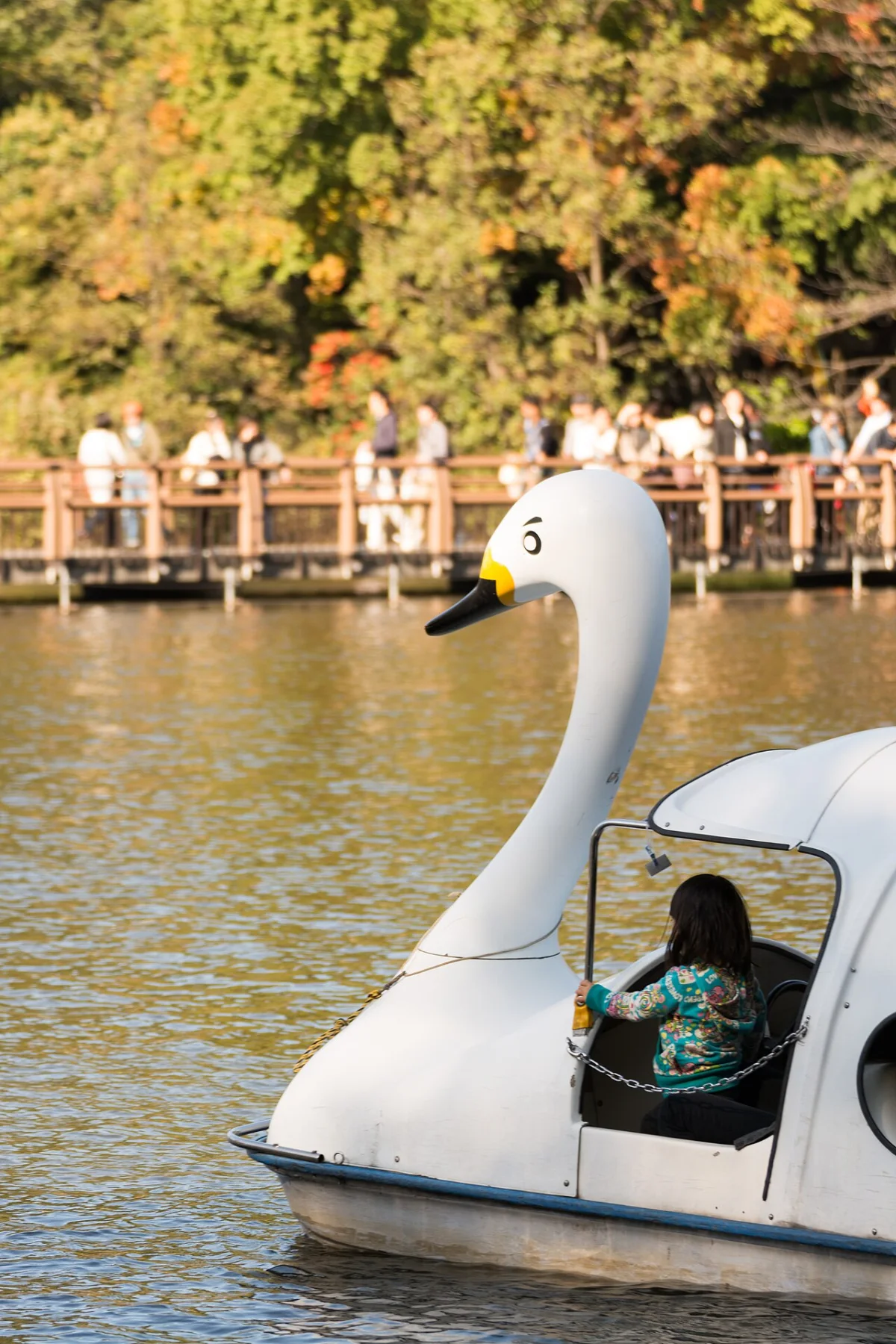
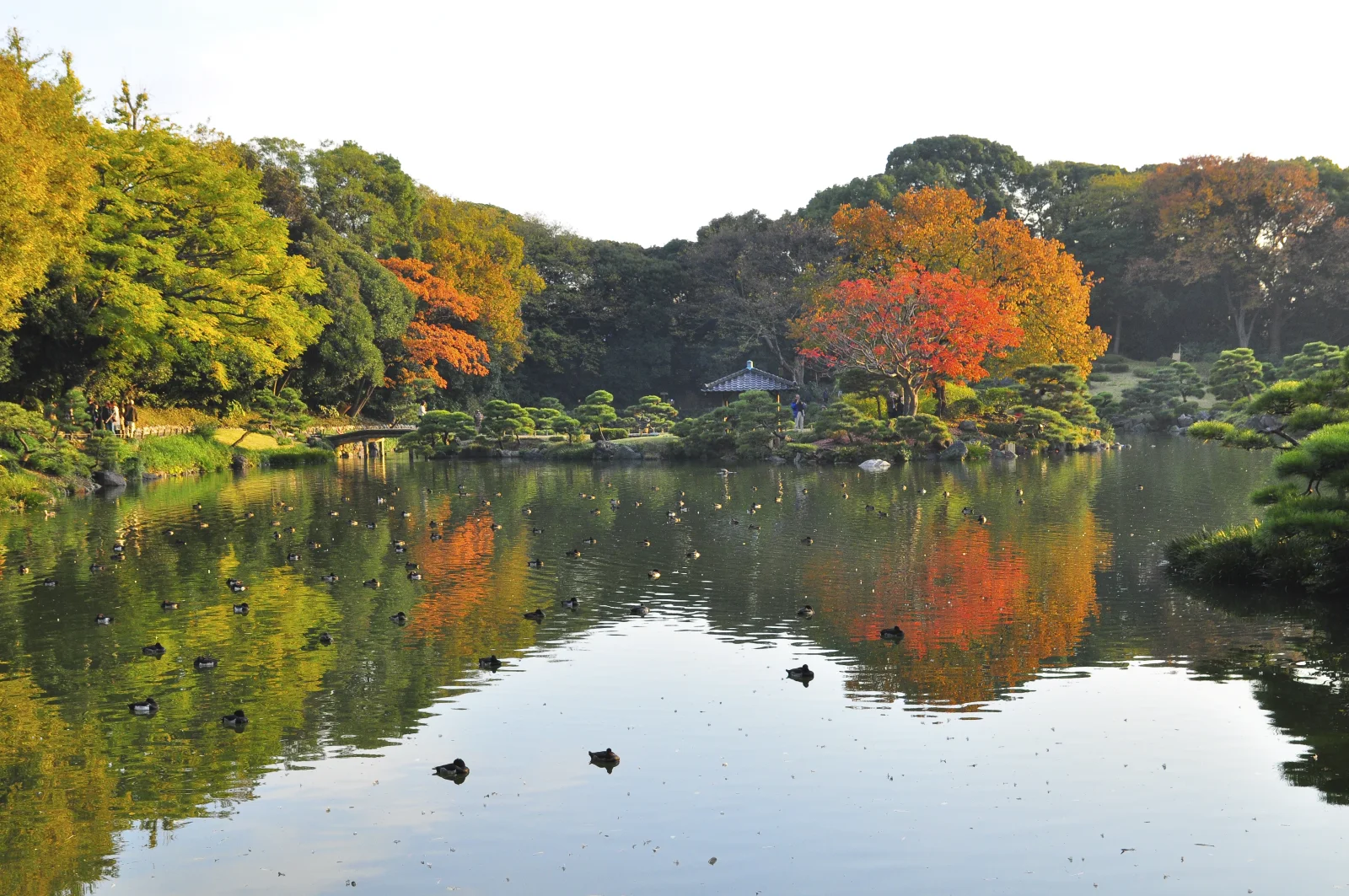
Compare Shinjuku Gyoen, Meiji Jingu Gaien, Koishikawa Korakuen, Kiyosumi, Mizumoto, and Hama-rikyu by area and November–December color. Plan half-day garden walks, family breaks, entrance access, and daytime or evening visits.
- Region & Focus
- TokyoFall foliage
- Reading Scope
- 38 min read · 15 chapters · 4 Q&As
- Official Verification
- 24 official sources checkedUpdated November 22, 2026
- Key Topics
- SeasonsItinerariesNeighborhoods
Chapter Route Map (tap any stop)
- Choose your autumn outing: garden, tree avenue, or waterfront
- Start with the month, then check current conditions at each park
- West: visit Shinjuku Gyoen first and save department stores for after closing
- West: photograph Gaien’s ginkgo trees or choose Yoyogi for lawns and a slower walk
- Bunkyo and Suidobashi: use either gate at Koishikawa Korakuen
- Around Komagome: Rikugien’s pond or Kyu-Furukawa’s slopes and house exterior
- East, near the station: Kiyosumi’s short circuit and flat half-pond route
- Eastern riverside: add Sumida Park to Asakusa and choose your bank first
- Northeastern wetlands: give Mizumoto time and add a bus journey
- Southern ponds: Hama-rikyu from Shimbashi or Shiodome, with meals outside
- Choose central Tokyo or Tachikawa for the day
- Four combinations for joining two parts into a day
- Allow separate energy for evening foliage and decide about reentry first
- With children or older companions, connect paths, seats, and meals
- Calculate tickets with the calendar; shorten outdoor time in rain
- Quick Q&A
For autumn leaves in Tokyo, choose one direction and one kind of scenery first. Give a city garden half a day for red leaves beside a pond. For ginkgo photographs, one Aoyama neighborhood walk can be enough. Choose a larger park when children need lawns and waterfront paths. Compare November and December conditions, entrance access, and your companions’ stamina rather than trying to cover a foliage list in one day.
Choose your autumn outing: garden, tree avenue, or waterfront
With only half a day free, choose a sight in the area where you will already be. From Shinjuku or Shibuya, compare Shinjuku Gyoen with Aoyama’s ginkgo avenue. If you are going to Suidobashi or Iidabashi, visit Koishikawa Korakuen before lunch. Around Ginza or Shimbashi, Hama-rikyu’s pondside paths fit more easily into existing plans. Treat Mizumoto Park or Tachikawa as the day’s main destination, allowing for the return trip and movement inside the park. Putting every autumn sight into one itinerary quickly uses daylight on train transfers.
Your choice also depends on what you want to see. Paid gardens focus your attention on red leaves reflected in ponds. Ginkgo avenues offer straightforward compositions of yellow tree rows. For children who want short walks, somewhere to sit and eat, then playground time, open parks are easier to plan. Riverside paths combine well with neighborhood walks, while Mizumoto’s waterside woods need a longer outdoor visit. Their transport needs and visit lengths are very different.
Suggested visit times include walking and breaks. Add trains and buses according to your accommodation.
| Area | Places to compare first | Suggested approach |
|---|---|---|
| West | Shinjuku Gyoen, Meiji Jingu Gaien, Yoyogi Park | Choose one main sight for a half day; add shopping or lunch outside |
| North and Bunkyo | Koishikawa Korakuen, Rikugien, Kyu-Furukawa Gardens | Look closely at pond gardens; add a second only if energy allows |
| East | Kiyosumi Gardens, Sumida Park, Mizumoto Park | Combine Kiyosumi with its neighborhood, Sumida with the river, or give Mizumoto a full outdoor day |
| South | Hama-rikyu Gardens | Visit in daylight, then eat in Ginza or Shimbashi |
| Tama | Showa Kinen Park | Build a day around park travel, lunch, and the return journey |
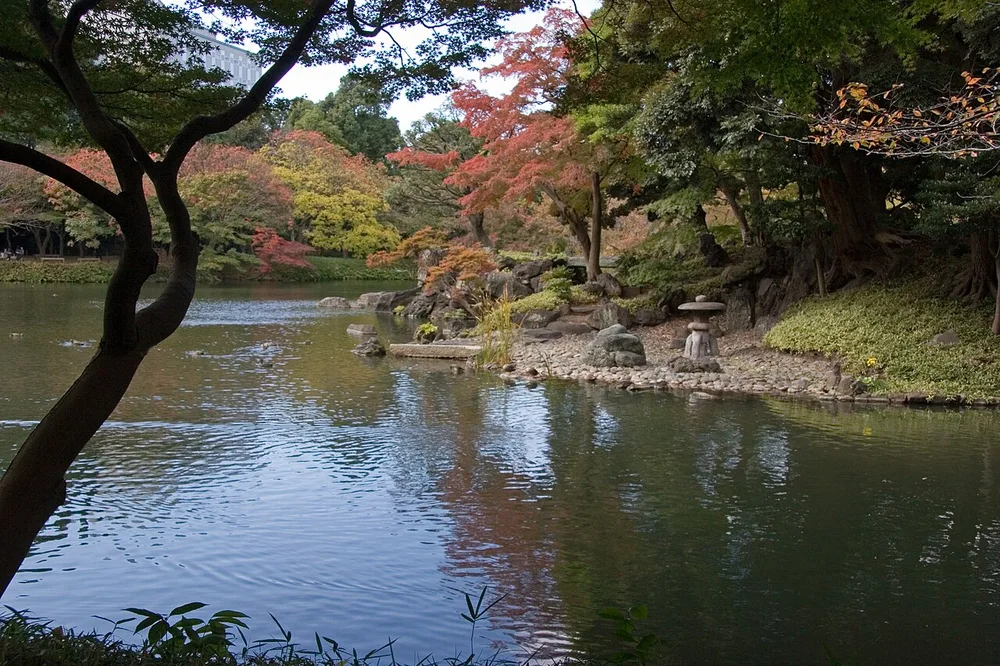
Compare Shinjuku Gyoen, Meiji Jingu Gaien, Koishikawa Korakuen, Kiyosumi, Mizumoto, and Hama-rikyu by area and November–December color. Plan half-day garden walks, family breaks, entrance access, and daytime or evening visits.
Start with the month, then check current conditions at each park
Autumn color in central Tokyo usually comes later than in the mountains. The GO TOKYO foliage guide places the main city viewing period from mid-November to early December. Rikugien’s usual season can extend into mid-December, while Hama-rikyu and Koishikawa Korakuen are often listed for late November to early December. Use these ranges to choose a week when booking accommodation, then decide which garden to visit first from that week’s photographs once in Tokyo.
From late October to early November, keep the gardens, flower displays, and neighborhoods worthwhile in their own right. Shinjuku Gyoen opens daily during its November 1–15 chrysanthemum exhibition, and Kyu-Furukawa Gardens also offers autumn roses. If widespread red foliage is your sole purpose, compare mountain and city destinations before departure. For footwear, daylight, and return-trip planning on mountain routes, see the Tokyo day trips and overnight stays guide. Do not turn an urban half day into an unprepared hiking day at the last minute.
From late November onward, change tree species or position within a garden when changing locations. Gaien’s yellow leaves, garden maples, and Mizumoto’s dawn redwoods have different colors. One photograph shows only a small view at one moment. Check the capture date and location: entrance ginkgo trees, pondside maples, and woodland interiors may be at different stages. If you have just one sunny morning, choose a directly accessible place with recent condition photos rather than crossing Tokyo according to an online ranking.
West: visit Shinjuku Gyoen first and save department stores for after closing
Shinjuku Gyoen suits visitors balancing gardens, lawns, and city meals. Enter in the morning, look at trees and reflections by the Japanese Garden pond, then rest on an open lawn before returning to Shinjuku for food and shopping. With only two hours, you need not cover every garden style. Footbridges, water, and distant towers in photographs also show how closely this garden sits beside the city.
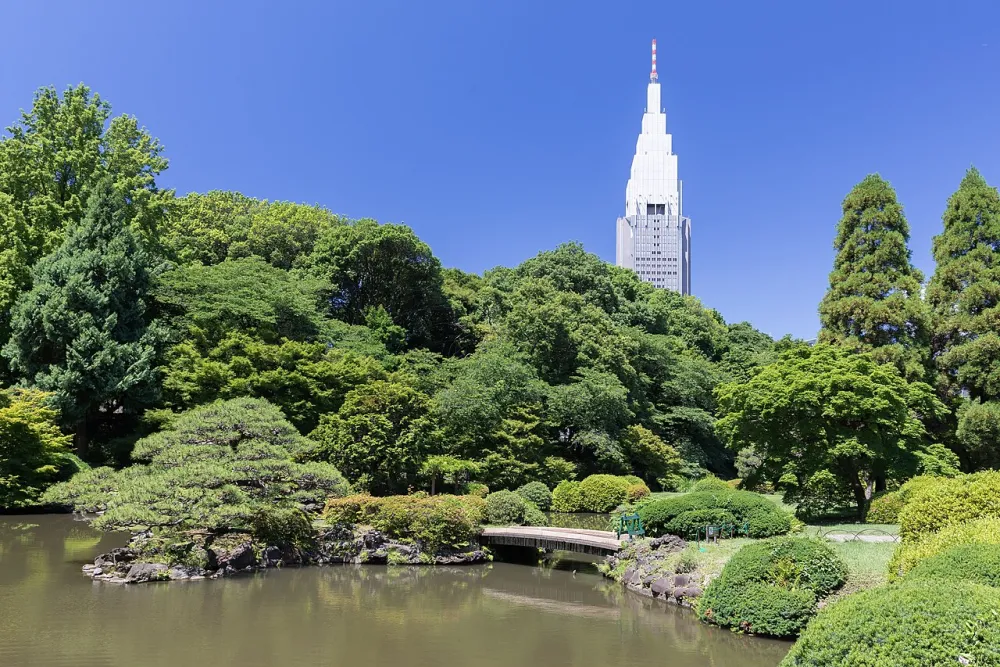
Choose a gate first. The official walk from JR Shinjuku Station’s South Exit to Shinjuku Gate is about ten minutes. Other station approaches include Shinjuku-sanchome Station for Shinjuku Gate, Shinjuku-gyoenmae Station for Okido Gate, and JR Sendagaya Station for Sendagaya Gate. Each of these three walks is about five minutes; see the Ministry of the Environment access map for exits. Use Shinjuku Gate if you plan shopping afterward, or consider Sendagaya for a return on the Sobu Line rather than crossing the entire garden again.
Put autumn and winter hours directly into your schedule: October 1–March 14, 9:00 a.m.–4:30 p.m., with last admission at 4:00 p.m. General admission is ¥500, or ¥250 for visitors aged 65 and over and students in high school or above. Junior-high students and younger enter free. The garden normally closes Mondays, or the following weekday when Monday is a national holiday, with special daily opening November 1–15. If Monday is your only free day, apply that rule before choosing another garden. Do not finish shopping and reach the entrance at 3:50 p.m. The admission information gives the full conditions.
Shinjuku Gyoen has places to sit, with clear limits on lawn use. Alcohol, bicycles, and balance bikes are prohibited, and balls and many sports items are restricted. The Children’s Square has separate rules for soft play equipment for elementary-school children and younger. If you want children to kick a ball or ride bikes, choose a park with suitable facilities. Distinguish a garden walk from active play so everyone knows what to expect.
West: photograph Gaien’s ginkgo trees or choose Yoyogi for lawns and a slower walk
The Meiji Jingu Gaien Ginkgo Avenue fits directly into a half day in Aoyama. The official description gives about 300 meters from the Aoyama entrance to the circular road, with 146 ginkgo trees drawing the eye into the distance. Its straight lines offer a different focus from pond reflections. For autumn scenery between neighborhood meals and shopping, allow a slow avenue walk without adding a distant garden just to fill the day.
Approach the avenue’s Aoyama end from Gaienmae Station or Aoyama-itchome Station, whichever suits your hotel route. The official Gaien access page lists railway approaches, and the avenue’s seasonal guide identifies its location. Stop in pedestrian space for photographs. Find a safe position on the walkway for a central perspective; the roadway remains in use. Groups should agree where to meet after leaving the avenue so some people do not stop for pictures while others continue to the far end.
If companions care more about sitting on grass and resting after a walk, choose Yoyogi Park. General entry is free and the park is always open. JR Harajuku Station, Meiji-jingumae Station, and Yoyogi-koen Station are each about three minutes from their respective entrances. Entering from Harajuku and leaving toward a western station can connect the walk with a different return route. Use the park map and access information to keep your walking area small.
Gaien, the shrine approach beside Harajuku, and Yoyogi Park have separate entrances and purposes. If you already have an afternoon meal in Harajuku, Yoyogi minimizes travel. For ginkgo photographs and an Aoyama stroll, stay at Gaien. Trains connect the two, but chasing avenues, lawns, and shops in one half day can mean leaving each place just as you begin to enjoy it.
Bunkyo and Suidobashi: use either gate at Koishikawa Korakuen
Koishikawa Korakuen is a city option for maples with a convenient journey afterward. Daisensui Pond forms its center, with hills, bridges, and water showing the same tree colors from different distances. Allow a morning, or about two hours around lunch, for a slow main-pond walk and one side that interests you. On a first visit, you need not find every named feature on the map. Stay longer at a view you like.
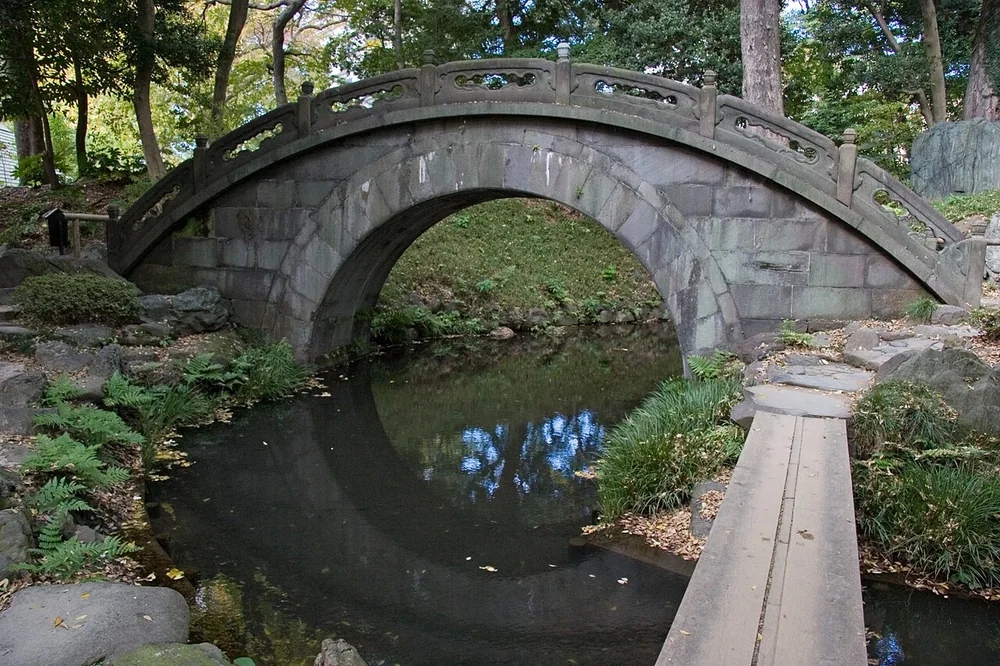
The two gates change your final walk. The east gate is about five minutes from JR Suidobashi Station’s West Exit or six from Korakuen Station’s Exit 2. The west gate is about three minutes from Iidabashi Station’s Oedo Line Exit C3 or eight from the JR East Exit. These are gate approaches listed in the official garden access information. On the Sobu Line, enter east, leave west, and depart from Iidabashi. With a stroller or luggage, identify elevator exits on station maps first. The closest staircase may not be the easiest route.
Daytime hours are 9:00 a.m.–5:00 p.m., with last admission at 4:30 p.m. General admission is ¥300, or ¥150 for visitors aged 65 and over. Elementary-school children and younger, and junior-high students who live or attend school in Tokyo, enter free. Packed lunches may be eaten on designated benches. Picnic mats are prohibited on paths and among plantings, and alcohol cannot be brought in. This allows a short seated lunch while preserving quiet garden viewing. For a long picnic and children’s running, choose a more open park.
Keep paths clear during foliage photography. The official FAQ explains that periods prohibiting monopods, tripods, and selfie sticks are set during busy seasons such as autumn foliage. Portrait-focused and wedding photography require separate applications. A handheld camera or phone can record the pondside changes. Waiting for an empty scene in the middle of a narrow path blocks others. Agreeing to meet companions at the exit can also be easier than keeping everyone on the photographer’s schedule.
Around Komagome: Rikugien’s pond or Kyu-Furukawa’s slopes and house exterior
With half a day in the north, choose your main stop between Rikugien and Kyu-Furukawa Gardens. Rikugien’s pond and artificial hills suit a circuit walk focused on the garden layout and maples. Kyu-Furukawa’s Western-style house, upper Western garden, and lower Japanese garden show how elevation changes the scenery within one site. Prioritize Kyu-Furukawa if building exteriors and garden layout interest you.
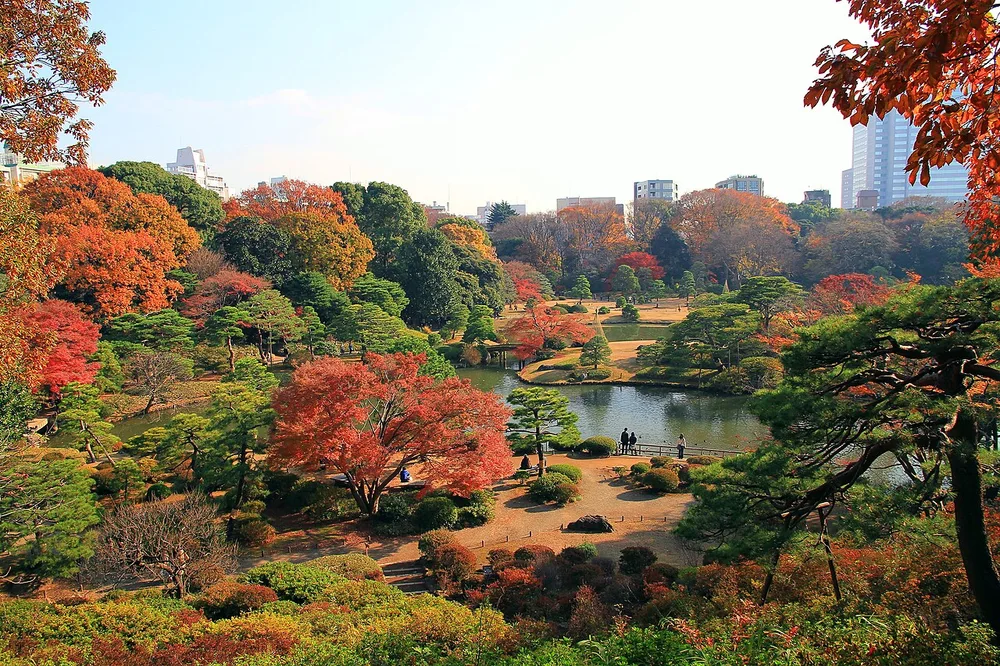
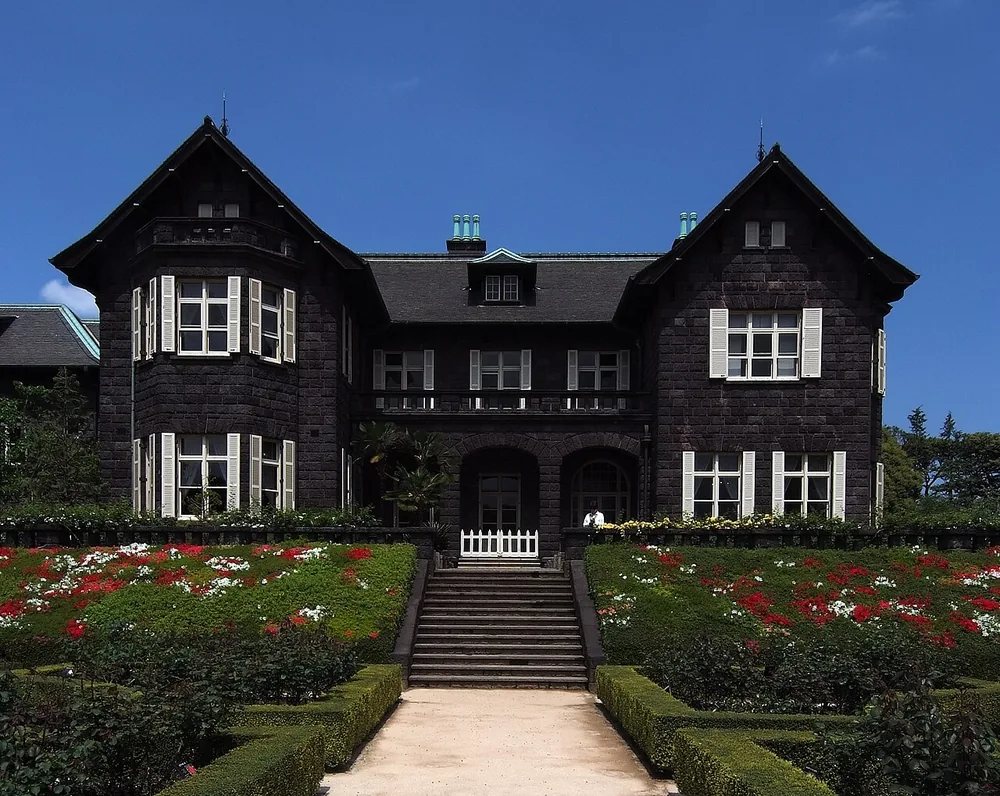
Kyu-Furukawa Gardens is about seven minutes from JR Kami-Nakazato Station or Nishigahara Station on the Namboku Line, or 12 minutes from Komagome Station. General daytime admission is ¥150, or ¥70 for visitors aged 65 and over. Hours are 9:00 a.m.–5:00 p.m., with last admission at 4:30 p.m. The house has separate hours and admission. For leaves and its exterior, estimate a garden visit first. Add an interior visit separately if wanted, keeping the tickets and times distinct. The official admission and access page also provides an accessibility map.
Changes in level are a practical condition to compare. Kyu-Furukawa identifies many stairs and slopes; wheelchair users should choose accessible sections from its map. Stroller routes also benefit from avoiding repeated climbs and descents. If level walking is the priority, compare Kiyosumi Gardens’ flat half-pond route. Autumn roses and maple leaves can each be the main attraction. Choose what you actually want to see during your travel week.
If both gardens interest you, the Kyu-Furukawa–Rikugien daytime combination ticket costs ¥400, or ¥200 for visitors aged 65 and over, with no expiry date stated by the official site. There is no need to rush through both in one afternoon; save one for another sunny day. For Rikugien’s daytime entrance, separate evening tickets, and meals in Komagome, see the Rikugien daytime and autumn evening guide.
East, near the station: Kiyosumi’s short circuit and flat half-pond route
Kiyosumi Gardens combines well with a Kiyosumi-Shirakawa neighborhood walk. It is about three minutes from Exit A3 at Kiyosumi-shirakawa Station on the Oedo and Hanzomon lines. There is one entrance, so you leave through the same place. The garden estimates about 40 minutes for a circuit. Allow 60–90 minutes to stop for pond stones and waterbirds, then return to the neighborhood for lunch. Even a short visit can feel complete without crossing the river to another garden.
Here the eye often settles on water, notable stones, and reflections. The isowatari stepping stones along the edge change your viewing angle. They require different footing from ordinary paths; after rain or with young children, stay on the flat main route. The official garden FAQ identifies a flat wheelchair route around half the pond and wheelchair loans. Families minimizing steps can use that half-pond route and return the same way, rather than making everyone cross stones to complete a full circuit.
Daytime hours are 9:00 a.m.–5:00 p.m., with last admission at 4:30 p.m. General admission is ¥150, or ¥70 for visitors aged 65 and over. Food and drink are allowed at benches and outdoor tables, but picnic mats and alcohol are prohibited. Choose a permitted seat for your own snack overlooking the water. For hot food or a longer meal at a table, eating in the neighborhood is easier. The pondside pavilion is a reservation facility; enjoy it as part of the scenery and arrange lunch elsewhere.
For half a day, a morning garden visit, lunch, and a short neighborhood walk are enough. The Hanzomon and Oedo lines offer different return directions, making Kiyosumi-Shirakawa useful at the start or end of an eastern Tokyo day. It and Asakusa are both in the east, but they are not adjacent on foot.
Eastern riverside: add Sumida Park to Asakusa and choose your bank first
If Asakusa is already in your plans, use Sumida Park’s Taito side for a riverside walk before or after a meal. GO TOKYO lists about five minutes from Asakusa Station. The bank offers views of the Sumida River and the city opposite. Its appeal is open water, tree shadows, and a change from neighborhood streets. For concentrated maple trees and traditional pond scenery, Kiyosumi or Koishikawa Korakuen is a more direct choice.
The same park name is used on both banks. Sumida Park’s Sumida side is in Mukojima, with Honjo-azumabashi Station or Tokyo Skytree Station listed as nearby stations. It has a Japanese garden, play equipment, and its own facilities. For meeting someone, specify “the Taito side in Asakusa” or “the Sumida side in Mukojima.” Crossing a bridge to find each other may take longer than the riverside walk you planned.
For a short family route, start with the Taito-side playground, then choose a small river stretch. Taito’s Sumida Park Information Center has a nursing room, restrooms, and benches, and opens from 9:30 a.m. to 6:00 p.m. It closes over New Year and on the Sumida River fireworks day. You can shorten outdoor walking, but rest-facility hours still need to fit. The Sumida-side park is always open, with individual facilities keeping their own hours. For a boat trip, check tickets and piers separately rather than making a riverside stroll depend on catching one sailing.
Northeastern wetlands: give Mizumoto time and add a bus journey
Mizumoto Park combines dawn redwood woods, broad water, and large lawns into a longer day. Along Koaidame Reservoir, its wetland scenery, dawn redwoods, poplars, and waterside trees have a very different scale from a small pond garden. Autumn colors include brick red and yellow-brown. Choose a garden for maple close-ups; choose Mizumoto when you want a whole morning walking between trees and water.
The park is free and always open, but there is a bus after the train. The official access page lists Keisei buses from JR Joban Line Kanamachi Station or Keisei-Kanamachi Station, bound for Togasaki Bus Depot or Nishi-Mizumoto 3-chome. Get off at Mizumoto Koen, then walk about seven minutes. From accommodation on the Chiyoda Line, look at routes connecting to the Joban Line. Include station arrival, waiting, the walk from the bus stop, and distances inside the park, rather than counting train minutes alone.
The seasonal loop bus is another easily missed difference. The park lists a service from and to Kanamachi Station along the park on weekends and national holidays from March to November, 9:00 a.m.–4:40 p.m. For December autumn viewing, check regular buses and the return stop for that day rather than reusing the seasonal timetable. Keep one clear route in and out, then choose the dawn redwood woods or central plaza on the map. Covering every area is too much for a family seeking an easy half day.
Start with the water and dawn redwoods, sit down midway, then add lawns in the afternoon if energy allows. Return toward your chosen exit early enough to find the right bus direction. If heavy rain has started in the morning, switching to a garden near a station or an indoor day is easier than reaching Kanamachi and deleting plans bit by bit. Mizumoto’s space is its attraction; allow a similarly unhurried return.
Southern ponds: Hama-rikyu from Shimbashi or Shiodome, with meals outside
Hama-rikyu Gardens brings Shioiri Pond, tree colors, and towers into one view. Despite its waterfront city setting, a pond circuit offers plenty to see. The official FAQ estimates about one to one and a half hours around the whole garden. Allow two with photography and a seated break. Visit in the afternoon, then return to Shimbashi for an early evening meal rather than spending too long elsewhere after lunch and rushing to enter.
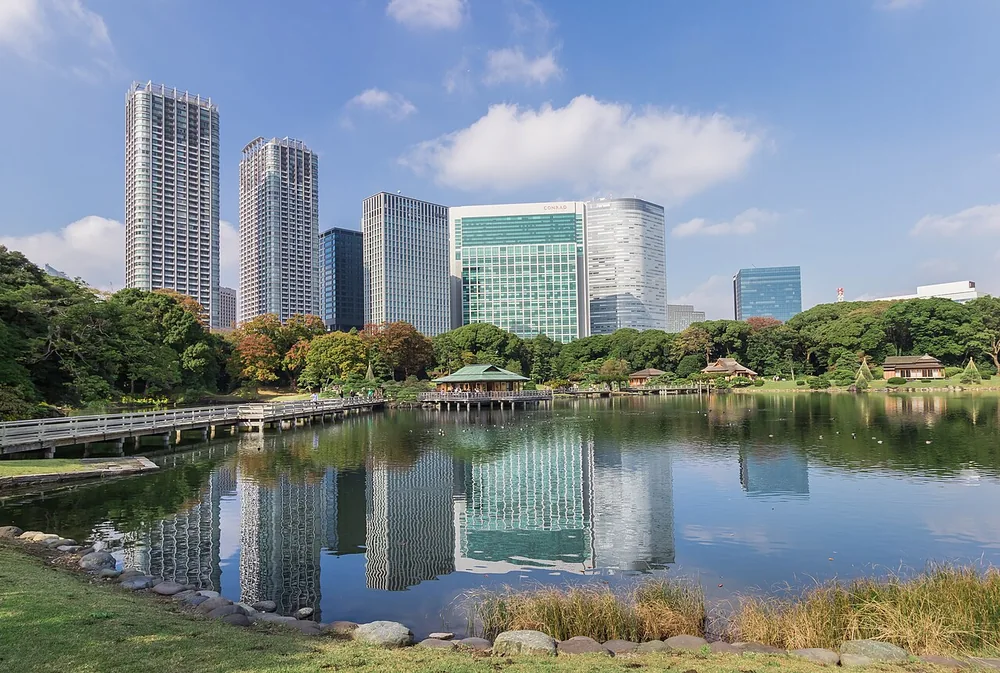
Choose either land entrance according to your return. Otemon Gate is about seven minutes from Shiodome Station or Tsukijishijo Station, or 12 minutes from Shimbashi Station. Nakanogomon Gate is about five minutes from Shiodome Exit 10 or 15 from JR Hamamatsucho Station. These are the estimates in the official entrance access information. For strollers and wheelchairs, use the separate aboveground and underground walking-route maps. Choose an easy route before the shortest one.
General admission is ¥300, or ¥150 for visitors aged 65 and over. Elementary-school children and younger, and junior-high students who live or attend school in Tokyo, enter free. Elementary-school children and younger must have a guardian. Hours are 9:00 a.m.–5:00 p.m., with last admission at 4:30 p.m. The garden closes December 29–January 1. Shinjuku Gyoen’s normal Monday closure does not apply here, making Hama-rikyu an option to compare for a Monday city garden visit.
There is no restaurant serving full meals inside. Packed lunches may be eaten on benches and similar seats. Mats are allowed only in Uchibori Square and the outdoor-table plaza, and alcohol is prohibited. Snack shops cannot provide a full family meal. The official FAQ explains these uses. From Shimbashi, eat near the station before entering or save your main meal until afterward, so you can enjoy the pondside pace without searching for a restaurant when hungry.
Choose central Tokyo or Tachikawa for the day
For long ginkgo avenues, open lawns, and a different autumn scene in a Japanese garden, Showa Kinen Park can fill a day by itself. In western Tokyo, its multiple entrances lead to different areas. Estimate city-to-station, station-to-gate, and gate-to-sight travel separately. If the day already includes lunch in Ginza or an Asakusa reservation, a city garden is easier to fit around the rest.
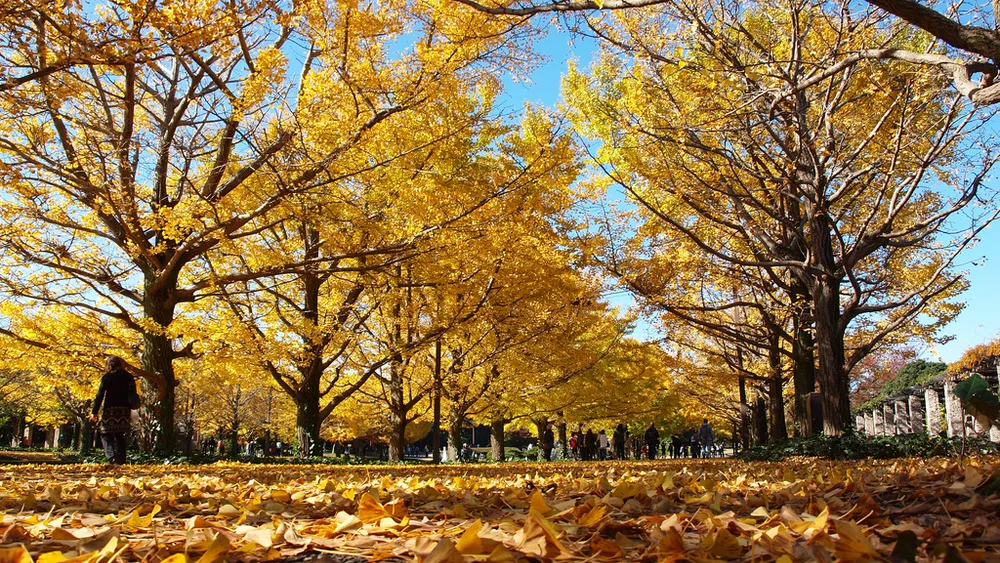
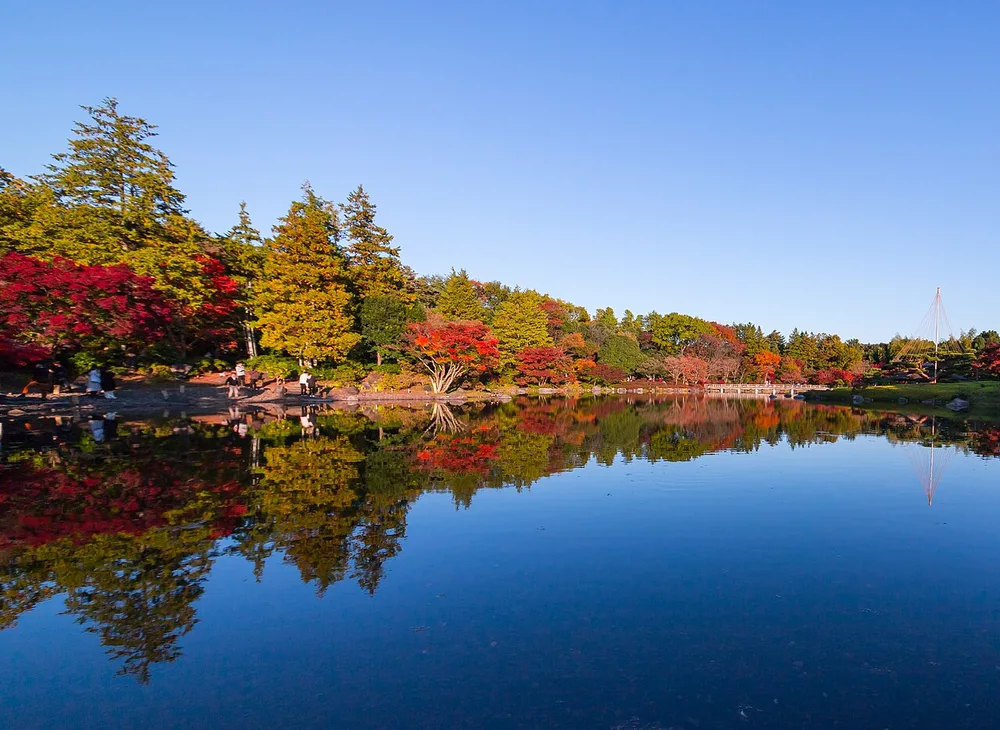
Arriving through Nishi-Tachikawa Station or Tachikawa Station leads to different first walks inside. For ginkgo trees, a garden, and children’s play equipment in one day, choose two priorities first, then plan lunch, rentals, or park transport. The evening has separate gate access and garden tickets. See the Showa Kinen Park autumn routes guide for entrances, transport, and daytime versus evening areas. Choose your plan, then take that day out of the city itinerary.
With only three Tokyo days, keep one city autumn half day and one neighborhood or museum day, then decide whether to use the third for Tachikawa. If you already chose Mizumoto for a long outdoor day, you need not add another large park just to see every Tokyo autumn sight. Conversely, if you stay in Tachikawa or already travel on the Chuo Line, Showa Kinen may be easier than two gardens across central Tokyo. Your accommodation should change the order of the list.
Four combinations for joining two parts into a day
For a western shopping day, start at Shinjuku Gyoen with its Japanese Garden and lawn as two morning stages, then return to Shinjuku-sanchome after lunch. To add Aoyama’s ginkgo avenue, reduce shopping and make Gaien the only afternoon addition. Shinjuku Gyoen closes at 4:30 p.m. in autumn and winter. Finish that first, then end with meals and shops without the same closing pressure, rather than letting shopping delays compress the garden.
For a Bunkyo garden day, combine Koishikawa Korakuen with lunch in Suidobashi or Iidabashi. If another garden style specifically interests you, go toward Komagome in the afternoon and choose either Rikugien or Kyu-Furukawa. Leave that second garden undecided until the day. Gate walks, platforms, and streets remain between the two visits; station-to-station time is not the whole transfer. Photographers may gain more by staying in one garden as light changes than by rushing through three.
For an eastern slow day, start at Kiyosumi Gardens and leave for lunch. For a river view in the afternoon, take the train to Asakusa and choose one bank of Sumida Park. With children, drop the area change and rest in Kiyosumi-Shirakawa. If Mizumoto is your first choice, keep the day in that direction rather than treating it as a small extra after lunch in Asakusa. Parks requiring a final bus need more spare time than gardens close to subway stations.
In the south, have lunch in Shimbashi, enter Hama-rikyu through Otemon, then leave through Otemon or Nakanogomon according to your return route. Save energy for Ginza shopping after the garden if wanted. Stroller families can return directly to Shiodome for a train.
Allow separate energy for evening foliage and decide about reentry first
Daytime reveals layers of tree color, terrain, and pondside detail. Evening focuses on lit trees and specially opened areas. A daytime-only plan is enough if the leaves themselves are your purpose. For a garden evening, eat early and remove a second large afternoon park. Waiting for opening and walking to and from stations often use up energy first in a continuous day-and-night outing.
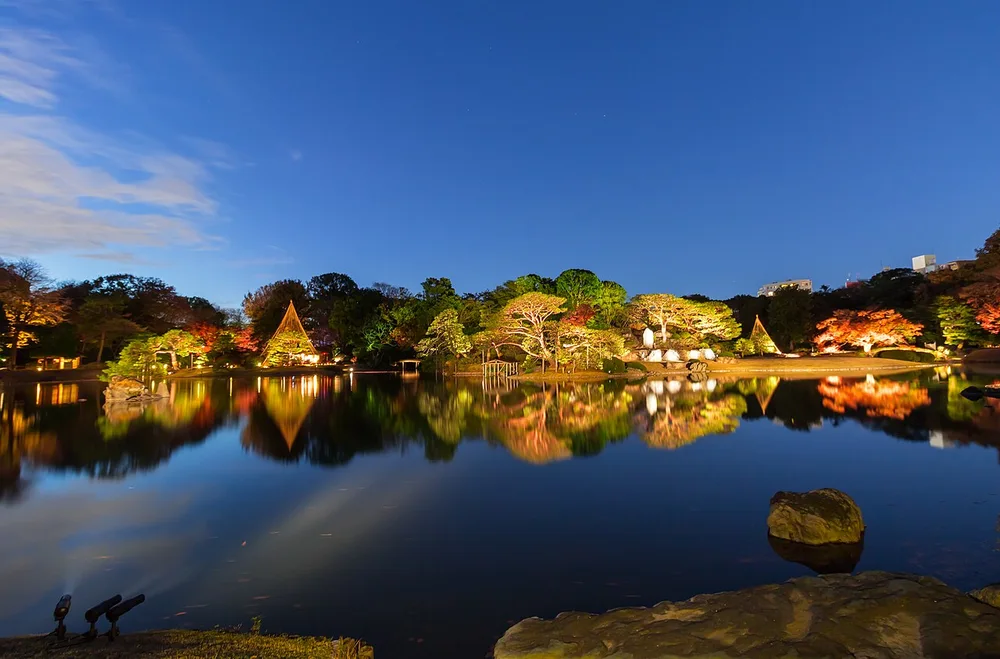
Rikugien’s 2026 evening event runs November 25–December 6, 6:00–8:30 p.m., with last admission at 7:30 p.m. After daytime closing at 5:00 p.m., everyone leaves before entry with a separate evening ticket. Advance sales open at 9:00 a.m. on November 1. The official 2026 announcement and event website give full ticket details. If you combine Kyu-Furukawa, daytime Rikugien, and an evening ticket, allow dinner and the reentry wait too. For daytime pond scenery alone, the daytime ticket completes the outing.
The evening ticket also affects rain plans. Purchasers may cancel 2026 Rikugien advance tickets until 11:59 p.m. the day before entry. Same-day tickets cannot be canceled or refunded after purchase. Ticket prices are refunded if severe weather cancels the event, but weather does not qualify if it goes ahead. Buy for a specific date when committed; if you want to decide with the forecast, write the advance cancellation deadline into the schedule. Evening entry is through the main gate, with exit through the main gate or Someimon.
The Tokyo Metropolitan Park Association video below shows the 2022 evening event and was released in 2023. Use it to see lighting and reflections; use the 2026 notice for tickets and hours. With children, keep just one evening event, leave along permitted routes when they tire, and prioritize a clear exit and train route. Evening foliage need not be a compulsory finale after a daytime park outing.
Footage of the 2022 evening event, released by the Tokyo Metropolitan Park Association in 2023, showing garden lighting and pond reflections.
With children or older companions, connect paths, seats, and meals
With a wheelchair or stroller, compare changes in level before popularity. Kiyosumi identifies a flat half-pond route. Kyu-Furukawa has many stairs and slopes, so choose sections from its accessibility map. At Shinjuku Gyoen, join main paths, a lawn rest, and one exit into a short route. “Five minutes from the station” answers only the approach to the gate. The real burden may be the walk to the far side after entry.
Choose packed-lunch arrangements with the sight. Koishikawa Korakuen uses designated benches, Kiyosumi benches and outdoor tables, and Hama-rikyu permits mats only in designated plazas. For a long stay under trees, choose a park whose rules allow it. If the family needs hot food, high chairs, or a fixed midday rest, eat a full meal and use the restroom outside, then enter for one main area. That is usually easier than carrying food while continually searching for a usable seat.
Free child entry varies by site. Shinjuku Gyoen admits junior-high students and younger free. The metropolitan gardens discussed here give free entry to elementary-school children and younger and to junior-high students who live or attend school in Tokyo. Do not apply Shinjuku Gyoen’s age rule to gardens charging overseas junior-high students general admission. List everyone’s age and school eligibility before buying so you get the tickets right without returning to the counter.
Walking time should include rests. If an older companion or young child wants to sit after the first stretch, find a seat and drop the second garden. If a companion wants only a few quick photographs, agree on a clear exit and meeting time.
Calculate tickets with the calendar; shorten outdoor time in rain
General adult daytime tickets here fall into two main price groups: Kiyosumi and Kyu-Furukawa are ¥150 each; Koishikawa Korakuen, Rikugien, and Hama-rikyu are ¥300 each. Shinjuku Gyoen is ¥500. For one or two gardens, individual tickets make costs easy to calculate. The annual pass for nine Tokyo metropolitan gardens is ¥4,000 for general adults and suits repeat visits within a year. It excludes Shinjuku Gyoen and Showa Kinen Park. Special evening events follow their own ticket rules. Bring proof of age for 65-and-over rates and show it as each garden requires.
The price difference between gardens is often smaller than the meal disruption and time cost of crossing areas. To save, choose one paid garden plus a free park or neighborhood. Calculate transport from the routes you will actually use, separating short city trips from full-day travel to Tachikawa or Mizumoto.
For late December, remove New Year closure dates first. The metropolitan gardens covered here close December 29–January 1, while Shinjuku Gyoen closes December 29–January 3. A general park’s continuous opening is separate from hours at service centers, shops, and nursing rooms.
In rain, shorten outdoor stretches and put a seated meal first. Avoid Kiyosumi’s stepping stones, garden slopes, and leaf-covered surfaces by staying on main paths. Swap a large park requiring a bus, such as Mizumoto, with an indoor day. For special evening tickets already bought, handle the order’s change and refund conditions first. For an unreserved half day, choose a clear entrance and exit near your accommodation. If rain stops and a short walk remains possible, finish it slowly in that area.
A few useful answers
When is the best time to see fall colors in central Tokyo?
Plan for mid-November to early December. Koishikawa Korakuen and Hama-rikyu are usually best from late November to early December, while Rikugien can still have color in mid-December.
With half a day, should I visit Shinjuku Gyoen or Meiji Jingu Gaien for fall foliage?
Go to Shinjuku Gyoen for red leaves by the pond and a break on the lawn, then head back to Shinjuku to eat or shop. For photos of an avenue of golden ginkgo trees, choose Meiji Jingu Gaien and grab a meal in Aoyama.
Which Tokyo garden has a wheelchair-accessible route for viewing fall colors?
Kiyosumi Gardens has a level path halfway around the pond. You can return the same way and borrow a wheelchair at the garden. The entrance is about a three-minute walk from Exit A3 at Kiyosumi-shirakawa subway station.
Do I need a separate ticket to see Rikugien lit up in 2026?
Yes, the evening event requires its own ticket. It runs from November 25 to December 6, 2026, from 6:00 to 8:30 p.m., with last entry at 7:30 p.m. The garden is cleared after the 5:00 p.m. daytime closing, and evening entry is through the main gate.
Official information and references
Sources used in this guide.
- GO TOKYO | Tokyo autumn foliage seasons and places
- Shinjuku Gyoen | Admission information
- Shinjuku Gyoen | Access
- Shinjuku Gyoen | Garden rules
- Meiji Jingu Gaien | Ginkgo Avenue
- Meiji Jingu Gaien | Access
- Yoyogi Park
- Koishikawa Korakuen | Admission and access
- Koishikawa Korakuen | Visitor rules
- Kyu-Furukawa Gardens
- Kyu-Furukawa Gardens | FAQ
- Kiyosumi Gardens
- Kiyosumi Gardens | FAQ
- GO TOKYO | Sumida Park, Taito City
- Sumida Park Information Center
- Sumida Park, Sumida City
- Mizumoto Park
- Hama-rikyu Gardens
- Hama-rikyu Gardens | FAQ
- Rikugien | 2026 special evening opening
- Rikugien | Special evening event website
- Tokyo metropolitan paid parks | Admission and closures
- Rikugien | Daytime admission and combination tickets
- Taito City | Sumida Park playground