Planning New Year's Eve 2026 in Japan? Compare schedules and ticket prices for Tokyo's Zojo-ji, Kyoto's Chion-in and Yasaka Shrine, and Universal Studios Japan, plus overnight trains, hotels, New Year's Day shrine visits, and first sunrise plans.
- Region & Focus
- TokyoFestivals and fireworks
- Reading Scope
- 22 min read · 8 chapters · 5 Q&As
- Official Verification
- 36 official sources checkedUpdated November 22, 2026
Chapter Route Map (tap any stop)
- Choose Your Midnight Anchor First
- Tokyo's Zojo-ji Rings Earlier This Year
- How to Pace a Night in Kyoto's Higashiyama
- Spend a Night by Osaka Bay for Fireworks
- How to Check Overnight Trains Past Midnight
- Save Hatsumode for New Year's Day Daylight
- Factor Transit and Waiting Into First Sunrise Plans
- Overnight at an Onsen Ryokan Where Dinner Is the Main Event
- Quick Q&A
Spending New Year's Eve 2026 in Japan comes down to picking one midnight anchor. Tokyo's Zojo-ji Temple starts its Joya no Kane bell-ringing at 21:45 on December 31, letting you head back to your hotel before midnight. If you want to ring in 2027 with the bells, Kyoto's Chion-in requires advance tickets. For theme park fireworks, head to Universal Studios Japan in Osaka with a dedicated Party Pass. Lock in your hotel within walking distance of your main event, then pace New Year's Day shrine visits, sunrise viewing, and museums around when your group wants to wake up.
Choose Your Midnight Anchor First
If you want to hear temple bells in Tokyo without staying out past midnight, pick Zojo-ji in Shiba Park: go after dinner, and the event wraps up around 23:00. To hear the bells carry across the stroke of midnight, Kyoto's Chion-in begins ringing around 22:20 and continues until roughly 00:15 on January 1, with advance tickets required for entry. If fireworks are your top priority, base your December 31 stay and plans around Universal Studios Japan on Osaka Bay. Committing to one event you can comfortably reach leaves plenty of margin for dinner, luggage storage, and lines.
New Year's Eve bell-ringing (Joya no Kane) is part of a year-end Buddhist service. At Chion-in, 17 monks work together to strike 108 tolls representing earthly desires in Buddhist tradition. Hatsumode—the first shrine or temple visit of the year—can be done at either a temple or a shrine, so you can separate December 31 bell-ringing from a January 1 shrine visit. If you want lantern-lit grounds and festive energy with an early bedtime, take an evening walk through Shiba Park in Tokyo and save Hatsumode for the next day near your hotel. In Kyoto, you can visit Yasaka Shrine's Okera-mairi fire ritual after dinner and watch the actual countdown from indoors.
When traveling with kids or older relatives, map out your late-night walk back to the hotel before booking. Crossing rivers, navigating underground passages, or pushing against dense shrine crowds makes a short straight-line distance feel much longer. For a relaxed evening vibe, book a hotel you can check into before dark, then build the night around dinner and a short stroll. An event that ends before 23:00 also leaves enough energy if anyone in your group wants to catch the first sunrise on January 1.
| Event | Schedule (JST) | Tickets & Entry |
|---|---|---|
| Tokyo Zojo-ji Joya no Kane | 21:30 service, 21:45 bell-ringing starts, ends around 23:00 | Bell-ringing ticket required to strike the bell: ¥2,000 |
| Kyoto Yasaka Shrine Okera-mairi | 19:00 Joya-sai ritual, sacred fire distributed around 19:30 until ~05:00 on Jan 1 | Free admission |
| Kyoto Chion-in Joya no Kane | Service around 22:00, bell-ringing starts 22:20, ends around 00:15 on Jan 1 | Advance ticket: ¥3,000; free for elementary school age and under |
| Osaka USJ Countdown | 19:00 park entry; 23:50–00:05 fireworks show | Party Pass: ¥16,900; free for ages 3 and under |
Planning New Year's Eve 2026 in Japan? Compare schedules and ticket prices for Tokyo's Zojo-ji, Kyoto's Chion-in and Yasaka Shrine, and Universal Studios Japan, plus overnight trains, hotels, New Year's Day shrine visits, and first sunrise plans.
Tokyo's Zojo-ji Rings Earlier This Year
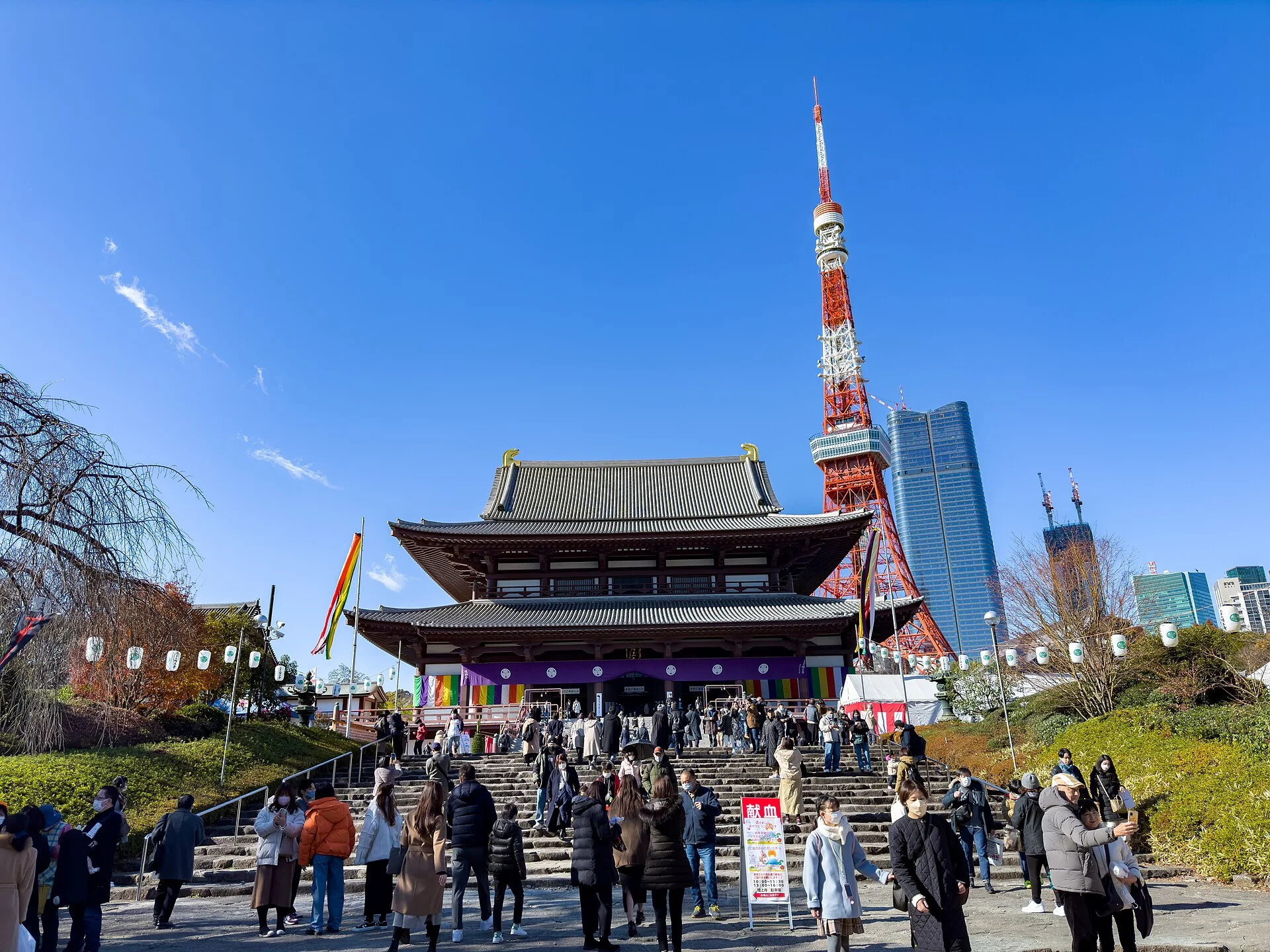
On November 1, Zojo-ji announced that its December 31, 2026 Joya no Kane service moves earlier to 21:30, with bell-ringing starting at 21:45 and wrapping up around 23:00. If you are staying in Hamamatsucho or Shiba Park, book dinner around 19:00 so you can eat comfortably before walking over instead of scrambling for a late meal afterward. Coming from Ueno or Shinjuku, drop your bags at your room or eat near your departure station first, leaving buffer time for the walk onto the temple grounds. If you still want to be at the temple at midnight, expect to spend the latter half waiting for New Year's prayers after the bells finish early.
General bell-ringing tickets (kanetsuki-ken) are scheduled to be issued starting at 09:00 on December 1 at the temple office on the second floor of Zojo-ji Kaikan for ¥2,000 each, including a keepsake. Each ticket covers one person, and groups of four strike the bell together once; if a party of three buys three tickets, the temple pairs you with a fourth person. Travelers arriving in Japan in late December should treat striking the bell yourself as a bonus if tickets remain, while keeping the same dinner and hotel walk plan. The temple handles bell tickets separately from amulets (omamori) and paper fortunes (omikuji)—the grounds counter operates from 22:00 on December 31 to 18:00 on January 1, so you can easily wait until New Year's Day to pick up charms.
Normally, Zojo-ji is about a 3-minute walk from Toei Mita Line Onarimon Station (Exit A1) or Shibakoen Station (Exit A4), and roughly 5 minutes from Daimon Station on the Toei Asakusa and Oedo Lines. From JR Hamamatsucho Station on the Yamanote and Keihin-Tohoku Lines, the temple lists a standard 10-minute walk. Akabanebashi Station is about 7 minutes on foot, convenient if you are already riding the Oedo Line and approaching past Tokyo Tower. Decide which train line you will take home beforehand so you exit toward that station and avoid doubling back through the crowd.
To keep the walk as short as possible, The Prince Park Tower Tokyo sits right in Shiba Park, with its access map listing about a 2-minute walk from Akabanebashi Exit and 3 minutes from Shibakoen Exit A4. If you want easy Haneda Airport access and a straightforward ride toward Ueno on January 1, stay near Hamamatsucho Station for Tokyo Monorail connections and a walkable New Year's Eve route. When comparing hotel rates between the two areas, factor in whether you have a confirmed sit-down dinner on December 31. Staying beside the temple lets you pop back to layer up, while a station-side hotel simplifies luggage, checkout, and onward trains.
If you want to hear temple bells right at midnight in Tokyo, head to Senso-ji instead. The temple's New Year prayer page lists midnight bell-ringing at Bentenyama starting at 00:00, where members of the temple's Hyakuhachikai group strike the 108 tolls after the opening rings. Visitors staying up through the night in Asakusa can book east of Kaminarimon near Asakusa Station for an easy walk back after prayers. If you want to see Zojo-ji as well, visit Shiba Park by day to take in the Main Hall and Tokyo Tower, then return to Asakusa for dinner. Separating sightseeing from midnight keeps you from crossing half of Tokyo between two bell ceremonies; you can plan the daytime loop with our Senso-ji visiting route guide.
How to Pace a Night in Kyoto's Higashiyama
Yasaka Shrine holds its Joya-sai ritual in the Main Hall at 19:00 on December 31. Keihan Railway's 2026 event listing places Okera-mairi from roughly 19:30 until 05:00 on January 1, with free admission. Walk east about 5 minutes from Keihan Gion-Shijo Station to reach the shrine. Priests transfer sacred fire into hanging lanterns across the grounds, and visitors traditionally light a braided kiccho-nawa cord to carry the ember home for cooking New Year's ozoni soup or lighting household lamps. You can watch the fire-lighting around the lanterns first and decide how long to stay; if Chion-in is your next stop, extinguish the cord completely before leaving, as open flames are prohibited inside Chion-in.
At Chion-in, the New Year's Eve service begins in the bell tower around 22:00, with bell-ringing at 22:20 and wrapping up around 00:15 on January 1. Tickets are split into four entry waves, each given roughly 30 minutes at the bell tower. After paying, check your assembly notice and report to the parking lot in front of Kuromon Gate at your assigned slot. If you visit Yasaka Shrine first, schedule dinner beforehand; if dinner runs late, walk straight from your hotel to Kuromon Gate so you do not miss your Chion-in window. Earlier time slots work well if part of your group wants to split off afterward and head back to the hotel.
From Kyoto Station, take the Karasuma Subway Line to Karasuma Oike and transfer to the Tozai Line to Higashiyama Station; Chion-in's standard access guide lists an 8-minute walk from there. If you are already at Gion-Shijo Station, the temple lists about a 20-minute walk, which pairs easily with dinner along the way, or roughly 15 minutes on foot from Hankyu Kyoto-Kawaramachi Station. Save "Chion-in Kuromon Gate" as a separate pin for New Year's Eve so you head straight to the check-in area. Even if you entered via Sanmon Gate or Yuzen-en Garden during the day, follow the ticket instructions to Kuromon Gate at night.
Online registration opens December 1 at 14:00 JST and closes December 24 at 16:59 JST, or earlier if capacity fills. Online payment is by credit card at ¥3,000 per person, with elementary school age and younger admitted free. Travelers already in Kyoto can also pay cash in person at the Yuzen-en Garden counter from December 7 to 24 between 09:00 and 16:00, where 400 advance tickets are sold across the four waves. There is no same-day ticket desk on December 31. Monks strike the bell while guests follow a one-way path—once you exit the bell tower, re-entry is not permitted. Use the restrooms outside the tower entrance beforehand, and leave tripods, selfie sticks, and flashes at your hotel.
You can also watch the monks' rehearsal ringing at Chion-in on the afternoon of December 27. It starts at 14:00 and finishes with plenty of daylight left to walk back downtown for dinner. No advance booking is required for the rehearsal, though admission is capped if the bell tower reaches capacity. Combining lunch around Sanjo or Higashiyama with an afternoon walk over makes navigation simple before dark. If you do not have a December 31 ticket, see Yasaka Shrine's Okera fire earlier in the evening and watch Chion-in's official livestream back in your room. In rainy weather, limit outdoor stops to one—have dinner in Gion first, then choose between Yasaka Shrine or watching the bells online.
Kawaramachi and Gion-Shijo sit on opposite sides of the Kamo River. Since the main New Year's Eve venues are on the east bank, booking a room in Gion or Higashiyama cuts down on crossing bridges and packed shopping streets. Kawaramachi offers easier restaurant selection, though you should allow extra time for crowds along Shijo-dori when walking east to Yasaka Shrine. Travelers catching a Shinkansen the next morning can also stay at Hotel Granvia Kyoto, directly connected to JR Kyoto Station's Central Gate for easy luggage handling. That base works best if you visit Okera-mairi early or confirm your post-midnight transit back to Kyoto Station rather than relying on walking distance.
For families wanting daytime bell-ringing with young kids, consider Myoman-ji Temple in northern Kyoto. Kyoto City's tourism listing shows its Toshiokuri no Kane from 15:00 to 17:00 on December 31, with visitors queuing in order of arrival from 15:00 until gates close at 17:00. If you are staying in Arashiyama and prefer a late start, Tenryu-ji distributes numbered tickets from 23:30 for the first 108 groups, with ringing starting at 23:45 (monks strike the first and final tolls). Because the two temples sit in opposite corners of the city, pick whichever sits within walking distance of your hotel—knowing how late you want to stay up makes choosing the right neighborhood straightforward.
Spend a Night by Osaka Bay for Fireworks
Universal Studios Japan's NO LIMIT! COUNTDOWN 2027 begins at 19:00 on December 31, with ticket holders allowed to enter and re-enter until park closing at 21:00 on January 1. The countdown show is scheduled from 23:50 to 00:05, featuring roughly 5,000 fireworks alongside lighting effects. The Party Pass costs ¥16,900 (tax included) for adults, children, and seniors alike, with ages 3 and under admitted free. Regular December 31 Studio Pass daytime entry ends at 17:00. Visitors holding both a daytime pass and a Party Pass face a two-hour gap between closing and evening re-entry, making it a natural break to head back to your hotel to eat and change.
General ticket sales begin around 21:00 JST on November 4, with pricing charts and live inventory listed on separate pages. Standard Party Passes are sold through the official web ticket store, Lawson Ticket, and select partner hotels (which sell exclusively to registered guests). Special countdown viewing areas, Express Passes, and dining packages each carry separate terms. If you are buying for a whole family, calculate the base ticket cost first—four standard passes total ¥67,600 before lodging and transit—before adding extras you will genuinely use. Under standard ticket rules, cancellations and changes are not permitted, so confirm everyone's dates and hotel bookings before paying.
Because the Party Pass gives you 26 hours of unlimited re-entry, staying right beside Universal City Station pays off. Hotel Keihan Universal Tower is about 1 minute on foot from the JR station and 2 minutes from USJ, while Hotel Universal Port is roughly a 3-minute walk from the station. Families coming mainly for the fireworks can rest in the room, enter later in the evening, and walk straight back after midnight. If you plan to ride attractions into New Year's Day afternoon, you can return to your room in the morning for breakfast or a nap for younger kids before heading back in—just verify your checkout and luggage-hold hours first.
From Umeda, take the JR Osaka Loop Line to Nishikujo and transfer to the JR Yumesaki Line for Universal City. If you will be changing trains at Nishikujo after midnight, check both legs' schedules carefully in case the first train runs smoothly while the connection has a long wait. If someone in your group only has a daytime ticket, set a meeting spot at a hotel or outside the park gates, and distribute individual digital tickets so everyone can scan in and out independently. Timed-entry eTickets or lottery tickets for Super Nintendo World are issued via the official USJ app separately from the Party Pass, with one entry permitted per person during the countdown event. Because certain rides pause briefly for overnight maintenance, prioritize headline attractions early in the night or after returning on January 1.
If you are weighing add-on packages, decide first where you want to be at midnight. The indoor "USJ Grand Music Revival" show runs from 23:45 to 00:30 on January 1 and requires a package that includes show admission. Since it overlaps with the 23:50–00:05 outdoor countdown, travelers who prefer vocal performances out of the cold should book the indoor package. If watching the full fireworks display is the priority, put your budget toward a viewing-area upgrade or stick with a standard Party Pass and move to an outdoor viewing zone per park signage with enough time to grab food and regroup.
Travelers based in Namba who want a more traditional New Year can stay local on December 31 and ride the Nankai Main Line to Sumiyoshi Taisha during the day on January 1—it is normally about a 3-minute walk east from Sumiyoshitaisha Station. From Tennoji, take the Hankai Tramway from Tennoji-ekimae to Sumiyoshitoriimae right by the shrine entrance. Watch the station names closely: Sumiyoshihigashi on the Nankai Koya Line is on the opposite side, about a 5-minute walk west to the shrine. Going during daylight lets you pair the visit with lunch in Tennoji or an easy Nankai ride back to Namba depending on where you stay next.
If you are in the Kanto region, both Tokyo Disneyland and Tokyo DisneySea list regular 09:00–21:00 operating hours on December 31 with no New Year's Eve countdown event at either park. Standard 1-Day Passports for adults are ¥11,900 at both parks that day. You can spend the daytime on rides and dinner in Maihama, then head back to central Tokyo or a Maihama hotel for midnight. Anyone hoping to visit both Tokyo Disney Resort and USJ's countdown should schedule them on separate days, keeping in mind that Osaka's party requires a dedicated ticket plus a Shinkansen transfer.
How to Check Overnight Trains Past Midnight
JR East has announced special overnight trains running from after the last regular service on December 31, 2026 into New Year's Day across six routes in the greater Tokyo area. Both inner and outer loops of the Yamanote Line run roughly from 01:00 to 04:50 at intervals of about 10 to 30 minutes. The Keihin-Tohoku and Negishi Lines operate between Sakuragicho and Omiya from roughly 01:00 to 04:00 every 10 to 80 minutes, and the Chuo-Sobu Local Line runs between Mitaka and Chiba from about 00:10 to 04:40 at intervals listed between 10 and 125 minutes. Three additional routes—the Chuo Line Rapid (Mitaka–Takao), Yokosuka Line (Yokohama–Zushi), and the Sobu Main/Narita Lines from Chiba toward Narita—operate on fixed departure schedules.
Overnight timetables appear in tools such as the Digital JR Timetable and the JR East app starting December 7. If an event ends at 00:30, enter January 1 at 00:30 as your departure time so route planners pull the post-midnight schedule. If your trip requires a transfer, check each leg separately: riding the Yamanote Line to Shinjuku only gets you halfway if you need a private railway beyond it. Staying near a Yamanote Line station makes things simpler if you note whether you need the inner or outer loop ahead of time and verify platform numbers once inside.
In Kyoto, if you are only staying one night and your plans run past midnight, walking back from Gion to a Higashiyama hotel makes luggage and checkout much smoother than trying to return to Shin-Osaka the same night. If you must head back to Osaka after midnight, build your plan around Keihan Railway departures from Gion-Shijo toward Osaka and your final connection after getting off. For stays in Namba, Umeda, or around Kyoto Station, pick a taxi pickup spot in advance, as intersections right outside major venues often fill with pedestrians and traffic—have your hotel pre-book a cab outbound if possible, and identify a secondary pickup corner a few blocks away for the return.
For intercity travel on the Tokaido and Sanyo Shinkansen between Tokyo and Hakata from December 25, 2026 through January 5, 2027, all Nozomi trains operate as reserved-seat only. Hikari and Kodama services retain non-reserved cars (first-come, first-served) with more intermediate stops. Standard reserved seats go on sale one month before the travel date at 10:00 JST, with earlier pre-booking available on eligible Smart EX or Express Reservation plans. If you are traveling from Tokyo to Osaka on December 31, book a train arriving before evening and count backward for checkout, lunch, and early station arrival so you do not jeopardize your park entry window.
On travel days, store large suitcases at your hotel or in station lockers before heading to temples and shrines. If you are forwarding luggage to your next hotel before New Year's Eve, check cutoffs and year-end delivery dates the night before, and pack one night of clothes, medication, and chargers in your daypack. If long-distance train tickets and event passes are booked on different platforms, save all confirmations in a single offline note with departure stations, meeting gates, and change rules so anyone in your group can still find the right entrance if cell service slows down.
Save Hatsumode for New Year's Day Daylight
A Hatsumode visit includes queuing, praying, and buying charms—if you are short on time, skip the stalls and just join the prayer line. Wait to take street photos until you clear the main hall's flow, as keeping foot traffic moving matters more than getting every angle during holiday crowds. If you are pushing a stroller or wheelchair, choose the closest flat entrance to a train station. Follow one-way crowd control signs and agree on a street corner or shop past the main exit where your group will regroup.
Meiji Jingu's Harajuku Gate (South Entrance) is about a 1-minute walk from JR Harajuku Station or Tokyo Metro Meiji-jingumae (Harajuku) Station, though that brings you only to the start of the long forest approach. If you are staying in Yoyogi or south Shinjuku, enter via the Yoyogi Gate (North Entrance), roughly 5 minutes from JR or Toei Yoyogi Station or Fukutoshin Line Kitasando Station; Odakyu Sangubashi Station is about 5 minutes from the West Entrance. To pray together without losing each other in the woods, tell everyone to meet outside the exact same gate rather than entering from opposite sides.
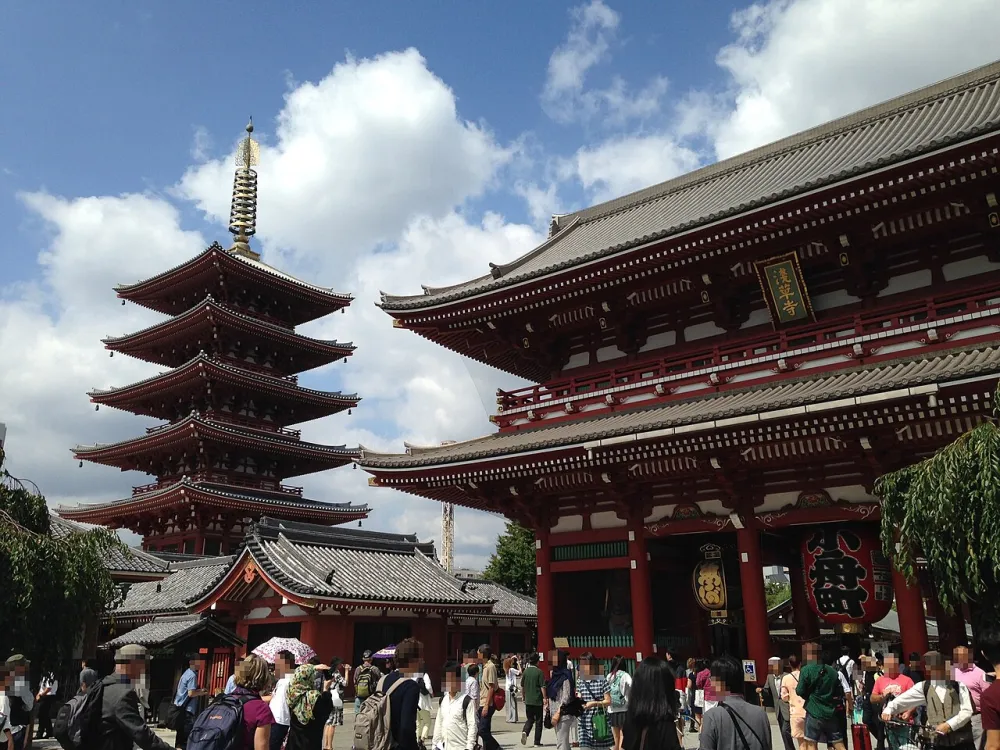
Senso-ji holds its Shusho-e service from December 31 to January 6 and New Year's Grand Prayers from January 1 to 7. If you are staying in Ueno, Asakusa, or Kuramae and want a short first outing, ride the Tokyo Metro Ginza Line or Toei Asakusa Line to Asakusa and walk in. When the approach gets packed, families with kids can grab breakfast nearby until everyone is ready to queue, or push the visit back a day or two. If you want to follow up with a walk along the Sumida River, follow temple signage out of the crowd first; on windy days, hop on the Ginza Line to Ueno instead to cut down on outdoor waiting.
In Ueno, the Tokyo National Museum opens from 12:00 to 20:00 on January 1, 2027 for its "Museum Hatsumode" event, with a Year of the Sheep themed exhibition in Honkan Gallery E running through January 31. Taiko drumming and lion dances are scheduled in front of the Hyokeikan building from January 1 to 3, and you can duck inside the Honkan galleries whenever the cold bites. Since the museum closes from December 26 to 31, visitors staying in Ueno can pair a daytime shrine visit with museum galleries on January 1, after having dinner downtown and visiting Zojo-ji (or turning in early) on New Year's Eve.
The Tokyo National Museum's Year of the Sheep exhibition is included with regular collection admission: ¥1,000 for adults and ¥500 for university students, while visitors high school age and younger, under 18, or 70 and older enter free with proof of age. To catch the noon performances on January 1, walk about 10 minutes from JR Ueno Station's Park Gate. Expect metal detectors and bag checks at the main entrance—suitcases are not permitted inside, so store luggage at your hotel or the station if checking out that morning. Families can watch part of the courtyard performance before warming up indoors, or eat lunch near their hotel first and arrive closer to evening.
In Kyoto, Nijo Castle closes from December 29 to 31. From January 1 to 3, the castle grounds open while both Ninomaru Palace and Honmaru Palace remain closed to visitors. If touring the palaces is your main goal, hold Nijo Castle until January 4 and book timed online tickets in advance for Honmaru Palace. On a sunny January 1 afternoon, follow lunch in Higashiyama with an easy walk along the Kamo River to save energy for the next day; if cold rain hits, pick just one shrine or temple in your neighborhood and retreat to a nearby dining arcade or your hotel.
Factor Transit and Waiting Into First Sunrise Plans
Tokyo Tower's "Hatsuhi no Kai 2027" runs from 05:50 to 08:30 on January 1, with sunrise expected around 06:50 from the Main Deck, rain or shine. Main Deck tickets cost ¥12,000 for standing and ¥16,000 to ¥18,000 for seated spots, while the Top Deck is ¥40,000 and limited to 26 guests. If you are already staying around Shiba Park, you can walk straight over; if you are coming from farther away, pair your arrival target with the early-morning train schedule. Seated tickets let you wait indoors comfortably until dawn, whereas standing tickets mean spending a long stretch on your feet.
You can also ride JR's special New Year's Day trains, such as the all-reserved Fuji Excursion 85 departing Shinjuku at 04:13 and reaching Kawaguchiko at 06:17. The return Fuji Excursion 84 leaves Kawaguchiko for Tokyo at 15:39, so arrange an alternate route back if you plan to leave around midday. Keep in mind you still have to walk from the station to your sunrise vantage point—check the walking route, nighttime lighting, and whether there is an indoor waiting spot before buying rail tickets. The same goes for the Inubo Hatsuhinode 1 departing Takao at 01:30 and reaching Choshi at 04:08, where you need a connection to the coast; both options severely cut into sleep.
When people in your group have very different enthusiasm levels for an early wakeup, let the early risers walk over to Shiba Park on their own and meet everyone else at the hotel later. If taking older relatives to a lake or the coast, prioritize spots with an indoor shelter before sunrise and pack hot drinks plus an extra layer. Under heavy cloud cover, skip the long wait and pre-dawn commute altogether—grab hot coffee in town and wait for museums to open. Anyone staying out until midnight on December 31 can sleep in on January 1 and push Hatsumode to later in the day.
Overnight at an Onsen Ryokan Where Dinner Is the Main Event
If your group wants hot springs, multi-course meals, and a quiet midnight in the room, Hakone gives you two distinct base options. Hakone-Yumoto is easiest if you are bringing luggage through Odawara and booking a half-board (dinner-and-breakfast) plan. Moto-Hakone and the shores of Lake Ashi put lakeside paths and Hakone Shrine on the same side of the lake, making it easier to time your morning outing. If you book farther along Lake Ashi and plan an early shrine walk, check the exact road from your inn to the shrine—stretches with steep hills or narrow shoulders are much easier to tackle after daylight.
Hakone Tozan Bus has announced that from December 30, 2026 through January 11, 2027, Route K (the Hakone Old Highway Line) turns back at Amazake Chaya, suspending the section between Amazake Chaya and Odakyu Hotel de Yama. To reach Lake Ashi from Hakone-Yumoto Station, take Route H to "Hakone-jinja Iriguchi" and walk about 10 minutes; if you stop at Amazake Chaya for tea, you will need to return to Hakone-Yumoto to transfer. Travelers carrying bags are better off picking a hotel on a single direct bus line so you can check in during the afternoon and stay put.
From Hakone-Yumoto Station, Hotel Okada is about a 10-minute ride on the Onsen Village Shuttle Bus "Takidori Route A"—exit the second-floor ticket gates, turn left across the pedestrian bridge over National Route 1, and board downstairs in front of the tourist information center (¥200 for junior high and older, ¥100 for elementary students, free for preschoolers). On Lake Ashi, Odakyu Hotel de Yama runs a guest shuttle from Bus Stop 6 outside the Moto-Hakone Port pirate ship pier, with the regular last bus at 17:10 and winter hours adjusted by the hotel; factor in taxi costs from Hakone-Yumoto if you will arrive late. If you are leaving Tokyo on the afternoon of December 31 and want to make dinner without transfers, Hakone-Yumoto is simpler; lakeside inns work best when you arrive in daylight and walk to the shrine the next morning.
When booking a half-board stay, check dinner start times, latest check-in cutoffs, and whether separate children's meals can be arranged. If a long-haul flight lands on the afternoon of December 31, rushing up into the mountains risks missing dinner—spend your first night in Tokyo or Odawara instead and head into Hakone on January 1. If you already hold a December 31 half-board booking, message your arrival estimate to the property and save sightseeing boats and ropeways for the following day. When fog or strong winds hide the lake, heading back early for a hot spring soak beats waiting at a cold bus stop.
Toshikoshi soba (year-end buckwheat noodles) is the classic December 31 meal, followed by osechi ryori and ozoni on January 1. To eat these at your inn, look for dedicated New Year plans that spell out what is included for New Year's Eve dinner and New Year's Day breakfast. If you preorder boxed osechi for takeout, plan around the shop's pickup window and make sure your accommodation has space to store and serve it. City travelers can simply eat at a soba shop early on December 31 before heading to a temple, avoiding a late-night hunt for hot food after midnight.
The 77th NHK Kohaku Uta Gassen is scheduled to air on December 31, 2026 from 19:20 to 23:45 JST, with a news break in the middle. Families looking for a calm night can keep the broadcast on in the room, watch part of it with the kids, and turn in before midnight. Booking a rate that includes New Year's Day breakfast keeps the morning cozy—you can eat before stepping out and visit a nearby shrine once everyone feels rested.
A few useful answers
Where can I watch New Year's Eve fireworks in Japan for 2026–2027?
Universal Studios Japan in Osaka schedules its countdown fireworks show from 23:50 on December 31 to 00:05 on January 1, 2027, requiring a Party Pass. Neither Tokyo Disneyland nor Tokyo DisneySea is holding a New Year's Eve countdown event this year.
Can visitors ring the New Year's Eve temple bells themselves in Japan?
At Tokyo's Zojo-ji, yes—bell-ringing tickets (¥2,000, groups of four) are scheduled for release from 09:00 on December 1 at the second-floor office in Zojo-ji Kaikan. At Kyoto's Chion-in, monks strike the bell while ticketed guests watch.
How late does the Yamanote Line run on New Year's Eve in Tokyo?
JR East has announced special overnight trains running roughly from 01:00 to 04:50 on January 1 on both the inner and outer loops, about every 10 to 30 minutes. Station-by-station schedules appear in the Digital JR Timetable and JR East app starting December 7.
Where can I go in Kyoto on New Year's Eve if Chion-in tickets are sold out?
Head to Yasaka Shrine for Okera-mairi, which begins around 19:30 and runs until roughly 05:00 on January 1 with free admission. If you are already in Kyoto on December 27, you can also watch Chion-in's free public rehearsal ringing at 14:00.
Is staying up until midnight on New Year's Eve in Japan good for kids?
If you want an early bedtime, choose Tokyo's Zojo-ji bell-ringing at 21:45 or Kyoto's Yasaka Shrine Okera-mairi starting right after dinner. Then save Hatsumode for January 1 near your hotel before traveling during daylight.
Official information and references
Sources used in this guide.
- Zojo-ji | 2026 Joya no Kane Schedule Change
- Zojo-ji | Bell-Ringing Tickets, Joya no Kane, and Hatsumode
- Tokyo Metropolitan Bureau of Transportation | Nearest Toei Subway Exits for Zojo-ji
- The Prince Park Tower Tokyo | Surrounding Area Access Map
- Chion-in | 2026 Joya no Kane, Tickets, and Rehearsal Ringing
- Yasaka Shrine | Joya-sai, Okera-mairi Fire, and New Year Rituals
- Keihan Railway | 2026 Okera-mairi Hours and Gion-Shijo Station Access
- Hotel Granvia Kyoto | Kyoto Station Access
- Universal Studios Japan | NO LIMIT! COUNTDOWN 2027 Press Release
- Universal Studios Japan | 2027 Countdown Ticket Types, Pricing, and Entry
- Universal Studios Japan | Party Pass and Young Child Admission Rules
- Hotel Keihan Universal Tower | Station and Park Walking Routes
- Hotel Universal Port | Hotel Access
- Sumiyoshi Taisha | Access and Hatsumode Special Page
- Tokyo Disney Resort | December 2026 Operating Hours and Ticket Prices
- JR East | 2026–2027 Winter and Year-End/New Year Special Trains
- JR Central | Nozomi Shinkansen All-Reserved Seating
- Meiji Jingu | Harajuku, Yoyogi, and Sangubashi Entrances
- Senso-ji | Shusho-e, Joya no Kane, and Annual Events
- Senso-ji | Rail Access
- Tokyo National Museum | 2027 New Year's Day Opening and January Programs
- Tokyo National Museum | Year-End Closure, Access, and Opening Hours
- Nijo Castle | Castle Opening and Palace Closure Dates
- Tokyo Tower | 2027 Hatsuhi no Kai First Sunrise Event
- Hakone Tozan Bus | Route K Year-End/New Year Partial Suspension
- Hakone Navi | Route H to Hakone-jinja Iriguchi
- Japan National Tourism Organization (JNTO) | Osechi, Ozoni, and Toshikoshi Soba
- NHK | 77th Kohaku Uta Gassen Broadcast Date and Hours
- Senso-ji | Joya no Kane and Hyakuhachikai
- Senso-ji | New Year Prayers and Midnight Bell-Ringing
- Chion-in | Subway, Bus, and Walking Access
- Kyoto City Tourism Association | 2026 Citywide Temple Joya no Kane Guide
- Universal Studios Japan | Countdown Show and Attraction Timed Entry
- Hotel Okada | Hakone-Yumoto Shuttle Bus Route and Fares
- Odakyu Hotel de Yama | Moto-Hakone Port Guest Shuttle
- Zojo-ji | Walking Times from Nearby Stations