How to choose your 2026 New Year's Eve plan in Japan: schedules and ticket prices for Zojo-ji in Tokyo, Chion-in and Yasaka Shrine in Kyoto, and USJ in Osaka, plus late-night trains, hotels, New Year's Day hatsumode and sunrise spots.
- Region & Focus
- TokyoFestivals and fireworks
- Reading Scope
- 22 min read · 8 chapters · 5 Q&As
- Official Verification
- 36 official sources checkedUpdated 22 November 2026
Chapter Route Map (tap any stop)
- Decide Where to Spend Midnight First
- Zojo-ji in Tokyo Rings Earlier This Year
- Spending New Year's Eve in Kyoto's Higashiyama
- A Night by Osaka Bay for the USJ Fireworks
- Checking Overnight Trains Around Midnight
- Save Hatsumode for New Year's Day
- Factor In Travel and Waiting Time for First Sunrise
- Hot-Spring Ryokan Stays: Let Dinner Set the Pace
- Quick Q&A
For New Year's Eve 2026 in Japan, Zojo-ji Temple in Tokyo starts ringing its Joya no Kane bells early at 21:45 on 31 December, leaving plenty of time to get back to your hotel. If you want to ring in 2027 to the sound of temple bells at midnight, book a ticket in advance for Chion-in in Kyoto. For theme-park fireworks, head to Universal Studios Japan in Osaka with a dedicated Party Pass. Pick one main event for the night and book a hotel within walking distance afterwards. You can then build your New Year's Day hatsumode, sunrise viewing and museum stops around whenever your group wakes up.
Decide Where to Spend Midnight First
If you want to hear temple bells on New Year's Eve in Tokyo, Zojo-ji in Shiba Park is an easy evening choice: head over after dinner and the ceremony wraps up around 23:00. To carry the bells across the turn of the year, Chion-in in Kyoto begins ringing around 22:20 and continues until roughly 00:15 on New Year's Day, with advance tickets required. If fireworks are your priority, base your 31 December hotel and itinerary around Universal Studios Japan on Osaka Bay. Choosing one realistic anchor for the evening leaves breathing room for dinner, luggage storage and queues.
The year-end bell-ringing, Joya no Kane, forms part of a temple's year-end Buddhist service. At Chion-in, the 108 strikes represent earthly desires, with 17 monks working in shifts to swing the beam. Hatsumode—the first shrine or temple visit of the new year—can take place at either a shrine or a temple, so you can easily hear the bells on 31 December and do hatsumode elsewhere on 1 January. If you want lantern-lit temple grounds and festive atmosphere without staying out late, stroll around Shiba Park in the early evening in Tokyo and visit a neighbourhood shrine the next morning. In Kyoto, you can see the okera sacred fire at Yasaka Shrine after dinner and head indoors before midnight.
When travelling with children or older relatives, trace the late-night walk back to your hotel on a map before booking. A route that crosses a river, drops into an underground walkway or cuts through dense crowds of worshippers feels far longer at midnight than it looks as the crow flies. To enjoy the festive mood early, check in before dark and build the evening around dinner and a short walk. Anyone hoping to catch the first sunrise on New Year's Day will also appreciate an event that finishes before 23:00.
| Event | Time (JST) | Tickets & Entry |
|---|---|---|
| Zojo-ji Joya no Kane, Tokyo | 21:30 service; ringing starts 21:45, ends around 23:00 | Bell-ringing ticket ¥2,000 required to strike the bell |
| Yasaka Shrine Okera Mairi, Kyoto | 19:00 year-end ritual; sacred fire distributed from around 19:30 to approx. 05:00 on 1 Jan | Free entry |
| Chion-in Joya no Kane, Kyoto | Service around 22:00; ringing starts 22:20, ends around 00:15 on 1 Jan | Advance ticket ¥3,000; free for primary-school children and younger |
| USJ Countdown, Osaka | Park entry from 19:00; fireworks show 23:50–00:05 on 1 Jan | Party Pass ¥16,900; free for children aged 3 and under |
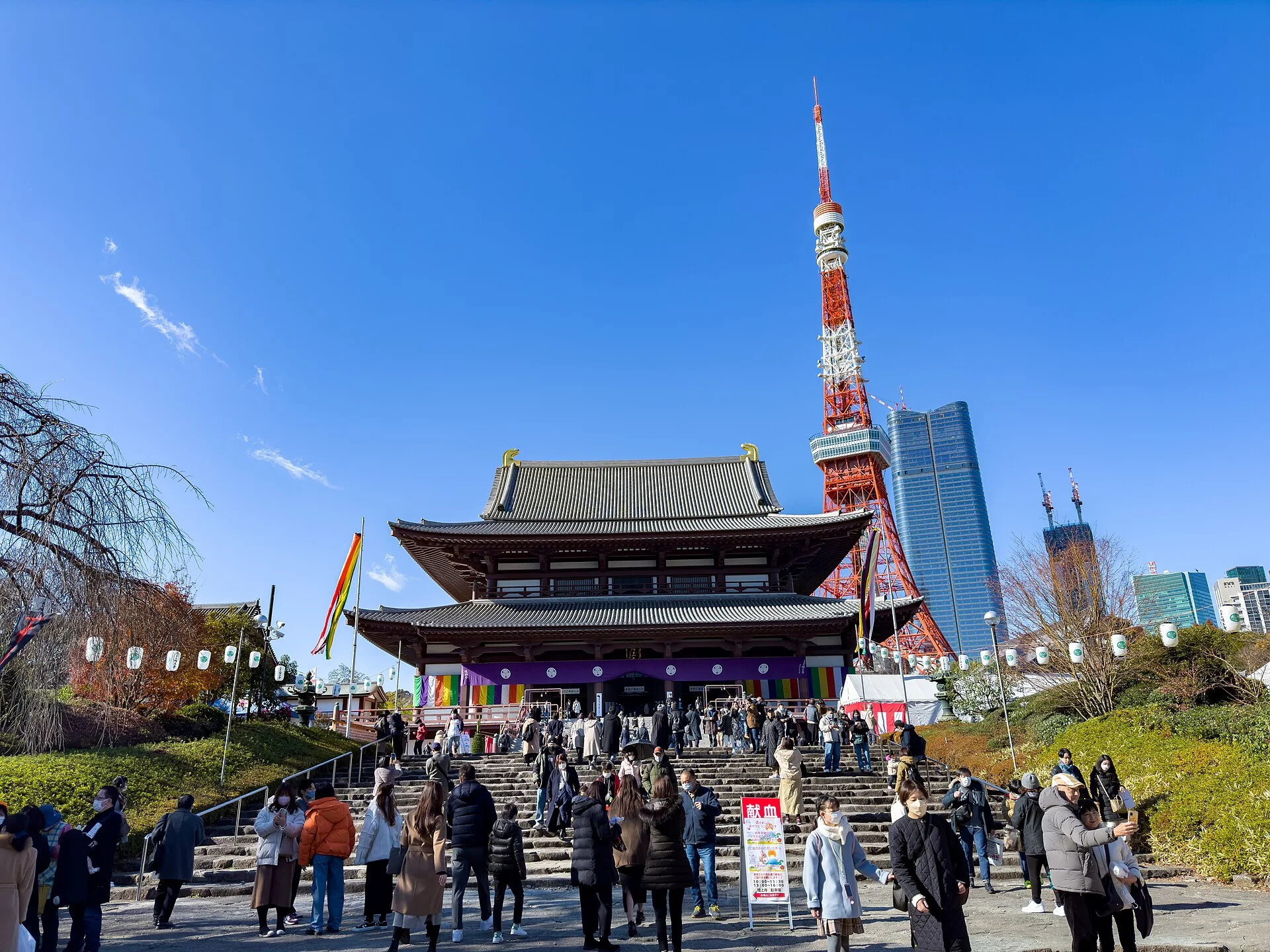
How to choose your 2026 New Year's Eve plan in Japan: schedules and ticket prices for Zojo-ji in Tokyo, Chion-in and Yasaka Shrine in Kyoto, and USJ in Osaka, plus late-night trains, hotels, New Year's Day hatsumode and sunrise spots.
Zojo-ji in Tokyo Rings Earlier This Year
Zojo-ji announced on 1 November that its 31 December 2026 Joya no Kane service will move earlier to 21:30, with bell-ringing starting at 21:45 and finishing around 23:00. If you are staying in Hamamatsucho or Shiba Park, eating dinner around 19:00 before heading to the temple is far more relaxed than hunting for a table afterwards. Coming from Ueno or Shinjuku, drop your bags at your hotel first or dine near your departure station, leaving enough time to walk into the precincts. If you still want to be on the grounds at midnight, stay on for New Year prayers after the earlier bell session.
General bell-ringing tickets are scheduled to go on sale from 09:00 on 1 December at the temple office on the second floor of Zojo-ji Kaikan, priced at ¥2,000 each with a souvenir included. Each person needs one ticket, and visitors strike the bell in groups of four; a party of three will be paired with another visitor. If you arrive in Japan late in December, treat striking the bell yourself as a bonus if tickets remain, as your dinner and walk back work either way. The temple handles bell tickets separately from amulets and fortune slips—the precinct amulet counter opens from 22:00 on New Year's Eve until 18:00 on New Year's Day, so you can easily leave amulet shopping until the next day.
From the Toei Mita Line, Zojo-ji is normally a 3-minute walk from Onarimon Station (Exit A1) or Shiba-koen Station (Exit A4). From Daimon Station on the Toei Asakusa or Oedo lines, it takes about 5 minutes. Travellers using the JR Yamanote or Keihin-Tohoku lines can walk from Hamamatsucho Station, listed by the temple at around 10 minutes. Akabanebashi Station on the Oedo Line is roughly a 7-minute walk and suits anyone approaching from the Tokyo Tower side. Decide which line you will take back in advance so you exit towards the right station without backtracking in the crowd.
For the shortest possible walk back, The Prince Park Tower Tokyo sits right inside Shiba Park; the hotel's access map puts it around 2 minutes on foot from Akabanebashi Gate and 3 minutes from Shiba-koen Exit A4. If you want easy links to Haneda Airport and Ueno on New Year's Day, staying around Hamamatsucho Station gives you daytime Tokyo Monorail access alongside a walkable route home on New Year's Eve. When comparing room rates in both areas, factor in whether you can book a seated New Year's Eve dinner nearby. Staying close to the temple makes it easy to pop back for an extra layer, while a station-side hotel simplifies luggage, check-out and onward rail connections.
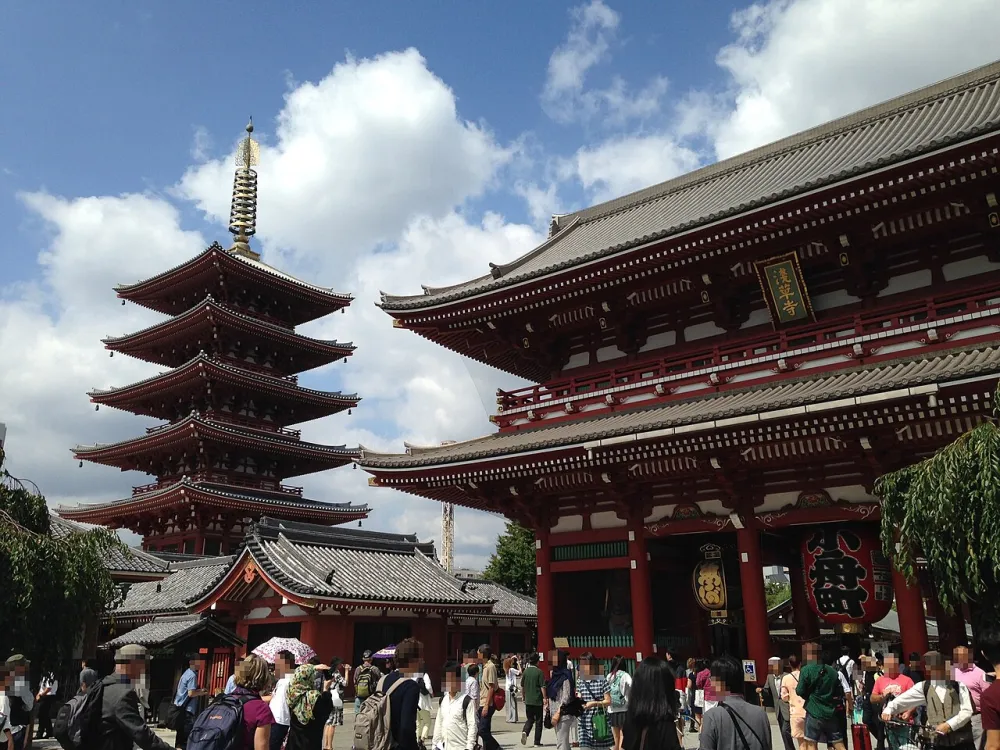
If you specifically want to hear bells at midnight in Tokyo, head to Senso-ji in Asakusa instead. The temple's New Year prayer page lists midnight bell-ringing at Bentenyama from 00:00, with members of the temple's Hyakuhachikai taking over after the first few strikes to complete the 108 rings. For an overnight stay in Asakusa, pick a hotel east of Kaminarimon Gate near Asakusa Station so you can walk straight back after your visit. To fit both temples into the same day, visit Shiba Park in daylight for Zojo-ji's Main Hall and Tokyo Tower, then return to Asakusa for dinner—separating daytime sightseeing from midnight saves you crossing half of Tokyo between two bell ceremonies. You can plan your daytime walk around our Senso-ji visiting route.
Spending New Year's Eve in Kyoto's Higashiyama
Yasaka Shrine holds its year-end ritual in the Main Sanctuary at 19:00 on 31 December. Keihan Electric Railway's 2026 event guide lists Okera Mairi from around 19:30 until roughly 05:00 on 1 January, with free entry. It is around a 5-minute walk east from Keihan Gion-Shijo Station. Priests transfer the sacred fire to lanterns in the grounds, where worshippers traditionally light a kitchonawa rope to carry an ember home for lighting the New Year hearth or cooking ozoni. You can watch the fire-lighting beside the lanterns and stay as long as you like. If you are heading on to Chion-in, make sure any ember is completely extinguished before leaving, as open flames are strictly prohibited inside Chion-in.
At Chion-in, the New Year's Eve service begins in the bell tower around 22:00, with the first strike at 22:20 and the final ring around 00:15 on 1 January. Tickets are split into four timed batches, each giving roughly 30 minutes at the bell tower. After paying, check your confirmation notice and report to the Kuromon Gate car park at your batch's designated time. Those starting at Yasaka Shrine should book dinner before visiting the shrine; if dinner runs late, walk straight from your hotel to Kuromon Gate to make your Chion-in entry slot. An earlier batch also works well if members of your group want to split up and return to their hotel at different times.
From Kyoto Station, take the Karasuma underground line to Karasuma Oike and change to the Tozai Line for Higashiyama Station; the temple lists an 8-minute walk from Higashiyama. If you are already at Gion-Shijo Station, the walk to Chion-in takes roughly 20 minutes and pairs easily with dinner along the way, while Hankyu Kyoto-Kawaramachi Station is about a 15-minute walk. Save "Chion-in Kuromon" as its own pin for New Year's Eve so you head straight to the check-in area—even if you entered via Sanmon Gate or Yuzen-en Garden during the day, evening ticket holders must follow instructions and enter via Kuromon.
Online applications open at 14:00 on 1 December and close at 16:59 on 24 December, or earlier if sold out. Payment is by card online at ¥3,000 per person, with primary-school children and younger admitted free. Travellers already in Kyoto can also buy cash tickets in person at the Yuzen-en counter from 7 to 24 December between 09:00 and 16:00, with 400 advance tickets split across the four batches. There is no on-the-day ticket desk on 31 December. Only the monks ring the bell, visitors follow a one-way route with no re-entry once you leave the bell tower, toilets must be used before entering, and tripods, selfie sticks and flash photography are banned.
On the afternoon of 27 December, you can watch the monks hold a public rehearsal at Chion-in starting at 14:00, with plenty of time afterwards to walk back into central Kyoto for dinner. No booking is required for the rehearsal, though entry to the bell tower is capped if it reaches capacity. It pairs easily with lunch around Sanjo or Higashiyama while it is still light out and easy to navigate back. If you miss out on New Year's Eve tickets, catch the okera fire at Yasaka Shrine earlier in the evening and watch Chion-in's livestream back in your hotel room. In rainy weather, limit outdoor time to a single stop—eat in Gion, see the sacred fire briefly, and watch the bells indoors.
Kawaramachi and Gion-Shijo sit on opposite sides of the Kamo River. Since the main New Year's Eve spots are on the east bank, staying in Gion or Higashiyama cuts down on bridge crossings and busy shopping streets. Kawaramachi offers more dining choice, though you should allow extra time for crowds along Shijo-dori when walking over to Yasaka Shrine. Travellers catching a Shinkansen the next morning might prefer Hotel Granvia Kyoto, directly connected to JR Kyoto Station's Central Exit for effortless luggage handling. That base works best if you visit Yasaka Shrine early or already have a clear route back to the station after the bells—swap "walkable from the temple" for "which late train gets me back to Kyoto Station".
For an earlier daytime bell ceremony suited to children, consider Myoman-ji in northern Kyoto. Kyoto's tourism board lists its Toshiokuri no Kane on 31 December from 15:00 to 17:00, with visitors queueing to strike the bell in order of arrival from 15:00 until gates close at 17:00. In Arashiyama, Tenryu-ji hands out numbered tickets from 23:30 for the first 108 groups, with ringing starting at 23:45 and monks taking the first and final strikes. Since these two temples sit at opposite ends of Kyoto, pick one close to your accommodation—and use their timings to decide how late your group genuinely wants to stay up before booking your hotel.
A Night by Osaka Bay for the USJ Fireworks
Universal Studios Japan's NO LIMIT! COUNTDOWN 2027 runs from 19:00 on 31 December until park closing at 21:00 on 1 January, with the main countdown show scheduled from 23:50 to 00:05 featuring around 5,000 fireworks and lighting effects. The Party Pass costs ¥16,900 including tax—the same rate for adults, children and seniors, and free for children aged 3 and under. Regular 31 December Studio Passes end at 17:00, so anyone holding both a daytime pass and a Party Pass will have a two-hour gap between daytime closing and evening re-entry, ideal for heading back to your hotel to eat and warm up.
General ticket sales open around 21:00 on 4 November, with ticket tiers and live availability listed on separate pages. Standard Party Passes are sold through the official online store, Lawson Ticket and selected partner hotels—though partner hotels sell only to their own guests. Special countdown viewing areas, Express Passes and dining packages each carry their own terms. If you are buying for a family, price up the base entry tickets first before deciding which add-ons are worthwhile: four standard Party Passes alone come to ¥67,600 before hotels and transport. Standard tickets are non-refundable and cannot be changed, so lock in your travel dates and hotel before paying.
Because the Party Pass grants unlimited re-entry over 26 hours, staying right by Universal City Station pays off. Hotel Keihan Universal Tower is about a 1-minute walk from the JR station and 2 minutes from the park, while Hotel Universal Port is roughly a 3-minute walk from the station. Families who mainly want the fireworks can rest in the evening, walk in shortly before midnight and stroll straight back to bed afterwards. If you plan to stay through New Year's Day afternoon, you can return to your room in the morning for breakfast or a nap before heading back inside—just check your check-out and luggage storage times first.
From Umeda, take the JR Osaka Loop Line to Nishikujo and transfer to the JR Yumesaki Line for Universal City. If you are travelling back after midnight via Nishikujo, check departure times for both legs separately so you are not stranded with a long wait on the connecting train. When part of your group only has daytime tickets, arrange to meet at a hotel or a restaurant outside the gates, and give each person their own digital ticket so everyone can pass through the gates independently. Super Nintendo World Area Timed Entry tickets in the official USJ app are separate from your Party Pass and are issued once per person during the countdown event. Expect temporary ride maintenance closures overnight, so save top attractions for early entry or after daybreak on 1 January.
If you are weighing up paid add-ons, decide first where you want to be at midnight. The indoor "USJ Grand Music Revival" show runs from 23:45 to 00:30 on 1 January and requires a package that includes show admission, overlapping with the 23:50–00:05 outdoor countdown. Choose the indoor package if you prefer live music out of the winter wind; if you want an unobstructed view of the full fireworks show, put your budget towards a countdown viewing area or stick with a standard Party Pass and follow park signage to an outdoor spot with time to eat and regroup beforehand.
Travellers staying in Namba who want a more traditional New Year's Day can keep New Year's Eve local and take the Nankai Main Line down to Sumiyoshi Taisha during the day on 1 January, around a 3-minute walk east from Sumiyoshitaisha Station. From Tennoji, take the Hankai Tramway from Tennoji-Ekimae to Sumiyoshi-torii-mae. Mind the similar station names: Sumiyoshihigashi on the Nankai Koya Line sits on the opposite side of the shrine, about a 5-minute walk west. Visiting by day lets you stop in Tennoji for a meal or ride the Nankai Line straight back to Namba depending on your next hotel.
In the Kanto region, both Tokyo Disneyland and Tokyo DisneySea list opening hours of 09:00–21:00 on 31 December and neither park is holding a New Year's Eve countdown event. A 1-Day Passport for adults costs ¥11,900 at either park that day. If you are visiting Maihama, spend the day on rides and dining, then head back to central Tokyo or a Maihama hotel for midnight. Anyone determined to do both Disney and a countdown should schedule them on separate days, especially as Osaka's USJ party requires its own ticket and a Shinkansen journey from Tokyo.
Checking Overnight Trains Around Midnight
JR East has announced extra overnight trains across six greater Tokyo routes after the last regular trains on 31 December 2026 through the early hours of 1 January 2027. Both the inner and outer Yamanote Line loops run roughly 01:00–04:50 every 10–30 minutes. The Keihin-Tohoku and Negishi lines between Sakuragicho and Omiya run roughly 01:00–04:00 at 10–80 minute intervals, while local Chuo-Sobu Line trains between Mitaka and Chiba operate roughly 00:10–04:40 at intervals of 10–125 minutes. The remaining three corridors—the Chuo Line Rapid (Mitaka to Takao), Yokosuka Line (Yokohama to Zushi), and the Sobu Main and Narita lines from Chiba to Narita—run to fixed departure times.
From 7 December, overnight schedules appear in the Digital JR Timetable and the JR East App. If an event ends at 00:30, set your journey-planner departure time to 00:30 on 1 January so the search pulls the overnight timetable rather than regular daytime trains. Anyone with a transfer should check each leg individually: taking the Yamanote Line to Shinjuku only gets you halfway if a private railway connection has already stopped running. If your hotel is on the Yamanote Line, note down beforehand whether you need the inner or outer loop so you only have to confirm the platform number at the station.
If you only have one night in Kyoto and stay out past midnight, walking back from Gion to a hotel in Higashiyama is far easier on check-out and luggage than trying to reach Shin-Osaka late at night. If you must return to Osaka after midnight, verify both the Keihan train from Gion-Shijo towards Osaka and your onward connection from the arrival station. In Namba, Umeda or around Kyoto Station, pick a taxi pick-up spot in advance, as roads around major temples and shrines fill with pedestrians and traffic controls—use a hotel taxi rank where possible, and keep a secondary pick-up point within walking distance for the return.
On the Tokaido and Sanyo Shinkansen between Tokyo and Hakata, every Nozomi service is all-reserved from 25 December 2026 to 5 January 2027. Hikari and Kodama trains still carry non-reserved seats on a first-come, first-served basis, though they make more stops. Standard reserved seats go on sale at 10:00 JST one month before travel, with earlier pre-booking available via Smart EX or Express Reservation on eligible tickets. Travelling from Tokyo to Osaka on 31 December, aim for a train arriving before early evening and work backwards through check-out, lunch and station arrival times so you make USJ's evening entry comfortably.
On transit days, leave large suitcases in hotel or station luggage storage before visiting shrines or temples. If you are forwarding bags to your next hotel ahead of New Year's Eve, check cut-off times and year-end delivery dates the night before, and pack an overnight bag with clothes, medication and chargers. When long-distance rail passes and event tickets sit on different apps, save every booking reference, departure station, meeting gate and change policy in one offline note—if mobile data slows down in dense crowds, everyone in your party can still find the right entrance.
Save Hatsumode for New Year's Day
A hatsumode visit breaks down into queueing, praying and buying amulets, so trim the extras if you are short on time. Save street photography until you are clear of the main hall flow—over the holiday, keeping the approach moving matters more than stopping for every angle. With a buggy or wheelchair, pick an entrance close to a station with flat approaches. Follow one-way crowd barriers when directed, and agree on a street corner or shop past the main exit where your group can regroup.
Meiji Jingu's Harajuku Exit (South Exit) is roughly a 1-minute walk from JR Harajuku Station or Meiji-jingumae 'Harajuku' Station on the Tokyo Metro, though that only brings you to the start of the forest approach. If you are staying in Yoyogi or southern Shinjuku, use the Yoyogi Exit (North Exit), about 5 minutes from JR or Toei Yoyogi Station or Kitasando Station on the Fukutoshin Line, while Sangubashi Station on the Odakyu Line is around 5 minutes from the West Exit. Families planning to pray together should meet outside the same gate beforehand rather than entering from opposite ends and trying to find each other in the woods.
Senso-ji holds its annual Shushoe ritual from 31 December to 6 January and its New Year Grand Prayer from 1 to 7 January. If you are staying in Ueno, Asakusa or Kuramae and want a short first outing, take the Tokyo Metro Ginza Line or Toei Asakusa Line to Asakusa and walk straight to the temple. When the main approach packs out, families with young children can grab breakfast nearby until the queue settles, or push hatsumode back a day or two. For a riverside walk by the Sumida River, follow temple signage out of the main crowd first—or hop on the Ginza Line to Ueno on a windy afternoon for shorter walks and waits.
In Ueno, the Tokyo National Museum opens specially on 1 January 2027 from 12:00 to 20:00 for "Museum Hatsumode", alongside a Year of the Sheep themed exhibition in Room E of the Honkan running until 31 January. From 1 to 3 January, taiko drumming and lion dances are staged in front of the Hyokeikan—head inside the galleries if the winter air bites too hard. Because the museum closes from 26 to 31 December, anyone staying in Ueno for New Year can pair daytime shrine visits and gallery time on 1 January after a relaxed dinner and an evening visit to Zojo-ji on 31 December.
The Year of the Sheep display is included in regular museum admission, listed at ¥1,000 for adults and ¥500 for university students, while visitors aged under 18 (high-school age and younger) and seniors aged 70 and over enter the permanent galleries free with ID. To catch the midday performances on 1 January, allow about 10 minutes on foot from JR Ueno Station's Park Exit. The main gate runs metal detectors and bag checks and prohibits suitcases inside, so leave luggage at your hotel or station lockers if you are checking out that day. Families can watch part of a performance outside before warming up in the galleries, or visit in the late afternoon after lunch near your hotel.
In Kyoto, Nijo Castle closes from 29 to 31 December. From 1 to 3 January, the castle grounds open, though both the Ninomaru Palace and Honmaru Palace remain closed to visitors. If touring the palaces is your priority, save Nijo Castle for 4 January and book a timed online ticket in advance for the Honmaru Palace. On a sunny New Year's Day afternoon, lunch in Higashiyama followed by a stroll along the Kamo River keeps energy in reserve for the following day; if cold rain sets in, stick to a single shrine in your neighbourhood and retreat to a covered arcade or your hotel.
Factor In Travel and Waiting Time for First Sunrise
Tokyo Tower's "Hatsuhinokai 2027" event runs on 1 January from 05:50 to 08:30, with organisers estimating sunrise from the Main Deck around 06:50; the event goes ahead rain or shine. Standing tickets on the Main Deck cost ¥12,000, seated tickets are ¥16,000 to ¥18,000, and the Top Deck is ¥40,000, capped at 26 people. If you are already staying around Shiba Park, you can walk there; if not, check early-morning train times alongside your target arrival window. Seated tickets let you wait indoors in comfort, whereas standing guests should prepare for a long stretch on their feet.
Another option is a special JR New Year's Day train, such as the all-reserved Fuji Excursion 85, departing Shinjuku at 04:13 and reaching Kawaguchiko at 06:17. The return Fuji Excursion 84 leaves Kawaguchiko for Tokyo at 15:39, so you will need another route back if you plan to leave by midday. Before booking any train ticket, check the final leg from the station to your sunrise vantage point—including lighting along the path and whether there is an indoor waiting area. Likewise, the Inubo Hatsuhinode 1 leaves Takao at 01:30 and reaches Choshi at 04:08, requiring an onward transfer to the coast and cutting deeply into your night's sleep.
If your group is split on getting up before dawn, let the early risers walk over to Shiba Park on their own while everyone else sleeps in and meets at breakfast. With older relatives along a lakefront or coast, look for a spot with heated indoor shelter before daybreak and pack hot drinks plus an extra layer. When heavy cloud rolls in, staying in town for a hot coffee until the museums open beats standing in the cold for a hidden sun. And if you stayed out past midnight on 31 December, sleep through dawn and take your hatsumode at a gentle pace later in the day.
Hot-Spring Ryokan Stays: Let Dinner Set the Pace
If your group wants hot springs, a multi-course dinner and a quiet New Year's Eve in your room, Hakone offers two contrasting bases. Hakone-Yumoto suits travellers bringing suitcases through Odawara, making it easy to book a half-board stay covering dinner and breakfast. Staying around Moto-Hakone or on the shores of Lake Ashi puts lakeside paths and Hakone Shrine on your doorstep for a flexible New Year's Day morning. If your lakeside inn sits further out and you plan an early shrine visit, inspect the walking route closely on a map first—steep hills and narrow road shoulders are far safer to tackle once it is light.
Hakone Tozan Bus has announced that from 30 December 2026 to 11 January 2027, Route K (the Old Tokaido Line) will turn back at Amazake Chaya, suspending the section between Amazake Chaya and Odakyu Hotel de Yama. To reach Lake Ashi from Hakone-Yumoto Station, take Route H to "Hakone-jinja Iriguchi" and walk roughly 10 minutes; if you stop at Amazake Chaya for tea, you will need to return to Hakone-Yumoto to change buses for the shrine. With luggage in tow, pick a hotel served by a single direct bus route so you can arrive in the afternoon and stay put.
From Hakone-Yumoto Station, Hotel Okada is around a 10-minute ride on the shared onsen shuttle's "Takidori A route": exit the second-floor ticket gates to the left, cross the footbridge over National Route 1 and board in front of the first-floor tourist information centre (¥200 for junior-high students and adults, ¥100 for primary-school children, free for pre-schoolers). On Lake Ashi, Odakyu Hotel de Yama runs a guest shuttle from Stop 6 outside the Moto-Hakone sightseeing boat pier—normally last departing at 17:10, with winter schedules adjusted by the hotel. If arriving late, weigh up staying closer to the station or taking a taxi from Hakone-Yumoto. Leaving Tokyo in the afternoon of 31 December with dinner booked, Hakone-Yumoto saves transfers; lakeside stays work better when you arrive in daylight and walk to the shrine the next morning.
When booking a half-board ryokan stay, check three details first: dinner start times, latest check-in and whether separate children's meals can be arranged. If a long-haul flight lands on the afternoon of 31 December, pushing straight into the mountains risks missing dinner—spending your first night in Tokyo or Odawara and heading up to Hakone on New Year's Day morning is much calmer. If you do book New Year's Eve half-board, tell the ryokan your expected arrival time and save ropeways and lake cruises for the next day. Should fog or strong winds close in over the lake, heading back early for a hot soak beats shivering at a bus stop.
Toshikoshi soba is the classic New Year's Eve supper, followed by osechi-ryori and ozoni on New Year's Day. To enjoy them at your inn, pick a New Year package that specifies exact dishes or meal courses for both New Year's Eve dinner and New Year's Day breakfast. Takeaway osechi boxes must be collected within strict shop windows and stored somewhere cool at your accommodation. Travellers staying in town can keep it simple by dining at a soba shop early on New Year's Eve before heading out to a temple, avoiding a late-night hunt for hot food.
The 77th NHK Kohaku Uta Gassen is scheduled to air on 31 December 2026 from 19:20 to 23:45 with a news break in between, making easy background viewing in your room before putting children to bed. For a warm, unhurried start to 1 January, choose a room plan that includes New Year's Day breakfast so you can eat without hunting for open cafés and head out to a nearby shrine or temple once everyone is rested.
A few useful answers
Where can I see New Year's Eve fireworks in Japan in 2026?
Universal Studios Japan in Osaka schedules its countdown show from 23:50 on 31 December to 00:05 on 1 January 2027, requiring a Party Pass. Neither Tokyo Disneyland nor Tokyo DisneySea is holding a New Year's Eve countdown event this year.
Can visitors ring the Joya no Kane temple bell themselves in Japan?
Yes, at Zojo-ji in Tokyo with a bell-ringing ticket: distribution is scheduled from 09:00 on 1 December at the temple office on the second floor of Zojo-ji Kaikan for ¥2,000, in groups of four. At Chion-in in Kyoto, only the monks strike the bell while ticketed visitors watch.
How late does the Yamanote Line run on New Year's Eve in Tokyo?
JR East has announced extra overnight trains on both the inner and outer Yamanote Line loops from around 01:00 to 04:50 on 1 January, running roughly every 10–30 minutes. Station-by-station times appear in the Digital JR Timetable and the JR East App from 7 December.
Where can I go in Kyoto on New Year's Eve if Chion-in is sold out?
Head to Yasaka Shrine for Okera Mairi, starting around 19:30 and running until roughly 05:00 on New Year's Day with free entry. If you are already in Kyoto on 27 December, you can also watch Chion-in's free public bell-ringing rehearsal at 14:00.
Is staying up until midnight on New Year's Eve in Japan suitable for young children?
If you want an earlier night, choose Zojo-ji in Tokyo where ringing starts at 21:45, or Yasaka Shrine in Kyoto where Okera Mairi begins right after dinner. You can then visit a local shrine for hatsumode on New Year's Day and travel during daytime hours.
Official information and references
Sources used in this guide.
- Zojo-ji | 2026 Joya no Kane Schedule Change
- Zojo-ji | Bell-Ringing Tickets, Joya no Kane & Hatsumode
- Bureau of Transportation Tokyo Metropolitan Government | Nearest Toei Subway Exits for Zojo-ji
- The Prince Park Tower Tokyo | Surrounding Area Access Map
- Chion-in | 2026 Joya no Kane, Tickets & Public Rehearsal
- Yasaka Shrine | Year-End Ritual, Okera Fire & New Year Events
- Keihan Electric Railway | 2026 Okera Mairi Hours & Gion-Shijo Station Access
- Hotel Granvia Kyoto | Kyoto Station Access
- Universal Studios Japan | 2027 Countdown Announcement
- Universal Studios Japan | 2027 Countdown Ticket Types, Prices & Entry
- Universal Studios Japan | Party Pass & Young Children Entry Terms
- Hotel Keihan Universal Tower | Station & Park Walking Routes
- Hotel Universal Port | Hotel Access
- Sumiyoshi Taisha | Access & Hatsumode Guide
- Tokyo Disney Resort | December 2026 Operating Hours & Ticket Prices
- JR East | 2026–2027 Winter & Year-End/New Year Extra Trains
- JR Central | All-Reserved Seat Policy for Shinkansen Nozomi
- Meiji Jingu | Harajuku, Yoyogi & Sangubashi Entrances
- Senso-ji | Shushoe, Joya no Kane & Annual Events
- Senso-ji | Rail Access
- Tokyo National Museum | 2027 New Year's Day Opening & New Year Programme
- Tokyo National Museum | Year-End Closure, Access & Opening Hours
- Nijo Castle | Castle Opening & Palace Closure Dates
- Tokyo Tower | Hatsuhinokai 2027
- Hakone Tozan Bus | Route K Year-End/New Year Partial Suspension
- Hakone Navi | Route H to Hakone-jinja Iriguchi
- Japan National Tourism Organization | Osechi, Ozoni & Toshikoshi Soba
- NHK | 77th Kohaku Uta Gassen Date & Broadcast Time
- Senso-ji | Joya no Kane & Hyakuhachikai
- Senso-ji | New Year's Day Prayer & Midnight Bell-Ringing
- Chion-in | Underground, Bus & Walking Access
- Kyoto City Tourism Association | 2026 Joya no Kane Across Kyoto Temples
- Universal Studios Japan | Countdown Show & Ride Timed Entry Tickets
- Hotel Okada | Hakone-Yumoto Shared Shuttle Route & Fares
- Odakyu Hotel de Yama | Moto-Hakone Pier Guest Shuttle
- Zojo-ji | Walking Times from Nearby Stations