How to book Nichinichi Sanpai at Kyoto's Saiho-ji (Kokedera), covering online fees from ¥4,165, cancellation rules, the 2027 winter closure, sutra copying, and routes via Kamikatsura, Matsunoo-taisha, and Arashiyama.
- Region & Focus
- KyotoShrines and temples
- Reading Scope
- 23 min read · 11 chapters · 6 Q&As
- Official Verification
- 35 official sources checkedUpdated 22 November 2026
- Key Topics
- BookingSeasonsRail travel
Chapter Route Map (tap any stop)
- Check Slots and Closing Times on the Booking Calendar
- Breaking Down the ¥4,165 Fee and Rescheduling Costs
- Getting There from Kyoto Station, Shijo, or Osaka
- Planning Your Return Direction and Transport Costs
- Entering via Shuhmyo-mon and Copying Sutras in Sairaido
- Walking Around Golden Pond in the Lower Garden
- Rain, Autumn Foliage, and the 2027 Maintenance Closure
- Half a Day at Matsunoo-taisha, or Onwards to Arashiyama
- If Kokedera Is Full, Nearby Temples on the Same Bus Line
- Age Rules, Meeting Points, and Where to Stay
- Pairing with Katsura Imperial Villa or Ryoan-ji for Kyoto Gardens
- Quick Q&A
Kyoto's Saiho-ji (Kokedera) requires advance booking. For a first visit, apply for 'Nichinichi Sanpai' (Daily Worship), open to general visitors via Saiho-kai, which takes you from sutra copying in the main hall out to Golden Pond in roughly 60 minutes according to the temple. Online admission starts from ¥4,165 per person, with a maximum of two people per booking, and visitors must be at least 13 years old on the day of entry. Lock in your arrival slot first, then plan your transport and lunch around it. From 12 January to 26 February 2027, regular worship is suspended for grounds maintenance, with a separate 'Zen and Art' programme held on selected dates in February.
Check Slots and Closing Times on the Booking Calendar
The Nichinichi Sanpai booking calendar, operated by Saiho-kai on behalf of the temple, separates general slots (Ippan-waku) from member slots (Kaiin-waku). Without paid Saiho-kai membership, simply register a standard account to book general slots. On the calendar, a circle shows availability, a triangle means spaces are nearly full, and a cross marks unavailable dates. Click into a date to check whether your preferred arrival time has spaces. If two of you want to copy sutras together and a slot shows only one space left, pick another time so your two bookings are not split into separate entry windows.
Online applications open two months before the visit date and close at 23:59 JST the day prior. All cut-offs follow Japan Standard Time (JST). You will need to enter visitor details and pay by credit card, as no other online payment method is accepted. Have both names ready before logging in so you can move straight from picking a date to checkout. Once finished, check 'My Page' to verify that your booking appears—your reservation is only confirmed once the record is listed there. If the payment screen throws an error, check My Page first; if no record appears, follow the temple's advice and wait a short while or retry with a different browser or card.
The time shown on the booking menu is your entry slot, and each date also displays a closing time. Some days open in the morning only, while the following day offers afternoon slots, so do not assume one day's schedule applies to the whole week. For example, if closing is listed as 13:00, visitors hoping for an unhurried walk around the pond will get noticeably less time from an 11:30 entry than from a 10:00 slot. Travellers arriving in Kyoto after midday who need to drop off luggage first should pick a date with confirmed afternoon availability.
Saiho-ji caps each Nichinichi Sanpai booking at two people. Parties of three or four can book across separate accounts by first checking that enough spaces remain in the same time slot, then completing payment individually. The temple asks groups of five or more not to visit together; larger families can schedule part of the group for Matsunoo-taisha or split across separate days. Agree on a meeting point outside after the visit so neither group waits by the main hall entrance or blocks the narrow pond path trying to fit everyone into one photo.
| Booking Method | Application Window | Minimum Fee & Payment |
|---|---|---|
| Online general slots | 2 months ahead until 23:59 JST the day before | From ¥4,000 plus ¥165 system fee; paid by card on booking |
| Return postcard (ofuku hagaki) | Postmarked 2 months to 1 month before visit | From ¥4,000; paid in cash at reception on the day |
How to book Nichinichi Sanpai at Kyoto's Saiho-ji (Kokedera), covering online fees from ¥4,165, cancellation rules, the 2027 winter closure, sutra copying, and routes via Kamikatsura, Matsunoo-taisha, and Arashiyama.
Breaking Down the ¥4,165 Fee and Rescheduling Costs
The temple refers to the admission offering as 'sanpai myogaryo', starting at ¥4,000 per person for Nichinichi Sanpai. From 29 October 2026 onwards, online bookings carry an additional ¥165 system fee per person, while credit card processing fees are listed as ¥0. At the base tier, one person pays ¥4,165 and two pay ¥8,330. If you require an official receipt, ask for one at the temple reception desk when checking in on the day.
Dates and entry times for Nichinichi Sanpai cannot be edited directly. To switch to another slot, first confirm an alternative date is open, then cancel your existing reservation via My Page and submit a new application. Cancellations made four or more days before the visit incur no fee on the worship offering; from three days to one day prior, a 50% cancellation fee applies, rising to 100% on the day itself. The ¥165 per-person system fee is non-refundable from the moment of payment, and reducing the number of visitors in a booking also incurs charges from three days ahead.
Taking a single-person booking for 18 December as an example, cancelling on or before 14 December refunds ¥4,000 at the minimum tier, whereas cancelling between 15 and 17 December refunds ¥2,000. If two days in your itinerary could work, book the one with the least transit and leave the other open for flexible plans. Reserving two dates just to hedge against the weather ties up scarce slots and adds extra cancellation charges if you decide late.
Long-term residents in Japan who prefer to pay in cash can apply by return postcard (ofuku hagaki). The postmark must fall between two months and one month before your intended visit; you may list several preferred dates, and the temple usually assigns a slot between 10:00 and 12:00, as exact hours cannot be specified by post. Your application is only accepted once the reply postcard is returned to you, which you must bring as your entry pass. Overseas visitors with a single free morning and fixed rail connections will find the online calendar far easier to plan around.
Getting There from Kyoto Station, Shijo, or Osaka
From the Kyoto Station area, Kyoto Bus No. 73 departs from stop C6 at the Karasuma Exit bus terminal, running via Uzumasa and Arashiyama to the 'Kokedera / Suzumushidera' terminus, roughly a 3-minute walk from the gate. On weekdays, Bus No. 83 runs from the same stop to the same terminus via Gojo-dori and Uzumasa Tenjingawa. Check the destination board on the front of the bus, as other departures from Kyoto Station terminate early at Arisugawa or Hankyu Arashiyama Station. Kyoto Bus posts Kokedera departures on its Kyoto Station timetable; if staying on the Hachijo Exit side, leave extra time to walk through the station.
From Kawaramachi or Sanjo-Keihan, take Kyoto Bus No. 63 all the way to the terminus. From Shijo-Karasuma, Kyoto City Bus No. 29 (bound for Rakusai Bus Terminal) stops at 'Suzumushidera / Kokedera-michi', which the temple notes is about a 10-minute walk; the adult fare from Shijo-Karasuma is ¥230. Although the two operators use similar stop names, their stops sit in different places. When sharing meeting points with travel companions, write down both the bus operator and the exact stop name so you can locate the closest stop for your return ride.
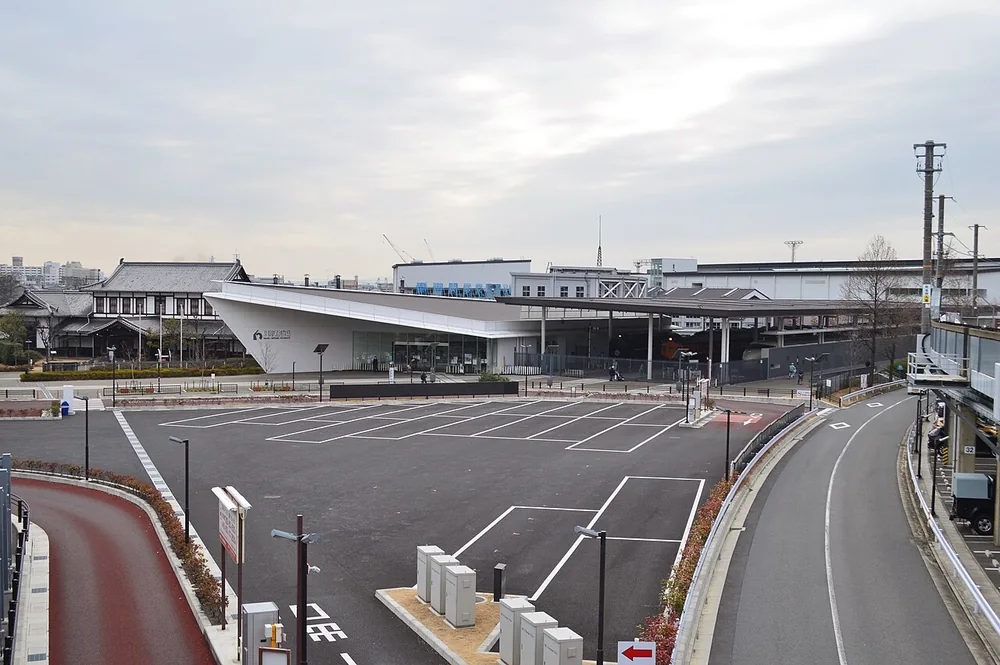
On busy autumn weekends when you need to make a timed slot, travellers staying in Kawaramachi or Karasuma can take the Hankyu Kyoto Line to Katsura and change to the Arashiyama Line for Kamikatsura Station. Arashiyama-bound trains from Katsura pull into Platform 1, where Hankyu's station map places the West Exit. Head towards the hills from there; the temple estimates a 15-minute walk from Kamikatsura Station to Saiho-ji. Trains returning from Arashiyama arrive on the opposite platform, and platforms are connected solely by stairs—if carrying heavy bags, exit the station first before checking your map. From Osaka-Umeda, ride the Hankyu Kyoto Line and change at Katsura straight for Kamikatsura without detouring via Kyoto Station.
Set Saiho-ji itself as your navigation destination when walking from the station. Once you enter the residential streets at the foot of the hills from Kamikatsura, stay on the main roads rather than cutting through narrow alleys that look shorter on a map. In dry weather, the walk makes a pleasant warm-up before entering the garden. In heavy rain, waiting under cover at a city-centre bus stop for a direct bus—or taking a taxi—cuts down your exposed walk. Build in a one-service buffer in case of road delays.
Saiho-ji's official website estimates a taxi from Kyoto Station takes 20 to 30 minutes and costs around ¥4,000. Ask the driver for 'Saiho-ji (Kokedera)' at 56 Matsuo Kamigaya-cho, Nishikyo-ku, Kyoto. Vehicles are barred from picking up or dropping off outside the temple gate, so use the designated 'Saiho-ji Drop-off Area' (Saiho-ji Jokojo) roughly 100 metres further back. Parties arriving in separate cabs can rendezvous there, and older travellers can pause to sort out umbrellas before walking to the entrance. While dearer than the bus for two people, taking a taxi straight from a long-distance train saves both a transfer and a walk.
Planning Your Return Direction and Transport Costs
If you are only spending the morning in Nishikyo Ward, note down both the return bus routes and the Kamikatsura rail line beforehand, then decide on the day. Short Kyoto Bus hops save buying a separate train ticket, though riding to and from Kyoto Station repeats the long corridor through Arashiyama and Uzumasa. If your hotel is near Shijo-Karasuma, take Hankyu from Kamikatsura and change at Katsura onto the Kyoto Line; if you have dinner booked in Kawaramachi, board Bus No. 63 towards Shijo-Kawaramachi or take Hankyu to Kyoto-Kawaramachi. Where you have left your luggage should dictate your return route more than which bus brought you in.
On Kyoto City Bus No. 29 between Shijo-Karasuma and Kokedera-michi, the single adult fare is ¥230, or ¥460 return. For two adults booking online at the base fee and riding that bus both ways, the combined day total comes to ¥9,250 before lunch. The Kyoto Subway & Bus 1-Day Pass costs ¥1,100 for adults and ¥550 for children, covering City Buses and valid zones on Kyoto Bus, whereas Hankyu, Randen, and JR lines cost extra. For a straightforward return trip to Kokedera alone, simply tap a transport IC card per ride; only buy the day pass if you plan several underground and bus trips later in the day.
Visitors holding a JR pass can ride the JR Sagano Line to Saga-Arashiyama Station, though a noticeable distance remains between the JR station and Kokedera, making this route best for those already starting on Arashiyama's north bank. Travellers coming along the underground Tozai Line can transfer at Uzumasa Tenjingawa Station onto Kyoto Bus No. 73, keeping the city-centre leg on rail and riding the bus only on the western stretch. If you are down to a single-service buffer, stick with the rail route rather than doubling back to save an extra fare.
For a 10:30 entry slot, plan departures from Kyoto Station or Kawaramachi to reach the temple gate around 10:10, leaving 20 minutes for waiting, walking, and locating the entrance. Factor road traffic into Bus No. 73 and pick an earlier service on the timetable. Via Kamikatsura, count backwards roughly 15 minutes of walking from 10:10 before checking connections at Katsura. Anyone still needing to locate a coin locker on arrival at a station will use up that margin first. Work backwards in the same way for afternoon slots, placing the end of lunch comfortably ahead of your departure time.
Entering via Shuhmyo-mon and Copying Sutras in Sairaido
Admission is via Shuhmyo-mon, which is distinct from the Somon gate shown in the temple's architectural overview. Have your booking details ready at the gate, then proceed to Sairaido (the main hall) for worship and sutra copying before following the path into the lower garden. Delayed visitors are still admitted, though you may have to wait at reception; contact the temple if you expect to be more than 30 minutes late. Closing time stays fixed regardless, so arriving late comes out of your own time on site. If travelling in from outside Kyoto, hold off on your first main meal until after the visit rather than rushing through your sutra to make a restaurant table.
Visitors copy the 49-character Enmei Jukku Kannon-gyo (Ten-Phrase Life-Prolonging Kannon Sutra), adopted by Saiho-ji in 2019 so international guests unfamiliar with kanji can take part easily. Follow the temple's guidance and trace the characters at a steady pace. If religious or other reasons make sutra copying difficult, let staff know on arrival. Saiho-ji does not sell garden-only tickets, so treat the main hall and the pond circuit as a single combined visit when planning your schedule.
A limited number of chairs are available in the main hall; they cannot be booked ahead, and you will need to wait if they are occupied. If anyone in your party has knee problems, ask staff about seating straight away and leave extra slack before your next transport connection. Due to gravel paths and steps, wheelchairs are not permitted in the grounds. Walking sticks are allowed, provided you wipe the tip clean before entering indoor spaces. Even if a taxi drops you close to the gate, expect uneven ground once inside the garden.
Lidded water bottles or flasks are permitted in the grounds, though eating is not allowed. On early summer mornings, finish breakfast at your hotel or station before setting off so you can travel light. Handheld photography and video are welcome in the garden, while tripods, monopods, and selfie sticks are banned; do not step off the path or hold up visitors behind you for an angle. Photography is forbidden inside all buildings, including pointing a lens out through a window from inside the main hall. Switch your phone to silent before entering Sairaido, and wait until a wider stretch of the garden path to pause and frame shots.
Walking Around Golden Pond in the Lower Garden
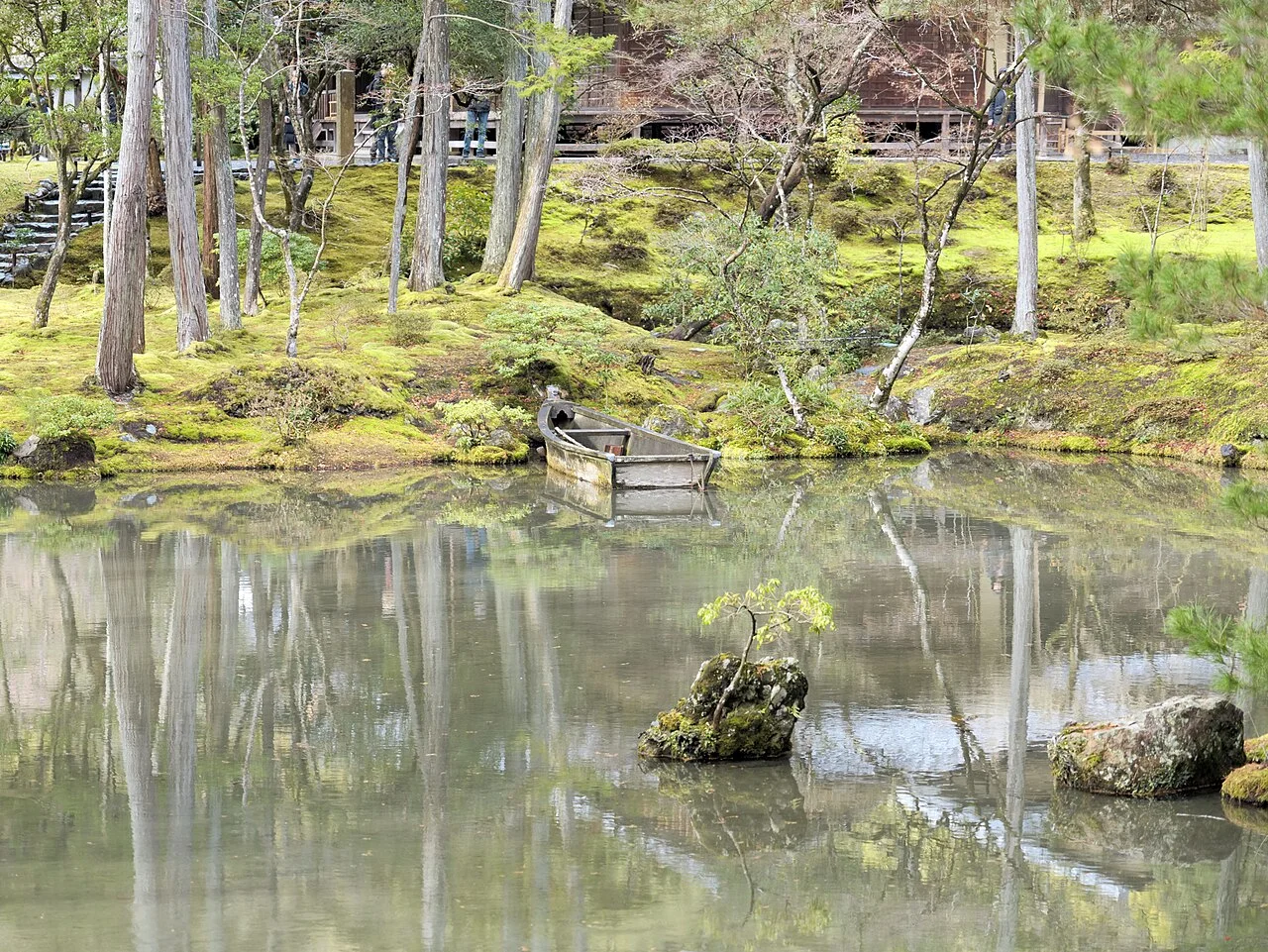
Golden Pond (Ogon-chi) forms the centrepiece of the lower stroll garden, its shoreline shaped after the character for 'heart-mind' (shin) and dotted with Asahi-jima and Yuhi-jima islands. As the path winds along the edge, tree trunks and mossy banks frame one side before a bend suddenly opens across to the far shore. Rather than searching for one elevated spot to capture the whole scene, pause along wider stretches to line up water, trees, and moss, then shift angles for the islands and reflections.
Look out for the moon-viewing platform of Shonan-tei extending out over the water. According to the temple, this Momoyama-period teahouse was built by Sen no Shoan; it is the oldest surviving building on the grounds and a designated Important Cultural Property. Its veranda faces north, said to have been aligned so guests could admire the moon reflected on Golden Pond. Following the marked path by day, observing how the platform meets the shoreline gives your eye a natural anchor. Across the water stands Tanboku-tei, a chair-style teahouse whose current structure dates from a 1928 reconstruction.
Saiho-ji's two-level layout traces back to Muso Soseki's restoration in 1339. Although the temple's site describes the upper tier's dry-landscape (karesansui) three-tier stone cascade, that upper area is off limits during Nichinichi Sanpai; visiting it requires separate zazen and dry-garden events open only to Saiho-kai members. Read your Nichinichi Sanpai map as Sairaido plus the lower pond circuit, and do not count on squeezing the upper stone waterfall from older online travelogues into your one-hour slot.
More than 100 varieties of moss cover the pond banks, tree roots, and rocks. Pause whenever bright green edges come close underfoot, and wait rather than squeezing past anyone stopped ahead. Instead of crouching down for every single patch, look for an angle combining damp stones, exposed tree roots, and the pond stretching behind them—it captures the garden's subtle elevation changes far better. To learn why moss thrives here, the temple's history pages trace how flooding from the Saiho-ji River transformed the grounds and led to today's conservation and reservation system.
Inscribed in 1994 as part of the Historic Monuments of Ancient Kyoto UNESCO World Heritage site, Saiho-ji began capping visitor numbers much earlier. Advance postcard applications were introduced in 1977 to ease traffic in the busy neighbourhood and protect both religious practice and the grounds. As you pass the closed Somon gate, remember that general entry remains via Shuhmyo-mon. Walking back to the bus stop past local houses, step onto a wider stretch if checking maps so you do not block cars turning into side lanes.
Rain, Autumn Foliage, and the 2027 Maintenance Closure
The temple treats the rainy season as Saiho-ji's fifth season. If your goal is to see the moss at its deepest, rain-saturated green, target early summer and pair your pre-booked slot with whatever weather arrives. Both light rain and the calm spell afterwards reward photography, in different ways: raindrops ripple the pond and heighten contrast between dark stone and moss, while stillness after a shower brings crisp reflections of the opposite trees. Steady your footing on wet stones before raising your phone, and leave room behind you when opening or closing an umbrella.
For autumn colour, schedule Saiho-ji on a day when your companions are happy to move at a gentle pace. In bright sun, low light catches the treetops while pockets of the shoreline stay in shadow; under overcast skies, fallen leaves, green moss, and water sit in balanced tones within a single view. Book only one timed admission that day and keep your next stop flexible. Once you leave the temple, check Kyoto City's congestion map for the north end of Togetsukyo Bridge and the bamboo grove before deciding whether to cross into central Arashiyama.
Grounds maintenance from 12 January to 26 February 2027 suspends regular Nichinichi Sanpai. If your trip falls solely within those dates, Saiho-kai is hosting a 'Zen and Art' programme on 11, 12, 14, 20, 21, 22, and 23 February, with bookings closing three days beforehand. Lasting around 90 minutes, it combines sutra copying in the main hall with art installations in the grounds; both general visitors and members aged 13 or over on the day may apply, starting from ¥8,165 per person. Maintenance work continues on those dates, and the event page notes that sections of the garden may be closed and construction noise audible—anyone hoping for the complete, tranquil circuit may prefer to book Nichinichi Sanpai in another month.
If heavy rain threatens to soak shoes and socks, drop the outdoor Arashiyama leg in favour of a sheltered lunch and an indoor museum. Take the JR Sagano Line back towards central Kyoto to Umekoji-Kyotonishi Station for the Kyoto Railway Museum, whose main building opens 10:00 to 17:00 (last entry 16:30), usually closed Wednesdays except during public and school holidays. Standard same-day admission is ¥1,500 until late February 2027, increasing to ¥1,900 from 1 March 2027 (¥1,800 for advance adult tickets). If you decide the day before to skip Saiho-ji, cancel your booking first and turn the museum into a relaxed half-day outing without backtracking.
Half a Day at Matsunoo-taisha, or Onwards to Arashiyama
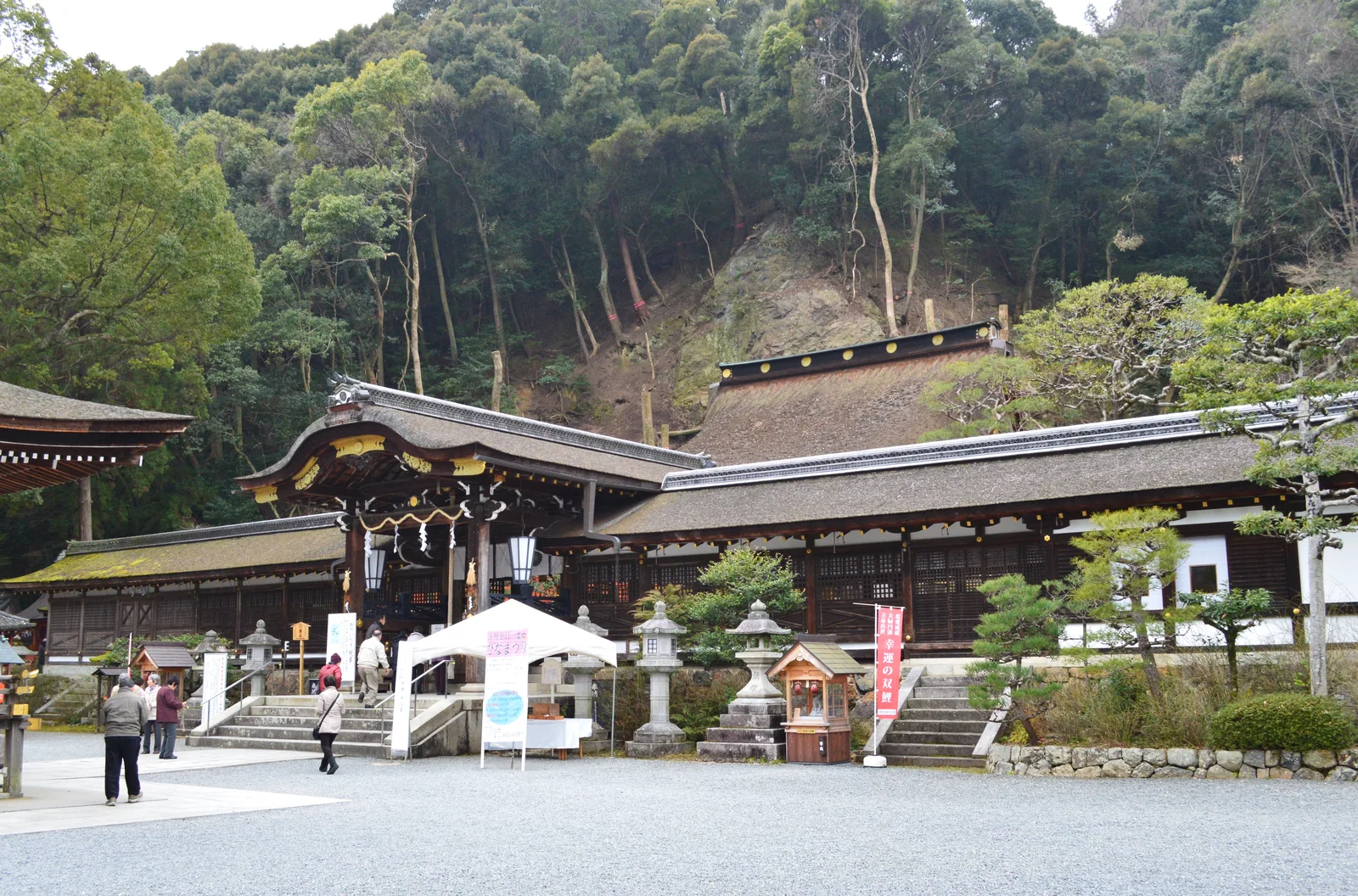
If you book an early morning slot, Matsunoo-taisha pairs naturally right after Saiho-ji. Walk back to the 'Kokedera / Suzumushidera' Kyoto Bus stop and catch Bus No. 73 (towards Kyoto Station) or Bus No. 63 (towards Shijo-Kawaramachi and Sanjo-Keihan) as far as Matsunoo-taisha-mae. Hop on whichever bus arrives first, or walk along the base of the Nishiyama hills in fine weather; if you plan to stay on the bus straight through to Arashiyama, save Matsunoo-taisha for another day. Tickets are separate, so there is no need to race around Saiho-ji's pond in 20 minutes just to squeeze in an extra stop.
Inside Matsunoo-taisha, the three Shofu-en gardens designed by Mirei Shigemori showcase stone and water like Saiho-ji, each representing a different historical era. The easiest direct comparison is Horai-no-niwa, where you also circle an island-dotted pond—shaped here like a crane with spread wings. One ticket covers both Shofu-en and the Shrine Statue Hall at ¥500 for adults, ¥400 for students, and ¥300 for children, opening at 9:00 and closing at 16:00 Monday to Saturday or 16:30 on Sundays and public holidays. Pairing this shrine with a morning Saiho-ji slot leaves ample time for both the gardens and the statue gallery.
From Matsunoo-taisha, walk to Matsuo-taisha Station and ride the Hankyu line one stop to Arashiyama. Exiting Hankyu Arashiyama Station, follow the south bank of the Katsura River towards Togetsukyo Bridge for riverside views away from the heaviest crowds. If the bridge and north bank look congested, turn back around Nakanoshima Island. If you have reserved the afternoon for the bamboo grove or lunch on the north bank, cross the bridge and leave from Randen Arashiyama or JR Saga-Arashiyama Station—arriving by Hankyu and departing by JR or Randen saves crossing Togetsukyo Bridge twice and works smoothly if heading back to Kyoto Station.
You can also reverse the order and visit Arashiyama before an afternoon Saiho-ji slot. Staying in Arashiyama lets you enjoy the river early, have lunch, and ride the Hankyu Arashiyama Line from Hankyu Arashiyama to Kamikatsura before walking to Kokedera. From the north bank, you can likewise board a Kyoto Bus at the 'Arashiyama' stop bound for 'Kokedera / Suzumushidera', passing Matsunoo-taisha-mae en route. On peak autumn foliage weekends, if the bamboo grove takes longer than expected, skip souvenir shopping or a second temple to protect your walk back to the station—and factor queues and slow bridge crossings into any lunch spot far from the stations.
If Kokedera Is Full, Nearby Temples on the Same Bus Line
If you check from your hotel and find Nichinichi Sanpai sold out, Nishikyo Ward has two distinct alternatives sharing the 'Kokedera / Suzumushidera' Kyoto Bus stop: Jizo-in and Suzumushi-dera. Each has its own entrance and visiting format, so enter the full temple name into your map app. If you arrive in the area with only 15 minutes before a Saiho-ji slot, walk to your booked entrance first and save neighbouring temples for afterwards—especially at Suzumushi-dera, where leaving midway through a scheduled dharma talk disrupts other visitors.
For bamboo and moss without crowds, walk to Jizo-in in Yamadakita-no-cho, Nishikyo-ku. Beyond the bamboo-lined approach lies the abbot's quarters (hojo), where you take off your shoes and sit facing the Sixteen Arhats Garden (Juroku Rakan-no-niwa), composed of 16 natural stones. Regular hours are 9:00 to 16:00 (last entry 15:40, hojo closes 15:50), normally closed Thursdays and Fridays, shifting to Mondays and Thursdays in July and August. The temple also schedules winter maintenance closures—if substituting it for Saiho-ji in early 2027, check Jizo-in's official calendar for open dates.
Jizo-in's official website currently sets general admission for visitors not residing in Japan at ¥1,000 for adults and ¥500 for ages 6 to 17. A separate resident rate applies to those living in Japan, determined by residence rather than nationality. The viewing experience contrasts with Saiho-ji: at Saiho-ji, the view evolves as you walk around the pond, whereas at Jizo-in you sit quietly at the edge of the veranda and take in the composition of bamboo and stone. Either stands well on its own, or Jizo-in works nicely as a quiet stop before or after lunch.
If travelling with children keen to hear bell crickets, head to Suzumushi-dera. Individual visitors can walk straight in without booking; hours run 9:00 to 17:00 with last admission at 16:30. Entry includes tea and a sweet at ¥500 for adults and ¥300 for ages 4 through junior high school. Inside the reception hall, a monk gives a roughly 30-minute dharma talk at published start times. Around 80 stone steps climb to the gate, alongside a handrail-equipped path that still involves roughly 30 steps. With no minimum age limit, balance how long younger children can sit quietly and how many steps older relatives can comfortably manage.
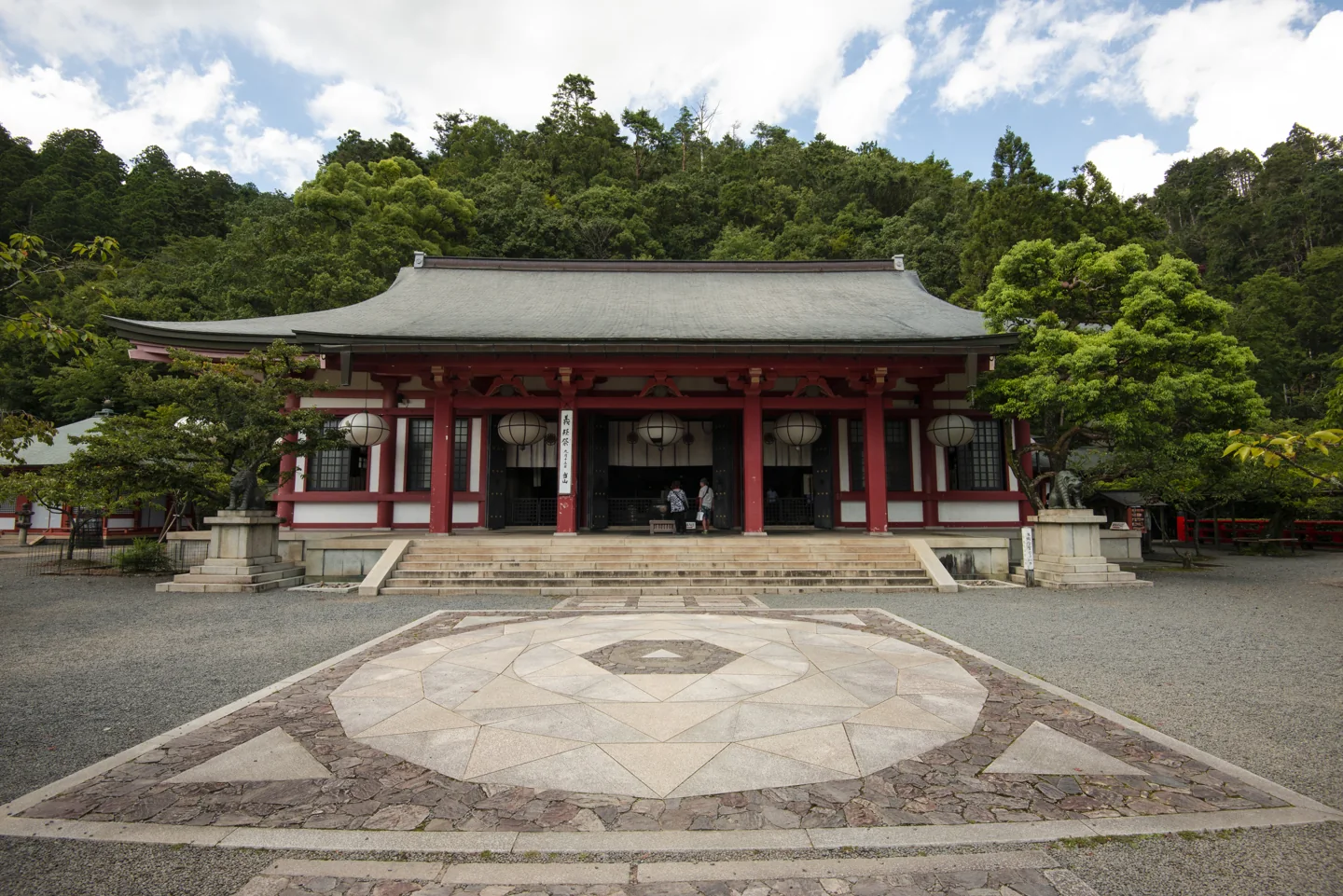
Visiting between 21 November and 13 December 2026 also lets you add Joju-ji's autumn special opening for the afternoon. Near Saiho-ji, the Kyoto City Tourism Association estimates it at roughly a 5-minute walk from the Kyoto Bus terminus. If you want autumn maples framing stone steps right up to the temple buildings without heading across Togetsukyo Bridge to the bamboo grove, spend the afternoon at Joju-ji. Outside those dates, build your local pairing around Jizo-in's open calendar or Suzumushi-dera's talk schedule instead.
Age Rules, Meeting Points, and Where to Stay
Families with children aged 12 or under should look under 'Oriori Sanpai' for the temple's occasional 'Children's Day' (Okosama-no-hi) sessions held a few times a year. For the 13 December 2026 session, for example, assembly is at 11:40, gates open at 11:45, and closing is at 13:15; each registered visitor aged 13 or over may bring one child aged 12 or under with the child's worship offering waived (a system fee is listed separately on the booking page). If no children's event coincides with your dates, one adult can stay with younger children along Arashiyama's south bank or near Kyoto Station while the other copies sutras, then reunite for lunch.
For morning slots, staying around Shijo-Karasuma offers straightforward access to the Hankyu Kyoto Line—especially practical on a two- or three-night stay if you also want Kawaramachi and Nishiki Market close by. Staying near Kyoto Station lets you leave bulky suitcases at reception on arrival and catch Shinkansen or airport trains straight back out, saving transfers on early arrival or check-out days. If making a day trip from Osaka, changing at Katsura Station connects straight into Nishikyo Ward without shifting hotels.
An overnight stay in Arashiyama works well if you want the riverfront at dawn and Saiho-ji on the same day. Choose somewhere on the south bank near Hankyu Arashiyama for a direct hop to Kamikatsura, or on the north bank near JR Saga-Arashiyama for an easy luggage run back to Kyoto Station the next day while using the bus for the short ride to Kokedera. If your accommodation includes dinner, pick just one add-on—either Matsunoo-taisha or the south bank of Togetsukyo Bridge—so evening schedules stay relaxed. If you are already staying in central Kyoto, a half-day trip out to the western suburbs works easily without changing hotels.
Pairing with Katsura Imperial Villa or Ryoan-ji for Kyoto Gardens
If you want a full day of Kyoto gardens, Katsura Imperial Villa also sits in Nishikyo Ward, though its entrance is separate—pin both on your map before setting off. Katsura Imperial Villa is roughly a 20-minute walk from the East Exit of Hankyu Katsura Station, rather than Kamikatsura Station used for Saiho-ji. Visits run as roughly 60-minute guided group tours along a set route, with English-language tours offered for international visitors, whereas Saiho-ji pairs main-hall worship with a self-paced circuit around the lower pond. For two contrasting garden experiences in the same district, visit them on separate mornings and allow enough time for the walk from Katsura Station.
The Imperial Household Agency admits junior high school students and older to Katsura Imperial Villa; primary school children and younger cannot enter. Admission is ¥1,000 for visitors aged 18 and over (excluding high school students or equivalent), while junior and senior high school students enter free. Select a date online in advance—if applications exceed capacity, a ballot decides allocation, so receiving an application number is separate from holding entry permission. Same-day numbered tickets are issued in order from 8:40 at the villa gate; bring your original passport or valid photo ID. When combining both sites, secure one fixed slot first and plan the other around it.
If your main draw at Saiho-ji was its stone arrangements, save the closed upper tier for an eligible special event and add the rock garden in front of Ryoan-ji's hojo to your regular Kyoto itinerary. General admission at Ryoan-ji is ¥600, open 8:30 to 16:30 from December to February and 8:00 to 17:00 the rest of the year. The walk from the 'Ryoan-ji-mae' City Bus stop is short, though Ryoan-ji lies across town in Kinugasa rather than near Kamikatsura. From central Kyoto, pair Ryoan-ji with Kinkaku-ji and keep your Kokedera day paired with Matsunoo-taisha to avoid crossing the city in a single afternoon.
A few useful answers
Can you buy tickets for Saiho-ji (Kokedera) at the gate?
No. Nichinichi Sanpai requires advance booking. Online applications and credit card payments close at 23:59 JST the day before your visit; general visitors can register an account to select standard slots.
How much does an online booking for Saiho-ji cost?
Regular Nichinichi Sanpai starts at ¥4,000 per person, plus a ¥165 system fee per person, making ¥4,165 or more in total.
Can children under 13 visit Kokedera?
Standard Nichinichi Sanpai requires visitors to be at least 13 years old. Children aged 12 and under can join the temple's separate 'Okosama-no-hi' (Children's Day) sessions under the accompanying-adult rules for that event.
Can you visit Saiho-ji in winter?
From 12 January to 26 February 2027, Nichinichi Sanpai is suspended for grounds maintenance. A separate 'Zen and Art' programme requiring advance booking runs on seven select dates in February.
What is the easiest route from Kyoto Station to Saiho-ji with no transfers?
Take Kyoto Bus No. 73 to the 'Kokedera / Suzumushidera' terminus and walk about 3 minutes. On weekdays, Bus No. 83 runs to the same terminus.
Are photography and tripods allowed at Saiho-ji?
Handheld photography and video are permitted in the garden. Tripods, monopods, and selfie sticks are prohibited, and no photography is allowed inside any buildings, including shooting outdoors from inside the main hall.
Official information and references
Sources used in this guide.
- Saiho-kai | Nichinichi Sanpai Overview and How to Apply
- Saiho-kai | Nichinichi Sanpai Online Booking, Fees, and Cancellation Terms
- Saiho-kai | General and Member Booking Calendar
- Saiho-kai | Notice on System Fee Adjustment
- Saiho-ji | Return Postcard Application
- Saiho-kai | Visiting FAQs and Access to the Temple
- Saiho-kai | Notice on 2027 Winter Suspension of Nichinichi Sanpai
- Saiho-kai | Zen and Art Programme
- Saiho-kai | Children's Day Worship Sessions
- Saiho-kai | Temple Buildings and Gardens
- Saiho-kai | Sutra Copying Details
- Saiho-kai | History of Saiho-ji
- Saiho-kai | The Garden Through the Seasons and Rainy Season
- Kyoto Bus | Saiho-ji Routes and Timetable Portal
- Kyoto Bus | Kokedera Bus Stop Return Timetable
- Kyoto City Transport Bureau | City Bus Route 29
- Kyoto City Transport Bureau | City Bus Route 29 Fare Table
- Hankyu Railway | Kamikatsura Station Map
- Matsunoo-taisha | Shofu-en Three Gardens and Statue Hall Opening Hours
- Kyoto City Tourism Association | Arashiyama Access Guide
- Kyoto City Tourism Association | Sightseeing Congestion Map
- Kyoto Railway Museum | Admission Information
- Kyoto Railway Museum | Notice on March 2027 Ticket Prices
- Kyoto Bus | Kyoto Station Stop C6 Map
- Kyoto City Transport Bureau | Subway & Bus 1-Day Pass Prices and Coverage
- Jizo-in | Hojo Garden, Visiting Calendar, and Admission
- Suzumushi-dera | Individual Visits, Steps, and Dharma Talks
- Suzumushi-dera | Entry Hours and Dharma Talk Schedule
- Kyoto City Tourism Association | Joju-ji Autumn 2026 Special Opening
- Imperial Household Agency | Katsura Imperial Villa Applications, Fees, and Access
- Imperial Household Agency | Katsura Imperial Villa Online Date Selection and Tour Rules
- Kyoto City Tourism Association | Ryoan-ji Garden, Opening Hours, and Access
- Kyoto Prefecture Tourism Federation | Ryoan-ji Admission Fee
- Kyoto City Tourism Association | Saiho-ji World Heritage and Garden Information
- Saiho-kai | Introduction of the Advance Application System in 1977