A one-way water bus from Asakusa to Odaiba costs ¥2,000 and takes around 50–65 minutes. Compare Himiko, Hotaluna and Emeraldas, plus fares, booking and bad-weather alternatives for Hinode Pier, Hama-rikyu and Toyosu.
- Region & Focus
- TokyoAttractions
- Reading Scope
- 20 min read · 10 chapters · 5 Q&As
- Official Verification
- 24 official sources checkedUpdated 22 November 2026
- Key Topics
- BookingItinerariesFirst trip
Chapter Route Map (tap any stop)
- Asakusa to Odaiba for the Full River-to-Bay Run; Hinode Pier for a Quick Bay Crossing
- Choosing Between the Three Signature Vessels
- Boarding Piers at Asakusa, Hinode and Odaiba
- Stepping Straight into Hama-rikyu Gardens, or Disembarking at LaLaport Toyosu
- Booking Online, Cashless Boarding & Cancellation Fees
- Travelling with Pushchairs, Wheelchairs, Luggage & Food
- How to Pace a Morning in Asakusa and an Afternoon in Odaiba
- Sailing in Reverse, or Dropping a Short Boat Ride into a Bay Half-Day
- Train Alternatives When Sailings Are Cancelled or Decks Close
- December 2026 Fireworks Cruises & 2027 New Year's Day Sunrise Sailings
- Quick Q&A
For a first Tokyo Bay cruise, spending the morning in Asakusa before taking the afternoon boat down to Odaiba makes for the smoothest route. Departing from the pier beside Azumabashi Bridge, the boat follows the Sumida River beneath city bridges before opening out onto views of the Rainbow Bridge from the water. Tokyo Cruise's three signature futuristic vessels usually charge ¥2,000 per adult for this stretch, taking roughly 50–65 minutes. If you are already near Hamamatsucho, boarding at Hinode Pier instead puts you in Odaiba in around 20 minutes. When buying tickets, pay close attention to which destination a pier serves and which specific vessel is operating your chosen departure.
Asakusa to Odaiba for the Full River-to-Bay Run; Hinode Pier for a Quick Bay Crossing
If you want to pair Asakusa and Odaiba in a single day, book the direct 'Asakusa → Odaiba Seaside Park' route. Himiko takes roughly 50 minutes, Emeraldas about 55 minutes, and Hotaluna around 65 minutes. Watching the cityscape shift from low-slung bridges to riverside high-rises and finally out into the open bay is what makes the full journey worth the time. Factor in the walk from the station and boarding formalities separately, then count backwards from your lunch or sightseeing plans using the published sailing time.
If your morning starts in Tsukiji, Shiodome or Hamamatsucho, doubling back to Asakusa only adds an unnecessary train ride—simply board at Hinode Pier instead. The standard fare between Hinode Pier and Odaiba Seaside Park is ¥600, rising to ¥1,000 on Hotaluna sailings, with both options taking around 20 minutes. Check the vessel name alongside the departure time on the timetable so you do not assume the lower fare applies to every sailing all day.
The short crossing works just as well in reverse. Coming back from Odaiba towards Minato City, you can take a direct boat to Hinode Pier and walk to Hamamatsucho Station for JR lines. To return to Asakusa by water, check the afternoon direct sailings first. The official fare table also lists a combined ticket from Odaiba back to Asakusa with a boat transfer at Hinode Pier at ¥1,600 for adults and ¥800 for children, taking around 70 minutes. Only buy that option if the connection lines up cleanly, especially if you already have dinner booked after disembarking.
With easy half-day walking areas at both ends, a one-way boat trip links the two neighbourhoods effortlessly. If your group plans to stay in Odaiba for dinner or night views, taking the Yurikamome line back is usually simpler to time. For a loop starting and ending in Asakusa, look for the day's 'Hashi-meguri' (Bridge Cruise, listed at about 50 minutes) or 'Skytree Cruise' (about 30 minutes)—both use the same pier for boarding and disembarking, making an easy stroll afterwards.
Old fares for suspended stops still linger at the bottom of the operator's timetable page. If you see Palette Town or Tokyo Big Sight listed, check the service status column above first: regular TOKYO CRUISE sailings to both piers are marked as suspended. Whether you are heading to Odaiba for an exhibition, a shopping centre or the waterfront, plan your onward route around the actual venue while selecting 'Odaiba Seaside Park' as your boat destination.
| Route | Adult / Child | Scheduled Duration | Ticket Notes |
|---|---|---|---|
| Asakusa → Odaiba Seaside Park | ¥2,000 / ¥1,000 | Approx. 50–65 mins | Standard fare on Himiko, Emeraldas and Hotaluna |
| Odaiba Seaside Park → Asakusa | ¥2,000 / ¥1,000 | Typically 55–60 mins | Look for direct sailings back to Asakusa first |
| Odaiba Seaside Park → Hinode Pier (transfer) → Asakusa | ¥1,600 / ¥800 | Approx. 70 mins | Standard-vessel fare; requires matching same-day connection |
| Hinode Pier ↔ Odaiba Seaside Park | ¥600 / ¥300 or ¥1,000 / ¥500 | Approx. 20 mins | Higher fare applies to Hotaluna |
| Asakusa → Hinode Pier | ¥1,000 / ¥500 or ¥1,400 / ¥700 | Approx. 40 mins | Higher fare applies to Hotaluna |
| Asakusa → Hama-rikyu | ¥1,180 / ¥470 | Approx. 35 mins | Bought at Asakusa ticket machines; includes garden admission |
| Toyosu (LaLaport) → Asakusa | ¥1,500 / ¥750 | Approx. 30 mins | Operated by Urban Launch; walk from Toyosu Station |
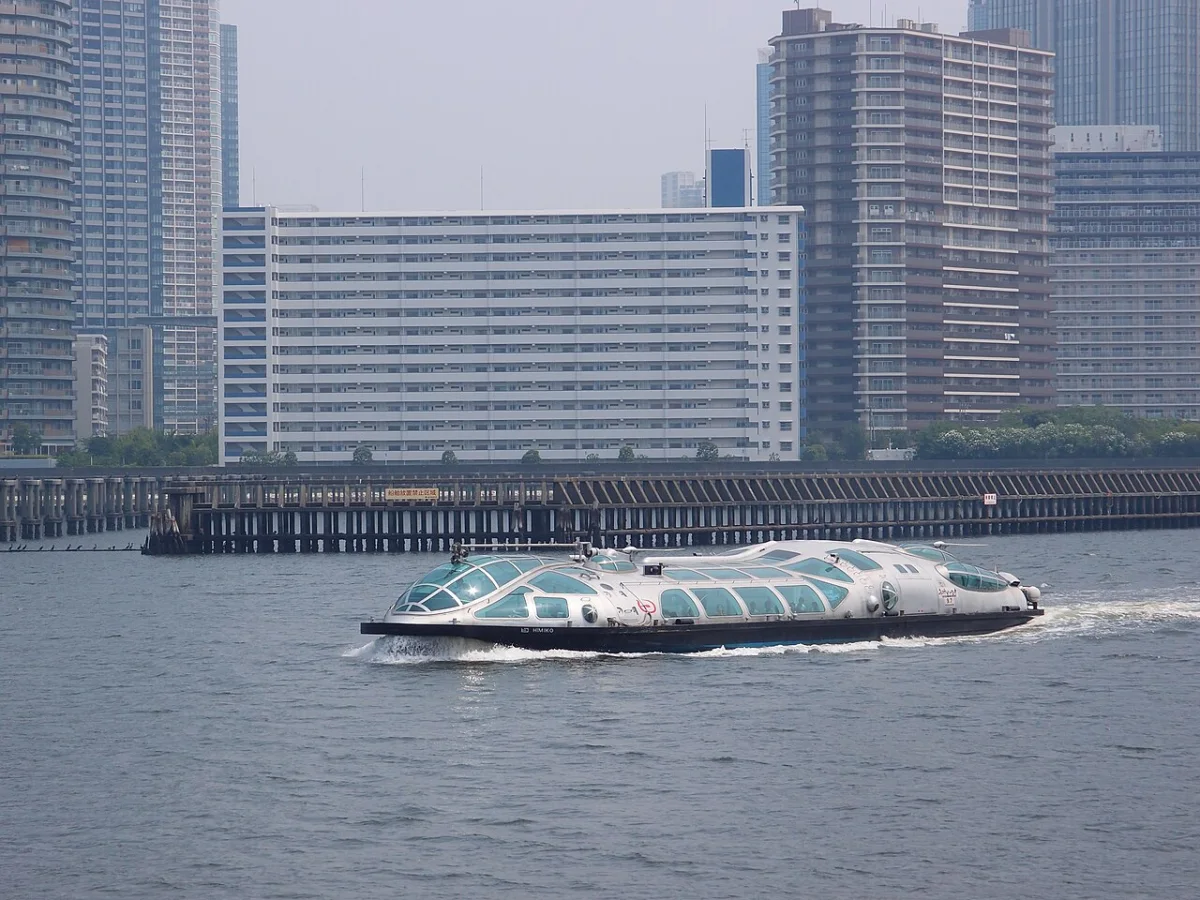
A one-way water bus from Asakusa to Odaiba costs ¥2,000 and takes around 50–65 minutes. Compare Himiko, Hotaluna and Emeraldas, plus fares, booking and bad-weather alternatives for Hinode Pier, Hama-rikyu and Toyosu.
Choosing Between the Three Signature Vessels
Himiko is a sleek silver water bus designed by Leiji Matsumoto, wrapped from bow to sides in curved glass. It suits travellers who want to sit inside and watch the scenery unfold from the cabin. Bridges pass close to the windows on the river before opening out near the river mouth so you can take in the skyline towers on both banks. Although the operator notes a small bench at the rear deck, anyone preferring to stay indoors gets the full transition through the panoramic windows, accompanied by onboard announcements voiced by characters from Galaxy Express 999.
Hotaluna is the pick if you want to step outside into the sea breeze, provided you choose the right stretch. According to the operator, the rooftop deck opens only on the bay leg from Hinode Pier to Odaiba and stays closed in wet weather; it does not open between Asakusa and Hinode Pier, nor on Odaiba-to-Asakusa departures. When riding Hotaluna from Asakusa to Odaiba, the boat calls at Hinode Pier—buy a ticket through to Odaiba, stay onboard under crew guidance at Hinode, and wait for the crew's signal once you head out onto the bay.
Emeraldas also belongs to the Leiji Matsumoto series. Standard tickets cover general seating, while three private-style booth areas can be reserved for an extra charge if your group wants guaranteed seats together. Booth allocations are booked separately from standard tickets—click into your chosen departure to check whether reserved seats are available. It also features a rooftop deck, though crew decide on the day whether wind, swell, tide height and route conditions allow it to open.
A 15-minute difference in departure time usually matters more to your itinerary than which hull you board. If you are meeting someone in Odaiba, check which sailing gets you there on time first, then look at the vessel name. Note that Himiko runs between Asakusa and Odaiba and, as marked on the timetable, does not currently call at Toyosu. If you want LaLaport Toyosu, book the Urban Launch service bound for Toyosu rather than assuming an older photo of another boat means it still docks there.
Always read both the month and date lines for scheduled maintenance days. Taking the December 2026 schedule as checked as an example, Himiko lists non-operating dates on 1, 2, 8, 9 and 29 December; Hotaluna's 13:10 and 15:30 sailings are suspended on 15 and 16 December; and several Emeraldas departures are suspended on 22 and 23 December. If you have your heart set on a particular vessel, pick an operating date from the monthly table first before opening the booking calendar to check live availability, rather than building an entire morning around a one-off sailing.
Boarding Piers at Asakusa, Hinode and Odaiba
The Asakusa pier sits at 1-1-1 Hanakawado, Taito-ku, on the Asakusa bank beside Azumabashi Bridge, labelled 'Asakusa' on maps and tickets. The operator lists it as about a 1-minute walk from Asakusa Station on the Tokyo Metro Ginza Line and Tobu Line, or roughly 3 minutes from Asakusa Station on the Toei Asakusa Line. From Kaminarimon Gate, walk towards the river and Azumabashi Bridge; if you are strolling down through Sumida Park, loop back to the TOKYO CRUISE pier right beside the bridge. Searching your map app for 'TOKYO CRUISE Asakusa Pier' gets you to the correct entrance far more reliably than searching generically for river cruises.
Once at Asakusa, it helps to glance at the riverfront first before joining the waiting area. Kaminarimon gets crowded with photographers, so setting the TOKYO CRUISE Asakusa Pier entrance as your meeting point lowers the chance of missing the departure. Map apps also pin rival boat operators and public waterside steps nearby—even around Azumabashi Bridge, match the signage, the operator name on your ticket and the boarding gate before queuing.
Hinode Pier stands at 2-7-104 Kaigan, Minato-ku. Coming from around Tokyo Station, take a JR train to Hamamatsucho Station and walk; the water bus company puts the walk at around 8 minutes. For fewer steps, change at Shimbashi onto the Yurikamome line towards Toyosu, passing Shiodome and Takeshiba to alight at Hinode Station, roughly 2 minutes from the pier. Coming back towards central Tokyo from Hinode, board the Shimbashi-bound platform. Note that the Symphony dinner cruise desk is at the same waterfront address, so look specifically for TOKYO CRUISE signage.
In Odaiba, boats dock at the Odaiba Seaside Park water bus pier directly in front of the park management office. The operator warns that typing the street address into navigation apps can send you elsewhere, so search specifically for 'Odaiba Seaside Park Water Bus Pier'. Both Daiba Station and Odaiba-kaihinkoen Station on the Yurikamome line are listed at about a 5-minute walk from the pier, while Tokyo Teleport Station on the Rinkai Line is around 7 minutes away. Because walkways between shopping centres and the waterfront sit on raised decks, allow extra time to drop down to the promenade and reach the gate.
On arrival in Odaiba, if you fancy a waterside stroll, linger along the beach park for views of the Rainbow Bridge before heading up into the malls. If you have timed tickets for an indoor exhibition, navigate straight to the venue address on disembarking and save the shoreline walk for afterwards. When part of your group arrives by boat and others by train, meet at a named shopping-centre entrance or station ticket barrier—vague spots like 'Odaiba pier' or 'by the bridge' often leave people waiting on different walkway levels.
Stepping Straight into Hama-rikyu Gardens, or Disembarking at LaLaport Toyosu
The boat from Asakusa to Hama-rikyu takes around 35 minutes. Tickets are sold only from the ticket machines at Asakusa Pier at ¥1,180 for adults and ¥470 for children, which already includes admission to Hama-rikyu Gardens. Select 'Hama-rikyu' as your destination when purchasing. Some standard vessels continue onwards to Hinode Pier, but a Hinode-bound ticket does not permit you to get off at Hama-rikyu—you must buy the garden stop from the outset.
The Hama-rikyu pier is currently for disembarkation only. From the landing, you can begin your stroll beside the tidal pond, cross to Nakajima-no-ochaya teahouse and walk out towards the street exits—Otemon Gate for Tsukijishijo or Shimbashi stations, or Naka-no-gomon Gate for Shiodome or Hamamatsucho. The gardens normally open 09:00–17:00 (last entry 16:30) and close from 29 December to 1 January. On those closure dates, book straight through to Hinode Pier or Odaiba instead of making a detour.
If the gardens are your sole focus, walking from Tsukijishijo or Shiodome stations to Otemon Gate is straightforward. Standard gate admission is ¥300 (¥150 for visitors aged 65 and over). Ducking in through Otemon after a shower lets you judge the paths as far as the tidal pond or teahouse before heading into Shiodome for lunch—an easy plan that skips boat queues altogether and pairs neatly with a midday meal in Tsukiji.
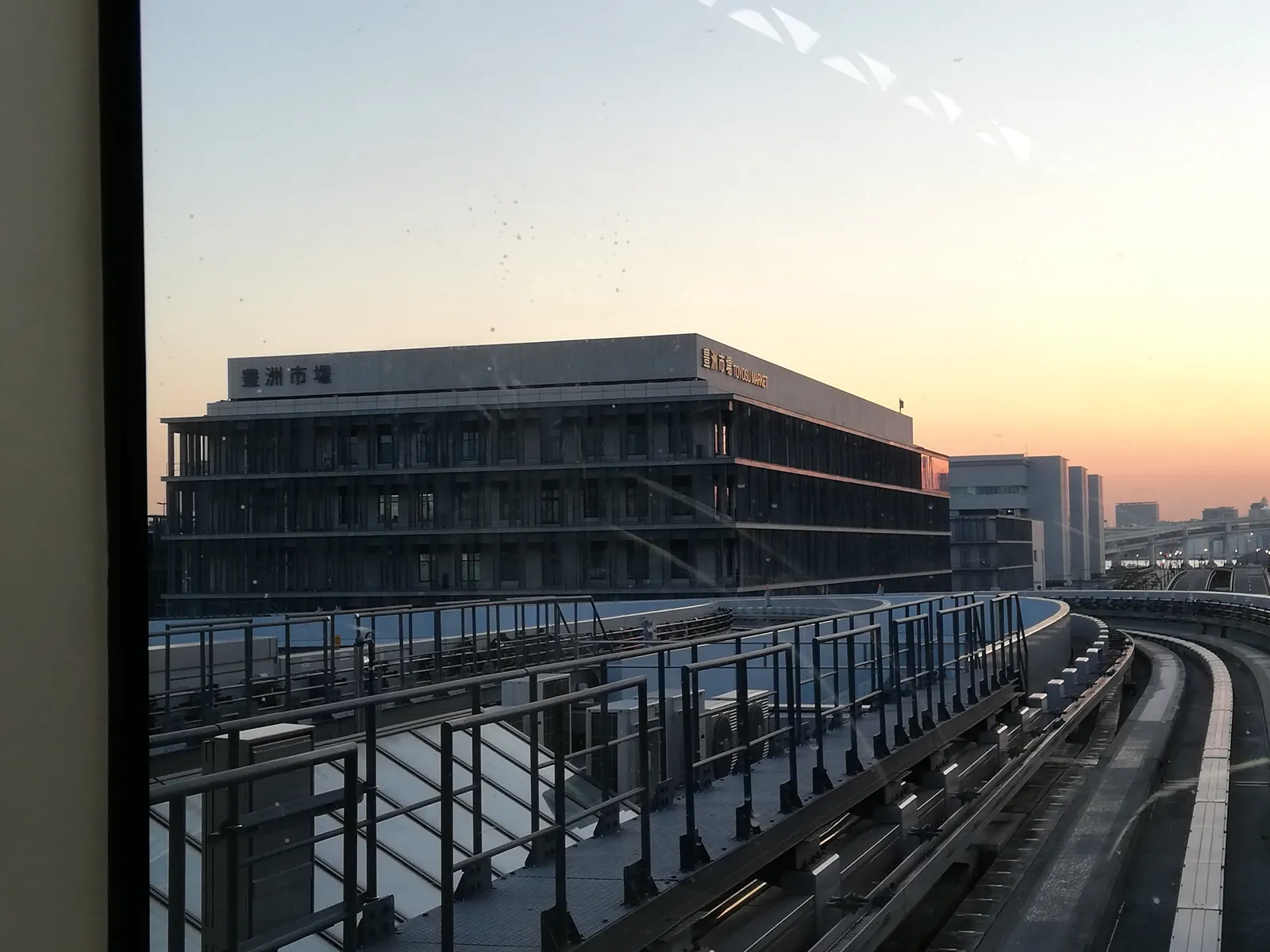
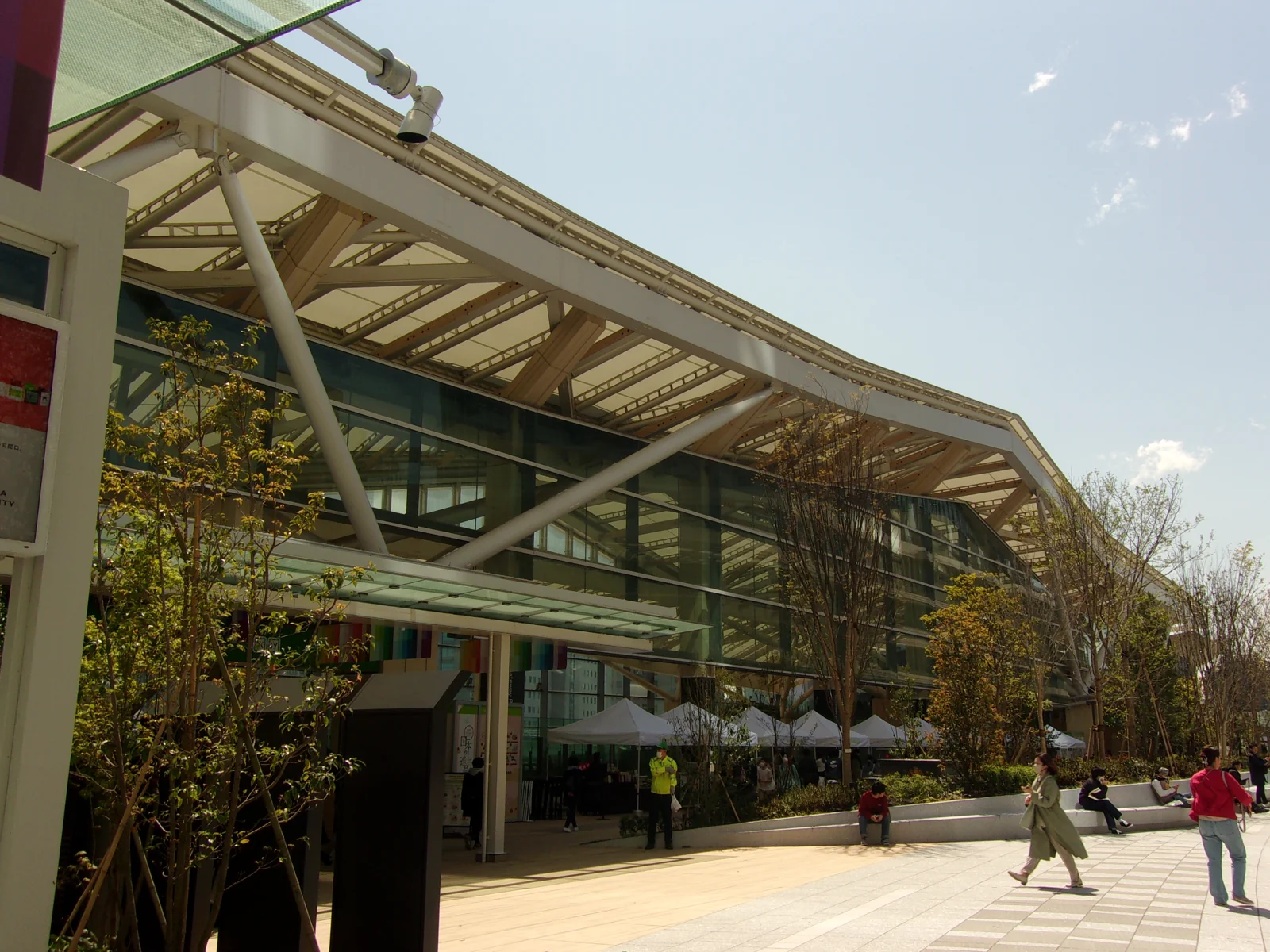
The Toyosu-to-Asakusa route is served by Urban Launch at ¥1,500 per adult, taking roughly 30 minutes. Boats berth waterside off the ground-floor courtyard at Urban Dock LaLaport Toyosu, around a 5-minute walk from Toyosu Station on both the Tokyo Metro Yurakucho Line and the Yurikamome line. There is no permanent ticket counter staff on site; follow the operator's instructions to wait by the pier entrance until crew arrive to board passengers. After visiting Toyosu Market, ride the Yurikamome line two stops from Shijo-mae via Shin-Toyosu to Toyosu Station, then walk out to the courtyard.
Keep in mind that the 'Toyosu Market' pier near Shijo-mae Station and the LaLaport pier near Toyosu Station are two separate stops. On its daily operations page, TOKYO CRUISE splits 'Toyosu' and 'Toyosu Market' into distinct columns. For the Asakusa service, look for 'Toyosu' paired with the shopping complex name. Travelling the other way from Asakusa to Toyosu, check the timetable for 'Toyosu-bound' Urban Launch departures before planning shopping or dinner at LaLaport.
Departures from Toyosu to Asakusa tend to cluster into a handful of sailings. If you go to the market for breakfast and just miss the morning boat, you can stay at LaLaport for lunch before catching an afternoon sailing, or take the Yurakucho Line straight from Toyosu Station to Ginza-itchome and walk across to the Ginza Line for Asakusa. If you have timed afternoon bookings, work backwards from the actual departure time before deciding whether to wait for the boat.
Booking Online, Cashless Boarding & Cancellation Fees
Regular sailings open for online booking from the 1st of the preceding month, and remaining seats can be booked right up until 5 minutes before departure; seasonal or extra sailings open a week ahead. Through the TOKYO CRUISE booking portal, choose your date, select your boarding and disembarkation piers, then confirm the departure time, vessel and passenger count. Booking five minutes before sailing only works if you are already standing on the pier—never treat the booking cut-off as your arrival target if you still have to walk from the station and find the queue.
Make sure credit-card payments go all the way through to the confirmation screen. Keep your confirmation email, e-ticket and booking reference on one phone and agree in advance who in your party will show it at the gate. If the email does not arrive right away, check your spam folder first; if you saw the confirmation screen but cannot locate the email, the operator's FAQ advises giving the booking name and sailing time to pier staff so they can look up your reservation. For family bookings, saving the reference number offline before setting off makes check-in at the dock much smoother.
TOKYO CRUISE operates cashlessly at the pier, accepting supported credit cards, IC/e-money cards and QR payments, though piers do not offer e-money top-ups. Carrying an international credit card is the simplest option for visitors. Before the next Odaiba departure boards, you can also check live availability on your phone via the booking page. Passengers with advance reservations board first, so if you see two queues forming after buying a ticket, ask staff which line is for booked passengers.
Child fares apply to ages 6 to 11, while travellers aged 12 and over pay the adult rate. Infants aged 1 to 5 travel free at a ratio of one per paying adult, with any additional infants charged at the child fare. On a standard Asakusa-to-Odaiba trip, two adults, an eight-year-old and a four-year-old therefore pay ¥5,000 in total. Hama-rikyu tickets follow their own tariff, and special event cruises use separate seasonal pricing.
Individual regular bookings can be cancelled via the link in your confirmation email. Cancellations made 7 days or more before the sailing date are free; 6 to 2 days ahead incurs a 10% fee; from the day before until departure the fee is 30%; and after departure it is 100%. Cancel a Saturday sailing by the previous Saturday and you pay nothing, whereas changing your mind on Friday puts you in the 30% bracket. Before switching date, direction or sailing time, verify availability on the new boat first, then cancel and rebook. If fewer people in your party turn up on the day, the FAQ states you should inform pier staff at check-in, and the same fee schedule applies.
Treat outbound and return legs as two separate one-way journeys, as regular sailings offer no return discount. If you plan to travel both ways by boat, check the last return sailing first before locking in your outbound time so you do not end up rushing through lunch in Odaiba. For a flexible day out, book only the outbound boat and take the train back from whichever station suits you. If you buy two separate boat tickets, label them by direction—for instance, Asakusa → Odaiba outbound and Odaiba → Hinode Pier returning—and double-check the departure pier on the e-ticket before boarding.
Travelling with Pushchairs, Wheelchairs, Luggage & Food
Pushchairs can generally stay unfolded onboard, though crew may ask you to fold them when the cabin is busy. Before boarding, move bottles, water and essentials into a small daypack so you are not rummaging in a folded buggy mid-voyage. Young children have plenty to watch through the windows as bridges and passing boats glide by, so there is no need to split the group to reach an open deck. If little ones only sit happily for 20–30 minutes, the short Hinode Pier to Odaiba run fits neatly between lunch and nap time.
The operator states that wheelchairs can usually board directly, though tide height alters the angle of the gangway ramp. At extreme low spring tides, the slope may exceed safe boarding limits and prevent wheelchair access on that sailing. If step-free access is essential, contact the operator ahead of time with your date, piers and sailing time to confirm conditions at both ends. If Miraikan (the National Museum of Emerging Science and Innovation) is on your Odaiba plan, its access page maps step-free routes from Tokyo Teleport and Telecom Center stations as a ready fallback if a sailing is unsuitable.
Groups hoping to sit together should queue together for the same departure, tuck phones and loose items away before stepping aboard, and keep one hand free for the handrail. If someone in your party walks slowly, treat the direct boat to Odaiba as a welcome seated rest between districts, then take the lifts up from the waterfront promenade to the shopping centres.
According to the English FAQ, standard luggage is limited to one piece per person with combined dimensions (length + width + height) within 2 metres. Because gangways slope up and down with the tide, bags you can lift one-handed are much easier than bulky cases requiring both hands. If you are checking out in Asakusa and staying near the bay that night, drop your suitcases at your hotel first rather than dragging them along Odaiba's beach. When travelling with a laden pushchair, large suitcases or a wheelchair, paying the extra ¥400 for a direct sailing is far more practical than changing boats at Hinode Pier.
Outside food and drink are not permitted on Himiko, Hotaluna or Emeraldas, except for items bought at the TOKYO CRUISE CAFE outlets at Asakusa or Hinode Pier; outside food is allowed on the other vessels. Eating before boarding in Asakusa keeps things simple. If you plan to have lunch in Odaiba instead, build in time for boarding, sailing and walking from the pier rather than booking a restaurant table for the boat's scheduled arrival time.
How to Pace a Morning in Asakusa and an Afternoon in Odaiba
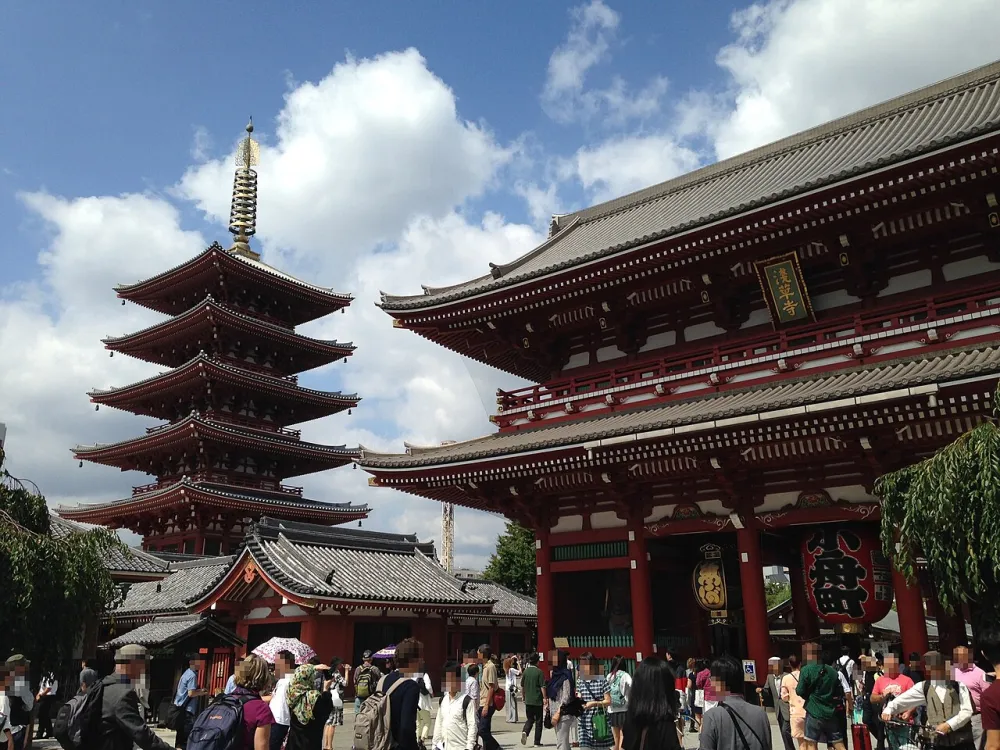
Use the boat as the natural midday pivot. Spend the morning walking from Kaminarimon Gate up to Senso-ji Temple, then browse Denboin Street or the side lanes off Nakamise for an early lunch. Leave yourself enough time to stroll back to Azumabashi Bridge before boarding, and switch to another eatery if a queue looks too slow. If you prefer lunch in Odaiba, catch a late-morning sailing and find a table on arrival rather than trying to hurry a sit-down meal in Asakusa.
Leaving Asakusa, the first landmark is the riverside stretch beside Azumabashi Bridge, followed quickly downstream by Komagata Bridge, whose steel trusses sweep past the windows at close range. For bridge photos, shoot a wide frame showing both banks first, then frame the steelwork just before passing underneath. Further down near Kiyosu Bridge, the river widens enough on clear days to capture the bridge span and the tower blocks rising behind it in one shot.
Approaching Tsukuda and Tsukishima, clusters of residential towers line the opposite bank. Hold your camera steady by the window for a moment to catch the wake cutting across the water—it frames foreground and skyline better than panning steadily along the glass. Once the boat clears the river into the bay, watch which way the bow turns before picking a side for the Rainbow Bridge or Odaiba shoreline. Vessel layouts, river channels and seasonal sunlight all vary, so a blanket 'sit left outbound, right inbound' rule does not hold across every sailing and stop pattern.
Low afternoon sun creates strong cabin reflections; hold your lens close to the glass without touching it, turn off flash, or shoot from the shaded edge of a window frame. With children, spotting bridges by colour or shape from the window keeps the journey far more engaging than following a phone map. Where a rooftop deck is open, save going outside for the open bay so you can snap photos and step back into the warm cabin rather than standing out in the wind all the way down the Sumida.
Once ashore in Odaiba, two simple plans avoid backtracking. In pleasant weather, stroll along Odaiba Seaside Park first before taking the lifts up to the malls for food or coffee; in strong wind or rain, head straight indoors and save the shoreline for a break in the weather. If you are continuing on to Miraikan in the afternoon, catch the Yurikamome line from Odaiba-kaihinkoen or Daiba down to Tokyo International Cruise Terminal or Telecom Center—both cut out a long walk after touring the waterfront.
Sailing in Reverse, or Dropping a Short Boat Ride into a Bay Half-Day
If you are staying in Odaiba, Toyosu or Ariake, flipping the route works neatly. Spend the morning around Odaiba's waterfront and shopping centres, then catch an afternoon boat from Odaiba Seaside Park up to Asakusa. Travellers keen to browse Asakusa's shops should aim for an earlier afternoon departure before stalls begin closing. If you only want evening atmosphere, take a later sailing, cross Azumabashi Bridge at dusk for views of the river and Tokyo Skytree, and pick whichever of the Ginza, Tobu or Toei Asakusa lines suits your hotel.
Sailing north from Odaiba puts you straight onto open water as you depart. Looking back from the window, you can trace the malls, waterfront promenade and Rainbow Bridge you walked earlier before entering the sequence of Sumida River bridges. If anyone in your group tends to lose track of boarding times, agree on a meeting spot inside the shopping centre and walk down to the shoreline together rather than splitting up with screenshots of different piers.
If your half-day centres on Hamamatsucho or Shiodome, the 20-minute crossing from Hinode Pier to Odaiba slots in effortlessly. Pair it with a stroll through Kyu-Shiba-rikyu Gardens just outside JR Hamamatsucho Station's North Exit—note that this is a separate garden from Hama-rikyu, which comes bundled with the Asakusa boat ticket. Visiting Kyu-Shiba-rikyu before boarding lets you leave cleanly in time for your departure, and if you are returning via Hamamatsucho later, the Yurikamome line brings you straight back to Hinode.
Building a day around the boat does not mean cramming all three areas into one rush. Visiting Toyosu Market after disembarking from an Asakusa-to-Odaiba cruise usually pushes the market too late; flipping it so you visit the market in the morning and sail from LaLaport Toyosu to Asakusa cuts most of the day's transit down to a single boat ride. Save Odaiba shopping for another day, or if you only have two or three hours, pick either the river stretch or the bay crossing so you still have time to enjoy your arrival point.
Train Alternatives When Sailings Are Cancelled or Decks Close
Before setting out, check Today's Operation Status and filter by your departure pier for sailing times, destinations and live running updates. This page shows whether boats are running, not spare capacity—you still need the booking calendar to check seats. Dates in brackets on the monthly timetable indicate extra or seasonal sailings, and rows kept on the table in quiet periods or maintenance windows may show zero sailings for the month. Bookmarking the live status page, booking page and pier pins on your phone lets you decide between the riverfront and the underground before leaving a cafe.
When boats still sail in light rain, simply stay inside the cabin. Strong winds, swell or extreme tides can close rooftop decks, alter departure times or force cancellations. If only the upper deck closes, your ticket remains valid for the indoor cabin crossing to Odaiba. Should the operator cancel a sailing, follow the instructions sent to your confirmation email or booking platform and quote your sailing time and booking reference for a refund. If the boat runs normally and you decide not to travel, standard cancellation fees apply.
If Asakusa-to-Odaiba boats are off, take the Tokyo Metro Ginza Line from Asakusa to Shimbashi and change to the Yurikamome line towards Toyosu, alighting at Odaiba-kaihinkoen or Daiba. If you still want bay views without rushing there first thing, shift lunch or an indoor attraction in Odaiba earlier—the driverless Yurikamome train still delivers sweeping harbour views as it loops across the Rainbow Bridge.
If Hinode Pier sailings are suspended, walk back to Yurikamome Hinode Station and ride towards Toyosu to reach Odaiba. Returning from Odaiba into central Tokyo, catch the Rinkai Line from Tokyo Teleport Station or take the Yurikamome line back to Shimbashi to connect onward. Whenever you have a Shinkansen or airport train later in the day, never rely on the final boat sailing back—leave enough buffer to take the train instead.
For families caught in heavy rain or high winds, switching to an indoor-heavy plan saves the day. If you are already in Odaiba, wait out showers inside the malls and step out onto the sand only if it clears; if you are still in Asakusa, stay on dry land in town rather than crossing the bay for the sake of a fixed route. In summer, if a short bay cruise is cancelled, the covered walkways linking Odaiba's waterfront malls offer shade until the air cools down. If you booked two separate cruises on the same day, resolve the cancelled or rescheduled leg first before deciding whether to keep the second.
December 2026 Fireworks Cruises & 2027 New Year's Day Sunrise Sailings
Winter night cruises from Asakusa to Odaiba timed for the bay fireworks are scheduled on 5, 12, 19 and 26 December 2026, departing at 18:00 and 18:10. Fares are ¥4,000 for adults and ¥2,000 for children, with a sailing time of around 60–70 minutes. Book via the event page by choosing the event date and 'Asakusa dep. / Odaiba arr.'; the 18:10 Emeraldas departure includes optional paid reserved seating. On checking the 19 December sailing, the 18:00 slot was already unavailable, leaving only the 18:10 departure to check for remaining spaces.
These evening boats pass illuminated bridges before reaching Odaiba in time for the fireworks around 19:00. In poor weather, the fireworks display alone may be cancelled while the boat still sails; the operator states that if the cruise operates as scheduled, full fares apply with no partial refund for cancelled fireworks. Factor that into your booking window if photography is your main reason for going. Disembarkation is at Odaiba, so allow time afterwards to reach the Yurikamome or Rinkai Line—returning to Asakusa at night is straightforward via Shimbashi onto the Ginza Line.
For 2027, two round-trip New Year's Day First Sunrise cruises are advertised: departing Asakusa at 05:30 (returning to Asakusa after roughly 3 hours 10 minutes; ¥5,000 adult, ¥2,600 child), and departing Hinode Pier at 06:00 (returning to Hinode Pier after roughly 2 hours 10 minutes; ¥4,500 adult, ¥2,600 child). Both head out towards the waters off Haneda, letting you plan breakfast and onward trains around your own return pier. Check-in opens at 04:40 at Asakusa and 05:00 at Hinode Pier, with passengers required to arrive at least 15 minutes before sailing. Check New Year's Eve overnight train schedules first, or measure the walking time from your hotel to the exact pier you booked.
The sunrise cruises carry their own cancellation terms on the event page: free 7 days or more ahead, 30% from 6 to 4 days prior, and 100% from 3 days before departure—the operator specifically notes on the event page that these override any differing figures printed in automated confirmation emails. Each boat returns strictly to its starting pier, so boarding the later Hinode departure will not drop you back in Asakusa. Bring a windproof outer layer, as waiting on the dock before dawn feels noticeably colder than once the sun is up.
If you primarily want a sit-down evening dinner with bay views, look at the Symphony dinner cruises operating near Hinode Pier. Symphony is run by a separate company with its own check-in counter, sells packages by meal and seating plan, and does not accept TOKYO CRUISE Asakusa one-way tickets. Anyone sailing to Odaiba by day and returning for a Symphony dinner cruise at Hinode should count backwards from the dinner ship's check-in deadline using train times rather than relying on a seasonal evening water bus.
A few useful answers
How long does the water bus take from Asakusa to Odaiba, and how much is it?
Himiko takes around 50 minutes, Emeraldas about 55 minutes, and Hotaluna via Hinode Pier roughly 65 minutes. Regular one-way fares are ¥2,000 for adults and ¥1,000 for children; seasonal event cruises have separate fares.
Can you book a Tokyo Bay water bus online on the day of travel?
Yes—regular sailings can be booked online up to 5 minutes before departure, subject to availability. Tickets for Hama-rikyu are sold only from the ticket machines at Asakusa Pier.
Can I re-board from the same pier after visiting Hama-rikyu Gardens?
No—the Hama-rikyu pier is for disembarkation only. Leave the gardens via Otemon Gate or Naka-no-gomon Gate for Shiodome, Tsukijishijo, Shimbashi or Hamamatsucho stations.
Are there water buses back from Odaiba to Asakusa after dark?
Check the day's final Odaiba departure first—most regular sailings wrap up in the afternoon. If you stay by the water for dinner, take the Yurikamome line to Shimbashi and change to the Ginza Line back to Asakusa.
What if I booked a Tokyo Bay cruise and want to switch to a different pier on the day?
Check seat availability for the new sailing in the booking portal first, then cancel your original ticket using the link in your confirmation email and rebook. Cancelling a regular sailing on the day prior to departure incurs a 30% fee, rising to 100% after departure.
Official information and references
Sources used in this guide.
- TOKYO CRUISE Timetable & Fares
- TOKYO CRUISE Regular Sailing Reservations
- TOKYO CRUISE General Booking Calendar
- TOKYO CRUISE Frequently Asked Questions
- TOKYO CRUISE Today's Operation Status
- TOKYO CRUISE Asakusa Pier
- TOKYO CRUISE Hinode Pier
- TOKYO CRUISE Odaiba Seaside Park Pier
- TOKYO CRUISE LaLaport Toyosu Pier
- TOKYO CRUISE Fleet Overview
- Himiko Design & Cabin Layout
- Hotaluna Vessel Details & Rooftop Deck Sections
- Emeraldas Vessel Details & Reserved Seating
- Hama-rikyu Gardens Visitor Information
- Hama-rikyu Gardens Gates & Access
- Kyu-Shiba-rikyu Gardens Visitor Information
- Yurikamome Hinode Station
- Tokyo Metro Ginza Line Shimbashi Station Timetable
- Tokyo Metro Yurakucho Line Stations & Transfers
- Miraikan Access & Step-Free Routes
- TOKYO CRUISE December 2026 Odaiba Fireworks Night Cruises
- TOKYO CRUISE 2027 New Year's Day First Sunrise Cruises
- Symphony Dinner Cruise Boarding Access
- TOKYO CRUISE English FAQ on Luggage & Same-Day Tickets