Compare hotels around Meiji Jingu by shrine entrance, train exits, room layouts, and luggage routes—whether you're walking in via Harajuku, Yoyogi, or Omotesando.
- Region & Focus
- TokyoHotels and stays
- Reading Scope
- 19 min read · 8 chapters · 8 Q&As
- Official Verification
- 25 official sources checkedUpdated November 22, 2026
- Key Topics
- Where to stayNeighborhoodsBooking
Chapter Route Map (tap any stop)
- Pick Your Shrine Approach Before You Pick Your Side
- Comparing Harajuku, Cat Street, Shibuya Jinnan, and Aoyama
- When Yoyogi, Shinjuku South Exit, or Sangubashi Saves Steps
- Station Exits, Elevators, and Luggage-Friendly Routes
- Timing Breakfast, the Inner Garden, and the Museum
- Building Half-Day Loops with Parks, Shopping, and Events
- Room Layouts, Hotel Policies, and Arrival-Night Logistics
- One-Night Stays vs. Multi-Night Bases
- Quick Q&A
Choosing the best place to stay near Meiji Jingu starts with which shrine gate you plan to use. If you want an early morning walk up the southern approach followed by Harajuku, Takeshita Street, or Yoyogi Park, look near JR Harajuku Station's Omotesando Gate or Tokyo Metro Meiji-jingumae Station. If you're only visiting the shrine once and spending most days catching trains out of Shinjuku, staying in Yoyogi or near Shinjuku's South Exit saves legwork—you can walk in via the Yoyogi Gate on your shrine morning. And if your trip revolves around cafes, shopping, and dinner, Cat Street, Shibuya Jinnan, and Omotesando are worth comparing. Just measure the walk from your hotel lobby to the shrine entrance separately from the inner sanctuary: all three gates sit roughly 10 minutes on foot from the main hall, so "steps from Meiji Jingu" on a booking map often only gets you to the outer edge of the forest.
Pick Your Shrine Approach Before You Pick Your Side
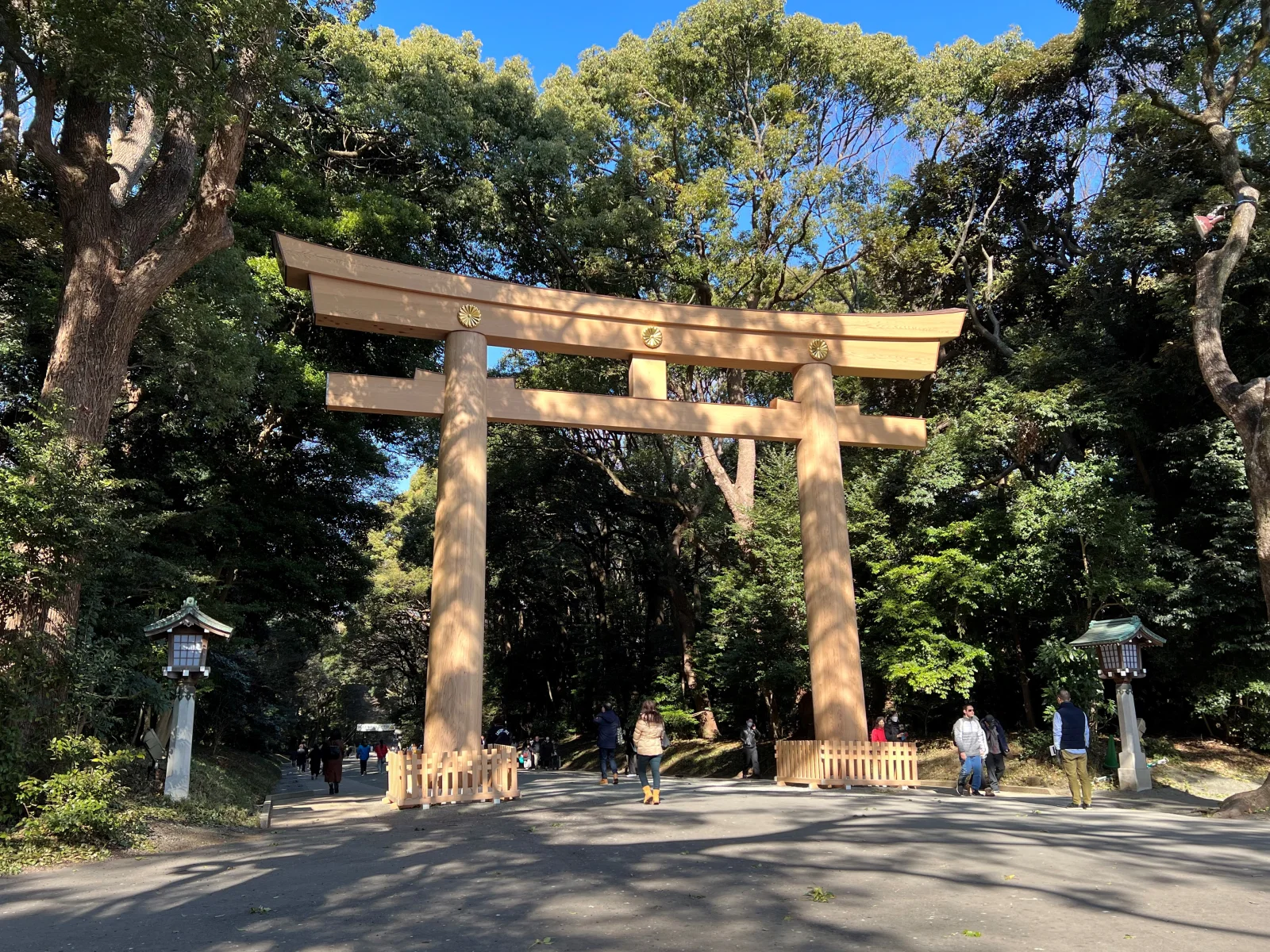
The Harajuku Entrance (South Gate) sits right beside JR Harajuku Station and Tokyo Metro Meiji-jingumae (Harajuku) Station, both listed by the shrine as a 1-minute walk from the gate. This side works best when you want to link a shrine visit, Harajuku shopping, and Yoyogi Park into one half-day loop—with the option to drop bags back at your room. On a shrine-only morning, you simply cross Jingu-bashi Bridge outside the station and step into the woods. If you plan to stop for amulets, explore the Inner Garden, or visit the museum, budget extra time beyond the hotel-to-torii walk listed on booking sites.
The shrine's north entrance is on the Yoyogi side, officially called the Yoyogi Entrance (Yoyogi-guchi). Meiji Jingu lists both JR/Toei Yoyogi Station and Fukutoshin Line Kitasando Station as roughly a 5-minute walk away. Staying here puts you on the JR Yamanote Line, the Chuo-Sobu Local Line, and the subway. One especially efficient route is entering through the North Gate after breakfast, exiting through the Harajuku Gate after your visit, and continuing straight to lunch in Omotesando without backtracking. If you need to be back for a 10:00 AM checkout, keep it to an out-and-back loop through the North Gate and save the south side for later.
The West Entrance sits on the Odakyu Line side near Sangubashi Station, also listed as a 5-minute walk. If your itinerary runs back and forth between Odakyu Shinjuku and Yoyogi-Uehara, or you find a well-priced hotel right by Sangubashi, this gate makes a convenient starting point. When your afternoon plans are in Harajuku's museums or Omotesando, enter from the west, exit to the south, and take a train or perimeter streets back to your room. Plan evening returns strictly along the outer roads outside the shrine walls: once the gates close at dusk, the daytime shortcuts through the forest are locked.
When mapping hotels, set your destination to "Meiji Jingu Harajuku Entrance," "Meiji Jingu Yoyogi Entrance," or "Meiji Jingu Sangubashi Entrance" rather than just "Meiji Jingu." If your map pins the main sanctuary, separate the walk from your hotel to the torii gate before booking. Two properties both labeled "5 minutes from Harajuku Station" can feel very different depending on whether you need station elevators or have to wait through two traffic lights at a major intersection. For groups staying in separate hotels, meeting in front of the torii gate by Jingu-bashi Bridge is far clearer than saying "by the Harajuku Station exit."
| Entrance | Nearest Stations Listed by Shrine | Best Base For |
|---|---|---|
| Harajuku Entrance (South Gate) | Harajuku / Meiji-jingumae (Harajuku), ~1-min walk | Harajuku Station to Jingumae Crossing; combining shrine visits with Harajuku or Yoyogi Park |
| Yoyogi Entrance (North Gate) | Yoyogi / Kitasando, ~5-min walk | Yoyogi, Kitasando, Shinjuku South Exit; entering from the north or looping out the south |
| Sangubashi Entrance (West Gate) | Odakyu Line Sangubashi, ~5-min walk | Around Sangubashi; travelers relying primarily on the Odakyu Line |
Compare hotels around Meiji Jingu by shrine entrance, train exits, room layouts, and luggage routes—whether you're walking in via Harajuku, Yoyogi, or Omotesando.
Comparing Harajuku, Cat Street, Shibuya Jinnan, and Aoyama
Listings tagged "Harajuku hotels" can mean anything from Jingumae 1-chome to streets along Omotesando or back alleys closer to Shibuya. For a first trip, drop a pin on Jingu-bashi Bridge and another on Jingumae Crossing, where Meiji-dori meets Omotesando. Staying between those two points keeps both the South Gate and JR Harajuku Station along the same stretch. If you look south of Jingumae Crossing, factor in the extra walk along Meiji-dori and Cat Street. Define your comfortable walking radius from the shrine gate first, then compare rates for your exact dates and party size—that beats relying on booking-site neighborhood tags.
TRUNK(HOTEL) CAT STREET sits in Jingumae 5-chome. The hotel lists walking times of 7 minutes from Meiji-jingumae Station Exit 7, 5 minutes from Shibuya Station Exit B1, and 12 minutes from Omotesando Station Exit B2. That dual access lets you browse Harajuku by day and eat in Shibuya at night. For an early morning shrine visit, walk up Cat Street toward Harajuku and cross Jingu-bashi Bridge to the South Gate. After an afternoon shopping haul in Shibuya, head straight back via Exit B1 instead of lugging bags up toward Harajuku Station. If you're meeting older relatives arriving by subway, meet at Meiji-jingumae Exit 2 by the shrine first, then walk back toward Exit 7 together. On days with an afternoon hotel break, Cat Street makes it easy to shop on your way back to the room and head into Shibuya for dinner without repeating the Harajuku stretch.
Hotels in Shibuya Jinnan let you walk north along Koen-dori toward Yoyogi National Gymnasium and Harajuku. Take Shibuya Tobu Hotel as a reference point: its site lists a 7-minute walk from Shibuya Station's Hachiko Exit, with an uphill stretch past the Jinnan 1-chome intersection—something to keep in mind when rolling luggage from the JR tracks. Note that Shibuya Tobu Hotel has announced plans to close around the end of February 2027, so for trips in spring 2027 or later, compare other hotels along Koen-dori or look toward southern Cat Street instead. If you're eating in Shibuya nightly and only visiting the shrine once, deciding whether you want to walk that hill twice matters more than a couple of blocks toward Meiji Jingu.
If you want to stay in Shibuya with a shorter luggage roll after stepping off the train, look at Shibuya Tokyu REI Hotel on the Miyamasuzaka side. The hotel lists roughly a 2-minute walk from the JR and Tokyo Metro Ginza Line exits, or underground Exit B2 for the Hanzomon, Fukutoshin, and Tokyu lines. Its access map notes Elevator 21 next to the B2-4 stairs, bringing you up to street level to cross at Miyamasuzaka-shita. From here, ride the Fukutoshin Line one stop to Meiji-jingumae for your morning shrine visit to skip the Koen-dori hill, then stroll back through Cat Street and Miyashita Park toward Shibuya in the evening.
Staying near Omotesando Station shifts your daily orbit east toward Aoyama. If you'll use the Ginza Line to reach Ginza or Ueno, or spend evenings dining around Aoyama, expand your search to Omotesando and Gaiemmae stations. Tokyu Stay Aoyama Premier lists a 2-minute walk from Gaiemmae Exit 1a and an 8-minute walk from Omotesando Exit A4. On a clear morning, you can stroll straight down Omotesando toward Meiji-jingumae and the Harajuku Gate; if it's raining or you want to save your legs, ride the Chiyoda Line one stop from Omotesando to Meiji-jingumae and take Exit 2 toward Jingu-bashi Bridge.
If you're shopping in Harajuku on a weekend and want a quick drop-off point for bags, benchmark hotel locations against Takeshita Street or Omotesando Hills. Main shopping-street entrances are the easiest landmarks to navigate by, and when narrow alleys pack out, parallel sidewalks get you back to your lobby faster. Check the route between your hotel entrance and the nearest main avenue at night, especially if you'll arrive after dark. Light sleepers should explicitly ask for a room facing away from major roads, rail tracks, or hotel bars—naming the noise source works far better than simply requesting a "high floor."
When Yoyogi, Shinjuku South Exit, or Sangubashi Saves Steps
On the Yamanote Line, Harajuku is one stop north of Shibuya, followed by Yoyogi and then Shinjuku. While Yoyogi to Harajuku looks like just a single stop on paper, staying near Yoyogi Station lets you walk straight into the shrine's Yoyogi Entrance without routing every day through Harajuku Station. It also puts you on the Chuo-Sobu Local Line for direct rides to Akihabara or Ryogoku. Check both the walk to the North Gate and the walk to your nearest train platform before booking—some hotels sit close to Yoyogi Station for daily outings yet are easier to reach with suitcases from Shinjuku's South Exit on arrival day.
Hotel Century Southern Tower is a textbook example of straddling both hubs. It lists a 3-minute walk from JR Shinjuku Station's New South Gate or Koshu-kaido Gate, and a 4-minute walk from JR Yoyogi Station's North Exit. Arriving from Shinjuku Southern Terrace brings you into the 2nd-floor entrance, where elevators go up to the 20th-floor lobby; arriving via Toei Shinjuku Station Exit A1, airport shuttle bus, or taxi uses the 1st-floor entrance. Save screenshots of both entrance levels in addition to the hotel pin, and if companions arrive via different transit lines, agree to meet directly at the 20th-floor front desk.
If you only need one early morning for Meiji Jingu but have two mornings catching early trains out of Shinjuku, staying by Shinjuku's South Exit makes far more sense than hauling luggage closer to Harajuku. On shrine day, walk in from Yoyogi Station's North Gate and head back the same way for lunch or luggage pickup. If your schedule centers on Shinjuku-sanchome rather than JR Shinjuku South, the Fukutoshin Line opens another option—just remember that Kitasando (F14) is served only by Local trains, while Express and Commuter Express trains skip it and stop at Meiji-jingumae (F15). Checking exact train stops matters more than trusting a platform sign that just says "toward Shinjuku."
Sangubashi is ideal when you want the West Approach for a quiet morning walk, especially if you're already riding the Odakyu Line on adjacent days. Note that late evenings in Shibuya will mean an extra train transfer or a longer walk back to Sangubashi. Run a quick test with your planned last-night dinner spot to see how many transfers it takes and whether kids can get back without changing lines. If you'll only use the west side on the morning of your shrine visit, stay near your most-used station overall and simply ride in to Sangubashi that morning—and always map from the hotel's front door if your candidate sits across the tracks from the shrine gate.
Station Exits, Elevators, and Luggage-Friendly Routes
To reach the Harajuku Entrance, exit JR Harajuku Station through the Omotesando Gate and take the west side; for Omotesando avenue, take the east side of the same gate. Takeshita Street has its own separate Takeshita Gate. JR East's accessibility guide places the step-free routes between street level and platforms at the Omotesando Gate, so head straight there with large suitcases or strollers. When meeting friends at Harajuku Station, write out the full name—"Omotesando Gate West Exit" or "Takeshita Gate"—or you can end up waiting at opposite ends of the same station.
The subway station is officially named Meiji-jingumae (Harajuku), serving the Chiyoda Line (C03) and Fukutoshin Line (F15). Exit 2 has an elevator to street level and is the exit to use for the Harajuku Entrance and Yoyogi Park's Harajuku Gate. If your hotel is on the Meiji-dori side, Chiyoda Line riders can head toward the Meiji-dori ticket gates for the street elevator at Exit 6, which Tokyo Metro lists as operating from 6:00 AM to midnight. Coming off the Fukutoshin Line, follow signs toward the Yoyogi Park ticket gates for Exit 2—check elevator signs before tapping out so you come up on the right side of the street. Keep two screenshots on your phone: the station interior map and the surface walk from your chosen exit to your hotel door.
Omotesando Station is a separate subway hub connecting the Ginza, Chiyoda, and Hanzomon lines. Tokyo Metro lists Exit B3 as the elevator exit to street level. Even if your hotel directions say Exit A4 or a boutique lists Exit A2, coming up at B3 and crossing at street level saves a tough stair climb right off a flight in the rain. On the Chiyoda Line, also watch out not to confuse Yoyogi, Yoyogi-koen, and Yoyogi-uehara—these are three separate stations in different neighborhoods, and getting off at the first one with "Yoyogi" in the name will land you far off course with your bags.
The shrine approaches are paved with deep gravel, which is punishing on small spinner wheels. Even if your route from the station platform to the torii gate has elevators the entire way, you still won't want to roll suitcases across the grounds—store bags at your hotel or a locker before walking in. Families with strollers should time nap walks for the return leg and carry only half-day essentials into the shrine rather than pushing heavy gear over gravel for hours. Multigenerational groups should remember the official 10-minute walk from gate to sanctuary is one way; leave time to sit and rest before walking the same distance back out. If your group splits up, pick a clear meeting point—like the torii gate or the head of Jingu-bashi Bridge—and specify whether you mean inside or outside the gate.
If your hotel sits farther from a train station, Shibuya Ward's Hachiko Bus "Jingu no Mori" route runs during the day, stopping at Meiji Jingu (Harajuku Station), Meiji-jingumae Station, Omotesando Station, Sendagaya Station (Tokyo Metropolitan Gymnasium), Sangubashi, and Yoyogi Station. Shibuya Ward lists a flat fare of ¥100 per ride, paid on boarding with Suica, PASMO, or cash. Because it's a loop line where several stops appear in both directions, check the next-stop sign at the bus stop before boarding at Omotesando. It's handy for saving steps mid-afternoon, though you should stick to walking or trains early in the morning and late at night. Ward guidelines ask riders to fold strollers before boarding, and travelers arriving with big suitcases from the airport are better off using rail stations with elevators.
Timing Breakfast, the Inner Garden, and the Museum
Entry to the Meiji Jingu grounds is free, with opening and closing times shifting every month with sunrise and sunset. From May through August gates typically open at 5:00 AM; in November hours are 6:10 AM to 4:10 PM, in December 6:40 AM to 4:00 PM, and standard January hours are 6:40 AM to 4:20 PM. In winter, arriving at your hotel late in the afternoon often leaves just enough light for a photo at the gate, making a pre-breakfast visit the next morning much more rewarding. In summer, if you want a forest walk before eating, pick a hotel close to a gate or book a later breakfast seating so you aren't rushing out of the woods.
The Meiji Jingu Inner Garden (Gyoen) asks for a ¥500 maintenance contribution. Standard hours are 9:00 AM to 4:30 PM from March to October and 9:00 AM to 4:00 PM from November through February, with extended June iris-season hours of 8:00 AM to 5:00 PM (until 6:00 PM on weekends). In June, pair an early shrine visit with the 8:00 AM garden opening. If you're only walking the main approach at 5:30 AM, there's no reason to wait around in the woods until 8:00 or 9:00 AM—walk to the main hall, head back to your hotel for breakfast, and return to the park later only if there's something specific you still want to see.
The Meiji Jingu Museum stands along the southern approach, about a 5-minute walk from JR Harajuku Station's Omotesando Gate West Exit or subway Exit 2. Regular hours are 10:00 AM to 4:30 PM (last entry 4:00 PM), closed Thursdays (open on national holidays) and during exhibition changes. Admission is ¥1,000 for adults, ¥900 for high school students and younger, and free for children under elementary school age (elementary-age visitors and younger must be accompanied by an adult). On winter afternoons, visit the main sanctuary first and walk south back down to the museum rather than the reverse, so you don't run into closing gates inside the woods. Staying on the south side also makes it easy to drop rain gear or strollers back at your room.
For Hatsumode (New Year's first shrine visit), factor crowd queues directly into your hotel choice. Meiji Jingu's Hatsumode page lists peak crowds from 10:00 PM on New Year's Eve through 3:00 AM on January 1, and from 10:00 AM onward on January 1-3. If you want the midnight countdown atmosphere, book within walking distance of an entrance, agree on a regrouping spot beforehand, and follow that year's one-way crowd routes and road closures on your walk back. If you simply want a quiet New Year's visit, aim for early morning or wait until January 4 or later. As of November 22, 2026, the shrine has posted Reiwa 9 (2027) group prayer reservation notices on its news page, while exact 2027 public Hatsumode gate hours will be published on the dedicated Hatsumode page—so don't treat prior-year schedules as fixed when planning New Year's Eve transit.
Building Half-Day Loops with Parks, Shopping, and Events
Yoyogi Park sits right next door to Meiji Jingu; after walking back from the main hall toward Harajuku, turn right near Jingu-bashi Bridge to enter via the park's Harajuku Gate. According to the Tokyo Metropolitan Park Association, Yoyogi Park is open 24 hours with free admission, though certain facilities carry separate hours and fees. If you finish checking in around 4:00 PM in winter and still want fresh air, take a stroll along the park's wide main paths and save the shrine for the next morning. If traveling with kids who want to burn energy, head to the park after your shrine visit—running and exercise are prohibited on Meiji Jingu's approaches. When clear skies are brief, pick whichever park or shrine section matters most; combining both grounds plus the round-trip walk to a hotel adds up to a lot more mileage than the map makes it look.
To spend an afternoon in Omotesando and Shibuya, exit the Harajuku Gate, cross the bridge, and walk east along Omotesando to Jingumae Crossing—where you can branch onto Takeshita Street, continue toward Aoyama, or turn down Cat Street toward Shibuya. Save Takeshita Street for when shops are open and enter directly from JR Harajuku's Takeshita Gate. If Omotesando Hills is your shopping anchor, stay near Meiji-jingumae or Omotesando station for an easy trip back. After browsing Cat Street and having dinner in Shibuya, Harajuku-area guests can hop one stop back on the Yamanote Line to Harajuku or on the Fukutoshin Line to Meiji-jingumae—entering from one side in the morning and riding back at night spares your feet when you're tired.
On rainy days, split the half-day between indoor stops and one short outdoor walk. If the rain is light in the morning, do a quick shrine visit, stop back at your hotel to dry off, and head out once the museum or Omotesando shops open. On Thursdays when the museum is closed, hop on the subway straight toward Aoyama or Shibuya and wait for department stores to open. Note that shopping between Omotesando Station and Meiji-jingumae Station is almost entirely outdoors along the boulevard, meaning you'll be opening and closing umbrellas between boutiques. With older travelers in heavy rain and cold, pick a single complex with dining and restrooms instead of transferring lines or walking the gravel paths of the Inner Garden.
Before booking for a concert or sports event, check the exact venue name on your ticket. Yoyogi National Gymnasium (First and Second Gymnasiums) sits right beside Harajuku and Meiji-jingumae stations, so staying in Harajuku or Shibuya Jinnan lets you walk back along the perimeter streets after the show. MUFG Stadium (National Stadium) is over in Gaien—venue operators list a 5-minute walk from JR Sendagaya or Shinanomachi stations, or direct access via Kokuritsu-kyogijo Station on the Toei Oedo Line—while Tokyo Metropolitan Gymnasium sits right beside Sendagaya Station. Pin the exact venue gate on your hotel map so you don't end up on the wrong side of a complex at night. If you stay in Yoyogi or Kitasando for a Gaien event, you're right on the same side of the park to walk into the shrine's North Gate the next morning without switching hotels.
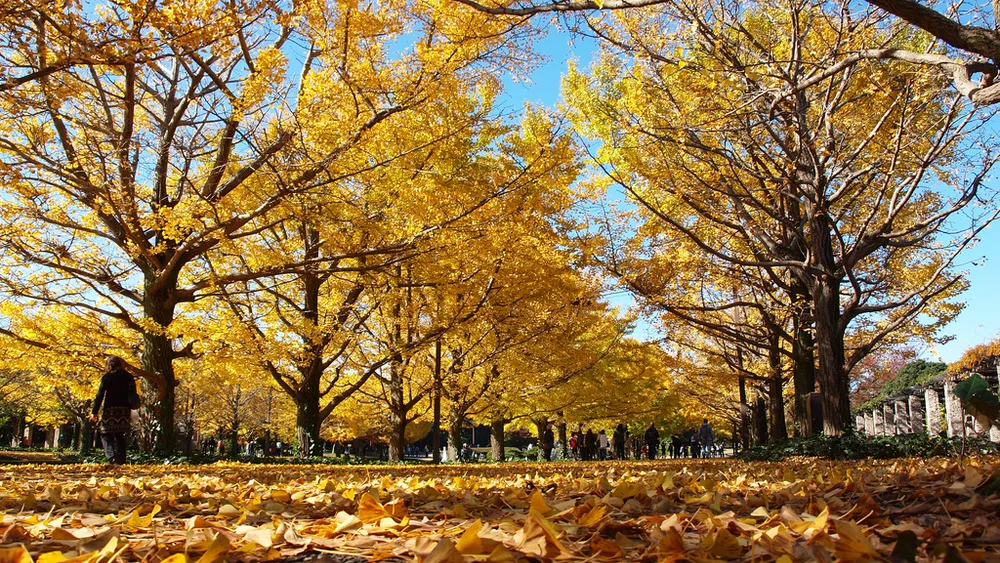
For autumn ginkgo viewing, pin "Icho Namiki" (Jingu Gaien Ginkgo Avenue) separately—it's over near Aoyama-dori and Gaiemmae, a distinct outing from entering Meiji Jingu at Harajuku. Guests in Aoyama or Omotesando can walk the ginkgo avenue right after leaving their hotel and save the shrine plus Shibuya for another half-day. Gaien also makes a smooth one-way walk: start at Ginza Line Gaiemmae or Aoyama-itchome Station, walk the ginkgo avenue past Meiji Memorial Picture Gallery, and exit at Sendagaya Station—one stop on the Chuo-Sobu Local Line from Yoyogi. That leaves one morning for ginkgo trees or a ballgame and another for the shrine's North Gate. If you want cherry blossoms and a family picnic, Yoyogi Park pairs easily with the Harajuku Gate via the same station exits, making it simple to grab lunch and head back for naps. You can also match your stay with our Tokyo cherry blossom area routes and Tokyo autumn foliage itineraries so you don't try to cram every seasonal spot into one morning.
Room Layouts, Hotel Policies, and Arrival-Night Logistics
Always enter the exact headcount and ages of everyone staying so booking sites show rooms that actually fit your group. Twin rooms give two people separate beds, though in compact Tokyo footprints two beds can eat up most of the floor space. Groups of three adults should filter for true triple-occupancy rooms first, then compare the total price of a sofa-bed setup, a rollaway, two separate rooms, or a family room. For kids, enter exact ages to see whether bedding and breakfast are included. With multiple suitcases, inspect actual room photos to check whether aisles are wide enough to open bags flat instead of guessing by square meters—floor photos quickly tell you whether you'll be taking turns packing.
Tokyu Stay Aoyama Premier lists its room specs clearly: both Moderate and Comfort rooms are 17 square meters for two guests with a 140 cm double bed, an in-room washer-dryer, and a microwave; Residential rooms step up to 21 square meters with the same 140 cm bed plus a kitchenette. Travelers prioritizing laundry can compare these directly, or switch to a twin room if you want two beds. The hotel provides light daily cleaning by door-tag request and full room cleaning once a week on stays of seven nights or more. Having an in-room washer-dryer on a five-night trip cuts down packing significantly—run a load in the evening so mornings stay free for the shrine. On a two-week stay, look specifically for the kitchenette listings if you plan to cook simple meals; on a three-night stay where you're just heating convenience-store breakfast, a smaller room with a microwave lets you put your budget toward a wider bed or fewer train transfers.
When two hotels have similar nightly rates, compare breakfast hours, luggage storage, and cancellation terms side by side. If you plan to enter Meiji Jingu at 5:00 or 6:00 AM, most hotel breakfast buffets won't be open yet—book a room-only rate or schedule breakfast after you return. On late-night arrivals, add up immigration, baggage claim, your final train transfer, and the hotel's check-in cutoff. If you have an event the following night, keeping the same hotel lets you leave bags in your room; if event-night rates spike, staying one stop farther out can buy you the twin beds or extra space you actually need. Always compare identical dates, identical cancellation rules, and the total stay cost—including extra train fares and luggage-hauling time if you're more than one person.
On your arrival night from the airport, pick the route that treats your luggage kindly. Coming from Haneda on the Keikyu Line, Shinagawa makes a clean transfer onto the Yamanote Line. Coming from Narita on the Narita Express (N'EX) to Shinjuku or Shibuya, booking right beside either major terminal lets you drop bags before riding a short hop to Harajuku. Picking a tucked-away corner just to save five minutes the next morning often costs you more time and effort after a long flight with two transfers. If you want to stay right by the South Gate, trace your arrival station all the way to the hotel lobby—long underground passages, elevator-only connections, and hills only show up when you zoom in. If your return N'EX departure from Shinjuku falls on the same morning as a shrine visit, pack the night before, store bags at the hotel, and pin the hotel as your mid-morning return point before heading to Shinjuku Station (checking which elevator and gate lead to your stored bags if they're kept on a different floor). When booking the Narita Express, double-check that your train stops at Shinjuku or Shibuya—from the airport, look for trains bound for Shinjuku, since Ofuna-bound trains split toward Shinagawa and Yokohama. Still weighing airport connections? Check our Tokyo airport-to-city transit guide against your flight times.
One-Night Stays vs. Multi-Night Bases
On a late-night arrival with only one night in the area, staying by Shinjuku's South Exit lets you drop bags, enter Meiji Jingu early via the Yoyogi Gate, and check out before moving on. Keep the morning focused on the shrine itself: if you also want the museum, remember it doesn't open until 10:00 AM, so consider eating breakfast first, checking out with luggage held at the front desk, and visiting afterward. If you have a midday train to catch, stick to a morning walk through the main sanctuary and out the Harajuku Gate, working backward from your departure time to set a hard turnaround time for picking up bags.
With two full days, dedicate day one to Harajuku and Shibuya: enter Meiji Jingu from the South Gate in the morning, pick either the Inner Garden or the museum, have lunch, browse Omotesando and Cat Street, and finish with dinner in Shibuya. Day two is where your hotel choice pays off: heading east toward Hibiya or Otemachi is seamless on the Chiyoda Line, while Shinjuku-sanchome and Ikebukuro sit straight up the Fukutoshin Line. Groups splitting up for the day can agree to meet back at the hotel or dinner spot and use whichever station exit fits each person's route. For details on shrine gates, the Inner Garden, and the southern approach, pair this with our Meiji Jingu and Harajuku half-day walk.
On a four- or five-night stay where Meiji Jingu is just one morning out of the trip, map your hotel against every day's first train ride. Day trips from Tokyo Station, shopping days in Ikebukuro, and games in Gaien all pull you onto different lines—if three or more mornings start on the same line, prioritize staying near that station and simply commute to the shrine gate on your visit day. Still comparing Ueno, Tokyo Station, or other bases across the city? Start with our where to stay in Tokyo neighborhood guide. Families who need midday naps can split Harajuku, Yoyogi Park, and Omotesando into two separate half-days: walk the shrine and park in the morning, head back to the hotel to rest, and emerge from another Meiji-jingumae exit in the afternoon for shopping so everyone goes at their own pace.
A few useful answers
Should I stay in Harajuku or Yoyogi for Meiji Jingu?
Pick Harajuku if you want to enter via the southern approach and walk straight into Takeshita Street or Yoyogi Park afterward. Pick Yoyogi or Shinjuku's South Exit if most of your trip starts from Shinjuku or you plan to enter via the Yoyogi Gate.
Which exit at Harajuku Station goes to Meiji Jingu?
Take the Omotesando Gate West Exit at JR Harajuku Station. By subway, take Exit 2 at Meiji-jingumae (Harajuku) Station, which has an elevator to street level.
If I stay in Kitasando, can I take a Fukutoshin Line Express train straight back?
No—use Local trains for Kitasando (F14). Express and Commuter Express trains skip Kitasando and stop at Meiji-jingumae (F15) instead.
Can I visit Meiji Jingu at 6:00 AM in December?
Standard December hours are 6:40 AM to 4:00 PM, so a 6:00 AM arrival is too early on regular days—eat breakfast first or time your walk for after opening. Check the shrine's official New Year notice for special Hatsumode hours.
How do I get to Meiji Jingu from a hotel in Omotesando?
Walk west along Omotesando to Jingu-bashi Bridge, or ride the Chiyoda Line one stop from Omotesando Station to Meiji-jingumae Station and take Exit 2 to the Harajuku Entrance.
Can I wheel luggage straight through the shrine grounds to another gate?
No—the paths inside are covered in deep gravel and the gates close at night. Keep rolling suitcases to outer perimeter streets or trains, store your bags first, and explore the shrine on foot.
If I'm only visiting Meiji Jingu once, should I switch hotels from Shinjuku to Harajuku?
There's no need. You can walk from Yoyogi Station into the shrine's Yoyogi Entrance in the morning and head straight back, keeping your Shinjuku-area hotel as your base.
Should I book near Harajuku Station for an event at the National Stadium?
Check your ticket's exact venue name: Yoyogi National Gymnasium is right next to Harajuku and Meiji-jingumae stations, whereas the National Stadium (MUFG Stadium) is served by Sendagaya, Shinanomachi, Kokuritsu-kyogijo, and Gaiemmae stations.
Official information and references
Sources used in this guide.
- Meiji Jingu Entrances and Access
- Meiji Jingu Grounds Map
- Meiji Jingu Monthly Gate Hours and Worship Guidelines
- Meiji Jingu Inner Garden (Gyoen) Hours and Maintenance Contribution
- Meiji Jingu Museum Visitor Information
- Meiji Jingu Hatsumode (New Year's Visit) Guide
- Meiji Jingu News and Reiwa 9 (2027) Group Prayer Reservations
- JR East Harajuku Station Map and Accessible Routes
- Tokyo Metro Meiji-jingumae Station Elevator Routes
- Tokyo Metro Omotesando Station Elevator Routes
- Tokyo Metro Fukutoshin Line Station Stop Guide
- Shibuya Ward Hachiko Bus Jingu no Mori Route and Fares
- Tokyo Metropolitan Park Association: Yoyogi Park Entrances and Hours
- Yoyogi National Gymnasium Access
- MUFG Stadium (National Stadium) Access
- Meiji Jingu Gaien Access Map
- TRUNK(HOTEL) CAT STREET Access
- Shibuya Tobu Hotel Access
- Shibuya Tobu Hotel Closure Notice
- Shibuya Tokyu REI Hotel Access
- Tokyu Stay Aoyama Premier Access
- Tokyu Stay Aoyama Premier Rooms and Housekeeping Policy
- Hotel Century Southern Tower Access
- JR East Narita Express (N'EX) Routes
- Keikyu Haneda Airport Line Shinagawa Transfer Guide