Compare Nishimuraya Honkan, Shogetsutei, Kobayashiya and Yamatoya in Kinosaki Onsen, covering bed types, private baths, child policies, snow crab half-board plans and public bathhouse passes.
- Region & Focus
- Kinosaki Onsen
- Reading Scope
- 22 min read · 9 chapters · 6 Q&As
- Official Verification
- 37 official sources checkedUpdated 22 November 2026
- Key Topics
- Where to stayBookingRyokan
Chapter Route Map (tap any stop)
- Near the Station, Along the Central Canal or at the Far End of Town?
- Kobayashiya and Yamatoya: Public Bathhouses on Your Doorstep
- Nishimuraya Honkan: Choose Beds and Baths Before the Garden View
- Shogetsutei: Match Your Plan to Children's Meals and Private Spa Slots
- In-Room Bath, Bookable Private Spa or Public Bathhouses: Where Is Extra Spend Worth It?
- 2026–27 Matsuba Snow Crab Season: What to Look For on Your Dinner Booking
- Half-Board vs Room-Only: Compare the Total Trip Cost
- Fitting Public Bathhouses and Dinner into a Two-Day Stay
- Lock in Ryokan Timings First, Then Connect Osaka, Kyoto or San-in
- Quick Q&A
When choosing a ryokan in Kinosaki Onsen, start with dinner and bathing arrangements before weighing up how far you are from the station. If you want a historic property with a bath in your room, look first at specific room categories at Nishimuraya Honkan. Families travelling with children under 10, or anyone needing Western beds and table-and-chair dining, should check Shogetsutei first. If you want to step straight onto the willow-lined canal and use a private-lock bath indoors, Kobayashiya's location is hard to beat. In winter, if Matsuba snow crab is the reason for the trip, lock in a dinner plan that states the crab species, landing port and preparation style before deciding whether to pay extra for an in-room tub or a bookable private bath.
Near the Station, Along the Central Canal or at the Far End of Town?
Walking from JR Kinosaki-Onsen Station towards the Otani River, you pass Jizo-yu on the station side first, then continue past Yanagi-yu, Ichino-yu and Gosho-no-yu towards the gate of Onsen-ji Temple and Kouno-yu. The Kinosaki Onsen Tourist Association walking map puts the route from the station to Kouno-yu at roughly 1.3 km. That distance makes for a pleasant pre-dinner stroll, though pulling suitcases, walking in the rain or pacing yourself with young children feels quite different. Before booking, check where your ryokan's entrance sits on the map in relation to the public bathhouses you most want to visit.
Staying on the station side suits travellers catching an early train the next morning. You can drop off heavy bags at the inn, head along the canal in the evening and browse your way back along the same bank after bathing. Basing yourself near Ichino-yu keeps the bathhouses, cafes and your ryokan within easy reach, so it is simple to pop back to your room mid-afternoon and head out again after dinner. For a one-night stay where companions have different appetites for bath-hopping, meeting back at a central inn lets everyone wander at their own pace without waiting around.
At the far end of town, there are two distinct ways to stay. Nishimuraya Honkan sits close to Gosho-no-yu and Mandara-yu, so you can still fit the main street and dinner into the same evening. Shogetsutei lies further back, with the hotel estimating roughly a 25-minute walk from the station. Booking out here makes sense when you plan to use the woodland garden, large communal baths or bookable private spas, giving the property half a day rather than dropping bags and heading straight back towards the station. If you are still deciding between Kinosaki, Arima and Shirahama, compare them in our Kansai onsen base comparison.
| Ryokan | Best-suited stay | Check before paying |
|---|---|---|
| Kobayashiya | Opposite Ichino-yu, with three private-lock guest baths indoors | Minimum guest age 10; private baths operate first-come, first-served |
| Nishimuraya Honkan | Historic timber inn with gardens; choose specific rooms with beds or in-room baths | Minimum guest age 10; meal plan and room conditions must be matched together |
| Nishimuraya Shogetsutei | Woodland gardens, large communal baths and bookable private spas at the end of town | Dinner venue, children's meals, private spa time slots and shuttle schedule |
| Yamatoya | Central canal-side base where you arrange breakfast and dinner yourself | Room-only plans require check-in by 18:00; on-site extras are cash-only |
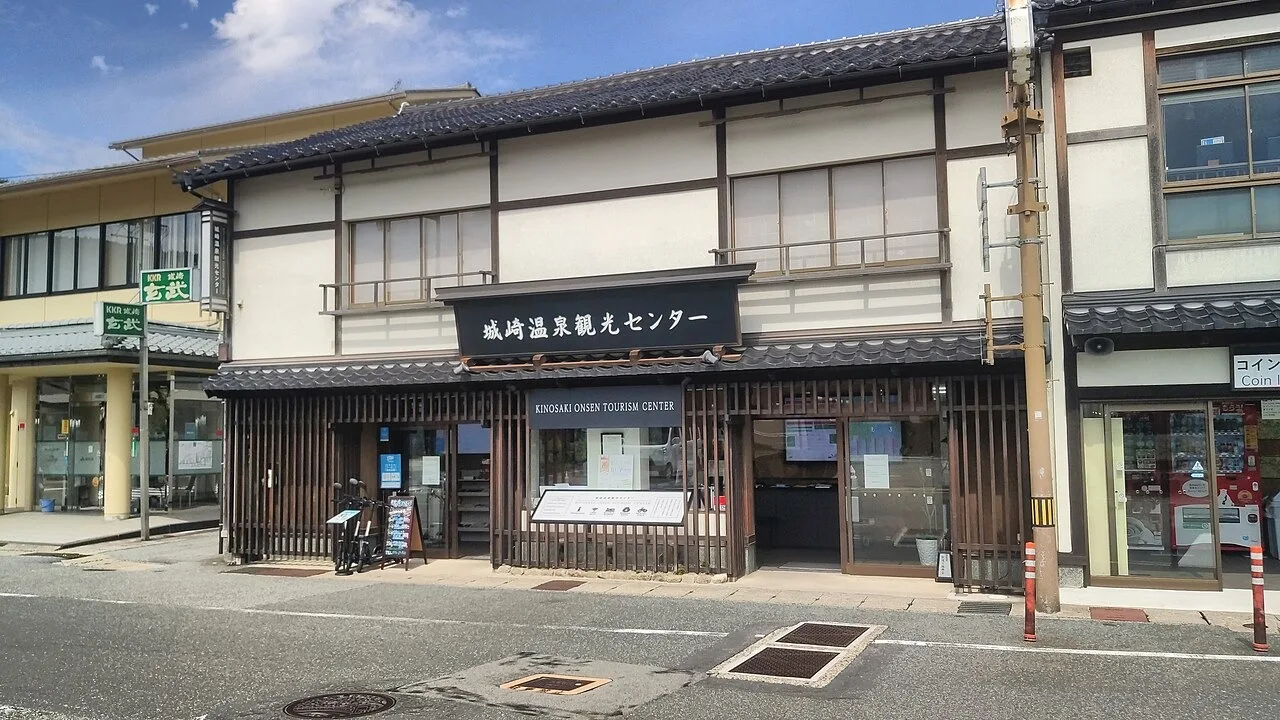
Compare Nishimuraya Honkan, Shogetsutei, Kobayashiya and Yamatoya in Kinosaki Onsen, covering bed types, private baths, child policies, snow crab half-board plans and public bathhouse passes.
Kobayashiya and Yamatoya: Public Bathhouses on Your Doorstep
Kobayashiya stands directly opposite Ichino-yu, listed on its website as roughly a five-minute walk from the station. The main building is a Registered Tangible Cultural Property that reopened in 2023 and includes a shared library lounge. Couples looking for a willow-lined canal view can start with Kihachi and Takezo, both equipped with a single large bed. Groups of four can look at the riverside Kiichiro tatami room. Before paying extra for a river view, ask yourself how much time you will actually spend in the room: if most of your day is spent out in town, a garden-facing Japanese-style room still gives you access to the same three private indoor baths.
Kobayashiya's three indoor baths—Wabi-no-yu, Sabi-no-yu and Yugen-no-yu—are individual bathrooms that guests can lock from the inside whenever vacant between 15:00 and 23:00, and again from 6:30 to 9:00 the next morning. This system works best if you do not mind waiting briefly in your room when all three are occupied. If you want a guaranteed soak before dinner, visit one of the town's public bathhouses on the afternoon you arrive and save the indoor baths for late evening or early morning. If you return to find all three doors locked, drop your towels in your room and head back downstairs a little later during open hours.
At Kobayashiya, you can collect your stay's public bathhouse pass from reception as early as 14:00. Standard check-in runs from 15:00 to 18:00, with check-out by 10:00 the next day. Arriving around midday to leave luggage, have lunch and pick up your pass at 14:00 for Ichino-yu saves you from losing the afternoon waiting for your room. Cancellation terms for public holidays and the New Year period are listed separately per plan, while the official FAQ for standard bookings states free cancellation up to 14 days before check-in, rising to 100% after 18:00 the day before arrival.
If you are travelling with children under 10, note that Kobayashiya enforces a minimum age limit of 10 for both overnight stays and lunch. If anyone in your party is uncomfortable sleeping on a futon on the floor, check the exact bed count and bedding type on the room page before booking. When reserving two rooms and hoping to be on the same floor or both facing the river, pass the lead guest names for both bookings to the ryokan together. Where companions book their own rooms separately, verify the room category, dinner seating time and payment deadline for each reservation.
Yamatoya sits on the same stretch of the onsen street, listed by the ryokan association as roughly one minute on foot from Ichino-yu and three minutes from Gosho-no-yu. Its room-only plan with a public bathhouse pass, valid through 31 March 2027, includes neither breakfast nor dinner, requires check-in no later than 18:00, keeps the bathhouse pass active until 13:00 on check-out day and offers two complimentary private indoor baths on a first-come, first-served basis. This suits travellers aiming for specific restaurants in town or preferring to put more budget into lunch. Overseas visitors can search available dates for the meal-free plan via the Yamatoya booking page on Visit Kinosaki.
One of Yamatoya's two private indoor baths features a hot-spring tub roughly 90 cm deep alongside a cold plunge pool. For families weighing up the property, that depth matters more than bath photos, and children must be supervised by an adult in the water. Drivers booking this room-only plan can use the partner Kinosaki Motor Pool for a separate parking fee. By contrast, booking direct on Kobayashiya's official site includes free parking, whereas bookings made through other channels incur ¥1,000 per standard car per night. Because parking terms vary by plan, motorists should compare total stay costs including parking.
Nishimuraya Honkan: Choose Beds and Baths Before the Garden View
Nishimuraya Honkan is a traditional ryokan built around a Japanese garden. A single-room Japanese suite pairs a tatami living-sleeping area with a veranda alcove and sleeps two to four guests, while a two-room Japanese suite offers two separate tatami spaces for two to seven guests. Both layouts suit travellers who want futons laid out in the evening and room to sit together and talk. If anyone in your group needs a grab rail or bed-frame height to stand up comfortably, pick a room with Western beds first and allocate futons to those happy on the floor—filtering solely by maximum occupancy often hides how guests will actually sleep.
In August 2026, the property added three Japanese-Western room types. Ume, on the ground floor, has twin beds, a tatami area and a semi-open-air bath for two to six guests. Hagi, also on the ground floor, has twin beds, tatami space and a veranda alcove. Katsura includes a dedicated dining space, making it the first plan to check if you want sleeping and eating areas kept separate. Couples wanting only a private open-air bath can compare Hatsune and Asuka, both on the ground floor and each accommodating two to four guests.
On booking pages, 'rotenburo-tsuki' indicates a room with an open-air bath, while 'han-roten' denotes a sheltered semi-open-air bath. According to Visit Kinosaki, in-room guest baths at Kinosaki ryokan use heated fresh water rather than piped hot-spring water, and Nishimuraya Honkan notes this water source in its room specifications. If you want to soak privately in your room with tea and a garden view, choose a bath-equipped category such as Ume or Hatsune; for natural onsen mineral water, use Honkan's communal baths, the town's public bathhouses or a booked session at Shogetsutei's woodland spa.
Honkan accepts guests aged 10 and over, and its Japanese-language terms also cap reservations with children at three parties per day. The room guide lists check-in from 15:00 (latest 17:00) and check-out by 11:00, while the Japanese terms place dinner start times between 17:30 and 18:30. Work backwards from dinner when choosing your train so you still have time to drop bags and check in calmly. If your preferred room only leaves you able to catch a late-afternoon train into Kinosaki, send your actual arrival time to the ryokan to confirm dinner arrangements before paying.
Nishimuraya Honkan also has an accessible room, Yamabuki, on the first floor (second storey in Japanese numbering), featuring twin beds, a dining space and a cypress bath. If someone in your party needs to shower seated, request the floor plan before booking to verify the route from the main entrance through the guestroom door to the shower area. Guests who prefer table-and-chair dining can also look at Katsura and check whether there is enough seating for everyone. Both rooms accommodate larger parties, so confirm how extra futons are arranged when selecting your headcount.
The ryokan lists walking times of roughly two minutes from Honkan to Mandara-yu, five minutes each to Gosho-no-yu and Kouno-yu, and about eight minutes to Ichino-yu. If you are dining in-room and heading back to Osaka or Kyoto the next day, walk to Gosho-no-yu before dinner and rely on Honkan's communal bath or your in-room tub afterwards. Should the nearest public bathhouse happen to be on its weekly closing day, soak indoors at night and save the canal walk for departure morning.
Shogetsutei: Match Your Plan to Children's Meals and Private Spa Slots
At Shogetsutei, the Tsuki-no-mune (Moon Wing) houses Western-style rooms and Universal Twin rooms, while the Niwa-no-mune (Garden Wing) faces the woodland garden and includes Japanese-Western rooms and rooms with open-air baths. If you are travelling with young children or older relatives, search using exact ages and headcounts first before deciding whether you need tatami space. When you need two fixed beds plus floor room for children's bags and gear, a Japanese-Western room tells you far more than floor area alone. The property also details barrier-free facilities, so check step-free access to both guestrooms and dining rooms if mobility is a priority.
Shogetsutei has two Universal Twin rooms—one on the third floor and one on the fourth—each sleeping one to three guests with no in-room dining. If every member of a three-person group expects a proper bed frame, ask in advance how the third bed is configured. Booking two Universal Twin rooms together also means your party will be split across two floors. For families needing adjoining doors, the hotel notes that only one pair of Comfort Suite and neighbouring Comfort Twin rooms can connect, so confirm availability on that exact pairing before booking transport.
On Shogetsutei's dining page, kaiseki dinners are served either in private dining rooms or in your guestroom; in-room dining normally carries a ¥2,200 surcharge per person and is unavailable in Western-style rooms. Multiply that supplement by your group size when comparing totals. The restaurant Ricca welcomes children aged 10 and over and offers no children's menu. Families staying specifically for Shogetsutei should filter first for kaiseki plans that accept children at the table. If you simply want chairs and a table, choose a dining-room plan rather than paying the in-room dining supplement just to arrange seating.
Mori no Private Spa is open for advance reservation to guests staying at either Nishimuraya Honkan or Shogetsutei. A 70-minute session costs ¥8,800 (tax included) for one to four guests, plus ¥1,100 each for a fifth and sixth guest up to ¥11,000 for six, billed separately from your room rate. The Japanese-style Gingetsu, Balinese-style FU-RO and Chinese-style Rinsen suites each run on set slots, with all three listing a morning slot from 7:30 to 8:40. Every suite includes bath towels and mineral water, while the heated stone beds accommodate up to two people at a time—with children, treat the open-air bath as the main draw.
When booking an evening private spa slot, check it side by side with dinner in your phone calendar. Rinsen's 17:45–18:55 slot, for example, overlaps standard kaiseki service. If you want an unhurried crab dinner, ask the hotel for an earlier bath slot, a post-dinner session or a slot around breakfast the next morning. For guests staying at Honkan who book a spa at Shogetsutei, the ryokan lists a roughly 10-minute walk between the two properties and offers shuttle assistance. Pick a slot that leaves comfortable travel margin back to Honkan rather than whichever gap happens to be free on screen.
At Shogetsutei, the large communal baths open from 5:30 to 10:00 in the morning, leaving plenty of time even after breakfast. Afternoon-to-late-night hours run from 12:00 until 0:30 the following morning, so if you do not want to catch another shuttle back into town, you can dine, stroll and bathe indoors upon returning. Like Honkan, Shogetsutei's rooms with open-air baths use heated fresh water. If authentic onsen water matters more than a private balcony tub, put your room budget into bed type, dining or accessible layouts and rely on the communal baths.
Shogetsutei's website lists an afternoon public-bathhouse shuttle departing from the hotel on a timetable starting at 15:00, evening runs from 20:00 to 22:00, and one-way station drop-off shuttles from morning until midday. Confirm both outbound and return pick-up points at check-in. If you plan to linger on the canal in the evening, decide before changing into a yukata whether you will walk or take the shuttle back, and bring warm outer layers. To use the ryokan association's complimentary shuttle from the station to Shogetsutei, provide your expected arrival time in advance; it coordinates with limited express trains arriving between 12:00 and 18:00.
In-Room Bath, Bookable Private Spa or Public Bathhouses: Where Is Extra Spend Worth It?
If two of you simply want one private soak together, compare the price difference between a bookable private bath and an in-room bath category. For a couple, booking Shogetsutei's private spa works out at ¥4,400 per person. Another option is booking a standard room at Kobayashiya and using its three shared private-lock indoor baths, provided you are flexible around availability. Save the higher room rate for a bath-equipped suite if waking up and stepping straight from the tub back into bed is what you actually want.
On Japanese booking portals, 'daiyokujo' refers to the inn's shared communal baths, whereas 'kashikiri' denotes a private bath reserved for one party at a time—some charged by slot, some first-come, first-served, and some queued on site. Although Ichino-yu and Jizo-yu have family bath facilities listed historically, the tourist association's public bathhouse page marks them as suspended. Families wanting to bathe all together should book a ryokan with private indoor baths or a suitable in-room tub rather than counting on a family room at the public bathhouses.
Travellers with tattoos are welcome at Kinosaki's public bathhouses, as clearly stated in the Visit Kinosaki FAQ. Rules for a ryokan's own communal baths vary by property. For companions who want to bathe together without worrying about sharing with other guests, a lockable private bath is the simplest fix. For etiquette around undressing, washing before entering the tub and keeping towels out of the water, see our first-time ryokan stay guide.
If someone in your party needs a shower chair, grab rails or assistance from a carer, split your requirements into three stages: transport, bathing and sleeping. Even where a property offers an accessible room, ask for bathroom doorway width, tub rim height and what equipment can be borrowed. A private spa gives you privacy, yet getting to the door, turning inside the washing area and stepping safely over a bath edge are separate hurdles. Where the inn itself already fits your needs, you can take a scenic stroll along the bathhouse street and do all your actual bathing indoors.
If you do plan to use the public bathhouses, check the tourist association's accessibility table beforehand. Both Ichino-yu and Jizo-yu lend wheelchairs and baby bath chairs at reception, while Kouno-yu, Ichino-yu and Jizo-yu provide backless shower chairs. The table notes that wheelchairs can enter the changing areas, though getting right beside the bath edge requires checking the internal layout. Kinosaki's bathhouses also permit specialised bathing wear following breast surgery or skin grafts. If your ryokan is near Ichino-yu or Jizo-yu, anchor your visit around whichever bathhouse has the equipment you need and check its weekly closing day first.
2026–27 Matsuba Snow Crab Season: What to Look For on Your Dinner Booking
The Kinosaki Onsen Tourist Association sets the opening of the 2026 Matsuba snow crab season on 6 November 2026, while Shogetsutei lists its crab dining period from 7 November to 31 March. If you are travelling in early November or late March, double-check that your stay dates fall squarely inside the menu window. When a plan is labelled 'seasonal kaiseki', read the full menu and compare it against 'Matsuba-gani' plans on the same night. For a trip built around crab, securing the right menu matters far more than snagging a generic room months ahead.
If you want locally landed snow crab rather than generic imported crab, check whether the menu specifies 'jimono' (local catch) or 'katsu Matsuba-gani' (live Matsuba crab) instead of simply 'kani' (crab). Snow crab landed at Tsuiyama Port carries a blue authenticity tag, while crab from Shibayama Port carries a pink tag. To guarantee Tsuiyama crab, choose a plan that names Tsuiyama explicitly; if a plan lists several ports, go by the kitchen's stated sourcing arrangement. Photos show presentation style, whereas portion size comes from the written breakdown—how many whole crabs, half crabs or crab courses per guest. When two people share a room, check whether a hotpot portion is priced per person or per pot.
If you want a full crab feast, pick a kaiseki course featuring sashimi, grilled crab and crab hotpot. If you only want a taste, compare the total of a seasonal kaiseki dinner plus an a la carte order. On Shogetsutei's Japanese menu, for example, frozen boiled snow crab is listed at ¥6,050 for half a crab and ¥11,000 for a whole crab, while locally landed whole Matsuba crab is priced at market rate. Pinpoint the exact line item you want before budgeting the meal. Notice too that the group separates Shogetsutei's own dining room from Sanpo Nishimuraya next to Honkan—if your plan specifies the latter, factor in walking or transfer time between properties.
For companions who do not eat crab, look first for dates offering Tajima beef or alternative kaiseki courses and ask whether guests sharing a room can select different menus. For food allergies, state the exact allergen and number of affected guests when booking. Shogetsutei requires notice at least two days before arrival and notes that its kitchen shares utensils and frying oil; for guests who react to trace cross-contamination, it cannot provide safe meals and asks them to request permission in advance to bring their own food. Settle any special dietary arrangements with the ryokan before paying.
Outside crab season, Kinosaki ryokan stays still pair easily with seasonal kaiseki, Tajima beef and an evening bathhouse circuit. If you stay two nights in the same inn and plan to dine in both evenings, compare the second-night dinner menu first before deciding whether to eat out in town on night two. During school holidays or long weekends with children, enter exact ages for both children's meals and bedding when searching—discounted child plans based on the adult menu are priced differently from bedding-only bookings without meals.
Koman's seasonal 'Kani Emaki' plan illustrates how details differ across inns: the tourist association booking site lists over two crabs per guest across seven courses including crab sashimi, grilled crab, crab hotpot and crab rice, yet specifies that the plan uses frozen crab. If sheer volume is your priority, plans like this make sense; if provenance or live crab is what you came for, pull up locally landed plans for the exact same party size and compare side by side.
Half-Board vs Room-Only: Compare the Total Trip Cost
In Japanese listings, 'ippaku nishoku' means a one-night stay with dinner and breakfast (half-board), 'choshoku-tsuki' includes breakfast only, and 'sudomari' means room-only. When comparing rates for two guests, check identical dates, headcounts and room types, paying close attention to whether the headline figure is per person or per room. Put all mandatory extras—bathing tax, bath fees, dinner upgrades and private spa charges—into one comparison sheet. Booking a cheap room-only rate and then paying out of pocket for two winter restaurant meals plus a private bath can easily cost more than a half-board plan.
On Koman's 2026–27 winter room-only plan listed on the tourist association booking portal, for instance, adults pay an extra ¥150 bathing tax plus a ¥280 bath fee per person, while children pay a ¥140 bath fee. These local charges appear on your accommodation breakdown, and even on rooms that bundle a public bathhouse pass, you should check whether they are already included in the quoted total. On the final booking summary page, verify the number of nights, meal count, guest count and balance due at check-in—useful too for knowing how much cash yen to carry if you prepaid online.
Travellers booking room-only should line up dinner plans before paying. Yamatoya's plan page specifically warns that many restaurants in town close on Tuesdays and Wednesdays, while Saturdays and public holidays fill up fast. Arriving on a winter evening, checking in and then walking from door to door asking for an open table eats straight into bathing time. If you have an early train the next morning, pick up breakfast items the afternoon before. Note also that Yamatoya collects on-site extras—including bathing tax and bath fees—in cash only, and motorists must add paid parking.
Half-board works best when you want to check in before dusk and sit straight down to dinner. Check whether meals are served inside the ryokan, the latest dinner start time and which desk to call if your train is delayed. If you are travelling straight to Kinosaki on the day you land at Kansai Airport, allow realistic buffers for immigration, baggage claim and rail transfers. When only the last train of the day is feasible, even a room-only booking has a strict check-in cut-off; shifting your Kinosaki half-board night to the following day opens up earlier train options and protects dinner.
Before paying, compare cancellation cut-offs and contingency rules across your lodging and rail tickets, especially in winter. Within a single ryokan, standard weekday stays, holiday crab plans and early-bird prepaid rates may trigger cancellation fees on different dates. Keep the exact plan name and cancellation terms saved in your booking confirmation, and check whether rail suspensions require claiming through the original booking platform. If your party shrinks—for example, from four guests to two—check the two-person rate and whether your meal plan still applies.
Fitting Public Bathhouses and Dinner into a Two-Day Stay
Kinosaki's 'sotoyu' are its town-run public bathhouses. Traditionally there are seven, though as of November 2026 Satono-yu beside the station has been closed long-term since April 2024, while Kouno-yu at the far end of town reopened on 28 October 2026. The remaining bathhouses rotate weekly closing days. The Kinosaki-cho Yushima Zaisanku, which manages the public bathhouses, publishes a monthly closure calendar noting any adjusted morning or evening hours on public holidays and deep-cleaning days.
On normal operating days, Jizo-yu, Ichino-yu, Gosho-no-yu and Kouno-yu open from 7:00 to 23:00, while Mandara-yu and Yanagi-yu open from 15:00 to 23:00, with last entry at 22:30. Weekly closures fall on Monday for Jizo-yu, Tuesday for Kouno-yu, Wednesday for Ichino-yu and Mandara-yu, and Thursday for Gosho-no-yu and Yanagi-yu. If you stay at Kobayashiya on a Wednesday, save Ichino-yu across the street for Thursday morning and walk to Jizo-yu or Gosho-no-yu that evening; staying at Honkan on a Thursday lets you visit neighbouring Mandara-yu in the afternoon and Gosho-no-yu on Friday. Holiday exceptions also occur—for example, the November calendar shifts Jizo-yu's opening to 15:00 on the 23 November public holiday, making Ichino-yu the better bet for a Monday-morning soak.
Most Kinosaki ryokan hand out a barcode stay pass at check-in, which Visit Kinosaki generally lists as valid for unlimited entry to open bathhouses until 13:00 on check-out day. Individual inns and plans can set shorter limits, however—some Higashiyamaso plans end validity at 10:00 on departure morning—so note your plan's exact cut-off on your phone if you want a post-check-out bath. Day visitors can buy the 'Yumepa' day pass at any bathhouse counter for ¥1,500 (adults) or ¥750 (children), versus single-entry tickets at ¥800 for adults and ¥400 for children aged three to primary school age—visiting two bathhouses in a day already makes the day pass cheaper.
Stroll the station end in regular clothes first, then change into your yukata once you receive your pass in the afternoon. Going out requires little more than your pass, a towel and a small pouch, as soap and shampoo are stocked at the bathhouses. Walking the Otani River from Yanagi-yu towards Ichino-yu groups several picturesque canal bridges into one easy stretch before you head back for dinner. In rain or snow, wear sturdy shoes and a warm coat rather than wooden clogs, and save your yukata loop for a shorter walk around dinner so you can capture the lit canal and get back to your room quickly.
If Yanagi-yu or Mandara-yu is top of your list, remember they do not open until 15:00—after the standard 13:00 pass expiry on departure day—so fit them into your arrival afternoon or evening. For check-out morning, leave bags at the inn or send them to the station, visit an early-opening bathhouse and then walk over to the Kinosaki Museum of Literature to see collections on Naoya Shiga and the Shirakaba school (open 9:00–17:00, last entry 16:30, closed Wednesdays or the following day if a public holiday). For mountain views, ride the Kinosaki Ropeway—which stops midway at Onsen-ji Station—on a clear morning; from 1 November 2026 to 31 January 2027, the final ascent is at 16:30 and final descent at 16:50, making check-in afternoon before dinner too tight unless you go before checking into your inn.
Lock in Ryokan Timings First, Then Connect Osaka, Kyoto or San-in
From Osaka or Shin-Osaka, check the JR limited express Konotori; from Kyoto, look for the Kinosaki limited express. Some services departing Shin-Osaka terminate at Fukuchiyama or Toyooka, so check the final destination and transfer station before buying tickets. Allow around 2 hours 40 minutes from central Osaka and roughly 2 hours 30 minutes from Kyoto, adjusting against the JR timetable for your travel date. Groups wanting seats together on winter weekends should check reserved seating on both outbound and return legs in one go. Travellers coming from Kobe or Himeji can also look up the direct Hamakaze limited express.
On JR West's e5489 booking system, general seat sales open at 10:00 JST one month before travel, while pre-registration opens a week earlier with seat allocation processed once sales go live. Once you have committed to a non-refundable crab dinner, anchor your train search to your ryokan's check-in window before picking seats. If limited express times from Shin-Osaka do not line up, compare the joint highway bus operated by Zentan Bus and Hankyu Sightseeing Bus: official fares are ¥4,100 one way for adults from Osaka Umeda Hankyu Sanbangai and ¥4,050 from Shin-Osaka, with reserved seating required. Departures are more frequent from Umeda, so if you prefer boarding at Shin-Osaka, filter for services that stop there.
If you arrive ahead of check-in, use the Oyado Annai-dokoro luggage counter inside the Kinosaki Onsen Tourist Information Centre opposite the station. The tourist association lists counter hours as 9:00–17:00, charging ¥200 per item to deliver bags to participating member ryokan and ¥500 per item for post-check-out storage at the centre. Keep cash, passports, cameras and laptops with you. Forwarding large suitcases lets you stroll straight up the canal towards the far end of town without backtracking later. If you have booked a ryokan shuttle, share your train number in advance and confirm the pick-up spot with station-front staff on arrival.
For a one-night trip, the easiest rhythm is arriving in the afternoon, sitting down to a pre-booked dinner, and saving one local sight or bath for the next morning before boarding your train. Staying two nights gives you room to take lunch elsewhere in Tajima and return to Kinosaki for a second evening soak without hauling luggage between hotels. To continue onwards to Amanohashidate and Ine, check Kyoto Tango Railway connections via Toyooka; for the Tottori Sand Dunes, line up San-in Main Line transfers alongside local buses from Tottori Station—giving yourself enough buffer to collect stored luggage matters more than squeezing in one extra bath.
If your return leg connects to a Shinkansen, leave extra margin on the train leaving Kinosaki. Travellers intending to use their bathhouse pass on departure morning can book an afternoon train, pairing an early soak at Jizo-yu with luggage pick-up outside the station. For an open-jaw itinerary arriving from Osaka and departing to Kyoto, book the direct Kinosaki limited express back to Kyoto—and if you are staying at the far end of town, factor your shuttle or walking time into the station transfer.
A few useful answers
For a first-time stay in Kinosaki Onsen, should I pick Nishimuraya Honkan or Kobayashiya?
Choose specific rooms at Nishimuraya Honkan if you want a historic timber inn with gardens, an in-room bath or traditional kaiseki dining. Pick Kobayashiya if you prefer stepping out right opposite Ichino-yu, popping back to your room easily during the day and using three first-come, first-served private indoor baths. Both properties accept guests aged 10 and over.
Can I stay at Nishimuraya Shogetsutei with children under 10?
Yes. Shogetsutei offers overnight plans for children, though its Ricca restaurant only seats children aged 10 and over and does not offer a children's menu. Enter your children's exact ages when searching so you select a plan with appropriate meals and bedding.
Can I still use my ryokan's public bathhouse pass after check-out?
Visit Kinosaki generally lists stay passes as valid until 13:00 on check-out day, though some ryokan plans set an earlier cut-off. Because Yanagi-yu and Mandara-yu do not open until 15:00, plan to visit those two on your arrival afternoon or evening.
How many public bathhouses are open in Kinosaki during winter 2026?
Of the seven traditional bathhouses, Satono-yu beside the station remains closed long-term, while Kouno-yu reopened on 28 October 2026. The other six operate with staggered weekly closing days, so check the monthly closure calendar published by the bathhouse management body against your dates.
Should I book a half-board plan during Matsuba snow crab season?
If you are travelling to Kinosaki specifically for Matsuba snow crab, choose a dinner plan that states the crab species, landing port and portion size upfront. If you only want a single crab dish, compare a standard kaiseki dinner plus an a la carte order against a full crab course. Room-only stays can dine out in town, provided you coordinate check-in cut-offs and restaurant bookings.
Can guests staying at Nishimuraya Honkan book Shogetsutei's private spa?
Yes. Mori no Private Spa is open to guests of both Nishimuraya Honkan and Shogetsutei at ¥8,800 for 70 minutes (for one to four guests, up to six guests maximum). If you are staying at Honkan, allow extra travel time between the two properties.
Official information and references
Sources used in this guide.
- Kinosaki Onsen Tourist Association | Public Bathhouse Hours, Closing Days and Fares
- Kinosaki-cho Yushima Zaisanku | Monthly Bathhouse Closure Calendar and Kouno-yu Reopening Notice
- Toyooka City | Long-Term Closure of Satono-yu
- Visit Kinosaki | Stay Bathhouse Passes, Bathing Rules and Luggage Services
- Kinosaki Onsen Tourist Association | Tourist Information Centre and Luggage Services
- Kinosaki Onsen Tourist Association | 2025 Town Walking Map
- Kobayashiya | Guestrooms
- Kobayashiya | Minimum Age, Private Baths, Bathhouse Passes and Cancellation Policy
- Nishimuraya Honkan | Guestrooms and 2026 Renovated Room Types
- Nishimuraya Honkan | Accommodation Terms and Dining Start Times
- Nishimuraya Shogetsutei | Dinner Venues, In-Room Dining Fee and Seasonal Menus
- Nishimuraya Shogetsutei | Ricca Age Policy and Children's Meal Rules
- Nishimuraya Shogetsutei | Matsuba Snow Crab Kaiseki and A La Carte Menu
- Nishimuraya Shogetsutei | Food Allergies and Dining Policy
- Nishimuraya Shogetsutei | Private Spa Rates, Capacity and Time Slots
- Nishimuraya Shogetsutei | Bathhouse Shuttle, Station Pick-Up and Luggage Delivery
- Kinosaki Onsen Tourist Association Booking Portal | Yamatoya Room-Only Plan
- Kinosaki Onsen Tourist Association Booking Portal | Higashiyamaso Bathhouse Pass Plan Hours
- Kinosaki Onsen Tourist Association | 2026 Matsuba Snow Crab Season
- Kinosaki Onsen Tourist Association | Tsuiyama Crab Landing Port Tags
- Kinosaki Onsen Tourist Association | 2026–27 Winter Ropeway Last-Car Notice
- Kinosaki Onsen Tourist Association | Kinosaki Museum of Literature
- Kinosaki Onsen Tourist Association | Rail Access
- Kobayashiya | Location and Walking Time from Station
- Kinosaki Onsen Tourist Association Booking Portal | Kobayashiya Renovation, Cultural Property Status and Facilities
- Nishimuraya Honkan | Communal Baths, Private Spa Shuttle and Walking Times to Bathhouses
- Nishimuraya Honkan | Horai Rooms and In-Room Bath Water Source
- Nishimuraya Shogetsutei | Western Rooms, Universal Twin and Connecting Rooms
- Nishimuraya Shogetsutei | Communal Bath Opening Hours
- Nishimuraya Shogetsutei | Open-Air Bath Room Water Source
- Nishimuraya Shogetsutei | Children's Meals and Bedding Plans
- Kinosaki Onsen Tourist Association | Public Bathhouse Accessibility Facilities and Bathing Wear
- Kinosaki Onsen Tourist Association Booking Portal | Koman Winter Crab Plans and Room-Only Taxes
- JR West | e5489 Booking Opening and Pre-Registration Times
- Hankyu Sightseeing Bus | Joint Kinosaki Onsen–Osaka Highway Bus Fares and Timetables with Zentan Bus
- Nishimuraya Shogetsutei | Garden Wing, Moon Wing and Room Comparison
- Visit Kinosaki | Yamatoya Stays and Official Booking Portal