Six of Kinosaki Onsen's seven public bathhouses are currently open. Check opening hours and weekly closures, pick between Ichino-yu's cave bath and Goshono-yu's open-air pool, compare day passes with ryokan passes, and plan an Otani River stroll, dinner and return journey.
- Region & Focus
- Kinosaki Onsen
- Reading Scope
- 17 min read · 11 chapters · 6 Q&As
- Official Verification
- 29 official sources checkedUpdated 22 November 2026
- Key Topics
- Hot springsItinerariesWinter
Chapter Route Map (tap any stop)
- Opening Hours and Weekly Closures for the Six Bathhouses
- From the Station to the Hillside: Choosing Your First Bath
- Ichino-yu for the Cave Bath, Goshono-yu for the Waterfall
- Yanagi-yu, Mandara-yu, Jizo-yu and Kouno-yu
- Single Tickets or a Day Pass for Day-Trippers, and Ryokan Passes for Overnight Guests
- Pacing Two Baths on a Day Trip, or Framing an Overnight Stay Around Dinner
- Limited Express Trains from Osaka and Kyoto, and Station Luggage Drop
- Strolling the Otani River, Onsenji Temple and the Ropeway
- Which Meal to Book During Matsuba Crab Season
- Bathhouse Etiquette and Visiting with Children or Older Relatives
- Adapting Your Route for Rain, Snow or Bathhouse Queues
- Quick Q&A
Walking from JR Kinosaki-Onsen Station towards the Otani River, the first operating public bathhouse (sotoyu) you reach is Jizo-yu. Head further along to Ichino-yu for a cave bath, or choose Goshono-yu for an open-air soak. Kinosaki traditionally counts seven public bathhouses, six of which can be included in itineraries as of November 2026. Since Yanagi-yu and Mandara-yu do not open until 15:00, day-trippers can start at one of the morning baths, bridge the gap with lunch and a riverside walk, and catch an afternoon soak afterwards. Overnight guests should time their schedule around crab dinner service, leaving room for a morning bath before departure.
Opening Hours and Weekly Closures for the Six Bathhouses
Sotoyu are public bathhouses outside the ryokan inns, and day-trippers can buy entry tickets to use them too. Kinosaki's baths are dotted along the river and backstreets. Sato-no-Yu, right outside the station, has been closed long term for reconstruction since April 2024, and the station-front footbath that had remained open also ceased operation on 16 October 2025. At the mountain end of town, Kouno-yu reopened on 28 October 2026 following renovations. Toyooka City aims to reopen Sato-no-Yu in March 2030.
All six operating bathhouses normally close at 23:00, with last admission at 22:30. Jizo-yu, Ichino-yu, Goshono-yu and Kouno-yu open at 07:00, while Yanagi-yu and Mandara-yu wait until 15:00. If you plan to bathe after dinner, count backwards from the 22:30 last-entry cut-off and leave enough walking time from your restaurant to the bathhouse.
On regular weeks, Jizo-yu closes on Mondays and Kouno-yu closes on Tuesdays. Ichino-yu and Mandara-yu share a Wednesday closure, while Goshono-yu and Yanagi-yu close on Thursdays. Normally, all six baths are open simultaneously only from 15:00 onwards on Fridays, Saturdays and Sundays. If you are travelling specifically for one bathhouse, check its weekly closure day before booking train tickets. On Wednesdays, Jizo-yu and Goshono-yu pair naturally along the route; on Thursdays, you can walk from Ichino-yu to Mandara-yu, giving you two workable options on either day.
On Japanese public holidays, the bathhouse operator marks special openings and adjusted hours on its monthly calendar. Monday 23 November 2026 is one example: Jizo-yu, normally closed on Mondays, opened at 15:00 instead. Morning arrivals could head to Ichino-yu first. Check the Kinosaki-cho Yushima Property District monthly schedule when picking your dates, and use the tourist association's live congestion page once you arrive to see which bath is quietest. Whenever temporary adjustments apply, follow the opening times listed on the monthly calendar: Sotoyu Operator Notices, Live Sotoyu Congestion Status.
| Bathhouse | Regular Opening Hours | Weekly Closure and Location |
|---|---|---|
| Sato-no-Yu | Closed long term; station-front footbath also out of service | Next to JR Kinosaki-Onsen Station |
| Jizo-yu | 07:00–23:00 | Mondays; station-side end leading to the Otani River |
| Yanagi-yu | 15:00–23:00 | Thursdays; along the Otani River |
| Ichino-yu | 07:00–23:00 | Wednesdays; centre of the hot-spring street |
| Goshono-yu | 07:00–23:00 | Thursdays; uphill from Ichino-yu towards the mountain |
| Mandara-yu | 15:00–23:00 | Wednesdays; side lane near the hillside |
| Kouno-yu | 07:00–23:00 | Tuesdays; near the ropeway lower station |
Six of Kinosaki Onsen's seven public bathhouses are currently open. Check opening hours and weekly closures, pick between Ichino-yu's cave bath and Goshono-yu's open-air pool, compare day passes with ryokan passes, and plan an Otani River stroll, dinner and return journey.
From the Station to the Hillside: Choosing Your First Bath
Leaving the station, walk along Ekimae-dori towards the hot-spring quarter until you reach the junction of Jizo-yu and the Otani River. From there, follow the canal past Yanagi-yu and Ichino-yu, continue up Yunosato-dori to Goshono-yu, duck into a side lane past that point for Mandara-yu, and finally reach Kouno-yu and the ropeway lower station. Allow roughly 20 minutes to walk the stretch one way, plus return time if you plan stops at both ends. On a first visit, treating Jizo-yu, Ichino-yu and Kouno-yu as landmarks for the station side, town centre and hillside makes it easy to keep your bearings. Kinosaki Onsen Walking Map.
If you only have time for one bath, choose by the setting you want most. Goshono-yu suits travellers keen to see the wooded hillside and waterfall in daylight. Ichino-yu offers both a cave bath and a central location, making it convenient whichever direction you head next. If your stop is limited to lunch and souvenir shopping near the station, Jizo-yu keeps the walk back short. When travelling with older relatives or children, pick a bathhouse close to your lunch spot or accommodation so anyone wanting to head back early can easily meet up later.
For two baths, pair them by bath style. Ichino-yu and Goshono-yu sit close together, letting you soak beside rock walls first and mountain scenery second, with lunch or tea in the town centre between them. Alternatively, walk straight to Kouno-yu in the morning and work your way back towards the station with a second bath and lunch along the route, which suits anyone catching an afternoon limited express train. If you are already riding the ropeway or visiting Onsenji Temple at the mountain end, combining Kouno-yu with that loop saves an extra round trip.
When heading back into a bathhouse from the riverside, do not judge train connections by straight-line distance on a map. You still have to walk from the changing room back to reception, collect left luggage and clear the station ticket barriers. Day-trippers arriving and departing by rail who want to squeeze in a third bath should first calculate the return walk from the furthest stop. A short stretch of riverside path takes several minutes longer when crossing bridges with children, changing shoes or waiting for companions to dry their hair. Jizo-yu is usually the quickest final stop before your train; if it is closed, fit your bath in around Ichino-yu or Yanagi-yu before picking up your bags.
Ichino-yu for the Cave Bath, Goshono-yu for the Waterfall
Ichino-yu sits in the middle of the hot-spring street, with its entrance visible right from the road. Its Momoyama-style roof and facade resemble a kabuki theatre, while the defining feature lies inside: a softly lit cave bath enclosed by boulders, far gentler in light than an outdoor pool. The Edo-period physician Shutoku Kagawa praised the water here as 'Shin-yu' (New Bath) in his medical text Ippondo Yakusen, before the bathhouse later took the name Ichino-yu. Walking from Jizo-yu past Yanagi-yu, spotting this grand building signals that you have reached the heart of town. Visit Kinosaki: Ichino-yu.
Goshono-yu takes its architectural cue from the Kyoto Imperial Palace, set back enough from the street for a clear view of its eaves and timber joinery. Inside, the bathing area centres on a spacious open-air pool planted with native Tajima flora, borrowing the wooded hillside behind as a backdrop complete with a waterfall. Natural light reaches the pool from midday through the afternoon, so save this bath for daytime if you want to appreciate the greenery and water flow. Afterwards, you can follow the main street uphill to Motoyu or head back towards Ichino-yu for lunch.
If walking to the town centre with older companions, wheelchair users can enter Goshono-yu via the ramp at the entrance, and the bathhouse also has an accessible multipurpose toilet. Anyone wishing to borrow a wheelchair or a bath-safe walking stick should put Ichino-yu earlier in the schedule and ask at reception on arrival. Once inside the changing room, choose a pool that matches your companions' needs for standing up and support rails. If your group splits up, agree to meet at the same bridge or a named shop outside the bathhouse.
Even just viewing these two buildings is worth a short detour. Pausing outside Ichino-yu to take in the proportions of its roofline and street frontage, then finding a vantage point in front of Goshono-yu, feels far more unhurried than rushing from bath to bath. If a Wednesday visit catches Ichino-yu closed all day, you can still walk past the riverside exterior and do your soaking at Goshono-yu. On Thursdays the roles reverse: pair Ichino-yu with either Kouno-yu or Jizo-yu to keep an early-morning bath on the plan.
Yanagi-yu, Mandara-yu, Jizo-yu and Kouno-yu
Yanagi-yu stands beside the river and is the smallest of the seven bathhouses. The willow in its name comes from a legend that thermal water welled up beneath a willow tree transplanted from West Lake in China. You pass its doors naturally on an Otani River stroll, so you can check the queue after opening time before deciding whether to go in. If wooden geta clogs start rubbing your feet, the walk back towards the station from here is short. Outside Yanagi-yu sits a small footbath that keeps the same hours as the bathhouse—handy if someone in your group only wants to soak their feet and wait there.
Mandara-yu tucks into a hillside lane beneath a distinctive curved karahafu gable. Local lore links its name to the monk Dochi Shonin, whose chanted prayers are said to have brought forth the spring. Outdoors, two small ceramic tub baths let you gaze up at the forested slope behind. Because the tubs are compact, friends visiting together can wash individually indoors and take turns in the outdoor vessels. It is still a fair walk back to the station from the mountain side, so anyone waiting for the 15:00 opening should check how much buffer remains before their return train.
Jizo-yu stands near the point where the main station road meets the canal. Its name comes from a legend that a statue of Jizo appeared at the spring source, and Edo-period records note locals bathing together here. Because it opens at 07:00, early arrivals who cannot yet check into their ryokan can drop off their luggage and walk straight over for a morning soak. Families have access to a small children's bath, and infant bath chairs can be requested at reception. On Monday mornings, head instead to Ichino-yu during regular hours, where infant bath chairs are also available at the desk.
Kouno-yu sits at the hillside end of the bathhouse trail, with a garden-style open-air bath as its centrepiece. A local legend ties its spring to an Oriental white stork seen healing its wounds in the water. On a weekday morning, it pairs neatly on foot with the Motoyu source area at the foot of the mountain. If you are taking the ropeway, ride up to the summit first and soak here once you come back down. Continuing from Goshono-yu on to Kouno-yu takes less effort than doubling back from the station, while guests staying near the hillside can save Ichino-yu for a separate stroll through the town centre.
Single Tickets or a Day Pass for Day-Trippers, and Ryokan Passes for Overnight Guests
Standard admission is the same across all six bathhouses: ¥800 per entry for adults and ¥400 for children aged three to primary school age. The day-tripper Yumepa one-day pass is sold at the reception desk of any open bathhouse for ¥1,500 (adults) and ¥750 (children), granting unlimited entry to operating baths on the day of purchase. Buy a single ticket if you only plan one soak; two single entries cost ¥1,600 (or ¥800 for children), so the day pass pays for itself from your second bath onwards. Even if you visit just one bathhouse in the morning and return to the same one in the evening, the day pass still works.
Two people travelling together can buy whichever ticket suits each person. If one person wants two baths and the other only wants one, a day pass plus a single ticket totals ¥2,300—¥700 less than buying two day passes. Pay according to each person's planned number of entries when you first check in, and calculate adults and children separately as well. Tuck your pass or barcode away before heading into the changing room so it does not get accidentally binned with food wrappers or receipts. Keep some Japanese yen in cash at the counter for buying towels on the spot or eating at small eateries. Sotoyu Admission Fees and Day Pass.
Most Kinosaki ryokan issue overnight guests with a bathhouse barcode pass at check-in, which you scan at each bathhouse QR reader for entry. Visit Kinosaki notes that ryokan passes generally run from check-in until 13:00 on check-out day, though some properties set earlier start times—Sensui, for instance, activates its guest pass from 14:00 on arrival day, ahead of the 15:00 room check-in. If you arrive around midday, start with lunch and a walk; if you want an early bath before your pass activates, buy a single ticket for that first soak and use the ryokan pass for the rest. Visit Kinosaki: Sotoyu and Ryokan Pass FAQ, Sensui Guest Pass Rules.
Overnight stays involve two separate cut-off times: check-out time determines when you vacate your room, while your bathhouse pass expiry determines how late in the afternoon you can still scan in. Note both times beside your train ticket so you can have breakfast, pack, leave bags at reception after check-out and fit in one morning bath. Because Yanagi-yu and Mandara-yu do not open until 15:00—after a 13:00 pass has expired—schedule those two for your arrival day or pay single entry separately.
Pacing Two Baths on a Day Trip, or Framing an Overnight Stay Around Dinner
Suppose you arrive around 11:00 and leave in the early evening: walk in your regular clothes to Ichino-yu or Goshono-yu first, then have lunch in the town centre. After eating, stroll along the river or visit Yakushi-do at the base of the mountain. If you want a smaller bathhouse in the afternoon, enter Yanagi-yu or Mandara-yu after they open at 15:00. Those keen to explore the hillside area can swap the morning stop to Kouno-yu, walk back towards the station after lunch, and finish around Yanagi-yu or Jizo-yu. Putting the furthest point in the first half of the day keeps your return timing predictable.
If you cannot arrive until after noon on a day trip, split lunch and bathing into two clean blocks. Eat near the station or along the river first, enter Yanagi-yu when it opens at 15:00, browse the central street and choose either Goshono-yu or Ichino-yu as your second stop. If anyone in your group wants to see Onsenji Temple, pair Kouno-yu with the hillside loop and skip doubling back to the centre for a second bath. For a roughly 16:00 departure, head straight after lunch to one of the bathhouses open from 07:00 so you still have time for a stroll before collecting your luggage.
An overnight stay breaks down neatly around check-in and dinner. Arrive at midday on day one, store your bags, have lunch and wander the canal to view the exteriors of Ichino-yu and Goshono-yu. Once checked in, change into a yukata, agree on a meet-up time with your companions and head to Yanagi-yu or Mandara-yu after 15:00. For an early-evening dinner, allow time to walk back to your room, change and freshen up so nobody lingering in an open-air pool delays the kaiseki service. Walk along the Otani River after dinner, and if you have had a drink, save your next bath for the following morning.
On day two, anchor your morning around breakfast time. If you want a dawn soak, pick a 07:00 bathhouse near your ryokan before returning for breakfast and check-out. If you prefer eating first, pack your main luggage before heading out and work either outwards from your inn or back towards the station. Anyone devoting more time to Onsenji Temple can head to the ropeway base after check-out and keep morning bathing to a single stop before noon. Travellers on an afternoon limited express can have lunch near the station, pick up stored bags and reach the platform with time to spare.
If your stay spans Tuesday to Wednesday, visit Ichino-yu and Mandara-yu on Tuesday afternoon and save Kouno-yu—closed on Tuesdays—for Wednesday morning. On a Wednesday-to-Thursday stay, use Goshono-yu and Yanagi-yu on Wednesday, then take Ichino-yu on Thursday morning and leave Mandara-yu's afternoon opening for another trip. Staying near the hillside on a Tuesday when Kouno-yu is shut, pick between Goshono-yu and Mandara-yu that evening; staying near the station on a Monday when Jizo-yu is closed, a slightly longer riverside walk brings you to early-opening Ichino-yu.
Limited Express Trains from Osaka and Kyoto, and Station Luggage Drop
From JR Osaka Station, the tourist association lists roughly 2 hours 40 minutes on the direct Kounotori limited express. From Kyoto Station, the Kinosaki limited express takes about 2 hours 20 minutes, while the Hamakaze from Kobe's Sannomiya Station takes around 2 hours 30 minutes. Always verify the train's terminus and intermediate stops before buying: some Kounotori services from Osaka terminate at Fukuchiyama or elsewhere short of the coast. Search with JR Kinosaki-Onsen as your destination, check whether a transfer is required, and then note the train name.
Both the Kounotori and the Kinosaki are all-reserved-seat services. For a day trip, pick an outbound train that reaches town in time for your planned lunch and a return service that leaves breathing room after eating, then decide between single bath tickets and a day pass based on your hours in town. If your stay includes ryokan dinner, compare your train arrival time against the latest check-in window on your booking confirmation. Where a connection is required, factor in both the transfer margin and the walk after arrival. Kinosaki Access and Travel Times, Kinosaki-Onsen Station Timetable (for Toyooka, Kyoto and Osaka).
Bookings for standard reserved seats on conventional JR West limited express services via e5489 generally open at 10:00 JST one month prior to the travel date—useful to keep in mind if you need an early train to reach a weekend crab dinner in time. When booking separate outbound and return legs, double-check dates and travel directions across the whole itinerary. Travellers entering from Kyoto and continuing straight to Osaka the next day will look up the Kinosaki outbound and the Kounotori or Hamakaze for the return, using the Kinosaki-Onsen Station timetable to confirm each train's final destination. JR West e5489 Reservation Conditions.
Arriving with luggage, look across from the JR station for the ryokan association's Oyado Annaijo reception desk. The association runs shared shuttle buses timed to limited express arrivals, and the centre also offers luggage storage and paid delivery to participating inns. Keep your ryokan's name written in Japanese on your phone to show station-front staff—it gets you matched to the right shuttle far faster than a translated English name. If you are sightseeing early or visiting for the day, lock in your storage location and pick-up hours first, then carry a small bag with a towel, pass, water and phone towards the canal.
Drivers can choose between the municipal Ekimae (station-front), Kiyamachi or Kouno-yu car parks. Once inside the town centre, driving back and forth is slow along narrow streets packed with pedestrians, especially around dusk when guests in yukata cross between ryokan and baths, so it is easier to park once and explore on foot. If your hillside accommodation includes a reserved parking space, use that as your base and combine station-side shopping with lunch in one walk. In snowy weather, allow extra time to drive into town and park, drop one afternoon bath if needed, and protect your ryokan dinner slot.
Strolling the Otani River, Onsenji Temple and the Ropeway
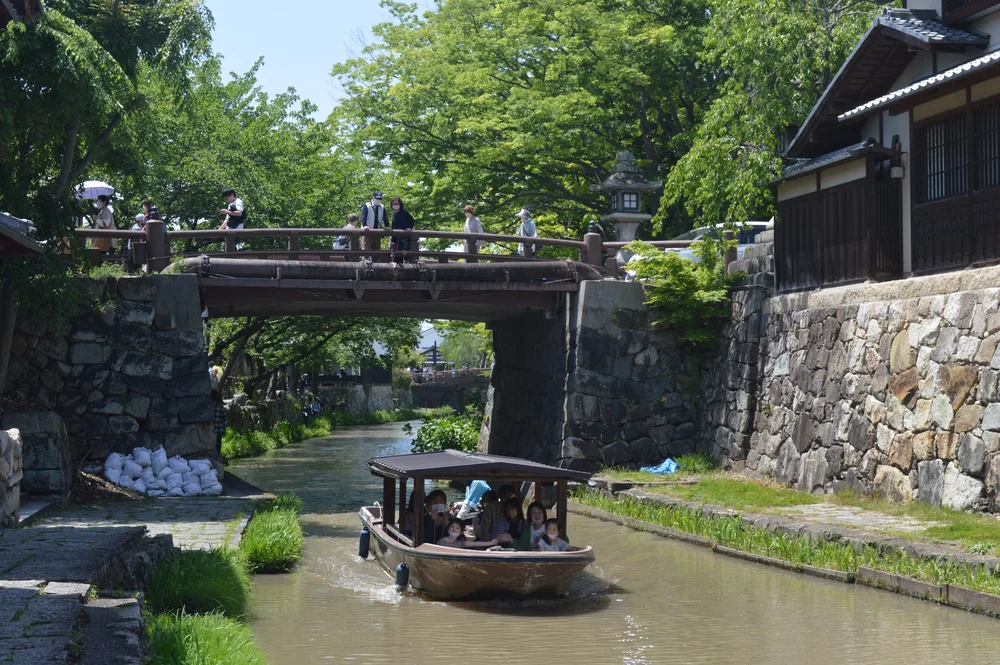
The Otani River (Otanigawa) lies about five minutes on foot from the station towards Taiko Bridge. Head along the willow-lined bank towards Yanagi-yu, then cross a stone bridge to look back at the inns on the opposite shore. The wooden ryokan, stone embankments and bridges carry a shared history of rebuilding: after the 1925 North Tajima Earthquake devastated the hot-spring quarter, the public baths were rebuilt first, and the riverside willows were planted in 1932. From the bridges, notice the dressed stone revetments and the multi-storey timber facades; in winter, once the willow leaves drop, the stonework and sweeping eaves stand out even more clearly.
If you plan to stroll in a yukata, check the rain gear and footwear soles provided by your inn after check-in. Wearing your own comfortable walking shoes with a yukata is perfectly fine, leaving wooden geta for indoors in rain or snow. Choose wider stretches of pavement for photos rather than blocking bridges with a group, and keep cameras and tripods out of narrow lanes used by cars. On sunny days, shoot the canal and rooftops while the light holds, saving the stretch right outside dinner spots for an evening walk. For a quieter canal walk, follow Kiyamachi-dori after your morning bath—the lane runs along the hillside to Mandara-yu and passes the firebreak wall in Kiyamachi Koji, built as a memorial to the post-quake reconstruction. Visit Kinosaki: Kiyamachi-dori Walking Map.
The Kinosaki Onsen Motoyu thermal source and Yakushi-do hall sit near the ropeway's lower station. To reach the main hall of Onsenji Temple, either climb halfway up the hillside on foot or take the ropeway to the mid-mountain Onsenji Station; Yakushi-do and Kouno-yu at the base pair easily together. Return ropeway tickets to the mid-station cost ¥750 for adults and ¥370 for children, while full return tickets to the summit cost ¥1,200 for adults and ¥600 for children. Under ropeway rules, adult fares apply from junior high school age upwards and child fares from age six, with one child aged five or under travelling free per paying adult.
From 1 November 2026 to 31 January 2027, the final uphill ropeway departs at 16:30 and the final downhill car leaves at 16:50. If you plan to visit the summit before stopping at the temple's main hall, ride up in the morning or straight after lunch to leave ample time at the mid-station. Arriving at the hillside late in the afternoon, stick to Yakushi-do and Motoyu rather than rushing the last ascent. Once back down, slot Kouno-yu in right there—or shift your bath closer to the town centre if you need to walk back to the station by dusk. Kinosaki Ropeway Route and Fares, 2026–27 Winter Last-Departure Notice.
If you are drawn to Kinosaki through author Naoya Shiga—who recuperated here in 1913 and published At Kinosaki (Kinosaki nite) in 1917—there are literary traces to spot along the streets as well. Note that the Kinosaki Literary Museum and its adjacent hand-and-foot bath closed temporarily from 14 September 2026. You can still combine a literary walk with the post-earthquake townscape on one route, listening to the tourist association's Kinosaki audio guide on your phone with earphones as you stroll. Literary Museum and Hand/Footbath Temporary Closure, Kinosaki Onsen Audio Guide.
Which Meal to Book During Matsuba Crab Season
Hyogo Prefecture announced the opening of the 2026 Sea of Japan snow crab (zuwaigani) season on 6 November 2026. The Kinosaki Tourist Association's 2026–27 'Crab Kingdom' dining season runs from November through March, covering seasonal restaurant menus, fishmongers and processed specialities. Male snow crabs landed in the San'in region are known as Matsuba crab, and local Matsuba crab landed at Tsuiyama Port are called Tsuiyama crab, marked with a blue provenance tag. Use that November-to-March window when choosing travel months, and check restaurant or ryokan listings carefully if you want a specific port, one whole crab per diner or particular preparations.
When comparing half-board ryokan crab packages, check first whether the menu explicitly specifies 'Tsuiyama-gani', 'live' or 'tagged'. Next, check portion sizes—whether each guest receives a whole crab, several share one, or a dish uses only partial cuts. If two packages differ sharply in price, look for whether a whole boiled crab (sugata-yude), crab sashimi, grilled crab and crab hotpot are included, and whether the kitchen substitutes equivalent crab from neighbouring ports if rough seas disrupt landings. Kourakuen's listing on the tourist association's booking site spells out substitute ports and cooking methods clearly, giving you a useful checklist when reading other plans. Kinosaki Tourist Association Ingredients Guide, Sample Kourakuen Crab Meal Plan.
Day-trippers hoping to eat crab should first verify whether lunch venues accept bookings, what time course meals begin and how big each set is before deciding between one afternoon bath and two. Crab hotpot takes time to simmer slowly and finishes with zosui rice porridge; anyone short on time can order a crab rice bowl or à la carte dishes instead to keep more of the afternoon free for the riverside. If only one person in a pair eats crab, confirm when booking whether the entire table must order the same course. Travellers with crustacean allergies should ask the restaurant in advance whether separate cookware and prep zones can be used before deciding whether to dine separately.
For a winter overnight stay, secure your meal plan and room before picking your direct limited express. If only a late-afternoon train remains available, book crab for lunch and take a standard dinner at your inn—or push the crab kaiseki to lunch on day two rather than cramming your final soak right up against dinner service. Whenever a plan specifies a latest seating time, save the ryokan's phone number and booking details on your phone so you can call from the train if delays occur. If buying fresh crab before heading home, ask the shop about packing and how long the cold packs last.
Bathhouse Etiquette and Visiting with Children or Older Relatives
Leave your ryokan with a small bag holding your bathhouse pass, a dry towel, drinking water and hair ties. Swap outdoor shoes at the entrance shoe lockers, scan your pass and enter the men's or women's side, storing your phone, glasses and clothes in the changing room. Wash thoroughly at the showers and rinse off all soap suds before ladling warm water over yourself (kakeyu) to adjust to the temperature. Place small towels on the bathhouse racks or folded on top of your head, and tie long hair up—neither hair nor towels should touch the bathwater. Dry off before returning to the changing room, and keep your phone tucked away until you leave the building.
Kinosaki's public bathhouses welcome decorative tattoos, with gender-separated bathing and no swimwear in the pools. Tattoo policies for private ryokan indoor baths vary by property. The tourist association also lists specialised bathing garments for post-operative guests, which may be worn in the pools once any residual detergent has been rinsed out. If a companion needs physical assistance in the bath, plan staffing around the gender-separated rooms and care requirements. For families hoping to bathe together in one room, note that the private family baths at both Ichino-yu and Jizo-yu are currently suspended, so booking a ryokan with reservable private baths (kashikiri-buro) is the better option.
Jizo-yu features a small children's pool, while reception desks at both Ichino-yu and Jizo-yu offer infant bath chairs and loaner wheelchairs on request; facility tables for Kouno-yu, Ichino-yu and Jizo-yu also list backless shower chairs. Decide how long children or older companions stay in the water once you are inside and can gauge the heat, mobility and energy levels. Official sotoyu notices put standard bath temperatures at 42°C, so drink water before and after soaking and step out to rest as soon as anyone feels overheated. Pick a spot with seating in town so anyone sitting out the afternoon can wait comfortably over a footbath or sweets. Sotoyu Accessibility Facilities and Special Bathing Wear, Family Bath Suspension Notice.
Wheelchair users can consult the official barrier-free map to inspect each entrance and select the bathhouse with the shortest route from the station or inn plus suitable ramps and toilets. Accessible toilets are also located at the station, the SOZORO tourist information centre, Ekidori Park and Kiyamachi Koji for breaking up walks. Non-bathers can relax at the free footbath near Motoyu or along the riverbanks. Once at the reception queue, explain clearly what handrails or assistance are needed between the changing room, shower area and pool edge. When mobility is limited, keep walks short around station-side Jizo-yu, or use the station-to-ryokan shuttle to concentrate walking near the hillside. Kinosaki Onsen Barrier-Free Map.
Adapting Your Route for Rain, Snow or Bathhouse Queues
In light rain, shorten riverside walks and photo stops, make Ichino-yu your main bathhouse, and eat in the same central district afterwards. If only one person wants to wait in a bathhouse queue, companions can sit in a nearby cafe or shop in the town centre and meet back at the same street corner afterwards. Should skies clear in the afternoon, save Goshono-yu's open-air pool for later and change out of damp shoes and socks before strolling along the canal. In persistent heavy rain, walk from the station just as far as Jizo-yu, eat nearby and return, saving longer exploring for the next day.
If rain hits while you are waiting for 15:00 bath openings, swap a riverside wait in the centre for the Kinosaki Straw Craft Museum (Mugiwara Zaiku Denshokan). Roughly a seven-minute walk from JR Kinosaki-Onsen Station, it displays paulownia boxes and decorative panels inlaid with dyed barley straw. Opening hours are 10:00–16:00 (last entry 15:30), closed Wednesdays and over New Year. Admission is ¥500 for adults, ¥300 for junior and senior high school students, and free for primary school age and under. You can visit the exhibition before heading to Yanagi-yu, or walk along Kiyamachi-dori to Mandara-yu. Toyooka City: Kinosaki Straw Craft Museum.
In snowy weather, long bathhouse loops are usually limited by slush and slippery pavements, especially on arched bridges and shaded side lanes after leaving a hot bath. Pack shoes with good grip, spare dry socks in a small bag and warm outer layers; when travelling with children, separate snow walks from train waits and head back towards the station early. If soaking outdoors in falling snow is your top priority, make Kouno-yu or Goshono-yu the main focus of the trip—and whenever snow falls, check JR San'in Main Line service updates and your booked trains before deciding whether to walk all the way to the hillside.
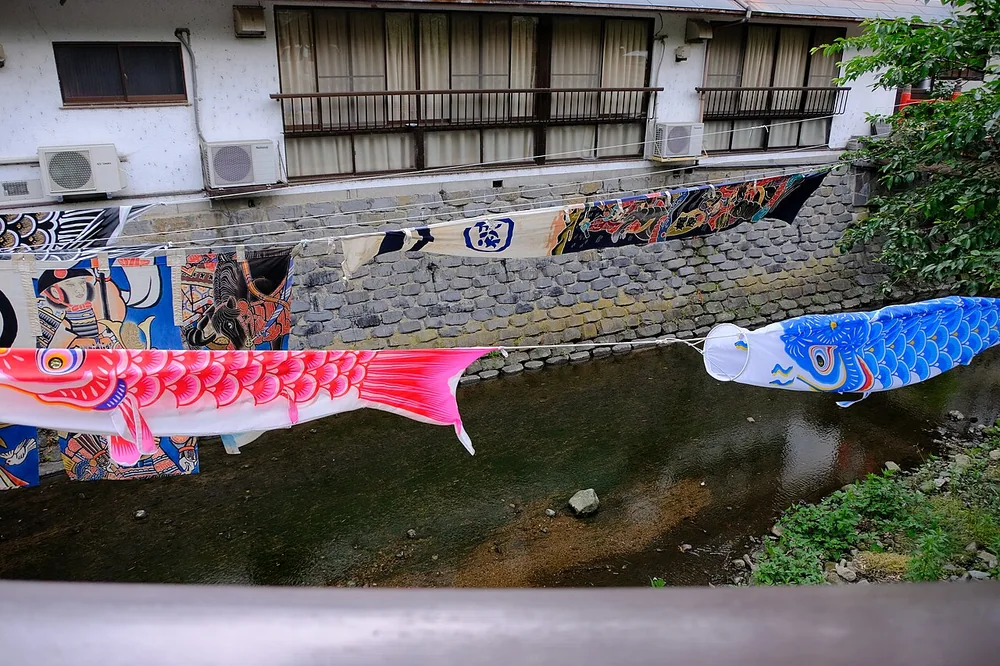
In spring, extend your riverside walk along Kiyamachi-dori towards the hillside for cherry blossoms. In summer, walk the canal early or in the evening and schedule sit-down lunches indoors to avoid rushing in a yukata during peak heat. For carp streamers, seasonal festivals or limited-time menus, check that year's event pages and restaurant booking calendars before fixing dates. In autumn, pairing the ropeway with Kouno-yu gives you hillside foliage views from above without cramming both the summit and station-side Jizo-yu into the same tight loop.
A few useful answers
Can you still visit all seven public bathhouses in Kinosaki Onsen?
Six are open as of November 2026. Sato-no-Yu has been closed long term since April 2024, and the station-front footbath is also out of service. On normal Fridays through Sundays all six operate, with the two 15:00 openings scheduled for the afternoon.
Where do you buy Kinosaki Onsen bathhouse passes?
The Yumepa one-day pass for day-trippers is sold at the reception counter of any operating bathhouse for ¥1,500 (adults) and ¥750 (children). For a single soak, buy a single-entry ticket at ¥800 for adults or ¥400 for children.
How long does a ryokan guest bathhouse pass remain valid?
Most ryokan hand out guest passes at check-in, and Visit Kinosaki notes they are generally valid until 13:00 on check-out day. The pass issued by your inn states its exact start and expiry times.
Which bathhouses are open on Wednesdays or Thursdays?
Ichino-yu and Mandara-yu normally close on Wednesdays, leaving Jizo-yu, Goshono-yu, Yanagi-yu and Kouno-yu open. Goshono-yu and Yanagi-yu normally close on Thursdays, leaving Jizo-yu, Ichino-yu, Mandara-yu and Kouno-yu open. Check the operator's monthly calendar for public holiday adjustments.
Are there direct trains from Osaka and Kyoto to Kinosaki Onsen?
Yes. Direct Kounotori services from Osaka Station take about 2 hours 40 minutes, and Kinosaki services from Kyoto Station take about 2 hours 20 minutes. Both are all-reserved-seat limited express trains, so check when searching that your service terminates at or stops at Kinosaki-Onsen.
How should guests with tattoos or families wanting a private bath plan?
The public sotoyu accept decorative tattoos, while private ryokan baths set their own house rules. With the family baths at Ichino-yu and Jizo-yu currently suspended, families wishing to bathe together should book a ryokan with reservable private baths.
Official information and references
Sources used in this guide.
- Kinosaki Onsen Tourist Association | Sotoyu Opening Hours, Closures, Shared Spring Quality and Day Passes
- Kinosaki-cho Yushima Property District | Kouno-yu Reopening and Monthly Closure Calendar
- Kinosaki-cho Yushima Property District | Sotoyu Day Passes and Single-Entry Fees
- Kinosaki Onsen Tourist Association | Live Sotoyu Congestion Status
- Kinosaki Onsen Tourist Association | 2026 Hot-Spring Town Walking Map
- Toyooka City | Sato-no-Yu Long-Term Closure
- Toyooka City | City Council Briefing (28 August 2026) and Sato-no-Yu Reconstruction Timeline
- Kinosaki Onsen Tourist Association | Closure of Sato-no-Yu Station-Front Footbath
- Visit Kinosaki | Overnight Sotoyu Passes, Tattoo Rules and Bathing FAQ
- Visit Kinosaki | Pre-Check-In Luggage Drop and Ryokan Association Shuttle
- Kinosaki Onsen Tourist Association | Sotoyu Accessibility Facilities and Special Bathing Wear
- Kinosaki Onsen Tourist Association | Suspension of Ichino-yu and Jizo-yu Family Baths
- Kinosaki Onsen Tourist Association | Access from Osaka, Kyoto and Kobe to Kinosaki
- JR West | Kinosaki-Onsen Station Timetable (for Toyooka, Kyoto and Osaka) and Limited Express Trains
- Kinosaki Onsen Tourist Association | Kinosaki History Timeline and Otani River Willows
- Kinosaki Onsen Ropeway | Route and Fares
- Kinosaki Onsen Tourist Association | 2026–27 Winter Ropeway Last Departures
- Kinosaki Onsen Tourist Association | Kinosaki Literary Museum and Hand/Footbath Temporary Closure
- Hyogo Prefectural Tajima Fisheries Technology Institute | 2026 Sea of Japan Snow Crab Season Opening
- Kinosaki Onsen Tourist Association | 2026–27 Crab Kingdom Dining Season
- JR West | e5489 Booking Opening Times
- Toyooka City | Kinosaki Straw Craft Museum Hours, Admission and Location
- Visit Kinosaki | Kiyamachi-dori, Cherry Blossom Canal and Firebreak Wall
- Visit Kinosaki | Kinosaki Onsen Barrier-Free Map
- Visit Kinosaki | Mandara-yu's Outdoor Ceramic Tub Baths
- Visit Kinosaki | Goshono-yu Architecture and Open-Air Waterfall
- Kinosaki-cho Yushima Property District | Bathing Etiquette, Towels and Photography Rules
- Visit Kinosaki | Yanagi-yu, Motoyu and Other Free Footbaths
- Toyooka City | Three Municipal Car Parks in Kinosaki