Six of Kinosaki Onsen's seven public bathhouses are currently open. Check hours and closing days, choose between Ichinoyu's cave bath and Goshonoyu's open-air waterfall, compare day passes with ryokan passes, and plan walks along the Otani River, crab dinners, and trains.
- Region & Focus
- Kinosaki Onsen
- Reading Scope
- 17 min read · 11 chapters · 6 Q&As
- Official Verification
- 29 official sources checkedUpdated November 22, 2026
- Key Topics
- Hot springsItinerariesWinter
Chapter Route Map (tap any stop)
- Opening Hours and Weekly Closures for the Six Bathhouses
- Walking from the Station to the Mountain Base: Choosing Your First Bath
- Ichinoyu for the Cave Bath, Goshonoyu for the Waterfall
- Yanagiyu, Mandarayu, Jizoyu, and Kounoyu
- Single Tickets vs. One-Day Passes for Day-Trippers, and Ryokan Passes for Overnight Guests
- Pacing Two Baths on a Day Trip vs. Building Around Dinner Overnight
- Limited Express Trains from Osaka and Kyoto & Station Luggage Handling
- Strolling the Otani River, Onsenji Temple, and the Ropeway
- Booking the Right Crab Meal in Matsuba Crab Season
- Sotoyu Etiquette & Tips for Families and Older Travelers
- Adapting Your Route for Rain, Snow, or Bathhouse Lines
- Quick Q&A
Walking from JR Kinosaki-Onsen Station toward the Otani River, the first open public bathhouse (sotoyu) you reach is Jizoyu. Continue on to Ichinoyu for a cave bath, or Goshonoyu for a large open-air pool. Kinosaki traditionally has seven public bathhouses, and six are open for visits as of November 2026. Since Yanagiyu and Mandarayu do not open until 3:00 PM, day-trippers can start with a bathhouse that opens in the morning, break for lunch and a riverside stroll, and save an afternoon soak for later. If you stay overnight, plan your afternoon around your crab dinner seating—you can still fit in a morning soak before heading home the next day.
Opening Hours and Weekly Closures for the Six Bathhouses
Sotoyu are public bathhouses separate from the town's ryokan inns, and day-trippers can buy tickets at the door. Kinosaki's bathhouses are strung along the river and side lanes. Satonoyu right outside the station has been closed long-term for reconstruction since April 2024, and its adjacent station-front foot bath also closed on October 16, 2025. At the mountain end of town, Kounoyu reopened on October 28, 2026 following renovations. Toyooka City is targeting March 2030 to reopen Satonoyu.
All six operating bathhouses normally close at 11:00 PM, with last entry at 10:30 PM. Jizoyu, Ichinoyu, Goshonoyu, and Kounoyu open at 7:00 AM, while Yanagiyu and Mandarayu wait until 3:00 PM. If you plan to bathe after dinner, count backward from last entry and leave enough time to walk from your restaurant to the bathhouse.
In a normal week, Jizoyu is closed on Mondays, Kounoyu on Tuesdays, both Ichinoyu and Mandarayu on Wednesdays, and both Goshonoyu and Yanagiyu on Thursdays. On regular Fridays, Saturdays, and Sundays, all six are open together from 3:00 PM onward. If you are coming specifically for one bathhouse, check its closing day before booking train tickets. Even on closed days, easy pairings remain: on Wednesdays, Jizoyu and Goshonoyu lie along a direct route, while on Thursdays you can walk from Ichinoyu to Mandarayu.
On Japanese national holidays, the bathhouse operator posts temporary openings and adjusted hours on its monthly calendar. Monday, November 23, 2026 is one example: Jizoyu, normally closed on Mondays, opened at 3:00 PM instead. Morning arrivals that day could start at Ichinoyu. Check the Kinosaki-cho Yushima Property District monthly schedule when picking your dates, and check the tourism association's live crowd tracker once you arrive to see which baths have the shortest wait. Whenever special hours apply, follow the monthly calendar. Sotoyu Operator Notices, Live Sotoyu Crowd Status.
| Bathhouse | Regular Hours | Weekly Closure & Location |
|---|---|---|
| Satonoyu | Closed long-term (foot bath also closed) | Next to JR Kinosaki-Onsen Station |
| Jizoyu | 07:00–23:00 | Mondays; station-side end leading to the Otani River |
| Yanagiyu | 15:00–23:00 | Thursdays; along the Otani River |
| Ichinoyu | 07:00–23:00 | Wednesdays; center of the hot-spring street |
| Goshonoyu | 07:00–23:00 | Thursdays; uphill from Ichinoyu toward the mountain |
| Mandarayu | 15:00–23:00 | Wednesdays; in a side lane toward the mountain |
| Kounoyu | 07:00–23:00 | Tuesdays; near the Kinosaki Ropeway base station |
Six of Kinosaki Onsen's seven public bathhouses are currently open. Check hours and closing days, choose between Ichinoyu's cave bath and Goshonoyu's open-air waterfall, compare day passes with ryokan passes, and plan walks along the Otani River, crab dinners, and trains.
Walking from the Station to the Mountain Base: Choosing Your First Bath
Leave the station and follow Ekimae-dori toward the hot-spring district to reach Jizoyu where it meets the Otani River. From there, trace the canal past Yanagiyu and Ichinoyu, continue up Yunosato-dori to Goshonoyu, branch into a side lane for Mandarayu, and finally reach Kounoyu and the ropeway base station. Budget about 20 minutes to walk the full stretch one way, plus return time if you stop at both ends. On your first visit, using Jizoyu, Ichinoyu, and Kounoyu as landmarks for the station end, town center, and mountain base makes it easy to orient yourself. Kinosaki Onsen Walking Map.
If you only have time for one bath, pick based on what you most want to see. Goshonoyu suits visitors who want daylight views of the mountainside and waterfall. Ichinoyu pairs its signature cave bath with a central location that makes it easy to walk in either direction afterward. If your trip revolves around lunch and souvenir shopping near the station, Jizoyu keeps your walk back short. When traveling with older relatives or young kids, pick a bath close to your lunch spot or lodging so anyone who wants to head back early can reunite easily.
For a two-bath day, mix contrasting styles. Ichinoyu and Goshonoyu sit close together—pair rock-walled cave soaking with open mountain scenery, and stop for lunch or tea along the central stretch in between. You can also walk straight to Kounoyu in the morning and work your way back toward the station with lunch and a second bath, a smart sequence if you have an afternoon limited express train to catch. If you are already riding the ropeway or visiting Onsenji Temple at the mountain end, group Kounoyu into that loop to save an extra round trip.
When heading back into a bathhouse from the riverside, do not gauge train cutoffs by straight-line map distance. You still have to walk out of the changing room, check out at the front desk, pick up stored luggage, and clear the station ticket gates. Day-trippers arriving and departing by train who want to squeeze in a third bath should calculate return times from the farthest stop first. A short-looking canal walk takes extra minutes when crossing bridges with kids, changing footwear, or waiting for someone in your group to dry their hair. Before departure, Jizoyu is usually the fastest final stop; if it is closed, plan your last soak around Ichinoyu or Yanagiyu before picking up your bags.
Ichinoyu for the Cave Bath, Goshonoyu for the Waterfall
Ichinoyu stands in the middle of the hot-spring street, its entrance visible right from the main drag. Its Momoyama-style roof and facade resemble a kabuki theater, while the standout feature waits inside: an indoor cave bath framed by boulders in softer light than the outdoor pools. The Edo-period physician Shutoku Kagawa praised this spring—then known as Shinyu—in his medical text Ippondo Yakusen, and the bathhouse later took the name Ichinoyu. Walking past Jizoyu and Yanagiyu, spotting this grand building signals you have reached the heart of town. Visit Kinosaki: Ichinoyu.
Goshonoyu takes its architectural cues from the Kyoto Imperial Palace, set back slightly from the street so you can take in its eaves and timber framing. Inside, the bathing area opens onto a wide outdoor pool landscaped with native Tajima flora against the wooded hillside and a cascading waterfall. Sunlight hits the garden from midday into the afternoon, making daytime ideal if you want clear views of the greenery and water. Afterward, you can walk uphill along the main street toward Motoyu or head back toward Ichinoyu for lunch.
For visitors traveling with older adults or wheelchair users, Goshonoyu has an entrance ramp and an accessible multi-purpose restroom. If anyone in your group needs to borrow a wheelchair or bath cane, put Ichinoyu early on your route and ask at the front desk upon entry. Once you see how easily your group moves from the entrance to the changing room, you can choose pools based on seating height and handrail support. If your party splits up, agree to meet at a specific bridge or storefront right outside.
Even if you only admire their exteriors, these two buildings reward a slow look. Pause outside Ichinoyu to see how its roofline fits the streetscape, then step back from Goshonoyu's entrance for a clear view—far better than rushing through a soak just to check another box. If you arrive on a Wednesday when Ichinoyu is closed all day, you can still stroll past its facade along the river and do your soaking at Goshonoyu. On Thursdays, the roles flip: pair Ichinoyu with either Kounoyu or Jizoyu to keep a morning bath in your plan.
Yanagiyu, Mandarayu, Jizoyu, and Kounoyu
Yanagiyu sits along the river and is the smallest of the seven bathhouses. Its name comes from the legend that its spring welled up beneath a willow tree transplanted from China's West Lake. You pass right by its door on an Otani River stroll, making it easy to check the line after opening before deciding to go in. If your wooden geta sandals start rubbing your feet, the walk back toward the station from here is short. Outside Yanagiyu is a small foot bath that follows the bathhouse's opening hours—handy if someone in your group only wants to soak their feet while waiting.
Mandarayu sits tucked in a hillside lane beneath a curved karahafu gable roof. Its name is tied to the legend of Priest Dochi, whose prayers and sutra chanting brought forth the healing waters. Outside are two small ceramic barrel-style tub baths overlooking the wooded slope behind the building. Because the ceramic tubs are compact, friends visiting together can wash up inside first and take turns in the outdoor tubs. It is a longer walk back to the station from here, so anyone entering right at the 3:00 PM opening should keep an eye on their return train buffer.
Jizoyu stands near the corner where the station avenue meets the canal. Named after a legend that a Jizo Bodhisattva statue emerged from the spring source, it also appears in Edo-period records as a communal bath for local townspeople. Because it opens at 7:00 AM, early arrivals waiting for ryokan check-in can drop off their luggage first and walk right over for a morning soak. Families can use the small children's bath, and baby bath chairs are available at the front desk on request. On regular Mondays when Jizoyu is closed, head to Ichinoyu instead, which also stocks baby bath chairs at the counter.
Kounoyu sits at the mountain end of the bathhouse strip and is known for its garden open-air bath. Local lore links this spring to an Oriental white stork seen healing its wounds in the steaming water. On a weekday morning, it pairs nicely with a walk around Motoyu at the base of the mountain, or you can ride the ropeway up first and soak once you come back down. Continuing straight from Goshonoyu to Kounoyu saves steps compared with doubling back toward the station first, while guests staying near the mountain base can save Ichinoyu for a separate town stroll.
Single Tickets vs. One-Day Passes for Day-Trippers, and Ryokan Passes for Overnight Guests
Single-entry admission is the same across all six open bathhouses: ¥800 for adults and ¥400 for children age 3 through elementary school. The Yumepa one-day pass is sold at the ticket window of any open bathhouse for ¥1,500 (adults) and ¥750 (children), granting unlimited entries to open bathhouses on the day of purchase. Buy a single ticket if you only plan on one soak; two single entries cost ¥1,600 (or ¥800 for children), so the one-day pass already pays off on your second bath. Even if you visit the same bathhouse twice—once in the morning and once in the evening—the one-day pass still applies.
Two people traveling together can mix ticket types based on how much they want to soak. If one person plans two baths and the other only wants one, buying one one-day pass plus one single ticket totals ¥2,300—saving ¥700 compared with two day passes. Pay per person according to each traveler's plan at the counter, and tally adults and children separately. Tuck your pass or barcode safely away before entering the changing room so it does not get tossed with restaurant receipts when you pull out your phone. Carry some Japanese yen cash as well for counter tickets, towels, and small cash-only eateries. Sotoyu Admission & One-Day Pass.
Most Kinosaki ryokan issue an overnight guest sotoyu barcode at check-in, which you scan at the QR reader at each bathhouse entrance. Visit Kinosaki notes that guest passes are generally valid from check-in until 1:00 PM on your check-out day, though individual inns set their own start times—Sensui, for example, activates its guest pass at 2:00 PM on arrival day, even before its 3:00 PM check-in time. If you arrive around noon, grab lunch and stroll first; if you cannot wait for a soak, pay for one single entry and save your ryokan pass for the rest of your stay. Visit Kinosaki: Sotoyu & Guest Pass FAQ, Sensui Guest Pass Guide.
Overnight stays come with two separate cutoffs: your room check-out time and the afternoon expiration time on your bath pass. Jot both down next to your train ticket so you can eat breakfast, pack up, check out, store your bags, and still catch a morning bath before your pass expires. Because Yanagiyu and Mandarayu do not open until 3:00 PM—after a 1:00 PM check-out-day pass expires—visit those two on your arrival afternoon or pay for a single ticket.
Pacing Two Baths on a Day Trip vs. Building Around Dinner Overnight
Suppose you arrive around 11:00 AM and leave in the early evening: start in regular street clothes with a walk to Ichinoyu or Goshonoyu and have lunch in the center of town. Afterward, stroll along the river or check out Yakushido Hall near the mountain base. For a smaller afternoon soak, enter Yanagiyu or Mandarayu once they open at 3:00 PM. If you prefer exploring the mountain end first, swap your morning bath to Kounoyu, walk back toward the station for lunch, and finish near Yanagiyu or Jizoyu. Knocking out the farthest leg in the morning makes it much easier to hit your return train.
If you cannot reach Kinosaki until after noon on a day trip, split lunch and bathing into two clean blocks. Eat near the station or along the canal first, step into Yanagiyu at 3:00 PM, browse the central street, and pick either Goshonoyu or Ichinoyu for your second stop. If someone in your group wants to see Onsenji Temple, pair the mountain-base sights with Kounoyu instead of doubling back to the center for a second bath. When catching a train around 4:00 PM, go straight from lunch to one of the 7:00 AM-opening bathhouses so you still have breathing room before picking up luggage.
Overnight stays split neatly across two days. Arrive around noon on day one, stash your bags, have lunch, and admire the exteriors of Ichinoyu and Goshonoyu along the river. Once you check in and change into a yukata, set a meetup time with your companions and hit Yanagiyu or Mandarayu after 3:00 PM. If your dinner seating is in the early evening, factor in time to return to your room, change, and unwind so nobody soaking longer in an outdoor pool delays the kaiseki course. After dinner, walk along the Otani River—and if you had drinks with dinner, save your next soak for the following morning.
Day two starts around breakfast. Early risers can visit a nearby 7:00 AM bathhouse first, then eat breakfast and check out. If you prefer eating first, pack your main bags before heading out and work your way from the mountain side back toward the station. Travelers dedicating more time to Onsenji Temple can check out, head to the ropeway base station, and limit the morning to one bath before noon. If you have an afternoon limited express train, eat lunch near the station, pick up your bags, and reach the platform with time to spare.
Use weekly closures to set the order of your two-day stay. On a Tuesday-to-Wednesday trip, hit Ichinoyu and Mandarayu on Tuesday afternoon, then save Kounoyu—closed Tuesdays—for Wednesday morning. On a Wednesday-to-Thursday stay, soak at Goshonoyu and Yanagiyu on Wednesday, then visit Ichinoyu on Thursday morning (saving 3:00 PM-opening Mandarayu for another trip). Staying near the mountain base on a Tuesday when Kounoyu is closed? Choose between Goshonoyu and Mandarayu that evening. Staying near the station on a Monday when Jizoyu is closed? Just walk a bit farther along the canal to early-opening Ichinoyu.
Limited Express Trains from Osaka and Kyoto & Station Luggage Handling
From JR Osaka Station, the direct Limited Express Kounotori takes about 2 hours 40 minutes according to tourism association estimates. From Kyoto Station, the Limited Express Kinosaki takes roughly 2 hours 20 minutes, and from Kobe's Sannomiya Station, the Hamakaze takes about 2 hours 30 minutes. Check each train's final destination and stops before buying: some Kounotori departures from Osaka terminate early at Fukuchiyama or other intermediate stations. Search with JR Kinosaki-Onsen as your destination and verify whether a transfer is required before looking at the train name.
Both Kounotori and Kinosaki are all-reserved-seat trains. For a day trip, pick an outbound departure that gets you in before your planned lunch and a return train that leaves plenty of margin after dinner or your last soak, then decide between single tickets and a one-day pass once your hours on the ground are locked in. Overnight guests aiming for a ryokan dinner should check their arrival time against the property's latest check-in cutoff. If your itinerary requires a transfer, include both the connection buffer and the walk from the station. Kinosaki Access & Travel Times, JR Kinosaki-Onsen Station Timetable.
Ordinary reserved seats on JR West's e5489 booking site generally go on sale at 10:00 AM JST one month prior to your travel date—worth noting if you want an early morning train for a weekend crab kaiseki dinner. If you are traveling on an open-jaw route, such as arriving from Kyoto and heading directly back to Osaka the next day, search for Kinosaki on the outbound leg and Kounotori or Hamakaze on the return. The Kinosaki-Onsen station timetable lets you verify each departure's final destination before you book. JR West e5489 Reservation Terms.
When arriving with luggage, look right across from the JR station for the ryokan association's Oyado Annaijo desk. It coordinates shared shuttle buses timed to limited express arrivals and also offers paid luggage storage and delivery to participating inns. Keep the exact Japanese name of your ryokan handy on your phone to show the staff—it is far faster to match than an English transliteration alone. Day-trippers or early arrivals should confirm locker or counter pickup hours first, then pack a small tote with a towel, bath pass, water, and phone for the riverside walk.
If you are driving, choose from three municipal lots: Ekimae (station-front), Kiyamachi, or Kounoyu. Driving back and forth through town after arrival is awkward because streets are narrow and crowded with pedestrians—especially at dusk when ryokan guests cross the road in yukata—so it is easier to park once and explore on foot. If you are staying near the mountain base with reserved parking, use your inn as your starting point and combine station-side shopping with lunch in one walk. In snowy weather, allow extra time to drive into town and find parking, drop one afternoon bath if needed, and protect your dinner reservation window.
Strolling the Otani River, Onsenji Temple, and the Ropeway
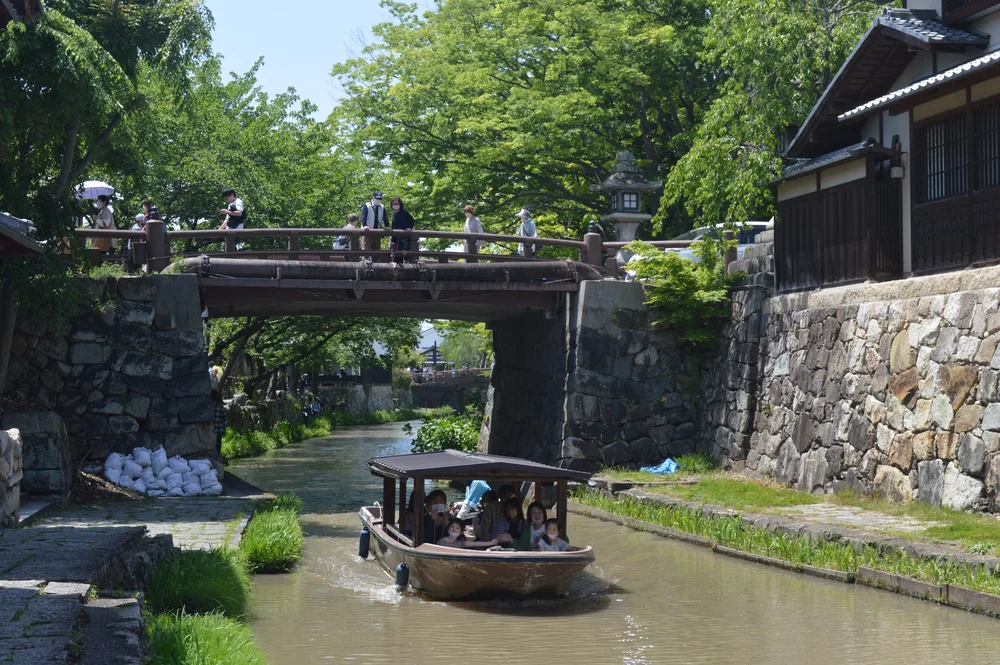
The Otani River is pronounced Otanigawa in Japanese. It is about a five-minute walk from the station to Taiko Bridge, where you can stroll beneath the willows toward Yanagiyu and cross a stone bridge to look back at the inns from the opposite bank. The wooden ryokan, stone embankments, and arched bridges share a common history: after the 1925 North Tajima Earthquake devastated the town, locals rebuilt the public bathhouses first and planted the riverside willows in 1932. Pausing on a bridge lets you take in the stonework alongside the multi-story wooden facades; in winter, once the willow leaves drop, the stone embankments and continuous rooflines stand out even more clearly.
If you want to go out in yukata, check your inn's umbrellas and footwear soles before stepping outside. Wearing your own comfortable walking shoes with a yukata is completely fine, and in rain or snow it is safer to save wooden geta for indoors. When taking photos, find a wider stretch of sidewalk along the canal rather than blocking an entire bridge, and keep cameras and tripods out of narrow vehicle lanes. Shoot the canal and rooftops while sunlight lasts, then return in the evening to the stretch closest to your dinner spot. For a quieter riverside view, walk Kiyamachi-dori after your morning bath; this backstreet runs toward Mandarayu past Kiyamachi Koji's hibusekabe firebreak wall, commemorating the post-earthquake reconstruction. Visit Kinosaki: Kiyamachi Street Walking Guide.
The hot-spring source, Kinosaki Onsen Motoyu, and Yakushido Hall sit near the Kinosaki Ropeway base station. To reach Onsenji Temple's main hall, either hike halfway up the hillside or ride the ropeway to the mid-mountain Onsenji Station; Yakushido Hall and Kounoyu at the base pair easily together. Round-trip ropeway tickets to the mid-station cost ¥750 for adults and ¥370 for children, while round-trip tickets to the summit cost ¥1,200 for adults and ¥600 for children. Ropeway pricing counts junior high students and older as adults, children start at age 6, and one child age 5 or under rides free per paying adult.
From November 1, 2026 through January 31, 2027, the last ropeway ascent departs at 4:30 PM and the last descent leaves at 4:50 PM. If you plan to visit both the summit and Onsenji's main hall, ride up in the morning or right after lunch with enough cushion for the mid-station stop. Arriving at the mountain base near dusk? Visit Yakushido Hall and Motoyu instead of rushing the last car up. If you still want a soak after coming down the mountain, slot Kounoyu right here—or head back toward the center if you need to stay close to the station. Kinosaki Ropeway Route & Fares, 2026–27 Winter Last-Car Notice.
Travelers interested in author Naoya Shiga can spot literary connections along the way: Shiga recuperated in Kinosaki in 1913 and published his classic story At Kinosaki (Kinosaki ni te) in 1917. Note that the Kinosaki Literature Museum and its adjacent hand-and-foot bath have been temporarily closed since September 14, 2026. You can still weave literary history and post-quake streetscapes into one walk using the tourism association's free audio guide on your phone with headphones. Literature Museum & Foot Bath Closure Notice, Kinosaki Onsen Audio Guide.
Booking the Right Crab Meal in Matsuba Crab Season
Hyogo Prefecture's Sea of Japan snow crab (zuwaigani) fishing season opened on November 6, 2026, and the Kinosaki Tourism Association's 2026–27 Crab Kingdom dining season runs from November through March across local restaurants, fishmongers, and specialty shops. Male snow crab caught in the San'in region is called Matsuba crab, while local catch landed at nearby Tsuiyama Port is labeled Tsuiyama crab with a blue provenance tag. Use this November-to-March window when choosing your dates, and read restaurant or ryokan meal descriptions closely if you want a specific port, one whole crab per person, or particular preparations.
When comparing half-board crab packages, first check whether the listing explicitly specifies Tsuiyama-gani, live (iki), or tagged (tagu-tsuki) crab. Next, check portion sizes—whether each guest gets a whole crab, shares one crab among several diners, or only receives crab in select courses. When comparing two plans with a wide price gap, look for whole boiled crab (sugata-yude), crab sashimi, grilled crab, and crab hot pot, plus whether the kitchen substitutes crab from neighboring ports if rough seas halt local boats. The Korakuen plan on the tourism association's booking site spells out alternate ports and cooking methods clearly and serves as a handy checklist for reading other listings. Kinosaki Tourism Association: Seasonal Ingredients, Sample Korakuen Crab Meal Plan.
For a crab lunch on a day trip, check ahead whether daytime restaurants take reservations, what time course meals start, and how large the portions are before deciding on one or two afternoon baths. Crab hot pot takes time to simmer and finishes with zosui rice porridge, so pick a crab rice bowl or a la carte dishes if you want a quicker meal and more time along the canal. If only one person in a pair wants crab, confirm while booking whether the whole table must order the same course. Anyone traveling with a shellfish allergy should ask in advance if the kitchen can use separate cookware and prep areas before deciding whether to dine separately.
For a winter overnight trip, lock in your lodging and crab meal before picking your limited express seats. If only late trains remain, eat crab for lunch, book a standard dinner at your inn, or move a crab kaiseki meal to lunch the next day rather than squeezing your final day-one soak right up against dinner seating. If your meal plan lists a strict last-seating cutoff, save your ryokan's phone number and confirmation details on your phone so you can call from the train if delays hit. Planning to take fresh crab home? Ask the shop about cold packing and how long it stays chilled.
Sotoyu Etiquette & Tips for Families and Older Travelers
Before leaving your ryokan, pack a small tote with your bath pass, a dry towel, drinking water, and a hair tie. Swap your outdoor shoes at the entrance lockers, scan your pass, head into the men's or women's side, and stow your phone, glasses, and clothes in the changing room. Wash thoroughly at the shower stations and rinse off all soap before pouring warm water over yourself (kakeyu) to adjust to the heat. Keep long hair tied up and rest your towel on the bathing-area shelf or folded on top of your head—never let either dip into the bathwater. Dry off before stepping back into the changing room, and keep your phone put away until you leave the building.
Kinosaki's public bathhouses welcome decorative tattoos, with gender-separated nude bathing throughout. Individual ryokan set their own tattoo rules for their private indoor baths. The tourism association also lists post-surgery bathing garments that guests may wear in the pools once rinsed free of soap. If someone in your group needs assistance inside the bath area, pair them with a companion of the same gender. Because the private family baths at Ichinoyu and Jizoyu are currently suspended, families who want to bathe together in one room should book a ryokan with reservable private (kashikiri) baths.
Jizoyu has a small children's pool, and both Ichinoyu and Jizoyu lend baby bath chairs and wheelchairs upon request at the front desk; facility listings for Kounoyu, Ichinoyu, and Jizoyu also note backless shower chairs. Decide how long children or older relatives stay in the water once you are inside and can gauge the heat and their energy. Notice boards list a standard common bath temperature of 42°C (107.6°F), so drink water before and after soaking and step out whenever you feel overheated. Pick a spot on the street where non-bathers can sit and wait comfortably, making it easy to pivot to a foot bath or sweets shop in the afternoon. Sotoyu Accessibility & Post-Surgery Bathing Wear, Family Bath Suspension Notice.
Wheelchair users can check the official barrier-free map to compare entrances and pick the bathhouse with the shortest route, best ramp access, and suitable restrooms from the station or their inn. Accessible restrooms are located at the station, the SOZORO Tourist Information Center, Ekidori Park, and Kiyamachi Koji, offering convenient rest stops along the way. Non-bathers can also relax along the river or at the free foot bath near Motoyu. When checking in at a bathhouse desk, explain clearly what handrails or transfer help you need between the changing room and pools. If walking is tiring, stick to station-side Jizoyu or use the station-to-ryokan shuttle to concentrate your walking near the mountain end. Kinosaki Onsen Barrier-Free Map.
Adapting Your Route for Rain, Snow, or Bathhouse Lines
In light rain, shorten your riverside photo walk, make Ichinoyu your main bath, and eat nearby afterward. If only one person wants to wait in a bathhouse line, everyone else can grab a table at a central cafe and meet back at the same intersection afterward. If skies clear in the afternoon, save Goshonoyu's open-air pool for later and change out of wet socks and shoes before strolling the canal. In steady downpours, stick to station-side Jizoyu and a nearby meal, then save the rest of town for the next morning.
To pass time indoors on a rainy day before the 3:00 PM openings, visit the Kinosaki Straw Craft Museum in the center of town, about a 7-minute walk from JR Kinosaki-Onsen Station. It displays paulownia boxes, decorative boards, and crafts inlaid with dyed barley straw. Hours are 10:00 AM–4:00 PM (last entry 3:30 PM), closed Wednesdays and over the year-end/New Year holidays; admission is ¥500 for adults, ¥300 for junior and senior high school students, and free for elementary school age and younger. Pair a visit with Yanagiyu afterward, or walk from the museum along Kiyamachi-dori to Mandarayu. Toyooka City: Kinosaki Straw Craft Museum.
When snow hits, long walks between bathhouses get tricky on packed snow and slick pavement—especially on arched bridges and shaded alleys after stepping out warm from a soak. Pack grippy footwear, a spare pair of dry socks in your tote, and a warm outer layer. With kids, separate snow walks from train waits and head back to the station side early. If snowy open-air soaking is the whole point of your trip, build the day around Kounoyu or Goshonoyu—and whenever it snows, check JR San'in Main Line service updates and your reserved departures before trekking all the way to the mountain base.
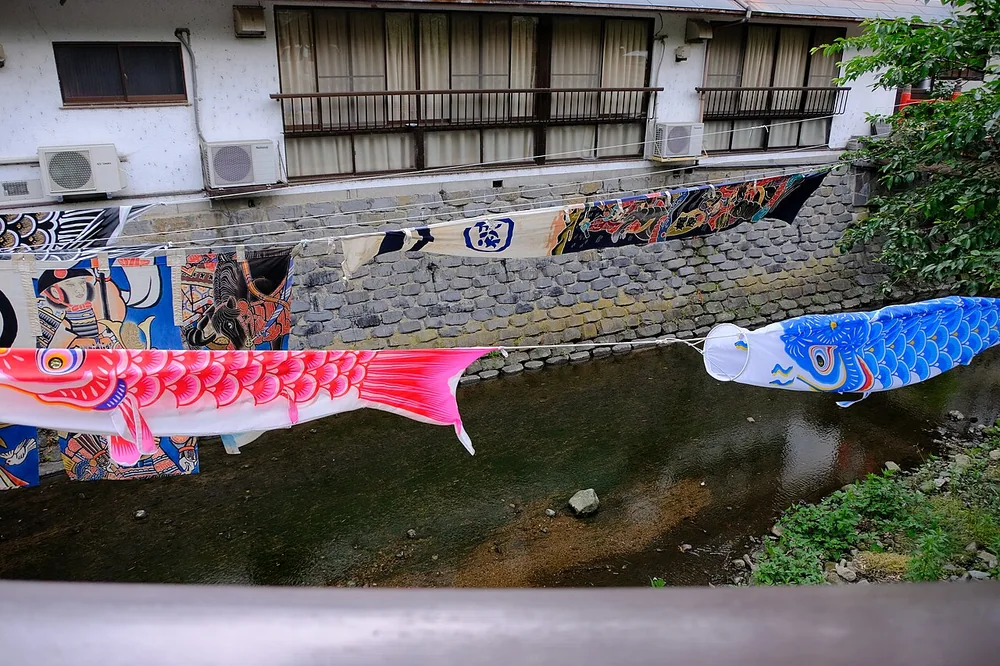
In spring, extend your riverside walk toward Kiyamachi-dori at the mountain end for cherry blossoms. In summer, walk the canal early in the morning or at dusk and book sit-down lunches indoors to stay out of midday heat while wearing a yukata. Time visits for carp streamers, local festivals, or seasonal menus using that year's official event and restaurant pages. In autumn, pair the ropeway with Kounoyu for mountain foliage—much easier on your schedule than trying to cram the summit and station-side Jizoyu into the same half-day.
A few useful answers
Can you visit all seven of Kinosaki Onsen's public bathhouses right now?
As of November 2026, six are open to include in your itinerary. Satonoyu has been closed long-term since April 2024, and its station-front foot bath is also closed. On normal Fridays through Sundays all six operate, though the two that open at 3:00 PM must go in the afternoon.
Where do you buy Kinosaki Onsen sotoyu passes?
The Yumepa one-day pass is sold at the ticket counter of any open bathhouse for ¥1,500 (adults) and ¥750 (children). For a single soak, buy a single-entry ticket for ¥800 (adults) or ¥400 (children).
How long is an overnight ryokan guest bath pass valid?
Most ryokan hand out guest passes at check-in, and Visit Kinosaki notes they are generally valid until 1:00 PM on your check-out day. Check the pass issued by your inn for your exact start and end times.
Which bathhouses are open on Wednesdays and Thursdays?
On regular Wednesdays, Ichinoyu and Mandarayu are closed, leaving Jizoyu, Goshonoyu, Yanagiyu, and Kounoyu open. On regular Thursdays, Goshonoyu and Yanagiyu are closed, leaving Jizoyu, Ichinoyu, Mandarayu, and Kounoyu open. Check the operator's monthly calendar for holiday adjustments.
Are there direct trains to Kinosaki Onsen from Osaka and Kyoto?
Yes. From Osaka Station, the direct Limited Express Kounotori takes about 2 hours 40 minutes, and from Kyoto Station, the Limited Express Kinosaki takes about 2 hours 20 minutes. Both are all-reserved-seat trains, so verify when booking that your train terminates at or stops at Kinosaki-Onsen.
How does Kinosaki handle tattoos and private family baths?
The public sotoyu welcome decorative tattoos, though individual ryokan set their own policies for private indoor baths. Since the family baths at Ichinoyu and Jizoyu are currently suspended, families who want to bathe together should book a ryokan with reservable private (kashikiri) baths.
Official information and references
Sources used in this guide.
- Kinosaki Onsen Tourism Association | Sotoyu Hours, Closures, Water Quality & One-Day Pass
- Kinosaki-cho Yushima Property District | Kounoyu Reopening & Monthly Closure Calendar
- Kinosaki-cho Yushima Property District | One-Day Pass & Single-Entry Fares
- Kinosaki Onsen Tourism Association | Live Sotoyu Crowd Status
- Kinosaki Onsen Tourism Association | 2026 Town Walking Map
- Toyooka City | Satonoyu Long-Term Closure
- Toyooka City | August 28, 2026 City Council Briefing & Satonoyu Reconstruction Timeline
- Kinosaki Onsen Tourism Association | Closure of Satonoyu Station-Front Foot Bath
- Visit Kinosaki | Overnight Guest Passes, Tattoo Rules & Bathing FAQ
- Visit Kinosaki | Pre-Check-In Luggage Storage & Ryokan Association Shuttle
- Kinosaki Onsen Tourism Association | Sotoyu Accessibility & Post-Surgery Bathing Wear
- Kinosaki Onsen Tourism Association | Suspension of Ichinoyu and Jizoyu Family Baths
- Kinosaki Onsen Tourism Association | Access from Osaka, Kyoto, and Kobe
- JR West | Kinosaki-Onsen Station Timetable & Limited Express Services to Toyooka, Kyoto, and Osaka
- Kinosaki Onsen Tourism Association | Historical Chronology & Otani River Willows
- Kinosaki Onsen Ropeway | Route & Fares
- Kinosaki Onsen Tourism Association | 2026–27 Winter Ropeway Last-Car Schedule
- Kinosaki Onsen Tourism Association | Temporary Closure of Kinosaki Literature Museum & Hand-and-Foot Bath
- Hyogo Prefectural Tajima Fisheries Technology Institute | 2026 Sea of Japan Snow Crab Season Opening
- Kinosaki Onsen Tourism Association | 2026–27 Crab Kingdom Dining Season
- JR West | e5489 Reservation Opening Times
- Toyooka City | Kinosaki Straw Craft Museum Hours, Admission & Location
- Visit Kinosaki | Kiyamachi Street, Cherry Blossom Canal & Firebreak Wall
- Visit Kinosaki | Kinosaki Onsen Barrier-Free Map
- Visit Kinosaki | Mandarayu Outdoor Ceramic Tub Baths
- Visit Kinosaki | Goshonoyu Architecture & Open-Air Waterfall
- Kinosaki-cho Yushima Property District | Bathing Etiquette, Towels & Photography Rules
- Visit Kinosaki | Yanagiyu, Motoyu & Other Free Foot Baths
- Toyooka City | Three Municipal Parking Lots in Kinosaki