Compare Nishimuraya Honkan, Hotel Shogetsutei, Kobayashiya, and Yamatoya in Kinosaki Onsen, breaking down beds, private baths, age limits, snow crab half-board plans, and public bath passes.
- Region & Focus
- Kinosaki Onsen
- Reading Scope
- 22 min read · 9 chapters · 6 Q&As
- Official Verification
- 37 official sources checkedUpdated November 22, 2026
- Key Topics
- Where to stayBookingRyokan
Chapter Route Map (tap any stop)
- Station, Canal Center, or the Quiet End of Town?
- Kobayashiya and Yamatoya: Public Baths Steps from the Door
- Nishimuraya Honkan: Choose Your Beds and Bath Before the Garden
- Hotel Shogetsutei: Picking Plans by Kids' Meals and Private Spa Slots
- In-Room Tubs, Private Baths, or Public Bathhouses: Where to Spend Extra
- 2026–27 Snow Crab Season: What to Look for on Your Dinner Booking
- Half Board vs. Room-Only: Comparing the Full Trip Cost
- Fitting Public Bath Passes and Dinner into Two Days
- Lock in Ryokan Times First, Then Connect to Osaka, Kyoto, or San'in
- Quick Q&A
When picking a ryokan in Kinosaki Onsen, look at dinner and bathing setups before distance from the station. If you want a historic property with a bath inside your room, start with specific room categories at Nishimuraya Honkan. Traveling with children under 10, or needing Western beds and table-and-chair dining? Look at Hotel Shogetsutei first. If stepping straight out onto the willow-lined canal with access to private in-house baths appeals most, Kobayashiya's central location works well. And if you are visiting in winter specifically for Matsuba snow crab, lock in a dinner plan that states the crab species, port of landing, and serving style before deciding whether to spend extra on an in-room tub or a private bath.
Station, Canal Center, or the Quiet End of Town?
Walking from JR Kinosaki-Onsen Station along the Otani River, you reach Jizo-yu on the station side first, continue past Yanagi-yu, Ichino-yu, and Gosho-no-yu, and finish near Onsen-ji Temple's gate and Kono-yu. The tourism association's walking map puts the stretch from the station to Kono-yu at roughly 1.3 km. That distance makes for a pleasant pre-dinner stroll, though dragging rolling bags, walking in the rain, or herding young kids changes the pace. Before booking, locate your ryokan's entrance on the map and see which stretch of the river sits closest to the bathhouses you want to visit.
Staying near the station suits travelers catching an early morning train. You can drop your large luggage at the ryokan, walk upriver in the evening, and browse your way back along the same bank after bathing. Staying near Ichino-yu keeps the public bathhouses, cafes, and your room in a tight loop, making it easy to duck back inside mid-afternoon and head out again after dinner. On a one-night trip where everyone in your group wants to bathe at a different pace, a central ryokan also serves as an easy meeting point without forcing the whole group to wait together between stops.
At the quiet upper end of town, there are two distinct ways to stay. Nishimuraya Honkan sits close to Gosho-no-yu and Mandara-yu, so you can still fit the main hot spring street and dinner into the same evening. Hotel Shogetsutei sits farther back, about a 25-minute walk from the station according to the hotel's site. You book up here for the forest garden, large public baths, and reservable private spas, so setting aside half a day on-site works better than dropping bags and rushing straight back toward the station. If you are still deciding between Kinosaki, Arima, and Shirahama, compare them first in our Kansai hot spring base comparison.
| Ryokan | Best Stay Style | Check Before Paying |
|---|---|---|
| Kobayashiya | Across from Ichino-yu, with 3 first-come private guest baths | Minimum guest age is 10; private baths are first-come, first-served |
| Nishimuraya Honkan | Historic garden setting; pick specific rooms with beds or private tubs | Minimum guest age is 10; select meal and room specs together |
| Nishimuraya Hotel Shogetsutei | Garden grounds, large baths, and reservable private spas at town's end | Dinner venue, kids' meals, private spa slots, and shuttle times |
| Yamatoya | Central location where you arrange breakfast and dinner on your own | Room-only plan check-in closes at 18:00; on-site extras are cash-only |
Compare Nishimuraya Honkan, Hotel Shogetsutei, Kobayashiya, and Yamatoya in Kinosaki Onsen, breaking down beds, private baths, age limits, snow crab half-board plans, and public bath passes.
Kobayashiya and Yamatoya: Public Baths Steps from the Door
Kobayashiya sits directly across from Ichino-yu, about a 5-minute walk from the station according to its official site. Its main building is a Registered Tangible Cultural Property that reopened in 2023 with a shared library lounge. Couples looking for views of the willow trees and canal should start with the "Kihachi" and "Takekura" rooms, each fitted with one double bed, while groups of four can look at the riverside tatami room "Kiichiro." Before paying extra for a canal view, ask yourself how much waking time you will actually spend in the room—if you plan to be out walking town, a garden-side tatami room still gets you access to the exact same in-house private baths.
Kobayashiya has three private baths—Wabi-no-Yu, Sabi-no-Yu, and Yugen-no-Yu—open to guests from 15:00 to 23:00 and 6:30 to 9:00 the next morning. There are no reservations; if a bath is empty, you simply walk in and lock the door from the inside. This setup works best if you do not mind waiting briefly in your room. If you want a guaranteed soak before dinner, visit a public bathhouse on your arrival afternoon and save the in-house baths for later that night or early the next morning. If all three are occupied when your group returns, drop your towels back in the room and check downstairs again during open hours.
At Kobayashiya, you can pick up your ryokan public bath pass from the front desk starting at 14:00. Check-in runs 15:00–18:00, and check-out is by 10:00. Arriving around midday lets you drop your bags, grab lunch, and collect your pass for an afternoon soak at Ichino-yu instead of sitting around waiting for your room. Peak holiday and New Year plans carry separate cancellation terms, while the standard FAQ lists free cancellation up to 14 days before check-in and a 100% fee after 18:00 the day prior.
If you are traveling with children under 10, note that Kobayashiya enforces its minimum age of 10 for both overnight stays and lunch. If anyone in your group struggles with floor futons, check the room listings for exact bed counts and sizes before booking. When reserving two rooms and hoping for the same floor or canal-facing side, send both lead guest names to the ryokan together. If companions book separately, verify meal start times and payment deadlines for each reservation individually.
Yamatoya sits on the same stretch of street, listed by the ryokan association as a 1-minute walk to Ichino-yu and 3 minutes to Gosho-no-yu. Its room-only bath-pass plan (available through March 31, 2027) excludes breakfast and dinner, requires check-in by 18:00, includes a bath pass valid until 13:00 on check-out day, and provides two free first-come private baths on-site. It is a practical pick if you have specific restaurants in town you want to eat at or prefer putting your food budget toward lunch. International travelers can search room-only dates directly on Visit Kinosaki's Yamatoya booking page.
One of Yamatoya's two private baths features a hot spring tub roughly 90 cm deep alongside a cold plunge. If you are bringing children, that depth matters far more than promo photos, and kids will need adult supervision in the tub. Drivers on Yamatoya's room-only plan use the partner Kinosaki Motor Pool lot for an additional fee, whereas direct bookings on Kobayashiya's own website list free parking (other booking channels charge ¥1,000 per night for a standard car). Since parking rules vary by plan, compare total trip prices with parking factored in.
Nishimuraya Honkan: Choose Your Beds and Bath Before the Garden
Nishimuraya Honkan is a traditional ryokan built around a Japanese garden. Single-room tatami suites include an engawa veranda and sleep 2 to 4 guests; two-room tatami suites offer two separate tatami spaces for 2 to 7 guests. Both layouts suit travelers happy to sleep on futons and gather on the floor in the evening. If anyone in your party needs bed height or grab support to stand up comfortably, lock in a room with Western beds first and assign futons only to those who sleep well on them—filtering solely by headcount makes it easy to miss the actual sleeping setup.
In August 2026, Honkan added three Japanese-Western rooms. "Ume" on the first floor has twin beds, a tatami area, and a semi-open-air bath for 2 to 6 guests; "Hagi," also on the first floor, combines twin beds, tatami, and an engawa; and "Katsura" features a separate dining room, making it the natural starting point if you want eating and sleeping areas clearly divided. Couples wanting a private open-air tub can compare "Hatsune" and "Asuka," both on the first floor and capped at 2 to 4 guests each.
On Japanese booking pages, "rotenburo-tsuki" means a room with an open-air bath, while "han-roten" indicates a semi-open-air bath with roof or screen coverage. According to Visit Kinosaki and Honkan's own room specifications, guestroom tubs in Kinosaki are filled with heated fresh water rather than mineral hot spring water. Book rooms like "Ume" or "Hatsune" for the comfort of soaking, sipping tea, and looking out over the garden in private, then use Honkan's large public baths, town bathhouses, or Shogetsutei's Forest Private Spa for actual onsen water.
Honkan accepts guests aged 10 and up, and its Japanese terms limit bookings with children to a maximum of three groups per day. Room pages list check-in from 15:00 (latest 17:00) and check-out at 11:00, while the Japanese terms place dinner start times between 17:30 and 18:30. Work backward from dinner when choosing your train so you have time to drop bags and check in without rushing. If you find the room you want but can only catch a late afternoon train into Kinosaki, confirm your arrival time and dinner window with the ryokan before paying.
Honkan also offers an accessible room called "Yamabuki" on the second floor, equipped with twin beds, a dining space, and a cypress bath. If someone in your group needs a shower chair, request the floor plan ahead of booking to check the route from the entrance and room door into the shower area. Travelers who prefer table-and-chair dining can also check "Katsura" to verify seating capacity for their party size. Both rooms can host larger groups, so ask how extra futons are arranged when you select your guest count.
Per Honkan's site, Mandara-yu is about a 2-minute walk away, Gosho-no-yu and Kono-yu are each about 5 minutes away, and Ichino-yu is about 8 minutes away. If you are dining in your room and heading back to Osaka or Kyoto the next morning, a pre-dinner walk to Gosho-no-yu followed by Honkan's large public baths or your in-room tub back at the ryokan fits cleanly. If the closest bathhouse happens to be on its weekly rest day, soak indoors at night and save the riverside stroll for departure morning.
Hotel Shogetsutei: Picking Plans by Kids' Meals and Private Spa Slots
At Hotel Shogetsutei, the Moon Wing (Tsuki-no-Mune) houses Western rooms and accessible twin rooms, while the Garden Wing (Niwa-no-Mune) faces the forest garden and includes Japanese-Western rooms and open-air bath rooms. If you are traveling with young kids or older relatives, search by exact ages and guest count first before deciding whether you need a tatami area. When you want two fixed beds plus floor space to spread out family gear, a Japanese-Western room is easier to gauge than raw square footage alone. The property also lists barrier-free facilities, so check step-free access between guestrooms and dining rooms if mobility is a priority.
Shogetsutei has two "Universal Twin" rooms—one on the 3rd floor and one on the 4th—each sleeping 1 to 3 guests with no in-room dining. If a party of three wants everyone on a fixed bed, ask in advance what bedding is provided for the third person; booking both Universal Twin rooms also means splitting across two floors. Families needing adjoining rooms should note that only one pair of Comfort Suites is listed as connecting to an adjacent Comfort Twin, so check availability for that specific configuration before locking in train tickets.
On Shogetsutei's dining page, kaiseki dinners are served either in private dining spaces or inside your guestroom; in-room dining generally adds ¥2,200 per person and is not offered in Western rooms. Multiply that surcharge across your whole party when comparing plans. Meanwhile, the on-site restaurant Ricca admits children aged 10 and older and does not serve a kids' menu. Families booking Shogetsutei for younger children should filter for kaiseki plans that welcome kids, and anyone preferring chairs and tables can book a dining-room plan directly rather than paying extra for in-room service.
The Forest Private Spa ("Mori no Private Spa") is open by reservation to guests of both Honkan and Shogetsutei. A 70-minute session costs ¥8,800 (tax included) for 1 to 4 guests, plus ¥1,100 each for a 5th or 6th guest (¥11,000 total for 6), billed separately from your room rate. There are three themes—Japanese "Gingetsu," Balinese "FU-RO," and Chinese "Rinsen"—with morning slots listed at 7:30–8:40. All three provide towels and mineral water, and the bedrock bath (ganbanyoku) holds up to two people at a time; families with kids will get the most mileage out of the open-air soaking tub.
When reserving an evening private spa slot, compare it side by side with your dinner time in your calendar. Rinsen's 17:45–18:55 slot, for example, cuts straight across standard kaiseki dinner hours. If you want an unhurried crab dinner, ask the front desk for an earlier afternoon slot, an after-dinner slot, or a morning session before or after breakfast. Honkan guests booking the spa should also factor in the 10-minute walk between properties (shuttle assistance is available)—picking a slot with comfortable transit buffer matters more than grabbing whatever time happens to show open.
For morning soaks at Shogetsutei, the large public baths open from 5:30 to 10:00, letting you fit in a bath even after breakfast. Afternoon-to-late-night hours run from 12:00 until 0:30 the following morning, so you can return from an evening walk along the canal and still bathe on-site without relying on a shuttle. Like Honkan, Shogetsutei's in-room open-air baths use heated fresh water, so travelers who care mainly about soaking in mineral spring water can spend their room budget on bed types, meals, or accessibility and use the large public baths.
Shogetsutei operates its own free shuttle toward the station and public bathhouses starting at 15:00 on a set schedule, with night service from 20:00 to 22:00 and one-way station drop-offs from morning through noon. Confirm outbound and return stops at check-in, and if you plan to linger in town at night, decide before changing into a yukata whether you are riding or walking back—and pack warm outer layers accordingly. To ride the ryokan association's free shuttle from the station to Shogetsutei on arrival, send your expected train time in advance; service aligns with limited express arrivals between 12:00 and 18:00.
In-Room Tubs, Private Baths, or Public Bathhouses: Where to Spend Extra
If a couple wants just one private soak together, compare the cost of a reservable private spa against the upcharge for a room with its own tub. At Shogetsutei, splitting a private spa session between two people comes to ¥4,400 per person. Another way to stretch your budget is booking a standard room at Kobayashiya and using its shared, first-come private guest baths, trading guaranteed timing for flexibility. Reserve your splurge on an in-room bath for trips where waking up, stepping straight into warm water, and climbing back into bed matters most.
On booking sites, "daiyokujo" refers to the ryokan's communal public bath, while "kashikiri" refers to a private bath reserved for one group at a time—some are booked by time slot for a fee, some are first-come, and others require signing up on arrival. Although Ichino-yu and Jizo-yu have family bath facilities on-site, the Kinosaki Onsen Tourism Association lists both as suspended on its public bathhouse page. Families who want to bathe together should book a ryokan with private baths or a suitable in-room tub rather than counting on town bathhouse family rooms.
Tattooed travelers are welcome at all public bathhouses in Kinosaki, as stated explicitly in Visit Kinosaki's FAQ, while in-house communal baths follow each ryokan's individual policy. If anyone in your group feels self-conscious around strangers or just wants everyone together behind a locked door, a private kashikiri bath is the simplest fix. For etiquette basics like undressing, washing before entering the water, and keeping towels out of the pool, see our guide to your first Japanese ryokan stay.
If someone in your group needs seated showering, grab bars, or caregiver assistance, break your checklist into three parts: getting there, bathing, and sleeping. Even when a ryokan lists an accessible room, confirm bathroom doorway width, tub rim height, and loaner gear. A private spa offers privacy, but getting through the door, turning around in the washing area, and stepping safely into the tub are separate hurdles. When your ryokan already has the right setup indoors, it is often easier to treat the public bathhouses as a scenic canal walk and do your actual bathing back at the hotel.
For public bathhouse visits, check the association's accessibility chart before heading out. Both Ichino-yu and Jizo-yu lend wheelchairs and baby bath chairs at the counter, and Kono-yu, Ichino-yu, and Jizo-yu stock backless shower chairs. The chart notes that wheelchairs can enter the changing areas, though anyone helping a bather to the tub edge should check the interior layout separately. Kinosaki's bathhouses also permit specialized bathing garments after breast surgery or skin grafts. If your ryokan sits near Ichino-yu or Jizo-yu, prioritize whichever bathhouse carries the gear you need and schedule around its weekly closure day.
2026–27 Snow Crab Season: What to Look for on Your Dinner Booking
Kinosaki's local tourism association marks November 6, 2026 as the opening of the Matsuba snow crab season, and Shogetsutei lists its snow crab dining period from November 7 through March 31. If your stay falls in early November or late March, double-check that your exact dates overlap the menu dates. When a dinner plan is labeled "Seasonal Kaiseki," read the full course list and compare it side by side with same-day "Matsuba Kani" plans—if you are traveling a long way for crab, matching the exact menu beats grabbing a standard room early.
To make sure you are getting locally landed snow crab, look for wording like "jimono" (local catch) or "iki matsuba-gani" (live Matsuba crab) rather than just generic "kani" (crab). Crab landed at Tsuiyama Port carries a blue origin tag, while Shibayama Port crab carries a pink tag. If you specifically want Tsuiyama crab, pick a plan that names "Tsuiyama" outright, or read the sourcing notes closely if multiple ports are listed. Menu photos show presentation, but check the text for actual portion size per person—how many whole crabs, halves, or crab dishes are included—and confirm whether shared crab hot pot is priced per guest.
If you want the full multi-preparation experience—sashimi, grilled crab, hot pot, and more—book a dedicated crab kaiseki plan. If you only want one crab dish, do the math on a seasonal kaiseki plan plus a la carte add-ons. On Shogetsutei's Japanese menu, for example, frozen boiled crab is listed at ¥6,050 for half and ¥11,000 for a whole crab, while whole local Matsuba crab is market-priced; confirm the exact line item you want before estimating your bill. Also note whether dinner is served at Shogetsutei's restaurant or at "Sanpou Nishimuraya" next to Honkan, and build transit time into your evening if eating off-site.
If someone in your group does not eat crab, filter for dates offering Tajima beef or alternative kaiseki courses and ask whether two guests in the same room can order different menus. For food allergies, spell out the exact ingredients and number of affected guests. Shogetsutei requires allergy notice at least two days before check-in; because kitchen equipment and frying oil are shared, guests who react to trace cross-contamination cannot be served standard meals and may apply in advance to bring their own food. Settle that guest's dining plan with the hotel before completing payment.
Outside crab season, ryokan stays still pair easily with seasonal kaiseki, Tajima beef, and an evening of bathhouse hopping. If you are staying two nights at the same ryokan and want dinner on-site both evenings, ask how the second night's menu differs before deciding whether to dine in town on night two. During winter or spring school breaks, enter children's meal and bedding preferences directly into your search—a child rate based on a discounted adult menu is priced differently from bedding-only stays without meals.
Looking at Koman's winter "Kani Emaki" plan shows why reading the fine print pays off: the ryokan association's listing promises more than two crabs per person across seven courses including sashimi, grilled crab, hot pot, and crab rice, yet the plan explicitly states that frozen crab is used. If volume and variety matter most, high-count plans like that are great filters; if you care about port tags or live catch, pull up local-catch plans for the same guest count to compare.
Half Board vs. Room-Only: Comparing the Full Trip Cost
In Japanese listings, "ippaku nishoku" means half board (one night with dinner and breakfast), "choshoku-tsuki" means breakfast included, and "sudomari" means room-only. Compare plans using identical dates, guest counts, and room categories, paying attention to whether quotes show a per-person rate or a room total. Then put bathing tax, bath pass fees, dinner upgrades, and private spa charges into the same comparison sheet. Booking a cheap room-only rate and adding two winter meals out in town plus a private bath session can easily cost more than a half-board plan.
For example, Koman's 2026–27 winter room-only plan on the tourism association's booking site adds a ¥150 bathing tax and a ¥280 bath fee per adult (¥140 bath fee per child) on top of the room rate. Verify whether these local taxes and pass fees are already bundled into your bath-pass plan total, and check the final checkout breakdown for nights, meals included, guest count, and balance due at check-in so you know how much yen cash to carry if you prepaid online.
If you pick a room-only plan, plan dinner before you pay for the room. Yamatoya's plan page specifically warns that many restaurants in town close on Tuesdays and Wednesdays, while Saturdays and holidays fill up fast. Checking in on a winter evening and walking door to door looking for an open table eats straight into your soaking time; if you have an early train out, pick up breakfast items the previous afternoon. Yamatoya also notes that on-site extras on its room-only plan are cash-only—on top of bathing tax, bath fees, and paid parking if you drive.
Half board works best when you can check in before dark and sit down to dinner without stepping back outside. Check whether meals are served on-site, the latest dinner start time, and which front desk number to call if delayed. If you are heading straight to Kinosaki after landing at Kansai International Airport (KIX), add buffer for immigration, baggage claim, and rail transfers; if only the last train works on arrival day, even a room-only booking requires checking the final check-in cutoff. Shifting your half-board ryokan night to Day 2 opens up earlier train options and keeps dinner stress-free.
Compare cancellation timelines and backup plans before paying, especially in winter when you are locking in both ryokan and limited express tickets. Within a single property, weekday rates, holiday crab plans, and prepaid specials often trigger penalties on different dates. Save the exact plan name and cancellation terms in your booking confirmation email, and check whether your booking platform handles refunds if trains are suspended. If part of your group cancels and a four-person booking drops to two guests, verify two-person rates and remaining meal options as well.
Fitting Public Bath Passes and Dinner into Two Days
"Sotoyu" refers to Kinosaki's public bathhouses. There are traditionally seven, though as of November 2026, Sato-no-yu beside the station has been closed long-term since April 2024, while Kono-yu reopened on October 28, 2026. The remaining bathhouses rotate weekly rest days. The managing body, the Kinosaki-cho Yushima Property District, posts monthly closure calendars, and opening hours can shift on national holidays or deep-cleaning days.
On standard operating days, Jizo-yu, Ichino-yu, Gosho-no-yu, and Kono-yu open 7:00–23:00, while Mandara-yu and Yanagi-yu open 15:00–23:00 (last entry 22:30 for all). Weekly closures fall on Monday for Jizo-yu, Tuesday for Kono-yu, Wednesday for Ichino-yu and Mandara-yu, and Thursday for Gosho-no-yu and Yanagi-yu. If you stay at Kobayashiya on a Wednesday, save Ichino-yu right across the street for Thursday morning and walk to Jizo-yu or Gosho-no-yu that night; if you stay at Honkan on a Thursday, use nearby Mandara-yu that afternoon and save Gosho-no-yu for Friday. Always check the monthly calendar—for example, on the November 23 national holiday, Jizo-yu shifted to a 15:00 opening, leaving Ichino-yu as the Monday morning option.
Most Kinosaki ryokan hand out a barcode bath pass at check-in, which Visit Kinosaki notes is generally valid until 13:00 on check-out day for unlimited entries to open bathhouses. Individual plans vary—some packages at Higashiyamaso, for instance, end pass access at 10:00 on check-out day—so save your plan's exact cutoff on your phone if you intend to bathe after checking out. Without a ryokan pass, the "Yumepa" one-day pass sold at any bathhouse counter costs ¥1,500 for adults and ¥750 for children, while single-bath entry is ¥800 for adults and ¥400 for children aged 3 through elementary school—making the day pass cheaper as soon as you visit two baths.
Take your arrival walk around the station area in street clothes, then change into your yukata after checking in and picking up your pass. Leave bulky bags behind and carry only your bath pass, a small towel, and a pouch, as soap and shampoo are stocked at each bathhouse. Walking along the Otani River between Yanagi-yu and Ichino-yu strings several scenic stone bridges into one loop before you head back for dinner. In rain or snow, skip the wooden clogs and wear regular shoes with a warm coat, saving the yukata for shorter pre- and post-dinner strolls when you can duck back inside easily after night photos.
If Yanagi-yu or Mandara-yu is at the top of your list, put it on Day 1 afternoon or evening—both open at 15:00, two hours after the typical 13:00 check-out pass cutoff. On departure morning, leave your bags at the ryokan or send them to the station, hit an early-opening bathhouse, and then walk over to the Kinosaki Literary Museum (open 9:00–17:00, last entry 16:30; closed Wednesdays or the following day if Wednesday is a holiday) for its Shiga Naoya and Shirakaba-ha collection. For mountain views, take the Kinosaki Ropeway up via the mid-mountain Onsen-ji Temple stop in the morning; from November 1, 2026 through January 31, 2027, the last uphill car leaves at 16:30 and the last downhill car at 16:50, so riding up before check-in avoids clashing with dinner.
Lock in Ryokan Times First, Then Connect to Osaka, Kyoto, or San'in
From Osaka or Shin-Osaka, look up the JR Limited Express "Kounotori"; from Kyoto, take the Limited Express "Kinosaki." Some departures out of Shin-Osaka terminate at Fukuchiyama or Toyooka, so check the final destination and transfer station before buying tickets. Budget roughly 2 hours 40 minutes from central Osaka and 2 hours 30 minutes from Kyoto, adjusting for your exact travel date's timetable. If your group wants reserved seats together on winter weekends, book both legs at once. Coming from Kobe or Himeji, look for the direct "Hamakaze" limited express.
JR-West's e5489 opens general seat reservations one month ahead at 10:00 JST, with pre-booking requests accepted one week earlier (actual seats are assigned once sales open). If you have already locked in a non-refundable crab dinner, anchor your train search to your ryokan's check-in window first. When Shin-Osaka train timings do not line up cleanly, check the joint highway bus operated by Zentan Bus and Hankyu Kanko Bus: the official timetable lists reserved one-way adult fares at ¥4,100 from Hankyu Sanbangai in Umeda and ¥4,050 from Shin-Osaka—though Umeda has more departures, so verify that your chosen bus stops at Shin-Osaka.
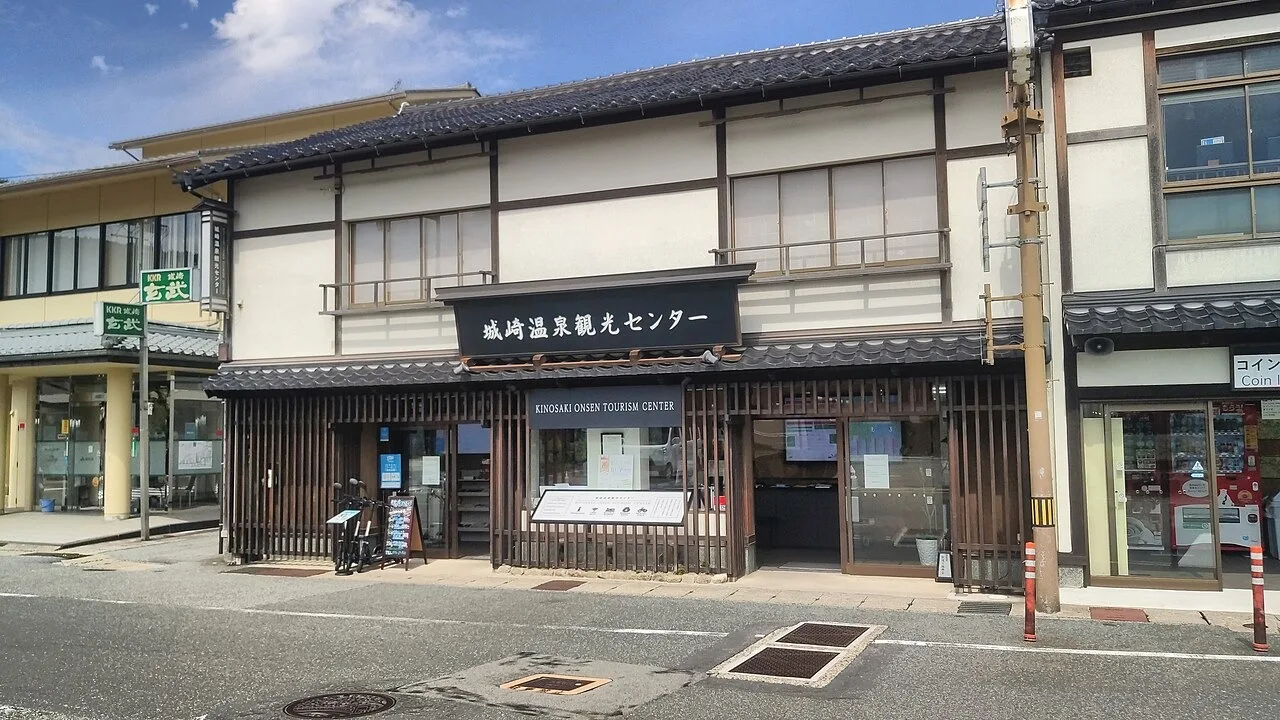
If you arrive before check-in opens, head to the "Oyado Annai-sho" luggage counter inside the Kinosaki Onsen Tourist Information Center across from the station. Open 9:00–17:00 per the tourism association, it delivers bags to member ryokan for ¥200 per piece and holds luggage after check-out for ¥500 per piece. Keep cash, passports, cameras, and laptops with you. If you are staying at the far end of town and want to stroll upriver unencumbered, sending large suitcases ahead saves you from doubling back. If you booked a ryokan shuttle, notify the property of your train number in advance and confirm the pickup spot with station staff on arrival.
For a one-night stay, the smoothest rhythm is arriving in the afternoon for a reserved dinner, then picking one morning activity before your train out. With two nights, you can take a day trip to lunch elsewhere in Tajima and return to Kinosaki for another soak without hauling bags between hotels. Continuing on to Amanohashidate and Ine? Check Kyoto Tango Railway connections at Toyooka. Heading to the Tottori Sand Dunes? Line up San'in Main Line transfers alongside the bus from Tottori Station, and prioritize luggage pickup over squeezing in one last soak.
Leave comfortable buffer time before any Shinkansen connection on your return trip. If you want to use your bath pass on check-out morning, book an afternoon train so you can pair an early soak at Jizo-yu with picking up your bags near the station. And if you arrive from Osaka and depart to Kyoto, take the direct "Kinosaki" limited express back—and if you are staying at the quiet end of town, factor your shuttle ride or walk back to the station into your departure buffer.
A few useful answers
For a first stay in Kinosaki Onsen, should I choose Nishimuraya Honkan or Kobayashiya?
If you want a historic garden setting, an in-room bath, or traditional kaiseki dining in your room, start with specific room categories at Nishimuraya Honkan. If being able to pop back to your room during the day and stepping straight across to Ichino-yu matters more, Kobayashiya is easier, and it also has three first-come, first-served private guest baths. Both properties require guests to be at least 10 years old.
Can children under 10 stay at Nishimuraya Hotel Shogetsutei?
Yes. Hotel Shogetsutei offers stay plans for children, though its on-site restaurant Ricca only admits children aged 10 and up and does not offer a kids' menu. Enter your children's exact ages when searching so you can pick a plan with suitable meals and bedding.
Can I use the complimentary ryokan public bath pass after check-out?
Visit Kinosaki states that the ryokan-issued bath pass is generally valid until 13:00 on check-out day, though some properties and plans set an earlier cutoff. Since Yanagi-yu and Mandara-yu do not open until 15:00, plan to visit those two on the afternoon or evening of your arrival day.
How many public bathhouses are open in Kinosaki in winter 2026?
Out of the seven public bathhouses, Sato-no-yu near the station remains closed long-term, while Kono-yu reopened on October 28, 2026. The other six operate on a rotating weekly closure schedule, so check the monthly calendar published by the bathhouse management authority against your stay dates.
Do I need to book a half-board plan during Matsuba snow crab season?
If you are traveling to Kinosaki specifically for Matsuba snow crab, start with a half-board dinner plan that specifies the crab species, landing port, and serving portions. If you only want a taste, compare a standard seasonal kaiseki plan with an a la carte crab order against a full crab kaiseki course. You can also book a room-only stay and reserve a town restaurant separately, as long as you coordinate check-in and dining times.
Can Nishimuraya Honkan guests book the private spas at Hotel Shogetsutei?
Yes. The Forest Private Spa accepts reservations from guests staying at both Nishimuraya Honkan and Hotel Shogetsutei. It costs ¥8,800 for 70 minutes for 1 to 4 guests, and accommodates up to 6 people. Guests staying at Honkan should allow extra travel time between the two properties.
Official information and references
Sources used in this guide.
- Kinosaki Onsen Tourism Association | Public Bathhouse Hours, Rest Days, and Fares
- Kinosaki-cho Yushima Property District | Monthly Closure Schedule and Kono-yu Reopening Notice
- Toyooka City | Sato-no-yu Long-Term Closure Notice
- Visit Kinosaki | Ryokan Bath Passes, Bathing Etiquette, and Luggage Services
- Kinosaki Onsen Tourism Association | Tourist Information Center and Luggage Delivery
- Kinosaki Onsen Tourism Association | 2025 Town Walking Map
- Kobayashiya | Guestrooms
- Kobayashiya | Age Policy, Private Baths, Bath Passes, and Cancellation Rules
- Nishimuraya Honkan | Guestrooms and 2026 Renovated Suites
- Nishimuraya Honkan | Accommodation Terms and Dinner Start Times
- Nishimuraya Hotel Shogetsutei | Dining Venues, In-Room Dining Fee, and Seasonal Menus
- Nishimuraya Hotel Shogetsutei | Ricca Age Policy and Kids' Meal Rules
- Nishimuraya Hotel Shogetsutei | Matsuba Crab Kaiseki and A La Carte Menu
- Nishimuraya Hotel Shogetsutei | Food Allergies and Dining Policy
- Nishimuraya Hotel Shogetsutei | Private Spa Rates, Capacity, and Time Slots
- Nishimuraya Hotel Shogetsutei | Town Shuttles, Station Transfers, and Luggage Delivery
- Kinosaki Onsen Tourism Association Booking Portal | Yamatoya Room-Only Plan
- Kinosaki Onsen Tourism Association Booking Portal | Higashiyamaso Bath Pass Hours
- Kinosaki Onsen Tourism Association | 2026 Matsuba Crab Season
- Kinosaki Onsen Tourism Association | Tsuiyama Crab Port Tags
- Kinosaki Onsen Tourism Association | 2026–27 Winter Ropeway Last Departure Notice
- Kinosaki Onsen Tourism Association | Kinosaki Literary Museum
- Kinosaki Onsen Tourism Association | Rail Access
- Kobayashiya | Location and Walk Time from Station
- Kinosaki Onsen Tourism Association Booking Portal | Kobayashiya Renovation, Cultural Property Status, and Facilities
- Nishimuraya Honkan | Large Public Baths, Private Spa Shuttle, and Walk Times to Bathhouses
- Nishimuraya Honkan | Horai Wing Rooms and In-Room Bath Water Source
- Nishimuraya Hotel Shogetsutei | Western Rooms, Universal Twins, and Connecting Rooms
- Nishimuraya Hotel Shogetsutei | Large Public Bath Hours
- Nishimuraya Hotel Shogetsutei | Open-Air Bath Room Water Source
- Nishimuraya Hotel Shogetsutei | Children's Meal and Bedding Plans
- Kinosaki Onsen Tourism Association | Public Bathhouse Accessibility and Bathing Garments
- Kinosaki Onsen Tourism Association Booking Portal | Koman Winter Crab Plans and Room-Only Taxes and Fees
- JR-West | e5489 General Sale and Pre-Booking Release Times
- Hankyu Kanko Bus | Kinosaki Onsen Osaka Line Fares and Timetable (with Zentan Bus)
- Nishimuraya Hotel Shogetsutei | Garden Wing, Moon Wing, and Room Comparison
- Visit Kinosaki | Yamatoya Stay Info and Booking Portal