Take bus 39 from Tottori Station and choose between Umanose, a short dune walk and the Sand Museum. Covers the ¥380 fare, return buses, 2026–2027 exhibitions, entrances and a rainy-day route via the visitor center.
- Region & Focus
- Chugoku and ShikokuAttractions
- Reading Scope
- 34 min read · 13 chapters · 6 Q&As
- Official Verification
- 18 official sources checkedUpdated October 27, 2026
Chapter Route Map (tap any stop)
- Allow at least five hours from Tottori Station for the dunes and museum
- Take bus 39 from bay 0 at Tottori Station
- Three stop names lead to the dune entrance, museum and upper viewpoint
- Use route 39 for the return; the Kirinjishi loop takes longer
- Save energy for the return from Umanose; the beach is optional
- Shoes, sand removal and luggage affect the rest of your day
- Check exhibition dates: the 2026 Spain show runs through January 3, 2027
- The main entrance is simpler; the secondary entrance has separate hours and payment rules
- Allow at least an hour for the sculptures and dress for the season indoors
- Put lunch between the two activities; the museum has no dining facilities
- Use the visitor center and museum in rain; shorten outdoor walks in strong wind
- With children or older relatives, set the meeting point before deciding who climbs
- Choose a complete route for your arrival time
- Quick Q&A
The bus from Tottori Station reaches the dunes in about 22 minutes. The main physical effort starts after you get off, on the loose sand. If you want to climb Umanose for a view of the Sea of Japan, put the walk out and back, with rests, in the first half of your day. If you prefer sculpture, or someone in your group finds slopes difficult, make the Sand Museum your main stop and take a short walk near the dune entrance. Leave in the morning, return in the afternoon, and allow time for a meal and cleaning sand off between the two.
Allow at least five hours from Tottori Station for the dunes and museum
With only half a day, choose either Umanose at Tottori Sand Dunes or the Sand Museum as your main activity, with the other as a shorter stop. If you enjoy coastal landforms and can climb loose sand, save your energy for the dunes. If you prefer sculpture, architectural detail and exhibitions, or someone finds sand difficult to walk on, spend longer at the museum and walk briefly near the dune entrance. Both are in the same sightseeing area, but returning from deep in the dunes to the road, emptying your shoes and reaching the museum entrance all take time.
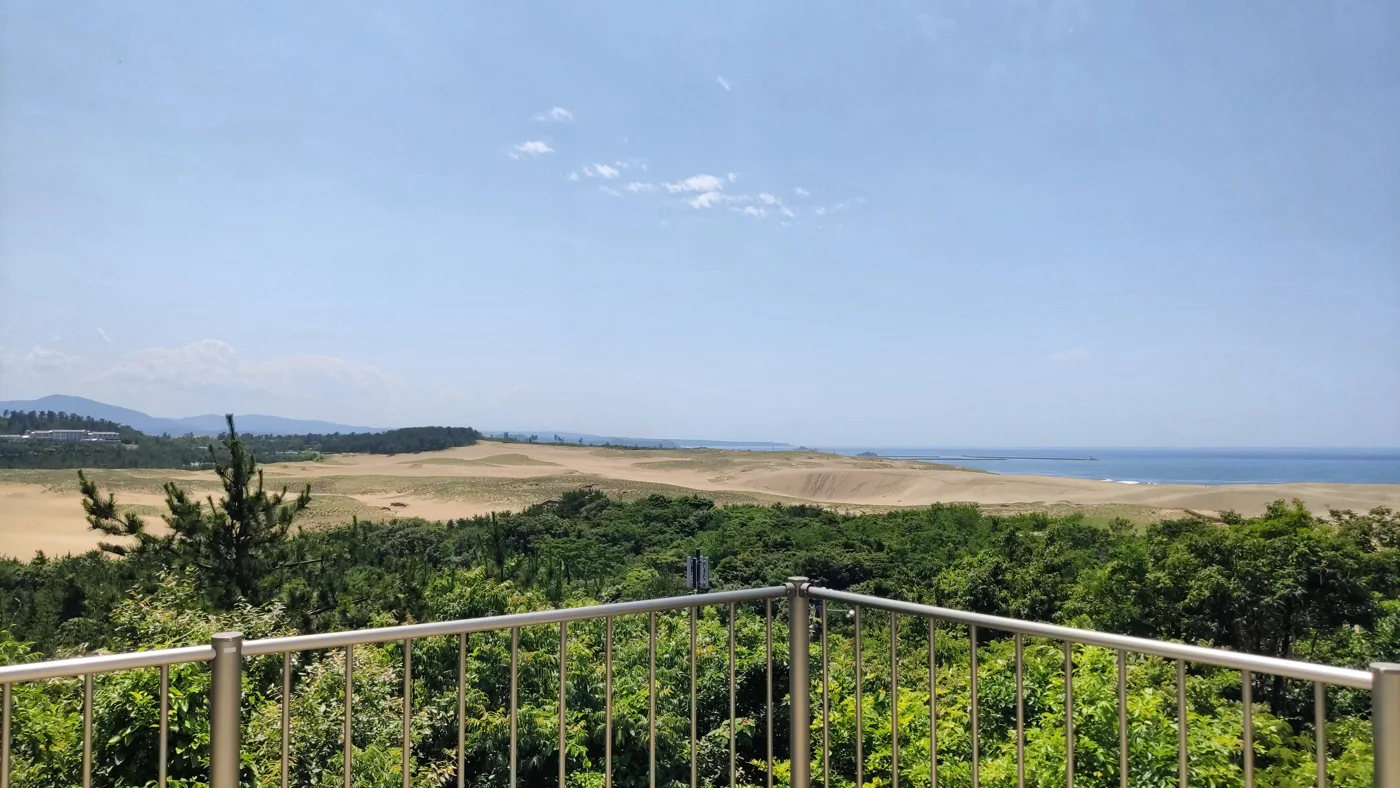
Allow five to six and a half hours from Tottori Station for both bus rides, a dune walk, a meal and the exhibition. If you walk slowly on sand or stop often for photos, shorten the museum visit or meal. Include the time needed to cross the slopes, remove sand and get back to the road within that total. With children or older relatives, choose the return bus first, then fit the outdoor route to the distance they can manage.
If you have only three hours, the two bus rides are only part of the journey. You also need to find the stop at the station, wait for a bus and walk to the entrance. Choose the dune entrance and visitor center, or the museum alone, instead of rushing up Umanose and then into the exhibition. To include both in a short visit, assess the wind and your group after arrival. Stay near the dune entrance and save most of your time for the exhibition.
Tottori Station is the starting point for this day trip. Leave luggage at your accommodation or arrange storage, and take only water, a jacket, a towel and what you need that day. If you have a train afterward, aim for a bus earlier than the last one you could possibly catch. That leaves time in town to wash your hands, collect luggage and buy food. If you only get lunch at Tottori Station, use the afternoon for the museum and a short walk rather than trying to complete a full circuit.
| Route | Time on sand | Visitor facilities | Time from Tottori Station |
|---|---|---|---|
| Umanose as the main activity | Entrance–ridge return walk: allow 60–90 minutes | Visitor center; exhibition if time permits | Five to six and a half hours including buses, lunch and cleanup |
| Exhibition as the main activity | Short walk near the dune entrance | Museum: about 60–90 minutes, plus visitor center | Half a day to a full day; choose the return bus first |
| Only three hours | Stay near the entrance or skip the sand | Choose the museum or visitor center as the main stop | Subtract waiting and both bus rides first |
| Rain during an exhibition run | Decide on a short walk if the rain eases | Visitor center, then museum main entrance | Allow for outdoor walks and waiting for buses |
Take bus 39 from Tottori Station and choose between Umanose, a short dune walk and the Sand Museum. Covers the ¥380 fare, return buses, 2026–2027 exhibitions, entrances and a rainy-day route via the visitor center.
Take bus 39 from bay 0 at Tottori Station
Take route 39, the Tottori Sand Dunes Line, from bay 0 at Tottori Station Bus Terminal. Hinomaru Bus lists a daily timetable revised on April 1, 2026, jointly operated with Nihon Kotsu. The scheduled ride is 21 minutes to Suna no Bijutsukan-mae and 22 minutes to the terminus, Sakyu Kaikan (Tottori Sakyu). A one-way fare is ¥380 for adults and ¥190 for children. Choose your stop before boarding so you can follow the stop names instead of waiting until you see the dunes to open a map.
The 09:10 departure reaches the museum stop at 09:31 and Sakyu Kaikan at 09:32. The later 09:40 bus arrives at 10:01 and 10:02 respectively. If you miss the 09:40, the next route 39 bus leaves at 10:50, a gap of 70 minutes. Finish breakfast, luggage storage and buying water before your planned departure. This is not a frequent city loop that you can board whenever you arrive.
Other departures are at 11:30, 12:30, 13:00, 14:10, 14:40, 15:50, 16:20, 17:30 and 18:00. If you reach Tottori in the afternoon, the 13:00 bus gets to the dunes at 13:22, leaving time for one main activity. The 16:20 departure reaches the museum stop at 16:41, only 49 minutes before last admission at 17:30, so an outdoor walk needs a separate decision. Put the bus times into your plan first, then divide the time left between the sights.
The Hinomaru Sand Dunes Line page lists both directions and is useful to save on your phone. Each column represents one bus. Read down to your chosen stop to get the matching departure and arrival times. Search results saying “about 20 minutes” help explain the distance, but use the precise times in the same timetable to plan a journey. This avoids combining travel times from different routes.
Three stop names lead to the dune entrance, museum and upper viewpoint
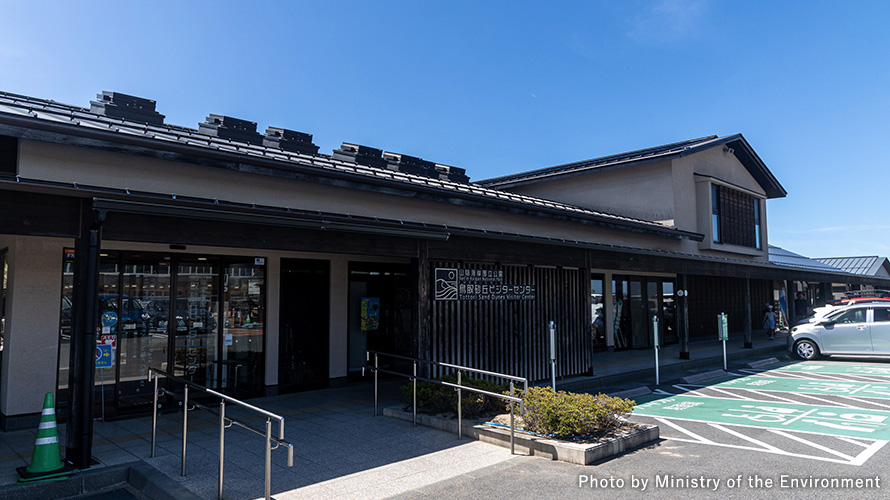
For the dunes first, stay on until Sakyu Kaikan (Tottori Sakyu). Before stepping onto the sand, locate the shops on both sides of the road, the visitor center and the return bus stop. This is the simplest stop for linking the visitor center, main dune entrance and a walk within one area. Even if you decide not to climb Umanose, you can see the dunes from the entrance and then learn about their landforms and wind ripples indoors.
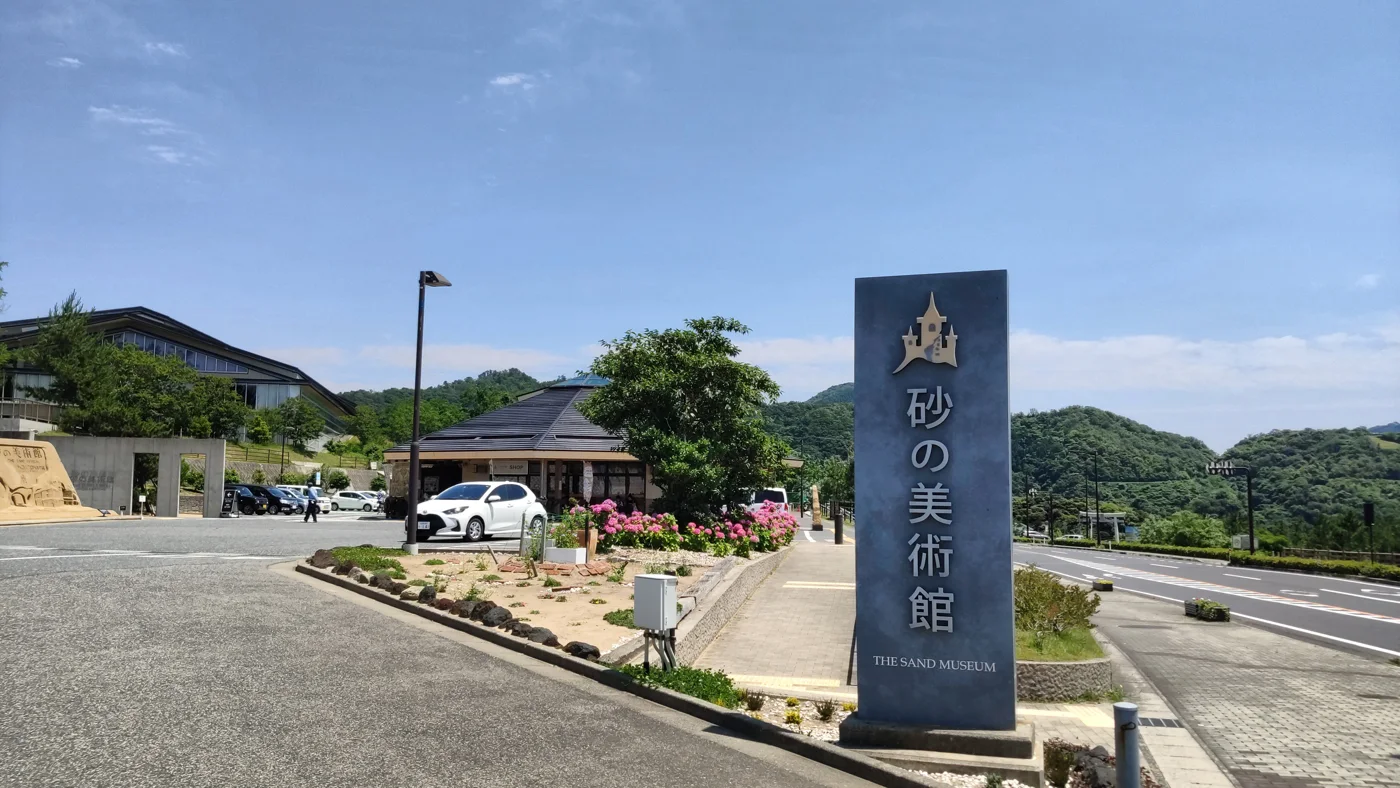
For the exhibition first, get off at Suna no Bijutsukan-mae. The museum FAQ puts the walk from the stop to the building at about one minute. Its access page says that buses back to Tottori Station leave from the stop of the same name across the road. Check the direction when you leave the museum rather than joining a queue just because the name matches. If someone walks slowly, one person can locate the stop before the group moves together.
Sakyu Center Tenbodai is on higher ground, on the side with the museum’s secondary entrance. It can save a detour if you already plan to enter from the viewpoint side. However, the main and secondary entrances have different hours and payment rules. On a first visit by bus, especially if you want to pay cash, the museum stop and main entrance are the clearest choice. The word “viewpoint” in the upper stop’s name does not mean you have reached the top of Umanose.
Use the official roads, entrances and pedestrian routes between the dunes and museum. The museum FAQ places nearby restaurants and shops about three to ten minutes away on foot, a useful indication of how close the entrance-area facilities are. If you have walked toward the sea, first allow time to return to the road. Lunch between the two activities gives you a chance to drink, rest and sort out shoes and socks. It is more practical than deciding your next stop from deep in the dunes.
Use route 39 for the return; the Kirinjishi loop takes longer
Route 39 also takes a scheduled 22 minutes from Sakyu Kaikan to Tottori Station. Useful afternoon departures and arrivals are 13:30–13:52, 14:40–15:02, 15:10–15:32, 16:20–16:42 and 16:50–17:12, followed by 18:00–18:22 and 18:30–18:52. Buses leave the museum stop one minute later: for example, 15:11 for a 15:32 arrival at Tottori Station. Save the time for the stop you will actually use.
There is a 70-minute gap between 16:50 and 18:00. If you want a train out of Tottori in the 17:00 hour, the 16:50 bus arrives at 17:12, after which you must enter the station, find the platform and collect luggage. Nearby times on a clock do not by themselves make a connection. Choose a train with enough transfer time, then work backward to your departure from the dunes. Set a reminder to leave the museum if you tend to lose track of time in exhibitions.
On Saturdays, Sundays and public holidays, you can also compare route 09, the Loop Kirinjishi sightseeing bus. Hinomaru’s current route directory labels it as operating on those days. Nihon Kotsu’s published timetable lists single fares of ¥400 for adults and ¥200 for children, and a one-day pass costing ¥700 for either. Choose tickets for the route you will actually ride. An adult taking Kirinjishi both ways would pay ¥800 in single fares, so the pass saves ¥100.
Two route 39 rides cost an adult ¥760. The ¥700 Kirinjishi pass is for the sightseeing loop and belongs in a plan using that route. Two Kirinjishi rides for a child cost ¥400, less than the same ¥700 day pass. Adults and children can choose different tickets; the whole family need not buy the same type. If you will not get on and off repeatedly, add up the single fares first to see whether a pass saves money.
The Kirinjishi return route calls at other sightseeing stops, making it much slower than route 39 back to town. Nihon Kotsu’s currently published timetable, revised April 5, 2025, shows a 14:10 departure from Sakyu Kaikan arriving at Tottori Station at 15:00: a 50-minute ride. Route 39 leaves later at 14:40 yet arrives at 15:02. Choose the loop if you want to leave the dunes earlier and visit other places. For a station connection, compare arrival times first. Check annual notices for summer, New Year or extra services rather than applying the ordinary weekend timetable to every date.
Save energy for the return from Umanose; the beach is optional
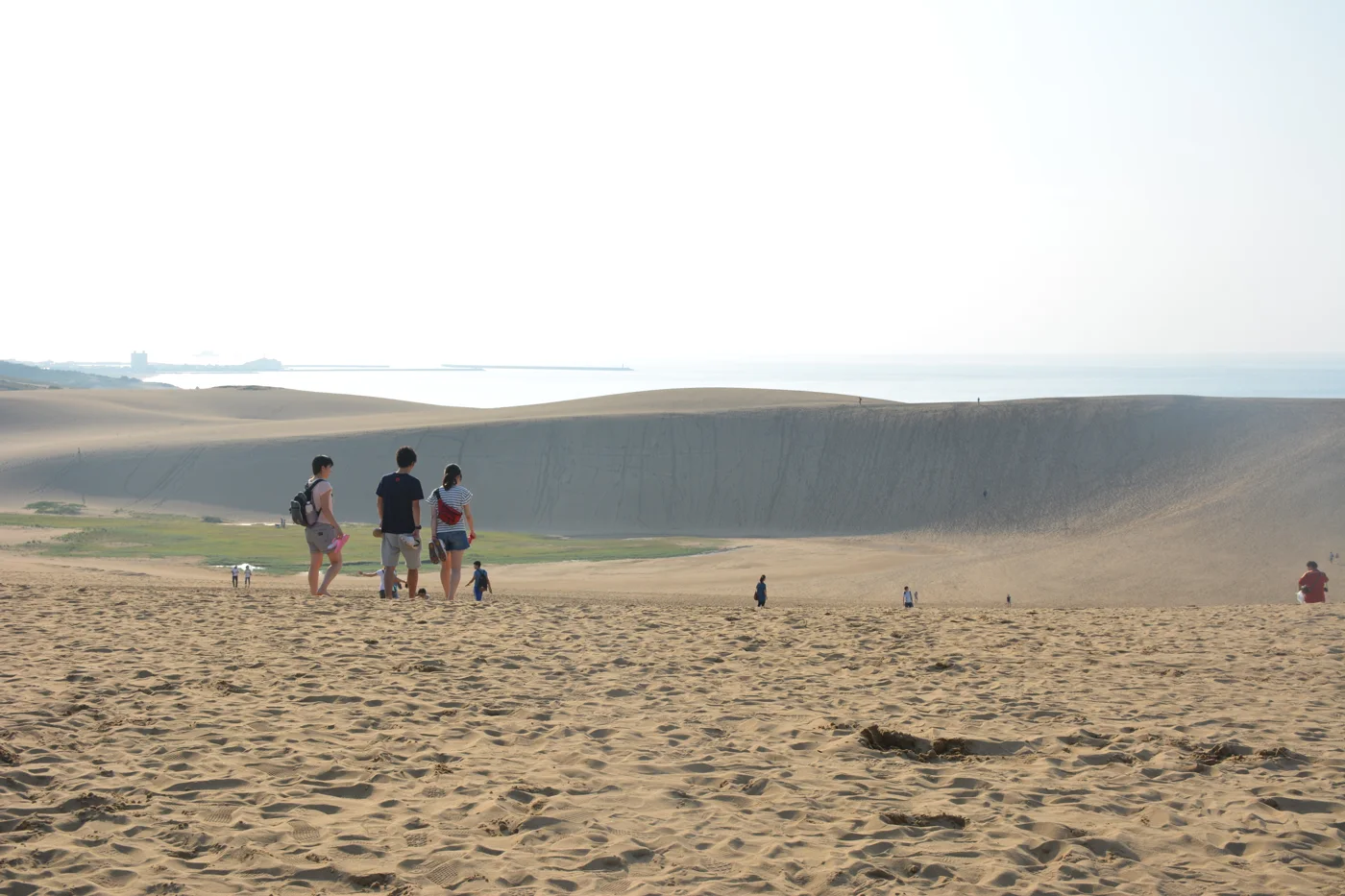
Umanose is the prominent high sand ridge. As you walk in from the entrance, the firm road gives way to loose sand. Your feet sink, and both the slope and footholds change. Before deciding to climb, try a short walk lower down. Check how much sand gets into your shoes, whether the children want to continue and how your knees feel on descents. Even people comfortable on level ground may need more rests on a sand slope.
For a first visit, allow 60–90 minutes in total for the walk from the entrance to Umanose, time on the ridge and the return. Allow longer if you walk slowly or take many photos. Look back to identify the entrance before climbing, and keep water within reach. After seeing the Sea of Japan from the ridge, return by a route you can manage. Complete a clear out-and-back walk before deciding whether to go farther.
The part most easily underestimated begins on the ridge. The sea is just beyond it, and descending looks easy, but returning means climbing the sand again and crossing the dunes back to the road. If you also want the museum or an afternoon bus, turn back at Umanose to keep control of your time. A child’s fast downhill run is no guide to the full journey. On the way back, carrying the child, shoes and water often falls to the same adult.
You can also skip the summit. Stay near the entrance and lower ground, observe ripples, footprints and light on the slopes, then visit the visitor center’s landform displays. That still makes a complete visit. If someone cannot walk on loose sand for long, arrange activities on paved ground and indoors, with a meeting at the visitor center. This works better than taking everyone to the foot of the slope and splitting up there. Set the meeting time around the return bus. Phone location is only an aid in the wide expanse of sand.
Swimming is prohibited on the sea side of the dunes. Plan viewing the sea separately from walking to the water, and stay in a safe position for wave photos rather than following the surf. Writing or drawing on the dunes is also prohibited by ordinance; do not use sticks or your feet to write across large areas of sand. Stop for photos without blocking others and take rubbish away so the next visitor can see the sand undisturbed.
A dune video published by Lazuda TV and selected by the Tottori Prefecture Tourism Federation. It shows the sand slopes and walking space, useful when planning the Umanose out-and-back walk around your group’s abilities.
Shoes, sand removal and luggage affect the rest of your day
The visitor center’s walking guidance notes that fine sand gets into shoes and even socks. In summer it recommends familiar sneakers with socks. Sandals are easy to empty, but allow hot sand to touch your skin directly. Bring spare socks and a small towel. Empty your shoes before heading to the museum so you do not spend the next part of the day walking on gritty soles. Grip and coverage matter more than how shoes look in photos.
Official guidance records midsummer sand-surface temperatures above 60°C. This refers to the sand under particular hot conditions, not the air temperature in a weather forecast. A cool breeze does not mean cool sand. Consider its temperature before trying a barefoot walk or letting a toddler sit and play. Prepare water, hats and protective shoes and socks before entering the unshaded dunes.
The visitor center’s outdoor rest area has foot-washing facilities and showers for children, with a towel vending machine nearby. Washing also takes time for drying and putting shoes back on. Allow a short cleanup break on a family trip rather than planning to board a bus immediately after leaving the sand. Brush sand from clothes and trouser hems in a suitable outdoor area before going inside. If you have a long train ride later, clean socks and a bag for a wet towel are more useful than an extra photo prop.
Officially listed locker locations include the Natural Parks Foundation office beside the visitor center and Sakyu Kaikan opposite. The visitor center itself does not rent boots or sandals. Bring your own change of footwear, and deal with luggage size and available lockers on arrival. If your bags are too large to handle easily on a regular bus, arranging storage near Tottori Station is simpler than bringing them and then looking for a locker.
Check exhibition dates: the 2026 Spain show runs through January 3, 2027
The Sand Museum’s 17th exhibition, Travel around the World in Sand: Spain, runs from April 24, 2026, through January 3, 2027, without closures during the run, including the year-end and New Year period. Current regular hours are 09:00–18:00, with last admission at 17:30. For a day combining it with the dunes, enter in the morning or early afternoon. Last admission is a cutoff for people already nearby; arrive earlier if you want time to study the sculptures.
The 18th exhibition, Travel around the World in Sand: Silk Road, has also been officially announced for April 23, 2027–January 3, 2028. The gap between shows matters for late-winter and early-spring trips. Do not schedule a regular exhibition visit from January 4 through April 22, 2027. Make the outdoor dunes and visitor center the main activities instead. For the next sand exhibition, plan your trip for April 23 onward.
Individual admission costs ¥800 for adults and ¥400 for elementary, junior high and high school students. Preschool children enter free. Groups of 20 or more pay ¥600 per adult and ¥300 per student. Two adults and one elementary school child pay ¥2,000 in total. Budget separately for buses and food so the child fare does not get confused with free preschool admission. Standard individual tickets suit travelers visiting once.
The 17th exhibition also offers an exhibition passport for ¥1,400 per adult or ¥700 per student, valid for that exhibition. It is useful for two or more visits during the same run. Two adult individual tickets cost ¥1,600, so the passport saves ¥200. If you are visiting only once that day, the difference is better left for lunch. The next exhibition has a separate run, so budget separately rather than treating the word “passport” as year-spanning validity.
If you mainly want the sea view from the dunes and have little interest in the exhibition, skip the indoor visit and rest in the shopping area afterward. Sculpture enthusiasts can make a short dune walk the opening activity. Both plans work. Buying tickets when everyone is already tired and closing time is near, simply because you have come this far, leaves the family hurrying toward another deadline.
The main entrance is simpler; the secondary entrance has separate hours and payment rules
The museum’s main entrance is on the building side; the current secondary entrance is on the viewpoint parking-lot side. The secondary entrance opens 10:00–15:00 on weekdays and 09:00–16:00 on Saturdays, Sundays and public holidays, shorter hours than the museum’s 09:00–18:00. Check the time before approaching from the viewpoint in the afternoon. In particular, do not count on the secondary entrance as a shortcut after 15:00 on a weekday.
The secondary entrance accepts cashless payment only, including credit cards, e-money/IC cards, QR payments and online tickets. Use the main entrance if paying cash. This affects both your bus stop and walking direction. For a cash ticket bought on arrival, get off at the museum stop. Consider the secondary entrance if you have a suitable payment method and are already on higher ground. Deciding before departure can save an extra climb and descent.
Wheelchairs and strollers can be used inside, with stairs and elevators between floors. The secondary entrance route has an outdoor slope, and the museum recommends the main entrance in poor weather. The main entrance is easier to plan around for a wheelchair user or a child sleeping in a stroller. Wheelchairs, strollers and walkers are also available for same-day borrowing on a first-come basis, in limited numbers and without advance reservations. Bring your own aid according to your needs.
The museum can be the main activity for someone unable to climb sand, but the walk from the bus stop, entrance slope and indoor route are separate parts of the visit. Starting at the main entrance, using the elevator, eating outside the museum and returning to the stop of the same name is simpler than combining the dunes and upper viewpoint. If the group splits for a dune climb, meet at a precise place such as outside the main entrance or at the visitor center, rather than “near the museum.”
Allow at least an hour for the sculptures and dress for the season indoors
Sand sculptures are formed by compacting sand with water and then carving it. Move between the overall scenes and close detail: first view a whole composition from a distance, then examine figures, building surfaces and depth. Budget about 60–90 minutes for a general visit, longer if the sculptural subjects interest you. A quick look at the main works can be shorter, allowing each person a comfortable pace.
The works are remade for each theme, so sculptures in older photos may already have been removed. For a 2026 visit, read the Spain exhibition’s work descriptions rather than treating a piece from an old article as a required photo stop. The official visitor-information page offers multilingual work explanations that you can download to your phone and consult beside each work. This saves time compared with searching for a signal and translating entire panels, and lets family members compare what they saw afterward.
To protect the works, the exhibition room stays close to the outdoor temperature. The museum specifically advises warm clothing in winter. In summer it provides shade from direct sun, but do not treat it as an air-conditioned room. If you are hot after the dunes, rest and drink in a suitable place before entering. In winter, keep your jacket with you rather than storing it because this is an indoor activity. Take time with the works instead of pushing through every sculpture while uncomfortable.
Personal travel photography and video are permitted under the museum’s rules. Touching works, tripods, selfie sticks and livestreaming are prohibited, as is filming while moving in a way that obstructs others. Commercial shoots, image sales and use on revenue-generating social accounts or blogs require a separate application. Use a handheld camera for memories, stop before shooting and keep paths clear. View a large work before framing it so the whole visit does not take place through your phone screen.
Put lunch between the two activities; the museum has no dining facilities
The museum has no restaurant or café. It lists nearby restaurants and shops about three to ten minutes away on foot. After a morning dune walk, return to the road, remove sand, wash your hands and eat before entering. After a morning exhibition visit, eat outside and then decide how far to walk in the dunes. Lunch is also a good time to assess energy. If a child is sleepy or an older relative has sore knees, reduce the afternoon to the visitor center and a short entrance-area stop.
If you bring a packed lunch, use the covered outdoor rest area at the visitor center. Only drinks are allowed in its first-floor rest space, and no food or drink is allowed in the second-floor exhibition and library areas. The museum is also unsuitable for eating a packed lunch; its visitor rules make exceptions for items such as lidded water bottles and plastic drink bottles. Pack food and drinking water separately so you can eat in the right place rather than searching for a seat after entering.
There is no need to add a distant lunch destination to this dune day. With buses as your only transport, a detour to another district consumes time waiting and reconnecting. Finish the main sights and have dinner back at Tottori Station for a more manageable schedule. If lunch queues are long, shorten the afternoon sand walk to preserve either a proper exhibition visit or a punctual return. Do not pass the entire delay on to the journey home.
For two adults and one elementary school child, return trips on route 39 cost ¥1,900 and individual museum tickets cost ¥2,000, a basic transport-and-admission total of ¥3,900 before food. The same combination for one adult costs ¥1,560. You can adjust the length of your dune walk freely; transport and paid admission are the fixed items to budget first. Leave room for extra drinking water, luggage storage or an unplanned taxi.
Use the visitor center and museum in rain; shorten outdoor walks in strong wind
The Tottori Sand Dunes Visitor Center is a useful first stop in passing rain. Entry is free and hours are 09:00–17:00. Learn about landforms, sand grains, wildlife and dune conservation before deciding on a short walk. There is more than a rack of sightseeing leaflets: wind-ripple displays and microscope observations help children understand the dunes without climbing, and give you things to look for when the rain stops.
The center’s Sunakura dome theater shows an approximately seven-minute presentation of the dunes through the seasons, starting automatically at :00, :20 and :40 each hour. Fit one showing into a wait for the rain rather than changing buses just for it. If you plan to visit the museum afterward, remember that the visitor center closes at 17:00. Do not rely on spending all your pre-bus evening rest indoors there. Finish cleanup and sand removal earlier if returning late.
During an exhibition run, the Sand Museum can be the main paid rainy-day activity. Walk from the museum bus stop to the main entrance, avoiding the outdoor slope by the secondary entrance. Still bring rainwear, suitable shoes, socks and a jacket: there are outdoor stretches between buildings and bus stops, and the exhibition room is close to outdoor temperature. During exhibition changeover, use the visitor center and a short walk, then return to Tottori Station early instead of forcing a long dune walk to fill the day.
When strong wind lifts sand, reduce your time on exposed sand, put phones and cameras away, and take children back to a building. In thunderstorms, weather warnings or transport suspensions, adjust your return using local and weather information. Indoor sights are useful only if you can reach them safely. Stop walking if you feel unwell and seek help at the visitor center. Call 119 in an emergency. A routine rainy-day alternative and an evacuation in severe weather need different priorities.
With children or older relatives, set the meeting point before deciding who climbs
A stroller is useful inside buildings but harder to push on loose sand. Families can view the dunes together at the entrance, then let willing walkers continue while others see the visitor center displays, with an exact meeting time. If a child stays behind, the accompanying adult also needs water, money and a phone. Do not leave everything in the backpack of the adult walking away.
The visitor center provides indoor wheelchairs and dune wheelchairs. Apply at the desk; reservations are not accepted. A dune wheelchair is an aid for a visit, while the route still depends on ground conditions, physical ability and staff guidance that day. If you need a dependable mobility aid, do not make borrowing one on arrival the sole basis for the day. The museum’s main entrance and elevator route are usually easier to arrange as a complete visit than a trip deep into sand.
There are no toilets within the dunes, so take care of toilet visits and diaper changes before setting off with children. The visitor center has a nursing room and changing table on the first floor, plus outdoor foot-washing facilities, making it useful before and after the walk. Visiting it first lets you handle these needs together. Hurrying back from a slope for a child’s toilet break often takes longer than a brisk adult-only walk.
If family members have different levels of interest in the museum, meet again over a meal. Give those who want to study every work enough exhibition time. Those who prefer the sand can finish that walk first and rest in the entrance shopping area. Set a specific entrance or bus stop as the meeting point and name the latest departure time. Once the return is fixed, other stops can be flexible without the fastest or slowest people constantly chasing the other group.
Choose a complete route for your arrival time
If you can catch the 09:10 bus, get off at Sakyu Kaikan at 09:32, visit the visitor center to get ready and check the map, then walk to Umanose and back. Return to the road for lunch and visit the museum in the afternoon. Finish with the 15:11 bus from the museum stop, arriving at Tottori Station at 15:32. That gives about five and a half hours between arrival at and departure from the dunes. If you want longer at lunch or the exhibition, use the 16:21 instead and adjust your onward train too.
If you leave Tottori Station at 10:50 and reach the museum stop at 11:11, see the exhibition first, eat, then visit the visitor center and dune entrance. Decide whether to climb Umanose based on remaining energy and weather. To take the 15:10 bus from Sakyu Kaikan, finish the outdoor part before then. This order suits people who prefer a later start and consider the museum essential, without the pressure of catching an early bus.
For an afternoon trip on the 13:00 bus, choose one main activity. In fine weather with good walking ability, arrive at the dunes at 13:22, walk to Umanose and back, clean up and leave at 16:20. For an exhibition-focused visit, get off at the museum stop at 13:21, then take a short walk near the dune entrance and visitor center after the exhibition. If you want an extra hour for photography, remove the other activity and spend the afternoon watching the light change over the same dunes.
For sunset, include time to return to the road after the sun has gone down. Official walking guidance says the sun can be seen setting toward the Sea of Japan from Umanose from May through August. Its position changes in other months, so a summer photo does not show the year-round angle. A car-free return still depends on the bus timetable. Work out your ride back before entering the sand. Winter gets dark early and the wind is cold; finishing earlier can still give you a complete visit.
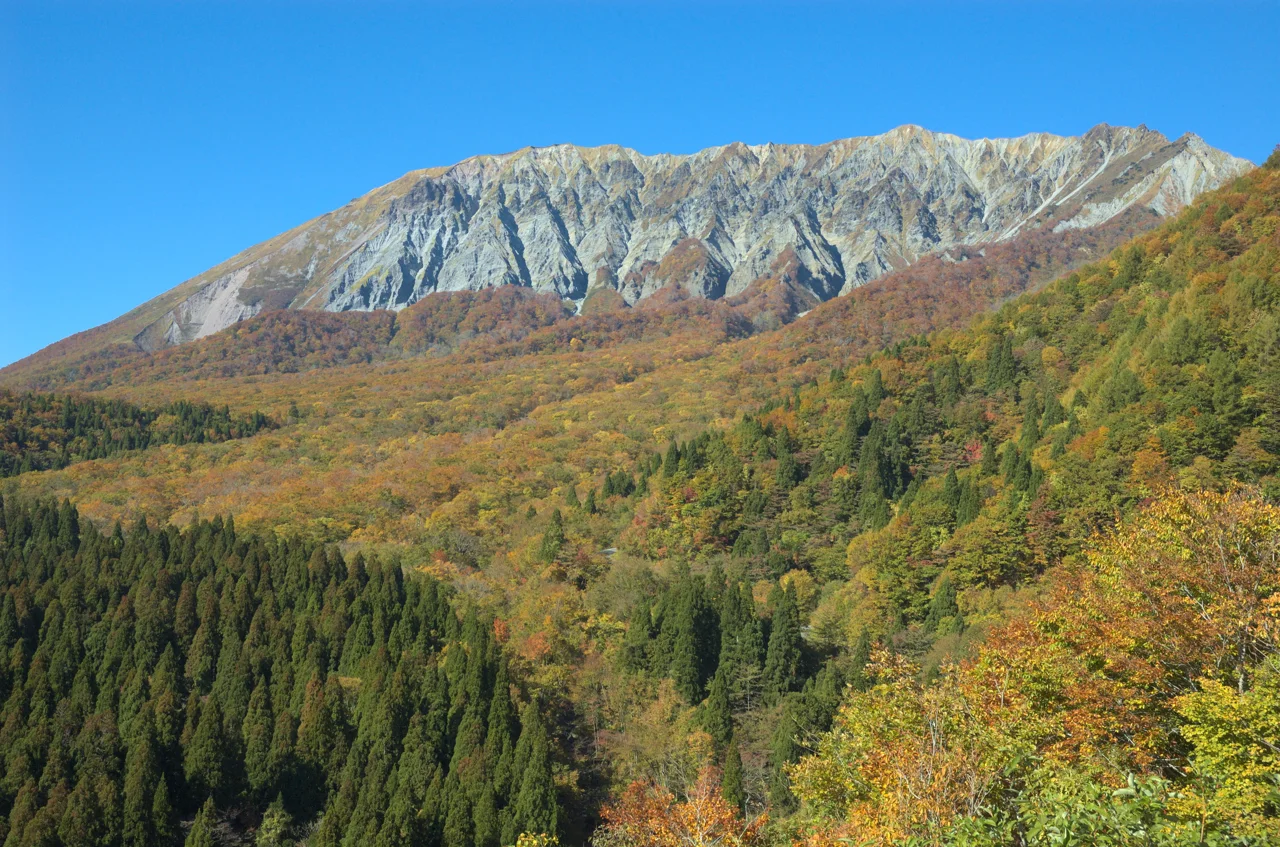
Autumn foliage on Mount Daisen is a separate trip from Yonago, with its own foothill transport and walks. Keep this day within Tottori Station, the dunes and the two visitor facilities, and handle luggage and dinner near the station. For a separate Daisen day, choose a route with the Daisen-ji, Kagikake Pass and day-trip transport from Yonago guide. Once you have chosen the bus back to Tottori Station, leave the final stretch for washing off sand, drinking water and walking calmly to the stop.
For another half-day among shops and storehouses, take a bus from Kurayoshi Station to Utsubuki-Tamagawa. On Friday, October 30, 2026, for example, Nihon Kotsu city route Ishiwaki 6 leaves station bay 2 at 10:00 and reaches Akagawara/Shirakabe Dozo at 10:12. The return service labeled 由西7 leaves the stop of the same name for Kurayoshi Station at 14:33 and arrives at 14:45. The regular fare is ¥230 one way or ¥460 return. Start along the Tamagawa canal to see white plaster, black charred-cedar boards and stone bridges across the water, then turn onto Honmachi-dori for the shopfronts. Akagawara No. 1 occupies a former Taisho-era soy-sauce factory. Upstairs you can see the roof framing and traces left by soy-sauce barrels. Now a local-products and craft shop, it opens 09:00–17:00 and closes on New Year’s Day. Allow about two hours for the walk and No. 1, plus time for a meal. Start walking toward the Kurayoshi Station-bound bus stop at 14:10. In rain, shorten the canal-side walk and spend more time in No. 1. Put Kurayoshi on a separate day from the dunes. Choose return trains between Tottori or Yonago and Kurayoshi first, then connect them with these city buses.
A few useful answers
Can I visit Tottori Sand Dunes without a car?
Take daily route 39, the Tottori Sand Dunes Line, from bay 0 at Tottori Station Bus Terminal. It takes about 21 minutes to the museum stop or 22 minutes to Sakyu Kaikan. The adult fare is ¥380 one way.
How long should I allow for the dunes and Sand Museum?
Allow five to six and a half hours for buses from and back to Tottori Station, the dunes, lunch and the exhibition. Allow 60–90 minutes for the entrance–Umanose return walk and another 60–90 minutes for the exhibition.
Is the Sand Museum open in spring 2027?
The Spain exhibition ends January 3, 2027, and the Silk Road exhibition opens April 23, 2027. Do not plan a regular exhibition visit from January 4 through April 22; visit the dunes and visitor center instead.
Is the Kirinjishi day pass worthwhile for the dunes alone?
For an adult taking Kirinjishi both ways, the ¥700 day pass saves ¥100 against two ¥400 single rides. Two route 39 rides cost ¥760. For a child, two Kirinjishi singles total ¥400, less than the ¥700 day pass.
Can I visit just the Sand Museum on a rainy day?
Yes, during an exhibition run. Get off at the museum stop and use the main entrance. Exhibition-room temperatures are close to outdoors, so bring a jacket in winter. You can combine it with the free Tottori Sand Dunes Visitor Center, open 09:00–17:00.
Can I climb the dunes in sandals or barefoot?
Official summer guidance recommends familiar sneakers with socks. In hot conditions, sand-surface temperatures can exceed 60°C. Bring spare socks and a towel, and use the outdoor foot-washing facilities at the visitor center afterward.
Official information and references
Sources used in this guide.
- Hinomaru Bus: route 39 Tottori Sand Dunes Line timetable, revised April 1, 2026
- Hinomaru Bus: current route directory and fares
- The Sand Museum: bus boarding points, stops and fares
- Nihon Kotsu: published Kirinjishi sightseeing-bus timetable and fares
- The Sand Museum: hours, exhibition dates, admission and visitor rules
- The Sand Museum: official announcement of the 18th Silk Road exhibition
- The Sand Museum: temperature, accessibility and transport FAQ
- The Sand Museum: how sand sculptures are made
- Tottori Sand Dunes Visitor Center: walking, equipment, toilets and luggage
- Tottori Sand Dunes Visitor Center: exhibitions, dome theater and services
- Tottori Sand Dunes Visitor Center: opening, rentals and rules FAQ
- Tottori Prefecture Tourism Federation: dunes and hot-weather information
- The Sand Museum: secondary entrance hours and payment from April 24, 2026
- Kurayoshi City: Utsubuki-Tamagawa preservation district and the development of its commercial area
- Kurayoshi Tourism and MICE Association: white-walled storehouse architecture and waterways
- Kurayoshi Tourism and MICE Association: Akagawara No. 1 operations and interior features
- Nihon Kotsu: current Kurayoshi city-bus timetables and fares
- Kurayoshi Tourism and MICE Association: white-walled storehouse walking map, June 2026