Choose a Sanin half-day of indoor garden viewing or a pondside stroll: Adachi’s rocks, pines, framed views and autumn 2026 art, or Yuushien’s lava, hills and peonies, with tickets, wheelchair access and shuttle boarding passes.
- Region & Focus
- Chugoku and ShikokuAttractions
- Reading Scope
- 25 min read · 14 chapters · 4 Q&As
- Official Verification
- 9 official sources checkedUpdated November 22, 2026
- Key Topics
- ItinerariesSeasonsChugoku & Shikoku
Chapter Route Map (tap any stop)
- Choose the focus of your half-day, then Yasugi or Daikonshima
- Adachi's dry landscape: follow upright stones toward white gravel
- Moss and white-gravel gardens: see how pines meet the ground
- Pond Garden and Kikaku Waterfall: real water carries the view farther
- Living framed picture and hanging scroll: see the scene, then the frame
- Autumn 2026: reserve the Taikan Room, then choose main-gallery works
- Rosanjin Hall and the Annex: divide the last hour by interest
- Yuushien from the bank: follow water before hill shapes
- Lava, hills and dry landscape bring island scenery inside
- Peony House, kan-botan and winter peonies: understand how they flower
- Follow spring flowering dates; in autumn, look at bridges and water
- Calculate tickets for each companion
- Wheelchairs, strollers and short visits: allocate accessible areas
- Take Adachi's return boarding passes first; plan Yuushien transport for individuals
- Quick Q&A
For a Sanin garden half-day, first choose how to look. For walking beside a pond and toward waterfalls, choose Yuushien on Daikonshima in Matsue. For rocks and pines framed by windows and corridors, followed by Japanese paintings, choose the Adachi Museum of Art in Yasugi. The useful difference is your distance from the landscape. Adachi’s gardens are viewed from inside the museum; visitors do not enter them. Yuushien is a strolling pond garden, where each turn changes the relationship between hills, stone banks and water. If staying in Matsue, give each a full half-day. With only one opening, choose by this difference and leave enough time to look.
Choose the focus of your half-day, then Yasugi or Daikonshima
Adachi Museum of Art is at 320 Furukawacho, Yasugi; Yuushien is at 1260-2 Hanyu, Yatsukacho, Matsue. The former is simplest to plan with the free bus from JR Yasugi Station. For the latter, take a city bus from Matsue Station toward Omisaki and Yatsukacho, or use a taxi journey of about 25 minutes. Save both full addresses on your map: these two gardens near Matsue are in different directions. Adachi Museum of Art FAQ
If you favor Japanese painting, put Adachi on the day with more time. One ticket covers the gardens, main-building paintings, Rosanjin Hall and Annex exhibitions. The website recommends at least two hours for a leisurely visit. Rushing the main garden in one hour turns the collection into rooms you pass through. If companions prefer walking with flowers and rest stops, give Yuushien the time. Beyond the Peony House, its banks, lava and hills form a complete route.
Autumn adds another choice. To compare outdoor foliage with painted foliage, Adachi's autumn 2026 exhibition offers specific works. To see tree color reflected on water and turn from bridge to bank, choose a daytime Yuushien walk. The sequences and durations below are itinerary suggestions. Follow entrance guidance and your companions' pace on site. Separate return trips from each departure station make two half-days easy to organize.
Choose a Sanin half-day of indoor garden viewing or a pondside stroll: Adachi’s rocks, pines, framed views and autumn 2026 art, or Yuushien’s lava, hills and peonies, with tickets, wheelchair access and shuttle boarding passes.
Adachi's dry landscape: follow upright stones toward white gravel
The main garden's rock arrangement deserves a stop. The museum explains that three central upright stones represent steep peaks; the composition descends as a waterfall would, ending in white gravel in front. Stand still, find the highest rock and follow the descending arrangement into the gravel before trying to fit everything into a phone photograph. Stone and gravel express mountains and water through height, direction and empty space. Adachi Museum of Art Japanese gardens
After nearby stone and gravel, raise your eyes to the mountains behind. The main garden joins shaped scenery with natural mountain outlines; the distance is more than a backdrop. Find the garden's edge and then the junction: where do pines cover the mountains, and where is sky left open? Start with visible outlines without first memorizing garden terms.
Look at the same white gravel twice. First trace the stone composition's mountain-and-water direction. After other viewpoints, return to the overall proportions and see whether the tallest stone still takes all your attention. Return when the window is quieter and the route permits. If people occupy the front, see the whole from the side, then move closer when space opens. Do not block a passage for a frontal picture.
Dry landscapes do not require everyone to imagine the same thing. Ask a child to find the three upright stones and gravel; a photographer can assess how much of the frame the gravel fills. Later, at real water and reflections, you can distinguish the landscape elements Adachi expresses through stone and gravel from those given to water.
The museum’s seasonal garden film, published in 2023, shows the gardens at different times of year. Observe the rocks, white gravel and pine arrangement first, then compare how the seasons change their colors.
Moss and white-gravel gardens: see how pines meet the ground
The Moss Garden centers on soft curves of haircap moss, with pines adding a different posture. The museum explains that red pines were planted at an angle, reflecting the designer's understanding of trees growing on slopes. Move your gaze from low moss to trunk rather than immediately seek flowers or red leaves. The trunk's angle is itself a subject. After steep upright rocks in the main garden, low ground and slanting trunks naturally slow the viewing pace. Adachi Museum of Art Japanese gardens
The White Gravel and Pine Garden began with Yokoyama Taikan's White Sand and Green Pines. In Japanese, the garden uses 砂 for sand and the painting uses 沙. Preserve that distinction when searching the website or exhibition material to find the correct work. White gravel forms gentle hills with pines of different sizes. Read the rise of the ground, then tree sizes and spacing, as a rhythmic arrangement rather than simply many pines.
Compare this with the Moss Garden. One lays green close to the ground; the other exposes bright gravel. Pines matter in both, but ground color and contour change how you look. Choose one tree in each and notice whether your eye stops first at trunk or foliage, or moves into the spaces between trees.
The painting-garden link also justifies time in the galleries. Adachi uses painting as garden inspiration, letting outdoor composition and indoor collections follow each other. Current exhibitions have their own object lists. Plan viewing a painting-inspired garden separately from finding an original currently on display.
Pond Garden and Kikaku Waterfall: real water carries the view farther
The Pond Garden has flowing water, described by the museum as winding from a waterfall deep within into the front pond. It uses Saji stones from Tottori. Across the pond, black pines stand right, red pines left, and the sencha tea room Seifu faces you. Identify trees and building before returning to the water to remember the garden's position. Photographing only reflections can miss these fixed components. Adachi Museum of Art Japanese gardens
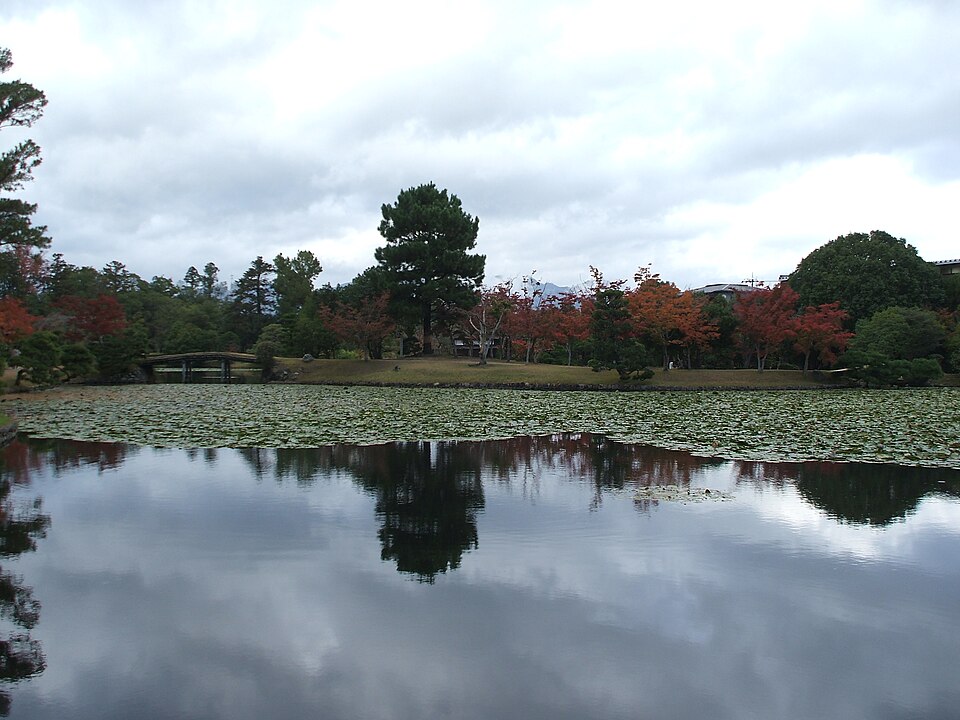
Divide your attention between water and opposite bank: look once at reflection, once at the actual objects and compare outlines. Water conditions and light change the reflection; observe what is there. If autumn color has arrived, see it with the pond. If leaves remain green, pine trunks, Saji stones and the building remain clear. The visit need not depend on a pond full of red reflections.
Kikaku Waterfall extends the distance. This artificial fall, about 15 meters high on borrowed-scenery Mount Kikaku, was inspired by the museum's Taikan painting Nachi Waterfall. Find it on the mountain, then include it with the near garden. Notice how the narrow distant waterline enters the whole composition. Its scale differs from the Pond Garden's nearby flow; do not merge them under one waterfall name.
From the dry garden to here, water takes several forms: gravel and rocks suggest landscape direction, the pond gives flow and reflection, and Kikaku places a fall in distant mountains. That is enough of a route even without prior garden study. Linger at your preferred form and give remaining time to art rather than hurry through the building to collect every window.
Living framed picture and hanging scroll: see the scene, then the frame
The Living Framed Picture uses an interior window as its frame. The Living Hanging Scroll uses a wall opening to present distant scenery like a hanging landscape painting. Architecture gives the view a boundary. Look within it, then step back to see the complete edge and how much is wall or opening. This follows the design more closely than pointing the camera only into the garden. Adachi Museum of Art Japanese gardens
For the framed picture, start with features inside the window. At the scroll, notice how the opening narrows the view and which features remain. Follow the edge to see where branches, ground and distance are cut off. If your position blocks movement behind, move aside and return after other windows.
With little time, pair one framed view with one main garden rather than chase every famous angle. The garden establishes the features; framing reveals how a view is selected. Companions with different art interests can meet in such a viewing area after separate gallery time, choosing a spot clear of circulation.
Garden photography is permitted at Adachi. Photographing or copying artworks is prohibited, as are tripods and drones for garden photography. Change how you use your phone between windows and galleries: record garden views at the former, then focus on originals and labels inside. Note artist, title and dates with a pencil or use museum publications rather than raise a phone in the galleries.
Autumn 2026: reserve the Taikan Room, then choose main-gallery works
From August 31 to November 30, 2026, the main building's large gallery presents Samurai: Seven Artists Who Challenged the Renewal of Japanese Painting, with Yokoyama Taikan, Takeuchi Seiho, Hishida Shunso, Kawai Gyokudo, Hashimoto Kansetsu, Ito Shinsui and Kawabata Ryushi. The Taikan Room has an autumn collection selection, while the small gallery presents Surreal Japanese Painting. If gardens bring you here, retain the Taikan Room first, then the other two as time permits. The themes connect more easily. Adachi Museum of Art autumn 2026 exhibitions
In the Taikan Room, find Morning Peaks and Evening Mountain. The official account describes ink landscapes at morning and evening, useful after the outdoor borrowed scenery to examine different times using ink alone. Ask simply where the time difference appears. Look yourself before reading the label. Related works give a focused stop without assigning identical minutes to every painting.
Four Subjects of Ocean Waves: Winter divides sky and sea in its composition; Autumn Leaves depicts vivid red maples beside a river. Examine the division in the first and the relationship between red and river in the second. After identifying ground, tree forms and water outdoors, you have concrete questions for originals. At the wall, let your eyes choose what deserves longer.
The large-gallery list includes Taikan's Shining Heaven and Earth and Spring Wind and Autumn Rain, Seiho's After the Rain and Shunso's Cat and Plum. With limited time, choose one familiar artist and one unfamiliar artist, building comparison from your own viewing. The small gallery explores unusual, sometimes humorous subjects, including Seiho's Clear Skies in May and Kansetsu's Bull. If large exhibitions tire you, use it as a shorter section.
These works and titles belong to this autumn run. For a winter journey from December, plan directly from the winter list. If traveling for one original, save artist and Japanese title together. It is easier to find than “the autumn red-leaf picture.”
Rosanjin Hall and the Annex: divide the last hour by interest
Alongside modern Japanese painting, Adachi collects Kitaoji Rosanjin ceramics in a separate hall. Put it between painting sessions if your eyes need a break from broad gardens and flat pictures. Objects shift attention from composition to vessel shape and surface. You need not read a whole ceramics history to fill the time. Start with the work's shape and explanation. Adachi Museum of Art hours and admission
The Annex focuses on contemporary Japanese painting. The 111th Reorganized Inten runs October 24–November 15, 2026, followed by Selected Masterpieces of Contemporary Japanese Painting III from November 18. Reserve the Annex for an interest in contemporary painting. For gardens and Taikan alone, longer in the main building better serves your purpose. Inclusion in the ticket does not require rushing through every room.
The Annex closes for exhibition changes November 16–17, 2026. Gardens, main building and Rosanjin Hall remain open. A visit for the main autumn exhibition still works then; for Inten, choose November 15 or earlier. Distinguish exhibition changes from whole-museum operation rather than choose a date from “open year-round” alone.
Allow about three hours for an Adachi visit: a substantial first stretch for gardens and framed views, then the main building, then ceramics or contemporary painting by interest. This is more generous than the museum's minimum two hours. Add time separately for tea, light food or close label reading. Re-entry is generally not accepted. Eat before or after, or use an internal cafe, rather than leave halfway and return.
Yuushien from the bank: follow water before hill shapes
Yuushien covers about 40,000 square meters and calls itself a miniature garden of Izumo. It brings regional scenery such as Oni-no-Shitaburui gorge, the Hii River, Lake Shinji, Nakaumi reefs and Mount Daisen into the garden. You need not have visited all the originals to read water, rocks and hills. Take a map and mark Ryukei Waterfall, Lava Garden, artificial hill and banks, pausing in each area. If entrance guidance takes you through the Peony House first, follow it. Yuushien garden and seasons
Ryukei Waterfall is labeled 竜渓滝 in Japanese. Water falls between towering lava rocks. The garden explains that a water-dividing stone splits the flow and evokes the eight-headed serpent Yamata no Orochi moving upstream. Find the division and trace water around both sides before looking up toward the fall. The myth then has a physical anchor rather than a memorized story substituting for the view.
At the bank, pause to follow where water goes. The central Male Waterfall has rock surfaces against black pines and flows into the reflecting pond. The Female Waterfall imitates island springs known as kawa. The garden says its water is pumped from Daikonshima groundwater. Identify these and Ryukei separately on the map before choosing your favorite stretch.
Spend this route's time in stops. Look once at waterfall mouth and rocks, then at reflections. From another bank position, compare overlapping trees and shore. Yuushien suits people who use movement to change angles. A quick circuit misses the viewing differences that strolling creates.
Lava, hills and dry landscape bring island scenery inside
The Lava Garden uses natural stones in forms the garden describes as tubular projections, rounded bun shapes and ripples. Reduce your attention to one stone: outline first, surface contours next, compared with lava forming the waterfall's overall mountain mass. After flowing water, give stone itself time. Rocks can divide water, build mountains or express island geology in different parts of the same garden. Yuushien garden and seasons
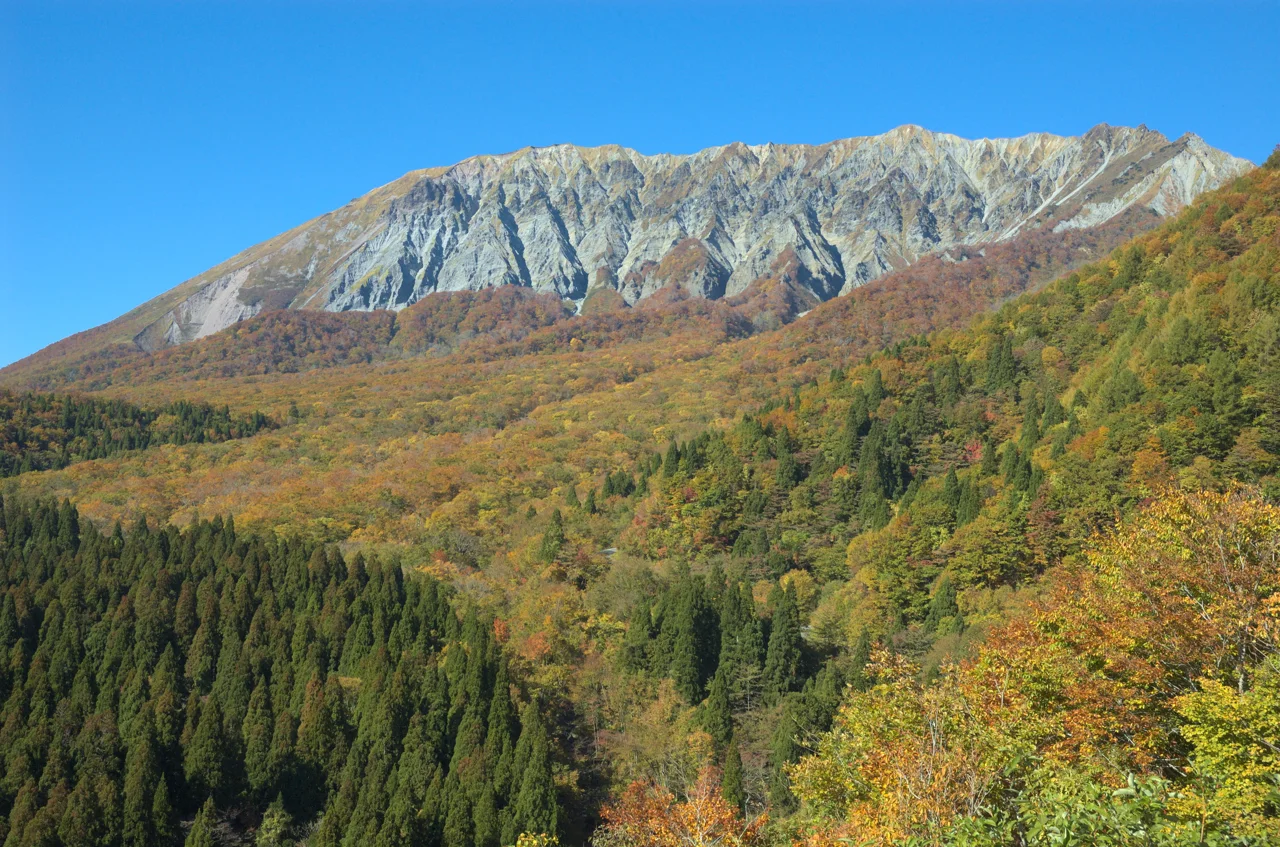
The artificial hill imitates Daisen's ridge as seen from Daikonshima across Nakaumi. The garden uses taller trees such as evergreen oaks to maintain its height. From a clear viewpoint, trace the treetops, then return to the bank. Plants as well as earth and stone make the hill. Compare this with Adachi's borrowed natural mountains: both put mountains in view, using different ways to reach the outline.
The dry garden imitates a lakeshore. Black pines stand for the former Shinden pine, and island stones for exposed reefs. The original pine was removed for bank-protection works; the garden preserves an expression of earlier island scenery. After real pond water, find the forms that suggest shore here. This and Adachi's three upright rocks and descending landscape offer two different dry-garden subjects.
For a central rest, the garden describes Suiryuan as a place to see the garden from the side. Use seated time for contours and layers, continuing your earlier observation. Some Yuushien views emerge only after turning beside the water. Choose a favorite spot and stay, without immediately seeking the next facility.
Peony House, kan-botan and winter peonies: understand how they flower
The Peony House manages temperature, humidity and light to display peonies year-round. For close flower forms in autumn, make it a fixed stop. It separates your travel date from the spring outdoor season. Focus on petals, color and leaves of one bloom without waiting for an entire outdoor field to flower together. Yuushien garden and seasons
Kan-botan flower in spring and autumn. The garden gives mid-October to late February as their flowering season, with individual plants covered by straw in winter against frost. Notice the relation between flower, plant and cover. This close scale differs from a broad flower field. Find kan-botan separately from the Peony House rather than assume the indoor stop covers all seasonal peonies.
Winter peonies are spring peonies adjusted to bloom in winter. The garden describes more leaves and large double flowers. On a winter visit, compare plants and leaves of these and kan-botan before flower color. The names reflect flowering habits, seasonal adjustment and display conditions. Identifying them helps you know which scene to expect when choosing dates.
Flower enthusiasts can give the Peony House a short focused session, then follow actual outdoor blooms. If companions prefer garden scenery, meet at an easily identified map rest point and preserve separate interests. This is easier than making everyone stop equally at every flower, and gives both peonies and garden actual viewing time.
Follow spring flowering dates; in autumn, look at bridges and water
Outdoor spring peonies flower early, mid-season and late. The garden describes early varieties from around mid-April, including Hoki and red-and-white-striped Shima Nishiki; mid-season flowers around late April include large-flowered Seidai, followed by Ten'i, Kao, Chojuraku and Kokan. For a particular color or form, follow the cultivar rather than assume all the garden shares one flowering stage throughout April. Yuushien garden and seasons
Pond peonies form a large display of flowers placed on the water. The regular seasonal introduction gives late April to early May, inspired by flowers removed during seedling cultivation. This differs from outdoor peonies still on branches. For a future trip built around a flower-covered pond, use that year's announced event dates. In autumn 2026, give time to the Peony House, seasonal flowers and banks.
For an autumn walk, include Momiji Bridge and the Red Bridge. The garden highlights foliage and pond reflections around Momiji Bridge; the Red Bridge contrasts vermilion with tree color. First observe from where the whole bridge is visible, then approach along the route. On it, the view turns toward water and banks. Remember it is a passage: pause briefly for photographs, then let others through.
Before full red color, bridges, black pines and hills remain subjects. The garden also describes lower-level autumn foliage. Spring flowers and autumn leaves work at different distances and angles; one photograph need not measure both half-days. Plan daytime visits around regular 9:30–17:00 hours, last entry 16:30. Afternoon arrivals should still reserve enough time for a complete stroll and rest.
Calculate tickets for each companion
The Adachi website read on October 28, 2026 lists individual admission at ¥2,500 for adults, ¥2,000 for university students, ¥1,000 for high school students and ¥500 for elementary and junior high school students, marked revised April 1, 2025. It covers gardens and that day's open exhibitions in the main building, Rosanjin Hall and Annex. Two adults and one high school student total ¥6,000 on a weekday, or ¥5,500 if the child is in junior high. Bring student ID to match the school category at the counter. Adachi Museum of Art hours and admission
Adachi also offers a youth benefit: on Saturdays when public schools are off, elementary, junior high and high school students enter free with student ID. Two adults and one eligible high school student then total ¥5,000. This can affect a family's day choice. University students remain a separate category. Write the school level in the plan rather than a generic child ticket.
Yuushien's admission page was updated September 2, 2026. General admission varies seasonally from ¥1,000 to ¥2,000. Elementary through high school students pay half the general price; preschool children are free. Students must show student ID at the counter. On October 28, 2026, the “today” field listed ¥1,800 general and ¥900 student admission. At that day's rate, two adults and a high school student total ¥4,500. For a future date, substitute its general price in the same calculation.
Compare content with price. Adachi includes exhibitions across several buildings and suits time spent with paintings. Yuushien concentrates strolling and peony displays in one garden. If one companion wants originals and another wants outdoor walking, first discuss how to spend the half-day rather than only which adult ticket costs less.
Wheelchairs, strollers and short visits: allocate accessible areas
Adachi says wheelchairs and strollers can reach most indoor locations except the small gallery. Both main building and Annex have elevators and multifunction toilets. Reception has seven wheelchairs and three strollers to loan, without reservations. For wheelchair use, make main-building garden views, large gallery and Taikan Room the route. Companions can briefly visit the small gallery separately and meet at an agreed location. Adachi Museum of Art FAQ
Yuushien explicitly permits wheelchair use from parking through the garden circuit, with free loans at reception. Divide a visit into Peony House, banks and rest, shortening or extending by energy. Ask reception for a suitable route at entry and follow it for viewing. Leaving it for a close waterfall view can add retracing.
The suggested three hours at Adachi and about two to two and a half hours for a daytime Yuushien walk both include sitting down. Yuushien's allowance includes stops and rest; add dining separately. Both suit fewer subjects with time to look. With only a short gap, choose one main route in one garden.
Take Adachi's return boarding passes first; plan Yuushien transport for individuals
Adachi's free bus runs to and from Yasugi Station, about 20 minutes direct, with 25 seats. Outbound boarding is first-come, without reservations. The stop is about 15 meters right of the station exit. For the return, collect a boarding pass for every person for your chosen service at the museum entrance counter. Arrange this first, then enjoy gardens and exhibitions. Store large bags in paid storage at Yasugi Station. The bus has no luggage hold, and bulky bags may not fit when crowded. Adachi Museum of Art free shuttle
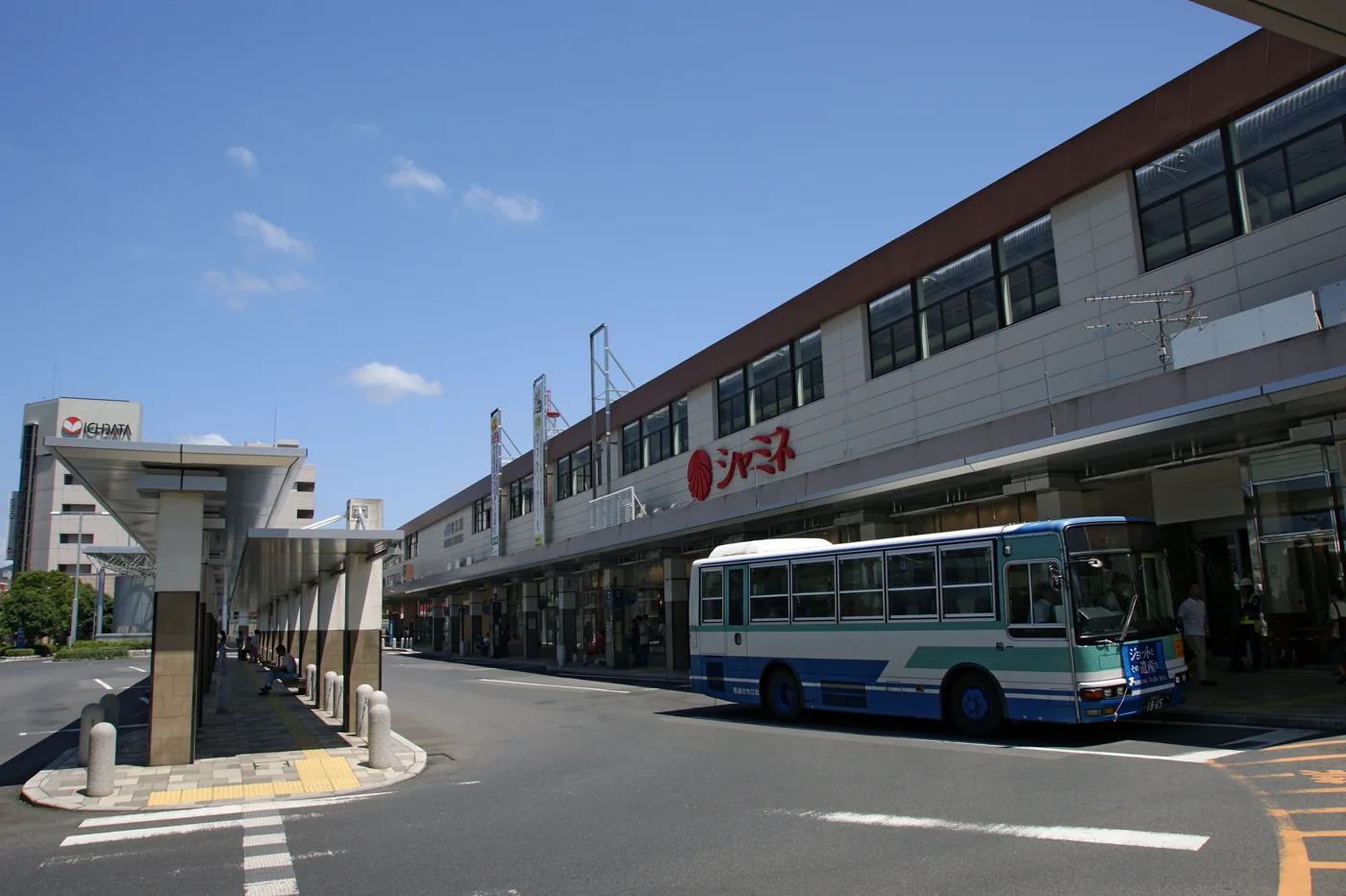
The current shuttle timetable states validity until the March 2027 JR timetable change. For example, leave Yasugi at 9:50, reach the museum at 10:10, then leave at 13:30 and reach Yasugi at 13:50. This provides about three hours 20 minutes at the museum. It is a half-day example selected from the timetable, with outbound first-come boarding and return passes. Allow station movement and waiting before onward JR trains. October–March closing is 17:00; the final inbound shuttle is not a sufficient starting point for a full visit.
Yuushien's free transfer requires at least 15 people and a garden meal costing ¥4,400 per person including tax. It covers the Nakaumi area within about 30 minutes' drive, up to 28 passengers, with advance contact. Independent groups of two or three should plan individual transport. From Matsue Station, use the official city-bus route link toward Omisaki and Yatsukacho to find both directions for your date. For a taxi, the website gives about 25 minutes from Matsue Station; arrange the return pickup before leaving too.
End an Adachi half-day at Yasugi Station and a Yuushien half-day at Matsue Station, adding trains or dinner after the respective endpoint. Enter Adachi in the morning for gardens and art. Give Yuushien an unhurried daytime opening for pond walking, peonies and a seated rest.
A few useful answers
Which should I visit if I only have half a day near Matsue, Adachi Museum of Art or Yuushien?
Choose Adachi for garden views from inside the museum and galleries of Japanese paintings. The museum recommends at least two hours. For a walk along the pond and past the waterfall at Yuushien, set aside two to two and a half hours, including breaks.
How do I get to Adachi Museum of Art and Yuushien without a car?
The free shuttle runs directly from JR Yasugi Station to Adachi in about 20 minutes. Pick up one return shuttle ticket per passenger at the museum entrance desk. From Matsue Station, take a city bus to Yuushien or a taxi, which takes about 25 minutes.
How much are children's tickets at Adachi Museum of Art and Yuushien?
At Adachi, elementary and middle school students pay ¥500 and high school students pay ¥1,000. They get in free with a school ID on Saturdays when public schools are closed. At Yuushien, the same grades pay half the day’s adult rate with a school ID, and preschoolers get in free.
When can I see peonies at Yuushien?
The Peony House displays peonies year-round, and cold-season peonies are in bloom from mid-October to late February. The display of peonies floating on the pond usually runs from late April to early May.
Official information and references
Sources used in this guide.