Choose a San’in half-day of indoor garden viewing or a pond circuit. Study Adachi’s rocks, pines, framed views and autumn 2026 paintings, or Yuushien’s lava, hills and peonies, with ticket categories, wheelchair access and shuttle boarding slips.
- Region & Focus
- Chugoku and ShikokuAttractions
- Reading Scope
- 25 min read · 14 chapters · 4 Q&As
- Official Verification
- 9 official sources checkedUpdated 22 November 2026
- Key Topics
- ItinerariesSeasonsChugoku & Shikoku
Chapter Route Map (tap any stop)
- Choose your half-day focus, then Yasugi or Daikonshima
- Adachi’s dry landscape: follow upright stones towards white gravel
- Moss and white gravel: see how pines meet the ground
- Pond garden and Kikaku Waterfall: real water draws the eye further away
- Living Framed Painting and Living Hanging Scroll: see the scene, then its frame
- For autumn 2026, leave time for the Taikan Room before choosing main-gallery works
- Rosanjin Hall and the new wing: allocate the last hour by interest
- Yuushien from the pond bank: find water flow, then hill shapes
- Lava, artificial hills and dry landscape bring the island into the garden
- Peony House, kan-botan and winter peonies: identify how they flower
- Spring follows flowering; autumn follows bridges and water
- Calculate tickets for each companion
- Wheelchairs, pushchairs and short visits: allocate accessible areas
- Collect Adachi’s return-bus slip first; plan Yuushien’s individual return separately
- Quick Q&A
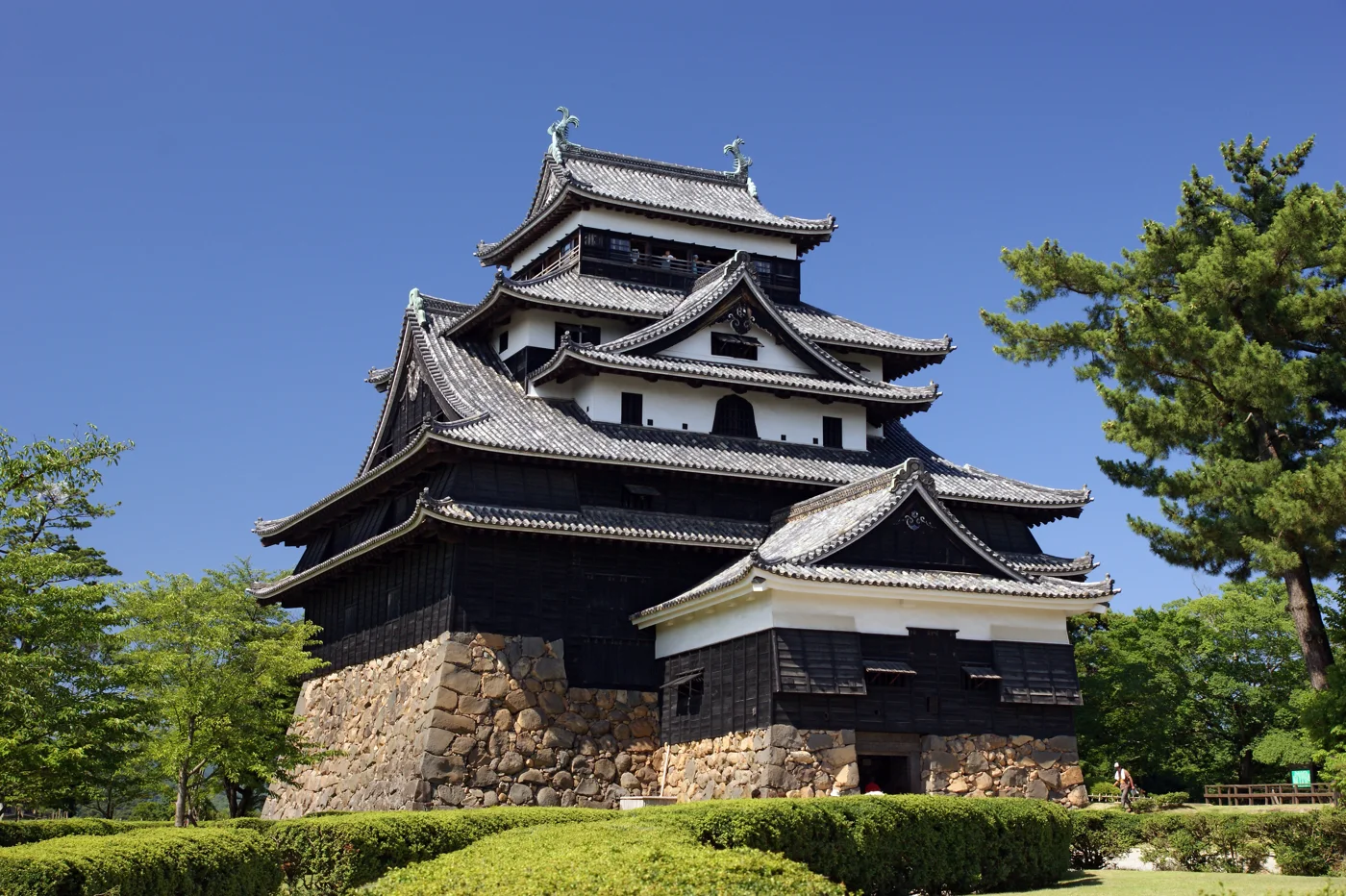
For a garden half-day in San’in, first decide how you want to look. To follow a pond bank and walk beside waterfalls, choose Yuushien on Daikonshima in Matsue. To see rock arrangements and pines through windows and corridors, then view Japanese paintings, choose the Adachi Museum of Art in Yasugi. The useful distinction is your distance from the scenery. Adachi’s gardens are viewed from inside the museum; visitors do not enter them. Yuushien is a strolling pond garden, where a turn changes the relationship between hill shapes, stone banks and water. Staying in Matsue, you can allow a full half-day for each. With only one gap, choose by this difference and leave enough viewing time.
Choose your half-day focus, then Yasugi or Daikonshima
The Adachi Museum of Art is at 320 Furukawachō, Yasugi; Yuushien is at 1260-2 Hanyū, Yatsukachō, Matsue. The simplest Adachi plan uses the free bus from JR Yasugi Station. For Yuushien, take a municipal bus from Matsue Station towards Ōmisaki and Yatsukachō, or a taxi taking about 25 minutes. Save both full addresses on your map to see that these two gardens “near Matsue” lie in different directions. Adachi Museum FAQ
If you prefer Japanese painting, give Adachi the day with more available time. One admission includes the gardens, main-building Japanese paintings, Rosanjin Hall and new-wing exhibitions. The website recommends at least two hours for a leisurely visit. Rushing to photograph the main garden in an hour leaves the collections as rooms passed through. For companions who enjoy walking with flowers and rest stops, choose Yuushien: beyond the Peony House, its banks, lava and hills form a clear route.
Autumn adds another choice. To compare outdoor foliage with painted leaves, Adachi’s autumn 2026 exhibition offers specific works. For tree colours reflected in water and changing views from bridge to bank, choose a daytime Yuushien walk. The sequences and durations below are itinerary suggestions; follow entrance guidance and your companions’ pace on site. Each garden works as its own half-day return trip from its departure station.
Choose a San’in half-day of indoor garden viewing or a pond circuit. Study Adachi’s rocks, pines, framed views and autumn 2026 paintings, or Yuushien’s lava, hills and peonies, with ticket categories, wheelchair access and shuttle boarding slips.
Adachi’s dry landscape: follow upright stones towards white gravel
The main garden’s rock arrangement deserves a pause. The museum explains that three central upright stones represent steep peaks, with a descending arrangement suggesting falling water that reaches the white gravel in front. Find the highest stone, then follow the lower rocks towards the gravel before trying to fit the whole garden into your phone. Stone and gravel represent landscape; height, direction and open space are the focus. Adachi Museum Japanese gardens
After the near stones and gravel, raise your eyes to the hills behind. The main garden joins carefully maintained scenery to natural mountain shapes; distant hills are more than a plain backdrop. Find the garden edge and its junction with the hills. Where do pines conceal them, and where is sky left open? Start with recognisable outlines rather than memorising garden terminology.
Look at the same gravel twice. First, read the rocks’ landscape direction. After other viewpoints, look back at the main garden’s proportions and see whether the highest stone still monopolises your attention. Return when the window is quieter and the route permits. If visitors are already stopped in front, look at the whole from the side and approach when space opens, without blocking the passage for a frontal photograph.
A dry landscape does not require everyone to imagine the same thing. Ask children to find three upright stones and the white gravel. Photographers can study how much of the frame the gravel occupies. Later, at a pond with real water and reflections, you can distinguish which landscape elements Adachi gives to stone and gravel and which to water.
A four-season garden film released by the Adachi Museum in 2023, showing scenery in different seasons. First observe rocks, white gravel and pines, then compare how the seasons change their colours.
Moss and white gravel: see how pines meet the ground
Soft curves of sugigoke moss dominate the moss garden, while pines offer a different posture. The museum explains that the red pines are planted at an angle, reflecting the designer’s understanding of trees growing naturally on slopes. Move your gaze from low moss to trunks rather than immediately seeking flowers or autumn leaves. The trunk angles are a subject in themselves. After the main garden’s steep upright stones, this low ground and leaning timber can slow your viewing pace. Adachi Museum Japanese gardens
The White Gravel and Pine Garden takes its starting point from Yokoyama Taikan’s Hakusa Seishō. The Japanese garden name uses 砂 for sand, while the painting uses 沙. Retain that distinction when searching the website or exhibition information. White gravel forms gentle hills planted with pines of different sizes. Read the rise of the mounds, then tree sizes and spacing, to see an arranged rhythm rather than simply many pines.
Compare it with the moss garden. Moss brings green close to the ground; the White Gravel and Pine Garden exposes a bright surface. Pines matter in both, but ground colour and contours change how you look. Choose one pine in each as a reference. Does your gaze stop at trunk or foliage first, or move between trees?
The painting’s relationship to the garden also gives a reason to reserve gallery time. Adachi uses painting as garden inspiration, so outdoor composition and indoor collections can be viewed together. Current exhibitions have their own work lists. Plan separately to see a painting-inspired garden and to find an original work currently on display.
Pond garden and Kikaku Waterfall: real water draws the eye further away
The pond garden has flowing water. The museum describes it winding from a waterfall opening at the back into the foreground pond, with Saji stone from Tottori. Across the pond, black pines stand on the right, red pines on the left and the sencha tea room Seifū straight ahead. Identify trees and building, then return to the water to remember the layout. Photographing reflections alone can miss these fixed components. Adachi Museum Japanese gardens
Look at the surface and opposite bank separately: once for reflections, once for objects, comparing outlines. Water conditions and light change what is reflected. If autumn colours have arrived, examine colour and water together. If leaves remain green, pine trunks, Saji stones and the building still give a clear structure. The visit works without a pond full of red foliage.
Kikaku Waterfall extends the distance. This artificial waterfall, about 15 metres high, stands on the borrowed-scenery Mount Kikaku and draws on Taikan’s Nachi no Taki in the collection. Find the waterfall on the hill, then take it in with the near garden, noticing how a thin distant line of water enters the composition. Its scale differs from the nearby pond flow; do not merge them under one waterfall name.
From the dry landscape to here, water takes several forms: gravel and stones suggest a landscape’s direction, the pond offers movement and reflection, and Kikaku places a waterfall in distant hills. This is enough of a route even without garden knowledge. Stay longer with what interests you and give remaining time to exhibitions rather than hurrying through the museum to collect every window view.
Living Framed Painting and Living Hanging Scroll: see the scene, then its frame
The Living Framed Painting uses an actual museum window as a picture frame. The Living Hanging Scroll uses an opening in a wall to present distant garden scenery like a hanging landscape scroll. Architecture sets the boundary of the view. Look at the scene first, then step back to see the whole frame and the share occupied by wall and opening, rather than only extending your camera towards the garden. Adachi Museum Japanese gardens
For the framed painting, begin with what lies inside the window. For the hanging scroll, notice how the opening narrows your view and what it retains. Pause at the edges to see where foliage, ground or distant scenery is cut off. If your position blocks circulation behind, move aside and return after another window.
With little time, pair one framed viewpoint with a main garden. The garden establishes the objects; the frame makes the act of selecting a view visible. Companions with different painting interests can meet in a viewing area while allocating gallery time separately. Choose a meeting position that leaves the passage clear.
Garden photography is allowed at Adachi, but photographing or sketching artworks is prohibited. Tripods and drones are also prohibited for garden photography. Change how you use your phone between windows and galleries: record gardens by the windows, then focus on originals and labels inside. Use a pencil to note artist, title and exhibition dates, or use museum publications for work information.
For autumn 2026, leave time for the Taikan Room before choosing main-gallery works
From 31 August to 30 November 2026, the main building’s Large Exhibition Room presents Samurai: Seven Artists Who Challenged Japanese Painting, featuring Yokoyama Taikan, Takeuchi Seihō, Hishida Shunsō, Kawai Gyokudō, Hashimoto Kansetsu, Itō Shinsui and Kawabata Ryūshi. During the same period, the Taikan Room has an autumn collection selection and the Small Exhibition Room presents Surreal Japanese Painting. If gardens brought you here, leave time for the Taikan Room first, then use remaining time for the others to connect the themes. Adachi Museum autumn 2026 exhibitions
In the Taikan Room, start with Chōrei and Bogaku. The official introduction describes morning and evening mountain scenery in ink. After the outdoor borrowed scenery, look at how ink alone handles different times of day. Ask where the morning–evening difference appears. Look for yourself before reading the label. Related works can focus your attention without assigning equal minutes to every painting.
In Kaichō Yondai: Fuyu, look at the division of sky and sea. Kōyō depicts brilliant red maples beside a river. For the former, examine the boundary’s position; for the latter, the relationship between red and water. After identifying ground, trees and water in the gardens, you have concrete questions for the originals. Let your eyes decide which deserves longer at the exhibition wall.
The Large Exhibition Room includes Taikan’s Kenkon Kagayaku and Shunpū Shūu, Seihō’s Usei and Shunsō’s Neko Ume. With limited time, choose one familiar artist and one unfamiliar one, using your own experience as the comparison. The Small Exhibition Room focuses on unusual, sometimes playful subjects, including Seihō’s Satsukibare and Kansetsu’s Yūgyūzu. If large exhibitions tire you, make this a shorter section.
These titles and works belong to this autumn period. For winter travel from December, plan from winter exhibition information. If coming specifically for an original, save its artist and Japanese title together. This is easier to use on site than remembering only “that autumn-leaf painting”.
Rosanjin Hall and the new wing: allocate the last hour by interest
Adachi also collects Kitaōji Rosanjin’s ceramics, with a dedicated Rosanjin Hall. Put it between painting sessions if you want a change from broad garden views and flat pictures. Objects shift attention from whole compositions to vessel shapes and surfaces. You need not read a ceramic history merely to fill time; begin with the works and their labels. Adachi Museum opening hours and admission
The new wing focuses on contemporary Japanese painting. From 24 October to 15 November 2026 it hosts the 111th Re-established Inten Exhibition; from 18 November, Selected Contemporary Japanese Paintings III. Give it full time if contemporary painting interests you. For gardens and Taikan alone, a longer main-building visit serves your purpose better. The ticket includes the new wing, but allocate time by interest rather than rushing through every room because you paid for it.
On 16–17 November 2026, the new wing closes for changeover while the gardens, main building and Rosanjin Hall remain open. A visit for the autumn main-building show still works on those days. For Inten, choose 15 November or earlier. Distinguish an exhibition changeover from whole-museum operation rather than choosing dates from “open year-round” alone.
Allow about three hours for one Adachi visit: a substantial garden and framed-view section, the main building, then ceramics or contemporary painting according to interest. Three hours is more generous than the museum’s minimum two-hour recommendation. Add time for tea, light food or close label reading. Re-entry is generally unavailable. Eat before or after admission, or use an internal café, rather than leaving midway and returning.
Yuushien from the pond bank: find water flow, then hill shapes
Yuushien covers about 40,000 square metres. It presents itself as a miniature Izumo landscape, bringing in Oni no Shitaburui, the Hii River, Lake Shinji, Nakaumi reefs and Mount Daisen. You can read water, rocks and hills without having visited every original. Collect a map on entry and mark Ryūkei Waterfall, the lava garden, artificial hill and pond banks, pausing in each area. If entrance guidance takes you through the Peony House first, follow it. Yuushien gardens and seasons
Ryūkei Waterfall is labelled 竜渓滝 in Japanese, with water falling between tall lava rocks. The garden explains how a dividing stone separates the flow and connects the arrangement to the eight-headed serpent Yamata no Orochi moving upstream. Find the split and follow water around both sides, then upwards to the fall. A concrete feature anchors the mythic association without needing to recite a story to fill the scene.
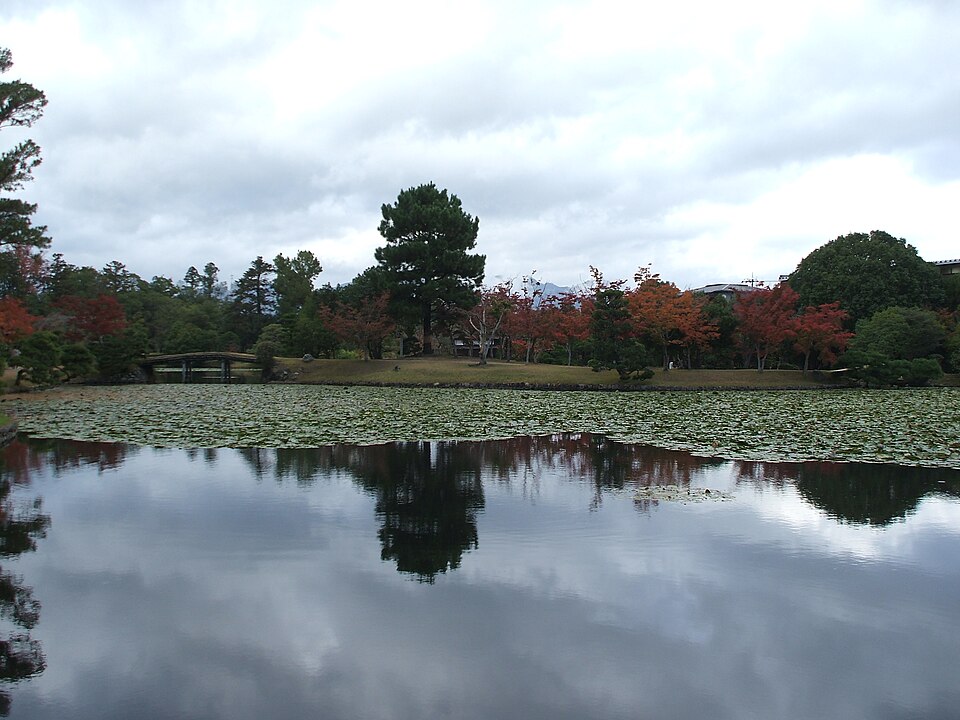
At the pond bank, pause over where the water goes. The central Male Waterfall has rocks and black pines and feeds a pond reflecting its surroundings. The Female Waterfall imitates springs locally called kawa. The garden says it pumps water from beneath Daikonshima. Identify these two and Ryūkei separately on the map, then decide which water scene you prefer.
Spend this route’s time stopping. First look at waterfall openings and rocks, then at reflections. From different bank positions, compare overlapping trees and shores. Yuushien suits visitors willing to change angles with their feet. A quick circuit can miss the changing views that strolling creates.
Lava, artificial hills and dry landscape bring the island into the garden
The lava garden uses natural stones, described as tubular, rounded mound-like and rippled forms. Reduce your scale to one stone: read its outline and surface, then compare it with lava forming a whole mass beside a waterfall. After water flow, give the rock itself time. Rocks may divide water, make mountains or express the island’s geology. Yuushien gardens and seasons
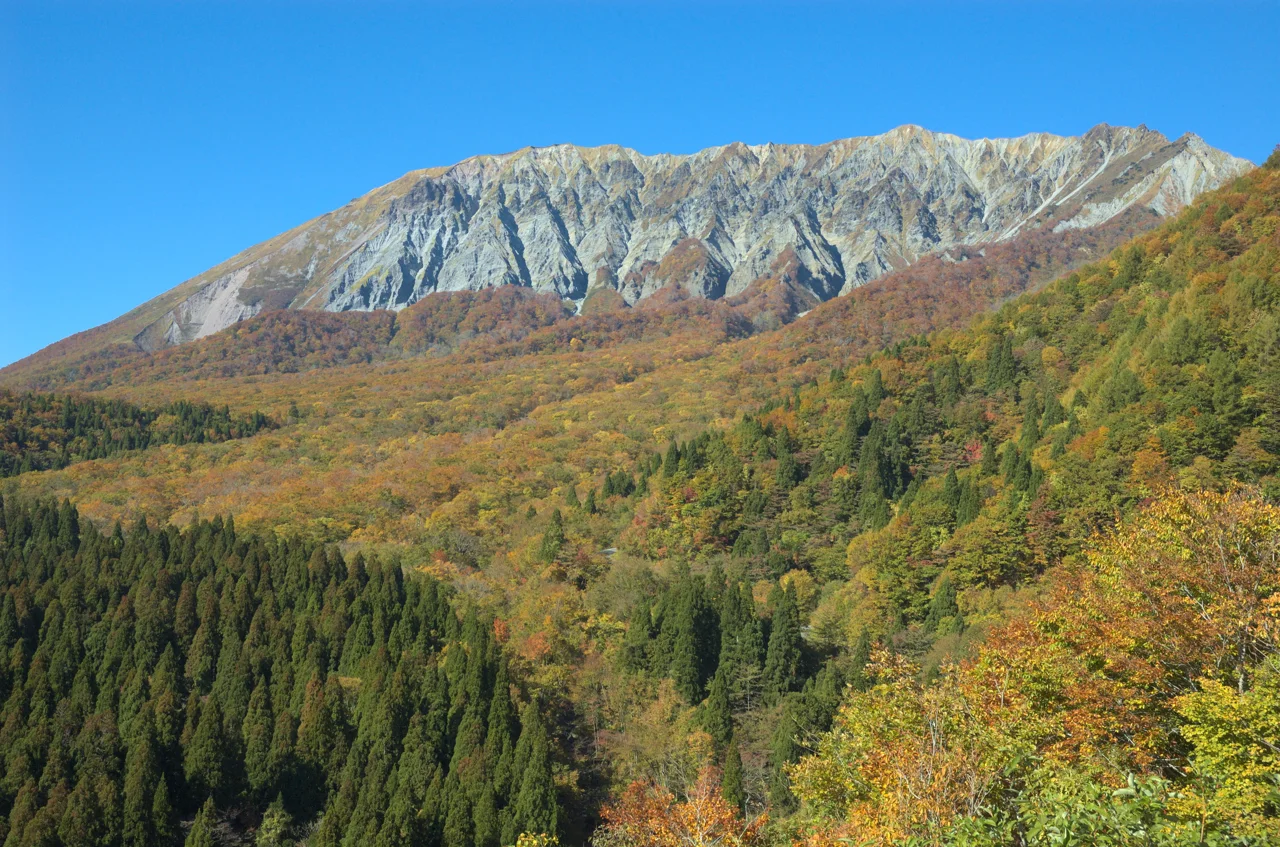
The artificial hill imitates Mount Daisen’s ridge seen across Nakaumi from Daikonshima. The garden uses taller trees, including evergreen oaks, to maintain its height. Find a position showing the outline, trace the treetops, then return to the bank. Plants help make the mountain as well as earth and stone. Compare this with Adachi’s borrowed natural hills: both put a mountain in view, through different design methods.
The dry landscape imitates a lakeshore. Black pines refer to the former Shinden pines, while island stones represent exposed reefs. The original pines were removed during shore-protection work; the garden represents an earlier island scene. After the real pond, find shapes that suggest a shore here. It offers a different dry-landscape subject from Adachi’s three upright stones and suggested water direction.
For a central rest, the garden describes Suiryūan as offering a side view. Use seated time to study outlines and layers, continuing your earlier observations while resting. Some of Yuushien’s views appear only after turning beside the water. Choose a position you like and stay rather than immediately seeking the next facility.
Peony House, kan-botan and winter peonies: identify how they flower
Yuushien’s Peony House regulates temperature, humidity and daylight to display peonies throughout the year. Make it a fixed stop for close views of flower forms in autumn. This separates travel dates from spring outdoor flowering. Study petals, colour and leaves of an individual bloom without waiting for an entire outdoor field to flower together. Yuushien gardens and seasons
Kan-botan peonies flower in spring and autumn. The garden lists their season as mid-October to late February, with straw coverings protecting individual plants from frost in winter. Look at the flower, plant and small shelter together. This close scale differs from a broad field. Seek kan-botan separately from the Peony House rather than assuming the indoor visit covers all seasonal peonies.
Winter peonies are spring peonies adjusted to flower in winter. The garden describes them as having more leaves and large, double flowers. On a winter visit, compare kan-botan and winter peony plants and leaves before colours. The names concern natural flowering habits, seasonal adjustment and display conditions. Understanding them makes clear which scene you expect when choosing dates.
Flower enthusiasts can give the Peony House a focused short visit, then walk slowly outdoors where plants are flowering. Companions preferring scenery can meet at an easily recognised rest point on the map. Separate time is easier than making everyone stop equally at every flower, and allows both peonies and garden to receive real attention.
Spring follows flowering; autumn follows bridges and water
Outdoor spring peonies have early, middle and late varieties. The garden describes early flowers from around mid-April, including Hōki and red-and-white-striped Shima Nishiki. Large-flowered Seidai belongs to the late-April middle period; Ten’i, Kaō, Chōjuraku and Kōkan come somewhat later. For a particular colour or form, choose dates by variety rather than treating all of April as one garden-wide flowering state. Yuushien gardens and seasons
The floating-peony pond display places cut flowers across the water. The garden’s regular seasonal account gives late April to early May and links the idea to flowers removed during nursery cultivation. It is a different subject from flowers still on branches outdoors. For a future trip focused on a flower-covered pond, use that year’s announced event dates. In autumn 2026, spend time on the Peony House, seasonal blooms and banks.
For an autumn walk, include the autumn-leaf bridge and red bridge. The garden highlights surrounding tree colour and reflections at the former, and the contrast of vermilion bridge and foliage at the latter. Begin where the whole bridge is visible, then approach along the path. On it, your view turns towards water and banks. Treat it as a passage when photographing: pause briefly, then let others through.
If foliage has not fully reddened, bridges, black pines and hills remain. The garden also describes shimomomiji, autumn colour beneath the canopy. Spring flowers and autumn trees require different distances and angles; one photograph need not measure both half-days. Plan daytime visits around the garden’s general 09:30–17:00 hours, last entry 16:30. In the afternoon, leave space for a full circuit and rest first.
Calculate tickets for each companion
The Adachi website read on 28 October 2026 lists individual admission at ¥2,500 for adults, ¥2,000 for university students, ¥1,000 for senior high school students, and ¥500 for primary and junior high school pupils. The page marks a revision from 1 April 2025. Admission includes the gardens and that day’s open exhibitions in the main building, Rosanjin Hall and new wing. Two adults and one senior high school student total ¥6,000 on a weekday; with a junior high school pupil, ¥5,500. Bring student identification to match the school category at the desk. Adachi Museum opening hours and admission
Adachi also offers free admission for primary, junior high and senior high school pupils with student identification on Saturdays when public schools are off. Two adults with an eligible senior high school student then total ¥5,000. This can affect a family’s chosen day. University students remain a separate category; write the school stage in your plan rather than a generic “child ticket”.
Yuushien’s price page, updated on 2 September 2026, gives seasonal general admission of ¥1,000–2,000. Primary through senior high school pupils pay half the general rate, preschool children enter free, and students must show identification at the ticket office. On 28 October, the page’s “today” rate was ¥1,800 general and ¥900 student. At that day’s price, two adults and a senior high school student total ¥4,500. For a future date, insert that day’s general rate into the same calculation.
Compare prices with content. Adachi includes multiple art displays and suits visitors willing to spend time with paintings. Yuushien concentrates walking and peony displays in one garden. If one companion wants originals and another wants an outdoor walk, discuss where the half-day will go before comparing adult ticket prices alone.
Wheelchairs, pushchairs and short visits: allocate accessible areas
Adachi says wheelchairs and pushchairs can reach most museum areas except the Small Exhibition Room. Both main building and new wing have lifts and multifunction toilets. Reception lends seven wheelchairs and three pushchairs without reservations. Wheelchair users can focus on main-building garden views, the Large Exhibition Room and Taikan Room. Companions can briefly visit the Small Exhibition Room separately and meet at an agreed point. Adachi Museum FAQ
Yuushien explicitly states that wheelchair access runs from the car park through the garden circuit, with free wheelchair loans at reception. Divide the route into Peony House, pond bank and rest, shortening or extending it by energy. Ask reception for a suitable route on arrival, then follow it. Leaving a suitable path for a waterfall close-up can add unnecessary retracing.
The suggested three hours at Adachi and roughly two to two and a half hours for a daytime Yuushien walk both include seated rest. Yuushien’s estimate includes pauses and rest; add meal time separately. Both suit fewer subjects with longer attention. With only a short gap, choose one main route in one garden.
Collect Adachi’s return-bus slip first; plan Yuushien’s individual return separately
Adachi’s free bus runs to and from Yasugi Station, taking about 20 minutes directly, with 25 seats. Outward boarding is first come, first served, without reservations. The stop is about 15 metres to the right after leaving the station building. For the return, collect a boarding slip for every person and the chosen departure at the museum entrance desk. Arrange this on entry before enjoying gardens and exhibitions. Store large luggage in paid lockers at Yasugi Station: the bus has no luggage compartment and large items may not fit when crowded. Adachi Museum free shuttle bus
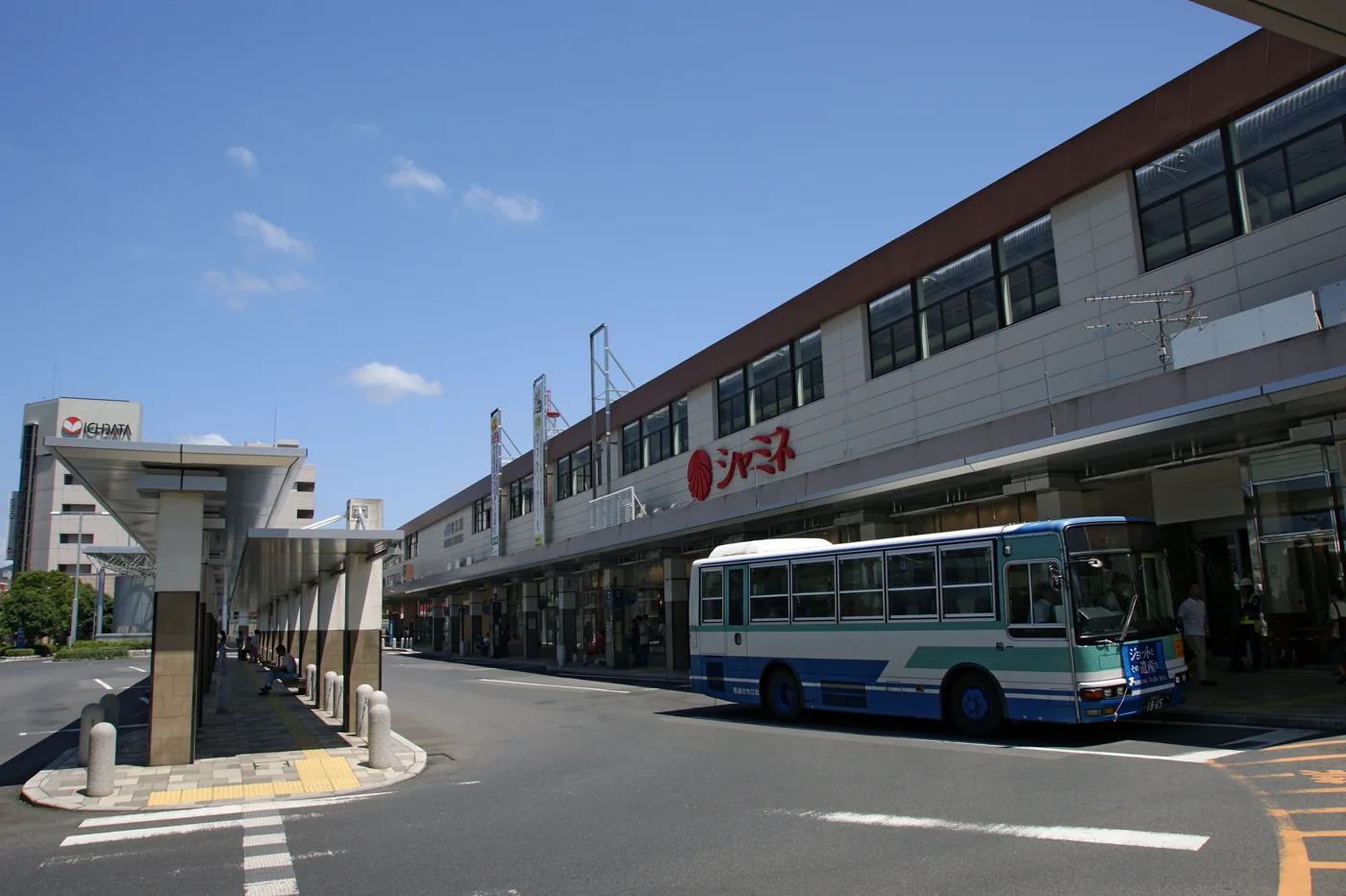
The current museum timetable states validity until the March 2027 JR timetable revision. For example, a 09:50 departure from Yasugi arrives at 10:10; returning at 13:30 reaches Yasugi at 13:50, allowing about three hours and 20 minutes at the museum. This is a half-day example selected from the timetable. Outward travel depends on arrival order, return travel on the boarding slip. Allow station movement and waiting time before connecting to JR. From October to March, the whole museum closes at 17:00; the last incoming bus does not provide enough viewing time.
Yuushien’s free transport requires at least 15 people and an on-site meal costing ¥4,400 including tax per person. It serves locations roughly 30 minutes by road around Nakaumi, carries up to 28 and requires prior contact. Independent groups of two or three should use individual transport. For municipal buses from Matsue Station, use the website’s route information towards Ōmisaki and Yatsukachō to find both directions for your date. By taxi, the website gives about 25 minutes from Matsue Station; arrange the return pickup alongside the outward journey.
Finish Adachi’s half-day at Yasugi Station and Yuushien’s at Matsue Station, placing onward trains or dinner after the appropriate endpoint. For gardens and exhibitions in depth, enter Adachi in the morning. For a slow pond circuit, peonies and a seated break, give Yuushien a daytime gap without a rushed departure.
A few useful answers
Should I visit the Adachi Museum of Art or Yuushien if I have half a day near Matsue?
Choose Adachi to view the gardens from inside the museum and see Japanese paintings in the galleries. The museum recommends at least two hours. For a stroll by the pond and waterfall at Yuushien, allow two to two and a half hours, including breaks.
How can I get to the Adachi Museum of Art and Yuushien without driving?
The free shuttle from JR Yasugi station goes straight to Adachi in about 20 minutes. Collect one return shuttle ticket per person at the museum’s entrance desk. Take a local bus to Yuushien from Matsue station, or a taxi, which takes about 25 minutes.
How much does admission cost for children at the Adachi Museum of Art and Yuushien?
Adachi charges ¥500 for primary and lower secondary pupils and ¥1,000 for upper secondary pupils. They go free with a school ID on Saturdays when state schools are closed. At Yuushien, the same pupils with ID pay half the day’s adult price, and children below school age go free.
What time of year can I see peonies at Yuushien?
The Peony House displays peonies all year round, and cold-season peonies are in flower from mid-October to late February. The display of peonies floating on the pond is usually on from late April to early May.
Official information and references
Sources used in this guide.