Choose Daisenji's main hall, Ogamiyama Shrine Okunomiya and Kinmon by walking ability, or drive to Kagikake Pass for the south face. Covers Yonago buses, Amidado opening days, Kidani Stream and day trips or overnight stays.
- Region & Focus
- Chugoku and ShikokuAutumn leaves
- Reading Scope
- 36 min read · 21 chapters · 5 Q&As
- Official Verification
- 23 official sources checkedUpdated 27 October 2026
- Key Topics
- SeasonsItinerariesRail travel
Chapter Route Map (tap any stop)
- Daisenji or Kagikake Pass: choose by transport and walking ability
- Autumn colours follow the altitude; Autumn Colours Weeks follow event dates
- Outbound from Yonago: reach Daisenji, not a service ending at Hongu
- Choose the 15:20 return first, then fit in lunch and walking
- After Daisenji bus stop: read the terrain before climbing
- Daisenji main hall and Reihokaku: one donation, two visiting paces
- Ogamiyama Shrine Okunomiya: 700 metres of natural stone and a final staircase
- Kinmon and the north face: leave time to return to the main approach
- The Amidado forest detour and interior opening days
- A short approach walk or a 7.2 km circuit
- Kagikake Pass: south-face views and just 15 parking spaces
- Driving between both sides: put your main interest first
- Kidani Stream: allow another hour on the south side
- Masumizu Highland: a chairlift for foothill and sea views
- Taking a bicycle uphill: a separate one-way bus by reservation
- South-face views without driving: sightseeing taxis
- Beside Daisenji bus stop: changing, waiting and family rests
- A car-free day: five hours for the main hall, Okunomiya and a meal
- With a car and older companions: south-face stop and lower approach
- Rain, low cloud and fallen leaves: change the route and equipment
- Yonago or the mountain: the difference is the next morning's first journey
- Quick Q&A
For autumn colours on Mount Daisen in Tottori, a bus day trip from Yonago works best around Daisenji Temple and the approach to Ogamiyama Shrine Okunomiya. For a short walk with a view of the whole south face, travel by car to Kagikake Pass. The scenery and final transport links differ on the two sides. Choose a route that suits your companions before adding a forest detour. Half a day can cover the main hall, stone paths and a meal; a full day allows a slower pace, or a drive to Kidani Stream on the southern side.
Daisenji or Kagikake Pass: choose by transport and walking ability
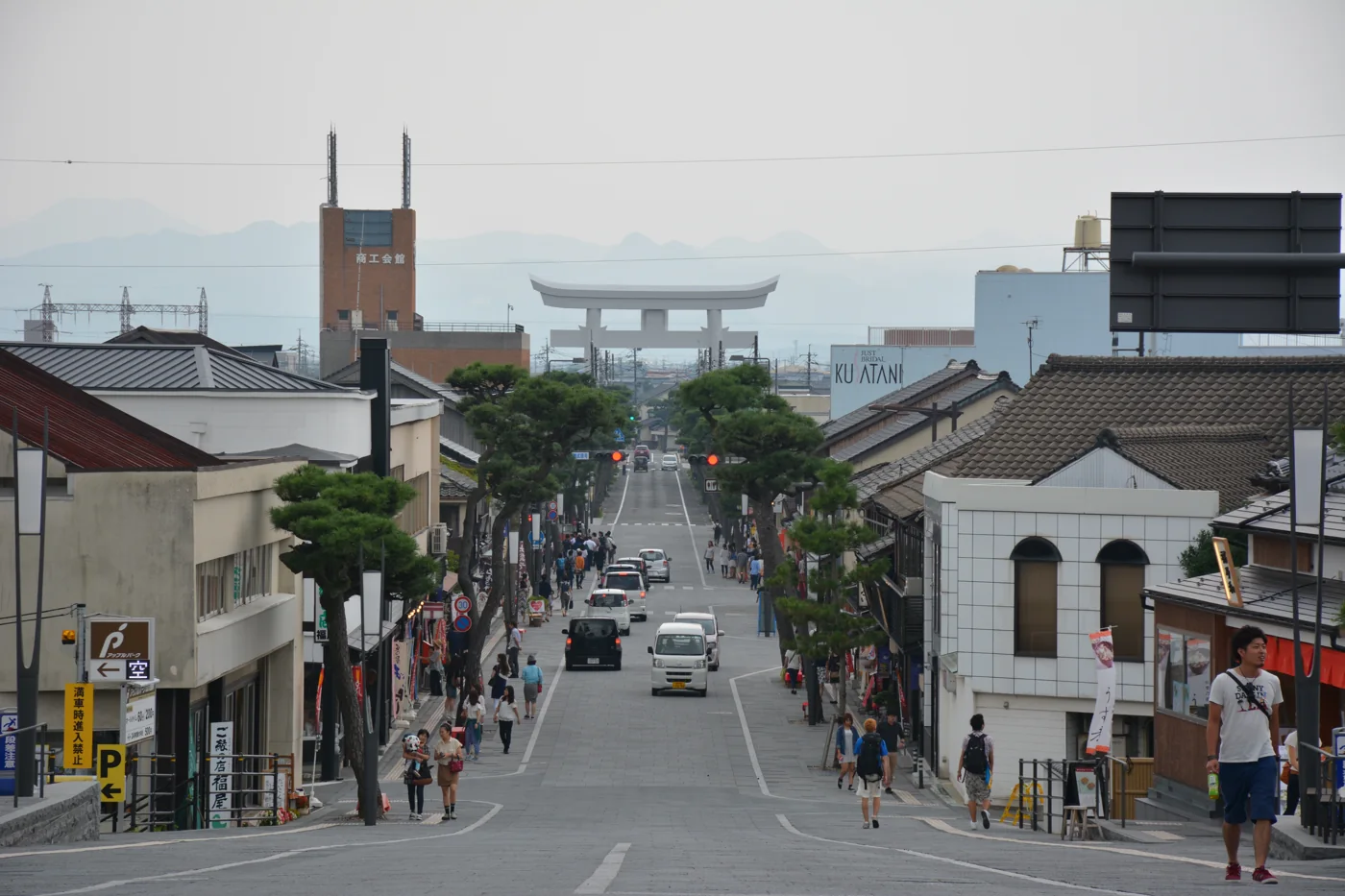
Without a car, Daisenji is the most direct choice for a day trip from Yonago. The scheduled bus drops you below the temple approach. Explore just the approach and main hall, or follow the natural stone path to Ogamiyama Shrine Okunomiya and add Kinmon if you have the energy. Autumn leaves line the walk, with temples, shrine buildings and forest along the way. This suits visitors happy to walk slopes slowly and spend half a day in one area. After getting off, you do not need to cross the mountain for another form of transport, and you return to the same bus stop.
For Daisen's south face and a broad sweep of beech forest, Kagikake Pass fits better. The viewpoint is beside a mountain road on the Kofu Town side; once parked, you can reach the viewing area. It needs less sustained walking, but requires a car or transport arranged in advance. For companions who cannot keep climbing stone steps but can get in and out of a car and stand briefly, it is usually more suitable than pushing on to Okunomiya. Visitors drawn to buildings, Jizo statues and approach details may prefer longer at Daisenji.
Daisenji bus stop is below the temple and shrine approaches on the northern foothills, while Kagikake Pass is on the road around the southern side. On a scheduled-bus day, focus on the main hall, Okunomiya and Kinmon. To see both sides in one day, arrange a vehicle that can connect them. Climbing Misen requires separate fitness, equipment and hiking time; for autumn viewing in the foothills, choose between the temples, shrine and forest.
Choose Daisenji's main hall, Ogamiyama Shrine Okunomiya and Kinmon by walking ability, or drive to Kagikake Pass for the south face. Covers Yonago buses, Amidado opening days, Kidani Stream and day trips or overnight stays.
Autumn colours follow the altitude; Autumn Colours Weeks follow event dates
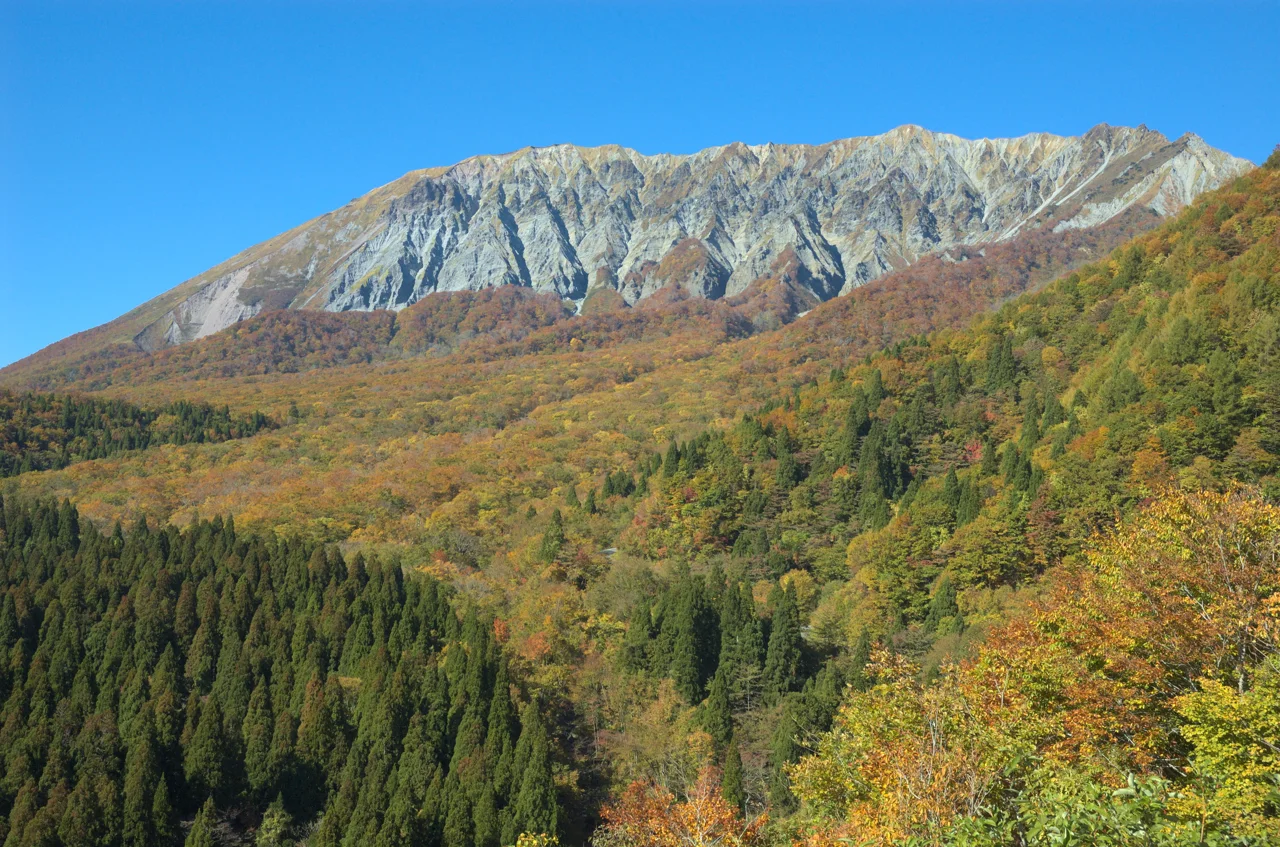
Daisen's autumn colour moves down the slopes. The Ministry of the Environment identifies beech forest as a key feature of this mountain area. A viewpoint takes in treetops at different heights, so green, yellow and brown can appear together. On Daisenji's approach, trees stand beside and above you, with colour remaining on the ground after leaves fall. For wide forest photographs, recent views from the same angle at Kagikake Pass are useful. For a slow approach walk, look at Daisenji and Okunomiya photographs published by the Daisen Museum of Nature and History.
Daisen's tourism bureau gives late October to early November as the main usual autumn colour period. Kofu Town's Kagikake Pass guide distinguishes the multicoloured mountain scene of late October from late autumn in mid-November. Both describe seasonal change. Choose the setting you prefer: earlier visits offer more layers of forest colour; later visits give tree shapes, fallen leaves and rock faces greater presence. Book within the autumn window, then use recent local photographs near departure to choose your route, rather than chasing a fixed 'best day'.
The announced dates for Daisen Autumn Colours Weeks in 2026 are 24 October to 15 November. Shops hold events and the temple offers prayers during the organiser's chosen period, while leaf colour develops independently. The children's prayer ceremonies on 1 and 8 November are for preschool children aged four to six, require advance registration and cost ¥5,000 per child. Other visitors can walk the approach on the same days. Participating families need extra time for dressing, gathering and photographs, so should not plan buses at an ordinary sightseeing pace.
The Daisen tourism bureau's autumn and winter footage collection shows autumn forest, rock faces and snowy scenery.
Outbound from Yonago: reach Daisenji, not a service ending at Hongu
From Yonago Station, look for a Daisenji-bound Nihon Kotsu service on the Hongu/Daisen Line via the sightseeing road. As of 27 October 2026, the operator's current Yonago-area page still linked to the timetable revised on 1 September 2024. The 07:20 departure, arriving Daisenji at 08:12, and the 09:30 departure, arriving at 10:22, are useful for autumn day trips. The first gives more time for forest walks; the second suits breakfast in Yonago followed by the main hall and Okunomiya.
The same timetable also lists outbound journeys at 14:00–14:52, 16:50–17:45 and 18:10–19:05. The 14:00 service suits a short visit; the later two are better for overnight stays. Autumn admission donation hours at Daisenji's main hall and opening hours at Reihokaku are 09:00–16:00, so paid temple visits have ended by an arrival after 17:00. For a full day of autumn scenery, leaving in the morning is more useful than adding a late-afternoon stop.
The easy mistake is the 15:20 route 56 departure from Yonago: it ends at Hongu, with a blank in the Daisenji column below. Daisenji services are route 57. The 11:25 departure from Hoki-Daisen Station on the table also ends at Hongu; 'Daisen' in the station name does not make it direct to the temple approach. Read the entire column down to Daisenji and choose a service with an arrival time there. The Nihon Kotsu Yonago-area page provides the route map, timetables in both directions and fares. Save both outbound and return timetables before leaving so you do not need to find them again on the mountain.
Choose the 15:20 return first, then fit in lunch and walking
In the same timetable version, the 15:20 from Daisenji, reaching Yonago at 16:12, makes a useful end to an autumn day trip. Earlier returns are 08:40–09:32 and 10:45–11:37: the first suits departure after a night on the mountain, and the second a short morning walk. Later services run 18:10–19:04 and 19:10–19:58. The 19:10 only permits boarding at Daisenji; intermediate stops are set-down only. Visitors staying or spending time away from the approach cannot use it to board elsewhere. The 07:10 early service is separately marked as not running on Saturdays, Sundays, national holidays, Obon and specified New Year dates.
Taking the 09:30 uphill and 15:20 back gives autumn visitors about five hours on the mountain. After finding your way, a seated meal and returning to wait for the bus, allow two to three hours for the main hall, Okunomiya and one short detour. If lunch takes longer, omit the long forest circuit. Missing the 15:20 leaves almost three hours until 18:10, affecting dinner, onward trains and waiting after dark. Choose a late bus deliberately if you want, but finish daytime walks while there is enough light.
The current fare table lists ¥730 adult single from Yonago Station to Daisenji, or ¥1,460 for two singles. Add the ¥300 adult Daisenji donation for a basic transport-and-temple total of ¥1,760, before food. The bus information says only ¥1,000 notes can be changed on board. Carry small cash to make getting off easier. For an express train or dinner reservation after returning to Yonago, allow transfer time and road-delay margin after 16:12. The bus uses ordinary roads, and the timetable explicitly notes possible traffic delays.
After Daisenji bus stop: read the terrain before climbing
Daisenji bus stop, the Daisen National Park Centre and the Bakuroza area form the starting point for walks. Identify your return boarding point first, then organise your coat, water and belongings. The approach climbs past shops, restaurants and temple entrances. Beyond the main cluster of shops, surfaces become natural stone, forest paths and steps. Plan rests and food where you will pass again on the return, making it easier to shorten the route by walking ability without hauling large luggage uphill while looking for a place to stop.
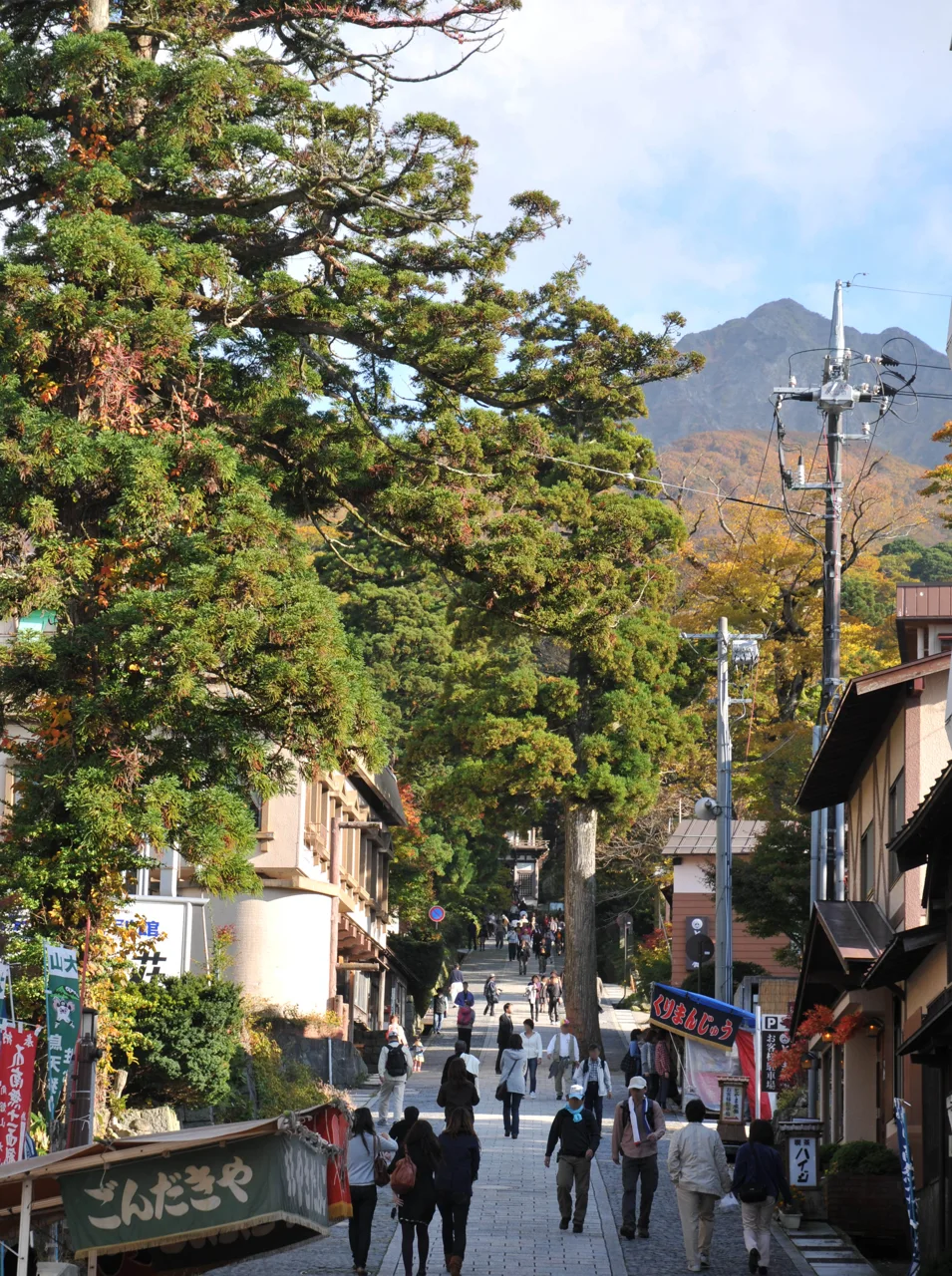
The Daisen Museum of Nature and History is in this entrance area. In autumn it opens 09:00–17:00, admission is free, and it generally opens apart from the year-end and New Year period. Photographs, specimens and exhibits explain Daisen's formation, plants, animals and religious traditions. On a first visit, seeing the mountain's different sides before looking for rock faces and forest outdoors helps explain why the approach and Kagikake Pass look so different. During a brief shower, see the exhibits first and decide the length of your main-hall walk when the rain eases.
Families can use the toilets and adjust children's clothing in the entrance area before climbing. Groups with different walking speeds can divide their time between the museum displays and approach, agreeing to meet before returning to the museum. If tired on the descent, sit down in the entrance area and leave a comfortable margin for the bus.
Daisenji main hall and Reihokaku: one donation, two visiting paces
Daisenji's main hall is above the approach, reached by stone steps. From below, you first see the entrance and steps, then the space in front of the hall. For leaves and buildings in one view, stop where you do not obstruct passage rather than rushing all the way to the shrine before looking around. The sacred ox statue, trees and temple layout in front of the hall give even a short visit substance. If your companions do not want more stone paths, the main hall followed by a meal on the approach and a return downhill makes a complete day trip.
The temple's current visitor notice lists admission donations from 09:00 to 16:00, 1 April to 30 November: ¥300 for adults and ¥200 for children, including entry to the Reihokaku treasure museum. Reihokaku closes from 1 December to 31 March. In autumn, visit it during the first part of your time on the mountain. An August 2026 notice abolished the former group discount, so budget for groups using the current rules.
The treasure museum calls for a different kind of attention. If Buddhist sculpture and temple history interest you, visit the main hall first and exchange some outdoor walking for museum time. If forest is your priority, save your energy for the approach. Daisenji rebuilt its main hall in 1951 after a fire in 1928; the mountain also retains Amidado Hall and related cultural properties. Seeing where the buildings stand before reading the displays provides more context than treating the main hall, Reihokaku and Amidado as three exterior photographs. They have different opening arrangements, with separate dates and a donation for entry inside Amidado.
Ogamiyama Shrine Okunomiya: 700 metres of natural stone and a final staircase
Turning from near Daisenji's entrance onto the Ogamiyama Shrine Okunomiya approach brings you to one of the northern foothills' most distinctive walks. The natural stone path is about 700 metres long, between cedars and seasonal leaves, with Jizo figures, stone inscriptions and torii gates. That distance covers one stretch of approach; add the walk from the bus stop and the descent back. Assess the whole return route for a family. Someone comfortable with 700 metres on level ground may still slow on uneven stones and the final steps.
The shrine's official approach guide divides the walk into the entrance, middle section, bronze torii, purification basin, shrine gate and large staircase, before the shrine buildings. Use this sequence to judge progress. If someone's ankles hurt in the middle section, rest in a safe wide place and turn back; reaching the shrine gate still leaves steps ahead. Wear shoes with gripping soles and a stable heel, and keep hands free to steady yourself or use walking poles. Smooth-soled shoes chosen for photographs are less suitable. Uneven stones can tire knees more on the descent, so allow a generous return time.
Ogamiyama Shrine also has a main shrine lower down. For the upper buildings, set navigation to 'Ogamiyama Shrine Okunomiya, Daisen Town'. Okunomiya is known for its gongen-zukuri architecture, and the Ministry of the Environment lists the stone approach as a key feature. See the buildings and surrounding trees on arrival; an autumn walk need not continue onto higher hiking paths. The temple and shrine are neighbours, so follow each site's worship practices and avoid photographing people at prayer. During ceremonies or access controls, use the routes open on site.
Kinmon and the north face: leave time to return to the main approach
A branch off the Okunomiya approach leads to Kinmon. The Ministry of the Environment describes a sacred place where rock walls on both sides resemble a shrine gate, framing Daisen's north face. This differs from the distant south-face view at Kagikake Pass: valley and rocks come first, then the mountain beyond, with forest colour on either side. If you want mountain views without driving to the south, make Kinmon your main viewpoint for the northern foothills day and leave the remaining time for the main hall and approach.
At the Kinmon junction, inspect the open route and surface before entering. Leaving the main approach means returning to it to continue to Okunomiya or descend. A short branch on a phone map can take longer because of photography and changes in level. Let those who want the rock-face view take the short walk while others wait in a wide place clear of worshippers, rather than having everyone organise cameras in a narrow section. Families with wheelchairs or pushchairs can leave this branch to walking members, with a companion staying on a suitable main route.
The boundary between rocks, riverbed and wet leaves is not a suitable place to seek a lower camera angle. Stay on open paths and within designated areas, and return to the main approach if water rises or closure signs appear. If continuing to Okunomiya after the north-face view, put your camera away before walking the stones. If lunch or the end of your visit is approaching, returning from Kinmon to descend by the approach works well too.
The Amidado forest detour and interior opening days
Amidado sits on a different forest route. The Ministry of the Environment's foothill hiking course goes from Bakuroza towards Daisenji Bridge, then to Amidado and on to the main hall. This adds woodland away from the main approach and suits visitors wanting more forest who are happy to walk further. For just the main hall and Okunomiya, a return along the main approach is easier to manage. Mark Amidado separately on the map to understand its forest location before reaching the main hall and finding you need another detour.
The temple's April 2026 notice lists public access inside Amidado on the 18th of each month through November, from 10:00 to 15:00, with a ¥500 donation per person. Weather may shorten or cancel opening. To see inside, make the 18th a fixed condition and fit other walks around the opening hours. Passing the exterior on a normal autumn forest walk is a different plan from entering to see cultural properties. The notice says phone calls may go unanswered when staff are away. For opening dates and visits, email [email protected] or fax 0859-52-2728 and wait for the temple's reply.
The Amidado forest route suits looking at tree shapes, fallen leaves and temple remains. Families can take a short out-and-back walk, while hikers continue to the main hall. Photograph the building and leaves from existing paths, leaving plants, moss and temple objects in place.
A short approach walk or a 7.2 km circuit
The main hall alone, main hall plus Okunomiya, and both plus Kinmon all use the same bus stop for the return. The main hall option focuses on temple buildings and the approach. Okunomiya adds the natural stone path and shrine buildings; Kinmon adds the valley and north-face view.
The Ministry of the Environment also lists the 'Daisen Foothill Hiking Course', a 7.2 km route with a stated walking time of about two hours. It passes Amidado, the main hall, Kinmon and Okunomiya, then loops through Nakanohara Grassland to Bakuroza. That is the walking time for the full hiking route; displays, worship, food and waiting for companions add to the visit. For regular trail walkers it links temples, shrine and beech forest in a circuit. For relaxed autumn viewing, the return approach walk fits better.
Decide on the long circuit using three practical points: your arrival time, how the slowest companion feels after stone steps, and how much time remains for food before the return bus. If leaving Yonago at 09:30 and wanting slow visits and photographs, you do not need to fit 7.2 km before the 15:20 return. Arriving shortly after 08:00 with water and walking equipment gives more room to make the long circuit your main plan. In worsening weather, a short route back to the same starting point is easier to finish than a long loop through unfamiliar forest.
Kagikake Pass: south-face views and just 15 parking spaces
Kagikake Pass is in Kagikake, Okawara, Kofu Town, at about 910 metres according to the town office. Beech forest spreads across the foreground, with the exposed rock layers of Daisen's south face behind. The rise from forest to rock makes it a good place to see the mountain's overall shape. It suits a brief scenic stop or photographers willing to wait for clouds to move. In low cloud, enjoy nearer forest colour; if you want the whole rock face, choose a day with clear visibility.
Kofu Town's official guide lists 15 free parking spaces and toilets. Space is limited, and autumn traffic affects whether you can stop. Passengers should wait until the driver has parked legally before getting out; the mountain roadside is not a casual photo stop. If full, continue according to road signs and let the driver concentrate on bends and traffic. For a hired car with driver, agree the viewpoint and stopping arrangements in advance rather than asking the driver to wait somewhere unsafe until photographs are finished.
The viewing area is outdoors in the mountains, where wind and waiting affect comfort. Visitors sensitive to cold or unable to stand long can put coats on before a short look, then rest in the car. Keep the carriageway clear and place tripods only where there is room, so other visitors can take turns at the front.
Driving between both sides: put your main interest first
The Ministry of the Environment describes the Daisen park road through Kagikake Pass as a drive through beech forest, with about 35 minutes from Yonago Station to the pass. This is a broad driving guide; add time for peak autumn traffic and parking. Daisenji on the north and Kagikake Pass on the south can share a day, but you drive around the mountain and park separately at each end. Choose either the approach or viewpoint as your priority and give the other a shorter visit, rather than filling both with a complete half-day plan.
If Daisenji is the main aim, park around Bakuroza in the morning, walk to the main hall and Okunomiya, then follow open roads to Kagikake Pass after lunch. If light or visibility has deteriorated on arrival, shorten the stop and descend earlier. For south-face photography, reverse the order: Kagikake Pass first, then lunch and the main hall on the north. Both plans depend on that day's road openings and parking instructions. Before entering the mountains, use Tottori Prefecture road information and town-office links to check your sections. If restricted, use a confirmed open route or keep to one side.
A day's car hire costs more than the rental: collection, return, fuel, parking and everyone getting in and out take time. Searching through luggage can extend a short stop too. If all four companions want a slow main-hall and Okunomiya walk, the bus may already meet the need. If someone cannot manage stone paths and everyone wants the south face, a vehicle has a clear benefit. Choose transport by the actual viewpoint you want to reach, and arrange Kagikake Pass travel separately.
Kidani Stream: allow another hour on the south side
For extra walking near Kagikake Pass, choose Kidani Stream. The Ministry of the Environment gives about five minutes' driving between them, while the Kofu Town tourism association's trail map lists a full walk of about one kilometre and one hour. This is a setting of water, trees and damp woodland, different from looking at distant mountains from the pass. If you still have energy after the south face and are willing to put on suitable shoes, add some forest observation. With only a spare ten or fifteen minutes, staying at the original viewpoint is more relaxed.
The town's trail map marks the entrance, large trees, pond, weir and slippery spots. Stay on existing paths, slow down over wet stones and roots, accompany children and avoid stepping onto mossy rocks to get nearer the water. Stream photographers can stay in one place a long time, so agree a turn-back time with companions. For someone who does not want to stand long, take a short walk from the entrance and return; the full kilometre need not be everyone's task. Stow cameras when necessary to keep hands free for balance.
For plants, streams and forest, arrange an Oku-Daisen guide through the Kofu Town tourism association. The official process is to submit your preferred date and group size, receive booking confirmation, then meet at the Kidani entrance. Fix the meeting time first and place the Kagikake Pass stop before or after it.
Masumizu Highland: a chairlift for foothill and sea views
The official Masumizu Highland website lists the Sky Lift as 490 metres along the slope, with a 140-metre rise and about eight minutes each way. From the highland you look up at Daisen; after the lift ride, the view turns out over the foothills towards the Sea of Japan. Autumn pampas grass is part of the scenery too. The chairlift adds a change in viewing height for companions unable to walk far, but boarding, alighting and moving around still need to suit their abilities.
As of October 2026, the official return Sky Lift fare is ¥1,500 for senior-high-school age and above, ¥1,000 from age four through junior-high-school age, and free for ages zero to three. From September 2026 it is scheduled to operate daily in principle until 23 November, with possible suspension in bad weather. The general page lists 09:00–17:00. In notable wind or rain, check the operator's announcement and keep the ride replaceable. Fares, season and operating notices come from the highland operator.
Secure small loose items before boarding and put your coat on while still on the ground. At about eight minutes each way, the two rides alone take 16 minutes. Queues and terrace time make the actual visit longer. If also driving to Kagikake Pass, include highland meals and photography as well as driving time.
Taking a bicycle uphill: a separate one-way bus by reservation
If you already have a bicycle and want to travel uphill from Daisenguchi Station, see the Nihon Kotsu cycle bus notice. The one-way Daisenguchi Station–Daisenji service runs from 9 April to 30 November 2026 and is suspended from December to March. Each departure takes up to two people and two bicycles. Book through JR West's tabiwa by WESTER; ¥1,200 includes one passenger and one bicycle. Weekday departures from Daisenguchi Station are 10:00, 15:10 and 16:50, with an extra 07:35 on weekends and national holidays.
Bookings open at 10:00 one month before travel and close at 15:00 the previous day; WESTER membership is required. The operator requires passengers to bring their own straps to secure bicycles to handrails or similar points on the bus's right side, and to load and unload them themselves. Bicycles longer than 190 cm cannot travel. Use a sports bicycle and helmet for the descent; the operator specifically advises against taking an ordinary city bicycle downhill. If cancellation, a vehicle change or substitute operation makes bicycle carriage unavailable, the tabiwa reservation ticket is fully refunded.
This service starts at Daisenguchi Station, separate from the ordinary Yonago Station route above. It takes you and your bicycle uphill; you plan your own return. Walking visitors can use the normal service. Before cycling down, check weather, road restrictions and the bicycle's condition. Control your speed on wet autumn surfaces and bends, and stop for views only where you will not obstruct other vehicles.
South-face views without driving: sightseeing taxis
The 2026 Daisen Foothills Sightseeing Taxi announcement offers several set routes: three hours for ¥12,000, four for ¥15,000 and five for ¥18,000. The planned operating period is 25 April 2026 to 31 March 2027, with a limited annual allocation ending once used. Weather conditions, including winter road closures, can affect routes. The announcement lists contact operators separately for Yonago Station, Kaike Onsen, Daisenji and other starting points.
This is an option for a group travelling together to compare. First choose a route that actually includes the places you want, then check starting and finishing points, vehicle type and group-size conditions. For photographs at Kagikake Pass, tell the operator how long you want to stop and ask about that day's roads and whether the itinerary can reach the viewpoint. Calculate the hire cost for your group and include the time needed to reach the starting point by public transport.
To keep a full Daisenji walk, take the bus uphill first and choose a taxi plan starting at Daisenji. If companions have limited mobility, starting in Yonago may remove one transfer. Select the starting point and set route when booking, then agree stops with the operator.
Beside Daisenji bus stop: changing, waiting and family rests
The Daisen National Park Centre is beside Daisenji bus stop. Its ground floor has a bus waiting area, changing rooms and coin lockers; upstairs are a rest space and nursing room. Tourism bureau information lists hours of 08:00–18:30. After arriving from elsewhere, organise rainwear and coats here before taking the approach. The centre also has toilets and, like the nature and history museum, is useful for a visit with children.
For the 19:10 evening bus, the centre's published 18:30 closing time does not cover the entire wait. Plan your late-afternoon rest and meal first. The natural stone approach to Okunomiya and its steps have changes in level. Families with pushchairs can use the centre or Bakuroza as a meeting point when splitting up and choose walking limits by the actual terrain. Before locking luggage away, keep your wallet, phone, tickets and warm clothes with you.
A car-free day: five hours for the main hall, Okunomiya and a meal
Using the 09:30 Yonago departure, 10:22 Daisenji arrival and 15:20 return, first identify the return bus stop and organise yourself in the entrance area before climbing. Visit the main hall in the morning. Leave time for Reihokaku if you want the treasures; if forest interests you more, continue onto Okunomiya's stone path. Return to the approach for lunch around midday, then add a short afternoon walk according to energy before going back to the stop.
If both companions are comfortable walking, add Kinmon before or after Okunomiya and return to the main approach without the long Nakanohara circuit. If an older companion has had enough by the main hall, return together for lunch and visit the nature and history museum in the afternoon. A long restaurant queue can also replace the afternoon branch. A seated meal within the five hours suits most families better than a very brief stop everywhere. For temple art, replace Okunomiya with Reihokaku and the main hall; there is still plenty for the day.
For morning forest, take the 07:20 bus and arrive at 08:12. Walk around the entrance area first and enter paid museums and temple facilities when they open. The extra two hours or more allow the forest route near Amidado, or simply slower photography and brunch. A short visit can use the 10:45 return to Yonago. After Daisen, keeping the afternoon for the city is easier to manage. Adding another mountain autumn spot means a long transfer and loses the simplicity of the bus day.
With a car and older companions: south-face stop and lower approach
When driving with older companions, first ask whether they can manage natural stone paths and large staircases. If short level walks are fine but steps are difficult, make Kagikake Pass's south-face view the main outdoor stop. At Daisenji, stay around the entrance and lower approach, then have a meal. The family sees the same mountain's southern panorama and northern foothill streets with a more manageable physical load. Members wanting Okunomiya can walk separately while a companion stays with those avoiding the climb. Agree a specific meeting time and place.
Rain, low cloud and fallen leaves: change the route and equipment
In light rain on the foothill approach, replace the long circuit with the main hall, Reihokaku and nature and history museum, walking outdoors only where your shoes grip securely. A raincoat leaves hands freer. Pack a coat, gloves and spare socks in waterproof bags. You cool more quickly when taking photographs or waiting for a bus than when walking continuously. Wet natural stones, steps and leaves affect footing, especially downhill; do not rush to recover time at your outbound pace. With ice, snow or local closures, keep to areas open that day.
Low cloud at Kagikake Pass can hide the distant mountain outline. If the complete south face is your reason for visiting, switch to a clearer day or spend the time in northern foothill museums. Avoid the Kidani streamside in rising water, wind and rain, or with trail damage. During thunderstorm, strong-wind or other warnings, adjust outings using Japan Meteorological Agency and local disaster information. If already on the mountain, find a safe building and an available return journey. Follow the road authority's instructions during restrictions rather than seeking an unverified minor-road diversion.
A Misen climb needs a separate hiking plan, equipment and enough daylight. Do not add the summit on impulse because the approach walk went well. The Ministry of the Environment lists Misen, at 1,709 metres, as the summit reachable by the hiking trail. The ridge route to the 1,729-metre highest point, Kengamine, is closed because of collapses. Finish foothill autumn viewing among the temples, shrine and forest, and give hiking another day.
Yonago or the mountain: the difference is the next morning's first journey
For one autumn day with JR travel before and after, accommodation near Yonago Station gives the simplest connection to both buses and lets you leave luggage in the city. Carry only a day bag uphill and collect luggage after returning in the afternoon; stone paths are much easier this way. If you want dinner in the city and no early forest walk, a Yonago day trip is enough. Include the walk from your hotel to the actual bus boarding point and your morning departure time, rather than just checking that the hotel is a few hundred metres from the station.
Staying near Daisenji's approach removes the rush downhill in the evening and allows an earlier walk the next day. When booking, connect the uphill walk from Daisenji bus stop, the inn entrance and dinner starting time. The 16:50 or 18:10 from Yonago arrives late, so a dinner-inclusive plan must fit the inn's reception arrangements. Without a car, Kagikake Pass still needs separate transport the next day. A night at Daisenji changes the time available on the northern side; it does not solve southern access.
If driving with the south face and Kidani as priorities, compare a Kofu-side base with Yonago according to the following day's direction to reduce repeated mountain driving. Check parking, meals, check-in and check-out rules, and book for the actual number of children and older companions rather than choosing only for a Daisen window view. If the trip also involves long-distance driving, put the forest walk on arrival day or the following morning and set a clear departure time. The driver can then eat and rest before continuing.
A few useful answers
Can I see Daisen's autumn colours without a car?
Yes. Take Nihon Kotsu's Hongu/Daisen Line from Yonago Station to Daisenji for the main hall, Ogamiyama Shrine Okunomiya and Kinmon. Arrange separate transport for Kagikake Pass on the southern side.
Which involves less walking, Daisenji or Kagikake Pass?
Kagikake Pass is a roadside viewpoint with a short walk after parking to see the south face. At Daisenji, the climb starts from the bus stop, with about 700 metres of natural stone approach and steps to Okunomiya.
How much does a Daisenji visit cost?
The current donation is ¥300 for adults or ¥200 for children, including Reihokaku. Reihokaku's autumn opening runs through 30 November. Public access inside Amidado has separate dates and a ¥500 donation.
Can I add Kagikake Pass as a walk from Daisenji?
A bus day trip is easiest to arrange within the northern temple and shrine area. Kagikake Pass is on the southern road; connect the two sides by car or transport arranged in advance.
When are the 2026 Daisen Autumn Colours Weeks?
The organiser announces 24 October to 15 November 2026. Use recent photographs from the Daisen Museum of Nature and History and Kofu Town for actual leaf colour.
Official information and references
Sources used in this guide.
- Nihon Kotsu: Yonago routes, both-direction timetables and fares
- Nihon Kotsu: outbound Hongu/Daisen Line timetable, revised 1 September 2024
- Nihon Kotsu: Hongu/Daisen Line timetable towards Yonago, revised 1 September 2024
- Nihon Kotsu: Daisen Line fares
- Daisenji: current visitor notice
- Daisenji: group discount abolition and Amidado opening notices
- Ogamiyama Shrine: Okunomiya and approach information
- Ministry of the Environment: Daisen foothill hiking course
- Ministry of the Environment: Daisenji and Ogamiyama Shrine
- Ministry of the Environment: Kagikake Pass
- Kofu Town: Kagikake Pass and parking
- Kofu Town: Kidani Stream, walking map and guides
- Daisen Museum of Nature and History: museum, opening hours and seasons
- Daisen tourism bureau: Daisen Autumn Colours Weeks 2026
- Daisen tourism bureau: official autumn, winter and other videos
- Ministry of the Environment: Daisen-Oki National Park use policy and summit routes
- Kofu Town: road restrictions
- Japan Meteorological Agency: weather and disaster information
- Ogamiyama Shrine: on-site Okunomiya approach guide
- Masumizu Highland: Sky Lift fares and 2026 operating notices
- Nihon Kotsu: 2026 Daisen cycle bus
- Daisen tourism bureau: 2026 sightseeing taxi plans
- Daisen tourism bureau: Daisen National Park Centre