Stay one night in Matsue before visiting Izumo Taisha. Plan JR and Ichibata trains, the Kawato change, accommodation and luggage, with 2026 fares, the Horikawa suspension and a walking alternative.
- Region & Focus
- Chugoku and ShikokuItinerary planning
- Reading Scope
- 30 min read · 16 chapters · 4 Q&As
- Official Verification
- 22 official sources checkedUpdated 8 November 2026
- Key Topics
- ItinerariesRail travelFood
Chapter Route Map (tap any stop)
- Give Matsue one night, then visit Izumo on day two
- Save the station names: JR and Ichibata use opposite sides of the lake
- Start day one at Matsue Castle: tickets, the keep and current closures
- When Horikawa boats resume, board at Otemae for the simplest route
- Walk Shiomi Nawate if boats are suspended or low bridges are unsuitable
- Choose a Lake Shinji sunset spot before arranging dinner
- Have clams in Matsue and save a soba meal for Izumo
- Stay by JR Matsue Station for easier luggage and onward trains
- Choose the north-east hot-spring district, or add a second night in Izumo
- Day two by Ichibata: Kawato changes and the ¥1,800 day pass
- Day two by JR: move luggage towards your departure point
- Walk Izumo Taisha’s approach first and allow time for Kaguraden
- Warigo, kamaage and Shinmon-dori: keep a second lunch option
- Inasa Beach is optional: allow for the walk back too
- Budget separately for the castle, boat and intercity tickets
- Build the two-day timetable around your departure, then add extras
- Quick Q&A
Trains connect Matsue and Izumo, but splitting each day between both cities makes the trip harder. Stay in Matsue for one night, explore the castle town and lakeshore, then visit Izumo Taisha the next day. Decide where your luggage will go before choosing Ichibata Railway or JR.
Give Matsue one night, then visit Izumo on day two
With two days and no car, protect one evening in Matsue. Visit Matsue Castle and the castle town on day one, watch the light change beside the lake, and stay overnight. Sort out your luggage on day two before heading to Izumo Taisha. This means crossing between the cities only once. The castle, boat trip and shrine each get their own time, and dinner need not become a hurried boxed meal before a train. If you arrive after midday, drop one indoor attraction and keep the castle and lakeshore. Visit Izumo Taisha the following morning rather than arriving in the afternoon and rushing for the last return service.
This plan suits travellers arriving and leaving along the Sanin railway corridor who want both an old castle and an introduction to Izumo worship. Long-distance journeys on both days reduce the time available. Arriving in Matsue before midday on day one and leaving Izumoshi in the afternoon on day two are more useful booking conditions than simply calling it a two-day, one-night trip. If you arrive on the first evening and must leave at midday the next day, choose either Matsue or Izumo. The gap between those two train journeys cannot hold the full route through both cities.
As of 27 October 2026, leave the Horikawa boat trip out of the itinerary. The operator announced a boatman's injury the previous day, suspended all services on the 27th, and said later operations would be announced once decided. The sections below retain the normal ticket and boarding arrangements and give a complete route on foot. For a trip in the near future, read the Horikawa operating notice for your travel day before adding a boat trip.
Stay one night in Matsue before visiting Izumo Taisha. Plan JR and Ichibata trains, the Kawato change, accommodation and luggage, with 2026 fares, the Horikawa suspension and a walking alternative.
Save the station names: JR and Ichibata use opposite sides of the lake
Matsue Station is a JR station. Matsue Shinjiko Onsen Station, signed 松江しんじ湖温泉駅, is a separate Ichibata Railway station. Save Matsue Shinjiko Onsen Station as a separate destination. They are in different parts of the city, so allow time to travel between them. Treating the Matsue Station shown on a hotel map as the Ichibata departure point will also distort your departure time the next morning. Search both full station names when booking, and see exactly where you will have to take your luggage.
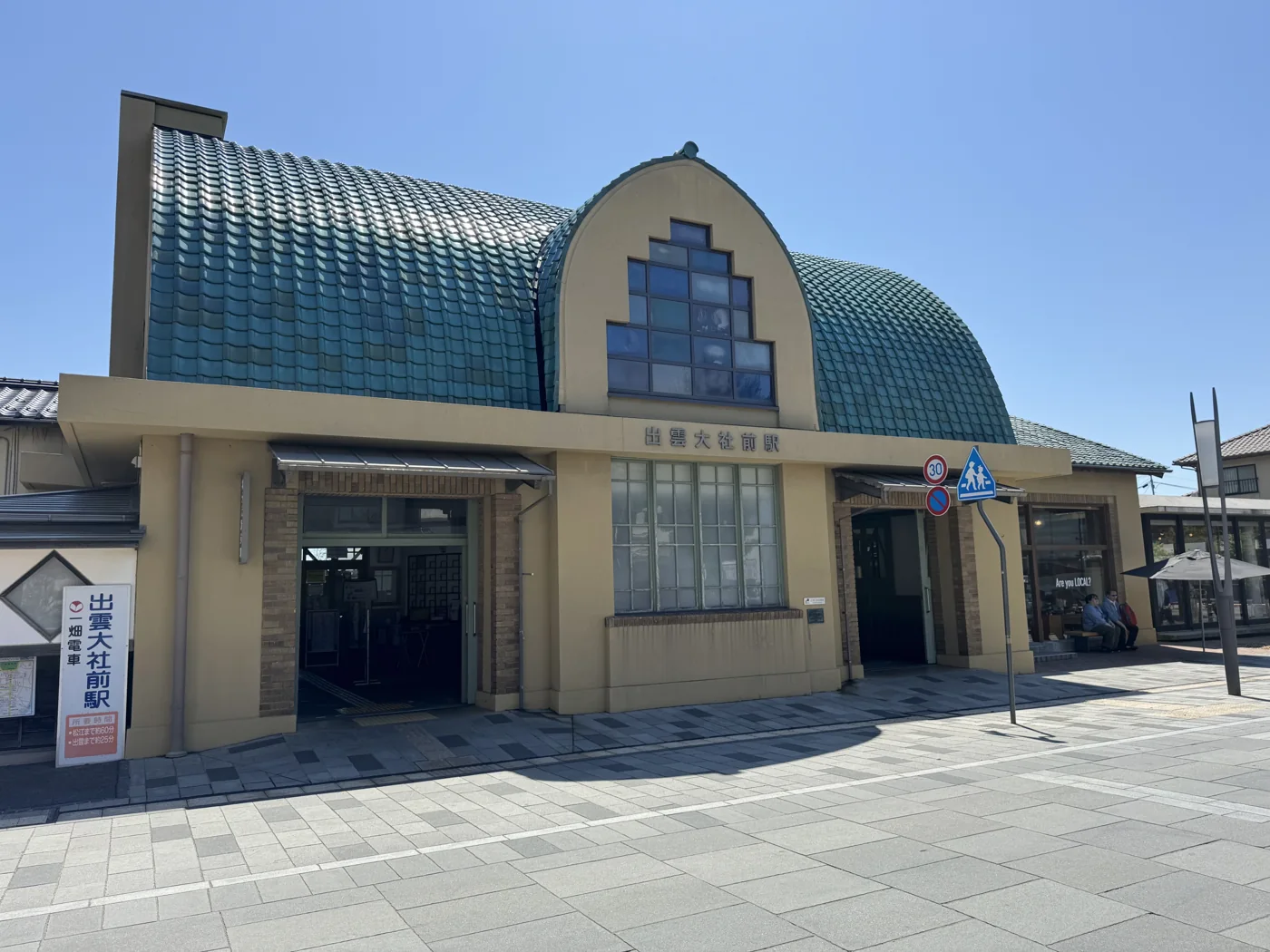
The Izumo side has a similar trap. JR Izumoshi Station handles onward long-distance rail journeys; nearby Dentetsu-Izumoshi Station, signed 電鉄出雲市駅, belongs to Ichibata Railway. The station near the shrine is Izumo Taisha-mae, signed 出雲大社前駅, around Shinmon-dori, with a further walk to the shrine. Getting off at Izumoshi does not put you at the shrine entrance. Continue by bus or Ichibata train. Searching only for Izumo can produce directions to the city centre.
Ichibata's Kita-Matsue Line follows the north side of Lake Shinji between Matsue Shinjiko Onsen and Dentetsu-Izumoshi. Its Taisha Line branches at Kawato towards Izumo Taisha-mae. Many journeys require a change at Kawato, although some trains run through. JR's Sanin Main Line follows the south shore to Izumoshi, where you continue towards the shrine. Both routes work. Choose according to your hotel, luggage and direction of departure from Sanin. Treat them as separate routes rather than trying to combine a JR pass and Ichibata into one ticket.
| Name | Network and location | Role in a two-day trip |
|---|---|---|
| Matsue Station | JR, south side of central Matsue | Long-distance arrival, station hotels and luggage base |
| Matsue Shinjiko Onsen Station | Ichibata Railway, north-east lakeside district | Starting point for Ichibata trains towards the shrine |
| Izumoshi / Dentetsu-Izumoshi stations | Neighbouring stations on JR and Ichibata respectively | Onward long-distance trains or connections to the shrine |
| Izumo Taisha-mae Station | Ichibata Railway Taisha Line | Walk along Shinmon-dori to the shrine |
Start day one at Matsue Castle: tickets, the keep and current closures
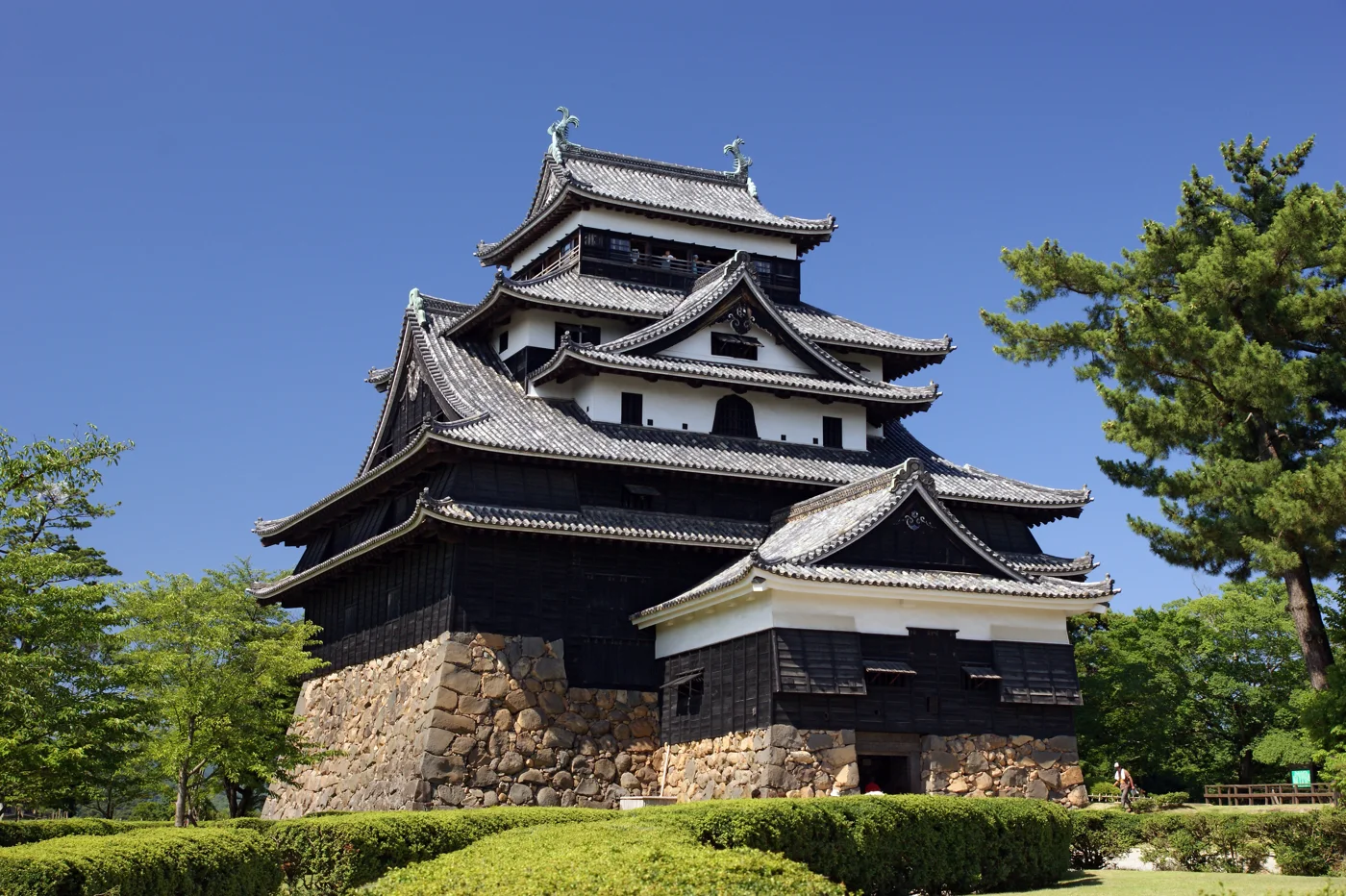
Arrive early, leave your luggage, then head to the castle district. From JR Matsue Station, take the Matsue Lake Line bus towards the Otemae area of Matsue Castle, a National Treasure. This is an easy entrance to identify. From Ichibata's Matsue Shinjiko Onsen Station, Shimane's tourism information gives a walk of about 20 minutes. It is walkable, but dragging luggage and then tackling castle steps uses energy poorly. Allow a morning for the castle and its surroundings, with lunch on the same side of town to avoid crossing back and forth.
From 1 July 2026, individual adult admission to Matsue Castle keep is ¥1,200. Primary and junior high school pupils enter free. The Honmaru grounds are free, with their own gate times; entering the keep requires a separate ticket. From April to September the keep opens 08:30–18:00, with admission ending at 17:30. From October to March it opens 08:30–17:00, with admission ending at 16:30. In the cooler half of the year, if you only start exploring the castle town after 15:00, enter the keep before stopping for a snack. The castle's prices and opening times also list two- and three-attraction combined tickets. Buy the keep-only ticket if that is all you intend to visit, rather than adding museums just to use a pass.
Remove your shoes inside and put them in a shoe bag. Visiting the keep involves going up and down stairs inside a timber building. Shoes that slip on and off and a small rucksack that leaves your hands free are more useful than formal clothing. Older companions or anyone with sore knees can focus on the stone walls, exterior and Honmaru grounds. Agree to meet outside while the others climb; the whole group need not push to the top.
According to the castle safety notice dated 21 October, the route between Kita-no-mon and Mizu-no-te-mon remains closed, with no completion date for safety work. Enter and leave through Otemae, then use open roads towards Shiomi Nawate. Do not use the northern gates as a shortcut across the park. The castle also announced major repairs planned from June 2027 to December 2030. For travel during that period, keep the repair works notice with your planning information and arrange a keep visit around the actual access available.
When Horikawa boats resume, board at Otemae for the simplest route
Under normal operations, a Horikawa boat circuit around the castle waterways takes about 50 minutes. It is different from a Lake Shinji cruise: Horikawa covers moats, bridges and the castle town; lake cruises face the open water. Add Horikawa if you want to see the streets around Matsue Castle from the water. For a sunset cruise on the lake, check Lake Shinji services separately and keep the fares and meeting points distinct.
With the castle and lunch together, Otemae Hiroba is the easiest boarding point. The normal official service intervals are 15–20 minutes at Otemae and 20–30 minutes at Fureai Hiroba, plus waiting time. Karakoro Hiroba has no scheduled departures originating there. You can board only when a boat arriving from another landing has space. This matters without a car: if you have just one fixed afternoon slot, walking to Otemae is more dependable than hoping for a spare place at Karakoro. The operator's fares and timetable explain the boarding rules.
An individual one-day boat ticket costs ¥2,000 for adults, ¥1,600 for junior and senior high school pupils, and ¥1,000 for primary school pupils. Preschool children cost ¥500, with one travelling free per adult. These age bands differ from the castle's: junior high school pupils enter the keep free but pay the middle category on the boat. Adults pay for the full day ticket on their first trip; this is not a city service priced by the stop.
The normal seasonal timetable has first and last departures at 09:00 and 17:00 from March to September, and 09:00 and 16:00 from October to February. At ordinary landings, ticket acceptance ends 10 minutes before closing; at Karakoro, it ends 20 minutes before. After buying a ticket, return to the waiting room five minutes before departure. These are cut-off times. Allow about 90 minutes in the afternoon for the walk to the landing, tickets, waiting and the full circuit. While services remain suspended, use the next section's walking route and keep the lakeside evening.
The official Horikawa video shows views from the boat and scenery along the banks, offering a preview of the difference between touring by water and walking ashore.
Walk Shiomi Nawate if boats are suspended or low bridges are unsuitable
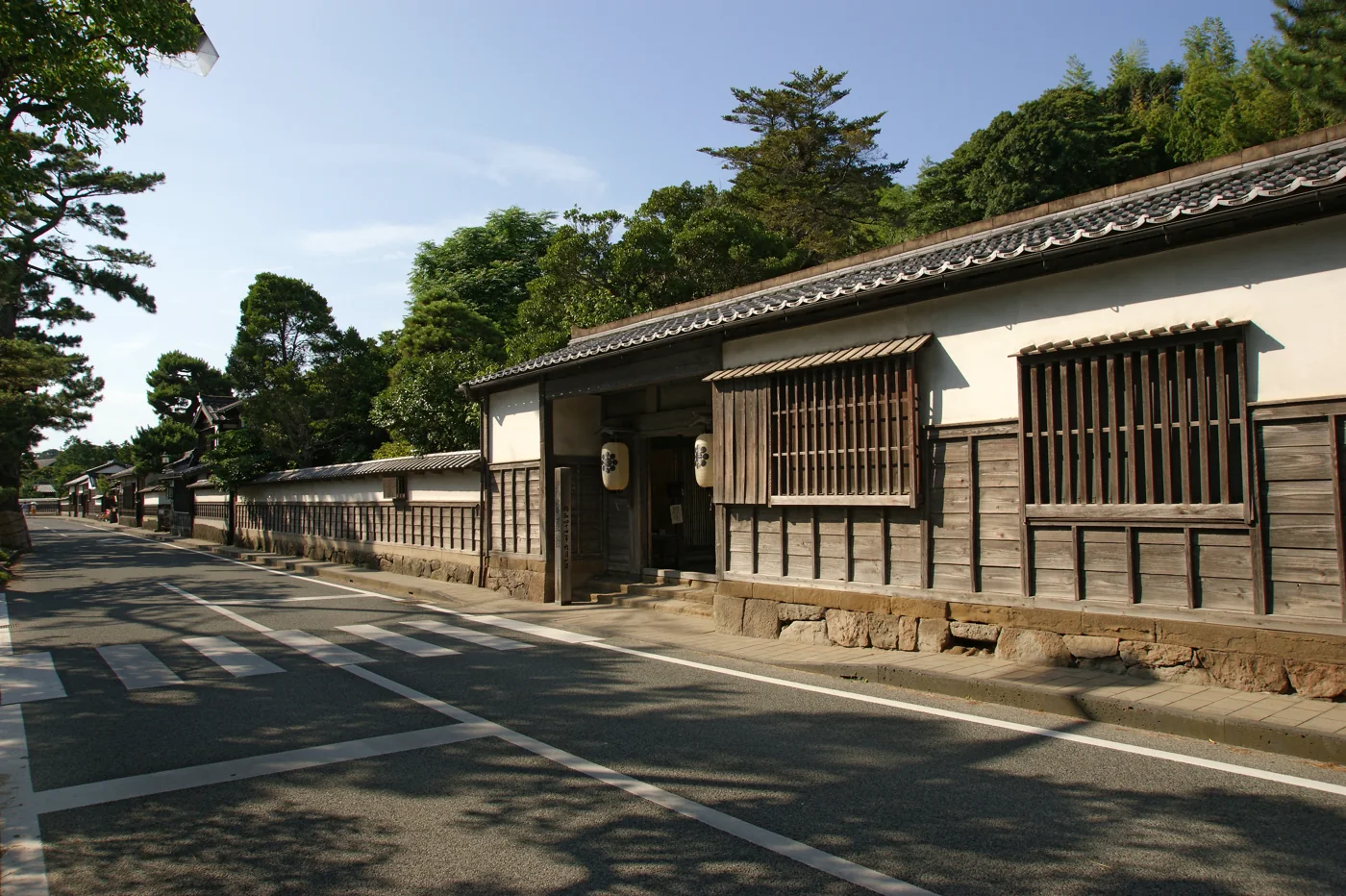
For an afternoon without a boat, leave the castle at Otemae and follow public roads outside the moat towards Shiomi Nawate. Avoid the closed northern gate and north-eastern paths within the castle grounds, then return towards Kyomise and Karakoro for a rest. Water and old streets remain central to Matsue. Walking lets you stop at stone walls, tree shadows and bridges at your own pace. Give the time saved from the boat trip to lunch and tea rather than searching for a distant replacement. Shiomi Nawate adjoins the castle and suits a slow walk, not a museum schedule calculated backwards from navigation estimates. If Lafcadio Hearn interests you, choose either his memorial museum or former residence for a longer visit. If the castle and sunset matter more, leave both for another trip. Matcha and wagashi after lunch give feet a rest after the morning's stairs. Choose a shop with seats and in your direction of travel instead of making the whole group double back.
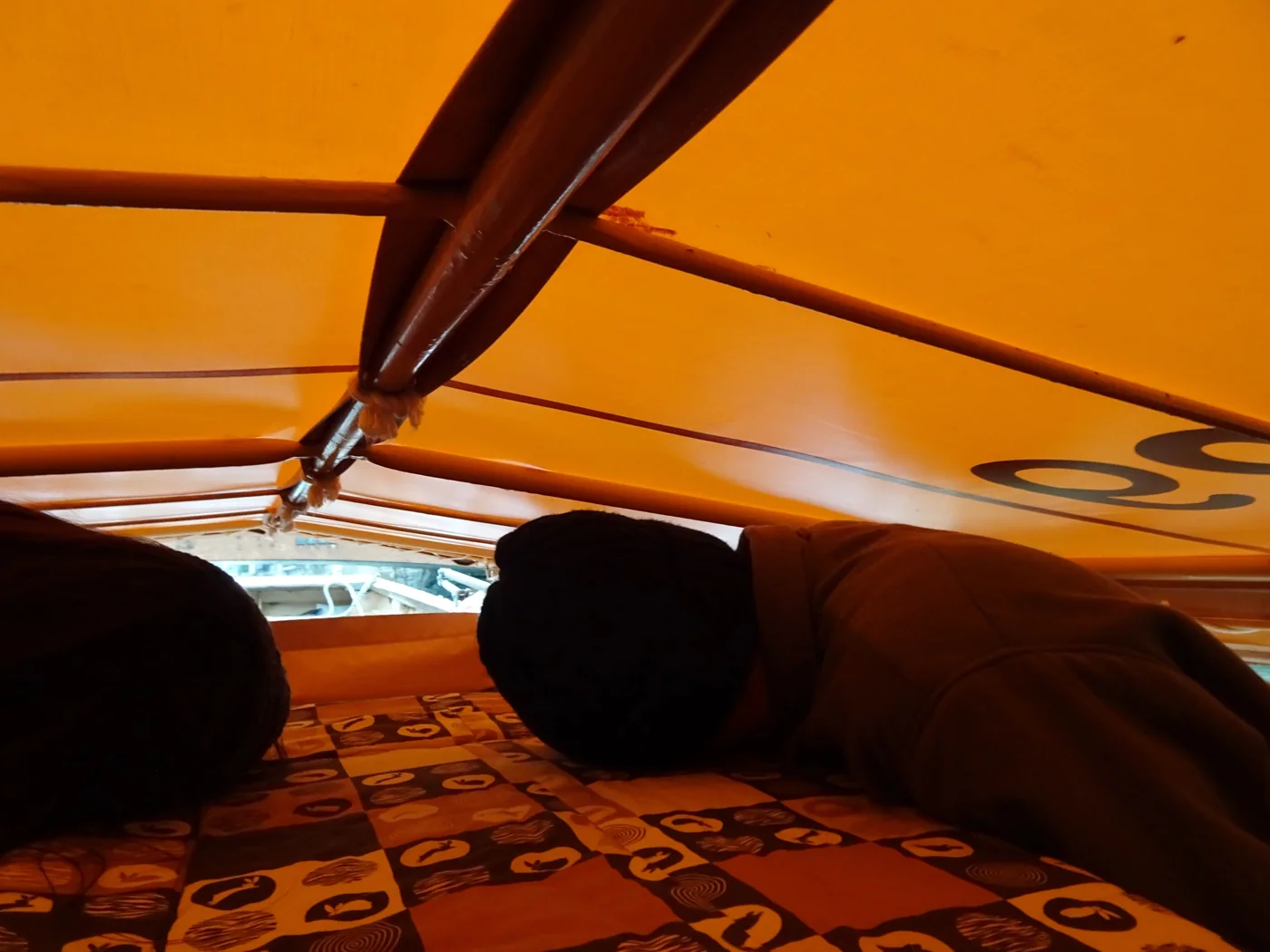
Horikawa boats lower their roofs beneath low bridges. Passengers must adjust their posture as directed by the crew. If movement in your back, knees or neck is limited, explain your needs at the landing before buying tickets and deciding whether to board. With infants, also plan carrying, luggage and boarding. A boat ride does not mean a pushchair can roll straight into the cabin. The shore route can be easier for these groups, with alternating museum visits and rests whenever needed.
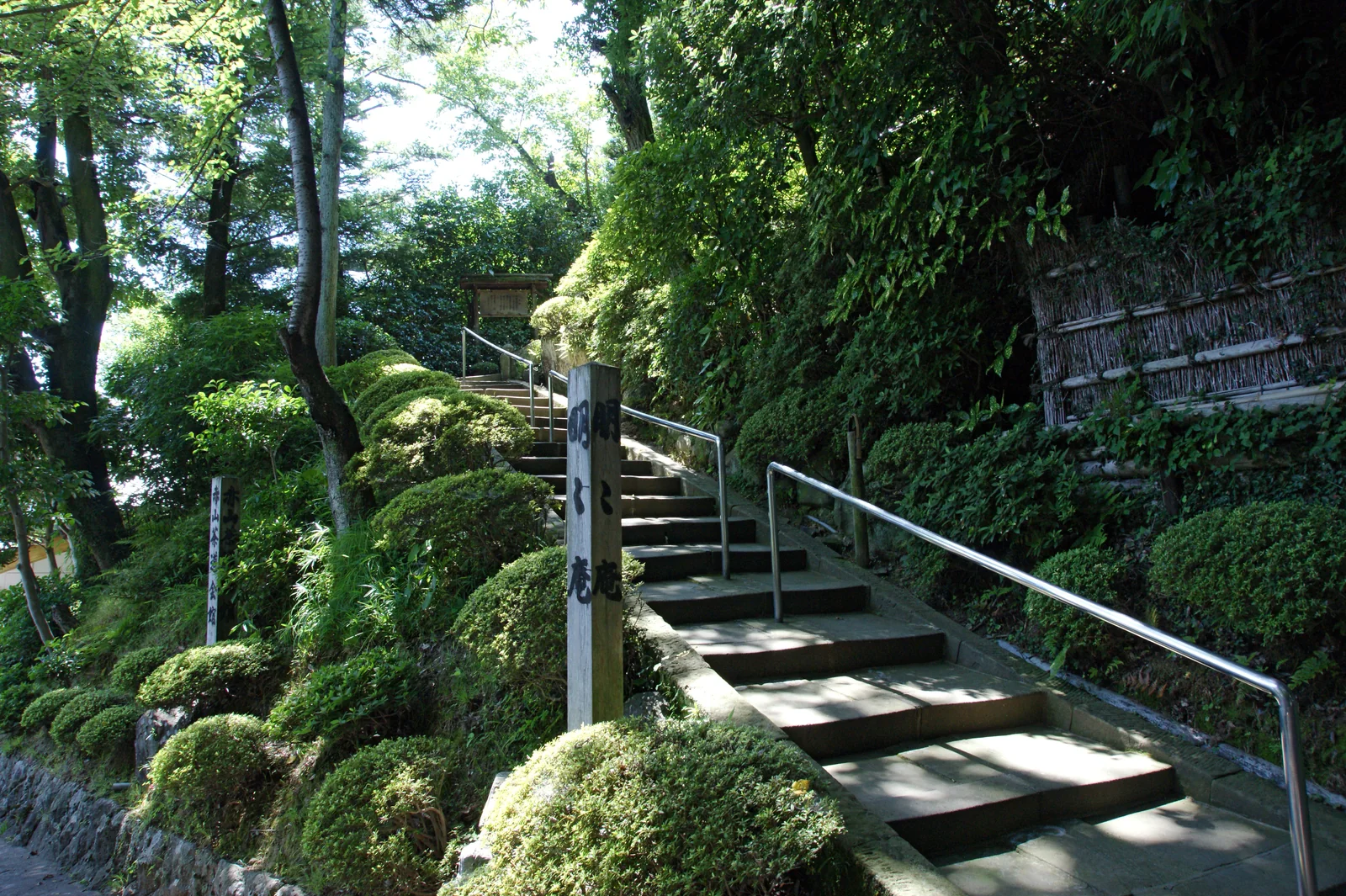
For a longer tea-culture stop, choose Meimeian on the rise behind Shiomi Nawate, at 278 Kitahori-cho, Matsue. Follow the street to the uphill stone steps and continue towards the castle-view terrace and entrance; there are views back towards Matsue Castle. The venue's access page gives about five minutes on foot from the Lake Line bus stop Shiomi Nawate, including the stairs. If steps are difficult for a companion, use a street-level tea shop rather than making the hilltop compulsory for everyone.
Meimeian is a tea house favoured by Matsudaira Harusato, also known as Lord Fumai. Look first at its thick thatched hip-and-gable roof and the plaque with Fumai's calligraphy, then through the low nijiriguchi entrance at the two-and-three-quarter-mat interior. Matcha is served in the attached Hyakusotei room, facing an Izumo-style dry landscape garden.
As of 28 October 2026, Meimeian's official prices list individual admission at ¥600 for adults and ¥300 for children. Adults means senior high school age and above; the child rate covers primary and junior high school pupils. Younger children enter free. Matcha costs an additional ¥600 and comes with two kinds of dry sweets favoured by Fumai. An adult pays ¥1,200 for admission and one serving of matcha, or just the admission fee to look around.
Schedule tea before the lakeshore. From October to March the site opens 09:00–17:00, last admission 16:40, with tea served 09:50–16:00. From April to September it opens 09:00–18:00, last admission 17:40, with tea served 09:50–16:30. To see the garden and have tea, arrive before tea service ends, then follow the next section's Lake Shinji sunset plan.
Choose a Lake Shinji sunset spot before arranging dinner
Focus on Lake Shinji's eastern shore in the evening. Kishi Park, in front of the Shimane Art Museum, combines lake views, lawn and outdoor sculpture in one walk. Further south, Lake Shinji Sunset Spot Torupa has lakeside paths and seating. The Matsue Tourism Association sunset page also lists Shirakata Park and other locations. On a first visit, choose one. Moving between viewpoints near sunset consumes the time best spent standing still.
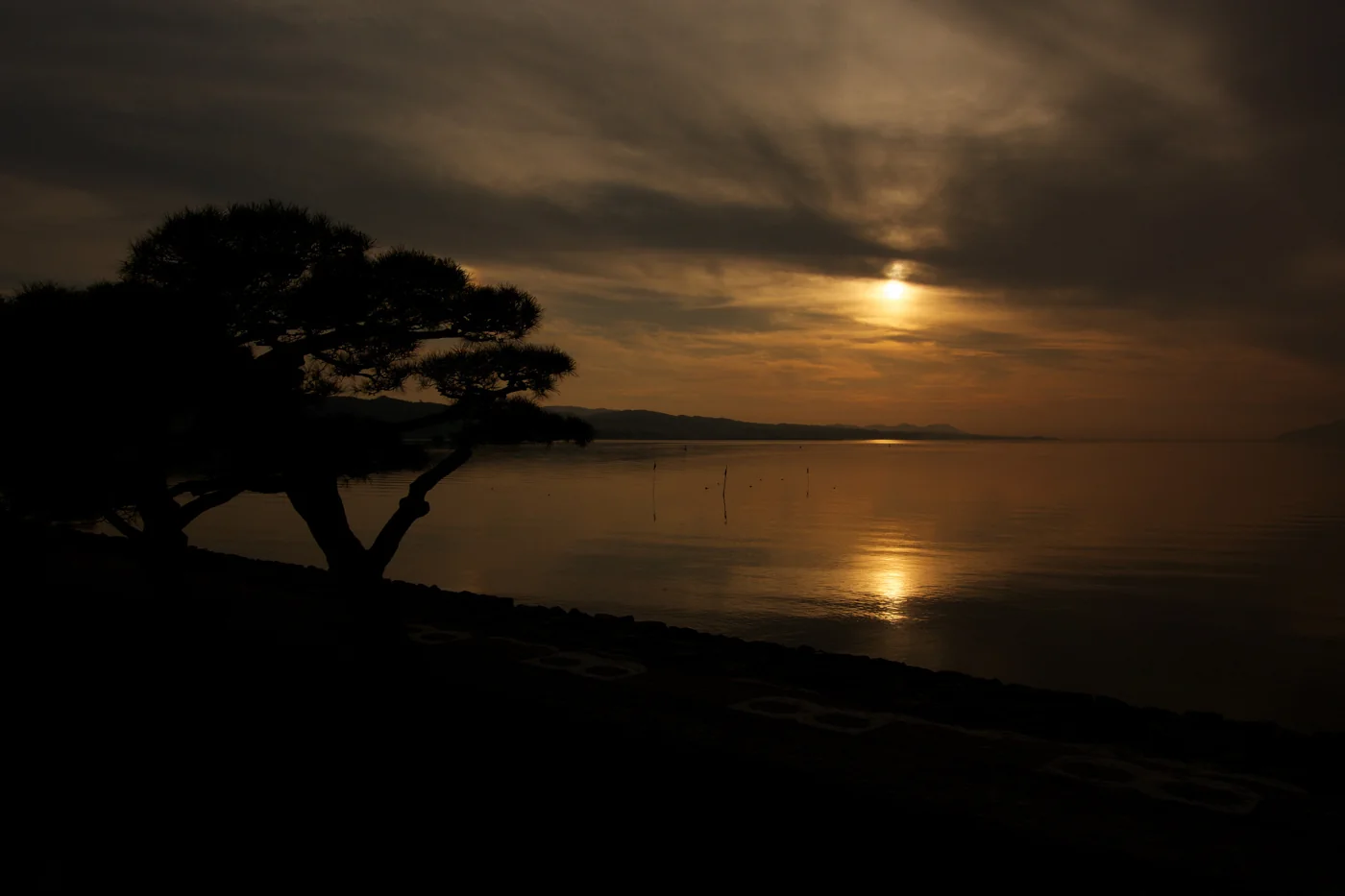
To include Yomegashima island in a photograph, start around the art museum and sunset viewpoints on the east side. The sun sets in different positions through the year, so a photograph's angle cannot tell you where to stand every day. Look along the open paths on arrival and choose a position that leaves the route clear. Keep tripods and bags at your seat or beside you. A pedestrian underpass connects Torupa with the car park across the road; use that crossing facility even if you arrive on foot.
Aim to arrive about 40 minutes before sunset, allowing time to find a place, use the toilet and put on a coat. Check that day's sunset time through the Matsue Lake Shinji sunset information page. Stay a little after sunset to see the sky and water darken, then return to town for dinner. If your accommodation includes dinner, compare its start time with sunset and choose a priority if they clash. If the latest dinner arrival is fixed, use a nearer lakeside walking spot.
If thick cloud hides the sun or wind makes standing difficult, take a short lakeside walk and rest indoors. Check the Shimane Art Museum's own opening days and exhibitions; access to the outdoor shore does not establish evening access indoors. Staying in Matsue lets you assess the weather during the day and decide in the afternoon how long to wait by the lake. There is no need to tie the whole day to one sunset photograph in the morning.
Have clams in Matsue and save a soba meal for Izumo
You can vary meals across the two days. If lunch in Matsue is Izumo soba, choose a different serving style or a lighter meal on Shinmon-dori the next day. If you want warigo soba near the shrine, have a set meal on day one and save the evening for clam soup, fish or a city restaurant. Chasing the same speciality at every meal can leave only memories of queues and repeated flavours.
Lake Shinji is brackish, and shijimi clams are a characteristic Matsue ingredient. The tourism association's lake introduction has a separate clam section. Read whether a dish is a bowl of soup, a side dish or a full clam-based meal. For a lighter dinner, pair a staple with hot soup. Travellers with shellfish allergies should choose other dishes; drinking only the broth still exposes them to the ingredient. Choose fish from the day's menu rather than ordering an extra tableful to cover every local speciality in two days.
Allow a seated tea break in Matsue. Wagashi with matcha fits between the castle-town walk and lakeshore, giving you a rest between areas rather than another takeaway to eat while rushing. This is also a useful time to browse sweet souvenirs. Buy refrigerated or short-life items closer to departure so they do not spend the whole day in your bag. Match dinner to your hotel. If you stay by JR Matsue Station, end the meal back in the station district. If you book a lakeside hot-spring ryokan with dinner and breakfast, return for its meal time. A room-only or breakfast plan gives more flexibility to choose a restaurant after sunset. The Matsue Tourism Association restaurant directory helps identify areas and types of food. Arrange dishes, closing days and last orders using your chosen restaurant's own notices.
Stay by JR Matsue Station for easier luggage and onward trains
For a first visit by public transport, especially with large bags, I would compare hotels near JR Matsue Station first. Leave luggage on arrival and return to the same place in the evening. If you choose JR to Izumoshi on day two, you can depart directly. Check the actual walking route and major road crossings before comparing room rates. A station-side hotel still requires time for checkout, luggage collection, tickets and finding the platform; being beside the station does not make it a two-minute trip from your room to the platform.
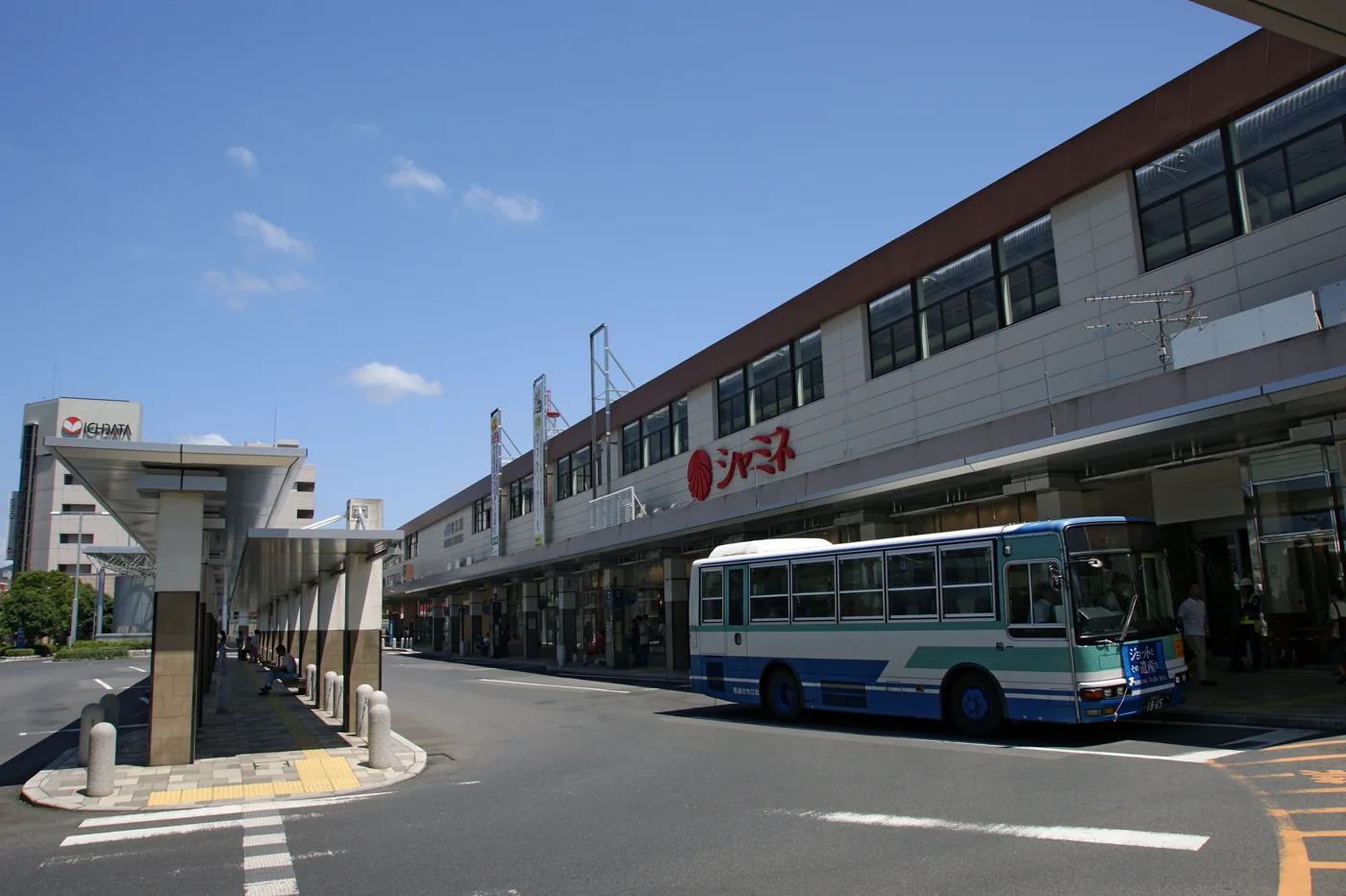
The trade-off is city travel to the castle and lakeshore. If you use Ichibata to Izumo, you must also reach Matsue Shinjiko Onsen Station on day two. Include that journey before comparing the two intercity routes, rather than looking only at time aboard Ichibata. If you want dinner near the station and leave by JR the next day, keeping luggage in one place will often outweigh another city bus trip.
For one night in Matsue followed by a long-distance departure from Izumoshi on the second afternoon, take your luggage with you in the morning. Go to JR Izumoshi Station, store it, then travel to the shrine. This aligns your luggage with your departure direction. Leaving it at the Matsue hotel and returning for it suits travellers who will head east of Matsue afterwards. Avoid an unnecessary intercity return solely to keep the same hotel base.
Compare each person's bed, breakfast start time and luggage-storage hours when booking. For two adults and a child, search using the actual party so prices and amenities match. Read the plan's free-cancellation deadline, local time zone and late-cancellation charge. Refundable and prepaid non-refundable plans at the same hotel can differ greatly; the lowest price alone is not a useful comparison.
Choose the north-east hot-spring district, or add a second night in Izumo
If you want the trip to feel more like a night's holiday, compare accommodation around Matsue Shinjiko Onsen. Ichibata starts here the next day and the lakeshore is close. Separate walking access to the shore from a lake view in the room. Read which room types face the lake and what direction they overlook before paying extra. Road-facing rooms, low floors and lake-facing rooms in one ryokan can be different products. The room name on the booking is more useful than a large photograph on the hotel homepage.
A hot-spring ryokan has its own timetable: check-in, dinner and bath opening hours. For a two-meal plan, compare dining time with sunset. To watch the whole sunset, choose a compatible plan or dine elsewhere. Read separately about private baths, in-room baths and communal baths. If a companion wants to bathe in the room, select a room type that states its bath conditions rather than relying on an onsen search filter.
Accommodation around Izumo Taisha suits travellers who prioritise early worship and are willing to book dinner too. It offers a different stay from the JR Izumoshi station district: one puts you in the shrine town on waking, the other simplifies rail connections and station-area dining. The basic two-day, one-night route still stays only in Matsue. If you have another night, consider Izumoshi or the shrine area for night two to gain the third morning, rather than moving hotels within an already busy afternoon.
Tamatsukuri Onsen is also near Lake Shinji, but diverting there from this two-day route adds another transfer and dinner arrival deadline. If the ryokan dinner and bathing are the main purpose, shorten the castle-town afternoon and focus on the stay. To cover all four main themes, central Matsue is simpler. Choose a hotel that makes your evening work rather than listing every hot-spring district around the lake.
Day two by Ichibata: Kawato changes and the ¥1,800 day pass
From Matsue Shinjiko Onsen Station, the ordinary adult fare to Izumo Taisha-mae is ¥900. If travelling one way and then leaving from JR Izumoshi, start with a single ticket. The official ordinary-fares page links to the full fare table revised in March 2025. A return between Matsue and the shrine on Ichibata costs ¥900 × 2 = ¥1,800, equal to the adult one-day pass. A single trip gives no cost-saving reason to buy the pass.
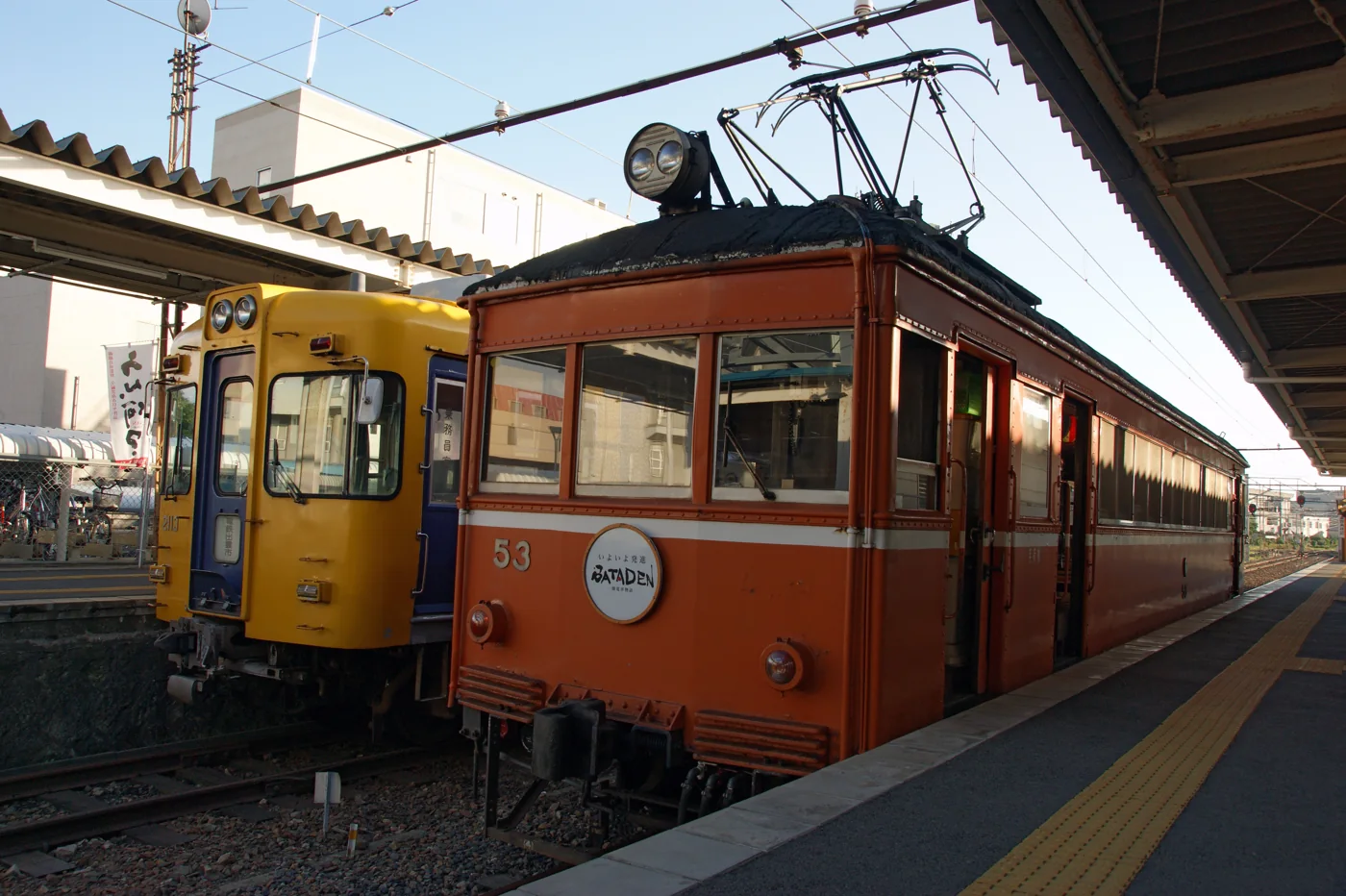
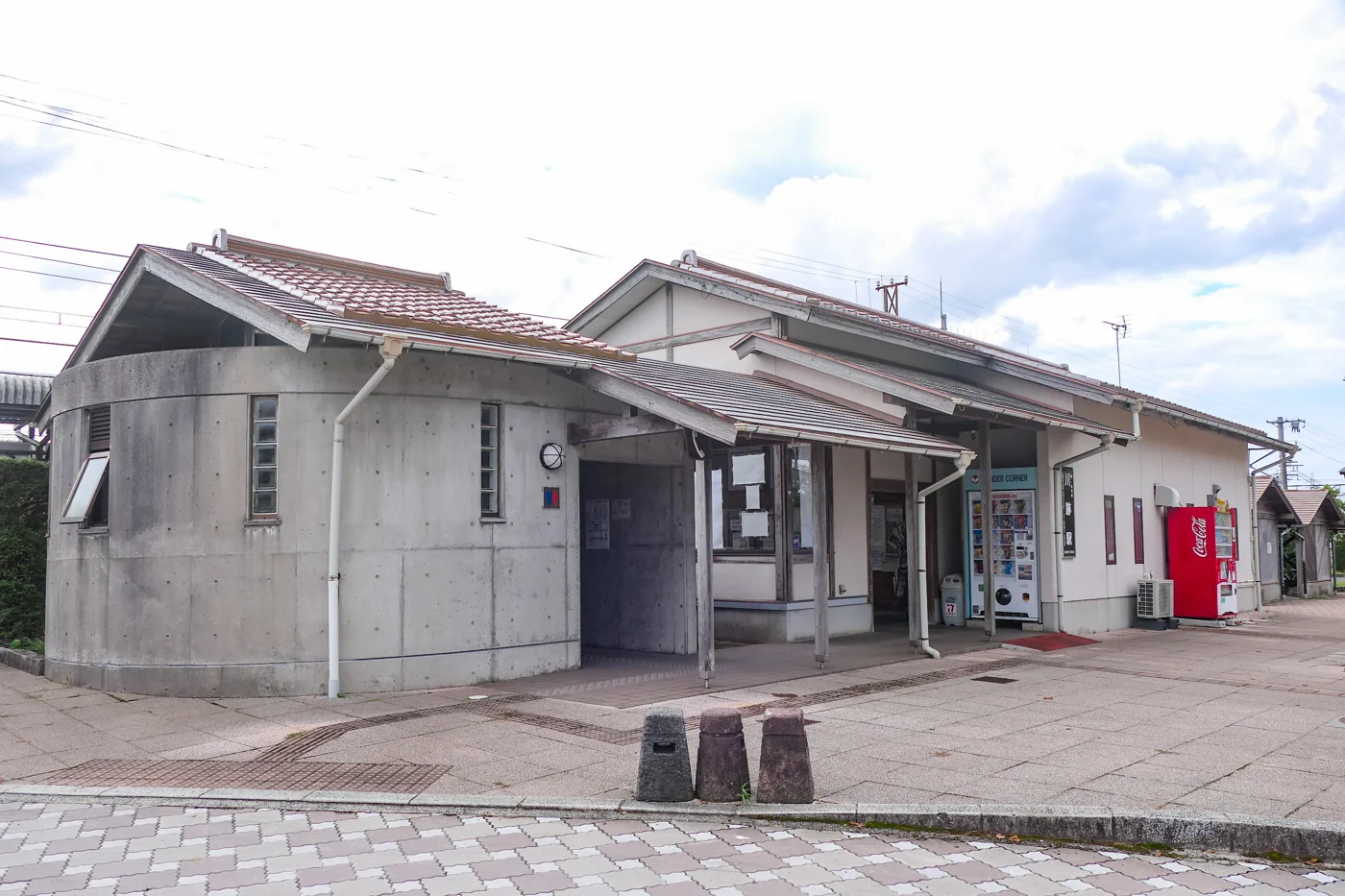
The day pass covers all Ichibata Railway lines and suits a same-day return with stops en route. Advance-sale rules have applied since October 2025: advance tickets are non-refundable and need a date stamp at the counter on the day of use. The operator's advance-sale explanation states this clearly. If the weather or departure direction is undecided, buy when you decide that day. City buses in Matsue and JR sections cost extra and are outside this pass.
Check whether the timetable is for a weekday or holiday, then check the train's destination. From the station timetables, open the current PDF for Matsue Shinjiko Onsen. Through trains to Izumo Taisha-mae are marked; other services require the stated connection at Kawato. A train towards Dentetsu-Izumoshi will not necessarily take you to the shrine by staying on to its terminus. Save a complete outbound and return connection table, including start, change and destination stations, so you can recognise the names when changing.
From lakeside accommodation, allow roughly two hours in the schedule from hotel to shrine entrance. This includes walking to the station, tickets, waiting, connections and the final walk. It is planning allowance; time on the train depends on your chosen service. Leave one train earlier if its connection requires a longer wait. Reaching the shrine before lunch leaves the afternoon open for either the shrine town or the coast.
Day two by JR: move luggage towards your departure point
If staying near Matsue Station and taking a long-distance JR service from Izumoshi in the afternoon, compare going to Izumoshi by JR first. Store luggage at Izumoshi Station, continue towards the shrine, then collect it and leave without returning to Matsue. This route's value is the luggage flow. Even if Ichibata's window views are more appealing, include the time needed to double back for bags.
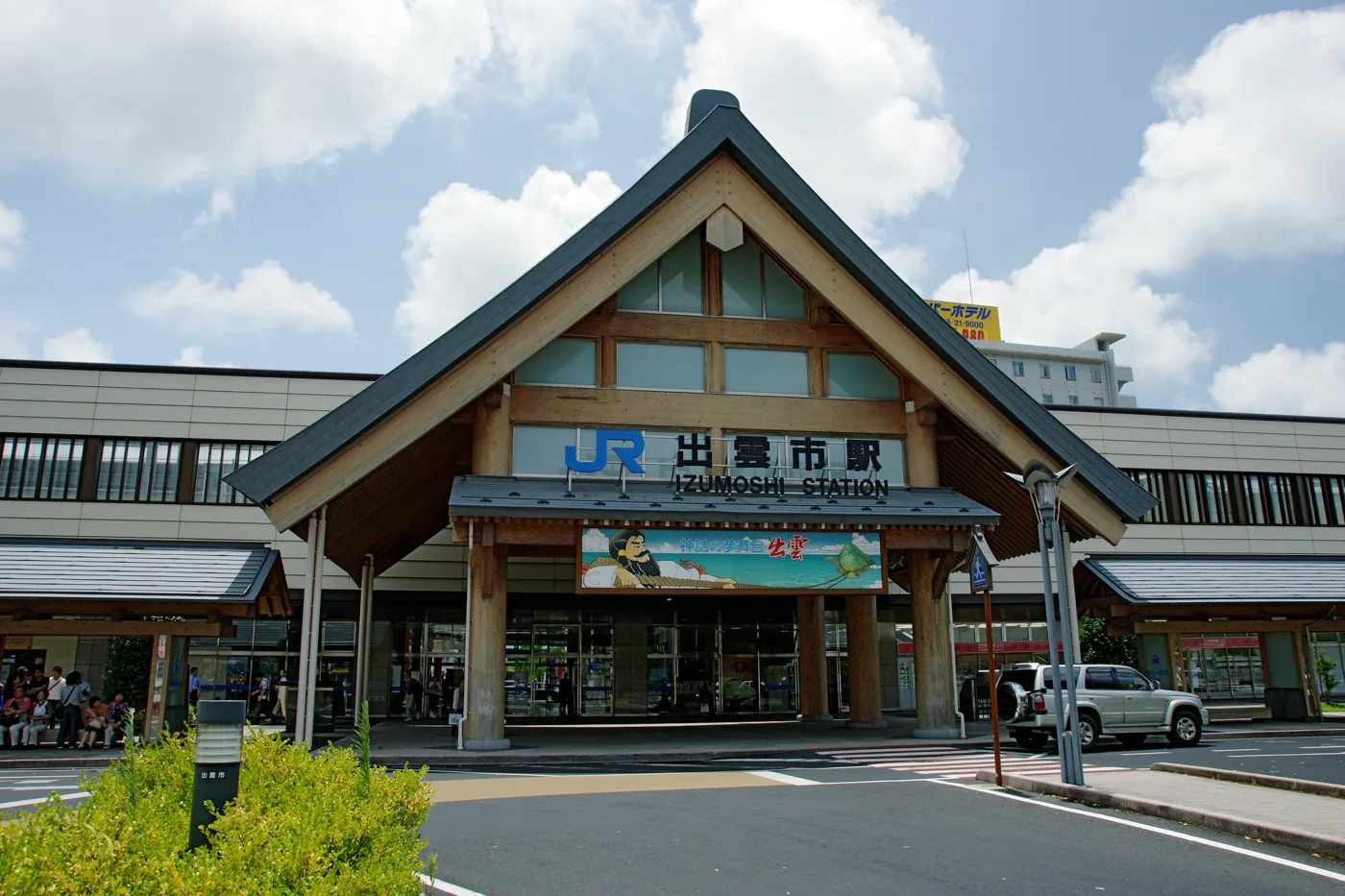
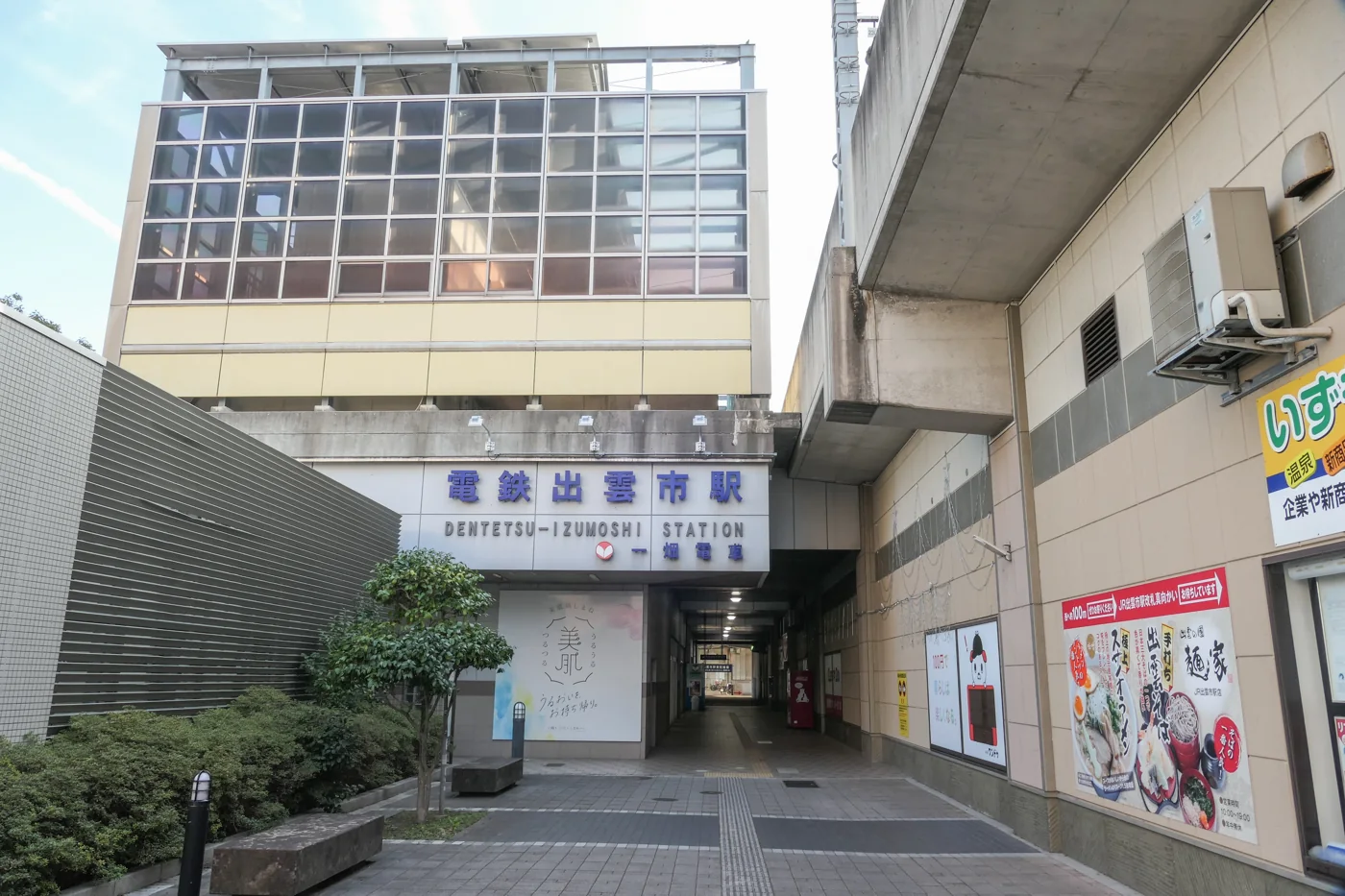
After arriving at JR Izumoshi, take a route bus towards the shrine from stop 1, or walk to Dentetsu-Izumoshi Station for Ichibata Railway. With the train, distinguish through services to Taisha-mae from those requiring a Kawato change. For the bus, check destination, stops and departure times, and allow time on the road. The Ichibata Bus Taisha Line has timetables in both directions, and the official boarding-point map identifies the station stops. If you have reserved a JR departure, select a service that gets you back to Izumoshi early before deciding how long to browse Shinmon-dori.
JR local and limited-express trains have different budgets. Limited expresses require the applicable supplement; do not combine the fastest search result with the local-train fare. With a JR pass, check whether your particular pass covers this section, the limited express and seat reservations. Ichibata Railway and Ichibata Bus have separate ticket systems despite sharing the Ichibata name. Buy the correct ticket for each leg.
Have an alternative for luggage storage. If you cannot find lockers for two large cases, ask station tourist information or your accommodation about storage before going to the shrine. A small rucksack is manageable; full cases slow you down on stone paving and busy approaches. Allow time before departure to locate the locker, repack souvenirs and reach the platform. One extra snack near the shrine costs little compared with missing a booked long-distance train.
Walk Izumo Taisha’s approach first and allow time for Kaguraden
From Izumo Taisha-mae Station, follow Shinmon-dori towards Seidamari and enter the shrine approach. The shrine town and approach form a continuous walk, so complete worship before returning for lunch. Stopping at every sweet and craft shop first can put you in the precincts at the lunch peak and push back departure all afternoon. Photograph shops you want to revisit, then stop after worship rather than worrying that you have not yet reached the main sanctuary.
The formal worship sequence at Izumo Taisha is two bows, four claps and one bow, rather than the two claps used at many shrines. The shrine's official FAQ explains it. Follow local routes and signs, wait while worshippers bow, and keep the central passage clear when photographing. The worship hall, main sanctuary surroundings and Kaguraden to the west are separate places. Allow an additional walk west to see Kaguraden's large sacred straw rope familiar from photographs.
The visiting hours announced on 3 May 2026 are 06:00–19:00. The area behind the main sanctuary, including the direction of Soga-no-yashiro, closes at 16:30. Ofuda talismans, omamori amulets and goshuin stamps are normally available 08:30–16:30, with temporary counters arranged early and late. For a daytime visit, morning is simplest for both worship and the counters. The 19:00 precinct closing time does not extend the counters’ 16:30 service hours.
For a first visit, allow about 90 minutes for the shrine itself, then add lunch and Shinmon-dori to make a comfortable half day. Allow longer for reading explanations and choosing amulets. If some companions only want the main buildings, agree a meeting point and explore short sections separately. Locking everyone's interests into a single group can be more tiring than a few hundred extra metres.
Warigo, kamaage and Shinmon-dori: keep a second lunch option
Use different styles of Izumo soba across two meals. Warigo comes in stacked small round boxes, with sauce and toppings added as you eat. Kamaage is served with the soba cooking water, then seasoned with sauce and toppings. The Izumo Tourism Association lists local restaurants and serving styles. A hot bowl makes an easier rest stop on a cold or wet second day; choose warigo to focus on the noodles' aroma and toppings.
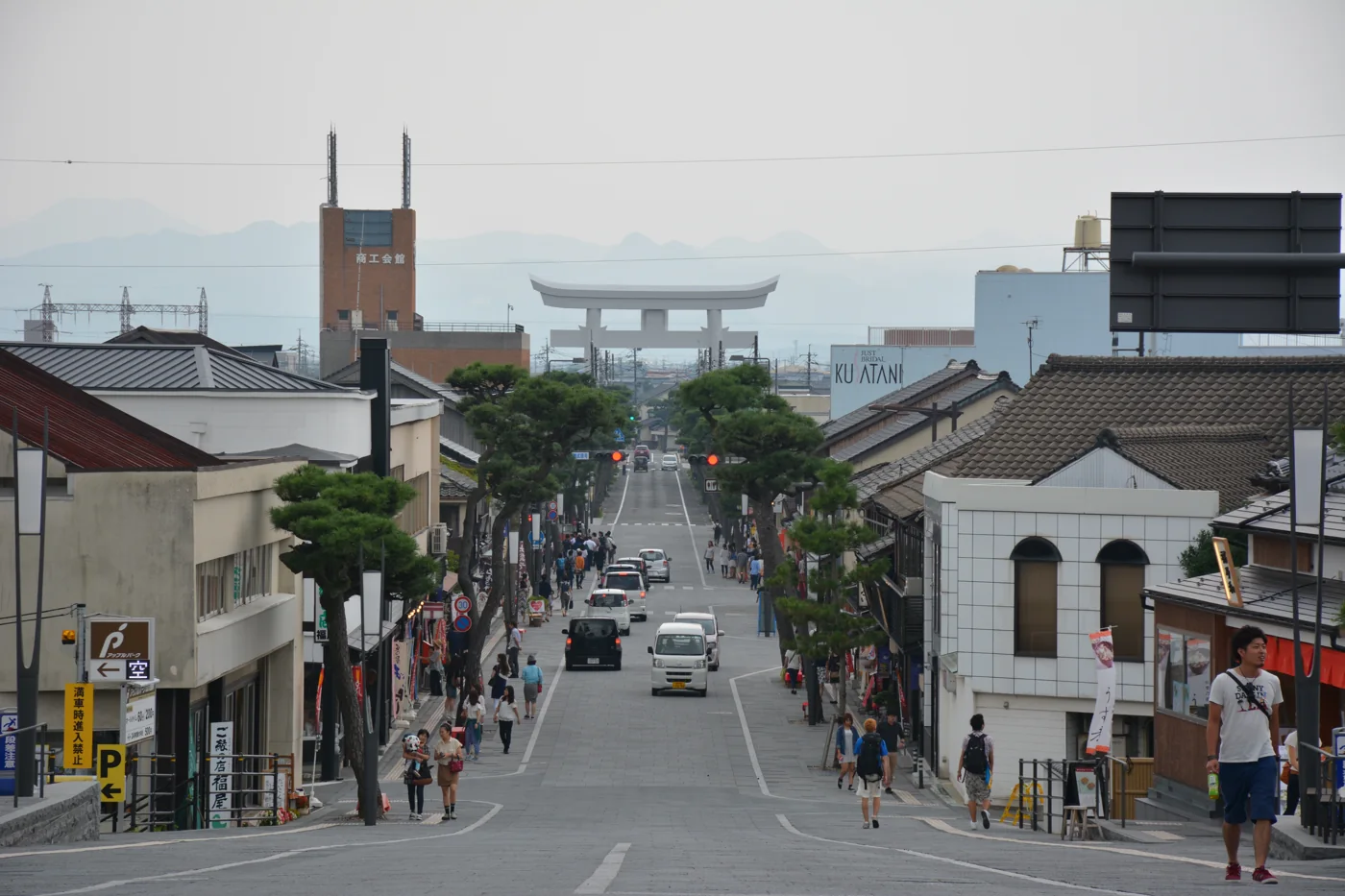
Shinmon-dori concentrates the choices, so there is no need to cross town for lunch after worship. Choose a preferred restaurant and one backup, both within walking distance on the way back to the station. If the queue is long, check how numbers are called, whether new diners are still being accepted and how long remains before your train. A single famous restaurant can take over the afternoon. A backup makes it easier to sit down for a proper meal.
For a buckwheat allergy, choose food without buckwheat and tell the restaurant. If utensils are shared, use another restaurant. With children, check suitable staple dishes and seating rather than relying on entrance photographs. Share approach-street snacks so there is room for lunch. For a snack on the return train, choose packaging that is easy to store and keeps the seat clean.
Adjust shopping to onward travel. If taking a long-distance JR train straight afterwards, buy souvenirs shortly before luggage collection. If walking to the coast first, browse fragile or refrigerated items and buy them on the way back.
Inasa Beach is optional: allow for the walk back too
Only add Inasa Beach after the shrine half day if the weather is stable and no long-distance departure follows closely. It is another journey from the shrine town to the coast. It looks close on a map, but the return consumes rest and shopping time. Allow at least an hour for the walk there and back and the stop, adjusting for the actual navigation route and your companions' pace.
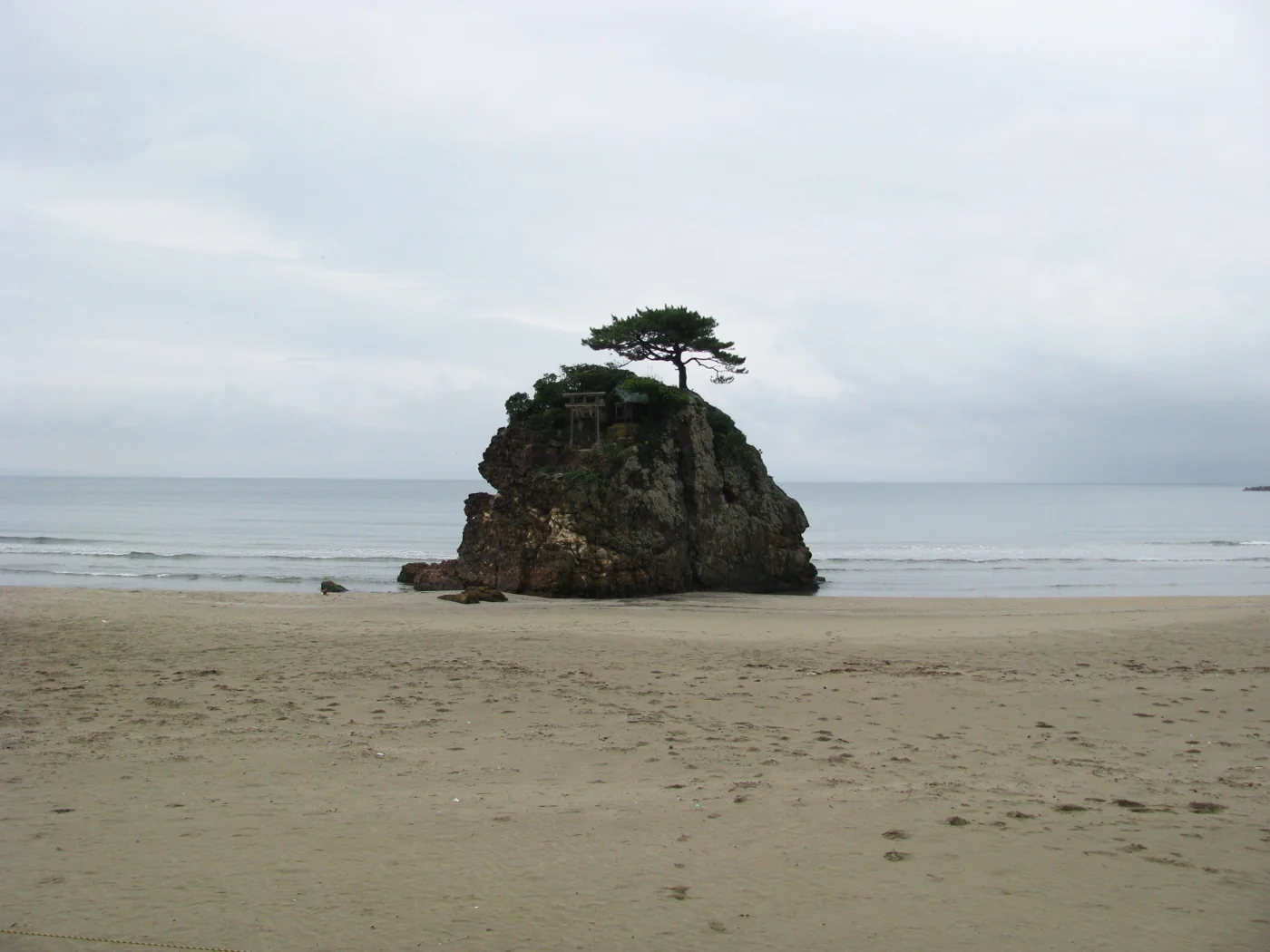
With large bags, strong wind, steady rain or companions already tired from the approach, return to Shinmon-dori for a meal or seated drink. Coastal wind differs from town conditions; a dry station forecourt does not establish comfortable conditions on the shore. Use open beach areas and paths, move inland when waves are high, and avoid the water's edge merely to frame people with the rock.
A common way to overfill day two is to add Hinomisaki after both the shrine and Inasa Beach. That requires another transport leg and return plan, reducing worship and lunch time. Set aside a separate coastal slot or another night in Izumo for Hinomisaki. Keep the two-day version's seaside walk to Inasa Beach.
Returning to Matsue for sunset also requires a choice. If the previous evening was poor, you can leave the shrine early and return to the lakeshore, but drop Inasa Beach and prioritise train connections. You cannot watch the coast and lake sunsets separately on the same evening. Choose the one you most want so the journey between the cities does not become a race for the light.
Budget separately for the castle, boat and intercity tickets
With boats operating normally, adult admission to Matsue Castle at ¥1,200 plus Horikawa at ¥2,000 totals ¥3,200 for the two paid activities. Add ¥1,800 for a day-two Ichibata return from Matsue to the shrine and those three items total ¥5,000. For one-way Ichibata travel, ¥3,200 + ¥900 = ¥4,100, with onward transport to JR Izumoshi and out of Sanin extra. These are route comparisons, before city buses, accommodation, meals and other museums.
Without the boat, the castle plus an Ichibata return costs ¥3,000; the castle plus a single costs ¥2,100, before onward transport. This makes the trade-off clear. Skipping the boat removes one water-based experience but leaves ¥2,000 and waiting time for accommodation, food or a slower walk. If the boat is the main attraction, protect its landing time once operations resume and drop another museum.
Calculate each child's fares separately. Matsue Castle is free for primary and junior high school pupils. Horikawa has different primary and secondary school fares, and Ichibata Railway has its own child-ticket rules. Do not halve the adult total to estimate a child's budget. For two adults and one child, list the child's age and each attraction's ticket category, then add city transport to assess whether combined tickets fit.
Changes and cancellations also depend on the product. Ichibata advance-sale day passes are non-refundable. Horikawa's official reserved-boat cancellation schedule charges 30% from six to two days before travel, 50% the day before and 100% on the day. That schedule applies to reserved boats. Individual same-day tickets and platform e-tickets use their own product terms. Accommodation follows the plan and deadline on the booking. With weather choices over two days, avoiding an unused advance ticket can give more flexibility than buying a stack of discount vouchers.
| Route | Items included | Subtotal |
|---|---|---|
| Castle + boat + Ichibata return | 1,200 + 2,000 + 900 × 2 | ¥5,000 |
| Castle + boat + Ichibata single | 1,200 + 2,000 + 900 | ¥4,100; onward transport extra |
| Castle + Ichibata return, no boat | 1,200 + 900 × 2 | ¥3,000 |
| Castle + Ichibata single, no boat | 1,200 + 900 | ¥2,100; onward transport extra |
Build the two-day timetable around your departure, then add extras
On day one, arrive in Matsue in the morning, leave luggage and visit the castle, then have lunch in the castle district. If Horikawa has resumed, board at Otemae in the afternoon and walk through Shiomi Nawate or Kyomise afterwards. During suspension, use the afternoon for Shiomi Nawate, tea and one indoor attraction. Head to Kishi Park or Torupa towards evening, then return to your accommodation district for dinner. Keeping the day around central Matsue rather than rushing to Izumo makes room for the evening lake view.
After breakfast on day two, leave with your luggage and choose Ichibata or JR connections according to accommodation and departure direction. Reach the shrine in the morning, worship first, then have soba and browse Shinmon-dori. Walk to Inasa Beach only if the afternoon allows. The first fixed point on your return is the train or bus departure stop; souvenir shops come second. Once your train out of Sanin is booked, save both the latest acceptable return connection and the service before it to build in a margin.
If both days are wet, spread out the keep and indoor museums, shorten the lakeside walk, and use non-slip shoes and rainwear that leaves your hands free on the Izumo approach. Return to your accommodation to deal with wet shoes and socks; less shopping can make the next day's walk much more comfortable. In the cooler half of the year, put the keep and Soga-no-yashiro cut-off times into the schedule and shop later. In summer, avoid joining all the outdoor walking into the hottest part of the afternoon.
A few useful answers
Are two days enough for Matsue and Izumo Taisha without a car?
Arrive in Matsue before midday on day one and leave Izumoshi in the afternoon on day two to cover the castle district, lakeshore and shrine. If arriving late and leaving early, choose one city. Horikawa suspended all services on 27 October 2026, with later operations awaiting the operator’s announcement. A castle-town walk provides an alternative for near-term trips.
Does the Ichibata day pass always save money?
The adult single from Matsue Shinjiko Onsen to Izumo Taisha-mae is ¥900. A same-day return costs ¥1,800, equal to the adult day pass. For a single followed by departure from JR Izumoshi, buy a single first. JR and city buses cost extra. Advance-sale day passes are non-refundable.
Should I stay by Matsue Station or Matsue Shinjiko Onsen?
Compare the JR Matsue station district first for long-distance JR arrivals and departures or large bags. Choose Matsue Shinjiko Onsen for lakeside walks, hot springs and the next day’s Ichibata departure point. For dinner-inclusive plans, compare sunset with the dinner arrival deadline.
How late can I visit Izumo Taisha?
General visiting hours are 06:00–19:00. The area behind the main sanctuary, including the route towards Soga-no-yashiro, closes at 16:30. Ofuda, omamori and goshuin are normally available 08:30–16:30. Arrive in the morning for the full route and Shinmon-dori.
Official information and references
Sources used in this guide.
- Matsue Castle | Admission and opening times, revised July 2026
- Official Shimane tourism | Access to Matsue Castle
- Matsue Castle | Closure from Kita-no-mon to Mizu-no-te-mon
- Matsue Castle | Planned major Reiwa repairs
- Horikawa boat tours | Daily operating notices
- Horikawa boat tours | Fares, timetable and cancellation rules
- Matsue Tourism Association | Sunset viewpoints
- Matsue Tourism Association | Lake Shinji and shijimi clams
- Matsue Tourism Association | Restaurant directory
- Ichibata Railway | Ordinary fares
- Ichibata Railway | Station timetables
- Ichibata Railway | Advance-sale day-pass rules
- Izumo Taisha | Visiting and counter hours
- Izumo Taisha | FAQ and worship procedure
- Izumo Tourism Association | Izumo soba
- Ichibata Bus | Taisha Line timetables in both directions
- Ichibata Bus | Main boarding points
- Meimeian | Opening times, admission and tea prices
- Meimeian | Historic tea house
- Meimeian | Access and entrance steps
- Matsue Tourism Association | Meimeian and its Izumo-style garden
- Official Shimane tourism | Meimeian, Hyakusotei and the castle-view terrace