Travel from Tsuyama via PLANT5 to Okutsu Onsen for a bridge-side walk and Hanabijin-no-Sato or a ryokan day bath. Includes the closed pothole trail, 2026 autumn-leaf dates, return buses and Okutsuso room and cancellation terms.
- Region & Focus
- Chugoku and ShikokuItinerary planning
- Reading Scope
- 32 min read · 14 chapters · 5 Q&As
- Official Verification
- 16 official sources checkedUpdated 27 November 2026
- Key Topics
- ItinerariesHot springsRyokan
Chapter Route Map (tap any stop)
- Choose a hot-spring town day trip or a gorge overnight stay
- Leave from Tsuyama Station stand 5 and change at PLANT5
- Record the return before deciding how far to walk after lunch
- The pothole trail is closed: remove the riverbed route
- A short Okutsu Bridge walk and Otsuri Bridge views need different walking allowances
- Lunch before bathing: keep meal products separate
- Hanabijin-no-Sato: the main day bath, with a Thursday alternative
- Okutsuso day baths: natural rock bottoms and private baths differ
- Another day-bath choice: add Kajikaen’s private fee to admission
- For an overnight stay, choose bedding before a room bath
- Cancellation is calculated by guest-nights, including weather changes
- Autumn 2026: staying with a car suits evening events better than chasing the last bus
- Fairywood Glass Museum is in Kamisaibara: choose a separate rainy-day visit
- Your next overnight base determines luggage and onward transport
- Quick Q&A
For a car-free Okutsu day trip, start with the 08:30 departure from Tsuyama and 15:16 return from Okutsu Onsen. Use the day for a short town walk, lunch and one bath. At the October 2026 check, the 800-metre trail from former Otsuri Onsen towards the Usubuchi potholes still had a closure notice. View the gorge from open roads and bridge areas instead. With a car, or for autumn evening events, add Otsuri Bridge views and an overnight stay.
Choose a hot-spring town day trip or a gorge overnight stay
From Tsuyama, the simplest car-free version reaches Okutsu Onsen in the morning, walks near Okutsu Bridge, has lunch and one day bath, then returns to Tsuyama in the afternoon. Keep gorge viewpoints for a driving or overnight version. With a pushchair or older companions needing long rests, focus on the hot-spring town. The reasons are practical: buses require a change, part of the gorge is closed, and each bath has its own last-admission time.
Okutsu is in Kagamino, northern Okayama Prefecture, in a different sightseeing area from Okayama City’s Korakuen and castle. If staying in Okayama City, move to Tsuyama the night before and leave from its station next morning. If travelling north by rail that day, compare your actual arrival with the Tsuyama bus and use the 10:00 option if you miss 08:30. Do not put an Okayama Airport landing, baggage collection and mountain bathing into the same morning.
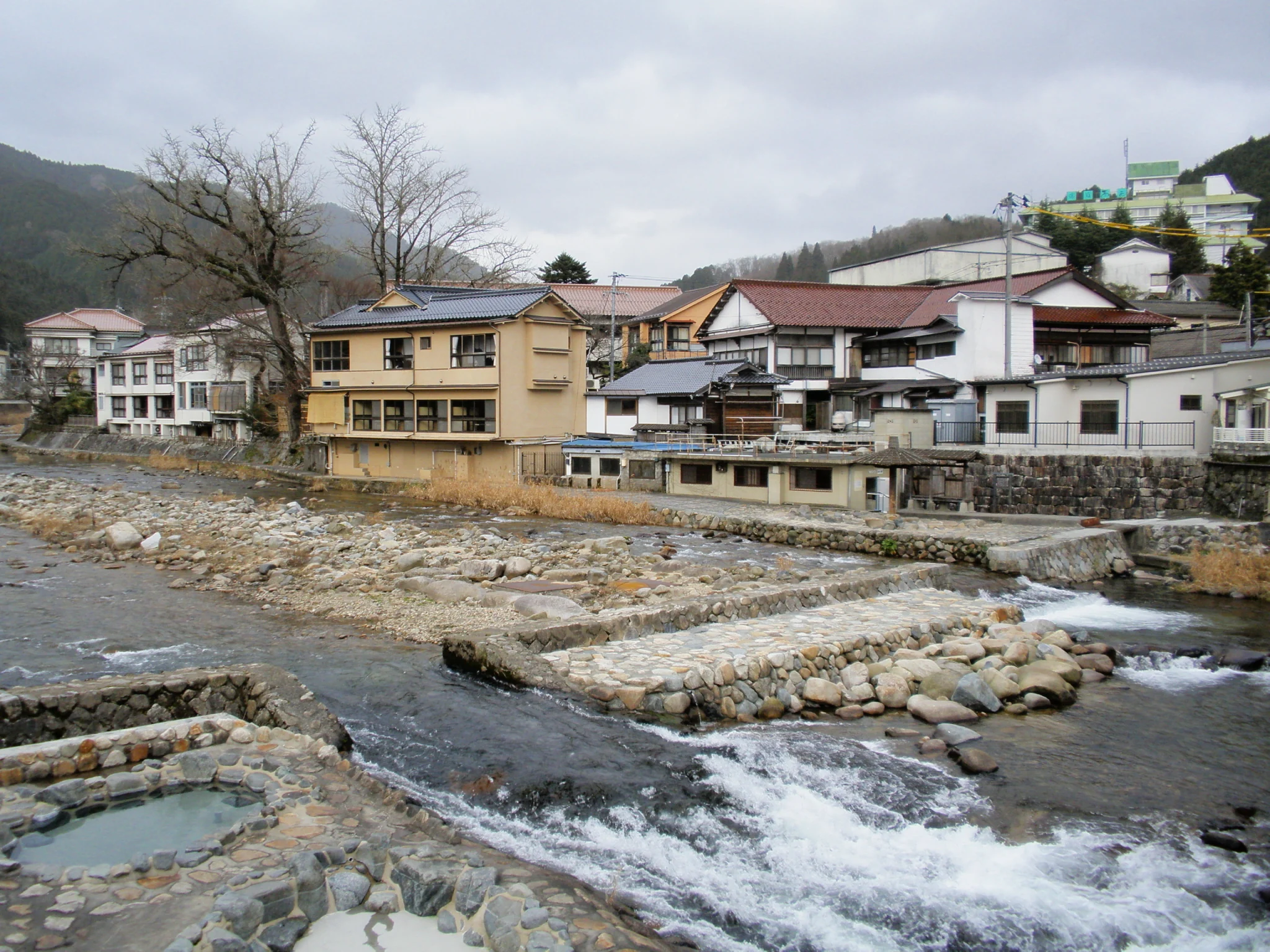
Okutsu Gorge covers about three kilometres along the Yoshii River, with the hot-spring town towards its upper end. Three kilometres describes the spread of the scenery; a walking itinerary still needs roads, entrances and closures checked separately. Travellers often save Okutsu Bridge, Otsuri Bridge, the Usubuchi potholes and Hanabijin-no-Sato together. In practice these belong to different environments: town streets, gorge roads and a riverside trail.
For a first day visit, choose one bathing facility and allow for changing, drying hair, resting and returning to the stop. An overnight stay better suits a detailed gorge visit or staying in the mountains towards evening. Its value is avoiding the afternoon return deadline and having daylight the next day for views. Decide room type, age limits and meal plan when booking.
Travel from Tsuyama via PLANT5 to Okutsu Onsen for a bridge-side walk and Hanabijin-no-Sato or a ryokan day bath. Includes the closed pothole trail, 2026 autumn-leaf dates, return buses and Okutsuso room and cancellation terms.
Leave from Tsuyama Station stand 5 and change at PLANT5
The current Chutetsu Hokubu Bus timetable, revised on 1 October 2026, splits the usual Tsuyama day-trip journey into two legs. Take the Gongo West Circular from Tsuyama Station stand 5 to PLANT5, then change to the Kamisaibara route for Okutsu Onsen. PLANT5 is the interchange; Okutsu Onsen is the main alighting stop for this day. Read both timetables rather than only the Kamisaibara departure.
A more generous option leaves Tsuyama at 08:30, reaches PLANT5 at 09:04, connects at 09:34 and arrives at Okutsu Onsen at 10:09. The 30-minute change allows toilets and sorting belongings. This wait is part of the journey: Tsuyama to the onsen stop takes about one hour and 39 minutes. Using an older “55 minutes direct” description understates transport time.
For a later departure, leave Tsuyama at 10:00, arrive at PLANT5 at 10:34 and change at 10:54. Arrival at Okutsu Onsen is 11:33 in April–November or 11:31 in December–March. This suits lunch and bathing with less morning walking. The 12:00 departure from Tsuyama, connecting at PLANT5 at 12:51 and reaching Okutsu Onsen at 13:26, suits only a short visit centred on one facility, without a full gorge walk.
Each community-bus leg costs ¥200 one way for an adult. Using both legs in both directions totals ¥800 per person. This is four rides, not a ¥200 all-route day pass. Price children by their actual ticket category and prepare small cash for separate payments. The operator states that a major delay on either side may prevent connection. Do not use the wait for shopping far from the stop.
Record the return before deciding how far to walk after lunch
The main day-trip return leaves Okutsu Onsen at 15:16, reaches PLANT5 at 15:51 and connects with the 16:04 Gongo West Circular, arriving at Tsuyama Station at 16:36. From a 10:09 arrival, this gives about five hours in the mountains, including food, bathing and walks to the stop. Aim to be near Okutsu Onsen stop before 15:00, leaving the final minutes for locating it and checking direction. Do not leave the bath at 15:16.
For an earlier return, in April–November leave Okutsu Onsen at 13:42, reach PLANT5 at 14:21 and connect at 14:34 for Tsuyama at 15:06. The winter Okutsu departure is 13:44. Earlier still, 11:46 reaches PLANT5 at 12:21, then connects at 12:34 for Tsuyama at 13:06. These combinations also help shorten the day after heavy rain, illness or a bath closure.
There is also a weekday direct bus leaving Okutsu Onsen at 17:24 and reaching Tsuyama Station at 18:19. The timetable’s star means no service on Saturdays, Sundays, public holidays or substitute holidays. Its fares differ from the community buses. Do not use it as a weekend fallback. This guide’s ¥800 return budget applies only to the two community-bus legs above.
With an 08:30 start, identify the return stop on arrival, then choose a bridge walk or bath first, put lunch in the middle and finish the last activity during the 14:00 hour. With a 10:00 Tsuyama start, you arrive near lunch: retain one meal and one bath. If you miss the final community-bus combination at a weekend, there is no equivalent public return to substitute directly. Contact a taxi company or ask a facility to arrange one when needed, rather than assuming an empty car will be available.
| Use | Tsuyama / Okutsu departure | PLANT5 connection | Arrival |
|---|---|---|---|
| Longer morning option | Tsuyama 08:30 | Arrive 09:04, leave 09:34 | Okutsu 10:09 |
| Lunch and bath | Tsuyama 10:00 | Arrive 10:34, leave 10:54 | Okutsu 11:33; winter 11:31 |
| Main return | Okutsu 15:16 | Arrive 15:51, leave 16:04 | Tsuyama 16:36 |
| Earlier return | Okutsu 13:42; winter 13:44 | Arrive 14:21, leave 14:34 | Tsuyama 15:06 |
The pothole trail is closed: remove the riverbed route
Kagamino Tourism’s specific closure notice states that, after heavy rain on 2 November 2024, the entire trail from former Otsuri Onsen towards the Usubuchi potholes is off limits from 3 November, with no end date. At the 27 October 2026 check, that notice remained on the official site and no reopening announcement had been found.
The general official attraction page still describes this 800-metre trail. Read it separately from the closure notice: the former explains the potholes’ location and formation, while the latter determines access for this visit. At barriers, warnings or staff instructions, turn back within the open road area. Do not descend stone steps from another side or look for an apparent shortcut along the riverbed.
The Usubuchi potholes are hollows worn into granite over many years by stones moved by the current. Their geological interest lies on the riverbed. If close viewing is the main purpose, make reopening a condition of the trip. Compare the photograph position with current access before arriving to find the main purpose unavailable. A day based on the town, bridges and roadside views still works at present.
Former Otsuri Onsen also has no current bathing or restaurant operation; it opens only for information and rest. The name can suggest a bath after the gorge walk, but actual day bathing requires Hanabijin-no-Sato or a ryokan in the town. Carrying a change of clothes to a closed bath wastes effort and reduces usable bathing time before the return.
A short Okutsu Bridge walk and Otsuri Bridge views need different walking allowances
For the car-free version, remain near Okutsu Onsen stop, Okutsu Bridge and the town. Follow passable streets for the Yoshii River, bridge and inn exteriors, then return to your chosen bath. Okutsu Bridge helps locate the town against the river. The bridge-side foot-stamping washing place relates to the former local practice of washing clothes in hot-spring water. Viewing the river is separate from bathing; use an operating facility for a day bath.
Treat Otsuri Bridge as a separate gorge-viewing stop from the short town walk. Drivers should use the designated parking area for the period, view the bridge and gorge from open roads and turn back at the restriction boundary. Allow a suggested hour for parking, roadside views and returning to the car.
Stand clear of traffic while viewing the water from the road and move on after photographs. Do not force pushchairs down stone steps, wet leaf-covered slopes or riverbed rocks. Choose shoes with grip. Once in yukata or slippers, stay near the accommodation and town. For companions needing handrails, wheelchairs or seated rests, short town movements with more time in facilities are more comfortable than pursuing every map name.
In rain or after heavy overnight rain, cancel the gorge-road viewing and reduce the day to lunch and indoor bathing. Official gorge rules prohibit fire and ask visitors not to swim because of deep pools, strong currents and water accidents. Do not cross railings for pothole photographs or cook on the banks. Remain in public-access areas when passing entrances to homes or inns.
Lunch before bathing: keep meal products separate
Lunch queues can easily consume a day visit. With the early bus, walk through the town first, eat near noon, then use Hanabijin-no-Sato. With a later arrival, eat first and choose only one bath. If you have a reserved meal, finish walking before it rather than treating the restaurant as a stop that can move indefinitely. The rural afternoon is short; a long meal wait should shorten the walk.
Tecchiriko at Roadside Station Okutsu Onsen is a lunch option. The operator, NPO Tecchiriko’s current website, lists the dining room 11:30–14:30, closed Wednesdays, with noodles only on Tuesdays. Main choices include spicy miso ramen, Tecchiriko ramen, set meals and curry. The products hall opens 09:00–17:00, also closed Wednesdays, and sells rice balls and boxed lunches. Noodles or a bento suit a day-trip lunch. If you avoid spicy food, ask which dishes use hime chilli.
The day’s Google Maps walk from Hanabijin-no-Sato to the roadside station is about 550 metres and nine minutes. Allow a suggested 15 minutes each way for crossings and finding entrances. The car-free route can arrive at 10:09, take a short town walk, reach the dining room at 11:30, return along the same road and enter Hanabijin around 13:00, leaving during the 14:00 hour. Although nearby, use the road connection rather than a straight line through riverside or inn land.
Both the dining room and products hall close Wednesdays. Buy a ready-to-eat lunch in Tsuyama or choose another open day rather than relying on a closed facility. Follow the rest area’s food rules and use no fire in the gorge. On Thursdays Hanabijin-no-Sato closes, so keep lunch and choose a ryokan day bath with confirmed operation. The same bus timetable can work, but the bath must change.
Okutsuso also lists a dinner-and-bath day-use plan from 17:00–21:00, with dinner starting at 18:00 or 18:30 and no guestroom. It suits those with a driving return or accommodation booked nearby. Neither the 15:16 community bus nor the 17:24 weekday direct bus can follow an 18:00 dinner. Arrange the way out of the mountains together with this product.
For overnight guests, dinner-and-breakfast, breakfast-only and room-only plans change the whole afternoon. With two meals, arrive according to the inn’s confirmed dinner arrangement. With room only, establish a dinner source first. If dinner is booked and you want illuminated autumn leaves, ask whether you can go out before or after eating, avoiding two activities starting together.
Hanabijin-no-Sato: the main day bath, with a Thursday alternative
Hanabijin-no-Sato’s current prices are ¥940 from junior-high-school age and ¥470 from age three through primary school. Weekday and weekend hours are 10:00–19:00, with last admission at 18:00 and Thursday closure. It suits the afternoon of a Tsuyama day trip, but work backwards from the 15:16 bus to determine your bathing time. Closing at 19:00 does not let you leave late.
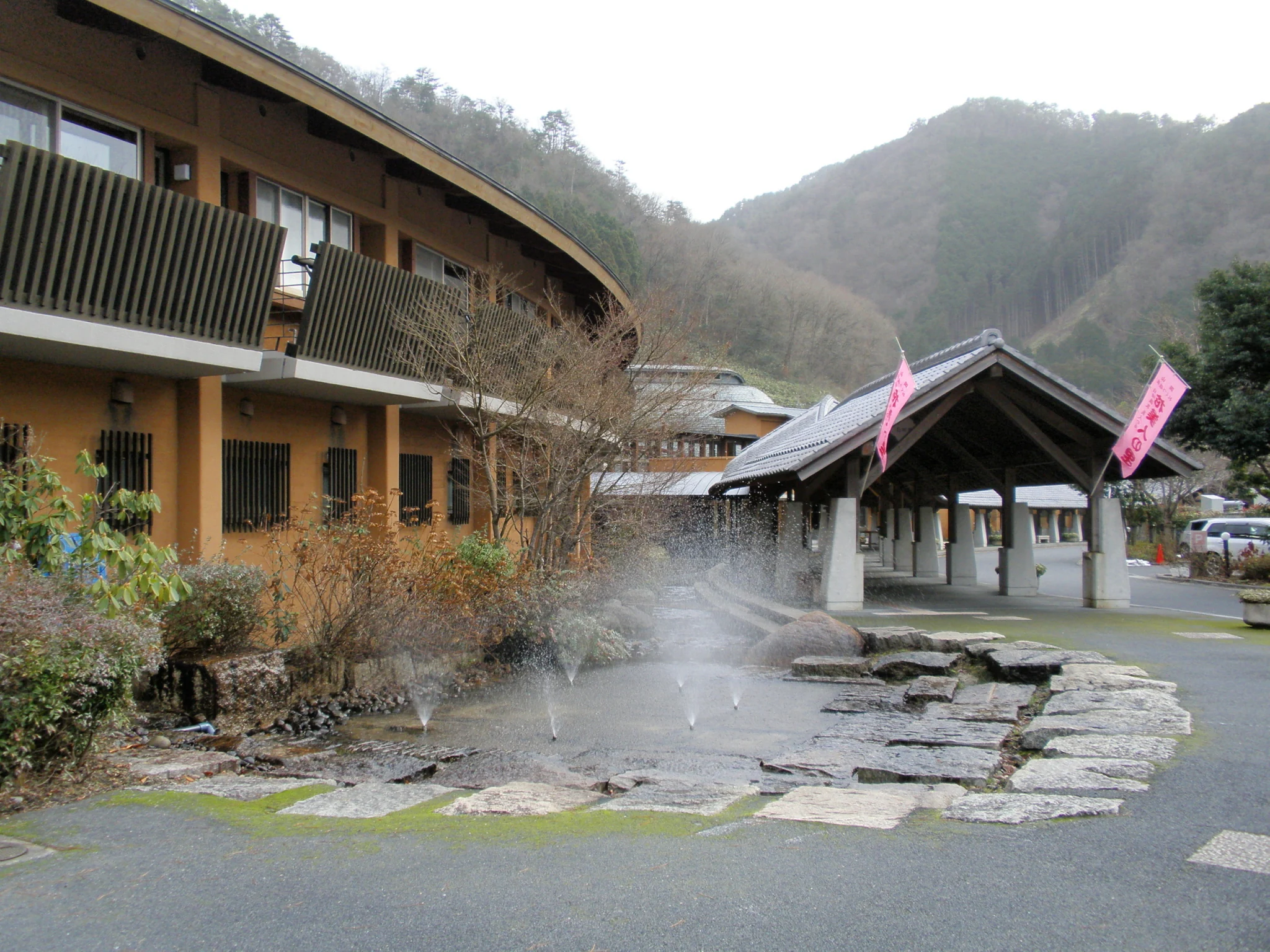
For a first public-bath visit, allow about 90 minutes to two hours for reception, storing belongings, changing, washing, bathing, hair drying and rest. This is an itinerary allowance; the bath itself can be shorter, and you can get out when hot. Entering around 13:00 and leaving ready during the 14:00 hour leaves time for the stop. Keep clothes, water and a small towel in a day bag, with main luggage at your Tsuyama accommodation.
Small towels cost ¥230 to buy and bath towels ¥150 to hire. Shampoo, conditioner and body wash are provided. An adult’s community-bus return, bath and one hired bath towel total ¥1,890, with lunch and shopping extra. With your own towel, ¥800 transport plus ¥940 bathing totals ¥1,740, making the budget straightforward before departure.
Family baths are currently suspended. Although the price page retains hourly supplements, do not treat them as an available service. If you need a shared family bathroom or assistance from a companion, choose an open private bath that accepts reservations. Hanabijin also has a paid rest room at ¥1,200 per hour. It is not a private bathroom, and food cannot be heated, kept warm or prepared there.
Weekend crowding may end admission early. If arriving on the later bus at 11:33, enter after lunch without first going far away for views. For Thursday, book a ryokan day bath before setting off or choose another area. Looking for an alternative only at the door can collide with other baths’ final admission and your return bus.
Okutsuso day baths: natural rock bottoms and private baths differ
Okutsuso day bathing runs 10:45–14:30, with last admission at 14:00. It costs ¥1,000 from junior-high-school age and ¥550 for children aged three and over, with irregular closure or maintenance days. Admission ends earlier than at Hanabijin. With the early bus, bathe in the morning, then have lunch and walk in town. If lunch has reached the 13:00 hour, do not continue at the pace of a normal late-afternoon bath.
Kagiyu and Tachiyu retain natural uneven rock bottoms connected to the riverbed. The deeper part of Tachiyu is about 120 centimetres. This distinction matters when choosing: it appeals to those wanting a spring rising from underfoot, while those needing a stable flat bottom or uncomfortable in deep water should choose elsewhere. Ordinary men’s and women’s baths are indoors. A standard day-bath fee does not include open-air baths attached to guestrooms.
Izumi-no-Yu and Kawa-no-Yu are private baths with flat tiled floors. Each session is 60 minutes, with a private-use fee in addition to admission, shown in booking according to date and other conditions. Enter your date and group size and select the private-hot-spring product. It is sold separately from accommodation and dinner-and-bath use. If assistance is needed, explain entering and leaving the tub to the facility and choose a suitable space.
Day admission includes no guestroom for rest, only limited benches and post-bath seating. For a nap, extensive luggage or a guestroom toilet, choose a plan including room use. Tattoos generally do not restrict use, but designs that may frighten other guests can lead to refusal of the large bath. Contacting the inn first or arranging a private bath makes the need easier to explain.
A short film published by Okutsuso in 2016, introducing Kagiyu and the history of Tsuyama lord Mori Tadamasa.
Another day-bath choice: add Kajikaen’s private fee to admission
The Ikedaya Kajikaen day-use page lists bathing 10:30–18:00, admission until 16:00, adults ¥1,000 and children aged three and over ¥500. It closes Wednesdays and on closure or maintenance days. It is a candidate when Hanabijin closes Thursday; check your date with the inn first. The main Tsuyama return still leaves Okutsu Onsen at 15:16, so you cannot use its full evening hours.
Private baths require reservations. Each 50-minute session costs an additional ¥2,500 or ¥3,000 according to the bath, plus admission for each person. The official example adds a ¥2,500 private fee to admission for three adults, totalling ¥5,500. Compare the cost shared among companions. Treating ¥2,500 as an all-inclusive total for three understates the budget by ¥3,000.
The official access page retains a roughly 55-minute bus description from Tsuyama. Use the operator’s October 2026 transfer timetable for this journey. The inn also lists reserved transfers from Tsuyama Station or Innosho Interchange, useful to ask about with an overnight booking. Schedule trains once the transfer is arranged; it is not a public shuttle available whenever you arrive at Tsuyama Station.
For an overnight stay, choose bedding before a room bath
Okutsuso accepts overnight guests aged 12 and over, with check-in at 15:00, check-out at 10:00 and an additional ¥150 bathing tax. Exclude it from overnight choices if travelling with a child under 12. Child tickets on its day-bath page do not establish the same overnight eligibility. For an adult group wanting an evening without bus pressure, finish the afternoon in town and check in from 15:00.
For two people needing beds, consider Ginkgo. The official description gives a Western-style room on the first floor above ground level, capacity two, a bedroom, massage chair, toilet and washbasin. Beds are its sleeping advantage; the upper floor is its access condition. If you need no stairs throughout, explain that when booking so the inn can arrange a suitable room.
Seikantei, the detached annex, sleeps five. It has Japanese rooms of six and two tatami mats, a bedroom, a wide veranda, an open-air bath deck, toilet and washbasin. For an adult family wanting one room with beds and Japanese space, this layout is easier to plan than a pure double room. Register every guest and select beds and Japanese bedding under the actual plan.
A room bath lets you bathe after resting without following shared-bath changeovers. If your purpose is simply the ordinary bath’s natural rock floor, spend first on needed bedding and meals rather than requiring an open-air-bath room from the start. If companions need privacy or fewer changing trips, prioritise a room bath or reserved private bath.
Seikantei and Chosentei can have dinner served in the room for an extra service charge of 10% of the accommodation fee, applying only to dinner. Compare that cost with the plan rather than expecting free room service in every room. Quotes depend on date, people and plan. Comparing dinner-and-breakfast, room-only and day-use prices as equivalent mixes different services.
Cancellation is calculated by guest-nights, including weather changes
Okutsuso’s accommodation terms calculate cancellation charges from the basic accommodation fee. For five guest-nights or fewer, charges are 20% seven days before, 50% three days before, 80% the previous day and 100% on arrival day or for no-shows. For six guest-nights or more, they are 20% 14 days before, 30% seven days before, 80% three days before and 100% the previous day, arrival day or for no-shows. The booking page also says individual plans may differ. Save the final plan conditions with the confirmation.
Guest-nights mean people multiplied by nights. Three adults for two nights make six guest-nights, reaching the higher bracket despite looking like a small family. Two people for one night make two guest-nights. Shortening a stay also has penalty provisions in the terms. Decide between one and two nights before paying rather than reserving extra nights for foliage conditions and cutting them at short notice.
For typhoons, snow and other weather cancellations, the booking page’s fee-waiver condition is that all expressways and public transport have stopped. If some remain operating, charges may apply under the rules. When the forecast worsens, contact the inn about arrival, rescheduling or cancellation handling and save its response. A cancelled gorge activity and a cancelled room contract are separate matters. Resting inside on a rainy day is also a way to complete the stay.
The terms also address late arrival without contact. If no arrival time was given and you have not arrived by 20:00, or if you are more than two hours past a stated arrival time, the inn may treat the contract as terminated. Contact it first if a bus delay or failed connection occurs rather than merely waiting for the next bus. This is a contract point for non-arrival, not a promise of dinner with a check-in delayed until 20:00.
Autumn 2026: staying with a car suits evening events better than chasing the last bus
Kagamino Tourism’s 2026 autumn-leaf feature lists the Okutsu Gorge foliage festival and illumination for 31 October–15 November. The wider Kagamino feature continues until 30 November, a different end date. Gorge colour is usually at its best from early to late November, with the page predicting the second week of November as the peak. Use the forecast and current colour when choosing dates rather than treating every day as peak.
Autumn road restrictions directly affect driving. The official Okayama event page lists one-way traffic 09:00–17:00 from the southern Tsuyama/Innosho Interchange side north towards Okutsu Onsen and Kurayoshi. Parking is arranged north of Otsuri Bridge towards the hot springs. Follow signs and staff. Do not drive against the flow when navigation asks for a turn, or stop arbitrarily on the road for photographs.
For evening events, prioritise driving plus an overnight stay, or set out only after confirming accommodation and movement to and from the activity area. The community bus has left at 15:16. The weekday 17:24 direct bus still requires returning to the onsen stop to wait. It supports a longer daytime stay, not a complete night outing. Establish transport after the evening event first; otherwise choose daytime foliage.
Even a stay in town needs travel between the activity area and dinner included. For a night walk, bring warmth, a light and steady walking shoes, and stay within the period’s open areas. The pothole trail closed by day remains excluded at night. For older travellers or those with luggage, rest in the room and see the gorge next day to retain the quiet pace intended for the stay.
Fairywood Glass Museum is in Kamisaibara: choose a separate rainy-day visit
Fairywood Glass Museum is at Kamisaibara 666-5, a separate transport stop from Okutsu town. From Tsuyama, take Gongo and transfer to Chutetsu Hokubu Bus; the museum gives about 110 minutes. In the operator’s October 2026 timetable, the 09:34 Kamisaibara service reaches Okutsu Onsen at 10:09 and continues to Kamisaibara Shinko Center at 10:20. Google Maps gives about 450 metres and six minutes from there to the museum entrance via Route 179; allow another 10–15 minutes for this final walk. For the return, board the same Kamisaibara route at the centre at 15:05, travelling via Okutsu Onsen and PLANT5 back to Tsuyama.
The museum opens 09:30–17:00, with last admission 16:30, closing Tuesdays and over New Year. It opens on Tuesdays that are public holidays. Admission is ¥500 for adults and university students, ¥400 for senior-high-school students, ¥300 for primary- and junior-high-school pupils and free for preschool children. It includes permanent and special exhibitions plus the workshop viewing area on the first floor above ground level. Access to watch the workshop is separate from whether production is actually under way.
For a rainy car-free day, choose either the museum or the onsen town as the main activity. Returning by bus for a bath after the museum brings two connections, final bath admission and the Tsuyama return into play. Taking the early bus does not require filling every gap. With a car, visit the museum in the morning and one Okutsu bath in the afternoon, still allowing for one-way gorge roads, parking and changing.
The museum has a lift, entrance ramp, accessible toilet and one loan wheelchair, offering an alternative for those unsuited to a slippery gorge walk. Glass experiences have separate reservations and procedures for finished work. This day-trip alternative centres on exhibitions. For glassblowing, secure a time first, make it the day’s main activity, then arrange transport and lunch.
The museum allows photographs of its works for social media, but special exhibitions on the first floor above ground level may prohibit them. Read gallery signs first. Avoid other visitors in photographs and follow notices for close views of works. For winter driving to Kamisaibara, the access page requires winter tyres or chains. City-road conditions alone cannot determine mountain journey time.
Your next overnight base determines luggage and onward transport
For a day trip, staying in Tsuyama both nights minimises luggage moves. The main 08:30–16:36 route does not rely on the weekday direct bus. Book Tsuyama accommodation and put Okutsu between those nights. Dinner back in Tsuyama and onward travel to Okayama City or elsewhere the next day leaves more space than rushing into a long journey immediately after bathing.
For an Okutsu night, check the next day’s buses after check-out as well. Room use ends at 10:00 and luggage storage follows the inn’s arrangements. If arriving in the morning, contact it about leaving main bags, then walk with a small bag. Bathing before check-in also follows your plan’s permitted times. Overnight services differ from day tickets; an early arrival does not automatically bring room access forward.
For Okayama City afterwards, plan a day at Korakuen and Okayama Castle separately. For Tottori, keep the car-free Tottori Sand Dunes itinerary for another day too. Build Okutsu around bus stops, meal times, bath reception and check-in. Let luggage follow the overnight base and the return follow the current timetable.
A few useful answers
Is there a direct bus from Tsuyama to Okutsu Onsen?
The main day-trip route takes the Gongo West Circular from Tsuyama Station stand 5 and changes at PLANT5 to the Kamisaibara route. Some direct buses also run, including the 17:24 return from Okutsu Onsen on weekdays, suspended at weekends and public holidays.
Can I walk to the Usubuchi potholes?
The existing official closure notice prohibits the entire trail south from former Otsuri Onsen to the Usubuchi potholes from 3 November 2024, with no end date. This itinerary does not use that riverbed trail.
Can I hire a family bath at Hanabijin-no-Sato?
Family baths are currently suspended. For privacy, check reserved baths at Okutsuso or Kajikaen, with admission and private-use fees calculated separately.
Can I walk from the onsen town to Fairywood Glass Museum?
The museum is in Kamisaibara and needs a separate bus or driving plan. For a rainy car-free day, make either exhibitions or bathing the focus to protect connections and the return.
What is the cleanest car-free Okutsu Gorge day-trip timetable, and what changes from December to March?
Board the 08:30 Gongo West Loop from Tsuyama Station Stand 5, changing at PLANT5 to reach Okutsu Onsen at 10:09 (¥800 total across all four community-bus legs), walk Okutsu Bridge, have lunch at the roadside station, bathe at Hanabijin-no-Sato (closed Thursdays) and return on the 15:16 bus (arriving Tsuyama 16:36). In the December–March timetable, the 10:00 bus arrives at 11:31 and the early return leaves at 13:44; winter drivers must carry snow tyres or chains.
Official information and references
Sources used in this guide.
- Chutetsu Hokubu Bus | Tsuyama routes and October 2026 community-bus revision
- Kagamino Tourism | Okutsu Gorge trail closure notice
- Kagamino Tourism | Okutsu Gorge geography and safety rules
- Kagamino Tourism | 2026 autumn-leaf feature
- Okayama Tourism | Okutsu Gorge foliage festival and traffic restrictions
- Hanabijin-no-Sato | Prices and opening hours
- Okutsuso | Day bathing and dinner with bathing
- Okutsuso | Ginkgo room
- Okutsuso | Seikantei room
- Okutsuso | Reservations and stay conditions
- Okutsuso | Accommodation terms and cancellation charges
- Ikedaya Kajikaen | Day admission and private baths
- Ikedaya Kajikaen | Access and reserved transfers
- Fairywood Glass Museum | Visitor information
- Fairywood Glass Museum | Access
- Roadside Station Okutsu Onsen operator | Tecchiriko dining, products and current calendar