Transfer at PLANT5 from Tsuyama to Okutsu Onsen for a bridge-area walk, lunch and Hanabijin-no-Sato or a ryokan day bath. Includes the closed pothole trail, 2026 autumn dates, return buses and Okutsuso rooms and cancellation terms.
- Region & Focus
- Chugoku and ShikokuItineraries
- Reading Scope
- 32 min read · 14 chapters · 5 Q&As
- Official Verification
- 16 official sources checkedUpdated November 27, 2026
- Key Topics
- ItinerariesHot springsRyokan
Chapter Route Map (tap any stop)
- Choose a hot-spring-town day trip or a night near the gorge
- Leave from Tsuyama Station stop 5 and transfer at PLANT5
- Choose your return before deciding how far to walk after lunch
- The pothole trail is closed: remove the riverbed route first
- Separate a short Okutsu Bridge walk from Otsuri Bridge gorge viewing
- Eat before bathing and distinguish different meal plans
- Hanabijin-no-Sato: the main day bath, with a different plan on Thursdays
- Okutsuso day baths: natural rock floors differ from the private baths
- Another day bath: Kajika-en charges admission plus private use
- For an overnight stay, choose bedding before deciding on a room bath
- Cancellation uses guest-nights, and rain still follows the contract
- For autumn 2026 evening events, driving and staying beat chasing the last bus
- The Fairywood Glass Museum is in Kamisaibara: choose a separate rainy-day museum trip
- Your next night determines luggage and onward transport
- Quick Q&A
For a car-free Okutsu day trip, start with the 08:30 departure from Tsuyama and 15:16 return from Okutsu Onsen. Use the day for a short walk through the hot-spring town, lunch and one bath. At the October 2026 check, an official closure notice still covered the 800-meter trail from the former Otsuri Onsen toward the Usubuchi river potholes. View the gorge from open roads and bridge areas instead. With a car, or for evening autumn events, add Otsuri Bridge views and an overnight stay.
Choose a hot-spring-town day trip or a night near the gorge
From Tsuyama, the simplest car-free version reaches Okutsu Onsen in the morning, walks around Okutsu Bridge, has lunch and uses one day bath before returning by afternoon bus. Keep gorge scenery for a driving or overnight version. With a stroller or older companions who need long rests, focus on the hot-spring town. The reasons are practical: buses require a transfer, part of the gorge is closed, and each bath has its own final reception time.
Okutsu is in Kagamino in northern Okayama Prefecture, a separate sightseeing area from Korakuen and Okayama Castle in Okayama City. If staying in the city, moving to Tsuyama the previous evening works well. If coming north by rail that morning, compare your actual arrival with the Tsuyama Station bus. Use the 10:00 version if you miss the 08:30 connection. Do not schedule an Okayama Airport landing, baggage collection and a mountain hot-spring visit all in one morning.
Okutsu Gorge covers roughly three kilometers along the Yoshii River, with Okutsu Onsen toward its upstream end. “Three-kilometer gorge” describes the distribution of scenery. A walk needs separate road, entrance and closure checks. Travelers often save Okutsu Bridge, Otsuri Bridge, the Usubuchi potholes and Hanabijin-no-Sato on one map, but the schedule must distinguish town streets, gorge roads and riverside trails.
For a first day visit, choose one bathing facility and allow changing, hair drying, rest and the walk back to the stop. An overnight stay is more suitable for a closer gorge visit and an evening in the mountains. It removes the afternoon return deadline and lets you see scenery in daylight the next day. Decide room type, age eligibility and meals when booking.
Transfer at PLANT5 from Tsuyama to Okutsu Onsen for a bridge-area walk, lunch and Hanabijin-no-Sato or a ryokan day bath. Includes the closed pothole trail, 2026 autumn dates, return buses and Okutsuso rooms and cancellation terms.
Leave from Tsuyama Station stop 5 and transfer at PLANT5
The current Chutetsu Hokubu Bus timetable, revised October 1, 2026, divides the usual day-trip journey into two stages: Gongo West Circular from Tsuyama Station stop 5 to PLANT5, then the Kamisaibara Line to Okutsu Onsen. PLANT5 is the transfer point. Okutsu Onsen is the main alighting stop for this day. Read both timetables, not just the Kamisaibara departure.
A more generous connection leaves Tsuyama Station at 08:30, reaches PLANT5 at 09:04, takes the 09:34 Kamisaibara bus and arrives at Okutsu Onsen at 10:09. The 30-minute transfer allows a toilet visit and time to organize belongings. Waiting is part of the journey: Tsuyama to the hot-spring stop takes about one hour and 39 minutes. Reusing an older “55 minutes direct” description underestimates the transport cost in time.
For a later start, leave Tsuyama at 10:00, reach PLANT5 at 10:34 and transfer at 10:54. Arrival at Okutsu Onsen is 11:33 from April to November or 11:31 from December to March. This suits lunch and a bath, with less morning walking. The 12:00 Tsuyama departure, connecting at PLANT5 at 12:51 and arriving at 13:26, suits only a short visit centered on one facility, not a full gorge walk.
Each community-bus leg costs ¥200 adult one way. Using both legs in both directions totals ¥800 per person for four rides, not a ¥200 system-wide day pass. Calculate children separately under their actual fare category. Prepare small cash for payment by leg. The operator states that major delay on either service may prevent the connection. Do not use transfer time for shopping far from the stop.
Choose your return before deciding how far to walk after lunch
The main day-trip return leaves Okutsu Onsen at 15:16 and reaches PLANT5 at 15:51, connecting to the 16:04 Gongo West Circular for Tsuyama Station at 16:36. From a 10:09 arrival, this gives about five hours in the mountains, including food, bathing and walks to and from the stop. Aim to be near Okutsu Onsen stop before 15:00, leaving the final minutes to find the sign and check direction. Do not leave the bath at 15:16.
For an earlier return from April to November, leave Okutsu Onsen at 13:42, reach PLANT5 at 14:21 and connect at 14:34 for Tsuyama at 15:06. In winter the Okutsu departure changes to 13:44. An earlier pairing leaves at 11:46, reaches PLANT5 at 12:21 and connects at 12:34 for Tsuyama at 13:06. These also help end the day early for heavy rain, an unwell companion or a closed bath.
A weekday direct service also leaves Okutsu Onsen at 17:24 and reaches Tsuyama Station at 18:19. Its timetable asterisk means no operation on Saturdays, Sundays, public holidays or substitute holidays. It uses a different fare system from the community buses. Do not rely on it as a weekend backup. The ¥800 return budget here applies only to the two community-bus stages above.
On the 08:30 version, find the return stop on arrival, then choose the bridge walk or a bath first, eat in the middle and finish the last activity sometime after 14:00. Leaving Tsuyama at 10:00 brings you close to lunch on arrival; prioritize one meal and one bath. After missing the final community-bus connection on a weekend, there is no equivalent public return capacity to substitute directly. Contact a taxi company or ask a facility to arrange one when needed, rather than assuming a vacant car will be waiting.
| Use | Departure from Tsuyama / Okutsu | PLANT5 connection | Arrival |
|---|---|---|---|
| More morning time | Tsuyama 08:30 | Arrive 09:04; depart 09:34 | Okutsu 10:09 |
| Lunch and bathing | Tsuyama 10:00 | Arrive 10:34; depart 10:54 | Okutsu 11:33; winter 11:31 |
| Main return | Okutsu 15:16 | Arrive 15:51; depart 16:04 | Tsuyama 16:36 |
| Early return | Okutsu 13:42; winter 13:44 | Arrive 14:21; depart 14:34 | Tsuyama 15:06 |
The pothole trail is closed: remove the riverbed route first
Kagamino Tourism Bureau's dedicated closure notice says the entire trail from the former Otsuri Onsen toward the Usubuchi potholes is closed after heavy rain on November 2, 2024. Closure began November 3 with no end date. At the October 27, 2026 check, the notice remained on the official site and no reopening announcement was found.
The general official attraction page still describes this 800-meter trail. Read that separately from the closure notice: one explains the potholes' location and formation, while the other determines whether you may enter on this trip. Turn back within the passable road area when you encounter barriers, warnings or staff directions. Do not descend steps from another side or look for an apparent connecting track on the riverbed.
The Usubuchi potholes are hollows in granite worn by stones moved by water over many years. Their geological interest is on the riverbed. If seeing them closely is your main aim, make reopening a condition of the visit. Compare photo positions with the area currently accessible before travel, rather than discovering on arrival that the main purpose cannot be met. A day using the hot-spring town, bridge areas and roadside views still works now.
The former Otsuri Onsen also currently offers neither bathing nor food, operating only as an information and rest stop. Its name can suggest a bath after the gorge, but actual bathing means returning to Hanabijin-no-Sato or a ryokan day bath in town. Carrying a change of clothes to a closed bath wastes effort and reduces the usable bathing time before your return.
Separate a short Okutsu Bridge walk from Otsuri Bridge gorge viewing
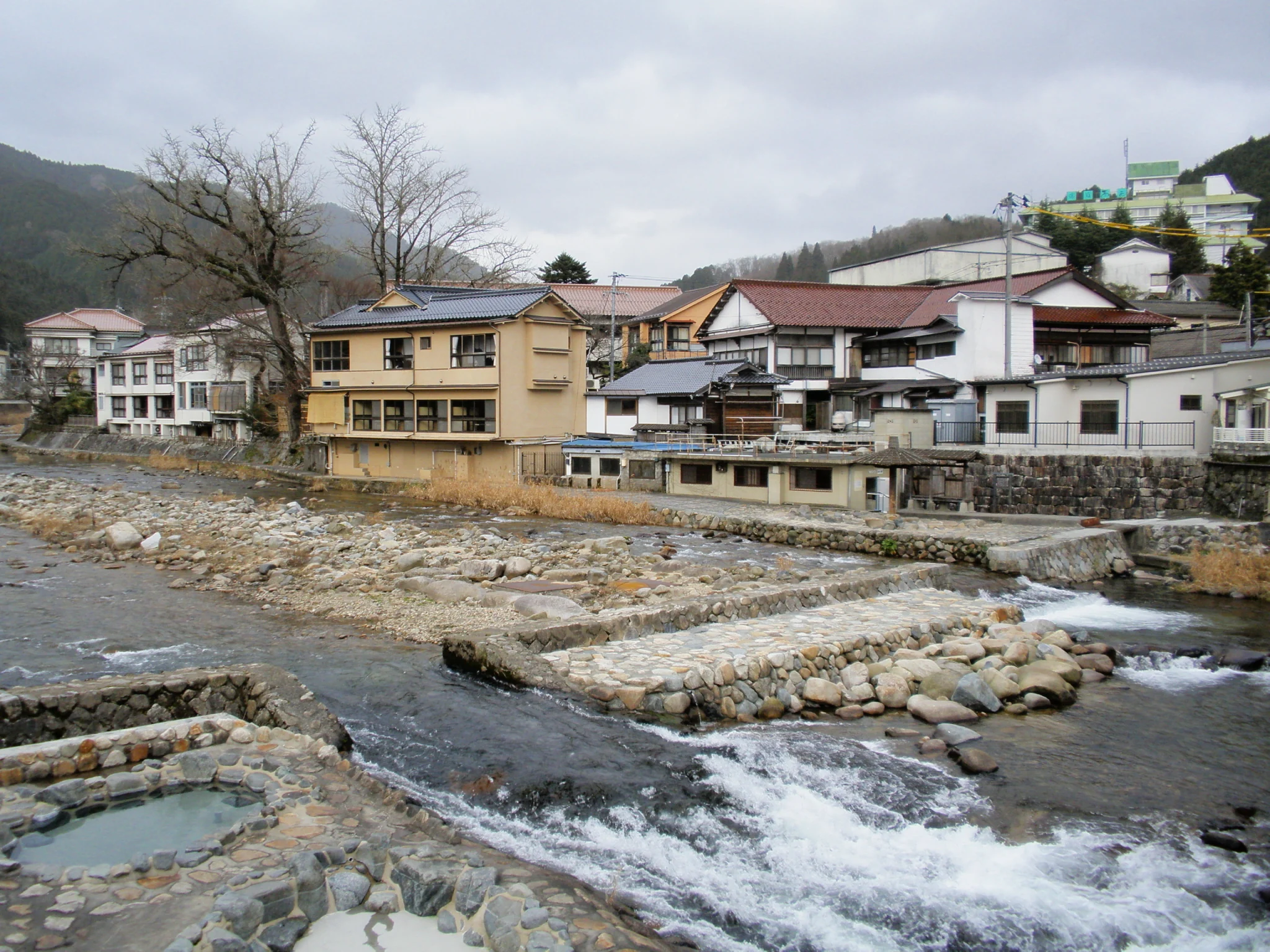
For the car-free version, stay around Okutsu Onsen stop, Okutsu Bridge and the town. View the Yoshii River, bridge and ryokan exteriors from passable streets, then return to your chosen bath. Okutsu Bridge helps orient the town and river. The nearby foot-treading washing place reflects the former local practice of washing clothes with hot-spring water. Looking at the river and entering it to bathe are different activities; use an operating bathing facility for a day bath.
Treat Otsuri Bridge as a separate gorge-viewing visit rather than part of the short town walk. Drivers can park in the currently designated area, view the bridge and gorge from open roads and turn back at the restricted boundary. Allow about an hour for parking, roadside viewing and returning to the car.
When looking at the water from a road, stop clear of traffic and move on after photos. Do not force a stroller down stone steps, slopes under wet leaves or river rocks. Choose shoes for grip. After changing into a yukata or slippers, remain near the lodging and town. With companions needing handrails, wheelchairs or seated rest, short street movements and more facility time are more comfortable than chasing every place name.
In rain or after heavy overnight rain, cancel gorge-road viewing and reduce the day-trip route to lunch and an indoor bath. Official gorge rules prohibit fire and ask visitors not to swim because of deep pools, swift currents and water accidents. Do not cross railings for pothole photos or cook beside the river. Remain in public areas when you see entrances leading to homes or ryokan.
Eat before bathing and distinguish different meal plans
Lunch queues can consume a day visit. After the early arrival, walk through town and eat near noon before Hanabijin-no-Sato. With a later arrival, eat first and choose just one bath afterward. Finish your walk before a reserved meal rather than treating the restaurant as an endlessly movable stop. The rural afternoon is short; shorten the walk if a meal wait runs long.
One lunch option is Tetchiriko at Roadside Station Okutsu Onsen. The operator's current NPO Tetchiriko website lists dining hours of 11:30–14:30, closed Wednesdays, with noodles only on Tuesdays. Spicy miso ramen, Tetchiriko ramen, set meals and curry are main choices. The product hall opens 9:00–17:00, also closes Wednesdays and sells rice balls and boxed lunches. Noodles and takeaway lunches both work for a day trip. If avoiding heat, ask which dishes contain hime chili peppers.
The day's Google Maps walking plan from Hanabijin-no-Sato to the roadside station showed about 550 meters and nine minutes. Allow 15 minutes each way for road crossings and finding entrances. On the main car-free route, take a short town walk after arriving at 10:09, reach the dining hall at 11:30, then retrace the road to Hanabijin-no-Sato. Bathe around 13:00 and leave sometime after 14:00. Although close, the roadside station needs a road connection. Do not use a straight map line to cross riverbanks or ryokan land.
On Wednesdays both dining and product halls close. Buy a ready-to-eat lunch in Tsuyama or choose another day rather than relying on a closed facility opening. Follow eating rules at rest areas and do not use fire in the gorge. Hanabijin-no-Sato closes Thursdays: retain lunch but choose a ryokan day bath whose operation you have confirmed. The same buses can work, but the bath must change.
Okutsuso also lists a day-use “dinner plus bathing” plan from 17:00 to 21:00, with dinner at 18:00 or 18:30 and no guest room. It suits people driving back or staying elsewhere nearby. Neither the 15:16 community bus nor the 17:24 weekday direct bus follows an 18:00 dinner. Arrange your departure from the mountains together with this product.
For overnight guests, dinner-and-breakfast, breakfast-only and room-only plans change the afternoon. For two meals, arrive according to the ryokan's confirmed dinner arrangement. For room only, resolve dinner first. With a booked dinner and evening foliage plans, ask about going out before or after the meal, so you do not book two activities starting at the same time.
Hanabijin-no-Sato: the main day bath, with a different plan on Thursdays
The current Hanabijin-no-Sato prices are ¥940 for junior-high-school students and older, and ¥470 for ages three through elementary school. Weekday and weekend hours are 10:00–19:00, with final reception at 18:00, closed every Thursday. It fits the afternoon of a Tsuyama day trip, but work backward from the 15:16 bus to decide when bathing ends. Closing at 19:00 does not let you leave late.
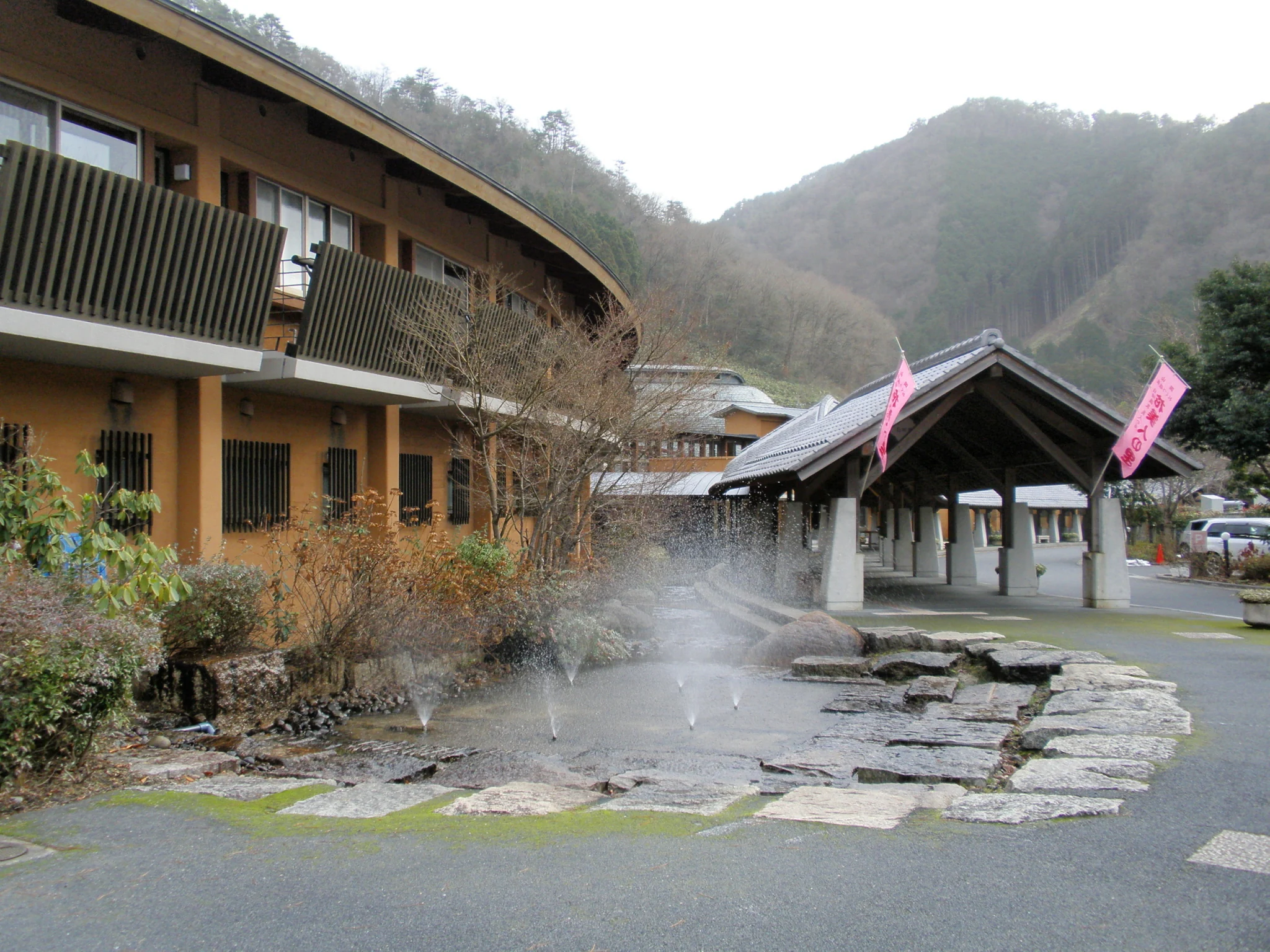
For a first public-bath visit, allow about 90 minutes to two hours for reception, storage, changing, washing, bathing, drying hair and rest. That is a schedule allowance; bathing itself can be shorter, and you should get out to rest if hot. Enter around 13:00 and get ready to leave sometime after 14:00 to retain time for the stop. Carry clean clothes, water and a small towel in your day bag, leaving main luggage at your Tsuyama lodging.
Small towels cost ¥230 and bath-towel rental ¥150. Shampoo, conditioner and body wash are provided. An adult using the community-bus return, bathing here and renting a bath towel pays ¥1,890 for those three items, with lunch and shopping separate. Bring a towel and the ¥800 transport plus ¥940 admission total ¥1,740, making the budget easy to establish before leaving.
The family bath is currently unavailable. Although the price page retains an hourly surcharge, that does not make it a service you can rent that day. For family bathing or help from a companion, choose an open, reservable private bath elsewhere. Hanabijin-no-Sato also has a private resting room at ¥1,200 per hour. That is not a private bathroom, and heating food or keeping it warm for preparation is not allowed there.
Reception may end early during busy weekends. If arriving on the later bus at 11:33, go in after lunch rather than visiting distant scenery first. For Thursday, arrange a ryokan day bath before leaving or choose another area. Finding an alternative only at the door can collide with both another facility's final reception and your return bus.
Okutsuso day baths: natural rock floors differ from the private baths
Okutsuso day bathing runs 10:45–14:30, with last reception at 14:00. Admission is ¥1,000 for junior-high-school students and older or ¥550 for children aged three and over, with irregular closure and maintenance days. Reception ends earlier than at Hanabijin-no-Sato. Use the early arrival for a morning bath, then lunch and a town walk. If lunch has already run past 13:00, do not keep the pace of an unrestricted afternoon bath.
Kagi-yu and Tachi-yu retain natural rock floors connected to the riverbed. The floor is uneven, and Tachi-yu reaches about 120 centimeters at its deeper part. This is a useful selection difference. It appeals to visitors interested in water rising from beneath their feet, while those needing a stable, level floor or uncomfortable in deep water should choose elsewhere. The ordinary men's and women's baths are indoors. A standard day ticket does not give access to a guest room's outdoor bath.
Izumi-no-Yu and Kawa-no-Yu are private baths with level tiled floors and 60-minute sessions. A private-use fee is added to admission, shown in the booking page according to date and other conditions. Enter the date and group size and select the “private hot spring” product, sold separately from lodging and dinner bathing. If assistance is needed, explain the practical requirements for entering and leaving the tub to choose an appropriate space.
Day bathing does not include a guest room for rest. Only limited benches and post-bath resting places are provided. For a nap, large luggage spread or a guest-room toilet, choose a plan including room use. The property generally does not restrict tattoos, but may refuse communal-bath use for designs that could frighten other guests. Contact it beforehand or arrange a private bath to make your needs clear.
A short film published by Okutsuso in 2016 introduces Kagi-yu and its history with Tsuyama domain lord Mori Tadamasa.
Another day bath: Kajika-en charges admission plus private use
Ikedaya Kajika-en's day-use page lists use from 10:30 to 18:00, reception until 16:00, and admission of ¥1,000 adult or ¥500 for children aged three and over. It closes Wednesdays and on property closure or maintenance days. It is a candidate for Thursdays when Hanabijin-no-Sato closes. Confirm your date with the ryokan first. The main return to Tsuyama still leaves Okutsu Onsen at 15:16, so you cannot use the full evening bath period.
Private baths need reservations and last 50 minutes. Add ¥2,500 or ¥3,000 depending on the bath, plus admission for each person. The official example of a ¥2,500 private bath and three adults totals ¥5,500. Compare the shared group cost. Treating ¥2,500 as a three-person total including admission underestimates it by ¥3,000.
The official access page still describes a roughly 55-minute bus trip from Tsuyama. For this journey, use the operator's October 2026 transfer timetable. The property also lists reserved pickups at Tsuyama Station or Innosho Interchange, worth asking about with an overnight booking. Plan trains after the pickup has been arranged, rather than treating it as a public shuttle available whenever you walk into Tsuyama Station.
For an overnight stay, choose bedding before deciding on a room bath
Okutsuso accepts overnight guests aged 12 and older. Check-in is 15:00, check-out 10:00, with an additional ¥150 hot-spring tax. Exclude it from overnight options if you have a child under 12. Child tickets on its day-bathing page do not mean the same ages can stay. Adults wanting an evening without a return deadline can keep post-lunch activities in town and check in from 15:00.
For two people needing beds, see Icho. The official listing specifies a second-floor Western room for two with a bedroom, massage chair, toilet and washbasin. Beds are its sleeping advantage; being on the second floor is its access condition. If you need a step-free stay, explain stair needs when booking so the ryokan can arrange an appropriate room.
Seikantei, the separate annex, accommodates five. It combines a six-mat plus two-mat Japanese room, bedroom, wide veranda, outdoor-bath terrace, toilet and wash area. An adult family wanting to share a room with beds and Japanese space can plan more easily here than in a standard double. Register every guest and select the actual plan's arrangement of beds and Japanese bedding.
A room bath lets you bathe without following shared-bath rotations and rest in the room between baths. If your main aim is the ordinary natural-rock-floor bath, prioritize required bedding and meals in the budget rather than limiting your search to outdoor-bath rooms immediately. If a companion needs private space or fewer changing-room journeys, a room bath or reserved private bath deserves spending priority.
Seikantei and Chosentei can arrange dinner in the room for an additional service fee of 10% of the accommodation charge, applying to dinner only. Compare that fee with the plan. Do not expect free room service for every room type. Accommodation prices depend on date, group and plan. Comparing dinner-and-breakfast, room-only and day use as though they were the same service confuses the price comparison.
Cancellation uses guest-nights, and rain still follows the contract
Okutsuso's lodging terms base cancellation fees on the basic accommodation charge. For up to five guest-nights, the listed rates are 20% seven days before, 50% three days before, 80% the previous day, and 100% on the day or for a no-show. For six or more guest-nights, they are 20% fourteen days before, 30% seven days before, 80% three days before, and 100% the previous day, on the day or for a no-show. The booking page says individual plans may have different terms. Save your final plan conditions with the confirmation.
Guest-nights are people multiplied by nights. Three adults for two nights make six guest-nights, putting even a small family in the six-or-more band. Two people for one night make two. Shortening a stay also falls under the contract's penalty provisions. Decide one or two nights before paying rather than holding extra nights for foliage and cutting them at short notice.
For weather such as typhoons or snow, the booking page's fee-waiver condition is that expressways and public transport have all stopped. If either still operates, charges may apply. When the forecast worsens, contact the ryokan about access, date changes or cancellation handling, then retain its response. Canceling a gorge activity and canceling the room contract are separate matters. Resting inside in rain can still complete the stay.
The terms also cover late arrival without contact. If no arrival time was given, failure to arrive by 20:00 may lead the ryokan to terminate the contract. If a time was given, this can happen when arrival is more than two hours late. Contact the ryokan first if buses are delayed or a connection fails, rather than merely waiting for another bus. This is a contractual non-arrival threshold, not a promise that a dinner-inclusive guest can arrive at 20:00 for a meal.
For autumn 2026 evening events, driving and staying beat chasing the last bus
Kagamino Tourism Bureau's 2026 autumn feature lists the Okutsu Gorge foliage festival and illumination from October 31 to November 15. The wider Kagamino autumn feature continues through November 30; these have different end dates. Gorge foliage is usually at its best from early to late November, with the page predicting the second week as the peak. Choose by the forecast and current colors, not an assumption that every date is at peak.
Autumn road controls directly affect driving. The official Okayama event page lists one-way traffic from 9:00 to 17:00, from the southern Tsuyama/Innosho Interchange direction toward northern Okutsu Onsen/Kurayoshi, with parking north of Otsuri Bridge on the hot-spring side. Follow signs and staff instructions. Do not go against the flow because navigation requests a turn or stop arbitrarily on the road for photos.
For an evening event, prioritize driving plus accommodation, or settle lodging and transport to and from the event area before leaving. The community bus departs at 15:16. Even the 17:24 weekday direct service needs a walk back to the hot-spring stop beforehand. It supports a longer daytime visit, not a full evening outing. Secure transport after the event first. Otherwise choose daytime foliage.
Even when staying in town, include movement between the event area and dinner. Bring warmth, a light and steady walking shoes for an evening walk, and remain within currently open areas. A pothole trail closed by day stays off the night itinerary too. With older travelers or luggage, resting in the room and seeing the gorge next day better preserves the quiet pace you wanted from the stay.
The Fairywood Glass Museum is in Kamisaibara: choose a separate rainy-day museum trip
The Fairywood Glass Museum is at Kamisaibara 666-5, a separate transport area from Okutsu Onsen town. From Tsuyama, take Gongo and transfer to Chutetsu Hokubu Bus; the museum gives about 110 minutes. In the operator's October 2026 timetable, the 09:34 Kamisaibara bus reaches Okutsu Onsen at 10:09 and continues to Kamisaibara Shinko Center at 10:20. Google Maps gives about 450 meters and six minutes from the center to the museum entrance via Route 179. Allow another 10–15 minutes for that final walk. Return from Kamisaibara Shinko Center at 15:05 on the same line through Okutsu Onsen and PLANT5 to Tsuyama.
The museum opens 9:30–17:00, with last entry at 16:30. It closes Tuesdays and over New Year, opening when Tuesday is a public holiday. Admission is ¥500 for adults and university students, ¥400 high-school students, ¥300 elementary- and junior-high-school students, and free below school age. It includes permanent and special exhibits plus the second-floor workshop viewing area. Actual glassmaking in progress is separate from the workshop simply being open to view.
On a car-free rainy day, choose the museum or the hot-spring town as the main activity. Returning by bus for a bath after the museum brings two connections, final bath reception and the Tsuyama return into play together. Even an early bus does not require filling every gap. With a car, visit in the morning and choose one Okutsu bath in the afternoon, still allowing one-way gorge roads, parking and changing.
The museum has an elevator, entrance ramp, accessible multipurpose toilet and one loan wheelchair, giving more options than a slippery gorge walk for visitors who need them. Glass activities have separate reservations and finished-work procedures. This one-day alternative focuses on exhibits. To blow glass, obtain a session first and make it the main activity before arranging transport and lunch.
The museum allows photos of works for social media, but second-floor special exhibitions may have separate restrictions. Read the gallery signs before shooting. Avoid including other visitors, and follow displays about close-up photography. For winter driving to Kamisaibara, the access page requires snow tires or chains. Do not estimate mountain travel from city-road conditions alone.
Your next night determines luggage and onward transport
For a day trip, staying in Tsuyama both nights minimizes luggage movement. The 08:30 outward and 16:36 return route does not rely on the weekday direct bus. Book Tsuyama accommodation and place Okutsu between those nights. Eat dinner back in Tsuyama and travel to Okayama City or elsewhere the next day, leaving more room than rushing to long-distance transport immediately after bathing.
For a night in Okutsu, check the next day's buses after check-out too. Room use ends at 10:00 and luggage storage follows the ryokan's arrangement. If arriving by morning bus, arrange to leave main luggage first, then walk with a small bag. Bathing before check-in also follows your plan's access hours. Overnight services differ from day tickets; early arrival does not automatically bring room use forward.
For Okayama City afterward, plan a separate day at Korakuen and Okayama Castle. For Tottori, keep the car-free Tottori Sand Dunes itinerary for another day. Build Okutsu around bus stops, meal times, bath reception and ryokan check-in. Let luggage follow where you stay and the return follow the current timetable.
A few useful answers
Is there a direct bus from Tsuyama to Okutsu Onsen?
The main day-trip route uses Gongo West Circular from Tsuyama Station stop 5 and transfers to the Kamisaibara Line at PLANT5. Some direct services also exist. The 17:24 return from Okutsu Onsen is weekdays only, with no weekend or public-holiday operation.
Can I walk to the Usubuchi potholes?
The official closure notice prohibits entry along the entire trail south of the former Otsuri Onsen toward the Usubuchi potholes, from November 3, 2024 with no end date. This itinerary does not use that riverbed trail.
Can I rent a family bath at Hanabijin-no-Sato?
The family bath is currently unavailable. For private bathing, check reserved baths at Okutsuso or Kajika-en. Admission and private-use charges are separate.
Can I walk from the hot-spring town to the Fairywood Glass Museum?
The museum is in Kamisaibara and needs its own bus or driving plan. For a car-free rainy day, focus on exhibits or bathing to avoid squeezing transfers and the return.
What is the easiest car-free Okutsu Gorge day trip schedule, and what changes in winter (Dec–Mar)?
Take the 08:30 Gongo West Loop from Tsuyama Station Stand 5, transfer at PLANT5 to the Kamisaibara Line arriving at Okutsu Onsen at 10:09 (four community-bus legs round-trip total ¥800), walk Okutsu Bridge, eat at the roadside station, bathe at Hanabijin-no-Sato (closed Thursdays), and catch the 15:16 return bus reaching Tsuyama at 16:36. From December through March, the 10:00 Tsuyama departure arrives at 11:31 and the earlier afternoon return shifts to 13:44; winter drivers need snow tires or chains.
Official information and references
Sources used in this guide.
- Chutetsu Hokubu Bus | Tsuyama routes and October 2026 community-bus revision
- Kagamino Tourism Bureau | Okutsu Gorge trail closure notice
- Kagamino Tourism Bureau | Okutsu Gorge geography and safety rules
- Kagamino Tourism Bureau | 2026 autumn foliage feature
- Okayama Tourism | Okutsu Gorge foliage festival and road controls
- Hanabijin-no-Sato | Prices and hours
- Okutsuso | Day bathing and dinner bathing
- Okutsuso | Icho room
- Okutsuso | Seikantei room
- Okutsuso | Reservations and stay conditions
- Okutsuso | Lodging terms and cancellation fees
- Ikedaya Kajika-en | Day bathing and private baths
- Ikedaya Kajika-en | Access and reserved pickups
- Fairywood Glass Museum | Visitor information
- Fairywood Glass Museum | Access
- Roadside Station Okutsu Onsen operator | Tetchiriko dining, products and current calendar