Take transport from Okayama Station to Korakuen’s Main Gate, walk past Sawa-no-ike, Ryuten and Chishio-no-mori to the South Gate, cross Tsukimi Bridge to Okayama Castle, then walk along the Asahi River. Includes the ¥800 combined ticket, senior and student fares, lunch, rain plans and family choices.
- Region & Focus
- Chugoku and ShikokuAttractions
- Reading Scope
- 30 min read · 21 chapters · 3 Q&As
- Official Verification
- 20 official sources checkedUpdated October 27, 2026
- Key Topics
- ItinerariesTravel budgetFood
Chapter Route Map (tap any stop)
- Keep the day between the garden and castle
- Getting from Okayama Station to the Main Gate
- Match your entrance to your baggage and equipment return point
- Tickets: ¥800 for adults visiting both; different choices for seniors and students
- The garden opens earlier than the castle
- Start with the open view by Enyo-tei, then approach the water
- Yuishinzan and Ryuten: changes in height and the sound of water
- Chishio-no-mori: spend time under the trees
- Nishiki-ga-oka and Kayo-no-ike for a longer walk
- Tea fields and Seiden rice fields in daylight
- Your lunch location determines your exit
- Cross Tsukimi Bridge and see both banks
- Allow an hour inside the castle and energy for the upper stairs
- Coffee inside and lunch outside
- Return equipment and baggage where you collected them
- A shorter family route: pond, Ryuten and the castle exterior
- Change the order in rain; reduce outdoor time in heavy rain
- Autumn leaves from mid-November to early December; separate dates for illuminations
- Autumn Fantasy Garden 2026: starts at 17:00, last entry at 20:00
- Autumn castle nights: keep from November 20, projections from November 21
- Return to the station, or leave Kurashiki for another day
- Quick Q&A
Spend the morning at Korakuen, have lunch outside the South Gate or near the castle, and visit Okayama Castle in the afternoon. Add a walk along the Asahi River if you have the energy. Enter through the Main Gate, leave through the South Gate and cross Tsukimi Bridge to link the two main sights without doubling back. Adults visiting both the garden and castle keep can choose the ¥800 combined ticket. Separate tickets cost less for visitors aged 65 and over and for high-school students. With a stroller or borrowed equipment, plan your exit around the return point. The castle elevator only reaches the fourth floor.
Keep the day between the garden and castle
On a first visit to Okayama, plan Okayama Korakuen and Okayama Castle for the same day, with time for lunch and the river. They face each other across the Asahi River and are easy to link on foot. There is no need to return to the station between them. Allow more time in the morning if you like plants and ponds. If you prefer Sengoku-period history and exhibitions, leave the afternoon for the keep and make the river walk optional.
One relaxed plan is to reach the garden around 9:00, eat lunch around 11:30, enter the keep at 13:00 and leave the castle area after 15:00. If you arrive in Okayama at noon, shorten this to 90 minutes in the garden and an hour inside the castle, with a meal between them. You do not need to buy every ticket first and rush to fill the remaining time. Each site has its own last admission time. If you arrive late, choose the one you most want to see.
Okayama and Kurashiki work best over two days: the garden, castle and river in Okayama, then museums and old streets in Kurashiki. To fit both cities into one day, choose one main Okayama sight before continuing to Kurashiki. Seeing everything in both will reduce time for meals and exhibitions. Use the Kurashiki Bikan Historical Quarter guide to decide how long to allow on a separate day.
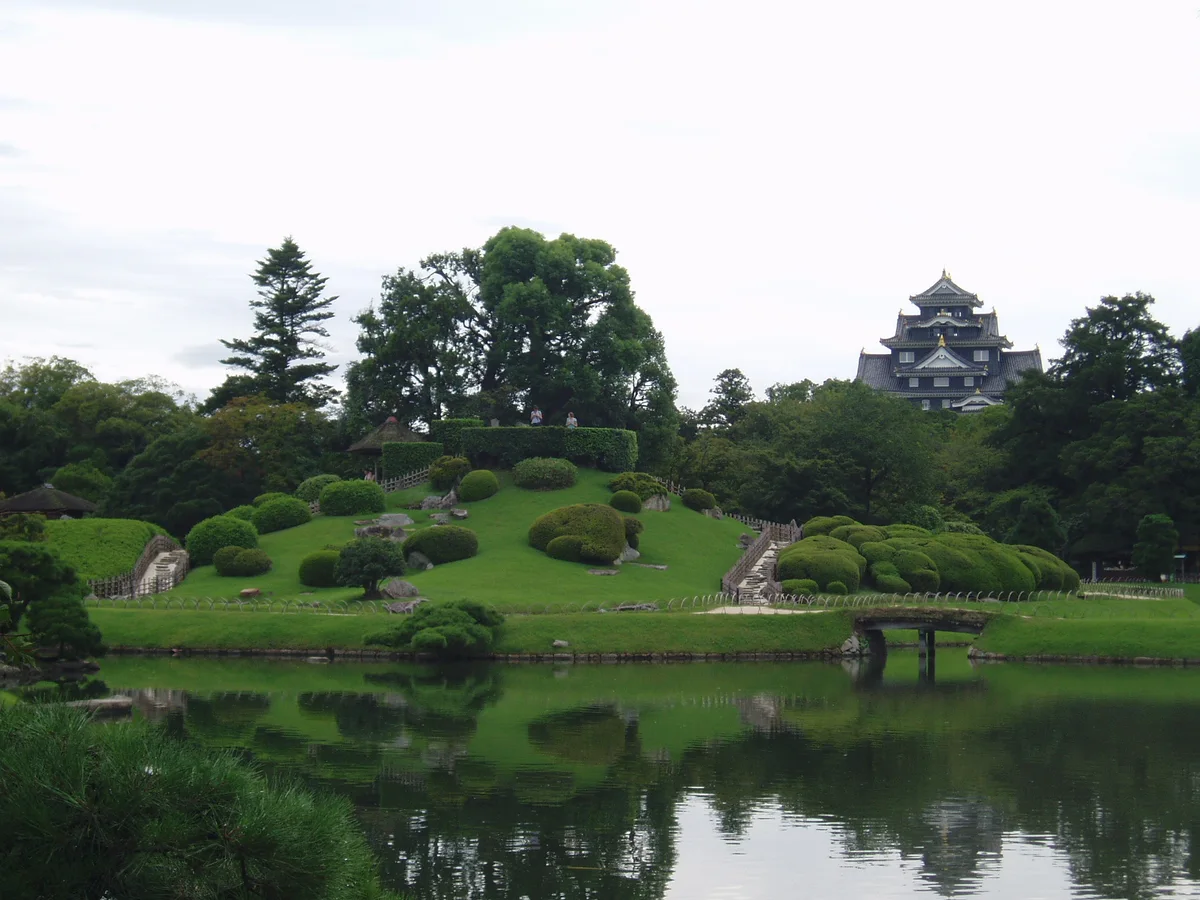
Take transport from Okayama Station to Korakuen’s Main Gate, walk past Sawa-no-ike, Ryuten and Chishio-no-mori to the South Gate, cross Tsukimi Bridge to Okayama Castle, then walk along the Asahi River. Includes the ¥800 combined ticket, senior and student fares, lunch, rain plans and family choices.
Getting from Okayama Station to the Main Gate
The Korakuen access page lists two bus services from stop 1 at the east-side bus terminal by the Korakuen Exit of JR Okayama Station. Take an Okaden bus bound for Fujiwara Danchi for about 10–15 minutes and get off at Korakuen-mae. Uno Bus operates the Korakuen Bus, which takes about 10 minutes to Okayama Korakuen. These similarly named stops belong to different operators. Save the operator name with the timetable and return stop, rather than recording only “Korakuen stop.”
The Uno Bus service page for Okayama Korakuen lists a one-way fare of ¥120, paid when you get off. Children and passengers who meet the disability-certificate conditions pay ¥60. Hareca, Hareca Half and credit cards are accepted. These fares apply to Uno's Korakuen Bus. Use Okaden's information for fares and rules on its Fujiwara Danchi route. Check the destination on the front of the bus before boarding. Sharing stop 1 does not make the two routes the same service.
For a tram ride, take a Higashiyama-bound tram from Okayama Station to Shiroshita tram stop. The garden lists about four minutes on the tram and another ten minutes on foot. Walking all the way from the station takes about 25 minutes. The tram gives you a view of the streets; the bus reduces the walk near the gate. Choose the bus to save energy for the garden. If you are already having lunch near Shiroshita or visiting the castle first, continue on foot from the tram stop without returning to the station.
Match your entrance to your baggage and equipment return point
The Korakuen Main Gate suits arrivals from the buses and parking area. It has an information desk, baggage storage and free equipment loans. Pick up the official 2026 garden map and locate Chishio-no-mori, Sawa-no-ike Pond and both gates. Use your phone map to reach the Main Gate, then the garden map for the smaller paths. Setting your destination to the middle of the whole garden can leave you outside looking for an entrance.
The South Gate faces Okayama Castle. Leave here and walk toward Tsukimi Bridge if you are continuing to the castle. This avoids returning to the Main Gate, but borrowed wheelchairs and strollers must go back to their original service point, and stored baggage must be collected there. If you left baggage at the Main Gate, plan a circuit that returns there. Collect it before deciding whether to walk to the castle or return to the station. A nearer South Gate should not create an extra return trip.
Drivers can use the garden parking lot, with 570 ordinary-car spaces at ¥100 per 40 minutes. Reservations are not available. The garden also says right turns into the lot from the Tsurumi Bridge direction may be restricted at busy times. Parking is for garden and prefectural museum visitors. If this is your only central Okayama outing and you are staying near the station, public transport saves you finding a space and collecting the car. Compare a rental-car day with your city day if you also plan to visit mountain areas elsewhere in the prefecture.
Tickets: ¥800 for adults visiting both; different choices for seniors and students
The admission guide updated in April 2026 lists ¥500 general admission and ¥200 for visitors aged 65 and over. Trial free admission for high-school students and younger runs through March 31, 2027. High-school students must show a student ID or other proof. The adult combined ticket for Korakuen and the Okayama Castle keep costs ¥800. Separate adult tickets cost ¥500 each, or ¥1,000 total, so choose the combined ticket if you will enter both. Lost ticket stubs are invalid. Keep the unused portion safe after visiting the first site.
There is no special combined ticket for visitors aged 65 and over. For an overseas senior, garden admission at ¥200 plus general castle admission at ¥500 totals ¥700, less than the ¥800 adult combined ticket. Free castle admission for people aged 65 and over applies to specified groups such as Okayama residents. Do not apply the garden's age discount to the castle. List the adult, senior and student tickets your family needs before joining the line. Everyone need not buy the same ticket.
High-school students also need a different choice: the garden is free during the trial, but the castle is free only for junior-high-school students and younger. High-school students pay general castle admission. Bring proof for the garden and buy only the castle ticket needed. The ticket desks and machines at both gates accept cash, credit cards, transport e-money and some mobile payments. The garden admission page states that online tickets are not sold. Plan to buy on site, and do not confuse a third-party experience with an official garden ticket.
The garden opens earlier than the castle
Daytime hours at the Korakuen Main Gate have two seasons. From March 20 to September 30, the garden opens 7:30–18:00, with last admission at 17:45. From October 1 to March 19, it opens 8:00–17:00, with last admission at 16:45. It opens daily year-round, with extended hours for events. In spring and summer, an earlier start lets you finish the main outdoor route before noon and spend the hottest hours at lunch or inside the castle. In autumn and winter, bring a jacket that fits in your bag.
The Okayama Castle keep normally opens 9:00–17:30, with last admission at 17:00. It closes December 29–31. On a combined visit, use the garden's earlier opening without cutting short breakfast or sleep just to arrive at 7:30. If you have only two morning hours, walk part of the garden before going to the castle after 9:00. Afternoon arrivals should record both closing times on the same itinerary.
Entering the keep at 17:00 leaves only half an hour before normal closing. Entering the autumn or winter garden at 16:45 leaves only 15 minutes. These deadlines tell you whether entry is possible; they are not good target arrival times. Families helping both children in strollers and older relatives should allow time for toilets, folding umbrellas and reaching the actual ticket desk. That is more useful than timing every transfer to the minute.
Start with the open view by Enyo-tei, then approach the water
After entering the Main Gate, walk toward Enyo-tei. Look across the lawn and pond to get your bearings. Enyo-tei was the domain lord's living quarters in the garden. The current building was reconstructed after wartime destruction. A normal garden visit covers the exterior and surrounding views; special interior openings are separate events. Seeing the open landscape before entering the woods makes it easier to recognize the trees when you return to the pond, rather than remembering only Japanese signs.
Sawa-no-ike Pond forms the main waterscape. From different banks, pine branches, grass or autumn leaves fill the foreground, and the islands overlap or separate. During the day, follow the open pond paths for different angles. Start with a wide view, then look closely at the water's edge. Photographers and slower walkers need not stop together at every viewpoint. Agree to meet at the next clearly identified building to keep the walk comfortable.
Okayama lord Ikeda Tsunamasa ordered his retainer Tsuda Nagatada to begin the garden in 1687. It was largely complete in 1700, with later lords making changes. Paths and streams link buildings, ponds and artificial hills in this strolling garden. As you move, the same water takes on a different foreground. With only an hour, choose the pond shore and Chishio-no-mori. To explore changes made over successive generations, add Ryuten, Yuishinzan and the productive landscapes at the garden's edge.
The official Korakuen video introduces garden panoramas, seasons and history, adding context to the spatial relationship between Enyo-tei, the ponds and garden paths.
Yuishinzan and Ryuten: changes in height and the sound of water
Yuishinzan is an artificial hill added under Tsunamasa's son, Tsugumasa. It gave the formerly flatter garden a higher viewpoint. If slopes and steps suit you, visit midway through the daytime route. First see the ponds and buildings from ground level, then compare their layout from above. Wheelchair users and relatives who prefer not to climb can follow the accessible map around the base. Others can make a short circuit and return to meet them. The whole family need not climb for the same view.
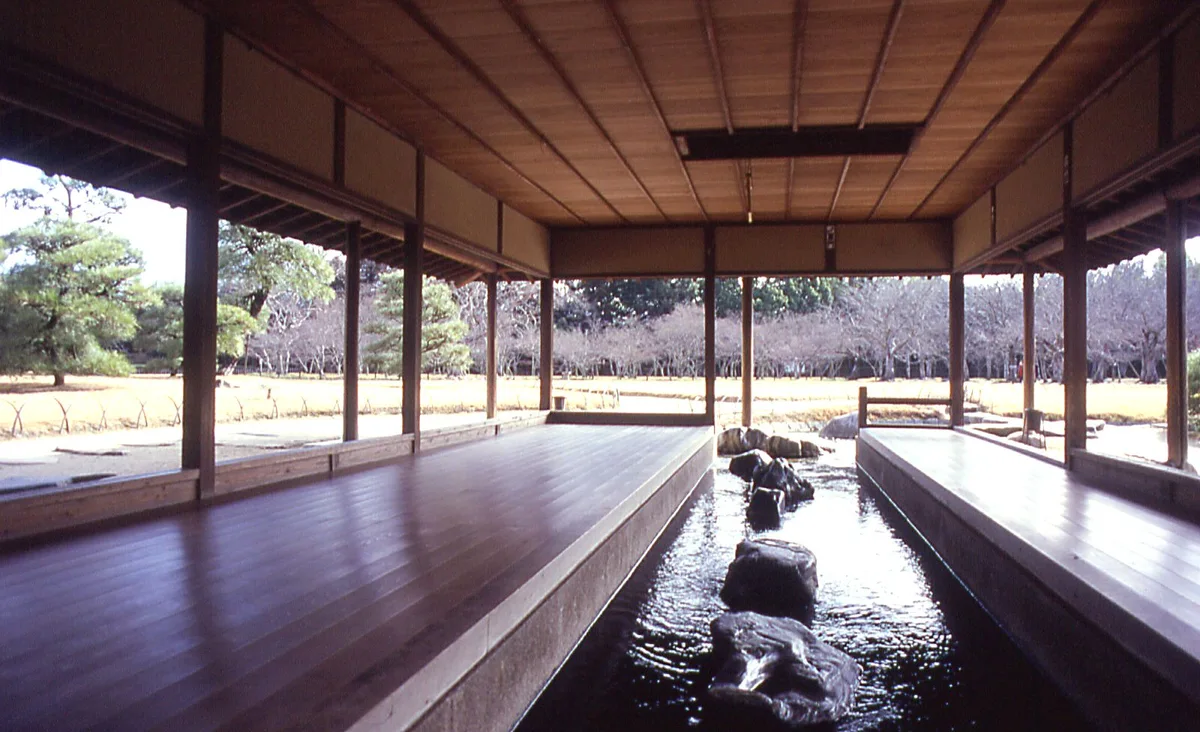
Nearby Ryuten shifts your attention to water. A stream runs through the middle of the building, with unusual stones of different colors set in it. The lord and his guests once rested here. Look first at how water enters and leaves, then at the stones and wooden structure. This makes it more memorable than treating it as another tea house. Ryuten is the name of a historic building. For food or tea, choose a tea shop with published business information.
Yuishinzan and Ryuten allow different lengths of stop. Photographers may spend longer finding angles around the hill, while older relatives focus on level waterside views before sitting at a tea shop. Visiting this area after Chishio-no-mori adds terrain and sound to the autumn colors and helps distinguish each part of the garden. There is no need to spend the same time everywhere.
Chishio-no-mori: spend time under the trees
Chishio-no-mori is a main autumn foliage area with around 100 maple trees. Its Japanese name is pronounced Chishio-no-mori. Chinese-language guides use two written forms for the grove’s name. The garden explains that “Chishio” refers to repeated dipping during dyeing. The name dates back to the garden's creation. Compared with the pond view, your attention moves closer: branching trunks, different branch heights and overlapping leaves. You need not keep searching for a photograph of the whole garden.
Once on the woodland path, let people behind pass before stopping where you will not block the route. Look at the foliage in two stages: first the branch tips against the sky, then the lower leaves. Through gaps in the trees, you can see the tree colors and brighter garden areas together. Alternating close observation and distant views suits a slower visit. Rushing to photograph every tree can make you miss changes across the grove.
Approaching the maples from the plum and cherry groves, notice how planting changes along the path. With children, look for differences in leaf shapes, fallen leaves and bark. This is more engaging than announcing more maples at the next stop. Stay on open paths; fallen leaves offer plenty to observe. Entering restricted areas, running and throwing stones into ponds are prohibited. Keep family activities to looking and searching rather than crossing roots or entering planted areas.
Nishiki-ga-oka and Kayo-no-ike for a longer walk
Nishiki-ga-oka was designed for cherry blossoms in spring and cherry and maple leaves in autumn. The garden restored its planting concept using old plans, giving it a different character from the maple-dominated Chishio-no-mori. After close woodland views, look at tree shapes, buildings among the trees and the space around them. If one side has good color, spend longer there rather than leaving immediately to complete another side route.
Kayo-no-ike Pond is known for Daimyo lotus flowers in summer. In autumn, watch water flow through the rocks into the pond, alongside the tree reflections around Nishiki-ga-oka. Listen first, then find where the water appears. This gives the stop a purpose even without photographs. In late autumn, use a low angle with rocks and water in front and tree colors on the opposite bank. These details make it different from the maple grove.
For more historic buildings, add Renchi-ken to your daytime circuit. It is one of the few garden buildings to survive wartime destruction and retains its appearance after repairs following the 1934 flood. The nearby stone bridge and island preserve their older layout too. Compare the pond, pines and different levels of stream and pond water with the open view in front of Enyo-tei. Each building faces a landscape chosen for a reason.
Tea fields and Seiden rice fields in daylight
Alongside broad lawns, Korakuen retains productive landscapes such as the tea field and Seiden rice fields. The tea field has stood here since the garden was built. It once supplied leaf tea for the lord's daily use. Seiden preserves traces of the fields that once formed part of the garden. Compare the orderly planting here with the less formal woodland and see how different uses fit within one garden.
The May Tea-Picking Festival and June Rice-Planting Festival give these landscapes a seasonal calendar. With children, start by asking why a garden has fields. History enthusiasts can compare old official plans with today's balance of fields and lawns. This section suits daylight. During an evening visit, focus on that year's open illuminated areas instead of trying to inspect every plant you missed during the day.
Your lunch location determines your exit
For a rest inside the garden, try Fukuda Chaya or Sazanami Chaya. The official tea-shop guide places Sazanami beside Renchi-ken and lists heating and air conditioning, making it a useful tea stop later in the garden walk. Fukuda Chaya is an option for matcha. If you need a substantial lunch or children need to eat at a set time, treat the meal as a separate stop. Save its location before deciding whether to leave through the Main Gate or South Gate.
Outside the South Gate toward Tsukimi Bridge are Shiromi Chaya and Hekisuien. The garden describes hand-stretched udon and other dishes at Shiromi Chaya. Hekisuien serves noodles, rice dishes and drinks about 30 meters to the right outside the South Gate. This area suits lunch after a morning in the garden and before crossing to the castle. Families wanting a fuller sit-down meal can also consider Shikisai.
Choose dishes and prices from the day's menu. Ask before sitting down about food allergies, vegetarian meals or young children's needs. Plan tea breaks and full meals separately so children do not have to last the whole afternoon on snacks. If eating late, prepare drinking water before entering the garden and have lunch after leaving. This avoids going out to find food and then returning to the garden.
You can also finish the castle first, eat toward Omotecho Shopping Street and then return to Okayama Station. This suits a late breakfast and a morning without a sit-down break. If you are hungry at 11:00, eat near the garden gates instead. Choose lunch according to where you are and how fast you walk. There is no need to cross the Asahi River repeatedly for one restaurant.
Cross Tsukimi Bridge and see both banks
From the South Gate, walk to Tsukimi Bridge and continue to Ujo Park on the opposite bank. The bridge shows how the castle, river and riverside trees fit together. Put your phone away while crossing, then find space at the end of the bridge for photographs.
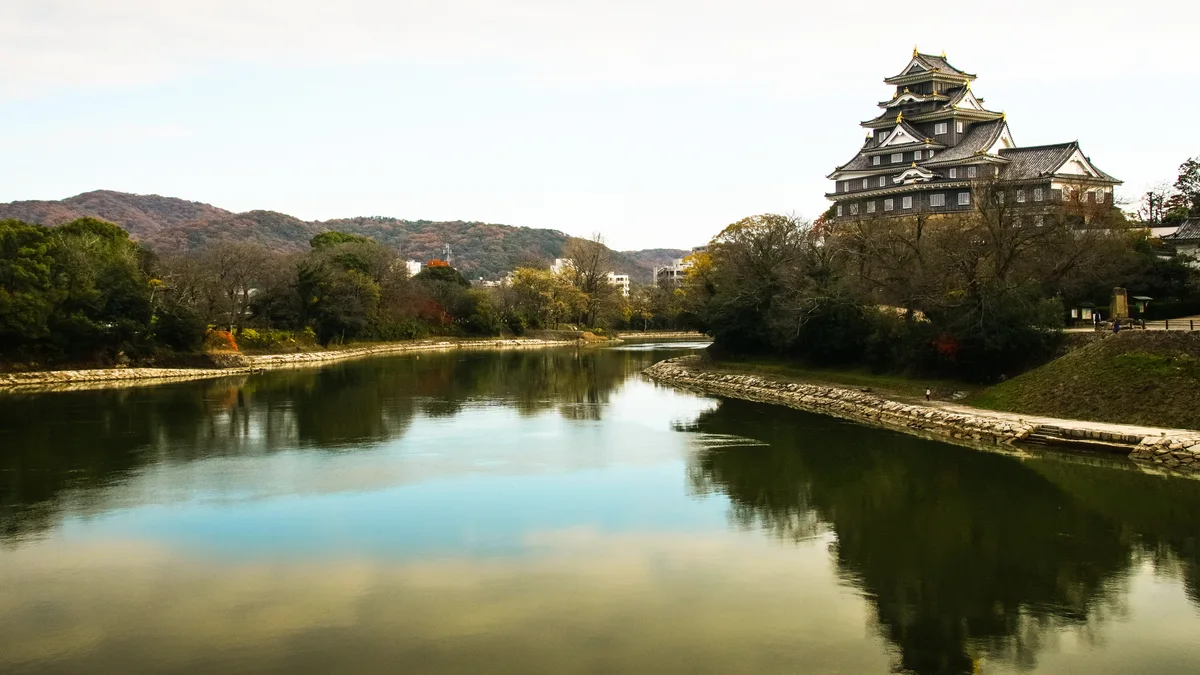
Choose separately between a riverside walk and the castle exhibitions. To see the black keep and stone walls from outside, walk through Ujo Park and along the water before deciding whether to buy a castle ticket. If you will enter, allow at least an hour inside and take exterior photographs before or after. There are steps between the river and keep entrance. Set your navigation to the keep entrance at Okayama Castle and include this walk in your arrival time.
In rain or rising river levels, use the bridge and open upper roads rather than paths close to the water. Keep young children between accompanying adults and find a wide place before stopping to look at the river. Observe waterbirds from shore and avoid chasing games beside the water. In heat, cold or strong wind, shorten the river section to the bridge crossing. Meals and the return journey can still follow the original plan.
Allow an hour inside the castle and energy for the upper stairs
The interior of the Okayama Castle keep houses exhibitions. The castle FAQ says most visitors spend around 50–60 minutes, or about 90 minutes for a detailed visit. Schedule it after lunch if your group wants to read displays or take photographs. Use the floor guide on entry, then divide your time by interest rather than spending equal time on every floor.
The elevator runs from basement level 1 to the fourth floor. The fifth and sixth floors are reached by stairs. Climb to the top for city views while you still have energy. Older relatives or those who avoid stairs can use the elevator-accessible exhibition floors for their castle visit. The castle states that the outdoor approach to the keep has only steps. Wheelchair users need to plan access to the building separately from movement inside it.
Strollers are allowed, but adults must manage the steps to the keep. Entry with strollers may also be restricted when busy, and reception can help store them. A solo adult with a young child may find a carrier, less baggage or a walk outside without entering the keep easier than lifting both child and stroller at the stairs. With several adults, decide who will carry equipment and who will look after the child before approaching.
Basement level 1 has lockers with a refundable ¥100 deposit, available during normal hours of 9:00–17:30. Reception handles larger baggage. Ujo Park has no lockers. If you go for a walk after storing bags, allow time to return. Photography is allowed in some interior areas; follow no-photography signs and avoid flash, tripods and selfie sticks. Do not stop on stairs to check your phone.
Coffee inside and lunch outside
Ujo Cafe on the keep's first floor is a place to rest during the exhibitions. Eating and drinking inside the building is restricted to the cafe area and to items bought there. Eat packed lunches or takeaway meals in a suitable place outside. If you have already had lunch, place the coffee break toward the end of your visit so you need not interrupt the displays to search for a seat.
Families can combine lunch with toilets and clothing adjustments before continuing to the keep or river. If someone will not enter the keep, meet for lunch outside and split up afterward. Avoid choosing a meeting point inside the paid area.
Return equipment and baggage where you collected them
The garden loan service provides free wheelchairs and strollers. Borrow wheelchairs at the Main Gate or parking entrance and return them to the same point. Strollers are borrowed and returned at the Main Gate. If using these services, choose a circuit from and back to the Main Gate, then continue to the castle after returning the equipment. With your own equipment, follow the accessible map and skip unsuitable slopes and steps such as Yuishinzan. The level pond and woodland paths still cover major views.
Lockers north of the Main Gate ticket desk cost ¥300 for large, ¥200 for medium and ¥100 for small. Larger bags that do not fit can be stored at the admission desk. This suits a garden visit just after arriving in Okayama, but collecting baggage brings you back to the same entrance. To leave through the South Gate, visit the castle and go straight to the station, leave bags at your hotel or station. If they are already at the Main Gate, include the return in your route.
A separate wheelchair route map is available: download the accessible garden map in advance. At night, follow the lights and the open route for that evening. One companion can navigate while another watches the ground. Stop in wider areas for rests, wait for photographers to rejoin, then continue. Keep equipment clear of narrow bends.
A shorter family route: pond, Ryuten and the castle exterior
With preschool children, start with the water around Sawa-no-ike Pond, watch the flow at Ryuten and walk through some shade before resting. Add Chishio-no-mori or the tea field only if they want to continue. If tired, return to the Main Gate to hand back a borrowed stroller. The broad lawns are part of the garden landscape. Follow signs showing where access is allowed rather than treating all the grass as a park for running.
With your own stroller, use it in the garden in the morning, then see the keep and stone walls from outside in the afternoon to reduce carrying. Families wanting to enter the keep can plan a nap around lunch, then decide after the child wakes. Two adults can briefly split up, with one accompanying the child and one viewing exhibitions. Agree on a clear meeting place and time outside the building.
Garden rules prohibit running, balls, badminton, balloons and other play equipment. Feeding red-crowned cranes, throwing stones into ponds and entering restricted areas are also prohibited. Instead, find leaf shapes, follow the direction of water and identify bridges. Looking longer at one place can make the walk easier than constantly announcing the next stop. Plan toilets after entry and before leaving, and keep water and hats within reach.
Change the order in rain; reduce outdoor time in heavy rain
In light rain, wear shoes with grip and use rain gear you can fold away. Keep the garden walk to pond paths and level main routes, skipping Yuishinzan's slopes and steps. An umbrella takes one hand, so a companion can check the map for a stroller or wheelchair user. Fold wet umbrellas near a tea shop or entrance before handling your phone. See one waterside area you want, then leave. After lunch, focus on the castle exhibitions.
In persistent rain or strong wind, put Okayama Castle first and decide whether to enter based on your group's ability to manage the approach stairs. Getting to the keep still involves an outdoor walk from transport stops, followed by steps. If paths are slippery or a young child is uncomfortable, return to the city for food and rest. Do not add a long river walk that afternoon.
For an alternative indoor visit, choose the Okayama Prefectural Museum of Art or Okayama Orient Museum based on current exhibitions, opening days and admission. They sit in the cultural district between Shiroshita and the station and can replace outdoor time. Check closures and exhibitions at the prefectural museum or Orient Museum before walking over. If closed that day, finish with lunch and the station area and save your energy for tomorrow.
Autumn leaves from mid-November to early December; separate dates for illuminations
The official flower calendar lists autumn foliage from mid-November to early December. Around 250 maples grow across the garden, with autumn colors from cherry trees, ginkgo and other species too. It specifically identifies Chishio-no-mori and Yuishinzan for maples. In early November, enjoy the garden and other autumn plants. For a maple-focused trip, place a flexible city sightseeing day in the second half of the month. Early December is still within the foliage season, but the 2026 night event ends November 29, so choose a daytime route then.
Different areas offer different viewing distances. Chishio-no-mori puts you under branches and leaves; Sawa-no-ike gives views across water to trees on the opposite bank. Around Yuishinzan, maples sit within the terrain. Open water views are still worth time before peak color. After some leaves have fallen, branch shapes and fallen leaves add another autumn view.
The calendar also lists sasanqua camellias from late October to late January and winter camellias from early November to late February. In late autumn, look for pink or white flowers in hedges near the South Gate and plum grove. Daimyo lotus flowers in Kayo-no-ike in summer, irises in June and plum blossoms in spring belong to other seasons.
Autumn Fantasy Garden 2026: starts at 17:00, last entry at 20:00
The official 2026 Fantasy Garden notice lists the autumn event from Friday, November 20 to Sunday, November 29, 17:00–20:30, with last admission at 20:00. Normal garden admission applies at night: ¥500 general admission, ¥200 for ages 65 and over, and free entry for high-school students and younger under the current conditions. For an evening-only visit, eat in the city or western outer garden first and enter soon after opening. This leaves much more walking time than arriving just before last admission.
The prefecture's 2026 autumn program lists lighting and Japanese umbrellas at Chishio-no-mori, plus “Maples under the Moon: A Path of Light to the Castle” beside Gojusan-tsugi Koshikake Chaya. Use these as your main evening stops and link them with the open-route map supplied at the entrance. Daylight reveals leaf colors and garden layout; night lighting picks out particular branches, ground surfaces and buildings. For comparison photographs, keep similar viewing directions rather than trying to repeat every shot around the circuit.
At the gate, finish ticket buying, toilets and meeting your group before entering the lit areas. Evening photography often takes longer than walking. With older relatives or children, choose just Chishio-no-mori and part of the pond. Entering at 20:00 leaves half an hour, including the walk to the exit. If you reach Okayama late, finish with dinner and a city walk, then choose another evening for an earlier garden arrival. This gives everyone time to enjoy the views.
Autumn castle nights: keep from November 20, projections from November 21
The castle's 2026 collaboration notice lists extended keep hours through 20:30 on November 20–29, with last admission at 20:00. Stone-wall projections run November 21–29, 17:00–20:30. November 20 suits a garden and keep night visit; choose November 21 onward for the projections. To visit both in one evening, see the keep first, eat, then enter the garden. Allow time for the meal and bridge crossing.
Outdoor viewing of the castle collaboration is free; the keep still requires admission. If you only want the garden and castle exterior at night, buy a garden ticket. Re-entry to the keep is not allowed during the collaboration event, so after an afternoon exhibition visit, stay outside for projections or return to the city for dinner. Follow the garden's open evening route. Chishio-no-mori and part of the pond make a full evening visit without trying to cover every daytime side path in the dark.
Return to the station, or leave Kurashiki for another day
Choose your return route from where you finish. Take a bus outside the Main Gate to the Korakuen Exit of Okayama Station. From the castle, walk to Shiroshita tram stop or continue through the streets to the station. Save your arrival stop, return direction and last departure together. Searching for services after the autumn evening event can mean a longer wait.
If leaving by Shinkansen that day, collect baggage and buy food after returning to the station, then allow time to reach your train. Bags at the garden Main Gate mean returning there first. Bags at the station let you finish around Shiroshita or Omotecho without crossing the bridge again. Drivers should also return according to their original parking location. Keep the final river walk on that side to avoid ending farther from the car.
On a Sanyo itinerary, Okayama works as a Shinkansen stop. Give Kurashiki a separate day for museums and canals, and Hiroshima another full day for city sights and food. Heading west? Continue with the Hiroshima city transport and dining guide. If staying two nights in Okayama, let Kurashiki start at an easy pace on day two. Finish the first evening with dinner after returning to the station.
A few useful answers
How much is the Korakuen and Okayama Castle combined ticket?
It costs ¥800 for adults. Separate general tickets cost ¥500 each, so entering both saves ¥200. Visitors aged 65 and over pay less separately: ¥200 for the garden plus ¥500 for the castle, totaling ¥700.
Are children admitted free to both Korakuen and Okayama Castle?
The garden trial gives free admission to high-school students and younger through March 31, 2027. High-school students must show proof. The castle is free for junior-high-school students and younger; high-school students need the ¥500 general ticket.
Can we visit both in one day with a stroller?
Follow the accessible garden map for level paths. Borrowed strollers must be returned to the Main Gate. The approach to the castle keep has steps. The interior elevator reaches the fourth floor; the fifth and sixth floors require stairs.
Official information and references
Sources used in this guide.
- Korakuen admission, combined tickets, student discounts and annual passes
- Korakuen transport and parking
- Korakuen garden sights
- Korakuen flower calendar and autumn foliage season
- Korakuen history and changes to the garden
- Korakuen baggage storage, wheelchairs and strollers
- Korakuen admission rules
- Korakuen tea-shop guide
- Fantasy Garden 2026 dates and hours
- Okayama Castle visitor guide and keep admission
- Okayama Castle 2026 collaboration, evening opening and re-entry rules
- Korakuen 2026 official garden map
- Korakuen accessible garden map
- Okayama Castle FAQ: strollers, wheelchairs, stairs and visit duration
- Okayama Castle April 2026 admission changes
- Okayama Prefectural Museum of Art
- Okayama Orient Museum
- Uno Bus: direct Korakuen Bus, fares and timetable
- Okayama Prefecture: Autumn Fantasy Garden 2026 program
- Okayama Castle: Ujo Cafe location and hours