Walk from Kurashiki Station to the Bikan Historical Quarter and plan a half or full day around canal boats, Ohara’s three galleries and historic house hours.
- Region & Focus
- Chugoku and ShikokuAttractions
- Reading Scope
- 24 min read · 18 chapters · 4 Q&As
- Official Verification
- 23 official sources checkedUpdated November 22, 2026
- Key Topics
- ItinerariesChugoku & Shikoku
Chapter Route Map (tap any stop)
- First visit: decide what you want from the day
- Start at Kurashiki-kan: choose a boat time before entering museums
- One ticket for three galleries: check hours and interests first
- What to see in the Main, Craft and Kojima galleries
- From a bank building to the Torajiro Kojima Memorial Museum
- Folkcraft and the Ohara residence: two different indoor visits
- The red-brick factory: add industrial history to the river walk
- Beyond the river: old streets or the hilltop shrine?
- Half-day and full-day examples
- With children, strollers or a slower walking pace
- From water transport to factories: three stages of the district
- An architecture route: houses, museums and public spaces
- The practical order for tickets and your return
- Shinkeien: a free garden between galleries
- Resting at Kurashiki-kan: first and second floors
- From Ohara’s craft displays to the folkcraft museum
- Photography and meals before entering galleries
- One night, two days: save unvisited galleries for tomorrow
- Quick Q&A
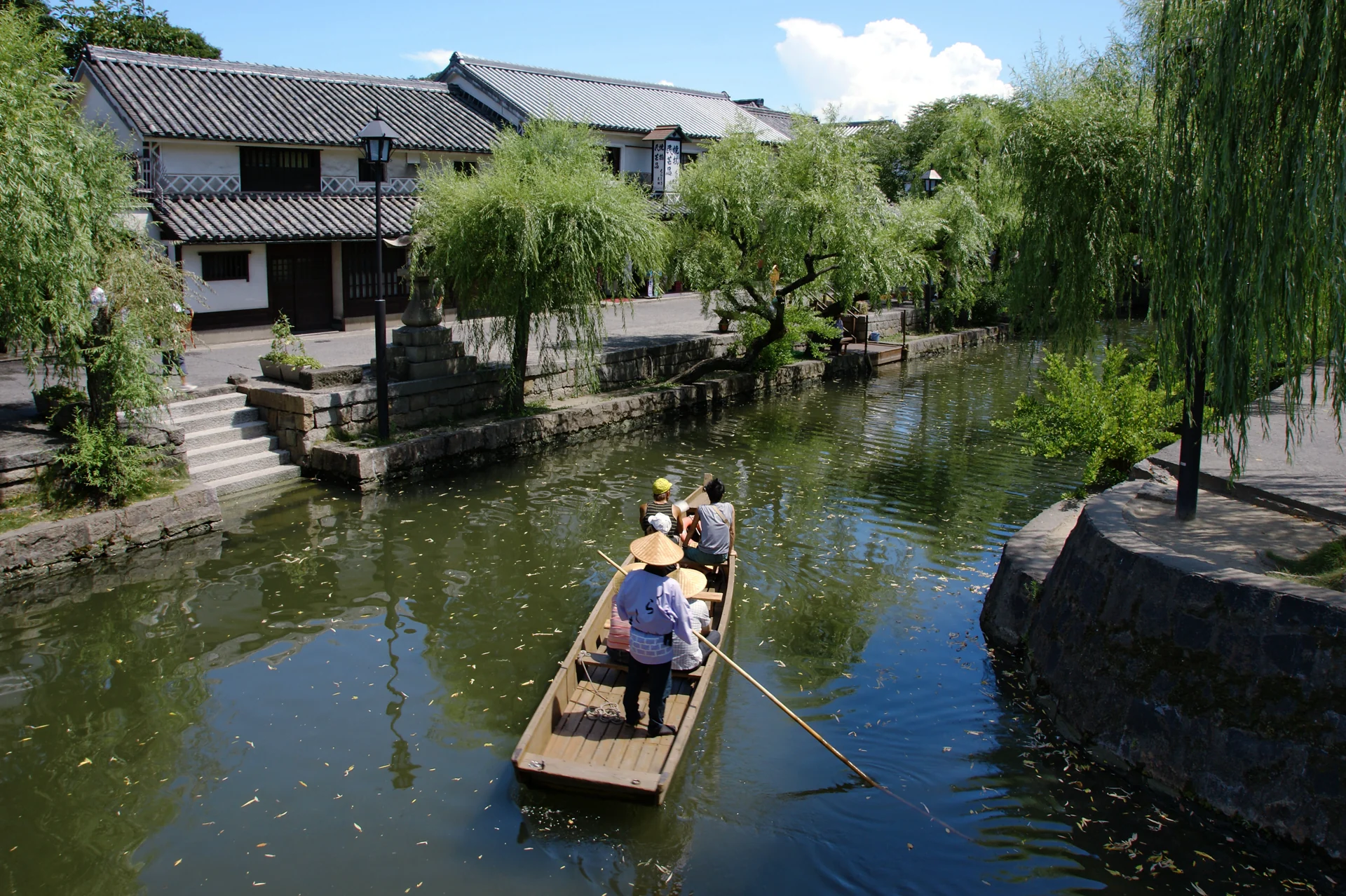
From JR Kurashiki Station’s South Exit, walk to the Bikan Historical Quarter, where the river, white-walled storehouses and museums occupy one compact district. With half a day, make either the Ohara Museum of Art or a river walk your main focus. With a full day, spread craft museums, a boat ride, historic houses and the red-brick factory between morning and afternoon. If you want a boat ride, choose its departure before fitting in museums. For an art-focused visit, check Ohara’s opening calendar first, especially with earlier winter closing times.
First visit: decide what you want from the day
Kurashiki’s station and main sights can be linked on foot. The tourism bureau gives about 13 minutes from JR Kurashiki Station to the Bikan quarter as a reference; distances to individual museums differ. Leave by the South Exit and head toward Kurashiki Chuo-dori. Buildings and shops become closer together as you approach the district. Continue toward the Kurashiki River to find Ohara’s Main Gallery and Kurashiki-kan. Mark the station, boat-ticket office and galleries you want on a map rather than using only an “old town entrance” as your destination.
Kurashiki is often a short stop after changing at Okayama. With only two or three hours, choose the river plus one museum, or the river plus a boat ride, for an unhurried visit. To see all three Ohara galleries plus a folk craft museum, historic house or meal, allow a full day. If companions have different interests, meet by the river and split up: some can enter galleries while others explore shopping streets, then meet at Kurashiki-kan or the station.
For Shinkansen transfers, distinguish JR Kurashiki from JR Shin-Kurashiki. The city tourism website gives about 17 minutes from Okayama to Kurashiki by conventional train, or eight minutes from Shin-Kurashiki. The walk to the Bikan quarter starts at Kurashiki Station’s South Exit. From a Shinkansen arriving at Okayama, change there to a conventional train. From Shin-Kurashiki, take another train to Kurashiki. Similar names do not make them the same stop. Add transfers, station exit and luggage storage to the train ride.
For the shuttle from Okayama Momotaro Airport, the tourism website gives about 35 minutes to Kurashiki Station’s North Exit. The bus stop and the South Exit toward Bikan are on opposite sides. Cross the station first, then walk to the river; the end of the bus ride is not the start of sightseeing. For a fixed boat departure or morning tour, plan from flight arrival, bag collection and the actual bus timetable. The transport page’s journey time covers only travel on the road.
Walk from Kurashiki Station to the Bikan Historical Quarter and plan a half or full day around canal boats, Ohara’s three galleries and historic house hours.
Start at Kurashiki-kan: choose a boat time before entering museums
Kurashiki-kan is the riverside tourist information center in the former Kurashiki town hall, built in 1917. Buy same-day canal-boat tickets inside. If you have booked online, follow your booking instructions. If the boat is your priority, set its departure first and choose nearby galleries around it so you do not miss sailing while absorbed in an exhibition.
As of October 27, 2026, the boat operator lists regular fares at ¥1,000 for adults and ¥500 for ages five through elementary school. Under-fives are free with a guardian. Each boat holds up to six people. Pets and use of parasols are not allowed aboard. Regular departures start at 9:30, usually every half hour, with the last at 17:00; summer heat may alter operations. Rain, strong winds, water levels or events may also stop sailings. From March through December, boats do not run on the second Monday unless it is a holiday. January and February services run only on weekends and holidays. There are no services December 29–January 3.
From October 2026, some regular departures can be booked online from midnight 30 days before sailing until 15:00 the previous day, with credit-card payment. The operator lists 14 bookable departures per day. Same-day tickets remain available from 9:00 on a first-come basis for each departure, including same-day allocations when online spaces are full. If operations are canceled, refunds can be handled at Kurashiki-kan that day. Missing a departure or other reasons unrelated to a service cancellation are not refundable. Saturdays in October and November 2026 also have night departures every half hour from 18:00 to 19:00. Plan daytime and night sailings as separate slots. For a night ride after museums, arrange dinner and the return train around it.
Online-booking questions go to the Kurashiki Visitors & Convention Bureau at 086-421-0224, weekdays 9:00–17:00, excluding weekends, holidays and the year-end/New Year period. Ask Kurashiki-kan about same-day tickets and on-site operations. Boatmen do not give foreign-language tours. Read about the river’s history beforehand if needed, then use the ride to watch the streetscape.
One ticket for three galleries: check hours and interests first
The Ohara first-visit guide explains that Magosaburo Ohara founded the museum in memory of painter Torajiro Kojima, opening in 1930. Today’s general ticket covers the Main Gallery, Craft Art and Asian Art Gallery, and Torajiro Kojima Memorial Museum. The Annex is closed long term, while Yurinso opens only for special viewings. On your first map check, distinguish the Main Gallery, Annex and Craft Art and Asian Art Gallery rather than treating similar names as one entrance.
General admission is ¥2,000. Elementary, junior-high and high-school students, or anyone under 18, pay ¥500; preschool children enter free. Each gallery stamps the ticket separately. An unstamped gallery can be visited another day; the ticket has no expiry, and normally permits no repeat entry to the same gallery. Overnight visitors can see the Main Gallery on day one and the other two on day two. Day visitors can go out for a meal between galleries. Keep the ticket until entering the last gallery.
From March through November, the Main Gallery and Craft Art and Asian Art Gallery usually open 9:00–17:00, last admission 16:30. The Torajiro Kojima Memorial Museum opens 10:00–16:00. From December through February, the first two usually open 9:00–15:00, last admission 14:30, and the memorial museum 10:00–15:00. Monday is the usual closing day, but national or substitute-holiday Mondays are open; August has no regular closing days. Temporary closures and exhibition changes also occur, so check the museum calendar before leaving. If arriving in the morning in winter, visit galleries first and leave the river walk, without a museum closing deadline, until later.
What to see in the Main, Craft and Kojima galleries
For Western and Japanese modern and contemporary art, start at the Main Gallery. Its entrance building is itself part of the early museum. Follow the rooms in order, then return to favorite works for a few more minutes. Conservation, loans and exhibition changes affect displays. For a particular work, check the current list before deciding which room deserves more time.
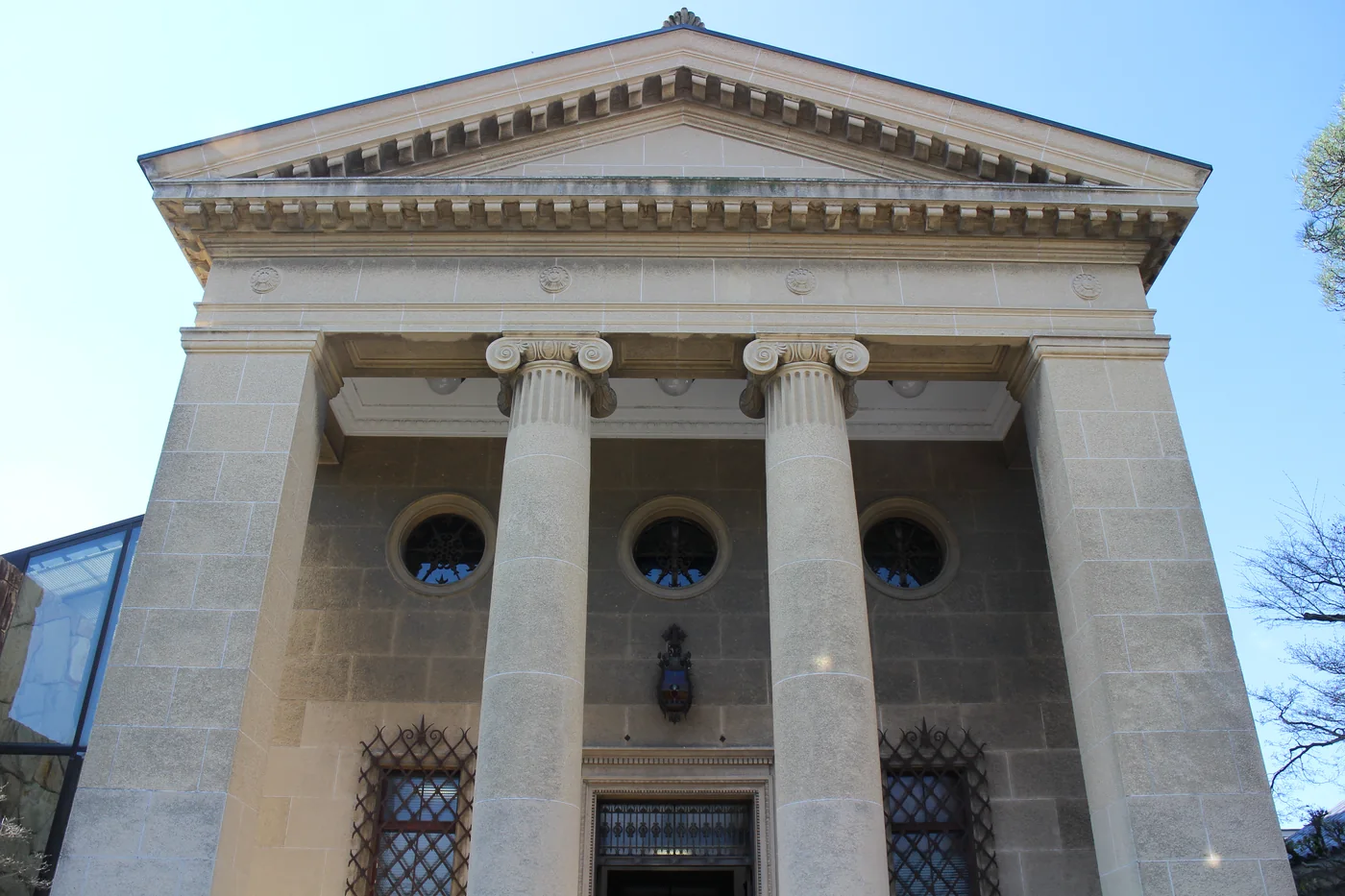
The Craft Art and Asian Art Gallery occupies converted rice storehouses. It covers ceramics, prints, dyeing and historic Asian art. After paintings in the Main Gallery, shift your attention to vessels, materials, patterns and display spaces. The museum says textile artist Keisuke Serizawa designed some rooms, and the collection includes works linked to the Mingei folk craft movement. Craft enthusiasts can spend time with ceramics and textiles rather than rushing through every room, then continue to the nearby Kurashiki Museum of Folkcraft. The floor guide lists ceramics by Shoji Hamada, Bernard Leach, Kenkichi Tomimoto and Kanjiro Kawai, woodblock prints by Shiko Munakata, and dyed works by Keisuke Serizawa. Compare vessel shapes, woodblock lines and fabric patterns, then observe the scale of the converted storehouse interiors. You can choose a medium to explore without knowing every artist’s biography.
From a bank building to the Torajiro Kojima Memorial Museum
The current memorial museum is not at the former exhibition rooms inside Ivy Square. The Ohara architecture guide places it about 80 meters northeast of the Main Gallery, in the former Daiichi Godo Bank Kurashiki Branch completed in 1922. It later served as Chugoku Bank’s Kurashiki Honmachi office, was donated to the museum in 2016, and reopened as the memorial museum in 2025. If older information sent you to Ivy Square, save the current address. There is no need to walk from the Main Gallery to the red-brick factory looking for its entrance.
Kazue Yakushiji designed both the Main Gallery and this bank building. Outside, compare the Main Gallery’s columns and triangular front with the memorial museum’s neo-Renaissance semicircular windows and slender ornament. The museum particularly highlights the stained glass in those windows. Inside are Kojima’s paintings and the ancient Egyptian and West Asian art he collected.
The Craft Art and Asian Art Gallery’s rice storehouses also reward a look from the courtyard. The architecture guide notes that the surrounding buildings do not all stand at right angles. The small red-walled storehouse is the Serizawa room. Compare it with the riverside white walls to see the different appearances of warehouses converted into galleries.
Folkcraft and the Ohara residence: two different indoor visits
The Kurashiki Museum of Folkcraft suits an interest in everyday objects and crafts. It is a separate institution from Ohara’s Craft Art and Asian Art Gallery and needs its own ticket. Its visitor guide lists general admission at ¥1,200, high-school and university students at ¥500, and elementary and junior-high students at ¥300. Exhibition content may affect prices. It usually closes Mondays, or the following day when Monday is a holiday, but opens during Golden Week and Obon. Year-end/New Year and exhibition changes also bring closures. Pairing the museums lets you compare how they display ceramics and household objects; there is no need to rush just to count more museums.
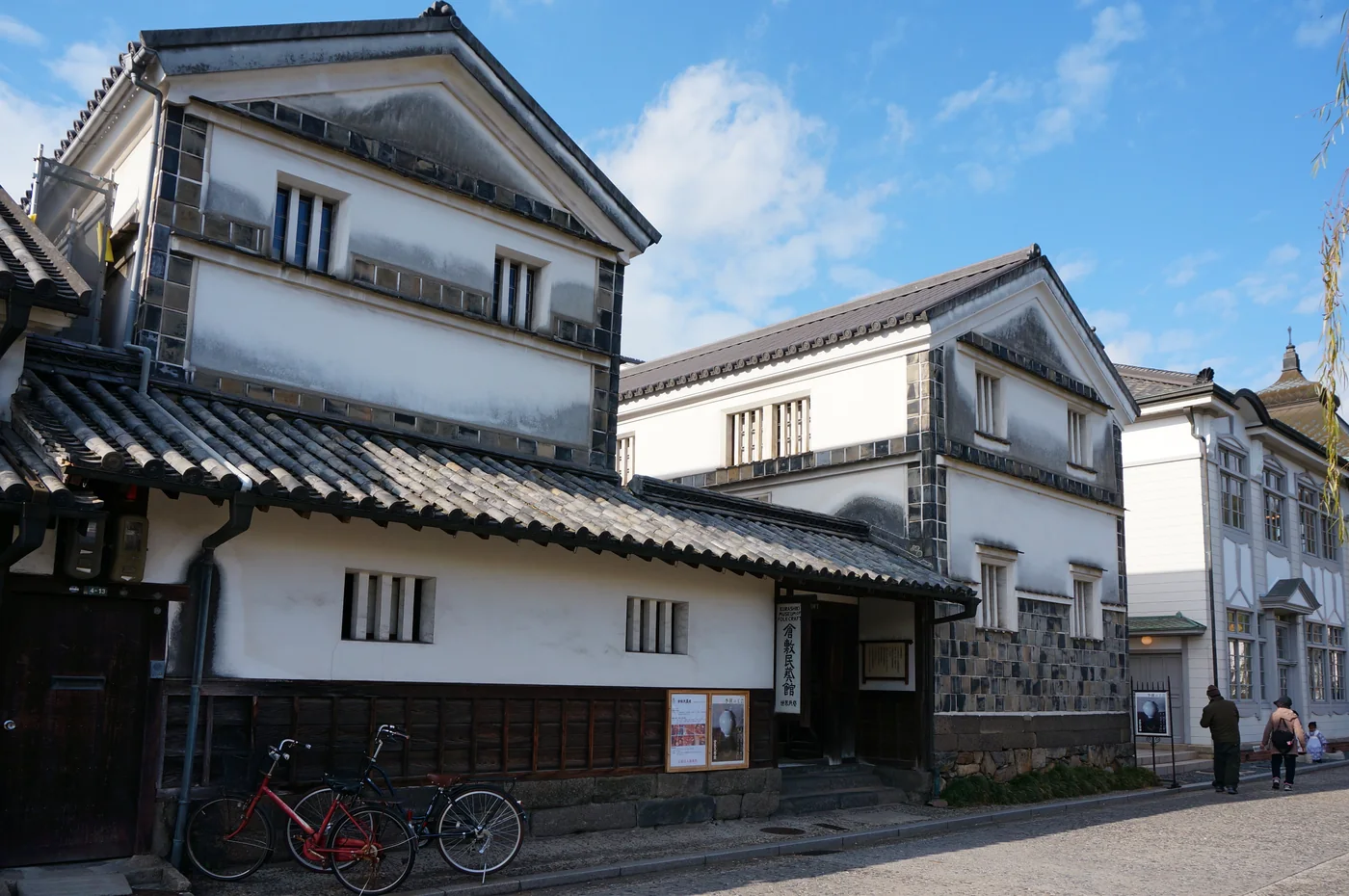
Kataraiza Ohara Hontei is the former Ohara family residence, focusing on the family and domestic spaces. Its visitor guide lists 9:00–17:00, last admission 16:30, adults ¥500, high-school students and younger ¥400, and preschool children free. It usually closes Mondays and over year-end/New Year; national or substitute-holiday Mondays are open. For companions less interested in art, it offers an indoor alternative: one group can visit the museum and another the house, then meet by the river.
Yurinso is the Ohara family’s former separate villa. Its green roof tiles change color with the viewing angle. Normally you can see the exterior from the street, while interiors open only for special viewings. It is separate from Ohara Hontei and is not part of the ordinary three-gallery Ohara ticket. Use the full names on maps and ticket screens to keep the two Ohara family buildings distinct.
The red-brick factory: add industrial history to the river walk
Kurashiki Ivy Square includes accommodation, dining, shops, workshops and the Kurabo Memorial Hall. Walking there from the river changes the scene from white-walled storehouses to a red-brick factory. For an outdoor-only visit, pause in the square. For industrial history, schedule the memorial hall during the day.
The Kurabo Memorial Hall uses a former raw-cotton warehouse to present spinning-industry history through photos, models and documents. Tourism information lists general admission at ¥300, free for overnight guests. Pottery workshops, restaurants and accommodation are separate services; check workshop times and fees before booking an activity. Outdoor visitors can make a short square stop, while history readers should leave daylight time for the hall rather than arriving after dinner.
Beyond the river: old streets or the hilltop shrine?
Kurashiki Monogatarikan is a free cultural and tourist facility with exhibits, bookable spaces, a cafe and an accessible toilet. Published hours are 9:00–21:00 April–November and 9:00–19:00 December–March, with last admission 15 minutes earlier. It closes December 29–January 3. On the station-to-river walk, use it to get your bearings, rest or regroup.
Achi Shrine stands on Tsurugatayama and suits visitors with energy for an uphill walk. Climbing from the river district is more strenuous than browsing level streets. With older companions or a stroller, agree first whether everyone will go uphill. Some can climb while others rest near the river. Continue to Ivy Square or the station after descending rather than placing the climb just before a train.
Half-day and full-day examples
Half-day art route: walk directly to Ohara’s Main Gallery on arrival and choose one or two galleries to suit opening hours. Afterwards, walk along the Kurashiki River past Kurashiki-kan and Yurinso’s exterior, then return to the station. Keep your ticket for any unstamped gallery on a future Kurashiki visit. In winter, put the galleries in the morning.
Half-day river route: book a boat or check same-day tickets at Kurashiki-kan first, then fit river walks and a meal around departure. Add one historic house or gallery afterwards. If weather cancels the boat, arrange the refund at the information center that day and use the time for Ohara Hontei, the folkcraft museum or Monogatarikan, according to that day’s opening.
Full-day art and industry route: visit Ohara’s Main Gallery and Craft Art and Asian Art Gallery in the morning. After lunch, fit the Torajiro Kojima Memorial Museum in before its closing time, then see Ivy Square’s red brick and the Kurabo Memorial Hall. If you booked a boat, fix that departure first and move galleries around it. If you prefer walking to multiple museums, drop one gallery and spend the afternoon by the river and at Achi Shrine.
With children, strollers or a slower walking pace
Put rest stops in the plan rather than trying to keep every sight. Ohara’s accessibility information lists accessible toilets on the Main Gallery’s second floor and the memorial museum’s first floor. First-aid and nursing spaces are available in the Craft Art and Asian Art Gallery and the memorial museum. The Craft gallery has no elevator; the museum provides a second-floor display guide. Ask staff about your route. Monogatarikan also has an accessible toilet.
The boat’s six-person capacity includes your companions, so check spaces for the whole family before booking. Under-fives travel free but need a guardian. Parasols cannot be used aboard; prepare hats and water before boarding in summer. If children prefer making something that day, check Ivy Square workshop times separately and keep that activity distinct from a quiet gallery half-day.
The museum also lends strollers and wheelchairs free for use inside. Its official accessibility page lists two strollers and five wheelchairs, with a reservation form. Reception desks have writing boards for communication; assistance dogs can accompany visitors in exhibition rooms. PDFs show entrance widths, slopes and visitor routes. Compare them with your own large wheelchair or stroller dimensions and plan how to view the Craft gallery’s second floor.
For drivers, the museum has no dedicated parking and cars cannot reach its front entrance directly. The accessibility page lists the nearest Kurashiki City Central Parking about 110 meters, or two minutes’ walk, away. If you need less walking, consider that parking location and follow its entrance rules. Save your parking location and return there from the last gallery rather than automatically walking to JR. Free bag storage is available beside the museum ticket desk during your visit; keep valuables yourself.
The Ohara Museum uses Fagimaru to introduce museum signs and visitor etiquette. Families can watch together before entering.
From water transport to factories: three stages of the district
White walls and willows draw attention to the Kurashiki River. Extend the walk to Honmachi and Higashimachi’s townhouses to see neighborhoods beyond the riverbank. The tourism bureau explains that Edo-period Kurashiki was directly controlled by the shogunate, with goods moved by water. Today’s sightseeing boats draw on that river-transport history and offer a water-level view of the same streets. Boat and walking routes follow the same river. With limited time, choose by interest. For both, ride first to understand riverbank positions, then connect galleries on foot.
The tourism bureau identifies white earthen-walled storehouses, patterned namako walls, latticed townhouses and river willows as Bikan features. The area became a nationally designated Important Preservation District for Groups of Traditional Buildings in 1979. Look at wall patterns, street-facing lattice windows and how buildings face the water, then compare townhouses converted into shops. Residents, businesses and visitors share parts of the district. Keep roads open while taking photos and avoid using residential entrances as sets.
Ivy Square represents another period. Tourism records say the site once held a magistrate’s office. The former Kurashiki spinning company’s head factory was built here in 1889. Its brick walls and basic structure were later retained, and in 1974 it became an accommodation, dining and cultural complex.
An architecture route: houses, museums and public spaces
For architecture, start with Kurashiki-kan’s former town hall, then Ohara’s Main Gallery, the converted rice storehouses of the Craft Art and Asian Art Gallery, and Ivy Square. A public office, art museum, old warehouses and factory lie within walking distance. Plan interior visits separately by each site’s hours and ticket. Exterior walks fit after arrival or before returning to the station.
For townhouse interiors, the Ohashi House is another option alongside Ohara Hontei. The tourism bureau describes its main house, long gatehouse, rice storehouse and inner storehouse as Important Cultural Properties. The main parts were built in 1796–1799 and later conserved and restored to their appearance around 1851. Its entrance passes through the long gatehouse, a useful starting point for understanding the layout. It needs a separate ticket from Ohara Hontei and is not covered by the Ohara Museum ticket.
To reduce paid stops, visit Monogatarikan and the river and view Yurinso from the street. There is still architecture and a neighborhood to observe, useful when companions differ in their interest in museums. For an interior, choose either Ohara Hontei or Ohashi House and give one home enough time rather than entering every building in a short visit.
The practical order for tickets and your return
List paid activities together: Ohara has a three-gallery ticket, the folkcraft museum and Ohara Hontei charge separately, and boat fares use adult and child age categories. At October 2026 prices, two adults visiting Ohara and taking a regular boat ride pay ¥6,000 total for those two activities. Meals and transport are extra. With children, check each museum’s and the boat’s age rules separately rather than applying one “child fare” everywhere.
Ohara’s ticket desk accepts cash, electronic money, credit cards and QR payments. A ¥600 audio guide is available at the desk as a dedicated device or web version, in Chinese, English and Korean. It covers the Main Gallery. For the web version, bring your own earphones and use museum Wi-Fi; numbers or QR codes beside works match the commentary. Companions needing different languages can choose individually and meet at the room exit.
Shinkeien: a free garden between galleries
Shinkeien near Ohara’s Main Gallery was an Ohara family villa, later donated to Kurashiki City by Magosaburo Ohara. The tourism bureau says its name comes from Koshiro Ohara’s art name. Yushintei in the garden has tea rooms and can host tea gatherings. After a gallery, it offers a different kind of pause from the commercial river streets. Bookable indoor spaces and events follow management arrangements.
Garden admission is free. Listed hours are 9:00–17:00, closed December 29–January 3; use of indoor spaces is charged separately. Keikendo has a 56-tatami hall, high ceilings, beams and a veranda looking onto the garden. Events or weddings may make that space unavailable to general visitors. Walk the open garden first, then continue to your next gallery.
Resting at Kurashiki-kan: first and second floors
Kurashiki-kan’s free rest facilities help families and visitors who need a short sit-down. The first floor has tourist information, lockers, vending machines and public toilets, and sells same-day boat tickets. Upstairs are a rest area and nursing room with a diaper-changing table. Site information says the second floor is reached by elevator; stairs are not for use. While waiting for a boat, confirm the day’s departure at the desk, then fit in a nearby rest or walk.
Families needing a wheelchair or stroller can ask tourist information about free loans and return points. Numbers are limited.
Kurashiki-kan’s information desk usually operates 9:00–18:00, shortened to 10:00–16:00 on December 29 and 30, and closed December 31–January 1. A separate station information center is on the second floor of the South Exit’s west building. It also usually runs 9:00–18:00, but closes December 29–January 1. For just a map on arrival, use the station desk first. For same-day boat tickets, walk to riverside Kurashiki-kan. The names are similar but functions differ; choose the right desk before moving bags or requesting equipment.
From Ohara’s craft displays to the folkcraft museum
The Kurashiki Museum of Folkcraft’s regular holdings include Okayama folk crafts, Korean Peninsula ceramics and furniture, metalwork and baskets from various regions. Special exhibitions change by theme. After Ohara’s Craft Art and Asian Art rooms, continue studying everyday objects here.
Opened in 1948 with Soichiro Ohara’s support, the museum’s first director was textile researcher Kichinosuke Tonomura. It too occupies converted rice warehouses. Collections span ceramics, glass, stonework, textiles, woodwork, lacquer and paper crafts, selected for display by theme. Instead of focusing on artists’ names as at an art museum, begin with the shapes and uses of bowls, plates and baskets. Observe how everyday objects are shaped to be held or to hold things, and how baskets use their woven materials. The shop is in the free-access area, so you can browse Okayama crafts without entering the galleries.
Photography and meals before entering galleries
Ohara’s visitor information asks visitors not to photograph works in exhibition rooms without permission and prohibits eating and drinking inside buildings. Its accessibility information identifies the passage before the Main Gallery’s second-floor toilets as a place to drink water. Give children snacks or a rest outside or at a planned meal stop before entering. For group photos, use outdoor public spaces while keeping pedestrian routes and entrances clear.
The general museum ticket and morning tour are separate arrangements. The morning tour takes visitors through seven Main Gallery rooms with a guide before opening. From May 2026 through March 2027, it runs on the second and fourth Sundays each month, 8:00–9:00, with check-in in front of the Main Gallery from 7:50. Advance online tickets cost ¥4,000. If spaces remain that day, on-site tickets cost ¥4,500 in cash. Stay with the guide during the tour. Each room has limited seats that visitors can take turns using.
After the tour, participants receive a discount voucher for re-entry to Ohara, plus admission discount vouchers for Kurashiki Archaeological Museum and Ohara Hontei. If you will continue viewing art afterwards, budget the tour fee and later admission separately.
One night, two days: save unvisited galleries for tomorrow
An overnight stay removes the need to fit every activity with a closing time into one afternoon. If you arrive after traveling from elsewhere on day one, visit Ohara’s Main Gallery first, then walk by the river to Kurashiki-kan and Ivy Square. Visit the memorial museum and Craft Art and Asian Art Gallery on day two according to opening hours.
An overnight plan also separates dusk walks from daytime galleries. Night-boat dates and departures are listed in the boat section. Choose the sailing time first, then arrange dinner and allow time to return from the restaurant to Kurashiki-kan for assembly. With early winter museum closures, afternoon arrivals can use day one for the river and townhouse streets, then enter museums the next morning.
Even without all three galleries, an overnight stay separates neighborhood walking and indoor visits. Explore Honmachi, the river and red-brick area on arrival day, then choose the folkcraft museum or Ohara Hontei next morning. If day two is Monday, choose dates using each site’s closure rules. On a national-holiday Monday, assess opening and next-day arrangements separately for each museum. Before leaving, calculate the route from your last stop to the station, including bag collection and the train. There is no need to retrace the entire Bikan quarter.
A few useful answers
Which train station should I use for the Kurashiki Bikan Historical Quarter?
The Bikan Historical Quarter is about a 13-minute walk from the south exit of JR Kurashiki Station. The local train to Kurashiki takes about 17 minutes from Okayama or 8 minutes from Shin-Kurashiki.
What can I see in the Bikan Historical Quarter in half a day?
With two or three hours, walk along the Kurashiki River and pick one museum or take a boat ride. Set aside a full day if you want to see all three Ohara Museum venues and add the folkcraft museum or a historic house.
Can I use my Ohara Museum ticket on different days?
Yes, and the ticket never expires. The standard ¥2,000 ticket covers the Main Gallery, the Crafts and Asian Art Gallery, and the Kojima Torajiro Memorial Hall. Each venue stamps the ticket on entry, so you can save any unstamped entries for another day.
Where do I buy tickets for the Kurashiki canal boats?
Same-day tickets go on sale at the riverside Kurashikikan at 9 a.m., in order of arrival. You can book some departures online from 30 days ahead until 3 p.m. the day before the ride. Same-day tickets are set aside even if the online slots sell out.
Official information and references
Sources used in this guide.
- Canal-boat operations and tickets
- Ohara Museum visitor information
- Ohara first-visit guide
- Ohara floor map
- Ohara accessibility
- Kurashiki Museum of Folkcraft
- Ohara Hontei
- Transport to Kurashiki
- Kurashiki-kan
- Kurashiki Monogatarikan
- Ivy Square
- Kurabo Memorial Hall
- Achi Shrine
- Yurinso
- Ohashi House
- Shinkeien
- Folkcraft museum exhibitions
- District introduction
- Museum morning tour
- Tourist information centers
- Official district map
- Ohara architecture guide
- Canal-boat booking details