Stay in Matsue for one night, then visit Izumo Taisha. Plan JR and Ichibata trains, the Kawato transfer, hotel areas and luggage storage in Izumoshi, with 2026 fares, the Horikawa suspension and a walking alternative.
- Region & Focus
- Chugoku and ShikokuItineraries
- Reading Scope
- 30 min read · 16 chapters · 4 Q&As
- Official Verification
- 22 official sources checkedUpdated November 8, 2026
- Key Topics
- ItinerariesRail travelFood
Chapter Route Map (tap any stop)
- Stay overnight in Matsue, then visit Izumo on day two
- Save the station names: JR and Ichibata run on opposite sides of the lake
- Start day one at Matsue Castle: admission, stairs and closed paths
- Once Horikawa boats resume, board at Otemae to fit the route
- Walk along Shiomi Nawate if boats are suspended or low bridges do not suit you
- Choose your Lake Shinji sunset spot before arranging dinner
- Have clams for dinner and save one soba meal for Izumo
- Stay by JR Matsue Station for luggage and long-distance connections
- Stay in the northeastern lakeside onsen area, or add a second night in Izumo?
- Day two by Ichibata: the Kawato transfer and ¥1,800 day pass
- Day two by JR: take your luggage toward your departure point first
- Walk the approach to Izumo Taisha, then allow separate time for Kaguraden
- Warigo, kamaage and Shinmon-dori: keep a second lunch option
- Inasa Beach is optional, with a return walk still to come
- Budget separately for the castle, boat and intercity tickets
- Build the timetable around your departure, then choose extras
- Quick Q&A
Trains connect Matsue and Izumo, but visiting part of each city on both days makes the trip harder. Stay in Matsue for one night, walk through the castle town and along the lake, then visit Izumo Taisha the next day. Decide where your luggage will go before choosing Ichibata Railway or JR.
Stay overnight in Matsue, then visit Izumo on day two
With two days and no car, keep one evening free for Matsue. Visit Matsue Castle and the castle town on day one, watch the light change beside the lake and stay overnight. On day two, deal with your luggage before heading to Izumo Taisha. You cross between the cities only once, with separate time for the castle, boat ride and shrine, and dinner need not be a hurried boxed meal before a train. If you arrive after noon, drop one indoor attraction and keep the castle and lakeshore. Visiting Izumo Taisha the next morning gives you more time than arriving in the afternoon and chasing the last service back.
This plan suits travelers arriving and leaving along the San'in rail corridor who want both an old castle and an introduction to Izumo's religious traditions. Long journeys on both days reduce your sightseeing time. Arriving in Matsue before noon on day one and leaving Izumoshi in the afternoon on day two are more useful booking conditions than simply calling the trip two days and one night. If you arrive in the evening and leave by noon the next day, choose either Matsue or Izumo. The gap between those train tickets is too short for a full visit to both.
As of October 27, 2026, leave Horikawa sightseeing boats out of the itinerary. The operator announced a full-day suspension on the 27th after a boatman was injured the previous day. Further operations would be announced once decided. The sections below retain normal ticketing and boarding details and provide a complete walking alternative. For a trip in the near term, read the Horikawa operating notice for your day before adding the boat ride.
Stay in Matsue for one night, then visit Izumo Taisha. Plan JR and Ichibata trains, the Kawato transfer, hotel areas and luggage storage in Izumoshi, with 2026 fares, the Horikawa suspension and a walking alternative.
Save the station names: JR and Ichibata run on opposite sides of the lake
Matsue Station is a JR station. Matsue Shinjiko Onsen Station is a separate Ichibata Railway station, shown on maps as Matsue Shinjiko Onsen. They are in different parts of the city, so allow time to travel between them. Treating Matsue Station on a hotel map as the Ichibata departure point will also give you the wrong departure time the next day. Search both full station names when booking a hotel and check which exit you will use and how far you will carry your bags.
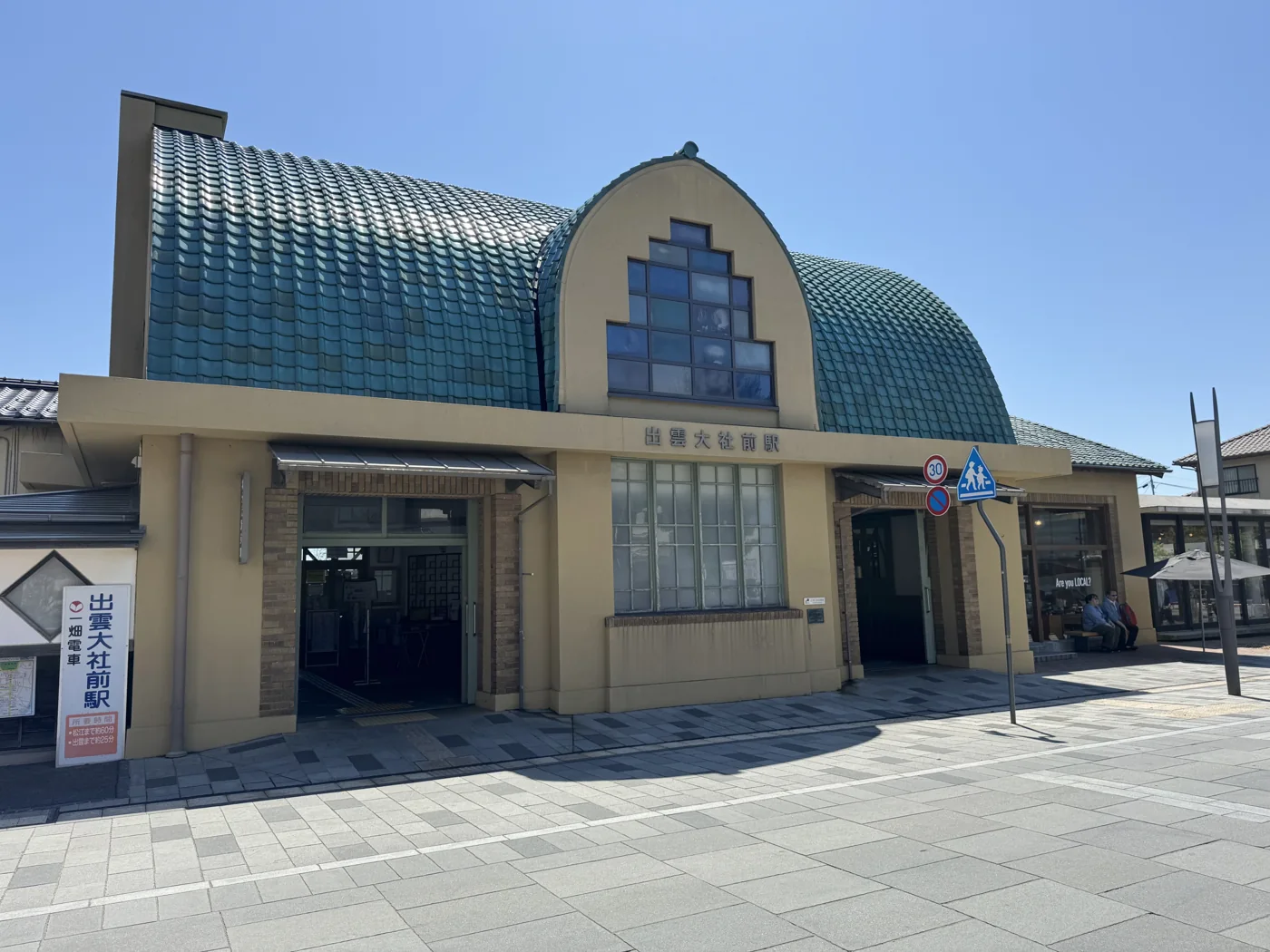
Izumo has a similar distinction. JR Izumoshi Station connects with long-distance trains; nearby Dentetsu Izumoshi Station belongs to Ichibata Railway. The station near the shrine is Izumotaisha-mae, in the Shinmon-dori area, with a walk still ahead to the shrine. On leaving a train at Izumoshi, you still need a bus or an Ichibata train to reach the shrine area. Searching only for Izumo can produce directions to the city center.
Ichibata's Kita-Matsue Line follows Lake Shinji's north shore between Matsue Shinjiko Onsen and Dentetsu Izumoshi. Its Taisha Line branches at Kawato for Izumotaisha-mae. Many journeys involve a transfer at Kawato, although some trains run through. JR's San'in Main Line follows the south shore from Matsue to Izumoshi, where you continue to the shrine. Both routes work. Choose according to your hotel, luggage and direction of departure from San'in. Treat them as separate routes with separate tickets rather than assuming a JR pass includes Ichibata trains.
| Station | Railway and location | Role in a two-day trip |
|---|---|---|
| Matsue Station | JR, south side of central Matsue | Long-distance arrivals, station-area hotels and a luggage base |
| Matsue Shinjiko Onsen Station | Ichibata Railway, urban area northeast of the lake | Starting point for Ichibata trains from Matsue toward the shrine |
| Izumoshi / Dentetsu Izumoshi stations | Adjacent stations belonging to JR and Ichibata respectively | Long-distance rail connections or onward travel to the shrine |
| Izumotaisha-mae Station | Ichibata Railway Taisha Line | Walk along Shinmon-dori to visit the shrine |
Start day one at Matsue Castle: admission, stairs and closed paths
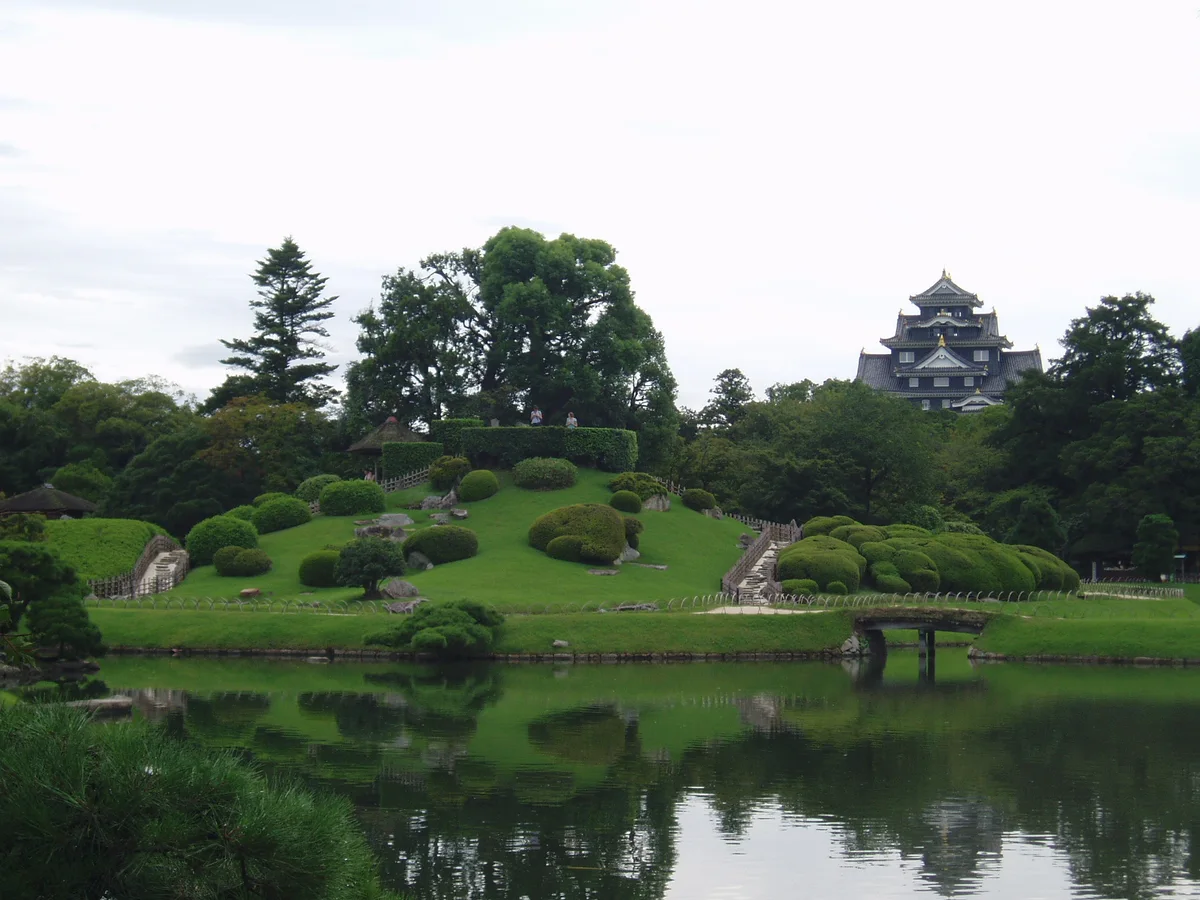
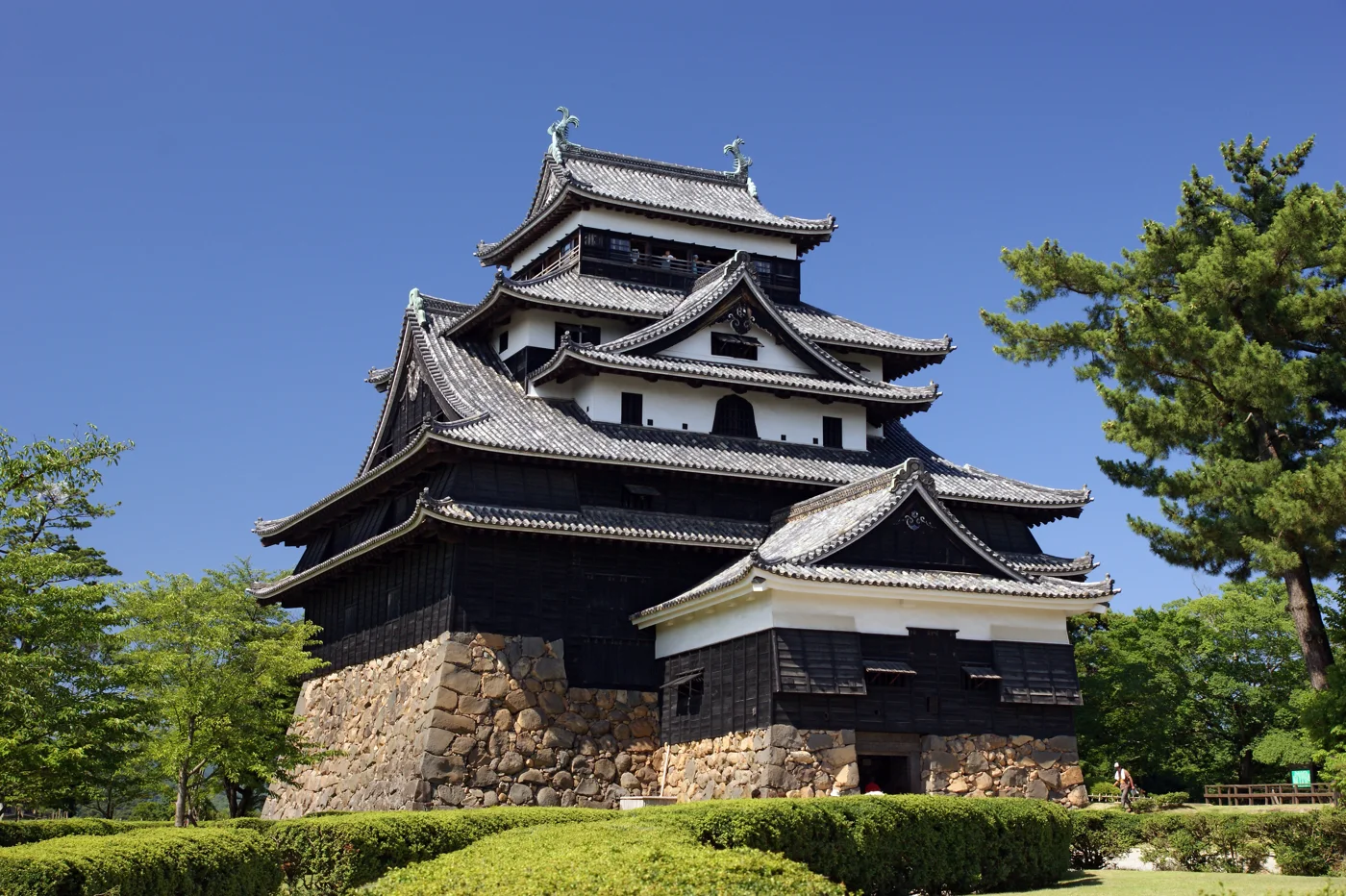
If you arrive early on day one, leave your bags before heading to the castle area. From JR Matsue Station, the Matsue Lake Line bus takes you to the Otemae area of the National Treasure Matsue Castle, an easy entrance for visitors to find. From Ichibata's Matsue Shinjiko Onsen Station, Shimane's tourism information lists a walk of about 20 minutes. You can walk it, but carrying luggage before climbing the castle stairs wastes energy. Keep a morning for the castle and grounds, then eat lunch nearby to avoid crossing the city twice.
From July 1, 2026, individual adult admission to Matsue Castle's keep is ¥1,200. Elementary and junior high school students enter free. The main enclosure is free, with its own opening hours; entering the keep requires a separate ticket. The keep opens from 8:30 a.m. to 6 p.m. from April through September, with admission ending at 5:30 p.m. From October through March, it opens from 8:30 a.m. to 5 p.m., with admission ending at 4:30 p.m. In the colder half of the year, if you reach the castle town after 3 p.m., visit the keep before stopping for a snack. The castle's admission and opening-hours page also lists two- and three-facility tickets. Buy the single ticket if you only want the keep; there is no need to add museums just to use a combination ticket.
Remove your shoes inside and put them in a shoe bag. Visiting the keep means climbing and descending stairs inside a wooden building. Easy-to-remove shoes and a small backpack that leaves your hands free are more practical than formal clothes. Older companions or anyone with sore knees can focus on the stone walls, exterior and main enclosure. Agree to meet outside while others climb, so nobody has to struggle to the top to keep the group together.
The castle's safety notice dated October 21 says the route from Kita-no-mon to Mizunote-mon remains closed, with no completion date set for safety work. Enter and leave through Otemae, then follow open roads toward Shiomi Nawate. Do not use the northern gates as a shortcut through the park. The castle has also announced major repairs planned from June 2027 through December 2030. For travel during that period, include the repair notice in your planning and visit the keep according to the areas actually open.
Once Horikawa boats resume, board at Otemae to fit the route
In normal operation, a Horikawa boat circuit around the castle-town waterways takes about 50 minutes. This differs from a Lake Shinji cruise: Horikawa takes you past moats, bridges and the castle town, while the other cruise goes out onto the lake. Choose Horikawa for views of the streets around Matsue Castle from the water. For a lake sunset cruise, check Lake Shinji services separately and keep the fares and meeting points distinct.
With the castle and lunch together, Otemae Hiroba is the most convenient boarding point. Normal official intervals are 15–20 minutes at Otemae and 20–30 minutes at Fureai Hiroba, with waiting time added to your visit. Karakoro Hiroba has no regularly scheduled originating services: you can board only when a boat arriving from another landing has space. This matters without a car. With one fixed afternoon slot, waiting at Otemae is a firmer plan than hoping for an empty seat at Karakoro. The operator's fares and timetable explain each landing's rules.
Individual one-day boat tickets cost ¥2,000 for adults, ¥1,600 for junior and senior high school students, ¥1,000 for elementary school students and ¥500 for preschool children. One preschool child per adult travels free. These age groups differ from Matsue Castle's: junior high school students enter the keep free but pay the middle-category boat fare. Adults pay for the full one-day ticket on their first ride; this is not urban transport charged by the stop.
The normal seasonal timetable runs from 9 a.m. to a last departure at 5 p.m. from March through September, and from 9 a.m. to a last departure at 4 p.m. from October through February. Ordinary landings close admission 10 minutes before the end of operations; Karakoro closes it 20 minutes before. After buying a ticket, return to the waiting room five minutes before departure. These are deadlines. Allow about 90 minutes in the afternoon for the walk to the landing, tickets, waiting and the full ride. If boats remain suspended, use the walking route in the next section and keep your lakeside evening.
This official Horikawa video shows the onboard view and scenery along the banks. Use it to compare a boat ride with a walk beside the water.
Walk along Shiomi Nawate if boats are suspended or low bridges do not suit you
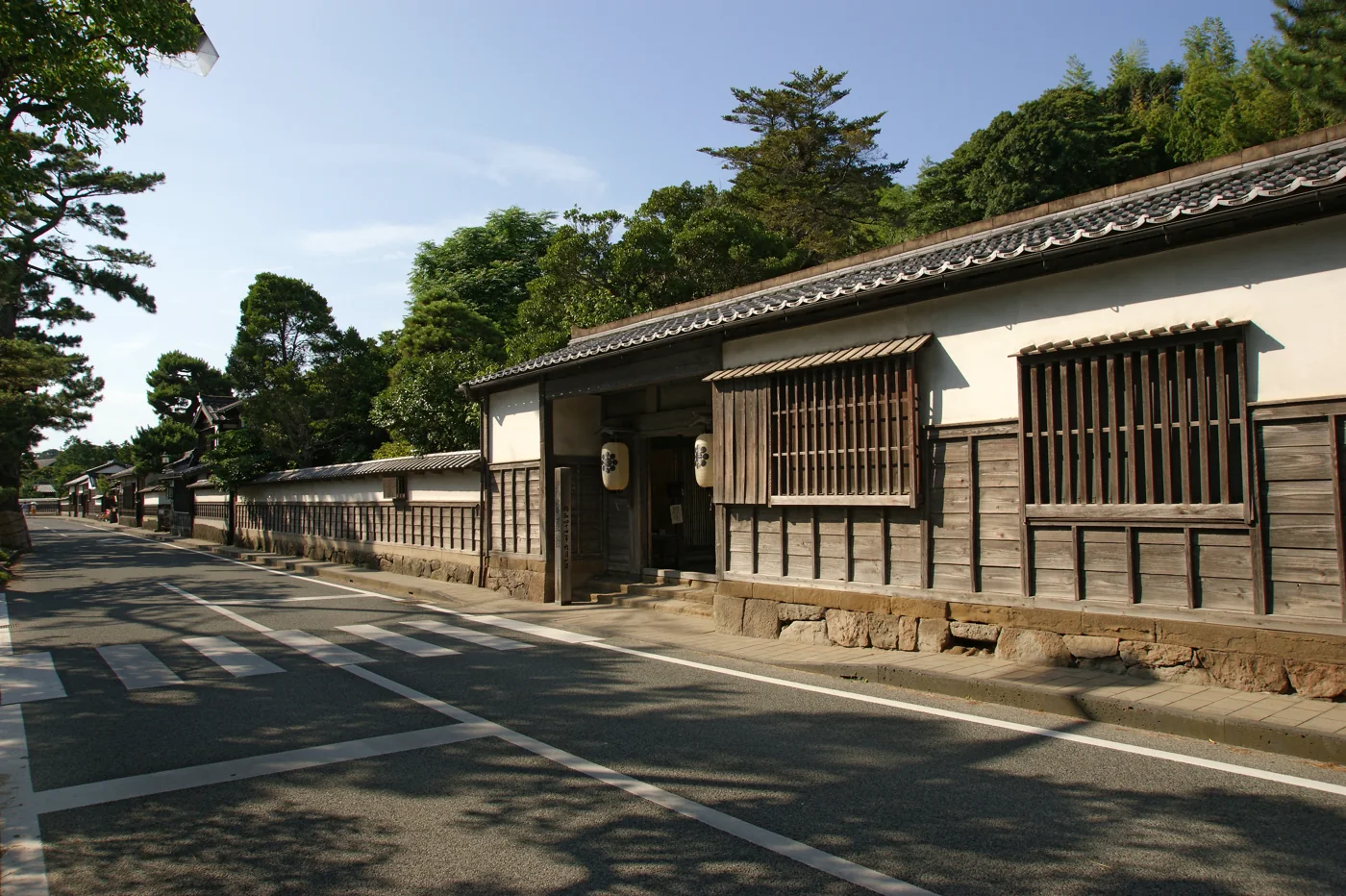
For an afternoon without the boat, leave the castle at Otemae and follow ordinary roads outside the moat toward Shiomi Nawate. Avoid the north gate and the closed path in the northeastern castle grounds, then return toward Kyomise and Karakoro for a break. Waterways and old streets are still central to Matsue. Walking lets you stop for stone walls, tree shadows and bridges at your own pace. Use the time saved from the boat ride for lunch and tea rather than adding a distant attraction. Shiomi Nawate adjoins the castle and rewards a slow walk; navigation estimates are a poor basis for fitting every museum into a schedule. If Lafcadio Hearn interests you, choose his memorial museum or former residence for a longer visit. If the castle and sunset matter more, leave both for another trip. Matcha and a Japanese sweet after lunch give your feet a rest after the morning's stairs. Choose a shop with seats, near your route out of the castle area, so the group need not backtrack for a distant cafe.
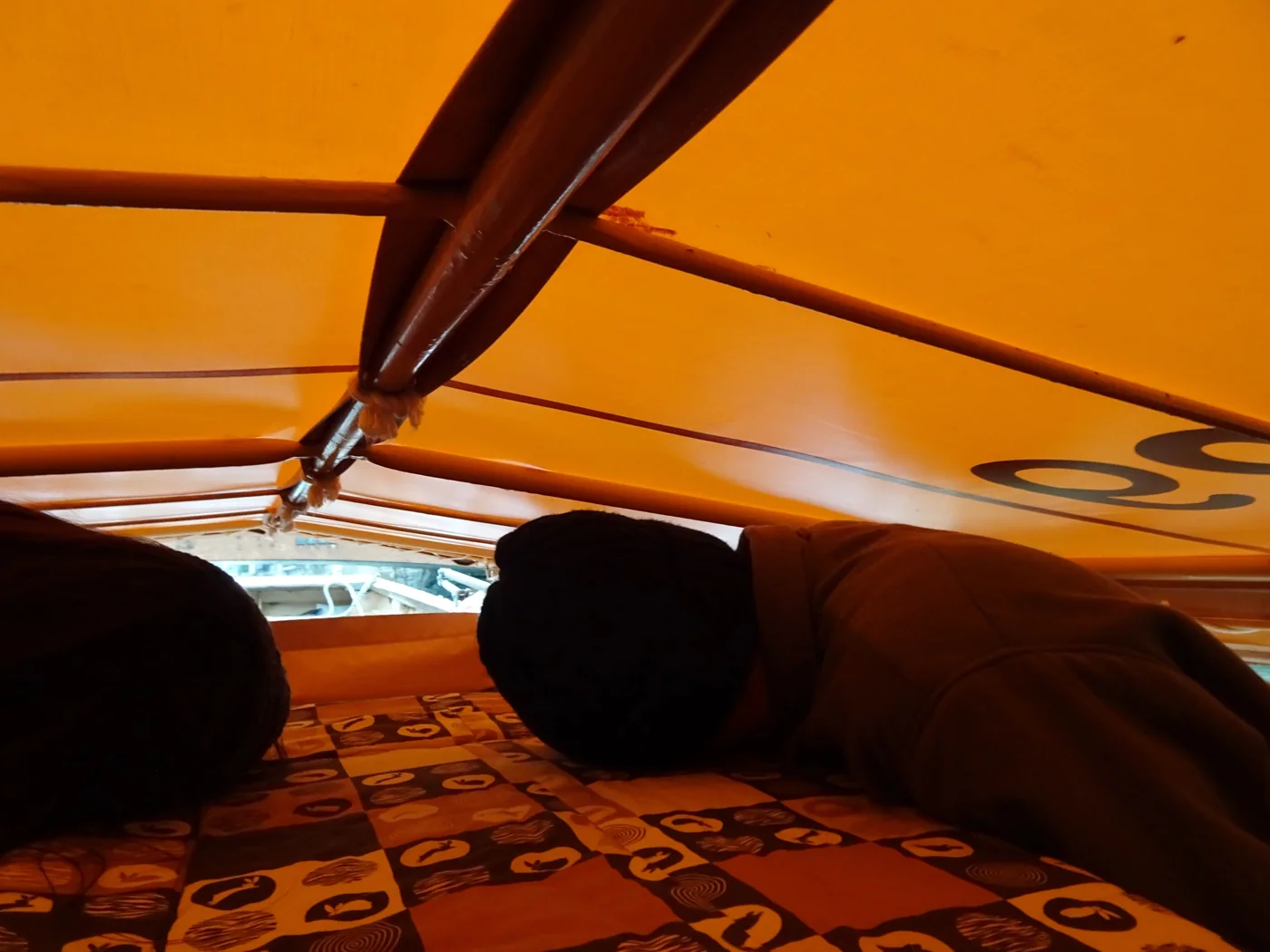
Horikawa boats lower their roofs to pass beneath low bridges. Passengers must adjust their posture as the crew directs. If your back, knees or neck have limited movement, explain your needs at the landing before buying a ticket and decide whether the ride suits you. With babies or small children, plan how to hold them, manage bags and get on and off. Permission to ride does not mean you can push a stroller into the cabin. The walking route is easier to adapt for these companions, with breaks whenever needed and museum visits taken in turns.
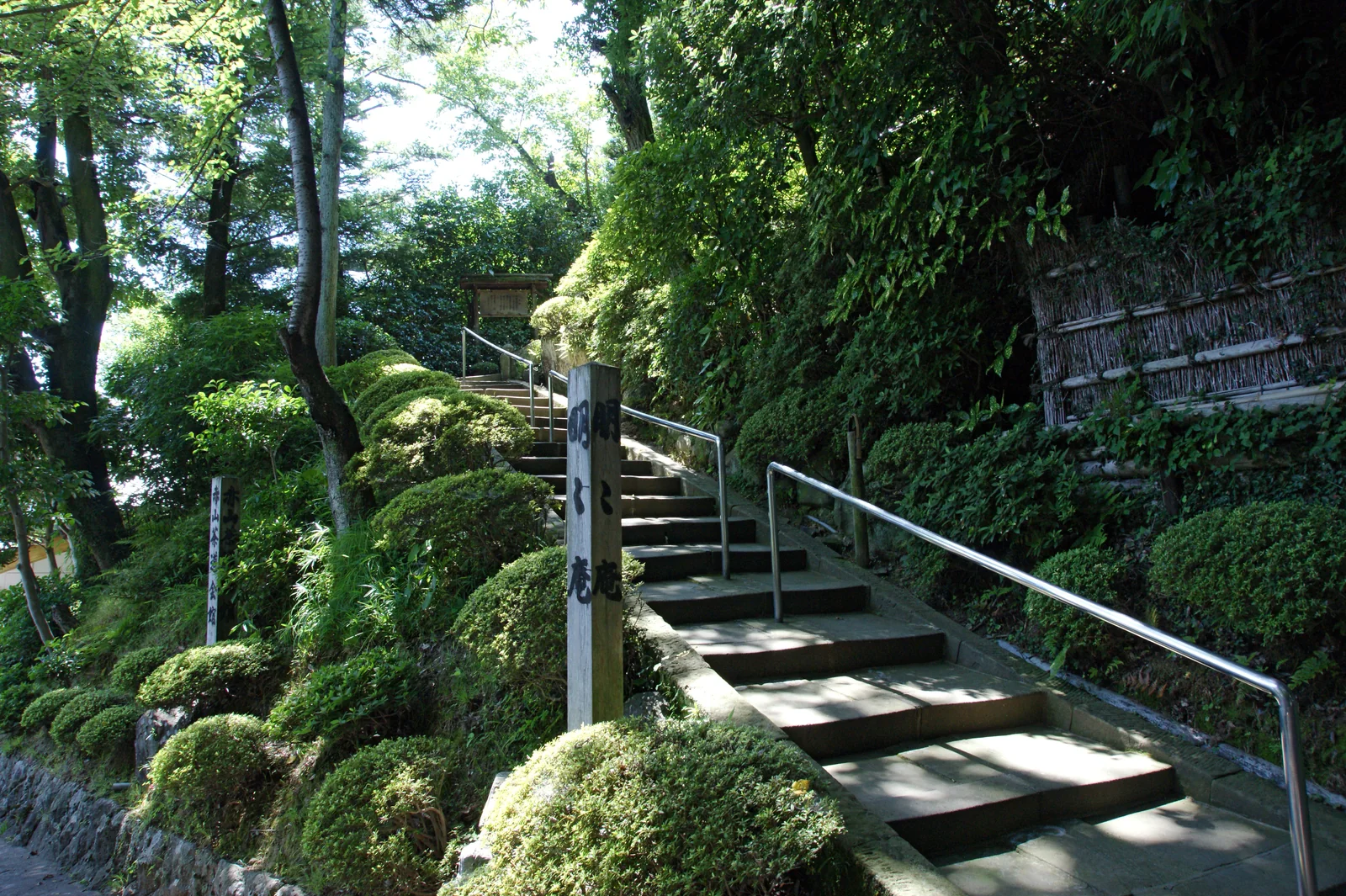
For a tea-culture stop in place of a street-level snack, consider Meimei-an on the hill behind Shiomi Nawate, at 278 Kitahori-cho, Matsue. From the street, climb the stone steps toward the castle-viewing terrace and entrance. You can look back toward Matsue Castle on the way. The venue's access page gives a walk of about five minutes from the Lake Line bus stop Shiomi Nawate, including the steps. Companions who find stairs difficult can have tea at a street-level shop instead; the hill need not be a compulsory group stop.
Meimei-an was a tea house favored by Matsudaira Harusato, also known as Lord Fumai. Look first at the thick thatched hip-and-gable roof and the plaque bearing Fumai's calligraphy, then through the small nijiriguchi entrance at the two-and-three-quarter-mat interior. Matcha is served in the adjoining Hyakusotei room, which faces an Izumo-style dry landscape garden.
As of October 28, 2026, the official Meimei-an admission page lists individual admission at ¥600 for adults and ¥300 for children. Adults are senior high school age and above; the child rate applies to elementary and junior high school students, with younger children free. Matcha costs another ¥600 and comes with two kinds of dry sweets favored by Fumai. An adult visiting and having one serving of matcha pays ¥1,200 in total. A visit without tea requires only the admission fee.
Have tea before heading to the lake. From October through March, the venue opens from 9 a.m. to 5 p.m., with last admission at 4:40 p.m. and tea service from 9:50 a.m. to 4 p.m. From April through September, it opens from 9 a.m. to 6 p.m., with last admission at 5:40 p.m. and tea service from 9:50 a.m. to 4:30 p.m. Arrive before tea service ends if you want both the garden and matcha, then follow the next section for Lake Shinji's sunset.
Choose your Lake Shinji sunset spot before arranging dinner
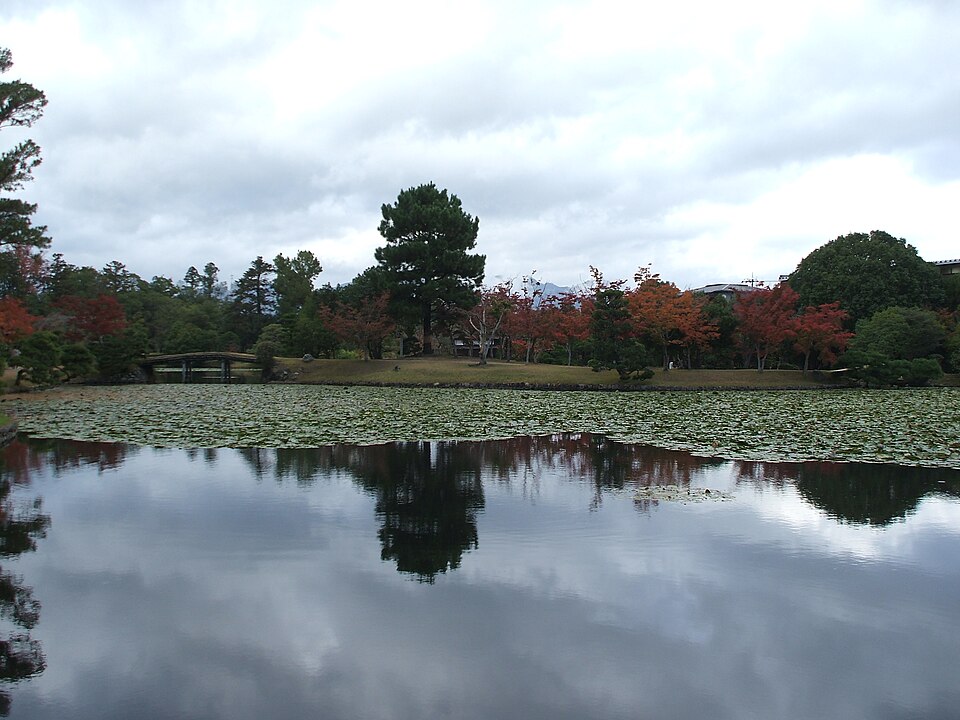
Focus on Lake Shinji's eastern shore in the evening. Kishi Park, in front of the Shimane Art Museum, combines lake views, lawns and outdoor sculptures in one walk. Farther south, Lake Shinji Sunset Spot Torupa has a lakeside path and seating. The Matsue tourism association's sunset locations page also lists Shirakata Park and other sites. On a first visit, choose one. Moving between viewpoints just before sunset uses up the time most worth spending still.
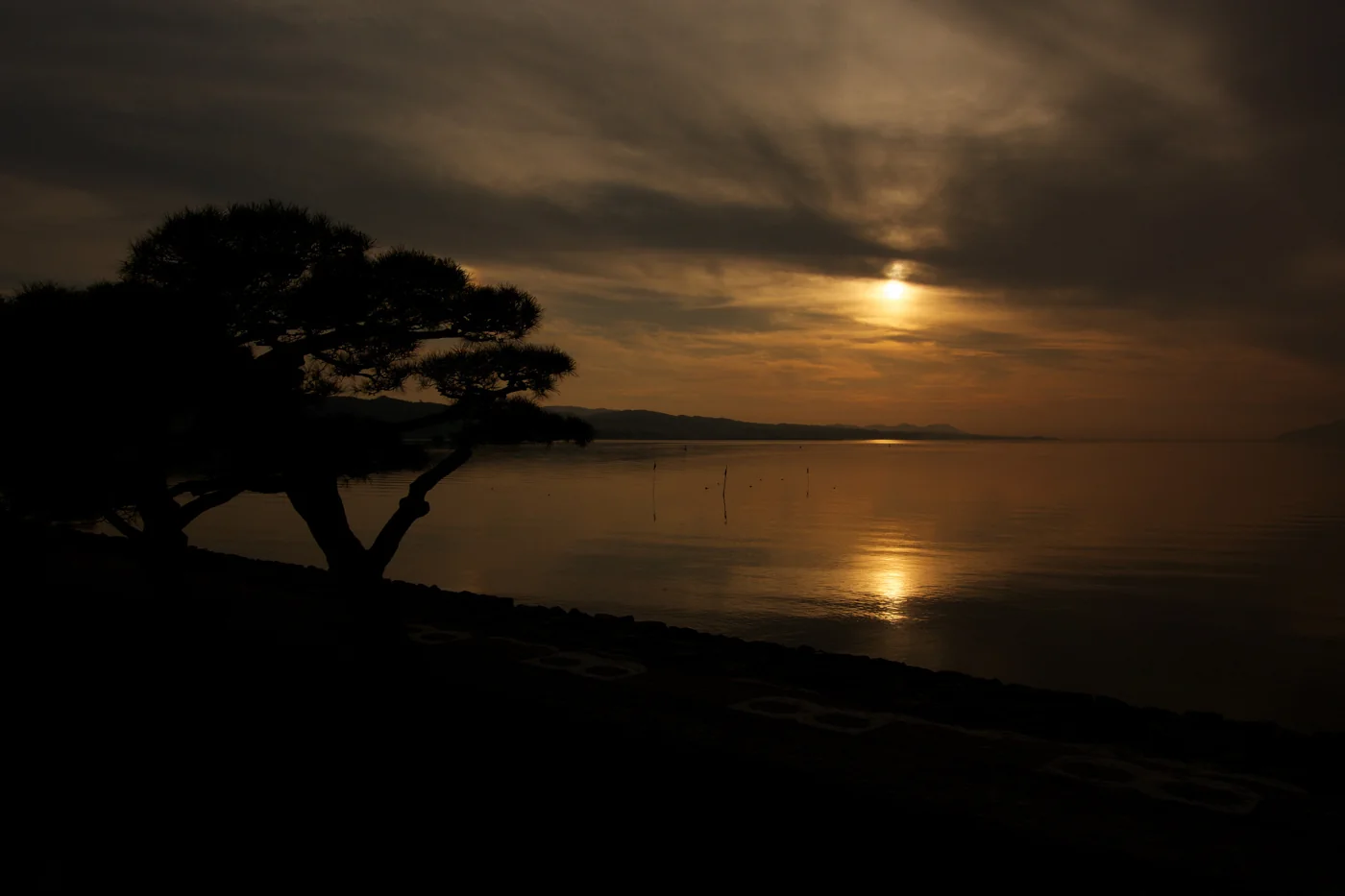
For Yomegashima in the frame, start around the museum and sunset viewpoints on the eastern shore. The sun's setting position changes with the seasons, so one photograph cannot tell you where to stand every day. Look along the open paths and find a spot that leaves room for others to pass. Keep tripods and backpacks at your seat or beside you. Torupa's parking area across the road has an underpass. Use it to cross the road, even if you arrived without a car.
Aim to arrive about 40 minutes before sunset, with time to find a place, use the restroom and put on a jacket. Check the day's sunset time through the Matsue Lake Shinji sunset information page. Stay a little after sunset to watch the sky and water darken, then return to town for dinner. If your hotel booking includes dinner, compare its starting time with sunset and choose a priority if they conflict. With a fixed latest dinner arrival time, choose a closer lakeside walking spot.
If thick clouds hide the sunset or strong winds make standing difficult, take a short lakeside walk and rest indoors. Check the Shimane Art Museum's own opening days and exhibitions separately. Access to the outdoor shore does not establish evening access to the museum. Since you are staying in Matsue, observe the weather during the day and decide in the afternoon how long to wait beside the lake. Your whole day need not depend on one sunset photograph.
Have clams for dinner and save one soba meal for Izumo
Vary the meals across the two days. If you eat Izumo soba for lunch in Matsue on day one, choose another serving style or a lighter meal on Shinmon-dori the next day. If you look forward to warigo soba near the shrine on day two, have a set lunch on day one and save dinner for clam soup, fish or another city restaurant. Chasing the same specialty at every meal can leave only memories of queues and one repeated flavor.
Lake Shinji is brackish, and shijimi clams are a representative Matsue ingredient. The tourism association's lake introduction has a separate section on them. Check whether a menu offers a bowl of soup, a side dish or a full clam-centered meal. For a lighter dinner, pair a staple dish with hot soup. Companions with shellfish allergies should choose something else; drinking only the soup does not avoid the ingredient. Choose fish from the day's menu rather than ordering excess food to cover every regional specialty in two days.
Give Matsue's sweets a seated break of their own. Matcha and wagashi fit after the castle-town walk and before the lake, as a rest between the two areas. Buying them to go and rushing along loses that break. This is also a convenient time to buy sweet souvenirs, but leave refrigerated or short-life products until departure so you need not carry them all day. Choose dinner near your accommodation. If you stay by JR Matsue Station, end the day in the station area. With a lakeside onsen inn and a dinner-and-breakfast plan, return at the inn's meal time. A room-only or breakfast plan gives more freedom to choose a restaurant after sunset. Use the Matsue tourism association's restaurant directory to find areas and cuisines, then use the chosen restaurant's notices for dishes, closing days and last orders.
Stay by JR Matsue Station for luggage and long-distance connections
For a first visit by public transport, especially with large bags, I would compare hotels by JR Matsue Station first. Leave your bags on arrival and return to the same place at night. If you choose JR to Izumoshi the next day, you can board there directly. Before comparing rates, check the actual walking route and whether it crosses a major road. A hotel beside the station still requires time to check out, collect bags, buy tickets and find the platform; the room door is not two minutes from the train.
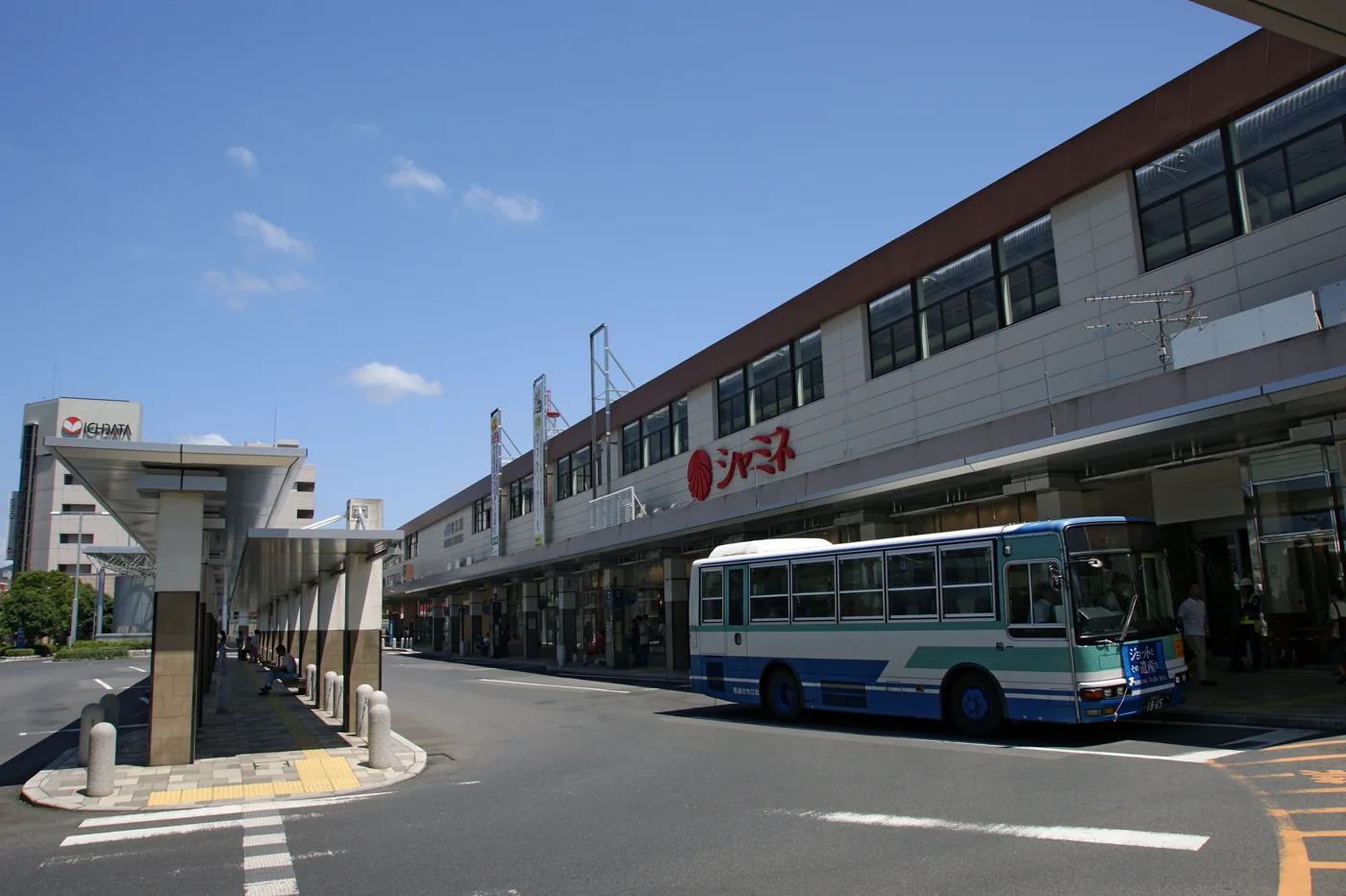
The trade-off is local travel to the castle and lake. If you choose Ichibata for Izumo, you must first reach Matsue Shinjiko Onsen Station on day two. Include that journey when comparing the intercity routes instead of comparing only time aboard an Ichibata train. If you want dinner near the station and a JR departure the next day, keeping luggage together often outweighs one extra local journey.
For a one-night stay followed by a long-distance departure from Izumoshi the next afternoon, take your bags out of Matsue in the morning. Store them at JR Izumoshi Station before continuing to the shrine. This aligns luggage storage with your departure direction. Leaving bags at the Matsue hotel and returning for them works for people already heading east of Matsue afterward. Avoid an unnecessary intercity return simply to keep using the same hotel.
When booking, compare each person's bed, breakfast starting time and luggage-storage hours. Search for the actual party, such as two adults and one child, so prices and amenities match. Read the plan's free-cancellation deadline, local time zone and late cancellation charge. A refundable plan and a prepaid nonrefundable plan at the same hotel can differ substantially. Compare those terms along with the price.
Stay in the northeastern lakeside onsen area, or add a second night in Izumo?
For more of an overnight break, start with the Matsue Shinjiko Onsen area. It is near the next day's Ichibata departure station and the lakeside walk. Distinguish a hotel within walking distance of the shore from a room with a lake view. Read the room page for its lake-facing designation and view direction before paying extra. Road-facing, low-floor and lake-facing rooms in the same inn can be different products. The room name on your booking is more useful than a large photograph on the hotel's home page.
An onsen inn adds its own schedule: check-in, dinner and bath opening hours. For a two-meal plan, compare dinner with the lakeside sunset. Choose compatible times or eat elsewhere if you want the full evening view. Read separately about private baths, in-room baths and communal baths. If a companion wants to bathe in the room, select a room type that specifies the bath conditions instead of relying on an onsen search filter.
The area around Izumo Taisha suits travelers who prioritize an early shrine visit and are willing to arrange dinner in advance. It offers a different stay from the area around JR Izumoshi Station: at the shrine, you wake in the approach town; at the station, rail connections and restaurants are easier. The basic two-day, one-night route still has just one stay in Matsue. With an extra night, consider Izumoshi or the shrine area for night two, gaining a third morning rather than forcing a hotel move into the same afternoon.
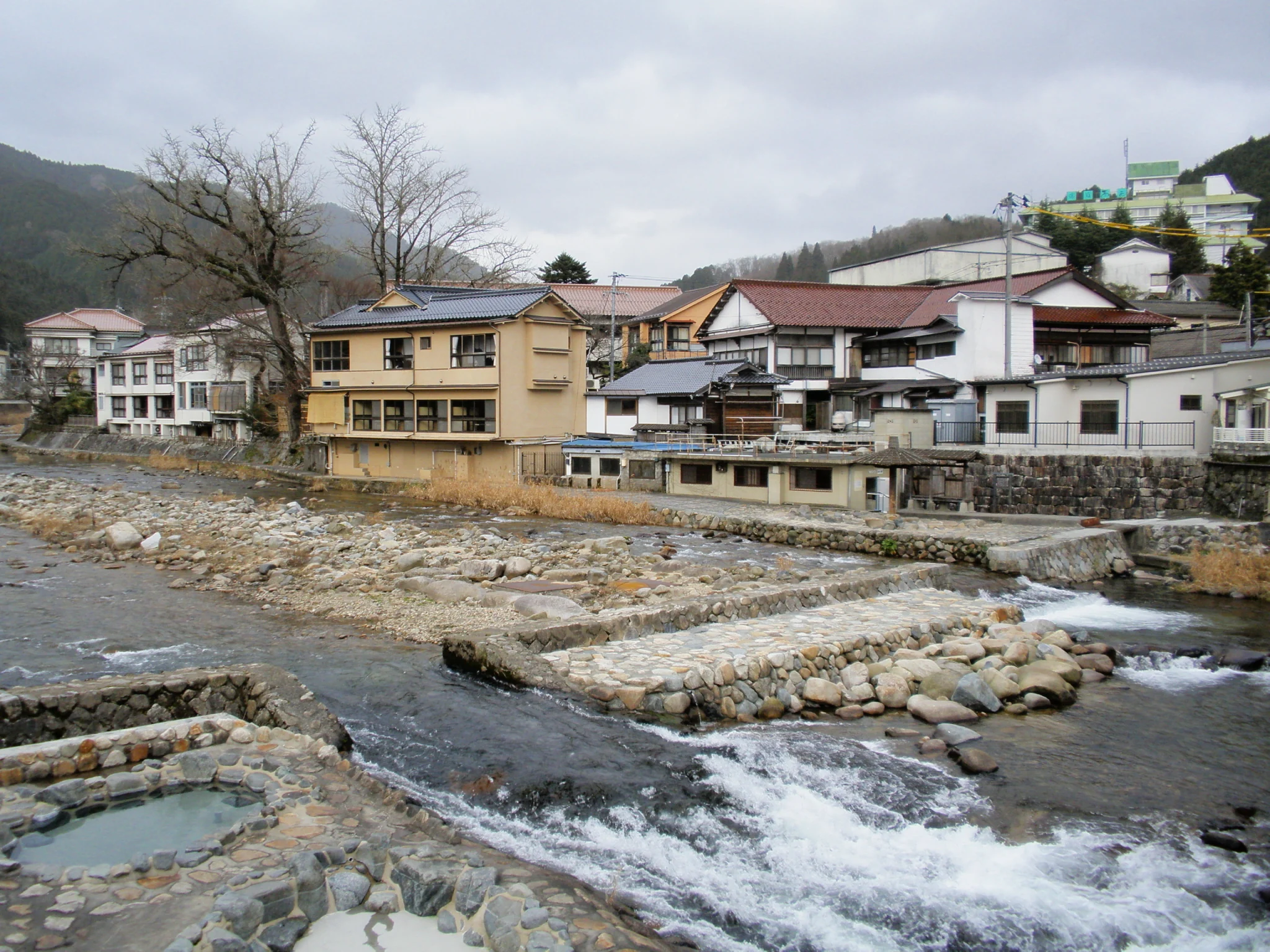
Tamatsukuri Onsen is also near Lake Shinji, but diverting from the two-day route adds another transfer and a dinner arrival time. If dinner at the inn and bathing are the main purpose, shorten the afternoon in town and focus on the stay. If you want all four main themes, staying in central Matsue is simpler. Let the hotel support your evening plans rather than adding every onsen around the lake to one accommodation shortlist.
Day two by Ichibata: the Kawato transfer and ¥1,800 day pass
From Matsue Shinjiko Onsen Station to Izumotaisha-mae, the regular adult Ichibata fare is ¥900. Buy a single ticket if you are traveling one way and later leaving from JR Izumoshi. The official regular-fares page links to the all-station fare table revised in March 2025. An Ichibata round trip between Matsue and the shrine costs ¥900 × 2 = ¥1,800, exactly the adult one-day pass price. With only a one-way ride, the day pass offers no saving.
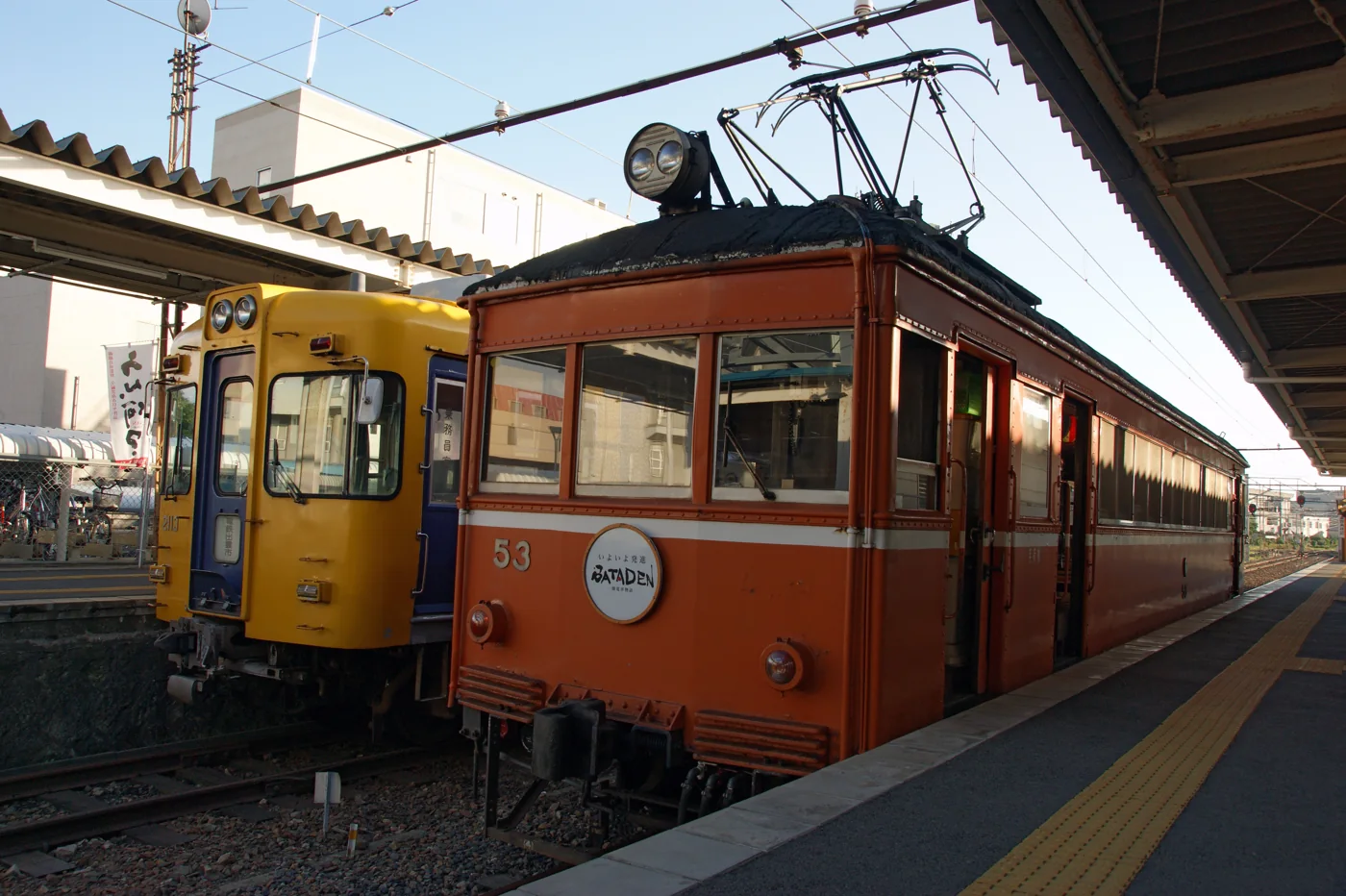
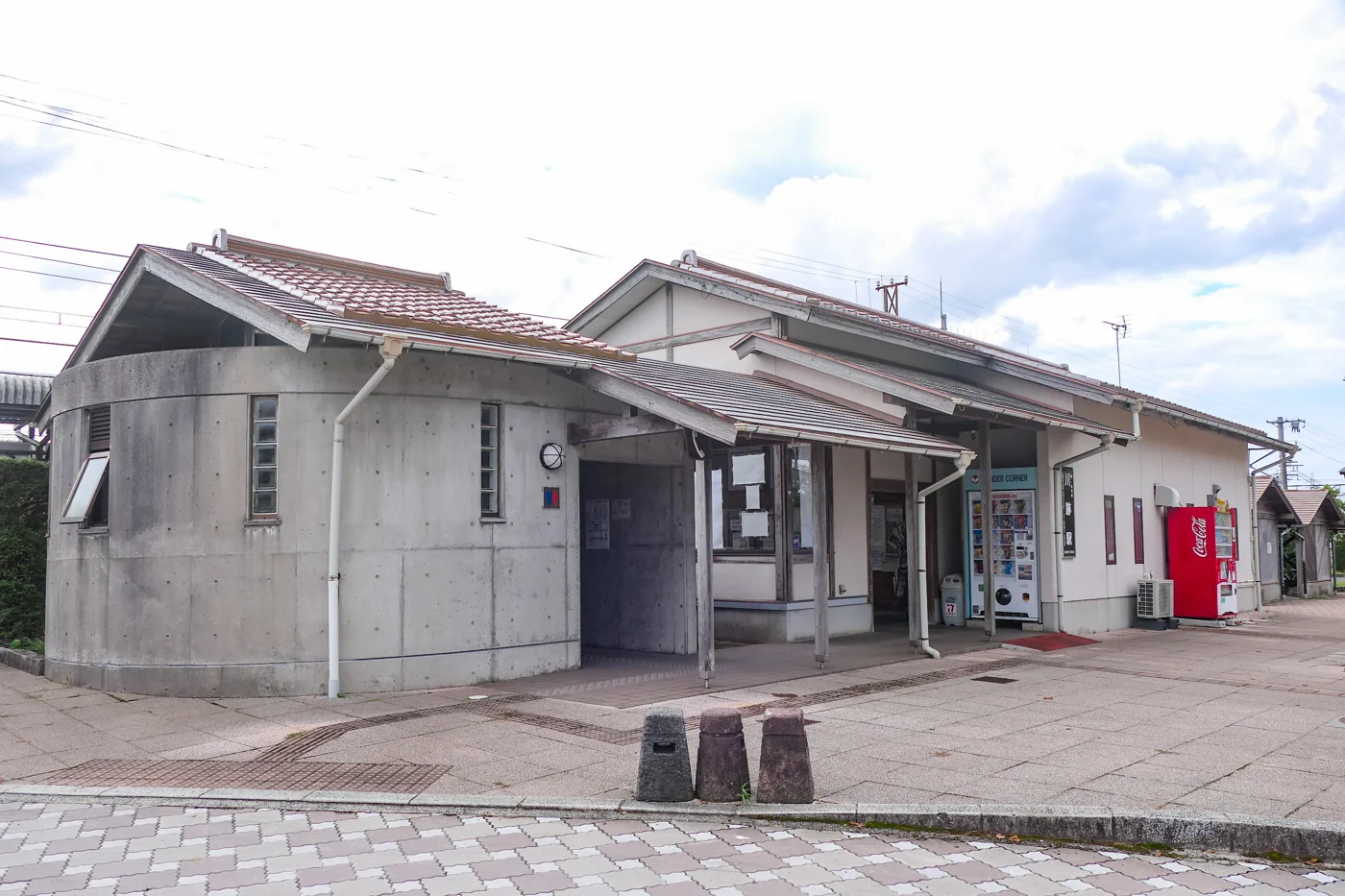
The day pass covers the full Ichibata Railway network and suits a same-day return with stops en route. Advance-sale rules took effect in October 2025: advance tickets are nonrefundable and must be date-stamped at the counter on the day of use. The operator's advance-sale instructions state this directly. If weather or your departure direction is undecided, buy after deciding that day. Local Matsue buses and JR journeys are charged separately; the day pass does not include them.
Check whether the timetable is for a weekday or holiday, then check the train's destination. Open the current Matsue Shinjiko Onsen PDF from the station timetables. Through trains to Izumotaisha-mae are specially marked; other services require a transfer according to the Kawato connection. A train toward Dentetsu Izumoshi does not necessarily take you to the shrine if you stay aboard to the end. Save a complete connection screenshot for each direction, showing your starting station, transfer and destination, so you can follow the station names during the transfer.
From a lakeside hotel, allow roughly two hours for the whole journey to the shrine approach, including the walk to the station, tickets, waiting, connections and the final walk. This is a planning allowance; actual time on the train depends on your service. Leave one train earlier if your connection has a long wait. Reaching the shrine before lunch leaves an afternoon choice between the approach town and the coast.
Day two by JR: take your luggage toward your departure point first
If you stay by Matsue Station and have a long-distance JR departure from Izumoshi in the afternoon, compare going to Izumoshi by JR first. Store bags at Izumoshi Station, continue toward the shrine and collect them on the way back without returning to Matsue. This route's value is its luggage arrangement. Even if Ichibata offers the scenery you prefer, include the time needed to retrace your route for bags.
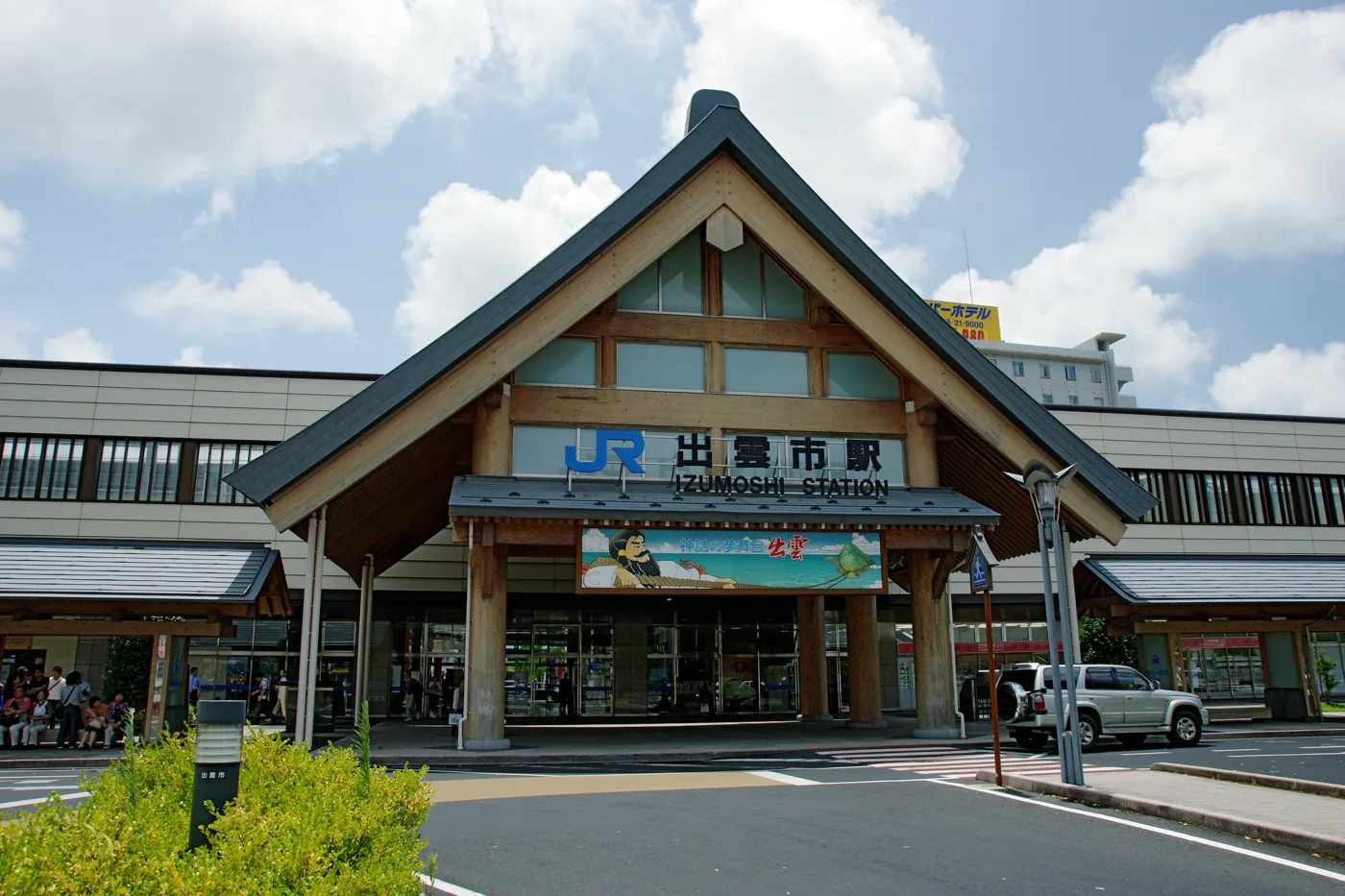
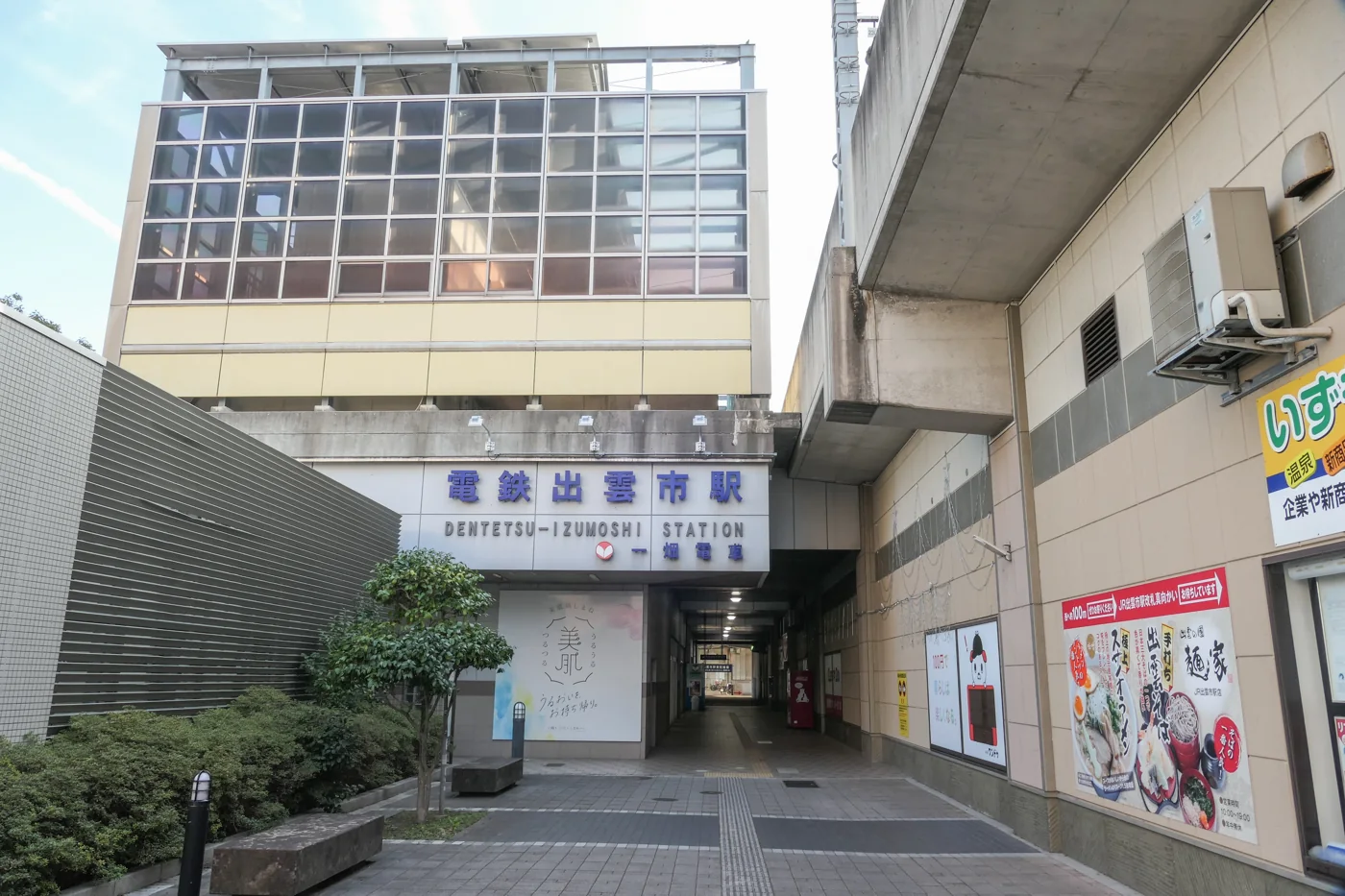
After JR arrives at Izumoshi, take a bus toward the shrine from stop 1 or walk to Dentetsu Izumoshi Station for an Ichibata train. For trains, distinguish through services to Izumotaisha-mae from those requiring a Kawato transfer. For buses, check destination, stops and departure time, and allow for road travel. The Ichibata Bus Taisha Line has timetables in both directions; the official boarding-point map shows the station-area stops. If you have a reserved JR departure, first choose a service that gets you back to Izumoshi early, then decide when to leave Shinmon-dori.
JR local and limited express trains have different costs. A limited express requires the applicable extra charge. Do not combine the fastest search result with the local-train fare. With a JR pass, check whether your particular pass covers this section and read its limited express and seat-reservation rules. Ichibata Railway and Ichibata Bus each have their own ticket systems; the shared Ichibata name does not make their tickets interchangeable.
Have a backup for luggage storage. If no locker fits two large cases, ask the station's tourist service or your accommodation about storage before going to the shrine. A small backpack is manageable; a suitcase slows you on stone paving and crowded approaches. Allow time before departure to find the locker, organize souvenirs and reach the platform. An extra afternoon snack at the shrine costs little compared with missing a booked long-distance train.
Walk the approach to Izumo Taisha, then allow separate time for Kaguraden
From Izumotaisha-mae Station, follow Shinmon-dori toward Seidamari and enter the shrine approach. The town and shrine form a continuous walk. Finish your visit before coming back for lunch. Stopping at every sweet and craft shop first can mean reaching the shrine at the lunch rush and steadily delaying your afternoon departure. Photograph the shops you want to revisit, then stop after worship rather than worrying that you still have not reached the main sanctuary.
Izumo Taisha's formal worship sequence is two bows, four claps and one bow, unlike the two claps used at many shrines. See the shrine's official FAQ. Follow the signs and routes on site, wait while others worship and avoid repeated photographs from the middle of a passage. The worship hall, main sanctuary area and Kaguraden to the west are separate places. To see the large sacred rope often pictured at Kaguraden, include that western section in your walk.
The visiting hours announced on May 3, 2026 are 6 a.m. to 7 p.m. The area behind the main sanctuary, including the route toward Soga-no-yashiro, closes at 4:30 p.m. Ofuda, omamori and goshuin are normally available from 8:30 a.m. to 4:30 p.m., with temporary counter arrangements early and late in the day. For an ordinary daytime visit, the morning is easiest for both worship and the amulet counter. The 7 p.m. closing time for shrine visits does not mean every service remains available that late.
On a first visit, allow about 90 minutes for the shrine itself, then add lunch and Shinmon-dori to make a relaxed half-day. Allow longer if you like reading explanations or choosing amulets. If companions only want the main buildings, agree on a meeting point and explore short sections separately. Keeping everyone's interests in one moving line can be more tiring than walking a few hundred extra meters.
Warigo, kamaage and Shinmon-dori: keep a second lunch option
You can spread Izumo soba over two meals with different serving styles. Warigo serves noodles in stacked round boxes, with sauce and toppings added as you eat. Kamaage serves cooked noodles with their cooking liquid, seasoned with sauce and toppings. The Izumo tourism association lists local soba restaurants and ways to eat it. On a cold or rainy second day, a hot bowl makes a welcome seated break. For comparing noodle aroma and toppings, choose warigo as the main lunch dish.
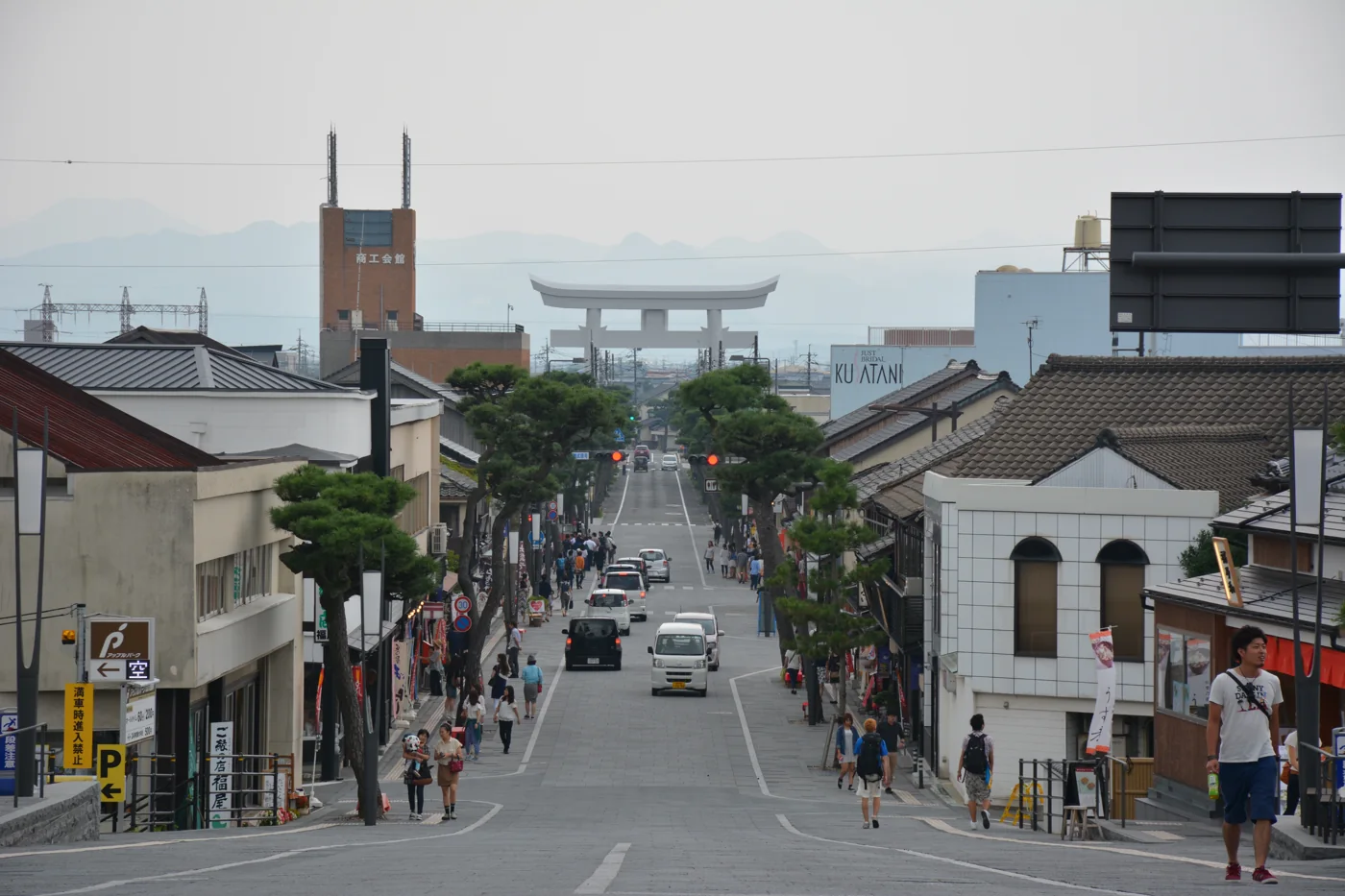
Shinmon-dori concentrates your choices, so there is no need to cross town after worship. Pick a preferred restaurant and a backup before setting out, both within walking range of your return to the station. With a long queue, check the waiting-number system, whether new guests are still accepted and how long remains until your next train. Then decide whether to wait. A single famous restaurant can take over the afternoon; a backup makes a proper seated lunch easier.
Anyone with a buckwheat allergy should choose a meal without buckwheat and tell the restaurant. If utensils are shared, change restaurants. With children, check suitable staple dishes and seating rather than relying on photographs outside. Share snacks along the approach so there is still room for lunch. For a snack on the return train, choose packaging that is easy to store and keeps the seat clean.
Adjust afternoon shopping to the onward journey. With an immediate long-distance JR connection, buy souvenirs shortly before collecting luggage. If you are walking to the coast first, look at fragile and refrigerated items but buy them on your return.
Inasa Beach is optional, with a return walk still to come
Add Inasa Beach only after a half-day at the shrine, with stable weather and no immediate long-distance departure. It requires another journey from the shrine approach to the sea. It looks close on a map, but the return uses time for rest and shopping. Allow at least an hour for the walk both ways and time there, then adjust for your actual route and companions' pace.
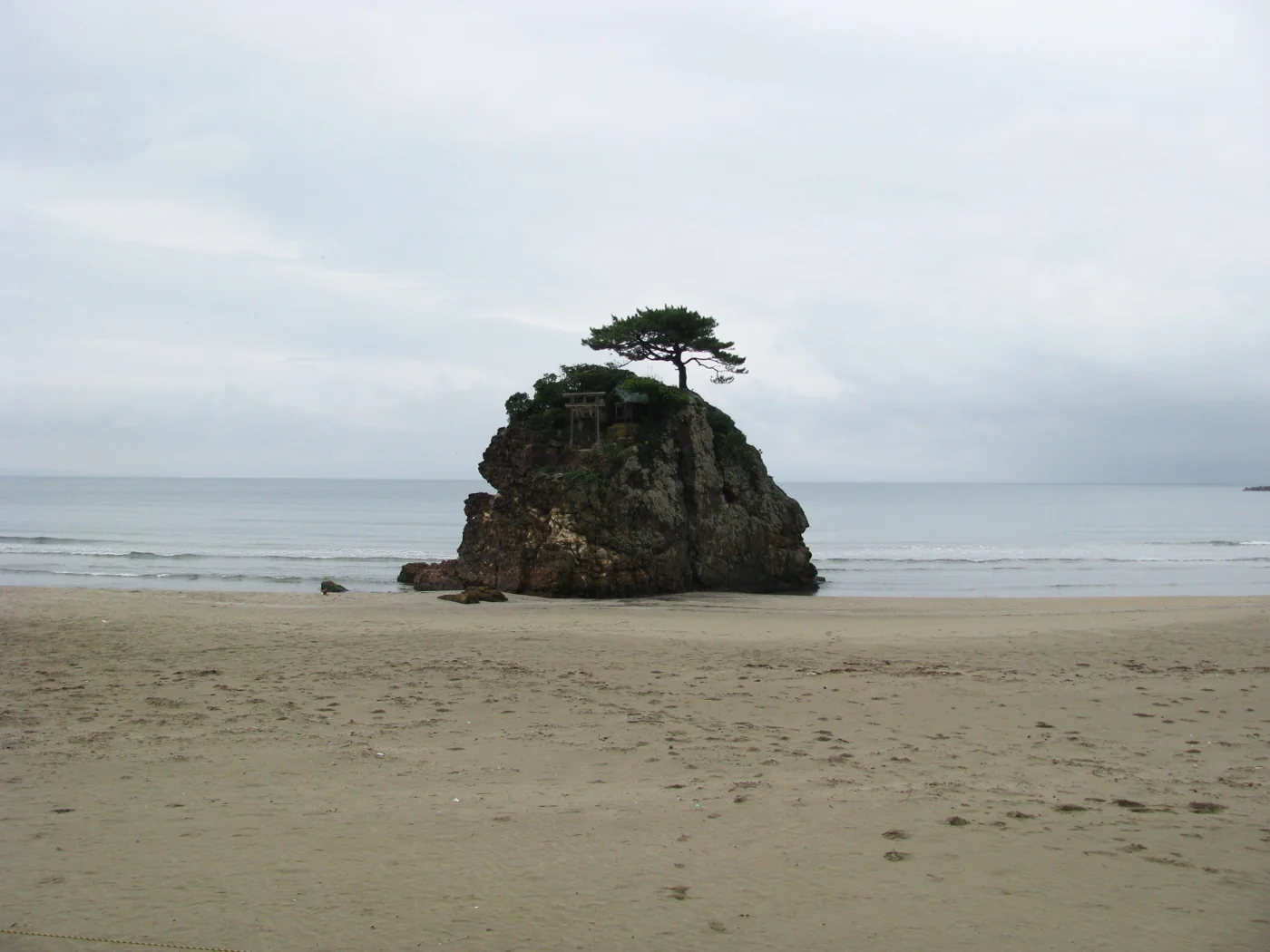
With large luggage, strong wind, steady rain or companions already tired from the shrine approach, return to Shinmon-dori for food and a seated drink. Coastal wind differs from conditions in town. A dry station forecourt does not establish comfortable weather for a long stay by the sea. Use open beach areas and paths on arrival, move inland when waves are high and keep clear of the water's edge when composing photographs of people and rocks.
An easy way to overload day two is to add both Inasa Beach and Hinomisaki after Izumo Taisha. Hinomisaki adds another journey and return arrangement, cutting into worship and lunch. Give it a separate coastal time slot or stay another night in Izumo. In the two-day version, make Inasa Beach the final coastal stop.
Returning to Matsue for sunset also requires a choice. If the first evening's weather was poor, you can leave the shrine early on day two and return to Lake Shinji. Drop Inasa Beach in that case and prioritize train connections. You cannot see both a seaside sunset and a lakeside sunset on the same evening. Choose the one you most want so the journey between cities does not become a race against the light.
Budget separately for the castle, boat and intercity tickets
For an adult when boats operate normally, Matsue Castle at ¥1,200 plus Horikawa at ¥2,000 totals ¥3,200 for the two paid activities. Add ¥1,800 for an Ichibata round trip to the shrine on day two, for ¥5,000 across those three items. A one-way Ichibata journey gives ¥3,200 + ¥900 = ¥4,100, with onward travel to JR Izumoshi and out of San'in charged separately. These are route-specific calculations, excluding local buses, accommodation, food and other museums.
Without the boat, the castle plus an Ichibata round trip costs ¥3,000; the castle plus a single journey costs ¥2,100 before onward transport. This makes the choice clear: skipping the boat removes one water-based experience and frees ¥2,000 and waiting time for a hotel, meal or slower walk. If the boat is your main reason to come, preserve its boarding slot once service resumes and visit one fewer museum.
Calculate each child's costs separately. Matsue Castle is free for elementary and junior high school students. Horikawa has separate elementary and junior/senior high school fares, and Ichibata has its own child-fare rules. Do not simply halve the adult total. For two adults and one child, list the child's age and ticket category at each attraction, then add local travel to see whether a pass fits.
Cancellation also depends on the product. Ichibata's advance-sale day pass is nonrefundable. Horikawa lists cancellation charges for reserved boats of 30% from six to two days before departure, 50% the day before and 100% on the day. Those rules apply to reserved boats. For individual same-day tickets or platform e-tickets, read that product's terms. Accommodation follows the booked plan and deadline. A two-day trip allows weather choices; buying fewer tickets you may not use gives more flexibility than accumulating discount passes.
| Route | Items included | Subtotal |
|---|---|---|
| Castle + boat + Ichibata round trip | 1,200+2,000+900×2 | ¥5,000 |
| Castle + boat + Ichibata one way | 1,200+2,000+900 | ¥4,100, plus onward transport |
| Castle + Ichibata round trip, no boat | 1,200+900×2 | ¥3,000 |
| Castle + Ichibata one way, no boat | 1,200+900 | ¥2,100, plus onward transport |
Build the timetable around your departure, then choose extras
Arrive in Matsue on the first morning, leave bags and visit the castle, followed by lunch nearby. If Horikawa has resumed, board at Otemae in the afternoon and walk part of Shiomi Nawate or Kyomise afterward. During suspension, use the afternoon for Shiomi Nawate, tea and one indoor attraction. Head to Kishi Park or Torupa in the evening, then eat near your accommodation. Keeping the options within Matsue, rather than rushing to Izumo that day, leaves room for the evening lake view.
After breakfast on day two, leave with your luggage and choose Ichibata or a JR connection according to your hotel and departure direction. Reach the shrine in the morning, worship first, then have soba and browse Shinmon-dori. Add Inasa Beach only with spare afternoon time. Your departure station is the first fixed point on the return, followed by souvenir shops. Once you book your train out of San'in, save both the latest acceptable return service and the one before it to give the schedule a buffer.
If both days are rainy, spread the castle interior and indoor museums across them, shorten the lakeside walk and use slip-resistant shoes and rain gear that leaves your hands free at the shrine. Deal with wet socks and shoes at your accommodation first. Less shopping can mean more comfortable walking the next day. In the colder half of the year, afternoons end early: record separate closing times for the keep and Soga-no-yashiro, and shop afterward. In summer, avoid putting all outdoor walking into one continuous stretch during the hottest afternoon hours.
A few useful answers
Are two days enough for Matsue and Izumo Taisha without a rental car?
Arrive in Matsue before noon on day one and leave Izumoshi in the afternoon on day two to fit the castle area, lake and shrine. With a late arrival and early departure, choose one city. Horikawa boats were suspended all day on October 27, 2026, with further operations to be announced by the operator. A castle-town walk provides an alternative for a near-term trip.
Does the Ichibata day pass always save money?
The adult single fare from Matsue Shinjiko Onsen to Izumotaisha-mae is ¥900. A same-route return that day costs ¥1,800, equal to the adult day pass. Buy a single if you then leave from JR Izumoshi. JR and local buses cost extra. Advance-sale day passes are nonrefundable.
Should I stay near Matsue Station or Matsue Shinjiko Onsen?
For long-distance JR arrivals and departures or large luggage, compare hotels by JR Matsue Station first. For lakeside walks, hot springs and the next day's Ichibata starting station, choose Matsue Shinjiko Onsen. Compare sunset with the dinner arrival time before booking a plan with dinner.
How late can I visit Izumo Taisha?
General visiting hours are 6 a.m. to 7 p.m. The area behind the main sanctuary, including the route toward Soga-no-yashiro, closes at 4:30 p.m. Ofuda, omamori and goshuin are normally available from 8:30 a.m. to 4:30 p.m. Arrive in the morning to fit the full route and Shinmon-dori most easily.
Official information and references
Sources used in this guide.
- Matsue Castle | Admission and opening hours, revised July 2026
- Official Shimane Tourism | Access to Matsue Castle
- Matsue Castle | Closure from Kita-no-mon to Mizunote-mon
- Matsue Castle | Planned Reiwa-era major repairs
- Horikawa Sightseeing Boats | Daily operating notices
- Horikawa Sightseeing Boats | Fares, timetables and cancellation rules
- Matsue Tourism Association | Sunset viewpoints
- Matsue Tourism Association | Lake Shinji and shijimi clams
- Matsue Tourism Association | Restaurant directory
- Ichibata Railway | Regular fares
- Ichibata Railway | Station timetables
- Ichibata Railway | Advance-sale day-pass rules
- Izumo Taisha | Visiting and counter hours
- Izumo Taisha | FAQ and worship procedure
- Izumo Tourism Association | Izumo soba guide
- Ichibata Bus | Taisha Line timetables in both directions
- Ichibata Bus | Boarding points at major stations
- Meimei-an | Opening hours, admission and tea charges
- Meimei-an | Historic tea house
- Meimei-an | Access and entrance steps
- Matsue Tourism Association | Meimei-an and its Izumo-style garden
- Official Shimane Tourism | Meimei-an, Hyakusotei and the castle-viewing terrace