Plan Washuzan Highland around height limits, admission passes and twilight tickets. Find Kojima Station bus stop 4, outbound and return loop buses, the 2026 detour, and stays at Setouchi Kojima Hotel and WASHU BLUE RESORT Kasago.
- Region & Focus
- Chugoku and Shikoku
- Reading Scope
- 30 min read · 17 chapters · 8 Q&As
- Official Verification
- 16 official sources checkedUpdated November 9, 2026
- Key Topics
- ItinerariesRail travelWhere to stay
Chapter Route Map (tap any stop)
- Measure heights before choosing the day’s activities
- Ride choices increase at 110, 120, 130 and 140 cm
- Sky Cycle and the Ferris wheel offer different ways to see the sea
- Admission includes the ride pass, including for accompanying parents
- Twilight tickets require a late closing day; add extra activities separately
- From Okayama or Takamatsu, start at JR Kojima Station
- Hourly outbound buses: the 09:30 departure arrives before opening
- The return follows the loop: 17:40 departure reaches Kojima at 18:20
- The ¥520 bus day pass compares with ¥540 for the return trip
- A 10:00–17:00 day plan with the return fixed first
- With preschoolers, include shows and rest points in the route
- Choose stage-side food or a view restaurant and allow time for samba
- Change the ride order for rain and pack separately for summer pools
- Drive up from Kojima IC and navigate to the park entrance
- Setouchi Kojima Hotel: Japanese-style or connecting rooms for four
- Kasago: take an afternoon shuttle and visit the park the next day
- Reconnect trains, luggage and dinner before leaving
- Quick Q&A
Sky Cycle requires a height of at least 130 cm. The bus from Kojima Station takes about 10 minutes outward, but the return loop takes about 40 minutes. Washuzan Highland combines rides and Seto Ohashi views in a day. Choose activities by your group’s heights and fix the return bus first, then connect tickets, shows and a hillside stay. This guide uses resort and Shimoden information available in October 2026, including the November calendar and current detour.
Measure heights before choosing the day’s activities
Washuzan Highland, officially Brazilian Park Washuzan Highland, is around Kojima and Shimotsui in Kurashiki, Okayama. Its hillside Ferris wheel, roller coasters and Seto Ohashi views suit a day trip from Okayama or Takamatsu. Height lovers can make Sky Cycle the main activity. For a gentler visit, allow time for the Ferris wheel, stage shows and sea views. Rides follow the hillside, so count walking as well as ride time.
For a family visit, write children’s heights beside the itinerary. The 110, 120, 130 and 140 cm thresholds each open different ride choices; Sky Cycle requires at least 130 cm. The particular ride a child wants matters more than the total number of attractions when deciding whether to make a special trip. Allow almost a full day for thrill rides, or shorten the route with preschoolers and rest between playgrounds, shows and meals.
Use JR Kojima Station. Although the park and Kurashiki’s historic Bikan district are in the same city, their transport plans differ greatly. From Okayama or Shikoku, take the train to Kojima and transfer to Shimoden bus for a clear arrival and departure plan. For a hillside hotel, add its shuttle and check-in times to the same schedule.
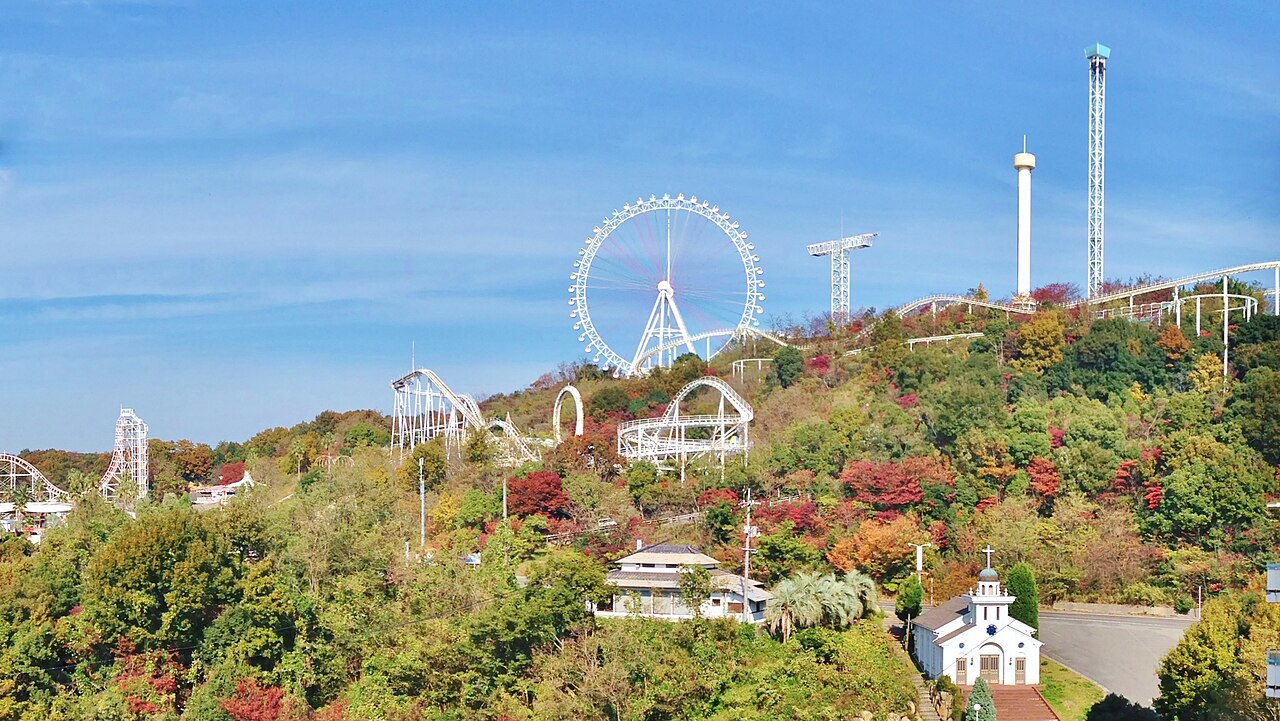
Plan Washuzan Highland around height limits, admission passes and twilight tickets. Find Kojima Station bus stop 4, outbound and return loop buses, the 2026 detour, and stays at Setouchi Kojima Hotel and WASHU BLUE RESORT Kasago.
Ride choices increase at 110, 120, 130 and 140 cm
The official attraction map lists the thresholds: Chuppy Coaster requires at least 110 cm, Ultra Twister 120 cm, Sky Cycle and Turbo Drop 130 cm, and Standing Coaster and Back Nanger 140 cm. The last two offer standing rides and backward travel with loops respectively. Consider the type of movement as well as height.
A child measuring 125 cm can plan around the two qualifying coasters and other activities, leaving Sky Cycle to companions who reach 130 cm. Ride choices also differ between 138 and 140 cm. Agree on suitable rides before entering and go directly to their areas, avoiding changes at queue entrances.
Rotor Wave and Chain Tower have a minimum age of five. Read height and age conditions separately: being five does not automatically qualify a child for 130 cm rides. With preschoolers, start with shorter activities such as Django children’s play area and the carousel, while adults take turns leaving for thrill rides.
The map also lists restrictions for pregnant visitors and people who have consumed alcohol. Pregnant companions can plan shows, meals and sea views and agree on meeting points with riders. Save alcohol until rides are finished. This division is more suitable than making everyone follow the same ride route.
Sky Cycle and the Ferris wheel offer different ways to see the sea
Sky Cycle runs on a track 16 m above ground and requires a height of at least 130 cm. Pedaling sets the pace, with the elevated track and surrounding mountains and sea in view. If heights concern you but you want scenery, choose the Ferris wheel directly. For Sky Cycle, put it in the main part of the day before arranging other coasters.
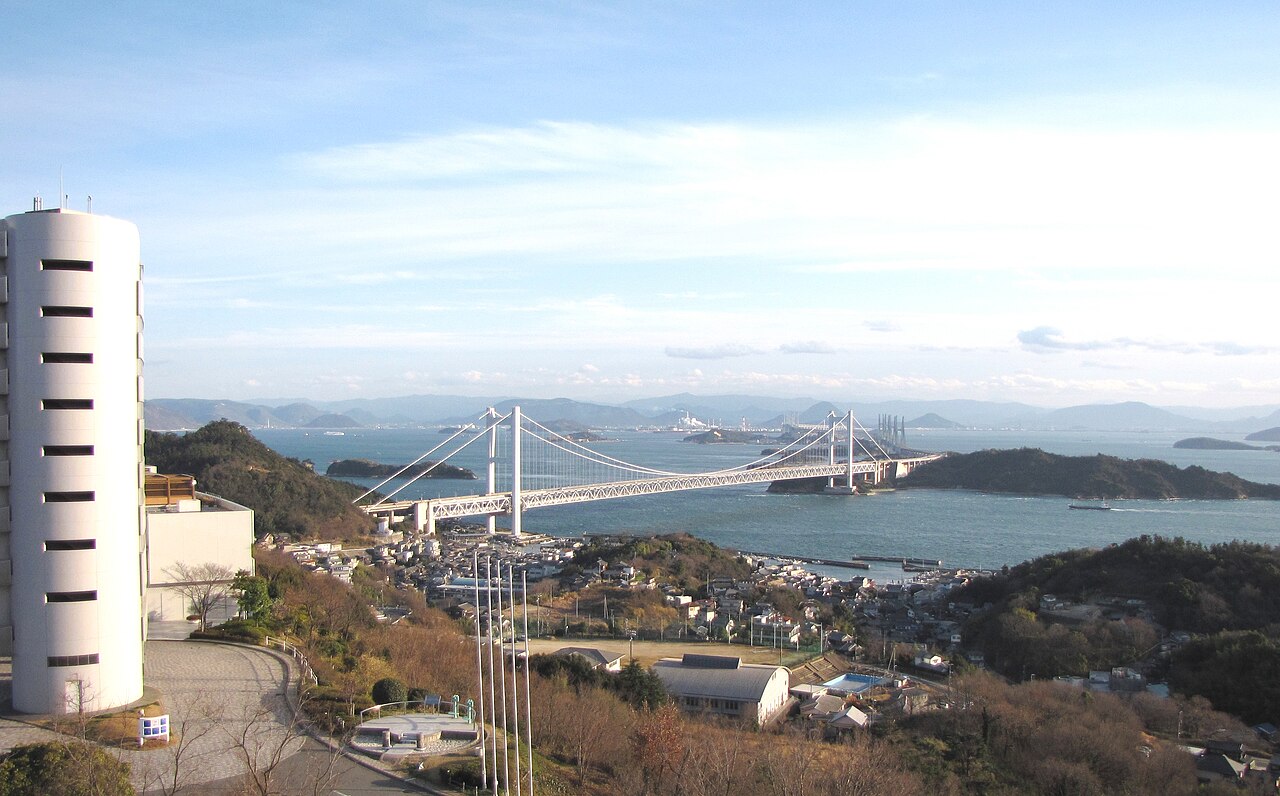
Rainbow Warp Ferris wheel takes about 15 minutes per rotation, giving you a seat and views of the Seto Inland Sea and bridge after hillside walking. Treat those 15 minutes as a complete activity rather than leaving them until just before departure. If your group splits up, meet before boarding for this slower shared activity.
The park allows personal photography on Sky Cycle, designated Ferris wheel cabins, the carousel and spinning cups. Follow its rules for other rides. Plan companion photos during permitted activities and secure belongings before coasters. Advertising, business and sales photography requires separate permission.
Admission includes the ride pass, including for accompanying parents
Regular tickets combine admission and a ride pass: ¥3,800 for adults from junior-high age, ¥3,200 for elementary-school children, ¥2,500 for preschool children aged three or over, and ¥2,500 for seniors aged 55 or over. The official Q&A says there is no admission-only ticket. Parents only accompanying children, watching shows or photographing scenery must also budget for their tickets.
Two adults and one elementary-school child pay ¥10,800. Two adults and one preschool child pay ¥10,100. Two adults and two elementary-school children pay ¥14,000. Calculate this first, then add return buses, lunch and separately charged activities for a clearer total than the adult price alone.
Guests aged 55 or over qualify for senior tickets. Those aged 60 or over can instead apply for a Momotaro Fureai Card, costing ¥2,000 including application. The park says cardholders can then enter and use the ride pass free. Show identification with name and birth date, such as a passport. Even for one visit, compare the senior ticket with the card fee and allow time for the on-site process.
Disability tickets cost ¥1,900 for adults, ¥1,600 for elementary-school children and ¥1,250 for preschool children or seniors. Each eligible guest may have one companion of junior-high age or older use the disability rate. Present the disability documentation required by the park. Buy according to actual eligibility and list each traveler separately in the budget.
Twilight tickets require a late closing day; add extra activities separately
The Twilight Pass costs ¥2,500 for entry from 15:00 on days closing at 18:00 or later. All published November 2026 hours are 10:00–17:00, so budget for regular admission that month even for an afternoon arrival. Use twilight tickets on later-closing dates and allow time to walk to and queue for the main rides.
Beyond the regular ride pass, bungee jumping costs ¥2,000 per person per jump, with a weight range of 32–113 kg. Junior-high children and younger need parental consent. Thriller House Cabin Quest costs another ¥400. Skate rental at the rink costs ¥500, with sizes 18–27 cm. Budget these per participant while others continue with included activities.
For two adults and one elementary-school child, start with ¥10,800 admission. Add ¥4,000 for one bungee jump per adult and ¥1,200 if all three enter the haunted house. Admission and these activities total ¥16,000. Keep food, transport and lodging in separate columns to see the effect of each addition.
For payment, the park Q&A lists PayPay. Overseas visitors can bring enough yen cash for tickets and small on-site purchases. Keep purchased tickets and companions’ age details accessible.
From Okayama or Takamatsu, start at JR Kojima Station
Both Okayama and Takamatsu connect to Kojima. The park’s access page estimates rail journeys of about 30 minutes from Okayama or 40 minutes from Takamatsu. Match your chosen train’s Kojima arrival to the Shimoden bus. Staying in Okayama the night before continues a Honshu trip; staying in Takamatsu adds the rail crossing of Seto Ohashi to the day.
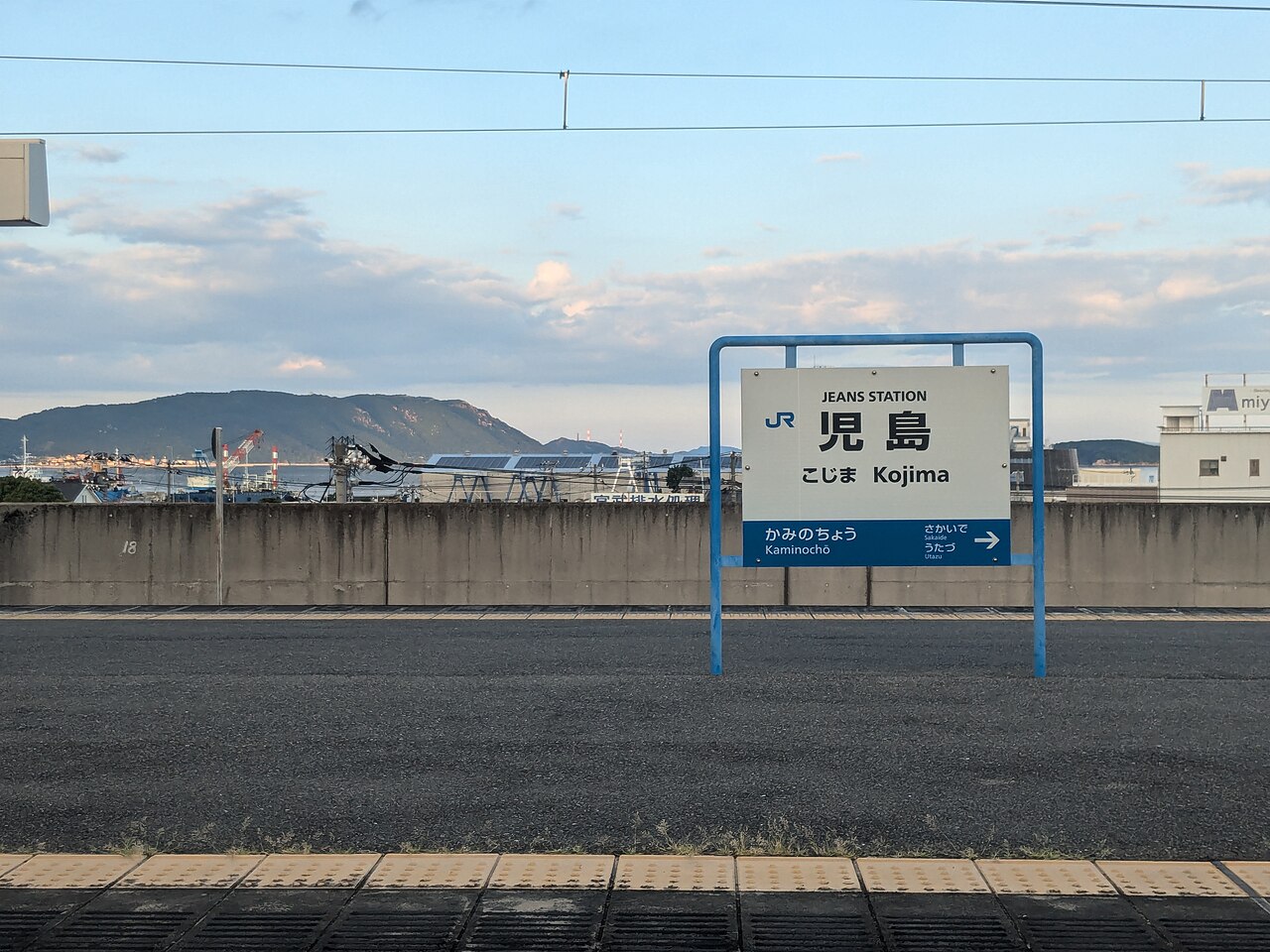
A light daypack is enough for a day trip. Leave spare clothing and large luggage at your existing hotel to collect on return. For a hillside hotel that night, arrange storage or its shuttle first. Many hotel shuttles leave Kojima in the afternoon. If entering the park in the morning, leave luggage at an arranged storage point before moving to the hotel in the evening.
Outside Kojima Station, find bus stop 4 for Shimoden’s Shimotsui loop service, Tokohai-go. Save the Japanese stop name “鷲羽山ハイランド遊園地前” for the park and “児島駅” for the return destination. With long service intervals, record both buses before travel so you know your transfer time after the train.
Hourly outbound buses: the 09:30 departure arrives before opening
Shimoden’s current loop timetable lists departures from Kojima at half past each hour, 08:30–17:30. Buses reach WASHU BLUE RESORT Kasago at 39 minutes past and the park at 40 minutes past. The 09:30 bus reaches the park stop at 09:40; the 10:30 reaches it at 10:40. For a 10:00 opening, the first suits those willing to wait, while the second gives a later morning entry.
The park’s access page describes a roughly 13-minute bus ride, but use the current Shimoden timetable’s 10 minutes for planning. Add time to walk from the stop and buy tickets rather than treating bus arrival as the first ride time. The 09:30 departure gives first-time families more room for tickets and toilets. For a later start, redistribute activities around 10:40 arrival.
The 11:30 or 12:30 buses suit a half day, but a 17:00 close leaves less park time. Put the two highest-priority activities first and consider lunch in Kojima before ascending. If you miss your bus, calculate the time between the next arrival and final departure before deciding to wait or take a taxi.
This bus also serves local residents. Keep the aisle clear and backpacks in front of you or at your feet. Before children alight, prepare fares, phones and belongings. Save the long Japanese stop name before leaving to recognize it on the bus display.
The return follows the loop: 17:40 departure reaches Kojima at 18:20
Calculate return travel separately. The current timetable lists park departures at 40 minutes past each hour, 08:40–17:40, continuing around Shimotsui and reaching Kojima at 20 minutes past the next hour. A 16:40 departure reaches Kojima around 17:20; 17:40 reaches it around 18:20. Connect onward trains to Okayama or Takamatsu after these arrival times, allowing a walk to the platform.
For the 16:40 bus, finish the final ride and shopping earlier. To stay until a 17:00 close, take the 17:40 bus and rest outside while waiting. After autumn or winter darkness falls, wait near the stop, put children’s coats on and keep enough phone charge to check trains.
After road damage in June 2026, Shimoden’s loop remains diverted. The current timetable suspends stops on some sections, including Washuzan Second Observatory. A separate temporary service from July 1 leaves Kojima at 08:30, 10:30, 12:30, 15:30 and 16:30, taking a detour to the seaside resort hotel before returning via the observatory and Obatake.
To combine the park and Washuzan observatory in one day, plan the regular loop and temporary service separately. For the park alone, use regular services at the park stop. If observatory sunset is another priority, put it on the next day or connect by taxi so both places have enough time.
The ¥520 bus day pass compares with ¥540 for the return trip
Shimoden’s fare table, revised March 16, 2025, lists ¥250 per adult from Kojima to the park and ¥290 around the loop back to Kojima, totaling ¥540. Tokohai-go day passes cost ¥520 per adult or ¥260 per child, sold on the bus or at Shimoden’s Kojima office. For a return on this line alone, an adult day pass saves ¥20.
The pass also helps if you get off and reboard along the way. For Shimotsui port, note the next bus after each stop. On an hourly route, an extra stop can delay the return to Kojima by an hour. For maximum park time, direct return travel makes dinner and train connections easier to control.
Two adult ¥520 passes total ¥1,040; one child pass at ¥260 brings buses to ¥1,300. Add these to ¥10,800 park admission for two adults and one elementary-school child for ¥12,100, before lunch and extra activities. Calculate rail travel separately from your accommodation.
For a hillside stay with only an outbound regular bus, budget the adult ¥250 single fare. The next day’s hotel shuttle has its own booking and departure arrangements. Calculate by actual journeys to avoid buying return travel you will not use that day.
A 10:00–17:00 day plan with the return fixed first
Families happy to start early can leave Kojima at 09:30, reach the stop at 09:40 and head to the priority activity after the 10:00 opening. Choose Sky Cycle and one coaster in the morning, with a Ferris wheel ride or coffee break when you reach the upper area.
Eat inside the park, then watch a show and complete suitable rides in the afternoon. If you split into thrill-ride and preschool groups, set clear lunch and afternoon-break meeting points, such as Delicafe Janeiro near the stage. The groups need not wait in the same queues, and adults caring for children can take turns riding.
For the 16:40 bus, start moving toward the entrance around 16:00. For the 17:40 return, leave the last part for shorter activities and shops. Use toilets, drink and put coats on before waiting at the stop. Connect trains after the 17:20 or 18:20 Kojima arrival.
If you reach the park at 10:40, remove a lower-priority activity and choose a simpler lunch. For an afternoon arrival on a 17:00 closing day, focus on Sky Cycle, the Ferris wheel or a show, then judge whether that stay fits your budget at regular admission prices.
With preschoolers, include shows and rest points in the route
Regular preschool admission costs ¥2,500 from age three, with ride choices affected by height and age. Start with Django play area, the carousel and Ferris wheel. Django has slides, animal-shaped equipment and climbing activities, suitable for a short visit before moving toward food or the stage.
On an uphill route, use children’s higher-energy period for the main play equipment, then sit for a show or take a slow Ferris wheel ride after lunch. With two children of very different ages, group activities by eligibility and agree on a food outlet for meeting. Riders can queue while the other group rests nearby, reducing repeated climbs.
If the first activity makes a child nervous, switch to sea views or the playground. The included ride pass lets plans change without measuring success by ride count. Leave a quiet lunch and rest before departure so the 40-minute bus back to Kojima is more comfortable.
A small backpack can hold water, simple snacks, a spare shirt and a coat. Adults should keep phones and tickets together and limit children’s loose items. Collect hats, toys and anything easy to drop before boarding, then follow staff seating instructions.
Choose stage-side food or a view restaurant and allow time for samba
The park map shows several dining locations. View Restaurant Goonies & Mama Chacha faces Seto Ohashi, combining lunch and scenery. Delicafe Janeiro near the samba stage serves burgers, drinks and other food and works as a meeting point for split groups. Jungle Cafe suits a break after upper-area attractions. Choose according to where you are walking to avoid another hillside detour.
Outside food is allowed, so bring familiar children’s snacks and simple meals. For a seated meal, make the restaurant part of the schedule and avoid a clash with the show. If a thrill ride has left someone without an appetite, rest with water before choosing food.
Brazilian samba is part of the park. Its official 2016 introduction video shows hillside views, drummers and dancers. Use the program timetable to choose the day’s performance. The Halloween version published in late October lists samba at 12:00, bingo at 13:00 and afternoon programming, an example of stage scheduling for that season.
For a full show, finish the previous ride early and sit near the stage, with lunch or drinks before or after. On a short visit, complete the main rides first and treat shows you encounter as stops along the way rather than repeatedly climbing to catch every performance.
Hillside park views, drummers and samba dancers in the resort’s 2016 introduction.
Change the ride order for rain and pack separately for summer pools
The attraction map lists several rides as operating in rain, including Sky Cycle, the Ferris wheel, Ultra Twister and Back Nanger. Standing Coaster is listed as suspended in rain. Remove it from the main rainy-day plan and choose rain-operating rides, food and shows, allowing for secure footing and rainwear storage.
In cooler seasons, keep a coat accessible for hillside walks and bus waits. On hot days, spread water breaks and indoor meals across morning and afternoon. Put cameras and phones away after photos to keep hands free on slopes and rides. Weather affects comfort at height; visitors sensitive to heights can make the Ferris wheel and ground activities their main route.
Summer pools and water slides are included in regular seasonal admission. The regular ticket page lists the period as mid-July to late September. Pool depths are 110 cm, 85 cm and 20 cm for young children. Slides require elementary-school age or above; young children need parental supervision and swim diapers. Bring swimsuits, towels and changes of clothes, with time to change and dry off.
Drive up from Kojima IC and navigate to the park entrance
The official access page lists about one minute from Kojima IC to the park, at 303-1 Shimotsui Fukiage, Kurashiki, Okayama. Set the park as your navigation destination and organize tickets and bags after parking. From Shikoku, cross Seto Ohashi. From Honshu, follow the Seto-Chuo Expressway and exit at Kojima.
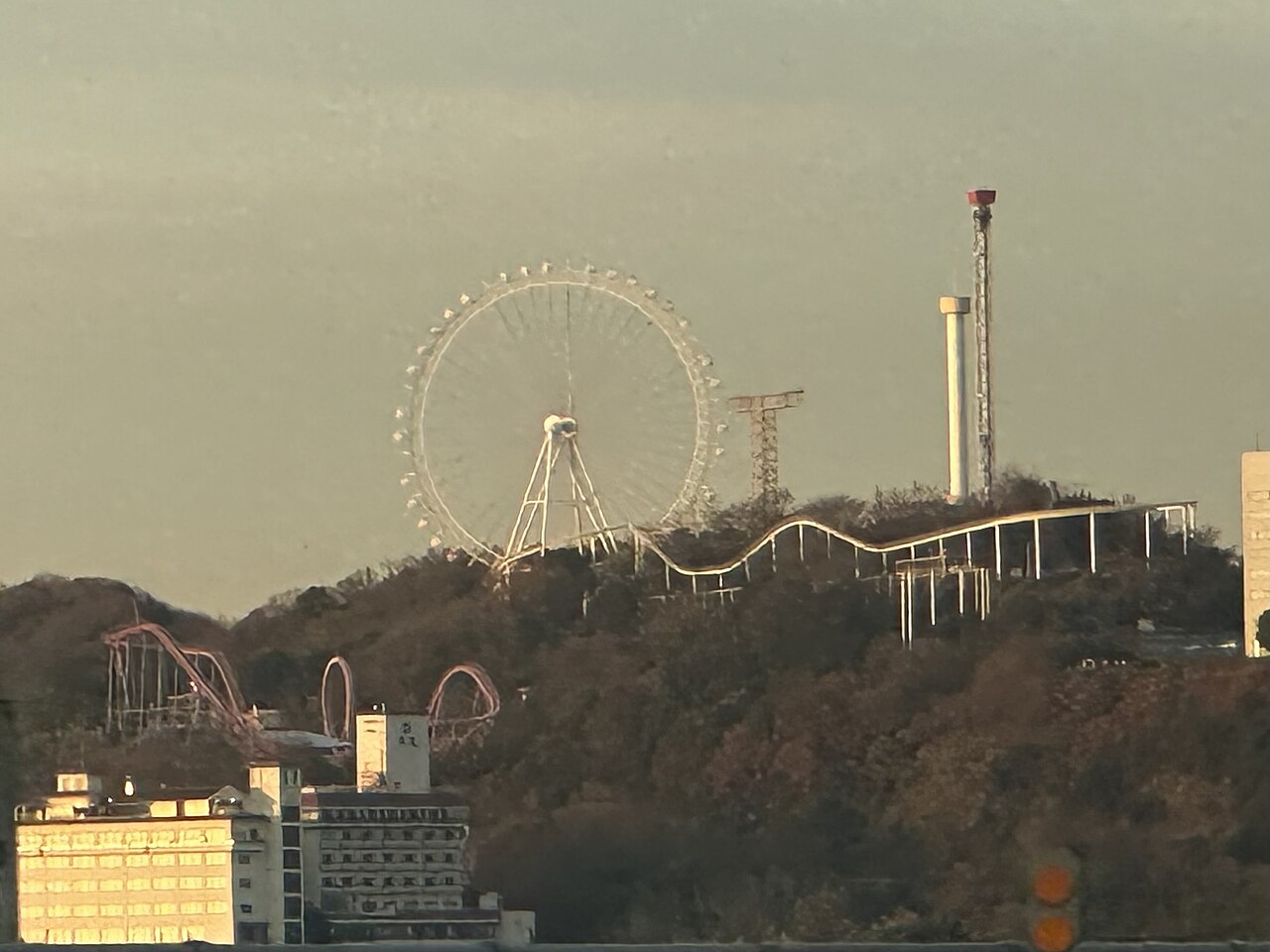
Driving makes a two-day park and hillside-hotel visit easier for luggage and frees dinner and check-in from bus schedules. Before leaving the park, decide whether to go to the hotel first or eat in Kojima. For a dinner-inclusive booking, arrive for your reserved meal. List tolls, fuel and lodging by the actual route, separately from park admission.
With older companions or a stroller, choose a few areas from the attraction map so walking and slopes match everyone’s energy. If staying until closing, leave the return driver time to rest and eat, keeping long-distance travel within a manageable day.
Setouchi Kojima Hotel: Japanese-style or connecting rooms for four
Setouchi Kojima Hotel is at 303-53 Shimotsui Fukiage and is listed in the park Q&A as nearby accommodation. Its free Kojima shuttle requires advance booking. The official FAQ lists departures from Kojima’s west exit every 30 minutes from 14:45 to 18:15. Hotel departures run every 30 minutes from 09:00 to 11:00 and 14:30 to 18:00. Connect a reserved bus to your actual train arrival to take luggage uphill directly.
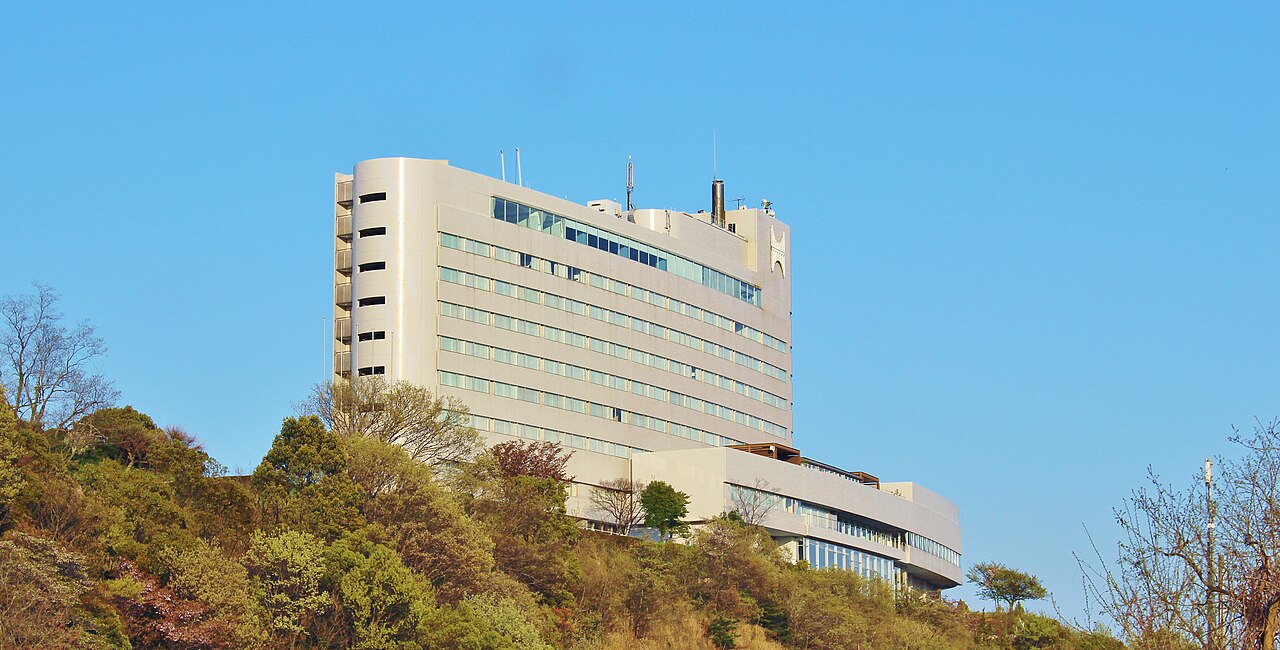
Check-in starts at 15:00 and checkout is by 11:00. The desk stores luggage before check-in and after checkout. To visit the park after checkout, leave bags, enter the park, then collect them before the reserved station shuttle. One preschool child per adult can share an existing bed; meal-inclusive plans charge preschool meals separately. Count elementary-school children in the actual room occupancy.
Choose rooms by group size. Premium Twin is 32 m² for up to three; Regular Twin is 26.9 m² for up to two. The third-floor, 10-tatami Japanese-style room is 32 m² for up to four. Two adults and two elementary-school children can start with that room or the listed fourth-floor connecting combination of Twin (1) and Twin (2) with a wide veranda area, each for up to two.
Fourth-floor Twin (2) with a wide veranda area is 35 m² and has a step at its entrance. Include that step in room choice for anyone needing walking assistance. Choose separately between sea-view twin rooms and the 16 m² city-facing single room, using the actual room name for view and occupancy.
The third floor has sea-facing communal and open-air baths using ordinary bathwater, with no sauna. The official FAQ excludes children still in diapers from the communal bath. Families with young children should arrange in-room bathing while others take turns at the baths. Settle shuttles, room type and bathing conditions first so dinner and rest follow naturally after the park.
Kasago: take an afternoon shuttle and visit the park the next day
WASHU BLUE RESORT Kasago lists booked shuttles from Kojima at 14:45, 15:15, 15:45, 16:15, 16:45 and 17:15, taking about eight minutes. Hotel returns leave at 08:30, 09:00, 09:30 and 10:00. If arriving late in Okayama or Takamatsu on the first day, spend the afternoon checking in, dining and enjoying sea views, then visit the nearby park the next day.
The sightseeing FAQ puts the park about three minutes away on foot and lists park tickets at ¥3,500 for adults and ¥3,000 for elementary-school children. Preschool children and seniors aged 55 or over buy at the park. For two adults and one elementary-school child staying here, hotel-sold tickets total ¥10,000, saving ¥800 against regular ¥10,800 admission. List tickets separately from the accommodation plan.
Rooms include annex Japanese-style rooms for one to five and main-building Regular Twins for one to three, plus special rooms. Families of four can compare Japanese-style plans; groups of three can check triple occupancy in a Regular Twin. Reserve shuttles in advance. One option is afternoon arrival and check-in, luggage storage before the next day’s park visit, then collection before returning to Kojima.
The hotel is at 303-17 Shimotsui Fukiage, about three minutes by car from Kojima IC, with 70 free parking spaces. For a trip centered on sea-view accommodation, stay another night. For a park day alone, returning to the existing hotel in Okayama or Takamatsu keeps luggage and the following day’s travel simpler.
Reconnect trains, luggage and dinner before leaving
Check whether your chosen bus is 16:40 or 17:40 before selecting the final activity. Handle children’s toilets, drinks and coats before walking to the stop. If collecting stored luggage in Kojima, allow time for pickup and the platform walk. Connect trains after bus arrivals at 17:20 or 18:20.
For a hillside stay, check in according to your dinner booking and arrange the following day’s return shuttle in advance. Both hotels require station-shuttle reservations. Record directions and departures separately, and arrange luggage with check-in and checkout. For a park visit after checkout, leave bags at the hotel and take a light daypack.
Keep the rail journey from Kojima separate when returning to Okayama for a Shinkansen or Takamatsu for further Shikoku travel. Save Kojima Station, the park stop and hotel names on your phone, with tickets, hotel booking and bus times easy to find. After reaching the station in darkness, follow the planned next stage.
A few useful answers
What is the height requirement for Sky Cycle?
Sky Cycle requires at least 130 cm, and its track is 16 m above ground. A Ferris wheel rotation takes about 15 minutes; plan the two activities separately.
Can accompanying parents buy admission without rides?
There is no admission-only ticket. Regular admission includes the ride pass: ¥3,800 from junior-high age, ¥3,200 for elementary-school children and ¥2,500 for preschool children aged three or over or seniors aged 55 or over.
Is a twilight ticket always available after 15:00?
The ¥2,500 Twilight Pass is valid from 15:00 only on dates closing at 18:00 or later. Published November 2026 hours are 10:00–17:00, so budget for regular admission.
Where is the Kojima bus stop and how long is the ride?
Take Shimoden Tokohai-go from stop 4 at JR Kojima Station. The current timetable leaves at half past each hour and reaches the park at 40 minutes past, a 10-minute ride. The return loop takes about 40 minutes.
How should I plan the last return bus?
The current timetable lists 17:40 from the park and 18:20 arrival at Kojima. For an earlier departure, take 16:40 and reach Kojima around 17:20, then connect to trains for Okayama or Takamatsu.
Is the bus day pass worth buying?
Adult singles cost ¥250 outward and ¥290 on the return loop, totaling ¥540. The ¥520 Tokohai-go day pass saves ¥20. A child day pass costs ¥260, sold on the bus or at the Kojima office.
Which nearby rooms suit four people?
Setouchi Kojima Hotel’s third-floor Japanese-style room is 32 m² for up to four; it also offers a fourth-floor connecting pair of rooms for two each. Kasago’s annex Japanese-style rooms accommodate one to five.
Can I use the loop bus to visit Washuzan Observatory?
The regular loop is currently diverted because of road damage, with Washuzan Second Observatory suspended. Use Shimoden’s separate temporary service toward the observatory and plan it independently from regular park buses.
Official information and references
Sources used in this guide.
- Washuzan Highland calendar and admission prices
- Washuzan November 2026 calendar
- Washuzan attractions, height and age requirements
- Washuzan access
- Washuzan Q&A on admission, photography and food
- Washuzan performance times
- Shimoden Tokohai-go route, fares and stop 4
- Shimoden current detour timetable
- Shimoden fare table revised March 2025
- Shimoden road-damage detour notice
- Shimoden temporary observatory service
- Setouchi Kojima Hotel rooms
- Setouchi Kojima Hotel shuttles and baths
- Kasago shuttles and access
- Kasago rooms
- Kasago nearby attractions and park ticket sales