First time eating Sanuki udon in Kagawa? Learn how self-serve shops work, the difference between kake and bukkake, and 1- to 2-day itineraries across Takamatsu, Marugame, and Kotohira by train, car, or noodle-making class.
- Region & Focus
- Shikoku
- Reading Scope
- 26 min read · 8 chapters · 5 Q&As
- Official Verification
- 33 official sources checkedUpdated November 22, 2026 at 12:00 AM GMT+8
- Key Topics
- FoodItinerariesChugoku & Shikoku
Chapter Route Map (tap any stop)
- How to read broth, sauce, and temperature on the menu
- Step-by-step through a self-serve udon shop
- Half-day Takamatsu routes from the station, Kawaramachi, or Ritsurin Garden
- Take JR to Marugame for a second bowl, stone walls, and castle keep
- Eat first in Kotohira, then decide how many steps to climb
- Driving? Put early-closing rural noodle factories first
- One-day and two-day udon itineraries
- How many bowls to order, cash to carry, and noodles to bring home
- Quick Q&A
If you only have one day in Kagawa, base yourself in Takamatsu and travel by train. Have your first bowl of udon right outside the station for breakfast, then save your second bowl for Marugame or Kotohira. Pick Marugame to ride JR for beef bukkake and Marugame Castle. Pick Kotohira to ride Kotoden straight to the foot of Kotohira-gu and climb the stone steps after lunch. If you want to hit two rural noodle factories back-to-back, save a rental car for day two. To order, just remember one size and one style: "kake, sho" gets you a small bowl of udon in hot broth. Sip the plain broth first at stop one, order your noodles cold at stop two, and you will taste the difference within two stops.
How to read broth, sauce, and temperature on the menu
When the counter staff asks, "Atatakai desu ka, tsumetai desu ka?" they want to know if you prefer your noodles hot or cold. You can point to the kanji for "hot" or "cold" on the menu to answer. If you see "hiya-atsu," that usually means noodles rinsed in cold water and served in hot broth. Because the noodles skip the reheating step, the bowl arrives cooler than "atsu-atsu," where both the noodles and broth are piping hot. If a shop only lists two temperature options, order using the shorthand on their sign. Simply saying "tsumetai" (cold) leaves out the dish style—staff still need to know whether you want soup, poured sauce, or a separate dipping cup.
Wataya's menu has one quirk that trips up first-timers. There, "atsu" on its own means cold noodles with warm broth; if you want both noodles and broth hot, say "atsu-atsu." "Hiya" means both the noodles and broth are cold. If you are ordering with browser translation, point to both the Japanese dish name and the temperature label together. If someone in your group wants something warm for lunch, do not just say "beef udon," because Wataya splits it into soup-style niku udon and thicker sauce-tossed gyuniku bukkake. Mendokoro Wataya Japanese menu and temperature labels
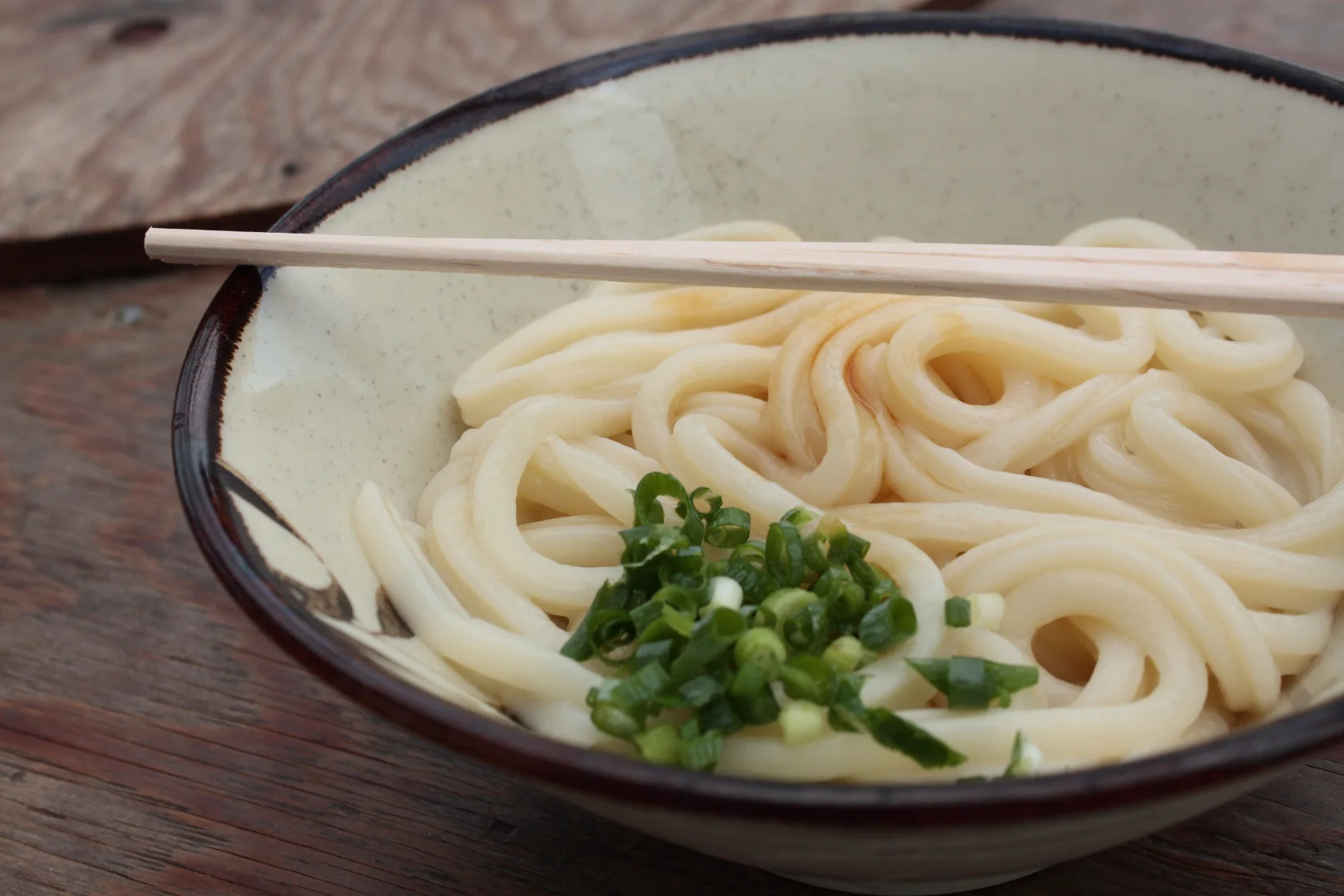
"Kake" is the best order for tasting the broth itself. Freshly boiled noodles go into a bowl, topped with a clear, drinkable dashi. Across Kagawa, some shops build their broth around iriko (dried sardines) for punchy umami, while others lean harder on bonito flakes. Take a sip of the plain broth before adding scallions or ginger so you can taste the base clearly. If you also order kake at your second shop, stick to the same temperature—comparing two bowls side by side makes it easy to spot how each shop treats its noodles and broth.
"Bukkake" comes with a smaller amount of concentrated sauce poured directly over the noodles, making it richer than kake. Many shops serve it hot or cold; cold bukkake often arrives with grated daikon and scallions to toss together with chopsticks. Beef-topped versions mix sweet-savory meat braising liquid into the sauce, making them hearty enough for a full meal. To focus strictly on noodle texture, order plain cold bukkake—or order "zaru," which puts cold noodles on a mat with a small dipping cup on the side. Since noodle and sauce stay separate until you dip a few strands at a time, you can even taste your first bite completely plain.
Hot noodles have dipping and tossed styles, too. Classic "kama-age" serves freshly boiled noodles straight in their hot cooking water alongside a dipping cup. "Yudame" looks similar at a glance, but the noodles are rinsed in cold water first, warmed back up, and placed in fresh hot water—giving them a slightly different bite. If you get a bowl of noodles sitting in hot water with a small cup on the side, simply lift the noodles out and dip them into the cup. "Kamatama" tops piping-hot noodles with a raw egg and seasoning; start mixing right away while the noodles are hot enough to coat and slightly thicken the egg. If you just want clear soup, stick to "kake" on the menu. Kagawa Prefecture Tourism Association udon menu guide
One shop might cut thinner noodles and another thicker ones, yet both can deliver serious chew. Notice how smoothly the strands lift with chopsticks, how much bounce you feel when you bite down, and how the texture holds up after sitting in broth for a few minutes. If your first bowl is hot soup and your second is cold, remember that you changed both the shop and the temperature, so some of the contrast comes from preparation. To figure out which temperature you actually like best, order one hot and one cold bowl at the same shop rather than sampling three different styles across three stops.
First time eating Sanuki udon in Kagawa? Learn how self-serve shops work, the difference between kake and bukkake, and 1- to 2-day itineraries across Takamatsu, Marugame, and Kotohira by train, car, or noodle-making class.
Step-by-step through a self-serve udon shop
Read the menu board outside while you wait in line so you are ready before you step inside. Decide on the dish, size, and temperature ahead of time; when it is your turn, you can say, "Kake, sho, atatakai no de onegaishimasu" for a small hot kake. If you are in a group, order one by one or tell the staff how many bowls of each you need. At noodle factories that only ask how many portions you want, "hitotama" (one ball of noodles) is all you need to say. Start with the smallest size on your first stop—the weight of a single portion varies by shop, and a "small" at the next table might look bigger than you expect.
After the staff hands you a bowl of noodles, check the counter ahead for a vat of hot water, long-handled strainers, and posted instructions. That station is for warming the cooked noodles yourself. Follow the signs: tip your noodles into the strainer, dunk them briefly, shake off the water, and slide them back into the same bowl. Other shops hand you a bowl already warmed to order, in which case you simply slide your tray along to the next station. If you see a row of bottles by the warming vat, read the labels carefully to pour the right broth or sauce for your dish. Self-serve shops split the steps differently, so following the signs inside the shop you are standing in is the easiest way through.
Next comes the counter for tempura, croquettes, and rice balls. Use the shared tongs to place whatever you want on a small plate and carry it with your noodles to the register. Paid toppings and free garnishes are usually kept separate—it is common to add scallions, ginger, and tenkasu (crunchy tempura bits) only after paying. At many shops, you also ladle your own kake broth past the register. Look for the dispenser labeled "kake-dashi"; the one labeled "bukkake-dashi" is for pouring a smaller splash of concentrated sauce. If the dispensers confuse you, point to your bowl and ask, "Dashi wa dore desu ka?" and staff will point to the right one. Kagawa Prefecture Tourism Association guide to shop types and self-serve flow
Keep a steady grip on your tray. If you are traveling with kids, have one adult handle the hot broth and bowls while the other secures a table. When you finish, look for the tray return counter (henkyakuguchi) and drop off your bowls, plates, and tray—sorting chopsticks and dishes separately if signs ask you to. Wait until you are seated to take a photo of your bowl. Other diners are carrying hot soup down the aisle right behind you, so set your tray down safely before reaching for your camera.
If a sign says "ippanten" (full-service shop), take a seat first and order from the table. Staff will bring your udon, though oden or sushi on display may still be self-serve. At shops where you pay after eating, tell the cashier what and how many bowls you had at the register. Save full-service shops for a proper meal when someone in your group wants to sit down, take their time ordering, and have room for coats and bags. Noodle factories (seimensho), by contrast, often have minimal seating and short serving windows. If you want to see how flour turns into finished noodles without rushing, book the hands-on udon-making class in Kotohira where your slot is locked in.
Half-day Takamatsu routes from the station, Kawaramachi, or Ritsurin Garden
Outside JR Takamatsu Station, "Merikenya Takamatsu Ekimae" in Nishinomaru-cho lists daily hours from 7:00 to 20:00. This single starting point puts you right next to the Kotoden line at Takamatsu-Chikko, JR trains toward Marugame, and the ferry terminals at Takamatsu Port the next morning. Put your first Takamatsu bowl here so you can eat right off the train and pick your route afterward—or save it for your return trip if your connection is tight. Merikenya Takamatsu Ekimae location and hours
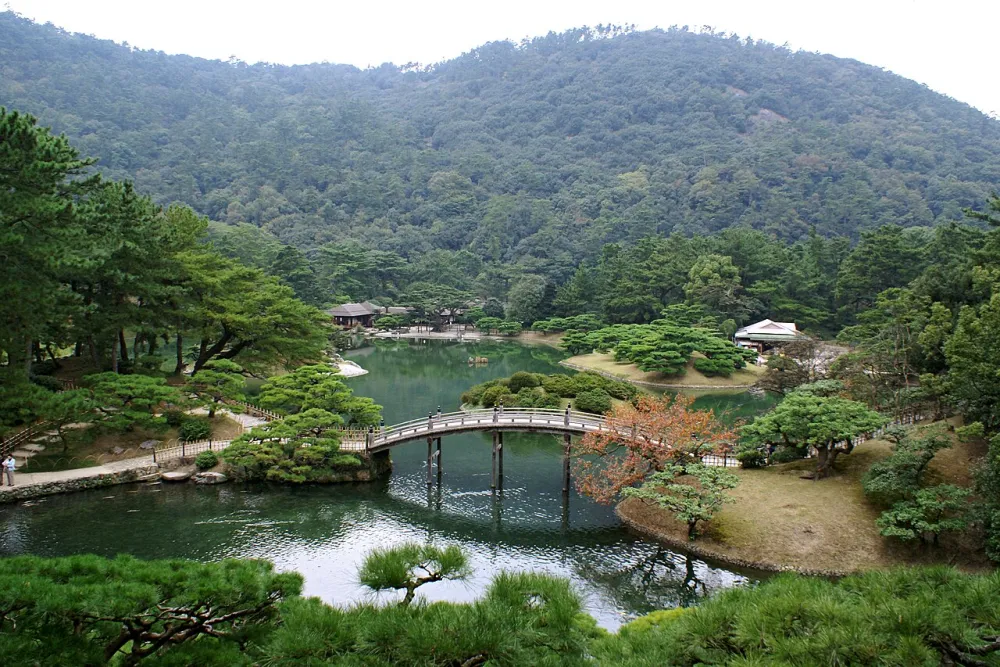
To start at a traditional noodle factory, head to Nakano-cho on the north side of Ritsurin Garden. Matsushita Seimensho opens at 7:00 and runs until 15:00 or whenever noodles sell out, closed Sundays. The tourism association's recommended approach is simple: call out how many noodle balls you want, then pick out tempura or a croquette. The noodles run slightly thin in a broth with clear bonito and kombu notes, with both counter seating and standing tables. Pair this stop directly with Ritsurin Garden afterward: JR Ritsurin-Koen-Kitaguchi Station is about a 3-minute walk from the North Gate, while Kotoden Ritsurin-Koen Station sits on the garden's east side. Make sure your group agrees on both the station and the gate if you are meeting up. Kagawa Prefecture Tourism Association Takamatsu udon route, Ritsurin Garden access
If you are staying around Kawaramachi, start in the nearby covered shopping arcades. Mendokoro Wataya's Takamatsu branch in Minamishinmachi opens at 8:30 with last order at 14:00 (closing early if sold out), closed Sundays and public holidays, cash only. If you plan to visit Wataya in Marugame the next day for their famous beef udon, pick a different shop in Takamatsu—or order plain soup udon in Takamatsu and save beef bukkake for Marugame. Note when searching maps: "Takamatsu Marugamemachi Shopping Arcade" is in central Takamatsu; search "Marugame Station" to reach Marugame City itself. Mendokoro Wataya branch hours and notices
If you only have an extra breakfast window to spare, head east of Kawaramachi to Taga-cho for "Teuchi Judan Udon Baka Ichidai." The tourism association lists regular hours from 6:00 to 18:00, and the shop is famous for kama-batta—hot noodles tossed with raw egg, butter, and black pepper. It fits smoothly as your first stop from Kawaramachi if you want something rich and comforting, leaving your next meal open for a clean, plain kake. If you are hopping straight onto an intercity JR train after breakfast, though, eat by JR Takamatsu Station instead so you skip doubling back from Kawaramachi. Kagawa Prefecture Tourism Association page for Udon Baka Ichidai
Starting near the port and finishing at Ritsurin Garden works well if you arrive in Takamatsu early with no rush to move on. Drop your bags at your hotel or station lockers, eat by the station in the morning, walk through Kataharamachi and the shopping arcades toward Kawaramachi, and decide after strolling the garden whether you have room for another bowl. If you check in during the afternoon, visit the garden or arcades first, grab dinner near the station, and leave early-closing daytime shops for the next morning. For ideas on pairing Yashima, the port area, and city stays, see our two-day Takamatsu food and transit guide.
Save the station-front shop for Sunday mornings, since both Matsushita Seimensho and Wataya Takamatsu are closed that day. If you only want one bowl, pick whichever shop sits closest to your first sightseeing stop. When traveling with older relatives or young kids, eating before you enter Ritsurin Garden saves far more energy than walking back across town hungry afterward. If you are staying near Kawaramachi, you can also walk the route in reverse—finishing back at your hotel to rest and saving a port-side meal for the morning you catch a ferry.
Take JR to Marugame for a second bowl, stone walls, and castle keep
Ride JR from Takamatsu to Marugame. If you plan to continue to Kotohira the same day, look up "Takamatsu to Marugame" and "Marugame to Kotohira" as separate legs in your transit app. Some trains continue directly from Marugame to Kotohira, while split itineraries require transferring at Tadotsu to the Dosan Line. On the platform, check train destinations carefully—trains bound for Kan-onji or Matsuyama also stop at Tadotsu, so make sure you step off and switch trains according to your connection. For the trip back to Takamatsu, you can buy a separate Kotoden ticket and ride directly from Kotoden-Kotohira to Takamatsu-Chikko. JR Shikoku stations and route map
For an early meal in Marugame, make "Mendokoro Wataya Marugame" at 2-6-18 Kitahirayama-cho your first stop. It runs 8:30 to 14:00 (closing early if sold out), closed Sundays and public holidays, cash only—and for safety reasons, strollers are not permitted inside. Families using a stroller who need lunch nearby should pick a shop with a more accommodating layout. If you want their signature beef bukkake without ruining your appetite for later, the menu offers a "gyuniku bukkake" half-portion, a smart size before climbing the castle and heading on to Kotohira.
If you take JR to Marugame on a Sunday, time your visit for "Sanuki no Kaori Ishikawa Udon," which opens at 11:00. The Marugame City Tourism Association lists closing at 14:00 on weekdays and 15:00 on weekends and public holidays (or earlier when noodles sell out), closed Tuesdays. Located north of the station at 54-8 Fukushima-cho, it is known for finer noodles, natural broth, and tempura fried to order. If you want freshly fried chikuwa fishcake tempura here, keep your Takamatsu breakfast small and plain. Marugame City Tourism Association listing for Ishikawa Udon
After eating, walk south from the station side toward Marugame Castle. Viewing the towering stone walls and Ote Ichinomon Gate leaves plenty of flexibility in your schedule. Climbing up to the castle keep involves steep slopes and stairs; the Marugame City Tourism Association lists keep hours from 9:00 to 16:30 (last entry 16:00), with adult admission at ¥400. Coin lockers at JR Marugame Station can hold large suitcases, just remember to factor in the walk back to retrieve them if you plan to move straight on to your next destination. Marugame Castle hours and admission, JR Marugame Station info
If your connection from Marugame to Kotohira looks rushed, skip the scramble and spend your time exploring Marugame's castle town before heading back to Takamatsu. To tie in a bit of pilgrimage history, walk north of Marugame Station to the Tasuke Toro Lantern, an old landmark that marked the harbor departure point for travelers walking to Kotohira—about a 5-minute walk on the tourism map. Morning noodles at Wataya, a quick detour to the harbor lantern, and a walk up to the castle make a relaxed half-day if you are not chasing Kotohira's afternoon steps. If you visit the castle after lunch instead, focus on the main gate and stone walls before heading back to Takamatsu or continuing west by JR. Marugame City Tourism Association downtown walking map
Eat first in Kotohira, then decide how many steps to climb
When boarding Kotoden at Takamatsu-Chikko, check the train front or platform sign and board one bound for Kotoden-Kotohira. Trains on the same line also terminate earlier at Ichinomiya or Takinomiya, so wait for a Kotoden-Kotohira train if you want a straight shot. Takamatsu-Chikko, Kataharamachi, and Kawaramachi share the central city stretch, meaning you can board at whichever station is closest to your hotel. Keep in mind that JR Kotohira and Kotoden-Kotohira are two separate stations—if a timetable says "JR," you will need to walk over to the other station. Use the operator's endpoint timetables to plan your round trip, checking the holiday column on weekends, public holidays, and December 30 through January 3. Takamatsu-Chikko departure timetable, Kotoden-Kotohira return timetable
Starting October 1, 2026, a single adult fare from Takamatsu-Chikko to Kotoden-Kotohira is ¥780 (¥1,560 round trip on two regular tickets). A paper one-day pass costs ¥1,600, while a 24-hour Kotoden digital train ticket runs ¥1,500—making the digital ticket cheaper for a same-day round trip, and it lets you hop off at Ritsurin-Koen Station for another bowl of udon along the way. Regular paper tickets no longer allow stopovers from that same date; exiting the gates requires buying a fresh ticket for the next leg. If you use the digital ticket on your phone, keep enough battery for the ride home. Takamatsu-Chikko fare table, Kotoden digital tickets, Kotoden paper one-day pass, Kotoden October 2026 fare revision notice
For lunch along the Omotesando approach, "Tentekomai" lists hours from 9:30 to 16:00 (or until sold out), closed Wednesdays except during major holiday periods. Nearby "Konpira Udon Sando" currently lists irregular operating days on its site; if your visit falls on an uncertain day, eat in Takamatsu before coming or lock in lunch via a timed udon-making class in Kotohira. The shop entrances, noodle school, and the start of the stone steps all sit within the same compact approach town, so eating before you start climbing makes it much easier to stay on schedule than hiking uphill and hunting for food mid-route. Tentekomai and Omotesando shop details, Konpira Udon operating notice
Reaching Kotohira-gu's Main Shrine (Gohongu) takes 785 stone steps; continuing to the Inner Shrine (Okusha) brings the total to 1,368 steps. Pad your schedule for the climb, shrine visit, and descent so you can actually pause at spots that catch your eye. If you have an afternoon class or train to catch, use the shrine's estimate of roughly one hour one-way from the first step to the Main Shrine, then add time for stops and the walk back down. Anyone in your group with sore knees on descents can turn around near Daimon Gate or stroll the lower approach shops instead. If you are driving, park in town—the shrine's access page advises setting your car GPS to "JR Kotohira Station" so it does not route you onto restricted shrine roads. Kotohira-gu official access and step count
A noodle-making class can double as lunch. Nakano Udon School in Kotohira walks you through rolling out aged dough with a pin, folding and cutting noodles, plus mixing wheat flour and salted water in groups and kneading the dough by stepping on it inside a sealed bag. The take-home session runs about 50 minutes, with roughly 30 extra minutes if you boil and eat your noodles on-site. Listed pricing is ¥1,760 per person for groups of two or more, and ¥1,980 for a solo participant per their FAQ, depending on availability. Specify whether you want to eat in or take your noodles home when booking or checking in—if you want a seated lunch before tackling the afternoon steps, book the dine-in option to lock in both your mealtime and location. Nakano Udon School Kotohira classes, pricing, and FAQ
The school is roughly a 10-minute walk from JR Kotohira Station according to the organizer. Check whether your confirmation lists Building A or Building B and head straight to the right entrance, where start times and room details are posted. Aprons and tools are provided; you can set your bags down in the classroom before washing your hands. Elementary-age kids can help roll the dough, while younger children should pair with an adult and leave the knife cutting to grown-ups. If the whole family is taking the class, skip having a full udon lunch right beforehand—the noodles you cook at the end will be your meal. If you prefer eating a hot bowl first and climbing afterward, book a morning session and walk straight up the approach after class.
Driving? Put early-closing rural noodle factories first
A rental car pays off most at outlying shops like Ikegami Seimensho south of Takamatsu or Nakamura in Marugame's Hanzan-cho. Even when a station search puts them in the same municipality, you still have a stretch of road to cover. Ikegami Seimensho (899-1 Kagawa-cho Kawahigashishimo, Takamatsu) lists hours from 10:30 to 14:00 until sold out, closed Tuesdays and New Year's Day (open on public holiday Tuesdays, closed the following Monday instead). If you are driving on to Kotohira afterward, head straight from the rental counter to Ikegami in the morning, gauge how much everyone wants to eat while waiting, then park once in Kotohira and cover the rest on foot. Ikegami Seimensho address, hours, and parking
Ikegami splits its entrance into two separate lines. One queue is for kamatama and kamanuki, and the other is for kake, cold udon, and zaru. If people in your group want different dishes, pick your respective lines right at the door, grab your bowls and side dishes, pay first, and meet up at the seating area. It is easy to spot a long queue, fall in at the back, and only realize at the counter that what you want is served on the other side—so decide your order earlier here than usual. Ikegami Seimensho ordering queues
Nakamura sits at 1373-3 Hanzan-cho Nishisakamoto in Marugame, a fair drive away from the shops near JR Marugame Station. Its site lists hours from 9:00 to 14:00 until sold out, with a footer note stating it closes Tuesdays and the second and fourth Wednesdays of each month. If you want their dried-sardine broth and freshly fried chikuwa tempura, make Hanzan-cho your very first morning stop. Continuing to Marugame Castle? Drive over and park near the castle before walking. Heading to Kotohira instead? Drop the castle from the day to protect your time for the shrine or a booked udon class. Navigating directly to the Hanzan-cho address and walking from the lot avoids unnecessary backtracking through downtown Marugame. Nakamura official address and schedule
"Hinode Seimensho" in Sakaide makes a great standalone lunch stop. Primarily a noodle manufacturer and wholesaler, it opens for dine-in only from 11:30 to 12:30, serving everyone already standing in line outside by 12:30 on operating days. Takeout hours and dine-in hours are completely separate—seeing the storefront open in the afternoon usually means they are only selling packaged noodles to go. Drivers can check the shop's website map for multiple dedicated parking lots; if the nearest one is full, pull into one of the overflow areas marked on the map. Hinode also serves "nurui" (lukewarm) noodles, worth trying if you want a middle ground between piping hot and ice cold. Hinode Seimensho dining rules and parking
To combine Hanzan-cho and Sakaide in a single day by car, start early with a small bowl at Nakamura, then work backward from Hinode's 12:30 line cutoff to set your latest departure time—leaving buffer for parking, walking to the storefront, and waiting for a space. If the line at stop one moves too slowly, skip straight to Hinode. Trying to squeeze Ikegami and Hinode into the same day is much tighter because Ikegami does not open until 10:30; waiting at both makes catching the 12:30 cutoff tough, so pick one for lunch and relax. Pairing either with an afternoon in Kotohira works smoothly—just work backward from any booked class check-in time and commit to a single sure-bet noodle stop on the way.
If you are driving with kids on a weekend and want a big table, check out Sanshu Seimen in Marugame's Dokicho. It advertises free parking and 100 seats, closed Tuesdays (or the next day if Tuesday falls on a public holiday), with a midday break on weekdays and shortened hours marked on its online calendar. Check that day's slot on their calendar before heading out if you are using it as a backup breakfast spot. Filling up the whole family in one comfortable stop lets the dedicated noodle fans save smaller back-alley shops for day two without squeezing through narrow residential lanes twice on day one. Sanshu Seimen calendar, seating, and parking
Save every shop's parking lot in your map app before setting off, especially when the lot sits across the street from the entrance. Many rural noodle factories are tiny storefronts tucked inside residential neighborhoods where you will not spot the line hugged against the wall until you turn off the main road. If a lot is full, follow signs to the secondary lot or move on to your backup stop—especially when anyone in the car has a timed class or shrine visit waiting. Since central Takamatsu is easy to cover on foot and by Kotoden, skip renting a car on day one and pick it up on day two to save a night of parking fees and avoid city driving.
One-day and two-day udon itineraries
One day, no car, Kotohira focus: Start around 8:00 with a hot kake outside JR Takamatsu Station, walk to Takamatsu-Chikko for the Kotoden train, stroll the approach shops on arrival, eat lunch around 11:00, and spend the afternoon climbing to the Main Shrine. Prefer climbing first? Catch an earlier train to Kotohira, eat after coming back down the steps, and fall back on the Takamatsu station-front shop if you miss lunch hours. Not hungry early? Have your first bowl in Kotohira and save the station-front shop for bowl two back in Takamatsu. In winter, daylight fades early, so getting to Kotohira on time matters more than cramming in extra shops.
One day, no car, Marugame focus: Eat breakfast in Takamatsu, ride JR to Marugame, and let your chosen shop's opening time decide whether you eat or tour the castle first. Wataya opens at 8:30, making breakfast before the castle effortless. If you are aiming for Ishikawa Udon at 11:00 and want to visit the castle first, factor in the walk back to the north side of the station before lunch. If you really want to squeeze Kotohira into the same day, keep Marugame to lunch and a brief walk, then spend the afternoon browsing Kotohira's lower town—saving the climb up to the Main Shrine only if daylight and energy hold. Splitting the day between two towns works best if you are mainly here for snacks and street atmosphere.
If you plan to loop through Takamatsu, Marugame, and Kotohira in a single day, add up the three individual point-to-point fares and compare them against the "Kotoden-JR Kururin Ticket." JR Shikoku lists the adult price at ¥2,300 starting October 2026, covering unlimited rides on all Kotoden train lines plus non-reserved seats on JR local and rapid trains between Takamatsu and Tadotsu, and Tadotsu to Kotohira (limited express trains require an extra limited express ticket). Buy it at designated JR Shikoku ticket counters or via the "Suma-eki" smartphone app—Kotoden stations no longer sell it. If you are only doing a round trip to Kotohira, a standalone Kotoden ticket is all you need. JR Shikoku joint pass revision notice
Two days, train-only: Spend day one in Takamatsu, pairing Matsushita Seimensho with Ritsurin Garden in the morning, browsing the shopping arcades in the afternoon, and keeping the station-front shop as a second meal or next-morning backup. Give day two entirely to Marugame or Kotohira, saving your appetite for the shop you care about most. If your trip falls on a Sunday and Monday, do Kotohira on Sunday and Matsushita Seimensho on Monday—or do Ishikawa Udon in Marugame on Sunday and Takamatsu on Monday. Around New Year's or public holidays, check exact dates first since shop closures and holiday rail schedules shift.
Two days, car on day two: Stay in Takamatsu on day one for city bowls and sightseeing by foot and train. On day two, pick up a car and choose between the Hanzan-cho plus Sakaide loop or Ikegami Seimensho plus Kotohira, keeping Shodoshima as its own separate day. On ferry mornings, stick to a station-front shop within walking distance of the pier rather than risking rural wait times against a boat departure—and never put Hinode's tight noon window right before a ferry sailing. To connect Kagawa with neighboring prefectures, see our five- and seven-day Shikoku transit guide.
How many bowls to order, cash to carry, and noodles to bring home
Plan your portions across the whole day, not one bowl at a time. To compare broths, start with a small plain bowl at breakfast and save tempura or beef toppings for lunch. If stop one turns into a large bowl with beef and an onigiri, turn stop two into a walk or souvenir browse instead. If someone in your group wants to share, tell the counter how many people are dining and follow the shop's bowl policy. At self-serve counters that ask "Nantama?" ("How many balls?"), keeping side-dish plates separate on your tray makes checkout faster and clearer.
Keep cash handy for shops that do not take cards or apps. Both Wataya branches are cash only; Ishikawa Udon takes cash and PayPay. Mentally separate your cash budget for noodles and toppings, transit fares, and parking or coin lockers—and count any udon-making class separately since it covers both an activity and a meal. Once you have a tray with a steaming bowl and tempura in your hands inside a self-serve shop, digging through a backpack for your wallet is awkward, so move your cash or coin purse somewhere easy to reach before walking in.
In winter, look for "shippoku" on menus—udon topped with simmered seasonal vegetables and fried tofu. Japan's Ministry of Agriculture, Forestry and Fisheries describes the Kagawa style as simmering autumn and winter root vegetables in dried-sardine dashi and ladling both broth and vegetables over the noodles. A bowl this hearty works well as a standalone meal, letting you save tempura for another stop. If anyone in your group avoids fish, eggs, or wheat, write the ingredients down in Japanese or use a clear allergen note—kake broth almost always uses fish stock, and kamatama mixes in raw egg, so picking off visible toppings will not remove them. MAFF Kagawa shippoku udon profile
Before buying packaged udon as souvenirs, check when you will actually be home to cook it. Compare shelf-stable dried noodles, semi-dried (han-nama) noodles, and fresh noodles by their storage instructions and best-by dates on the label. Fresh noodles you cut yourself in class—like at Nakano Udon School—have a short shelf life, so cook and eat those on-site if you still have several travel days ahead, and buy sealed dry or semi-dried boxes for your suitcase. If the box includes concentrated soup packets, mix up one small test portion to the package ratio first: serve it in hot broth for kake, or boil, rinse thoroughly in cold water, and pour a separate cup of dipping sauce for a cold tasting. Splitting one pack into two styles is easy—pull out half the boiled noodles for hot soup first, then rinse the remaining half under cold water.
A few useful answers
If I only visit one udon shop, should I order kake or bukkake?
Order kake if you want a full bowl of hot broth to drink, or bukkake if you prefer noodles tossed in a concentrated sauce. If you want cold noodles and control over how salty each bite is, order zaru so the dipping sauce stays on the side.
Can I take the Kotoden train from Takamatsu to Marugame?
Take JR to reach Marugame Station in Marugame City. The Kotoden Kotohira Line runs from Takamatsu-Chikko to Kotohira, where Kotoden and JR each have their own station. To visit all three cities, connect Takamatsu, Marugame, and Kotohira by JR, and take Kotoden back to Takamatsu from Kotoden-Kotohira if you like.
What does it mean when a shop says it closes when noodles run out?
It means the shop closes as soon as the day's noodles sell out (men shuryo shidai). Shops like Ikegami Seimensho and Matsushita Seimensho operate this way, so go early in the day. Hinode Seimensho in Sakaide has a 11:30 to 12:30 dine-in window and cuts off the line at 12:30 on operating days.
Can a solo traveler book the udon-making class in Kotohira?
Yes. Nakano Udon School's FAQ lists a solo rate of ¥1,980 (tax included), subject to availability. Groups of two or more pay ¥1,760 per person (tax included). Set aside about 80 minutes if you plan to cook and eat your noodles on-site before heading to the shrine or train.
Is saying "small" (sho) enough to place an order?
Usually you state the dish name first, then "sho" (small) for the portion size, plus hot or cold if needed. At noodle factories that only ask how many balls of noodles you want, saying "hitotama" (one ball) is enough.
Official information and references
Sources used in this guide.
- Kagawa Prefecture Tourism Association | Self-Serve, Full-Service, and Noodle Factories
- Kagawa Prefecture Tourism Association | Sanuki Udon Menu Guide
- Kagawa Prefecture Tourism Association | Takamatsu City Udon Route
- Kagawa Prefecture Tourism Association | Ritsurin Garden Access
- Merikenya | Takamatsu Ekimae Branch
- Matsushita Seimensho | Location and Hours
- Mendokoro Wataya | Marugame and Takamatsu Branches
- Marugame City Tourism Association | Ishikawa Udon
- Marugame City Tourism Association | Marugame Castle
- Marugame City Tourism Association | Downtown Walking Map
- JR Shikoku | Station Info and Route Map
- JR Shikoku | Marugame Station Info
- Kotoden | Kotohira Line Takamatsu-Chikko Timetable
- Kotoden | Kotohira Line Kotoden-Kotohira Timetable
- Konpira Udon | Sando Shop Operating Notice
- Nakano Udon School | Kotohira School and Omotesando Shop Access
- Nakano Udon School | Kotohira Noodle-Making Class
- Kotohira-gu | Worship and Access Guide
- Ikegami Seimensho | Location and Hours
- Nakamura | Hanzan-cho Location and Hours
- Hinode Seimensho | Dining Rules and Parking
- Sanshu Seimen | Operating Calendar and Location
- Japan Ministry of Agriculture, Forestry and Fisheries | Kagawa Shippoku Udon
- Mendokoro Wataya | Japanese Menu and Temperature Labels
- Kagawa Prefecture Tourism Association | Teuchi Judan Udon Baka Ichidai
- Kotoden | Takamatsu-Chikko Regular Fares
- Kotoden | Kotoden-Kotohira Regular Fares
- Kotoden | 24-Hour and 48-Hour Digital Train Tickets
- Kotoden | October 2026 Regular Fare Revision
- Ikegami Seimensho | In-Shop Ordering Queues
- JR Shikoku | Kotoden-JR Joint Pass Pricing and Sales Notice
- Kotoden | Paper One-Day Train Pass
- JR Shikoku | Joint Pass Limited Express Supplement Rules (2023 Notice)