A first-timer's guide to Sanuki udon in Kagawa, from self-service ordering flow to the difference between kake and bukkake. Plan Takamatsu, Marugame, and Kotohira around shop hours, by train, by car, or with an udon-making class.
- Region & Focus
- Shikoku
- Reading Scope
- 26 min read · 8 chapters · 5 Q&As
- Official Verification
- 33 official sources checkedUpdated 22 November 2026 at 00:00 GMT+8
- Key Topics
- FoodItinerariesChugoku & Shikoku
Chapter Route Map (tap any stop)
- Understanding Broths, Dipping Sauces, and Temperatures on the Menu
- Inside a Self-Service Shop: Following the Tray Line
- A Half-Day in Takamatsu from Ekimae, Kawaramachi, or Ritsurin Garden
- Taking the JR Line to Marugame for Bowl Two, Stone Walls, and the Keep
- In Kotohira, Plan Lunch Before Deciding How Many Steps to Climb
- If Driving, Prioritise Suburban Noodle-Making Shops with Tight Windows
- One-Day and Two-Day Noodle Itineraries
- How Many Bowls to Order, Cash to Carry, and Noodles to Bring Home
- Quick Q&A
If you only have one day in Kagawa, are staying in Takamatsu, and are travelling by train, have a bowl of station-front udon for breakfast and save your second bowl for Marugame or Kotohira. Pick Marugame to take the JR line for beef bukkake and Marugame Castle. Pick Kotohira to ride the Kotoden line straight there, then climb the stone steps of Kotohira-gu after lunch. If you want to visit two suburban noodle-making shops back-to-back, save hiring a car for day two. To order, start by memorising one portion size and one style - for instance, 'kake, sho' gets you a small bowl of udon in hot dashi broth. Sip the plain broth first from your opening bowl, then order chilled noodles at your second stop so two stations are enough to taste the difference.
Understanding Broths, Dipping Sauces, and Temperatures on the Menu
When staff at the counter ask 'Atatakai desu ka, tsumetai desu ka?', they want to know whether you would like your noodles hot or cold. You can answer by pointing to 'hot' (on) or 'cold' (rei) on the menu board. If you see 'hiya-atsu', it usually means noodles rinsed in cold water and served straight into hot broth. Because the noodles skip the reheating step, the bowl arrives slightly cooler than 'atsu-atsu', where both noodles and broth are piping hot. When a shop only lists two temperature options, simply order using the shorthand on the sign. Saying 'cold' (tsumetai) on its own leaves out the dish name - the server still needs to know whether you want soup, poured sauce, or a separate dipping cup.
Wataya's menu has one spot that easily trips people up. In their shops, 'atsu' on its own means cold noodles with warm broth; if you want both noodles and broth hot, ask for 'atsu-atsu'. 'Hiya' means both noodles and sauce are cold. If you are ordering with a browser translation on your phone, point to both the Japanese dish name and the temperature label together. If anyone in your group dislikes cold food, do not just ask for 'beef udon' at lunch, as Wataya splits that into soup-based niku udon and thicker sauce-dressed beef bukkake. Mendokoro Wataya Japanese menu and temperature labels
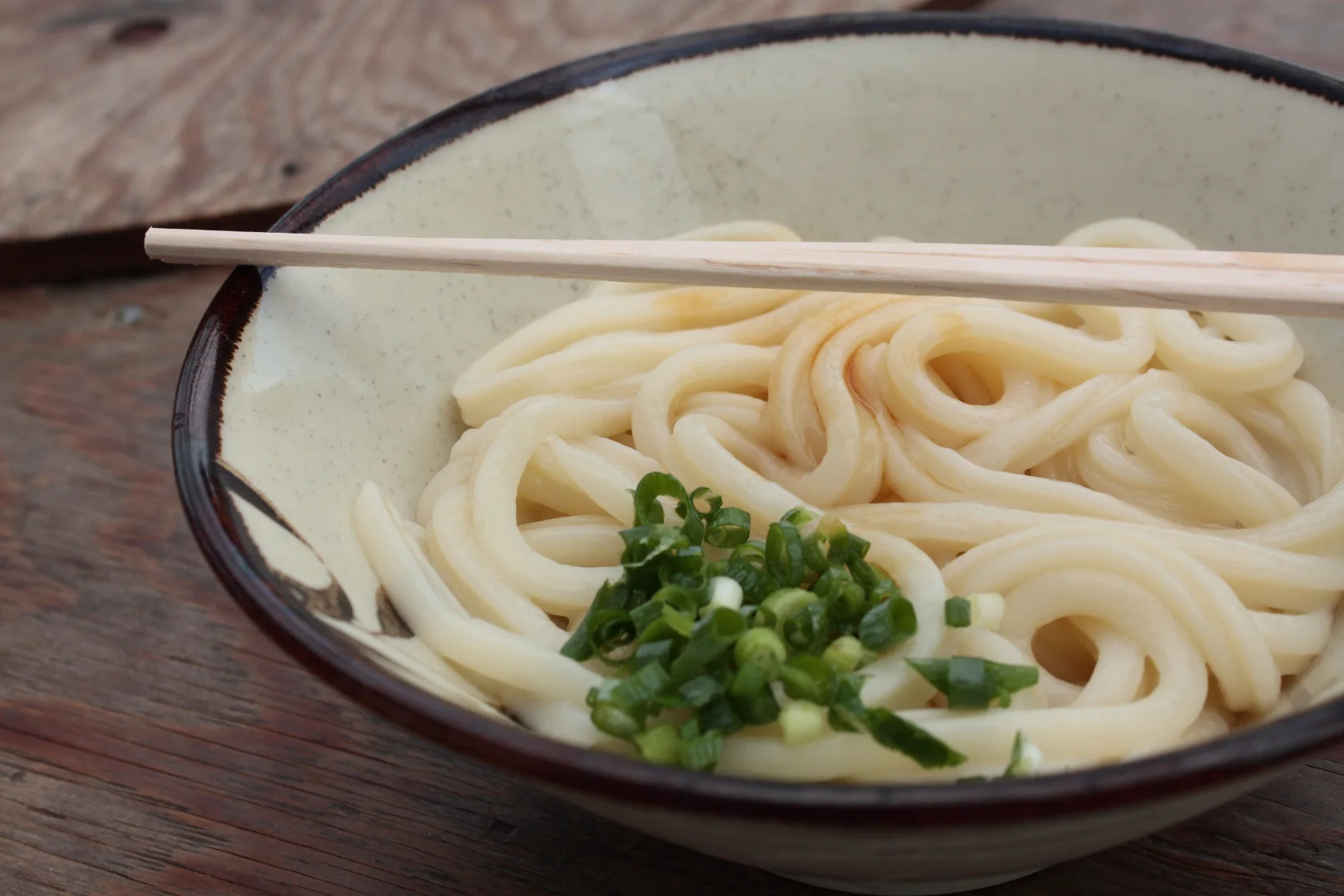
'Kake' is the best choice when you want to taste the broth itself. Boiled noodles go into a bowl and are topped with drinkable dashi. Some Kagawa shops build their savoury base with iriko (dried baby sardines), while others lean more heavily on bonito flakes. Taste the plain broth before adding spring onions or grated ginger on your next mouthful so the base flavours stand out. If you also order kake at your second shop, stick to the same temperature - comparing two bowls side by side makes it far easier to notice each maker's choices in noodle and broth.
With 'bukkake', a smaller amount of richer, more concentrated sauce is poured straight over the noodles rather than served as a full soup. Some shops offer it both hot and cold; cold bukkake often comes with grated daikon radish and spring onions to toss evenly with chopsticks. Topping it with beef adds sweet-savoury braising juices, turning it into a filling main meal. To compare noodle texture closely, order plain cold bukkake, or pick 'zaru', which serves chilled noodles alongside a small cup of dipping sauce. With noodles and sauce kept separate, your very first bite can be completely unsauced.
Hot noodles have dipping versions too. Classic 'kamaage' brings freshly boiled noodles straight from the pot in their hot cooking water, paired with a separate dipping sauce. 'Yudame' looks similar, but the noodles are rinsed in cold water first and then warmed again in fresh hot water, which alters the bite. If you are handed a bowl of noodles in plain hot water alongside a small cup, lift the noodles into the cup a few strands at a time. 'Kamatama' tosses a raw egg and seasoning directly into piping-hot noodles - start mixing as soon as you receive it while the heat cooks the egg lightly. If you simply want clear soup, go back to 'kake' on the board. Kagawa Prefecture Tourism Association udon menu and styles
One shop's noodles may run slender while another cuts them thick, yet both can deliver plenty of bounce. Pay attention to how smoothly the strands lift with chopsticks, whether they spring back when you bite, and how they hold up after sitting in broth for a couple of minutes. If you eat your first bowl in hot soup and order your second bowl chilled, you are changing both the shop and the temperature, so part of the contrast comes from preparation rather than recipe. To learn which temperature you genuinely prefer, ordering one hot and one cold bowl at the same shop beats trying three different toppings across three stops.
A first-timer's guide to Sanuki udon in Kagawa, from self-service ordering flow to the difference between kake and bukkake. Plan Takamatsu, Marugame, and Kotohira around shop hours, by train, by car, or with an udon-making class.
Inside a Self-Service Shop: Following the Tray Line
Read the sign outside while you wait in the queue so you are ready before stepping up to the counter. Decide on the dish, portion size, and temperature beforehand; when it is your turn, you can say 'Kake, sho, atatakai no de onegaishimasu' for a small bowl of hot kake. If you are in a group, order one by one or tell the counter how many bowls of each you need. At noodle-making factories (seimensho) that only ask for noodle balls, saying 'hito-tama' (one ball) is enough. Start with the smallest size on your first visit - portion weights vary from shop to shop, and a 'small' bowl on the neighbouring table may be larger than you expect.
After the server hands you a bowl, look ahead for a hot-water vat, long-handled mesh strainers, and picture signs: that station is for warming pre-cooked noodles yourself. Follow the posted instructions to tip the noodles into a strainer, dunk them briefly, drain well, and tip them back into the same bowl. Other shops hand you a bowl already brought to temperature, in which case you simply slide your tray along to the next station. When you see a row of bottles beside the strainers, read the labels carefully before pouring so you match the right broth or sauce to your dish. Self-service shops divide different steps among customers, so following each shop's own signs is the easiest way through.
Next along the counter are tempura, croquettes, and rice balls. Use the shared tongs to place whatever you want onto a small plate and carry it with your bowl to the till. Paid toppings and free condiments usually sit in separate zones; it is common to add spring onions, grated ginger, and tenkasu (crispy tempura batter crumbs) only after paying. At some shops, you even ladle your own kake broth past the register. Look for the urn labelled 'kake-dashi', while a separate jug marked 'bukkake-dashi' is meant for smaller pours over dressed noodles. If a dispenser label is unclear, point to your bowl and ask 'Dashi wa dore desu ka?' and staff will point you to the right one. Kagawa Prefecture Tourism Association guide to shop types and self-service flow
Keep a steady grip on your tray, and if you are travelling with children, let one adult handle carrying bowls and ladling hot broth while the other claims seats. When you finish, take your tray, bowls, and plates to the return counter marked 'henkyakuguchi', and sort chopsticks or cutlery if signs ask you to. Wait until you are seated before taking photos of your food; other diners are carrying hot soup down the same aisle, so set your tray down securely first.
At an 'ippan-ten' (full-service shop), you sit down first and order from your table, and staff bring the bowls out - though oden skewers or sushi on the counter may still be self-serve. At places where you pay after eating, keep track of what and how many items you had so you can report them at the till. Save full-service shops for proper meals when someone in your group wants to browse at leisure or you need room for coats and bags, as noodle-making factories may have only basic seating or short serving windows. If you want to see how flour becomes a bowl of udon from scratch, book an udon-making class in Kotohira where the schedule is fixed.
A Half-Day in Takamatsu from Ekimae, Kawaramachi, or Ritsurin Garden
Right outside JR Takamatsu Station in Nishinomaru-cho, Merikenya Takamatsu Ekimae states daily opening hours of 07:00 to 20:00. That same corner connects to Kotoden trains at Takamatsu-Chikko, JR services towards Marugame, and the port piers if you are catching a ferry the next day. Scheduling your first Takamatsu bowl here lets you step off the train, eat, and choose your onward route afterwards - or keep the station-front shop as an easy fallback on the way back if connections are tight. Merikenya Takamatsu Ekimae address and hours
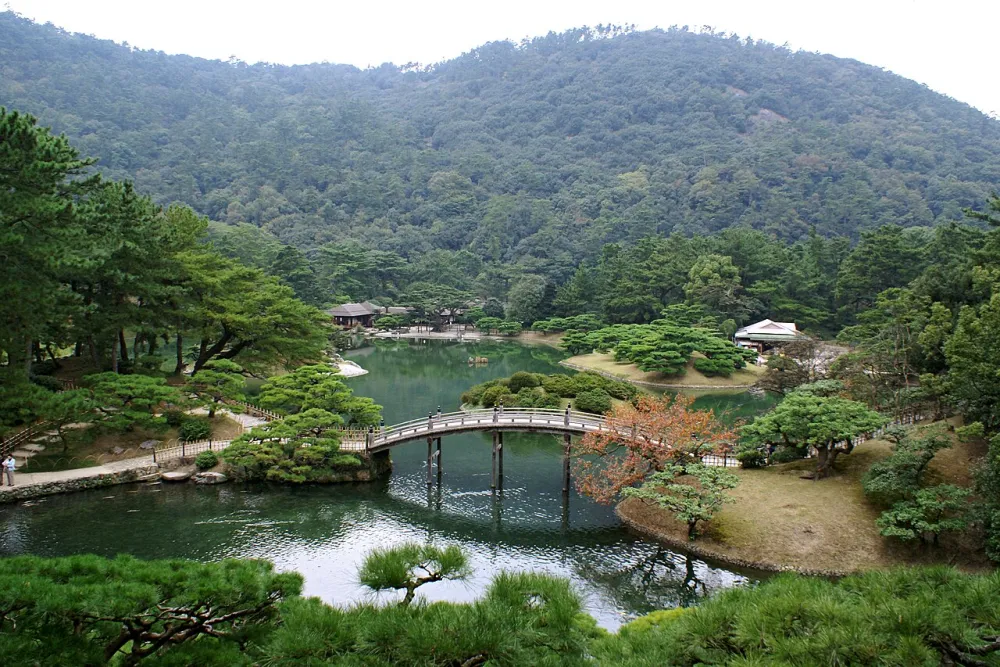
To start at a traditional noodle-making shop, head to Nakano-cho just north of Ritsurin Garden. Matsushita Seimensho opens at 07:00 and runs until 15:00 or until noodles sell out, closed on Sundays. Following the tourism association's route, you simply state how many balls of noodles you want and pick any tempura or croquettes you fancy. The noodles run slightly thin in a broth with bonito and kelp notes, and the space has both counter seating and standing tables. Pair this stop with Ritsurin Garden right after breakfast: JR Ritsurin-Koen-Kitaguchi Station is roughly a 3-minute walk from the North Gate, while Kotoden Ritsurin-Koen Station sits on the east side - name both the station and the gate if you are arranging to meet companions. Kagawa Prefecture Tourism Association Takamatsu udon route, Ritsurin Garden access
If you are staying around Kawaramachi, start in the nearby covered shopping streets. Mendokoro Wataya Takamatsu sits in Minami-shinmachi, open 08:30 to 14:00 (last order, closing earlier if sold out), closed Sundays and public holidays, cash only. If you plan to visit Wataya's Marugame branch for beef udon the next day, choose a different shop in Takamatsu or order clear soup here and save the beef bukkake for Marugame. Note when searching maps that 'Takamatsu Marugamemachi Shopping Street' is in central Takamatsu - search specifically for 'Marugame Station' to reach the city of Marugame. Mendokoro Wataya branch notices
If you only have an extra breakfast window, Taga-cho on the east side of Kawaramachi is home to Teuchi Judan Udon Baka Ichidai, listed by the tourism association as 06:00 to 18:00 on regular days and famous for kama-butter - hot noodles tossed with raw egg, butter, and black pepper. It slots neatly into the morning if you are based around Kawaramachi and crave something rich and peppery, leaving room for a crisp, clean kake at your next meal. If you are boarding an intercity JR train straight after eating, however, stick to breakfast near JR Takamatsu Station to avoid backtracking from Kawaramachi. Kagawa Prefecture Tourism Association listing for Udon Baka Ichidai
Starting near the port and finishing at Ritsurin Garden works well if you arrive in Takamatsu early without rushing onwards. Drop bags at your hotel or station lockers, have breakfast near the station, stroll through Kataharamachi and the shopping arcades towards Kawaramachi, and decide whether to add another bowl after touring the garden. If you do not check in until afternoon, visit the garden or arcades first, dine near the station in the evening, and save early-closing shops for the next morning. To build out Yashima, the waterfront, and city stays, continue with our two-day Takamatsu food and transport guide.
On Sundays, keep the station-front shop in your plan for breakfast, as both Matsushita Seimensho and Wataya Takamatsu are closed. If you only want one bowl, pick whichever shop sits closest to your first sight of the morning. Travelling with older relatives or young children makes a noticeable difference here: eating before entering Ritsurin Garden takes far less energy than walking back across the city centre hungry after the stroll. Guests staying near Kawaramachi can also reverse the route to walk straight back to their hotel, saving a port-side meal for ferry morning.
Taking the JR Line to Marugame for Bowl Two, Stone Walls, and the Keep
Take JR from Takamatsu towards Marugame. If you want to continue to Kotohira the same day, look up 'Takamatsu to Marugame' and 'Marugame to Kotohira' separately in your route planner. From Marugame, some trains run straight through to Kotohira, while split journeys require changing onto the Dosan Line at Tadotsu. Watch the destination boards on the platform: trains bound for Kanonji or Matsuyama also stop at Tadotsu, where you step off to catch the Kotohira connection on your chosen timetable. For the return to Takamatsu, you can also buy a Kotoden ticket and ride directly from Kotoden-Kotohira back to Takamatsu-Chikko. JR Shikoku stations and route map
For an early bowl in Marugame, make Mendokoro Wataya Marugame your first stop. Located at 2-6-18 Kitahirayama-cho, it opens 08:30 to 14:00 (or until sold out), closed Sundays and public holidays. The shop is cash-only and asks guests not to bring pushchairs inside for safety reasons, so families relying on a pushchair around lunch should choose a shop with more suitable seating. If you want beef bukkake without ruining your appetite for later, the official menu includes a half-size beef bukkake - ideal if you are climbing up to the castle and heading on to Kotohira afterwards.
If you visit Marugame by JR on a Sunday, time your arrival for the 11:00 opening at Sanuki no Kaori Ishikawa Udon. The Marugame City Tourism Association lists hours until 14:00 on weekdays and 15:00 on weekends and public holidays (or until sold out), closed Tuesdays. Situated north of the station at 54-8 Fukushima-cho, it is known for slender noodles, natural dashi, and tempura fried to order. If you fancy chikuwa-ten (fried fishcake tempura), save it for this lunch and keep your earlier Takamatsu breakfast to a plain small bowl. Marugame City Tourism Association listing for Ishikawa Udon
After eating, walk south from the station towards Marugame Castle. You can keep your timing flexible if you only want to admire the towering stone walls and the Ote-ichinomon Gate, whereas climbing to the castle keep involves steep slopes and stone stairs; the Marugame City Tourism Association lists keep hours as 09:00 to 16:30 (last entry 16:00), ¥400 for adults. Large luggage fits in coin lockers at JR Marugame Station, though remember to factor in the walk back to collect your bags if you plan to board a train straight after touring the grounds. Marugame Castle visitor information, JR Marugame Station
If only a tight transfer remains between Marugame and Kotohira, take your time strolling Marugame's castle town and return to Takamatsu instead. To weave in a piece of Konpira pilgrimage history, walk about 5 minutes north of Marugame Station - as marked on the tourism map - to see the Tasuke Lantern, a historic beacon that once guided pilgrims arriving at Marugame Port towards Kotohira. Pairing an early bowl at Wataya with a look at the port lantern and the castle works nicely when you are not rushing up Kotohira's stone steps in the afternoon; if you reach the castle after lunch, stick to the main gate and stone walls before heading back to Takamatsu or continuing west by JR. Marugame City Tourism Association walking map
In Kotohira, Plan Lunch Before Deciding How Many Steps to Climb
When boarding Kotoden at Takamatsu-Chikko, check the train headsign and platform boards for services bound for Kotoden-Kotohira. Trains on the same track also terminate partway at Ichinomiya or Takinomiya, so wait for one marked Kotoden-Kotohira if you want a single through ride. Takamatsu-Chikko, Kataharamachi, and Kawaramachi share the central city corridor, allowing you to board near the shopping arcades if you are staying there. Bear in mind that JR Kotohira and Kotoden-Kotohira are two separate stations - if a poster says 'JR', you will need to walk over to the other station. Use the operator's end-to-end timetables to plan daytime departures, checking the holiday column on weekends, public holidays, and from 30 December to 3 January. Takamatsu-Chikko departures, Kotoden-Kotohira return timetable
From 1 October 2026, a single adult fare from Takamatsu-Chikko to Kotoden-Kotohira is ¥780, making two single tickets ¥1,560. A paper one-day pass costs ¥1,600, while a 24-hour Kotoden digital train pass for a same-day round trip is ¥1,500 - and unlike standard single tickets, which no longer allow stopovers from that same date, the digital pass lets you hop off at Ritsurin-Koen Station for a bowl of noodles and carry on. If you use the digital pass on your phone, keep enough battery charge for the ride back. Fares from Takamatsu-Chikko, Kotoden digital passes, Kotoden paper one-day pass, Kotoden standard fare revision notice
Along the shrine approach, Tentekomai is a straightforward lunch option, with the operator listing hours of 09:30 to 16:00 (closing earlier if sold out), closed Wednesdays except during major holidays. Nearby Konpira Udon Sando currently notes irregular operating days on its website, so if your dates do not align, either eat in Takamatsu or book a timed udon-making session in Kotohira. Once you arrive in town, the noodle shops, workshop entrance, and the foot of the stone steps all sit within the shrine-town cluster - finish your meal on the lower stretch before starting the climb rather than walking steadily uphill past lunch options. Tentekomai and approach shop information, Konpira Udon operating notice
Reaching the Gohon-gu (Main Sanctuary) of Kotohira-gu takes 785 stone steps, rising to 1,368 steps in total if you continue to the Okusha (Inner Shrine). Leave breathing room for the climb, worship, and descent so you can stop whenever something catches your eye. If you have an afternoon workshop or train to catch, the shrine's access page estimates roughly an hour one way from step one to the Main Sanctuary - add extra time for pauses and coming back down. Anyone in your group with sensitive knees on descents can turn back around the Omon Gate or stick to browsing the lower approach. Drivers parking in town should follow the shrine's advice and set their satnav to 'JR Kotohira Station' to avoid being routed onto restricted shrine-precinct roads. Kotohira-gu official access and step count
An udon-making class can double as your meal. At Nakano Udon School in Kotohira, the session covers rolling out rested dough with a pin, folding and cutting noodles, plus mixing wheat flour and brine in groups and kneading the dough by stepping on it inside a plastic bag. Allow roughly 50 minutes if taking noodles home, or about 80 minutes total if staying to boil and eat them on site. Listed pricing for bookings of two or more is ¥1,760 per person; the FAQ notes solo participants at ¥1,980 subject to availability. Let reception know on arrival whether you plan to eat in or take away, or choose the dine-in option when booking - paired with an afternoon climb, your lunch time and table are already locked in. Nakano Udon School Kotohira course, pricing, and FAQ
The school is roughly a 10-minute walk from JR Kotohira Station according to the organisers. Check whether your booking specifies Hall A or Hall B and head to the matching entrance, where start times and rooms are posted. Aprons and tools are supplied, and you can store bags inside the classroom before washing your hands. Primary-school children can help roll the dough, while younger children should work alongside an adult who handles the knife. If the whole family is taking the class, avoid eating a full udon lunch beforehand - the freshly boiled batch you make becomes your main meal. Alternatively, book a morning slot if you prefer a hot bowl before walking up the approach.
If Driving, Prioritise Suburban Noodle-Making Shops with Tight Windows
Having a car makes the biggest difference at suburban spots such as Ikegami Seimensho south of Takamatsu and Nakamura in Hanzan-cho, Marugame. Both sit outside town centres, leaving a fair trek beyond the nearest railway station in the same municipality. Ikegami Seimensho (899-1 Kagawa-cho Kawahigashishimo, Takamatsu) posts hours of 10:30 to 14:00 until sold out, closed Tuesdays and New Year's Day (staying open when a public holiday falls on Tuesday and closing the following Monday instead). If you are driving on to Kotohira, head straight to Ikegami from the hire car depot in the morning, gauge how much your group wants to order while queuing, then park in Kotohira and explore on foot. Ikegami Seimensho address, hours, and parking
Ikegami splits its entrance queue into two lines: the official ordering guide puts 'kamatama' and 'kamanuki' on one side and 'kake', 'cold udon', and 'zaru' on the other. If companions want different styles, split into the matching queue at the door, pick up side dishes after getting your bowl, pay first, and meet up in the seating area. It is easy to join the back of a long line on instinct and reach the counter only to discover your chosen dish is in the other lane, so decide what you are ordering earlier than usual here. Ikegami Seimensho split ordering lanes
Nakamura sits at 1373-3 Hanzan-cho Nishisakamoto in Marugame, a separate drive from the shops near JR Marugame Station. Its website lists 09:00 to 14:00 until sold out, noting at the foot of the page that it closes on Tuesdays as well as the second and fourth Wednesdays of each month. Start your morning here if you want to try its dried-sardine broth and freshly fried chikuwa. To combine it with Marugame Castle, drive over and park beside the castle afterwards; if continuing to Kotohira, skip the castle for the day to leave breathing room for the shrine climb or a booked udon class. Navigating directly to the Hanzan-cho address and walking from the car park saves an unnecessary loop through central Marugame. Nakamura official address and schedule
Hinode Seimensho in Sakaide works best as a standalone lunch target. Its core business is wholesale noodle manufacturing and delivery, with dine-in service compressed into 11:30 to 12:30 - anyone already standing in the outdoor queue by 12:30 on an open day is served. Retail and dining hours serve different purposes, so if you pass by in the afternoon and see the doors open, it may only be selling packaged noodles to take home. Drivers can check the shop's map of several dedicated car parks and move on to another designated lot if the closest one is full. Hinode also offers 'nurui' (lukewarm) noodles, worth trying if you want to sample a texture between hot and chilled. Hinode Seimensho dining rules and parking
A practical driving pairing for Hanzan-cho and Sakaide is a small morning bowl at Nakamura followed by Hinode - working backwards from Hinode's 12:30 queue cut-off to decide the latest minute you can leave stop one, allowing for parking, walking to the door, and waiting for a space. If the first queue moves too slowly, skip straight to Hinode. Trying to fit both Ikegami and Hinode into the same morning is tighter because Ikegami does not open until 10:30, so picking one of the two as your lunch stop keeps the pace relaxed. Kotohira works fine in the afternoon, though if you have booked a class, count backwards from check-in and stick to a single reliable noodle stop en route.
If you are driving with children on a weekend and want plenty of space, Sanshu Seimen in Doki-cho, Marugame lists free parking and 100 indoor seats. It closes on Tuesdays (or the following day when Tuesday is a public holiday), splits weekday hours with a midday break, and marks shortened days on its website calendar - check the calendar cell for your exact date if using it as a backup breakfast spot. Filling up the whole family in one roomy stop lets keen noodle fans save smaller backstreet shops for the next day without weaving down narrow lanes twice on day one. Sanshu Seimen calendar, seating, and parking
Save each shop's car park pins to your map before setting off, especially when parking sits across the road from the entrance. Many noodle-making factories occupy modest storefronts tucked inside residential lanes where you only spot the wall-hugging queue after turning off the main road. If parking is full, follow signs to the overflow lot or pivot to your next stop rather than circling, particularly when your companions have a timed shrine visit or class waiting. Because central Takamatsu is easy to cover on foot and by Kotoden, skipping a hire car on day one and picking it up on day two saves an overnight parking fee and city-traffic hassle.
One-Day and Two-Day Noodle Itineraries
One day, no car, focused on Kotohira. Grab a hot kake near JR Takamatsu Station around 08:00, walk to Takamatsu-Chikko for the Kotoden line, browse Kotohira's shrine approach on arrival, eat lunch around 11:00, and climb up to the Gohon-gu (Main Sanctuary) in the afternoon. If you would rather tackle the steps first, take an earlier train, eat after descending, or catch a bowl back outside JR Takamatsu Station if lunch hours have passed. If you are not hungry early on, eat your first meal in Kotohira and save the station-front shop for your second bowl later on. In winter, shorter daylight means your arrival time in Kotohira determines how far you can comfortably walk more than how many shops you squeeze in.
One day, no car, focused on Marugame. Eat breakfast in Takamatsu before boarding JR, then decide whether to eat or visit the castle first based on your chosen shop's opening time. Wataya opens at 08:30, making it natural to eat before climbing to the castle; if you pick Ishikawa Udon, which opens at 11:00, tour the castle first and allow time to walk back to the north side of the station before lunch. If you are determined to add Kotohira the same day, limit Marugame to lunch and a short stroll, spend the afternoon in Kotohira's lower town, and only climb to the Main Sanctuary if daylight and energy hold out - splitting the day half-and-half suits travellers more interested in street food and townscapes.
If you plan to loop through Takamatsu, Marugame, and Kotohira back to Takamatsu in a single day, add up the three individual standard fares and compare them against the Kotoden & JR Kururin Kippu. JR Shikoku lists the pass at ¥2,300 for adults from October 2026, covering unreserved seats on local and rapid JR trains between Takamatsu, Tadotsu, and Kotohira plus all Kotoden lines for one day (limited express trains require an extra limited express ticket). It can be bought at designated JR Shikoku ticket windows or via the Suma-eki app, as Kotoden stations no longer sell it. For a simple return trip to Kotohira alone, standard Kotoden tickets or a Kotoden pass are plenty. JR Shikoku combined ticket revision notice
Two days by train. Spend day one in Takamatsu: pair Matsushita Seimensho with Ritsurin Garden, browse the shopping arcades in the afternoon, and keep the station-front shop as an extra meal or next-morning backup. Dedicate a full daytime stretch on day two to either Marugame or Kotohira, saving your appetite for the shop you most want to visit. Over a Sunday-Monday pair, put Kotohira on Sunday and Matsushita Seimensho in Takamatsu on Monday - or put Ishikawa Udon in Marugame on Sunday and Takamatsu on Monday. Check exact calendar dates around New Year and public holidays, when shop closures and holiday timetables shift.
Two days, hiring a car on day two. Stay in Takamatsu on day one for noodles and city sights, then pick either the Hanzan-cho plus Sakaide loop or Ikegami Seimensho plus Kotohira on day two, leaving Shodoshima for a separate day altogether. If you want udon before boarding a ferry, stick to the station-front shop within walking distance of the piers rather than risking a suburban queue - especially Sakaide's narrow midday window - before a scheduled sailing. To slot Kagawa into a wider regional loop, see our five- and seven-day Shikoku transport guide.
How Many Bowls to Order, Cash to Carry, and Noodles to Bring Home
Budget your appetite across two bowls together. If you want to compare broths, start with a small plain bowl at breakfast and save tempura or beef toppings for lunch. Once you order meat, a rice ball, and a large bowl at stop one, turn stop two into a walk or shopping break instead. If someone in your group prefers sharing or eating lightly, tell staff how many people are ordering at the door and pick up individual bowls as the shop's system dictates - where counters ask 'nan-tama' (how many balls), keeping side dishes on separate plates makes checkout clearer.
Keep cash handy for the stops that require it. Both Wataya branches take cash only, while Ishikawa Udon accepts cash and PayPay. Mentally separate your spending for noodles and sides, train fares, and parking or coin lockers before heading out, and budget any udon-making class separately since its timing and meal format work differently from a counter bowl. Reaching into a bag for coins while balancing a tray, hot soup, and tempura is awkward, so move your wallet within easy reach before stepping inside.
In winter, watch the door signs for 'shippoku' - udon topped with simmered seasonal vegetables and fried tofu. The Ministry of Agriculture, Forestry and Fisheries describes Kagawa's version as autumn and winter vegetables simmered in iriko dashi and ladled hot, broth and all, over the noodles. A hearty bowl like this stands as a full meal on its own, leaving tempura for another stop. Anyone avoiding dried fish, eggs, or wheat should show a written list of ingredients to avoid at the counter: kake broth usually contains fish, kamatama uses raw egg, and picking visible toppings off the bowl will not remove ingredients cooked into the base. Ministry of Agriculture, Forestry and Fisheries guide to Kagawa shippoku udon
Before buying udon to take home, check when you will actually be able to cook it. Packaged dried, semi-fresh (han-nama), and fresh (nama) noodles differ sharply in storage rules and shelf life on the label. Freshly hand-cut noodles from Nakano Udon School have a short shelf life, so boil and eat them on site if you have several travel days left and pick up longer-keeping gift boxes separately. When a box includes soup sachets, mix one small test bowl to the package ratio first. Use hot broth for kake, or rinse boiled noodles in cold water and serve with dipping sauce in a separate cup - and if you want to try one pack both ways, lift half the noodles straight out for hot soup before chilling the rest.
A few useful answers
If I only visit one shop, should I order kake or bukkake?
Order kake if you want a full bowl of drinkable dashi broth, or bukkake if you prefer noodles dressed in a concentrated sauce. If you like chilled noodles and want to control saltiness, order zaru so the dipping sauce stays on the side.
Can I take Kotoden from Takamatsu to Marugame?
Use JR to reach Marugame Station in Marugame City. The Kotoden Kotohira Line runs from Takamatsu-Chikko to Kotohira, where JR Kotohira and Kotoden-Kotohira each have their own station. To visit all three towns, link Takamatsu, Marugame, and Kotohira by JR, or return to Takamatsu from Kotoden-Kotohira.
What does 'men shuryo shidai' mean on shop signs?
It means the shop closes as soon as the day's noodles sell out. Places such as Ikegami Seimensho and Matsushita Seimensho follow this rule, so visit early in the day. Hinode Seimensho in Sakaide has a 11:30 to 12:30 dine-in window and cuts off the queue at 12:30 on open days.
Can a solo traveller join the udon-making class in Kotohira?
Nakano Udon School's FAQ states that solo bookings are accepted at ¥1,980 (tax included) subject to availability, while bookings for two or more cost ¥1,760 per person (tax included). Allow around 80 minutes if you stay to cook and eat your noodles before heading to the shrine or train.
Is just saying 'sho' (small) enough to order?
Normally you name the dish first, add 'sho' for a small portion, and state hot or cold if needed. Some noodle-making factories simply ask how many balls of noodles you want, in which case 'hito-tama' (one ball) is all you need.
Official information and references
Sources used in this guide.
- Kagawa Prefecture Tourism Association | Self-Service, Full-Service, and Noodle-Making Shops
- Kagawa Prefecture Tourism Association | Sanuki Udon Menu Guide
- Kagawa Prefecture Tourism Association | Takamatsu City Udon Route
- Kagawa Prefecture Tourism Association | Ritsurin Garden Access
- Merikenya | Takamatsu Ekimae Shop
- Matsushita Seimensho | Address and Operating Hours
- Mendokoro Wataya | Marugame and Takamatsu Branches
- Marugame City Tourism Association | Ishikawa Udon
- Marugame City Tourism Association | Marugame Castle
- Marugame City Tourism Association | City Walking Map
- JR Shikoku | Station Information and Route Map
- JR Shikoku | Marugame Station Information
- Kotoden | Kotohira Line Takamatsu-Chikko Station Timetable
- Kotoden | Kotohira Line Kotoden-Kotohira Station Timetable
- Konpira Udon | Sando Shop Operating Notice
- Nakano Udon School | Kotohira Campus and Sando Shop Access
- Nakano Udon School | Kotohira Udon-Making Course
- Kotohira-gu Shrine | Worship and Access
- Ikegami Seimensho | Address and Operating Hours
- Nakamura | Hanzan-cho Address and Operating Hours
- Hinode Seimensho | Dining Rules and Parking
- Sanshu Seimen | Operating Calendar and Address
- Ministry of Agriculture, Forestry and Fisheries | Kagawa Shippoku Udon
- Mendokoro Wataya | Japanese Menu and Temperature Labels
- Kagawa Prefecture Tourism Association | Teuchi Judan Udon Baka Ichidai
- Kotoden | Standard Fares from Takamatsu-Chikko
- Kotoden | Standard Fares from Kotoden-Kotohira
- Kotoden | 24-Hour and 48-Hour Digital Train Passes
- Kotoden | October 2026 Standard Fare Revision
- Ikegami Seimensho | In-Shop Ordering Lanes
- JR Shikoku | Kotoden & JR Combined Ticket Pricing and Sales Notice
- Kotoden | Paper One-Day Train Pass
- JR Shikoku | Combined Ticket Limited Express Add-On Conditions (2023 Notice)