Walk from Umi no Terrace along Katsurahama Bay. Find Goshiki Terrace, the statue hill and the steps to Ryuo Cape, then choose a coastal walk or a family aquarium route. Includes aquarium prices, rest stops, wheelchair and stroller routes, and changes for high waves.
- Region & Focus
- Kochi City
- Reading Scope
- 26 min read · 16 chapters · 6 Q&As
- Official Verification
- 13 official sources checkedUpdated November 9, 2026
- Key Topics
- ItinerariesFoodChugoku & Shikoku
Chapter Route Map (tap any stop)
- Choose the coast or the aquarium, and allow three to four hours
- Separate the four levels: entrance, coast, statue hill and Ryuo Cape
- Go through Umi no Terrace first, and meet at the bus waiting room for the return
- The statue hill is optional: look at Ryoma, then the bay
- Rest downstairs at Goshiki Terrace before choosing the upper viewpoint
- The cape climb starts after Ryugu Bridge; turn back before it if tired
- Visit Wadatsumi Shrine, and keep inside the viewing rails
- Allow at least 90 minutes at the aquarium, starting with Tosa Bay fish
- Calculate tickets by age, with a separate budget for feeding
- Check feeding times on site and let children choose one activity
- Eat at Umi no Terrace and use Katsurahama Museum for a short visit
- Coastal route: statue, shoreline, Ryuo Cape, then lunch
- Family route: aquarium in the middle, cape according to energy
- Use the official wheelchair and stroller route, and locate loan returns first
- Change one section for high waves, heat or rain
- Finish at the entrance: parking, belongings and the bus
- Quick Q&A
Start a half-day visit at Umi no Terrace, follow the coastal path to Goshiki Terrace, and climb Ryuo Cape if you have the energy. Return to the entrance for a meal. With children, make the aquarium the main stop and keep the cape steps optional. Allow three to four hours in the park. Understand the different levels of the coast, statue hill and cape, then include rests and the journey back. Swimming is prohibited throughout the beach. View the sea from park paths and open platforms.
Choose the coast or the aquarium, and allow three to four hours
For a first visit, use Umi no Terrace as your starting and finishing point. Follow the coastal path to Goshiki Terrace and the entrance to Ryuo Cape, then return for a meal. Keep your time on this route if you want sea views, shrine visits and landscape photos. If the children like animals, put the aquarium in the middle and climb the cape only if everyone still has energy. Both versions leave time to sit down and make it easier to finish in time for your afternoon transport.
Allow three to four hours for a walk, one main visit and a meal. Kochi City also publishes a walking route of about 1.2 km that takes 60 minutes. This gives a sense of the walking distance alone. Add the aquarium, animal feeding and lunch, and an “hour to see everything” will no longer cover the half-day visit.
Choose your return service before deciding on the main attraction. Katsurahama Museum at Umi no Terrace suits a short cultural visit; the aquarium suits a longer stop focused on animals. The Sakamoto Ryoma Memorial Museum is on a separate hillside. If you want to visit it, use it in place of the aquarium. Both routes here start inside the park. For transport passes to and from Kochi, see Shikoku transport and a half day in Kochi.
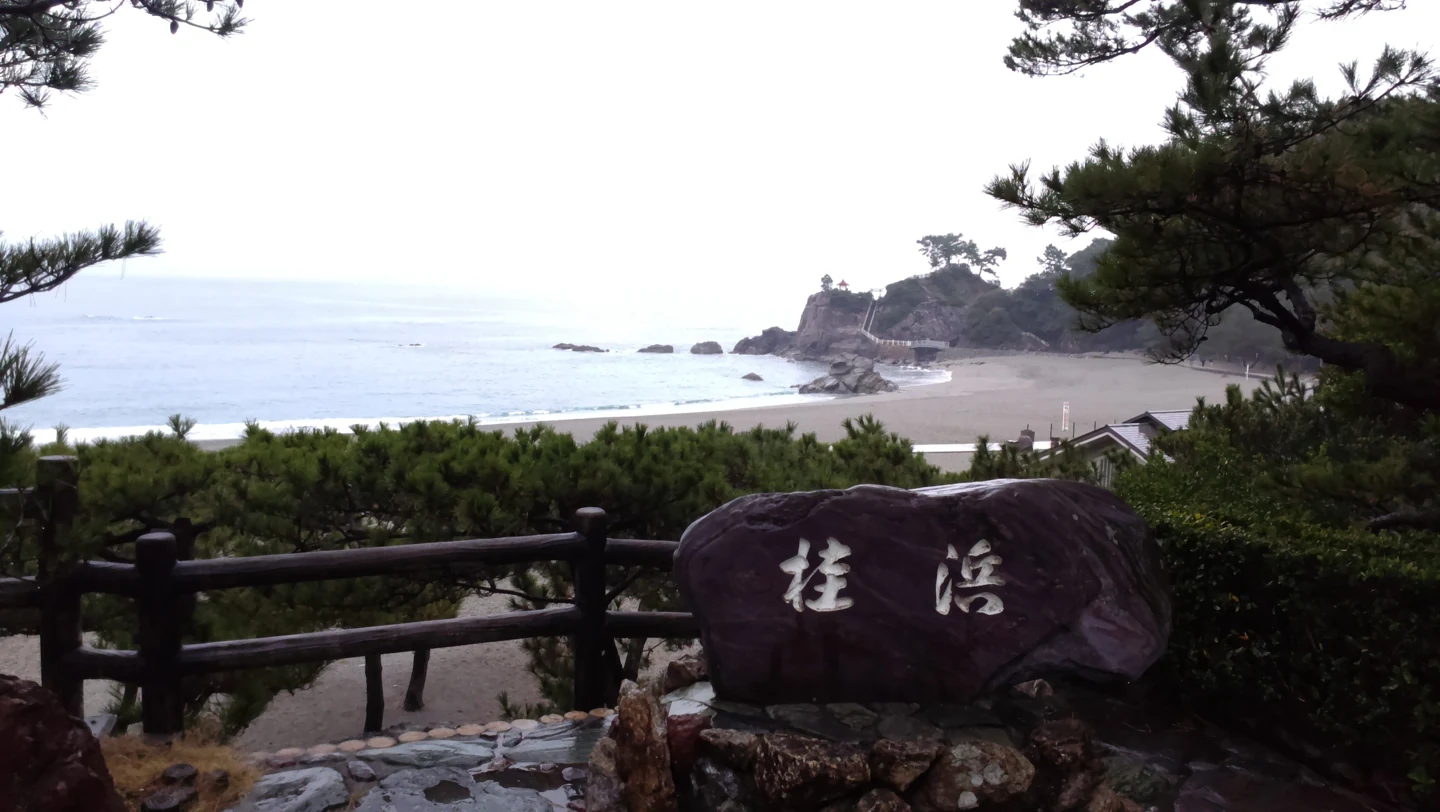
Walk from Umi no Terrace along Katsurahama Bay. Find Goshiki Terrace, the statue hill and the steps to Ryuo Cape, then choose a coastal walk or a family aquarium route. Includes aquarium prices, rest stops, wheelchair and stroller routes, and changes for high waves.
Separate the four levels: entrance, coast, statue hill and Ryuo Cape
The official park map puts the shops, pine woods, coast and cape on one page, but the route has changes in elevation. The parking area and bus waiting room connect first to Umi no Terrace. Toward the coast are Honhama Rest Area, the aquarium and the cape entrance. The Sakamoto Ryoma statue stands on a small hill. Ryuo Cape is a rocky hill at the other end of the coast, reached by a bridge and steps.
The main coastal walk follows the path behind the beach in both directions. You do not need to cross the sand and shingle to reach the cape. Although the beach fills a large area on the map, use park paths and signs to connect the stops. For strollers and wheelchairs, first check Kochi City’s dedicated walking map so navigation does not send you across sand as a shortcut. You can photograph the curved bay from the path or rest area without going to the water.
The statue hill and cape are the two sections most likely to add extra walking. If your companions want to climb steps only once, choose the subject they prefer: the Ryoma statue offers the figure against the Pacific; Ryuo Cape offers rocks, a bridge and a shrine. To do both, visit the statue first and the cape at the far end of the coastal walk. Rest at Goshiki Terrace between them to break up the climbs.
Both city walking maps distinguish the entrance shopping area, the terrace plateau and Honhama. Use these as three levels for navigation. Going from the entrance across the plateau to the Ryoma statue, then back down to Honhama, is a different movement from going from Honhama to Ryuo Cape. If navigation keeps pulling you toward the middle of the beach, return to the path signs and these three names. You do not need to follow the shortest line on your phone. Photograph the park map at the entrance and check the next stop each time you reach a new level.
Go through Umi no Terrace first, and meet at the bus waiting room for the return
Umi no Terrace is the commercial area for eating, shopping, learning and relaxing. It is separate from Goshiki Terrace beside the sea. Check the park map at the entrance and locate the bus waiting room, tourist information office and toilets before choosing the statue or coast. If your group splits up, agree to meet at the waiting room. It is easier to find than “near the shops by the sea.”
The park FAQ lists a nursing room in the bus waiting room. The city’s facilities guide also lists nursing and diaper-changing space, plus counter seats with power outlets. If you have a young child, prepare here before entering the less sheltered coastal section. Charge your phone here or at the tourist information office. If it holds your transport tickets, leave the entrance with enough battery.
Buy heavy souvenirs on the way back. Carrying a large bag of food from the entrance to the cape adds to the work on the steps. If you have already shopped, keep your route around Umi no Terrace and the nearer coastal rest area. The central space at Umi no Terrace is available for resting and eating food bought there, so shopping and a meal fit into one stop.
The park FAQ also says there is no ATM in the park. Bring cash for the aquarium, activities and small food purchases before you arrive. This saves a trip out to withdraw money. Electronic payment options differ by shop; check the signs at the counter. Find accessible toilets on the current park map. With babies, use the waiting room’s care facilities near the start and the coastal rest area later, so you do not have to rush back from the cape.
The statue hill is optional: look at Ryoma, then the bay
The Sakamoto Ryoma statue stands on a small hill. The official record dates its construction to May 27, 1928. The bronze figure is 5.3 m tall, or 13.5 m including its base. Look for the kimono, the hand held inside it and the boots. Take in the figure’s outline and its direction toward the sea, then leave by an open park path. Avoid lingering at one stair entrance.
If the aquarium is today’s priority, assess the children’s energy and the weather at the entrance before adding the climb. Groups with older travelers or strollers can follow the city’s dedicated route while those who want to climb go separately. Meet again at Umi no Terrace or on the ground floor of Goshiki Terrace. Include the descent and return to the main path in the meeting time, so the resting group does not have to stand at a junction waiting.
The temporary viewing platform beside the statue is seasonal. On an ordinary park walk, enjoy the statue and sea without making this platform a fixed stop. If your dates coincide with the “Ryoma ni Dai-sekkin” event, read that event’s notice before dividing your time. A normal half day does not need to wait for an event; the coast already provides a complete viewing route.
The statue area also helps you understand the two sides of Katsurahama. The park describes the bay as a bow-shaped beach between Ryuzu Cape and Ryuo Cape. The statue hill and Ryuo Cape therefore offer different viewing directions. Look across from the hill, then look back from Honhama. You will see how nearby map symbols actually sit on separate slopes. This comparison suits travelers interested in terrain. If time is short, one elevated viewpoint is enough for a sea view.
Rest downstairs at Goshiki Terrace before choosing the upper viewpoint
Honhama Rest Area is also called Goshiki Terrace. Renovated in 2021, it uses hinoki cypress from Kochi Prefecture. According to the park, the ground-floor benches look over the beach and Ryuo Cape, while the upper viewing terrace takes in more sea and sky. Stop here to identify the curved bay, the capes at each end and the pines behind. This reveals more of Katsurahama’s shape than rushing to the far end.
The ground floor already provides sea views and a place to rest. Wheelchair users, people with strollers and those avoiding more steps can spend longer here. Companions who go upstairs can meet them downstairs afterward. The name is easy to confuse with the commercial Umi no Terrace. Write “ground-floor benches at Goshiki Terrace” in a meeting message, rather than just “the terrace.”
Katsurahama’s multicolored stones and pine woods are part of the official landscape description. From shore, look at the colors and the bands of sea divided into different shades by the waves. Include the beach curve and cape in a photo to show the location. For details, choose a safe standing place beside the path. No one needs to stand at the water’s edge to show the scale of the Pacific.
The cape climb starts after Ryugu Bridge; turn back before it if tired
The park explains that Ryuo Cape appears connected to the beach but is almost a separate rocky hill. You cross Ryugu Bridge before climbing. Follow the coastal path to the bridge, then check the opening status and steps before going farther. This is a clear final decision point for the coastal route. You have already seen the bay, so turning back here still makes a complete walk.
Keep your hands free for the rails when climbing. Put away umbrellas, drinks and large bags. Take photos only after you are standing securely, and leave room for people coming down. Keep slower companions within sight. Groups carrying young children, using strollers or using wheelchairs should focus on the coastal path and Goshiki Terrace’s ground floor. Leave the cape steps to people who can climb and descend steadily on their own.
Return down the same open route and rejoin the aquarium, rest area and Umi no Terrace. Do not search for a separate route over rocks or the beach merely to make a loop. If the wind makes standing difficult, or the bridge and steps are closed, turn back on the more sheltered inner path. Use the climbing time for a meal and a rest.
Visit Wadatsumi Shrine, and keep inside the viewing rails
Wadatsumi Shrine on Ryuo Cape is also called Ryugu. The park lists prayers for safety at sea, good fishing, rain or fair weather, business prosperity and good relationships. Its setting connects these maritime beliefs with the Pacific in front of you. After worship, look at the rocky shore and sea. This adds context beyond treating the red-and-white shrine as a photo prop.
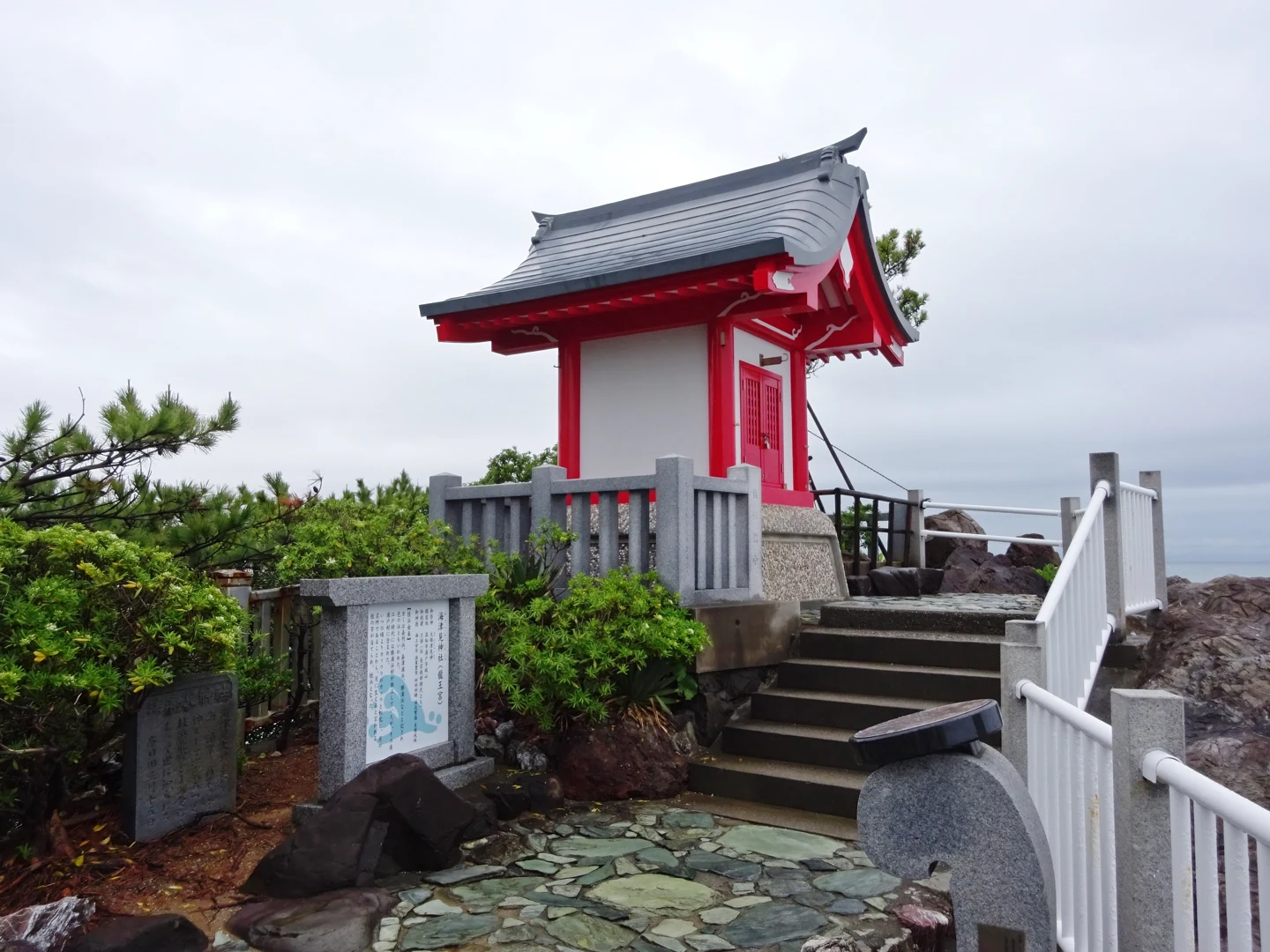
The park says there are two shrines on the cape. For a half day, focus on Wadatsumi Shrine and the open viewpoints instead of extending the visit to cover every branch path. If someone is praying, wait until they finish, then choose a photo angle that leaves the passage clear. Keep space to pass in front of the shrine, at the steps and beside the rails. Do not fill turning areas with tripods or luggage.
From above, you can see the bay bend back toward the pines and aquarium, and compare the reverse view from Goshiki Terrace. Use only platforms open at the time, and stay within rails and posted boundaries. With children, adults should choose the stopping place first and keep the children on the inner side. If a phone falls beyond a rail, ask park staff to deal with it.
Allow at least 90 minutes at the aquarium, starting with Tosa Bay fish
Katsurahama Aquarium is on the coastal side of the park and works well as the main family stop. The aquarium describes displays of fish and other life from Tosa Bay, while the park page highlights schooling akame fish. Start with this locally distinctive species, then choose the areas that most interest the children. They can leave remembering a particular animal rather than just having “visited an aquarium.”
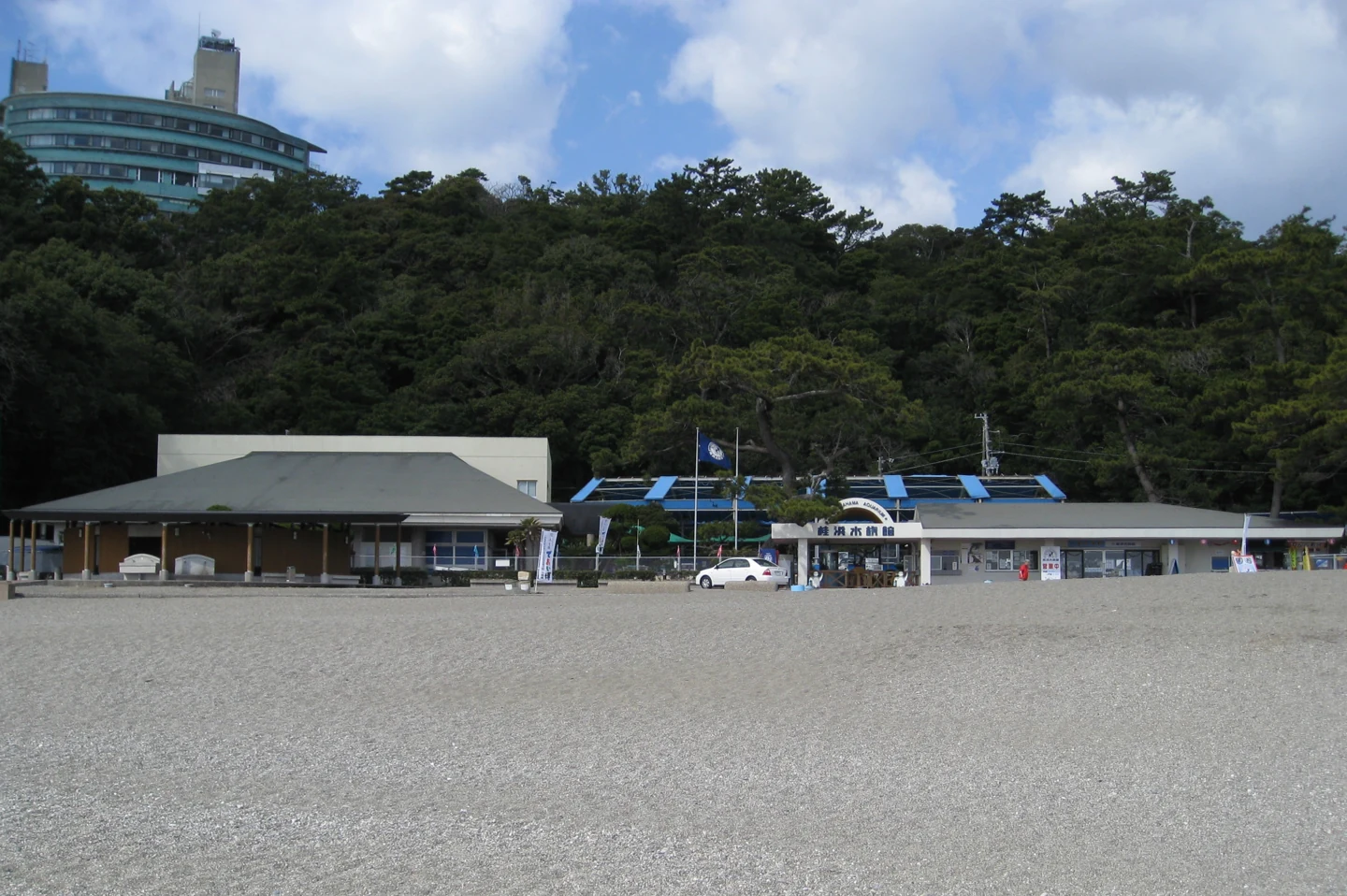
Allow 90–120 minutes. Add time if you want to wait for a feeding activity, and shorten the coastal walk accordingly. This is an itinerary suggestion; adjust the stay to the children’s attention. Start with one fish area, go outdoors for animals and a rest, then decide about paid activities. Making every event compulsory can split the whole half day into periods of waiting.
The facilities guide explicitly says most of the aquarium is outdoors. Open-air tables offer a place to rest with views of Katsurahama and Tosa Bay. You therefore still need sun protection, water and rain gear. In persistent heavy rain, the whole aquarium cannot serve as a fully sheltered alternative. For a brief shower, return to Umi no Terrace for a rest. In strong wind and heavy rain, move the half day back to the city.
At the akame tank, ask children to find the fish’s eyes, body shape and swimming direction before reading the species panel. A visit need not consist only of photographing a name at every tank. Follow the displays and compare how one local fish and one favorite animal move. This gives you something to talk about back at your accommodation. Follow each area’s photo signs and leave room for others at the viewing windows.
Calculate tickets by age, with a separate budget for feeding
The official price page viewed on October 27, 2026 listed general admission at ¥1,600 for adults, ¥600 for elementary and junior high school students, and ¥400 for preschool children aged three and over. List each family member by age, then budget separately for feeding and lunch. Two adults and one elementary school child cost ¥3,800. Add a three-year-old and the total is ¥4,200.
The aquarium normally opens from 9:00 to 17:00, with last entry at 16:30. If you arrive in the afternoon, use the time remaining to decide whether to buy tickets. With little time before closing, choose the coastal walk and Umi no Terrace. For a slow animal visit, enter earlier so your meal or shopping can remain flexible. Park entry is free and separate from aquarium admission. The main park route is available without an aquarium ticket.
Annual passes are listed at ¥6,000 for adults, ¥2,000 for elementary and junior high school students, and ¥1,000 for preschool children. Compare them if you know you will visit repeatedly during your trip. General admission is enough for a single half day. For a disability discount, bring a certificate accepted by the aquarium. The holder’s discount differs from the ¥100 discount for one companion; do not give the companion the holder’s half-price rate.
Write the family’s ticket needs on your phone: two adults, each child’s age, and any discount certificate. Explaining them together at the counter is easier than finding afterward that a junior high school child was charged as an adult. If you plan to see the coast and eat before entering, locate ticket sales and check the day’s hours on arrival. Keep small coins for feeding separately so you do not have to search for money while watching animals.
| Visitor | General admission | Family calculation |
|---|---|---|
| Adult | ¥1,600 | Two adults: ¥3,200 |
| Elementary and junior high school students | ¥600 | One elementary school child and two adults: ¥3,800 |
| Preschool children aged three and over | ¥400 | Add one three-year-old: ¥4,200 |
Check feeding times on site and let children choose one activity
Follow staff instructions and on-site rules for interactions. Before buying feed, check the animals available that day, activity times and charges. Let each child choose the activity they most want. Completing one activity is easier to enjoy than hurrying between areas with several portions of feed. Without feeding, you can still observe movement, eating and the keepers’ explanations.
The website currently lists goldfish feed at ¥100 per capsule, sea turtle feed at ¥100 per cup, and feeding for sea lions and similar animals at ¥100 per fish. Penguin and capybara feed is also listed at ¥100 per capsule. These units differ. If two children each want a turn, ask how a portion is used before buying. Animal health and pool cleaning can change or stop activities. If an activity is unavailable, watch instead. Someone’s old video is not today’s schedule.
While waiting, agree who holds the feed, watches the children and takes photos. Secure phones and food so they cannot fall into a pool. If a child is afraid, let them watch first; paying is no reason to push them closer. Wash hands as instructed after contact activities. Keep your food separate from animal feed, then eat snacks in a rest area afterward.
Activities affect the later route. After two hours in the aquarium, a sea view at Goshiki Terrace and a meal back at Umi no Terrace make a complete visit. Save Ryuo Cape for another trip, or let adults with energy visit briefly as a separate group. Before leaving the aquarium, gather bottles, hats and jackets together, then follow the main route back to the entrance.
Eat at Umi no Terrace and use Katsurahama Museum for a short visit
Umi no Terrace brings together food, local products and Katsurahama Museum. The official museum description names three rooms: “Amazing Katsurahama,” “Tosaism,” and Sisyu’s “Ryoma’s Words” exhibition. Subjects include Katsurahama’s history and nature, Kochi culture and crafts. It suits travelers who want local context before leaving without another hillside walk. It is separate from the Sakamoto Ryoma Memorial Museum on the hill.
The official park guide dated April 2026 lists Katsurahama Museum as free, open 9:00–17:00. Add it to the coastal route for local culture. Start in the first room for Katsurahama’s terrain and history, spend longer in Tosaism for crafts, or choose the Ryoma words exhibition for calligraphy. Allow about 20–30 minutes and select the points that interest you in each room. Leave time to walk back to the waiting room before closing.
You can visit before lunch. If the children are hungry, eat first and decide afterward whether to go inside. Umi no Terrace’s shared rest space makes it easy for people with different interests to meet: some can see the displays and others shop, then all return to the same area. Avoid fixing long visits at both the museum and aquarium. Explore one closely and keep the other as an alternative.
Food outlets have different hours. The official shop page lists Umisachi Katsurahama Honten at 10:00–17:00, last orders 16:40, and Katsurahama Bishokukan Jin, serving bonito and Kochi meat dishes, at 10:00–18:00. A full meal is easier to fit after 10:00. If arriving late in the afternoon, find a shop still taking orders before shopping. Evening park walks do not mean restaurants are open all day.
For snacks, the official listing gives Iwamatsu Reika’s hours as 9:30–16:30, with ice cream and coffee. Its location can fit a rest at Honhama Rest Area. Umi no Terrace also has roasted-tea desserts made with tea from the headwaters of the Shimanto River. Choose by appetite and return time. There is no need to finish a meal by the sea and hurry back for another large meal in the city.
The choice between aquarium and museum depends on where you want to spend your attention. The aquarium adds live animals and interaction, for people with more time who are comfortable outdoors. The museum is near the shops and rest space, so a meal follows easily after the visit. It suits a slower finish after walking. To do both, visit the aquarium in the morning and the museum after lunch, leaving out the cape. This still fits a half day in one park.
Kochi Prefecture’s 2022 introduction to the renewal of Umi no Terrace, presenting leisure and tourism in Katsurahama’s commercial area.
Coastal route: statue, shoreline, Ryuo Cape, then lunch
In stable weather, with companions able to climb steps, arrive in the morning, pass Umi no Terrace and visit the statue hill. Return to the coastal route, sit down at Goshiki Terrace, then continue to Ryugu Bridge and Wadatsumi Shrine. The first part covers Ryoma and the bay, the middle provides a rest, and the last climbs the rocky cape. There are clear places to turn back along the way.
As a guide, allow about half an hour for the entrance and statue, half an hour for the shore and Goshiki Terrace, and half an hour to an hour for the cape, shrine and return. Keep a final hour for food and souvenirs. If your group walks slowly, omit the statue or cape instead of cutting lunch and waiting time. Photographers can transfer the statue time to the coast and avoid one climb.
After lunch at Umi no Terrace, choose Katsurahama Museum or sit in the rest space if there is time before the bus. Once you have completed the coast, you do not need another detour to a lighthouse or the Ryoma Memorial Museum. Use the remaining time for toilets, collecting belongings and waiting, leaving energy for dinner in the city.
Starting the walk around 9:30 can bring you back to Umi no Terrace around 11:30, after most food outlets have opened. If you arrive at 10:30, omit either the statue or cape and keep the original lunch and return rhythm. For an afternoon visit, eat first and take a shorter coastal walk out and back.
Family route: aquarium in the middle, cape according to energy
With young children, start with care needs at the waiting room and the map at Umi no Terrace, then follow park paths to the aquarium. Give fish and favorite animals enough time before going to Goshiki Terrace for rest and sea views. The aquarium becomes the main stop and the coastal walk a chance to stretch, without requiring two rounds of steps at the statue and cape.
If two adults can share duties, one can stay with the children at the rest area while the other follows the open cape route. Meet before returning together to Umi no Terrace for food. Agree on the return time and exact seating area, and keep phones reachable. If one adult is traveling with children, or everyone wants to see the sea together, walk to the bridge and look at the cape before turning back. This keeps the group at one pace.
If you have an afternoon train or flight, place lunch where it can finish before the return journey. If the wait is too long, choose quicker food in suitable portions and eat again after reaching Kochi. When a child falls asleep, let waiting and transport follow the rest. Do not carry them up the steps just to add a statue photo. The half day already includes both animals and the bay.
Use the official wheelchair and stroller route, and locate loan returns first
Kochi City’s walking and facilities guide provides a dedicated wheelchair and stroller route of about 1.2 km and 60 minutes. Use it to identify suitable paths. Save the PDF to your phone before leaving, then compare it with that day’s openings at the tourist information office. Following this route is more reliable than planning from straight-line distances between attractions.
The park FAQ lists two loan wheelchairs at the tourist information office. Bring your own equipment if you need it every day. For an occasional loan, ask first about availability and return arrangements. The office is on the entrance side. Include time to get back there instead of leaving the return until the last few minutes before a bus.
Use Goshiki Terrace’s ground floor as the main sea viewpoint and Umi no Terrace for meals. This creates a route without a cape climb. Companions who want the steps can separate briefly while mobility-aid users remain on the chosen paths and at rest points. Leave beach sand and shingle, steps after the bridge and the upper viewing terrace out of this route. Before entering the aquarium, ask staff about access suitable for your equipment that day.
Change one section for high waves, heat or rain
Kochi City’s Katsurahama guide warns that waves change rapidly and the water suddenly becomes deep. Swimming is prohibited, and visitors should keep away from the surf line. Even after a wave retreats a long way, the exposed beach is not a safe standing place. Keep the half-day route on park paths, platforms and open viewpoints, and let children play only where adults can watch continuously.
In midsummer, walk the less sheltered coastal section earlier and rest between Goshiki Terrace and Umi no Terrace. Stop when you need water; a photo angle should not take priority over energy. Most of the aquarium is outdoors, so adjust the pace to the weather after entering too. A ticket does not remove the need for a hat and drinking water. Wear shoes suited to park paths and steps if your feet tire easily, and avoid climbing the cape in loose sandals.
In light rain, shorten the coastal walk and retain food and displays at Umi no Terrace. Omit Ryuo Cape if the steps are slippery. If strong wind, thunderstorms, a typhoon or restrictions affect outdoor activity, replace the entire visit with the museum and market route below Kochi Castle. Leave the coast when weather worsens rather than searching for shelter farther along it.
Finish at the entrance: parking, belongings and the bus
Drivers use the park parking area; the aquarium has no dedicated lot. The park’s current access page lists ¥500 per entry for ordinary cars. The lot opens 6:00–22:30, with paid entry from 8:30 to 18:00. This is a charge for one entry. Park once and complete the half day on foot. If you leave and re-enter, charges follow the rules for that entry; the ticket is not an unlimited day pass.
Bus travelers should choose a Kochi-bound service from the current official timetable and allow time to reach the stop early, use the toilets and wait. Check time until departure before shopping. If checkout queues are long, reduce the last round of purchases. For a JR connection, allow time at Kochi Station to collect luggage and reach the platform. Finishing lunch at Umi no Terrace is not the end of the return journey.
For example, in Tosaden’s Katsurahama Line timetable revised October 1, 2026, the 14:00 departure reaches Kochi Station Bus Terminal at 14:42 on weekdays and 14:40 on weekends and public holidays. The 15:30 departure arrives at 16:13 and 16:10 respectively. These are examples for working backward, not the last buses. For the 14:00 bus, finish lunch, shopping and collecting luggage before departure, with extra waiting time. Weekday and weekend/public-holiday columns are separate; do not use the more frequent holiday services for a weekday. For an evening walk, the last bus to Kochi Station in this version leaves at 20:30 and arrives at 21:12 on weekdays. On weekends and public holidays it leaves earlier, at 19:10, arriving at 19:50. Evening park access is separate from the daytime hours of restaurants and exhibition facilities.
Before leaving, gather your group, belongings and tickets at the waiting room. If there is spare time, sit and wait instead of returning to the coast for one more photo. For a market dinner in the city, use the castle-area guide to choose food and seating, and keep Katsurahama as a relaxed coastal half day.
A few useful answers
Is the aquarium essential for a half day at Katsurahama?
No. The coastal route focuses on Umi no Terrace, Goshiki Terrace and Ryuo Cape, with Katsurahama Museum before or after lunch if desired. For children interested in animals, put the aquarium in the middle and shorten the statue hill or cape section.
Are Umi no Terrace and Goshiki Terrace the same place?
Umi no Terrace is the food, souvenir and exhibition area near the entrance. Goshiki Terrace is Honhama Rest Area on the coast. Its ground floor has seats facing the sea and Ryuo Cape, with another viewpoint upstairs.
How much is Katsurahama Aquarium?
General admission viewed on October 27, 2026 was ¥1,600 for adults, ¥600 for elementary and junior high school students, and ¥400 for preschool children aged three and over. Two adults and an elementary school child cost ¥3,800, excluding feeding and meals.
Is the aquarium a rainy-day alternative?
The aquarium says most facilities are outdoors, so bring rain gear. Reduce outdoor time in light rain. In persistent heavy rain or strong wind, choose city museums and the market instead.
Can strollers or wheelchairs go up Ryuo Cape?
Steps climb the cape after Ryugu Bridge. Wheelchair and stroller routes follow Kochi City’s dedicated walking map, focusing on park paths, Goshiki Terrace’s ground floor and Umi no Terrace. Those climbing can go separately and meet at a rest point afterward.
Can we paddle or pick up stones beside the waves at Katsurahama?
Swimming is prohibited, and official guidance says to stay away from the surf line. Keep sea viewing and photos to park paths, rest areas and open viewing platforms, away from places waves can reach.
Official information and references
Sources used in this guide.
- Katsurahama Park | Map and attractions
- Katsurahama Park | FAQ and facilities
- Katsurahama Park | Umi no Terrace
- Katsurahama Park | Access and parking
- Katsurahama Aquarium | Admission
- Katsurahama Aquarium | Opening and daily information
- Katsurahama Aquarium | Facilities guide
- Kochi City | Walking routes and facilities
- Kochi City | Katsurahama and coastal safety
- Katsurahama Park | April 2026 park guide
- Katsurahama Aquarium | Feeding activities
- Tosaden | Katsurahama Line weekday timetable revised October 2026
- Tosaden | Katsurahama Line weekend and public-holiday timetable revised October 2026