Walk through Otemon and Tsumemon to Kochi Castle’s palace and keep, or choose a museum route below the hill. Compare meal times at Myojinmaru, Yairotei, Yasubei, and the imoten shop, with the Sunday Market and return to Kochi Station.
- Region & Focus
- Kochi City
- Reading Scope
- 30 min read · 19 chapters · 5 Q&As
- Official Verification
- 21 official sources checkedUpdated November 7, 2026
- Key Topics
- ItinerariesFoodNeighborhoods
Chapter Route Map (tap any stop)
- Choose a castle climb or a day below it; put the Sunday Market first on Sundays
- From Kochi Station: save energy by tram, or walk through the neighborhoods
- At Otemon, see the relationship between gate and keep before entering
- Stone walls and Tsumemon: slow down during the climb
- Kaitokukan palace: room functions and carved wave transoms
- Climb the keep for wooden interiors and views over the town
- Castle tickets and opening hours: choose the castle and museum separately
- Handle luggage and restrooms before entering the buildings
- The Museum of History connects the Yamauchi family with the castle
- A gentler route: museum views, coffee, and lunch at the market
- Eating at Hirome Market: check seats and food before splitting up to order
- Choose Myojinmaru for straw flames and bonito at the center of the meal
- Yairotei, Yasubei, and imoten: combine food by preference and opening time
- The Sunday Market is Sunday only: choose a morning stretch of the kilometer-long Otesuji route
- Produce, forged blades, and snacks: decide what to eat now or take back
- A weekday castle plan: palace in the morning, market and museum afterward
- A Sunday plan: street market first, then castle, or a full morning below the hill
- Rain, strollers, or wheelchairs: make indoor visits the main route
- Parking and the evening return: match the end of your meal to car collection
- Quick Q&A
Kochi Castle, Hirome Market, and the Sunday Market share the same castle-town district, suited to an unhurried day. On a weekday, spend the morning at the gates, main-enclosure palace, and keep, eat at Hirome at midday, then visit the Museum of History. On Sunday, browse Otesuji’s morning market first, moving shopping and snacks before the castle. If companions do not climb stairs, Otemon’s exterior, castle views from the museum, and market lunch still make a full day. Leave time for the connected palace and keep, beyond reaching the top. Check individual market shops’ opening times to fit the dishes you want into one meal.
Choose a castle climb or a day below it; put the Sunday Market first on Sundays
For castle architecture, make Kochi Castle the morning focus. Walk from Otemon to the main enclosure, see Tsumemon and the palace, then climb the keep before descending for lunch. This gives the visit a clear sequence. A quick photograph of the keep from below misses the rooms, carved transoms, and corridors that distinguish the castle. If your companions mainly want market food, limit the castle to Otemon and exterior views and save energy for the town streets.
For fewer steps, start at Kochi Castle Museum of History. It has an elevator, wheelchairs and strollers to borrow, a third-floor observation lobby overlooking the keep and Otemon, and a second-floor cafe. The point is to enter a building where you can explore and sit, then continue to the market, rather than mistake a sloping park detour for an easy alternative.
Sunday adds an outdoor market that packs up. Walk your chosen stretch of Otesuji in the morning, then climb the castle or enter the museum, with Hirome Market lunch afterward. Kochi city’s latest information lists the Sunday Market at about 6:00–14:00. Its time limit is clearer than that of afternoon shops, so do not wait until after lunch to start its full length.
Walk through Otemon and Tsumemon to Kochi Castle’s palace and keep, or choose a museum route below the hill. Compare meal times at Myojinmaru, Yairotei, Yasubei, and the imoten shop, with the Sunday Market and return to Kochi Station.
From Kochi Station: save energy by tram, or walk through the neighborhoods
From JR Kochi Station, walk through town or take a Tosaden tram. Use Kochijo-mae for the castle or Ohashidori for Hirome Market, a listed two-minute walk away. These stops serve different priorities, and both reach the town below the castle; the main enclosure still requires an uphill climb.
Take a southbound tram from Kochi-ekimae and change at Harimayabashi toward Ino for the east–west line by the castle. Cash passengers pay before changing and ask the driver for a transfer ticket. Within the flat-fare city zone, insert only that ticket on the connecting tram. Day-pass holders do not need one; show the valid date to the driver when getting off. Check the destination on the front, board at the rear, press the bell after your stop is announced, and leave at the front. The cash farebox gives no change. Onboard change machines accept ¥1,000 notes, not ¥5,000 or ¥10,000 notes, so prepare coins in the morning.
Divide the walking into station to castle district, castle ascent, and shopping streets below. To save energy for stairs inside the wooden buildings, use the tram for the first part. For street views, walk in and take the tram back. If you have a limited express from Kochi Station that afternoon, board at Ohashidori or Kochijo-mae and change at Harimayabashi for Kochi-ekimae, leaving time at the station to find the platform and collect luggage.
At Otemon, see the relationship between gate and keep before entering
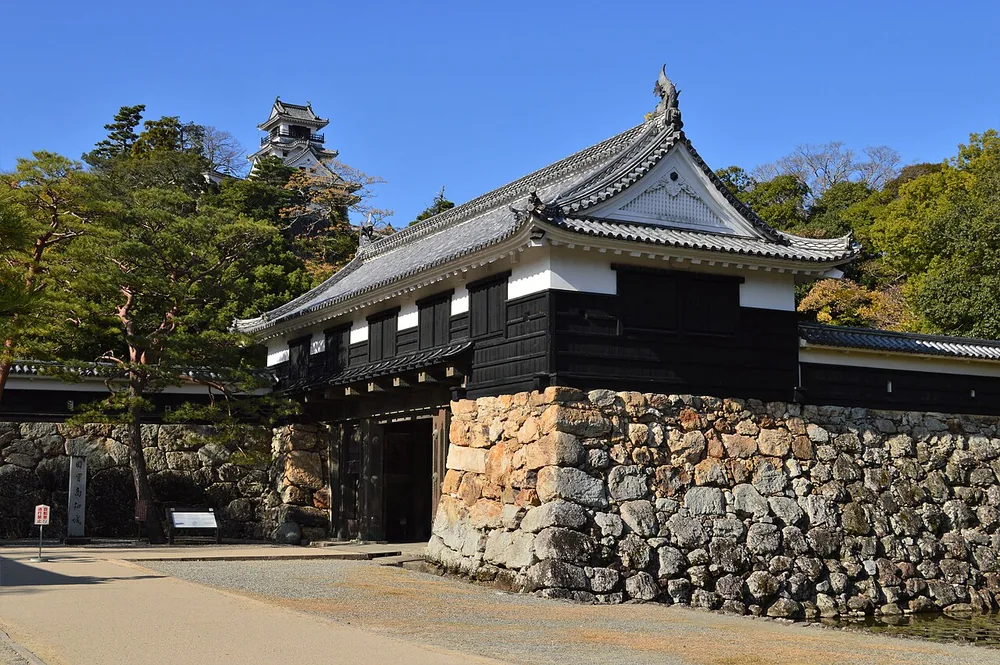
Pause at the castle entrance. Otemon and the hilltop keep fit in the same view. Compare their heights from outside, then enter and examine the heavy gate construction rather than looking down throughout the climb. Defensive features such as stone-drop openings and arrow slits remain beside the gate and around the keep. At wall openings, imagine how defenders watched approaching people, rather than viewing the white walls only as a photo backdrop.
The castle has two main historical layers. Yamauchi Kazutoyo began construction in 1601 and moved in after major parts including the main enclosure were completed in 1603. A 1727 town fire destroyed most buildings, including the keep; today’s keep was completed in 1749. Otemon survived that fire and was later repaired. It stands with the rebuilt main-enclosure buildings in the castle you see today.
After photos at the gate, follow the main visitor route uphill. This is a good place to agree on a later meeting if the group splits: castle visitors head to the main enclosure, while the town group crosses to the Museum of History. A museum or market entrance is easier to identify than a tree somewhere in the large park. Meeting before lunch gives each group a complete morning.
Stone walls and Tsumemon: slow down during the climb
The ascent is more than a route to the keep. Many stone walls use nozura-zumi, retaining the stones’ natural shapes rather than the smooth finish of regular cut stone. The operator also identifies uchikomi-hagi masonry in the third enclosure and walls viewed inward from Sugi-no-Dan. For architecture, study joins, corners, and height changes on one stretch before continuing rather than retracing every angle.
Near the main enclosure, Tsumemon makes the relationship between the second and main enclosures clear. This turret gate spans a dry moat: its lower level divides the gateway, while the upper level serves as a connecting corridor using the different ground heights. Look first at how it crosses the space, then at the corridor’s connection to the palace. Defense, movement, and indoor life are linked here.
Reassess your visit time here. If tired, rest where permitted and save your indoor attention for the palace. With energy and an interest in detail, compare Tsumemon, Rokamon, and the main-enclosure buildings. The survival of the whole main-enclosure group is a major feature of Kochi Castle. After a distant keep photo, there is still a circuit of structures to examine close up.
Kaitokukan palace: room functions and carved wave transoms
Kaitokukan is the main-enclosure palace, connected to the keep. Start with room labels to identify the raised formal room, adjacent rooms, storage rooms, and verandas. The formal room retains an alcove, shelves, and shoin elements that establish its hierarchy. As you move around the room edges, see how doorframes direct the eye inward, linking the lord’s daily life and reception duties to the spaces before you.
Look up for the Uchiwake-nami wave transoms. The castle describes these woodcarvings as Tosa sea waves, attributed to mid-Edo-period craftsman Takeichi Jinshichi. Wave forms, openwork, and lines in the wood are more memorable than a name alone. With children, ask them to find the direction of the wave crests before reading the nearby panel.
The Nandogura storehouse also displays transoms from places such as the third-enclosure palace’s grand reception hall and the second-enclosure palace’s dressing room. These components help explain vanished palaces. First see where a transom belongs in a surviving room, then examine the relocated carvings, so they form a connection rather than unrelated objects. With limited time, retain one room, one set of transoms, and the route linking palace and keep.
Climb the keep for wooden interiors and views over the town
Toward the keep, the horizontal rooms of the palace give way to upward stairs. Kochi is one of Japan’s twelve surviving original keeps. Its watchtower-style form places an upper lookout above large roofs, with the top-level surrounding veranda and railing as a recognizable feature. After seeing the roofs from below, enter to understand the real scale of beams, columns, stairs, and openings.
The keep requires repeated stair climbing and descent. Keep your backpack close and leave passing space in narrow areas; take photos only once steady. Instead of making every floor a photo task, choose one or two pauses for beams, walls, and changing window angles, then identify town streets from higher up. The hilltop view and Otemon below are two perspectives on the same castle.
If the palace has taken much of the morning, shorten the keep stop and preserve descent and lunch time. The castle FAQ gives an average visit of about an hour. For architecture enthusiasts, allow roughly 90 minutes to two hours including photos below and rests. Slower walkers can allow longer and begin lunch later.
Castle tickets and opening hours: choose the castle and museum separately
Kochi Castle’s keep, Kaitokukan, Higashi-Tamon, and Rokamon normally open 9:00–17:00, with last entry at 16:30, and close December 26–January 1. Individual admission is ¥500 for ages 18 and over. Under-18s enter free with a student card or other proof of age. Park walking and entering the cultural-property buildings cover different areas. Schedule a daytime ticketed visit for palace and keep interiors.
If you also want the Museum of History’s paid exhibition floor that afternoon, compare the same-day combined ticket: ¥800 outside special exhibition periods or ¥1,040 during them. For only the castle or only the museum, buy its separate ticket. You do not need exhibition admission just for coffee on the museum’s second floor. The choice depends on entering the third-floor exhibition area, not how long you stay in the building.
Year-end closures start on different dates: December 26 for the castle, December 27 for the museum. Near New Year, choose the indoor venue still open and make the market your main meal. For illuminated exteriors at night, use the town below and open park areas. Normal castle lighting runs from sunset until 22:00.
Handle luggage and restrooms before entering the buildings
Use the restrooms at Otemon Square before climbing. There are also toilets in areas such as the second and third enclosures, but none inside the keep or Kaitokukan. Prepare below before entering the palace to avoid retracing stairs midway through the visit.
Coin lockers beside the Otemon Square tourist information office use a refundable ¥100 coin and operate 8:45–17:00; items cannot be collected after 17:00. For a long market afternoon or an evening station return, leave bags at your accommodation or storage suited to that schedule. Castle lockers suit bags collected immediately after sightseeing, not an evening meal plan.
Kochi Castle normally permits personal sightseeing photography. Read on-site signs before aiming at rooms and carvings, and let companions take turns to keep entrances and stairs clear. With pets, use a walk below the castle instead. The main-enclosure area from Tsumemon to Kurogane-mon generally prohibits pets, including those in carriers, except guide, hearing, and assistance dogs.
The Museum of History connects the Yamauchi family with the castle
The Kochi Castle Museum of History stands on Otesuji below the castle and works after a climb or instead of one. The palace provides spaces; the museum provides documents. The third-floor introductory area uses timelines and maps to introduce Tosa, while the historical displays connect the Chosokabe era, Yamauchi family, and modern period. Having seen the real gate helps you connect models and images with their locations.
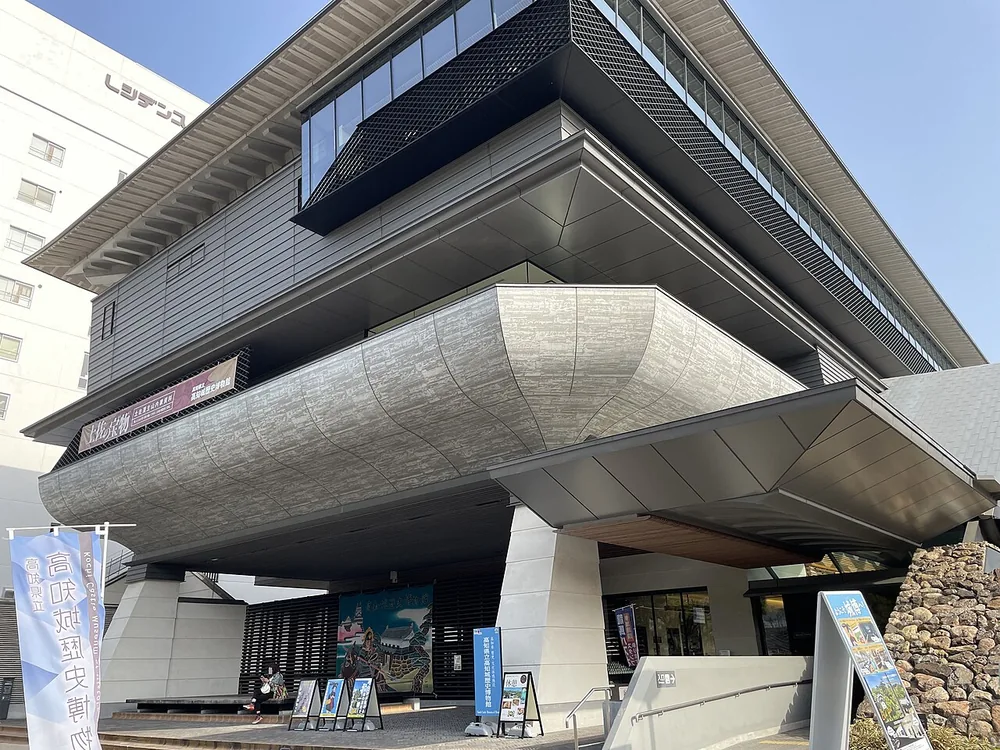
General Exhibition Room I focuses on Tosa domain history; Room II emphasizes daimyo possessions and Tosa culture. For politics, land, and castle context, spend longer in the former. For swords, armor, tea utensils, and crafts, favor the latter. Objects rotate, so choose a theme to explore rather than assuming a particular collection item is always on display.
The observation lobby shows the keep and Otemon together, especially useful if you did not climb. Digital content and replica experiences add to the exhibits, with multilingual audio guides for some sections. On your own phone, choose a guide chapter, then examine the object. Allow about 90 minutes. For a special exhibition you particularly want, concentrate the afternoon here instead of pursuing another distant view.
The museum normally opens 9:00–18:00, or from 8:00 on Sundays. Last exhibition entry is 30 minutes before closing. It closes December 27–January 1. Museum-only admission for ages 18 and over is ¥800 during special exhibitions and ¥500 at other times. If you want exhibits without the castle climb, buy museum-only admission. The third-floor observation lobby is within the paid area.
The museum’s official introduction shows the relationship between its galleries, objects, and Kochi Castle, complementing the displays and the location below the castle.
A gentler route: museum views, coffee, and lunch at the market
To avoid the castle-hill stairs, start at the Museum of History and take the elevator to the third-floor exhibits and observation lobby. On cafe opening days, sit at second-floor Coffee House Histoire afterward. The first and second floors are free to enter; both third-floor exhibitions and observation lobby require admission. Order and pay for coffee separately.
Coffee House Histoire has window views of Kochi Castle and serves coffee, light food, and desserts. Normal hours are 9:00–18:00, from 8:00 on Sundays. It closes Mondays, shifting to Tuesday when Monday is a public holiday. If the museum is open but the cafe is closed, move your seated meal to Hirome Market rather than waiting upstairs for coffee.
Wheelchairs, strollers, and walking aids are admitted. First-floor information lends wheelchairs, strollers, and walking frames, and accessible restrooms are on each floor. After leaving, see Otemon from outside and walk to Hirome Market. This puts the main indoor visit on elevator-served floors and gives castle climbers an easy meeting place at the market.
The castle has an application system for vehicle access to the second enclosure for people who have difficulty climbing independently. It is limited to weekdays 9:30–15:00, requires a prior call to the management office and an application one week before use, and is unavailable on weekends, public holidays, and some busy dates. For an ordinary gentler city day, the route below the hill is simplest. Reserve this system for those with care arrangements who can apply ahead.
Eating at Hirome Market: check seats and food before splitting up to order
Hirome Market has shared dining space for many vendors. Buy dishes from different shops and eat together at communal tables. On arrival, check seats and food availability before choosing a queue. In a group of two or more, one person can stay at a seat you have obtained while another buys a main dish, then swap. If there are no seats, adjust your meal time rather than having everyone carry hot food through the aisles looking for a table.
This suits a meal assembled from several vendors: seared bonito as the main dish, with dumplings, hot food, or dessert for companions to share as they wish. For a complete set meal, order a main course from a shop serving rice meals. Order and pay separately at each vendor and follow its utensil and collection instructions. Keep the shop name and order information to find the right counter again.
Outside food is prohibited. So is eating souvenir snacks, fruit, or vegetables, or drinking souvenir alcohol bought from the market’s gift shops inside. Finish street-market food in a suitable place outside before ordering here. For Tosa sake in the evening, buy from a vendor serving it for immediate drinking, rather than opening a souvenir bottle at a communal table.
The building normally opens 10:00–23:00 Monday–Saturday and 9:00–23:00 Sunday, but individual shops keep different hours. The first floor has a multipurpose restroom, nursing room, and baby cot, with level routes at entrances and aisles. With a stroller or wheelchair, an earlier or later meal is easier than crossing the tables in the noon crowd.
Choose Myojinmaru for straw flames and bonito at the center of the meal
Myojinmaru’s Hirome Market branch specializes in straw-seared bonito tataki cooked in front of customers. It is a straightforward choice for both the preparation and the fish. Check that day’s portions and combinations, then choose individual meals or shared bonito with hot food from elsewhere. Companions who do not eat fish can buy other dishes: that is the advantage of communal seating.
Normal hours are 11:00–21:00 Monday–Saturday and 10:00–20:00 Sunday, different from the building’s hours. If you descend at 10:00 on a weekday, Myojinmaru is not open yet; walk around or choose an open shop first. On Sunday, come after the street market for an earlier bonito meal from 10:00. The notice updated November 3, 2026 says Myojinmaru’s planned November 10 closure was moved to November 5. It will open as usual on November 10.
This branch takes no reservations and offers no takeout. For takeaway tataki, use the explicitly listed service at Myojinmaru’s Ohashidori branch. Do not wait until you reach the Hirome counter to ask for takeout. If the museum follows lunch, finish the meal inside before leaving. A long queue can also be a reason to check Yairotei’s food and switch to that named alternative.
Yairotei, Yasubei, and imoten: combine food by preference and opening time
Yairotei serves bonito tataki, mackerel sashimi, and dishes such as crab cream croquettes, useful for fish and hot food on one table. It normally opens 10:00–21:20 Monday–Saturday and 9:00–21:00 Sunday. After a gentler morning route, you can eat here before Myojinmaru opens and leave the afternoon for the museum. Temporary closures are listed for December 22 and 31, 2026; avoid those dates for this shop.
For dumplings, look specifically for the Hirome de Yasubei market branch. Dumplings are wrapped and pan-fried after ordering, so collection takes time. Buy the main dish separately, but do not leave the last dumpling order until the moment you must go. Normal hours are 12:00–21:00 Monday–Saturday and 11:00–20:00 on Sundays and holidays. At 11:00 on a weekday, it is not serving yet. It closes November 25, 2026; choose another hot dish that day.
Nichiyouichi no Imoten’s Hirome Market branch is Ohira Shoten’s indoor shop for sweet-potato tempura, prepared after ordering. Hours are 11:00–21:00, closing when sold out, with additional irregular closures. It gives visitors a specific shop to find on days other than Sunday. If you already ate it on the street that Sunday, save your appetite for another dish here.
These shops serve different needs. For an earlier meal, consider Yairotei; for straw-searing, Myojinmaru; for hot food alongside shared plates, Yasubei; for an afternoon snack, imoten. Two vendors chosen for your appetite can make a meal. Save another bonito comparison for a later meal.
The Sunday Market is Sunday only: choose a morning stretch of the kilometer-long Otesuji route
Kochi’s Sunday Market runs east along Otesuji from Otemon for about a kilometer, with around 300 stalls. It is a working local market for produce, gardening goods, hardware, and Tosa forged blades, different from indoor Hirome Market. For everyday local life, browse vegetables, seedlings, and household tools. For snacks alone, choose the stretch near the castle or Hirome instead of walking the full length and back.
The Kochi city page updated May 26, 2026 gives normal Sunday hours of roughly 6:00–14:00, including setup and packing away. It does not operate when Sunday falls on January 1 or 2 or August 10–12. There is no substitute Sunday Market on other weekdays. On a Monday, plan the castle, museum, and Hirome Market directly. Severe weather may cancel it, and weather also affects stall numbers.
From accommodation near Kochi Station, browse from the east toward the castle, then climb. From the castle district, start in the west, choose stalls heading east, and return toward Hirome. This connects shopping with the next stop. If walking speeds differ, agree to meet outside Otemon after a set time and browse the same section independently rather than repeatedly catching up in the crowd.
Produce, forged blades, and snacks: decide what to eat now or take back
Produce stalls show seasonal ingredients. Ask how much is in a portion and how to use it, then buy what you can handle that day. If visiting the palace that afternoon, leave heavier purchases until the return through the street market or let the non-climbing group take them to the accommodation. Carrying bags of vegetables up stone steps turns an easy browse into a load-carrying walk.
Tosa forged blades and gardening tools offer another focus. Ask about use, size, and maintenance rather than appearance alone. For a tool you will use often, decide its purpose, then ask the vendor about blade shape, material, and care. Even without buying, different shapes reveal farming, gardening, and cooking tasks. Store sharp or heavy purchases at your accommodation before continuing instead of carrying them all day.
Divide street snacks and the Hirome lunch into meal-sized amounts. Try a little at the morning market and leave room for bonito or dumplings. If snacks have become breakfast, delay Hirome lunch. Pack food for the accommodation separately from food you are eating now. Keeping some hand space free helps you move through crowds and cross roads.
A weekday castle plan: palace in the morning, market and museum afterward
On a normal opening day, reach Otemon around 9:00, photograph gate and keep, then climb to the main enclosure. Link Tsumemon, palace, and keep, descending around 10:30–11:00 as the main lunch vendors begin opening. Enter Hirome after 11:00 for Myojinmaru, or move the meal past noon to add Yasubei.
After lunch, spend the afternoon at the Museum of History for Yamauchi and Tosa domain context, then walk the castle district. If your morning was detailed, the observation lobby and one main exhibition area can suffice. For objects and documents, check the current museum program first, use Hirome as a lunch break, and keep the whole afternoon indoors.
Collect bags from the castle lockers before returning to the station. For an evening departure from Kochi, finish around Ohashidori and take the tram via Harimayabashi to Kochi-ekimae. If staying in Kochi, a later second meal is possible. Keeping morning and afternoon around the castle district saves cross-town journeys and gives tired legs a seated break.
A Sunday plan: street market first, then castle, or a full morning below the hill
On Sunday, start Otesuji around 8:00–9:00, browse part of the market, then enter Kochi Castle after it opens at 9:00. After descending, choose Myojinmaru from 10:00 or Yasubei from 11:00. If you ate plenty at the street market, rest below the castle and have a later Hirome lunch. Moving from market to castle and back toward Hirome keeps the distance manageable.
For fewer stairs, enter the museum after 8:00 using its early Sunday opening for the observation lobby and main exhibits, then browse western Otesuji and eat at Hirome. Reverse the order if the working street market comes first for you. Both museum and Sunday Market sit below the castle, making a switch easier if someone needs a seat.
If driving into Hirome Market’s car park on Sunday before evening, use the south entrance and exit. The north side on Otesuji is restricted for the Sunday Market. Navigate toward the southern access lane and follow on-site traffic directions. Others can get out to browse rather than having the whole car circle for the north entrance. If parking at your accommodation, walking and trams work well for the whole day.
Rain, strollers, or wheelchairs: make indoor visits the main route
In rain, move the museum to the morning and Hirome Market to the afternoon, with gate views during a lighter spell. This keeps a full day of history and local food with regular seated breaks. For a castle climb in brief light rain, reduce outdoor stone-wall detours and follow the main route to the main enclosure. Keep a steady pace on both stone steps and indoor stairs.
The castle’s north entrance has a slope toward the second and main enclosures, but the operator still describes steep, gravel-heavy surfaces that make independent wheelchair access difficult. Some sections reach about 15 degrees. A temporary ramp at Kurogane-mon requires contact one week ahead and is not installed on weekends, public holidays, or busy days such as cruise calls. For fewer stairs, use the museum route below. Visitors with companions and approved vehicle or ramp arrangements can follow the specific route accepted by the castle.
Hirome has level entrances and accessible facilities, but crowds still require passage between chairs, tables, and food collection routes. One companion can check tables and aisles first while the others wait without blocking an entrance. The first-floor nursing room and baby cot provide a specific care stop, letting an afternoon stay in the district continue around feeding or changing.
Parking and the evening return: match the end of your meal to car collection
Kochi Park car park normally operates 7:30–18:30, charging standard cars ¥370 for the first hour and ¥110 per additional 30 minutes, with no overnight parking. It suits daytime castle and nearby visits. For dinner that continues into the evening, collect the car before 18:30 or choose parking that covers dinner from the start.
The car park above Hirome Market operates 24 hours, with a 2.2-meter height limit and 180 spaces across the second and third floors. The normal rate is ¥200 per 30 minutes. Spending ¥3,000 at one shop earns a one-hour discount, once per shop and at most two hours across the whole market. Bring the parking ticket to checkout. Small purchases across several vendors still need to meet the single-shop threshold.
For an illuminated keep view at night, eat around Ohashidori or Hirome, then walk outside Otemon. Nighttime park access is separate from the paid daytime buildings. Night views show the castle outline; complete interiors in daylight. Before returning from the market to Kochi Station or your accommodation, check that everyone has collected luggage. Anyone drinking should return on foot, by tram, or by taxi.
A few useful answers
Is seeing only the keep enough at Kochi Castle?
See the connected main-enclosure palace, Kaitokukan, too. Rooms, wave transoms, Tsumemon, and Rokamon explain life and movement inside the castle and are key highlights.
How can I spend a day here without climbing the castle stairs?
Make the museum’s third-floor exhibitions and observation lobby your morning focus. On cafe opening days, rest on the second floor, then see Otemon from outside and eat at Hirome. On Sunday, add the western stretch of the Otesuji Sunday Market.
Are the Sunday Market and Hirome Market the same place?
No. The Sunday Market is an outdoor street market on Otesuji every Sunday, about 6:00–14:00. Hirome is an indoor market normally open on weekdays and weekends, with individual shop hours and closure dates.
Does Myojinmaru’s Hirome branch take reservations or offer takeout?
This branch accepts neither reservations nor takeout orders. For takeaway, use the officially listed service at Myojinmaru’s Ohashidori branch and check the branch name.
Who should consider the castle and museum combined ticket?
Compare it if entering the castle’s paid buildings and the museum’s paid third-floor exhibition area on the same day. The museum’s free first and second floors and cafe do not require an exhibition ticket.
Official information and references
Sources used in this guide.
- Kochi Castle: highlights
- Kochi Castle: history
- Kochi Castle: Important Cultural Properties
- Kochi Castle: opening hours and admission
- Kochi Castle: facilities and visitor FAQ
- Kochi Castle: accessibility and vehicle applications
- Kochi Castle: access and parking
- Hirome Market: shops and market rules
- Hirome Market: Myojinmaru
- Hirome Market: Yairotei
- Hirome Market: Hirome de Yasubei
- Hirome Market: Nichiyouichi no Imoten
- Hirome Market: access and parking
- Hirome Market: temporary and building closure notices
- Kochi city: Sunday Market, updated May 26, 2026
- Kochi city: street market guide
- Kochi Castle Museum of History: visitor information
- Kochi Castle Museum of History: exhibition floors
- Kochi Castle Museum of History: free and paid areas
- Kochi Castle Museum of History: Coffee House Histoire
- Tosaden Transportation: tram boarding and transfers