Choose Ozu or Uchiko for a day from Matsuyama. Walk between Garyu Sanso and Ozu Castle, or Uchiko-za’s dressing rooms and wax merchants’ streets, with Uwakai trains, admission, closures and December 2026 works.
- Region & Focus
- ShikokuAttractions
- Reading Scope
- 24 min read · 14 chapters · 3 Q&As
- Official Verification
- 15 official sources checkedUpdated October 30, 2026
- Key Topics
- ItinerariesRail travelNeighborhoods
Chapter Route Map (tap any stop)
- Choose the spaces you want to see, then the station
- From Matsuyama, check the route as well as the Uwakai train
- A day in Ozu: the villa first, the castle after lunch
- At Garyuin, find seasonal water motifs and the Noh-stage design
- Garden stones, Chishian and Furoan lead your eye to the Hiji River
- Ozu Castle: timber joints and evidence behind the reconstruction
- A day in Uchiko: dressing rooms to wax merchants’ streets
- During Uchiko-za’s restoration, see theater from the dressing rooms
- Yokaichi–Gokoku: look building by building along 600 meters
- Kamihaga Residence: separate home life from production
- For candles and everyday-life exhibits, check the weekday
- Wet weather or less walking: which section to change
- December 7–10, 2026: change the Uchiko mountain-line plan
- Where to stay when giving each town a day
- Quick Q&A
South of Matsuyama, Ozu suits a day of castle, riverside and Garyu Sanso, while Uchiko leads through shopping streets into wax merchants’ homes. With one day, choose one town. To explore both properly, give each a day. Uchiko-za’s main theater is under restoration; its dressing rooms are open, and reopening is expected in spring 2029. If you came for the stage and hanamichi runway, use this visit for the Yokaichi–Gokoku streets and Kamihaga Residence instead.
Choose the spaces you want to see, then the station
Choose Ozu for castles and river views. The day offers two viewing scales: the wooden keep and city at Ozu Castle, then windows, garden stones and the Hiji River entering the rooms at Garyu Sanso. A castle-town walk links the two, with lunch between them. You do not need another town to fill the day. Even if you have visited Matsuyama Castle, Ozu has different material: compare a wooden keep reconstructed in 2004 with a private Meiji-era villa on the same day.
Choose Uchiko to see how merchants combined business, production and home life. Walk from the station to Uchiko-za’s dressing rooms, through Honmachi shopping street to Yokaichi–Gokoku, then into the Japanese Wax Museum at Kamihaga Residence. Each has a different type of building. Look at walls and eaves outside before seeing production facilities inside. On your return that afternoon, attractive facades will also have a purpose.
Prioritize Uchiko for museums and old streets; choose Ozu if entering a castle and seeing a garden on the same day matter more. With a wheelchair or stroller, first select outdoor streets, drop-off points and manageable changes in level. Rail access does not make every historic building accessible. Uchiko lends wheelchairs free at Tabirian beside the station, the visitor center and the townscape parking lot. Numbers are limited; contact a lending point ahead if you need one.
Ozu and Uchiko share an intercity rail route, but each has its own walking area after you leave the train. A short ride between their stations only completes the station-to-station leg. Getting out, reaching the old streets, entering museums, eating and returning still take time. With only noon to evening, a street section and one museum in Uchiko, or Garyu Sanso and Ozu’s castle town, makes a more complete visit than a photograph in each town.

Choose Ozu or Uchiko for a day from Matsuyama. Walk between Garyu Sanso and Ozu Castle, or Uchiko-za’s dressing rooms and wax merchants’ streets, with Uwakai trains, admission, closures and December 2026 works.
From Matsuyama, check the route as well as the Uwakai train
Depart from JR Matsuyama Station. If staying around Matsuyama City Station, Okaido or Dogo, include the local journey to the JR station before your southbound train. JR Shikoku’s connections table dated March 14, 2026 lists Uwakai 5 leaving Matsuyama at 08:11, reaching Uchiko at 08:36 and Iyo-Ozu at 08:45. Uwakai 7 leaves at 09:07, reaching Uchiko at 09:33 and Iyo-Ozu at 09:43. The earlier train suits early museum entry; the later one still works for either single-town walk below. JR Shikoku Uwajima–Matsuyama connections timetable
Choose a return train first, then decide how long to stay in the afternoon. Uwakai 20 leaves Iyo-Ozu at 15:34, calls at Uchiko at 15:46 and reaches Matsuyama at 16:19. Uwakai 22 leaves Iyo-Ozu at 16:34, calls at Uchiko at 16:46 and reaches Matsuyama at 17:17. The Ozu plan uses the later train, and Uchiko the earlier one, bringing both walks back to Matsuyama before evening. These are ordinary-day examples. Dates and alternatives for December 2026 mountain-line works appear below.
Northbound trains at Iyo-Ozu run either via Uchiko or via the Ai Aru Iyonada Line. The latter goes by Iyo-Nagahama and Shimonada and suits a separate coastal rail trip. Choose the former to reach Uchiko. The station timetable identifies the route for each local train too; “for Matsuyama” is not enough. Uwakai is a limited express, so buy the base-fare ticket and required limited-express ticket together. If you have a rail pass, choose seats within that pass’s coverage. Iyo-Ozu Station departures
A day in Ozu: the villa first, the castle after lunch
Take Uwakai 7 at 09:07 and arrive at Iyo-Ozu at 09:43. Allow 09:45–10:20 to leave the station, organize your belongings and reach Garyu Sanso. The 35 minutes is an itinerary allocation for walkers. If you walk slowly, take a taxi and save energy for the garden and castle. JR Shikoku’s sample Ozu route gives about five minutes by taxi from the station to the villa as a location reference. Do not try to match that driving time on foot. Enter Iyo-Ozu Station and Garyu Sanso as your start and destination.
Visit Garyu Sanso from 10:20 to 11:40. Divide the 80 minutes between the main house, garden, Chishian and Furoan. Carvings, windows and ceilings inside deserve a pause. A morning visit leaves an unhurried afternoon for the castle town. If you browse the streets until late afternoon first, last admission can squeeze out the most interesting indoor details. Opening is 9:00–17:00, with ticket sales ending at 16:30.
Leave at 11:40 toward Ozu Machi no Eki Asamoya and the castle town, with lunch from 12:15 to 13:15. Keep the late-morning stretch for streets and drinking water; shoppers can use spare time after lunch nearby. Asamoya sells local Ozu products, including Shigure sweets. Buy gifts during this castle-town section so you do not need to cross back later to collect them.
Use 13:15–13:45 to reach Ozu Castle, approach the site and rest, then visit from 13:45 to 15:00. That gives 75 minutes. Spend it inside if you want to examine the timber structure; otherwise allow more time outside to see the Hiji River and city. Companions with different interests can meet outside the castle rather than stop together at every sign.
Leave the castle area at 15:00 and allow 45 minutes back to Iyo-Ozu Station, aiming to arrive at 15:45 for Uwakai 22 at 16:34. The 49 minutes at the station cover rest, toilets and tickets. If earlier visits run long, reduce castle-town shopping first. This plan keeps both main admissions and a full lunch, with dinner back in Matsuyama. Those walking throughout also have time to make the station journeys part of the stroll.
At Garyuin, find seasonal water motifs and the Noh-stage design
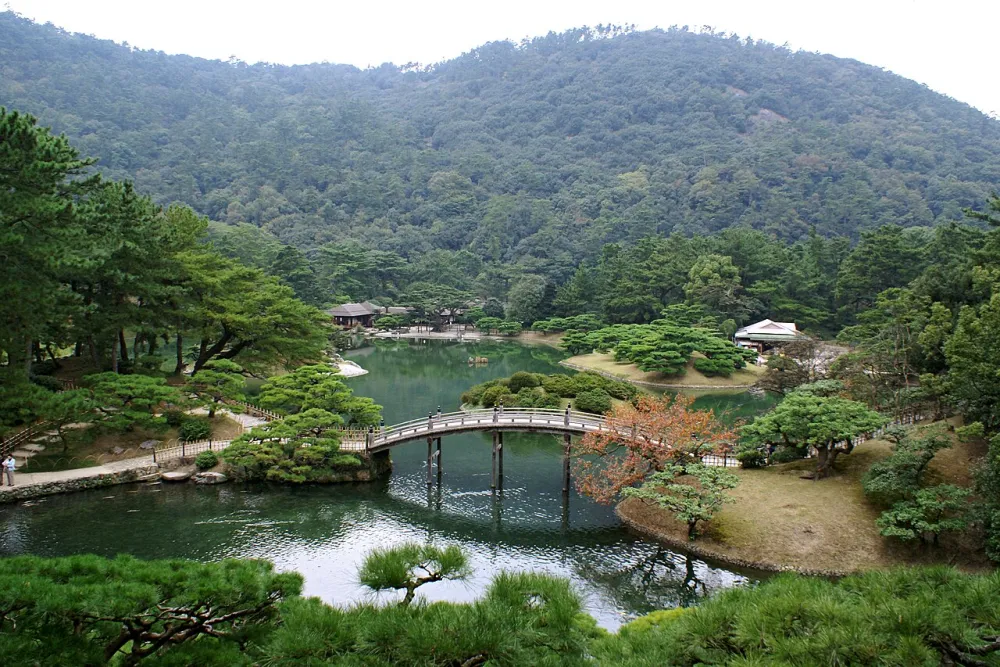
Garyu Sanso was built in the Meiji period by Kochi Torajiro, who made his fortune trading wax. The villa’s present garden and buildings took him more than a decade from around 1897. Ozu’s lords had admired the scenery here; Torajiro brought the riverside view into a private residence and tea pavilion. First see how the house faces the garden, then how the garden connects to the Hiji River. The shift between those two views rewards attention.
The main house, Garyuin, has a thatched roof and a rural-house appearance. The official architectural account describes ten years of planning and four years of construction, using selected timber and skilled craftspeople for the details. Study its proportions outside before looking at materials within. Much of the work becomes visible only at close range. Take a slow circuit of the main house before seeking the widest river-view window.
Seisui no Ma was designed for summer, facing north with ventilation and a higher ceiling. Its transom motifs link cherry blossoms and rafts, water droplets, chrysanthemums with flowing water, and snow-ring windows to spring, summer, autumn and winter. All relate to water. Identify one, then look along the room boundaries for the others. This is easier to remember than passing the carvings as a strip of decoration. Children can search for water patterns without learning the room names first.
Isshi no Ma has another feature beneath the floor. Removing its tatami allows the study-style reception room to serve as a Noh stage; Bizen pottery jars below the floor strengthen the sound. This shows how one room could change function. Together with its round window, shoji screens and ceiling, it forms a reception space. Read the structural account, then compare the room’s scale with its performance use.
Kagetsu no Ma uses different materials to suggest dusk and the moon. Staggered shelves evoke haze, the round window connects to the Buddhist altar room behind it, and gray sliding doors and bat-shaped pulls each have a purpose. After the clear seasonal motifs in Seisui no Ma, look here for subtler colors and components. Each room has its own design subject; that is why Garyuin deserves time. Garyu Sanso architecture and garden guide
Garden stones, Chishian and Furoan lead your eye to the Hiji River
Near the garden entrance, the stonework has different arrangements officially described as random, spreading-fan and flowing patterns. Millstones also sit in the wall, combining stones, trees and reused objects. Look at the direction of the whole wall, then the round millstones and joints. This gives you a specific stop after the main house. For photographs, note the wall and wait for the path ahead to clear rather than blocking the entrance.

Chishian began as a bathhouse built around the same time as Garyuin, and became a tea room in 1949. Its former use helps explain its size and location, and reveals later changes to the villa. It lies along the visit between the main house and Furoan and needs only a short stop. Here, look at a change of use; at the next building, look at the relationship with the river.
Furoan stands over a cliff above Garyu Pool, supported in a projecting cliff-side structure. The pavilion was conceived as a boat, with bamboo mesh replacing a ceiling in a curved, boat-bottom shape. Look first at that curve, then at the space opening toward the river. The interior and distant view connect. The official account also explains a design that uses moonlight to illuminate the ceiling. In daytime, study its structure and orientation through the shapes, materials and water in front of you.
From permitted outer paths, look for the detail of a living maki tree used as a sute-bashira support. From fine transoms inside the main house to embedded millstones in the garden, then Furoan’s tree and cliff, the viewing scale grows. This is why the villa benefits from a continuous visit. A few minutes at a river view misses how the buildings guide you toward it.
If arriving in Ozu after noon, visit the villa first, then one section of the castle town. Giving limited time to Garyuin and Furoan still produces a visit with a clear beginning and end. Castle enthusiasts can instead focus on Ozu Castle. Start with the entrance you most want to pass through, then fit lunch and the station journeys around it.
Ozu Castle: timber joints and evidence behind the reconstruction
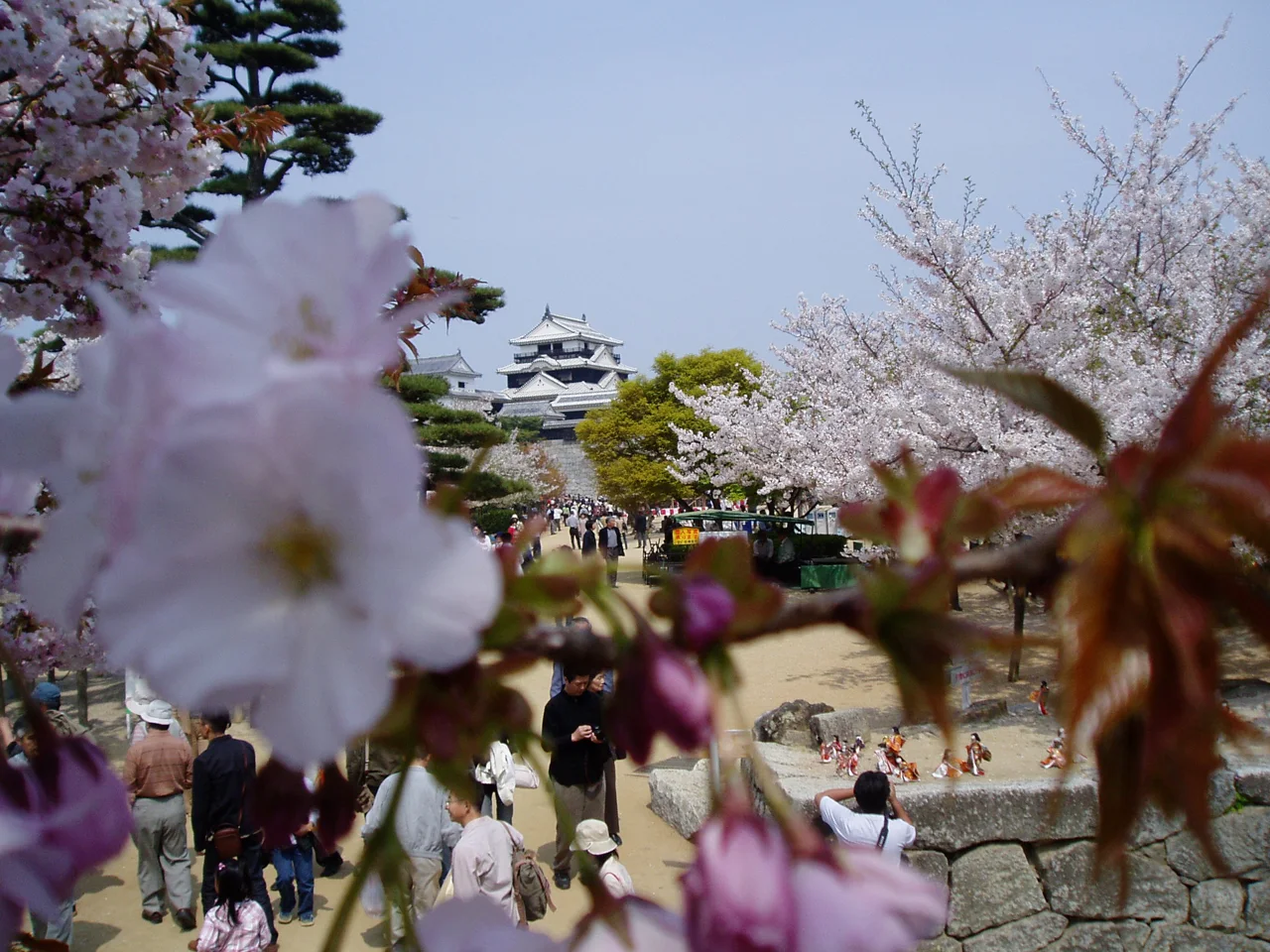
Ozu Castle’s keep was dismantled in 1888 because of deterioration. Today’s four-story, four-level wooden keep was reconstructed in 2004, using evidence including Meiji-era photographs and an Edo-period wooden structural model called the tenshu hinagata. Read this history before looking at the pillars and beams. An exterior photograph records the outline; the model preserves how parts fit together. Together they explain the reconstruction problem.
The city says all timber used in the keep came from Japan. Inside, focus on beam-and-pillar joints and the spaces on each floor; outside, examine roofs and connected turrets. Garyu Sanso’s timber details work at a domestic scale, while the afternoon castle structure has different sizes and functions. Comparing them in one day shows the spaces needed for wealth, hospitality, power and defense.
Four surviving Edo-period turrets, including the Daidokoro and Minami-sumi turrets, are nationally designated Important Cultural Properties. Use on-site signs to distinguish the keep from the turrets and see both preserved and reconstructed buildings. For an overall photograph, first study their connections outside. For construction details, allow time within. A panorama and a close look at timber framing provide different information.
The high view helps you recall the morning route. The Hiji River and castle town form the castle’s setting and the scenery borrowed by the villa. One brings the river into rooms at a cliff edge; the other looks down over the city. You will have a clearer sense of directions on both riverbanks when returning to the station. The visit allocation includes stairs and leaving the castle area, so finish the main interior before setting off at 15:00.
Ozu Castle opens 9:00–17:00, with ticket sales ending at 16:30. Admission is ¥550 for adults and ¥220 for junior-high-school age and below. Children aged five or under enter free with a guardian. Adults visiting both the castle and Garyu Sanso can buy an ¥880 combination ticket, saving ¥220 against two ¥550 tickets. A three-site ticket adds Bansenso for ¥1,100. This route includes only two, so choose ¥880. Ozu City castle visitor information
A day in Uchiko: dressing rooms to wax merchants’ streets
Take the same 09:07 Uwakai 7 from Matsuyama, getting off earlier at Uchiko at 09:33. The official sample walk gives about ten minutes from the station to Uchiko-za, so reach the dressing-room area around 09:45 and stay until 10:20. Start with theater history and the current dressing-room displays, then continue along Honmachi shopping street. It links the station to the preserved streets.
Allow 10:20–11:00 for Honmachi and the Museum of Commercial and Domestic Life. In a former merchant building, it displays a pharmacy shopfront, products and home life. Children and visitors unfamiliar with Japanese townhouses can first see business, dining and cooking spaces here, making the difference in scale at Kamihaga Residence easier to understand later. If wax is your sole priority, use this slot for a short shopping-street walk and rest instead.
Stroll through Yokaichi–Gokoku from 11:00 to 12:15, looking at walls, latticework and the Honhaga Residence exterior, then eat lunch from 12:15 to 13:15. The official distance from the station to the preserved district’s south entrance is about 1 km or 15 minutes on foot. That is a direct walk to the entrance; dressing-room and museum visits take extra time. Reaching the district before lunch helps establish its direction and main buildings.
Visit the Japanese Wax Museum at Kamihaga Residence from 13:15 to 14:30, then head toward the station. Allow 45 minutes back. Choose one shop in advance if you want to buy something along the shopping street. Aim for the station at 15:15, taking Uwakai 20 at 15:46 and reaching Matsuyama at 16:19. This gives full blocks for lunch, the residence and production facilities, with some afternoon left in Matsuyama.
For more townhouses or afternoon tea, take Uwakai 22 at 16:46, arriving in Matsuyama at 17:17. Spend the extra hour in the same district. If companions are tired, keep the earlier return. Extra time is best used on Kamihaga Residence and preserved-street details. Outlying Ikazaki, Ishidatami and Oda Miyama need separate transport and suit another day.
During Uchiko-za’s restoration, see theater from the dressing rooms
Uchiko-za opened in 1916 as a wooden playhouse built by local people during the town’s wax and raw-silk prosperity. It had a revolving stage, hanamichi runway and box seating. Later used as a cinema, it was restored in 1983–1985 and returned to performance use. The main building closed for long-term conservation repairs in September 2024, with official reopening currently expected in spring 2029. During this period, general visits center on the dressing rooms.
Behind Uchiko-za, the dressing rooms display signatures left by performers and material on Uchiko-za Bunraku and the Uchiko Kyogen Club. This is a stop for understanding how local performance continues: actor preparation, community groups and preservation support what happens on stage. Theater fans can pause to read. Visitors mainly interested in old streets can keep this stop shorter and give Kamihaga Residence more time.
Visitor information for the dressing-room visit lists 9:00–16:30, closed December 29–January 2. Restoration-site tours are announced individually, so they are not a fixed part of an ordinary walking day. Plan around the dressing rooms, shopping street and preserved district. If you have successfully booked a worksite tour on your travel date, replace one museum with it and keep the meeting time clear. Uchiko Town official Uchiko-za information
Photograph the current construction state and dressing rooms as the visit in front of you. Plan a separate visit after reopening if you want the main stage. This time, signatures backstage and buildings of the merchants who funded the theater connect performance with town industry. During restoration, the best focus expands from one theater to a whole lived-in street.
Yokaichi–Gokoku: look building by building along 600 meters
Yokaichi–Gokoku became an Important Preservation District for Groups of Traditional Buildings in 1982. Its main street is about 600 m long. That stretch begins within the old district after the roughly 15-minute walk from the station to its south entrance. Homes, craft shops and cafes remain here. Keep public streets separate from private interiors, and stand by the roadside when looking closely at walls or eaves.
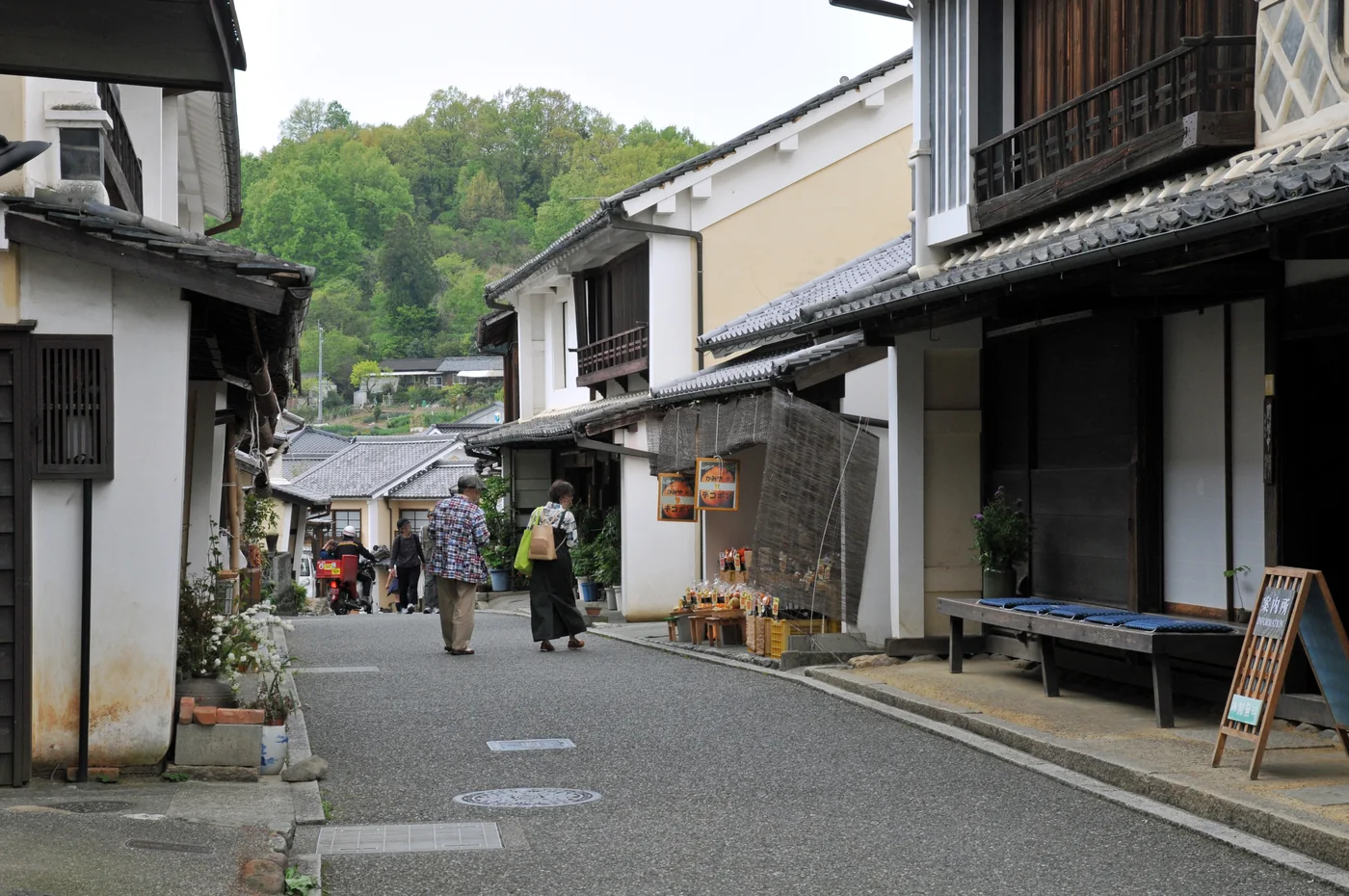
Colors include white plaster and pale-yellow earthen walls made with local soil. Compare walls on both sides, then roofs and latticework farther along; the houses differ. After a long street view, choose one house and look from the foot of its wall to the second floor. Short pauses like this often account for the time needed to walk the street.
Honhaga Residence stands out for plaster reliefs called kote-e and namako-style patterned walls. Its storehouse retains the Asahizuru trademark. Find the mark, then see where it sits on the warehouse facade. The trademark and residential decoration show the wealth and identity presented to the street. The house interior is closed to visitors, so this stop focuses on the exterior.
Nearby Omura Residence preserves an earlier townhouse form. Official information dates its main house to 1789–1801, before the height of Uchiko’s wax production. Comparing it with Honhaga shows different periods on one street. Neither interior is open. Kamihaga Residence, next, is the paid visit for a complete residence layout and production spaces.
Look at Honhaga again on your return. In the morning you see its exterior; after Kamihaga’s manufacturing and storage spaces, you return with a different understanding of its scale. Treat the return as a second reading of the district. Following Honmachi back to the station also keeps direction clear without detours into unfamiliar lanes just to make a loop. Yokaichi–Gokoku district guide
Released by Uchiko Tourism Association on September 27, 2019, this townscape walk focuses on the townhouses, white plaster and pale-yellow earthen walls along roughly 600 meters of Yokaichi–Gokoku.
Kamihaga Residence: separate home life from production
The Kamihaga family was a branch of the Honhaga family. Its residence now houses the Japanese Wax Museum. “Kamihaga Residence” and “Japanese Wax Museum” identify the same paid attraction; the Honhaga Residence seen earlier is another building. Use the address Uchiko 2696 for a clear destination from the street.
Ten buildings, including the main house, annex and Demise storehouse, are designated Important Cultural Properties. Residential and production facilities survive together. Divide your visit between living and manufacturing: which spaces served reception and residence, which components served wax production, and where goods were stored. Looking only at large rooms in the main house misses the production spaces that also give the property value.
The exhibition building uses models and video to explain wax production and displays some waxmaking tools. The collection of waxmaking implements from Uchiko and its surroundings totals 1,444 items; only part is on show. Understand the process through the model, then match real tools to their shapes and uses. Without a waxmaking background, time here explains how the district grew wealthy better than reading dates alone.
Then compare the residence with the boiling area. The merchant operation’s scale appears in living rooms, storage and manufacturing. Each needs different light, routes and structural elements. The wealthy merchants’ eaves and plaster reliefs seen that morning now connect to actual workplaces. Industrial-history enthusiasts can extend the planned 75 minutes and take the 16:46 return train.
Kamihaga Residence opens 9:00–16:30 and closes December 29–January 2. Standard admission is ¥500 for adults and ¥250 for elementary and junior-high-school students. The combination ticket for Kamihaga Residence, Uchiko-za dressing rooms and the Museum of Commercial and Domestic Life is ¥700 for adults and ¥350 for children. Budget ¥700 per adult if entering all three on this route. For streets plus Kamihaga alone, buy the ¥500 single-site ticket. Kamihaga Residence hours and current combination ticket
For candles and everyday-life exhibits, check the weekday
Omori Japanese Candle Shop lies on the Uchiko walking route. Official information describes molten raw wax applied in layers to a rotating wick. Seeing wax production at the museum and finished candles at the shop connects raw material to a household object. The shop’s regular closing days are Tuesday, Friday and the New Year period. If candles are a priority, choose another opening day, reserve time around lunch for the shop and shorten exterior stops.
The Museum of Commercial and Domestic Life suits an interest in ordinary merchant households. Pharmacy displays, signs, sundries and figures recreate dining and cooking scenes. Its scale differs from Kamihaga’s large residence and production facilities. With children, find one familiar household object here before looking at unfamiliar waxmaking tools. That can help sustain their interest.
The Uchiko visitor center closes on Thursday. The Townscape Preservation Center and Cultural Exchange Villa Takahashi Residence close on Tuesday. Omori Candle Shop has its separate Tuesday and Friday schedule. Select stops by interest: on Thursday, follow the station, dressing rooms, streets and Kamihaga route directly. For a Tuesday street visit, focus on outdoors and town-run museums, and arrange lunch early because nearby restaurants often close on Tuesday or Wednesday.
Paid Japanese- and English-language townscape guides require an application at least one week ahead. Once a guide is arranged, include the meeting place in your train plan. Language affects how much building and industrial detail you can understand. For companions who struggle with Japanese signs, replace some independent reading time with a guide they can follow. Guide fees and admissions are separate. Also allow travel time from the station to the district meeting point. Official Uchiko FAQs and facility closing days
Wet weather or less walking: which section to change
To reduce walking in Ozu, use a taxi for either the station-to-villa or castle-area-to-station leg. JR Shikoku’s sample route gives about five minutes from the starting station to Garyu Sanso and about five minutes from Asamoya back to the station. These are location references for choosing pickup and drop-off areas. Castle and villa entrances and indoor routes still take effort. Save energy for your preferred site and shorten the other according to your companions.
In rain, concentrate Ozu time on Garyuin and the castle’s interior timberwork, with rain gear for the garden and journeys between them. Putting away umbrellas and sorting footwear takes time. Reduce a street stop after lunch to accommodate this. If rain makes walking unpleasant, choose one site and return to Matsuyama. Buy a two-site ticket once you have decided to enter both.
In rainy Uchiko, keep the dressing rooms, Museum of Commercial and Domestic Life and Kamihaga Residence, viewing street exteriors as you pass. Kamihaga itself spans several buildings, so movement remains between rooms and exhibits. Give the museum a complete post-lunch block, then return toward the station. To shorten the district walk, turn back after Honhaga and Kamihaga from the south entrance rather than adding northern branches such as Koshoji.
Leave large luggage at your Matsuyama accommodation and travel light on both days. Fixed daily start and end points make an early return and dinner easy. Families can carry spare clothes and rain gear in a day bag without pulling cases through residences. If staying overnight in Ozu or Uchiko, use the exact hotel address to plan luggage handling after arrival, then choose your first museum.
December 7–10, 2026: change the Uchiko mountain-line plan
JR Shikoku’s August 18, 2026 notice announces daytime works on December 7–10. Uwakai 7, 9, 11, 13, 15 and 17 will not run between Matsuyama and Yawatahama; northbound services 8, 10, 12, 14, 16 and 18 are also suspended over that section. The 09:07 outbound above is number 7, so change the plan on these four days. The simplest option is to swap the Ozu or Uchiko day with a Matsuyama city day. If your date is fixed, use the works connections table and reallocate museum time. JR Shikoku mountain-line works notice and replacement timetable
The first replacement service in the notice leaves Matsuyama at 09:10. The Uchiko column shows 10:10 and Iyo-Ozu 10:30; both are departure times. Keep the visit to one town. Lunch and one museum fit most easily with the later morning. Uwakai 17 and 18 have no replacement buses, nor do the affected mountain-line local trains listed. To leave later, select a train outside the suspension list rather than adding an arbitrary wait to the original service.
Coastal-line trains between Iyo-shi and Iyo-Ozu continue during these mountain-line works. Ozu visitors can compare coastal timetables separately. Uchiko is on the mountain line, so use the announced connections or change dates. Resolve this geographical difference before choosing castle or wax streets, and return to the station for the actual departure time of your chosen train.
Where to stay when giving each town a day
If you already have Matsuyama accommodation, staying there is simplest: Ozu on day one, Uchiko on day two, taking only daily essentials. Ozu is the longer day, with dinner after reaching Matsuyama at 17:17. Uchiko’s 15:46 return reaches Matsuyama at 16:19, leaving the evening for your accommodation area. Before an early onward departure, put Uchiko on the preceding day so you can return earlier to pack.
If you prefer an evening in a small town, stay in Ozu or Uchiko and give each a full day. You can move to the other town after the first day’s visits and start the next walk from your accommodation. Match its exact location, arrival deadline, meal inclusion and meal times before choosing the first afternoon’s transfer. Two days provide complete mornings and afternoons. If accommodation lies far from the old district, arrange arrival transport first and protect the next day’s museum time.
Adult admissions alone total ¥1,580 over two days: ¥880 for Ozu Castle and Garyu Sanso, plus ¥700 for Uchiko’s three-site ticket. List rail, meals, taxis and accommodation separately. If entering only Kamihaga in Uchiko, the two-day admission total becomes ¥1,380. Budget by the sites you will enter, leaving more for guiding, meals or shorter station walks.
For Uwajima as well, reserve a third full day for Uwajima Castle, Tenshaen Garden and taimeshi. Matsuyama Castle and Dogo can also have their own day. See a day in Uwajima and Matsuyama Castle and Dogo Park for those city plans. For travel across prefectures, start with five or seven days in Shikoku and transport bases. Place Ozu and Uchiko within your Ehime stay, leaving your accommodation in the morning and returning to familiar streets for dinner.
A few useful answers
Can I visit Ozu and Uchiko in one day?
For Ozu Castle, Garyu Sanso and Kamihaga Residence, two days make it easier to give each a full visit. With one day, choose Ozu for castle and riverside garden, or Uchiko for merchant homes and the wax industry.
Can I see Uchiko-za’s stage in 2026?
The main theater has been under conservation repair since September 2024, with official reopening expected in spring 2029. General access is currently to the dressing rooms behind it, with performers’ signatures and displays on local Bunraku and Kyogen.
How much should I budget for admission in both towns?
The standard adult combination ticket for Ozu Castle and Garyu Sanso is ¥880. Uchiko’s ticket for Kamihaga Residence, Uchiko-za dressing rooms and the Museum of Commercial and Domestic Life is ¥700. Together they total ¥1,580, excluding rail and meals.
Official information and references
Sources used in this guide.
- Ozu City: castle history and visitor information
- Garyu Sanso: buildings, rooms and garden
- Garyu Sanso official hours and admission
- Uchiko Town: main theater repairs and dressing-room access
- Uchiko Tourism Association: FAQs
- Uchiko Tourism Association: rail and local transport
- Uchiko Tourism Association: Yokaichi–Gokoku
- Uchiko Tourism Association: station-to-theater and preserved-district walk
- Uchiko Tourism Association: Kamihaga Residence and current three-site ticket
- JR Shikoku: Ozu route and station taxis
- JR Shikoku: Uwajima–Matsuyama connections, revised March 14, 2026
- JR Shikoku: Iyo-Ozu departures, revised June 27, 2026
- JR Shikoku: official station timetable index
- JR Shikoku: August 18, 2026 mountain-line works and replacement timetable, public copy held by Uwajima City
- Uchiko Tourism Association: UCHIKOGENIC #2 townscape walk, released September 27, 2019