Take the Uwakai from Matsuyama to Uwajima for castle walls and the keep, taimeshi at Kadoya near the station, and Tenshaen Garden. Includes 2026 construction entrances, JR times, admission, lunch hours and a shorter afternoon route.
- Region & Focus
- Uwajima
- Reading Scope
- 30 min read · 16 chapters · 4 Q&As
- Official Verification
- 15 official sources checkedUpdated November 22, 2026
- Key Topics
- ItinerariesNeighborhoodsFood
Chapter Route Map (tap any stop)
- Choose your arrival time from Matsuyama
- Full day: castle first, then lunch and Tenshaen
- Arriving at noon: eat, then choose the castle or garden
- Northern and southern entrances during the 2026 works
- A 35-minute station walk and a 90-minute visit are different
- Nagatomaru to Tobei-maru: look closely at the stones
- Repairs at Honmaru and turns in the southern enclosures
- Keep exterior: from the roof to the entrance
- Inside: warrior corridor and the repair model
- Taimeshi lunch at the new Honten in Tsurushimacho
- Budget separately for sets and multi-course meals
- Tenshaen: begin by understanding the pond
- Stones and bamboo beyond the flower seasons
- Wisteria and irises: adjust your time to the season
- Match seasonal hours and admission
- Stamps, dinner and the return train
- Quick Q&A
Lunch and afternoon opening hours are the main constraints on a trip from Matsuyama to Uwajima. Arrive on a morning Uwakai, climb to Uwajima Castle, return to the station area for taimeshi, then spend the afternoon at Tenshaen Garden. This gives each stop time of its own. If you arrive at noon, eat first, then choose the castle or the garden. Allow separate time for the castle walls and palace-style keep, and for the pond and stone arrangements at Tenshaen. Looking closely at a few objects along the way is more rewarding than adding another distant stop.
Choose your arrival time from Matsuyama
JR Shikoku’s Uwajima–Matsuyama connection timetable was revised on March 14, 2026. Uwakai 5 leaves Matsuyama at 08:11 and reaches Uwajima at 09:31; Uwakai 9 leaves at 10:30 and arrives at 12:03. The journeys take about 80 and 93 minutes. The main difference is how much of the morning remains on arrival. For the castle, lunch and Tenshaen in one day, the 09:31 arrival works better.
The southbound route from Matsuyama lists stops including Uchiko, Iyo-Ozu, Yawatahama and Unomachi before Uwajima. Make Uwajima your main destination and stay on to the terminus to preserve the morning for the castle. If you stop to sightsee along the way, reconsider whether to visit the castle or the garden. Counting the stations you pass does not account for walking, waiting and boarding another train after a stop.
For the return, Uwakai 24 leaves Uwajima at 16:46 and reaches Matsuyama at 18:18. This allows a substantial garden visit in the afternoon and dinner in Matsuyama. For an earlier return, Uwakai 22 leaves at 15:46 and arrives at 17:17. To stay through dinner, Uwakai 28 leaves at 18:46 and arrives at 20:18. The basic timetable does not mark these services as restricted to weekdays or weekends.
Buy tickets from JR Matsuyama to Uwajima, and keep the train number and travel date together in your itinerary. On December 7–10, 2026, Uwakai 9 is suspended between Matsuyama and Yawatahama via Uchiko, with a replacement bus from Matsuyama to Yawatahama connecting to the train. On January 12, 13, 18 and 19, 2027, its Yawatahama–Uwajima section is suspended; transfer at Yawatahama to the 11:35 replacement bus, arriving in Uwajima at 12:45. On those January dates, the 15:46 return Uwakai 22 is suspended between Uwajima and Yawatahama with no replacement bus, so choose another return. Rearrange lunch and visits around the announced connections on construction dates. The official basic timetable excludes extra trains; check the day’s service information for accidents or disasters. The visiting times below are sample schedules based on the basic timetable and facility hours, with allowances for walking, rests and restaurant queues.
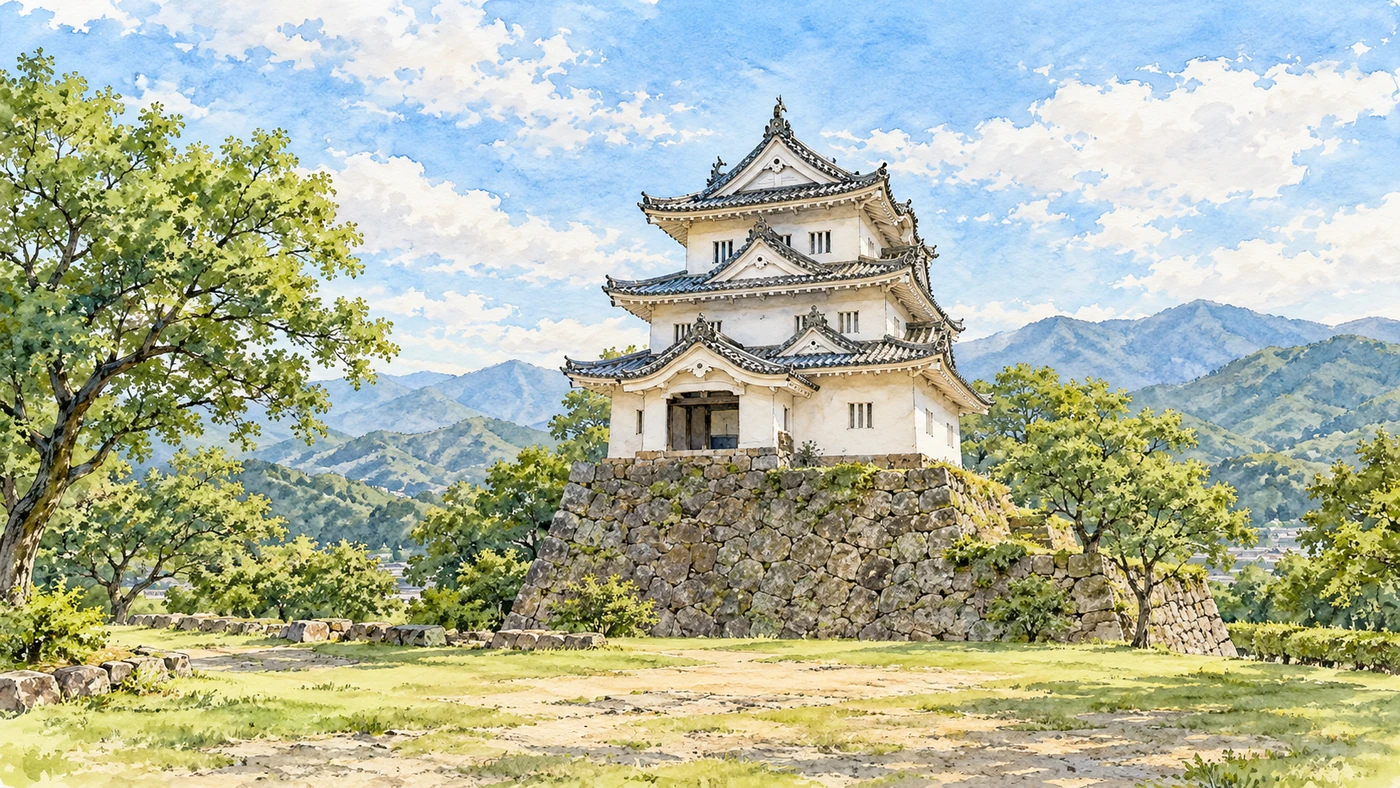
Take the Uwakai from Matsuyama to Uwajima for castle walls and the keep, taimeshi at Kadoya near the station, and Tenshaen Garden. Includes 2026 construction entrances, JR times, admission, lunch hours and a shorter afternoon route.
Full day: castle first, then lunch and Tenshaen
Take Uwakai 5 at 08:11 and arrive at 09:31. Rest and organize your belongings near the station, then walk toward the northern castle entrance. The city gives approximate walking times of 15 minutes from the station to the foot of the castle hill and 35 minutes to the keep. This itinerary sets aside 10:05–10:25 for the walk to the hill, with the climb and visit timed separately. Sort out shoes, drinking water and what you need to carry before leaving the station area, so you need not turn back during the climb.
Allow 10:25–12:20 for the hill and keep. The tourism association’s standard walking tour takes 1–1.5 hours, through Nagatomaru and Tobei-maru to Ninomaru and Honmaru. This full-day plan adds time for the descent and pauses. Focus on the stone walls and keep during the morning. At the top, you can enter the building and pause in Honmaru to look over the city and Uwajima Bay, rather than treating the summit simply as the point to turn back.
After descending, return to the station area for lunch at Kadoya Honten from 12:40 to 13:40. Last lunch orders are at 14:00, and lunch service ends at 14:30. This leaves a complete period for walking and eating. If you decide to spend longer at a wall on the climb, finish any extra castle-hill detours before noon to preserve the walk back. Arriving before 14:00 does not give you unlimited time for lunch.
Allow 13:40–14:15 to reach Tenshaen and rest, then visit from 14:15 to 15:10. The 35 minutes are a travel allowance; the 55 minutes inside are for the pond edge, island, dry stream, stone arrangements and bamboo. To stay longer, use some of the later spare time before returning to the station. Scheduling the garden close to closing time makes it harder to slow down beside the pond.
Head back toward the station after 15:10, aiming to reach the station area before 16:00. That leaves 46 minutes before the 16:46 departure for walking, toilets, a drink or a seated rest. Use as much of that time as you need. If the morning or lunch runs late, first shorten browsing near the station, then reduce the number of garden pauses. Keep the return buffer instead of using it to absorb every earlier delay.
Arriving at noon: eat, then choose the castle or garden
Take Uwakai 9 at 10:30 and arrive at 12:03, then go straight to Kadoya Honten, about three minutes on foot from the station. Use 12:15–13:15 for lunch, then choose the afternoon according to your group’s energy. Copying the morning route and climbing before lunch would put the restaurant’s last-order time at the tightest part of the schedule. Eating first gives the afternoon a clear start.
To see an original surviving keep, choose the castle route. Leave the restaurant at 13:15, start climbing around 13:35, and allow until 15:30 for the hill and keep before returning for the 16:46 train. This version omits Tenshaen and concentrates on Nagatomaru, Tobei-maru, Honmaru and the interior. You have time for the architecture after seeing the exterior, without hurrying down because the next attraction is closing.
If you prefer gardens or some companions do not want a climb, allow 13:15–14:00 for the journey, visit Tenshaen from 14:00 to 15:00, then return slowly to the station. Bamboo, wisteria trellises and stones beside the pond set a different pace from the castle hill. During flowering seasons, devote more time to plants. This version keeps taimeshi and the daimyo garden and removes the hill climb entirely, making it easier for a group that needs fewer stairs to stay together.
If you reach Uwajima close to 14:00, Kadoya Honten’s lunch ordering window is about to end. Deal with lunch before deciding on the afternoon. The restaurant closes between lunch and dinner from 14:30 to 17:00. To eat specifically at Honten, switch to dinner at 17:00 and return on Uwakai 28 at 18:46, or stay overnight in Uwajima. Assuming the restaurant serves throughout the empty afternoon can cost you both lunch and visiting time.
Northern and southern entrances during the 2026 works
The samurai nagayamon gate of the Kori senior-retainer family at the northern entrance is under repair from March 2026 to March 2027. Pedestrians can still climb; use the detour on your right as you face the entrance. Vehicles cannot enter. The full-day route from the station begins on this side. Find the detour at the gate instead of following a general guide through the gate under repair.
The southern Noboritachimon entrance has different restrictions. The city and tourism association announced emergency treatment following a slope collapse. From August 1, 2026, the route through Shikibumaru and Daiemonmaru toward the Shiroyama Local History Museum is temporarily open. The climbing path from Noboritachimon to the children’s park remains closed. To descend south toward Tenshaen, follow the announced temporary route and the open paths on site; do not take the children’s park direction.
The full-day route returns to the station for lunch, so using the northern side for both ascent and descent makes lunch easiest to manage. The southern side suits visitors already south of the castle or eating elsewhere. Choose the entrance in relation to your next stop. The same hill permits different visiting sequences; there is no need to force a crossing that takes you into an unwanted neighborhood and then back to the restaurant.
A 35-minute station walk and a 90-minute visit are different
The city’s approximate 35-minute walk from the station to the keep is a travel estimate uphill. The tourism association’s 1–1.5-hour standard route includes sightseeing along the way. Architecture enthusiasts may pause at walls for a long time, while children and older companions may need more rests. Budget for the visiting route, then add the journey to and from the station separately.
The hill paths, stone steps and keep interior do not have accessible ramps. Visitors who do not want the castle steps can choose taimeshi and Tenshaen, while companions who want to climb arrange separate time. To keep the whole group together, choose the garden version, centered on pondside paths. Decide before the climb rather than splitting the group at a flight of steps.
In rain, allow for slippery slopes and stone steps. The tourism association specifically flags wet surfaces after rain on its standard route. If everyone still wants to climb, remove extra enclosure detours so the ascent, interior and descent each have enough time. In heavy rain, or with unsuitable soles for wet stone, switch to lunch near the station and the garden, or shorten the garden to a brief pondside visit. You need not follow every slot in the original plan.
Nagatomaru to Tobei-maru: look closely at the stones
The northern standard route reaches Nagatomaru early. Along with the length of its wall, look near the corner beside the path for marine erosion and holes left by boring shellfish. The tourism association uses these to explain the stones’ coastal origin. First take in the wall’s outline, then look for holes on stones visible beside the path. Distant and close views answer different questions.
Nagatomaru also shows sangi-zumi corner masonry. Look at the arrangement of long corner stones, then move your gaze across the wall to understand how the corner and wall fit together. The official hill interpretation dates these walls tentatively to major rebuilding in the Kanbun era. For a general visitor, remembering to look at the corners is more useful than memorizing construction terms throughout the climb.
This area also has large camphor trees, kagonoki and bakuchinoki trees, and the association’s route includes benches. If companions walk at different speeds, rest at these clear stopping places so the group can reassemble. Prepare for mosquitoes in summer. Suitable clothing and mosquito repellent matter more during stops at the stones than during a continuous climb.
Next comes Tobei-maru. Its walls retain features from Todo Takatora’s founding period: nozura-zumi masonry, a relatively straight slope and no pronounced reverse curve. After the carefully arranged corners at Nagatomaru, compare stone sizes, joints and the overall slope here. The differences have visible examples rather than remaining two terms on a sign.
The standard route continues through Ninomaru to Honmaru. The association points out that Ninomaru gives a view of the keep together with the Honmaru walls, backed by the Onigajo mountain range. Pause to see how the keep sits on raised walls before approaching it. This explains the relationship between building and terrain better than beginning with close photographs filled with white walls.
Repairs at Honmaru and turns in the southern enclosures
On the same Honmaru wall, you can compare original nozura-zumi masonry with sections repaired using kirikomi-hagi in the late Edo period. The former retains irregular stone shapes and more visible gaps; the latter works the meeting faces. Looking along one wall gives a direct comparison of old and newer methods. Time here reveals more of the castle’s layers than leaving the hill to increase your stop count.
The southern Daiemonmaru walls also span several periods. The tourism association lists a section repaired in the late Edo period as 15 meters high, the tallest in the castle. If you use the temporary southern route, make it a viewing stop. If you follow the full-day northern return route, Nagatomaru, Tobei-maru and Honmaru already offer useful comparisons. You need not add a whole detour to find the tallest wall.
At Shikibumaru, look for bends in the stone walls designed for yokoya-gakari, or flanking fire. The change from straight wall to angled corner shows how the defenses used changes in direction. View these details as you pass through the enclosure along open paths. Let your chosen entrance determine the order instead of making every enclosure compulsory.
Idomaru retains a well about 11 meters deep, with a late-Edo rebuilding record carved into the stone rim. For visitors interested in inscriptions and repair traces, this offers more than another open space with a place name. With limited time, keep the wall comparisons on the main route. If wells and enclosures interest you, add this to a longer castle visit and adjust lunch earlier or later accordingly.
Keep exterior: from the roof to the entrance
Uwajima Castle’s keep is a three-tier, three-story tower with successively smaller tiers with white plaster covering its exterior walls. From Honmaru, first look at the silhouette narrowing with each tier, then find the curved karahafu gables, triangular chidori-hafu gables and gegyo roof ornaments. Against the white walls, the roof curves and decoration are clear. Allow time for a distant view of the whole building, then a closer look at the entrance.
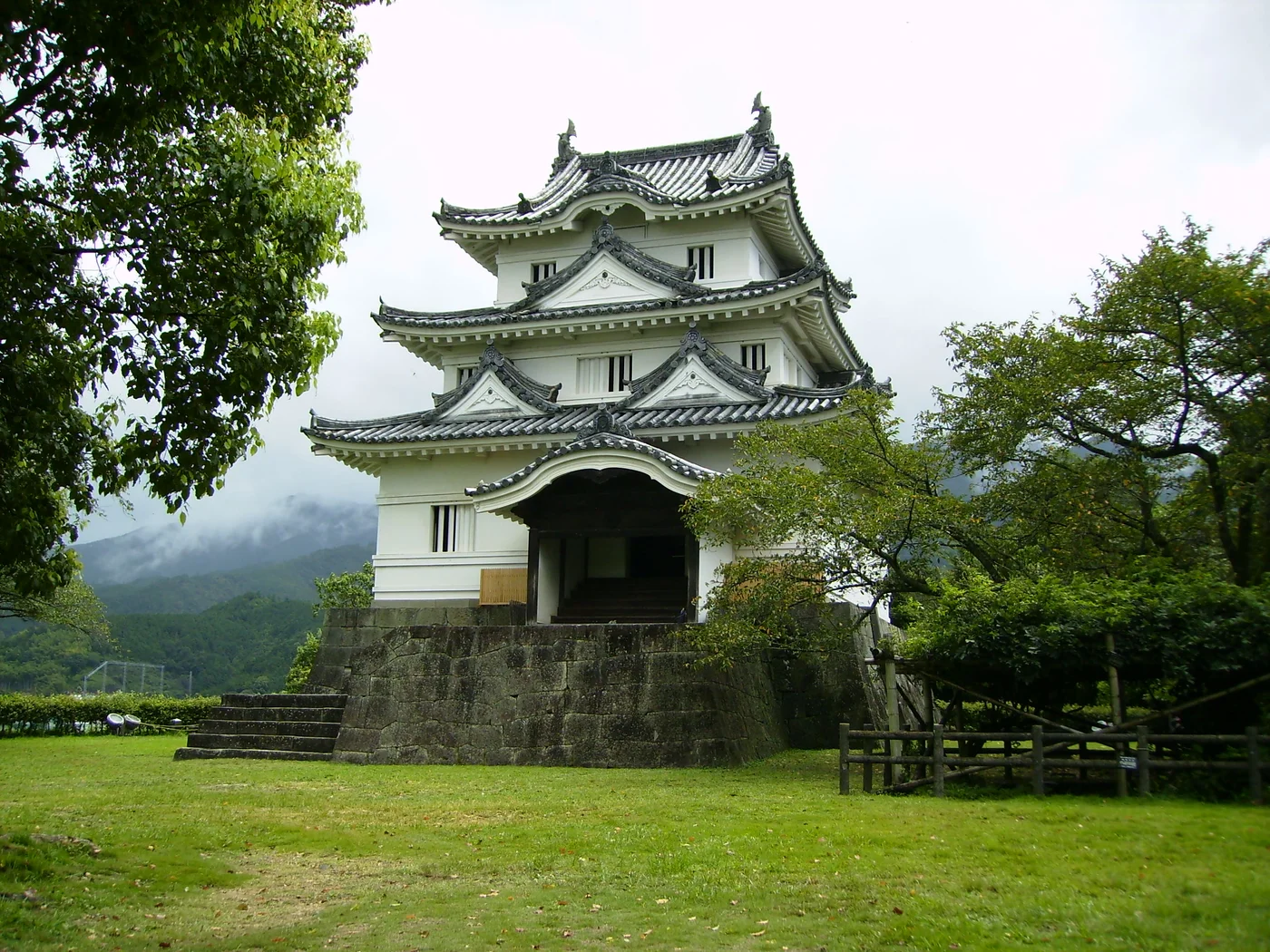
The city’s cultural property explanation connects these details to palace-style design. The entrance has a formal shikidai platform; inside are nageshi horizontal members and joinery fittings. The building expresses the lord’s rank and dignity. At the entrance, recall the overall form seen from Ninomaru and compare it with the entrance layout. The keep then becomes a building with a specific architectural vocabulary, beyond a tall structure that has survived.
Its military equipment also deserves attention. City material explicitly lists the absence of gun ports, arrow slits and stone-drop openings. Read this alongside the ornate gables and formal entrance to understand the character expressed by this Edo-period keep.
With little time, preserve at least two exterior viewpoints: Ninomaru for the keep and walls together, and Honmaru for the entrance and roof ornament. These show both the use of height and the details visible only close up. If you want the castle stamp or wooden interior, reserve time inside. Do not spend so long photographing the exterior that the keep is about to close.
Aerial footage of Uwajima Castle in Sagawa Printing’s Ehime no Doga collection, to accompany the section on the keep exterior.
Inside: warrior corridor and the repair model
Inside the keep, look at the first-floor musha-bashiri corridor, nageshi members and fittings. The city’s cultural property material specifically illustrates the first-floor corridor, railings, warrior windows and third-floor view. Before climbing to the top, examine how the first-floor components are arranged. This helps connect the interior with the exterior you have just seen.
Uwajima Castle also retains the tenshu hinagata model made for major repairs in 1860. The city records that even the thickness of the columns was reproduced at one-tenth scale. A wooden plaque on a first-floor tie beam records why it was made. The model offers a way to examine timber construction: look at how the complete building divides into floors, then return your attention to the floor you occupy and consider which dimensions repairs required.
The city particularly values the survival of both the keep and its Edo-period model, whose production date is known. Architecture enthusiasts in your group may want more time here; others can focus on windows, railings and views. Everyone need not spend the same number of minutes on each item. Agreeing to meet outside allows different interests without constant hurrying.
From higher up, Uwajima Bay and the castle town help you locate the station visited earlier and the southern area ahead. You still have stairs and a hill to descend after the view. In this schedule, 12:20 is the target for leaving the castle hill, not for starting down from the top floor. The extra half-hour in the morning often goes into these actual movements.
Taimeshi lunch at the new Honten in Tsurushimacho
Kadoya Honten is now at 1-23 Tsurushimacho, Uwajima, about three minutes on foot from JR Uwajima Station according to the restaurant. It retains the Honten name; plan around this current address. Save the Tsurushimacho address in your map before returning from the hill, rather than searching only for the group name and reaching another branch. This itinerary uses the Honten near the station, and all serving hours below refer to it.
Uwajima taimeshi centers on raw sea bream sashimi. Kadoya’s official instructions are to coat the sashimi in its special sauce, then pour fish and sauce over hot rice. The preparation helps you decide whether this meal suits you. Companions who cannot eat raw fish can choose the Honten’s Ehime imo-buta pork cutlet set. Decide on the main dish first so everyone can eat at the same restaurant.
One named set is Furusato-zen Taimeshi, presented by the restaurant as a signature dish, with sea bream also featured in the appetizers. If the castle and garden are your priorities, a set meal fits the roughly one-hour lunch allowance most easily. To sample several Uwajima local dishes, treat lunch as a longer stop and keep only the garden or castle for the afternoon.
The restaurant also lists local dishes such as jakoten fried fish cakes and a kamaboko fish-cake assortment, plus straw-seared bonito using fish delivered directly from Fukaura in Ainan. With a larger group, discuss preferred fish and cooked options. No one needs to choose the same dish simply because it is considered essential in Uwajima. The decisions are the main dish and time at the table; you need not collect every local specialty in one meal.
Budget separately for sets and multi-course meals
Kadoya Honten’s website lists local-cuisine courses at ¥6,000, ¥7,000 and ¥8,000 including tax. These are multi-course meal prices. The ¥6,000 course lists appetizers, local fish sashimi, jakoten, fuka yuzarashi blanched shark, pearl-oyster adductor muscle grilled with butter, simmered sea bream head, then Uwajima taimeshi, soup and dessert. Check the whole course before deciding whether it suits this lunch.
The ¥7,000 and ¥8,000 courses use different combinations of sashimi, fish and shellfish dishes. The ¥8,000 course also lists somen noodles with sliced sea bream. For an introduction to local cooking, a course can shape a different itinerary, with more time if you stay in Uwajima for dinner. If you mainly want taimeshi and will walk afterward, start with the set-meal menu. Sets and courses serve different purposes; do not apply one price to the other.
The Honten takes reservations and inquiries at 0895-22-1543, has private rooms and is entirely nonsmoking. Use the phone before travel for a large party, seating for older companions or a course meal. The same-day itinerary allows time to enter and wait. There is no dedicated parking lot, so drivers use nearby parking; walkers can plan around the station location.
Lunch runs 11:00–14:30, with last orders at 14:00. Dinner runs 17:00–21:00, with last orders at 20:30. The restaurant closes December 31–January 1; on December 31, 11:00–14:00 is only for osechi New Year meal collection. Arrange other meals on these two dates. Osechi collection hours do not belong in a normal dine-in lunch schedule.
Tenshaen: begin by understanding the pond
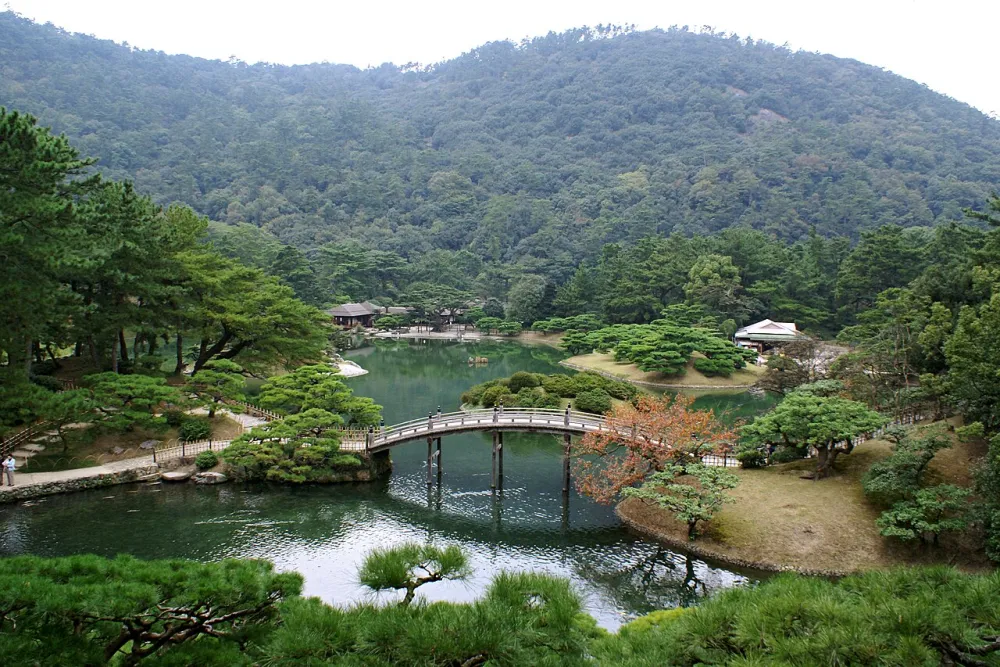
Tenshaen, in Tenshakoen, Uwajima, was built as a retirement garden for Date Munetada, the seventh domain lord, and completed in 1866. Ehime’s cultural property material lists it as a nationally designated Place of Scenic Beauty and describes a strolling garden centered on a large pond. After the castle hill, lower your gaze from the elevated defenses to the shore and water. Each stop then has its own way of looking.
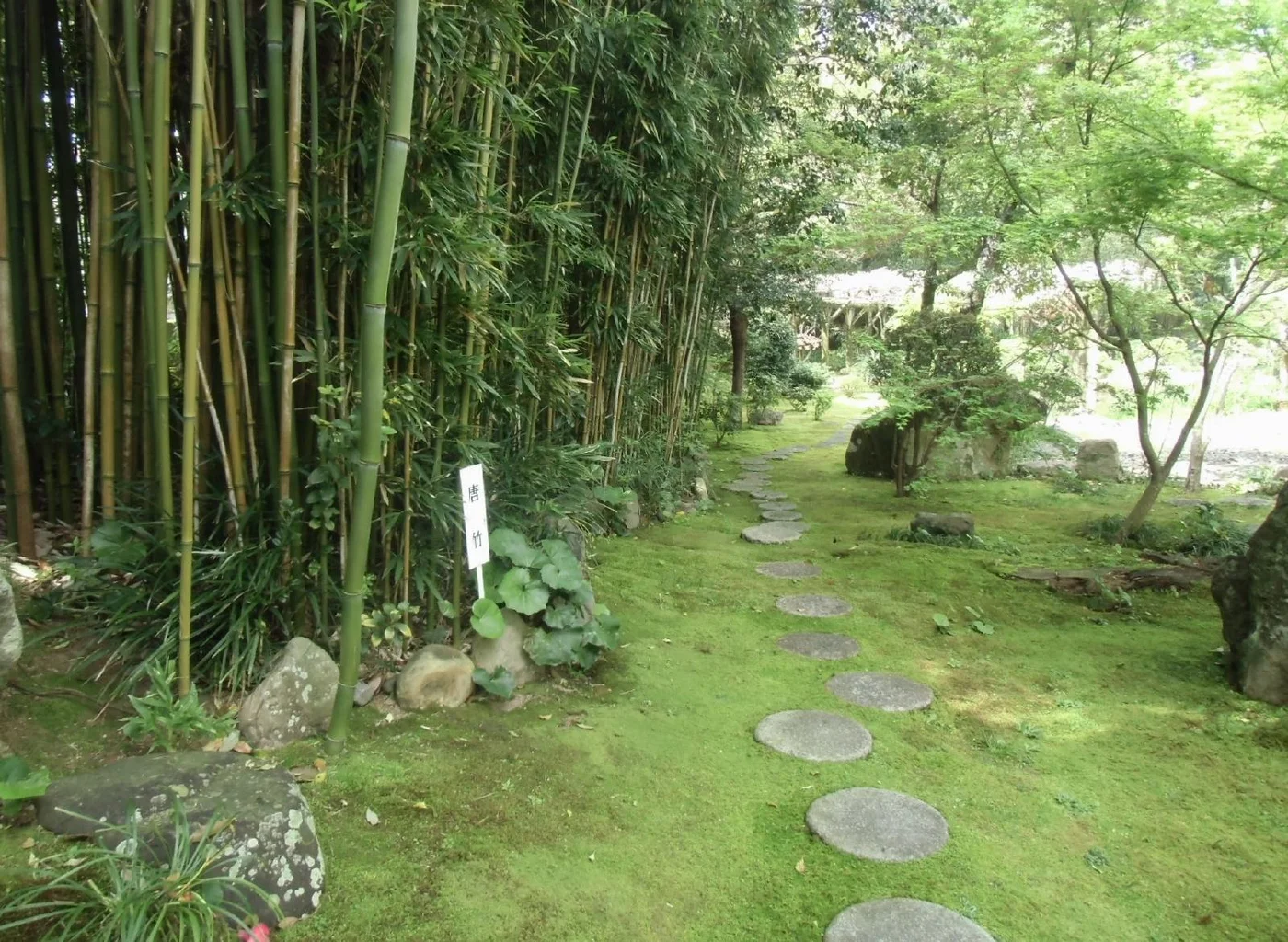
A small island sits in the pond, which connects to a dry stream conceived around rivers flowing from Mount Onigajo. First identify the pond, island and dry stream, then examine the shore stones and plants. This makes the garden easier to understand than searching for flowers immediately. Use the outdoor paths as your route, pausing around the pond and viewing the buildings with the waterside scenery.
The prefecture also lists pines on the island, water lilies near Harusametei and grass behind Senenkan. These names help identify different garden scenes: water and flowers, space beside buildings, and island trees. On an outdoor visit, find what is visible in the season. The pond provides enough to see without treating every pavilion as a separate stop.
Senenkan is a shoin-style tea pavilion. The tourism association records its use as the Crown Prince’s resting place on his 1922 visit to Tenshaen. Near this scene, connect the pavilion with how the garden was used. This walking route focuses on the pond, paths and building exteriors, using the time for outdoor places you can walk to and see.
Stones and bamboo beyond the flower seasons
Ehime lists named stones including the Reclining Ox Stone, Tug-of-War Stone and Yin-Yang Stones. Look first at how the stones relate to the shore and plants, then match the names. These provide things to examine beyond short flowering periods. Names aid memory, but the stones’ positions and forms are the main subject. Choosing one or two to examine closely is more interesting than rushing to find every name.
Compare the morning’s castle walls with the afternoon’s garden stones. Castle masonry creates height, corners and enclosures; garden stones enter the pondside composition. Both use stone but invite different questions. Moving from how a wall fits together to how stone sits beside water keeps the afternoon fresh instead of making it simply another historical stop.
Tenshaen also has several kinds of bamboo, associated with the Date family’s bamboo-and-sparrows crest. The association describes bamboo arranged beside the pond, while the prefecture lists it alongside the stone arrangements as a highlight. Outside flower season, study the different clumps and background trees. Let your gaze move from water to shore, then back to the island and pines, with more to pause at than a single wisteria trellis.
Japanese black pines, camphor trees and ubame oak surround the garden. These evergreens give the pond garden forms to examine in different seasons. In autumn and winter, spend time on the shore, bamboo and stones instead of rushing round because the spring flowers are absent. This period also suits companions who enjoy a quiet walk without chasing blooms.
Wisteria and irises: adjust your time to the season
The garden has several wisteria trellises. The tourism association particularly features the arched, bridge-shaped trellis over the pond with Shiratama wisteria. In bloom, see how flowers cover its curve, then view trellis and water together. In other seasons, examine the relationship between the curve and pond. It is one pondside stop; the entire garden need not become a visit to this single trellis.
The association gives early June as the usual viewing period for Japanese irises. If flowers are your focus, devote more of the 55-minute garden visit to the beds and pond. If flowering has passed, follow the pond, bamboo and stone route. April–June opening hours are longer, making an afternoon visit easier. Keep the morning castle and lunch in the same order; the extra half-hour does not require rebuilding the day.
Match seasonal hours and admission
Uwajima Castle’s keep opens 09:00–17:00 from March through October and 09:00–16:00 from November through February. The hill itself opens 06:00–18:30 and 06:00–17:00 respectively. Keep admission is ¥200 for general adults, ¥160 for ages 65 and over, and free for high-school students and younger. Show proof of age or student status; pay cash for same-day admission. The hill is free for viewing the walls and keep exterior.
Tenshaen opens 08:30–17:00 from April through June and 08:30–16:30 from July through March. General adult admission is ¥500; high-school students and ages 65 and over pay ¥300, junior-high students ¥200, and elementary-school students ¥100. A general adult pays ¥700 for both the keep and Tenshaen, with lunch and transport extra. On the noon-arrival single-stop route, buy admission only for the facility you enter.
Tenshaen has regular winter closures. From the second Monday in December through the end of February, it closes Mondays, or the following day when Monday is a public holiday. It also closes December 28–January 1. For a winter Monday trip with all three stops, exclude the garden’s closure dates before booking trains. On a closed day, spend longer on the castle hill and take an earlier train to Matsuyama instead of seeking a replacement only after reaching the gate.
From November through February, the keep closes at 16:00 and Tenshaen at 16:30. Their order affects a late arrival. Climb after lunch to put the earlier-closing keep first. For the garden version, visit around 14:00 rather than assuming a walk before sunset can continue into the evening. Record each facility’s hours separately; the hill’s later opening does not mean you can still enter the keep.
Stamps, dinner and the return train
The Japan 100 Famous Castles stamp is inside the keep, and gojoin castle seals are sold only there. The city also provides a stamping arrangement at Shiroshita for people whose physical condition or similar circumstances make the climb difficult. Include this in your decision about climbing and finish it with the morning interior visit. If the group chooses the garden version, use the arrangement appropriate to the actual companions instead of adding a rushed climb before returning to the station.
On the 16:46 return itinerary, lunch is your main opportunity for local food in Uwajima. To have dinner at Honten too, eat after it opens at 17:00 and take Uwakai 28 at 18:46. Allow about an hour for dinner and reach the station before 18:15 to wait for the train. Arrange your ticket and return time before eating. Give a multi-course meal more time or stay overnight so the menu and train do not squeeze each other.
The station area is easiest to manage for any spare time before departure. The morning castle hill and afternoon garden already fill a day. Buy a drink, organize your belongings and reach the platform early. Connecting dinner or accommodation in the next city after the 18:18 Matsuyama arrival gives the day a clear endpoint, with enough time for Uwajima itself.
A few useful answers
Which train should I take for a day trip from Matsuyama to Uwajima?
On the JR Shikoku timetable revised March 14, 2026, Uwakai No. 5 leaves Matsuyama at 8:11 a.m. and reaches Uwajima at 9:31 a.m. Visit the castle before lunch and Tenshaen Garden afterward. Uwakai No. 24 leaves Uwajima at 4:46 p.m. and reaches Matsuyama at 6:18 p.m.
How do I get into Uwajima Castle during construction?
Use the pedestrian detour on the right as you face the north gate, which is under repair through March 2027. On the south side, the route toward the Shiroyama Local History Museum temporarily reopened on August 1, 2026, and the section toward the children's park remains closed.
Where can I get taimeshi near Uwajima Station, and when can I last order lunch?
Kadoya's main restaurant is at 1-23 Tsurushimacho, about a three-minute walk from JR Uwajima Station. Lunch runs from 11 a.m. to 2:30 p.m., and the kitchen takes orders until 2 p.m. For Uwajima-style taimeshi, sea bream sashimi is coated in a special sauce and served with the sauce over hot rice.
What are Tenshaen Garden's opening hours and admission fee?
Hours are 8:30 a.m. to 5 p.m. from April to June and 8:30 a.m. to 4:30 p.m. from July to March. Adult admission is ¥500. The garden closes December 28 to January 1 and on Mondays from the second Monday in December through February, or on Tuesday if that Monday is a public holiday.
Official information and references
Sources used in this guide.
- Uwajima Tourism and Products Association: northern nagayamon works (September 16, 2026)
- Uwajima Tourism and Products Association: temporary southern climbing route (July 31, 2026)
- Uwajima City: official castle site, construction routes and stamps
- Uwajima City: Uwajima Castle keep, a nationally designated Important Cultural Property
- Uwajima Tourism and Products Association: enclosures and stone walls
- Ehime cultural properties: Tenshaen, a nationally designated Place of Scenic Beauty
- Uwajima City: access, opening hours and admission
- Uwajima City: keep design and scale model
- Uwajima Tourism and Products Association: Tenshaen sights, hours and admission
- Kadoya Honten: current address, menus, hours and reservations
- JR Shikoku: timetables, fares and train formations
- JR Shikoku: Uwajima–Matsuyama connections (revised March 14, 2026)
- Uwajima Tourism and Products Association: standard castle walking tour
- Kadoya: how Uwajima taimeshi is prepared
- JR Shikoku: FY2026 daytime construction suspensions and replacement buses (PDF retained by Uwajima City)