Plan an Iwakuni castle-town day from Iwakuni or Shin-Iwakuni Station. Compare the ¥1,550 combined ticket, Kikko Park, castle, riverbank and museums, with wet-weather stairs, ropeway maintenance and two walking levels.
- Region & Focus
- Iwakuni
- Reading Scope
- 30 min read · 17 chapters · 4 Q&As
- Official Verification
- 15 official sources checkedUpdated November 7, 2026
Chapter Route Map (tap any stop)
- Center an Iwakuni day on both sides of Kintaikyo Bridge
- Choose Iwakuni or Shin-Iwakuni Station by the whole connection
- Find schedules through the bus operator, rather than an old PDF
- The ¥1,550 combined ticket suits bridge, return ropeway and castle users
- Cross Kintaikyo while studying its steps and timber
- Stop by the river twice, for the bridge shape and the castle’s position
- Walk slowly through Kikko Park for Kinunkaku, residence traces and rests
- The ropeway ride is three minutes, but the hill needs a full visiting block
- At Iwakuni Castle, study models, views and the reconstructed keep’s location
- In rain, reduce stairs and assess the bridge and hill separately
- Iwakuni Chokokan: free local history and a building worth studying
- Kikkawa Historical Museum: shorten the riverbank for family objects
- Standard walking level: castle in the morning, one museum and park afterward
- Lighter walking level: omit the hill, keep bridge, park and one museum
- Handle strollers and wheelchairs separately for bridge, ropeway and castle stairs
- Store luggage first and collect it before onward travel
- In flower season extend the park; in winter maintenance use the museums
- Quick Q&A
First decide whether to visit Iwakuni Castle. If bridge steps, hilltop paths and castle stairs suit you, cross Kintaikyo in the morning, pass through Kikko Park and take the ropeway, then return to the park and a museum after lunch. For easier walking or maintenance days, stay on the two riverbanks. The ¥1,550 adult combined ticket suits those using the bridge, return ropeway and keep. For bridge and park only, buy the ¥500 bridge ticket. After arriving by bus from Iwakuni or Shin-Iwakuni Station, note your return service before starting the castle-town walk.
Center an Iwakuni day on both sides of Kintaikyo Bridge
On arrival, divide the area into the bridge, town-side riverbank, Yokoyama-side park and castle hill. The bus brings you to the bridge area. Cross to Kikko Park, then take the ropeway from the lower station in front of the park. Return from the upper station through the park to the bridge. This out-and-back layout shapes the day: handle the ropeway first for the castle, or give the time to park and museums for a slower ground-level visit.
Allow a full day for Iwakuni. The official reference time for bridge, ropeway and castle is about 1.5–2 hours, covering those three facilities. Add both banks, lunch, a museum and bus transfers, and a day gives room for details. For a return trip from Hiroshima, keep it as your lodging base. From Miyajimaguchi, give Iwakuni another day rather than combine the most walking-intensive parts of both places.
The schedules here start on arrival at Kintaikyo. First photograph the return-direction bus stop and remember where to board. Looking for the return only after the afternoon park walk can use up time intended for the riverbank. This small step lets you later choose another museum or an earlier station return according to energy.
Plan an Iwakuni castle-town day from Iwakuni or Shin-Iwakuni Station. Compare the ¥1,550 combined ticket, Kikko Park, castle, riverbank and museums, with wet-weather stairs, ropeway maintenance and two walking levels.
Choose Iwakuni or Shin-Iwakuni Station by the whole connection
The Sanyo Main Line serves Iwakuni Station; the Sanyo Shinkansen serves Shin-Iwakuni Station. Search for them separately. Official access information gives about 44 minutes from Hiroshima to Iwakuni and 19 minutes from Miyajimaguchi to Iwakuni as travel estimates. Add the Kintaikyo bus for the full arrival time. If staying in Hiroshima or Miyajimaguchi and returning the same way, compare conventional trains first, then follow west-exit signs at Iwakuni Station.
Outside Iwakuni Station’s west exit, the official FAQ directs visitors to stop 1 in front for buses toward Kintaikyo, about 20 minutes away. The west exit matters. If accommodation or storage is on the other side, include crossing the station in your departure plan. With older companions, one person can check the bus destination and stop while others wait together, rather than split up and lose one another.
From Shin-Iwakuni Station, the official bus estimate to Kintaikyo is about 15 minutes; taxis take about 10 minutes. This suits travelers already moving along the Shinkansen route and continuing to another city. Add alighting, luggage collection and waiting even though the ride is short. Choose a bus you can reliably catch, then work backward to the Shinkansen rather than book bridge-side lunch too close to train arrival.
If using different arrival and departure stations, change luggage storage accordingly. A large case at Iwakuni Station adds a return there before an afternoon Shinkansen from Shin-Iwakuni. Storage near Kintaikyo or using the same station both ways makes the route clearer. Choose your entry point together with luggage and that night’s accommodation.
Find schedules through the bus operator, rather than an old PDF
Enter the timetable section from the official Iwakuni Bus website, choose the weekday or holiday version for your travel date, then locate Iwakuni Station, Kintaikyo and Shin-Iwakuni Station. The website has announced October timetable changes, while search results can still show tourist PDFs from 2024 or earlier. Compare a PDF’s revision date with your trip so you do not wait for an adjusted service using an old table.
Iwakuni City’s FAQ gives a rough frequency of every 10–15 minutes between Iwakuni Station and Kintaikyo, useful for an ordinary-day sense of waiting. Choose a specific departure from the operator’s timetable. An extra outbound wait may be acceptable; with a reserved Shinkansen on return, choose the Kintaikyo departure first and place the walk and luggage collection before it. Add waiting and urban-road time to the roughly 20-minute ride.
Keep two transport records on your phone: the operator’s current timetable entry and the day’s return stop and direction. Iwakuni Station and Shin-Iwakuni Station are different destinations. Boarding merely because you see “Iwakuni” can take you to the wrong station. For a taxi, specify Kintaikyo Bus Center or your current museum rather than only the bridge, avoiding people waiting on opposite banks.
The ¥1,550 combined ticket suits bridge, return ropeway and castle users
Standard individual fares effective September 1, 2026 and checked October 29 are ¥500 for a bridge return, ¥900 for a ropeway return and ¥350 for the castle for junior high school age and above. Separately they total ¥1,750; the three-part ticket is ¥1,550, saving ¥200. Elementary school fares are ¥250, ¥400 and ¥200, totaling ¥850, compared with a ¥700 combined ticket. The saving is useful, but decide whether you will enter the castle before buying.
For only the bridge and Kikko Park, adults need just the ¥500 bridge ticket; the park is free. For a ropeway view without the keep, bridge plus return ropeway costs ¥1,400, less than the full package. Companions avoiding castle stairs can buy their own suitable combination. Compare tickets with each person’s actual facilities rather than give everyone the same product.
Kintaikyo admission is a same-day return ticket; there is no official one-way ticket. Crossing from town to Yokoyama and returning in the afternoon uses that feature. Combined tickets are sold at both bridge toll booths, the ropeway boarding point and tourist information offices at Iwakuni Station and Kintaikyo Bus Center, with different opening times. If arriving at the bridge first, buying there is simpler than waiting at the station just to purchase ahead.
Keep tickets until leaving the castle town. The city FAQ also lists 20% off admission to Kikkawa Historical Museum, Kashiwabara Art Museum and Iwakuni Shirohebi Museum with the combined ticket. Show it at the counter if choosing one later. Museum admission is extra; the combined ticket covers bridge, ropeway and castle. On ropeway maintenance or castle closing days, choose the ground route and simplify the tickets too.
| Item | Adult | Elementary school child |
|---|---|---|
| Same-day bridge return | ¥500 | ¥250 |
| Ropeway return | ¥900 | ¥400 |
| Ropeway one way | ¥500 | ¥250 |
| Iwakuni Castle | ¥350 | ¥200 |
| Bridge + return ropeway + castle | ¥1,550 | ¥700 |
Cross Kintaikyo while studying its steps and timber
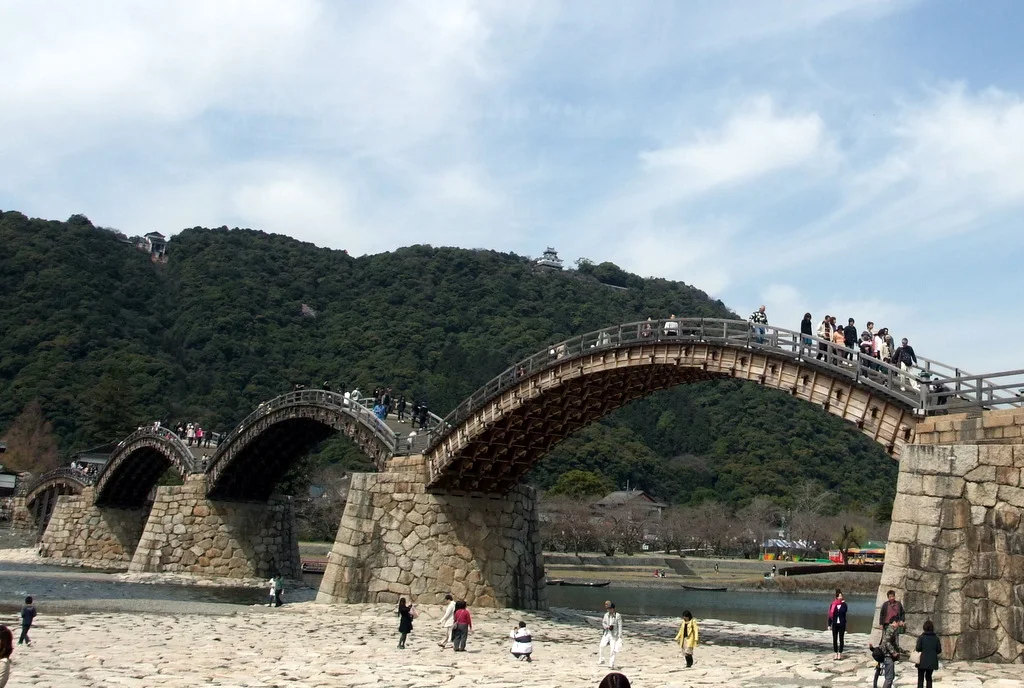
Look at Kintaikyo from the side before walking over it. From shore, note how stone piers divide the continuous bridge. On the deck, your view rises with the steps and drops into the next section. This also determines wheelchair access. Official information says the first and fifth spans have fewer level changes, while spans two through four have stairs. The full crossing is not a level path.
Kikkawa Hiroyoshi built the prototype of today’s Kintaikyo in 1673. It was rebuilt with improvements the next year and survived until Typhoon Kezia washed it away in 1950. Later reconstruction and continued timber replacement keep a wooden bridge in use today. Study timber and joints to understand maintenance beyond a construction year. The structure uses timber joinery as well as metal bands and nails. Look for overlapping wood and metal fixings.
Shorten your stride uphill and keep only necessary items in your hands. At an arch top, check approaching people before stopping. Move clear to read signs, change lenses or adjust a child’s clothes. On the return, look toward the other side of the Nishiki River and shore. Leave unfinished photos for the afternoon rather than stop in every section waiting for an empty view.
The official bridge description warns that rain and snow make the deck slippery, and strong wind, heavy rain or high river levels may close it. Prioritize handrails, footing and two-way traffic over photographs in rain. Follow closure boundaries and change the route. For underside timber photos, use normally accessible bank positions rather than cross barriers or follow slippery edges.
Stop by the river twice, for the bridge shape and the castle’s position
First view the whole bridge from the town-side bank, remembering its five sections against the hill. After crossing to Yokoyama, turn around: houses opposite, water and piers occupy different positions. These two stops need little extra walking and avoid an album of the same bridge end and direction.
Study the underside from normally open riverbank paths, placing piers, wooden arches and water together. The gravel bank and upper road differ in height. Before going down for photos, locate the way back up. With a stroller, suitcase or sore knees, stay above for the view rather than add slopes just to approach a pier.
In the afternoon, find the castle-hill direction seen that morning, then compare it with the bridge and park you saw from above. The walk gains a sequence: use the bridge to identify the town in the morning, then the town to identify the bridge after climbing. In cloud, timber and shape remain visible close up. If distant visibility is poor, move planned photo time to a museum rather than wait by the river for the sky.
This 30-second Yamaguchi Tourism Federation film introduces views of Kintaikyo from the bridge, riverbank and below, providing an introduction to its five wooden arches before a river walk.
Walk slowly through Kikko Park for Kinunkaku, residence traces and rests
Kikko Park occupies the former Kikkawa family residence area. From the bridge, use open grounds and the central fountain to orient yourself, then choose Kinunkaku, Kikko Shrine or a museum direction. Yamaguchi’s official tourism information lists cultural properties such as Kinunkaku and the Kagawa family row-house gate in and around the park. Study buildings, gates and water to turn castle-town names into visible spaces.
On a castle day, divide the park into two visits. Pass through main paths to the ropeway outbound and explore slowly after descending. This catches an earlier ropeway and leaves a seated rest after the climb. Without the castle, make the park the main morning segment, studying buildings and water while fresh, then enter a museum after lunch instead of putting all outdoor walking in the afternoon.
The park is free, allowing companions to separate briefly by interest. If some rest while others enter a museum, agree on a clear landmark and written meeting time. Wheelchair users can focus on the gentler park paths; the official prefectural tourism page describes relatively level ground suitable for wheelchair walks. Follow connected paths rather than shortcuts across grass or down to gravel banks.
Where areas near museums are closed, follow open passages. The official page says Kikko Peony Garden in front of Iwakuni Chokokan has been closed since late December 2023 for museum works, with no reopening date set. Do not make entry to the peony garden essential. Nearby park areas and museums have their own entrances; follow on-site signs separately.
The ropeway ride is three minutes, but the hill needs a full visiting block
Iwakuni Castle Ropeway runs from the lower station in front of Kikko Park to an upper station on the castle-hill ridge at about 200 meters elevation. The one-way ride takes about three minutes. Normal hours are 09:00–17:00, with departures at :00, :15, :30 and :45 each hour and final departures both ways at 17:00. Three minutes is ride time only. Add tickets, waiting, hilltop walking, the castle and the walk back to the station.
On arrival above, identify the upper station and follow castle signs. Save a return ride time on your phone so you can control the indoor visit rather than remember the last service only at the top floor. The station forecourt has a mechanical clock, rest space and viewing facilities for waiting. If the castle is your priority, complete that walk first and see the forecourt on return.
The official maintenance schedule updated October 8, 2026 lists full-day suspension on October 29 and November 26, with the castle also closed. December 23 and 31 have suspension from 14:00. Annual inspection from January 12 to mid-February 2027 is announced as a full-day closure lasting about a month. Use the ground route on these dates. On afternoon suspension days, go up in the morning.
Walking the mountain trail is a different physical task from riding. The official castle page lists a roughly two-kilometer trail near Momijidani Park and notes dangerous sections. For a castle-town stroll, stay below in rain, with children or during ropeway suspension. On an ordinary visit with a return ropeway ticket, descend as planned and save energy for park and riverbank.
At Iwakuni Castle, study models, views and the reconstructed keep’s location
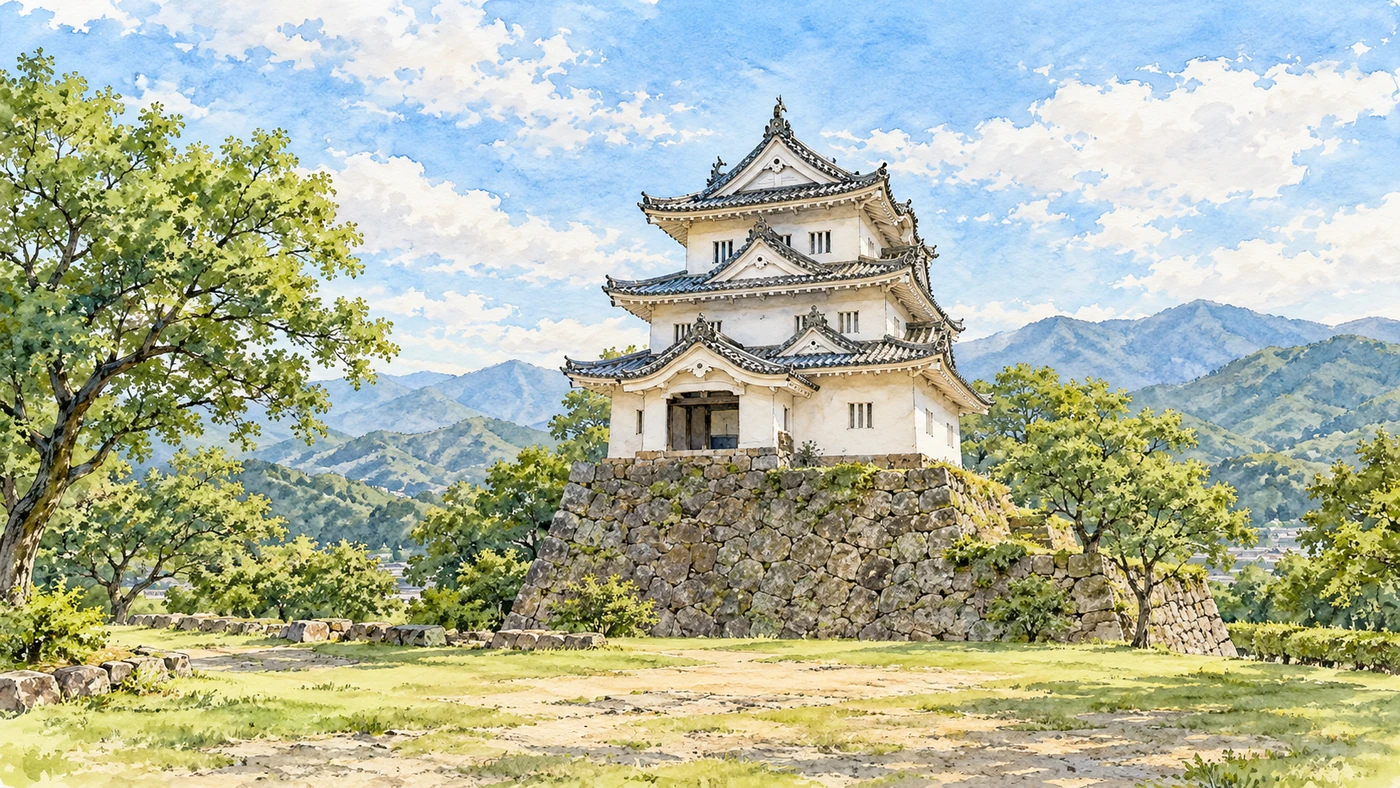
Kikkawa Hiroie built Iwakuni Castle in 1608. It was demolished in 1615 under the one-castle-per-domain order; today’s keep was rebuilt in 1962. Official information says reconstruction moved it about 50 meters east for town views. Treat the present keep and stonework at the original keep site as separate subjects: one offers displays and views, the other clues to the original location.
Inside are a detailed Kintaikyo model, photographs, weapons and armor. After crossing the bridge that morning, study how the model presents arches and piers and find the direction you walked. For historical objects, allow more time for weapons. At the upper viewpoint, first locate Kikko Park, Kintaikyo and the Nishiki River. These nearby landmarks most easily reconnect the route below.
The castle opens 09:00–16:45, with last entry at 16:30. There is no elevator; reaching the viewpoint requires stairs. Include both ascent and descent from the start. With a late hilltop arrival, assess the walk to the keep, tickets, visit and station return before entering. Leave room to study the model rather than make the visit a stair rush.
Back in the park, find the keep’s direction again. From afar, keep, upper station and ridge can seem one point. After walking them, the distinction is clear: the ropeway reaches the ridge and the castle needs another walk. Include that relationship in photos to record three scales: beneath the bridge, the park grounds and the high viewpoint.
In rain, reduce stairs and assess the bridge and hill separately
In brief light rain with the bridge open, keep one crossing and move bridge-top photography to the bank, then head toward a museum. Wear shoes with grip and pack away rain gear and phones. Keep a hand free for the rail. Do not adjust an umbrella while stepping backward on stairs for a photo; organize things ashore.
With persistent rain and cloud hiding the hills, retain close views of the timber bridge, a short park walk and indoor displays. Drop the ropeway and keep, choosing Iwakuni Chokokan or Kikkawa Historical Museum. Select one indoor alternative: check which is open, then choose local history and bridge materials or Kikkawa family objects.
Heavy rain, strong wind or rising water may close the bridge and cancel river walks within local barriers. Shorten the day to one open museum and lunch, or return to the station early. Do not transfer every missed walk to the mountain trail. Preserve bus-return options so wet, sore-footed or tired companions can end the outdoor segment directly.
Iwakuni Chokokan: free local history and a building worth studying
Iwakuni Chokokan suits those interested in how Kintaikyo and local history survive through objects. The city tourism page describes documents, crafts, bridge materials and part of the washed-away old bridge. Exhibits rotate, so check the current theme before choosing cases. Walking the timber bridge in the morning and studying its material afterward makes history easier to understand than dates alone.
Completed in 1945 and designed by Takeo Sato, the building shows neoclassical influence. Official information also notes skylight use under wartime blackout controls. Look at massing and entrance outside, then see where light enters indoors. For visitors unfamiliar with historical documents, architecture provides another viewing route without forcing a reading of every panel.
Admission is free. Hours are 09:00–17:00, closed Mondays, or the next weekday when Monday is a national holiday, and December 29–January 3. Exhibition changes and repairs can cause temporary closures. Allow 40–60 minutes in this day’s plan. On a nonholiday Monday, remove it from the indoor options before walking around the park to find an alternative at its door.
Kikkawa Historical Museum: shorten the riverbank for family objects
Kikkawa Historical Museum and Iwakuni Chokokan are separate museums. The former holds Kikkawa family historical materials, art and crafts. City information names the National Treasure Kitsunegasaki sword, Kikkawa Motoharu’s helmet and Hiroie’s catfish-shaped helmet among the collection. For warrior objects and family history, make it the main afternoon museum and allow an hour. Visit according to the current exhibition; the collection list explains its focus.
There is also the history of Shomeikan’s auxiliary building and gate, linked to the retirement residence built in 1793 for seventh lord Kikkawa Tsunetomo. Surviving subsidiary structures give an identifiable form to the park’s Kikkawa residence history. After the hilltop castle, these buildings below help distinguish a military base from domestic living space.
Hours are 09:00–17:00, with entry until 16:30. It closes Wednesdays, or the following day when Wednesday is a national holiday. Admission is ¥700 for adults, ¥500 for high school and university students, and ¥300 for elementary and junior high students. Bridge/ropeway/castle combined-ticket holders can use the city FAQ’s 20% discount when purchasing. If choosing this museum, shorten the riverbank so paid admission receives enough time. Filling both museums on one day squeezes park walking and meals.
Standard walking level: castle in the morning, one museum and park afterward
This version suits people able to manage bridge steps, hilltop paths and castle stairs. From a 09:15 Kintaikyo arrival, allow until 09:45 for bank views, tickets and crossing. Walk through the park to the lower station 09:45–10:15 and aim for a ropeway around 10:15. Use the hilltop block until 11:45 for the walk to and from the keep, model displays, views and waiting at the station. These are suggested visiting blocks, linked with normal services that day.
Return to the lower station around 12:00 and allow lunch until 13:00. Choose near your current bridge end or park, checking seats and food before entering. This hour rests companions after stairs. Lunch after descent avoids worrying about a reservation while in the castle and lets you decide on a museum according to afternoon energy.
Choose Iwakuni Chokokan or Kikkawa Historical Museum 13:00–14:00. Explore park, Kinunkaku and water 14:00–15:00, then return to the bridge. Leave about half an hour to cross, revisit the bridge shape from shore and collect stored belongings, taking a preselected bus after 15:30. Extend Kikkawa exhibits by half an hour if desired and retain just one bank stop, still finishing before evening.
With a later arrival, remove the afternoon museum first, then assess whether enough time remains for the hill. If reaching the bridge at 11:00, cross, walk to the ropeway and eat after the castle rather than force every original stop. The value lies in moving from timber bridge to height, then returning to residences and historical materials below. Seated rests help reveal those relationships.
| Time | Plan |
|---|---|
| 09:15–09:45 | View bridge from shore, buy tickets and cross |
| 09:45–10:15 | Walk through park to lower station |
| 10:15–11:45 | Ropeway, hilltop walk and Iwakuni Castle |
| 12:00–13:00 | Descend and have lunch |
| 13:00–14:00 | Choose one open museum |
| 14:00–15:00 | Kikko Park and Kinunkaku area |
| 15:00–15:30 | Return to bridge, collect belongings and reach bus stop |
Lighter walking level: omit the hill, keep bridge, park and one museum
For fewer stairs, rain or ropeway maintenance, use a ground route arriving around 10:00 and leaving around 15:00. Spend 10:00–10:40 viewing the bridge from shore and crossing slowly, then 10:40–11:40 on main Kikko Park paths. Rest earlier if tired. This route still includes the bridge’s middle stairs; it suits people who can handle them but do not want the castle climb.
Eat and rest 11:40–12:40, then visit one open museum 12:40–13:40. One afternoon museum splits outdoor walking and makes it easier for different interests to regroup. Return to park or riverbank 13:40–14:20, then cross and collect belongings, reaching the bus stop at 14:40 for your selected return. With an earlier bus, shorten the final walk.
If the first crossing strains your knees, reduce afternoon park detours and finish bridge viewing from shore. The lighter route reduces sustained movement rather than fill the omitted hill time with more sights. Families can sit longer in the park, and model enthusiasts can extend museum time. Regroup for the same return departure.
Wheelchair users should instead focus on Yokoyama-side park paths and accessible museums, with transport directly to that side, omitting the full crossing. Choose this separately from the fewer-stairs route above. The three middle stair spans make a two-bank walking route difficult; the park’s gentler ground is the main area. Arrange arrival point, museum entrance and assisted transfers with companions before leaving rather than reconstruct the route on site.
Handle strollers and wheelchairs separately for bridge, ropeway and castle stairs
At the bridge, first decide whether to fold a stroller for crossing. The middle stairs combine carrying with child care; with one adult, shore views and park activity are easier. If children walk across, reduce luggage, let one adult focus on holding them and another handle stroller and bags. Do not let children go ahead while adults fold equipment behind.
The official FAQ says the ropeway boarding point has chair-lift equipment for wheelchair boarding, but travelers must help carry wheelchairs and assist transfers. Plan that help and companion numbers, and tell the Iwakuni management office about the chair and transfer needs. Rest and views by the upper station are separate from entering the keep. With no elevator and many level changes inside, ropeway users can remain at the station viewpoint.
For different paces, split at the lower station or a clear park landmark. Castle visitors go up on their schedule while others use gentler paths and rest areas, meeting for lunch after descent. Buy by individual route: omitting castle admission reduces cost and pressure to climb simply to use a ticket.
Store luggage first and collect it before onward travel
Official information lists lockers at Iwakuni Station, Shin-Iwakuni Station, Kintaikyo Bus Center and both lower and upper ropeway stations. Handle large cases before the castle town or at the lower station. Taking a case uphill still means carrying it down, while bridge and castle stairs are unsuitable for wheeling luggage. Each person can carry a small bag, with tickets, water and rain gear organized for access.
The city FAQ lists staffed storage at Kintaikyo Bus Center at ¥500 per item, 09:35–17:00, and storage at Iwakuni Station Tourist Information, 09:00–17:00. Collect within service hours. For night bridge viewing, retrieve luggage before evening activities. For a reserved train, collect it before waiting for your onward service rather than handle both tasks in the last minutes before the train.
The bridge can be crossed at night; pay into the collection box when the booth is unattended. Iwakuni City announced lighting suspension from October 23, 2026 because a typhoon may have damaged equipment, with reopening to be announced. Plan bridge views by daylight for now. The hill segment also ends with the ropeway at 17:00. Take the chosen bus back, collect stored belongings and continue the evening.
In flower season extend the park; in winter maintenance use the museums
In spring, cherry blossoms along the bridge and Nishiki River shift attention toward the water. Kikko Park also has seasonal plum blossoms, azaleas and other plants. In June, the free Kikko and Shiroyama iris gardens provide flowers; Yamaguchi’s official page gives early to late June as the usual viewing period. Extend park time and reduce museums to one during flower season rather than cover every seasonal sight in a day.
In autumn, combine hill and bridge views, dressing for both the ascent and the later stop below. Morning ropeway and afternoon walking finish the high view first without the last service chasing the day. Use the ground route for the announced full-day November 26 maintenance. For other dates, check the official ropeway page’s notice for your travel month.
Winter annual maintenance affects both ropeway and castle. The announced 2027 period starts January 12 and runs to mid-February, about one month. During that period, focus on Kintaikyo, Kikko Park and an open history museum, returning to the station earlier after lunch. Compare Monday, Wednesday and New Year closures when choosing a museum, and schedule what is actually open that day.
A few useful answers
What does the Iwakuni Kintaikyo combined ticket include?
It includes a return bridge crossing, return Iwakuni Castle Ropeway and castle admission. Checked October 29, 2026, it costs ¥1,550 for adults and ¥700 for elementary school children. Museums require separate tickets.
Should I use Iwakuni or Shin-Iwakuni Station for Kintaikyo?
Sanyo Main Line passengers use west-exit stop 1 at Iwakuni Station for the roughly 20-minute bus to Kintaikyo. Shinkansen passengers take a bus outside Shin-Iwakuni, about 15 minutes. Compare waiting, return travel and luggage storage together.
Can a wheelchair cover the whole bridge and Iwakuni Castle?
Kintaikyo spans two through four have stairs. The castle has no elevator and many level changes. Focus wheelchair routes on Yokoyama-side Kikko Park. The ropeway has transfer equipment, but travelers must help with wheelchair carrying and transfers.
What should I do on ropeway maintenance days?
Visit Kintaikyo, Kikko Park and a museum open that day. Full-day suspension on October 29 and November 26, 2026 also closes the castle. Annual inspection also runs from January 12 to mid-February 2027.
Official information and references
Sources used in this guide.
- Iwakuni City: Kintaikyo overview, tickets and wet-weather access
- Iwakuni Tourism: access, accessibility, tickets and storage FAQ
- Iwakuni Tourism: castle ropeway and 2026–2027 maintenance schedule
- Iwakuni Tourism: Iwakuni Castle
- Iwakuni Tourism: access information
- Official Iwakuni Bus: schedules and service notices
- Official Yamaguchi tourism: Kikko Park
- Iwakuni Tourism: Chokokan and peony-garden closure
- Iwakuni City: Chokokan visitor information
- Iwakuni Tourism: Kikkawa Historical Museum
- Iwakuni Tourism: attraction fare changes from September 1, 2026
- Iwakuni City Tourism: resumption of Kintaikyo Bridge full-color illumination from Nov 6, 2026
- Iwakuni City Tourism Promotion Division: video gallery and Kintaikyo video
- Yamaguchi Tourism Federation: Kintaikyo (Yamaguchi Video Encyclopedia No. 169)
- Iwakuni City Tourism: closure notice for the Momijidani Park trail to Iwakuni Castle