Plan a day around Kintaikyo, distinguishing Iwakuni and Shin-Iwakuni station buses. Compare the ¥1,550 combined ticket, castle, park, riverbanks and museums, with wet-weather stairs and ropeway maintenance dates.
- Region & Focus
- Iwakuni
- Reading Scope
- 30 min read · 17 chapters · 4 Q&As
- Official Verification
- 15 official sources checkedUpdated 7 November 2026
Chapter Route Map (tap any stop)
- Build the day around both banks of Kintaikyo
- Choose Iwakuni or Shin-Iwakuni by the whole onward journey
- Use the bus operator’s timetable entry point, with the revision date for your trip
- The ¥1,550 combined ticket suits a bridge crossing, return ropeway and castle visit
- On Kintaikyo, study both the steps and the timber structure
- Stop on the banks twice: first for bridge shape, later for the castle’s position
- Walk Kikko Park slowly: Kinunkaku, residence traces and places to rest
- The ropeway ride takes three minutes; the hill visit needs a full time slot
- At Iwakuni Castle, compare the model, view and relocated keep
- In rain, reduce stairs first and assess bridge and hill separately
- Iwakuni Chokokan: free local history in a building worth studying
- Kikkawa Historical Museum: give family objects time by shortening the riverbank walk
- Standard walking level: castle in the morning, one museum and park after lunch
- Lighter walking level: omit the hill and keep bridge, park and one museum
- Handle pushchairs and wheelchairs separately at bridge, ropeway and castle stairs
- Store luggage first and collect it before onward travel
- Give flower seasons more park time, and winter maintenance days to museums
- Quick Q&A
First decide whether to visit Iwakuni Castle. If you can manage bridge steps, summit paths and indoor stairs, cross Kintaikyo in the morning, walk through Kikko Park and take the ropeway, then return to the park and a museum in the afternoon. For a gentler walk or a maintenance day, stay by the river. The ¥1,550 adult combined ticket suits those using the bridge, return ropeway and keep. For the bridge and park alone, buy the ¥500 bridge ticket. After arriving by bus from Iwakuni or Shin-Iwakuni Station, note your return service before starting the castle-town walk.
Build the day around both banks of Kintaikyo
On arrival, divide the route into the bridge, town-side riverbank, Yokoyama-side park and castle hill. Buses reach the bridge area. Cross to Kikko Park, take the ropeway from its base station, then return from the summit station through the park to the bridge. This out-and-back route shapes the day: deal with the ropeway first for the castle, or give the time to park and museums for a slower ground-level visit.
Allow a full day in Iwakuni. The official estimate of about 1½–2 hours covers the bridge, ropeway and castle themselves. Riverbanks, lunch, a museum and bus transfers need more time. For a return from Hiroshima, keep it as your accommodation base. From Miyajimaguchi, give Iwakuni a separate day rather than combining the most walking-intensive parts of both places.
The schedules here start on arrival at Kintaikyo. Photograph the return-direction bus stop and note the boarding point before walking. Finding it for the first time after the park can consume riverbank time. With it settled, use your remaining energy for another museum or an earlier return to the station.
Plan a day around Kintaikyo, distinguishing Iwakuni and Shin-Iwakuni station buses. Compare the ¥1,550 combined ticket, castle, park, riverbanks and museums, with wet-weather stairs and ropeway maintenance dates.
Choose Iwakuni or Shin-Iwakuni by the whole onward journey
The Sanyo Main Line serves Iwakuni Station; the Sanyo Shinkansen serves Shin-Iwakuni Station. Search them separately. The official access page gives about 44 minutes from Hiroshima to Iwakuni and 19 minutes from Miyajimaguchi. Add the bridge bus for the complete arrival time. If staying in Hiroshima or Miyajimaguchi and returning the same way, compare the conventional railway first and follow west-exit signs at Iwakuni.
Outside Iwakuni Station’s west exit, the official FAQ directs visitors to stand 1 in front for buses towards Kintaikyo, about 20 minutes away. The west exit matters: if accommodation or storage is on the other side, allow time to cross the station. With older relatives, one person can check the destination and stop while the others wait together.
From Shin-Iwakuni Station, the official estimate is about 15 minutes by bus or 10 minutes by taxi. This suits an existing Shinkansen journey with onward travel to another city. Include alighting, luggage collection and waiting when comparing options. Choose a bus you can catch, then work back to the Shinkansen rather than booking lunch close to the train arrival.
If using different stations for arrival and departure, adjust luggage storage too. A suitcase left at Iwakuni requires a return there before a Shinkansen from Shin-Iwakuni. Storage near Kintaikyo or using the same station both ways makes the route clearer. Decide the entry point with luggage and that night’s accommodation.
Use the bus operator’s timetable entry point, with the revision date for your trip
From the official Iwakuni Bus website, open the timetable, choose the weekday or holiday version for your date, then find Iwakuni Station, Kintaikyo and Shin-Iwakuni Station. The site has announced October timetable changes. Search results may still show tourist PDFs from 2024 or earlier. Compare the revision date with your travel date before using a PDF.
The city FAQ gives a rough Iwakuni Station–Kintaikyo frequency of every 10–15 minutes, useful for a general sense of waiting on ordinary days. Choose a specific service from the operator’s timetable. You may wait an extra bus outbound, but for a reserved Shinkansen seat, choose the departure from Kintaikyo first and allow walking and collection before it. Add waiting and road time to the roughly 20-minute journey.
Keep two transport references on your phone: the current operator timetable entry point, and the return stop and direction you need that day. Iwakuni Station and Shin-Iwakuni Station are different destinations. Check the full name before boarding. For a taxi, specify Kintaikyo Bus Centre or the museum where you are waiting, rather than simply “Kintaikyo”, which has two banks.
The ¥1,550 combined ticket suits a bridge crossing, return ropeway and castle visit
Standard individual fares effective from 1 September 2026 and checked on 29 October were ¥500 for a bridge return, ¥900 for a ropeway return and ¥350 for the castle for junior high school age and above. Separate admission totals ¥1,750; the ¥1,550 combined ticket saves ¥200. Primary school fares are ¥250, ¥400 and ¥200, totalling ¥850, compared with a ¥700 combined ticket. Decide whether to enter the castle before buying.
For the bridge and free Kikko Park alone, an adult needs only the ¥500 bridge ticket. For the bridge and return ropeway without entering the keep, ¥1,400 is below the full combined price. Companions who will not climb castle stairs can buy different combinations. Compare the facilities each person will actually use.
The bridge ticket covers return crossings on the same day; there is no official single ticket. Cross from the town side to Yokoyama and back in the afternoon. Combined tickets are sold at both bridge toll booths, ropeway boarding points, and tourist information offices at Iwakuni Station and Kintaikyo Bus Centre, with different opening times. If reaching the bridge first, buying there avoids waiting at the station for a ticket office.
Keep tickets until leaving the town. The city FAQ lists a 20% admission discount at Kikkawa Historical Museum, Kashiwabara Art Museum and Iwakuni Shirohebi Museum for combined-ticket holders. Show it before buying museum admission. Museums cost extra; the combined ticket itself includes bridge, ropeway and castle. On ropeway maintenance or castle closure days, choose the ground-level route and simpler tickets.
| Item | Adult | Primary school pupil |
|---|---|---|
| Same-day bridge return | ¥500 | ¥250 |
| Return ropeway | ¥900 | ¥400 |
| Single ropeway | ¥500 | ¥250 |
| Iwakuni Castle | ¥350 | ¥200 |
| Bridge + return ropeway + castle | ¥1,550 | ¥700 |
On Kintaikyo, study both the steps and the timber structure
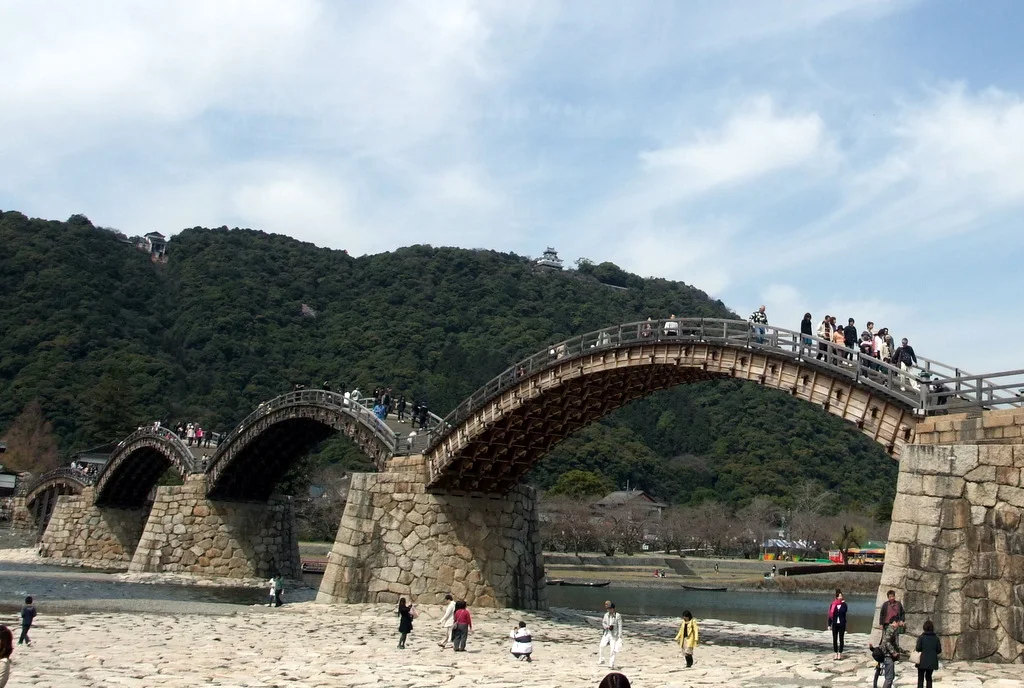
First view Kintaikyo from the side, then cross it. From the bank, see how stone piers divide the continuous bridge. On deck, your view rises with the steps and falls into the next span. This structure also governs wheelchair access: the official guide says the first and fifth spans have fewer level changes, while spans two to four have stairs. The whole bridge is not a level crossing.
Kikkawa Hiroyoshi built the predecessor of today’s bridge in 1673. Rebuilt with improvements the next year, it survived until Typhoon Kezia washed it away in 1950. Reconstruction and continued timber replacement keep it in use. Study the timber and joints to understand maintenance as well as dates. The structure uses wooden joinery together with metal bands and nails; look for overlapping pieces and metal fixing points.
Take smaller steps uphill and keep only essentials in your hands. At an arch crest, check oncoming walkers before stopping. Move clear of the route to read notices, change lenses or adjust a child’s clothes. On the return, look towards the other side of the Nishiki River. Leave some photographs for the afternoon rather than waiting for every span to clear.
The official guide warns of slippery surfaces in rain and snow, with possible closure in strong wind, heavy rain or high river levels. Put footing, handrails and two-way passage before photography. Follow closures on site. Photograph the structure beneath from normally accessible bank areas, without crossing barriers or following slippery edges.
Stop on the banks twice: first for bridge shape, later for the castle’s position
On first arrival, take in the bridge from the town-side bank, noting the five spans against the hill. After crossing to Yokoyama, turn back: houses, water and piers occupy different positions. Two short stops give different views without a long walk.
Observe the underside from normally open riverbank paths, bringing stone piers, arches and water into one view. The riverbed and bank road are at different levels. Before descending for photographs, find the route back up. With a pushchair, suitcase or sore knees, stay on the upper bank rather than adding slopes to approach the piers.
In the afternoon, find the castle hill again and compare it with the bridge and park seen from above. The morning bridge view helps orient the town; the later town view helps locate the bridge. Under cloud, study timber and shape nearby. If distant visibility is poor, use some photography time for a museum rather than waiting beside the river.
The federation’s 30-second film introduces views from the bridge, riverbank and beneath Kintaikyo, offering an introduction to the five-span wooden arch bridge before a riverbank walk.
Walk Kikko Park slowly: Kinunkaku, residence traces and places to rest
Kikko Park occupies the former Kikkawa residence area. From the bridge, use open grounds and the central fountain to orient yourself, then choose Kinunkaku, Kikko Shrine or the museums. The prefecture’s official guide lists cultural properties including Kinunkaku and the Kagawa family’s nagayamon gate in and around the park. Observe buildings, gates and water to make the town’s spaces easier to understand.
On a castle day, split the park into two visits. Follow the main paths to the ropeway in the morning, then walk slowly after descending. This gives an earlier ascent and a seated rest later. Without the castle, make the park the main morning visit, then go indoors after lunch instead of concentrating outdoor walking in the afternoon.
The park is free and allows companions to separate briefly by interest. Set a clear landmark and time to meet if some rest while others enter a museum. Wheelchair users can focus on gentler paths; the official prefectural page describes relatively level grounds suitable for wheelchair walks. Follow connected paths rather than shortcuts across grass or down to the riverbed.
Follow open passages around closed areas. The official page says Kikko Peony Garden in front of Iwakuni Chokokan closed at the end of December 2023 for museum development work, with no reopening date set. Leave its interior out of the required route. Nearby park areas and museums have separate entrances; follow signs for each.
The ropeway ride takes three minutes; the hill visit needs a full time slot
Iwakuni Castle Ropeway runs from the base station in front of Kikko Park to the ridge station at about 200 metres above sea level. A single ride takes about three minutes. Normal hours are 09:00–17:00, with departures at 00, 15, 30 and 45 minutes past each hour; the final services in both directions are at 17:00. Add tickets, waiting, summit walking, castle admission and the return to the station.
At the top, locate the station first, then follow signs towards the castle. Save the return ride time on your phone so that you can manage the castle visit. The summit station has a mechanical clock, rest space and viewing facilities. If the castle is your priority, walk there first and see the station area on return.
The maintenance schedule updated on 8 October 2026 lists full-day suspension on 29 October and 26 November, with the castle also closed. Services stop from 14:00 on 23 and 31 December. Annual inspection work from 12 January to mid-February 2027 is announced as a full suspension for about a month. Use the ground-level route on closed days, and visit in the morning on afternoon-closure dates.
Walking up is a different physical undertaking from taking the ropeway. The castle page gives a path near Momijidani Park of about two kilometres and warns of dangerous sections. For a castle-town walk in rain, with children or during ropeway closure, stay at ground level. On a normal return-ticket visit, ride down as planned and save energy for park and riverbanks.
At Iwakuni Castle, compare the model, view and relocated keep
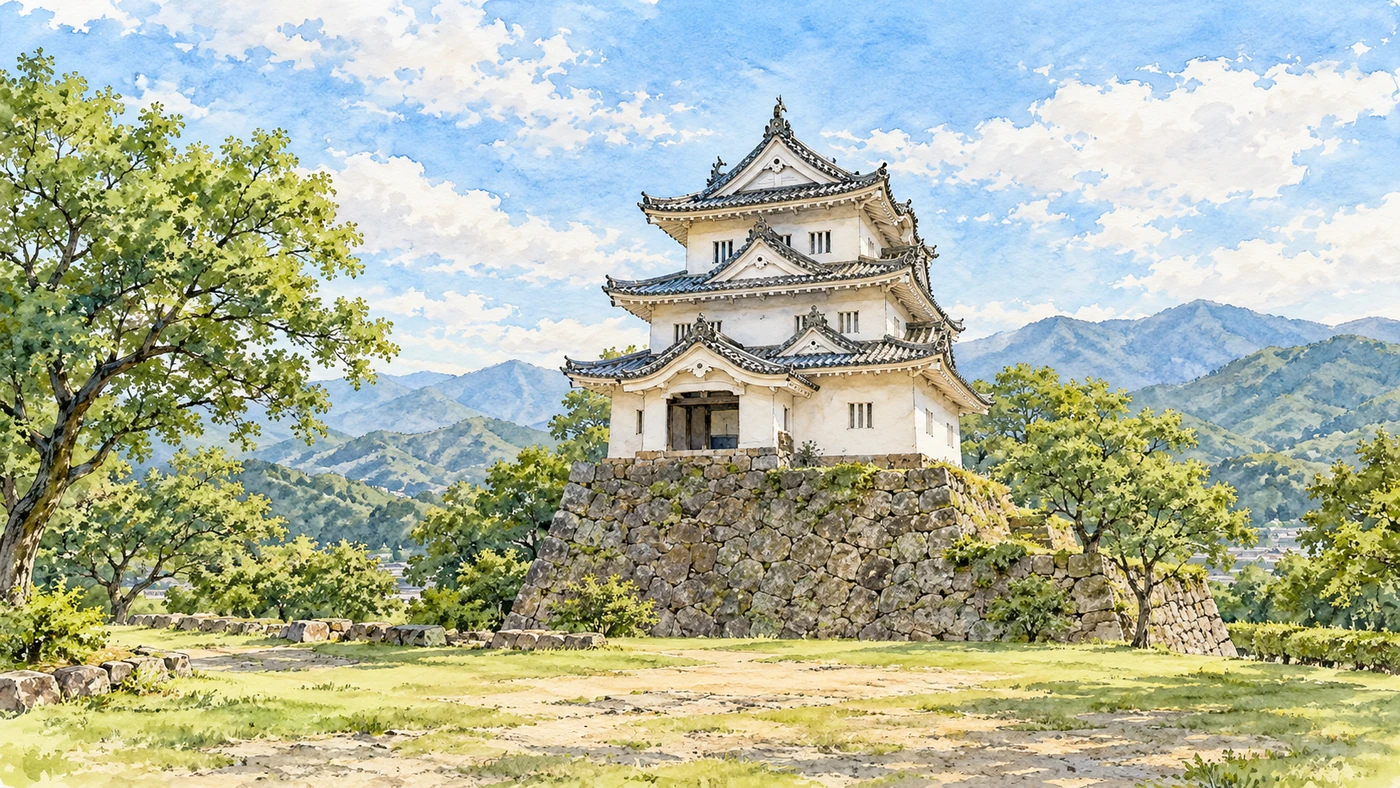
Kikkawa Hiroie built Iwakuni Castle in 1608; it was demolished in 1615 under the one-castle-per-province order. The current keep was rebuilt in 1962. The official account says it moved about 50 metres east for views over town. Treat the present keep and old keep’s stone foundations as separate subjects: one offers displays and views, the other marks the original position.
Inside are a detailed Kintaikyo model, photographs, arms and armour. After crossing the bridge, compare the model’s arches and piers with your route. History enthusiasts can give more time to arms. At the lookout, find Kikko Park, Kintaikyo and the Nishiki River first to reconnect the route below.
The castle opens 09:00–16:45, with last admission at 16:30. There is no lift, so include both ascent and descent by stairs. If reaching the summit late, consider the walk to the keep, tickets, exhibits and return to the station before entering. Leave enough room to study a model rather than rushing stairs.
Back in the park, find the keep’s direction again. From a distance, keep, summit station and ridge may appear to be one point. Having walked them, you can distinguish the ropeway ascent from the further walk to the castle. Photographs can record the relationship among the river, grounds and hill.
In rain, reduce stairs first and assess bridge and hill separately
In brief light rain with the bridge open, keep one crossing and move photographs from the deck to the bank. Go directly towards a museum after crossing. Wear grippy shoes, stow phone and rain gear, and leave a hand free for the rail. Adjust umbrellas and photographs on the bank rather than backing up on stairs.
With continuing rain and mist hiding the hills, keep close views of the wooden bridge, a short park walk and indoor exhibits. Drop the ropeway and keep, choosing Iwakuni Chokokan or Kikkawa Historical Museum instead. First find which is open, then choose local history, bridge material or Kikkawa family objects.
In heavy rain, strong wind or high water, the bridge may close and bank walks must follow closures too. Shorten the day to an open museum and lunch, or return to the station early. Do not transfer every omitted section to the mountain path. Keep the return bus available when companions are wet, uncomfortable or tired.
Iwakuni Chokokan: free local history in a building worth studying
Iwakuni Chokokan suits visitors interested in physical records of the bridge and local history. The city tourism page describes documents, crafts, bridge material and part of the old bridge lost in the flood. Displays rotate, so read the current theme before choosing cases. Bridge material after a morning crossing helps connect the history with what you walked.
Completed in 1945, the building was designed by Sato Takeo with neoclassical influence. The official account also describes skylights used during wartime blackout restrictions. Study the exterior form and entrance, then see where indoor light enters. The architecture provides a second route through the visit if historical documents are difficult to read.
Entry is free. Hours are 09:00–17:00, closed Mondays, or the next weekday after a public-holiday Monday, and 29 December–3 January. Exhibition changes and repairs can bring temporary closures. Allow 40–60 minutes for this itinerary. On an ordinary Monday, remove it from the indoor plan before walking there.
Kikkawa Historical Museum: give family objects time by shortening the riverbank walk
Kikkawa Historical Museum is separate from Iwakuni Chokokan. It holds Kikkawa family historical material, art and crafts. The city introduction includes the National Treasure sword Kitsunegasaki, Kikkawa Motoharu’s helmet and Kikkawa Hiroie’s catfish-shaped helmet. For warrior objects and family history, make it the main afternoon museum and allow an hour. Follow the current exhibition; the collection list indicates the museum’s focus.
The site also has the Shomeikan annex and gate, linked to the retirement residence built in 1793 for seventh lord Kikkawa Tsunemichi. The surviving ancillary buildings give a visible form to the residence history in the park. After the hilltop castle, they help distinguish the military position from daily residential space below.
Hours are 09:00–17:00, last admission 16:30. It closes Wednesdays, or the next day after a public-holiday Wednesday. Adults pay ¥700, senior high school and university students ¥500, and primary and junior high school pupils ¥300. Combined bridge, ropeway and castle ticket holders can use the 20% discount listed in the city FAQ. Shorten riverbank time to give this paid visit enough room. Filling both museums into the day would squeeze walking and lunch.
Standard walking level: castle in the morning, one museum and park after lunch
This version suits visitors able to manage bridge steps, summit paths and castle stairs. From a 09:15 arrival, allow until 09:45 for bank views, tickets and crossing. Walk through the park to the base station from 09:45–10:15 and aim for a ropeway around 10:15. Use the summit period until 11:45 for walking to and from the keep, models, views and waiting for descent. These are suggested blocks, connected by the normal services that day.
Return to the base around noon and allow until 13:00 for lunch. Choose near the bridge or park according to your location, checking seats and food before entering. This hour also rests legs after the stairs. Lunch after descent removes booking pressure from the morning and lets the group decide on an afternoon museum by energy.
Choose Iwakuni Chokokan or Kikkawa Historical Museum from 13:00–14:00. See the park, Kinunkaku and water from 14:00–15:00, then return to the bridge. Allow about half an hour for crossing, a final bank view and luggage collection, taking your preselected bus after 15:30. For a slower Kikkawa exhibition visit, add half an hour and use just one riverbank stop.
If arriving late, remove the afternoon museum first, then assess time for the hill. At an 11:00 bridge arrival, cross, reach the ropeway and eat after the castle rather than forcing every original slot. The route’s value lies in moving from wooden bridge to hilltop and back to residences and records, with seated rests to make the links clear.
| Time | Plan |
|---|---|
| 09:15–09:45 | Bank views, tickets and bridge crossing |
| 09:45–10:15 | Walk through the park to the base station |
| 10:15–11:45 | Ropeway, summit walk and Iwakuni Castle |
| 12:00–13:00 | Descent and lunch |
| 13:00–14:00 | Choose one open museum |
| 14:00–15:00 | Kikko Park and Kinunkaku area |
| 15:00–15:30 | Return to bridge, collect belongings and reach bus stop |
Lighter walking level: omit the hill and keep bridge, park and one museum
For fewer stairs, rain or ropeway maintenance, use a ground-level day from about 10:00 to 15:00. Spend 10:00–10:40 on bank views and a slow crossing, then 10:40–11:40 on main Kikko Park paths. Rest earlier if tired. This still includes the central bridge stairs, so suits people who can use stairs but prefer to omit the castle.
Allow 11:40–12:40 for lunch and rest, then 12:40–13:40 for one open museum. One indoor visit divides outdoor walking into two sections and gives companions an easy meeting plan. Return to park or bank from 13:40–14:20, then cross and collect belongings. Reach the bus stop at 14:40 for your chosen return, shortening the final walk for an earlier bus.
If the first crossing strains your knees, reduce park detours and complete bridge viewing from the bank. The aim is to shorten continuous movement, leaving time for sitting with children or models in a museum. Meet again for the same return service.
Wheelchair users need a separate version centred on the Yokoyama-side park and accessible museums, with transport directly to that side and no full crossing. The middle three spans make a linked two-bank walk difficult. Plan around gentler park paths, agreeing the drop-off, entrances and assisted transfers with companions before travelling.
Handle pushchairs and wheelchairs separately at bridge, ropeway and castle stairs
At the bridge, decide whether to fold a pushchair. The middle stairs combine carrying with child supervision. With one adult, bank views and park activities are easier. If children walk over, reduce luggage and let one adult focus on holding hands while another handles pushchair and bags. Keep children with the supervising adult during packing.
The official FAQ says the ropeway boarding point has a chair lift for wheelchair boarding, but travellers must assist with wheelchair handling and transfers. Plan the necessary help and tell the Iwakuni management office about the wheelchair and transfer needs. Summit-station rest and views are separate from entering the keep, which has many level changes and no lift. A ropeway visit can finish with the station view.
For different walking speeds, split at the base station or a clear park landmark. Castle visitors can go up while others use gentler paths and rest, meeting for lunch after descent. Buy according to each route so nobody feels obliged to climb stairs to use a ticket.
Store luggage first and collect it before onward travel
Official locker locations include Iwakuni Station, Shin-Iwakuni Station, Kintaikyo Bus Centre and both ropeway stations. Deal with large bags before entering the town or at the base. Taking them uphill still requires bringing them down, and bridge and castle stairs do not suit wheeled luggage. Carry small bags with tickets, water and rainwear readily accessible.
The city FAQ lists staffed storage at Kintaikyo Bus Centre at ¥500 per item, 09:35–17:00, and at Iwakuni Station tourist information from 09:00–17:00. Collect within service hours. For an evening bridge visit, retrieve belongings before continuing. With a reserved train, collect bags before waiting for it rather than handling both just before arrival.
The bridge remains passable at night; pay into the box when toll staff are absent. The city announced suspension of bridge illumination from 23 October 2026 because a typhoon may have damaged lighting equipment, with reopening to be announced. Plan bridge views by day. The hill section finishes with the ropeway at 17:00; collect belongings and take the planned bus before continuing the evening.
Give flower seasons more park time, and winter maintenance days to museums
In spring, cherry blossom by the bridge and Nishiki River shifts attention towards the water. Kikko Park also has seasonal plum blossom and azaleas. In June, the free Kikko and Shiroyama iris gardens offer flowers, with the prefecture’s guide giving early to late June as the general season. Extend park time and keep one museum rather than visiting every seasonal site in one day.
In autumn, combine hill and bridge views, with clothing for the ascent and stops after descent. A morning ropeway and afternoon walk complete high views first, leaving the later day free of last-service pressure. Use the ground-level route on the announced full maintenance day of 26 November. For other dates, check the relevant month on the official ropeway page.
Winter annual maintenance affects both ropeway and castle. The announced 2027 period runs from 12 January to mid-February, about a month. During it, focus on bridge, park and an open history museum, then return to the station earlier after lunch. Compare Monday, Wednesday and New Year closures before choosing the museum.
A few useful answers
What does the Kintaikyo combined ticket include?
It includes a return bridge crossing, return Iwakuni Castle Ropeway and castle admission. Checked on 29 October 2026, it costs ¥1,550 for adults and ¥700 for primary school pupils. Museums cost extra.
Should I use Iwakuni or Shin-Iwakuni Station for Kintaikyo?
Sanyo Main Line passengers take the Kintaikyo bus from stand 1 at Iwakuni Station’s west exit, about 20 minutes. Shinkansen passengers take a bus from Shin-Iwakuni Station, about 15 minutes. Compare waiting, return travel and luggage storage together.
Can a wheelchair cover the whole bridge and castle?
Spans two to four have stairs, and the castle has many level changes with no lift. Centre wheelchair visits on Kikko Park on the Yokoyama side. The ropeway has transfer equipment, but travellers must help with wheelchair handling and transfers.
What should I do on ropeway maintenance days?
Visit Kintaikyo, Kikko Park and a museum open that day. Full-day suspension and castle closure are listed for 29 October and 26 November 2026; annual maintenance also runs from 12 January to mid-February 2027.
Official information and references
Sources used in this guide.
- Iwakuni City: Kintaikyo overview, tickets and wet-weather access
- Iwakuni tourism: transport, accessibility, tickets and luggage FAQ
- Iwakuni tourism: castle ropeway and 2026–2027 maintenance
- Iwakuni tourism: Iwakuni Castle
- Iwakuni tourism: access information
- Iwakuni Bus: timetables and operating notices
- Official Yamaguchi tourism: Kikko Park
- Iwakuni tourism: Chokokan and peony garden closure
- Iwakuni City: Chokokan visitor information
- Iwakuni tourism: Kikkawa Historical Museum
- Iwakuni tourism: attraction fare changes from 1 September 2026
- Iwakuni City Tourism: resumption of Kintaikyo Bridge full-colour illumination from 6 November 2026
- Iwakuni tourism promotion division: video gallery and Kintaikyo films
- Yamaguchi Tourism Federation: Kintaikyo, Yamaguchi Video Encyclopaedia No. 169
- Iwakuni City Tourism: closure notice for the Momijidani Park trail to Iwakuni Castle