A two-day Hiroshima and Miyajima itinerary benefits from one clear separation: leave time for remembrance in the city, then give the island another day. Two nights in Hiroshima are a useful starting point if you can arrive before the first full day. Change the order for weather or museum access, without compressing both places into a race between trains.
Choose a base before choosing the ferry
Stay near Hiroshima Station if arrival, luggage and onward rail travel matter most. Choose the central city near your intended tram stop if walking to evening meals and the Peace Memorial area is more important. Check the exact hotel access, not a broad neighbourhood label. Keep the same room for both nights to avoid carrying luggage to Miyajima.
JNTO’s Hiroshima and Miyajima itinerary places the memorial sites and island within a two-day visit. Our order is an editorial suggestion, not a timetable supplied by the tourist board. An island overnight is another option, but check meals, luggage handling and ferry connections first. Our first ryokan stay checklist helps if your island accommodation includes a scheduled dinner.
Day one: make room for the Peace Memorial area
Build the first day around Hiroshima Peace Memorial Museum and the surrounding park, including the Atomic Bomb Dome. Read the museum’s visitor information and current notices before choosing your entry time. Its exhibitions include victims’ belongings and survivor testimony. Pause or shorten the visit when needed.
Follow photography rules and behave considerately around memorials and other visitors. The park is a place of remembrance. Avoid scheduling an upbeat paid experience immediately afterward; a quiet meal or a riverside rest may be what you want. Discuss the nature of the exhibitions with children before entering and adapt the day to their needs.
Day two: get to Miyajimaguchi with a return plan
A straightforward option is a JR Sanyo Line journey from Hiroshima towards Miyajimaguchi, followed by the walk to the ferry terminal. Check the actual service and pier before setting off. The JR Miyajima Ferry operator’s page supplies its own route, calendar and timetable; another company’s boat is a separate service with its own conditions.
A rail pass should be checked against the exact operator and product, not assumed to cover every boat. The ferry fare information also explains the Miyajima visitor tax and applicable exemptions. Check the current payment arrangements even when a pass covers the fare. Our comparison of passes and individual tickets keeps this one outing in proportion to the whole trip.
Start on the shore and use tides as information
Walk from the pier towards Itsukushima Shrine, leaving time for the approach and any admission queue. Then choose lunch and a slower walk inland, rather than booking the entire day back to back. Keep food secured around wildlife and follow posted instructions. Respect this living community: keep entrances clear and observe restricted areas.
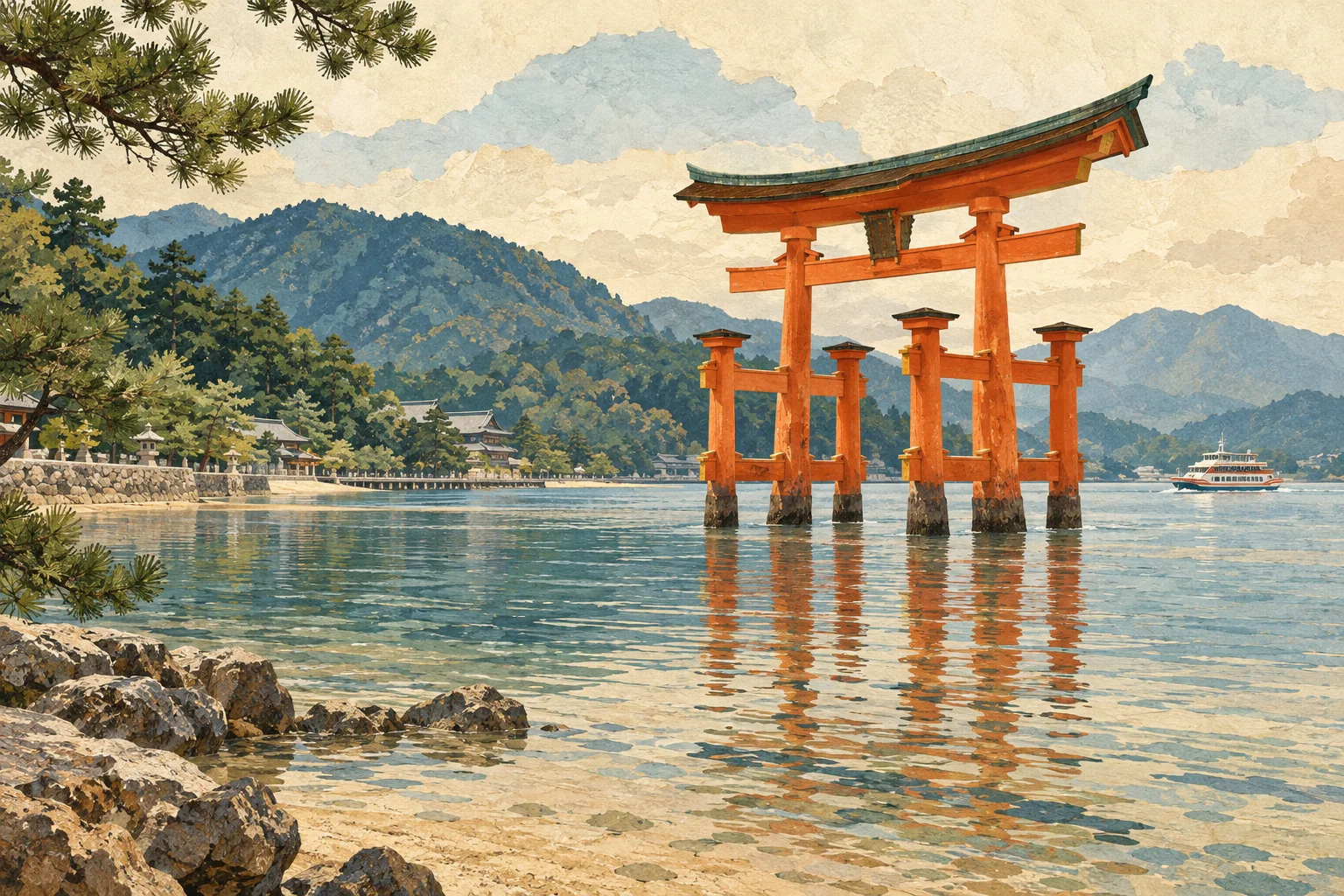
Consult the tourist association’s date-specific tide information if the water level matters to your visit. The offshore gate can look very different across the day. Neither walking out towards it nor seeing a particular floating effect is guaranteed. Use local instructions and conditions at the shore; a predicted tide is not permission to cross a closed or unsafe area.
Treat the ropeway as an optional mountain outing
Before committing to a mountain afternoon, read the Miyajima Ropeway’s live operation and reservation information. The operator lists designated dates requiring reservations and warns of weather or other suspensions. Check your own travel date rather than copying today’s hours or another visitor’s account. Allow for the approach, queues and descent.
Do not assume a ropeway ticket removes all walking on Mount Misen. Choose a route that suits your footwear, fitness and available daylight, using the operator’s walking map. In poor visibility, strong wind or fatigue, stay near the lower paths and shore instead. A relaxed lunch and shrine visit are a complete island day without reaching a summit.
Return before the last possible connection
Choose a comfortable ferry return that leaves margin for getting back to your hotel. If departing Hiroshima that evening, add luggage collection and the station transfer before reserving the onward train. Avoid making the final boat and a fixed intercity departure depend on each other. Two full sightseeing days work best when they are not also two long transfer days.
For a westbound journey, our three days in Fukuoka provide a different city rhythm after Hiroshima. Add the transfer as real travel time rather than an invisible gap between itineraries. Review weather, museum notices, tide information and transport again shortly before departure; the purpose of this route is to support a considered visit, not to promise every stop.
A few useful answers
Can Hiroshima and Miyajima be visited in one day?
It is possible to make a shorter combined visit, but museum time, ferry connections and walking compete for the same hours. Two usable days allow more space for the memorial area and weather-dependent island plans.
Is the Miyajima ferry included in a rail pass?
It depends on the pass and ferry operator. Verify the precise product and the current visitor-tax arrangement. Do not assume every boat departing for Miyajima is covered.
Can I always walk to the torii gate at low tide?
No. The tide level on your date, local conditions and access instructions determine what is possible. Check the tourist association’s tide information and follow signs on the shore.
Check with the source
Schedules, availability and rules can change. These official sources are the place to confirm details before you book.