Choose Ozu or Uchiko for a day from Matsuyama. Plan Garyu Sanso and Ozu Castle, or Uchiko-za’s dressing rooms and wax merchants’ streets, with Uwakai trains, admission, closures and December 2026 engineering works.
- Region & Focus
- ShikokuAttractions
- Reading Scope
- 24 min read · 14 chapters · 3 Q&As
- Official Verification
- 15 official sources checkedUpdated 30 October 2026
- Key Topics
- ItinerariesRail travelNeighbourhoods
Chapter Route Map (tap any stop)
- Choose the spaces you want to see, then your station
- From Matsuyama, check the Uwakai service and its route
- A day in Ozu: villa first, castle after lunch
- Garyuin: seasonal water motifs and a room designed for Noh
- Garden stones, Chishian and Furoan lead your gaze to the Hiji River
- Ozu Castle: timber joints and evidence behind the reconstruction
- A day in Uchiko: dressing rooms to wax merchants’ streets
- During Uchiko-za’s restoration, see the theatre from backstage
- Yokaichi–Gokoku’s 600 metres: look at individual buildings
- Kamihaga Residence: distinguish home from production
- For candles and everyday-life displays, check the weekday
- In rain or with less walking, change the useful sections
- 7–10 December 2026: revise mountain-line plans for Uchiko
- Two towns on two days: where to stay
- Quick Q&A
South of Matsuyama, Ozu offers a day of castle, riverside and Garyu Sanso villa. Uchiko takes you along shopping streets into the homes of vegetable-wax merchants. With one day, choose one town. To look closely at both, give each a separate day. Uchiko-za’s main theatre is under restoration, with reopening expected in spring 2029; the dressing rooms are currently open. If you wanted the stage and hanamichi walkway, use this visit for the Yokaichi–Gokoku streets and Kamihaga Residence instead.
Choose the spaces you want to see, then your station
Choose Ozu for castles and river views. The day offers two viewing distances: Ozu Castle's timber keep and city outlook, then Garyu Sanso's windows, garden stones and views that bring the Hiji River into its rooms. A walk through the castle town links them, with lunch between. You do not need another town to fill the day. Even after Matsuyama Castle, Ozu offers something different: compare a timber keep reconstructed in 2004 with a private Meiji-period villa.
Choose Uchiko to see how merchants combined business, manufacture and home life. Walk from the station to Uchiko-za's dressing rooms, through Honmachi shopping street towards Yokaichi–Gokoku, then into the Japan Wax Museum at Kamihaga Residence. The buildings have distinct roles. Look at walls and eaves from the street, then production facilities inside. On the return walk, façades that first looked attractive have a purpose you can understand.
Prioritise Uchiko for museums and old streets. Choose Ozu if you particularly want a castle and a garden on the same day. With a wheelchair or pushchair, first select outdoor streets, drop-off points and manageable changes in level. A town being reachable by rail does not make every historic building accessible. Uchiko has limited free wheelchair loans at Tabirian beside the station, the visitor centre and the townscape car park. Contact the loan point ahead if you need one.
Ozu and Uchiko lie on the same intercity railway route, but each has its own walking area beyond the station. A short train ride between them covers only station-to-station travel. Exiting, reaching the old streets, visiting buildings, lunch and returning to the station all take time. With only noon to evening, a stretch of Uchiko's streets and one museum, or Garyu Sanso and Ozu's castle town, gives a more complete visit than one photograph in each town.

Choose Ozu or Uchiko for a day from Matsuyama. Plan Garyu Sanso and Ozu Castle, or Uchiko-za’s dressing rooms and wax merchants’ streets, with Uwakai trains, admission, closures and December 2026 engineering works.
From Matsuyama, check the Uwakai service and its route
Start at JR Matsuyama Station. If you stay near Matsuyama-shi Station, Okaido or Dogo, include the urban journey to the JR station before your southbound train. JR Shikoku's connection table dated 14 March 2026 lists Uwakai 5 leaving Matsuyama at 08:11, reaching Uchiko at 08:36 and Iyo-Ozu at 08:45. Uwakai 7 leaves at 09:07, reaching Uchiko at 09:33 and Iyo-Ozu at 09:43. The earlier service suits an early museum start; the later one still allows either single-town walk below. JR Shikoku Uwajima–Matsuyama connection timetable
Choose a return train first, then decide how long to stay in the afternoon. Uwakai 20 leaves Iyo-Ozu at 15:34, calls at Uchiko at 15:46 and reaches Matsuyama at 16:19. Uwakai 22 leaves Iyo-Ozu at 16:34, calls at Uchiko at 16:46 and reaches Matsuyama at 17:17. The Ozu plan uses the later train; Uchiko uses the earlier one. Both return before evening. These times are for ordinary operating days. December 2026 mountain-line works and alternatives appear below.
Northbound trains from Iyo-Ozu run either via Uchiko or via the Ai-aru Iyonada Line. The latter goes towards Iyo-Nagahama and Shimonada and suits a separate coastal rail outing. To reach Uchiko, choose the former. The station timetable states the route for each local train too; “for Matsuyama” is not enough. Uwakai is a limited express, so buy the basic fare ticket and required limited-express ticket together. With a rail pass, choose seats within its coverage. Iyo-Ozu Station departure timetable
A day in Ozu: villa first, castle after lunch
Take Uwakai 7 at 09:07 and arrive at Iyo-Ozu at 09:43. Allow 09:45–10:20 to leave the station, organise belongings and reach Garyu Sanso. For walkers, this 35-minute block is an itinerary allowance. If you walk slowly, take a taxi and save energy for the garden and castle. JR Shikoku's sample Ozu route gives about five minutes by taxi from station to villa as a location reference. Do not hurry your walk to match a driving time. Enter Iyo-Ozu Station and Garyu Sanso as the route endpoints.
Visit Garyu Sanso from 10:20 to 11:40. Divide the 80 minutes between the main house, garden, Chishian and Furoan. Stop for carvings, windows and ceilings. A morning visit leaves the afternoon for the castle town. If you browse streets until afternoon, last admission can squeeze out the most interesting interior details. The villa opens 09:00–17:00; ticket sales end at 16:30.
Leave at 11:40 towards Ozu Machi no Eki Asamoya and the castle town, with lunch from 12:15 to 13:15. Before lunch, allow only a street walk and a stop for water. Keen shoppers can use the gap afterwards nearby. Asamoya sells local Ozu products, including shigure sweets. Buy souvenirs during this part of the walk so you need not cross back to the same area on your return.
Allow 13:15–13:45 to approach Ozu Castle and rest, then visit from 13:45 to 15:00. Use the 75-minute allowance inside if you want to study the timber structure, or spend more time outside looking towards the Hiji River and city. Companions with different interests can agree to meet outside rather than stopping together at every information board.
Leave the castle area at 15:00 and allow 45 minutes back to Iyo-Ozu Station, aiming for 15:45 and Uwakai 22 at 16:34. The 49-minute station margin covers rest, toilets and tickets. If earlier visits run long, reduce castle-town shopping first. This plan retains two main admissions and a full lunch, with dinner back in Matsuyama. Those walking throughout also have room to make the station journeys part of the outing.
Garyuin: seasonal water motifs and a room designed for Noh
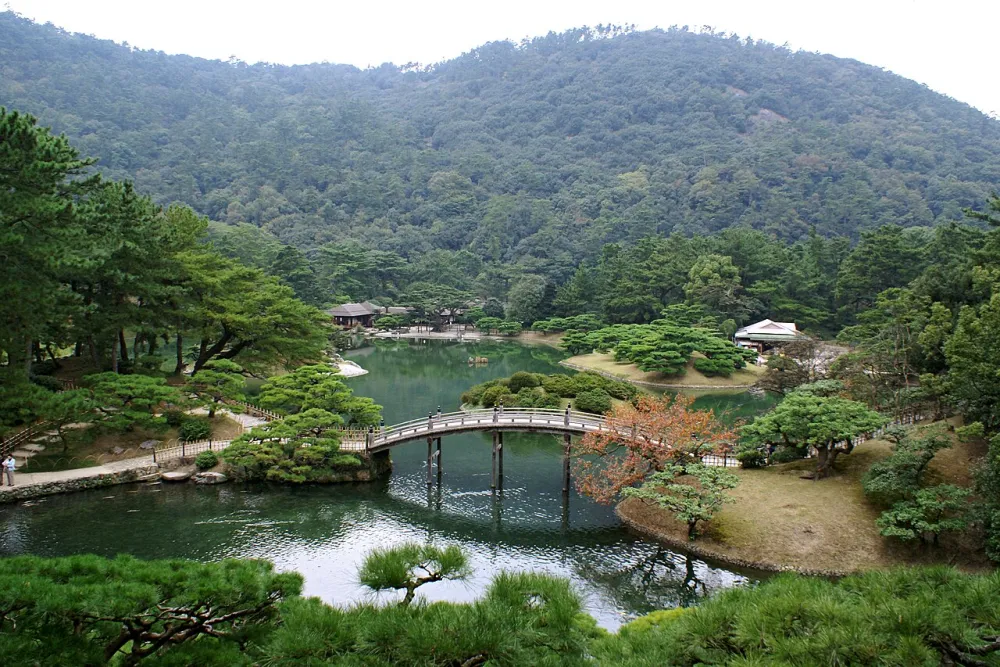
Garyu Sanso was built in the Meiji period by Torajiro Kochi, who made his fortune in the vegetable-wax trade. He began around 1897 and spent more than a decade completing the villa's buildings and garden. Ozu's feudal lords had enjoyed the scenery here; Torajiro brought the riverside into a private residence and tea rooms. Look first at how the house faces the garden, then how the garden meets the Hiji River. The shift between the two views is part of the visit.
The main house, Garyuin, has a thatched roof and an exterior resembling a rural dwelling. The official architectural account describes ten years of planning and four years of construction, with selected timber and skilled craftspeople working on the details. Look at its proportions outside, then its materials inside, to understand the effort placed in features visible only close up. Do not rush straight to the widest river-view window. Take a slow circuit of the main house first.
Seisui no Ma was designed for summer: north-facing, well ventilated and with a higher ceiling. Its transom carvings connect cherry blossom and rafts, water droplets, chrysanthemums on water, and a snow-ring window with spring, summer, autumn and winter. All relate to water. Identify one, then look for the others at the room boundaries rather than passing a whole row of carvings as decoration. Children can look for water patterns without learning room names first.
Isshi no Ma has a feature beneath the floor. Removing the tatami turns this formal reception room into a Noh stage. Bizen pottery jars beneath the floor enhance the sound. The design shows how one room could change use; the round window, shoji screens and ceiling also shape the reception space. Read the structural explanation, then look at the room's dimensions to connect it with performance.
Kagetsu no Ma uses other materials to suggest dusk and the moon. Staggered shelves evoke haze, while the round window connects to the Buddhist altar room. Grey fusuma screens and bat-shaped pulls also have intended meanings. After the clear seasonal motifs of Seisui no Ma, look here for quieter colours and fittings. Comparing the rooms reveals why Garyuin deserves time: each addresses a different design idea. Garyu Sanso architecture and garden guide
Garden stones, Chishian and Furoan lead your gaze to the Hiji River
Near the garden entrance, the official guide identifies ran-zumi, suehiro-zumi and nagare-zumi stonework patterns. A stone mill is set into the wall, bringing stone, trees and an old tool into one structure. Look at the wall's overall direction, then the round millstone and gaps. It gives you a specific stop after the main house. For a photograph, note the spot and wait for the path to clear rather than lingering at the entrance.

Chishian was originally a bathroom built around the same time as Garyuin, then converted into a tea room in 1949. Its former use helps explain its scale and position, and the villa's later changes. It sits within the route between the main house and Furoan and need not take a long stop. Here, look at changing use; at the next building, look at the relationship with the river.
Furoan stands on a cliff above Garyu Pool, using an overhanging support structure. The whole retreat was conceived as a boat, with a woven bamboo ceiling shaped like its underside. Look at the ceiling's curve, then the space opening towards the river, to connect interior and distant view. The official account also describes a design that uses moonlight to illuminate the ceiling. On a daytime visit, examine its structure and orientation, and spend your viewing time on the shapes, materials and water in front of you.
From the permitted outside route, look for a living maki tree used as a sute-bashira support. From Garyuin's close-detail transoms, through the garden's embedded millstone, to Furoan's tree and cliff, the scale of looking gradually grows. This is why the villa merits an uninterrupted visit. A few minutes at a river view miss how the buildings guide you towards it.
If you reach Ozu only in the afternoon, visit the villa first and choose one stretch of castle town afterwards. Time focused on Garyuin and Furoan still creates a visit with a clear beginning and end. Castle enthusiasts can instead choose only Ozu Castle. Start with the entrance you most want to go through, then fit lunch and station travel around it.
Ozu Castle: timber joints and evidence behind the reconstruction
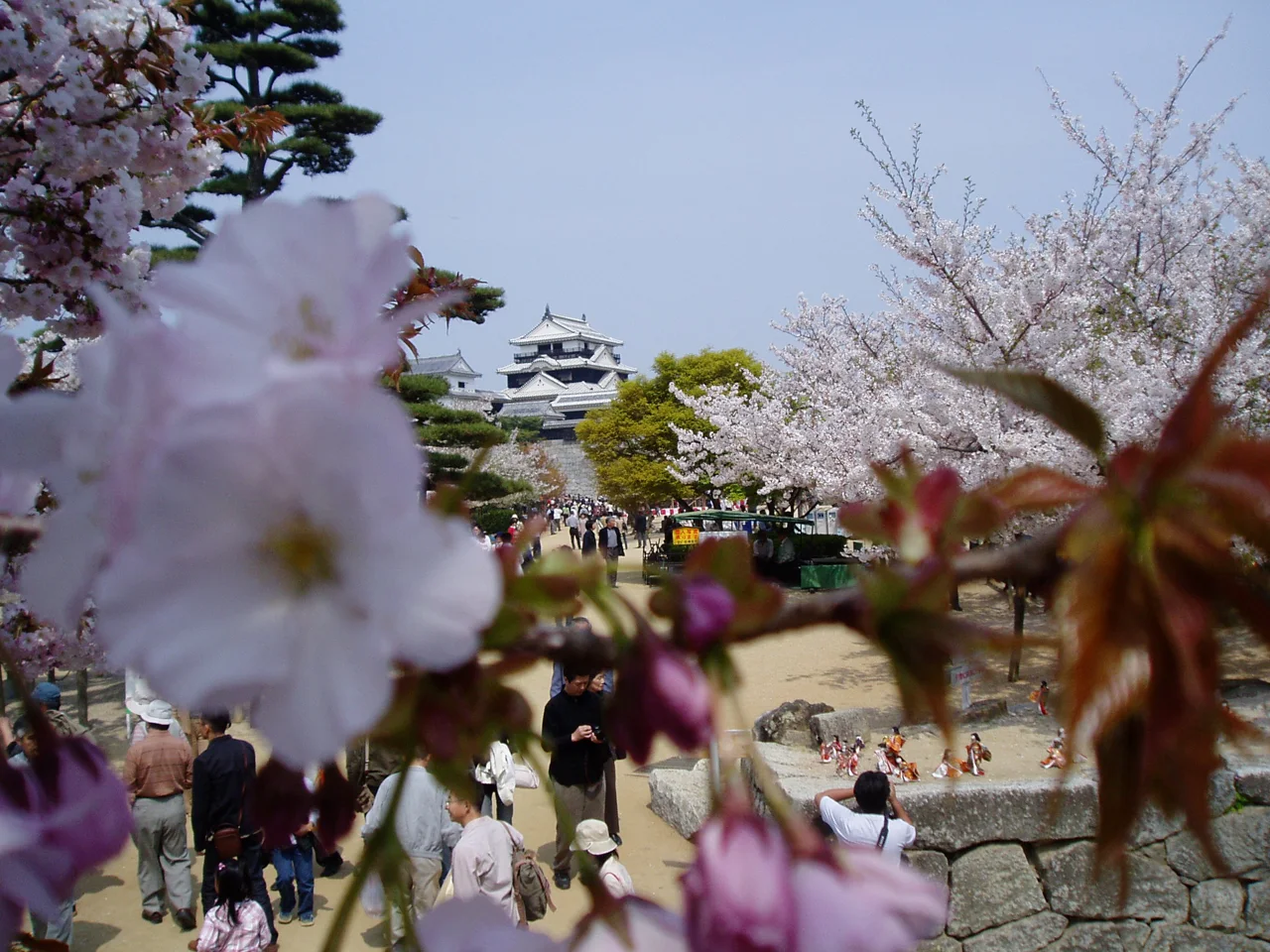
Ozu Castle's keep was dismantled in 1888 because of deterioration. The present four-storey timber keep was reconstructed in 2004, using evidence including Meiji-period photographs and an Edo-period timber model called the tenshu hinagata. Read this history before looking at the interior posts and beams. It explains the reconstruction problem: an exterior photograph records an outline; a timber model preserves how the components fit together.
The city states that all the keep's timber was sourced in Japan. Inside, focus on beam and post joints and the space on each floor, then look outside at the roofs and connected turrets. The morning villa's timber detail was close to domestic scale. The castle's structure differs in both size and role. Comparing them shows the spaces needed for wealth, hospitality, power and defence.
Four surviving Edo-period turrets, including Daidokoro Yagura and Minami-sumi Yagura, are designated National Important Cultural Properties. Use on-site signs to distinguish the keep from the turrets and see both preserved and reconstructed buildings. For overall photographs, first look outside at how keep and turrets connect. For structure, allow time inside. A broad exterior view and a section of timber framing provide different information.
Use the elevated view to recall your morning route. The Hiji River and castle town form the castle's setting and the scenery borrowed by the villa. One brings the river into a cliffside room; the other looks down over the city. You will have a clearer sense of direction around the river on the way back to the station. The visit allowance includes stairs and leaving the castle area. Finish the main interior visit before starting back at 15:00.
Ozu Castle opens 09:00–17:00, with ticket sales ending at 16:30. Admission is ¥550 for adults and ¥220 for junior high school pupils and younger children. Children aged five or under enter free with a guardian. For both castle and Garyu Sanso, the adult combined ticket is ¥880, saving ¥220 against two ¥550 tickets. The three-site ticket adds Bansenso for ¥1,100. This day plan includes only two sites, so choose ¥880. Ozu City castle visitor information
A day in Uchiko: dressing rooms to wax merchants’ streets
Take the same 09:07 Uwakai 7 from Matsuyama, getting off earlier at Uchiko at 09:33. The official walking route gives about ten minutes from station to Uchiko-za. Reach the dressing-room area around 09:45 and visit until 10:20. Start with theatre history and the current dressing-room displays, then continue along Honmachi shopping street, which connects the station and preserved district.
Allow 10:20–11:00 for Honmachi and the Museum of Commerce and Domestic Life. In a former merchant building, it displays a pharmacy shopfront, goods and home life. For children or visitors unfamiliar with Japanese townhouses, seeing business, eating and cooking spaces here first makes the larger scale of Kamihaga Residence easier to understand later. If wax is your sole focus, use this period for a short shopping-street walk and rest instead.
Walk slowly through Yokaichi–Gokoku from 11:00 to 12:15, looking at walls, latticework and the Honhaga Residence exterior, then have lunch from 12:15 to 13:15. The official distance from station to the district's southern entrance is about 1 km or 15 minutes on foot. That is a direct walk to the entrance; dressing-room and museum visits need extra time. Reaching the district before lunch clarifies the direction and positions of the main buildings.
Visit the Japan Wax Museum at Kamihaga Residence from 13:15 to 14:30, then return towards the station. Allow 45 minutes, choosing one shop in advance if you want purchases on the way. Aim for 15:15 at the station and Uwakai 20 at 15:46, reaching Matsuyama at 16:19. The day gives full periods to lunch, residence and production facilities, with the end of the afternoon still available in Matsuyama.
For more townhouses or afternoon tea, take Uwakai 22 at 16:46, arriving in Matsuyama at 17:17. Spend the extra hour in the same district. If companions are tired, keep the earlier return. The most useful extensions are details at Kamihaga Residence and in the preserved streets. Outlying Ikazaki, Ishidatami and Oda Miyama need other transport and suit another day.
During Uchiko-za’s restoration, see the theatre from backstage
Uchiko-za opened in 1916 as a timber theatre built by local people during the prosperity of vegetable-wax and raw-silk production. It had a revolving stage, hanamichi walkway and boxed seating. It later became a cinema, then returned to performance use after restoration in 1983–1985. The main building has been closed for conservation repairs since September 2024. Officially, reopening is currently expected in spring 2029. During this period, the public entrance and visit centre on the dressing rooms.
The dressing rooms behind Uchiko-za display performers' signatures and material about Uchiko-za Bunraku and the Uchiko Kyogen Club. Treat this as a stop about how performance continues locally: beyond the stage are performers' preparations, local groups and preservation work. Theatre enthusiasts can pause to read. Visitors mainly interested in old streets can make it shorter and give more time to Kamihaga Residence.
Visitor information for Uchiko-za, including the dressing rooms, lists 09:00–16:30 and closure from 29 December to 2 January. Restoration-site tours are announced individually and are not a fixed part of an ordinary walking day. Plan around dressing rooms, shopping street and preserved district first. If you have successfully booked a site tour on your travel date, replace one museum with it and retain the required meeting time. Uchiko Town official Uchiko-za information
Photograph the construction state and dressing rooms as they are. Plan a later visit after reopening if you want the main stage. This time, signatures backstage and the buildings of merchants who funded the theatre still connect performance and town industry. During restoration, broaden the visit from one theatre to the street where people lived.
Yokaichi–Gokoku’s 600 metres: look at individual buildings
Yokaichi–Gokoku was selected as an Important Preservation District for Groups of Traditional Buildings in 1982. Its main street is about 600 metres long. Those 600 metres begin inside the old district after the 15-minute walk from the station to its southern entrance. Homes, craft shops and cafés still line the route. Distinguish the public street from private interiors. You can examine walls and eaves from the roadside.
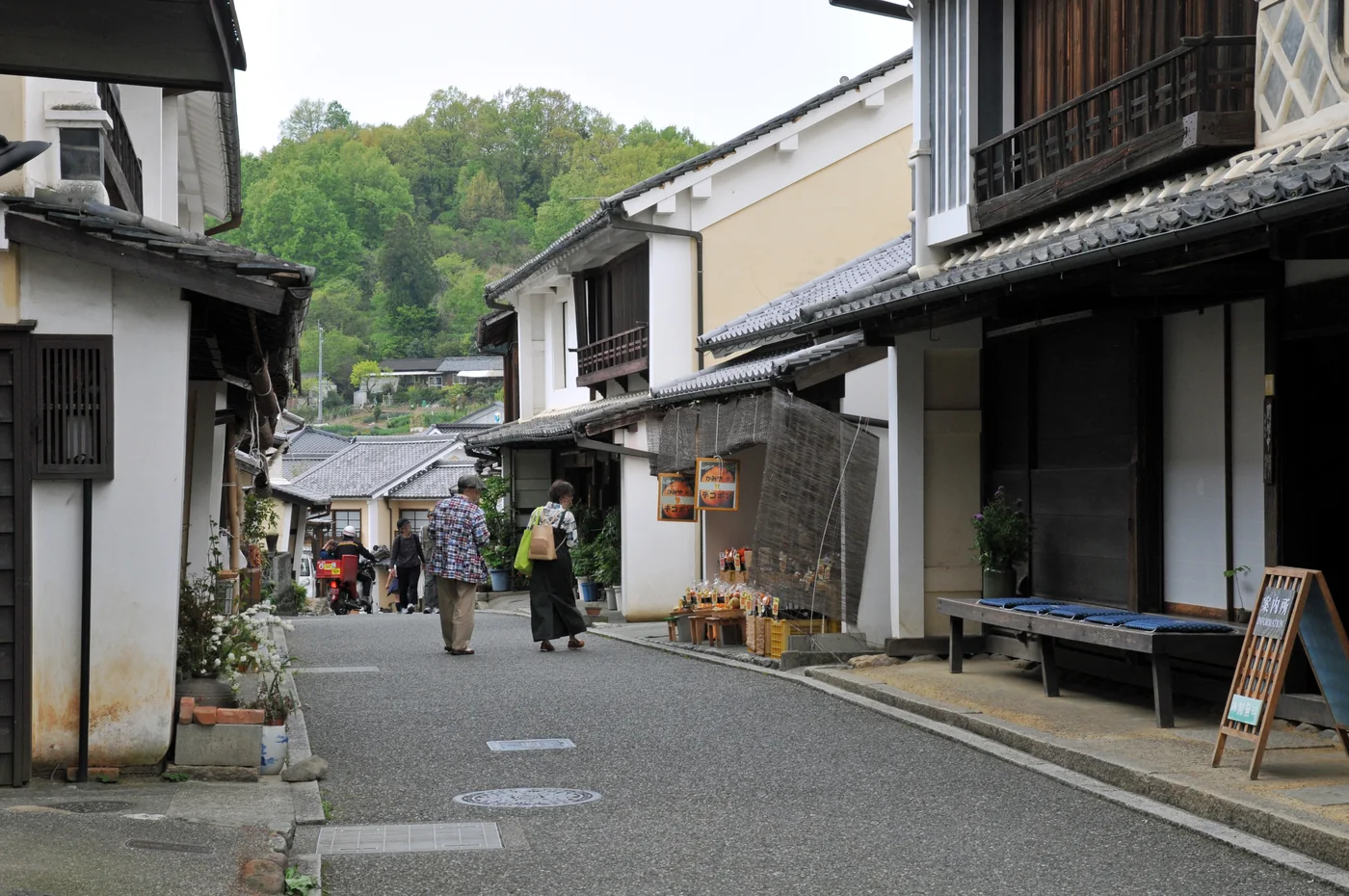
The colours include white plaster and pale yellow earthen walls made with local soil. Compare walls on both sides, then look ahead at roofs and latticework. Each house has a different face. After a broad street photograph, choose one building and look from the base of its wall to the upper floor. These short stops make architectural differences memorable and often account for much of the walk's duration.
Honhaga Residence stands out for kote-e plaster reliefs and namako patterned walls. The storehouse beside the main building retains the Asahizuru trademark. Find the mark, then see where it sits on the storehouse façade. Together, trademark and decoration express the merchant's wealth and standing to the street. The interior is not open; the exterior is the focus here.
Nearby Omura Residence preserves an earlier townhouse form. Official information dates its main building to 1789–1801, before Uchiko's peak wax-production years. Compare it with Honhaga to see houses of different periods on one street. Neither interior is open. Kamihaga Residence, next, is the paid visit for a full house layout and production spaces.
Pass Honhaga Residence again on your return. In the morning, you see the exterior. After Kamihaga's manufacturing and storage spaces, you can reconsider the house's scale. The same street gives different questions on each walk. Treat the return as a second reading of the district rather than making a loop through unfamiliar lanes. Following Honmachi back to the station keeps the direction clear. Yokaichi–Gokoku district guide
Released by Uchiko Tourism Association on 27 September 2019, this townscape walk focuses on the townhouses, white plaster and pale yellow earthen walls along roughly 600 metres of Yokaichi–Gokoku.
Kamihaga Residence: distinguish home from production
The Kamihaga family branched from the Honhaga family, and their residence now houses the Japan Wax Museum. At the gate, recognise that “Kamihaga Residence” and “Japan Wax Museum” refer to the same paid attraction. Honhaga Residence, seen in the morning, is a different building. Use the address 2696 Uchiko to locate a clear destination from the street.
Ten buildings, including the main house, ancillary building and shop storehouse, are designated Important Cultural Properties. Home and production facilities survive together. Divide your attention between living and manufacture: which spaces hosted guests or residents, which parts served wax production, and where goods were stored. Looking only at the main house's large rooms misses the value of the production spaces beyond it.
The exhibition building explains vegetable-wax production through models and video, with some wax-making tools displayed. The collection of wax-making implements from Uchiko and surrounding areas totals 1,444 items; only part is exhibited. Understand the process from the model, then compare real tools and their uses. They become more than a row of old objects in cases. Without prior knowledge of wax, time here explains the district's prosperity more clearly than reading dates alone.
Then reconsider the relationship between residence and boiling area. The business's scale appears in living rooms, storage and manufacturing, each with its own light, circulation and structural needs. Morning views of wealthy merchants' eaves and plaster reliefs now connect to actual workplaces. Industrial-history enthusiasts can extend the planned 75 minutes and use the 16:46 return train.
Kamihaga Residence opens 09:00–16:30 and closes from 29 December to 2 January. General admission is ¥500 for adults and ¥250 for primary and junior high school pupils. The combined ticket for Kamihaga Residence, Uchiko-za dressing rooms and the Museum of Commerce and Domestic Life costs ¥700 for adults and ¥350 for children. Budget ¥700 per adult if entering all three on this route. For the streets and Kamihaga alone, buy the ¥500 single-site ticket. Kamihaga opening information and current combined ticket
For candles and everyday-life displays, check the weekday
Omori Japanese Candle Shop lies on the Uchiko walking route. Official information describes melted raw wax being built up layer by layer on a rotating wick. See wax production at the museum, then finished goods at the shop to connect raw material with daily use. Its usual closing days are Tuesday, Friday and the New Year period. If candles are your main purpose, choose another opening day and reserve time around lunch for the shop, shortening exterior stops instead.
The Museum of Commerce and Domestic Life suits visitors interested in ordinary merchant households. A pharmacy shopfront, signs, general goods and figures recreate meals and cooking scenes. Its scale differs from Kamihaga's grand house and production facilities. With children, first find a familiar household object here, then look at unfamiliar implements in the wax museum. This can help them stay involved.
Mokuyobi means Thursday, when Uchiko Town Visitor Centre closes. The Townscape Preservation Centre and Villa Takahashi cultural exchange facility close on Tuesdays. Omori Candle Shop has its own Tuesday and Friday pattern. Select these stops by interest. On Thursday, follow station, dressing rooms, streets and Kamihaga directly. On Tuesday, focus on outdoor streets and town-run museums, and plan lunch early because nearby restaurants often close on Tuesday or Wednesday.
Paid townscape guides in Japanese and English require an application at least one week ahead. Once a guide is arranged, include the meeting place in your rail plan. Language affects how much architectural and industrial detail you can understand. If companions find Japanese signs difficult, use an understandable guide in place of some independent reading time. Guide fees and museum admissions are separate. Also allow the station-to-district walk before meeting. Uchiko official FAQ and facility closing days
In rain or with less walking, change the useful sections
To reduce street walking in Ozu, use a taxi for either station to villa or castle area to station. JR Shikoku's sample route gives about five minutes by taxi from the starting station to Garyu Sanso, and about five minutes from Asamoya back to the station. Use these as location references for pickup and drop-off areas. Castle and villa still have separate entrances and internal walking. Save energy for your priority site and shorten the other according to your companions' needs.
In rain, focus Ozu time on Garyuin and the castle's timber interior, with waterproofs for the garden and route between sites. Putting away umbrellas and arranging footwear takes time indoors. Remove one post-lunch street stop to make room for these tasks. If rain makes walking uncomfortable, choose one site and return to Matsuyama afterwards. Buy the two-site ticket only once you have decided to enter both.
In wet Uchiko, retain the dressing rooms, Museum of Commerce and Domestic Life, and Kamihaga Residence. View street exteriors along the connecting route. Kamihaga itself includes several buildings, so moving from room to exhibition still takes walking. Give it a full period after lunch, then use the station as your return destination. To shorten the district walk, go from the southern entrance to Honhaga and Kamihaga, then turn back without adding northern branches such as Koshoji.
Leave large luggage at your Matsuyama accommodation and make both day trips with light bags. Fixed daily start and finish points also make an early return for dinner simple. Families can carry spare clothes and waterproofs without pulling suitcases through residences. If staying overnight in Ozu or Uchiko, use the exact accommodation address to plan luggage movements before your first attraction.
7–10 December 2026: revise mountain-line plans for Uchiko
JR Shikoku's announcement of 18 August 2026 states that daytime works on 7–10 December suspend Uwakai 7, 9, 11, 13, 15 and 17 between Matsuyama and Yawatahama, and northbound 8, 10, 12, 14, 16 and 18 over the same section. The 09:07 outbound above is number 7, so change the plan on these four days. The simplest option is to swap your Ozu or Uchiko day with a Matsuyama city day. If you must travel then, use the works connection table and adjust museum time. JR Shikoku mountain-line works notice and replacement services
The first replacement service in the notice leaves Matsuyama at 09:10. The Uchiko column gives 10:10 and Iyo-Ozu 10:30; these are departure times. Keep to one town after arrival. Lunch and one attraction fit the later morning most easily. Uwakai 17 and 18 have no replacement bus, nor do the affected mountain-line local trains listed in the table. For a later start, choose a service outside the suspension list. Do not add an arbitrary wait to the original train time.
Coastal-line trains between Iyo-shi and Iyo-Ozu continue during these mountain-line works. Ozu visitors can compare that timetable. Uchiko is on the mountain line, so use its announced connections or change the date. Resolve this geographical difference before choosing castle or wax district, and return to the station for your selected train's actual departure.
Two towns on two days: where to stay
If you already have Matsuyama accommodation, staying there is simplest: Ozu on day one and Uchiko on day two, carrying only each day's needs. Ozu is slightly longer, returning to Matsuyama at 17:17 for dinner. Uchiko's 15:46 return reaches Matsuyama at 16:19, leaving the evening near your accommodation. Before an early onward departure, put Uchiko on the preceding day so you can return earlier to pack.
If you prefer a small-town evening, stay in Ozu or Uchiko and give each town one day. You can move to the other town after the first day's visits, then walk from your accommodation next morning. Match its exact address, arrival deadline, included meals and meal times before choosing the first afternoon's travel. Two days give full morning and afternoon periods. If the property is far from the old district, arrange arrival transport and protect the next day's visiting time.
Adult admission alone totals ¥1,580 over two days: ¥880 for Ozu Castle and Garyu Sanso, plus ¥700 for Uchiko's three-site ticket. List rail fares, food, taxis and accommodation separately. If Kamihaga is your only Uchiko admission, the two-day total becomes ¥1,380. Budget for the buildings you will actually enter, leaving the balance for a guide, meals or reduced walking outside stations.
For Uwajima as well, give a third full day to Uwajima Castle, Tenshaen and taimeshi. Matsuyama's castle and Dogo can also have their own day. A day in Uwajima and Matsuyama Castle and Dogo Park provide separate city plans. For travel across prefectures, start with five or seven days in Shikoku and transport bases. Place Ozu and Uchiko within your Ehime stay, leaving from your accommodation in the morning and returning to a familiar neighbourhood for dinner.
A few useful answers
Can I visit Ozu and Uchiko in one day?
For Ozu Castle, Garyu Sanso and Kamihaga Residence, two days make it easier to give each a full visit. With one day, choose Ozu for castle and riverside garden, or Uchiko for merchant houses and the vegetable-wax industry.
Can I see Uchiko-za’s stage in 2026?
The main theatre has been under conservation repair since September 2024, with official reopening expected in spring 2029. The dressing rooms behind it are currently open for general visits, with performers’ signatures and local Bunraku and Kyogen displays.
How much should I budget for admission in both towns?
For general adult admission, the Ozu Castle and Garyu Sanso ticket is ¥880. Uchiko’s three-site ticket for Kamihaga Residence, Uchiko-za dressing rooms and the Museum of Commerce and Domestic Life is ¥700. The total is ¥1,580, with rail travel and meals separate.
Official information and references
Sources used in this guide.
- Ozu City: castle history and visitor information
- Garyu Sanso: architecture, rooms and garden
- Garyu Sanso official opening hours and admission
- Uchiko Town: main theatre repairs and dressing-room access
- Uchiko Tourism Association: FAQ
- Uchiko Tourism Association: rail and local transport
- Uchiko Tourism Association: Yokaichi–Gokoku
- Uchiko Tourism Association: station-to-theatre and preserved-district walk
- Uchiko Tourism Association: Kamihaga Residence and current three-site ticket
- JR Shikoku: Ozu route and station taxi connections
- JR Shikoku: Uwajima–Matsuyama connections (revised 14 March 2026)
- JR Shikoku: Iyo-Ozu departures (revised 27 June 2026)
- JR Shikoku: official station timetable index
- JR Shikoku: mountain-line works and replacement table, 18 August 2026 (public copy held by Uwajima City)
- Uchiko Tourism Association: UCHIKOGENIC #2 townscape walk (released 27 September 2019)