Compare the Matsuyama Castle ropeway, walking routes and cherry blossoms in the honmaru, then continue to Dogo Park. Plan bloom timing, tickets, family visits and trams.
- Region & Focus
- Shikoku
- Reading Scope
- 28 min read · 16 chapters · 7 Q&As
- Official Verification
- 21 official sources checkedUpdated November 8, 2026
- Key Topics
- SeasonsItinerariesChugoku & Shikoku
Chapter Route Map (tap any stop)
- From the station to the hilltop: ropeway or chairlift?
- How long for the blossoms and the keep?
- The foot of the hill and walking routes
- When to go: blooms and the spring festival have separate dates
- Choose the honmaru, lower park or Dogo for the view you want
- One-way tickets and late afternoon visits
- Inside the castle: stone walls, square and keep
- A loop linking the lower park and honmaru
- Continue to Dogo Park by city tram
- Three practical itineraries
- Children, slower walkers and luggage
- Where to stay and onward travel
- Two castle sites in one day: what is different?
- Walk beside Dogo Park's moats before deciding on the hill
- Budget for trams, keep and garden separately
- Photograph the castle from below or take an evening walk
- Quick Q&A
First decide whether you want to go up the hill to see Matsuyama Castle's cherry blossoms. For a walk that takes in the keep, walls and flowers, ride the ropeway from Shinonomeguchi to Chojagahira, then walk to Honmaru Square. For an easier walk on level ground in the city, choose the Horinouchi area of Shiroyama Park at the foot of the hill. These places are at different elevations: reaching Shiroyama Park does not mean you have reached the hilltop.
The castle operator describes around 200 cherry trees, mainly Somei Yoshino, with some earlier and later varieties. Weather can bring flowering forward or delay it. On a spring trip through Shikoku, give Matsuyama Castle a flexible half day in the city. Go up when the flowers look best and use the other part of your stay for the city. Matsuyama Castle through the seasons
From the station to the hilltop: ropeway or chairlift?
From JR Matsuyama Station, take a city tram to Okaido, then walk about five minutes to Matsuyama Castle Ropeway's Shinonomeguchi Station. Buy your ticket inside and go upstairs to board. The ropeway runs every 10 minutes. From Chojagahira at the upper end, it is still about a 10-minute walk to the keep entrance. The upper station is separate from the keep entrance. Allow for this walk and photo stops if anyone in your group walks slowly. Matsuyama Castle access guide
The ropeway and single-seat chairlift use the same tickets: adults pay ¥520 round trip or ¥270 one way; elementary school children pay ¥260 round trip or ¥140 one way. The chairlift is for elementary school age and older and stops in rain. Families with preschool children can use the ropeway. To save the uphill effort, buy a one-way ride up and walk down. Choose your descent and next stop first. This works best if you do not need to return to Shinonomeguchi to collect a car. Matsuyama Castle visitor guide
Normal spring hours are 8:30–17:30 for the ropeway and 8:30–17:00 for the chairlift. The keep normally opens 9:00–17:00, with last admission 30 minutes before closing. For visits during normal operating periods, the castle recommends catching the 16:00 ropeway if you want to enter the keep. Arrive earlier in spring for time among the blossoms and unhurried photos in the honmaru. Hours and fares; frequently asked questions
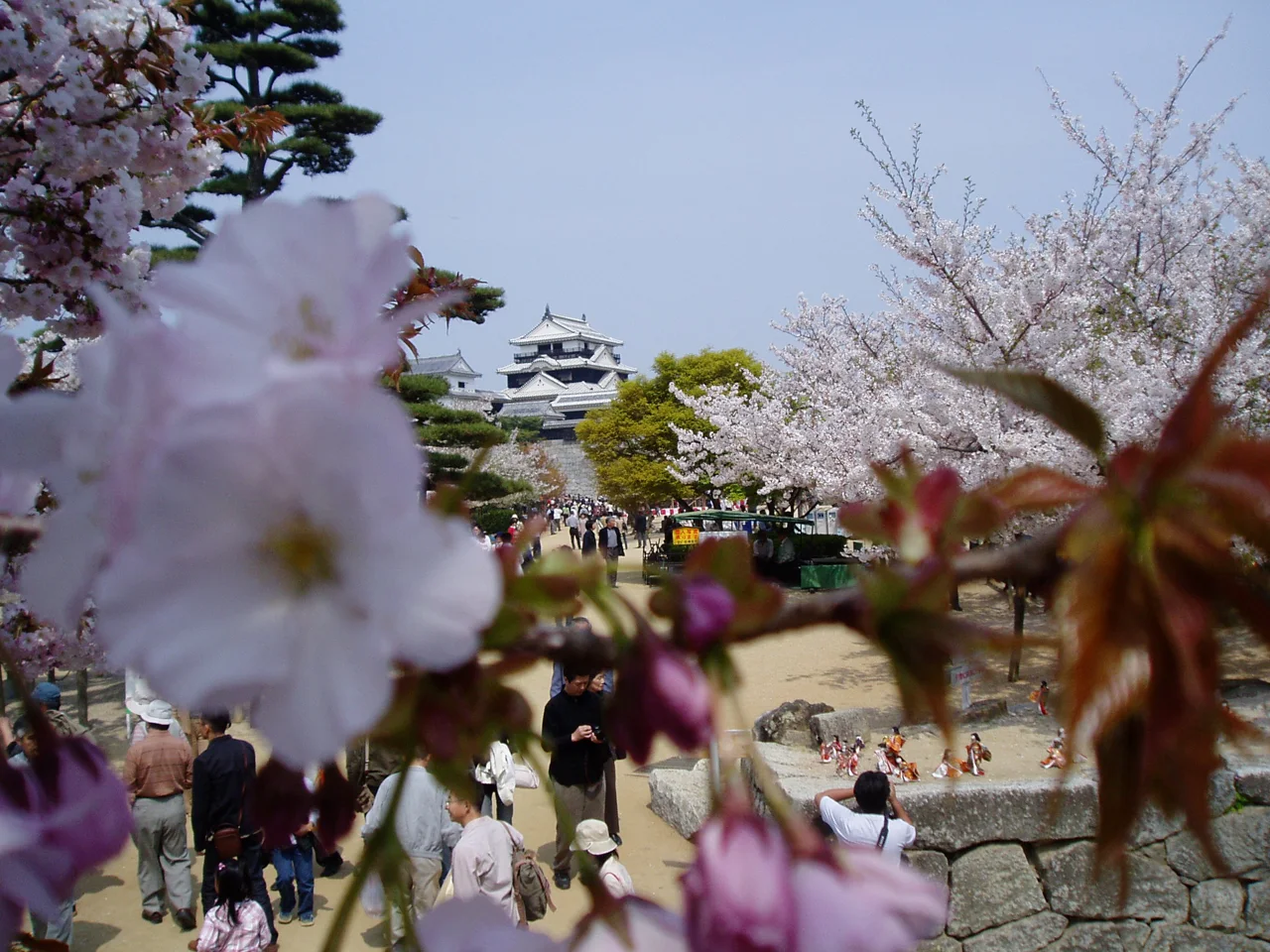
Compare the Matsuyama Castle ropeway, walking routes and cherry blossoms in the honmaru, then continue to Dogo Park. Plan bloom timing, tickets, family visits and trams.
How long for the blossoms and the keep?
To see the flowers and the castle exterior, walk around free Honmaru Square without buying a keep ticket. Keep admission costs ¥520 for adults and ¥160 for elementary school children, separate from the ropeway fare. An adult round-trip ropeway ride plus keep admission totals ¥1,040. The castle estimates about 1 hour 30 minutes for the round-trip ropeway from Shinonomeguchi and a keep visit. Add time for photos and rests during cherry blossom season.
The keep has steep stairs, no elevator and no toilets. Toilets are beside the shop in Honmaru Square and west of Chojagahira Station. Use them before entering, then secure your belongings so both hands are free for the stairs. Matsuyama Castle FAQ
If you know you will enter the keep, buy a combined ticket from the machines on the first floor of Shinonomeguchi Station. It costs ¥1,040 for adults or ¥420 for elementary school children and includes a round-trip ropeway or chairlift ride and keep admission. Sales run from 8:00 to 14:00. It saves buying another ticket at the top, but costs the same as the two items together. The keep portion is nonrefundable. If someone is unsure about climbing the keep stairs, buy the ride first and decide about admission at the honmaru.
The foot of the hill and walking routes
The castle estimates about 25 minutes on foot to Honmaru Square via the Kencho-ura or Kuromonguchi route, and about 40 minutes from Furumachiguchi to the keep. Before walking up or down, use the official entrance map to identify your route. You can ride up and walk down another side to keep the slope for the descent. If you plan to return to Shinonomeguchi, allow time to get back to the ropeway station from your chosen exit. Castle access and walking routes
Horinouchi is open around the clock. Ninomaru Historical Garden, the keep and the ropeway are managed as separate facilities. Garden admission costs ¥200 for adults and ¥100 for elementary school children. Treat the garden as another stop at the foot of the hill. You do not need its ticket to enter the keep. Matsuyama Castle visitor guide
Drivers heading to the ropeway can use Kiyomachi Parking, about a two-minute walk from the boarding area. A regular car costs ¥420 for the first two hours and ¥100 per additional 30 minutes, with spaces available first come, first served. Horinouchi itself has no parking lot. If you are staying in central Matsuyama and only visiting the castle, a tram and short walk save time looking for parking. Official parking information
When to go: blooms and the spring festival have separate dates
The castle operator says cherry trees usually flower around early April, with the timing affected by temperature and other conditions. Most are Somei Yoshino, alongside earlier Tsubaki Kanzakura and later Oshima, Shiogama and Botan varieties. The Matsuyama Convention and Visitors Bureau gives late March to early April as the usual viewing period across Ehime. Use these to choose a travel window: the first is a rough guide for the castle; the second covers the wider prefecture. Matsuyama Castle through the seasons; Matsuyama cherry blossom guide
With just one day in Matsuyama, give the castle area your longest stretch of daylight, then use that year's flower conditions to decide between the honmaru and Dogo Park first. Two nights give more flexibility: explore the easier-to-reach foot of the hill on arrival and visit the keep and Dogo the next day, or reverse that order if the first day is fine. This avoids changing hotels and long-distance trains every day to follow the flowers.
Matsuyama Castle's annual calendar places the Matsuyama Spring Festival in April. The 2026 festival took place on April 4 and 5, with a daimyo warrior procession and events at Horinouchi. That edition has ended. To see the procession, wait for the organizer's meeting points and times for the relevant year, then arrange trams, meals and your return around them. For blossoms alone, choose by flower conditions rather than treating the festival dates as the only option. Castle annual events; 2026 Matsuyama Spring Festival organizer's page
As flowering approaches, Matsuyama City directs bloom inquiries to the Matsuyama Castle General Office at 089-921-4873. Ask specifically about the Somei Yoshino in the honmaru, then adjust your route order. Early and late varieties extend the chance of seeing flowers, but do not fix the date of full bloom. A time slot you can swap is more useful than assigning peak bloom to one exact day. Matsuyama City bloom FAQ
Choose the honmaru, lower park or Dogo for the view you want
Each of the three blossom areas has a different appeal. Matsuyama Castle's honmaru pairs flowers with fortifications and an elevated city view, suiting visitors who want keep photos and are willing to go uphill. Sakura Square at the foot of Shiroyama Park offers cherry trees and places to rest on level city ground. Dogo Park combines flowers with the hot spring district and castle-site exhibits. For half a day, choose one as your main stop. With a full day, visit the honmaru and Dogo, keeping lunch near the tram route.
The tourism bureau's blossom guide lists about 200 trees in the honmaru, about 70 at Sakura Square below and more than 300 at Dogo Park, including Tsubaki Kanzakura and Somei Yoshino. These counts indicate scale. Choose according to whether you want a ropeway ride, a park walk or time at the hot springs. Families wanting a rest under the trees can start below; castle photographers should give the honmaru most of their time.
The guide identifies Sakura Square's food trucks, tables, chairs and evening lighting as information for fiscal year Reiwa 7 (2025). For your next spring visit, plan meals in Okaido or the Dogo Onsen district and add a market if that year's announcement includes one. Then a meal does not depend entirely on seasonal stalls. You can plan the daylight blossom walk and choose a hotel base before stall details are confirmed.
For visits before the main cherry blossom season, the castle's seasonal guide lists red and white plum blossoms around the honmaru and moats in early to mid-February. It gives February–March for Ninomaru's plums and March–April for flowering quince. Use these to choose plants for an early spring walk: focus on plums in February and put cherry blossoms into the main plan for March–April. Matsuyama Castle through the seasons
For ball games after blossom viewing with children in Horinouchi, use Fureai Square. The castle permits light activities such as playing catch with a soft ball, badminton and kite flying only in this area. Bats and hard balls are prohibited, as is playing ball near young children, benches, trees or lights. Buy prepared food in town for a blossom picnic. Private barbecues, fireworks and other uses of fire are prohibited, so leave cooking stoves behind. Horinouchi park rules
One-way tickets and late afternoon visits
If you want to walk up but avoid the descent, save the one-way ropeway ticket for the return. For adults riding both ways, the ¥520 round trip costs ¥20 less than two one-way tickets. The ¥260 child round trip also saves ¥20 compared with two ¥140 one-way tickets. If you will ride only once, choose the walking entrance for the other direction before buying.
A tight schedule usually cuts into the hilltop walk first. The castle's 1 hour 30 minutes is a normal estimate for the round-trip ropeway from Shinonomeguchi and keep admission. Add waiting, blossom photos and food stops separately. Include the walk to and from the boarding area in your half day. During a short gap between transport connections, the lower park is easier to fit than a rushed keep visit.
On normal spring days, last admission to the keep is 16:30 and the ropeway normally ends at 17:30. If arriving in the afternoon, check the keep cutoff first, then decide between the square and an interior visit. Hours differ in August and December–January. Matsuyama Castle opening hours
Inside the castle: stone walls, square and keep
After leaving the ropeway at Chojagahira, follow the castle path toward the gates and honmaru rather than entering the keep immediately. One viewpoint listed by the operator is beyond the stone-paved path from Chojagahira, looking up at the stone walls. Use this stretch to understand the terrain: your boarding station was below, you are now on the ascent path, and Honmaru Square lies farther ahead. Castle viewpoints
At the honmaru, if your main aim is flowers and keep photos, first find an angle in the square that includes both, then decide whether to enter. Flower conditions and crowds affect the composition. Allow room to move rather than assuming one particular tree will be in bloom. Castle photography rules prohibit large equipment that blocks passage, drones and live streaming. Keep gateways and main paths clear while taking pictures so people can pass up and down. Castle photography rules
Use the toilets and deal with large bags before entering the keep. Shinonomeguchi Station has coin lockers, and wheeled suitcases are not allowed inside the keep. The station building is locked after the ropeway stops, so collect stored items before closing. If descending by another entrance, decide whether you want to return to Shinonomeguchi for your luggage. To avoid the detour, leave it at your accommodation or departure station and go up with a light bag. Matsuyama Castle FAQ
This official Matsuyama Castle video shows the castle hill, stone walls and keep in one landscape. It is useful before the ascent for understanding the honmaru and fortification layout.
A loop linking the lower park and honmaru
Walkers can use the castle's published 6.1 km course. Start at Horinouchi Park's east entrance, pass Ninomaru, Kuromonguchi and Shinonomeguchi, ride the ropeway or chairlift to Chojagahira, then visit the honmaru, keep and castle paths before returning to Horinouchi via Kencho-ura. The official estimate is 1 hour 40 minutes to 2 hours 10 minutes, including the ride and keep visit. Some facilities along the way charge admission. This sample loop suits people wanting to link the foot and summit. If your group does not want the full walk, make the honmaru return trip the main route. Matsuyama Castle walking course
Remove the chairlift from your options in rain. For a short route, ride the ropeway both ways and include the walk from its upper station to the keep. If anyone is uneasy on stone steps or slopes, allow time for level walks below. A visit to Matsuyama does not require completing every castle ascent.
Continue to Dogo Park by city tram
Dogo Park occupies the Yuzuki Castle site and is one of the tourism bureau's listed blossom spots. The park is free and open around the clock. Its exhibition facilities generally open free of charge from 9:00 to 17:00. They close Mondays, or the next weekday when Monday is a national holiday, and over the New Year period. Plan exhibits for daylight; a park walk has more flexible hours. Dogo Park visitor information; Matsuyama blossom guide
From Okaido, city trams toward Dogo Onsen pass Dogo Koen before the Dogo Onsen terminus. From JR Matsuyama Station, take route 5 toward Dogo Onsen; from Matsuyama-shi Station, take route 3 in that direction. Both pass Okaido. Read the stop name before getting off: Dogo Koen serves the park entrance, while Dogo Onsen is the terminus by the hot spring district. Visit the park first and then continue to the hot spring streets for a straightforward travel and walking order. Iyotetsu route map
JR Matsuyama and Matsuyama-shi are different stations. When booking accommodation or checking transport, choose route 3 or 5 according to your actual arrival station rather than searching only for “Matsuyama Station.” Iyotetsu currently lists a single adult city tram fare of ¥250 in cash or ¥230 with eligible IC cards and other qualifying cashless payment. The child cash fare is ¥130. Pay when you get off, and press the stop button as your stop approaches. Iyotetsu fare revision; how to ride
Matsuyama Castle and Dogo Park involve different levels of walking. After an uphill castle walk in the morning, make Dogo Park an afternoon stop for a stroll and blossoms. With young children or anyone unable to manage hill paths, combine Dogo Park and Horinouchi's main paths in one day and save the honmaru for another time when the group has more energy. Dogo Park is a separate blossom destination, not another entrance to the keep.
Three practical itineraries
Half day, first visit: get off the tram at Okaido, walk to Shinonomeguchi and ride up. See the honmaru blossoms, visit the keep and return by ropeway. Start with the castle's estimate of about 1 hour 30 minutes, then add walks to and from the tram stop, waiting and photos. Back in Okaido, have lunch or continue to the next stop. This suits visitors who want the castle without spending their energy on the climb.
Full day, two blossom spots: follow the half-day castle route in the morning. After lunch, take a Dogo Onsen-bound tram from Okaido and get off at Dogo Koen. The exhibition facilities have set hours, so arrive before evening if you want to enter. After your walk, continue toward Dogo Onsen. Both destinations sit on the same city tram corridor, so you do not need to rent a car to link them.
Walking-focused visit: explore Horinouchi or Ninomaru first, then climb to the honmaru via Kuromonguchi or Kencho-ura. Walk down or take the ropeway according to your remaining energy. Ninomaru has its own ticket and hours. Schedule a garden visit while it is open rather than assuming it is a required passage to the castle. This route suits walkers who want to cover the terrain from foot to summit and can manage slopes.
Children, slower walkers and luggage
Preschool children cannot use the single-seat chairlift. Choose the ropeway to keep the family together. It saves effort on the ascent, but there is still a walk from Chojagahira to the keep and steep stairs inside. Split up according to ability if needed: some can stay in Honmaru Square while others enter the keep, then meet back in the square. There are no toilets inside the keep, so children and older relatives should use those near the square first.
The castle says wheelchair users cannot reach the honmaru alone because of steep slopes, steps and thresholds. With two or three helpers they can reach the honmaru, but wheelchairs still cannot enter the keep. Before departure, assess the route from the ropeway to the square, not just access to the station. Tell the castle about the wheelchair and group size before deciding to go up. If the route is unsuitable, Horinouchi and Dogo Park let the group walk together at the foot of the hill and in the city. Castle accessibility information
Where to stay and onward travel
A visit focused on Matsuyama Castle and Dogo Park does not require changing hotels between them. Okaido is convenient for the ropeway and trams to Dogo. Staying near Dogo Onsen keeps bathing and evening walks close to your hotel, with a tram to Okaido for the castle. If using JR trains to other Shikoku cities, weigh accommodation near JR Matsuyama Station against the next day's travel. Identify the exact station and tram direction.
Iyotetsu lists a direct airport bus from Matsuyama Airport to Dogo Onsen taking about 40 minutes, with an adult cash fare of ¥1,200 or an eligible cashless fare of ¥1,180. If your flight leaves only the afternoon for sightseeing, store your bags first and use the keep's last admission time to decide whether to go up. With insufficient time, a lower-park walk followed by a castle visit the next morning is more relaxed. Iyotetsu airport transport
Two castle sites in one day: what is different?
City trams link Matsuyama Castle and Dogo Park, but their historic settings differ. Matsuyama Castle centers on the hilltop keep, gates, stone walls and square. Yuzuki Castle in Dogo Park preserves medieval moats and earthworks, with displays based on excavations. Give Matsuyama Castle more time for the elevated castle and city views. For archaeology and medieval life, allow longer at Dogo Park's museum. Official Yuzuki Castle introduction
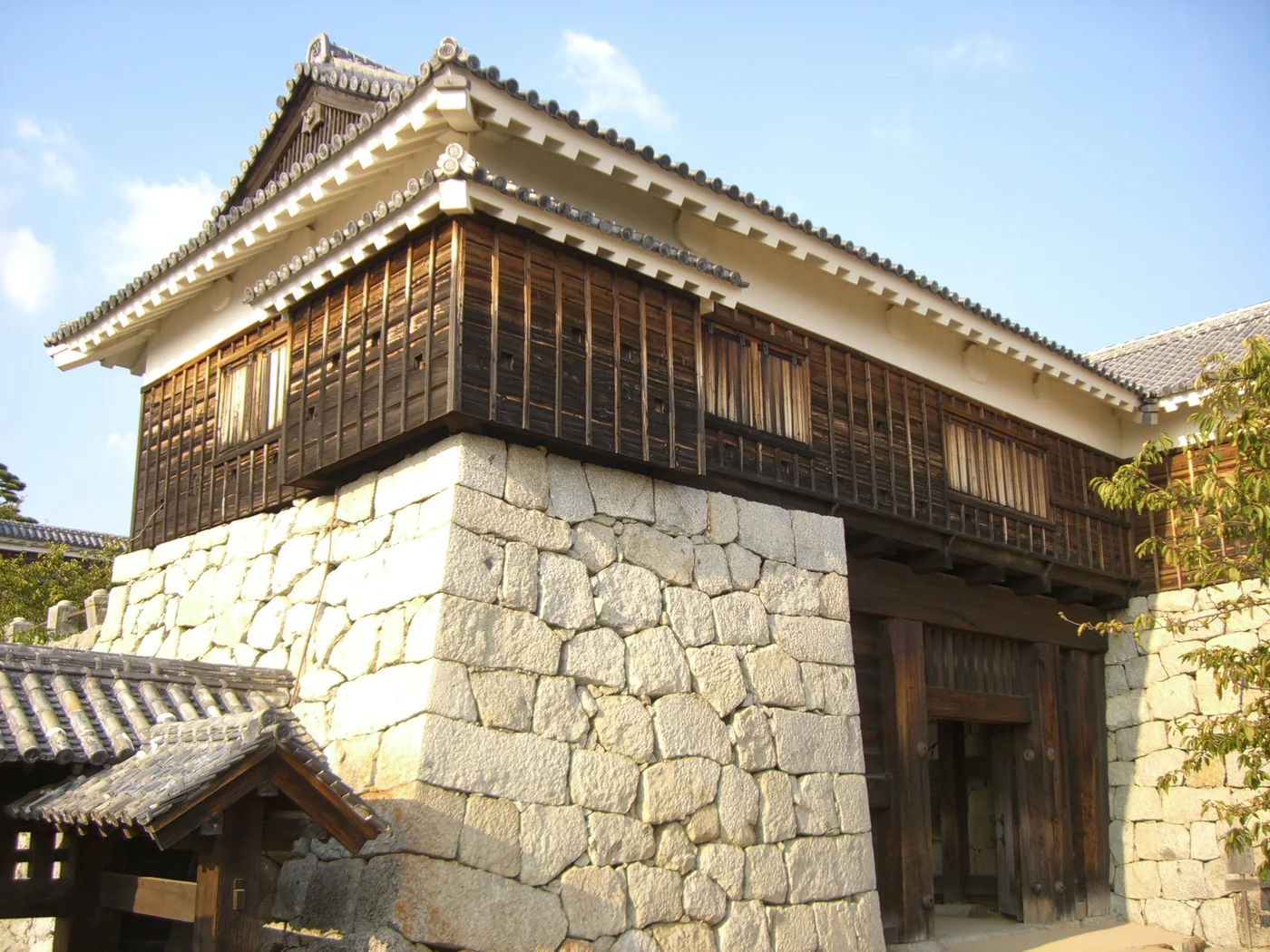
Matsuyama Castle's keep burned after a lightning strike in 1784. Reconstruction began in 1820 and finished in 1854. The castle retains important cultural properties, including the keep, alongside later reconstructions. Tsutsui Gate, for example, burned in 1949 and was rebuilt in wood in 1971. Use this history to read the buildings: look at the site signs to distinguish surviving structures from later reconstructions. Matsuyama Castle history; buildings and cultural properties
The castle describes a route along the stone walls from the Ote side through Tonashi, Tsutsui and Taiko gates. Tonashi Gate has no door leaves; Kakure Gate stands beside Tsutsui Gate's stone walls. Their positions make the approach more than a walk through a single entrance. If time allows during blossom season, look at the walls and gates before finding a keep-and-blossom angle in the square. With little time, make the square your main stop.
Dogo Park's Yuzuki Castle Museum presents excavation findings, the Kono clan's history and samurai life inside the castle. The samurai residence displays include buildings reconstructed with period techniques using layouts inferred from excavations, and exhibition facilities with reconstructed exteriors. The earthwork exhibition room exposes a section through the soil layers. These rooms generally open during the day. On an afternoon visit, enter the museum before your walk to avoid finishing a circuit after the displays close. Yuzuki Castle exhibits
Walk beside Dogo Park's moats before deciding on the hill
The official Yuzuki Castle park map marks the outer moat, inner moat, hilltop square and observation point separately. Dogo Park fits more easily into a city walk than the ascent to Matsuyama Castle, but it still has hills. With a stroller or older relatives, start on the lower paths beside the moats and decide about the observation point according to the group's energy. Treating it as an optional side route makes it easier to stay together than aiming straight for the highest point.
Yuzuki Castle was the Kono clan's residence for about 250 years, from the first half of the 14th century to the end of the 16th. Its main defensive features are moats and earthworks, without Matsuyama Castle's stone walls and keep. Excavation of about 20,000 square meters in the southern park revealed retainers' homes to the west, senior samurai residences to the east, and roads and drains inside the outer moat. If you encounter ground-level layout markings while viewing flowers, compare them with the map and see how the trees relate to the old castle districts rather than only following the perimeter.
For Japan's Top 100 Castles stamps, collection points differ sharply. Matsuyama Castle's stamp is beside the hilltop keep ticket office and available only during ticket sales hours, not outside those hours or on closure days. Yuzuki Castle's is inside the museum and placed outside its entrance on closure days. To include stamps in a blossom trip, visit Matsuyama Castle's keep and stamp point in the morning, then continue to Dogo Park. Matsuyama Castle stamp information; Yuzuki Castle stamp information
The map also shows the playground, rest square and Shiki Memorial Museum. If some people want exhibits and others prefer walking outdoors, meet around the castle museum and split up by interest. The Shiki Memorial Museum is a separate building with its own hours and admission to plan. For a blossom-only visit, follow the park and castle-site exhibit route to complete this stop.
Budget for trams, keep and garden separately
The following estimates use standard adult prices found in October 2026. Substitute your own combination of rides and admissions:
For example, take a tram from JR Matsuyama Station to Okaido, go up to the keep, then take another tram to Dogo Park. Two adult cash tram fares total ¥500. Add ¥1,040 for the round-trip ropeway and keep, giving ¥1,540 for this transport and these two tickets. This excludes any later tram back to the station, meals, accommodation and other facilities. With eligible cashless payment, the two tram rides cost ¥230 each and the same combination totals ¥1,500. This is an itinerary estimate using published fares, not a package ticket.
For just those two city tram rides, there is no need to buy a day pass covering suburban trains because you might ride more. Iyotetsu's digital city-and-suburban rail 1Day ticket costs ¥2,000 for adults and covers all city tram and suburban railway lines, excluding the Botchan Train. Compare it only if you plan suburban train journeys that day and have totaled the individual fares. Iyotetsu 1Day ticket
The Botchan Train has separate fares and departures. The official page currently lists ¥1,300 per adult ride, normally operating on weekends and national holidays without reservations. Treat it as an experience with specific departures. Regular city trams and their flat fare are easier for a flexible trip from Okaido to Dogo Park. Iyotetsu Botchan Train
List children's costs separately. For one adult and one elementary school child both riding round trip and entering the keep, ¥1,040 plus ¥420 totals ¥1,460. If both take round-trip rides only to see the honmaru blossoms, ¥520 plus ¥260 totals ¥780. The ¥680 difference is their combined keep admission. Budgeting by what you will visit is clearer than applying the adult budget to everyone. Under the castle's standard fare rules, up to two preschool children accompanied by a guardian are free; this rule does not apply to group discounts. The chairlift's elementary-school-age minimum still applies. Castle standard fares and free admission conditions
| Option | Adult cost | What it includes |
|---|---|---|
| Honmaru walk and round-trip ride | ¥520 | Round-trip ropeway or chairlift; Honmaru Square is free |
| Honmaru, keep and round-trip ropeway | ¥1,040 | ¥520 round-trip ropeway plus ¥520 keep admission |
| Honmaru, keep and one-way ride | ¥790 | ¥270 one-way ropeway or chairlift plus ¥520 keep admission; walk the other direction |
| Add Ninomaru Garden | Add ¥200 | Adult garden admission, separate from the keep and ropeway |
| Dogo Park and exhibits | Free | Park and regular exhibition facilities; parking costs extra |
Photograph the castle from below or take an evening walk
One lower viewpoint listed by the castle is the earthwork on the west side of Horinouchi Park, looking toward the keep and turrets. If the morning is too short for the ropeway, use this view to understand the hill and visit the honmaru the next day. Reaching the foot does not bring you to the hilltop blossom area; flowers beside the keep require an ascent. Katsuyamatei in Ninomaru Garden is another listed viewpoint, but the garden has its own hours and fee. Castle views
Plan the castle, square and transport separately at night. The tourism bureau's blossom guide has described castle and blossom lighting, but each year's spring event notice determines that year's illumination plans. The ropeway normally ends at 17:30 and the chairlift at 17:00. For any evening event, follow its specific ascent and descent arrangements rather than carrying last year's extended hours into the next year. If the keep is your main aim, prioritize its daytime admission hours.
A few useful answers
Is the keep right beside the upper ropeway station?
No. From Chojagahira, the upper station, it is still about a 10-minute walk to the keep entrance. Include your group's walking ability and waiting time in the half-day plan.
Can I see blossoms in the honmaru without entering the keep?
Yes. Honmaru Square is free. Ropeway or chairlift fares are separate, and you need a keep ticket only if you choose to enter it.
Is a one-way ropeway ticket good value?
Adults pay ¥270 one way or ¥520 round trip. Walking the other direction saves ¥250, but either ascent or descent involves slopes. Your exit may be away from Shinonomeguchi, so consider your energy and where your luggage is stored.
Does the chairlift run in rain?
The chairlift stops in rain and cannot carry preschool children. In either case, the ropeway is the more direct option for going up.
Does the spring festival coincide with full bloom?
The organizer sets the festival dates, while that year's temperatures affect the flowers. The 2026 dates are historical reference. For a 2027 trip, check that year's event announcement and the castle's bloom conditions separately.
Where can I park for Dogo Park?
The official site lists 23 regular car spaces at the west entrance and 11 at the north entrance, available 24 hours at ¥100 per 30 minutes. These are separate from Kiyomachi Parking beside Shinonomeguchi. If you park near Matsuyama Castle first, decide whether to drive or take the tram to Dogo Park, and budget for the lots separately. Dogo Park parking information
Is Dogo Park closed on Mondays?
The park is free and open around the clock. Its exhibition facilities close Mondays, or the next weekday when Monday is a holiday. To see the samurai residences and museum, visit during daytime on an opening day. A blossom walk in the park is still possible on Monday. Dogo Park opening information
Official information and references
Sources used in this guide.
- Official parking information
- Matsuyama Castle opening hours
- Castle accessibility information
- Matsuyama Castle views
- Matsuyama cherry blossom guide
- Matsuyama Castle annual events
- 2026 Matsuyama Spring Festival organizer's page
- Matsuyama City bloom FAQ
- Matsuyama Castle walking course
- Dogo Park opening information
- Iyotetsu tram and rail route map
- Iyotetsu fare revision
- How to ride
- Iyotetsu airport transport
- Yuzuki Castle exhibits
- Matsuyama Castle history
- Buildings and cultural properties
- Iyotetsu 1Day ticket
- Iyotetsu Botchan Train
- Honmaru map and building list
- Matsuyama Castle combined ticket: prices, sales hours and refund terms