Take the bus from Iyo-Saijo to Shimodani, ride Ishizuchi Ropeway and walk to Jojusha. Compare the single-seat chairlift and walking times, with autumn 2026 hours, bus fares, a 15:26 return and driving costs.
- Region & Focus
- Shikoku
- Reading Scope
- 28 min read · 13 chapters · 7 Q&As
- Official Verification
- 12 official sources checkedUpdated October 28, 2026
- Key Topics
- ItinerariesChugoku & Shikoku
Chapter Route Map (tap any stop)
- Start on the Nishinokawa Shimodani side and make Jojusha your destination
- For autumn color, identify the elevation and location in each photograph or report
- Buy a return ropeway ticket and use the autumn 2026 hours
- Allow half an hour from Joju Station to Jojusha, then choose your stops
- The single-seat chairlift costs extra and replaces part of the climb
- Give Jojusha and Mikaeri Yohaiden a full worship stop
- Oku-Maegamiji offers a short visit instead of the longer shrine walk
- Without a car, stay where you can catch the morning bus and carry cash
- The 15:26 return: reserve descent time even with an 11:21 arrival
- Identify the two viewpoints on the map before extending the walk
- Arriving at Shimodani in the afternoon: choose a short walk or another day
- Park at Shimodani and still allow a full day from Matsuyama
- Meals, children and changing weather: keep the mountain day easy to finish
- Quick Q&A
For an autumn mountain day in Ehime, take a bus or drive from Iyo-Saijo to Shimodani, ride Ishizuchi Ropeway, then walk to Chugu Jojusha for worship and mountain views before returning the same way. Without a car, the 07:37 or 10:27 departure from Saijo-ekimae and 15:26 return from Ropeway-mae are easy to arrange. The single-seat chairlift costs extra; decide after checking that day’s operation. Making Jojusha your destination leaves time for walking and rest.
Start on the Nishinokawa Shimodani side and make Jojusha your destination
Ishizuchi Shrine has sites at the foot, middle and summit of the mountain. The main shrine is near JR and the national road; Jojusha and Tsuchigoya Yohaiden are in the mountains, with a separate summit shrine. Searching only for Ishizuchi Shrine can send drivers to the main shrine, while Tsuchigoya leads to another approach. Save two names for this day: Ishizuchi Tozan Ropeway Shimodani Station below and Ishizuchi Shrine Chugu Jojusha as your walking destination. Use this pair for the return route from Saijo.
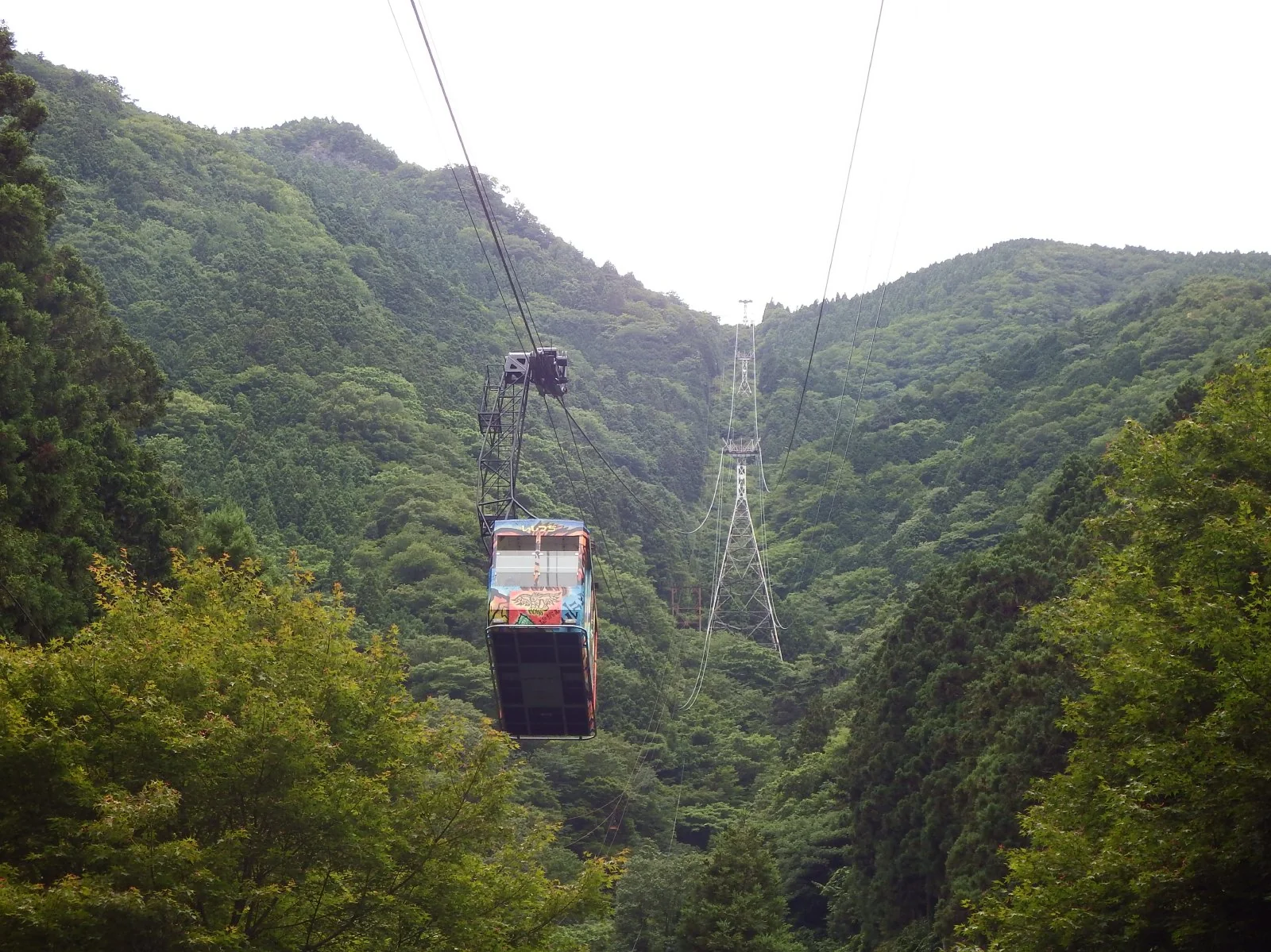
The operator's map places Shimodani Station at 455 meters, the upper ropeway station, Joju, at 1,300 meters, and Jojusha at 1,450 meters. The ropeway covers most of the climb, but you still walk about 150 meters uphill. Treat riding the ropeway and reaching the shrine as separate stages. The transport name summit station refers to the ropeway's upper terminal.
Jojusha is a suitable turning point. Worship, look toward the summit from Mikaeri Yohaiden, then return the same way. The official map shows Hacchozaka and deeper mountain trails beyond the shrine gate. Keeping the gate as your boundary controls the day's walking. If you enjoy mountain views without aiming for the summit, reaching the shrine completes the route. In cloud, focus on the buildings and worship instead.
From Matsuyama, replace a city day with a full mountain day. From near Iyo-Saijo, go up in the morning and return to the station area in the afternoon. On a journey between Shikoku prefectures, allow separate time for luggage and reaching your accommodation. Give Ishizuchi a full daylight period rather than combining it with Matsuyama Castle and Dogo bathing in one afternoon. For city bases, see Shikoku travel and transport choices.
Take the bus from Iyo-Saijo to Shimodani, ride Ishizuchi Ropeway and walk to Jojusha. Compare the single-seat chairlift and walking times, with autumn 2026 hours, bus fares, a 15:26 return and driving costs.
For autumn color, identify the elevation and location in each photograph or report
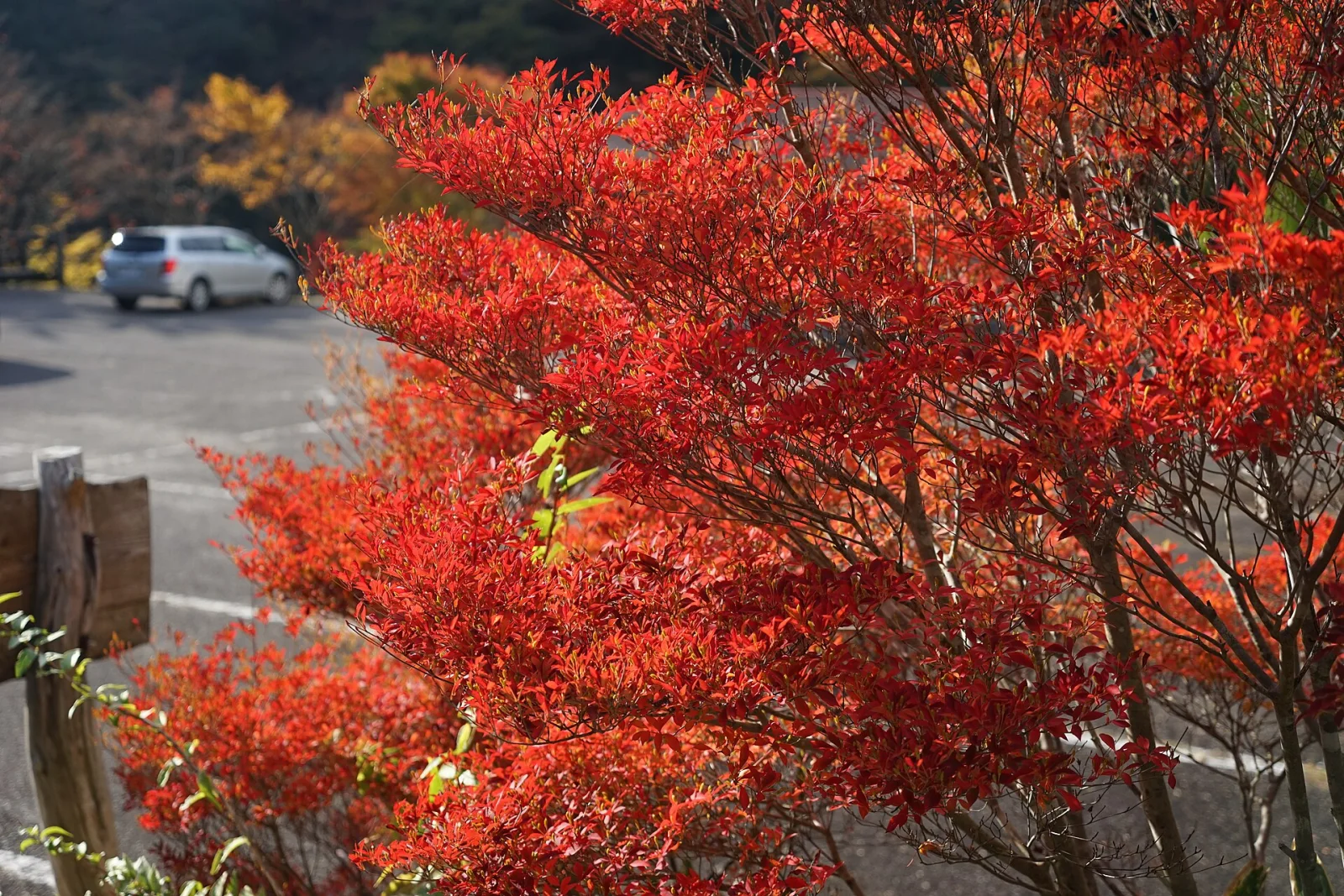
Ishizuchi Shrine's seasonal guide says summit leaves start changing in late September, reach their viewing period in early October, then move down the mountain through October. This sequence helps with dates. Jojusha is partway up, and the ropeway starts lower at Shimodani, so colors differ along the route on the same day. Identify where a bright-red summit photograph was taken before relating it to the Jojusha route.
Separate reports into Shimodani, the ropeway slopes, Joju Station and Jojusha. A headline saying Ishizuchi is at its best is too broad. Reports about the summit or Tsuchigoya describe different access and scenery from this lower route. The day before, read dates and locations in the operator's latest news. At the base, ask about the upper station and shrine route before deciding how long to stay. This is more useful than planning everything from an old photograph.
For autumn photography, give most time to the section with good color that day. View the slopes from the moving ropeway, then stop near the upper station or along the shrine path. Step aside for photographs and leave the route clear. In thick mid-mountain fog, replace a long wait for distant views with worship and a short walk. With one ascent route, adjusting stops to what you find is easier than chasing another entrance.
The shrine also records snow as early as late October in some years. For late October or early November, pack for low temperatures as well as autumn color. A warm city morning still calls for an extra outer layer in the mountains. If notices report suspension, snow or access restrictions, switch to Saijo or Matsuyama. You choose the travel date; weather determines how far to go that day.
Buy a return ropeway ticket and use the autumn 2026 hours
The Ishizuchi Ropeway fares and operation page currently lists returns at ¥2,200 for junior high school age and over and ¥1,100 for elementary students. Singles are ¥1,200 and ¥600. For ascent and descent on the same side, a return is straightforward. Two adult singles cost ¥2,400, ¥200 more; two elementary singles cost ¥100 more than a return. Keep the return ticket in a fixed place so you can find it in the descent queue.
From October through November 3, 2026, weekday hours are 8:00–17:00 and Saturday, Sunday and national holiday hours 7:40–18:00. From November 4 through December, all days run 8:40–17:00. This affects early arrivals: the 07:37 Saijo bus reaches Ropeway-mae at 08:31, so after November 4 you still wait for the 8:40 opening. Put the correct first and last services into your calendar when choosing an autumn date.
Both directions depart together, normally every 20 minutes at 00, 20 and 40 past. The operator also lists additional operation at ten-minute intervals. Plan the return around 20-minute gaps and leave busy-day extras to on-site dispatch. The official map gives about eight minutes aboard, excluding waiting, tickets and leaving the station. After the bus arrives, allow time to prepare and buy tickets before ascent.
Cards and some electronic payments are accepted only at Shimodani Station below. Buy the return before going up and carry cash for other transport and the chairlift. Card payment at the ropeway does not remove the day's cash needs. For concessions, bring the documents and meet the eligibility listed officially. Ordinary overseas visitors can budget at regular fares to see necessary costs clearly.
Allow half an hour from Joju Station to Jojusha, then choose your stops
The shrine introduction gives about 20 minutes on foot after the ropeway, while the operator's local map marks about 800 meters and 30 minutes. Use 30 minutes as the basic outbound allowance, then add photographs and breaks. With children, older travelers or slow walkers, do not calculate the last connection from the shorter estimate. Find the Jojusha signs at the upper station before starting your walking time.
There is an elevation difference between station and shrine, so the two directions feel different. Walking uphill warms you, while stopping for worship can make you cold. Keep a jacket accessible and avoid burying your water bottle. Wear soles suitable for mountain paths and leaves; slow down on wet ground, stone steps and slopes. Leaves can hide the surface. Stop firmly before taking photographs rather than walking backward while framing them.
For companions new to mountain paths, walk a short section after leaving the station and assess breathing, knees and children's pace before continuing. If comfortable, continue to the shrine. Otherwise stay within open areas near the upper station. A return ropeway ticket allows a shorter visit. Families needing a wheelchair or stroller throughout should give the operator equipment dimensions and access needs, obtain specific advice on the route and boarding, then choose this day.
Returning the same way means you know the junctions and broad gradient. Before leaving Jojusha, still check the time needed back to the station. Use the slowest companion's pace for the whole group. Put rests into the middle so each stop on the return does not feel like a delay. If worship is finished before noon, descend early or sit in a suitable place rather than adding a section just to stay until the last service.
Approaching from below, this introduces the ropeway and walking route around Jojusha.
The single-seat chairlift costs extra and replaces part of the climb
Beyond the upper ropeway station is a sightseeing chairlift with one person per seat. Current fares are ¥600 return or ¥350 one way, cash only except designated travel-agency vouchers. Its ticket and stations are separate from the ropeway. At Joju Station, check whether it is operating before choosing the full walk or walking to the lower chairlift station to buy a ticket.
The official local map gives about five minutes on foot from Joju Station to the chairlift, six minutes riding and another ten minutes to Jojusha afterward. It still requires walking at both ends and mainly replaces part of the uphill route. These stages total about 21 minutes before tickets and waiting. Detouring only to save a few minutes may not suit a slow walk. Add it for the open-seat experience or to reduce climbing.
For a one-way ride, decide which effort you want to reduce. Those concerned about climbing can compare riding out and walking back; those with downhill-sensitive knees should discuss the return first. Operation and each person's ability to board also affect the choice. Each traveler rides alone. With young children or someone needing continuous help, do not make it the group's only route on arrival.
This day's route can be completed by walking to Jojusha, with the chairlift optional after arrival. It has its own closing time. Read the day's ticket-office notice, including the last descent if riding both ways. Use the operator's current news and actual opening to choose, rather than treating it as a guaranteed connection. A walking main route remains clear if the lift closes earlier.
Give Jojusha and Mikaeri Yohaiden a full worship stop
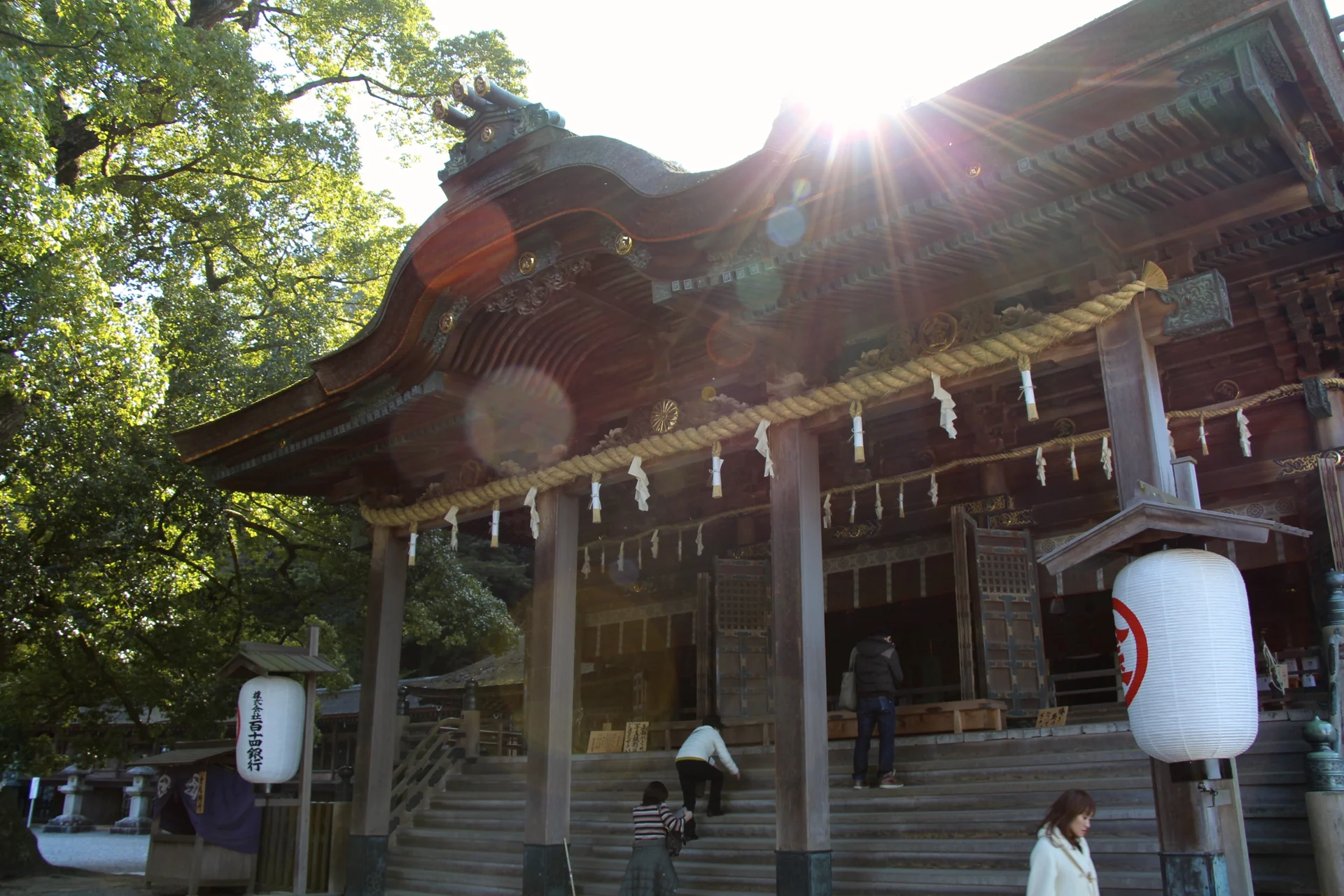
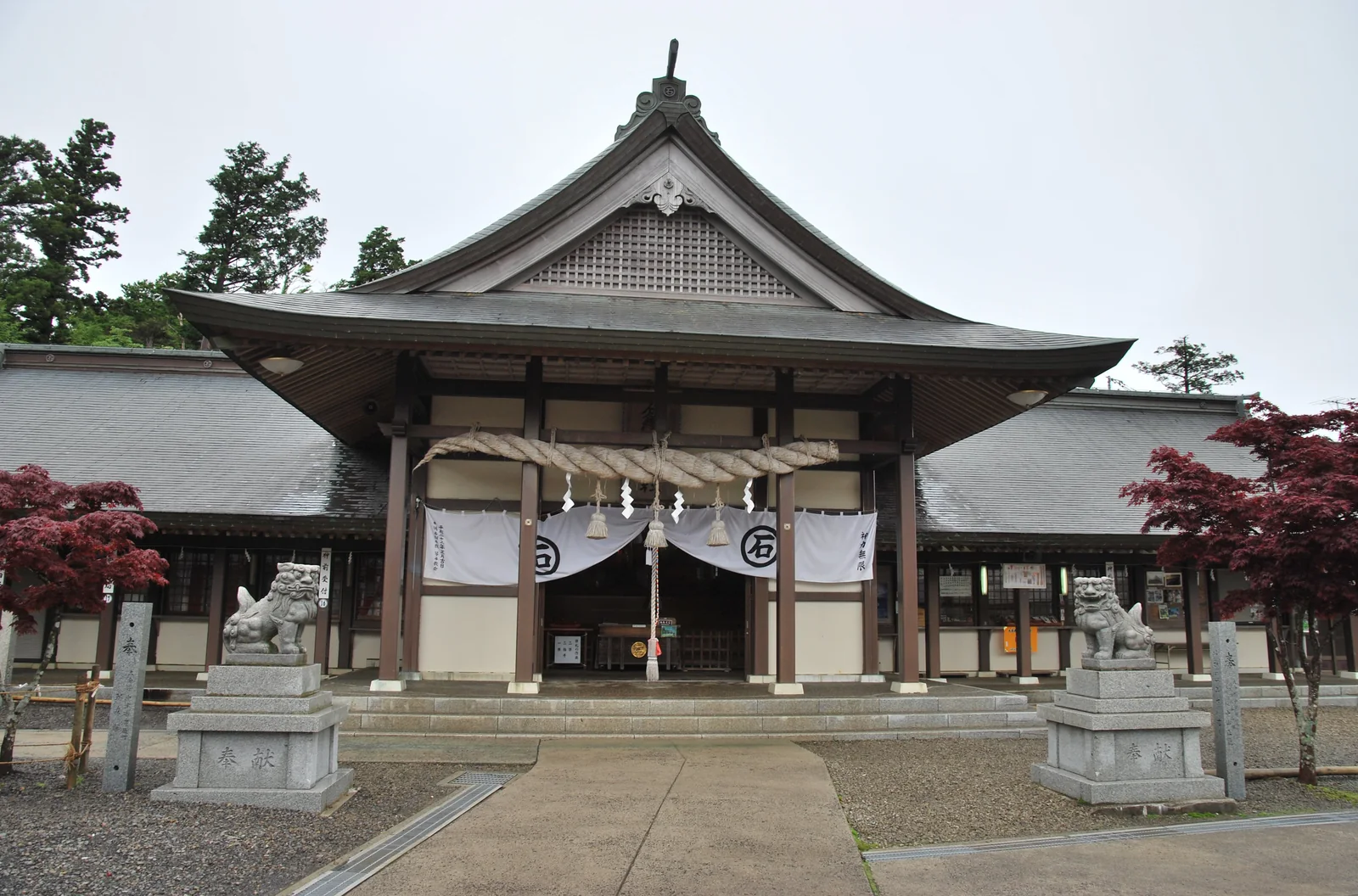
Chugu Jojusha stands at about 1,450 meters and is listed by the shrine as staffed year round. Worship first, then find Mikaeri Yohaiden for the summit-facing view, before breaks and photographs. This separates worship movement from photo stops. If someone wants a slow look at the buildings, agree on a precise meeting point rather than keeping everyone at one photo spot.
The shrine name relates to its account of En no Ozunu. After a failed ascent, he was preparing to descend when he met an old man trying to grind an axe into a needle. Inspired, he resumed training and fulfilled his wish to open the mountain. The shrine identifies the old man with Ishizuchi Okami and explains the name through fulfillment of a wish. Knowing the story gives Joju a specific meaning without turning every religious name along the way into another checklist stop.
Mikaeri Yohaiden continues the story: descending from the summit, En no Ozunu looked back to express fulfillment of his wish. Read the hall name, then look in the mountain-facing direction. In clear weather, take in both the nearby precinct and distant mountain shape. In cloud, study the building, name plaque and worship space. Ask before photographing someone praying and keep the main approach clear.
Allow 30 minutes in the precinct as an initial planning estimate, more for reading or rest. This suggested stay differs from official walking times. If the ascent took longer, reduce photo stops. If early, bring lunch and rest forward. For the 15:26 bus, set your departure from the precinct here rather than calculating descent only after finishing.
Oku-Maegamiji offers a short visit instead of the longer shrine walk
The operator describes Oku-Maegamiji as the inner sanctuary of Maegamiji, pilgrimage temple No. 64, about six to eight minutes on foot after the ropeway. This worship site near the upper station has a different religious background from Jojusha. Short walkers can make it the main destination and return to the station. Those continuing to Jojusha can add it according to time and signs. Choose the short or long route as the focus before adding every branch.
The operator's sightseeing introduction connects it with Kobo Daishi and Ishizuchi worship and records distant worship toward Tengudake ahead. Notice the relationship between the temple name and mountain belief, looking at the nearby temple before the distance. If Maegamiji No. 64 is also in your lowland itinerary, keep the names distinct. Mountain Oku-Maegamiji and the pilgrimage temple below need separate access plans.
With two adults and different interests, agree on groups at the upper station. Stronger walkers can visit Jojusha; the short-route group can visit Oku-Maegamiji or rest near the station, then meet at the same station building. Each group should keep tickets and contact details, and the meeting time must include the walk back. With unreliable phone reception, use the agreed building and time so the shorter group does not follow the longer route looking for others.
Without a car, stay where you can catch the morning bus and carry cash
From Iyo-Saijo Station, take Setouchi Bus's Nishinokawa Line to Ropeway-mae. The timetable revised October 1, 2026, offers 07:37–08:31 or 10:27–11:21 in the morning. Both take 54 minutes. The early service gives more mountain time; the later one suits a slower start with only the Jojusha return walk. These departures match in the operator's weekday, Saturday and Sunday/holiday searches, but also read temporary notices for your date. Arrange accommodation-to-station travel before selecting a bus.
From Matsuyama by train that morning, find an actual train reaching Iyo-Saijo, then add time to leave the station, handle luggage and reach the bus stop. Do not match train arrival directly to bus departure. If the early intercity trip would rush everyone, stay near Saijo the previous night so the mountain day starts with breakfast and a walk to the stop. Leave large luggage within your accommodation arrangements rather than carrying it repeatedly onto the ropeway and mountain paths.
On October 28, 2026, the operator's current search lists Saijo-ekimae–Ropeway-mae at ¥1,020 adult and ¥510 elementary student each way, with the same reverse fare. An adult bus return is ¥2,040 plus ¥2,200 ropeway return, totaling ¥4,240. Use these two fares for the transport budget starting in Saijo. Food, intercity trains and the optional chairlift are extra. A Saijo-based total is not the full cost from a Matsuyama hotel.
The bus riding guide uses payment on exit. Normally board at the middle door, take a numbered ticket and put fare and ticket into the box when leaving by the front door. Some buses have only a front door. Cash, commuter passes and multi-ride tickets are accepted; interoperable transport IC cards are not. Carry coins and ¥1,000 notes, and exchange money while stopped rather than presenting a large note on exit. Ropeway card acceptance does not remove the bus cash requirement.
The bus child fare applies to elementary students. The operator's FAQ allows one young child free with each adult or child paying an ordinary fare; the second young child onward pays the child fare. Two adults and one elementary student pay ¥5,100 for return buses and ¥5,500 for return ropeway tickets, totaling ¥10,600. This example does not use the free-young-child rule. Read each operator's child categories separately and buy ropeway, chairlift and bus tickets separately.
The 15:26 return: reserve descent time even with an 11:21 arrival
Without a car, leave Saijo-ekimae at 10:27 and reach Ropeway-mae at 11:21, then buy tickets, ascend, walk to Jojusha, eat and worship before the 15:26 bus back. The base-to-base window is four hours and five minutes, calculated between arrival and departure. Ropeway waiting, station movement and walking all fall inside it. This version makes the Jojusha return the main activity, with Oku-Maegamiji and the chairlift optional according to progress.
Work backward: be at the lower bus stop before 15:10, allow descent queues beyond ticket checks, and start walking from Jojusha toward the upper station around 14:00. These 15:10 and 14:00 targets provide waiting and descent allowances between stages. If ascent queues take longer, shorten rest or photography at the shrine and keep the departure time, leaving room for dinner and the return train.
For more scenery or a slower pace, take 07:37 to arrive at 08:31. The extra time allows waiting for opening, a gradual uphill walk and full worship, with earlier lunch possible. Keep the 15:26 return, reaching Saijo-ekimae at 16:20, with time for luggage and onward travel. The early bus lets you watch the clock less rather than adding a farther hiking destination.
The October 2026 table also lists a 17:20 departure from Ropeway-mae, reaching Saijo-ekimae at 18:14. Choose it from the start if you want longer above, and place dinner and trains afterward. A weekday 17:00 ropeway close leaves only 20 minutes before the 17:20 bus; the final ropeway is not an ideal connection. Descend earlier and allow the walk to the stop and queues for a comfortable later return.
Identify the two viewpoints on the map before extending the walk
The operator's Jojusha area map marks a viewing place near Joju Station and another observation deck at the chairlift's upper end, at different elevations. For a view after the ropeway, find the station-area viewpoint first. If taking the chairlift, connect its upper deck at about 1,400 meters with the shrine direction. Use station and facility names for meeting points rather than only saying viewpoint, which can leave people waiting at different heights.
The map separately marks restrooms at Shimodani, Joju Station and near Jojusha. Prepare below, then find the upper station's actual facilities and opening before starting the shrine walk. Put restroom stops at departure and turning points to avoid returning halfway. Ask children before the climb. The simplified map identifies stages; follow junction signs for actual turns.
Allow a short ground-level walk from the bus stop or parking to Shimodani Station. The official map separates the bus road from the station and marks about five minutes on foot. Ropeway-mae does not mean the bus door opens at the ropeway gate. Find the station direction and treat tickets, restroom and waiting as one preparation stage. On return, include these five minutes and finding the stop before considering yourself at the bus waiting point.
Arriving at Shimodani in the afternoon: choose a short walk or another day
The same Nishinokawa timetable also lists Saijo-ekimae departures at 13:37 and 16:17, reaching Ropeway-mae at 14:31 and 17:11. The first leaves only two hours and 49 minutes before the 17:20 return bus. The second arrives after the autumn weekday 17:00 ropeway close. Compare ropeway hours before choosing a remaining mountain bus. Separate transport schedules do not automatically form a sightseeing trip.
At 14:31, if operation, queues and weather suit, shorten to Joju Station and Oku-Maegamiji and choose your descent below before going up. Jojusha needs walking, worship and rest, so the two morning buses fit the full route more easily. If your companions want a slow shrine stay, move it to a full daylight period rather than cutting each stop after arrival.
Use the same method if a delayed morning train makes you miss 10:27. Consider the short version available after taking 13:37 before deciding to go up. Reaching Saijo is no reason to shift the whole morning route later unchanged. For a taxi or last-minute rental, obtain an available vehicle, return arrangement and quote before budgeting it. The gap after a missed bus can instead serve lunch in Saijo and accommodation travel changes.
Park at Shimodani and still allow a full day from Matsuyama
Use the ropeway company's address, 81 Ko, Shimodani, Nishinokawa, Saijo, Ehime (愛媛県西条市西之川下谷甲81番地), as the driving destination. The operator gives about one hour 30 minutes from central Matsuyama via Iyo-Komatsu Interchange as a scale estimate. Add vehicle collection, mountain roads, parking and walking to the ticket office from your hotel. Save the destination and confirm it is the Shimodani side, keeping similarly named shrines and other trailheads out of the route.
Use nearby private parking. The operator lists Izumiya beside the bus stop and Kyoya Ryokan opposite the ropeway, with standard cars from ¥500 per day. Parking is separate from ropeway tickets and settled under each lot's on-site rules. Read signs, entrances and parking instructions before taking daily belongings to buy tickets. Share car-key, parking and descent meeting information with companions for an easier return.
Two adults driving and taking only the return ropeway pay ¥4,400 plus parking from ¥500, totaling from ¥4,900 for those two items. Rental, fuel and tolls are extra. Return chairlift rides for both add ¥1,200. This comparison suits an already rented car. If renting only for today, include full rental cost and pickup and return time.
Arrive at Shimodani in the morning, walk to Jojusha before noon, then choose a longer stay or earlier descent after lunch according to weather. Back at the car, decide on returning to accommodation along the original route. A car mainly removes fixed bus waits; ropeway closing and driver fatigue still apply. After mountain walking, avoid stacking rural stops onto the return and let the driver rest as needed.
Meals, children and changing weather: keep the mountain day easy to finish
The operator lists Shiraishi, Tamaya and Hinodeya ryokan around Jojusha. For lunch there, read the day's meal service and last-order notices while ascending before adding it. Alternatively, bring water and portable food, rest where eating is allowed and take rubbish down. If worship is the main interest, lunch need not become another long wait. Keep enough energy to return after resting.
With children, divide the day into clear stages: ropeway, a walk, worship and rest, then station return. Explain where you will stop rather than using the distant summit as a reward. Keep gloves and warm layers accessible, and adjust damp clothing before sitting. If a child is clearly tired outbound, have an adult shorten the route near the station. Others continue only under the agreed meeting plan.
Tell companions with knee pain or motion sickness about the 54-minute bus ride and walking elevation changes before departure so they can choose. Those comfortable with the ropeway but not a long walk can use Oku-Maegamiji. If mountain road travel itself is difficult, choose a city day. Ask each person's preferred distance beforehand to avoid discovering different expectations at Joju Station.
In light rain, assess soles, rain gear and ground before shortening the visit. If wind, rain or snow affects ropeway operation, change plans below. Save the operator's number, 0897-59-0331, the Ropeway-mae and Saijo-ekimae stop names and return times. If conditions change above, return to the station to ask about operation before planning the remaining time, rather than walking farther while hoping rain stops.
Before descent, check tickets, phone, jackets and companions at the station, then return to parking or the bus stop as planned. Bus groups should prepare fares and use the restroom first, shopping only with spare time. Drivers should arrange rest and navigation. At Saijo Station, collect luggage and find the next train's platform before dinner. If staying nearby, return directly to your accommodation to put down your bag.
A few useful answers
How can I spend a day at Ishizuchi without climbing to the summit?
Ride from Shimodani to Joju Station, walk to Jojusha for worship and return the same way. The shrine can be your final destination. For a shorter walk, focus on Oku-Maegamiji and the upper station.
How should I choose autumn foliage dates for lower Ishizuchi?
The shrine places summit color change in late September, with viewing in early October, moving lower through October. Jojusha is midway up at about 1,450 meters. Read current color locations for the shrine, upper station and ropeway slopes.
How long is the Jojusha walk, and does the chairlift remove it?
The shrine says about 20 minutes after the ropeway; the operator marks about 800 meters and 30 minutes. Plan 30 plus breaks. The chairlift requires about five minutes walking before, six aboard and ten walking afterward.
What do the ropeway and chairlift cost, and can I pay by card?
Ropeway returns cost ¥2,200 for junior high school age and over and ¥1,100 for elementary students. Shimodani accepts cards and some electronic payments. The separate chairlift costs ¥600 return or ¥350 one way, cash except specified agency vouchers.
Without a car, how do I reach the ropeway from Iyo-Saijo and return?
Leave Saijo-ekimae at 07:37 or 10:27, arriving Ropeway-mae at 08:31 or 11:21. For Jojusha, choose the 15:26 return reaching Saijo at 16:20, or the later 17:20–18:14 service. Choose descent and waiting time before ascending.
What is transport from Saijo for two adults and an elementary student?
Return buses cost ¥5,100 and return ropeway tickets ¥5,500, totaling ¥10,600. Chairlift, food and travel to Saijo from Matsuyama or elsewhere are extra. Carry bus cash; interoperable transport IC cards are not accepted.
Is Jojusha suitable if I reach Shimodani only at 14:31?
Only two hours and 49 minutes remain before the 17:20 bus, including tickets, ropeway waits and walking. A short upper-station and Oku-Maegamiji route is easier. For full worship and rest at Jojusha, use a morning bus.
Official information and references
Sources used in this guide.
- Ishizuchi Ropeway | Ropeway and chairlift fares and hours
- Ishizuchi Ropeway | Sightseeing and walking map
- Ishizuchi Ropeway | Sightseeing guide
- Ishizuchi Shrine | Chugu Jojusha
- Ishizuchi Shrine | Mountain seasons
- Ishizuchi Ropeway | Company information
- Setouchi Bus | Local routes
- Setouchi Bus | Timetable and fare search
- Setouchi Bus | How to ride
- Setouchi Bus | Questions and answers
- Setouchi Bus | Nishinokawa timetable, October 1, 2026 edition
- R28ch | Ishizuchi Ropeway and Jojusha walk, autumn 2022