How to book crab in Osaka: compare Kani Doraku Dotonbori Honten lunch gozen, crab hot pot kaiseki, Osaka Kanigen's 90-minute all-you-can-eat, and 2026–27 winter courses for Matsuba and Kasumi crab in Namba.
- Reading Scope
- 24 min read · 10 chapters · 6 Q&As
- Official Verification
- 29 official sources checkedUpdated November 22, 2026 at 08:00 AM GMT+8
Chapter Route Map (tap any stop)
- Splitting your meal budget: start with the dish you want most
- Planning the 2026–27 crab season: target November and December for roe-bearing female crab
- Lunch gozen at Kani Doraku Dotonbori Honten: ¥3,740 to ¥6,930
- Finding hot pot, grilled crab, and live crab on the kaiseki menu
- 90 minutes of all-you-can-eat crab in Dotonbori: leave the last 20 minutes to finish
- Kani Ichiban in Sennichimae: built for tagged Matsuba and Kasumi crab
- Reading Japanese menu terms: legs, shell miso, or a pot of broth
- Booking for kids, older travelers, and dietary restrictions
- Getting there from Namba, New Year's Eve hours, and running late
- Fitting crab into your Osaka itinerary: three Dotonbori routes
- Quick Q&A
For a first crab meal in Osaka, start with a lunch gozen at Kani Doraku Dotonbori Honten, starting at ¥3,740 (tax included) and served until 16:00 JST. If you want to reorder crab legs non-stop, go for Osaka Kanigen's all-you-can-eat plan—90 minutes at the table, with last order at 70 minutes. If your trip revolves around origin-tagged Matsuba crab, Kani Ichiban in Namba lays out 2026–27 winter courses showing exactly how both Matsuba and Kasumi crab are served. Decide which bite matters most first, then filter restaurants by budget and schedule.
Splitting your meal budget: start with the dish you want most
First-time visitors to Dotonbori can start with lunch gozen sets ranging from ¥3,740 to ¥6,930 per person. Kani Doraku Honten's menu pairs crab tempura, crab sushi, and crab kamameshi (iron-pot rice) in different combinations. Two diners who want grilled crab with rice should pick a set featuring grilled crab first, then choose between kamameshi and sushi. If you are mainly after a simmering crab hot pot finished with rice in the broth, skip straight to the kanisuki courses. Every option is crab, but picking the wrong category can leave you waiting through an entire meal for the one preparation you actually wanted.
Once your budget hits ¥8,000 to ¥10,000, all-you-can-eat plans and kaiseki courses start to overlap. Compare Honten's Geppaku course at ¥8,800—which centers on its signature crab hot pot and zousui rice porridge—against Osaka Kanigen's true snow crab all-you-can-eat plan at ¥9,878, which lets you keep ordering more true snow crab within the time limit. Choose Geppaku if you want to eat slowly, talk, and wait for the broth to simmer. All-you-can-eat is worth locking in a timed slot only if everyone at the table plans to crack through multiple rounds of crab legs. All prices below are tax-included yen rates checked on November 22, 2026.
Above ¥10,000, decide what the extra spend is buying you. Higher-tier Honten courses may add grilled crab, expand the sashimi offerings, or switch to live crab kaiseki. On all-you-can-eat menus, upgrades are easy to spot by species, such as adding king crab. If all you want is a single plate of grilled king crab, check the a la carte menu, where even half-portions list clear prices. Writing down your target cuts and cooking styles before you book makes choosing much faster than counting total dishes in a course.
| What you want from the meal | Restaurant & plan | Price per person (tax incl.) |
|---|---|---|
| A straightforward round of cooked crab dishes | Kani Doraku Dotonbori Honten "Hoshi" lunch gozen | ¥3,740 |
| Crab hot pot finished with zousui rice porridge | Kani Doraku Dotonbori Honten "Geppaku" kanisuki course | ¥8,800 |
| Repeat orders of red snow crab | Osaka Kanigen Dotonbori 90-minute red snow crab all-you-can-eat | ¥7,678 |
| All-you-can-eat true snow crab | Osaka Kanigen Dotonbori 90-minute true snow crab all-you-can-eat | ¥9,878 |
| Unlimited red snow crab plus soft drinks | Osaka Kanigin Namba red snow crab all-you-can-eat (min. 2 guests) | ¥8,800 |
| Origin-tagged Matsuba crab | Kani Ichiban Osaka Namba Matsuba & Kasumi crab course | ¥29,800 |
How to book crab in Osaka: compare Kani Doraku Dotonbori Honten lunch gozen, crab hot pot kaiseki, Osaka Kanigen's 90-minute all-you-can-eat, and 2026–27 winter courses for Matsuba and Kasumi crab in Namba.
Planning the 2026–27 crab season: target November and December for roe-bearing female crab
On Japanese menus, zuwaigani refers to snow crab, which Osaka restaurants also label hon-zuwaigani (true snow crab). In the San'in region, male snow crabs are called Matsuba-gani; Fukui's Echizen-gani and Ishikawa's Kano-gani are regional brands of the exact same male snow crab. Spot zuwaigani first to confirm the species. If you are paying extra for a Sea of Japan origin, look for the specific brand name, port of landing, or tagu-tsuki (tagged). When a course features two crab varieties, check which dish carries the tag—a single tagged leg served as sashimi is a very different tier from an entire course built around branded crab.
Under Tottori Prefecture's 2026–27 season rules, male Matsuba crab is fished from November 6, 2026 through March 20, 2027, while female oyagani opens on November 6 and closes on December 31, 2026. Ishikawa's kobako-gani listing puts its shipping window from November 6 to December 29. Plan for mid-November to mid-December as the shared peak window if you want both sweet male leg meat and female crab roe in the same meal. If your Osaka trip falls in January or February, put your budget toward clearly labeled male snow crab, grilled crab, or crab hot pot.
Female snow crab appears on regional menus as oyagani, seikogani, sekogani, or kobakogani. Its uchiko is the bright orange unripe roe inside the carapace, while sotoko is the granular roe carried under the abdomen, giving a distinct pop when bitten. A menu reading sekogani wo soete indicates a supporting appetizer portion. To make uchiko and sotoko the centerpiece, look for ippai (a whole crab) or koramori (meat and roe packed back into the shell), and confirm whether you are getting a whole crab or a smaller shell portion. Crab fat, or kanimiso, is separate—keep kanimiso and uchiko distinct when reading Japanese menus.
Fishing port opening days, seasonal restaurant menus, and your actual dining date follow three separate calendars. Tottori Port's 2026 first auction took place on November 7, while Kani Ichiban in Namba runs its Matsuba and Kasumi crab course from November 9, 2026 through March 31, 2027. You can still book that course right up to late March within the restaurant's published window, though if you specifically want crab unloaded that day, ask the restaurant about current deliveries. For classic crab dining without chasing port calendars, Kani Doraku notes on its live snow crab page that it sources live snow crab globally year-round, alongside regular menus for hot pot and lunch gozen sets.
Lunch gozen at Kani Doraku Dotonbori Honten: ¥3,740 to ¥6,930
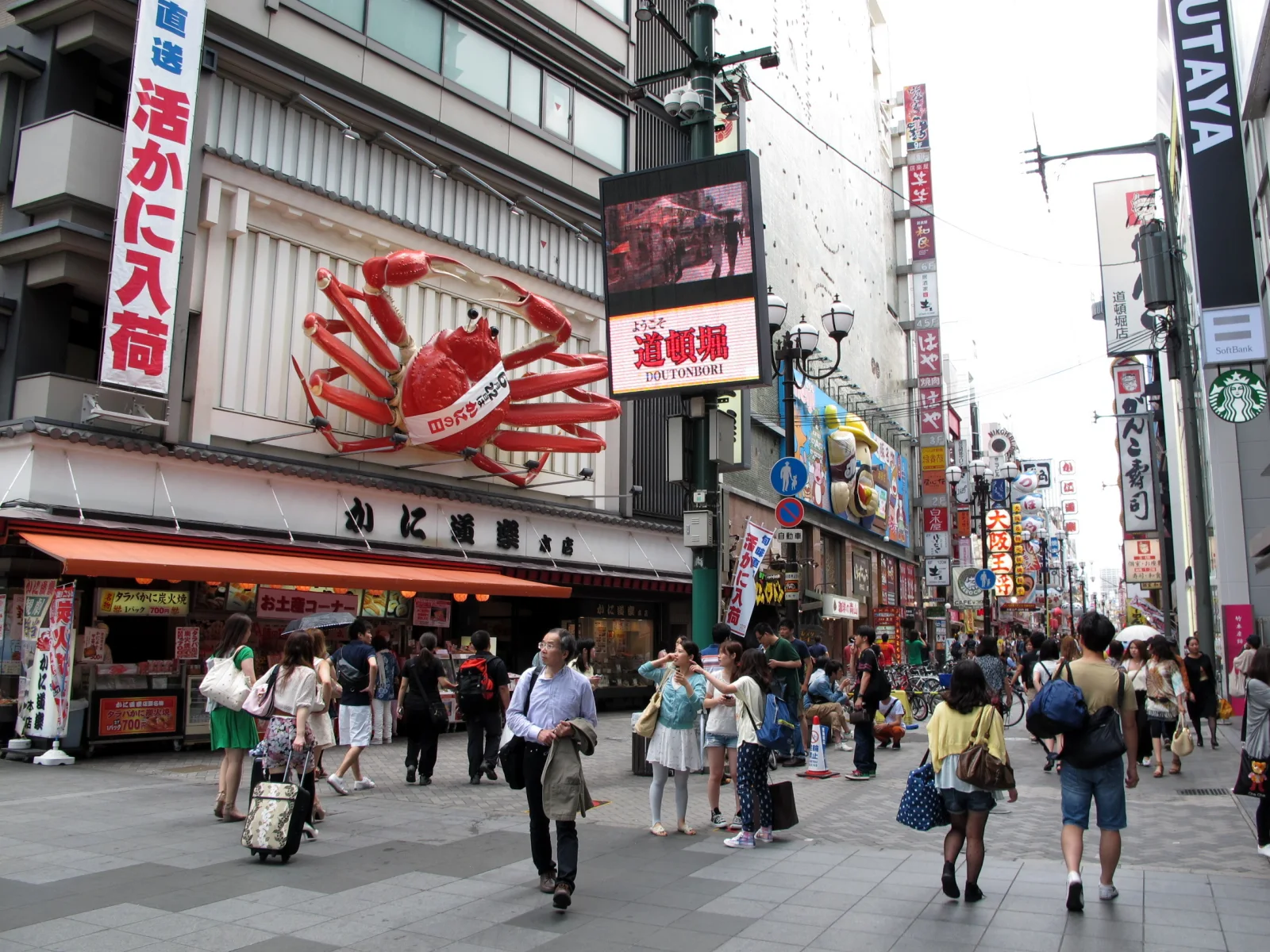
Kani Doraku Honten sits at 1-6-18 Dotonbori, Chuo-ku, Osaka, right under the giant crab sign at the south entrance to the arcade by Ebisubashi Bridge. Company records trace its origin to 1960 as Sengokubune, a shop selling San'in seafood, before opening this Dotonbori flagship in 1962. Two sibling branches, Naka and Higashi, sit on the exact same street, so look specifically for "Dotonbori Honten" when booking if you want to eat beneath the landmark crab. When friends head to the canal first for photos, share the exact street address and branch name so everyone meets at the main entrance.
Lunch gozen sets run until 16:00 JST, and the easiest entry points among the four tiers are Hoshi and Kirari. Hoshi (¥3,740, tax included) includes a crab appetizer, steamed egg custard, crab tempura, and crab sushi. Kirari (¥4,400) swaps the sushi for crab kamameshi and adds crab shumai and crab croquette. If one person prefers fried crab and another wants steaming rice, the difference between those two sets is easier to weigh than the ¥660 gap. When scanning the menu for the first time, look for the word gozen to locate the lunch category, then pick by main carb.
To try raw crab, choose Hiyori at ¥5,500, which brings crab sashimi, tempura, and kamameshi together in one meal. For sashimi, grilled crab, and a personal hot pot all at once, Kanata at ¥6,930 covers all three before finishing with crab sushi. Two Kanata sets come to ¥13,860. By comparison, pairing the entry-level Hoshi lunch with a regular a la carte order of grilled crab (¥3,300) already totals ¥7,040 per person. Factor in any a la carte extras before deciding whether to upgrade your set and pick your preferred rice dish.
If you arrive in Namba in the afternoon, reservation timing matters more than closing time. Honten normally opens at 11:00 JST, takes its last entry at 22:00 JST, and closes at 23:00 JST, with lunch gozen ending at 16:00 JST. Arrival-day immigration, baggage claim, and transit into the city are unpredictable, so book a generous buffer if you plan to eat straight from the airport, or check availability once you check into your hotel. When lunch is your main event, schedule it on a full city day—eat in Namba at midday, then stroll north into Shinsaibashi.
Finding hot pot, grilled crab, and live crab on the kaiseki menu
On Honten's kaiseki page, the ¥6,600 Koumei course pairs crab sashimi, crab tempura, baked crab claw gratin, and crab sushi. Spend ¥990 more for Kouka to add grilled crab and switch the rice course to kamameshi. At ¥8,690, Saikou brings a small crab hot pot and crab sushi. Looking at the menu side by side, grilled-crab fans can go straight for Kouka, while anyone who wants warm broth first and sushi at the end gets that extra hot pot course in Saikou. Reading the two lines around each tier tells you far more than staring at course photos.
When crab hot pot is the main event, head to the Signature Kanisuki Course section. At ¥8,800, Geppaku already builds zousui into the finale after the hot pot. Gengetsu at ¥9,900 keeps the same zousui ending while adding crab sashimi and grilled crab miso. In other kaiseki sections, a mini hot pot functions as just one course—the winter Kantsubaki set, for example, pairs its small pot with kamameshi instead. If you specifically want rice simmered in your own leftover crab broth, pick Geppaku or Gengetsu where zousui is listed on the menu.
For November and December 2026, Honten's seasonal hot pot and grilled crab lineup lists Kantsubaki (¥7,480), Fuyugasumi (¥8,800), and Rikka (¥13,200). Kantsubaki combines grilled crab, a mini hot pot, tempura, and kamameshi; Fuyugasumi adds a sashimi assortment; Rikka features grilled half-crab, a crab shabu-shabu mini pot, and crab sushi. Kantsubaki is the sharpest pick in November and December if you want cooked crab and hot pot together in the ¥7,000s. Note that Honten closes on December 31, so check individual branch calendars for New Year's Eve. Visiting Osaka in January for grilled crab and crab rice? Look at year-round Kouka or Kikou instead.
If your budget is aimed squarely at live crab, check the Live Snow Crab Kaiseki section. Taking the ¥16,500 Iki-kani Yude Kaiseki as an example, the menu pairs boiled live crab with crab miso right in the shell alongside grilled crab, tempura, and kamameshi. Limited-quantity courses like this must be selected specifically during online booking to reserve your portion. If the live-crab course does not appear in the online system, call ahead to ask whether portions can be held for that day.
If you only want a single dish, the regular a la carte menu lists yakigani (grilled crab) at ¥3,300 (tax included) and a half-portion of yaki-tarabagani (grilled king crab) at ¥3,960. Adding crab kamameshi costs ¥1,870. Two diners planning to share different cuts should check how many leg segments come in an a la carte order—and whether sharing is fine—before skipping a gozen set. For hot pot ordered a la carte, Honten lists post-pot zousui separately at ¥660, letting you decide on rice based on appetite.
90 minutes of all-you-can-eat crab in Dotonbori: leave the last 20 minutes to finish
Osaka Kanigen Dotonbori is located on the 4th floor of the Main Street Dotonbori Building at 1-6-6 Dotonbori—the same block as Kani Doraku Honten, though you go inside the building and head upstairs. According to its listed plans, red snow crab is ¥7,678, true snow crab is ¥9,878, king crab plus snow crab is ¥14,278, and the top tier with king crab, true snow crab, and Hokkaido horsehair crab is ¥17,578. Each price unlocks different species columns, so check closely for beni-zuwai (red snow crab) versus hon-zuwai (true snow crab) in the plan title. Plan details also note that grilled shellfish items are served per person.
House rules set last order at 70 minutes and check-out at 90 minutes, with no extensions. Slow shellers should order their top-choice crab in the first round, then wait until hot pot space and plates clear before adding more. Gather everyone from shopping or sightseeing before sitting down so the whole table starts with the full clock. The restaurant also notes a possible ¥1,500 surcharge for leftover food or drinks, so hold off on another round if uncracked legs are still piled on the table. If you plan to make zousui in the hot pot broth, ask about serving procedure before last order so you have time to finish the bowl.
On all-you-can-eat menus, tabehoudai covers food while nomihoudai covers drinks. On the true snow crab plan, adding nomihoudai costs ¥1,650 (tax included), using a glass-exchange refill system. For two adults, that brings the total to ¥23,056 versus ¥19,756 for food only—a ¥3,300 difference. If one person wants alcohol while another only wants a single cup of tea, ask before booking whether individual guests can opt into the drink plan, or compare single-drink prices first. Check coupon validity windows and applicable plans before factoring discounts into your budget.
Children's pricing is one of the easiest group costs to overlook. Osaka Kanigen's general food pages and individual plan details describe child rates slightly differently, so give your children's exact ages when booking and ask the restaurant to quote the table total for your chosen course. Plan descriptions for grilled seafood, sushi, and tempura also list shrimp, shellfish, and other items—anyone with food allergies needs to check the full menu in advance. Don't forget to factor in the time adults will spend cracking shells for kids. If you want time to finish your own meal, consider Kani Doraku Honten's elementary-school kids' meal or a restaurant where you can share a la carte dishes.
Groups of two or more should also compare Osaka Kanigin Namba. Located at 7F-B ECS No. 32 Building, 3-4-16 Namba, it is roughly a two-minute walk from Osaka Metro Namba Station Exit 19. Red snow crab all-you-can-eat is ¥8,800 and true snow crab is ¥13,200, and both prices already include unlimited non-alcoholic drinks. For two guests on the base red snow crab plan, Kanigin totals ¥17,600 versus ¥15,356 at Kanigen. If your group drinks plenty of sodas or tea, subtract what you would spend on individual drinks at Kanigen from that ¥2,244 gap, then compare the sushi and hot pot sides at each spot.
Both Kanigin courses require a minimum of two guests; solo diners coming from Osaka Station should stick to Kanigen's single-diner plans or a Kani Doraku gozen. To add alcohol at Kanigin, the listed upgrade is ¥1,100 for a 100-minute nomihoudai with last order at 70 minutes. If you see "tabenomi-houdai" on a booking page, scroll down to the drink list—at Kanigin, the base rate covers soft drinks only, with alcohol extra. Kanigin also offers semi-private rooms, making it a strong option for small groups who want a quieter meal right next to Namba Station.
You can evaluate any other all-you-can-eat crab spot using the same checklist. First verify the crab species and which items qualify for okawari (repeat orders), then check last order and check-out times, and finally tally minimum party size, drinks, and surcharges. Two restaurants with the same 90-minute limit will pace very differently depending on whether staff take orders at the table or you fetch items yourself. If someone in your group only wants crab sashimi, check whether ordering it a la carte makes more sense than paying for a full all-you-can-eat seat.
Kani Ichiban in Sennichimae: built for tagged Matsuba and Kasumi crab
Kani Ichiban Osaka Namba sits on the 1st floor of the Namba Oriental Hotel at 2-8-17 Sennichimae. From Kintetsu Nippombashi Station, the restaurant puts the walk at roughly two minutes, making it an easy lunch stop right after browsing Kuromon Market. "Kasumi crab" refers to red snow crab landed at Kasumi Port in Hyogo Prefecture. Hyogo's official tourism site lists the Kasumi crab fishing season from September 1 to May 31 of the following year—considerably longer than the local male snow crab season. When a restaurant specifies Kasumi, you are paying for red snow crab from a specific port rather than generic red snow crab on an all-you-can-eat menu.
From November 9, 2026 to March 31, 2027, Kani Ichiban's twin-crab course is ¥29,800 (tax included). It serves tagged live Matsuba crab as sashimi and grilled crab miso in the shell, pairs that with a whole boiled Kasumi crab per person, then simmers both crabs together in hot pot before finishing with zousui. The sekogani appetizer is noted as a November–December exclusive. Before locking in this splurge, check which crab is prepared which way: Kasumi arrives as a whole boiled crab, while Matsuba is showcased in sashimi, shell miso, and the hot pot.
If cooked Kasumi crab is your main goal, the ¥7,980 Yudegani Course runs from September 15, 2026 through March 31, 2027 and rounds out the meal with chawanmushi (savory egg custard), dobin-mushi (teapot broth), and kamameshi—a smart fit if you want a complete course without blowing your budget. For grilled shell miso, crab hot pot, and post-pot zousui, compare the Kasumi Crab Full Course listed through March 31, 2027 at ¥14,800. If someone at the table has a smaller appetite, the restaurant also lists a regular Kasumi crab jubako rice box for ¥2,980—an easy way to taste Kasumi crab in one bowl.
Kani Ichiban asks guests to reserve set courses in advance, while seating and a la carte availability can be checked on the day. Lunch runs 11:30–14:30 JST on weekdays and until 15:00 JST on weekends and national holidays; dinner runs 17:00–21:30 JST. If the twin-crab course is the centerpiece of your trip, lock in the date, exact course name, and party size early, then build your sightseeing around Sennichimae. Groups wanting cooked dishes, extra a la carte orders, or semi-private rooms should ask about seating layout and ordering rules when booking.
Reading Japanese menu terms: legs, shell miso, or a pot of broth
You can tell half of how a dish will arrive just from the cut listed on the menu. Kani-ashi tsukuri means sliced crab leg sashimi, while kani-tsume is the claw. Look for ashi when you want long strips of leg meat, and hanmi-yaki when you want a grilled half-crab. At Kani Doraku Honten, Koumei turns the claws into baked gratin, while Kouka and Saikou serve different presentations of leg sashimi. For anyone still learning how to crack crab, pre-scored legs or baked gratin are much easier to share across the table than a platter of whole segments.
Kanimiso is rich crab fat from inside the carapace, and koura-yaki means it is roasted right in the crab shell. Honten's November–December menu lists shell-grilled kanimiso as a standalone dish for ¥1,320 (tax included), making it easy to order one for the table to sample. If you prefer the clean sweetness of leg meat, save kanimiso to eat over rice or linger over at the end. If roasted crab miso is your number-one craving, go straight for Gengetsu or Kikou, both of which feature kanimiso-yaki.
Kanisuki is a hot pot of crab and vegetables simmered in Kani Doraku's signature house broth, while crab shabu-shabu is usually written as kani-shabu. When the pot arrives, ask the server which pieces should be cooked through, which plate is sashimi-grade, and how much broth to save for rice. Zousui cooks rice directly in that hot pot broth; kamameshi is seasoned rice steamed separately in a small iron pot. When your course includes both grilled crab and hot pot, pull the cooked crab out only as you are ready to eat it, and keep one clean side plate for picked meat so hot and chilled pieces stay tidy.
Items marked jika (market price) work the same way. On Honten's horsehair crab page, both whole and half crabs are listed at daily market rates. If you just want to compare horsehair crab meat and kanimiso, ask "Kegani no hanmi wa ikura desu ka?" ("How much is half a horsehair crab?") before deciding whether to add kamameshi. When a group wants to sample multiple species, total the price of a half horsehair crab and a half order of grilled king crab first—it may make more sense than locking everyone into individual kaiseki sets, and leaves room for diners who skip kanimiso to pick something else.
To crack a crab leg, snap it at a joint, run crab scissors along the edge of the shell, and lift out the meat with a crab fork. Practice on one segment first and pile empty shells separately so you keep room on the table. King crab shells are spiky—ask your server to show you how to open them safely. Horsehair crab takes patience to pick from the body chambers, so check whether the kitchen pre-cuts the shell before ordering a whole one. If it is your first time, you have young kids, or you only have an hour, stick to chawanmushi, kamameshi, tempura, or pre-scored crab legs.
Booking for kids, older travelers, and dietary restrictions
Kani Doraku Dotonbori Honten's Warabe kids' gozen—for elementary school age and younger—costs ¥2,200 (tax included) and includes boiled crab claw, croquette, gratin, crab sushi, and a drink. Because the online reservation form classifies children as anyone under 13, check both age rules carefully when entering headcount and selecting meals. Two adults ordering Hoshi plus one eligible child on Warabe totals ¥9,680. Calculating from that baseline—then adding drinks and extras—is far more accurate than multiplying the adult course price by three.
If anyone in your party avoids raw seafood, choose a cooked-focused course like Hoshi, which includes no sashimi. For sushi toppings or dipping sauces, ask "Namamono ga haitte imasu ka?" ("Does this contain any raw ingredients?") so staff can flag raw items. Diners who require everything fully cooked should stick to courses centered on grilled crab, tempura, or explicitly boiled crab. For food allergies, write out the allergens in Japanese before booking and check with the restaurant about dashi stocks, sauces, and shared pots. If cross-contact cannot be avoided, switch that meal to a restaurant that can safely accommodate the restriction.
When traveling with older adults, mobility needs, or bulky luggage, settle the seating style before choosing the menu. Honten lists an elevator, accessible areas, and a multipurpose restroom, and its online form lets you request regular tables, sunken horigotatsu seating, or private rooms (all private rooms use horigotatsu). Anyone who needs standard chair height can select "Dining table" and note wheelchair space requirements, or call to verify table clearance. Table-seki uses standard chairs, whereas horigotatsu requires sitting down onto tatami level and lowering your legs into a floor well. If bending knees is uncomfortable for anyone, confirm the seating setup before locking in a course.
Celebrating a birthday or group dinner? Honten offers a free-flow drink add-on for kaiseki courses: minimum six guests, two hours, ¥2,200 per person, booked together with the meal. Groups of two or three can estimate drinks a la carte from tea, beer, and sake prices. First-time crab hot pot diners sometimes try kani-zake (sake infused with roasted crab), listed at ¥990 (tax included) per 180 ml go carafe. Anyone with food allergies should include beverages when checking ingredients with staff.
Getting there from Namba, New Year's Eve hours, and running late
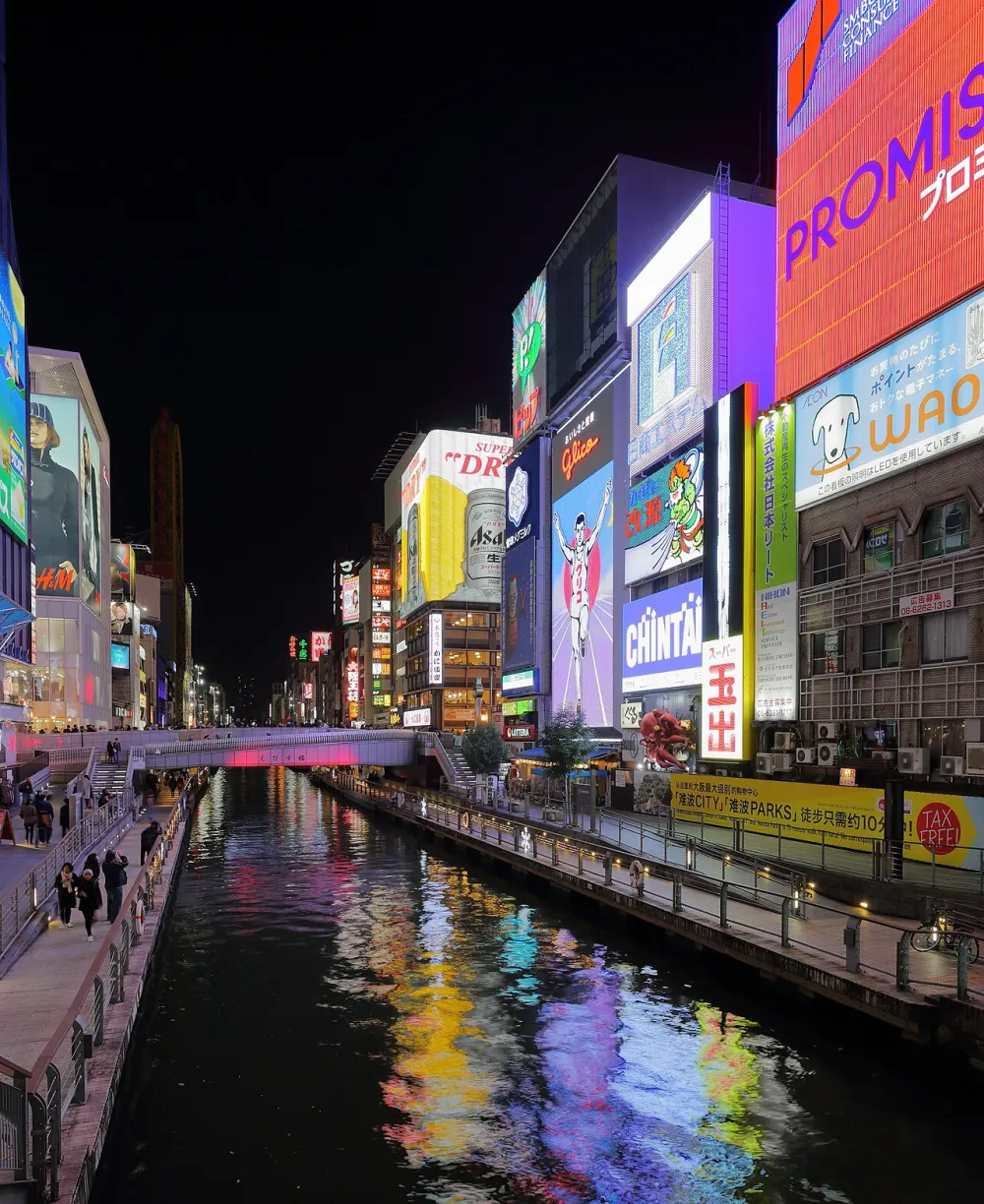
Walk south from Shinsaibashi across Ebisubashi Bridge and you will spot Honten's giant crab sign immediately on Dotonbori-dori. Coming up from Osaka Metro Namba Station, follow signs toward Ebisubashi and Dotonbori. The Midosuji Line Namba Station map marks elevator routes, so travelers with strollers or wheelchairs should choose an exit matching their train line before walking to the south end of Ebisubashi. JR Namba, Kintetsu Osaka-Namba, and Nankai Namba sit in the same commercial district but exit in different directions—drop the exact restaurant name and street address into your group chat rather than telling everyone to meet at "Namba Station."
Honten normally runs 11:00–23:00 JST and closes on December 31. Nearby Naka (1-6-2 Dotonbori) and Higashi (1-1-3 Dotonbori) typically open 11:30–22:00 JST and close on January 1. If you specifically want to dine on December 31, check individual booking calendars at Naka, Higashi, or another brand—and double-check the menu on that specific branch's page, since lineups differ from Honten. Spending the day shopping around Osaka Station and Umeda? Look at Kani Doraku Umeda on the 8th floor of the Sonezaki Swing Umeda Building to save a round trip down to Namba.
Open the reservation page on the official Kani Doraku Dotonbori Honten website, enter your date plus adult and child counts, then choose your course and seating type. Parties of 21 or more must contact the restaurant directly as instructed on the booking page. Reservations auto-cancel if you are more than 30 minutes late without notice. If someone catches a later train, walks into the wrong branch, or gets delayed, call Honten at 06-6211-8975; handle date changes or cancellations through your original booking channel. Check in under the reservation name and keep your confirmation email handy on your phone.
When your headcount is fixed and your schedule is flexible, lunch makes the safest anchor. If Honten is booked out at midday, check Naka and Higashi for the same window first, then compare Osaka Kanigen or a la carte options in Sennichimae. If checking menus reveals that everyone wants very different crab species, shift the meal to a clearer city day. Keeping one backup restaurant in the same neighborhood lets you stick to your canal stroll instead of hopping back on the subway just to find dinner.
Fitting crab into your Osaka itinerary: three Dotonbori routes
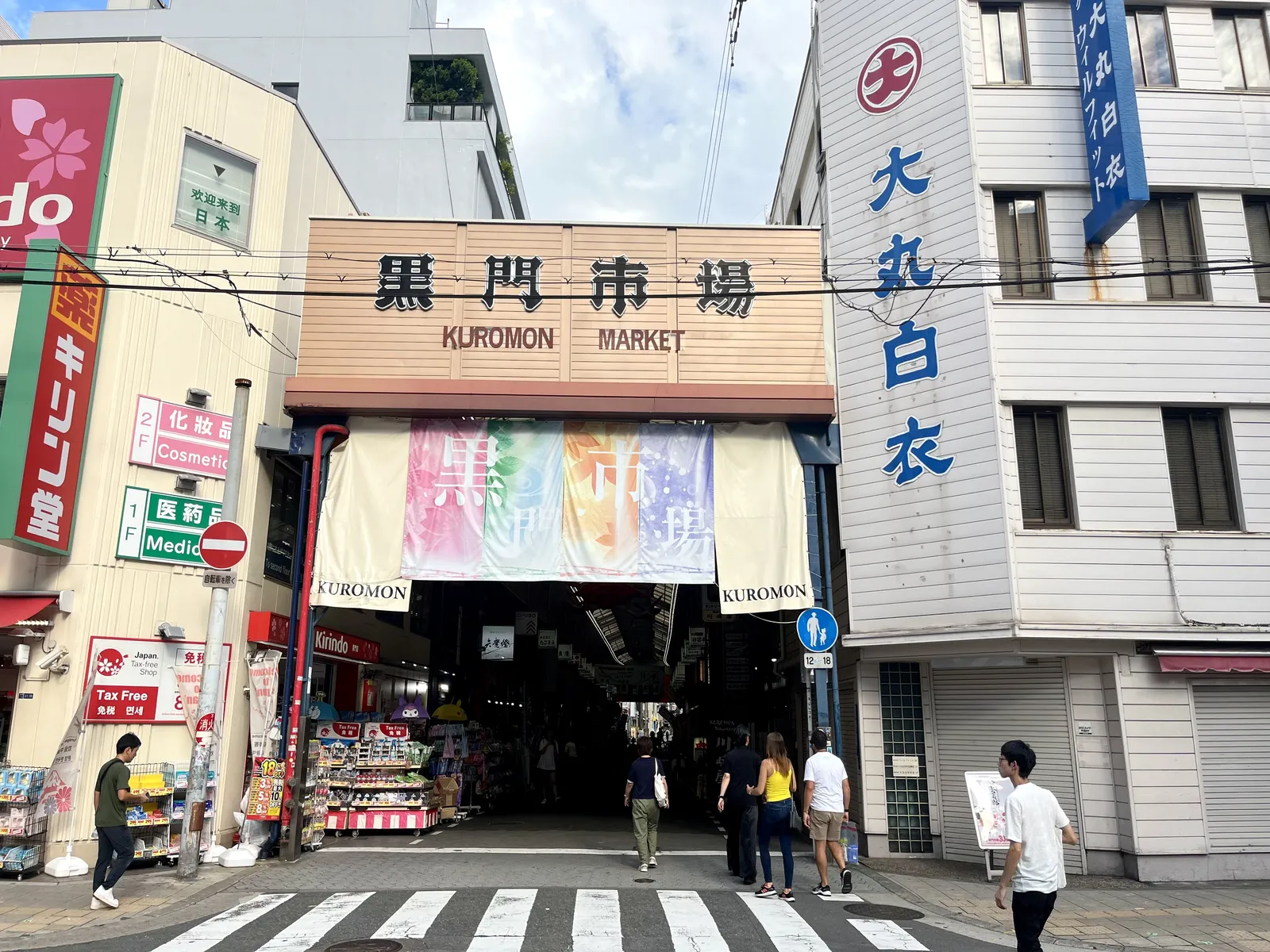
With only half a day in Namba, browse Kuromon Market's seafood stalls in the morning, sit down for a lunch gozen at Honten, and walk Ebisubashi, the Dotonbori canal promenade, or Shinsaibashi afterward. Stick to small bites inside the market so you still have room for the set meal. If the market puts you in the mood for Kasumi crab instead, Kani Ichiban in Sennichimae sits right between Nippombashi and Namba stations for walk-in a la carte checks. For pairing market timing with hotel bases, check our Kuromon Market and Nippombashi hotel guide.
Spending the day at Osaka Castle or Tennoji Zoo before dining in Minami? Put your Ebisubashi walk before dinner rather than trekking back to the bridge afterward. Take evening photos along the Dotonbori canal, stroll back through the arcade to your restaurant, and wander into Hozenji Yokocho alley after dinner. If you eat crab at lunch instead, save dinner for okonomiyaki, kushikatsu, or another Osaka staple—Hozenji's quiet stone alleys feel completely different from the neon crowd at Ebisubashi, and ending the night near your hotel makes getting back effortless. For broader neighborhood pacing, see our three-day Osaka itinerary.
Combining Universal Studios Japan with an Osaka crab dinner? Put timed crab reservations on a regular city sightseeing day. Your exit from USJ depends on parade schedules, ride queues, and how tired everyone is—there is no reason to cut the park short just to beat a 30-minute no-show cutoff. If you are staying in Umeda on your final night before an early flight, eat in Kita-ku and simply snap photos of the Dotonbori crab sign during the day. To build a dedicated Sea of Japan port trip around winter crab, use our Echizen and Kanazawa crab season guide for fishing ports, Omicho Market, and onsen stays.
Want to bring crab back to your hotel room instead? Honten's takeout counter sells crab futomaki rolls, pressed crab sushi (oshizushi), and crab bento boxes alongside canned kanimiso and two-serving packets of crab zousui. Plan sushi and bento pickups around the storage instructions and best-by times on the label so you aren't carrying chilled seafood around all afternoon. If you buy packaged items to take home overseas, keep all original retail packaging and ingredient labels intact and check your destination's customs rules on seafood products.
A few useful answers
Can you eat crab in Osaka outside of winter?
Yes. Kani Doraku offers year-round crab dishes and sources live snow crab throughout the year. If you specifically want seasonal branded crab from the Sea of Japan, check the local fishing season and each restaurant's published serving dates.
Do you have to go to the Kani Doraku Dotonbori Main Branch?
To dine beneath the giant crab sign at the south end of Ebisubashi Bridge, book the main branch at 1-6-18 Dotonbori. If you will be in Umeda or the main branch's time slots do not fit your schedule, check the menus and table availability at other branches.
What is the last entry time for Kani Doraku Dotonbori Honten?
The main branch generally takes its last entry at 22:00 JST and closes at 23:00 JST. Lunch gozen sets are served until 16:00 JST, and the restaurant is closed on December 31.
How many people do you need for all-you-can-eat crab at Osaka Kanigen?
Osaka Kanigen Dotonbori accepts bookings of 1 to 50 guests for both its red snow crab and true snow crab all-you-can-eat plans. Dining is limited to 90 minutes, with last order at the 70-minute mark.
Which month is best for eating female crab with inner roe in Osaka?
Aim for mid-November to mid-December and look for sekogani, seikogani, oyagani, or kobakogani on seasonal menus. At Kani Ichiban, the female crab appetizer in the twin-crab course is only served in November and December.
What is the difference between ordering zousui and crab kamameshi?
Zousui cooks rice directly in the leftover crab hot pot broth, making it the right pick if you want to finish every drop of the pot's soup. Kamameshi is seasoned rice cooked separately in its own iron pot, ideal when you want fluffy, distinct grains topped with crab meat.
Official information and references
Sources used in this guide.
- Kani Doraku Dotonbori Honten | Address, Hours, and Access
- Kani Doraku Dotonbori Honten | Lunch Gozen Menu
- Kani Doraku Dotonbori Honten | Crab Hot Pot and Kaiseki Menu
- Kani Doraku Dotonbori Honten | November–December Hot Pot and Grilled Crab Kaiseki
- Kani Doraku Dotonbori Honten | A La Carte Menu
- Kani Doraku Dotonbori Honten | Takeout and Souvenirs
- Kani Doraku Dotonbori Honten | Drinks and Group Free-Flow Plans
- Kani Doraku Dotonbori Honten | Official Reservations and Arrival Terms
- Kani Doraku | Osaka Branch Hours and Locations
- Kani Doraku | Brand and Dotonbori Honten History
- Osaka Kanigen Dotonbori | Location, All-You-Can-Eat Rules, and Children's Info
- Osaka Kanigen Dotonbori | Red Snow Crab All-You-Can-Eat
- Osaka Kanigen Dotonbori | True Snow Crab All-You-Can-Eat
- Osaka Kanigen Dotonbori | King Crab and Snow Crab All-You-Can-Eat
- Osaka Kanigen Dotonbori | King Crab, True Snow Crab, and Hokkaido Horsehair Crab All-You-Can-Eat
- Osaka Kanigin Namba | Courses, Minimum Party Size, and Location
- Osaka Kanigin Namba | Red Snow Crab All-You-Can-Eat with Drinks
- Osaka Kanigin Namba | True Snow Crab All-You-Can-Eat with Drinks
- Kani Ichiban Osaka Namba | Kasumi Crab, Matsuba Crab Courses, and Reservations
- Tottori Prefecture | 2026–27 Matsuba and Oyagani Fishing Season
- Tottori Prefecture | 2026 Matsuba and Oyagani First Auction
- Fukui Prefecture | Echizen Crab Origin Brand and Fishing Season
- Ishikawa Prefecture | Kano Crab and Kobako Crab Shipping Season
- Hyogo Prefecture Official Tourism | Kasumi Port Red Snow Crab and Season
- Osaka Convention & Tourism Bureau | Dotonbori
- Osaka Convention & Tourism Bureau | Hozenji Temple and Hozenji Yokocho
- Osaka Convention & Tourism Bureau | Kuromon Market
- Osaka Metro | Midosuji Line Namba Station Map
- Consumer Affairs Agency of Japan | Dining Allergens and Shared Cookware Guidance