Compare Akakura Onsen, Akakura Kanko, Ikenotaira, and Suginohara in Myoko for 2026–27, covering beginner runs, family tickets, two-mountain and five-day passes, Nagano express buses, and parking fees.
- Region & Focus
- Nagano and Myoko Ski AreasSkiing
- Reading Scope
- 19 min read · 12 chapters · 6 Q&As
- Official Verification
- 17 official sources checkedUpdated November 22, 2026
- Key Topics
- WinterSeasonsHot springs
Chapter Route Map (tap any stop)
- Akakura, Ikenotaira, or Suginosawa: Pick Where You Step Onto the Snow
- When to Plan Your 2026–27 Ski Dates
- Akakura Kanko (AKAKAN): Two Zones From One Base
- Akakura Onsen Ski Resort: Village Access and Separate Tickets
- Ikenotaira Alpen Blick: Picking a Kid's First Slope
- Suginohara's 8.5 km Run and the Suginosawa Entrance
- Lift Tickets by Headcount, Age, and Ski Days
- How the Akakura Two-Mountain Pass and Madarao 5-Day Pass Work
- Getting There Without a Car: Express Buses or Rail Plus Local Bus
- Driving and Parking: Cash vs. Cashless Rules
- Two-Night and Three-Night Itineraries and Departure Timing
- High Winds and Spring Slush: Adjusting Your Plan on the Mountain
- Quick Q&A
For a first ski trip to Myoko Kogen, two choices shape the entire itinerary: which resort entrance is easiest to reach from your lodging, and how far your group can ski together. Stay in Akakura Onsen village, and Akakura Onsen Ski Resort is the simplest fit for a half-day session; if you want a single base that splits into gentle beginner slopes and steeper terrain, head to Akakura Kanko. Families with preschoolers looking for snow play get netted zones and a magic carpet at Ikenotaira, while groups where everyone already skis can tackle Suginohara's 8.5 km long run with free lift tickets for elementary school kids. For the 2026–27 season, direct winter express buses run from Nagano Station to the Myoko area, and both Ikenotaira and Suginohara have updated their parking fees.
Akakura, Ikenotaira, or Suginosawa: Pick Where You Step Onto the Snow
Myoko Kogen sits at the southern edge of Niigata Prefecture. Thinking in terms of three distinct bases—Akakura Onsen village, Ikenotaira Onsen, and Suginosawa—works far better than just checking whether a hotel address includes "Myoko." From Akakura Onsen village, you can walk straight to the Akakura Onsen slopes or catch the Akakura Kanko shuttle to the Sky Cable base station. Ikenotaira has separate entrances on the hotel side and the Kayaba side, so pick one before renting gear or setting a meeting point. Suginosawa is best if you plan to spend most of your time at Suginohara: guests walking out from the lodge street in the morning can follow the trail map to the No. 1 Romance pair lift.
If your family wants to walk out of the hotel and start practicing within minutes, confirm both the resort name and the exact entrance before booking—don't rely on generic distance claims. Lodging within walking distance of the Kumado area makes Akakura Onsen ideal for day one; if your instructor is meeting you at Akakura Kanko's Sky Cable base station, take your hotel or resort shuttle in the morning instead. Both resorts share "Akakura" on the map, and walking over icy roads in ski boots makes distances and elevation changes feel much longer than in sneakers.
- First-time skiers on a two-day trip should stick to one resort both days. Fitting boots, finding the ski school, and learning the lifts take up plenty of time on day one, and returning to the same practice slope on day two lets you start skiing right away.
- Mixed-ability groups who want to meet for lunch should choose an entrance that serves both base beginner slopes and intermediate runs. Before the stronger skiers head up to advanced terrain, pick a specific shop or ticket window at the base as your rendezvous point.
- Groups of confident adults or elementary-age kids who can already control their speed should give Suginohara a full day. Ikenotaira's linked 4 km route is shorter, making it better if you want to build rhythm on separate beginner slopes first.
- If part of your group won't ski every day, stay in Akakura Onsen village and schedule mountain time during the day. While the skiers stay out for the last few lifts, non-skiers can walk back to the hotel whenever they like.
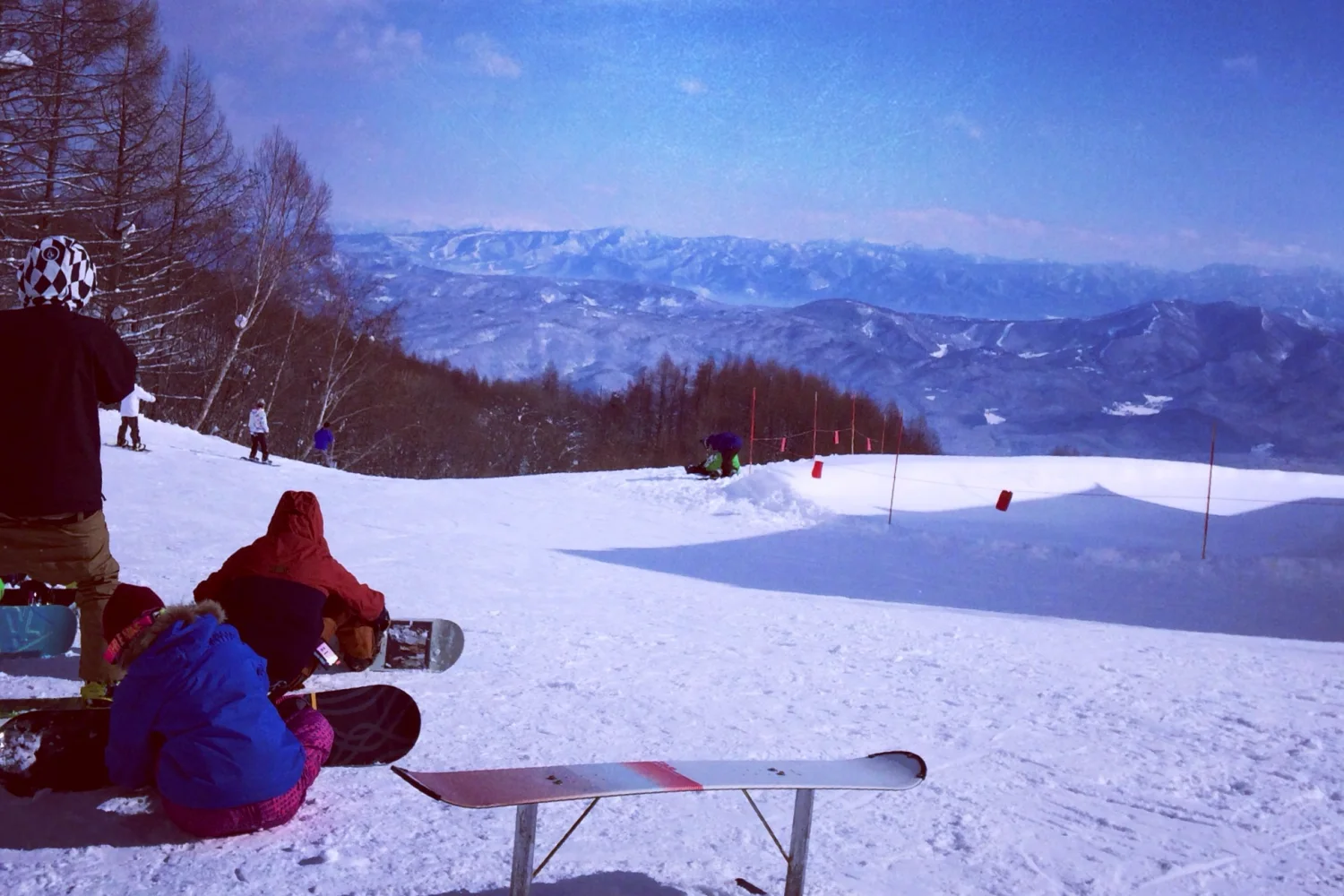
Compare Akakura Onsen, Akakura Kanko, Ikenotaira, and Suginohara in Myoko for 2026–27, covering beginner runs, family tickets, two-mountain and five-day passes, Nagano express buses, and parking fees.
When to Plan Your 2026–27 Ski Dates
Akakura Kanko's announced season runs from December 19, 2026 to May 5, 2027, with regular lift tickets through March 22 and spring rates scheduled to begin the next day. Suginohara is also set to open on December 19 and close on March 28. Ikenotaira lists December 19 as its planned opening date, with lifts typically running 8:30 to 16:00. Akakura Onsen is selling winter early-bird tickets through a dedicated page in November, with its main winter site slated for early December. For opening-week trips, pick a resort where you'd still be happy skiing only the lower slopes.
Between the first lift of the morning and your first real run down, you still have to collect tickets, rent gear, store your shoes, and wait in weekend lines. In the afternoon, work backward from your departure and separate the last lift time from your bus or shuttle pickup. At Akakura Kanko, for example, the Sky Cable and Hotel No. 3 lift are scheduled to close at 15:45, while Hotel No. 1, Hotel No. 2, and Champion No. 3 run until 16:00. If you need the 16:30 shuttle from the Sky Cable base, plan your gear return and final descent around getting back to that station.
For trips from late March onward, build your schedule around Akakura Kanko's spring season. Regular sales for the Akakura two-mountain pass end on March 22, and Akakura Kanko's free shuttle from Akakura Onsen village is also scheduled to stop after that day. The winter express bus to and from Nagano runs through March 31 at the latest. If you stay in the village during spring skiing, plan to ride the municipal bus or arrange gear transport with your hotel in advance.
Akakura Kanko (AKAKAN): Two Zones From One Base
The Myoko Kogen Sky Cable gondola carries six passengers along a 2,607-meter line, paired with the Hotel No. 1 quad lift at the base. First-time lift riders should start on Hotel Beginner right beside Hotel No. 1, officially listed at 750 meters with a maximum 10-degree pitch. Stronger skiers in your group can run Hotel Main in front of Akakura Kanko Hotel and ride back up from the bottom. Meeting at the Hotel No. 1 lower terminal or ticket counter keeps beginners from having to ski unfamiliar terrain just to regroup.
Once you can link turns on intermediate runs, test the rolling terrain on Hotel B before moving higher up to Hotel C depending on snow conditions. The Joshi Kokutai Course is 1,700 meters long with a max pitch of 22 degrees; even though it's rated intermediate, the resort notes that the upper section is sometimes left ungroomed after fresh snowfall. Cruising a groomed blue run in sunshine is very different from managing speed over fresh powder piles or firm crust. If fresh snow is sitting on the upper section, take a lap on familiar Hotel B first before committing.
Hotel A and Champion A are both officially designated advanced ungroomed runs. Champion A reaches a maximum pitch of 32 degrees, and you can preview the slope from the Champion No. 3 lift on the way up. Watch where skiers start their turns and whether moguls hide the landing line. Champion C serves as the connector toward Champion B and the Sky Cable side, so check the fork ahead of time and read the signs where you can still brake safely.
From the Myoko-Kogen IC on the Joshinetsu Expressway, Akakura Kanko lists an 8-minute drive to roughly 1,000 free parking spaces at the base. If anyone in your car has trouble walking far, drop off skis and boards near the base first before following the parking attendants. And if your group has already chosen the Hotel beginner slopes, don't haul everyone's gear to the other Akakura resort entrance just for a shuttle pickup.
Akakura Onsen Ski Resort: Village Access and Separate Tickets
When a hotel listing says "ski-in/walk-to Akakura Onsen Ski Resort," it almost always means the village side. That makes it easy for non-skiers to meet the group at a lodge or restaurant in town while everyone else skis down at their own pace. If you enter from the Kumado or Yodel side, check the latest trail map against the street intersections and ticket booths near your lodging. When ski lessons meet at a specific information center, ask your hotel the night before to point out that exact entrance so you aren't wandering in ski boots the next morning.
Akakura Onsen's early-bird lift passes for this season are advertised through November 30. Digital one-day vouchers exchange via order QR code at an automated IC ticket machine, so carry only the card you are using that day when scanning through the gates. These early-bird passes are valid solely at Akakura Onsen: they cannot be upgraded to a two-mountain pass after purchase, and they are non-refundable if lifts stop for weather or runs are restricted. Confirm which resort fits your hotel and ski school before buying.
Akakura Onsen's season pass terms restrict use to the named passholder, and the official sales page explicitly states that the pass cannot be used at Akakura Kanko. If you want to ski the village side in the morning and cross over to Akakura Kanko in the afternoon, buy the two-mountain pass listed under day tickets. If you're visiting the two resorts on separate days, price out each resort's single-day ticket first before deciding whether an early-bird pass actually saves money. Passes labeled "Resort Ticket" by Akakura Kanko are likewise valid only at Akakura Kanko.
Ikenotaira Alpen Blick: Picking a Kid's First Slope
At Ikenotaira, the Kayaba side features the Shirakaba pair lift and base restaurant, while the Hotel Alpen Blick side is served by the Alpen Blick No. 1 and No. 2 pair lifts. The resort rates Yamabato Rinkan, Karamatsu, Wide Long Run, and Happy Gelende as beginner runs, but an in-resort beginner label still requires checking the steepest pitch. Happy Gelende averages 8 degrees yet tops out at 21 degrees. When kids have just learned to snowplow stop, have an instructor take them through the entry section first—once they know where to pull over and wait along the edge, pick a run they can finish in one go.
With preschoolers who just want snow play, head to the netted Kids Garden. It has a magic carpet conveyor and operates Saturdays, Sundays, and holidays from 10:00 to 16:00 at ¥500 per person, or free for lift-ticket holders and children age 3 and under. Keep snow-play rules separate from lift-ticket rules: preschoolers ride lifts for free, so a 4-year-old or older child who hasn't started elementary school still needs the ¥500 entry fee budgeted if they only use the snow-play area.
To ski the resort's promoted 4 km route, trace the connecting runs and lifts back to your base on the map first. The Ikenotaira Quad Lift serves intermediate slopes and a tree-run area also marked intermediate, alongside a separate terrain park. First-timers stepping up from beginner slopes should stick to wide, groomed runs. Keep moving along standard trails past tree-run and park entrances, where riders coming off jumps can land from blind angles.
If you're only skiing the morning and your kids want extra practice after class, grab lunch at Cafe & Restaurant Kayaba beside the Shirakaba lift so you stay on the same side. Parents returning rentals on the Hotel Alpen Blick side should finish their own runs there before meeting at the base or hotel. Snap a photo of your rental receipt so anyone coming down later knows exactly which shop to return gear to.
Suginohara's 8.5 km Run and the Suginosawa Entrance
Suginohara advertises a maximum run length of 8.5 km and 1,124 meters of vertical drop. That distance links upper and lower mountain trails, so skiing top to bottom depends on upper lifts, connector runs, and the lower slopes all being open at once. The new trail map marks the return route from upper Mitahara back toward the Suginohara side. On your first visit, take a lap or two to get your bearings at the gondola base before riding up to Mitahara, and stay on slopes that lead straight back to your starting point as closing time approaches.
The full long run suits skiers and riders who can control their speed and link turns cleanly where trails narrow. Even though elementary school kids get free lift tickets, first-timers in ski boots should stay at the base until they can ski a full section unassisted. When waiting for friends lower down, meet at the gondola base station next to Parking Lot 1 rather than saying "the bottom of Suginohara." Non-skiers in regular shoes should stand clear beside the walkway, never in the braking zone.
For guests staying along Suginosawa's lodge street, the 2026–27 map spells out the local entry route: ride Suginohara No. 1 Romance Lift first, then head to the Parking Lot 1 ticket office to buy or exchange tickets. If you arrive on the morning Nagaden bus, check your lodge's street address against the Suginosawa stop on the timetable—the village below and the gondola terminal are two different spots. When booking an afternoon pickup, send your driver both your exit point and a spot where cars can actually pull over.
For 2026–27, Suginohara dropped its single-resort season pass, early-bird tickets, and previously listed advance-sale items, though regular tickets remain available online via the official site. If you come across leftover discount pages from last season, double-check the validity dates and exact product before paying. The Mt. Myoko Super Season Pass issued by Myoko Tourism remains valid at Suginohara, though drivers still pay the daily parking fee.
Lift Tickets by Headcount, Age, and Ski Days
At Akakura Kanko, a regular adult one-day pass is ¥7,000, junior high students and seniors 60+ pay ¥6,000, elementary students pay ¥5,200, and preschoolers ski free. An adult 4-hour pass is ¥5,400 starting from your first gate scan, while consecutive 2-day and 3-day passes cost ¥12,300 and ¥17,200. Early-bird one-day passes sold from November 1 to 30 are ¥4,500 (the ¥4,000 super-early-bird tier ended in October). If your dates are locked in and you can use two early-bird day tickets, ¥9,000 total beats the ¥12,300 window 2-day pass—and if you plan to take a rest day mid-trip, compare flexible single-day passes.
Akakura Kanko's ¥9,400 family pack covers one adult and one child for that resort only. Two adults plus one child cost ¥14,900, and two adults plus two children cost ¥18,800. Spring one-day passes, scheduled from March 23 to May 5, drop to ¥4,000 for adults, ¥3,500 for junior high students and seniors 60+, and ¥2,500 for elementary students. Non-skiers riding only the gondola round-trip for views and photos can buy an official sightseeing round-trip ticket for ¥2,500.
At Ikenotaira, an adult one-day pass is ¥7,400, junior high students and seniors 60+ are ¥6,200, elementary students are ¥4,400, and preschoolers are free. An adult 4-hour pass is ¥5,900, a 2-day pass is ¥13,300, and a 3-day pass is ¥18,800. Single rides cost ¥800 for adults or ¥3,600 for a five-ride pack—handy if beginners only need a few laps on day one. Residents with a Japanese Individual Number Card (My Number Card) qualify for the Myna discount (¥6,900 full day or ¥5,400 for 4 hours); short-term visitors should budget standard rates plus a ¥500 refundable deposit per IC card.
Ikenotaira's Family Ticket B for two adults and one elementary student costs ¥16,300, saving ¥2,900 off three separate day passes (¥19,200). Family Ticket A for one adult and one elementary student is ¥10,000, with each additional elementary child ¥3,700. If you've booked one lesson and aren't sure whether you'll ski the afternoon, ask the instructor how many lift rides the class takes. Buying single-ride tickets only saves money if a child stays on the same lift and short practice slope.
Suginohara charges ¥9,000 for a regular adult one-day pass, or ¥8,200 for Seibu Prince Global Rewards members; junior/senior high students and seniors 55+ pay ¥8,400 standard or ¥7,800 as members (bring ID showing your age). Elementary students and younger ski free, so two adults with one elementary child pay ¥18,000 at standard rates or ¥16,400 if both adults are members. When comparing those totals against Ikenotaira's family packs, factor in same-day parking, rentals, and lessons as well.
Suginohara's adult 4-hour ticket costs ¥8,000, activates from 10:00, and runs 4 hours from your first gate pass. If you can arrive early, paying ¥200 more for a member day pass gets you on the snow from first chair. An adult 2-day pass is ¥17,000, compared with ¥16,400 for two separate member day passes. Point tickets cost ¥1,100 per point—1 point for standard lifts, 2 for high-speed lifts, and 3 for an uphill gondola ride—so points burn much faster when riding to the upper mountain than when lapping a short base lift.
How the Akakura Two-Mountain Pass and Madarao 5-Day Pass Work
The Akakura Two-Mountain Common One-Day Pass covers lifts at both Akakura Onsen and Akakura Kanko on the same day. Through March 22, Akakura Kanko lists it at ¥10,000 for adults and junior high students, ¥8,000 for seniors 60+ and elementary students, and free for preschoolers. Watch out when selecting the ¥9,400 "Resort Family Pack"—that pass is valid only at Akakura Kanko. For an adult, skiing Akakura Kanko alone costs ¥7,000, so adding Akakura Onsen on the same day costs an extra ¥3,000.
Crossing between the two Akakuras works best if you already have your gear and know which runs you want on the second mountain. Check how transfers are operating that day before buying the combo pass, and make sure everyone knows the second entrance if you need to walk or ride along the road. Akakura Kanko runs a shuttle between Akakura Onsen village and Sky Cable during its advertised winter window, though midday weekday service is sparse. On a half-day or lesson day, staying at one resort gives you more runs; if you do switch mountains, cross around lunch rather than waiting until the final hour.
The Madarao & Suginohara 5 Days Snow Pass lets you pick any five days across the season rather than skiing them consecutively. Each day, choose either Suginohara or the Mountain Pass covering Madarao Kogen and Tangram Ski Circus. The Mountain Pass can only be redeemed at the Madarao Kogen ticket office with a ¥500 cash deposit, whereas Suginohara issues a one-day ticket via QR code with no deposit.
Hold one pass day in reserve if you want flexibility to rest on windy days and hit Suginohara when upper Mitahara is open. If your group only plans two or three ski days, price out individual day tickets rather than forcing mountain switches just to use a five-day pass. Treat bus and shuttle pickups as part of your pass decision—especially if you're staying in Akakura and visiting Madarao, where the last return bus dictates how late you can ski.
Getting There Without a Car: Express Buses or Rail Plus Local Bus
Ride the Hokuriku Shinkansen to Nagano Station, then walk out the East Exit to board the Nagaden Ex28 Express Bus. Running daily from December 5, 2026 to March 31, 2027, it costs ¥3,000 one way for adults to the Myoko area. The first morning bus leaves at 8:50 and reaches Akakura Onsen Ski Resort at 10:27; the last departure from Nagano East Exit leaves at 16:10 and arrives at 17:47. These buses serve resort arrivals and departures only—outbound buses allow drop-offs only in Myoko, and return buses allow pickups only. Use resort shuttles, municipal buses, or taxis to move between the four ski areas.
The express bus stops at M2 Suginosawa, M4 Myoko Kogen Ikenotaira, M5 Akakura Kanko Hotel Entrance, and M6 Akakura Onsen Ski Resort. Stops labeled "Hotel Entrance" don't always pull up to the lobby, and guests staying uphill at Akakura Kanko Hotel shouldn't confuse that stop with the Sky Cable base station. Message your lodging with the stop name before arriving to confirm the final walk or pickup. The last return bus to Nagano leaves M6 at 16:00, M5 at 16:02, M4 at 16:06, and M2 at 16:12, arriving at Nagano East Exit at 17:37—and the timetable advises leaving at least 20 minutes to transfer to a Shinkansen.
You can also ride the Shinano Railway Kita-Shinano Line from Nagano to Myoko-Kogen Station, then transfer to a local bus or hotel pickup. From Kanazawa or Toyama, take the Hokuriku Shinkansen to Joetsumyoko and switch to the Echigo TOKImeki Railway Myoko Haneuma Line. Outside Myoko-Kogen Station, the municipal Akakura Line serves Akakura Onsen and Akakura Kanko, while the Suginosawa Line serves Ikenotaira (Imori-ike) and Suginosawa, switching to winter schedules on December 1. Build in extra transfer buffer when hauling large board bags.
Ikenotaira's free resort shuttle is scheduled to run from December 19 to March 28 between Myoko-Kogen Station, the day-use onsen, the ski resort, and the hotel. The first bus leaves the station at 8:45 and reaches the slopes at 9:03—a quick ride, though you still need time afterward to grab tickets and gear. The last return shuttle leaves the slopes at 15:51 and arrives at Myoko-Kogen Station at 16:12, which is earlier than standard lift closing. Factor in gear return and the walk to the bus stop before taking your last run.
Akakura Kanko skiers can ride the free AKAKAN shuttle between Akakura Onsen village and Sky Cable. Scheduled from December 19 to March 22, buses loop from 8:00 to 10:00 in the morning, with the last return trip to the village departing at 16:30. If your hotel gives you a separate shuttle schedule, align your group around the exact bus you plan to catch. Save offline maps, a photo of the return stop sign, and backup departure times on your phone in case you decide to come down early.
Driving and Parking: Cash vs. Cashless Rules
Combined capacity at Suginohara's Parking Lots 1 and 2 has dropped from roughly 1,800 spaces to about 370 spaces, with daily fees in effect for 2026–27. Lot 1 beside the gondola uses date-specific online advance booking at ¥2,000 per standard car; Lot 2 one tier below costs ¥1,000 per standard car and accepts advance online purchase or on-site cashless payment. Vehicles 5 meters or longer count as two spaces, and minibuses and coaches require reservations. Nearby lodging guests who drive into the resort lots on ski days pay the same fees.
When both lots fill up at peak times, Suginohara directs drivers to overflow lots served by shuttle buses. If you're driving with kids to meet an instructor at the base, pad your schedule for changing boots, riding the shuttle, and walking to the school. Booking Lot 1 cuts down on hauling gear uphill; if you're staying at a Suginosawa lodge that offers morning drop-offs, taking their shuttle may be the easiest way to arrive on time. Bring a cashless payment method if you plan to use Lot 2.
Ikenotaira charges parking fees on weekends, holidays, and December 30 to January 3 at Kayaba Lots 1 and 2 and Alpen Lot 2: ¥1,000 for standard cars and ¥2,000 for midsize vehicles and larger, cash only, while regular weekdays remain free. Having just one holder of an Ikenotaira or Mt. Myoko season pass in the car waives parking for the vehicle when shown at entry. Guests staying at Hotel Alpen Blick or Haneuma Village 808 can use Alpen Lot 1 directly in front of the hotel.
If three people share one car in the morning and someone wants to head back to the hotel early, decide upfront who holds the keys and where to meet. Pack everyday shoes in an accessible bag so you don't have to unload every ski board from the trunk just to change footwear. Rent a car with winter tires when snow is in the forecast, ask where the tire chains are stored at pickup, and leave extra time on departure day to clear snow off the car, refuel, and return a one-way rental before your Shinkansen.
Two-Night and Three-Night Itineraries and Departure Timing
On a two-night trip arriving in the afternoon, visit the entrance you'll ski the next day to scout the rental shop, ticket windows, and lesson meeting point. With limited mountain time on arrival day, check into your village hotel first and lock in gear and transit for the next morning. Having everyone's height, shoe size, and gear needs ready lets you confirm rental packages smoothly—and swap tight boots without rushing. Beginner ski or snowboard groups should book lessons for the first full morning, then repeat the same slope on their own in the afternoon.
On a three-night trip aiming for two resorts, guests based in Akakura Onsen can ski the Akakura side first and dedicate a full day to Ikenotaira or Suginohara. When subgroups move at different speeds, settle in advance who takes which shuttle with the kids and where rentals will be picked up. Include the resort name, specific entrance, lesson language, and student ages when booking classes. Suginohara's official site lists English-instruction school Myoko Snow Sports, while Akakura Kanko and Ikenotaira link their own rental and school portals; if you need lessons in Chinese, check availability with your chosen school before finalizing lodging and tickets.
If your group splits between skis and snowboards, ask beforehand whether you can be placed in separate classes, and skip riding high-mountain lifts with beginners just for a group photo. At the rental counter, confirm whether jackets, pants, gloves, goggles, and helmets are priced separately—especially in toddler sizes. Family members playing in the snow on cold days should pack a spare dry pair of gloves and socks in a locker so they can swap out after lunch. For a broader first-timer checklist, see our Japan first-time ski trip guide.
To fit in a half-day ski on departure day, count backward from your train or bus departure, subtracting gear return, luggage pickup at the hotel, changing shoes, and the walk to the stop. Morning-only skiers get better value from Akakura Kanko's 4-hour pass, which starts at first scan, whereas Suginohara's 4-hour pass does not activate until 10:00. If you're coming from Tokyo with only one day to spare, compare our Tokyo ski day trips and Echigo-Yuzawa stays guide.
High Winds and Spring Slush: Adjusting Your Plan on the Mountain
Heavy overnight snow often means only lower runs open first thing in the morning. When checking daily operating status, read lift status and trail status separately—especially the upper chairs and the connector runs needed to get back down. If Suginohara only opens its lower zone, a day ticket still works for those slopes, but visitors coming specifically for the 8.5 km run with flexibility in their schedule may want to save it for a full-mountain day.
In spring, slopes can freeze firm in the morning and turn heavy and slushy on sun-facing aspects by afternoon, changing how the very same trail skis within hours. Warm up on runs with clear sightlines and wide runouts, and call it early if snow turns grabby or overly fast. Because Akakura Kanko's spring season runs into May while lower-mountain coverage thins day by day, confirm which entrance your hotel shuttle can reach before booking off-site lodging. As closing time nears, make sure everyone carries their own ticket, phone, and hotel address before loading one last lift.
On resort trail maps, check the meaning of Japanese signage before dropping into a run: ungroomed zones (hi-assetsu) may be open to advanced skiers, while closed runs (heisa) and restricted areas (kasso kinshi) must be avoided even if you spot fresh tracks inside the ropes. If someone in your group is injured, report the resort name, nearest lift or trail number, and which side of the slope they are on when calling ski patrol. If someone gets separated, regroup at your prearranged base meeting spot rather than sending someone back uphill against traffic.
A few useful answers
Where should families with young kids stay for a first ski trip to Myoko?
If the whole family wants short practice slopes or snow play, stay in Ikenotaira and pick up rentals at the same base entrance. If non-skiers want to walk back to the hotel on their own, stay in Akakura Onsen village and plan walking or shuttle access around your chosen resort.
Does Akakura Kanko's ¥9,400 family pack cover both Akakura resorts?
No—that package covers one adult and one child at Akakura Kanko only. To ski both mountains on the same day, buy the Akakura Two-Mountain Common One-Day Pass at ¥10,000 for adults and junior high students or ¥8,000 for seniors 60+ and elementary students, sold at regular rates through March 22, 2027.
Do the five days on the Madarao & Suginohara 5 Days Snow Pass have to be consecutive?
No, you can use the five days on non-consecutive dates across the season. Each day you choose either Suginohara or the Mountain Pass valid at Madarao Kogen and Tangram Ski Circus; the Mountain Pass is exchanged only at the Madarao Kogen ticket office with a ¥500 deposit.
Can you reach Akakura Onsen from Tokyo without renting a car?
Yes. Take the Hokuriku Shinkansen to Nagano Station, then board the Nagaden Ex28 Express Bus from the East Exit. It runs daily from December 5, 2026 to March 31, 2027 at ¥3,000 one way for adults to the Myoko area, stopping directly at Akakura Onsen Ski Resort (M6).
Do both Ikenotaira and Suginohara charge for parking?
Suginohara charges daily in 2026–27: Lot 1 is ¥2,000 for standard cars via advance online booking, and Lot 2 is ¥1,000 via advance booking or on-site cashless payment. Ikenotaira charges ¥1,000 cash only for standard cars at three designated lots on weekends, holidays, and December 30 to January 3.
Which Myoko ski resort stays open after late March?
Akakura Kanko is scheduled to stay open until May 5, 2027, with spring lift rates starting March 23. Suginohara is scheduled to close on March 28. Because Akakura Kanko's free village shuttle is slated to end on March 22, spring skiers staying in Akakura Onsen village should plan on the municipal bus or hotel transfers.
Official information and references
Sources used in this guide.
- Akakura Kanko Resort Ski Area | Slopes, Lift Hours & Ticket Rates
- Akakura Kanko Resort Ski Area | 2026–27 Early-Bird One-Day Lift Pass
- Akakura Kanko Resort Ski Area | Access & Akakura Onsen Village Shuttle
- Akakura Onsen Ski Resort | 2026–27 Early-Bird Pass Page
- Akakura Onsen Ski Resort | 2026–27 Season Pass Terms
- Ikenotaira Alpen Blick | Slopes, Kids Area & Lift Tickets
- Ikenotaira Alpen Blick | 2026–27 Opening Announcement
- Ikenotaira Alpen Blick | Parking Fees & Season Pass Benefits
- Ikenotaira Alpen Blick | Free Shuttle Bus Timetable
- Myoko Suginohara Ski Resort | Operating Dates & Trail Info
- Myoko Suginohara Ski Resort | 2026–27 Trail Map
- Myoko Suginohara Ski Resort | Lift Ticket Rates
- Myoko Suginohara Ski Resort | 2026–27 Parking Notice
- Myoko Suginohara Ski Resort | Season Pass & Early-Bird Lineup Changes
- Myoko Suginohara Ski Resort | Madarao & Suginohara 5 Days Snow Pass
- Nagaden Bus | Ex28 Nagano–Myoko Kogen Winter Timetable
- Myoko Tourism | Akakura Line & Suginosawa Line Bus Access