How to pick a base in Shiga Kogen for 2026–27: comparing Ichinose, Takamagahara, the three Yakebitaiyama Prince buildings, Okushiga, Kumanoyu, and Yokoteyama, plus Nagano Station winter buses, early-season bookings, ski-in/ski-out rooms, and onsen inns.
- Region & Focus
- Nagano and Myoko Ski Areas
- Reading Scope
- 22 min read · 12 chapters · 7 Q&As
- Official Verification
- 30 official sources checkedUpdated November 22, 2026
- Key Topics
- Where to stayWinterBooking
Chapter Route Map (tap any stop)
- Filter Rooms by Your First Lesson and Last Bus
- Who Should Stay in Ichinose, Takamagahara, or Hasuike
- How to Book the Shiga Kogen Prince Hotel East, West, and South Buildings
- Okushiga Suits Skiers Spending Full Days on One Mountain
- Save Kumanoyu for Dinner and Onsen; Check the Base First for Yokoteyama
- Check the Terminus and Timetable Before Boarding at Nagano Station
- Use Shuttle Buses Between Zones and Enter via Yamanouchi by Car
- Match Room Layouts, Meals, and Rentals When Booking
- Count Actual Ski Days Separately from Lodging Nights
- Stick to One Zone for Two-Night Stays; Switch Hotels Only With a Clear Plan
- How Non-Skiers Can Spend a Day on the Plateau
- Early-Snow and Spring-Ski Trips Run on Different Transit Schedules
- Quick Q&A
If this is your first ski trip to Shiga Kogen without a car and you have beginners in the group, start by looking in Ichinose in the Central Area. If lessons are at Takamagahara, stay in Takamagahara; if you won't reach the mountains before dark, consider spending the first night in Nagano City. For doorstep gondola access, pick one of the Yakebitaiyama Prince Hotel buildings based on your travel dates; if dinner and hot springs at the inn are the priority, Kumanoyu is the better fit. While the all-mountain pass covers 18 ski areas, getting between zones still depends on which runs and buses are operating that day—specifically, traveling between the Central Area and Kumanoyu or Yokoteyama requires taking the road.
Filter Rooms by Your First Lesson and Last Bus
Start your Shiga Kogen hotel search by writing down where everyone needs to meet on Saturday morning. If kids are taking ski lessons in Ichinose, staying and renting gear on that same strip lets you handle boot fitting, suiting up, and drop-off in a single walk before class. If everyone already has gear and just wants first chair at Yakebitaiyama, the specific Prince Hotel building and its nearest run matter more. If you are traveling with older relatives or non-skiers, prioritize onsen baths, meals, and bus stop access first.
Shiga Kogen's Central Area stretches from Maruike and Hasuike at the entrance all the way to Ichinose, so if a booking page only says "Shiga Kogen," check the Japanese bus stop name next to the property's address. The Yama-no-Eki hub (Shiga Kogen Yama-no-Eki) is the transfer point around Hasuike, while Ichinose timetables list separate stops for "Ichinose" and "Ichinose Ski Resort." Note both the stop your hotel gives for arrival and the meeting spot your instructor gives for morning—follow the first on arrival day, and the second on ski mornings.
Skiers should also plan how they will get back to the room in the afternoon. Note the final connecting trail back along with the base bus stop. Even at a ski-in/ski-out hotel where lifts are steps away in the morning, you will still need the bus if the ski-back route requires terrain above your ability level. When skill levels vary widely across a group, base everyone where beginners can easily get back to the hotel on their own. Stronger skiers can carry phones, split off, and meet back at the lodge or a set bus stop later, letting beginners wrap up at their own pace.
If someone in your group is arriving late, book the first night around when they can actually check in and eat. Before locking in a half-board (two-meal) plan, put bus arrival times, the snowy walk to the hotel, and dinner's last seating on one timeline. If the latecomer has to eat in Nagano City before heading up, note that meal plan separately for their transit and meet up at the hotel or rental shop the next morning.
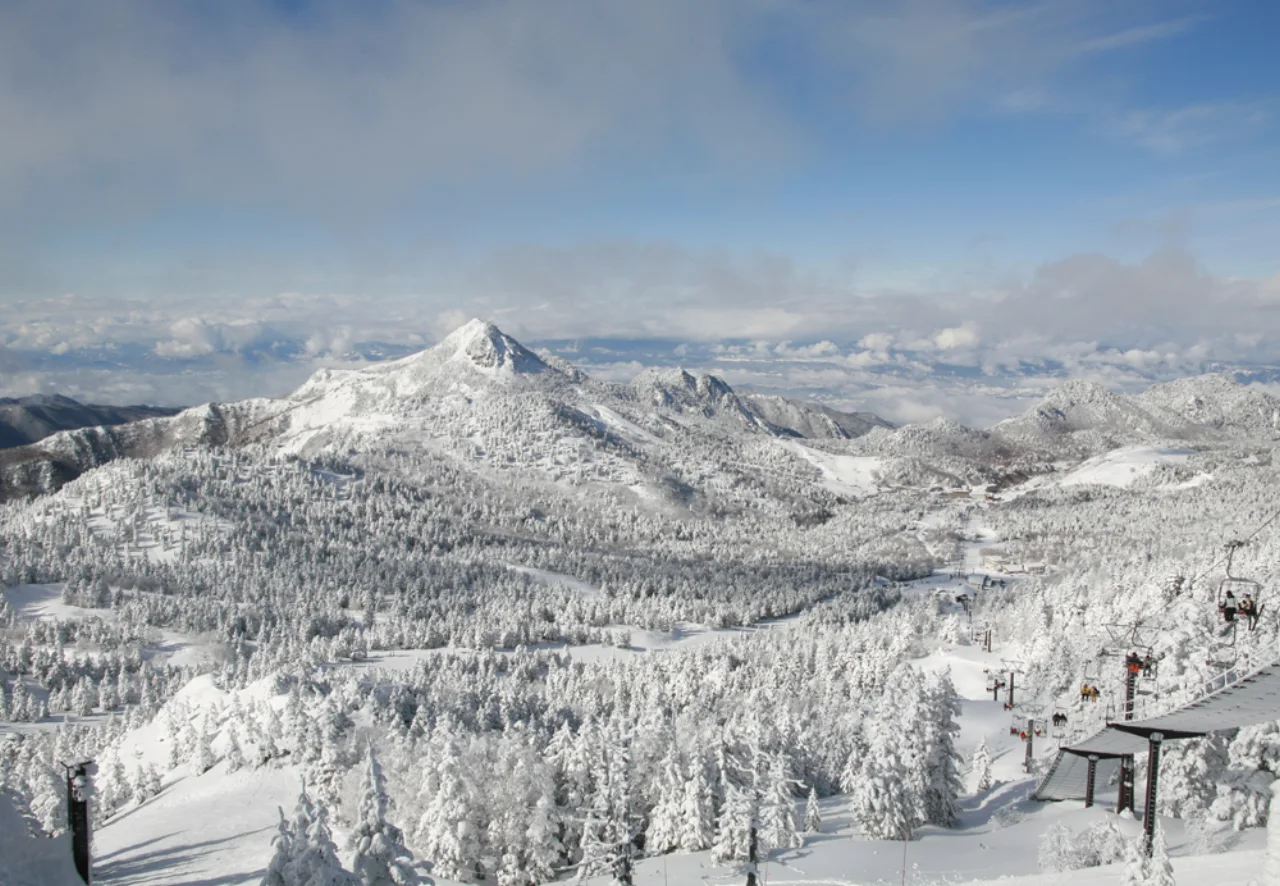
How to pick a base in Shiga Kogen for 2026–27: comparing Ichinose, Takamagahara, the three Yakebitaiyama Prince buildings, Okushiga, Kumanoyu, and Yokoteyama, plus Nagano Station winter buses, early-season bookings, ski-in/ski-out rooms, and onsen inns.
Who Should Stay in Ichinose, Takamagahara, or Hasuike
Ichinose works best for families who want rentals, lessons, and an easy return to the hotel all in one strip. Local tourism listings place ski schools and rental shops right alongside hotel names, so checking exact addresses is more useful than checking which mountain looks closest. For example, Canyons Shiga Kogen Ski School is listed at Shiga Ichii Hotel, Wakabayashi Pro Ski School at Hotel Ichinose, and Swallow Rental Shop at Shiga Grand Hotel. Shiga Ichii Hotel and Hotel Ichinose are two separate properties, so copy the exact Japanese property name from your booking email when checking maps to avoid a detour on lesson morning.
If your entire group is focused on Takamagahara Mammoth Ski Area, look for rooms right next to the Takamagahara stop. When snow depth is sufficient and connector trails are open, Takamagahara links via Tanne no Mori to Ichinose Family, and via a footbridge over the road toward Nishidateyama. Official trail maps also list a one-way connector from the Takamagahara summit to Higashidateyama. If anyone is still working on snowplow stops, let them practice on the side where your hotel sits, and only take the connectors once everyone can control speed and turns with plenty of time left to get back.
If you plan to rotate across different areas or have non-skiers taking buses to hot springs and the visitor center, staying near Yama-no-Eki in Hasuike makes transfers easier than staying right beside the Ichinose lifts. Official Yama-no-Eki listings include shops, dining, rentals, and coin lockers. Travelers with long ski bags should still rely on hotel luggage storage first and save coin lockers for daypacks. On your arrival bus ride up the mountain, you can also stop at Yama-no-Eki for lunch and supplies before catching the next bus to your hotel.
Hasuike, Maruike, and Sun Valley sit together on the same area map, but ski connections between them are directional. Official charts list a two-way link between Sun Valley and Maruike, and a one-way ski crossing from Maruike to Hasuike. If you stay in Hasuike but treat Maruike as your first stop each morning, plan to take the bus or verify the actual walking entrance to your hotel. When booking any property labeled "slopeside," ask for exact directions from the hotel door to an open daytime entrance—and specifically check whether the downhill departure and afternoon return use the same access point.
If you end up with a room-only booking in Ichinose, check nearby restaurants within walking distance and their last-order times in advance. Families with early lessons can still add hotel breakfast to save morning time. If you plan to take a bus to Takamagahara for dinner, work backward from the last return bus when making your restaurant reservation.
How to Book the Shiga Kogen Prince Hotel East, West, and South Buildings
When searching the Shiga Kogen Prince Hotel, start by ruling out whichever buildings are closed on your check-in dates. For the 2026–27 season, the South Building only operates for the opening stretch, from December 4, 2026 through checkout on December 18. The West Building runs from December 18 through checkout on March 22, 2027, and the East Building runs from December 19 through checkout on May 5. Yakebitaiyama Ski Resort's scheduled season is December 4 through May 5. If your stay bridges mid-December past December 20, factor the December 18 room switch and luggage move into your reservation; for late March onward, look at the East Building.
The East Building sits near the base of Gondola No. 1, the South Building sits by Gondola No. 2, and the West Building has its own ski entrance and bus stop. After booking, save the exact building name—Prince Hotel East, South, or West Building (using the corresponding Japanese building name, Purinsu Hoteru Higashi-kan, Minami-kan, or Nishi-kan, when shipping gear)—and include it on any luggage delivery labels. Nagaden Winter Express buses make separate stops for each building, with the West Building stop located roadside; getting off one stop early means hauling bags through the snow. When skiing back to Yakebitaiyama from other zones, spot the base of your building's run first and exit there.
The West Building's 4-Bed Room is an easy benchmark for families or groups of four comparing prices: it measures 21.7 square meters with four single beds and separate shower, toilet, and sink areas. Four adults traveling together can price this room alongside two twin rooms and weigh sleeping space, bathroom logistics, and next-morning gear prep. Baths, dinner venues, and ski rentals operate on a building-by-building basis, so verify which building houses each facility you plan to use before booking. If your group has an early lesson, sort out rental sizing and the school meeting point the night before.
On select weekdays from December 21, 2026 to April 2, 2027, East Building guests get 10-minute early access to Gondola No. 1—generally starting at 8:20, shifting to 7:50 on April 1 and 2, and suspended from December 29 through January 3. Show your guest proof and room key when boarding. Families looking for snow play can check the Family Snow Park on the lower Karamatsu course behind the West Building, scheduled to run December 19 through March 22 from 10:00 to 15:30.
December 4, 2026 is Yakebitaiyama's scheduled soft opening, and Shiga Kogen's official opening event begins the next day, December 5 at 10:00, on the slopeside of the South Building. Visitors coming just for the opening event can book the South Building while it is open, checking the separate bus timetables for December 4 and December 5 before boarding; drivers can use the Gondola No. 2 parking lot. If your main goal is skiing all of Yakebitaiyama, choose your lodging dates around daily lift operation updates.
Okushiga Suits Skiers Spending Full Days on One Mountain
Lodging in Okushiga Kogen runs on a slightly different rhythm. Okushiga Kogen Hotel lists ski-in/ski-out access with 15:00 check-in and 11:00 checkout. Hotel Grand Phenix Okushiga offers an indoor heated pool and large communal baths, with 16:00 check-in and 12:00 checkout—worth comparing directly if non-skiing companions want to sleep in and spend a leisurely half-day at the hotel. Area directories also list pensions, mountain lodges, and ski-school-run inns; pairs of skiers who spend nearly all day on the snow can add those smaller stays to the shortlist.
Bus timetables list "Okushiga Gondola-mae" and "Okushiga Kogen Hotel" as separate stops, so get off according to whether you are meeting for a lesson near the hotel, starting directly at the Okushiga gondola, or dropping off heavy bags at your lodge. If you arrive in the morning before your room is ready, arrange luggage storage first and then decide whether that day's lift ticket is worth it. Putting a large group through rentals and ticket pickup for just one or two afternoon runs is often better saved for the next morning.
The ski resort's tentative operating dates are December 12, 2026 through May 5, 2027, with trail openings dependent on snowpack. For a day trip over to Yakebitaiyama, the two-way summit connector is your primary option; the tourism association also lists a one-way route from Yakebitaiyama A1 toward Okushiga Run No. 6. Ski within your limits, cross over in the morning, and take the road bus back if afternoon connectors close. Snowboarders should budget extra time to push across the flat groomed connector sections.
Okushiga also works well for ski lessons, anchored by the Sugiyama Ski & Snow Sports School with separate programs for kids, adults, snowboarding, and alpine skiing. When splitting rooms across a group, put families handling kids' morning drop-off near the school meeting point; others looking to save on lodging can book a smaller inn near the same bus stop and meet at a public restaurant for dinner. If your group wants to ride down the mountain for different dinner spots each night, check return bus times and restaurant reservations before committing to Okushiga.
Save Kumanoyu for Dinner and Onsen; Check the Base First for Yokoteyama
Groups prioritizing hot springs can spend a night around Kumanoyu, put away their gear, and settle in for an unhurried dinner at the inn. Kumanoyu Hotel is known for its emerald-green thermal water, featuring a cypress indoor bath and a rock open-air bath. For day-trippers riding over from the Central Area, drop-in bathing is open 12:30–15:30 on weekdays and until 15:00 on weekends and holidays, priced at ¥1,500 for junior high students and adults, ¥800 for ages 3 through elementary school, and free for ages 0–2. Since the hotel may pause day-use entry on busy days, call 0269-34-2311 beforehand to check, and schedule the visit around lunchtime with buffer for the return bus.
Kumanoyu Hotel runs on 15:00 check-in and 10:00 checkout, with breakfast from 7:30 to 9:00 and dinner from 18:00 to 19:30; guests on dinner-inclusive plans who arrive after 19:30 cannot be served and receive no meal refund. The hotel accepts advance luggage deliveries, making it easier to travel light on the bus—just keep first-night medications and warm layers in your daypack, and put the full hotel name and reservation name on the shipping label.
If you want access to both Kumanoyu and Yokoteyama, search near the "Kumanoyu," "Hotaru Onsen," and Yokoteyama Lift No. 1 stops. The tourism association directory places Shiga Palace Hotel on this stretch, noting roughly a 5-minute walk to Yokoteyama / Shibutoge Ski Resort and a 7-minute walk to Kumanoyu Ski Resort. When walking kids and gear in snowy weather, book your first lesson at whichever base entrance is actually walkable. When trails are open, a one-way connector links the Kumanoyu summit to Yokoteyama, while returning from Yokoteyama to Kumanoyu requires walking from around Lift No. 1 or taking the bus.
Yokoteyama's summit stands at 2,307 meters. The resort opened on November 21, 2026, with the lift association listing Yokoteyama Pair Lift No. 4 and the Kaiwa Course open that day while the Shibutoge-side lifts remained closed. If you stay here for late-November early-season skiing, prioritize how you will reach whichever base lift is actually running; save summit views and cross-mountain laps for once the summit and Shibutoge connectors open.
Winter road closures cut off access at the Yokoteyama Yozaka Gate. If you want to stay in Shibutoge or a summit mountain hut, confirm winter check-in locations, final-leg transfers, and luggage cutoffs directly with the property first. The tourism association's Yokoteyama area page notes that the Shibutoge parking lot is for spring use, so winter drivers must use hotel-designated base parking. Non-skiers in your party should also ask the hotel whether foot-passenger transport is available before picking which day to head up to the summit.
Check the Terminus and Timetable Before Boarding at Nagano Station
From December 5, 2026 to April 5, 2027, Nagaden Bus runs its winter express schedule from Stop 23 outside JR Nagano Station's East Exit. Some buses terminate at Yama-no-Eki, while Ex23 buses bound for Okushiga continue through Takamagahara, Ichinose, and all three Prince Hotel buildings, and Ex22 buses for Hotaru Onsen pass Yama-no-Eki before turning toward Kidoike and Kumanoyu. The ride to Yama-no-Eki takes about 70 minutes, with a winter adult express fare of ¥3,000. Get in line early at the East Exit stop if you are wheeling luggage from the Shinkansen gates—regular express buses operate on a seated-capacity basis, so on weekend mornings when you still want time on the snow, have a backup plan that works with the following bus.
For Kumanoyu, the winter timetable includes Ex22 departing Nagano Station East Exit at 13:10 and scheduled to arrive at "Kumanoyu" at 14:41; at other hours, ride to Yama-no-Eki and transfer to a local bus toward Yokoteyama. For Ichinose on a weekday evening, look at the 17:05 East Exit bus bound for Okushiga, scheduled into "Ichinose" at 18:35 and "Okushiga Kogen Hotel" at 18:58. If your hotel serves dinner at 18:00 sharp, take an earlier bus or book a place that accommodates late-arrival dining so you don't miss dinner.
Friday-night arrivals in Nagano also have a dedicated late option: "Weekend Shiga" runs every Friday from January 8 to March 19, 2027, leaving East Exit at 21:00 for Okushiga by advance reservation with fixed seating (bookings scheduled to open December 1, 2026). It is scheduled to reach Ichinose at 22:33 and Okushiga Kogen Hotel at 22:56—coordinate late check-in and key pickup with your hotel beforehand. If you miss the last scheduled mountain bus, you can arrange a taxi from Nagano or Yudanaka stations, or sleep down in the valley on night one and coordinate gear and luggage drop-off the next morning so you can still catch early lifts.
Nagaden Express buses accept nationwide transit IC cards, though buses without card readers can still be dispatched during winter. If you prefer paying cash or don't want to settle fares on board, buy tickets ahead of time at the "Aruyo" counter outside Nagano Station East Exit, or at the Yama-no-Eki ticket counter when heading back down. Guests staying at Kumanoyu who plan to board directly in front of the hotel should sort out return tickets and payment method before heading up the mountain.
If you want to start in Yudanaka or Shibu Onsen, ride the Nagano Electric Railway to Yudanaka Station and transfer to a Shiga Kogen local bus out front. The tourism association lists roughly 40 minutes at fastest by limited express to Yudanaka and about 30 minutes by bus from Yudanaka to Yama-no-Eki, plus any local connecting bus on the plateau. This puts hot springs and an onsen-town stroll on night one, though groups with only one day of lessons will keep more morning time for boot fitting by staying up on the mountain.
If you want to fit in Jigokudani Monkey Park, decide which night you are still down at the foot of the mountain. Nagano-to-Shiga Kogen express buses do not stop at Snow Monkey Park; instead, take a separate express bus from Nagano to the park entrance stop and transfer from there onto a Shiga Kogen local bus. Groups traveling with bulky ski bags can also put the monkey park after checkout on the way down—store or forward your gear first, and head into the park with just a small daypack.
On your final day, Ex22 offers a direct return passing Kumanoyu at 15:06 and arriving at Nagano Station East Exit at 16:44, while the 17:37 express from Ichinose is scheduled into Nagano at 19:19. If you are catching a Shinkansen afterward, allow at least the 20-minute minimum transfer window noted on Nagaden timetables—and take one bus earlier on snowy days. If you are tight on time, map out your gear return and luggage pickup sequence first and count backward to which bus cutoff you need to finish skiing by.
Use Shuttle Buses Between Zones and Enter via Yamanouchi by Car
The tourism association's winter timetable highlights stops and runs covered by the free ski shuttle in blue boxes. Riding down to Yudanaka or outside those boxed segments requires paying the regular local bus fare. To travel from Ichinose via Yama-no-Eki to Kumanoyu or Yokoteyama, check both the outbound leg and transfer column first, then verify the return trip in reverse—packing too much into the afternoon can cost you your last connection. If you need to pick up stored bags at a hotel in the afternoon, catch one bus earlier.
When driving in winter, set your first GPS waypoint to Yamanouchi Town, Nagano Prefecture, before navigating to your Shiga Kogen lodge. National Route 292 between Yozaka and Kusatsu Tenguyama is closed from 13:00 on November 11, 2026 until 10:00 on April 21, 2027, so access to Kumanoyu and Yokoteyama stays on the Nagano side. The Okushiga Park Sakae Line toward Akiyamago closes at 14:00 on November 4 and is scheduled to reopen at 14:00 on May 21 (with the Kaya-no-Daira fork toward Nozawa Onsen closed until 14:00 on May 28), and the Toyono Minami-Shiga Park Line between Kasagatake Gate and Takayama Village Gate is closed from 15:00 on November 6, 2026 to 15:00 on May 21, 2027.
If your trip pairs Shiga Kogen with Nozawa Onsen or Kusatsu, treat checkout day as a full descent back to valley roads rather than planning dinner around summer mountain-pass drive times. Tell your hotel you are arriving by car so you know the winter parking entrance, whether you can park before check-in, and how late your car can stay on checkout day. The Shiga Kogen Tourism Association recommends four-wheel drive with studless winter tires—put both on your rental car reservation, and if you aren't comfortable driving slowly in snowy traffic or on steep descents, take the bus up and use local shuttles on the mountain.
Match Room Layouts, Meals, and Rentals When Booking
When booking with kids, enter adults, school-age children, and toddlers separately on hotel booking forms to see exact bed counts, bedding, kids' meals, and rates. Layouts like the Prince Hotel West Building's 4-Bed Room specify exact sleeping capacity on the room page; for Japanese-style rooms or extra-bed plans, confirm the child headcount and bedding appear on your reservation confirmation. When weighing two twin rooms against one quad room, compare total cost including children's meals, and use the hotel's request field if your family needs rooms on the same floor, near an elevator, or with minimal stairs.
Half-board (one night, two meals) takes the guesswork out of evenings far from restaurants, though first-night arrival times and final-morning breakfast hours still need checking. On days with early buses or first lessons, knowing when breakfast opens matters more than a small price difference between hotels. Because ski-and-stay packages split adult passes, kids' passes, rental hours, and lessons across specific guests, save the exact package wording from your confirmation so you can claim each item smoothly at the rental shop or front desk.
If you are staying three nights but only renting gear for two days, arrange pickup and drop-off at the same shop. Compare item-by-item costs for snowboards, skis, boots, outerwear, and helmets, and ask whether your hotel has a drying room or ski storage area if multiple people are sharing one room. Watch for similarly named branch shops when selecting a return location. If morning lesson timing makes fitting boots tight, ask if you can get sized the evening before; guests arriving at night should block off the first window the next morning for gear pickup.
Count Actual Ski Days Separately from Lodging Nights
For 2026–27, online all-mountain adult passes cost ¥8,500 for 1 day, ¥16,500 for 2 days, ¥24,500 for 3 days, and ¥40,500 for 5 days, while window 1-day adult tickets are ¥9,500. Online 1-day rates are ¥6,000 for junior high/high school students, ¥3,500 for children, and ¥7,500 for seniors. A 1-day pass activates on the day you scan through the gate, whereas regular 2- to 10-day passes can be used on non-consecutive days within the same season—so on a four-night stay where you rest or switch hotels on day three, a 3-day pass covers three total ski days. Early-season and spring-season consecutive passes run straight from the issue date, meaning rest days still count against them.
The lift association lists December 5–18 as the shared early-season period, with the early-season 2-day pass issued no later than December 17. On December 4 at Yakebitaiyama, the resort offers a soft-opening area 1-day pass at ¥5,000 at the window for adults, seniors, and junior high/high school students, and Yokoteyama sets its own early-season pricing in November. For early-snow trips, check which runs near your night-one hotel are open and what local area tickets cost—save all-mountain pass budgets for days when you are actually crossing between zones.
First-time online buyers redeem a QR code for a physical RFID card at a SKIOSK machine or ticket window; if you already hold a compatible card, you can reload it via the official Direct In process. Even at slopeside lodges, you may still need to visit a designated ticket-issuing counter first—check the official ticket office list for your area's station and schedule ticket pickup and ID checks before kids' lessons start.
Kids Ski Free Days fall on December 20, 2026, plus January 17, February 21, March 21, and April 18, 2027, when elementary-school-age children and younger receive a free 1-day pass. Because the online adult-plus-child bundle does not automatically apply this discount, buy the adult pass separately on those dates and claim the child pass under the event rules. On regular days, buying one adult and one child 1-day pass separately online totals ¥12,000, compared with ¥11,000 for the bundle. If kids are taking lessons, lock in class spots and confirm the practice zone first, then price out the passes separately.
Stick to One Zone for Two-Night Stays; Switch Hotels Only With a Clear Plan
For a first two-night stay, Ichinose is the straightforward pick: ride up on day one afternoon, get fitted for boots, and scout the next morning's meeting point. Spend day two on lessons and nearby gentle runs, while stronger skiers in the group can head over toward Yakebitaiyama and decide before lunch whether to push farther. On day three, if you book a late-afternoon bus back to Nagano Station East Exit, you can ski a half-day in the Central Area, grab your stored bags, and step straight onto the bus. If you only have one full ski day with beginners or kids, skip Yokoteyama for another trip so you spend less time transferring and more time on snow.
With four nights or more, a three-night Ichinose plus one-night Kumanoyu split gives you a dedicated onsen night. On moving day, you'll ride the road bus with your luggage—if you ski the morning in the Central Area first, budget enough afternoon time to return rentals, collect bags, and transfer at Yama-no-Eki. For an easier pace, check out in the morning and move straight over, spend the afternoon soaking or skiing a short session at Kumanoyu, and catch the 15:06 direct express down the next day. If you want to keep one rental set for the whole trip, confirm drop-off terms with the shop beforehand or rent separately for the day at Kumanoyu.
Two consecutive nights in Okushiga let you spend full days learning one mountain and make hotel meetups effortless. If you want to try Yakebitaiyama on day three, check out and leave bags at the hotel, ski over and back in the morning via the connector or return bus, and collect your luggage in the afternoon. If staying at the Prince Hotel, booking a single continuous stay within one building's operating window keeps things simple; if your dates cross the South Building's closing day and you still want first gondola at Yakebitaiyama, plan the extra night and room move to the West or East Building separately.
If you don't want to move bags across the snow, you can still hit three zones from one base: stay in the Central Area to warm up, take one morning trip to Yakebitaiyama, and ride the bus to Kumanoyu on another day. When group members need different departure times on the final day, build extra bus buffer and decide where unclaimed bags will wait. Whoever needs an early Shinkansen can head down to a hotel by Nagano Station a night early, leaving everyone else to ski out the rest of their lift passes.
How Non-Skiers Can Spend a Day on the Plateau
Guests staying near Hasuike can spend daytime hours at the Shiga Kogen Visitor Center exploring exhibits on plateau ecology and nature—official listings show it open daily from 9:00 to 16:00 with free admission. Yama-no-Eki is right nearby for meals and bus transfers, making it easy to wait until skiers finish and meet back at the hotel. On snowy or windy days, having an indoor spot to linger is also handy if skiers decide to call it an early day.
For a walk in the snow, book one of the Shiga Kogen Visitor Center's winter snowshoe tours and match your schedule to its meeting point. Official programs include a route meeting at Hoppo Onsen Station and riding the gondola up to Higashidateyama, as well as gentler snowshoe walks at Yakebitaiyama. Line up the tour date, meeting stop, walking fitness, and gear rental ahead of time, keep snowshoe lunches separate from the ski group's, and reunite at the hotel in the afternoon so both sides move at their own pace.
If a non-skier wants two or three days of independent restaurant hopping, browsing shops, and town strolls, base them in Yudanaka or Shibu Onsen and arrange to meet up at Yama-no-Eki or Kumanoyu on one day. To eat dinner together every night without planning daily outings, pick a hotel with an indoor pool in Okushiga, or combine day-use baths and half-board dining in Kumanoyu. When valley-based companions come up to meet skiers for lunch, pick a walkable spot like a rest house, restaurant, or bus stop, and build that lunch stop into the skiers' afternoon loop.
Early-Snow and Spring-Ski Trips Run on Different Transit Schedules
In the Central Area, Ichinose Family and Takamagahara Mammoth are scheduled to open starting December 5, 2026; Yakebitaiyama targets a December 4 soft opening, Okushiga targets December 12, and Kumanoyu lists late November, opening once conditions are ready. For early-December trips, anchor your stay in one zone that is already open or has a firm opening date, keep lessons and rentals in that same zone, and save one afternoon for Hasuike. On days you plan to ski across zones, check the official trail-connection status first—if a connector shows closed, take the road bus.
Regular winter express buses run through April 5, Prince Hotel East Building and Yakebitaiyama have scheduled dates through May 5, and the national highway toward Kusatsu is scheduled to reopen on the morning of April 21—three separate calendars governing buses, hotels, and mountain roads. For mid-April or Golden Week spring skiing, pull up the matching spring bus timetable first to see how you will get up and down the mountain, then pick an open hotel in the same area. If you are coming specifically for Shibutoge, book an accessible lodge near the Yokoteyama base that includes meals, and pair it with whichever runs are open that day.
To compare mountains, runs, and full-day ski circuits across the resort, continue to our Shiga Kogen Ski Guide. If your group cares more about evening strolls, dining out, and hopping between public bathhouses, compare village-style stays in our Nozawa Onsen Lodging Guide.
A few useful answers
Where should first-time skiers stay in Shiga Kogen?
Start with Ichinose in the Central Area, filtering rooms by your ski school meeting point, nearest bus stop, and hotel dinner hours. If your lessons are at Takamagahara, stay at the Takamagahara base instead; if daily bus transfers across zones matter most, look near Yama-no-Eki in Hasuike.
Which Shiga Kogen Prince Hotel buildings are open in December 2026?
The South Building opens December 4 and closes after checkout on December 18. The West Building opens December 18, and the East Building opens December 19. For stays crossing December 18, split your nights by building.
Can you ski straight from the Central Area to Kumanoyu?
You travel between the Central Area and Kumanoyu by road, connecting at Yama-no-Eki on the winter bus. A seasonal one-way trail runs from Kumanoyu to Yokoteyama, while the official return connection from Yokoteyama to Kumanoyu is on foot.
Do I need a 3-day lift pass for a 3-day, 2-night trip?
Buy only for the days you actually ski. For 2026–27, online all-mountain adult passes are ¥16,500 for 2 days and ¥24,500 for 3 days. If you stay two nights and only ski two days, get a 2-day pass; regular 2- to 10-day passes can be used on separate days within the same season.
Can you visit Kumanoyu for a day-trip hot spring soak?
Kumanoyu Hotel accepts drop-in bathers from 12:30 to 15:30 on weekdays and 12:30 to 15:00 on weekends and holidays. Entry is ¥1,500 for junior high students and adults, ¥800 for ages 3 through elementary school, and free for ages 0–2. Call 0269-34-2311 on busy days to confirm day-use access.
Which stop should I take from Nagano Station?
Board at Stop 23 outside JR Nagano Station's East Exit. For the Central Area or Prince Hotel, take an Okushiga-bound bus to your matching stop; buses terminating at Yama-no-Eki require a transfer. For Kumanoyu, take Ex22 toward Hotaru Onsen, and use local buses to reach the Yokoteyama base.
Can you drive directly from Shiga Kogen to Kusatsu Onsen in winter?
National Route 292 between the Yozaka Gate and Kusatsu Tenguyama Gate is closed from 13:00 on November 11, 2026 until 10:00 on April 21, 2027. In winter, enter and exit Shiga Kogen via Yamanouchi Town on the Nagano side, and take valley routes around the mountain to reach Kusatsu.
Official information and references
Sources used in this guide.
- Shiga Kogen Tourism Association: 2026–27 Ski Area Openings and Trail Connections
- Shiga Kogen Tourism Association: 2026–27 Winter Area Shuttles and Public Transit
- Nagaden Bus: 2026–27 Winter Shiga Kogen Express Timetable and Fares
- Nagaden Bus: 2026–27 Shiga Kogen Winter Express Timetable (PDF)
- Shiga Kogen Tourism Association: 2026–27 Winter Road Closures
- Shiga Kogen Lift Association: 2026–27 Online All-Mountain Pass Rates and Kids Ski Free Days
- Shiga Kogen Lift Association: 2026–27 Window Ticket Rates and Early-Season Period
- Shiga Kogen Prince Hotel: 2026–27 Building Operating Dates
- Shiga Kogen Prince Hotel: Building Facilities and Ski Rental Services
- Shiga Kogen Prince Hotel: West Building 4-Bed Room
- Yakebitaiyama Ski Resort: December 4 Soft Opening and Area Ticket Information
- Yakebitaiyama Ski Resort: Early Lift Access for Prince Hotel East Building Guests
- Yakebitaiyama Ski Resort: Prince Hotel West Building Family Snow Park
- Shiga Kogen Tourism Association: 2026 Season Opening Event
- Shiga Kogen Ichinose Tourism Association: Ski Schools and Gear Rentals
- Okushiga Kogen Resort: Accommodations
- Okushiga Kogen Resort: Ski School Programs
- Shiga Kogen Lift Association: Okushiga Operating Status
- Shiga Kogen Lift Association: Yokoteyama and Shibutoge Operating Status
- Kumanoyu Hotel: Hot Springs and Day-Use Bathing
- Kumanoyu Ski Resort: Season Opening Information
- Shiga Kogen Tourism Association: Yokoteyama and Shibutoge Area Guide
- Shiga Kogen Tourism Association: Accommodation Directory
- Shiga Kogen Tourism Association: Yama-no-Eki Facilities
- Shiga Kogen Tourism Association: Visitor Center Facilities and Opening Hours
- Shiga Kogen Visitor Center: Winter Snowshoe Tours
- Nagaden Bus: Transit IC Cards and Ticket Counters for Shiga Kogen Express
- Nagaden Bus: Express Reservations and Seated-Capacity Policy
- Kumanoyu Hotel: Meal Times, Check-In, and Luggage Delivery FAQ
- Shiga Kogen Lift Association: All-Mountain Pass Issuing Counters (PDF)