Where to stay in Nozawa Onsen: compare Oyu, Ogama-dori, Nagasaka, Hikage, and Shinden/Nakao, plus the Iiyama bus, 13 public bathhouses, winter shuttles, and 2027 Dosojin Fire Festival entry rules.
- Region & Focus
- Nagano and Myoko Ski Areas
- Reading Scope
- 20 min read · 11 chapters · 6 Q&As
- Official Verification
- 32 official sources checkedUpdated November 22, 2026
- Key Topics
- Where to stayHot springsRyokan
Chapter Route Map (tap any stop)
- Should You Stay in Oyu, Nagasaka, or Hikage?
- Four Properties: Entrances, Rooms, and Getting Back at Night
- Entering the Village from Iiyama Station Bus Stop No. 4
- Where the Three Village Transport Options Go
- How to Use the 13 Sotoyu Bathhouses and Where to Leave Your Shoes
- Three Short Bathhouse Walks: Oyu, Ogama, and Shinden
- Where to Go When It Snows, Rains, or You Need a Full Shower
- Pick Your Ski Meetup Point Before Buying Lift Tickets and Breakfast
- Comparing Rates: Factor in Meals, Taxes, and Ski Gear
- January 15, 2027 Dosojin Fire Festival: Secure Lodging and Tickets Early
- How to Structure a One-Night or Two-Night Stay
- Quick Q&A
If this is your first trip to Nozawa Onsen and you plan to split your time evenly between skiing and soaking, start your search between Oyu and Ogama-dori. That stretch of the hot-spring street works well for evening strolls after dinner and connects to the Hikage slope via the Yu Road moving walkway. If catching the first Nagasaka Gondola every morning is your priority, stay near the Nagasaka base instead. From Tokyo, take the Hokuriku Shinkansen to Iiyama Station and transfer to a bus for about 25 minutes. If you plan to attend the Dosojin Fire Festival on January 15, 2027, request spectator tickets from your village lodging as soon as you book.
Should You Stay in Oyu, Nagasaka, or Hikage?
Pin both your lodging entrance and your first stop each morning on a map. Oyu sits at the center of the hot-spring village, roughly a 5-minute walk from Chuo Bus Terminal. If you want to drop your bags right after getting off the bus, spend the afternoon hopping between public bathhouses (sotoyu), and take a short walk after dinner, looking between those two points is the most convenient setup. On a one-night first visit with dinner booked at your ryokan, your walking on arrival day can be as short as terminal-to-ryokan and ryokan-to-Oyu, saving the rest of the baths for the next morning.
Looking from Oyu toward Ogama-dori and Kamiterayu, rooms closer to Yu Road let you head up to Hikage during the day and return to the main village streets for dinner from the same base. Properties higher up the Ogama slope put you right beside the hot-spring source and bathhouses on daytime walks, though you will have to haul wheeled luggage uphill on arrival. For mixed groups where some people ski and others want to explore the village, staying down in the hot-spring quarter lets everyone head out separately in the morning and meet around Oyu in the afternoon. If you book on-mountain lodging inside the ski area, anyone staying behind in the village has to hike uphill every day.
The Nagasaka base suits skiers and riders bringing their own gear for multi-day sessions. Search using Nagasaka Gondola Nagasaka Station as your reference point, then check whether the walk in ski boots involves a steep incline. Heading to Chuo Bus Terminal for dinner and heading up to the slopes go in opposite directions. If anyone in your group goes to the Hikage daycare or kids' snow play area every morning, pick lodging with easy access to Yu Road so you skip the extra transfer from Nagasaka to Hikage.
Shinden and Nakao sit lower down in the village and work well if you want quick access to the Iiyama bus and prefer soaking at Shinden-no-Yu or Nakao-no-Yu. When room rates are similar, plot your rental shop on the map too. Picking up gear in the morning before catching a shuttle feels very different from riding a shuttle first and changing boots at the base. Shinden connects directly to the resort's free village shuttle. If you stay in Nakao, mark the exact village shuttle stop you will use rather than assuming it matches the Shinden or Nakao stops on the Iiyama bus route.
| Lodging area | Easiest daily routine | What to check on the map when booking |
|---|---|---|
| Oyu & Chuo Terminal | Sotoyu hopping, village dining, and late arrivals | Walking route from the bus terminal to the inn's front entrance |
| Ogama-dori & Yu Road area | Morning lessons at Hikage, afternoons back on the main street | Village-side Yu Road entrance and the slope in front of the inn |
| Nagasaka base | Riding the Nagasaka Gondola up every morning | Ski-boot walk to the lifts and how you get back at night |
| On-slope at Hikage | Multi-night stays, family snow play, or Hikage ski lessons | Yu Road access and the property's winter entrance |
| Shinden & Nakao | Iiyama bus trips and soaking in the lower bathhouses | Separate locations of the Liner stop and the free village shuttle stop |
Where to stay in Nozawa Onsen: compare Oyu, Ogama-dori, Nagasaka, Hikage, and Shinden/Nakao, plus the Iiyama bus, 13 public bathhouses, winter shuttles, and 2027 Dosojin Fire Festival entry rules.
Four Properties: Entrances, Rooms, and Getting Back at Night
If you want Oyu at the center of your stay, start with Ryokan Sakaya. The ryokan lists a 3-minute walk from Chuo Bus Terminal, with 15:00 check-in and 11:00 check-out. It has its own hot-spring source feeding gender-separated indoor baths, plus a reservable private family bath, Matsu-no-Yu. For December 1, 2026 through March 31, 2027, the main building offers winter breakfast-included plans, letting you eat dinner out in the village while still soaking on-site. Standard 10-tatami Japanese-style rooms have private toilets and baths, with plans listing 2 to 4 guests. If you are bringing children to a Japanese onsen for the first time, ask about private bath slots ahead of time, line up your arrival with dinner, and browse the shops around Oyu once you settle in.
For another bath-focused stay near Ogama-dori, look at Kiriya Ryokan. The property notes Yu Road is about 250 m away, a 5-minute walk, and neighboring Furusato-no-Yu works as an easy daytime stop. All 15 guest rooms have private toilets, 6 have in-room baths, and the three-story main building has no elevator. When traveling with older relatives, pick a floor they can climb comfortably first, then decide between the shared main bath and an in-room bath. Guests planning to visit public bathhouses can slot nearby sotoyu into the afternoon and stay in after dinner.
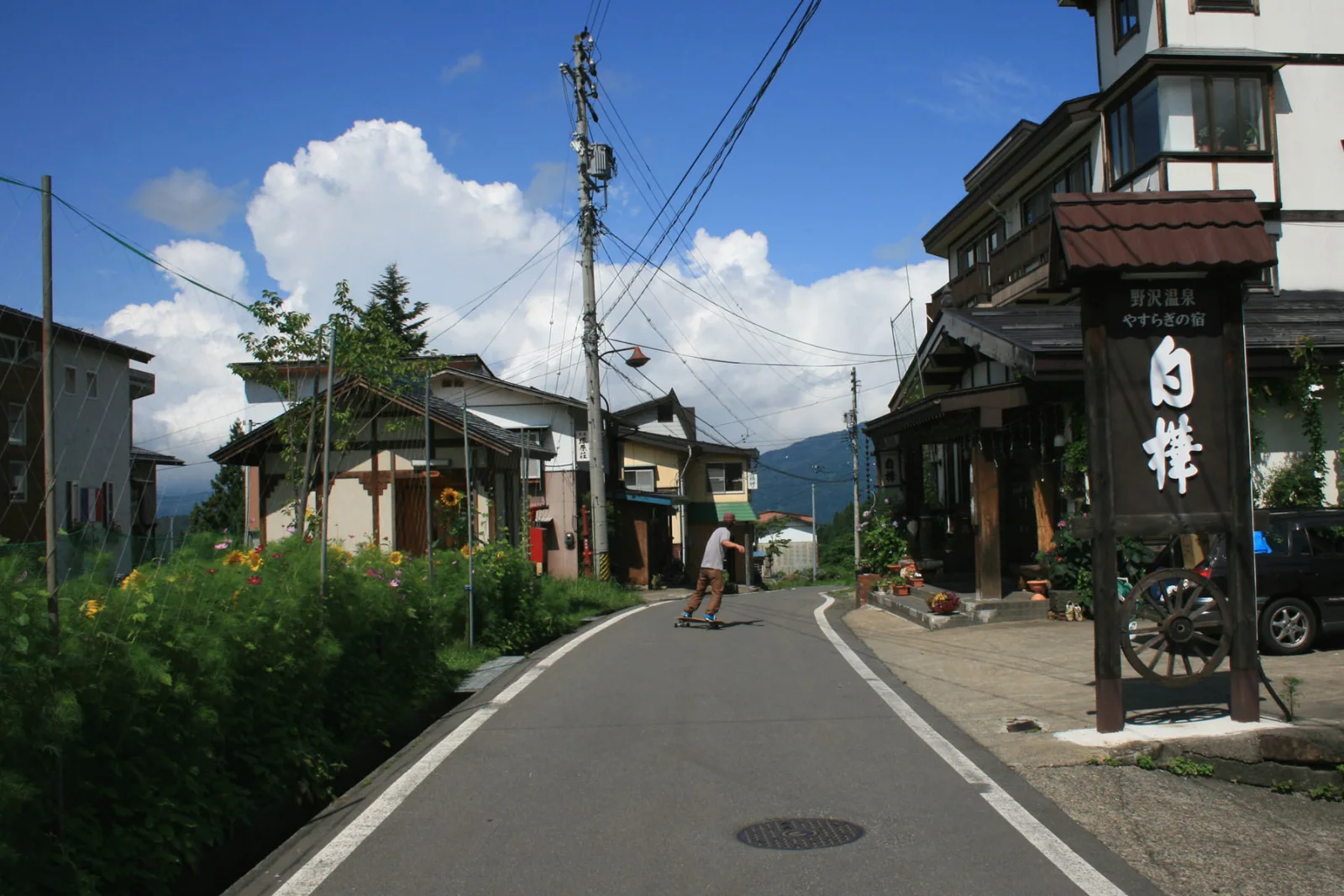
If you want village lodging where renting gear is straightforward, look at Yasuragi no Yado Shirakaba, pictured above. Shirakaba's official site separates lodging, its cafe-restaurant, and ski rentals, so guests can book rooms first and rent equipment only for the days they ski. Winter bookings on its website opened in July 2026. Anyone arriving for early-season skiing on November 28 will run into main-building renovations: the main building is closed through November 30 while the annex remains open, with check-in moved to Shichirobei Coffee. During that period, guests can use the private open-air bath and sauna while the main indoor bath is closed.
For slopeside access right beside the Hikage runs, there is Lodge Denbey. The road to the main lodge closes in winter, so drivers should set navigation to the village annex Yakata Denbey, and bus arrivals can drop luggage at the annex before riding Yu Road up the slope. Its current schedule lists 17:00 as the last snowmobile luggage run from the annex up the hill, noting that the snowmobile primarily hauls bags. Even on room-only plans without dinner, check-in closes at 20:00. Travelers leaving Tokyo in the evening are better off spending night one at an easier-to-reach village inn and heading up the mountain the next morning.
From December through March, this slopeside lodge generally requires a two-night minimum stay, with select date exceptions. If you only have Saturday night, swap a slopeside room for lodging just below the Hikage entrance and take Yu Road up the next morning to meet at Hikage as planned. When friends arrive earlier in the day and family arrives at night, track people and bags separately against the cutoffs. Put whoever arrives at midday as the lead booking contact, and share the last person's arrival schedule with the property.
Entering the Village from Iiyama Station Bus Stop No. 4
From Tokyo, Ueno, or Kanazawa, pick a Hokuriku Shinkansen train that stops at Iiyama. Enter Iiyama when buying tickets so you do not accidentally book Togari-Nozawaonsen Station just because it shares the town name. The tourism association notes that neither Togari-Nozawaonsen Station nor Kamisakai Station currently has public transit connecting to the hot-spring village. At Iiyama Station, exit via the Chikumagawa Exit and head to Bus Stop No. 4. The bus operator places the ticket machine to the left outside the Chikumagawa Exit; if you have kids or ski bags, send one person for tickets while everyone else waits by the stop.
The Nozawa Onsen Liner runs year-round and does not take reservations for individual riders. One-way fares from Iiyama to the village are ¥600 for adults and ¥300 for children ages 7 to 12. Ticket machines are available at Iiyama Station and Chuo Bus Terminal. When tapping a Suica card, each rider needs their own card—you cannot pay for multiple passengers on one card. On the return trip, if you board at intermediate stops such as Shinden, Nakao, Maesaka, or Kita-Iiyama, bring cash as instructed by the operator. If two of you are staying several nights and using the Shinden stop both ways, set aside cash for both return fares separately from your bathhouse coins.
On the 2026–27 winter timetable (December 1, 2026 to March 31, 2027), the 12:30 departure from Iiyama arrives at Chuo Bus Terminal at 12:55, ideal for dropping bags before grabbing lunch or heading to Oyu. The last bus leaves Iiyama at 21:20 and reaches Chuo Bus Terminal at 21:45. Both buses take a scheduled 25 minutes; the real difference is how much time you have left to check in. When arriving late, add your walk from the bus terminal to your inn and notify the property in advance. On a half-board stay, match your train to check-in and dinner hours—taking an earlier Shinkansen is usually more reliable than trying to make up time at Iiyama.
The final winter departure back from Chuo Bus Terminal leaves at 19:35, scheduled to reach Iiyama at 20:05. If you plan to ski before leaving, the 16:40 bus arriving at Iiyama at 17:05 is a practical sample connection; book your Tokyo train off the day's JR timetable with extra margin for snowy roads. Heading west toward Kanazawa requires checking the westbound timetable separately. If only one late connection works for your long-distance train, finish shipping gear, picking up luggage, and eating before that window rather than squeezing errands between buses.
Before buying Shinkansen tickets, screenshot both outbound and return Liner timetables so you have stop names and departure times together offline. Evening headways stretch out, and missing one bus can cost you dinner. With heavy bags, you can reorganize gear using the lockers shown on Iiyama Station's official map, packing items in reverse order for the trip home. If you are skiing early the next morning, check in first on arrival and pack boots, gloves, and your meetup address into one bag so you are not hauling suitcases back to the front desk at dawn.
When traveling with young children or bulky luggage and bus times do not line up, the tourism association lists an Uber rideshare service running between Nozawa Onsen and the Iiyama Station area from December 11, 2026 to March 25, 2027, operating 8:00–22:00 with fares shown in the app. You can request rides on demand or pre-book within the operating period for an extra ¥700 reservation fee. It works well for bridging gaps between buses. If your train arrives after 22:00, coordinate late arrival or next-day transfer plans directly with your inn.
Where the Three Village Transport Options Go
The Liner from Iiyama terminates at Chuo Bus Terminal. To reach Nagasaka by bus, transfer to the ski resort's free village shuttle. Running from December 12, 2026 to March 28, 2027, it loops through Shinden, Chuo Bus Terminal, and the Yokochi minshuku area, and also stops at SPArena and Karasawa Parking Lot No. 2 before reaching Nagasaka Parking Lot No. 1. The first bus from Chuo Bus Terminal to Nagasaka leaves at 8:13, with the last weekday afternoon bus at 16:43; weekends, holidays, and December 26 to January 3 follow a separate column where the last bus from Chuo Bus Terminal departs at 16:38. The last shuttle back to the village leaves Nagasaka at 17:00.
For Hikage, the free village-side access is the Yu Road moving walkway. Standard resort hours list Yu Road from 8:00–16:40, making it the easiest morning-and-afternoon link if you are playing in the snow, taking lessons, or watching companions ski at Hikage. Guests staying at the Nagasaka base can take the Nasky snow shuttle to Hikage from December 19, 2026 to March 28, 2027, running continuously between 8:30–16:30 from beside Nagasaka Center House to the front of the Hikage Information Center. It costs ¥750 one way even if you hold a lift ticket, though each paying adult can bring one preschool child for free. If your whole family meets at Hikage every day, walking up via Yu Road usually saves time waiting in line and finding stops.
Skiers and non-skiers in the same group do best with two meetup spots: meet at your respective morning destinations, then regroup at Chuo Bus Terminal or your inn's lobby in the afternoon. If you arrange to meet at Nagasaka, specify Nagasaka Center House or the gondola gate, because locker rooms, rentals, ticket windows, and boarding sit in different spots. Anyone planning to ski back from Nagasaka night skiing should walk the downhill route in regular shoes before dark. The free village shuttle stops in the early evening, so factor in the walk home before booking lodging far from the night slopes.
If you are driving in, save your inn's designated parking spot as a second pin. Chuo Bus Terminal is for buses only, with no public car parking. The multi-story Shinden Parking Garage operates 24 hours year-round with a 2.1 m height limit, charging ¥100 per hour for the first 12 hours and ¥100 per two hours thereafter for standard cars. Anyone renting a car with a roof box should verify total clearance at pickup. Once parked, walk between your room, the bathhouses, and restaurants. If you drive up to Nagasaka for daytime skiing, Nagasaka Parking Lot No. 1 serves day visitors, though leaving your car at your lodging is usually simpler.
How to Use the 13 Sotoyu Bathhouses and Where to Leave Your Shoes
The sotoyu are community bathhouses maintained by local Yunakama groups. Visitors are welcome to use them; there is no fixed admission fee, just a voluntary donation box near the entrance. Bring a small towel to dry off and leave spare clothes back at your inn. A handful of coins and your room key are all you need—leave skis, pads, wallets, and large bags behind. Bring your own soap and shampoo, as washing stations are much simpler than at paid bath facilities; if you need to wash and blow-dry hair or dress small children, it is easier at your inn or a day-use onsen with full showers than in a tight changing room.
Check the men's and women's signs at the door, take off your shoes in the entryway, and put your coat in the changing area. Wash your body before entering, then scoop a bucket of bathwater to test the heat. Keep towels and hair out of the water. Both Oyu and Kumanotearai-yu have separate hot and milder tubs, so first-timers should start in the milder one. Parents should test the water themselves before deciding how long children stay in. Always ask other bathers before adjusting water temperature, and shut the tap off completely when finished. Keep phones and cameras packed away inside your bag until you are dressed and back out on the street.
According to the tourism association, Oyu, Kawarayu, Matsuba-no-Yu, Shinden-no-Yu, and Nakao-no-Yu share standard hours of 5:00–23:00 from April to November and 6:00–23:00 from December to March. Shinyu and Juodo-no-Yu run 6:00–22:00, while Taki-no-Yu closes at 21:00 in summer and 22:00 in winter. On a winter night, heading from Oyu over to Shinyu half an hour later than planned can leave time for only one bath. When aiming for two baths in one outing, hit the earlier-closing bathhouse first and decide whether to stop at Oyu on the way back.
Three Short Bathhouse Walks: Oyu, Ogama, and Shinden
For an easy family stroll from Oyu, walk slightly downhill to Kawarayu to compare the feel of two wooden bathhouses. Kawarayu has hotter water and tighter quarters, so first-timers with kids can peek at the building and walk back to Oyu's milder tub. If Oyu's changing room looks crowded, browse nearby shops or grab a meal first and check the doorway again later. Putting your bath before or after dinner gives you room to shuffle the order when a bathhouse is busy.
Walk up Ogama-dori in the afternoon to see Ogama, the village's communal hot-spring source. Designated a village natural monument, its water approaches 90°C; locals use it to blanch vegetables and cook eggs while visitors watch from behind the barrier. For bathing, head to Asagama-no-Yu or the nearby paid bathhouse Furusato-no-Yu. Those three names differ by only a few syllables, so save their Japanese map pins separately before meeting friends—otherwise half the group ends up at the boiling spring instead of the bath.
Once you have visited Oyu, save Kumanotearai-yu for the next morning. Listed by the tourism association as one of Nozawa's easier-to-enter baths, it offers hot and warm tubs plus visitor-accessible onsen-egg cooking pots across from the entrance. Bring eggs in a mesh bag, lower them into a visitor-designated pot, and time them by the posted sign. The official guide notes about 20 minutes, enough time for a brisk stroll in cold weather before picking them up. Matsuba-no-Yu, Juodo-no-Yu, and Kamiterayu also list egg-cooking spots. Since the Yurari footbath and egg pots next to Ogama close in winter, use these bathhouses instead during ski season.
If you are staying in Shinden or Nakao, save those two bathhouses for arrival day or departure morning. Shinden-no-Yu stands across from Nishinomiya Shrine and moved to its current site in 2018. Nakao-no-Yu, on the south side of the village, is the largest of the 13 sotoyu, with both hot and mild tubs and a roomier washing area. Drop your bags at your lodging first and walk over empty-handed. Only head up to Oyu for dinner if you still have the energy, and you will avoid dragging rolling bags across the whole hot-spring street on your way out the next morning.
To tour the bathhouses without bathing at every stop, pick up a village stamp book. The tourism association's walking route covers 27 stamp stations, with stands at all 13 sotoyu alongside cultural halls, shrines, and the Nozawana birthplace monument. When walking with older family members, cluster a few stops on level ground and have bathers meet back outside the door. Note that Matsuba-no-Yu's baths and Juodo-no-Yu's men's bath are on the second floor—if anyone in your group avoids stairs, choose a single-level bathhouse entrance.
Where to Go When It Snows, Rains, or You Need a Full Shower
If you are staying near Ogama-dori and want to stay out of rain or skip a long walk in snow boots, go to Furusato-no-Yu at Ogama Onsen Park. It provides showers, shampoo, body wash, and towels for sale on-site. Winter hours (roughly mid-December through March) are 11:00–20:00 with last entry at 19:30, while summer hours (April through mid-December) run 10:00–19:00 with last entry at 18:30. It closes Thursdays, staying open on national holidays and closing the next day instead. Admission is ¥700 for adults, ¥500 for elementary school age and younger, and free for ages 2 and under. Always plan around the last-entry time if you are squeezing in a soak before dinner.
Near Nagasaka or Karasawa, Nozawa Onsen SPArena is the place for post-ski showers, waiting for family, or soaking together in swimsuits. It has gender-separated indoor baths plus a large swimsuit-required outdoor bath. Admission is ¥900 for junior high age and up and ¥700 for ages 3 through elementary school; swimsuit rentals cost ¥300 plus a ¥1,000 refundable deposit. Its official winter page lists the building opening at noon from December 19, 2026 to March 28, 2027, with baths open 14:00–20:30 and last entry at 20:00. You can eat at the restaurant at midday and shower later in the afternoon. If you stay late, check the walking route back to your lodging as you step off the shuttle.
When high winds shut down the mountain gondolas, Oborozukiyo no Yakata (Hanzan Bunko) offers a dry indoor stop in the village. Dedicated to Tatsuyuki Takano, lyricist of "Furusato" and "Oborozukiyo," it opens 9:00–17:00 with last ticket sales at 16:30; admission is ¥300 for adults and ¥150 for elementary and junior high students. It normally closes Mondays (or the following day if Monday is a national holiday) and stays open continuously over New Year's. If you hit a closed day, spend the afternoon in your inn's bath or the nearest sotoyu, saving the steep Ogama climb and outdoor walks for clearer streets.
On heavy snow nights, the first thing to drop is usually the final bathhouse stop. Walking downhill is easy, while heading back means crossing intersections and climbing uphill—picking a bathhouse on the same side of the village cuts down on icy detours. Pack shoes built for snow, carry spare dry socks when heading out, and air out wet gear back in your room. If part of your group wants a proper shower or swimsuit bath while others want free sotoyu, split up between SPArena and the village bathhouses for the afternoon and meet back in the room before dinner.
Pick Your Ski Meetup Point Before Buying Lift Tickets and Breakfast
The resort targets November 28, 2026 for early-season opening, holds its opening festival on December 19, and plans to run through May 5, 2027. On a one-night stay in late November, treat hot springs as the main draw and choose an inn with an on-site bath within walking distance of Oyu. Wait until December 19 or later if you need Hikage's family facilities fully open. Spring has its own cutoff: March 28 is the last day of the free village shuttle, and starting March 29 the resort closes listed lower mountain trails down to the base, so anyone skiing up high on check-out day needs to factor the gondola ride down into their schedule.
You can pair the Hikage kids' play zone with the daycare inside the Hikage Information Center on the same morning. For the 2026–27 season, Yu-min daycare runs from December 19 to March 28 for ages 1 to 6 at ¥4,000 for a half day and ¥7,000 for a full day. Morning hours are 8:30–12:00 and afternoon hours are 13:00–16:15, closing for one hour at midday—even full-day bookings require picking up your child over lunch. Reservations open on November 16, 2026. If your child naps in the room at noon, village lodging near Yu Road is far less hassle than riding two snow shuttles. When siblings split between ski lessons and daycare, double-check both meeting points so parents can trade off smoothly.
Regular-season lift ticket rates run from December 19, 2026 to March 28, 2027: an adult 1-day pass is ¥7,800, a consecutive 2-day pass is ¥14,500, and a 4-hour pass is ¥6,700 (counting 4 consecutive hours from first gate scan). Buy the 2-day pass if you are skiing two full days. If arrival day includes check-in, boot fitting, and lunch—leaving only a short afternoon window—estimate your actual hours on snow before choosing between passes. For families visiting for snow play, decide upfront which adults are riding the lifts and who stays at the base; the Hikage kids' play area is reachable straight from the village via Yu Road.
When you have an early meetup the next morning, breakfast timing matters more than a room view. If your inn's breakfast service runs too close to Hikage lesson check-in, book a room-only plan and pick up breakfast food in the village the night before. Adults starting from Oyu who also need to drop kids at Hikage Information Center must build in extra time for gear pickup and putting on ski boots. Cutting morning friction through your lodging location and rental shop choice keeps your first meal from delaying the whole day.
Comparing Rates: Factor in Meals, Taxes, and Ski Gear
Search first using your exact party size and dates to see what rooms are actually bookable. A family of four needs to check bed counts, floor space after rollaways or futons are laid out, and whether nighttime bathroom trips require leaving the room. If private soaking matters, compare rooms with private bathrooms, rooms with private baths, and properties with reservable private baths. When some travelers prefer beds and others do fine on tatami, price a Japanese-Western room against two separate rooms. Smaller inns often release specific dates or multi-night packages on their own websites first, so searching a two-night block can turn up options that single-night searches miss.
Half-board plans save you the hunt for dinner, especially if you do not want to head back out afterward, though they lock in when you need to arrive. If your first night relies on the 18:55 bus from Iiyama (reaching Chuo Bus Terminal at 19:20), check-in and dinner will collide. Book night one as room-only or breakfast-only—eating in Iiyama or reserving a late-seating village spot—and save your inn's dinner plan for night two. Send dietary restrictions and guest counts to the property in advance before deciding which nights to dine in.
Starting June 2026, the village collects an accommodation tax. Through May 31, 2029, the rate is 3.5% of the room charge excluding meals, consumption tax, and bathing tax, with stays under ¥6,000 per person per night exempt; this village tax already includes Nagano Prefecture's accommodation tax. The village's bathing tax adds ¥150 per adult per night, with exemptions for children under 12 and eligible categories. Compare quotes using the total payable amount for the same dates, room type, and headcount, and add on-site taxes to your budget when booking platforms leave them to be paid at check-in. When a meal-inclusive plan costs noticeably more, check whether the markup comes from the room tier or the menu.
If you bring your own skis, snowboards, and boots, check the property's drying room, lock setup, and access hours before booking multi-night stays. Carrying boots down from your room every morning versus changing at the base makes a big difference on the first uphill walk. Nagasaka Center House has coin lockers, changing areas, and a first-floor luggage courier counter, though resort rules specify the counter accepts only skis, snowboards, ski wear, and related winter gear. To ski on check-out day and head straight to the bus, ask your inn to hold suitcases or size a station or resort locker beforehand. Packing clothes and toiletries separately from ski gear saves you from repacking everything when you retrieve your main bag.
Before finalizing, check how easily your dates can move. Fire festival tickets, daycare, and ski lessons all tie into your transit schedule, so shifting one item can require moving both rooms and meals. When two properties are close in price, a refundable rate with a clear cancellation deadline makes group changes far easier. Keep the cancellation cutoff, final check-in time, and dinner hours at the top of your booking notes so you can adjust fast if someone's flight shifts.
January 15, 2027 Dosojin Fire Festival: Secure Lodging and Tickets Early
The 2027 Dosojin Fire Festival runs from January 13 to 15: tree hauling begins the afternoon of the 13th, the wooden shrine is built on the 14th, and the fire festival takes place the night of the 15th. Per the tourism association, venue entry requires an admission ticket issued only to village residents and overnight guests staying inside Nozawa Onsen Village. Request spectator tickets through your lodging as soon as your room is confirmed, and verify how adults and children pick them up plus which entrance to use that night. If village rooms are sold out for the 15th, make it a daytime bath trip instead and catch a pre-dinner bus back to Iiyama or Nagano.
On January 15, the evening timeline lists lanterns arriving at 19:30, fireworks at 20:00, and the main torch-lighting segment wrapping up around 22:00. Overnight guests watch as spectators; only village residents participate in the fire battle itself. Drinks—including alcohol—are prohibited inside the venue. Village roads ban parking, and pedestrian flow is strictly directed. Even if you know the shortcuts around Oyu, follow venue staff and your inn's instructions coming and going, and do not drive up near the grounds to wait for your group.
On a one-night trip, check in on the 15th, drop your bags and eat an early dinner at the inn, then walk to the festival site. With two nights, arrive on the 14th, ski or tour the sotoyu during the day on the 15th, and attend the festival that night. If anyone plans to leave early or skip standing in the snow for hours, split room keys and agree on the walk back to the lobby beforehand. Schedule baths for the night before or the next morning—Oyu and Shinden-no-Yu open at 6:00 in winter, so anyone catching the 6:30 first bus should soak the day before.
How to Structure a One-Night or Two-Night Stay
For a one-night stay that still includes skiing, ride in from Iiyama in the morning, leave luggage at your inn around noon, and fit boots while scoping out the next morning's meetup spot. Once everyone arrives in the afternoon, walk from Oyu to Matsuba-no-Yu, eat dinner, and stage gear in your room for the next day. Save the second morning for the slopes, assigning luggage handling and departure stops early. If your rental shop and inn sit at opposite ends between Nagasaka and the hot-spring street, return rentals first after skiing and grab your bags on the way to the bus to avoid backtracking.
If you want a full day on the snow plus two unhurried bathhouse sessions, book two nights from the start. Explore the village on afternoon one, spend all of day two on the mountain before changing shoes at your inn for a nearby sotoyu, and walk up Ogama-dori to see the boiling spring after breakfast on day three before catching an afternoon bus. If one person wants to keep skiing on check-out day, have the rest of the group collect the bags and meet at Chuo Bus Terminal. When everyone needs the same Shinkansen, set your bus-stop meetup time with buffer ahead of departure.
Bath-only travelers do best on weekdays without ski-lesson schedules. Arrive for lunch, walk from Oyu to Ogama and Furusato-no-Yu in the afternoon, and save Kumanotearai-yu or Nakao-no-Yu for the next morning. In warmer months, swap the morning bathhouse for the Yurari footbath next to Ogama and boil onsen eggs while you soak. If you are adding another base in northern Nagano, pick your top ski hill and hot-spring priorities first, then check our Nagano ski and onsen base comparison for neighboring stops. For a first night centered on an inn dinner and an early morning bus, use our first-timer's ryokan stay guide to map out check-in, meal times, and morning check-out.
A few useful answers
Where is the most convenient area to stay in Nozawa Onsen for a first visit?
Between Oyu and Chuo Bus Terminal is best for public bathhouses and village dining. Stay near the Nagasaka base if you want first-chair gondola access every morning, or near Yu Road if kids have lessons or snow play at Hikage.
Where do you catch the Nozawa Onsen bus at Iiyama Station?
Take the Chikumagawa Exit to Bus Stop No. 4. The Nozawa Onsen Liner reaches Chuo Bus Terminal in about 25 minutes; one-way fares are ¥600 for adults and ¥300 for children ages 7 to 12.
Do the 13 sotoyu bathhouses charge admission, and can you bathe in Ogama?
None of the 13 public sotoyu charge admission, though voluntary donations are accepted at the entrance box. Ogama is a scalding hot-spring source used by locals and viewed from behind a barrier—to bathe nearby, go to Asagama-no-Yu or the paid Furusato-no-Yu bathhouse.
Can you stay in Iiyama and attend the January 15, 2027 Dosojin Fire Festival?
Official festival venue entry is ticketed, and spectator tickets are issued only to village residents and overnight guests staying inside Nozawa Onsen Village. To enter the grounds, book lodging in the village and request tickets through your property.
When does the free village shuttle run during the 2026–27 season?
The resort lists free village shuttle service from December 12, 2026 through March 28, 2027, connecting Chuo Bus Terminal, Shinden, and the Yokochi minshuku area to Nagasaka. Use Yu Road to reach Hikage on foot, or take the Nasky snow shuttle between Nagasaka and Hikage for ¥750 one way.
How many nights should you stay in Nozawa Onsen for skiing and hot springs?
One night covers a round of village bathhouses and a half day on the slopes. Book two nights if you want a full day of skiing alongside unhurried dinners and sotoyu visits. Slopeside lodges also carry winter minimum-stay rules and earlier check-in cutoffs.
Official information and references
Sources used in this guide.
- Nozawa Onsen Kotsu | Liner Fares, Iiyama Station Stop Location, and 2026–27 Winter Timetable
- Nozawa Onsen Tourism Association | Access, Village Bus Stops, and Parking
- JR East | Iiyama Station Map and Accessibility Information
- Nozawa Onsen Snow Resort | Nagasaka Parking and Driving Access
- Nozawa Onsen Tourism Association | Village Map and Walking Distance to Oyu
- Nozawa Onsen Tourism Association | 2026–27 Winter Rideshare Service
- Nozawa Onsen Tourism Association | The 13 Sotoyu, Bathing Etiquette, and Day-Use Baths
- Nozawa Onsen Tourism Association | Ogama and Village Communal Bathhouses
- Nozawa Onsen Snow Resort | 2026–27 Ski Season and Opening Announcements
- Nozawa Onsen Snow Resort | Free Village Shuttle Timetable
- Nozawa Onsen Snow Resort | Lift and Yu Road Operating Hours
- Nozawa Onsen Snow Resort | Lift Pass and Nasky Shuttle Fares
- Nozawa Onsen Snow Resort | Hikage Daycare and Kids' Snow Play Area
- Nozawa Onsen Snow Resort | Coin Lockers, Courier Counter, and Season Dates
- Nozawa Onsen Village | Furusato-no-Yu Operating Information
- SPArena | Admission, Rentals, and Bathhouse Facilities
- SPArena | 2026–27 Winter Operating Hours
- Nozawa Onsen Tourism Association | 2027 Dosojin Fire Festival Schedule and Entry Rules
- Nozawa Onsen Tourism Association | Hanzan Bunko Admission and Opening Hours
- Nozawa Onsen Village | Accommodation Tax Rate and Exemptions
- Nozawa Onsen Village | Bathing Tax Rates and Exemptions
- Nozawa Onsen Village | Accommodation Tax Guide and Prefectural Tax Handling
- Ryokan Sakaya | Access, Check-In/Check-Out, and Private Baths
- Ryokan Sakaya | Main Building Standard Japanese Room and Winter Breakfast Plan
- Kiriya Ryokan | Room Types, Bathrooms, and Floor Layout
- Kiriya Ryokan | Walking Access to Yu Road and Public Bathhouses
- Yasuragi no Yado Shirakaba | Lodging, Cafe-Restaurant, and Ski Rentals
- Yasuragi no Yado Shirakaba | 2026–27 Winter Booking Opening
- Yasuragi no Yado Shirakaba | Main Building Renovation and Check-In Location
- Lodge Denbey | Winter Access, Luggage Transport, and Check-In Hours
- Lodge Denbey | Winter Guest Luggage and Shuttle FAQ
- Lodge Denbey | Winter Minimum Stay Requirements