Compare Myoko's four main resorts for 2026–27—Akakura Onsen, Akakura Kanko, Ikenotaira, and Suginohara—covering beginner slopes, family tickets, two-mountain passes, the Madarao 5-Day Pass, Nagano express buses, and parking fees.
- Region & Focus
- Nagano and Myoko ski resortsSkiing
- Reading Scope
- 19 min read · 12 chapters · 6 Q&As
- Official Verification
- 17 official sources checkedUpdated 22 November 2026
- Key Topics
- WinterSeasonsHot springs
Chapter Route Map (tap any stop)
- Akakura, Ikenotaira, or Suginosawa: Choose Your Daily Base First
- 2026–27 Season Dates and Daily Timing
- Akakura Kanko (AKAKAN): Navigating Both Sides of the Mountain
- Akakura Onsen Ski Resort: Village Proximity and Separate Ticketing
- Ikenotaira Alpen Blick: Picking a Child's First Slope
- Suginohara's 8.5 km Cruise and the Suginosawa Entrance
- Pricing Lift Passes by Party Size, Age, and Ski Days
- How to Use the Akakura Two-Mountain Pass and Madarao 5-Day Pass
- Getting There Without a Car: Express Buses or Rail Plus Local Buses
- Driving and Parking: Fees and Payment Methods to Pack
- Structuring a Two- or Three-Night Ski Itinerary and Departure Day
- Adjusting Plans for High Winds or Spring Snow
- Quick Q&A
For a first ski trip to Myoko Kogen, two choices shape the entire itinerary: which resort base is easiest to reach from your accommodation, and how far your group can ski together. Stay in Akakura Onsen village, and Akakura Onsen Ski Resort makes half-day sessions effortless; head to Akakura Kanko instead if you want beginner slopes and advanced runs fanning out from the same base. Ikenotaira suits families with pre-schoolers thanks to its netted snow-play area and magic carpet, while Suginohara offers an 8.5 km top-to-bottom run and free lift tickets for primary school children if everyone already skis. For the 2026–27 winter season, winter express buses run directly from Nagano Station to the Myoko area, and both Ikenotaira and Suginohara have updated their parking fees.
Akakura, Ikenotaira, or Suginosawa: Choose Your Daily Base First
Myoko Kogen sits at the southern tip of Niigata Prefecture. Thinking in terms of three distinct bases—Akakura Onsen village, Ikenotaira Onsen, and Suginosawa—works far better than just checking whether a hotel address says 'Myoko'. From Akakura Onsen village, you can walk straight to the Akakura Onsen resort base or hop on the Akakura Kanko shuttle to the Sky Cable station. Ikenotaira has separate entrances on the hotel side and the Kayaba side, so agree on one before hiring gear or meeting instructors. Suginosawa works best if you plan to spend most of your time at Suginohara; those walking out from the guesthouse quarter in the morning can look for the No. 1 Romance pair lift on the piste map.
If your family wants to walk out of the hotel and click into skis within minutes, confirm both the resort name and exact base entrance before booking, rather than relying on a hotel's vague distance claim. Being within walking distance of the Kumado area sets you up well for a first day at Akakura Onsen; if your instructor is waiting at Akakura Kanko's Sky Cable base station, take the hotel or resort shuttle in the morning. Both resorts share the Akakura name on maps, yet trudging across icy roads in ski boots makes distances and elevation changes feel far longer than in trainers.
- If everyone is a complete beginner on a two-day trip, stick to one resort for both days. Boot fitting, finding the ski school, and getting used to the lifts eat into day one, so returning to the same practice slope on day two saves valuable ski time.
- For mixed-ability groups planning to meet for lunch, pick a single base entrance that serves both a lower beginner slope and intermediate runs. When stronger skiers head up to advanced terrain, agree on a specific base café or ticket office beforehand.
- Give Suginohara a full day if the adults want long cruisers or if primary schoolers in the group can already control their speed independently. Ikenotaira's linked 4 km route is shorter, making it easy for those working on rhythm to start on individual beginner runs.
- For non-skiers in the group, base yourselves in Akakura Onsen village and keep mountain sessions to the daytime. When skiers stay up for the final lifts, non-skiing companions can stroll back to the hotel whenever they please.
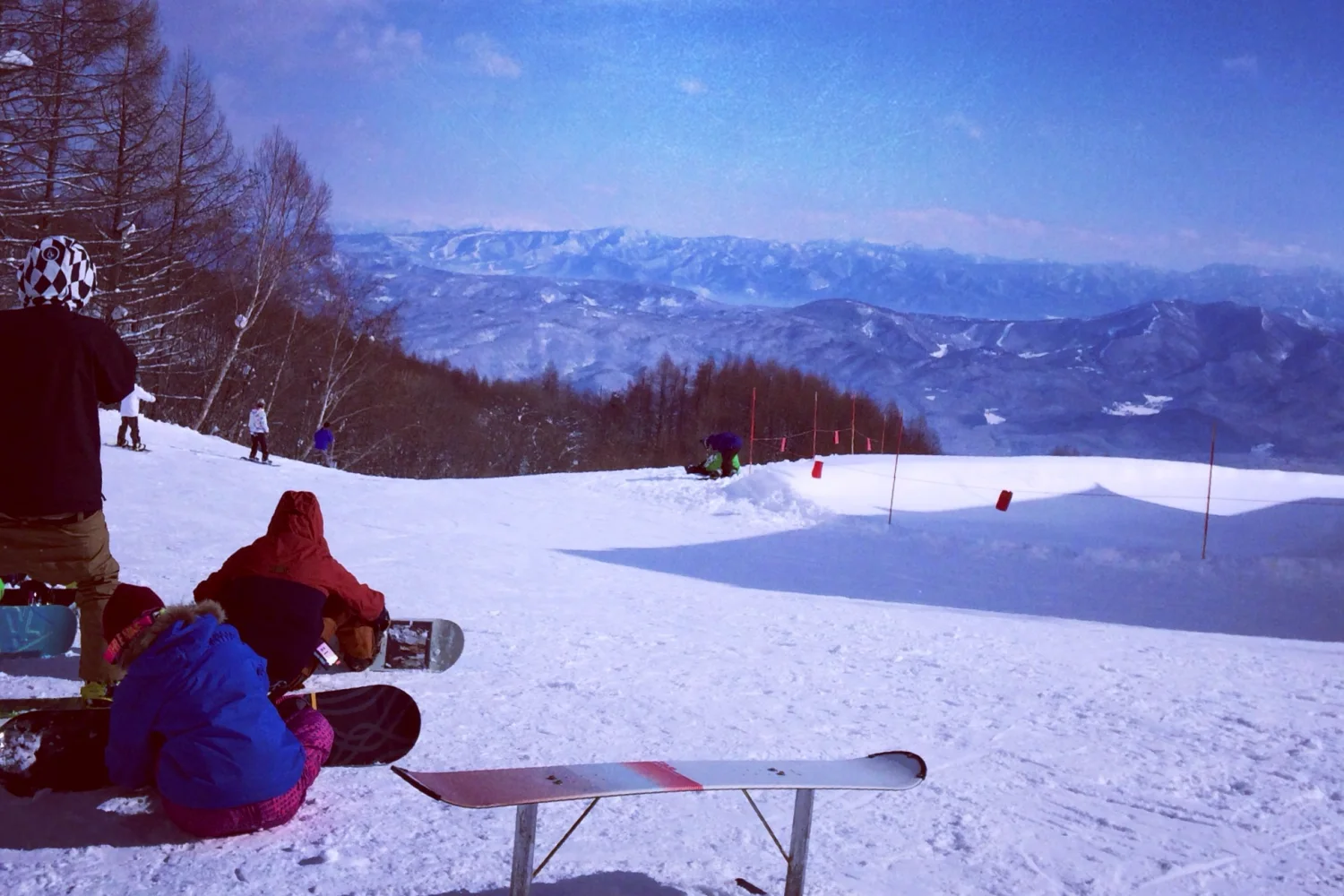
Compare Myoko's four main resorts for 2026–27—Akakura Onsen, Akakura Kanko, Ikenotaira, and Suginohara—covering beginner slopes, family tickets, two-mountain passes, the Madarao 5-Day Pass, Nagano express buses, and parking fees.
2026–27 Season Dates and Daily Timing
Akakura Kanko's announced operating season runs from 19 December 2026 to 5 May 2027, with regular lift tickets valid until 22 March and spring rates scheduled to begin the following day. Suginohara is also slated to open on 19 December and close on 28 March. Ikenotaira lists a provisional opening of 19 December as well, with lifts generally running from 08:30 to 16:00 JST. Akakura Onsen kept its winter early-bird ticket page open through November, with its main seasonal site due to launch in early December. If you are booking opening week, choose a resort where you are happy skiing only the lower slopes if upper runs are not yet open.
Between the first lift spinning and your first actual run down the mountain, you still need time for ticket collection, gear hire, shoe storage, and weekend queues. In the afternoon, work backwards from your departure time and separate last-lift times from when you plan to catch a bus. At Akakura Kanko, for example, the Sky Cable and Hotel No. 3 lift are scheduled to stop at 15:45, while Hotel No. 1, Hotel No. 2, and Champion No. 3 run until 16:00. If you need the 16:30 shuttle from the Sky Cable base, plan your final descent around your gear-return point and the run leading down to that station.
For late-season skiing from late March onwards, build your itinerary around Akakura Kanko's spring schedule. Regular sales of the Akakura two-mountain pass end on 22 March, and Akakura Kanko's free village shuttle is also scheduled to run only through that date. Winter express buses to Nagano operate until 31 March at the latest. If you are staying in the onsen village for spring skiing, plan to use municipal buses or arrange a gear transfer with your accommodation in advance.
Akakura Kanko (AKAKAN): Navigating Both Sides of the Mountain
The Myoko Kogen Sky Cable gondola carries six passengers along a 2,607-metre line, supplemented at the base by the Hotel No. 1 quad lift. First-time lift riders should start on the Hotel Beginner course right beside Hotel No. 1—officially listed at 750 metres long with a maximum gradient of 10 degrees. Companions can ski the Hotel Main run in front of the Akakura Kanko Hotel and rejoin at the bottom. Meet at the Hotel No. 1 lower station or ticket window so learners do not have to ski unfamiliar pistes just to link up.
Once you are linking parallel turns on intermediates, try the rolling pitch of Hotel B before checking snow conditions higher up on Hotel C. The Joshi Kokutai course runs 1,700 metres with a maximum gradient of 22 degrees; although rated intermediate, the resort notes that the upper section is sometimes left ungroomed with fresh snow. Cruising smoothly on sunny groomed runs is very different from managing speed through chopped powder or firm icy patches. If the upper section still holds untouched snow, take a warm-up lap on familiar Hotel B before committing.
Hotel A and Champion A are both designated advanced ungroomed runs. Champion A reaches a maximum gradient of 32 degrees, and you can preview the face from the Champion No. 3 lift on the way up. Watch where skiers start turning and check whether moguls hide the landing lines before dropping in. Champion C acts as a link trail towards Champion B and the Sky Cable side, so check the junctions on the map and read trail signs while you still have plenty of room to stop.
Akakura Kanko sits roughly eight minutes off the Myokokogen Interchange on the Joshinetsu Expressway, with around 1,000 free parking spaces beside the base. If anyone in the car has difficulty walking far, drop skis and passengers near the base first before following attendants to a parking bay. Once you are set on the Hotel beginner slope, there is no need to haul the whole family's gear over to the other Akakura entrance just for a transfer.
Akakura Onsen Ski Resort: Village Proximity and Separate Ticketing
When accommodation listings advertise 'walkable to Akakura Onsen Ski Resort', they usually mean the onsen-village side. Non-skiing relatives can easily meet you at a hotel or restaurant on the main street while skiers return at their own pace. If entering from the Kumado or Yodel side, cross-check the latest resort map against nearby street junctions and ticket booths. Should your ski lesson meet at a specific information centre, ask your hotel the evening before to point out that exact entrance so you are not wandering around in ski boots the next morning.
Akakura Onsen's seasonal early-bird lift passes are scheduled for sale until 30 November. E-tickets for single days can be exchanged for IC cards using the order QR code at automated kiosks—keep only the card you are using that day in your pocket when passing the gates. These early-bird tickets are valid solely at Akakura Onsen, cannot be upgraded to a two-mountain pass, and are non-refundable if lifts close due to weather or limited terrain. If you are still undecided on which resort suits best, lock in your hotel location and lessons before buying.
Akakura Onsen's season pass terms restrict use strictly to the named holder, and its official sales page notes that the pass is not valid at Akakura Kanko. If you plan to ski near the village in the morning and cross over to Akakura Kanko in the afternoon, look for the two-mountain pass in the day-ticket listings. Travellers visiting the two resorts on separate days should price single-day tickets for each resort first and check whether any early-bird rates apply. Passes labelled 'Resort Ticket' at Akakura Kanko likewise cover only its own lifts.
Ikenotaira Alpen Blick: Picking a Child's First Slope
Ikenotaira has the Shirakaba pair lift and a base restaurant on the Kayaba side, while the Alpen Blick Hotel side serves the Alpen Blick No. 1 and No. 2 pair lifts. The resort labels Yamabato Rinkan, Karamatsu, Wide Long Run, and Happy Gelande as beginner runs. Still, 'beginner' is a resort-specific grade, so check the steepest pitch: Happy Gelande averages 8 degrees but still hits a maximum of 21 degrees. When young children are just learning to snowplough stop, keep them with an instructor on the gentlest entry section until they know where to pull over safely along the edge before attempting a full run.
For pre-schoolers mainly interested in snow play, head to the netted Kids Garden. Equipped with a magic carpet conveyor, it is scheduled to operate from 10:00 to 16:00 JST on weekends and public holidays for ¥500, with free entry for lift-ticket holders and children aged 3 and under. Keep snow-play rules separate from lift-pass rules: pre-schoolers ride the lifts for free, so if a child aged 4 or over who has not started primary school is only using the play zone without skiing, budget for the Kids Garden admission fee.
To tackle the resort's promoted 4 km top-to-bottom route, trace both the pistes and connecting lifts back to your starting side on the map first. The Ikenotaira quad lift serves intermediate pistes as well as tree runs marked intermediate, alongside a dedicated snow park. First-timers stepping up from beginner slopes should stick to wide, groomed runs. When you spot entrances to tree runs or the snow park, keep straight down the regular piste, as jumpers often land from angles you cannot see.
If you are only skiing the morning and want extra practice after a child's lesson, booking lunch at Café & Restaurant Kayaba beside the Shirakaba lift keeps everyone on the same side of the mountain. Parents returning hired gear on the Alpen Blick Hotel side should finish their own runs there first, then regroup at the base or back at the hotel. Take a quick photo of the hire receipt so anyone coming down later knows exactly which shop to visit.
Suginohara's 8.5 km Cruise and the Suginosawa Entrance
Suginohara lists a maximum run distance of 8.5 km and a vertical drop of 1,124 metres. Achieving that full distance depends on upper lifts, connecting trails, and lower pistes all being open together. On the updated resort map, trace the return line from the upper Mitahara area back towards the Suginohara base. First-time visitors should take one or two warm-up laps to orient themselves around the gondola base station before heading up to Mitahara. Near closing time, stay on pistes that drop straight back to your starting point.
The marathon run is best suited to skiers and boarders who can control their speed and link turns comfortably where trails narrow. Even though primary schoolers get free lift tickets, anyone wearing ski boots for the first time is better off staying on the lower slope until they can ride independently from top to bottom. When meeting non-skiing friends lower down, designate the gondola base station next to Car Park No. 1 rather than vaguely saying 'the bottom of Suginohara'. Friends in regular shoes should wait beside the walkway, well clear of skiers slowing down.
For guests staying in the Suginosawa guesthouse village, the 2026–27 map marks a specific entry route: ride the Suginohara No. 1 Romance lift first, then buy passes or redeem e-tickets at the Car Park No. 1 ticket office. If taking the Nagaden bus in the morning, check the 'Suginosawa' stop against your accommodation's check-in address, as the lower village and the gondola base are in different spots. When booking an afternoon pick-up, send your driver both your exact finish point and a spot where cars can legally stop.
For 2026–27, Suginohara has discontinued its single-resort season pass, early-bird tickets, and previously listed advance ticket options, though standard online day tickets remain available through the official site. If you come across discounted pages from last season online, verify validity dates and eligible products carefully. The Mt. Myoko Super Season Pass issued by Myoko Tourism remains valid at Suginohara, though drivers must still pay the separate parking fee.
Pricing Lift Passes by Party Size, Age, and Ski Days
At Akakura Kanko, standard one-day lift tickets cost ¥7,000 for adults, ¥6,000 for junior high students and seniors aged 60+, ¥5,200 for primary school children, and are free for pre-schoolers. An adult 4-hour pass costs ¥5,400—counted from the first gate scan—while consecutive 2-day and 3-day passes are ¥12,300 and ¥17,200 respectively. Early-bird one-day passes sold from 1 to 30 November cost ¥4,500 (October's ¥4,000 super early-bird window has closed). For fixed dates using two early-bird day passes, the ¥9,000 total beats a walk-up adult 2-day pass, and separate day tickets also let you take a rest day mid-week.
Akakura Kanko's ¥9,400 Family Pack covers one adult and one child at Akakura Kanko only. Two adults plus one child cost ¥14,900, while two adults and two children are ¥18,800. Spring one-day passes—scheduled from 23 March to 5 May—drop to ¥4,000 for adults, ¥3,500 for junior high students and seniors aged 60+, and ¥2,500 for primary schoolers. Non-skiing companions riding the Sky Cable purely for photos can buy an adult sightseeing return ticket for ¥2,500.
Ikenotaira charges ¥7,400 for an adult one-day pass, ¥6,200 for junior high students and seniors aged 60+, ¥4,400 for primary schoolers, and nothing for pre-schoolers. An adult 4-hour pass is ¥5,900, a 2-day pass ¥13,300, and a 3-day pass ¥18,800. Single-ride adult tickets cost ¥800, or ¥3,600 for five rides—handy for absolute beginners doing just a few practice runs. Residents holding a Japanese My Number Card qualify for discounted adult day passes at ¥6,900 or 4-hour passes at ¥5,400. Short-term visitors should budget standard walk-up fares plus a ¥500 refundable deposit per IC card.
At Ikenotaira, Family Ticket B for two adults and one primary schooler costs ¥16,300, saving ¥2,900 compared with ¥19,200 for three individual tickets. Family Ticket A for one adult and one child is ¥10,000, with each additional primary schooler costing ¥3,700. If you have booked a single lesson and are unsure whether the afternoon will hold up, ask the ski school how many lift rides the class takes first. Point or single-ride tickets only save money if learners stay on one short slope served by the same lift.
Suginohara charges ¥9,000 for an adult one-day ticket (¥8,200 for Seibu Prince members), and ¥8,400 for junior/senior high students and seniors aged 55+ (¥7,800 for members)—seniors should carry ID showing proof of age. Primary schoolers and younger ski free, so two adults with one primary-school child pay ¥18,000 at standard rates or ¥16,400 if both adults are members. When weighing those totals against Ikenotaira's family passes, factor in the same day's parking, equipment hire, and lesson costs.
Suginohara's ¥8,000 adult 4-hour ticket activates from 10:00 JST onwards, running for four hours from your first gate pass. Early risers who hold membership can start from first lifts by paying just ¥200 more for a member day pass. An adult 2-day ticket costs ¥17,000, compared with ¥16,400 for two separate member day passes. Adult point tickets cost ¥1,100 per point: standard lifts take 1 point per ride, high-speed lifts 2 points, and uphill gondola rides 3 points. Because points burn by lift type, riding short base chairs uses credit far more slowly than heading all the way up the mountain.
How to Use the Akakura Two-Mountain Pass and Madarao 5-Day Pass
The Akakura Joint Two-Mountain 1-Day Pass lets you ride lifts at both Akakura Onsen and Akakura Kanko on the same day. Rates published by Akakura Kanko through 22 March are ¥10,000 for adults and junior high students, ¥8,000 for seniors aged 60+ and primary schoolers, and free for pre-schoolers. If you see a ¥9,400 family option at the counter, check for 'Resort Family Pack' on the label—that bundle covers Akakura Kanko only. For an adult, skiing Akakura Kanko alone costs ¥7,000, so adding the Onsen side on the same day costs an extra ¥3,000.
Linking both Akakuras works best when you already have your own or hired gear and have specific runs picked out on the second mountain. Confirm how inter-resort connections are running that day before buying the joint pass, and make sure everyone knows the second entrance if you end up transferring by road. Akakura Kanko operates a shuttle between Akakura Onsen village and the Sky Cable during the advertised window, though midday weekday intervals are sparser. With only half a day—or if you still need to kit up and take a lesson—staying at one resort gives you more runs; if you do switch mountains, cross around lunch rather than leaving it to the final hour.
The Madarao & Suginohara 5 Days Snow Pass gives you five non-consecutive ski days across the season. Each day you choose either Suginohara or a Mountain Pass covering both Madarao Kogen and Tangram Ski Circus. The Mountain Pass must be collected at the Madarao Kogen ticket office with a ¥500 card deposit, whereas Suginohara issues a deposit-free day ticket via QR code.
Keeping a spare day in reserve lets you take a rest day in windy weather and save Suginohara for when upper Mitahara is open. If members of your group only plan to ski two or three days, price single-day tickets first rather than forcing extra resort hops to justify a five-day pass. Treat bus pick-up points as part of the ticket rules—especially if you are staying in Akakura and visiting Madarao, where return bus stops near your hotel will dictate whether you can ski until last lifts.
Getting There Without a Car: Express Buses or Rail Plus Local Buses
Arriving on the Hokuriku Shinkansen at Nagano Station, walk to the East Exit for the Nagaden Ex28 express bus. Running daily from 5 December 2026 to 31 March 2027, adult one-way fares to the Myoko area are ¥3,000. The morning bus departs at 08:50 and is scheduled to reach Akakura Onsen Ski Resort at 10:27; the last departure from Nagano East Exit leaves at 16:10, arriving at 17:47. These services work strictly for entering and leaving the mountain region—alighting only in Myoko on the outbound leg, and boarding only in Myoko on the return. To move between the four ski resorts, use resort shuttles, municipal buses, or taxis.
The express bus stops at M2 Suginosawa, M4 Myoko Kogen Ikenotaira, M5 Akakura Kanko Hotel Entrance, and M6 Akakura Onsen Ski Resort. Stops labelled 'Hotel Entrance' do not necessarily drop outside the front lobby, so guests staying up at the Akakura Kanko Hotel should not confuse that bus stop with the Sky Cable base station. Message your accommodation with your stop name beforehand to confirm the last-mile transfer. Return buses to Nagano depart M6 at 16:00, M5 at 16:02, M4 at 16:06, and M2 at 16:12, reaching Nagano East Exit at 17:37—the timetable advises allowing at least 20 minutes to connect onto the Shinkansen.
You can also take the Shinano Railway Kita-Shinano Line from Nagano to Myokokogen Station and connect to local buses or hotel pick-ups. Approaching from Kanazawa or Toyama, take the Hokuriku Shinkansen to Joetsumyoko and transfer to the Echigo TOKImeki Railway Myoko Haneuma Line. Outside Myokokogen Station, the municipal Akakura Line heads towards Akakura Onsen and Akakura Kanko, while the Suginosawa Line serves Ikenotaira's Imori Pond and Suginosawa—winter timetables start on 1 December. Allow extra transfer buffer at the station when hauling bulky ski bags.
Ikenotaira's free resort shuttle is scheduled from 19 December to 28 March, linking Myokokogen Station, day-use onsen facilities, the ski base, and hotels. The first morning bus leaves the station at 08:45 and arrives at the slopes at 09:03—a quick ride, though you still need time afterwards for passes and equipment hire. The final return bus leaves the resort at 15:51 and reaches Myokokogen Station at 16:12, ahead of normal lift closing. If hiring gear and riding this bus, leave plenty of time on your final descent to return equipment and walk to the stop.
Skiers heading to Akakura Kanko can ride the free AKAKAN shuttle from Akakura Onsen village to the Sky Cable. Scheduled from 19 December to 22 March, it runs on a loop from 08:00 to 10:00, with the last return bus to the village departing at 16:30. If your hotel provides a separate shuttle schedule, agree on meeting times based on the exact bus you are boarding. Save offline maps, a photo of your return bus stop, and backup departure times on your phone in case you decide to finish early.
Driving and Parking: Fees and Payment Methods to Pack
At Suginohara, combined capacity across Car Parks No. 1 and No. 2 has dropped from roughly 1,800 spaces to around 370, with daily fees in place throughout 2026–27. Car Park No. 1 beside the gondola requires date-specific online booking at ¥2,000 per standard car; Car Park No. 2 on the lower terrace costs ¥1,000 per standard car and accepts online pre-booking or cashless payment on site. Vehicles 5 metres or longer count as two spaces, while minibuses and coaches require advance reservation. Guests staying nearby who drive into the resort car parks for the day still pay the standard fee.
When both lots fill up at peak times, Suginohara directs drivers to temporary overflow car parks served by shuttle buses. If driving in with children to meet at the base, build extra time into the morning for changing, shuttle rides, and walking to ski school. Securing a space in Car Park No. 1 cuts out a long gear carry, while guests staying at Suginosawa guesthouses with courtesy drop-offs often arrive more punctually by using their host's van. Carry a cashless payment method if aiming for Car Park No. 2.
Ikenotaira charges parking at Kayaba No. 1, Kayaba No. 2, and Alpen No. 2 on weekends, public holidays, and from 30 December to 3 January. Fees are ¥1,000 for standard cars and ¥2,000 for medium-sized vehicles or larger—cash only—with weekdays outside those dates remaining free. If at least one passenger in the car holds an Ikenotaira season pass or Mt. Myoko season pass, showing it waives the parking fee for that vehicle. Guests staying at Hotel Alpen Blick or Haneuma Village 808 can use Alpen No. 1 directly in front of the hotel.
If three of you share one car in the morning and someone wants to head back to the hotel early, decide upfront who keeps the car keys and where to meet. Pack everyday footwear in an easy-to-grab bag so you are not unloading every ski board at the boot just to change shoes. In snowy conditions, hire a car fitted with winter tyres and check where the snow chains are stowed before leaving the depot. Leave extra buffer on departure day for clearing snow off the car, refuelling, and one-way drop-offs before your Shinkansen.
Structuring a Two- or Three-Night Ski Itinerary and Departure Day
On a two-night stay where you arrive in the afternoon on day one, scout the hire shop, ticket counter, and ski-school meeting point at your chosen entrance before dinner. Guests arriving from the station with limited daylight should check into their onsen village hotel first and confirm all gear and transport for the next morning that evening. Having everyone's height, weight, and shoe size written down lets you confirm hire packages promptly and still leaves time to swap uncomfortable boots. Beginner ski or snowboard groups do best taking a lesson on the first full morning, then practising on the same slope in the afternoon.
On a three-night trip splitting across two mountains, guests staying in Akakura Onsen village can ski the Akakura side first and dedicate a full day to Ikenotaira or Suginohara. If two halves of your group move at different paces, confirm ahead of time who rides which bus with the kids and where hired gear needs to be swapped. When booking lessons, enter the resort name, exact base entrance, lesson language, and student ages accurately. Suginohara's official site lists English-language tuition with Myoko Snow Sports, while Akakura Kanko and Ikenotaira maintain their own hire and school portals. If you require instruction in a specific language, check availability with your chosen school before locking in accommodation and lift tickets.
When some of your party snowboard and others ski, ask before booking whether lessons can be split by discipline—and never let beginners ride lifts far above their ability just for a group photo at the summit. At the hire desk, double-check whether outerwear, gloves, goggles, and helmets are priced separately, especially in toddler sizes. Non-skiing family members playing in the snow on cold days should leave a spare dry pair of gloves and socks in a locker so they can change right after lunch. For broader first-timer checklists, consult our Japan first-time ski trip guide.
If you hope to squeeze in a half-day on departure day, count backwards from your train or bus departure, subtracting time to return gear, collect luggage from the hotel, change boots, and walk to the stop. Morning-only skiers can start an Akakura Kanko 4-hour pass from their very first gate scan, whereas Suginohara's 4-hour ticket does not activate until 10:00 JST. If you only have a single day free from Tokyo, compare our guide to Tokyo ski day trips and Echigo-Yuzawa stays.
Adjusting Plans for High Winds or Spring Snow
Heavy overnight snowfall often means only lower runs open first thing in the morning. Check each resort's daily lift status page separately from piste status—paying close attention to upper lifts and the link trails you need to get home. If Suginohara only opens its lower sector, a day pass still covers whatever lifts are running; if you came specifically for the 8.5 km run and have schedule flexibility, save that ticket for a day when the full mountain opens.
In spring, morning snow can freeze firm before turning heavy and slushy on sun-facing slopes in the afternoon, changing how the very same piste skis from hour to hour. Stick to wide, visible runs with plenty of run-out space, and call it a day early if conditions get too fast or sticky. Akakura Kanko's spring season runs into May while snow depth at the base shifts daily—if your hotel is away from the slopes, ask which entrance their drop-off reaches before booking. Towards closing time, check that everyone has their lift pass, phone, and hotel address on them before riding up one last time.
When reading resort maps, learn the Japanese trail markers before turning into unfamiliar terrain: ungroomed runs ('hi-assetsu') may open for capable skiers, whereas closed runs ('heisa') and roped-off 'skiing prohibited' ('kasso kinshi') zones must always be bypassed—never follow stray tracks past official signs. If someone is injured, report the resort name, nearest lift or run number, and which side of the piste you are on to ski patrol. If the group splits up, reconvene at your pre-agreed base spot rather than sending skiers hiking back up against traffic.
A few useful answers
Where should families with children stay for a first ski trip to Myoko?
Families focused on short practice slopes or snow play should stay in Ikenotaira and agree on the same base entrance for equipment hire. If non-skiing companions want to walk back to the hotel independently, base yourselves in Akakura Onsen village and plan walking routes or shuttles around your chosen resort.
Does the ¥9,400 Akakura Kanko Family Pack cover both Akakura resorts?
No—that bundle covers one adult and one child at Akakura Kanko only. To ski both mountains on the same day, buy the Akakura Joint Two-Mountain 1-Day Pass, priced at ¥10,000 for adults and junior high students and ¥8,000 for seniors aged 60+ and primary schoolers through 22 March 2027.
Do I have to use the Madarao & Suginohara 5-Day Pass on consecutive days?
No, the five days can be split across any dates within the season. Each ski day you can choose either Suginohara or the Mountain Pass covering Madarao Kogen and Tangram Ski Circus, though the Mountain Pass must be collected at the Madarao Kogen ticket office.
Can I reach Akakura Onsen directly by public transport from Tokyo?
Take the Hokuriku Shinkansen to Nagano Station and transfer at the East Exit to the Nagaden Ex28 express bus. Running daily from 5 December 2026 to 31 March 2027, the adult one-way fare to the Myoko area is ¥3,000, with Akakura Onsen Ski Resort served at stop M6.
Do both Ikenotaira and Suginohara charge for parking?
Suginohara charges daily throughout the season: Car Park No. 1 costs ¥2,000 for standard cars via online pre-booking, and Car Park No. 2 costs ¥1,000 via pre-booking or cashless payment on site. Ikenotaira charges ¥1,000 (cash only) for standard cars at three designated lots on weekends, public holidays, and from 30 December to 3 January.
Which Myoko ski resort stays open after late March?
Akakura Kanko is scheduled to operate until 5 May 2027, with spring lift rates starting on 23 March, while Suginohara is slated to close on 28 March. Because Akakura Kanko's winter village shuttle stops on 22 March, spring skiers should use municipal buses or hotel transfers.
Official information and references
Sources used in this guide.
- Akakura Kanko Ski Resort | Pistes, Lift Hours & Ticket Prices
- Akakura Kanko Ski Resort | 2026–27 Early-Bird 1-Day Pass
- Akakura Kanko Ski Resort | Access & Village Shuttle
- Akakura Onsen Ski Resort | 2026–27 Early-Bird Ticket Page
- Akakura Onsen Ski Resort | 2026–27 Season Pass Terms
- Ikenotaira Onsen Alpen Blick | Pistes, Kids Area & Lift Passes
- Ikenotaira Onsen Alpen Blick | 2026–27 Opening Announcement
- Ikenotaira Onsen Alpen Blick | Parking Fees & Season Pass Perks
- Ikenotaira Onsen Alpen Blick | Free Shuttle Bus Timetable
- Myoko Suginohara Ski Resort | Operating Dates & Trail Guide
- Myoko Suginohara Ski Resort | 2026–27 Piste Map
- Myoko Suginohara Ski Resort | Lift Ticket Rates
- Myoko Suginohara Ski Resort | 2026–27 Parking Notice
- Myoko Suginohara Ski Resort | Season Pass & Early-Bird Ticket Changes
- Myoko Suginohara Ski Resort | Madarao & Suginohara 5 Days Snow Pass
- Nagaden Bus | Ex28 Nagano–Myoko Kogen Winter Timetable
- Myoko Tourism | Akakura Line & Suginosawa Line Bus Access