Shiga Kogen ski guide for the 2026–27 season. Compare Ichinose, Yakebitaiyama, Okushiga, Kumanoyu, and Yokoteyama & Shibutoge, with lift pass prices, Nagano Station winter buses, and one-way piste links.
- Region & Focus
- Nagano and Myoko ski resortsSkiing
- Reading Scope
- 25 min read · 13 chapters · 6 Q&As
- Official Verification
- 22 official sources checkedUpdated 22 November 2026
- Key Topics
- WinterItinerariesChubu & Hokuriku
Chapter Route Map (tap any stop)
- Choosing where to start your first day in Shiga Kogen
- Navigating the Central Area smoothly
- Yakebitaiyama and Okushiga: dedicate a day to one direction
- Kumanoyu to Yokoteyama and how to get back
- When the 2026–27 season starts and what remains open in April
- Choosing between the All-Mountain Pass, Central Area Pass, and early/spring deals
- Travelling with children: budget lessons and lift passes separately
- Getting from Nagano Station to Ichinose and Yakebitaiyama bus stops
- Free plateau shuttles and weather-related lift changes
- Planning 1-day, 3-day, and 4-night itineraries
- Driving up from the Nagano side and checking April road conditions
- Ski hire, mountain lunches, and meeting non-skiers
- Letting the daily trail status dictate your final run
- Quick Q&A
For a first ski trip to Shiga Kogen, staying in Ichinose or Takamagahara keeps logistics simple. Lessons, ski hire, and your hotel all sit in the same neighbourhood, and you can ski across to Yakebitaiyama whenever you feel ready. For the 2026–27 season, the All-Mountain Pass covers 18 ski areas and costs ¥8,500 online for an adult 1-day ticket. If you plan to spend the full day in the Central Area, a regular-season adult online 1-day pass is ¥6,800. Should you want to visit Kumanoyu or Yokoteyama, check the return bus stop on the timetable before setting off, as travelling there from the Central Area requires a bus connection.
Choosing where to start your first day in Shiga Kogen
Ichinose (marked "Ichinose" on bus stops) works best for groups with mixed abilities. Beginners can practise on the gentle lower slopes of Ichinose Family, while stronger skiers head over to Takamagahara or Ichinose Diamond. Meet at the base of Ichinose Family for lunch, and anyone ready to call it a day in the afternoon can walk straight back to their hotel. Ichinose and Takamagahara sit close together, yet each has its own bus stops and lift bases. When booking lessons, cross-check the Japanese meeting point name against your hotel's walking directions: two bases in the Central Area can feel like very different walks in ski boots.
Confident skiers who mainly want long tree-lined runs on Yakebitaiyama can stay directly at the corresponding wing of the Shiga Kogen Prince Hotel. The East, South, and West Buildings each have their own express bus stop, so pick your room and rental shop based on which lift you want to ride first each morning. Okushiga lies further up the same valley road and suits travellers who prefer ski-in, ski-out convenience and plan to spend most days on Okushiga's slopes. If you have several consecutive days of group lessons in the Central Area, however, staying centrally saves two bus rides every day.
Those prioritising hot springs and shorter ski sessions should base themselves in Kumanoyu or Hotaru Onsen. If your focus is skiing 2,307-metre Yokoteyama every day, look for accommodation near the Yozaka lift. One half of your group can take lessons in Kumanoyu while the other heads up to Shibutoge, then each takes the appropriate afternoon bus back to meet at the hotel for dinner. If this is your first ski holiday and you are still deciding whether to book three days, start by comparing lessons, gear hire, and trip length for a first Japan ski trip.
| Area | Best suited for | Key points to check first |
|---|---|---|
| Central Area | First-timers, mixed-ability groups, local lessons, or area-only passes | Ichinose Family, Takamagahara, and Yamanoeki |
| Yakebitaiyama | Full days on long tree-lined runs, staying near the Prince Hotel | Specific Prince Hotel wing and daily operating lifts |
| Okushiga | Skiing mainly Okushiga, or crossing over from Yakebitaiyama | Okushiga Gondola-mae and Okushiga Kogen Hotel bus stops |
| Kumanoyu | Lessons in one fixed base with post-ski onsen soaking | Kumanoyu bus stop and open trails for the day |
| Yokoteyama & Shibutoge | High-altitude skiing picked for clear-weather days | Yozaka or 1st Lift-mae, plus summit link status |
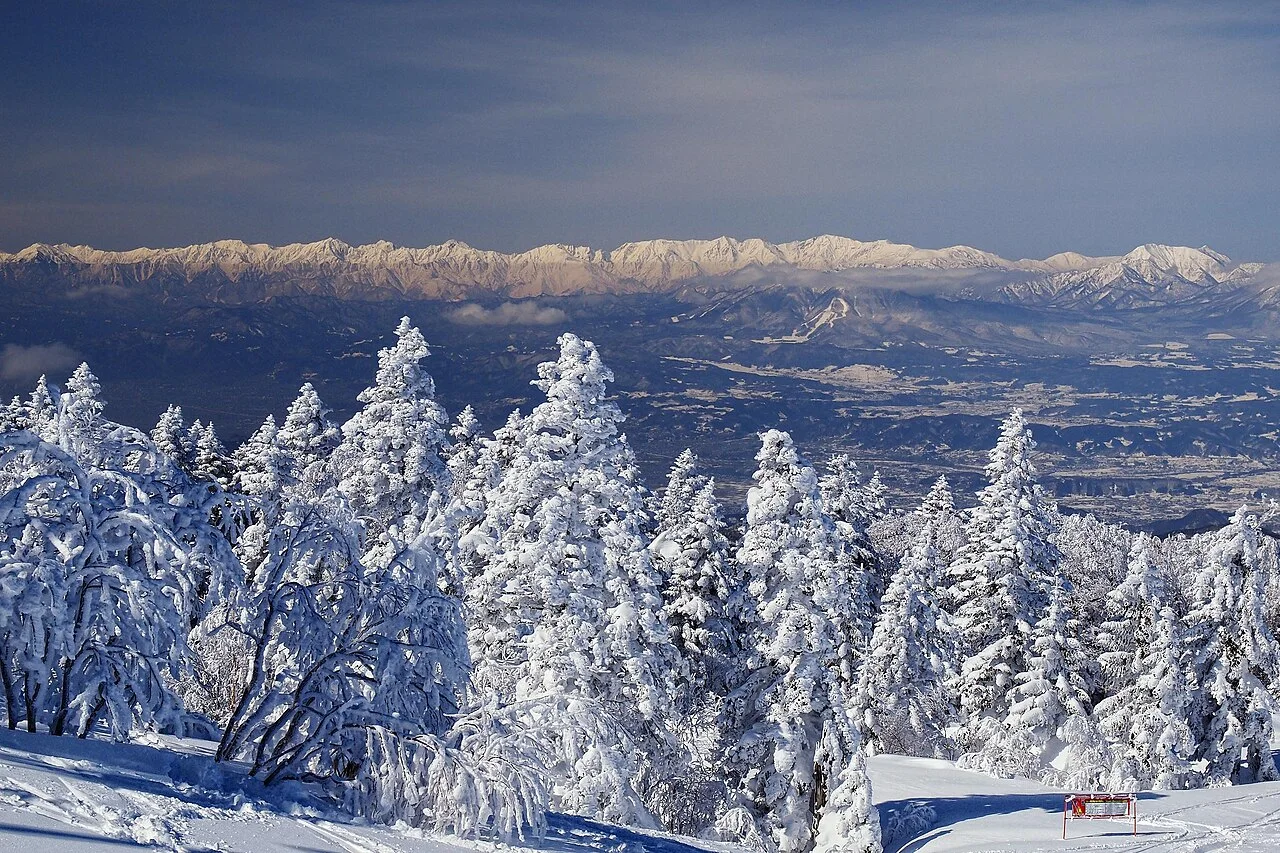
Shiga Kogen ski guide for the 2026–27 season. Compare Ichinose, Yakebitaiyama, Okushiga, Kumanoyu, and Yokoteyama & Shibutoge, with lift pass prices, Nagano Station winter buses, and one-way piste links.
Navigating the Central Area smoothly
The Central Area Pass covers 13 interconnected ski areas. To link from one sector to another without getting lost, learn three names first: Ichinose Family, Diamond, and Yamanokami. Family and Diamond sit on opposite sides of the road and connect via a skier bridge. From the top of Diamond, you traverse towards Yamanokami before dropping down to the base of Yakebitaiyama. For a single day of practice, you can stick to the lower Family slopes and the wide Tengu course. To reach Takamagahara from Family, take the Tanne-no-mori Okojo side instead. Spend day one getting comfortable on a run where you can stop confidently and find your way home, then tackle the inter-area links on day two so everyone knows where to rendezvous.
Takamagahara connects to Nishitateyama via a bridge and also has a trail from the Takamagahara summit down to Higashitateyama. Note that the link to Higashitateyama is marked one-way: even if the lifts look close on the map, follow the directional arrows to plan your return. From the summit of Higashitateyama, a connecting trail leads back to Ichinose Family. Ichinose and Terakoya also link to each other via separate routes, so check the Shiga Kogen Ski Area Association trail map for the exact starting lifts before setting off. Terakoya sits higher up in the Central Area; save it for a clear morning if you want views across to the Japanese Northern Alps.
Getting off the bus at Shiga Kogen Yamanoeki (stop S18), you can walk through the visitor centre side and ride the Shiga Kogen Resort Gondola down into the valley towards Giant, Nishitateyama, or Hoppo Bunadaira. Beginners who have booked an instructor in Ichinose will find it much easier to hop on a shuttle bus from Yamanoeki straight to the lesson meeting point. Once down in the valley, each lift takes you up to a different set of runs. Stronger skiers wanting a longer tour can link Terakoya, Higashitateyama, and Hoppo Bunadaira in half a day—a combination the tourism association lists at around 6 kilometres. Build lift queues into your timing, and make sure everyone in the group can handle the long descent or knows which base has a bus stop if they tire halfway.
At the entrance end of the plateau sit Sun Valley, Maruike, and Hasuike. The trail map shows a one-way traverse from Maruike to Hasuike, requiring a different route to get back to Maruike. Moving from Hasuike to Giant involves a short walk, officially marked as outside Shiga Lakeside Hotel-mae. When arriving with luggage, treat Yamanoeki (S18) and Hasuike Hiroba (S17) as separate stops: they look close on a phone map, but bus timetables list them individually. Always check which base you will finish at when timing your equipment return.
Yakebitaiyama and Okushiga: dedicate a day to one direction
Yakebitaiyama's runs wind through dense conifer forest. Start the morning lapping a single lift, orient yourself on the trail map towards the East or South Buildings, and only then decide whether to cross into Okushiga. If your chosen run includes steeper pitches, let experienced skiers lap that lift on their own while less confident companions stay on gentler terrain nearby. Calculate your return-to-hotel time from the specific base where you are standing: Yakebitaiyama has three separate bus stops, and agreeing to meet at "the base of the Prince Hotel" often leaves people waiting at different wings.
The summit link between Yakebitaiyama and Okushiga is a flat, groomed track of roughly 100 metres, according to the tourism association, so snowboarders may need to unstrap one foot and skate across. There is also a one-way route into Okushiga from Yakebitaiyama's A1 Giant Slalom course leading onto Course 6. Both connections open and close independently; before heading back to Yakebitaiyama in the afternoon, verify that both the summit link and the return lifts are still running. If only the inbound route to Okushiga is open, you can ski all the way across and catch a bus back from Okushiga instead. Giving this traverse a full day makes for a far more relaxed schedule than trying to squeeze Ichinose, Yakebitaiyama, and Yokoteyama into the same outing.
Okushiga has two bus stops: Okushiga Gondola-mae (S32) and Okushiga Kogen Hotel (S34). If part of your group is staying near the hotel side, anyone finishing at the gondola base should allow extra time to walk or ride across. If you want to make Okushiga your primary ski area on a second visit, save cross-resort touring for another day and spend the first day learning which runs feed which base and where the ski school and rental shops sit. An Okushiga area pass is plenty if you stay within its boundaries; buy a dual-area or All-Mountain ticket on the day you cross to Yakebitaiyama. Think about where you will actually ride lifts before buying: if you are only taking the bus to another zone for lunch, you do not need a pass covering that zone.
Kumanoyu to Yokoteyama and how to get back
Kumanoyu and Yokoteyama lie along the same road south of Yamanoeki. To visit after skiing the Central Area, catch a bus from whichever stop serves the Yokoteyama line or transfer at Yamanoeki. At Kumanoyu, it is easy to lap one self-contained bowl, making it simple to scout the trail exits and the walk back to your accommodation early on. When both resorts are linked, the tourism association lists a one-way ski connection from the summit of Kumanoyu across to Yokoteyama. Going the opposite way requires walking from near the Yokoteyama 1st Lift, so travellers with children or stiff alpine boots may prefer riding the bus along the valley floor. Before heading up the mountain in Kumanoyu, save the return bus stop on your phone.
To ski Shibutoge, ride the lifts up the Yokoteyama side first. Yokoteyama and Shibutoge connect in both directions across the ridge, and even in spring you rely on whichever lifts and summit links are open that day to get back. Yokoteyama timetables typically list "Yokoteyama 1st Lift-mae" and "Yokoteyama Ski Resort", the latter also known as Yozaka. Match your boarding stop to whichever lift you finish under. Express buses from Nagano Station only run along this southern branch as far as Hotaru Onsen, so to return to Nagano from Yokoteyama, take a local plateau bus back to a transfer stop rather than waiting at Yozaka with your skis for a direct coach.
If you only have one day in the southern zone, save clear skies for Yokoteyama and use poor-visibility days on the familiar, sheltered runs of Kumanoyu, where it is also easy for non-skiers and skiers to meet for a soak. A Yokoteyama and Shibutoge 1-day adult area pass costs ¥7,000 from 19 December to 31 March. To include Kumanoyu, the three-resort Sky Bear Pass costs ¥8,500 per adult in regular season—the same price as a standard online All-Mountain 1-day pass. Anyone staying solely in the south should check inter-resort link status on the morning of skiing before deciding whether to lap one resort or cross between them. Although Shibutoge sits right on the Gunma prefectural border, winter transport and accommodation logistics still run via Yamanouchi in Nagano Prefecture; even though Kusatsu Onsen looks close on the map just over the ridge, the mountain pass between them is closed in winter.
When the 2026–27 season starts and what remains open in April
The All-Mountain Pass season runs from 5 December 2026 to 5 May 2027, though individual ski areas open on their own schedules. Yokoteyama & Shibutoge announced an opening date of 21 November, while Kumanoyu states it will open as soon as snow conditions allow. Prince Hotels lists a 4 December pre-opening for Yakebitaiyama ahead of the plateau-wide opening event held there on 5 December. In the Central Area, Ichinose Family and Takamagahara are scheduled to open first on 5 December, followed by Okushiga on 12 December. If you arrive in November for high-altitude turns or visit Yakebitaiyama on 4 December, check the ticket prices and bus schedules for whichever specific lifts are running; both the All-Mountain Pass and Nagaden's winter express timetable take effect from 5 December.
If you want interconnected piste skiing on your very first visit, book after the scheduled opening dates for every zone have passed. Diamond and Yamanokami—the two Central Area sectors linking Ichinose towards Yakebitaiyama—are both scheduled to open on 19 December. An opening-weekend stay in Ichinose still works smoothly for lessons, practice, and returning straight to your room, saving inter-resort touring for a future trip. In January and February, building an extra full day into your itinerary lets you pick the day with clearer visibility and fuller lift operations for long cross-mountain routes.
In April, check individual resort calendars before buying any pass. The Central Area announces that from April onwards, Terakoya and Takamagahara operate mainly on Saturdays, Sundays, and the 29 April to 5 May holiday period. Ichinose Family lists operations through 5 May, whereas Diamond and Yamanokami close their regular season on 31 March. If staying in Ichinose on April weekdays, plan your first day around the open base lifts, and schedule at least one weekend night if Terakoya is on your wish list. Nagaden's current winter express timetable runs until 5 April; travellers arriving from 6 April onwards should consult the post-6 April bus schedule.
Choosing between the All-Mountain Pass, Central Area Pass, and early/spring deals
The regular All-Mountain Pass grants access to all 18 official ski areas. Adult online rates are ¥8,500 for 1 day, ¥16,500 for 2 days, and ¥24,500 for 3 days, compared with ¥9,500, ¥18,500, and ¥27,500 at the ticket window. Standard multi-day passes from 2 to 10 days can be split across non-consecutive days within the same season. On a four-day, three-night trip—skiing the Central Area on day one, taking an onsen day during high winds on day two, and riding Yakebitaiyama on day three—a 2-day pass covers both skiing days flexibly. A 1-day pass activates on the day you first scan through a lift gate, so afternoon arrivals staying on the mountain can pick up rental gear on arrival day and save their first pass scan for the following morning.
The Central Area's regular season runs from 19 December 2026 to 31 March 2027, with an adult 1-day pass priced at ¥6,800 online or ¥7,500 at the counter. A Central Area 4-hour pass costs ¥6,400 per adult and runs continuously from your first gate scan, including lunch and rest breaks. If you expect to ski both morning and afternoon sessions, the online 1-day pass costs just ¥400 more. The Central Area Pass covers 13 resorts including Ichinose, Takamagahara, and Terakoya, but crossing into Yakebitaiyama puts you in a separate pass zone. Junior high students and seniors comparing prices should weigh the Central Area adult rate against the discounted youth and senior All-Mountain tickets on the official website.
Early-season and spring-skiing All-Mountain passes follow their own calendars. Early season runs from 5 to 18 December and spring skiing from 1 April to 5 May, priced at ¥7,500 for 1 day and ¥14,500 for 2 days per adult. These discounted 2-day passes must be used consecutively from the day of issue, meaning the last issue date is 17 December for early season and 4 May for spring. Opening weekend (5–6 December) also features special promotional passes online at ¥4,500 for 1 day and ¥7,000 for 2 days, with the 2-day ticket only available for issue on 5 December. Always double-check the exact pass name and eligible dates on the Ski Area Association site, as both promotions apply only to designated operating days.
After buying online, save your pickup voucher to your phone and check the SKIOSK machine list for one along your route. Machines are stationed at Yamanoeki, major base ticket offices, and selected Prince Hotel wings at Yakebitaiyama. If you have an immediate bus transfer at the station, wait and print your pass at the ski area near your hotel right before your first lesson. All-Mountain Key Tickets carry no card deposit. Have everyone keep their own pass in an easy-to-scan sleeve pocket; putting one person in charge of holding all the tickets turns a quick split onto different lifts into a regrouping delay.
| Pass type | Adult online | Adult counter | Child online |
|---|---|---|---|
| 1-day | 8,500 | 9,500 | 3,500 |
| 2-day | 16,500 | 18,500 | 6,500 |
| 3-day | 24,500 | 27,500 | 9,500 |
| 5-day | 40,500 | 45,500 | 15,500 |
Travelling with children: budget lessons and lift passes separately
Kids Ski Days for the 2026–27 season fall on 20 December 2026, plus 17 January, 21 February, 21 March, and 18 April 2027, when All-Mountain 1-day passes are free for primary school children and younger. Note that online adult-and-child bundle tickets still charge standard bundle pricing on these dates. If your family is only skiing on the Sunday, buy a solo adult pass and collect the child's free 1-day ticket at the resort. If skiing both days of the weekend, compare a separate Saturday child ticket plus Sunday freebie against a standard bundle. Budget ski hire, lessons, and snow-play park fees separately; under standard All-Mountain rules, one paying adult may also accompany one pre-school child for free.
On regular days, an online All-Mountain 1-day parent-and-child set costs ¥11,000 for one adult and one primary-school child, compared with ¥12,000 bought individually. If one parent plans to ski across to other zones while the other stays with the child in the Central Area, price out each person's actual lifts before buying a matching set. When booking children's lessons that stay on nursery slopes, ask the ski school whether lifts are needed and when the pass should be collected. Two families travelling together can book the same slot at the same ski base for lessons, then decide together where to walk for lunch afterwards.
Work backwards from the instructor meeting point for your first lesson. Rental shops take time for boot fitting and binding adjustments, and children often need to try a second pair of boots before getting a comfortable fit. Arriving the afternoon before lets you sort out gear in advance so you can walk straight to the meeting point after breakfast. If riding up from Nagano city on the morning of your lesson, compare bus arrival times against rental shop opening hours before locking in a start time. The tourism association's certified school directory lets you filter by Ichinose, Okushiga, or Yokoteyama, then check ski versus snowboard options, instruction language, and minimum age. If someone in the group is switching from skis to a snowboard, staying in one base allows everyone to take separate lessons and still meet up easily later.
Getting from Nagano Station to Ichinose and Yakebitaiyama bus stops
After arriving at JR Nagano Station on the Hokuriku Shinkansen, head to Stop 23 outside the East Exit for the Nagaden Bus Express Shiga Kogen Line (Ex23). The winter timetable applies from 5 December 2026 to 5 April 2027, with the tourism association estimating roughly 70 minutes to Yamanoeki. A single adult fare from Nagano Station to Yamanoeki, Ichinose, or Kumanoyu is ¥3,000. Express tickets can be bought from the vending machines at the Aruyo Information Centre on the East Exit ground floor, open 07:10 to 18:30. Once you have booked your Shinkansen seats, build in extra time to exit the gates, walk to the bus stop, and join the queue. Travellers leaving Tokyo in the afternoon should look up which coaches run directly to their hotel's stop and plan their train accordingly; some express services terminate at Yamanoeki, requiring Ichinose guests to change buses there.
Because different coaches terminate at Yamanoeki, Okushiga, or Hotaru Onsen, follow your chosen departure straight down its column to verify your exact stop. On the 09:10 departure from Nagano Station East Exit, scheduled arrivals are 10:28 at Yamanoeki, 10:40 at Ichinose (S24), and 10:41 at Ichinose Ski Resort (S25). The Prince Hotel West, South, and East Buildings are stops S27, S28, and S29; Takamagahara is S22 and Hoppo Onsen is S21, with arrows in the timetable indicating services that bypass a stop. Groups staying in different wings should confirm where each person gets off before meeting at a hotel or lift base. Leave at least one bus's buffer before your return Shinkansen in case snow slows road traffic down the mountain.
To visit Jigokudani Monkey Park, board the Ex24 bus at East Exit Stop 24 for direct access to Snow Monkey Park, as winter Ex23 services bound for Shiga Kogen skip this stop. Scheduling the monkeys on the day before skiing lets you catch a local route bus from the park entrance road up to Shiga Kogen—just allow enough time for the walk to and from the pools plus the transfer wait. Another option is taking the Nagano Electric Railway (Nagaden) Limited Express from Nagano Station to Yudanaka (roughly 40 minutes) and transferring to a local Nagaden bus up to Yamanoeki (around 30 minutes), factoring in connection waits; this route suits travellers spending a night in Yudanaka or Shibu Onsen before heading up to the slopes the next day.
On Fridays from 8 January to 19 March 2027, Nagaden also operates the reservation-only "Weekend Shiga" coach departing Nagano Station East Exit at 21:00 for Okushiga, with bookings opening on 1 December. Aimed at travellers leaving Tokyo after work or maximising a two-day weekend on the snow, it reaches Yamanoeki at 22:11 and Ichinose (S24) at 22:33. If booking this late coach, arrange late check-in and key pickup with your hotel in advance, and pre-book rental gear so you can collect it as soon as the shop opens. Note that this service picks up passengers at Nagano Station only and is drop-off only on the plateau, so it cannot be used as a late-night inter-resort shuttle.
Free plateau shuttles and weather-related lift changes
Free plateau shuttle buses are highlighted in blue boxes on the tourism association's winter timetable, running mainly between 08:30 and 17:30 with no lift pass required to board. Local buses coming all the way up from Yudanaka charge standard fares across the full route, so free travel applies strictly within the marked plateau sections. If travelling between Yokoteyama and Okushiga, look for one of the through-running services or change buses at Yamanoeki. Save screenshots of both the uphill and downhill timetable directions on your phone, making sure to include both the stop names and the weekday, weekend, and school-holiday footnotes at the bottom of each column.
On ski mornings, check the tourism association's trail-link page for directional arrows and open/closed status, then confirm which lifts are actually running on the Ski Area Association status page. Heading from Ichinose towards Yakebitaiyama depends first on the Diamond and Yamanokami connections, then on Yakebitaiyama's upper lifts. Even if the outbound route opens in the morning, strengthening winds can shut down a key linking lift early. At the bottom of Nishitateyama and Giant, you can still ride the Resort Gondola back up to Yamanoeki; if that gondola shuts early, finish your last run at a base with roadside bus access.
When touring across zones, agree on a regrouping point with bus access before splitting up, rather than relying on phone messages where reception drops. Set a clear turnaround cutoff before leaving Ichinose: if you are still in Diamond at that hour, stay in the Central Area for the day. If you have already reached Yakebitaiyama and the return link closes, simply finish at the relevant Prince Hotel stop and take the bus back. Coming back from Okushiga, check the last bus times well ahead of your hotel's dinner or curfew, as evening options thin out once the free shuttles stop. On-mountain stays make it easy to keep night skiing and dinner in your home zone, saving daytime shuttle connections for dedicated cross-resort days.
Planning 1-day, 3-day, and 4-night itineraries
On a day trip from Nagano city, your actual ski time depends on bus transfers and hire queues. Either ride into the Central Area via Yamanoeki or stay on the same coach to Ichinose, choosing a base with a direct return bus stop as your finish line. First-time visitors who need boot fitting and an afternoon lesson should pick a single base where hire, lessons, and return drop-off are all within walking distance. If using a 4-hour pass, wait until your boots are buckled and you are ready to scan onto the lift before starting the clock. Experienced skiers bringing their own equipment can carry it straight onto the Nagano express bus, leaving enough time after the final run to wipe down and pack skis or boards before boarding.
A three-day, two-night trip typically gives you just one full middle day on the mountain. Use the first afternoon to collect passes, fit rentals, and warm up in the Central Area. On day two, if everyone in the group is comfortable, ski out from Ichinose towards Yakebitaiyama as far as suits your legs, then either ski back or return by bus. On the final morning, lap runs close to your hotel, check out, and drop your rental gear off in the same neighbourhood. If you want to fit in Yokoteyama during a three-day stay, schedule it on the middle day without checkout pressure and check the return bus times to Ichinose before clicking into your bindings. Keeping the same hotel for both nights lets mixed-ability companions set their own pace.
Four nights allow two dedicated cross-resort days. Base yourself in the Central Area, spend day one learning the Ichinose-to-Takamagahara circuit, and save Yakebitaiyama and Okushiga for a clear day when every connecting link is open. Dedicate another day to the southern resorts so both bus rides happen in daylight. If high winds hit or children's legs get heavy, swap one middle day for an onsen break—a flexible multi-day All-Mountain Pass lets you skip a day without wasting lift credit. Should you only plan one true all-mountain tour out of five days while spending the rest in Ichinose or Takamagahara, compare the cost of Central Area day passes plus a single All-Mountain day pass. To weigh accommodation and first-day access costs against other Nagano resorts, read our comparison of Nagano ski and onsen bases.
Driving up from the Nagano side and checking April road conditions
In winter, drivers enter Shiga Kogen from the Yamanouchi town side along National Route 292—typically leaving the Joshinetsu Expressway at the Shinshu-Nakano IC. Due to snow and ice, the Nagano Prefecture Hokushin Construction Office brought forward the winter closure of Route 292 between Yozaka and Shibutoge at the Gunma border to 7 November 2026 at 07:00 JST, with reopening scheduled for 21 April 2027 at 10:00 JST. Separate closures apply on the Kusatsu side, so you cannot drive through from Gunma either. If combining Shiga Kogen with Kusatsu Onsen, descend the way you came and loop around the following day. In April, check Nagano Prefecture's official road portal for live section openings before driving up.
Rental cars must be fitted with winter tyres, and the visitor centre advises carrying snow chains for two-wheel-drive vehicles—confirm chain sizing and which wheels they fit when collecting the car. If you have a morning lesson in Ichinose, park close to your starting lifts. Groups leaving cars at Yamanoeki and riding shuttles to ski should keep track of both where their last run finishes and where the car is parked: skiing back down a piste and driving back along the mountain road are two separate journeys.
Prefectural Route 502 linking Okushiga towards Sakae Village and Kijimadaira also closes in sections during winter, so drivers staying near Okushiga should plan their exit via Yamanoeki and Yamanouchi town. The visitor centre reminds motorists to top up fuel around Kanbayashi Onsen, the last petrol station before climbing onto the plateau. Having a car makes hauling skis and changing children's layers far easier, and during heavy blizzards or icy spells you can leave the car in the hotel car park and use the plateau buses instead.
Ski hire, mountain lunches, and meeting non-skiers
Choose your rental shop based on where returning gear will be easiest. If you are staying in Takamagahara but planning to catch a bus straight down the mountain from Yakebitaiyama on your final afternoon, leave yourself enough time to go back to Takamagahara to return equipment and collect luggage. Putting your cross-resort tour on the second-to-last day keeps your final lunch simple at your home base, right beside your rental drop-off and return bus stop. Yamanoeki has rental facilities and serves as the first stop for many arrivals, though anyone skiing only the southern resorts should remember that even direct Nagano-bound buses require stopping at Yamanoeki to return gear hired there. Around Kumanoyu, picking a shop positioned between the nursery slope and the bus stop saves far more walking than chasing a multi-resort chain.
When skiing up to high points like Terakoya or Yokoteyama, plan lunch around whichever lodges remain reachable on your return line. If some members of your group ski more slowly, eat together at a lower base everyone can easily reach before splitting up, rather than arranging to meet at a summit lodge that requires extra lifts. Non-skiers can join guided snowshoe tours arranged through the visitor centre from designated trailheads. Higashitateyama offers a snowshoe route accessed by gondola from Hoppo Onsen; check seasonal dates and guiding languages when booking. Everyone can follow their own plan for the morning and reunite at an agreed lunch spot.
Non-skiers wanting to watch confident skiers come down the mountain can ride a daytime bus to that zone's base and wait inside an open lodge with a view of the lower piste. Walking up the pistes on foot puts you in the path of descending skiers and boarders, so stick to official sightseeing lifts or guided tours for scenic views. Note that Yokoteyama's winter summit transport is limited: the open-air Sky Escalator and summer sightseeing lift combination seen in warmer-month travel blogs is a green-season setup. Travellers planning day-use onsen visits should check each property's day-visitor hours or hotel guest policies beforehand, and arrange to meet back at the hotel so skiers never have to rush across an extra mountain just to catch up.
Letting the daily trail status dictate your final run
In Shiga Kogen, seeing two adjacent resorts marked open does not guarantee the connecting trail between them is open. The Ski Area Association's status page lists lifts, individual runs, and connecting paths separately. Check the summit link and both access lifts before crossing to Okushiga, and locate the return route to Ichinose on the map before riding up Terakoya. As the afternoon winds down, work backwards from your return bus stop: pick a run that lands at the stop you need first, then decide whether you have time for one more lap. Some bases require unstrapping and walking to reach the roadside bus shelter, so factor that walk into your finish time.
If wind blows in and drops visibility, stick to open lower trails with clear exits, and head down to a base lodge to rest if you struggle to read trail markers after a couple of turns. Make sure everyone saves a copy of the trail map and the hotel's Japanese address before heading out, and keep phones inside an inner jacket pocket where battery life holds up better in freezing air. When stopping on a piste, pull over to the side where you remain visible from above, avoiding blind rollovers and trail junctions. Follow all closure ropes and no-entry signs immediately, and if someone is injured, report the trail name, lift number, and nearest landmark to lift attendants or ski patrol.
During spring thaw, narrow traverse tracks disappear from the open list earlier than main base slopes. If you check the board at breakfast and see Diamond or Yamanokami closed for the day, Ichinose guests can still take the morning bus over to Yakebitaiyama, buy a Yakebitaiyama area pass for the day, and catch a bus back from the Prince Hotel stops in the afternoon. Mapping out a complete outbound and return route before breakfast saves a lot of time standing on a summit trying to work out how to get down.
A few useful answers
Do first-time visitors need the Shiga Kogen All-Mountain Pass?
If you plan to stick to Ichinose or Takamagahara for practice, the Central Area Pass covers 13 ski areas. Save the All-Mountain Pass or individual area tickets for the days you ski across to Yakebitaiyama, Okushiga, or the southern resorts.
Can I take a rest day in the middle of a 3-day All-Mountain Pass?
Standard multi-day All-Mountain Passes (2 to 10 days) can be used on non-consecutive days within the same season. Early-season and spring-skiing discounted 2-day passes, however, must be used on consecutive days starting from the date of issue.
Which bus goes from Nagano Station to Shiga Kogen?
Take the Ex23 Express Shiga Kogen Line from Stop 23 at the Nagano Station East Exit, checking the timetable column to confirm your stop is served. Winter Ex24 buses run directly to Jigokudani Monkey Park (Snow Monkey Park), so you will need to transfer to a local route bus to continue up to the plateau.
Can I ski all the way from Ichinose to Kumanoyu?
You connect between the two areas by bus. Once at Kumanoyu, when the links are open, you can ski one way from the summit of Kumanoyu across to Yokoteyama; to return from Yokoteyama to Kumanoyu, walk from near the 1st Lift or take the bus.
Where is best to ski on an April weekday in Shiga Kogen?
Check individual resort operating calendars first. In the Central Area, Ichinose Family plans to stay open until 5 May, whereas Terakoya and Takamagahara operate mainly on weekends plus the 29 April to 5 May holiday period in April.
Can I drive from Kusatsu to Shiga Kogen in winter?
No. The mountain section of Route 292 over Shibutoge is closed throughout winter. Drive up Route 292 from the Yamanouchi town side in Nagano Prefecture instead.
Official information and references
Sources used in this guide.
- Shiga Kogen Ski Area Association: 2026–27 Online All-Mountain Pass Prices, Family Bundles, and Conditions
- Shiga Kogen Ski Area Association: 2026–27 Counter Pass Prices and 4-Hour Tickets
- Shiga Kogen Tourism Association: 2026–27 Opening Dates and Inter-Resort Trail Links
- Shiga Kogen Central Area: Lift Pass Prices and Operating Calendar
- Shiga Kogen Tourism Association: Central Area and Ski Route Guide
- Shiga Kogen Tourism Association: Winter Bus, Rail, and Free Shuttle Information
- Nagaden Bus: Ex23 Shiga Kogen Express Line Winter Timetable and Fares
- Nagaden Bus: Nagano Station East Exit Boarding Stops 23 and 24
- Nagaden Bus: Ex23 and Ex24 Winter Route Split and Reservations
- Shiga Kogen Ski Area Association: Trail Map and Live Lift Status
- Shiga Kogen Ski Area Association: 2026–27 SKIOSK Ticket Pickup Machine Locations
- Prince Hotels: Yakebitaiyama Ski Resort Opening Dates and Trail Map
- Kumanoyu Ski Resort: Operating Announcements
- Yokoteyama & Shibutoge Ski Resort: Opening Dates and Altitude Information
- Shiga Kogen Tourism Association: 2026–27 Area Passes and Kids Ski Days
- Yokoteyama & Shibutoge: 2026–27 Area Passes and Kumanoyu Three-Resort Sky Bear Pass
- Nagano Prefecture Hokushin Construction Office: Road Information and Winter Closures
- Nagano Prefecture: 2026–27 Winter Road Closure Schedule and Early Yozaka Closure Times
- Shiga Kogen Visitor Centre: Winter Driving and Petrol Station Information
- Shiga Kogen Tourism Association: Certified Ski and Snowboard Schools
- Shiga Kogen Central Area: Yamanoeki Ski Hire and Facility Information
- Shiga Kogen Visitor Centre: Guided Winter Snowshoe Tours