Choosing between Akakura Onsen, Ikenotaira and Suginosawa comes down to slope access and evening transport. A guide to Akakura Kanko Hotel, family stays in Ikenotaira, the Nagano express bus and Suginohara's new parking fees.
- Region & Focus
- Nagano and Myoko ski resorts
- Reading Scope
- 24 min read · 12 chapters · 7 Q&As
- Official Verification
- 24 official sources checkedUpdated 22 November 2026
- Key Topics
- Where to stayWinterHot springs
Chapter Route Map (tap any stop)
- Start by matching your base to the lifts you will use each day
- Akakura Onsen village vs Shin-Akakura: choosing your side of the mountain
- Akakura Kanko Hotel: built for skiers sticking to one mountain
- Ikenotaira: where the hotel, trailer cabins and onsen sit
- Keeping non-skiers and young children happy when the group splits
- Suginosawa guesthouses and paid parking at Suginohara
- Two ways in from Nagano: the express bus or via Myoko Kogen Station
- Getting back after an onsen soak in Ikenotaira
- Early and late season: matching dates to open lifts
- Planning two-night, three-night and onsen-focused stays
- Skiing on check-out day: gear, breakfast and luggage logistics
- Comparing true costs: meals, transfers and lift passes together
- Quick Q&A
If this is your first ski trip to Myoko without a car, base yourself in the hot-spring village for Akakura Onsen Ski Area, or choose Ikenotaira if you are travelling with children and want breathing room between snow play and soaking in the baths. For two straight days at Suginohara, start with the Suginosawa minshuku village near the first chairlift; if you want true ski-in, ski-out access from the hotel locker room, look straight to Akakura Kanko Hotel on the piste. For the 2026–27 season, a new winter express bus runs direct from Nagano Station and Suginohara has introduced daily parking charges—two changes that shape where you stay and whether driving up each morning makes sense.
Start by matching your base to the lifts you will use each day
Arriving by train or bus to ski Akakura Onsen Ski Area? Start with the ryokan and hotels along the Akakura Onsen village street. You can take lessons or practise nearby by day, then return for dinner and an onsen soak—or eat out on the high street one evening. If your main focus is Akakura Kanko Resort Ski Area (AKAKAN), narrow your search to its base area or slope-side properties. The two resorts sit side by side on the map, yet the walk from your lobby to your morning meeting point—and back up the hill at the end of the day—depends on which entrance you actually use.
When a group splits between ski school and early afternoon downtime, Ikenotaira Onsen is easier to coordinate. Ikenotaira Onsen ALPEN BLICK brings together a hotel, ski slopes, a day-use hot spring and standalone trailer cabins, each with its own entrance. If you are relying solely on public transport, prioritise a stay with a straightforward walk from your door to the bus stop and an easy option for dinner once you are back.
Skiers heading primarily to Myoko Suginohara should start in the Suginosawa minshuku (guesthouse) village. Drivers happy to commute each morning can widen their search to Ikenotaira, though resort parking fees will add up. If you have morning lessons two days in a row, picking a base that puts everyone at the same meeting point on time is far less stressful than juggling shuttle timetables.
When comparing properties on a map, pin four spots: your accommodation entrance, the bus drop-off, the rental shop and your ski-school meeting point. Trace the walking route again for gradients and road crossings, paying close attention to the walk back after dinner. If your group includes older relatives who move at a gentler pace or children whose skis an adult will end up carrying, plan backwards from that trickiest stretch—room types and meal plans tend to fall into place once the route works.
Choosing between Akakura Onsen, Ikenotaira and Suginosawa comes down to slope access and evening transport. A guide to Akakura Kanko Hotel, family stays in Ikenotaira, the Nagano express bus and Suginohara's new parking fees.
Akakura Onsen village vs Shin-Akakura: choosing your side of the mountain
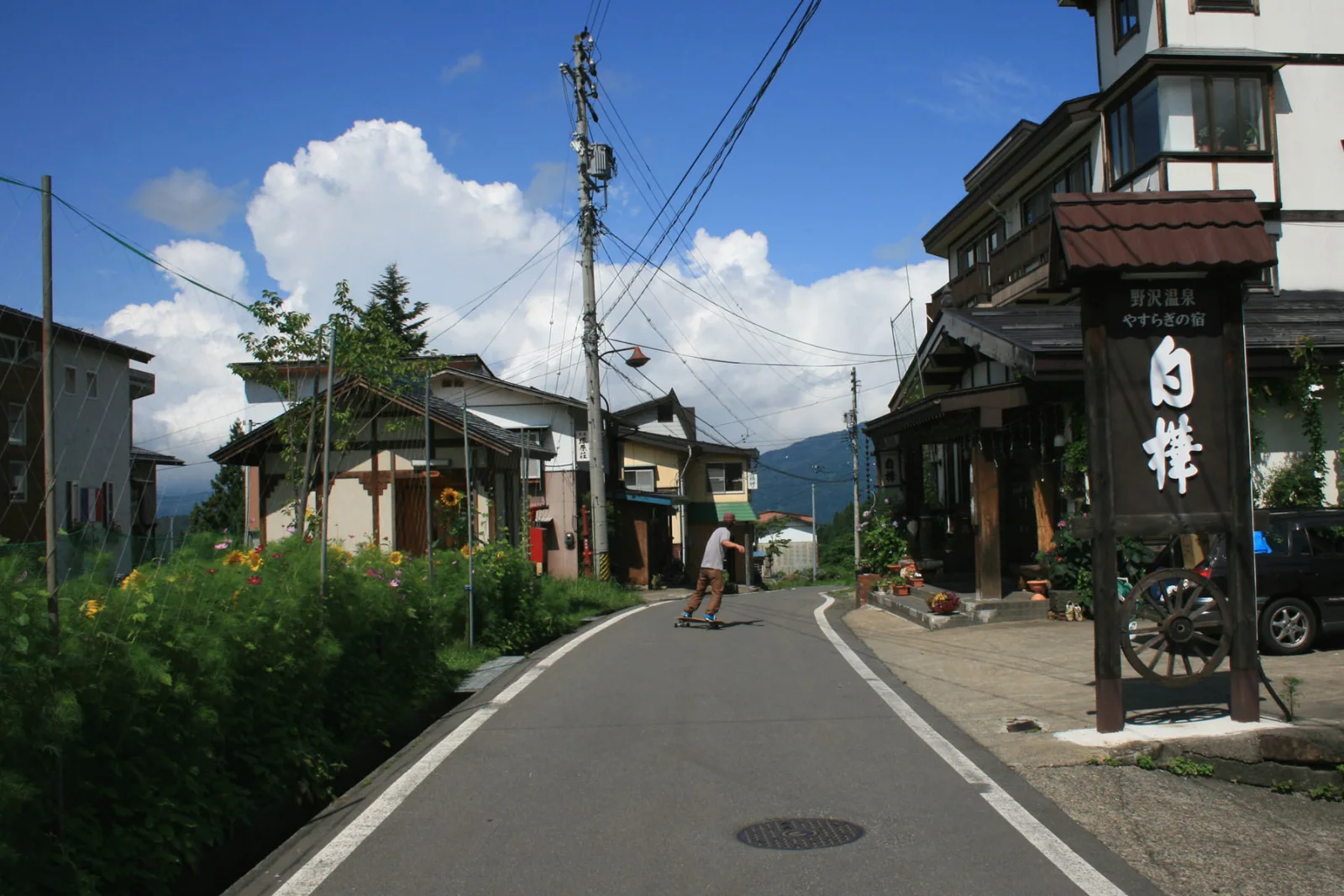
Names around Akakura are easy to confuse. Akakura Onsen Ski Area is Akakura Onsen Ski-jo in Japanese, and that is where the Akakura terminus of Nagaden Bus's winter express service stops. Akakura Kanko Resort Ski Area (AKAKAN) is Akakura Kanko Resort Ski-jo, served by the Myoko Kogen Sky Cable. Even if a property lists its address as Akakura Onsen—or booking sites group everything under Akakura—check walking routes against the exact resort name and meeting point.
Akakura Onsen's main street works well when you want flexibility over dinner. Book a half-board ryokan and you can ski early, return early to dine in-house on one night, and eat out in the village on another. If you book room-only, save the names and opening days of restaurants you want to try and check the walk back to your door. Anyone in your party with food allergies or dietary restrictions should flag them when booking a half-board stay so the kitchen can confirm what it can serve.
Take Hotel Taiko on the village street (402 Akakura Onsen): its website lists a complimentary shuttle from Myoko Kogen Station between 09:00 and 18:00 JST by advance reservation. If you leave Tokyo in the afternoon and plan to check in and eat dinner at the hotel that night, line up your reserved pick-up time with the dining-room service hours. Guests who prefer to drop bags first can also arrange to collect rental gear the following morning, keeping arrival night simple.
If your priority is the first morning lesson at AKAKAN, look on the Shin-Akakura side near your rental counter and ski school check-in. When your meeting point sits on the same side, whether you can pop back to your room at lunchtime comes down to how snowy the walk is. Walk the route from your lobby to the meeting point—and note which way to ski back—on day one so anyone finishing early can head back independently.
Akakura Kanko Hotel: built for skiers sticking to one mountain
Akakura Kanko Hotel sits right inside Akakura Kanko Resort Ski Area. Guests step straight from the ski locker room onto the piste, and the hotel operates an in-house rental service inside the locker area exclusively for staying guests. Paying extra makes sense when you will use that convenience every day—skipping morning transfers or ducking back to your room mid-afternoon. Complete beginners should first check where ski school meets and which green runs back to the hotel are open, especially if someone in your party is not yet confident skiing home.
The hotel's complimentary shuttle is direction-specific: pick-ups run from Myoko Kogen Station on arrival, and return trips depart from the hotel. Its website lists a journey time of roughly 10 minutes, with the last listed departure from the station at 17:00 JST. Advance booking is required, and unbooked runs do not operate. Travellers taking the Nagaden Bus should note the Akakura Kanko Hotel Iriguchi stop, which still leaves a walk from the main road entrance up to the hotel porch—with large suitcases or ski bags, the direct station shuttle is far easier to manage.
The communal bathhouse pairs an indoor bath with an open-air rotenburo fed by free-flowing, sulphur-scented hot-spring water, alongside select rooms with private indoor or outdoor onsen baths. Whether you are a couple wanting a quiet soak, a family hoping for a private bath, or ski friends who each want a proper bed, filter directly by room facilities and note which wing each room occupies before checking floor plans and bath photos. There are also rooms sleeping four to six guests—if your group plans to wake and return on different schedules, check how well the sleeping areas and lounge space divide.
Non-residents hoping for a soak must book one of the hotel's day-use lunch-and-bath packages rather than turning up for the baths alone. If part of your group is staying down in Akakura village and others are up on the slopes, you can meet for lunch or after lessons. Anyone hoping to try both sets of baths should compare the hillside hotel's day-use package hours against village ryokan bath schedules before deciding where to linger until dinner.
Ikenotaira: where the hotel, trailer cabins and onsen sit
In Ikenotaira, the ALPEN BLICK name covers the hotel, the ski resort, the Tatra-kan restaurant and the day-use spa—each at a different street number: the hotel is at 2452 Ikenotaira Onsen, the ski slopes at 2457-1 and the day-use spa at 2413-11. Give taxi drivers the exact facility name, and confirm your ski-school location directly with the resort or school. Guests staying elsewhere in the area can drop into ALPEN BLICK SPA for an afternoon soak; if you plan to dine at the hotel after skiing, check which restaurant your room plan includes.
ALPEN BLICK Hotel lists check-in from 15:00 to 21:00 JST and check-out by 10:00 JST. Tatra-kan, its brewery restaurant, serves dinner from 17:30 to 21:00 JST with last entry at 19:30 JST; non-guests must book at least one day ahead. When comparing room rates in Ikenotaira, price out both half-board and room-only stays alongside dinner, snowy evening walks and possible taxis. If half your group only skis the morning, setting a dinner reservation time makes regrouping far easier than trying to catch the same bus down.
Families or friends wanting their own space can look at the trailer cabins at Haneuma Village 808. Superior cabins include a sleeping loft, while standard units sleep one to four guests with two beds, underfloor heating, a fridge and a kitchenette where open flames are prohibited. For groups with children, the official site allows up to four adults plus two children of primary-school age or younger. Four adults booking a standard unit should plan around the two beds plus futon space, and anyone self-catering will want to sort groceries, breakfast and heat-and-eat items in advance while leaving floor space for ski bags.
Cabin guests have access to the hotel's indoor and open-air baths, with morning hours listed until 09:00 JST—go early if you want a pre-breakfast soak. Private saunas are also available by reservation and are complimentary for suite guests. Remember the practical trade-off: wheeling luggage out to a standalone cabin and walking across to the hotel every time you want the baths comes as a package. If your group would rather stay indoors and head straight downstairs for breakfast, a room in the main hotel saves steps.
Keeping non-skiers and young children happy when the group splits
Ikenotaira suits days split evenly between snow play and downtime. The resort's Kids Garden features a magic carpet conveyor and opens on Saturdays, Sundays and public holidays from 10:00 to 16:00 JST; entry is ¥500, or free for lift-ticket holders and children aged three and under. If you have promised younger children sledging, plan weekday visits around ski school or accommodation with indoor play space. When adults split up, a lunch spot or rental shop works well as a midday rendezvous.
Once children reach primary school, lift-ticket pricing can steer which resort you choose. For 2026–27 at Ikenotaira, standard adult one-day passes are ¥7,400 and primary-school passes are ¥4,400. Family Pack A (one adult and one primary-school child) costs ¥10,000, while Family Pack B (two adults and one primary-school child) is ¥16,300, with each additional primary-school child ¥3,700. Pre-school children ski free, though they still need an IC lift card with a refundable ¥500 deposit. Parents staying strictly inside the snow-play area only need to budget for Kids Garden entry.
Kayaba Rental and the hotel's ALPEN BLICK Rental are in separate spots. If your morning splits between lessons and snow play, rent near the ski-school meeting area so returning gear and wrangling bags at the end of the day is easier to divide. For a child's first boot fitting, arrive well ahead of lesson time with a buffer for swapping sizes or adjusting bindings. Check age minimums and lesson languages before booking: Ikenotaira lists children's ski lessons from age three with Myoko Snow Academy. If three- or four-year-olds are trying a half-day session, settle who is supervising, collecting them and taking them indoors to rest before the adult lessons begin.
Nearby in Ikenotaira, LIME RESORT MYOKO offers hot springs, a library bar and a kids' playroom. One parent can bring tired children back early while everyone else keeps skiing and meets up later at the hotel. Its website lists an advance-reservation shuttle from Myoko Kogen Station, which must be booked at least one day ahead. If your trip revolves around lessons at Suginohara, however, map out the daily commute from Suginosawa first.
Suginosawa guesthouses and paid parking at Suginohara
If Suginohara is your main mountain, line up your minshuku against the Suginohara 1st Romance Lift or the gondola base station. The resort's 2026–27 trail map notes village access: guests walking up from Suginosawa can ride the Suginohara 1st Lift first, then buy or exchange lift passes at the Parking Area 1 ticket office. Anyone planning to walk to the snow from the village should look for lodging near this chairlift, while beginners or skiers storing gear at a rental shop should match their base to the shop and instructor meeting point.
Drivers visiting Suginohara this season face a major change: parking capacity has dropped from roughly 1,800 spaces to about 370, and both car parks now charge daily fees. For standard vehicles under 5 metres long, Parking Area 1 next to the gondola costs ¥2,000 per day and requires online advance booking for a specific date; Parking Area 2 below the gondola station is ¥1,000 per day, payable online in advance or on site. Even guests staying in neighbouring minshuku must pay if they drive into the resort car parks. When both car parks fill during peak periods, staff direct cars to an overflow car park served by a shuttle bus. Suginohara 2026–27 parking notice
Run the numbers across two full ski days: a standard car under 5 metres pays ¥4,000 in Parking Area 1 or ¥2,000 in Parking Area 2. Put that alongside luggage and early lesson times—spending a little more on a room close to the village chairlift saves two cold morning drives. If a non-skier is dropping skiers off before heading elsewhere, ask your guesthouse or the resort where legal drop-off zones sit. When the whole group is skiing first thing, either lock in a parking space online or stay inside Suginosawa village.
Drivers staying in Ikenotaira also encounter updated resort parking rules. Kayaba Parking Areas 1 and 2 plus ALPEN BLICK Parking Area 2 charge on Saturdays, Sundays, public holidays and from 30 December 2026 to 3 January 2027, at ¥1,000 per standard car (cash only on site). Guests staying at ALPEN BLICK Hotel or Haneuma Village 808 park free in ALPEN BLICK Parking Area 1 in front of the hotel, and holders of eligible Ikenotaira or MtMYOKO season passes receive free parking for one vehicle at the gate. Save the exact Japanese names of your accommodation car park versus the day-skier car parks before driving in. Ikenotaira 2026–27 parking notice
For a post-dinner soak in Suginosawa, keep the local hot-spring bathhouse Naena-no-Yu on your map, checking opening days and the walk back to your guesthouse. Minshuku dinners run on fixed schedules, so drop your gear off promptly after skiing, tell your host ahead of time if you will be late on a particular night, and check separately whether your first night includes dinner.
Two ways in from Nagano: the express bus or via Myoko Kogen Station
From Tokyo, take the Hokuriku Shinkansen to Nagano. Nagaden Bus's seasonal Ex28 express coach runs daily from 5 December 2026 to 31 March 2027, linking Nagano Station East Exit with Suginosawa, Myoko Kogen Ikenotaira, Akakura Kanko Hotel Iriguchi and Akakura Onsen Ski Area. The official timetable lists an adult single fare of ¥3,000 with four departures a day; the last coach leaves Nagano at 16:10 JST and is scheduled to reach Akakura Onsen Ski Area at 17:47 JST. Inbound coaches are drop-off only once in the mountains, and pick-ups at Myoko stops only run on the return leg to Nagano. Nagaden Bus winter timetable
If you plan to eat dinner at your hotel on arrival night, add walking time in snow—or a hotel shuttle—on top of the express bus arrival. That 17:47 JST time marks the ski-area bus stop, whose distance from your lobby depends on where you stay. The same applies going home: the last coach from Akakura Onsen Ski Area departs at 16:00 JST, arriving at Nagano Station East Exit at 17:37 JST, and Nagaden Bus advises leaving at least 20 minutes to transfer to the Shinkansen. If you are travelling in heavy snow, collecting rail tickets, buying ekiben or hauling ski bags, taking an earlier coach is sensible.
The alternative is taking the Shinano Railway Kita-Shinano Line from Nagano to Myoko Kogen Station. Travellers coming from Kanazawa or Toyama on the Hokuriku Shinkansen can change at Joetsumyoko Station onto the Echigo TOKImeki Railway Myoko Haneuma Line to Myoko Kogen Station. Joetsumyoko and Myoko Kogen are two different stations, so give your accommodation the exact Japanese station name when booking pick-ups. If you need an onward transfer from the station to a guesthouse, book a taxi with your lodging's name and train arrival time.
From Myoko Kogen Station, the municipal Akakura Line serves Akakura Kanko Resort and Akakura Onsen, while the Suginosawa Line passes through Ikenotaira on its way to Suginosawa—with only select winter departures looping into Suginohara Ski Area. Myoko City's winter timetable (effective 1 December 2026) sets out every stop and ski-resort detour. Aim for a bus that drops you straight at your chosen entrance, especially on day one with luggage and a lesson booked.
Several local stops shifted for this season. Myoko City's winter schedule moves the Akakura Line's village terminus from Akakura Ashiyu (footbath) to Akakura Ginza, and municipal buses at Suginohara now stop on the access-road side of the gondola station building. Buses departing Myoko Kogen Station via Suginohara Ski Area are listed at 08:15, 09:30 and 11:45 JST—useful if you have an early Suginohara lesson and want to match your train to the 08:15 departure. Remember that Nagaden's express coach only links Nagano with the resorts; moving between villages within Myoko relies on municipal buses, hotel shuttles or taxis. Myoko City winter bus stops and timetable
Getting back after an onsen soak in Ikenotaira
Ikenotaira's free winter shuttle is scheduled to run from 19 December 2026 to 28 March 2027. The final return run to Myoko Kogen Station leaves ALPEN BLICK Hotel at 15:45 JST, calls at the ski slopes at 15:51 JST and the day-use spa at 16:00 JST, and reaches the station at 16:12 JST. Note that the Ikenotaira Onsen Tourist Association stop is served only by this final return shuttle; guests staying at nearby minshuku should board earlier return runs at the ski-area or spa stops instead. Ikenotaira free shuttle timetable
ALPEN BLICK SPA opens from 07:00 to 22:00 JST during the ski season. If you arrive on the free shuttle, ski until late afternoon and only then head into the baths, you will miss the 16:00 JST last bus back. Either stay within walking distance, check the municipal Suginosawa Line timetable back to Myoko Kogen Station, or pre-book a taxi. Alternatively, soak straight after lunch and meet skiing companions at the station, or build dinner and an evening bath into your Ikenotaira schedule before catching a later ride home.
Visiting an off-site day bath means changing boots, packing damp towels and finding space for ski bags and helmets. If you are catching a train straight afterwards, whoever skis until last lift should return rental gear first. Keep warm layers, rail tickets and your phone in a small daypack so you are not digging through checked luggage at the bathhouse entrance. Non-skiers in your party can drop off gear or hold a table while skiers finish up, then meet at the spa lobby.
Late sleepers or non-skiers can spend the morning at the Myoko Kogen Visitor Centre beside Imori Pond in Ikenotaira. It houses free indoor exhibitions on Myoko-Togakushi Renzan National Park and generally opens from 09:00 to 17:00 JST. The municipal bus's winter Visitor Centre stop has shifted to the city road on the south side of the building, so follow the updated stop signs when leaving. On a split day before a family hotel dinner, skiers can head back to change first while the exhibition group meets them straight at the hotel—it is also an easy daytime stroll for older relatives waiting on skiers.
Early and late season: matching dates to open lifts
Myoko Tourism's snow report page lists Akakura Onsen Ski Area for 12 December 2026 to 31 March 2027, with Akakura Kanko Resort Ski Area scheduled from 19 December 2026 to 5 May 2027. Both Ikenotaira Onsen ALPEN BLICK and Suginohara list 19 December 2026 to 28 March 2027. For mid-December turns, staying on Akakura Onsen's village street keeps things simple, saving the other resorts for a later trip or opening weekend without last-minute detours. Myoko Tourism opening dates and snow report
If your trip falls in late March, track resort closing dates, transport schedules and lift-pass tiers separately. At Akakura Kanko, for instance, the standard ¥7,000 adult one-day pass and consecutive two- and three-day passes cover opening day through 22 March, followed by spring rates. Remember too that the Nagaden winter express bus finishes on 31 March—if you are skiing Akakura Kanko in April, plan your arrival around Myoko Kogen Station's current timetable, hotel shuttles or a rental car rather than winter coach times.
During opening week and late spring, pick accommodation that still works if you only end up skiing half a day. Arriving in the afternoon leaves time for dinner and an onsen, ready to plan the next morning around whichever lifts and pistes open on the day. Beginners in particular should verify beginner zones and ski-back runs: lift status pages sometimes list only upper trails, meaning you will need road transport back to your hotel if the lower home run remains closed.
Planning two-night, three-night and onsen-focused stays
A two-night stay works best when you commit your full ski day to one resort. Arrive in Akakura Onsen on night one, check in, and walk past your rental shop and morning meeting point. Ski a lesson the next morning and practise on your own after lunch. If you plan to ski on departure day before catching a bus back to Nagano, count backwards from check-out and gear return—or, if you have an early train, enjoy breakfast on morning three and buy a single full-day pass for day two.
A three-night family trip fits neatly around two full days in Ikenotaira. Check in on day one and stop by the rental shop before dinner to confirm morning collection. On day two, one parent accompanies children to ski school while the other skis freely, meeting near the kids' check-in area for lunch. Save day three for pairing snow play with the baths—picking whichever half-day kids have the most energy and checking Kids Garden opening days—and if you are driving from a cabin, change into dry clothes back in your unit before going out for dinner.
For a two-night onsen-first getaway, spend a full day based at Akakura Kanko Hotel: arrive in time for an afternoon open-air soak, enjoy an unhurried breakfast the next morning without packing up, relax around the hotel and soak again after lunch. If your budget only stretches to one night up on the mountain after a night down in the village, remember that switching properties adds an extra luggage transfer—line up check-out, check-in, bag forwarding and both dinner times on one sheet before booking half-board stays.
Skiing on check-out day: gear, breakfast and luggage logistics
To ski on your final day, treat big suitcases and ski gear as separate problems—rental returns and luggage storage often sit at different desks. If your hotel sits up the hill and the rental shop is at the base, leave bags at reception after check-out, ski, and allow time to head back up before catching your train. Only if your rental shop also holds luggage can you ski straight to the base and leave for the station. Small ryokan may only staff reception at set hours, so confirm check-out storage limits and afternoon pick-up windows in advance.
At slope-side hotels, pack away everything you will need downstairs the night before, leaving only protective gear and spare layers out for morning laps. Once you have checked out and hit first chair, keep the shoes, socks, wallet and phone you need for the journey home easy to grab. Follow your hotel's locker-room rules for drying wet gear and brushing off snow; if anyone in your group is leaving earlier than the rest, meet at the mountain base so gear drop-off and bag collection do not collide.
Breakfast hours shape your ski morning more than you might expect. At ALPEN BLICK Hotel, breakfast runs from 07:00 to 09:00 JST while resort lifts start turning at 08:30 JST. Making first lift depends less on whether breakfast is included than on which side of the mountain you wake up on and where you collect your skis. If someone in your group likes a slower breakfast, book their first lesson in the second morning slot so nobody has to rush.
Comparing true costs: meals, transfers and lift passes together
To compare room rates fairly for the same night, put bed configurations and per-person meals onto one sheet. Room-only rates need dining and evening transport added on top; half-board rates require checking how children's meals and extra guests are priced. Two days driving to Suginohara adds resort parking fees, whereas an Ikenotaira base using shuttles trades that against occasional evening taxis. A seemingly cheaper room loses its edge fast if four people end up splitting two taxis every day.
Compare lift passes strictly against the hours you will actually ski. At Akakura Kanko through 22 March, an adult one-day pass is ¥7,000 and a consecutive two-day pass is ¥12,300—if you only have a full day on day two and must leave before 10:00 JST on day three, count the hours before buying multi-day passes. Ikenotaira offers a four-hour adult pass at ¥5,900, handy if you arrive late on day one with enough daylight to suit up. A mid-trip rest day breaks consecutive passes, so if someone is already planning an onsen day or childcare break on day two, buy single-day passes for the days you know you will ski.
Before paying, line up accommodation cancellation policies, ski-school change windows and lift-pass validity dates side by side. Groups still waiting on holiday leave or flight times preserve far more flexibility with refundable rooms first and non-refundable advance-discount passes last. Separate hotel shuttles requiring reservation from scheduled public buses too—write the one bus connection you actually have to catch into your itinerary before locking in the rest.
Make sure both the last person arriving and the first person leaving carry your hotel's Japanese address, the shuttle phone number and the name of the nearest winter bus stop. If your first arrival into Myoko is after dark, send the whole group's arrival times to your host in advance—knowing which shuttle you can make and how late dinner is served turns a stressful arrival into a workable timetable before you even leave home.
A few useful answers
Which area of Myoko is most convenient to stay in?
Without a car, Akakura Onsen village is the easiest base for Akakura Onsen Ski Area. Choose Ikenotaira Onsen if you want slopes alongside children's snow play and hot springs, or look near the first chairlift in Suginosawa village for two straight days at Suginohara.
Is Akakura Kanko Hotel ski-in, ski-out?
Yes—the hotel sits inside Akakura Kanko Resort Ski Area, with direct piste access from the ski locker room and in-house rentals exclusively for staying guests. Beginners should check which home runs back to the hotel and which ski-school meeting points are open on the day.
How do I get from Tokyo to Myoko without a car?
Take the Hokuriku Shinkansen to Nagano. From 5 December 2026 to 31 March 2027, Nagaden Bus Ex28 runs four daily express coaches to Suginosawa, Ikenotaira and Akakura. Alternatively, ride the Shinano Railway to Myoko Kogen Station and connect via municipal bus, a pre-booked hotel shuttle or a taxi.
How late does the day-use onsen in Ikenotaira stay open?
ALPEN BLICK SPA is open from 07:00 to 22:00 JST during the ski season, though the last free winter shuttle back to Myoko Kogen Station leaves the spa at 16:00 JST. If you plan an evening soak after skiing, stay within walking distance, check municipal bus times or pre-book a taxi.
Do I need to book parking in advance at Myoko Suginohara?
Both car parks charge daily fees in the 2026–27 season. For vehicles under 5 metres, Parking Area 1 costs ¥2,000 per day and requires online advance booking for a specific date, while Parking Area 2 is ¥1,000 per day and can be booked online or paid on site. Guests staying at nearby minshuku must also pay if they drive into the resort car parks.
Where should I stay in Myoko for mid-December skiing?
Myoko Tourism lists Akakura Onsen Ski Area as opening on 12 December 2026, making Akakura Onsen village the most reliable early-season base. Akakura Kanko, Ikenotaira and Suginohara are scheduled to open on 19 December. Beginners should still confirm whether beginner zones and ski-school classes are operating on arrival day.
Should I get off at Myoko Kogen Station or Joetsumyoko Station?
Arriving from Toyama or Kanazawa on the Shinkansen, change at Joetsumyoko Station onto the Myoko Haneuma Line for Myoko Kogen Station; from Nagano, take the Shinano Railway straight to Myoko Kogen Station. Confirm your hotel's designated pick-up station before booking—both Akakura Kanko Hotel and LIME RESORT MYOKO run station shuttles from Myoko Kogen Station.
Official information and references
Sources used in this guide.
- Myoko Tourism | 2026–27 Ski Resort Opening Dates & Daily Snow Report
- Nagaden Bus | 2026–27 Ex28 Nagano–Myoko Kogen Winter Express Timetable
- Myoko City | Municipal Bus Akakura Line, Suginosawa Line & Winter Timetables
- Myoko City Gazette | 1 December 2026 Bus Schedule & Stop Revisions
- Myoko Tourism | Rail, Bus & Winter Direct Access Guide
- Akakura Kanko Hotel | Myoko Kogen Station Shuttle Reservations
- Akakura Kanko Hotel | Facilities & Guest-Only Ski Rentals
- Akakura Kanko Hotel | Room Types & In-House Services
- Akakura Kanko Hotel | Communal Baths & Day-Use Packages
- Akakura Kanko Resort Ski Area | Operating Dates, Trails & Lift Passes
- Hotel Taiko | Akakura Onsen Address & Station Shuttle
- ALPEN BLICK | Ikenotaira Access, Shuttles & Facility Addresses
- ALPEN BLICK | 2026–27 Ikenotaira Free Winter Shuttle Timetable
- ALPEN BLICK | Hotel, Restaurant & Day-Use Spa Opening Hours
- ALPEN BLICK | Haneuma Village 808 Trailer Cabins & Facilities
- Ikenotaira Onsen ALPEN BLICK Ski Area | 2026–27 Lift Passes, Kids Garden & Rentals
- LIME RESORT MYOKO | In-House Facilities
- LIME RESORT MYOKO | Station Shuttle Access
- Myoko Suginohara Ski Area | 2026–27 Winter Season Operating Dates
- Myoko Suginohara Ski Area | 2026–27 Parking Fee Notice
- Myoko Suginohara Ski Area | 2026–27 Suginosawa Village Access & Trail Map
- Ikenotaira Onsen ALPEN BLICK Ski Area | 2026–27 Parking Fees & Hotel Guest Spaces
- Ikenotaira Onsen ALPEN BLICK Ski Area | 2026–27 Season-Pass Parking Exemptions
- Myoko Kogen Visitor Centre | Opening Hours, Admission & Exhibitions