Start at Sakka for your first day at Happo-One, or take Nakiyama up to Usagidaira for long groomed runs. Covers 2026–27 lift passes, early-bird tickets without a My Number card, Nagano buses, direct Shinjuku transport, and car-free stays.
- Region & Focus
- Nagano and Myoko ski resortsSkiing
- Reading Scope
- 21 min read · 10 chapters · 6 Q&As
- Official Verification
- 25 official sources checkedUpdated 22 November 2026
- Key Topics
- WinterBookingWhere to stay
Chapter Route Map (tap any stop)
- Set Your Morning Meeting Point at Sakka for Your First Day
- November Opens Upper Runs Only; Keep an Afternoon Off-Mountain in Spring
- 2026–27 Happo-One Lift Passes and Early-Bird Eligibility
- Happo-One Pass vs. the Hakuba Valley All-Mountain Pass
- Skiing Down from Usagidaira: Check Which Base Your Run Meets
- Unpacked In-Bounds Zones and Boundary Controls
- Tokyo to Happo-One: Know Nagano Station East Exit Stop 26 vs. Hakuba Station
- Car-Free Base Areas: Happo Bus Terminal, Wadano, or Echoland
- Equipment Hire, Lessons, and Non-Skiing Snow Play
- Putting Transport, Gear, and Skiing into a Two-Day Plan
- Quick Q&A
Before your first day at Hakuba Happo-One Snow Resort, save your lesson meeting point on your phone first, then sort out equipment hire, accommodation, and lift passes. Sakka offers wide, gentle base slopes built for practising snowplough stops from scratch. Skiers and snowboarders who can already link turns can ride the Adam Gondola from Shirakaba or head up the Riesen Slalom Course from Nakiyama. When the resort opened on 22 November 2026, only the upper Panorama area was open while the base beginner zones remained closed. If your group only has one day on the snow and needs to hire gear, arriving in Hakuba the evening before gives you a full extra morning compared with a day trip from Tokyo.
Set Your Morning Meeting Point at Sakka for Your First Day
Happo-One has separate base entrances at Sakka, Shirakaba, Nakiyama, and Kokusai. Typing 'Hakuba Happo-One Snow Resort' into a map app often directs you to the Shirakaba gondola station instead. If your instructor is meeting you at Sakka, search for 'Snow Plaza Sakka' and follow signs for the Sakka bus stop or Car Parks 8 and 9. Snow Plaza sits right beside Car Park 8 with ticket counters, dining, and toilets, while changing rooms are next door at the Sakka Kitaone Quad Lift station.
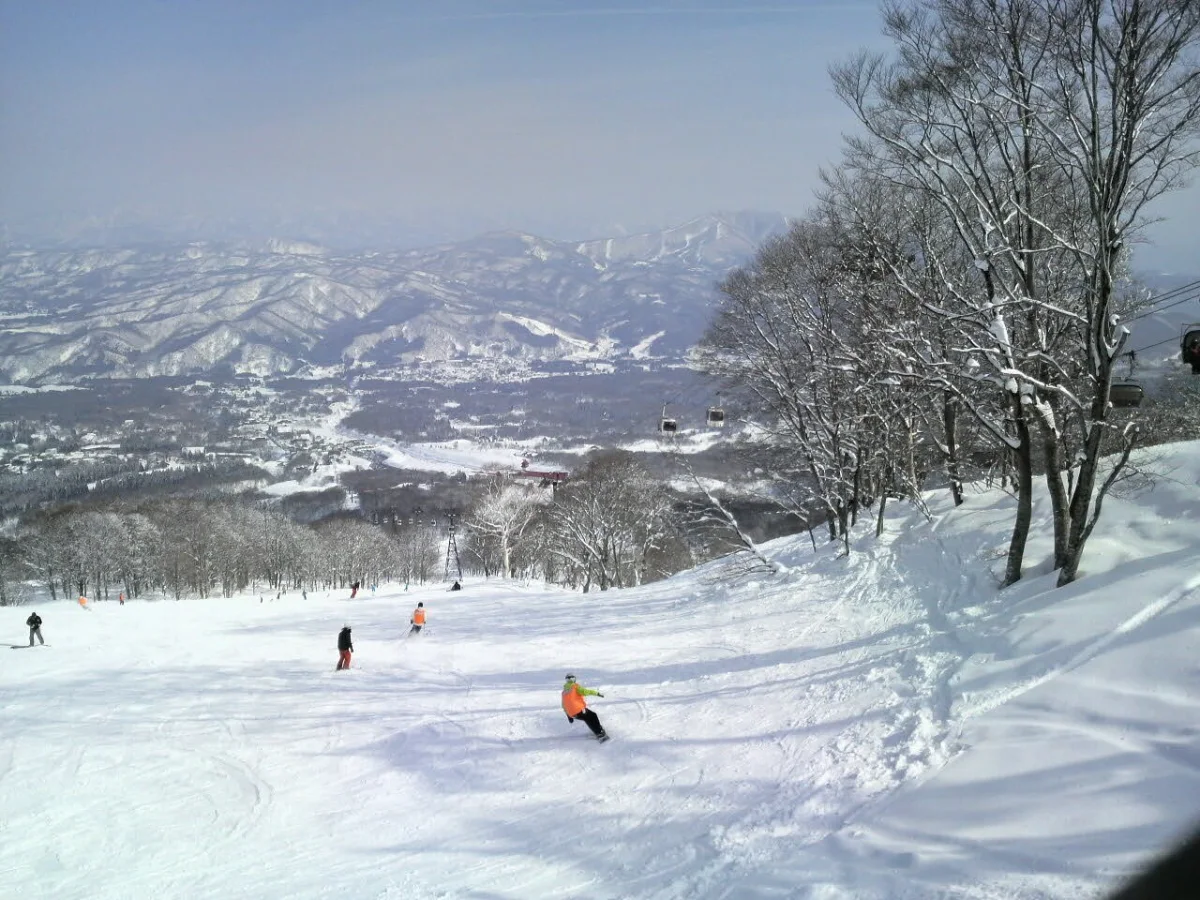
The slopes flanking Sakka's two base chairlifts run up to roughly 600 metres, averaging a 10-degree gradient with a maximum of 18 degrees—ideal for drilling stops, turns, and lift loading. Skiers should focus on speed control before linking turns in both directions. Beginner snowboarders can practise heel-side and toe-side edges on the same slope; stop at the edge of the piste where uphill riders can clearly see you, avoiding blind spots just below a crest. On your first chairlift ride, follow your instructor onto the same chair, glide well clear of the unloading ramp at the top, and only then stop to wait for others.
Shirakaba is also marked as beginner-friendly and sits right by the Adam Gondola base station for easy pass collection and changing, though its lower section includes a 20-degree intermediate pitch. Nakiyama's main slope reaches 35 degrees and is officially graded intermediate. Learners who can already link turns can ride Nakiyama No. 2 Pair Lift and follow the wider arc to the right as you face down the mountain. If children still need an adult skiing alongside to help them stop, stick to beginner lessons at Sakka or head to the separate snow play park at Nakiyama.
Save the exact Japanese or English facility name in your group messages and pick an unmistakable doorway as your meeting point. If one part of your group is riding up to Usagidaira for the views while the children have lessons at Sakka, meet for lunch at the base where the ski school operates so the independent travellers do the walking. Two base areas may look close on a trail map, but walking along village roads in ski boots while carrying skis and herding children takes far longer than a normal stroll. Use that same landmark for pick-ups so drivers and parents are not waiting at different entrances.
Start at Sakka for your first day at Happo-One, or take Nakiyama up to Usagidaira for long groomed runs. Covers 2026–27 lift passes, early-bird tickets without a My Number card, Nagano buses, direct Shinjuku transport, and car-free stays.
November Opens Upper Runs Only; Keep an Afternoon Off-Mountain in Spring
The resort held a preview opening at 11:00 on 21 November 2026 and scheduled its full opening for 08:00 on 22 November. After 70 cm of overnight snowfall, crews needed extra time for snow clearing and trimming branches beneath the lift line, pushing the Adam Gondola's estimated start from 08:50 to 09:00. On 22 November, only the Panorama area and its beginner run opened, while the base slopes stayed shut, requiring everyone to ride the Adam Gondola both up and down. Opening-day notices listed the last uphill gondola at 14:00, downhill service until 16:00, and Panorama piste closure at 15:10. Opening-day promotional tickets cost ¥5,000 for adults and ¥2,500 for ages 6–17, sold exclusively at the Adam Gondola base ticket window until more terrain opened and standard fares took effect.
Early-season pricing runs from 1 to 18 December, followed by peak season from 19 December 2026 to 22 March 2027. When booking an early-season lesson, specify which areas are open in your enquiry—especially for families requesting Sakka. Each morning, check both the official slope status (Gerende Jokyo) and lift status (Lift Unko Jokyo) pages separately. Even when a run shows as open, verify that the lifts carrying you in and back out are actually running. Panorama's beginner slope has its own open/closed indicator. Complete beginners should state their level when booking so the school can choose a meeting point starting on flat ground.
For multi-night stays in January or February, save the upper mountain runs you want most for a day with lighter wind and clearer visibility. Do a few warm-up laps at the base first and watch how fast your companions handle the pitch before deciding whether to ride up to Usagidaira together. If snow falls overnight and strong winds hit the upper mountain in the morning, make use of the lower chairlifts that are running and check the lift schedule again before lunch. Agree clearly on which base area to stay in while waiting for upper lifts to open; switching bases mid-morning adds extra shuttle transfers.
Spring pricing starts on 23 March and is listed through 5 May. However, Happo-One closed early last season on 19 April due to snowmelt, so if you are booking accommodation for late April, plan a day visiting the village's Olympic ski jump and hot springs or pick a room with a flexible cancellation deadline. Spring snow is often firm first thing in the morning before softening in the sun: take your first run on a slope where you can stop easily, saving longer descents for when surface conditions and visibility align. If the lower base slopes close first, take an open gondola back down. Note also that the winter Nagano–Hakuba bus timetable ends on 26 March, so April arrivals and departures must follow the spring schedule for your exact travel date.
2026–27 Happo-One Lift Passes and Early-Bird Eligibility
Buying a peak-season 1-day adult pass online for the first time costs ¥9,800, the same as at the ticket window. The ¥9,500 online rate applies only when topping up an existing Happo IC card. First-time online buyers receive a QR code to collect a physical card at an automated kiosk, whereas top-ups reuse your old card; top-ups are not available at the ticket window. Peak 1-day passes cost ¥4,900 for ages 6–17 and ¥9,500 for seniors aged 65 and over (seniors must present photo ID at the ticket window). Children under 6 ride free, with parents required to bring the child and proof of age to the ticket window to collect a pass.
If you are taking one lesson at the base and staying on the same slope afterwards to practise, choose your pass based on the chairlifts your instructor names. The peak-season Happo Debut 1-Day Pass costs ¥4,900 for adults and ¥2,450 for ages 6–17, covering Nakiyama No. 2 and No. 3, Shirakaba No. 1 and No. 2, Sakka No. 2 and No. 3, plus the Sakka Kitaone Quad Lift. If you only need a single ride, ticket windows sell an ¥800 base single-ride ticket valid on the first six of those lifts. Neither option includes the Adam Gondola. Nakiyama Snow Land and the Usagidaira Bunny Area charge separate admission, so wait until your lesson is booked before buying snow-park entry or lift passes.
A peak-season half-day adult pass costs ¥8,100: the morning session runs until 12:00, and the afternoon session starts from 12:00. If you arrive around midday and still need to collect rental gear, get fitted first and then buy the afternoon pass. If you have a morning lesson and plan to keep skiing into the afternoon before returning equipment, buy a full-day pass from the start. Early-season and spring 1-day passes are ¥6,400 for adults and ¥3,200 for ages 6–17—both cheaper than a peak half-day ticket.
Adult visitors arriving from overseas without a Japanese My Number card who plan to ski two peak-season days at Happo-One can buy a ¥16,600 early-bird 2-day pass online until 30 November. Valid for ages 18 and over, it can be used by one person across two separate days and saves ¥3,000 compared with two newly purchased peak-season passes at ¥19,600. Travelling companions must each buy their own pass—you cannot share one 2-day pass on the same day. If both of your ski days fall in spring, a standard adult 2-day spring pass totals ¥12,800, making the early-bird deal more expensive.
Adults holding a valid Japanese My Number card can verify via xID to access ¥6,400 1-day early-bird passes, ¥12,600 2-day early-bird passes, or a ¥7,500 bundle pairing a 1-day pass with a ¥1,500 meal voucher. These are limited to one purchase per person, and the meal voucher is valid only at designated restaurants listed on the ticketing page—such as Yeti at Usagidaira or the second floor of Sun Terrace beneath Panorama. Check that every member of your group qualifies individually before buying, and confirm your exact number of ski days before committing to multi-day passes.
The ticketing page states that 2-day passes may be used on non-consecutive days, with no refunds for unused days once activated. If the forecast shows only one good mountain day and you plan to visit the ski jump or an onsen on the other, single-day passes give you more flexibility. If you arrive on an early-season weekend when only Panorama is open, note that opening-day window tickets and early-bird passes apply to different operating periods—follow the resort's opening announcement when buying.
| Pass type | Adult price | Conditions |
|---|---|---|
| Early-season 1-day | 6,400 | 1–18 December 2026 |
| Peak-season 1-day | 9,800 | 19 December 2026 – 22 March 2027, new online purchase or ticket window |
| Peak-season half-day | 8,100 | Morning until 12:00, or afternoon from 12:00 |
| Peak-season Debut 1-day | 4,900 | Seven designated base chairlifts only |
| Early-bird 2-day (no Japanese My Number card) | 16,600 | Ages 18+, online purchase by 30 November |
| Spring 1-day | 6,400 | 23 March – 5 May 2027 spring rate period |
Happo-One Pass vs. the Hakuba Valley All-Mountain Pass
The Hakuba Valley Pass covers ten partner resorts across Hakuba Village, Otari Village, and Omachi City, including Happo-One, Goryu, Hakuba47, Iwatake, and Tsugaike. For 2026–27, a 1-day pass costs ¥11,100 for adults and ¥6,400 for ages 6–12. Note that teenagers aged 13–17 count as children on Happo-One's own passes, but pay the adult rate on the Hakuba Valley Pass. For a family of two adults and one 14-year-old, peak Happo-One 1-day passes total ¥24,500, compared with ¥33,300 for three Hakuba Valley 1-day passes. If only one person wants to visit another resort, buy passes separately.
If you are taking lessons at Sakka for two days in a row, compare the Debut pass against standard Happo-One tickets first. If you plan to ski Happo-One on day one and another resort on day two without switching mountains mid-day, add up two single-resort passes plus transport before deciding on the Valley Pass. A 2-day adult Hakuba Valley Pass costs ¥21,800 and stays valid for four days from first use, letting you slot in a rest day. First-time online buyers swap their QR code for an IC card at a ticket window or kiosk. If you arrive in the afternoon and only start skiing the next morning, pay separately for local transport to your hotel and activate your pass on your first ski day.
If you want to ski two resorts on the same day, the Hakuba Valley Pass scans at lifts in both areas and includes daytime Hakuba Valley shuttle buses on active pass days. Some shuttles only run inbound in the morning and outbound in the afternoon, so check the shuttle map for routes connecting both resorts before planning lunch and gear return. Riding a valley shuttle without skiing still consumes one day of your pass, and rechargeable passes must be activated at a resort on their first day according to alliance rules. Night skiing and night buses cost extra.
Holders of eligible current-season passes such as the Epic Pass, Epic Local Pass, or Epic Australia Pass can redeem one consecutive 5-day Hakuba Valley Pass. The Tourist Information Centre beside Hakuba Happo Bus Terminal is a designated redemption counter, listed as open 08:00–17:00. Bring your pass and photo ID to collect your ticket. Your five consecutive days begin the moment you first scan at a lift or board an alliance daytime shuttle, and rest days still count towards the five-day window.
Skiing Down from Usagidaira: Check Which Base Your Run Meets
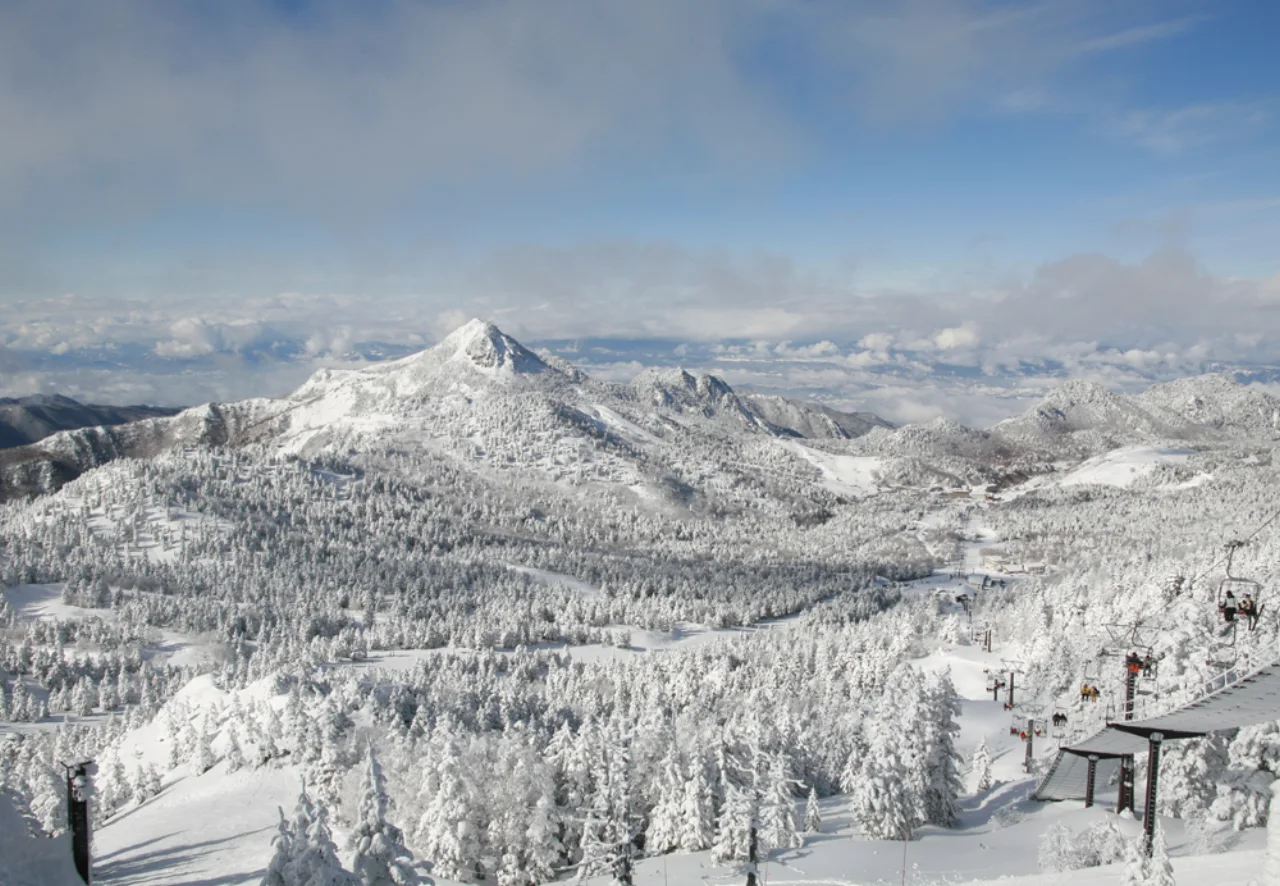
Happo-One's listed skiable elevation runs from roughly 760 to 1,831 metres—more than 1,000 metres of vertical drop. Wind, snow surface, and visibility around Usagidaira often differ sharply from the valley floor, so pick a route back down that matches your ability. The Adam Gondola rises from Shirakaba to near Usagidaira, where the Alpen and Grat Quad lifts continue higher. Another main route up starts at Nakiyama and connects to the Riesen Quad. If you need to return rental gear at Shirakaba, look for Central Course on the piste map—an upper-intermediate run from Panorama down to Shirakaba reaching 27 degrees. If your hotel is at Nakiyama, verify which lower links back to Nakiyama are open and read trail signs before committing to the final pitch.
Confident intermediates on groomed slopes can start with Panorama, featuring a 700-metre main run up to 25 degrees alongside a 1,200-metre forest track. If companions take different variants, agree to regroup at Sun Terrace Panorama just below. For a longer descent, the Riesen Slalom Course stretches up to 3,045 metres at an average gradient of 20 degrees, feeding down toward the upper part of Nakiyama. The resort notes that moguls can form here in the afternoon, so go earlier for smoother corduroy. Happo-One also highlights an 8-kilometre top-to-bottom run from Riesen Grat via Kurobishi and Skyline down to Sakka: check the open status of each link first and allow time to get back from Sakka to your original base.
The full Kurobishi Rindo forest track measures around 5.5 km at an average gradient of 6 degrees and crosses Skyline along the way—watch uphill traffic carefully before crossing intersections. For just the lower section, when the Sakka Kitaone Quad is open you can ski from Kitaone Kogen down to Sakka on an easy route listed at around 3.4 km. Long, gentle traverses are straightforward for progressing skiers, though snowboarders may need to unstrap if fresh snow slows them down on flat stretches. Save your first full top-to-bottom lap for when you still have energy and lower-mountain visibility is clear.
The 1998 Nagano Winter Olympics men's and women's downhill runs are marked as Olympic I and Olympic II. The men's course finishes at Kokusai and is rated advanced, with off-camber pitches and moguls near the bottom. The women's course descends to Sakka and also includes steep sections. If one rider wants to tackle an Olympic course while family members stay at Sakka, the women's course lets you meet directly at Sakka; finishing at Kokusai requires an extra transfer back.
New zones announced for 2026–27 include Panorama Flow, Sakka Trees Adventure, Skyline Trees, Sodeguro Trees, the Usagidaira Bunny Area, and Nakiyama Snow Land. Flow features rollers and jumps, Sakka Trees Adventure introduces beginners and intermediates to glade terrain, and Skyline Trees and Sodeguro Trees cater to upper-intermediate and advanced riders. Sightlines inside tree zones are short—read the entrance signs and get a feel for the day's snow on groomed runs before entering. If your group splits up, set a meeting point outside the tree entrance rather than letting less experienced skiers follow into the trees just to keep up.
Unpacked In-Bounds Zones and Boundary Controls
Tenbo Zone reaches an official maximum gradient of 37 degrees over 250 metres. Omusubi peaks at 33 degrees over 500 metres and enters trees lower down; the resort restricts access via an upper gate for advanced skiers only when open. Urakuro, north of the Kurobishi No. 3 Pair Lift, reaches 31 degrees over 800 metres and carries a double-black-style in-bounds rating. Figures measure pitch and length only—moguls, snow cover, and runouts depend entirely on the day's conditions. If companions are still practising turn control on Kurobishi's groomed runs, arrange to wait at a restaurant or lift station instead of keeping everyone on the same line.
Black-and-yellow poles mark the resort's managed boundary, while solid yellow poles indicate closed or off-limits in-bounds terrain. Whenever you see a rope line, stay on the open piste side and ask ski patrol for the easiest way back to the nearest base. Backcountry touring and skiing beyond resort boundaries require submitting a mountain climbing plan to Nagano Prefecture in advance and exiting only through the designated gate above the Grat Quad top station when permitted. If the resort assists a private rescue team with a search outside managed boundaries, associated support costs are billed to the rescued party via the rescue team. Before heading out, cross off closed lines on your downloaded trail map and pull over to the side whenever you reach an unfamiliar junction.
Tokyo to Happo-One: Know Nagano Station East Exit Stop 26 vs. Hakuba Station
If you are staying near Tokyo Station, take the Hokuriku Shinkansen to Nagano and connect to an ALPICO express bus bound for Hakuba Happo Bus Terminal. After passing through Nagano Station's Shinkansen ticket gates, follow signs for the East Exit to Bus Stop 26 outside. ALPICO estimates the walk from the gates to the stop at under 10 minutes, though you should allow extra time with ski bags, lifts, or ticket purchases. For reserved buses, pick a Shinkansen arrival that leaves enough buffer for grabbing food or water and getting your whole group to the stop together.
From 12 December 2026 to 26 March 2027, the winter bus timetable applies at ¥3,500 one-way for adults from Nagano Station to Happo. Services include both reserved buses (bookable via Highwaybus.com, with unreserved boarding subject to spare seats) and non-reserved queue-to-board departures where you buy a ticket on the day. Most are direct services taking about 70 minutes—for instance, the 09:00 departure from Nagano East Exit arrives at Happo at 10:10. If a flight arrival might delay your outbound connection, note the next daytime bus as a backup. On the return leg, if you have a fixed flight or Shinkansen train, book an earlier bus to leave margin for winter weather and road delays.
Some reserved buses stop at Hakuba Station, Goryu, or other stops first, while others run express to Happo; check the Happo Bus Terminal column on the return timetable as well. Select 'Hakuba Happo Bus Terminal' if you are staying at the Happo base, or choose a service stopping at 'Hakuba Station' if your lodging is near the JR station. Direct buses save time looping around the village, but bypass JR Hakuba Station altogether. On the ALPICO Nagano route, skis, snowboards, and boots must be packed inside dedicated bags—count every board bag and suitcase at unloading before leaving the terminal for your hotel shuttle.
For arrivals on or before 11 December 2026, ALPICO operates its spring/summer/autumn timetable: buy tickets on the day and pay ¥2,500 one-way for adults to Happo. If you are staying in Wadano or Sakka, keep separate notes for your arrival-day transfer and your daily ski shuttles. Happo-One also runs its own base shuttle linking the gondola and car parks from its 21 November opening; you only need the Hakuba Valley alliance shuttle map when hopping between different resorts.
From Shinjuku, JR East's Limited Express Azusa 5 departs at 08:00 and reaches JR Hakuba Station at 11:40. The winter seasonal Azusa 83 'Hakuba Express' departs at 10:02 and arrives at 14:10, running on 19–31 December 2026, 1 January, 4–31 January, and throughout February 2027. Both run directly to Hakuba without changing trains. Because both arrive at JR Hakuba Station rather than the mountain base, you will still need a hotel shuttle, taxi, or local bus route stopping near your accommodation to reach Happo.
If Azusa 5 and 83 are sold out, take another Azusa service from Shinjuku to Matsumoto and transfer onto the Oito Line for Hakuba—some connections also require changing at Shinano-Omachi. JR East's route guide lists the fastest connecting time at 4 hours 33 minutes; work backwards from Oito Line arrivals at Hakuba when choosing your Azusa departure. If you want lunch in Matsumoto or a stroll around Matsumoto Castle, intentionally leave a longer transfer window; with only a short layover, grab food near the station.
Travellers staying near Shinjuku with ski bags can also take the ALPICO highway bus straight to Happo. Its winter timetable runs from 5 December 2026 to 31 March 2027—different dates from the Nagano route—so check the exact Shinjuku boarding stop for your departure. If you are flying into Tokyo overnight, spend your arrival afternoon in Hakuba checking in and fitting rental gear rather than rushing to catch the last couple of hours on the slopes.
Car-Free Base Areas: Happo Bus Terminal, Wadano, or Echoland
If you are skiing only Happo-One and arriving by bus from Nagano, staying near Happo Bus Terminal makes logistics effortless. You can drop luggage right off the bus, walk to dinner and the hot springs, and head to Nakiyama or Sakka the next morning according to your lesson. If you plan to ride the Adam Gondola first thing, a property near the Shirakaba gondola base saves an extra walk in ski boots. Check the actual walking route from your hotel entrance to the lifts before booking—some hotels sit close to the bus terminal yet still require a walk to the piste.
Wadano sits close to the Kokusai and Sakka side of Happo-One, so choose a property aligned with the entrance you plan to use. Hakuba Mominoki Hotel is located in Wadano, and its resort map lists the Kokusai piste as accessible on foot. Hakuba Tokyu Hotel lists a complimentary scheduled shuttle to and from JR Hakuba Station and Happo Bus Terminal between 08:00 and 20:00 with advance reservation. Note that Hakuba Tokyu Hotel is closed for full-building maintenance until 11 December 2026, reopening at noon on 12 December—so early-season visitors hoping to stay near Kokusai should compare nearby Wadano options such as Mominoki.
Echoland works well if you want lively village dining in the evening and plan to ski different resorts over multiple days. The night before skiing, locate your nearest shuttle stop and verify outbound versus inbound directions, comparing routes to both your Happo entrance and your next resort. Staying slightly further from a bus stop may only mean a short morning walk, but missing the last afternoon bus while carrying gear can delay rental returns. Groups of similar ability visiting several mountains can read our Hakuba ski resorts comparison before picking a base, while adults or children taking two days of lessons with the same instructor will save energy by staying near that specific lift entrance.
When comparing accommodation rates, factor in arrival transfers, gear storage, and breakfast opening times. If you plan to ski on check-out day, ask reception whether they can hold hard-shell suitcases and let you pick them up after returning rentals—ideally walking straight from the slopes to your hotel and then on to the bus terminal. Guests with heavy luggage departing from JR Hakuba Station should confirm their hotel shuttle time in advance so you know exactly how much time to leave for changing boots and packing board bags.
Equipment Hire, Lessons, and Non-Skiing Snow Play
Happo-One's official rental directory groups shops by base area: Kazama's Sakka Plaza shop serves Sakka, while Woody's Happo main branch sits near the Tourist Information Centre and its second branch stands by the Adam Gondola base. If you are collecting and returning gear at different times, save the exact branch name in your booking. Compare quotes separately for ski or snowboard sets, jackets and trousers, and helmets, and check whether you can swap boot sizes at the same shop the next day, opening hours, and overnight storage. Pack your own gloves, goggles, and thermal base layers, as rental package inclusions vary. At your first fitting, ask staff to adjust bindings for your weight and skill level, then walk around and squat in the boots—if your toes are crushed or your heel lifts inside the liner, swap sizes before heading to your meeting point.
The resort lists both the Happo-One Ski & Snowboard School and Evergreen International Ski School, with Evergreen offering English-language adult and children's group classes as well as private lessons. For lessons in your preferred language, include the language, exact base entrance, ages, skill level, and ski or snowboard preference in your booking enquiry, and wait for confirmation before paying. Different schools use different meeting spots, so parents booking children's lessons should save both the finish time and pick-up location. Buy lift passes and any required beginner-area entry tickets according to your school's instructions.
If your rental shop sits next to the ski school, schedule fitting right before your morning lesson—or collect your gear the evening before if allowed, leaving time on the morning itself just to change and pick up lift passes. When several families travel together, send anyone with a morning lesson out early so everyone gets sized without rushing. Complete beginners testing their stamina can book a half-day lesson, grab lunch, and stay on the same slope until they can stop cleanly at a chosen target for several runs in a row before moving up the following day.
Family members who just want snow play can head to Snow Land at the Nakiyama base, which operates as a separate ticketed area. If you want to watch children learning, Sakka's Snow Plaza is an easy place to meet for lunch or wait at the base until lessons wrap up. On clear days, non-skiers can ride the Adam Gondola return for ¥2,600 (¥1,300 for ages 6–17), or take the three-lift Alpen Line sightseeing round trip—combining Adam, Alpen, and Grat—for ¥5,000 (¥2,500 for ages 6–17). If wind closes the upper sections, switch to a sightseeing ticket covering only the open lower stages.
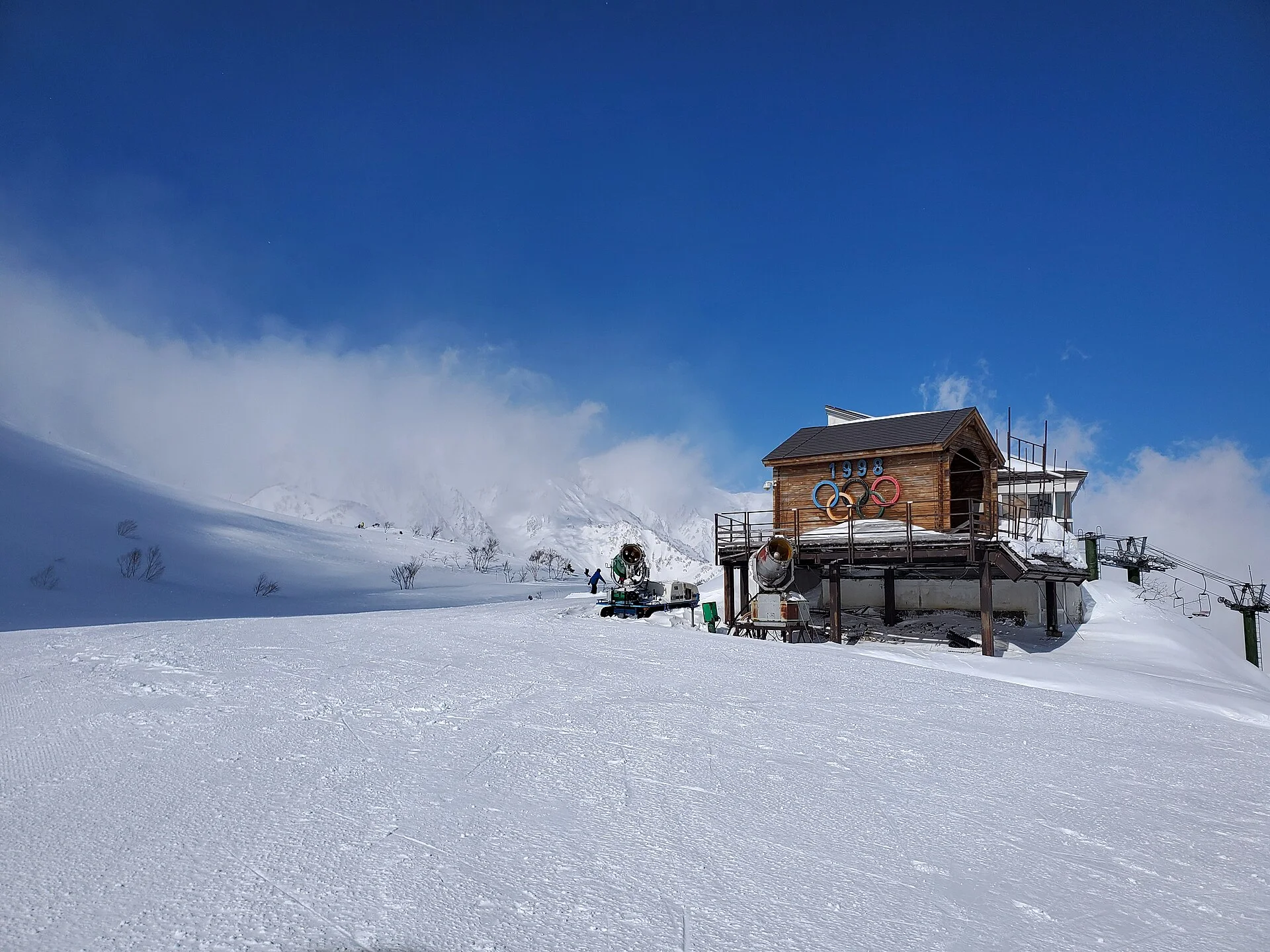
There is also plenty to do in the village without skis. The Hakuba Ski Jumping Stadium preserves the 1998 Winter Olympics venue with a chairlift up to the jump tower: from late December to March, Hakuba Village lists hours of 09:00–15:30 (last uphill chair at 15:10) at ¥740 return for adults and ¥440 for primary and junior high school students, though it closes briefly in early to mid-December for seasonal changeover and during high winds. Happo-no-Yu hot spring typically opens 10:00–21:00 (last entry 20:30) at ¥1,000 for ages 12 and over, offering indoor and open-air baths—ideal before boarding a bus at Happo Terminal once your gear is returned. If your train departs from JR Hakuba Station, Mimizuku-no-Yu is about a 10-minute walk from the station at ¥800 for ages 12 and over, also with last entry at 20:30.
Putting Transport, Gear, and Skiing into a Two-Day Plan
For first-time visitors, the smoothest one-night, two-day itinerary takes the morning Azusa 5 from Shinjuku or the Hokuriku Shinkansen via Nagano to arrive in Hakuba in the afternoon, drops luggage, gets fitted for rental gear, and spends the early evening at Happo-no-Yu. On day two, take your lesson at your chosen base, eat lunch at that same base, add extra practice laps if your legs still feel fresh, then return gear, collect bags, and walk to the bus terminal or JR Hakuba Station. When booking your departure transport, count backwards from gear return and bag pick-up—never assume you can catch a bus straight from the lifts closing.
If you already own equipment and are attempting a day trip from Tokyo, plan backwards from your return departure. Subtract time to meet at the terminal, change out of ski boots, and ski down from the upper mountain to work out when to take your last chairlift. If your morning bus arrives late, scale back your upper-mountain plans and stick to runs with an easy route back to one base. Because Shirakaba, Kokusai, Nakiyama, and Sakka face different parts of the valley, agreeing on one afternoon return base is vital. If companions ski down to different bases, make sure everyone carries their own ID, bus or train tickets, and locker details so whoever arrives first can start returning gear.
To enjoy two full days on the mountain, stay an extra night. Spend day one testing Sakka, Panorama, or part of Riesen while noting which meeting spots and download routes work best for your group. Save higher runs above Usagidaira or the Kurobishi Rindo traverse for day two if the wind drops, or start low and head down after lunch if weather closes in. Keep resort-hopping for trips with a full spare day—especially on check-out day before heading back to Nagano or Shinjuku, skipping an extra inter-resort shuttle makes catching your homeward connection far less stressful.
A few useful answers
Which base entrance should first-time skiers use at Happo-One?
If your lessons and rentals are flexible, start at the No. 2 and No. 3 chairlifts near Snow Plaza Sakka, where the base slopes are wide and gentle. If your instructor sets a different meeting point, buy the lift pass that matches that specific base entrance.
Can overseas visitors buy Happo-One early-bird lift passes?
Yes. Adults aged 18 and over without a Japanese My Number card can buy the ¥16,600 early-bird 2-day pass online by 30 November 2026. The ¥6,400 1-day early-bird pass, however, requires verification with a Japanese My Number card.
Where do you buy the ¥9,500 1-day Happo-One pass?
The ¥9,500 peak-season rate is only available by topping up an existing Happo IC card online. A newly purchased 1-day adult pass costs ¥9,800, either bought online for kiosk pick-up or at a ticket window.
Do I need to reserve the bus from Nagano Station to Hakuba Happo?
From 12 December 2026 to 26 March 2027, both advance-reserved services and same-day queue-to-board buses run from East Exit Bus Stop 26. The adult one-way fare to Hakuba Happo Bus Terminal is ¥3,500.
Is the Hakuba Valley Pass worth it if I am only skiing Happo-One?
No—a peak 1-day Happo-One adult pass is ¥9,800 versus ¥11,100 for a 1-day Hakuba Valley Pass. Stick to Happo-One tickets unless you plan to ski multiple resorts on the same day and want the alliance shuttle included, keeping in mind ages 13–17 pay the adult rate on the Valley Pass.
Can non-skiing family members ride the gondola up the mountain?
Yes. An adult return sightseeing ticket on the Adam Gondola costs ¥2,600, or ¥5,000 for the three-stage Alpen Line round trip. If high winds close the upper lifts, Happo-no-Yu hot spring and the Hakuba Ski Jumping Stadium make easy village alternatives.
Official information and references
Sources used in this guide.
- Happo-One 2026–27 Season Opening Areas and Fares
- Happo-One 22 November Snow-Clearing Delay Notice
- Happo-One Spring 2026 Early Season Closure Notice
- Happo-One 2026–27 Lift Pass Rates and Conditions
- Happo-One Early-Bird Tickets and New Zones Announcement
- Happo-One Trail Guide and Slope Safety Rules
- Happo-One Trail Map
- Happo-One Open Runs and Slope Conditions
- Happo-One Lift Operating Information
- Happo-One Base Shuttle Bus Information
- Happo-One Official Equipment Rental Directory
- Happo-One Ski and Snowboard Schools
- Hakuba Valley All-Mountain Pass Fares
- Hakuba Valley Shuttle Bus Timetable and Tickets
- Hakuba Valley 2026–27 Epic Pass Redemption
- ALPICO Nagano–Hakuba Winter Timetable and Fares
- ALPICO Nagano–Hakuba Full Express Bus Schedule
- ALPICO Shinjuku–Hakuba Happo Winter Highway Bus
- JR East Shinjuku–Hakuba Direct Train Information
- Hakuba Tokyu Hotel Shuttle Access Information
- Hakuba Tokyu Hotel Early Winter 2026 Closure Notice
- Hakuba Mominoki Hotel Winter Resort Guide
- Hakuba Happo-no-Yu Hot Spring Day-Use Information
- Hakuba Happo Onsen Access and Locations
- Hakuba Village Ski Jumping Stadium Information