Plan Matsumoto Castle, Nawate Street and Matsumoto City Museum from the station. Assess the 61-degree stairs, compare digital and joint tickets, and choose a route for your group and the rain.
- Region & Focus
- ChubuAttractions
- Reading Scope
- 30 min read · 16 chapters · 5 Q&As
- Official Verification
- 9 official sources checkedUpdated 27 October 2026
- Key Topics
- ItinerariesBookingTravel budget
Chapter Route Map (tap any stop)
- Decide whether your Matsumoto day includes the keep or exterior views
- Leave by the Oshiro Exit and plan luggage storage with your return
- About 140 steps and a 61-degree maximum: consider the descent first
- Shoes, bags and toilets: free your hands before entering
- Inside the castle, connect the roofs, hidden floor and timberwork
- Slow down as you move from the defensive keep to the moon-viewing turret
- Digital tickets cost ¥1,200 and paper tickets ¥1,300: choose a time before comparing prices
- Castle and museum joint tickets save adults ¥200; eligible university students pay less separately
- Digital tickets cannot be changed or cancelled: decide about rain before paying
- Matsumoto City Museum brings local life into a rainy day
- On Tuesdays and at year-end, check which doors are open
- Walk a short stretch of Nawate Street and choose meals separately from snacks
- A fine-weather day: enter the keep early, then make two city stops
- Two rainy-day routes: keep the tower visit or focus on the museum
- For families, older relatives and split groups, meeting points matter
- For half a day or onward mountain travel, keep Matsumoto as its own stop
- Quick Q&A
First decide whether to enter Matsumoto Castle's keep. There are about 140 steps, with the steepest at 61 degrees, and you must remove and carry your shoes up and down. If suitable for your group, climb in the morning and follow with the museum and Nawate Street. For wheelchair users, painful knees on descents or persistent heavy rain, choose moat views and Matsumoto City Museum for a city day with both castle and streets.
Decide whether your Matsumoto day includes the keep or exterior views
Start a day in Matsumoto by asking whether everyone can manage steep stairs independently. If you want to see the wooden keep and can climb and descend steadily, visit Matsumoto Castle in the morning, followed by Matsumoto City Museum and Nawate Street. For someone using a wheelchair, with painful knees on descents, or with a child who cannot yet use stairs alone, focus on moat views and the museum. This still makes a full city visit. There is no lift in the keep; visiting it requires climbing and descending steep stairs.
This city route needs neither a change of accommodation nor long-distance buses. Start and finish at Matsumoto Station. The castle lies to the north, with the museum and Nawate Street between castle and station. Visit the keep while alert and with fresh legs, then use the afternoon for an exhibition and street walk that can be shortened or extended. This is easier than tiring yourself with morning shopping and rushing into the keep late in the day.
With only half a day, reduce the paid attractions first. If the keep is the priority, keep it and a stretch of Nawate Street. For level routes and lifts, choose the museum and a short castle view. You do not need both admission tickets to enjoy Matsumoto. The ticket, opening and purchase conditions below follow official information dated 27 October 2026.
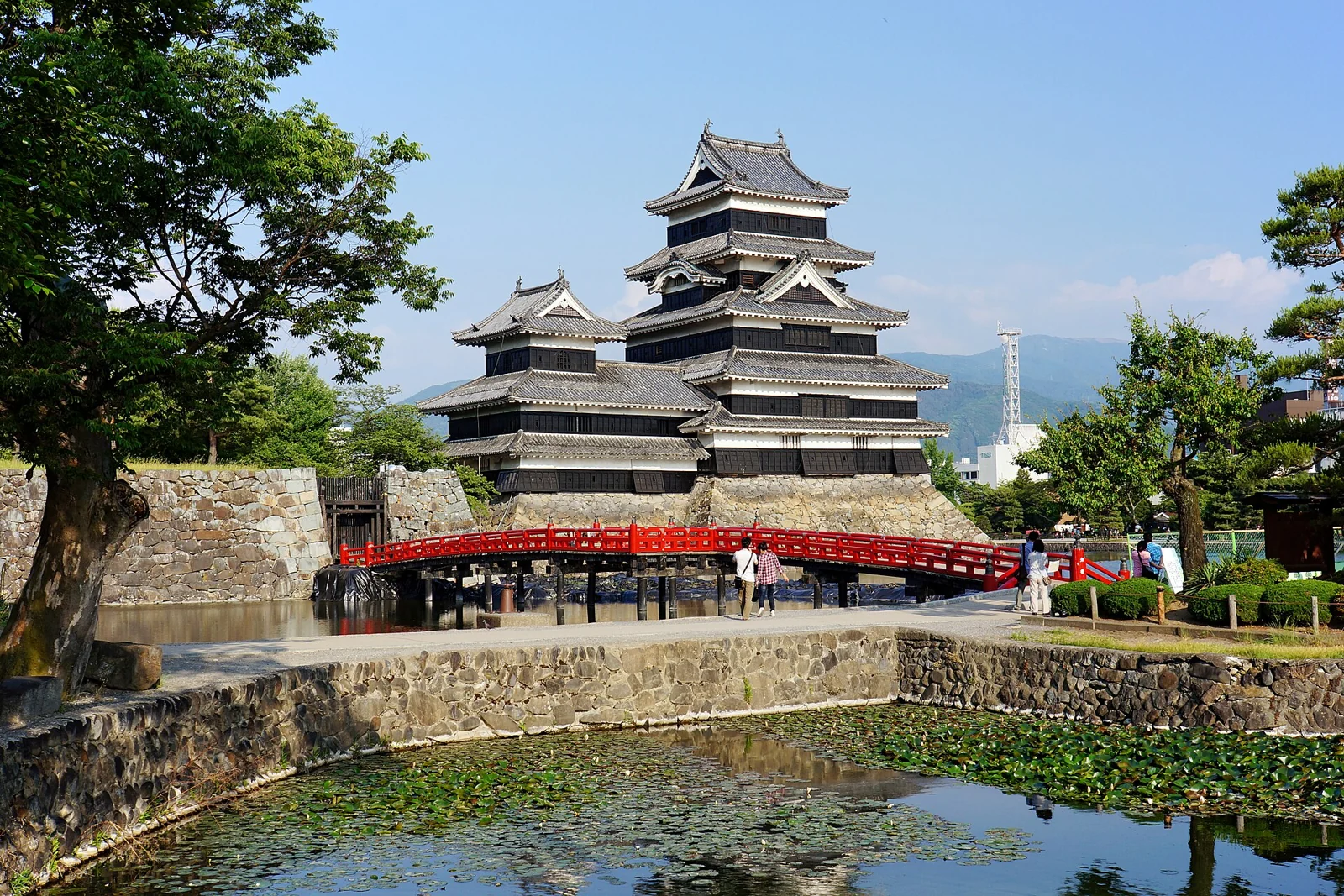
Plan Matsumoto Castle, Nawate Street and Matsumoto City Museum from the station. Assess the 61-degree stairs, compare digital and joint tickets, and choose a route for your group and the rain.
Leave by the Oshiro Exit and plan luggage storage with your return
Look for Oshiro-guchi, the castle-side exit. The castle access page gives about 20 minutes on foot from JR Matsumoto Station. Use this as a baseline for reaching the castle area. Allow extra time for finding the exit, traffic lights, buying water and the keep queue. For a morning booking, add storage and walking time after your train arrival before choosing a ticket slot. Twenty minutes does not cover everything from stepping off the train to entering the keep.
On a transfer day with large bags, store them at the station or your accommodation before walking north. The storage location affects whether you must double back in the evening. If catching a train, favour somewhere close to the station where you can collect bags on time. If staying several nights in Matsumoto, ask your accommodation about storage. Check fees, size limits and hours for the service you use. Storage at the castle is not a reason to carry luggage there.
To avoid walking all the way, use the Town Sneaker North route and look for Matsumotojo–Shiyakusho-mae. The official castle access page gives a ride of about ten minutes. Check the day's stop and return direction before boarding: the bus loops along a different route from the walk. For slow walkers, pushchairs or rain, riding to the castle and walking back in stages usually saves more energy than insisting on walking both ways.
On your departure day, note your train, bag collection time and how early you want to reach the station. You can shorten the final street walk. You cannot easily make up time on the keep stairs or through visitor traffic. If your train reaches town near the afternoon, check that day's keep wait. With insufficient time, choose the exterior and museum rather than relying entirely on last admission.
About 140 steps and a 61-degree maximum: consider the descent first
The official visitor guide lists about 140 keep steps and a maximum incline of about 61 degrees. Read those figures together. Being able to walk around a city for hours does not necessarily make narrow, steep wooden stairs with high steps easy. You must also come down again. If you normally descend sideways, need a stick for support or have significant knee discomfort, the exterior and museum are more suitable.
The steepest stairs lead upwards from level 4 of the main keep. Official architectural notes explain that the staircase occupies one structural bay, with nearly four metres between floor and ceiling, producing the 61-degree incline. The stairs from level 5 to level 6 rise further, but use two bays and a landing, so are less steep. Knowing this explains the sudden change in stairs without imagining the same gradient throughout.
Base your decision on your condition that day and whether you can control your own steps. A companion can watch bags, leave space and remind you to duck. Do not plan to carry an adult or pushchair on these stairs, or carry a child and luggage together. If already tired before entering, rest on level ground and choose the exterior route. Letting suitable members of the party make the paid visit separately is also workable.
Follow staff and the marked route inside. Do not wait at a staircase entrance while companions finish photographs. If people climb or descend at different speeds, regroup on a level area where stopping is allowed so others can pass. If nervous, stop securely and tell staff you need help. Do not chase companions or overtake a queue on steep stairs to keep a lunch booking.
Shoes, bags and toilets: free your hands before entering
Shoes are prohibited inside the keep. Bags are provided at the entrance, and you carry your shoes with you. Wear stable walking shoes that are easy to remove and put back on, and make space to carry the shoe bag. This is more useful than footwear chosen for photographs. Wooden floors feel cold underfoot in winter, so plan socks and warmth before leaving. Once shoes are off, their sole grip no longer helps you inside.
A large rucksack, shopping bags, camera and shoe bag together make turning and using handrails awkward. Leave items you will not need in storage. Carry valuables, necessary medicine and light essentials. Tighten the rucksack and keep umbrellas, tripods or long dangling accessories from sticking out. Put camera equipment away before climbing so you do not keep changing hands on the stairs.
There are no toilets inside the keep. Use facilities in the castle grounds first and deal with children's and older relatives' needs before joining the entrance queue. Tickets do not allow re-entry: after leaving the paid area, the same ticket is not a pass to return after lunch. If someone needs frequent toilet visits, make that part of the decision about entering rather than rearranging groups after buying tickets.
Official rules prohibit photography on and near stairs for safety on the narrow route. Photograph timberwork or window views only where permitted and without blocking movement. Secure camera straps and put lenses away when not in use. The moat and black-and-white exterior offer more viewing space. Save group photographs for after leaving the keep.
Inside the castle, connect the roofs, hidden floor and timberwork
The main keep appears to have five roof levels but contains six floors. Counting roofs outside and floors inside gives different totals. Level 3 sits beneath the second roof level, whose surrounding roof blocks possible window positions, making a darker hidden floor. Compare it with the floors before and after it rather than following the stairs straight to the top. This makes the building easier to understand.
On level 1, notice changes in floor level, the warriors' passage and defensive arrangements beside the stone walls. Official explanations describe the stone-dropping openings as devices against attackers approaching the walls. The black overlapping boards lower down the keep protect the walls and shed rain. Link the exterior's black-and-white division with the thick walls inside to see more than simply a black castle.
On level 2, look at posts, beams and joints. Official notes describe boat-shaped brackets used to reinforce beam connections. The interest in timber buildings lies in how large members are supported and joined as well as their age. Space to stop is limited. Read one explanation, then look for the corresponding member rather than reading everything on your phone before looking up.
On level 6, look above the window views to the beams and cantilever timbers beneath the roof. Official notes explain how this structure uses leverage to support the heavy tiled roof's projecting eaves. It turns the obvious weight of the roof into timberwork you can examine. Poor outdoor visibility still leaves roof construction to study. Do not hurry downstairs simply because cloud hides the distant mountains.
An aerial film published by National Treasure Matsumoto Castle and selected on the castle's official website. Exterior views show the connected keep buildings and roofs, to compare with the interior floors and the moon-viewing turret's position.
Slow down as you move from the defensive keep to the moon-viewing turret
The castle's National Treasure buildings comprise the main keep, Inui small keep, connecting turret, Tatsumi attached turret and moon-viewing turret, joined together. Levels 3 and 4 of the Inui small keep are normally closed. Follow the usual visitor route and look carefully at the structures you can access.
The moon-viewing turret shows clearly how a different period brought a different purpose. Official information says it was added in the early Edo period without combat equipment. Openings and thin wooden doors on three sides, red railings and a boat-bottom-shaped ceiling distinguish it from the earlier defensive spaces. Compare them with the thick walls, firing openings and steep stairs you have just seen, and the two building types become more than photo backgrounds.
The official guide gives an average keep visit of about 45–60 minutes. Include explanations, structural details, climbing and descending in the same block. For a first visit, initially allow about 60–90 minutes for the paid area and keep, then add the actual entry queue separately. This is a more relaxed planning allowance. If crowds move slowly, shorten the later street walk. Architecture enthusiasts can reduce museum time to read more inside the castle.
After leaving the keep, put shoes on and sort bags before photographing the garden and exterior. If companions wait nearby instead of climbing, agree a precise place and a time to contact each other. Avoid 'where you see us after coming down': entrance, exit and photo positions may be on different sides. Everyone with a phone should keep enough battery to rest at their own pace after splitting up.
Digital tickets cost ¥1,200 and paper tickets ¥1,300: choose a time before comparing prices
On 27 October 2026, adult castle admission is ¥1,200 digitally or ¥1,300 for a paper ticket on site. Primary and junior high school pupils pay ¥400 for either, and preschool children enter free. Digital tickets specify a date and time slot. Paper tickets are valid that day and cannot specify a slot. Two adults pay ¥2,400 digitally or ¥2,600 on paper. The ¥200 saving matters less than whether you can commit to an arrival time.
Official digital tickets use 30-minute slots and can be bought up to three months ahead. Follow the designated ticket link from the castle visitor guide, select date, party size, ticket type and slot, then pay. If you have not decided which city you will arrive from, settle the train journey first. A morning slot after staying in Matsumoto is usually easier to keep than a booking immediately after a long-distance arrival.
A slot helps organise admission, but visitor flow inside the keep is still managed. The castle allows late arrivals to enter, with a wait according to conditions on site rather than their original slot arrangement. If transport is late, store luggage and walk safely. Do not run along rainy streets to make the slot or buy another ticket merely because you are late.
Before paying, check the date, Japan time, party size and each child's school stage. The castle distinguishes primary and junior high pupils by school stage, while the museum permanent exhibition has different free-entry categories. Calculate tickets person by person. Do not choose joint tickets for two adults and two children and expect the entrance to separate them into the correct products. Save your purchase record and admission screen, and keep enough phone battery.
The paid-area entrance is Kuromon Gate. Ticket QR codes are emailed to the purchaser, and the official rules accept screenshots or printouts. If everyone enters together, one person's phone can scan for the group. For separate entry, give each person their own printed QR code. Decide who holds tickets after purchase. Avoid leaving all tickets with the person resting with a child while the climbing group reaches the gate unable to show them.
| Ticket | Adult | Primary/junior high pupil | Use |
|---|---|---|---|
| Castle digital single | 1,200 | 400 | Booked date and slot; no changes or cancellation after purchase |
| Castle paper ticket on site | 1,300 | 400 | Same-day ticket; no time slot |
| Castle + City Museum digital joint ticket | 1,500 | Not offered; buy a separate ¥400 castle ticket | Valid two days; museum permanent exhibition only |
Castle and museum joint tickets save adults ¥200; eligible university students pay less separately
The adult digital Castle + Museum joint ticket costs ¥1,500, is valid for two days and requires a castle entry date and slot. It includes only the museum's permanent exhibition. If you intend to enter the keep and see Matsumoto's local history and daily life displays, it joins two themes in the same city area. Using it in one day is simplest. If staying two nights in Matsumoto, you can split the attractions over separate days.
Adult museum permanent-exhibition admission alone costs ¥500. A ¥1,200 digital castle ticket plus ¥500 museum admission totals ¥1,700, so the ¥1,500 joint ticket saves ¥200. If you only intended to rest on the museum ground floor, there is no need to spend another ¥300 on a joint ticket. Decide whether you will enter the permanent exhibition before comparing prices.
The permanent exhibition is free for senior high school pupils and younger, or anyone under 18, with a document proving date of birth. University students aged 18 or over pay ¥250 with student identification. Eligible university students pay ¥1,450 for a ¥1,200 digital castle ticket plus ¥250 museum ticket, ¥50 less than the adult joint ticket. There is no castle-and-museum joint ticket for primary or junior high pupils. Choose individually for families and students. Two adults with ¥1,500 joint tickets and one primary school child with a ¥400 castle ticket pay ¥3,400 in total. Special exhibitions have separate ticketing.
A joint ticket's validity does not extend opening days. The castle normally has no weekly closing day, but museum exhibition rooms close on Tuesdays. Check dates when both are open. If leaving early the next morning and arriving on a day when museum exhibitions are closed, a castle-only ticket makes more sense than forcing a return you cannot complete because the ticket says 'valid for two days'.
Digital tickets cannot be changed or cancelled: decide about rain before paying
Official rules state that digital tickets cannot be cancelled, changed or refunded after purchase, including joint digital tickets. If dates, family mobility or the weather forecast are unsettled, check available slots later. To decide on site, accept the higher paper-ticket price and absence of a booked time slot.
Buying a joint ticket and later deciding against the keep costs differently from buying only museum admission. For one adult, a joint ticket is ¥1,500 and the museum permanent exhibition alone is ¥500. If steep stairs are unsuitable from the start, choose the museum and view the castle outside the paid area. Spend on what you will actually complete. Payment already made should not become a reason to make a companion climb.
With light rain and suitable walkers, keep the castle visit and shorten exterior photographs and street walking. If persistent heavy rain, strong wind or access restrictions affect movement, put the indoor museum first and use a bus or taxi. If you already bought digital tickets, check official operational notices and the handling of your order. Do not treat rain by itself as ordinary grounds for a refund.
Separate spending into paid tickets and meals and transport not yet used. When moving indoors, rearrange the latter two. You do not need a distant extra sight or long-distance ride to make a joint ticket seem worthwhile. With limited time and energy, returning comfortably to the station matters more than using every ticket entitlement to the end.
Matsumoto City Museum brings local life into a rainy day
This route uses Matsumoto City Museum in the new building at Ote 3-chome, not Matsumoto City Museum of Art, known for Yayoi Kusama's works. Their addresses, exhibitions and closing days differ. Enter the full name into your map to reach the museum on this route south of the castle. A visit around lunch breaks up continuous outdoor walking after the castle.
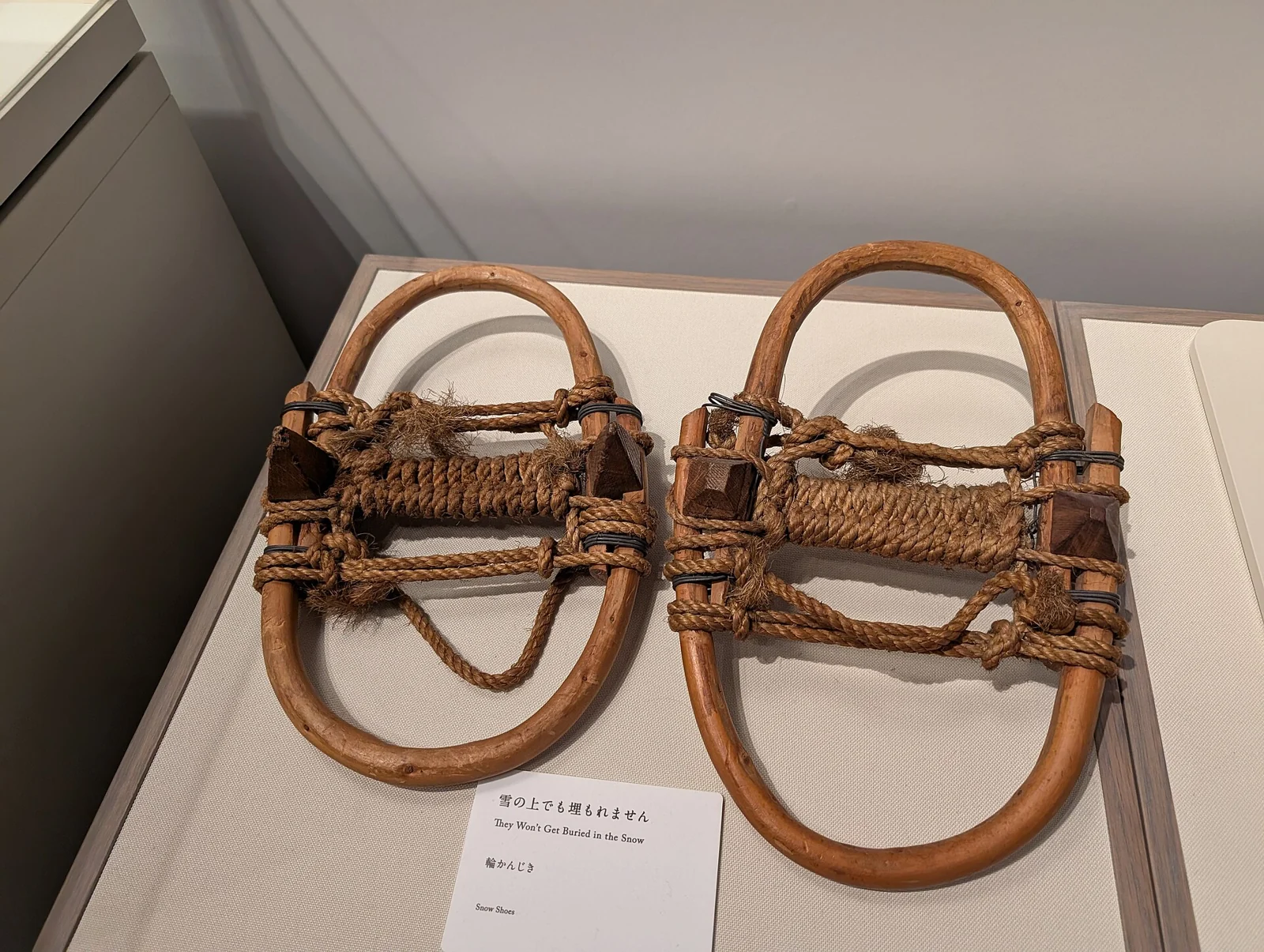
The permanent exhibition covers Matsumoto's nature, history and everyday culture, complementing the keep's architecture and defence. After the castle, explore how people lived around it and how the city formed. If rain brings you to the museum first, learn about the area before comparing it with the moat outside. You need not read every wall panel. Start with the subjects that interest you most.
The ground floor and exhibition rooms have different hours. The ground floor normally opens 09:00–21:00; permanent and special exhibition rooms open 09:00–17:00, with last ticket sales at 16:30. An open ground-floor door in the evening does not mean you can see the permanent exhibition after dinner. If reaching town on a rainy afternoon, finish the paid rooms first, then rest downstairs or return to the station.
Initially allow 60–90 minutes for the permanent exhibition, longer for families or local-history enthusiasts. If a companion is tired after the keep, locate seating and toilets before starting. There is a lift. Ask staff about wheelchairs and pushchairs rather than leaving someone unable to climb the keep waiting outdoors all afternoon.
On Tuesdays and at year-end, check which doors are open
Permanent and special exhibition rooms close on Tuesdays, or the next weekday when Tuesday is a public holiday, and from 29 December to 3 January. The ground floor normally has a separate closure on the third Tuesday each month, also moved after a public holiday, plus the year-end and New Year closure. Somewhere to sit on a Tuesday and an available permanent exhibition are separate plans.
On an ordinary Tuesday, keep Matsumoto Castle as the main attraction. In rain, shorten Nawate Street and allow meals and indoor rest elsewhere. Do not buy a castle-and-museum joint ticket as a rainy-day solution when the permanent exhibition is closed. When Tuesday is a public holiday, also check the following weekday. A Tuesday closure rule alone does not mean Wednesday is open.
Matsumoto Castle normally opens 08:30–17:00, with last admission at 16:30, and closes from 29 to 31 December. On the first three days of January, separate hours are 10:00–15:30, with last admission at 15:00. Do not apply an ordinary 08:30 start to a New Year trip. Summer and Golden Week have had extended opening; for future years, check that year's notice before choosing a slot.
Both indoor options have closures in late December. If that is your only time in Matsumoto, plan for accessible public spaces outside the castle, meals and short street walks on the day. Do not count on the paid keep or permanent exhibition. If indoor cultural visits are essential, changing the Matsumoto date works better than finding closed doors on arrival.
Walk a short stretch of Nawate Street and choose meals separately from snacks
The official Matsumoto tourism page describes Nawate Street beside the Metoba River. Its name comes from a long, rope-like embankment path, and frogs are its symbol. Put it between castle and exhibition, or before returning to the station in the afternoon. It changes the pace from buildings and galleries requiring attention to a street where you can stop freely.
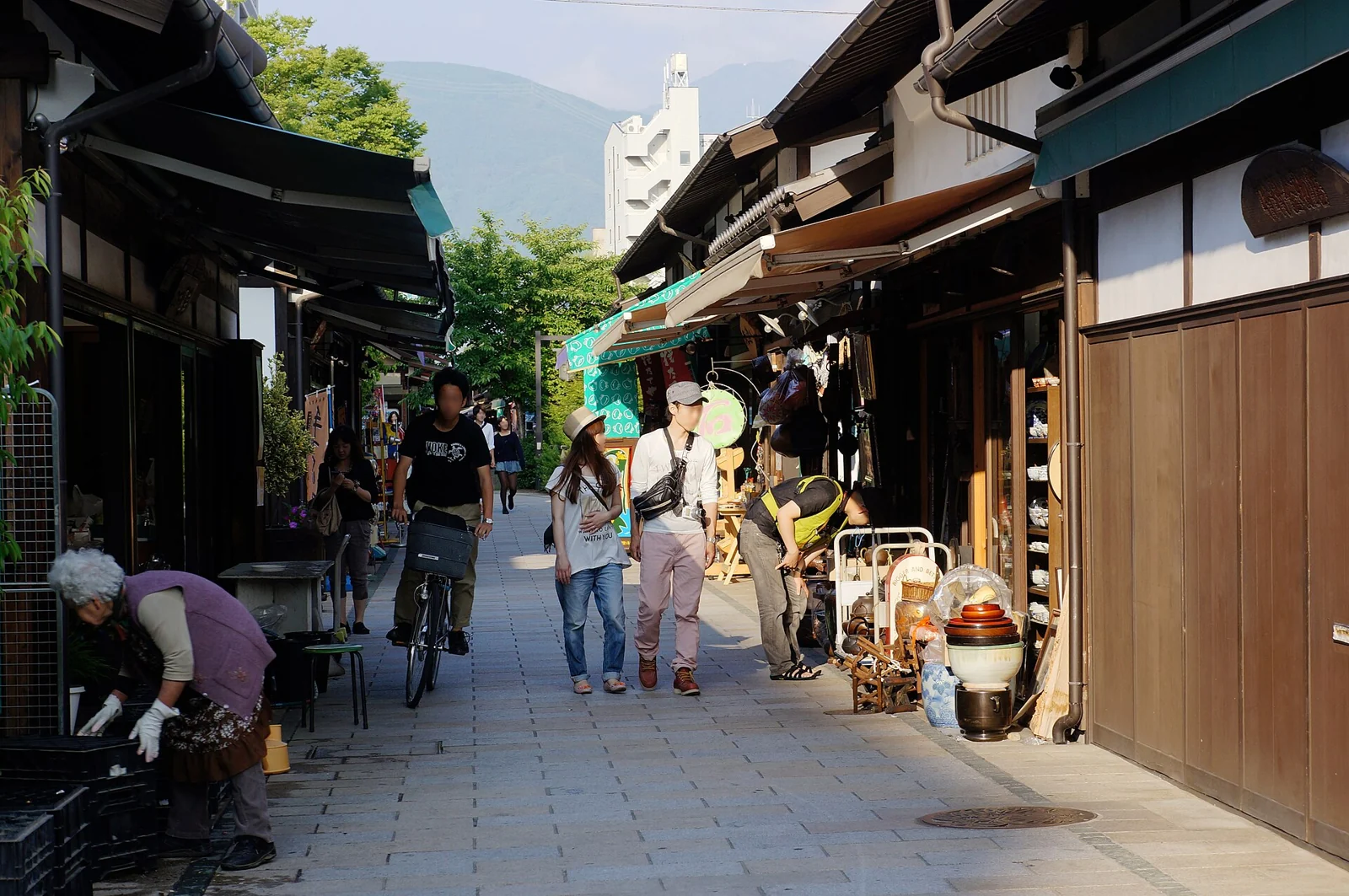
The official description lists fruit, hardware, taiyaki, bread, ice cream and general-goods shops. Choose one snack and leave separate time to sit down for lunch. A family living on snacks while walking until the afternoon will find the post-castle fatigue harder. If people want different shops, meet at the same street entrance rather than leaving everyone standing while one person visits them all.
Nawate Street is pedestrianised year-round, making it suitable for children and slower walks. Individual shops set their own hours and closing days. Distinguish access to the street from every shop being open. After an 08:30 castle entry, leave shopping until late morning or afternoon. If you must leave early, treat it as a short riverside walk rather than making a particular snack essential to the day.
In rain, Nawate remains an outdoor street. Shopping indoors does not replace a continuous covered route. Opening and closing umbrellas, wet shoes and keeping children warm all take time. With persistent rain, shorten the walk to one stretch between entrances, buy what you need and return indoors. Do not run by the river on wet paving or block shop doors and passageways for frog photographs.
A fine-weather day: enter the keep early, then make two city stops
If already staying in Matsumoto, store luggage after breakfast and leave the station area around 08:00–08:15. Choose an available digital slot around 08:30–09:00. Group the keep, garden and moat views into the morning, initially aiming to finish the castle area around 11:00. If the entry queue is longer that day, move lunch later and shorten the afternoon street walk.
After lunch, allow one to one and a half hours for the museum permanent exhibition, then browse and snack on Nawate Street. Start towards the station sometime after 15:00 to collect luggage, use toilets and buy food for the train. For a later train, stay longer at an exhibition or shop you enjoy. Spare time does not require adding a distant sight.
If arriving that morning from elsewhere, move both the station departure and ticket slot later and remove an overlong lunch or repeated photographs. For a midday arrival, choose an afternoon keep visit and short Nawate walk, leaving the museum for tomorrow. Buy the two-day joint ticket only if both days are open and you will use it. If arriving in Japan on an international flight and continuing to Matsumoto the same day, leave that long arrival day for transport and accommodation.
The castle leads the morning, but museum and Nawate Street can swap order. For food first, eat south of the castle and then see the exhibition. If children need to sit or spend time indoors first, use the museum. The fixed points are the exhibition's last ticket sales, your castle slot and the train out of Matsumoto. Write those down clearly and leave the city walking between them flexible.
Two rainy-day routes: keep the tower visit or focus on the museum
In light rain without strong wind, and with people suited to steep stairs, keep your booked slot. Ride from the station towards the castle, pack rain gear before entering the paid area and reduce exterior photography. Study timberwork, the dark floor and roof inside, then go directly to lunch or the museum. This preserves the architectural visit while shortening the street walking most exposed to rain. There are still outdoor stretches around the keep entrance. Wear a waterproof outer layer and bring rain gear you can pack away.
If damp cold, stairs or long waits are difficult for your family, make the permanent exhibition the main activity and view the castle briefly when rain eases. Those not entering the keep need not pay merely because they have come this far. The outline, moat and low-level views followed by the city's story indoors still give the day a clear theme. If you have not bought a joint ticket, buy only the museum ticket needed for this version.
In persistent heavy rain, make Nawate an optional short stretch and choose a seated lunch with an easy return connection. Do not compensate for missing castle photographs with long-distance travel. Avoid an improvised list of art museums, museums and other buildings: each extra one adds travel in rain, umbrella storage and finding an entrance.
Before leaving, check castle opening and waiting information for that day, the museum exhibition calendar, then buses and trains. If admission stops or traffic restrictions apply, remove that part according to the notice. Shorten outdoor activities not yet begun and retain rest, bag collection and station-return time so damp and cold do not accumulate into the evening journey.
| Time | Fine weather or light rain | Persistent rain / no keep climb |
|---|---|---|
| Morning | Castle keep and garden | Museum permanent exhibition, on an opening day |
| Midday | Seated meal and rest | Seated meal and rest |
| Afternoon | Museum and Nawate Street | Brief castle exterior view when rain eases; shorten Nawate Street |
| Before returning to station | Collect bags and check platform | Collect bags, pack rain gear and wait for transport |
For families, older relatives and split groups, meeting points matter
Families with toddlers should decide who climbs and who stays on level ground. Free preschool admission is a price rule, not a measure of whether a child can handle the stairs. If a child may suddenly need sleep, toilets or carrying throughout, the museum and a short street walk are easier to adjust. If splitting into climbing and resting groups, agree a meeting time and recognisable place, and make sure phones connect before separating.
Do not judge older relatives' ability only by daily step counts. The keep requires body control on high steps and a slow descent. A fast walker on level ground may still fear steep stairs. Show each person the official staircase information before buying tickets and let them choose. Someone who prefers the exterior need not enter with everyone and then struggle to the top.
Wheelchairs cannot enter the keep. Use the Honmaru Garden and public spaces outside the castle as the viewing area. For close views in the garden, explain your needs to staff at Kuromon Gate and follow accessible routes. There is one accessible toilet in Honmaru Garden and two in Matsumoto Castle Park. Use the museum lift in the afternoon so everyone can choose exhibits within the same building.
Everyone need not complete visits of equal length. Architecture enthusiasts can read more inside the castle, street lovers can keep time for Nawate and anyone needing a seat can rest longer over lunch. Groups can split and meet along the same city route. Buy joint tickets individually to match each person's activities and avoid discovering after splitting up that a ticket is on another phone.
For half a day or onward mountain travel, keep Matsumoto as its own stop
For half a day, first distinguish morning and afternoon arrivals. If arriving in the morning with suitable legs, put the keep first, then lunch and a short Nawate walk before leaving. With an afternoon arrival and fixed train, check current waiting times and last admission. Choose the permanent exhibition if you can complete it, rather than squeezing keep, museum and shopping in before closing. Doing only two things often leaves more time to look properly.
Matsumoto is also often an overnight base before or after mountain travel. If heading to Kamikochi tomorrow, use today to sort luggage, replenish supplies and rest. Do not follow the keep stairs with a long mountain activity starting late in the afternoon. Mountain transport has its own operating season, vehicle restrictions and return limits. Read transport and seasons for Kamikochi, Hida and Tateyama Kurobe and arrange separate city and mountain days.
For onward Nagano City or a ski base, determine your station departure from actual trains and the final bus connection. Matsumoto Castle and Zenko-ji are in different cities. Being in Nagano Prefecture does not put them in one walkable sightseeing area. Give Zenko-ji a separate Nagano City stop and use the main hall, Sanmon Gate and history museum route to plan it.
Collect stored bags before buying souvenirs on the way back. If a shop has a queue, decide from the time left whether to skip it. Do not use time reserved for bags and finding the platform. Finish simply: pack wet rain gear, check the next night's address and catch your planned service, leaving energy for tomorrow's travel.
A few useful answers
Must I book Matsumoto Castle?
You can buy a ¥1,300 adult paper ticket on site without a time slot. A ¥1,200 adult digital ticket books a date and slot. Primary and junior high pupils pay ¥400 for either. Digital tickets cannot be cancelled, changed or refunded after purchase.
Does the castle have a lift, and is the climb suitable for older people?
The keep has no lift, about 140 steps and a maximum incline of 61 degrees. You must remove your shoes and climb and descend yourself. Judge by ability to descend steep stairs steadily. For wheelchairs or painful knees, choose moat views, accessible parts of Honmaru Garden and the museum.
Is the castle-and-museum joint ticket good value?
The adult digital joint ticket costs ¥1,500, lasts two days and includes the castle and museum permanent exhibition. It saves ¥200 against a ¥1,200 digital castle ticket plus ¥500 museum admission. Buy only if you will visit both on opening days.
Can I see exhibitions at Matsumoto City Museum on Tuesdays?
Permanent and special exhibition rooms close Tuesdays, or the next weekday after a public holiday. The ground floor normally opens 09:00–21:00 but separately closes on the third Tuesday each month. Exhibition rooms open 09:00–17:00, with last ticket sales at 16:30. Ground-floor hours do not allow an evening exhibition visit.
Is a Matsumoto Castle day still worthwhile in rain?
In light rain, keep the tower visit if the stairs suit you and reduce exterior photographs and Nawate walking. In persistent heavy rain or if stairs are unsuitable, focus on the museum permanent exhibition. Check its closing days first. Rain alone does not let you cancel and refund an ordinary digital castle ticket.
Official information and references
Sources used in this guide.
- Matsumoto Castle: visitor guide, stairs and admission
- Matsumoto Castle: buying and using dated digital tickets
- Matsumoto Castle: wheelchairs, luggage and toilets FAQ
- Matsumoto Castle: transport from Matsumoto Station
- Matsumoto Castle: five National Treasure buildings and floor structures
- Matsumoto City Museum: admission, hours and accessibility
- Matsumoto City Museum: new building address and access
- Matsumoto City Museum: eight permanent-exhibition themes
- Official Matsumoto tourism: Nawate Street