Plan Matsumoto Castle, Nawate Street and Matsumoto City Museum from the station. Assess the 61-degree stairs, compare digital and combined tickets, and choose a route for your group’s stamina and the weather.
- Region & Focus
- ChubuAttractions
- Reading Scope
- 30 min read · 16 chapters · 5 Q&As
- Official Verification
- 9 official sources checkedUpdated October 27, 2026
- Key Topics
- ItinerariesBookingTravel budget
Chapter Route Map (tap any stop)
- First decide whether to enter the keep or see the castle and streets
- Leave by Matsumoto Station’s Oshiro exit and plan luggage storage with your return
- About 140 steps, up to 61 degrees: assess the descent first
- Shoes, bags and toilets: free your hands before entering
- Inside the keep, connect the roofs, hidden floor and timber structure
- Slow down between the defensive keep and the moon-viewing turret
- Digital tickets cost ¥1,200, paper tickets ¥1,300: choose the time before the saving
- Castle-and-museum tickets save adults ¥200; eligible university students pay less separately
- Digital tickets cannot be changed or canceled: decide on rain before paying
- Matsumoto City Museum brings local life closer on a rainy day
- On Tuesdays and at year-end, check which doors are actually open
- Take a slow stretch of Nawate Street and plan a meal separately from snacks
- A fair-weather day: castle early, then two nearby city stops
- Two rainy-day routes: retain the keep or switch to the museum
- For families, older relatives and split groups, clear meeting points matter
- For half a day or an onward mountain trip, keep Matsumoto as its own stop
- Quick Q&A
Start a Matsumoto day trip by deciding whether to enter the keep. It has about 140 steps, the steepest at 61 degrees, and you must remove your shoes and carry them in a bag up and down. If that suits your abilities, visit the castle in the morning, then the museum and Nawate Street. If you use a wheelchair, have knee pain on descents or encounter persistent heavy rain, choose moat-side views and Matsumoto City Museum for a city day with both a castle and local streets.
First decide whether to enter the keep or see the castle and streets
The most useful starting point for a day in Matsumoto is whether everyone can manage steep stairs independently. If you want to see the wooden keep’s interior and can climb and descend steadily, visit Matsumoto Castle in the morning, then Matsumoto City Museum and Nawate Street. For a wheelchair user, someone whose knees hurt on descents, or a child unable to use stairs independently, make moat-side views and the museum the focus. You can still have a full city visit. There is no elevator in the keep; visiting requires walking up and down steep stairs.
This city route requires neither a hotel change nor a long-distance bus. Matsumoto Station is the start and finish, the castle is to the north, and the museum and Nawate Street fit between the castle and station. Visit the keep while you are alert and your legs are fresh, then use the afternoon for an exhibition and street walk that can be shortened or extended. This is easier to arrange than tiring yourself out in town before rushing into the keep toward evening.
With only half a day, reduce the paid attractions first. If the castle interior is your priority, keep the castle and a stretch of Nawate Street. If you need level access and elevators, choose the museum and a short castle-viewing walk. You do not need to buy both admissions to have seen Matsumoto. The ticket, opening and purchase conditions below follow official information dated October 27, 2026.
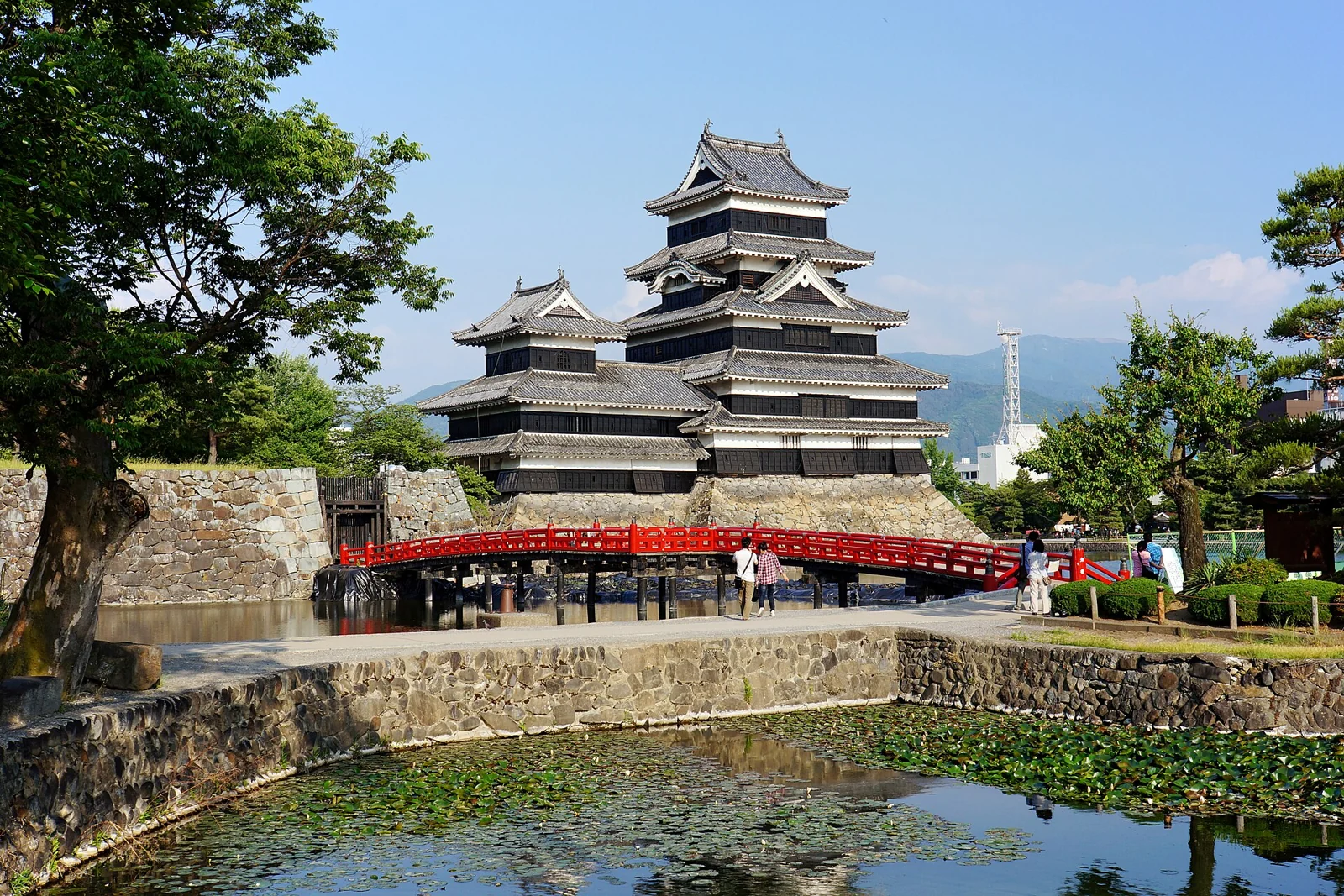
Plan Matsumoto Castle, Nawate Street and Matsumoto City Museum from the station. Assess the 61-degree stairs, compare digital and combined tickets, and choose a route for your group’s stamina and the weather.
Leave by Matsumoto Station’s Oshiro exit and plan luggage storage with your return
Follow signs for Oshiro-guchi, the castle-side exit. The castle access page gives a walk of about 20 minutes from JR Matsumoto Station. This is a baseline for reaching the castle area. Finding the exit, traffic lights, buying water and queuing for the keep take extra time. For a morning reservation, add luggage storage and walking time after your train arrival before choosing a ticket slot. Do not treat 20 minutes as the full time from stepping off the train to entering the keep.
On a transfer day with large bags, store them at the station or that night’s accommodation before walking north. Storage location affects whether you need to retrace your steps in the evening. If you have a train that night, prioritize somewhere near the station where you can collect bags on time. If staying another night in Matsumoto, ask your accommodation about storage. Check fees, size limits and hours with the service you will use. Storage at the castle is not a reason to carry luggage there.
If you prefer not to walk the whole way, check the Town Sneaker North Route for Matsumotojo/Shiyakusho-mae. The castle’s official access page gives a ride of about ten minutes. Check the day’s boarding point and return direction before riding; the bus loop differs from the walking route. For slow walkers, strollers or rain, taking a bus to the castle and walking back in stages often preserves more energy for the visit than insisting on walking both ways.
On your departure day, note your train, luggage collection time and how early you want to reach the station. You can shorten the final street walk, but cannot readily make up time on the keep’s stairs or through crowds. If your train arrives around midday, check the day’s waiting information first. If there is too little time for the keep, choose the exterior and museum rather than relying on last admission.
About 140 steps, up to 61 degrees: assess the descent first
The official visitor guide lists about 140 steps and a maximum stair angle of about 61 degrees. Read those figures together. Being able to walk around a city for hours does not necessarily make narrow, steep wooden stairs with high risers easy. You must also descend to ground level. If you normally turn sideways on stairs, need a cane for support or have significant knee pain, the castle exterior and museum are a better choice.
The steepest stairs rise from the fourth floor of the main keep. The official architectural explanation says they fit within one column bay, with almost four meters between the floor and ceiling, producing the 61-degree angle. The stairs from the fifth to sixth floors span an even greater height but use two bays and a landing, so they are less steep. Knowing the difference helps explain the sudden change while climbing; the whole route is not at the same angle.
Base your decision on how you feel that day and whether you can control your own steps. A companion can hold a bag, leave space and remind you to duck, but do not plan to carry an adult or stroller on steep stairs, or carry a child and luggage together. If you are tired before entering, rest on level ground and choose an exterior visit. Letting only suitable members of the group enter the paid area is a workable option.
Follow staff directions and the marked route inside. Do not wait at a stair entrance while a companion takes photos. If people climb or descend at different speeds, regroup on a level area where stopping is permitted, leaving room for others to pass. If anxious, stop securely and tell staff you need help. Do not chase companions or pass the queue on steep stairs to keep a lunch reservation.
Shoes, bags and toilets: free your hands before entering
Shoes are prohibited inside the keep. Bags are provided at the entrance, and you carry your own shoes. Choose stable shoes that are easy to remove and put on, and leave space to hold the shoe bag, rather than wearing awkward footwear for photos. The wooden floors feel cold underfoot in winter, so prepare socks and warmth before leaving. Once you remove your shoes, their sole grip no longer helps you inside.
A large backpack, shopping bags, camera and shoe bag make turning and holding handrails awkward. Store anything you will not need that day and carry only valuables, necessary medicine and light essentials. Tighten your backpack and keep umbrellas, tripods and long ornaments from sticking out. Put camera equipment away in advance so you do not need to swap objects between hands while climbing.
There are no toilets inside the keep. Use toilets in the castle area before entering and take care of children’s and older relatives’ needs. Do not wait until you reach the entrance to leave the queue. Tickets do not permit reentry: once you leave the paid area, the same ticket cannot be used to return after lunch. If someone needs frequent toilet breaks, make that part of the decision to enter before buying tickets rather than splitting the group afterward.
Official rules prohibit photography on and near the stairs for safety in the narrow route. Stop for timber details or window views only where photography is allowed and you will not block others. Secure the camera strap and stow the lens when not using it. The moat and black-and-white exterior offer more space for viewing; save group photos for after the keep visit.
Inside the keep, connect the roofs, hidden floor and timber structure
The main keep has five exterior tiers but six internal floors. Counting roofs from outside gives a different result from counting floors inside. The third floor sits beneath the second roof tier, where surrounding roofs block space for windows, creating a dark hidden floor. Compare it with the floors before and after it rather than simply following the stairs to the top. The difference helps you read the building.
On the first floor, look for the changing floor levels and the warriors’ passage, and how defenses were arranged near the stone walls. The official explanation describes stone-drop openings as devices against enemies approaching the walls. Black overlapping boards on the lower keep protect wall surfaces and shed rain. Connect the black-and-white division outside with the thick walls inside for more than a memory of “the black castle.”
On the second floor, examine columns, beams and joints. Official explanations describe boat-shaped bracket arms used to strengthen beam joints. The interest in timber architecture lies in how large members bear loads and connect, as well as in their age. Space to stop is limited. Read one explanation and then look at the corresponding part instead of trying to read everything on your phone before observing.
On the sixth floor of the main keep, look up at the beams and cantilever members beneath the roof as well as out through the windows. The official explanation says this structure uses leverage to support the heavy tiled roof’s projecting eaves. It turns the simple idea of a heavy roof into timberwork you can examine. If visibility outside is poor, there is still a roof structure to see; do not hurry down just because clouds hide the mountains.
An aerial video published by National Treasure Matsumoto Castle and selected on the castle’s official website. Exterior views show the connected keep buildings and roofs, helping locate the floors and moon-viewing turret seen inside.
Slow down between the defensive keep and the moon-viewing turret
The castle’s National Treasure buildings comprise the main keep, Inui small keep, connecting turret, Tatsumi attached turret and moon-viewing turret, all linked together. The third and fourth floors of the Inui small keep are normally closed. Follow the regular visitor route and look carefully at the structures you can access.
The moon-viewing turret clearly shows how use changed in a different era. The official introduction says it was added in the early Edo period and has no combat equipment. Openings and thin-board doors on three sides, vermilion railings and a boat-bottom ceiling distinguish it from the defensive spaces earlier in the route. Recall the keep’s thick walls, firing openings and steep stairs here; the two building types become more than photo backgrounds.
The official visitor guide gives an average keep visit of about 45–60 minutes. Put explanations, structural observations, climbing and descending into the same block of your day. For a first visit, allow about 60–90 minutes for the paid grounds and keep, plus the actual entry queue. This is a relaxed planning allowance. If crowds move slowly, shorten the later street walk. Architecture enthusiasts can reduce museum time to read more inside the castle.
After leaving the keep, put your shoes on and organize bags before taking photos in the garden and outside the castle. If companions wait nearby instead of climbing, agree on a precise place and a time to contact each other. Avoid “where you’ll see us after coming downstairs”: the entrance, exit and photo spots may be on different sides. Keep enough phone battery so each group can rest at its own pace.
Digital tickets cost ¥1,200, paper tickets ¥1,300: choose the time before the saving
On October 27, 2026, adult castle admission costs ¥1,200 digitally or ¥1,300 for a paper ticket at the gate. Elementary and junior high school students pay ¥400 for either; preschool children enter free. Digital tickets specify a date and time slot. Paper tickets are for the day of purchase without a reserved time. Two adult digital singles cost ¥2,400 against ¥2,600 for paper tickets. The ¥200 difference matters less than whether you can commit to an arrival time.
Official digital tickets use 30-minute entry slots and can be bought up to three months ahead. Use the designated sales link in the castle visitor guide, then select the date, party size, ticket type and time before paying. If you have not decided which city you will travel from, settle the train plan first. Staying in Matsumoto the night before generally makes an early slot easier than booking immediately after a long journey.
A time slot helps organize entry, but visitor flow inside the keep is still controlled. The castle permits late arrivals, who must wait according to conditions and lose the arrangement for their original slot. If your train is late, store bags and walk safely. Do not run through rainy streets to chase the slot or buy another ticket simply because you are late.
Before payment, check the date, Japan time, number of people and children’s school levels together. Elementary and junior high categories are based on schooling, while the museum’s permanent exhibition has different free-admission rules. Calculate tickets person by person instead of buying a combined product for two adults and two children and expecting staff to split it into the right products. Save purchase records and admission screens and keep your phone charged.
The paid area is entered through Kuromon Gate. Purchase QR codes are emailed to the buyer; the official rules accept screenshots or printouts. If everyone enters together, one representative can have all codes scanned from one phone. For separate entry, give each person their own printed QR code. Decide who holds tickets when buying. The adult resting with a child should not walk away with every ticket while the castle group reaches the gate unable to show theirs.
| Ticket | Adult | Elementary/junior high student | Use |
|---|---|---|---|
| Digital castle-only ticket | 1,200 | 400 | Specified date and time; no changes or cancellation after purchase |
| Paper castle ticket at the gate | 1,300 | 400 | Same-day ticket without a reserved time |
| Digital castle + City Museum combined ticket | 1,500 | Not offered; buy a separate ¥400 castle ticket | Valid for two days; museum permanent exhibition only |
Castle-and-museum tickets save adults ¥200; eligible university students pay less separately
The digital Matsumoto Castle + Museum combined ticket costs ¥1,500 per adult and is valid for two days. The castle visit requires a specified date and time; the museum portion covers only the permanent exhibition. If you will enter the keep and want to see local history and everyday-life displays, it joins two themes within the same city area. Using it in one day is simplest, while a two-night Matsumoto stay lets you visit on separate days.
Separate adult admission to Matsumoto City Museum’s permanent exhibition costs ¥500. Added to the ¥1,200 digital castle ticket, that totals ¥1,700; the ¥1,500 combined ticket saves ¥200. If you only want to rest on the museum’s first floor, there is no reason to spend an extra ¥300 on the combined ticket. Decide whether you will enter the permanent exhibition before comparing the difference.
The museum’s permanent exhibition is free for high school students and younger, or anyone under 18, with a document proving date of birth. University students aged 18 or over pay ¥250 with a student ID. An eligible university student pays ¥1,450 for a ¥1,200 digital castle ticket plus ¥250 museum admission, ¥50 less than the adult combined ticket. There is no castle-and-museum combined ticket for elementary or junior high school students, so choose individually for families and student groups. Two adults buying ¥1,500 combined tickets plus an elementary school child’s ¥400 castle ticket total ¥3,400. Check separate admission for special exhibitions.
Ticket validity does not extend opening days. Matsumoto Castle usually has no fixed weekly closure, but the museum exhibition rooms have a Tuesday closure rule. Check dates when both are open before buying. If you leave early on day two and the exhibition rooms are closed on day one, a castle-only ticket is more suitable than forcing an unworkable return visit because the ticket says “valid for two days.”
Digital tickets cannot be changed or canceled: decide on rain before paying
The official rules state that digital tickets cannot be canceled, changed or refunded after purchase, including digital combined tickets. If the date, family members’ mobility or weather outlook is uncertain, look for available slots later. To decide on arrival, accept the higher price and lack of a reserved time with paper tickets.
Buying a combined ticket and later choosing not to climb is a different expense from buying museum admission alone. For one adult, the combined ticket costs ¥1,500 and the museum permanent exhibition costs ¥500. If steep stairs are unsuitable from the start, buy the museum ticket and view the castle from outside the paid grounds. Spend on activities you will actually complete. Payment should not become a reason to make a companion climb.
For a light-rain forecast and suitable physical ability, retain the castle interior visit and shorten outdoor photos and street walking. With persistent heavy rain, strong wind or access restrictions, put the indoor museum first and use a bus or taxi. If you already have a digital ticket, check official operating notices and your order’s handling instructions. Do not assume rain alone qualifies for a standard refund.
Divide the day’s costs into paid tickets and food and transport not yet used. When switching indoors, rearrange the latter two. There is no need to add a distant attraction or a long journey to make the combined ticket look worthwhile. With limited time and energy, returning comfortably to the station matters more than using every last entitlement.
Matsumoto City Museum brings local life closer on a rainy day
This route uses Matsumoto City Museum’s new building in Ote 3-chome, not Matsumoto City Museum of Art, known for Yayoi Kusama’s work. They have different addresses, exhibitions and closure days. Enter the full name in your map to reach the museum south of the castle on this route. Visit before or after lunch to break up continuous outdoor walking.
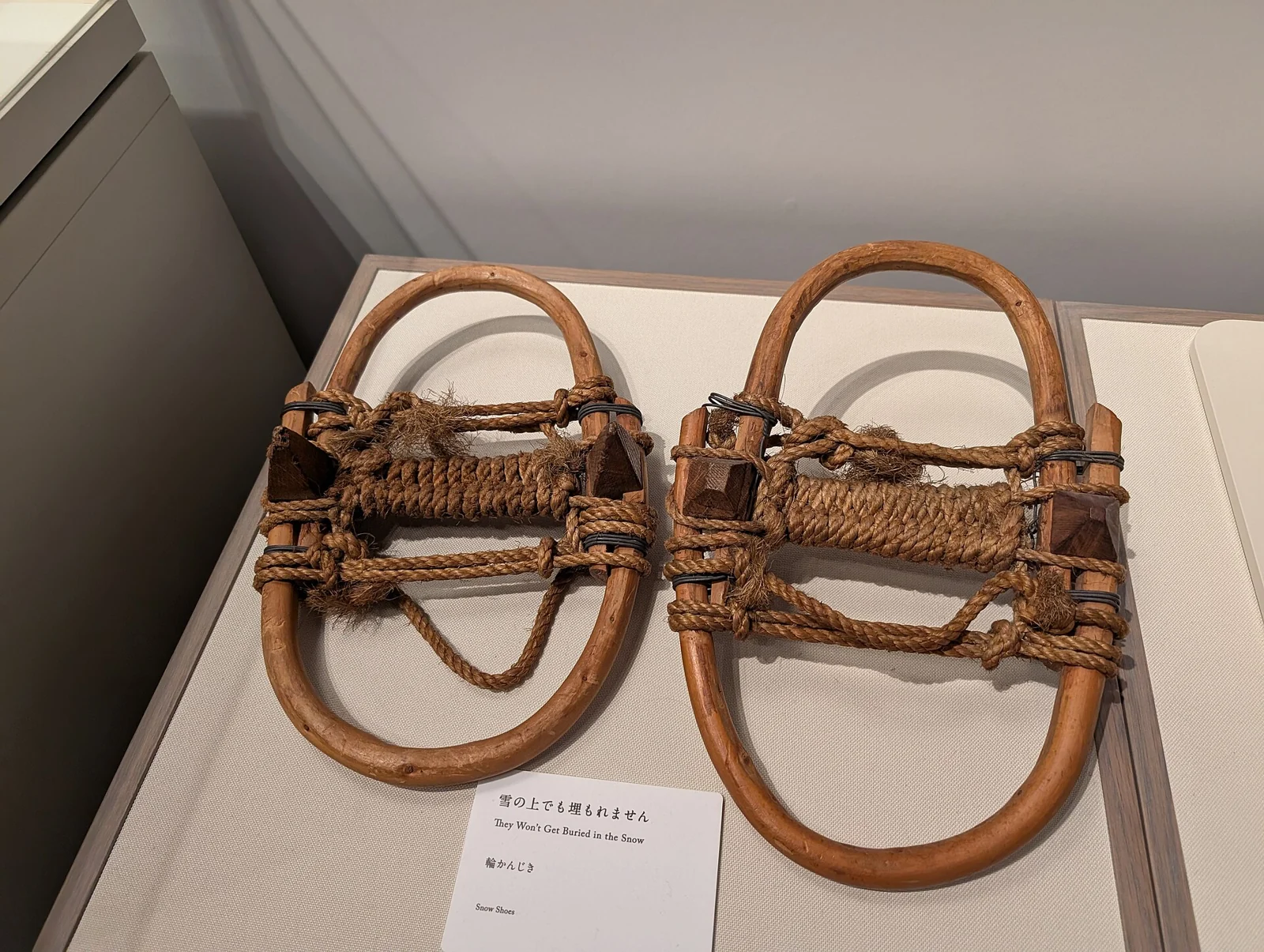
The permanent exhibition covers Matsumoto’s nature, history and everyday culture, complementing the architecture and defense focus inside the keep. After the castle, explore questions such as how people around it lived and how the city developed. If rain brings you to the museum first, learn about the area before comparing locations beside the moat. You need not read every wall panel in order; start with the topics that interest you.
The first floor and exhibition rooms have different hours. The first floor normally opens 09:00–21:00; permanent and special exhibition rooms open 09:00–17:00, with last ticket sales at 16:30. An open first floor in the evening does not allow a permanent-exhibition visit after dinner. If you reach town late on a rainy afternoon, finish the paid rooms first, then rest on the first floor or return to the station.
Allow 60–90 minutes for the permanent exhibition, longer for families or local-history enthusiasts. If companions are tired after climbing the keep, find seats and toilets before starting. The museum has elevators. Ask staff about wheelchairs and strollers so those unable to climb do not spend the afternoon waiting outside.
On Tuesdays and at year-end, check which doors are actually open
The museum’s permanent and special exhibition rooms close on Tuesdays, or the next weekday if Tuesday is a public holiday. They also close December 29–January 3. The first floor normally closes on the third Tuesday of each month, also moving after a holiday, plus the year-end and New Year closure. Having somewhere to sit on Tuesday and having access to the permanent exhibition are different plans.
On an ordinary Tuesday, make Matsumoto Castle the main visit. In rain, shorten Nawate Street and allow more time for a meal and indoor rest. If the museum’s permanent exhibition is closed, do not buy a castle-and-museum ticket to assemble a rainy-day plan. If Tuesday is a holiday, check the following weekday too. “Closed Tuesdays” alone does not establish that Wednesday will be open.
Matsumoto Castle normally opens 08:30–17:00, with last entry at 16:30, and closes December 29–31. On the first three days of January it opens 10:00–15:30, with last entry at 15:00. Do not apply the normal 08:30 start to a New Year trip. Extended hours have been offered in summer and Golden Week; check the announcement for the year you will visit before choosing a slot.
Both indoor options are affected by late-December closures. If that is your only time in Matsumoto, plan around accessible public spaces outside the castle, meals and short street walks rather than treating the paid keep or museum permanent exhibition as certain activities. If an indoor cultural visit is essential, changing your Matsumoto dates is more effective than seeking closed doors on arrival.
Take a slow stretch of Nawate Street and plan a meal separately from snacks
The official Matsumoto tourism page describes Nawate Street beside the Metoba River. Its name comes from the long, rope-like embankment path, and frogs are its symbol. Fit it between the castle and exhibition or as an afternoon detour back to the station. It changes the pace from buildings and galleries that need focused reading to a street where you can stop freely.
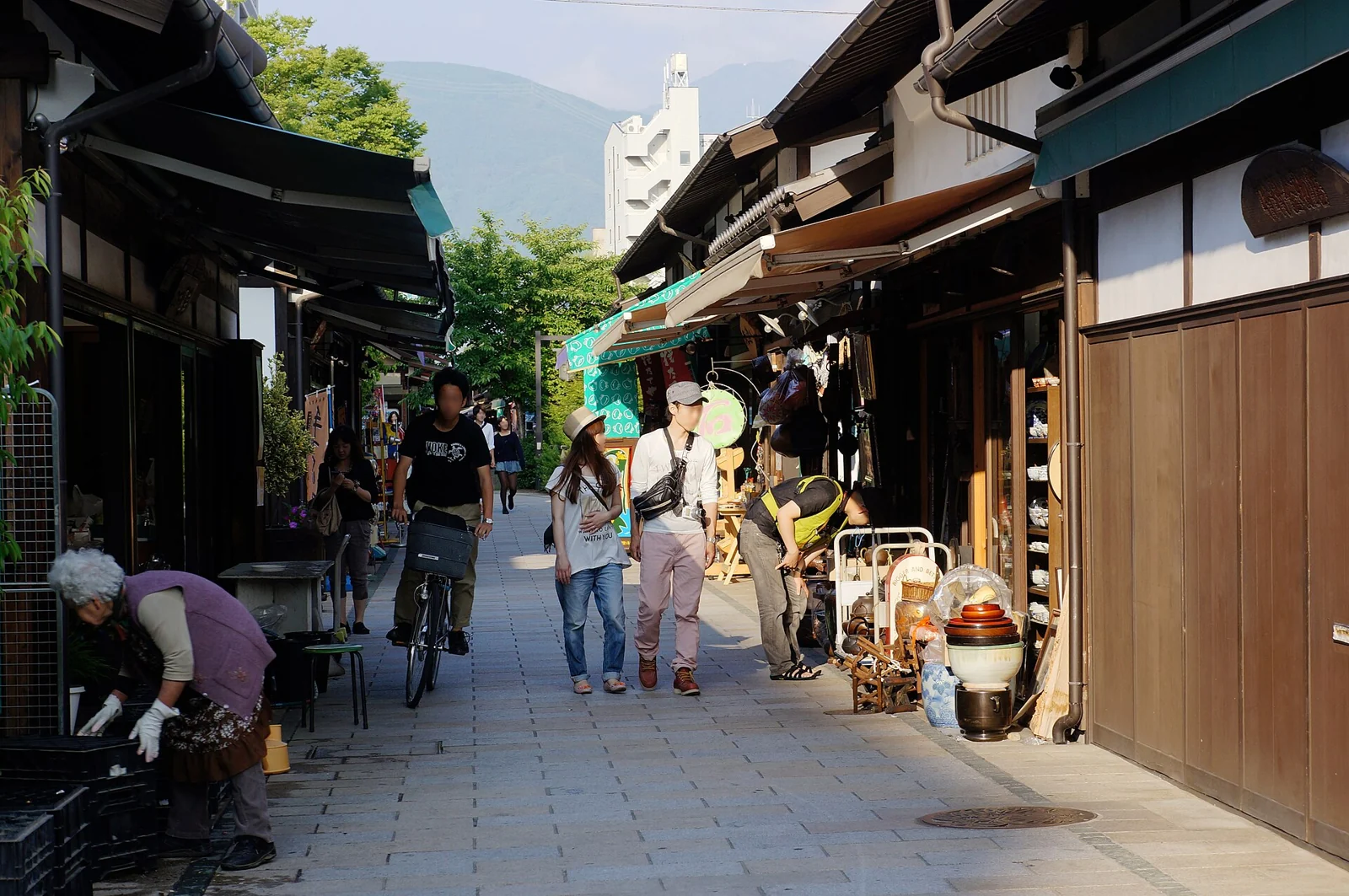
The official introduction lists fruit, hardware, taiyaki, bread, ice cream and general goods among the shops. Choose one snack, but leave separate time for a seated lunch. Relying on snacks while walking until afternoon makes people who have climbed the keep more tired. If everyone wants different shops, agree to meet at the same street corner instead of leaving others standing while one person browses every store.
Nawate Street is pedestrianized year-round, suitable for children and a slower walk, but individual stores set their own hours and days off. Access to the street does not mean every shop is open. After an 08:30 castle entry, leave shopping for late morning or afternoon. If you must leave early, treat it as a short river-side walk rather than making one particular snack essential to the day.
In rain, Nawate remains an outdoor street; shopping inside does not create a covered route along its full length. Handling umbrellas, wet shoes and children’s warmth takes time. In persistent rain, shorten the walk to a block, buy what you need and return indoors. Do not run beside the river on wet ground or block shop entrances and pedestrian traffic for frog-themed photos.
A fair-weather day: castle early, then two nearby city stops
If already staying in Matsumoto, store luggage after breakfast, leave the station area around 08:00–08:15 and choose an available digital slot around 08:30–09:00. Visit the keep, garden and moat together in the morning and tentatively finish the castle area around 11:00. If entry queues are longer, move lunch later and shorten the afternoon street walk.
After lunch, allow an hour to an hour and a half for the museum’s permanent exhibition, then browse and snack on Nawate Street. Start toward the station sometime after 15:00, collect luggage, use the toilet and buy food for the train. For a later departure, linger at a favorite exhibition or shop instead of adding a distant attraction simply because time remains.
If arriving from elsewhere in the morning, move the station departure and ticket slot later together and remove a lengthy lunch or repeated photo stops. For a midday arrival, choose the castle in the afternoon and a short Nawate walk, leaving the museum until tomorrow. Buy the two-day combined ticket only if both will be open and you will use it. If arriving in Japan on an international flight and continuing to Matsumoto that day, leave the arrival day for transport and accommodation.
The castle leads the morning, but the museum and Nawate can swap order. If hungry, eat south of the castle before the exhibition. If children need a seat or indoor activity first, use the museum. The fixed points are last exhibition ticket sales, the castle entry slot and your train out of Matsumoto. Write those clearly and let the city walk between them stay flexible.
Two rainy-day routes: retain the keep or switch to the museum
In light rain without strong wind, if your group can manage steep stairs, keep the booked entry slot. Take transport closer to the castle, stow rainwear before entering the paid grounds and reduce exterior photos. See the timberwork, hidden floor and roof indoors, then go directly to lunch or the museum. This retains the architectural visit while reducing the most exposed walking. There are still outdoor stretches before and after the keep entrance, so wear a waterproof outer layer and bring rainwear you can stow.
If cold, wet conditions, steep stairs or long waits are difficult for your family, make the museum permanent exhibition the main visit and stop outside the castle briefly when rain eases. People skipping the keep need not enter the paid area merely because they came here. Seeing the outline, moat and low-level views, then learning about the city indoors, gives the day a clear theme. If you have not bought a combined ticket, buy only the museum admission you need.
In persistent heavy rain, make Nawate an optional short stretch and choose somewhere for lunch with seats and an easy return journey. Do not compensate for missed castle photos with longer journeys, or turn the art museum, city museum and other buildings into an improvised checklist. Each additional building means more rain-soaked travel, umbrella storage and time finding an entrance.
Before leaving, check the castle’s opening and waiting information and the museum exhibition calendar, then buses and trains. If entry is stopped or traffic is restricted, remove that part according to official notices. Shorten outdoor activities not yet started, preserving rest, luggage collection and station time so cold and damp do not accumulate through the evening journey.
| Time | Fine weather or light rain | Persistent rain / no keep climb |
|---|---|---|
| Morning | Castle keep and garden | Museum permanent exhibition, on an opening day |
| Midday | Seated meal and rest | Seated meal and rest |
| Afternoon | Museum and Nawate Street | Brief exterior castle views if rain eases; shorten Nawate |
| Before the station | Collect luggage and confirm platform | Collect luggage, stow rainwear and wait for transport |
For families, older relatives and split groups, clear meeting points matter
With young children, decide who climbs and who stays on level ground. Free preschool admission is a pricing rule, not evidence that the stairs suit a child. If a child may suddenly need sleep or a toilet, or must be carried throughout, the museum and a short street walk are easier to adjust. If splitting into a castle group and a resting group, set a meeting time and recognizable place and confirm phone contact before separating.
Do not assess an older relative’s ability only by daily step counts. The keep requires control on high steps and a slow descent. Even fast walkers on level ground may find steep stairs frightening. Show the official stair explanation to the person before buying and let them choose. Someone who prefers the exterior need not enter with everyone else and then force a climb to the top.
Wheelchairs cannot enter the keep. Use accessible parts of the Honmaru Garden and public spaces outside the castle for views. For closer views from the garden, explain your needs to staff at Kuromon Gate and follow a passable route. There is one accessible toilet in Honmaru Garden and two in Matsumoto Castle Park. Use the museum’s elevators in the afternoon so everyone can choose exhibits within the same building.
People need not complete visits of equal length. Architecture enthusiasts can read more inside the castle, street lovers can save time for Nawate, and those wanting a seat can rest longer over a meal. Split and rejoin along the same city route. Buy combined tickets individually to match each person’s activities, avoiding the discovery after splitting that someone’s ticket is on the other group’s phone.
For half a day or an onward mountain trip, keep Matsumoto as its own stop
With half a day, distinguish a morning arrival from an afternoon one. Arrive in the morning with suitable stair ability and prioritize the keep, then lunch and a short Nawate walk before leaving. Arrive in the afternoon with a fixed train and check waiting times and last admission first. If you can complete the museum’s permanent exhibition, choose that rather than squeezing the keep, museum and shopping in before closing. Doing only two things often leaves more time to look properly.
Matsumoto is also an overnight base before or after mountain travel. If heading to Kamikochi tomorrow, use today to organize luggage, buy supplies and rest. Do not follow the keep’s stairs with a long mountain excursion starting near evening. Mountain transport has its own operating seasons, vehicle restrictions and return limits. Read the Kamikochi, Hida and Tateyama Kurobe transport and seasonal guide and plan city and mountain days separately.
For onward travel to Nagano City or a ski base, use your actual train and final bus connection to set the time to leave the station. Matsumoto Castle and Zenko-ji are in different cities. Being in Nagano Prefecture does not put them within one walkable sightseeing district. For Zenko-ji, allow a separate Nagano City stop and use the Zenko-ji main hall, Sanmon Gate and history museum route.
Collect stored luggage before buying souvenirs on the way to the station. If a shop has a queue, decide whether to skip it using the time remaining, without taking time reserved for luggage collection and finding the platform. A city day can end simply: put wet rainwear away, confirm the next night’s address and board your planned train, with energy left for tomorrow.
A few useful answers
Must I reserve Matsumoto Castle?
You can buy a ¥1,300 adult paper ticket on arrival without a reserved time. A ¥1,200 adult digital ticket reserves a date and time. Elementary and junior high students pay ¥400 for either. Digital tickets cannot be canceled, changed or refunded after purchase.
Does Matsumoto Castle have an elevator, and does the climb suit older visitors?
The keep has no elevator. It has about 140 steps, up to 61 degrees, and you must remove your shoes and climb and descend independently. Judge by the ability to descend steep stairs steadily. For wheelchair users or sore knees, choose moat-side views, accessible parts of Honmaru Garden and the museum.
Is the castle-and-museum combined ticket good value?
The adult digital combined ticket costs ¥1,500, is valid for two days and includes the castle and museum permanent exhibition. It saves ¥200 against a ¥1,200 adult digital castle ticket plus ¥500 museum admission. Buy it if you will visit both and both are open.
Can I see Matsumoto City Museum exhibitions on Tuesday?
Permanent and special exhibition rooms close Tuesdays, or the next weekday after a Tuesday holiday. The first floor normally opens 09:00–21:00 but also closes on the third Tuesday each month. Exhibition rooms open 09:00–17:00, with last ticket sales at 16:30. First-floor hours do not allow an evening exhibition visit.
Is a Matsumoto Castle day trip suitable in rain?
In light rain, with suitable stair ability, retain the castle interior visit and reduce exterior photos and Nawate walking. In persistent heavy rain or if climbing is unsuitable, prioritize the museum permanent exhibition. Check museum closures first. Rain does not by itself let you cancel and refund a digital castle ticket.
Official information and references
Sources used in this guide.
- Matsumoto Castle: visitor guide, stairs and admission
- Matsumoto Castle: purchase and use of date-and-time digital tickets
- Matsumoto Castle: wheelchair, luggage storage and toilet FAQ
- Matsumoto Castle: access from Matsumoto Station
- Matsumoto Castle: five National Treasure buildings and floor structures
- Matsumoto City Museum: admission, hours and accessibility
- Matsumoto City Museum: new building address and access
- Matsumoto City Museum: eight permanent-exhibition themes
- Official Matsumoto tourism: Nawate Street