Plan Shizuoka, Shimizu and Miho no Matsubara on separate mountain and coastal routes. Compare buses, ropeway tickets, shrine steps, the December 2026 closure, meals and places to stay.
- Region & Focus
- ChubuItineraries
- Reading Scope
- 28 min read · 12 chapters · 5 Q&As
- Official Verification
- 21 official sources checkedUpdated October 27, 2026
- Key Topics
- ItinerariesRail travelFood
Chapter Route Map (tap any stop)
- One day or two: separate the mountain and coastal routes
- Three useful stations: Shizuoka, Higashi-Shizuoka and Shimizu
- The Nihondaira bus: check the destination and choose your return first
- Nihondaira Yume Terrace: morning views, indoor admission and the outdoor walkway
- Kunozan Toshogu: steps remain after the ropeway; 1,159 steps start elsewhere
- Fares and the December closure: choose what to visit before buying a package
- A half-day at Miho: from the bus stop through Kami no Michi to the coast
- Sea views: clouds, waves and the water bus
- Lunch at Kashi no Ichi, then Shizuoka oden at night
- Sunpu Castle and rainy city hours within walking distance of Shizuoka Station
- Stay near Shizuoka Station, Shimizu Station or on Nihondaira
- A two-day plan: the hill first, then a full half-day in Shimizu
- Quick Q&A
An extra night in Shizuoka lets you give Nihondaira and the Shimizu coast separate days. Take a bus to Nihondaira and the ropeway to Kunozan Toshogu on one day. Use another half-day for Miho no Matsubara from Shimizu, followed by fish at the market. There is no direct public transport between the two areas. Separate the routes so that mountain views, the coast and dinner do not all have to fit between connections.
One day or two: separate the mountain and coastal routes
With one day, choose Nihondaira and Kunozan Toshogu, or Shimizu and Miho no Matsubara. Stay overnight to include both routes. In photographs, Miho and Nihondaira face each other across the harbor. By public transport, you must return to Shimizu, take a train, then use the Nihondaira bus to climb the hill. Going straight from lunch in Miho to Nihondaira is an easy way to spend the afternoon waiting for connections.
Make Nihondaira your priority for a high view of Mount Fuji and the harbor. Choose Miho for a walk through pine trees to a pebbled beach, with the mountain beyond the sea. Kunozan Toshogu suits visitors who can climb steps and want time to study its painted wood carvings. There are stone steps to the shrine buildings even from the ropeway. Families with strollers, wheelchair users or relatives with sore knees can focus on Yume Terrace, split up for the shrine visit, then meet again.
I would give Nihondaira the first clear morning of a two-day visit and walk the Shimizu coast the next day. If you arrive in the afternoon, leave your luggage near Shizuoka Station, explore Sunpu Castle and have dinner, then go up the hill the next morning. An afternoon arrival followed by departure the next day gives you less time than two full days. Keep just one outlying route in that case.
One advantage of Shizuoka is that your meals and accommodation need not move with the sights. Stay near Shizuoka Station and leave the next day's luggage at the hotel. Choose Shimizu if the tuna market and coast matter more. Izu and Atami lie in the other direction. See where to stay in Izu and Atami for hot spring inns and seaside fireworks, rather than adding them to a Shizuoka city bus day. Official Miho guidance on travel between the areas.
| Time and priority | Plan | Leave out |
|---|---|---|
| One day: mountain views and shrine | Shizuoka Station → Nihondaira → return ropeway to Kunozan → dinner in Shizuoka | Miho no Matsubara |
| One day: sea and fish | Shimizu Station → Miho no Matsubara → Kashi no Ichi → Shimizu waterfront | Nihondaira and Kunozan |
| Two full days | One hill day and one Shimizu coast day; one night in Shizuoka or Shimizu | An extra Izu detour |
| Arrive in the afternoon, leave the following afternoon | City walk plus one outlying route next day | Do not cover all three sights in one day |
Plan Shizuoka, Shimizu and Miho no Matsubara on separate mountain and coastal routes. Compare buses, ropeway tickets, shrine steps, the December 2026 closure, meals and places to stay.
Three useful stations: Shizuoka, Higashi-Shizuoka and Shimizu
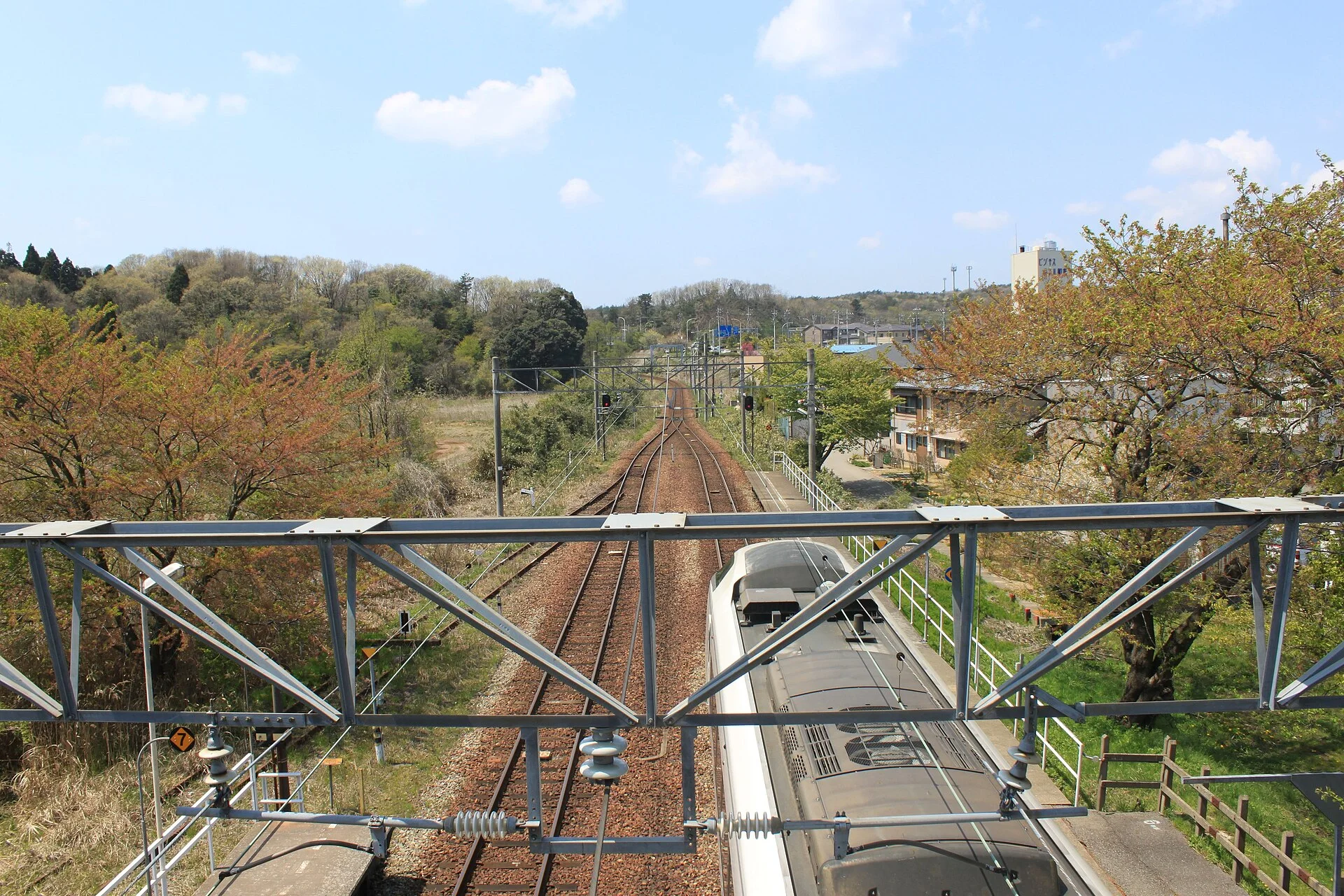
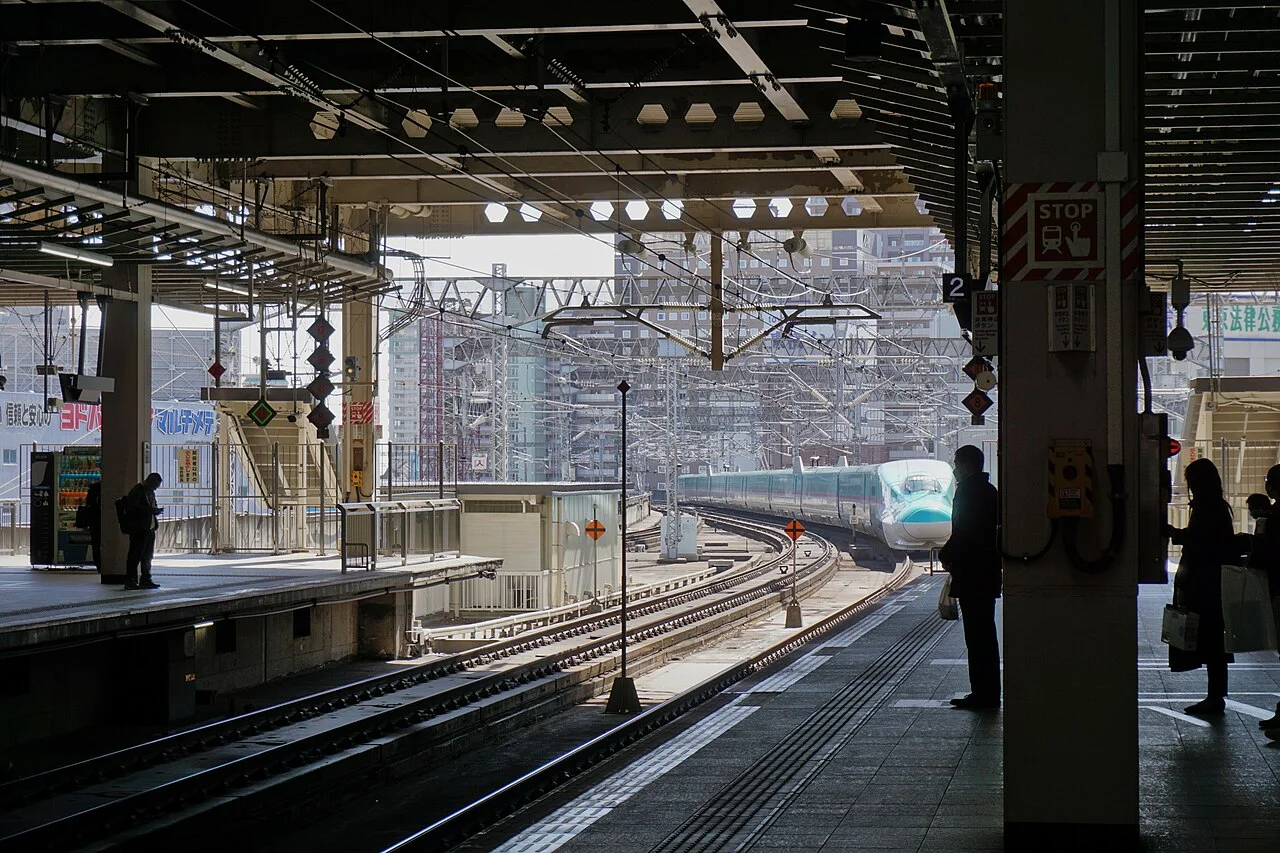
If you arrive by Shinkansen, start at JR Shizuoka Station and change to the JR Tokaido Line for Shimizu. Nihondaira buses serve stops including Shin-Shizuoka, Shizuoka Station and the south exit of Higashi-Shizuoka Station. JR Shizuoka and Shizutetsu Shin-Shizuoka are separate stations. Use the full station names when searching for connections, rather than following the first result for “Shizuoka.”
A bus from Shizuoka Station avoids another trip through railway platforms and suits anyone staying nearby. If you are already in Shimizu, you can take JR to Higashi-Shizuoka and catch the hill bus from its south exit. Shizutetsu's Shin-Shimizu–Shin-Shizuoka railway is another city route, but takes you back toward the center before Nihondaira. The difference is connection time. Let the bus schedule determine which route works best.
Deal with luggage first. Miho's gravel and Kunozan's stone steps are poor places for a suitcase. Arrange hotel storage if you arrive early, and include collection time on your departure-day schedule. If you use station lockers, store your bags before setting off. Do not squeeze arrival, finding a large locker, getting change and catching the bus into the same ten minutes.
Calculate transport costs for the segments you will actually use. The Shinkansen, local JR trains, Shizutetsu railway, buses and ropeway have separate operators. Buying one ticket leaves other fares to pay. You can complete this one- or two-day route with individual tickets. There is no need to add an unwanted journey merely to make a regional pass pay off. Include the last walk from station to hotel in your daily walking total.
If you leave Shizuoka that day, store large bags somewhere on your departure route. Use Shizuoka Station if you leave by Shinkansen; leave bags in Shimizu if you are staying there again. Mark the storage point on your map, then take only water, rain gear and daily essentials to Miho. If you stop at the market on your return, buy fresh and chilled food last and choose products that keep for the time you will carry them. You do not need temperature-sensitive food on your back while walking the hill and coast.
The Nihondaira bus: check the destination and choose your return first
For the summit, take a Nihondaira Line service that reaches “Nihondaira Ropeway” (日本平ロープウェイ). Some services on the same line end at intermediate stops such as Eiwa Gakuin University–Ikedayama Danchi. The route name alone is not enough: check for an arrival time in the final timetable column. Nihondaira Zoo is also on routes in this area, but is separate from the summit ropeway station. Getting off at the zoo does not put you at the observation terrace.
For example, the weekday timetable effective October 25, 2026 has a 09:33 departure from Shizuoka Station, arriving at Nihondaira Ropeway at 10:18, a 45-minute ride. A return leaves at 13:30 and reaches Shizuoka Station at 14:18, taking 48 minutes. This gives 3 hours 12 minutes on the hill for Yume Terrace, the return ropeway ride and the shrine. Choose a later bus down if you want a full lunch or the museum, so you can visit without counting down the minutes.
The same weekday timetable lists departures from Nihondaira Ropeway at 16:30, reaching Shizuoka Station at 17:20, and 17:30, arriving at 18:22. That hour between buses affects dinner and onward trains. After visiting the shrine, find the bus stop and queue location before deciding whether to buy more souvenirs. Saturdays, Sundays and public holidays have a separate timetable. New Year and Obon schedules are announced separately. These examples apply to ordinary weekdays.
Save both outward and return timetable pages. Note the boarding stop, full destination and day type. Queuing takes time when it is busy. If you miss your planned departure, use the next service to reset lunch or a walk. An extra hour at the summit means a later arrival at Shizuoka Station too. Leave time between the bus and a reserved Shinkansen. The official Shizutetsu timetable page has separate weekday and weekend/holiday PDFs for the Nihondaira Line.
Nihondaira Yume Terrace: morning views, indoor admission and the outdoor walkway
Nihondaira Yume Terrace stands on a hill about 300 meters high, with a view across Shimizu Port, the Miho Peninsula, Suruga Bay and Mount Fuji. It differs from looking toward the mountain from Miho Beach. The hill helps you understand the terrain; the coast puts waves and pebbles in the foreground. If you visit both, give each its own photographs and time rather than repeating the same distant mountain shot.
From October 1, 2026, indoor admission is ¥100 for adults and senior high school students, and ¥50 for elementary and junior high school students. The outdoor observation walkway is free. Normal hours are 09:00–17:00, extended to 21:00 on Saturdays. The building closes on the second Tuesday of each month, or the next weekday if that Tuesday is a holiday, and December 26–31. The outdoor walkway is open around the clock. Check the last public transport separately: a Saturday closing time of nine does not by itself make a night visit workable.
Walk slowly around the summit building and roughly 200-meter circular walkway. Find the harbor and Miho first, then turn toward Mount Fuji. Indoor displays explain Nihondaira's history and terrain. They help your group understand where you are going, rather than everyone immediately searching their phones for a photo angle. Allow 40–60 minutes for a first visit, and longer for tea or the displays.
Check the live camera on the Yume Terrace website before leaving. If clouds hide the distant mountain but wind and rain are light, you can still go for the architecture, harbor and Kunozan. If thick fog cuts visibility, move the indoor city visit earlier. This tells you more than a sun icon on a weather app: clear city skies and clear summit views are different things. With two possible days, use the actual cloud cover to decide the order rather than fixing the same time slot the night before. Official tourism information for Yume Terrace.
Kunozan Toshogu: steps remain after the ropeway; 1,159 steps start elsewhere
Walk from Yume Terrace to Nihondaira Ropeway Station, then take the roughly five-minute ride across the valley to Kunozan. You cannot walk between Nihondaira and Kunozan. Buying a one-way ticket does not give you the option of walking back to Nihondaira. For a first visit without a car, I recommend a return ticket and using the same Nihondaira Ropeway Station for both buses. Then you only need to coordinate the bus up and bus down.
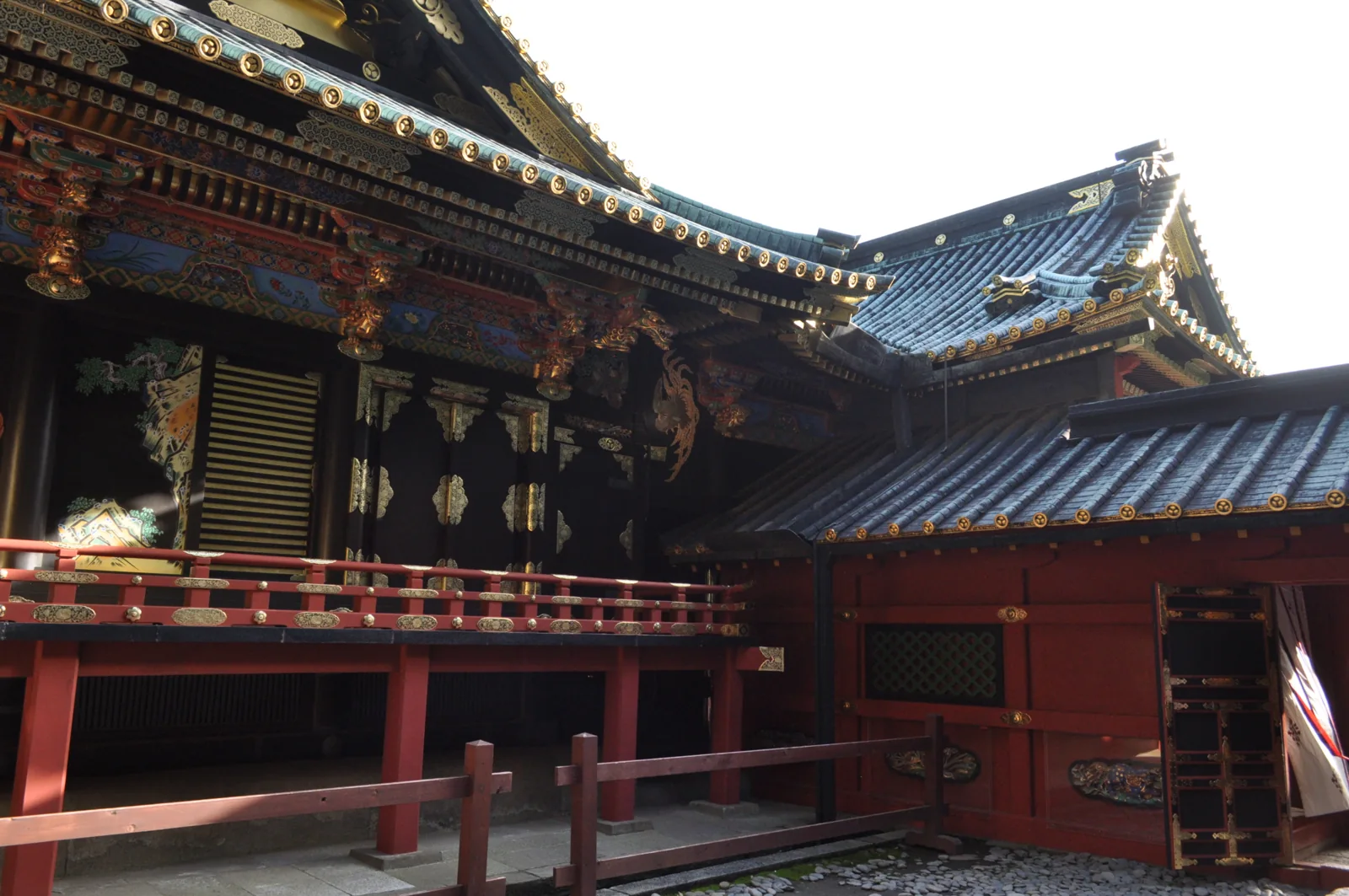
The other approach starts at Kunozan-shita on the coast and climbs 1,159 steps along the main approach. It suits visitors who want the climb as their main activity and have planned transport from the bottom. This approach is also available during ropeway closures. There are still about 80 steps from the ropeway station to the shrine buildings. There is no ramp to the buildings, so wheelchair users cannot enter them. The ropeway reduces the climb; the remaining visit still involves steps.
At the shrine, leave time for the carvings, gold decoration and vermilion railings close up. Roof eaves and railings can hide details viewed from a distance. Follow the normal visitor route, then stop where you will not block others. If you want the museum, buy the appropriate ticket and include it in your time on the hill before going up. If you only want the shrine and views, there is no need to delay lunch far into the afternoon to include every attraction.
Normal shrine visiting hours are 09:00–17:00, with admission ending ten minutes before closing. The first ropeway leaves Nihondaira at 09:10; the last from Kunozan leaves at 17:00. These two five-o'clock times serve different purposes. If you return by ropeway, be ready at the boarding end by 17:00, rather than entering the shrine then. Slow stair climbing, tickets and queues take time. If you arrive in the afternoon, choose a return first and reduce the visit to fit.
Stone steps are slippery after rain. Shoes with grip and hands free for the railing matter more than clothing style. Use a suitable carrier for a small child or take turns caring for them. Do not climb while dragging a stroller in one hand and holding a child with the other. Rest at an agreed meeting point if you run out of energy; others can continue separately. Descending can be harder on knees than climbing. Include the return down 1,159 steps when deciding on the coastal approach. Toshogu visiting hours and stair access.
Fares and the December closure: choose what to visit before buying a package
These are ordinary individual fares checked on October 27, 2026. The ropeway classes junior high school students and above as adults, while Toshogu's adult category starts at senior high school. Do not apply the adult combined total to a junior high school student. An adult return ropeway ticket at ¥1,250 plus shrine admission at ¥700 totals ¥1,950, the same as the two-attraction package. Here, the package lets you handle both purchases together. If you are concerned about the shrine steps, buy only the ropeway ticket first and decide on shrine admission when you arrive.
For adults, separate return ropeway and combined shrine/museum tickets cost ¥1,250 + ¥1,200 = ¥2,450. The three-attraction package is ¥2,300, saving ¥150. The operator does not refund the package if you skip the shrine or museum. Choose the two-attraction option for the shrine alone, and the three-attraction option only if you will allow museum time. Two adults choosing the latter save ¥300 in total compared with buying two return ropeway tickets and two combined admission tickets separately.
The Nihondaira Ropeway has announced a 21-day suspension for equipment renewal, from Tuesday, December 1 through Monday, December 21, 2026. Remove the Nihondaira–ropeway–Kunozan segment from plans during that period. Toshogu remains accessible by the main approach from Kunozan-shita. If your group cannot manage 1,159 steps, choose Yume Terrace or the Shimizu coast. Make that change before reaching the closed ropeway.
Indoor Yume Terrace admission costs extra. For an ordinary adult, the return ropeway, shrine and Yume Terrace total ¥2,050 in fixed admission costs. The three-attraction package plus Yume Terrace costs ¥2,400. These totals exclude Nihondaira buses, JR trains, meals and accommodation. Split your budget into admission, transport, and food/accommodation so you can adjust individual costs. Official ropeway package tickets and refund terms.
| Ticket | Senior high school and above | Junior high school | Elementary school |
|---|---|---|---|
| Return ropeway | 1250 | 1250 | 630 |
| One-way ropeway | 700 | 700 | 350 |
| Toshogu shrine buildings | 700 | 300 | 300 |
| Combined shrine and museum | 1200 | 500 | 500 |
| Return ropeway + shrine package | 1950 | 1550 | 930 |
| Return ropeway + shrine + museum package | 2300 | 1700 | 1100 |
| Yume Terrace indoor admission | 100 | 50 | 50 |
A half-day at Miho: from the bus stop through Kami no Michi to the coast
From JR Shimizu Station, take a Miho-bound bus for about 25 minutes to “Miho Matsubara Iriguchi,” then walk about 15 minutes to Miho Shirube. On Saturdays, Sundays and holidays, some services also reach “Sekai Isan Miho Matsubara,” about five minutes' walk away. Base weekday plans on the entrance stop so you do not wait for the wrong service in search of a closer stop. The entrance and World Heritage stops are different places. Check the return direction at the stop you actually used.
Follow signs past Miho Shrine and along the pine-lined Kami no Michi toward the sea. This walk is part of Miho's appeal: residential streets lead into pines, then the Hagoromo Pine and the pebbled coast open into view. On a first visit, stop at Miho Shirube before the shore for an introduction to the pine grove and Mount Fuji worship. If your group wants the sea first, visit the building on the way back.
Miho Shirube is free and open 09:00–16:30. It recommends about 30 minutes to an hour inside, or about 1–1.5 hours including the Hagoromo Pine and Kami no Michi. Add the walks to and from the bus, rest stops and waiting, and allow half a day from Shimizu Station. Leave longer if you want to sit by the sea. You need not cover every corner of the peninsula.
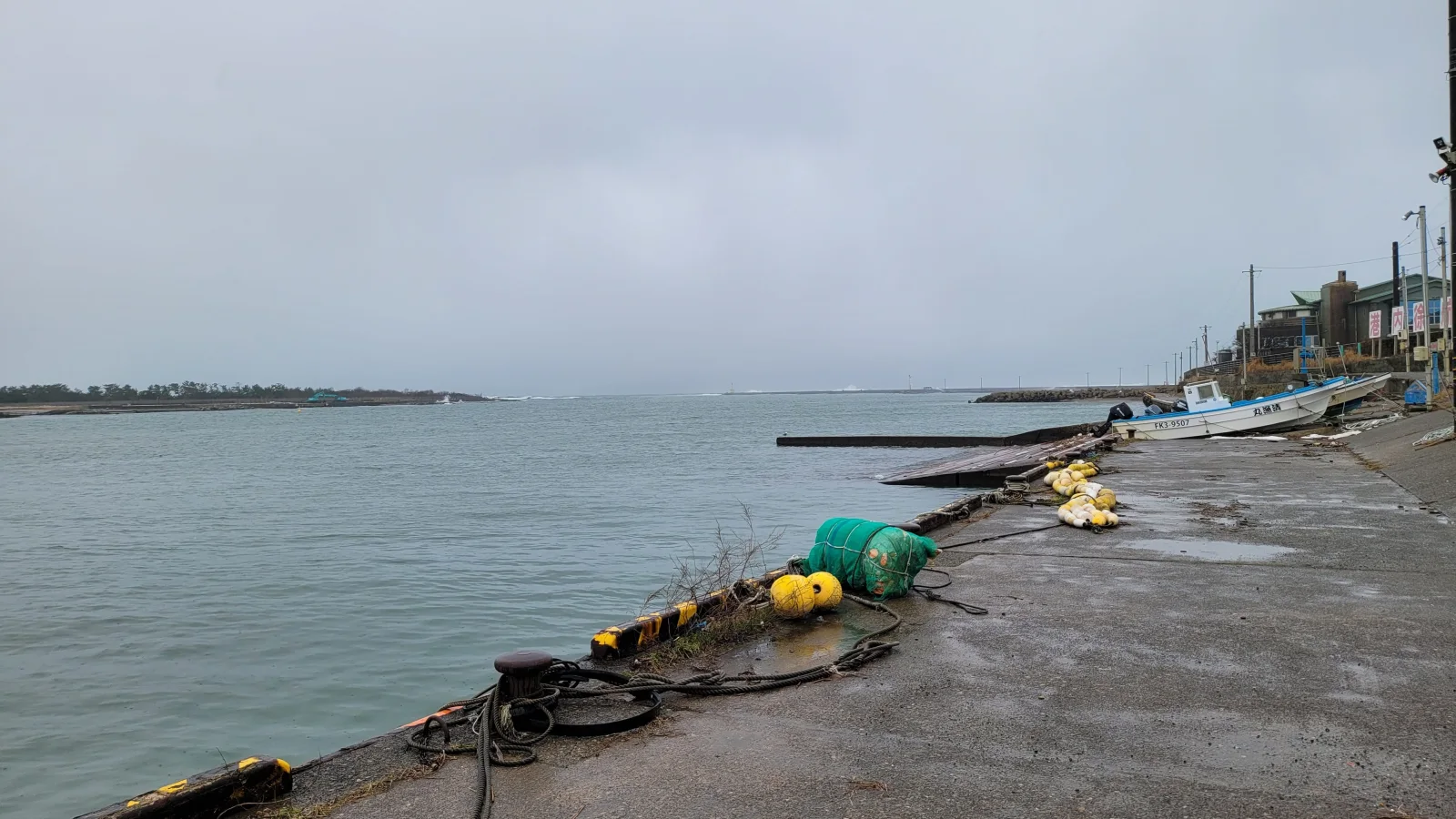
The shore has fine sand and pebbles. Sand gets into shoes, and wheels are harder to push than on pavement. Use the toilets and refill water before reaching the grove; this also makes it easier to manage children's time at the shore. Take photos from a safe, dry position and move inland as waves increase. In strong coastal wind, return earlier to the pines and the building, focusing on the nearby trees and shore.
Check the bus home before leaving for Shimizu. If you want lunch at Kashi no Ichi, choose a suitable return service first, then decide how long to sit by the sea. This market is not a late-night dining street. If you stay until evening, plan dinner near Shimizu Station so you do not finish sunset photographs and return to closed stalls. Official Miho transport and facilities FAQ.
Sea views: clouds, waves and the water bus
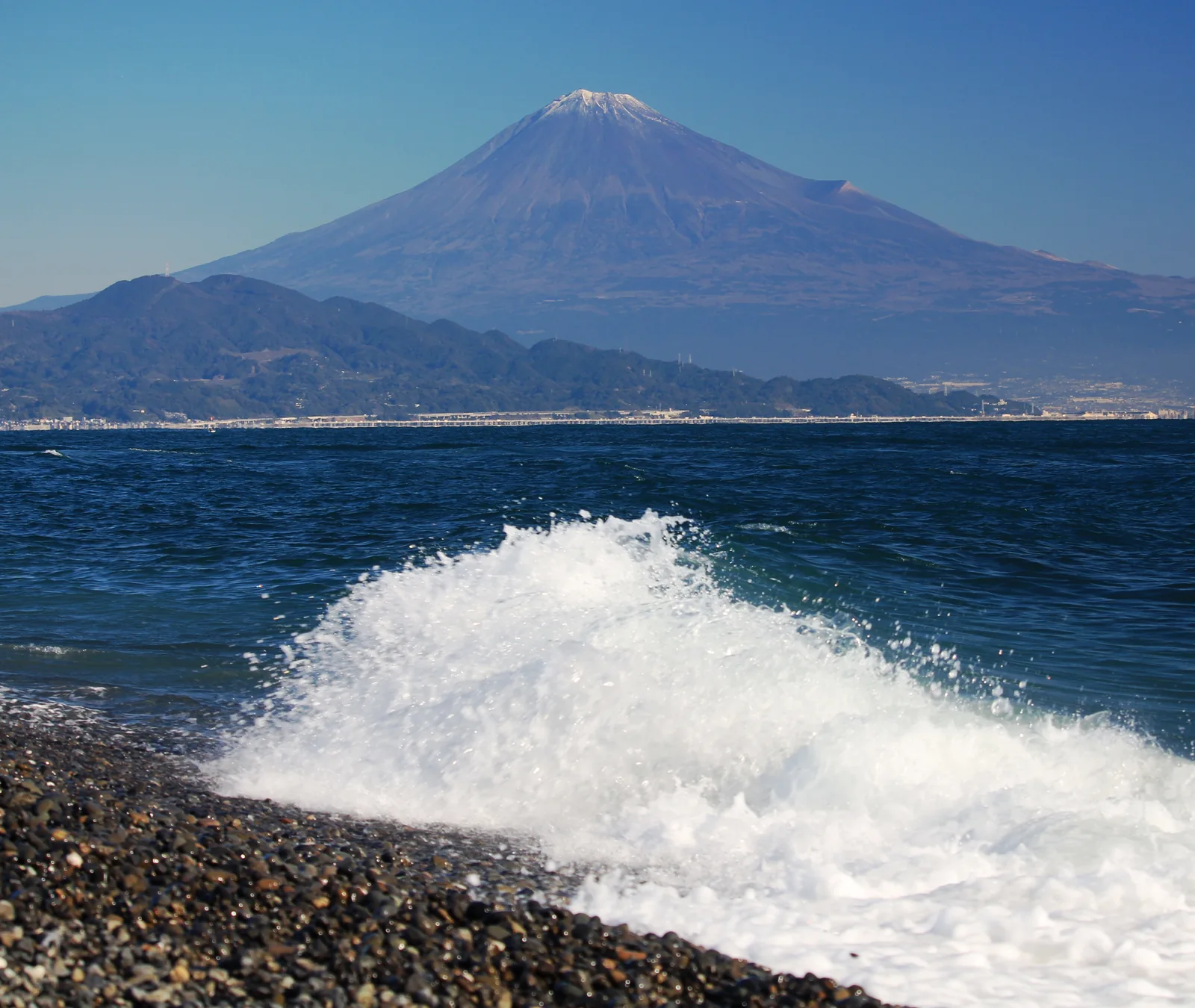
Miho's best-known composition combines the coast in the foreground, pine trees and distant Mount Fuji. When clouds hide Fuji, the sea and grove remain. If a clear Fuji photograph is your main reason for the trip, arrange your stay so you can choose a clear morning from two days. Avoid locking yourself into a nonrefundable package with a late start. Different cloud conditions on two days give you more options than waiting on the beach all afternoon.
Look at the mountain and clouds with your own eyes on arrival, then decide how long to stay. If visibility is clear, photograph the distant view first, then walk Kami no Michi and see the displays. If the summit is hidden, walk and eat first, then adjust if it clears.
There is also a water bus from Shimizu to Miho. Miho's official access page lists boarding at Ejiri, getting off at Miho, then walking about 35 minutes to Miho Shirube. Another official FAQ says about 30 minutes. Allow 30–35 minutes on foot, or connect to a bus to Miho Matsubara Iriguchi and walk about 15 minutes if you want less walking. The boat makes the harbor crossing part of the visit, but leaves you some distance from the Hagoromo Pine.
With only half a day and a preference for fewer transfers, I would take the bus. Choose the boat for one direction if you enjoy harbor views and your group accepts more walking. Sailing times, bus connections and weather affect the total journey. Check that day's service information before buying. If strong wind cancels sailings, return to the bus plan rather than delaying lunch and your return as well. In large waves or restricted areas, retreat to the open route and keep the Shimizu market and city portions of the day.
Miho Shirube demonstrates the walk to the nearest sandy-beach viewpoint for Mount Fuji, helping you locate the building, pine grove and shore.
Lunch at Kashi no Ichi, then Shizuoka oden at night
Shimizu Kashi no Ichi has an Ichiba-kan market building and a Maguro-kan building. The former market opens 09:30–17:30, with Wednesday closures and other arrangements listed separately. Some dining and ferry services have exceptions. Individual Maguro-kan restaurants keep different hours. Choose the restaurant and building first, then check set meals and raw or cooked dishes. The market's overall hours do not give every restaurant's last order time.
If you want a tuna bowl, eat near Shimizu Station rather than returning to Shizuoka just to find a familiar restaurant name. If someone does not eat raw fish, check the menu outside for fried food or grilled fish before queuing. When anyone at the table needs cooked food, the set meal choices matter more than bowl photographs. One market meal is enough; a break by Miho's sea need not become another seafood queue.
For dinner back in Shizuoka, try Aoba Oden-gai or Aoba Yokocho, about 15 minutes on foot from JR Shizuoka Station. Shizuoka oden often has dark broth, dark fish cakes, fish powder and aonori. Order a few ingredients and eat slowly. Shops on the two streets operate independently. Choose by available seats and menus when you arrive. Larger groups should find a place that can seat everyone together, keeping the passage clear while waiting.
With children, a larger group or sensitivity to smoke, put seating and smoking rules first. Some Aoba shops have only a few counter seats and allow smoking throughout. Choose a station-area restaurant if that does not suit you. If you have a late train, eat a full meal first, then decide whether there is time to linger. A few pieces of oden as a final stop are more comfortable than rushing for a train hungry.
If you want a market brunch, choose a restaurant that will be open before deciding whether Miho comes first. After a full hotel breakfast, go to the grove first. With a light breakfast and arrival in Shimizu near mealtime, eat fish before the bus. Move a visit to market stalls away from Wednesday; if you want one particular restaurant, follow its own opening notice. If your group buys meals separately, agree on a meeting point so one person does not queue at an entrance while another has gone to the other building. Kashi no Ichi shops and opening information.
Sunpu Castle and rainy city hours within walking distance of Shizuoka Station
Sunpu Castle Park fits an arrival afternoon or an early return from Nihondaira. Walking the park, visiting Higashi Gomon Gate and Tatsumi Yagura, entering Hitsujisaru Yagura, and seeing Momijiyama Garden are separate activities. For castle exteriors and the moat, use the open park paths. Add paid facilities if you have one or two hours. You can then shorten the visit as daylight or energy fades, without rushing to use a combined ticket before closing.
Paid facilities normally open 09:00–16:30, with last admission at 16:00. They close Mondays, but open on public and other designated holidays without a substitute closure, and close December 29–January 3. A three-facility ticket costs ¥360 for adults and ¥120 for elementary and junior high school students. Separate adult tickets cost ¥200 for Higashi Gomon and Tatsumi Yagura, ¥100 for Hitsujisaru Yagura and ¥150 for Momijiyama Garden. Buy a single ticket for one facility and the combined ticket for all three.
In rain, move to Shizuoka City Museum of Art. Its access page gives about three minutes on foot through the underground passage from JR Shizuoka Station's north exit, or five minutes from Shin-Shizuoka. You can replace a wet, cold walk with a full exhibition visit. Choose admission based on the current exhibition and check the opening calendar before leaving. If an exhibition changeover leaves it closed, use station-area shops, bookstores and restaurants instead.
If your group has different interests in history and art, agree to meet near the station and split up for a while. Castle enthusiasts can stay at Sunpu while those who want tea or shopping return to the center. Everyone need not share the same afternoon checklist. After walking hills outside town, slow down in the city. An early return to the hotel after dinner helps preserve energy for Miho the next day more than another distant sight. Official Sunpu Castle tourism information.
Stay near Shizuoka Station, Shimizu Station or on Nihondaira
For a first visit with oden at night and a Shinkansen the next day, I would stay within walking distance of Shizuoka Station. The north exit is convenient for the center and dining streets. If you choose the south exit, check the next day's bus boarding point too. Compare the actual exit, underground passages, luggage storage after checkout and the distance you are willing to walk with a suitcase, as well as the advertised minutes from the station.
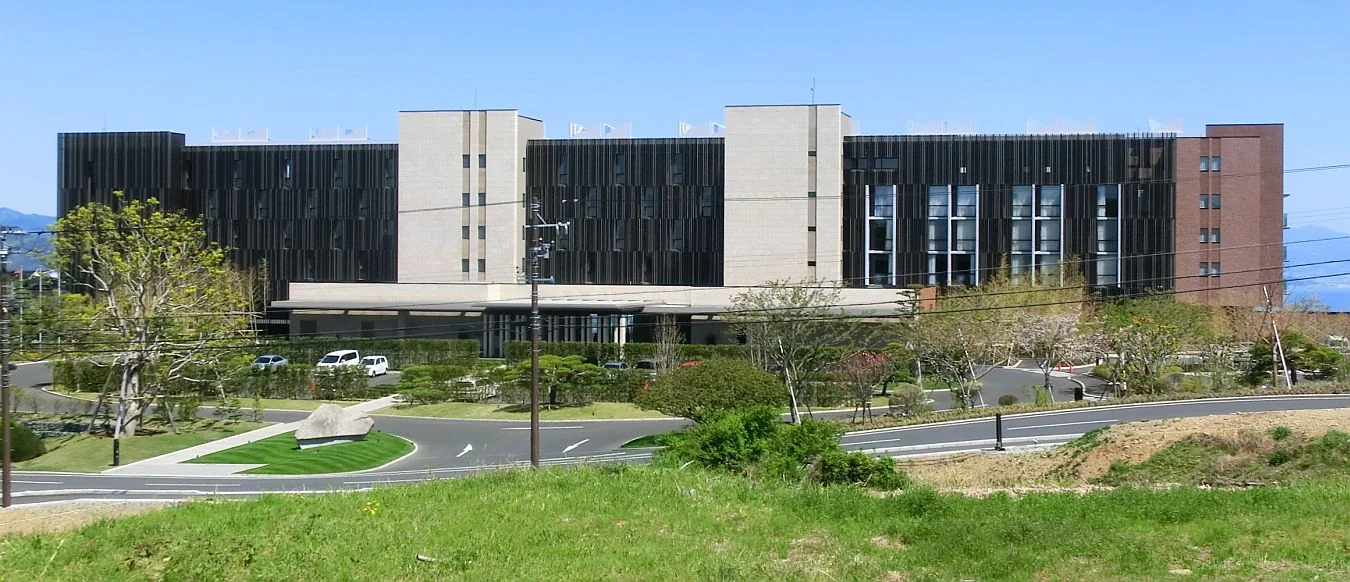
Shimizu Station suits visitors who put the market and Miho first. You can catch a Miho-bound bus the next morning without first taking JR from Shizuoka. If Nihondaira is also on your two-day plan, allow time to reach Higashi-Shizuoka or Shizuoka and change to a bus. Fix the station exit you will use before comparing rooms and breakfast. A harbor-view description can otherwise lead you far from the intended boarding point.
Stay on Nihondaira if you want to spend the evening on views, dinner and hotel rest. Nippondaira Hotel offers free shuttles from Shizuoka and Higashi-Shizuoka stations, with no reservation required according to its official FAQ. Its access page lists times and boarding locations. There is no convenience store within walking distance on the hill. Buy water, children's snacks and last-minute supplies in town. Plan dinner and the return shuttle together; an impromptu evening trip down to the dining alleys adds another round trip.
Choose the room's capacity and beds before its view. For two adults and a child, check permitted ages, extra beds and breakfast portions rather than comparing only the lowest double-room price. For Mount Fuji, choose a room type whose product page explicitly lists that view. Compare the same date, party size and meal plan, then cancellation deadlines, to see the real difference per night.
Nippondaira Hotel's general accommodation page lists check-in from 14:00 and checkout at 12:00. Its cancellation terms charge 100% of the accommodation fee from three days before arrival, with corresponding penalties for shortening a stay. Put the chosen plan's payment and cancellation deadlines in your calendar when booking. If a prepaid or special plan takes effect earlier, follow that booking's terms. If you want to adjust a mountain-view stay to cloud conditions, choose an acceptable cancellation deadline before the day before departure. Nippondaira Hotel accommodation and cancellation terms.
A two-day plan: the hill first, then a full half-day in Shimizu
With two full days, go to Nihondaira after breakfast on day one, visit Yume Terrace, take the return ropeway to Kunozan, and return to Shizuoka around midday or early afternoon. The ordinary weekday example above uses the 09:33 bus up and 13:30 down. For the museum or a summit meal, choose a later return such as 14:30. Pick Sunpu Castle or the city center in the afternoon, then oden for dinner. Leaving Miho for another day gives you time for queues, summit views and lunch.
On day two, check out and store your bags, take JR to Shimizu, spend half a day at Miho, and return to Kashi no Ichi for lunch before collecting luggage and leaving. If you stored bags at your Shimizu accommodation, collect them there. If they remain in Shizuoka, include the return to Shizuoka before booking your departure train. The coast deserves flexible morning time; lunch can shift earlier or later, but luggage collection needs a fixed place in the route.
If you have one day and arrive from elsewhere that morning, estimate arrival time before choosing a route. If you can catch a suitable morning Nihondaira bus, focus on the shrine and Yume Terrace. A noon arrival usually makes the market and Miho easier to shorten or extend. If Kunozan is essential, go straight up and remove Sunpu Castle and the market from that day. Eat lunch before setting out or on the hill, leaving dinner in the city for your return rather than chasing buses hungry.
Swap the hill and coast if only the second day is clear. If day one is rainy and only half a day remains on day two, choose Kunozan or Miho. A quick look at Nihondaira followed by a rush back through Shimizu can consume the last clear weather in transfers. Leave enough time to stop and look at the scenery you came to Shizuoka to see.
If you really want all three in one day and accept taxi costs, use a taxi between Miho and Nihondaira to save transfers. Miho's official transport guidance lists this route too. Confirm the destination and charging method with the driver before boarding. If no taxi is available, drop one stop and return by the bus route.
Back at the station, collect your bags and buy food before going to the platform.
A few useful answers
Can I visit Miho, Nihondaira and Kunozan in one day without a car?
Public transport requires returning through Shimizu, changing to a train and then the Nihondaira bus. For an ordinary day trip, choose the hill or coast; use two days for both. A taxi between Miho and Nihondaira reduces transfers if you accept the fare and can find one.
Are there steps at Kunozan Toshogu after the ropeway?
Yes. There are about 80 steps from the ropeway station to the shrine buildings, or 1,159 on the main approach from Kunozan-shita. The shrine buildings have no ramp and cannot be accessed by wheelchair.
When is Nihondaira Ropeway closed in December 2026?
The announced equipment-renewal closure runs December 1–21. Toshogu can be reached by the main approach from Kunozan-shita. Choose Yume Terrace or the Shimizu coast if 1,159 steps are unsuitable.
Is Nihondaira Yume Terrace still free?
The outdoor observation walkway is free. From October 1, 2026, indoor admission is ¥100 for adults and senior high school students, and ¥50 for elementary and junior high school students.
Where should I stay for two days and one night?
Choose walking distance of Shizuoka Station for Shinkansen travel and city dinners, Shimizu Station for Miho and the market, or Nihondaira for an evening of hotel views and dining, timed around its shuttle.
Official information and references
Sources used in this guide.
- Nihondaira Ropeway: fares, packages, steps and refunds
- December 2026 ropeway equipment-renewal closure
- Kunozan Toshogu: approaches to the shrine
- Kunozan Toshogu: individual admission and visiting hours
- Shizutetsu bus timetables, revised October 25, 2026
- Nihondaira Line: ordinary weekday outward timetable
- Nihondaira Line: ordinary weekday return timetable
- Shizuoka official tourism: Yume Terrace admission and hours
- Miho no Matsubara: access
- Miho no Matsubara: facilities, walking and transport FAQ
- Travel from Miho to Nihondaira and Kunozan
- Shimizu Kashi no Ichi
- Shizuoka official tourism: oden streets
- Sunpu Castle Park: admission and opening hours
- Shizuoka City Museum of Art: access
- Nippondaira Hotel: access and shuttles
- Nippondaira Hotel: accommodation and cancellation terms
- Nippondaira Hotel: shuttle and neighborhood FAQ
- Nihondaira Yume Terrace: live camera
- Teruyo in Aoba Oden-gai: seats, smoking and payment
- Shizuoka official tourism: Sunpu Castle Park