The JR East Pass costs ¥35,000 for 5 days or ¥50,000 for 10 days. Compare revised Tokyo–Sendai, Shin-Aomori, and Akita fares, seat bookings, pickup, and winter buses.
- Region & Focus
- TohokuTransportation and passes
- Reading Scope
- 21 min read · 8 chapters · 7 Q&As
- Official Verification
- 25 official sources checkedUpdated November 22, 2026
- Key Topics
- Rail travelBookingTravel budget
Chapter Route Map (tap any stop)
- Choosing Between the 5-Day and 10-Day Pass
- Running the Break-Even Math on Your Actual Trains
- How Far the Coverage Map Actually Goes
- Timelines for Buying Passes, Picking Them Up, and Booking Seats
- A 5-Day Northbound Route Built Around Rail Hubs
- How 2026–2027 Winter Buses Reshape Tohoku Routes
- Cross-Region Loops That Only Work with 10 Days
- Changing Trains, Refund Rules, and Return Buffers
- Quick Q&A
The adult JR East Pass costs ¥35,000 for 5 days or ¥50,000 for 10 days, valid on consecutive calendar days from your chosen start date. A standard round-trip from Tokyo to Sendai in ordinary reserved seating runs ¥23,260, while a Tokyo to Shin-Aomori round-trip totals ¥36,220—already clearing the 5-day pass price. To pick the right pass, map out your full trip from Narita arrival to Tohoku overnight stops, side trips, and airport return on one calendar.
Choosing Between the 5-Day and 10-Day Pass
JR East launched this unified pass on March 14, 2026, retiring the old Tohoku and Nagano/Niigata area passes on March 13. Both the 5-day and 10-day passes now share a single coverage map. Adult passes cost ¥35,000 for 5 days and ¥50,000 for 10 days; children aged 6 to 11 pay ¥17,500 and ¥25,000 respectively, while travelers 12 and older pay the adult rate based on their age on the purchase date.
Start by writing down your first and last long-distance train days. If you ride from Ueno to Sendai on Tuesday and return from Shin-Aomori to Tokyo on Saturday, Tuesday is Day 1 and Saturday is Day 5—even if you spend a full day exploring Sendai on foot in between. Pushing that return to Sunday lets you weigh a 5-day pass plus a one-way ticket against buying the 10-day pass outright. Price out the trips falling outside the 5-day window first to see if they justify the extra ¥15,000.
Even a 10-day Japan trip may only need a 5-day pass. Spend your first two nights in Tokyo, loop through Sendai and Aomori, then return to Tokyo for three more nights by starting the pass on your northbound departure day and riding back on Day 5. If both Narita Airport transfers fall outside the pass window, price them with the ¥5,200 adult N'EX TOKYO Round Trip Ticket, valid for one ride each way within 14 days. If only one airport trip falls outside, compare against a single one-way fare—standard Narita Express ordinary car seating between Narita Airport and Tokyo Station is ¥3,140.
Upgrading from 5 to 10 days adds ¥15,000 for adults and ¥7,500 for children. If your itinerary includes two nights at a Yamagata onsen, a break back in Tokyo, and then another run out to Niigata, map both pass options to see how many separate tickets move inside the pass window. Adding only a weekend local train to Kamakura rarely moves the needle. Adding a Hayabusa Shinkansen from Shin-Aomori back to Tokyo—¥18,110 one-way in regular season—easily flips the math.
| Pass Type | Adult (12+) | Child (6–11) | Validity |
|---|---|---|---|
| 5-Day Pass | ¥35,000 | ¥17,500 | 5 consecutive days |
| 10-Day Pass | ¥50,000 | ¥25,000 | 10 consecutive days |
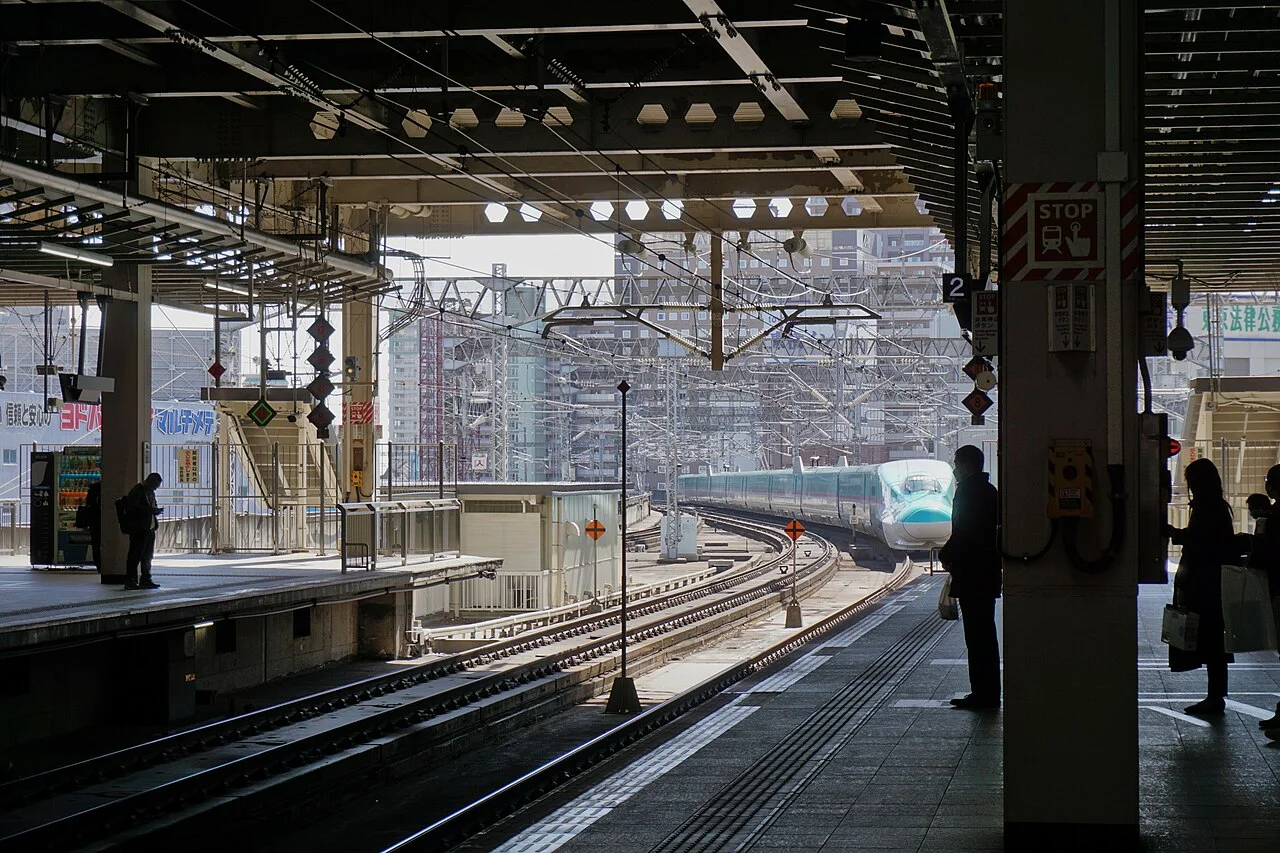
The JR East Pass costs ¥35,000 for 5 days or ¥50,000 for 10 days. Compare revised Tokyo–Sendai, Shin-Aomori, and Akita fares, seat bookings, pickup, and winter buses.
Running the Break-Even Math on Your Actual Trains
Compare like for like using the same seat class. JR East's fare revision schedule lists regular-season, ordinary-car reserved-seat benchmarks from Tokyo Station: ¥11,630 one-way to Sendai on the Hayabusa, ¥18,110 to Shin-Aomori on the Hayabusa, and ¥18,460 to Akita on the Komachi. These totals combine the base fare and Shinkansen limited express surcharge. If you book advance online discounts, ride non-reserved cars, board from a different station, or travel on peak/off-peak pricing dates, plug the actual checkout prices into your worksheet.
A Tokyo–Sendai round-trip costs ¥23,260, leaving you ¥11,740 short of the 5-day pass. Add two Narita Express rides at ¥3,140 each and you reach ¥29,540—meaning point-to-point tickets still win if your remaining rides are short city hops. Once you add another Shinkansen leg to a second city, factor in that reserved-seat fare as well. Before pricing out two separate round-trips from Tokyo, check whether an overnight stop in Tohoku eliminates the redundant return to Tokyo.
A Tokyo–Shin-Aomori round-trip totals ¥36,220 in regular season, beating the 5-day pass by ¥1,220, while a Tokyo–Akita round-trip hits ¥36,920, ahead by ¥1,920. Both routes are sensitive to advance discounts: if you lock in promo fares for a simple two-leg round-trip, individual tickets may come out cheaper at checkout. Once you add side trips around Aomori City, Hirosaki, or Lake Tazawako, include those exact branch-line fares—and remember that catching an earlier connecting train for a ryokan shuttle can matter more than a small paper difference.
If you pair a Sendai round-trip with Tokyo day trips, compare the full itinerary side by side. A Sendai round-trip (¥23,260) plus a JR TOKYO Wide Pass (¥16,000) adds up to ¥39,260. If Nikko is your only suburban excursion, price that specific day's routing first. For Lake Kawaguchiko, the JR East Pass only covers JR tracks up to Otsuki, leaving you to pay the Fujikyu Railway fare on top of ¥35,000, whereas the JR TOKYO Wide Pass includes Fujikyu—list each option's out-of-pocket gaps before choosing.
Run the numbers per person when traveling as a family. For two adults and one child aged 6 to 11, three 5-day passes cost ¥87,500 and three 10-day passes cost ¥125,000—a ¥37,500 jump. Check exact point-to-point child fares on the booking screen for each leg. Children under 6 ride free without a separate seat under pass rules, but if you want a dedicated seat on an all-reserved train, include a child ticket or child pass in your budget.
Put both options side by side in two columns instead of doing mental math. In the point-to-point column, list each travel date, origin, destination, train name, and ordinary reserved-seat fare. In the pass column, note the pass window, any out-of-zone base fares or surcharges, and private buses or local transit. Strip out fixed costs you will pay either way—sightseeing boats, ski rentals, hotels—and keep only transit items that change with the pass, especially airport rides on your final day.
| Route | Train | One-Way | Round-Trip (2x) |
|---|---|---|---|
| Tokyo – Sendai | Hayabusa | ¥11,630 | ¥23,260 |
| Tokyo – Shin-Aomori | Hayabusa | ¥18,110 | ¥36,220 |
| Tokyo – Akita | Komachi | ¥18,460 | ¥36,920 |
How Far the Coverage Map Actually Goes
Out of Tokyo, the pass centers on five Shinkansen networks operated by JR East: the Tohoku, Akita, Yamagata, Joetsu, and Hokuriku Shinkansen lines. You can ride ordinary reserved seats north to Shin-Aomori, west to Akita or Yamagata, and northwest to Niigata, Echigo-Yuzawa, or Nagano. On the Hokuriku Shinkansen, coverage stops at Joetsumyoko. If you plan to continue to Toyama or Kanazawa, confirm the extra base fare and limited express surcharge west of Joetsumyoko before reserving. For a Tokyo-to-Kansai loop via Hokuriku, see our Hokuriku Arch Pass guide between Tokyo and Osaka.
At Tokyo Station, the Tokaido Shinkansen toward Nagoya, Kyoto, and Shin-Osaka is run by JR Central and requires separate tickets. The same split happens up north: select Hayabusa trains continue past Shin-Aomori to Shin-Hakodate-Hokuto on the Hokkaido Shinkansen, where fares north of Shin-Aomori are separate. If you are traveling all the way from Tokyo to Hakodate, Sapporo, or Otaru, compare point-to-point tickets against the 6-consecutive-day JR East-South Hokkaido Rail Pass (¥40,000 for adults). Calculating only as far as Shin-Aomori undercounts the cross-strait leg.
Several key partner railways are covered even though JR East does not run them. You get the Tokyo Monorail to Haneda Airport and Sendai Airport Transit to Sendai Airport, plus full coverage on the Aoimori Railway, IGR Iwate Galaxy Railway, Sanriku Railway, and Hokuetsu Express. The Echigo TOKImeki Railway is covered only between Naoetsu and Arai, which includes Joetsumyoko; rides continuing toward Itoigawa split at Naoetsu. For example, you can ride the Limited Express Shirayuki from Niigata through Naoetsu to Joetsumyoko and connect to the Hokuriku Shinkansen, keeping within each line's covered zone.
The pass covers ordinary-car seating. Riding in a Green Car or GranClass on the Shinkansen requires paying both the Green Car or GranClass surcharge and the applicable limited express surcharge under the conditions of carriage—ask a ticket agent for the exact upgrade total when comparing fares. Families wanting seats together should check adjacent regular seats on their preferred train or one departure before or after. Some Shinkansen departures also designate a TRAIN DESK car for quiet reading or remote work, so pick another ordinary car if your group plans to talk.
Two rail operators serve Narita Airport: look for the JR Narita Express to Tokyo or Shinjuku, or JR conventional lines within the covered area, since the Keisei Skyliner to Nippori and Keisei-Ueno requires a separate ticket. At Haneda Airport, Keikyu trains via Shinagawa are not covered—only the Tokyo Monorail connecting at Hamamatsucho is included. For city subways like Tokyo Metro, Toei Subway, and Sendai Subway, tap a standard IC card or local ticket. With overlapping urban lines, take the fastest route to your hotel instead of forcing extra transfers with luggage just to stay on JR tracks.
Nikko trips have two easily confused routes. Direct through-trains between JR East and Tobu Railway—the Nikko, Kinugawa, and SPACIA Kinugawa limited expresses from JR Shinjuku and other JR stations—are covered in ordinary reserved seats in both directions, provided at least one end of your trip is a JR station. Tobu's own limited express trains from Tobu Asakusa require separate Tobu tickets. Local trains between Shimo-Imaichi and Tobu-Nikko or Kinugawa-Onsen are covered, while the Kurihashi–Shimo-Imaichi stretch is valid only on those joint JR–Tobu limited expresses. If you miss a direct train, ride the Shinkansen to Utsunomiya and transfer to the JR Nikko Line to JR Nikko Station, or buy a Tobu ticket depending on your hotel location and opening hours.
Read the route name carefully whenever you see JR Bus listed. The pass includes JR East BRT services and select JR local bus routes, but highway express buses and designated exceptions are excluded. Along the Sanriku Coast, both Sanriku Railway trains and JR Kesennuma/Ofunato Line BRT buses appear on the same corridor, so confirm exact transfer stops beforehand. Heading to Oirase also depends on seasonal bus schedules and boarding stops, detailed in the winter section below.
Timelines for Buying Passes, Picking Them Up, and Booking Seats
Any traveler holding a valid non-Japanese passport can purchase the JR East Pass, and JR East's official purchase page lists it without a Temporary Visitor entry-status requirement—meaning foreign residents and students in Japan can also buy it using their passport. Carry your physical passport when picking up and using the pass; every pass is strictly personal. When buying at a ticket counter in Japan, each pass holder, including children, must present their own valid original passport.
Before leaving home, you can buy online through JR-EAST Train Reservation via "Purchase a pass" by entering your start date and traveler details, or buy an e-voucher from an authorized overseas travel agency to exchange with your passport in Japan. If you decide after arriving, buy at a designated JR EAST Travel Service Center or a passport-reading Reserved Seat Ticket Vending Machine that supports the pass. To collect an official online order at a machine, bring each user's IC-chip passport plus your pickup QR code, pickup code, or the payment credit card; at a staffed counter, bring your physical passport and either the pickup code or original credit card.
Pass purchase dates and seat reservation dates follow separate clocks. JR East's reservation site generally opens pass sales at 10:00 JST one month before your start date, while reserved-seat bookings open at 10:00 JST one month before each train's travel date. For a trip heading north on January 10, 2027, and returning to Tokyo on January 14, the northbound seat opens December 10, 2026 at 10:00 JST, and the return opens December 14. Account for the time difference from your local time zone when setting a booking reminder. If the previous month has no matching date—such as riding on March 31—bookings typically open on March 1.
If you buy your pass directly on JR-EAST Train Reservation, you can reserve seats through the "Seat reservation" portal up to 6 minutes before train departure. If you bought your pass elsewhere and link it to online seat booking, the online cutoff is 23:50 JST two days before your travel date. Treat those as online deadlines and still leave time to pick up physical tickets and reach the platform. Close to departure, use your physical pass at a JR East Reserved Seat Ticket Vending Machine or staffed ticket office to grab remaining seats.
Book the hardest-to-replace trains first: year-end returns to Tokyo, early departures tied to a ryokan pickup, or long rides where your family needs adjacent seats. Hayabusa, Komachi, Hayate, and Tsubasa services are all-reserved. On the Yamabiko toward Sendai, check the timetable car chart for trains with non-reserved cars. Trains bound for Morioka and Akita often run coupled together, so line up by the exact train name and car number on your ticket—and check both train names shown on the platform display, as the two sections split mid-route.
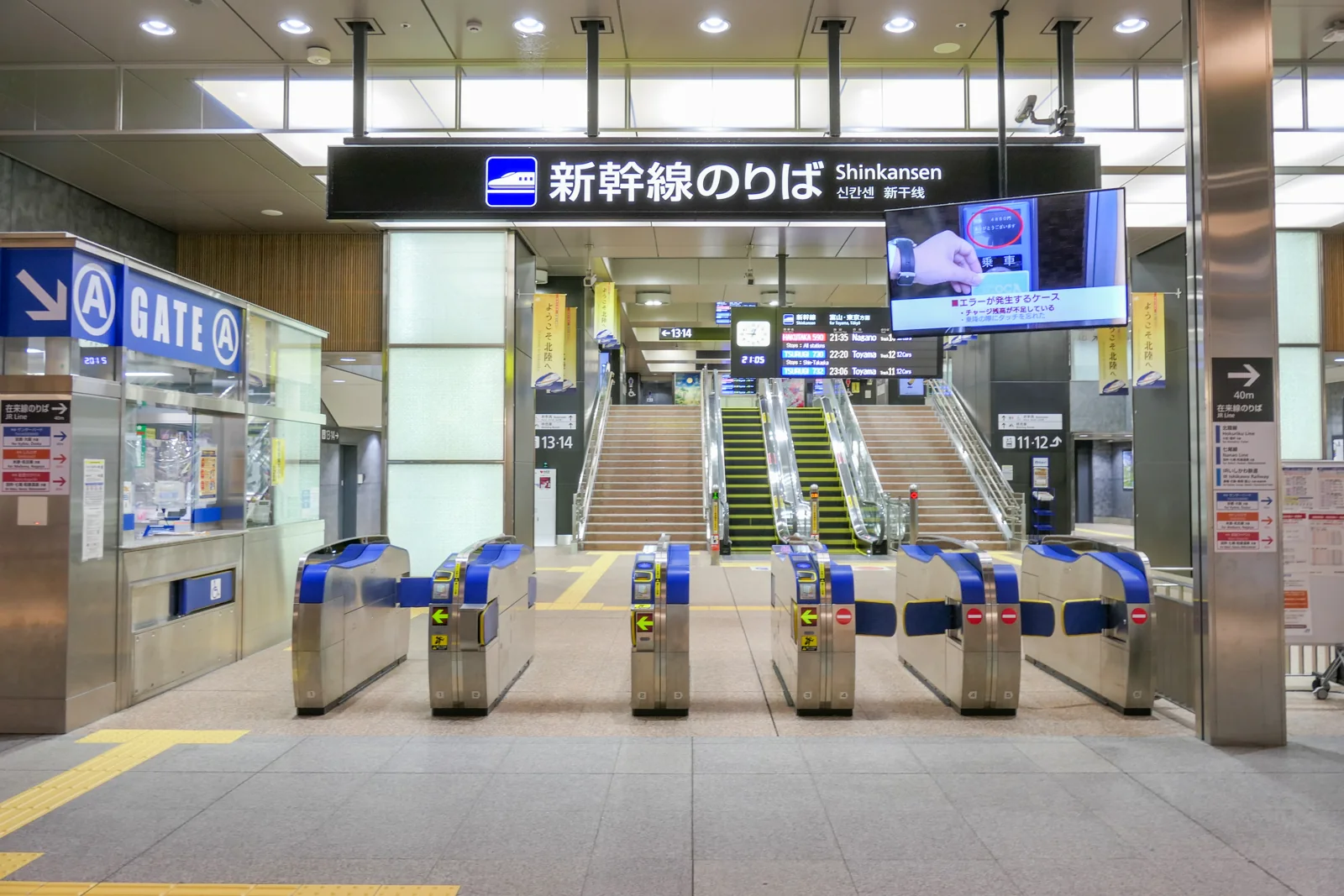
You can pick up your pass before Day 1 begins. At Sendai Station, the 3F JR EAST Travel Service Center next to the Midori-no-Madoguchi ticket office is listed as open daily from 08:30 to 19:00 for purchasing or collecting online JR-EAST Train Reservation passes and tickets. If your first Shinkansen leaves before 08:30, pick up your pass the evening before or use an eligible ticket machine during operating hours. Once in hand, double-check the date, origin station, and car number on your first seat ticket. Keep both your pass and seat ticket when boarding—use the pass at JR automated ticket gates, keep the seat ticket for seat checks, and use staffed gates on covered non-JR lines.
At Narita Airport, JR EAST Travel Service Centers sit near the B1 rail ticket gates. The Terminal 1 counter runs 08:30 to 19:00 daily, and the shared Terminal 2/3 counter stays open until 20:00. From Terminal 2 Arrivals Zone A, go downstairs and turn left to find the counter on your left; from Zone B, go downstairs, turn right, and look on your left. If you land on a late flight, note which ticket machines can issue passes or plan a city counter pickup the next morning, especially before an early train. You can still pick up your pass on arrival night even if you set Day 1 for the next morning and buy a single ticket into Tokyo.
A single Reserved Seat Ticket Vending Machine session can issue seat reservations for up to four pass holders together: feed each pass into the machine one by one, then pick your train and seats. For a group of six, ask a ticket counter agent to inspect the seat map, or check open seats in the same car on a machine first and book in two batches. Pair one adult with a child in each group so it is easy to switch to adjacent seats on the next departure if a popular train only has scattered singles left.
When transferring at major Tokyo hubs, follow signs for "Shinkansen" and your line's direction. At Tokyo Station, getting from the underground Narita Express platforms up to the Tohoku Shinkansen concourse takes extra time with suitcases and transfer gates. Factor in flight arrival, baggage claim, pass pickup, and station stairs separately rather than trusting tight minimum connection times. After an international flight, book a later northbound Shinkansen for breathing room—or stay near Ueno or Omiya and board directly from there if your train stops there.
A 5-Day Northbound Route Built Around Rail Hubs
On a first trip to Tohoku, riding from Tokyo or Ueno to Sendai for two nights before continuing to Iwate or Aomori makes day trips far easier than commuting out of Tokyo every morning. On Day 1, since you are already picking up passes and taking a reserved train, keep things simple with dinner in central Sendai. On Day 2, take the JR Senseki Line from Sendai to Matsushima-Kaigan Station for direct access to sightseeing boats and temples. Searching only for "Matsushima" pulls up Matsushima Station on the Tohoku Main Line, which is a much longer walk from the bayfront, so enter "Matsushima-Kaigan" when checking trains and tickets.
If you visit Hiraizumi on Day 3, book a Shinkansen that stops at Ichinoseki and transfer to the JR Tohoku Main Line—the Hiraizumi Tourism Association lists the local ride from Ichinoseki to Hiraizumi at about 8 minutes, plus transfer wait time. To stop in Hiraizumi for a few hours on your way north from Sendai, split your Shinkansen tickets into Sendai–Ichinoseki and Ichinoseki–onward station, with local trains in between. If your next hotel is in Morioka, either backtrack to Ichinoseki for a faster connection or wait for a northbound local train depending on the schedule; planning the split prevents accidentally boarding an express Shinkansen that skips Ichinoseki.
On Day 4, continue from Morioka on the Tohoku Shinkansen to Shin-Aomori, then switch to the Ou Main Line toward Aomori Station or Hirosaki Station. Staying near Aomori Station keeps the seafood market, waterfront, and downtown restaurants within easy reach. If you plan to stay at Hirosaki Park until dusk, sleeping in Hirosaki saves a late train ride back to Aomori. For an early-morning Shinkansen departure the next day, stay near Shin-Aomori Station instead—plot your hotel pin and exact station name on one map before booking so your choice matches whether your first ride next morning is a Shinkansen, local train, or route bus.
If you return to Tokyo on Day 5, book your outbound connection and return Shinkansen together, leaving buffer time for the Ou Main Line shuttle if starting from Aomori Station. Sightseeing in Hirosaki that afternoon before heading back requires adding up three segments: town to Hirosaki Station, Hirosaki to Shin-Aomori, and your Shinkansen transfer with platform navigation. With only three nights in Tohoku, splitting between Sendai and Aomori as two bases is plenty. Between two plans with similar rail costs, the one with fewer hotel moves and suitcase transfers almost always feels better.
Flying into Sendai Airport and out of Tokyo lets you run a one-way arc without backtracking—start in Sendai for Matsushima or Yamagata, head north to Aomori, and fly home from Tokyo using JR airport rail links on both ends. Inside Sendai Station, head downstairs from the Shinkansen gates to the conventional lines and follow signs for the Sendai Airport Access Line and departure track. Staying near Sendai Station lets you drop bags at your hotel before riding local trains. To compare neighborhoods and dining around both sides of the station, see our Sendai Station neighborhood and food walk guide.
With kids, separate flight arrival night from your long Shinkansen leg. Stay in Tokyo on landing night and catch a reserved Shinkansen from Ueno or Tokyo the next morning, making meals and station changes far calmer. If you have heavy bags or slow walkers, pick hotels within walking distance of Sendai or Morioka stations, and write down exact shuttle meeting points and times for onsen ryokan—such as checking station signs straight toward the East Exit if that is your pickup spot. Have everyone save one screenshot of the train number, car and seat, and hotel address so the group can reunite easily after restroom or snack stops.
How 2026–2027 Winter Buses Reshape Tohoku Routes
JR Bus Tohoku's Mizuumi bus between Aomori and Oirase/Lake Towada enters winter suspension starting November 12, 2026. Through March 31, 2027, the Hakkoda bus runs between Aomori and Sukayu Onsen instead, and outbound trips from Aomori or Shin-Aomori require advance seat reservations. On the published timetable, Bus 2 departs Aomori Station at 08:10 and skips Shin-Aomori, while Buses 4 and 6 stop at Shin-Aomori Station. Guests staying near Aomori Station can easily catch the first bus, while travelers arriving from Tokyo that morning are better off pairing Hakkoda with a half-day around town.
To reach Oirase Stream Onsen or Lake Towada directly in winter, plan around the Oirase bus departing from Hachinohe Station West Exit. Outbound service runs on select dates from December 25, 2026 through February 28, 2027, and return buses run on select dates from December 26 through March 1. Bus 29 leaves Hachinohe Station West Exit Stop 1 at 13:20 and reaches Oirase Stream Onsen at 14:40. Match your return bus or overnight stay against the operating calendar before booking, because outbound and inbound schedules leave little room for spontaneous same-day round-trips.
JR Bus Tohoku notes that eligible local routes accept the JR East Pass for the base fare, with a separate ¥300 per-seat reservation fee each way. Pass holders still need to book reserved-seat buses in advance and show their pass to cover the fare. All stops on the winter Oirase bus require reservations, while inbound Hakkoda buses from Sukayu back to Aomori do not. If your group just wants deep snow scenery rather than specifically reaching Oirase Gorge, pick one destination with confirmed round-trip bus service instead of forcing a long winter walk between lines.
If heavy snow closes mountain roads or suspends a ropeway, staying near Aomori Station makes it easy to pivot to the waterfront around Nebuta Museum WA RASSE, just as Hirosaki works well for switching from outdoor parks to town cafés and sights. Check the JR East Train Info status page for rail disruptions, check bus operator notices for mountain routes, and read station boards on arrival. On the same day as an international flight, drop mountain or cross-prefecture branch lines and stick to main rail corridors with backup departures and a generous airport buffer.
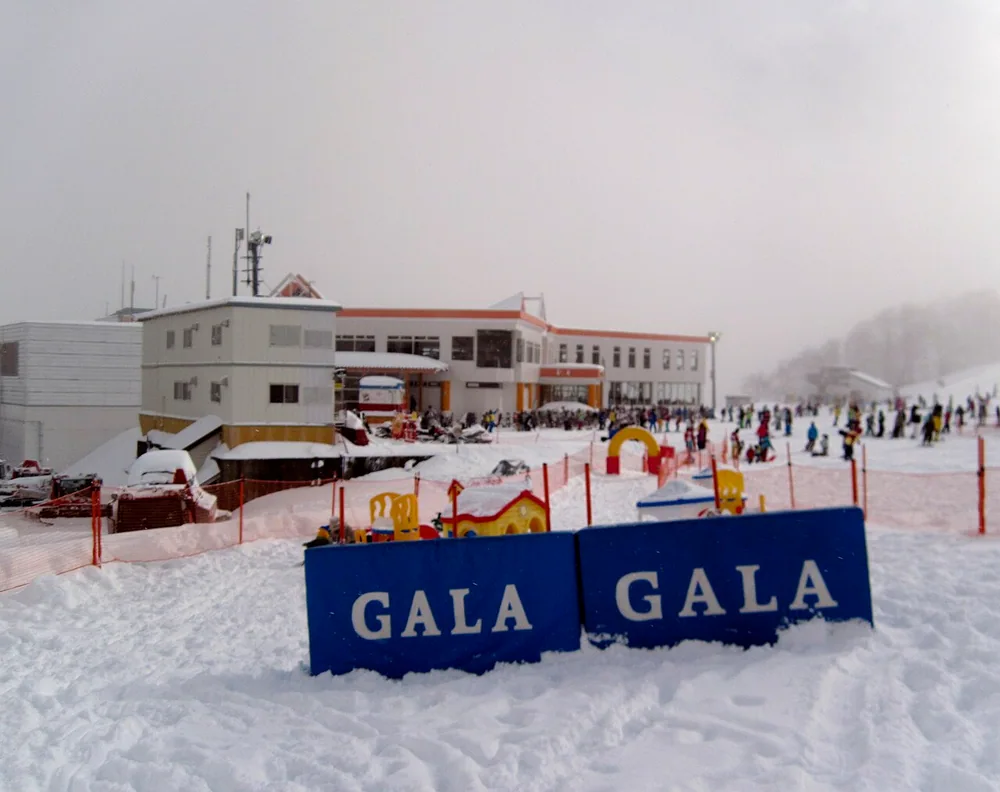
On the Joetsu side, GALA Yuzawa opens for sightseeing from December 12 to 18, 2026—gondolas and lifts run for views during those seven days, but ski runs remain closed. Official ski season runs from December 19, 2026 through May 5, 2027, with the South Area closed this season and operations focused on the Central and North Areas. When booking seats, check whether you are selecting the seasonal GALA Yuzawa Station or Echigo-Yuzawa Station, and confirm that trains are running to the ski center on your date. If you want an onsen town base or an easy backup train to Tokyo when lifts close early, Echigo-Yuzawa Station is the safer anchor.
Measure bulky ski or snowboard gear before choosing your train. Under JR East's standard baggage rules, each passenger may bring up to two items, each within 250 cm total dimensions (length + width + height), 2 meters in length, and 30 kg. Oversized sports gear beyond standard length limits is allowed if packed in a dedicated bag or case and able to stand upright inside the car. JR East Shinkansen cars provide luggage spaces behind seats or near vestibules that do not require reservations, unlike Tokaido/Sanyo/Kyushu oversized baggage seats—never force heavy bags into overhead racks or block doors and aisles. First-time skiers should weigh renting at the resort against hauling gear, and check ryokan delivery lead times if forwarding luggage ahead.
Cross-Region Loops That Only Work with 10 Days
The 10-day pass shines when you combine multi-night Tohoku stays with Niigata or Nagano. For instance: take the Narita Express to Tokyo and switch to Ueno on Day 1; ride north to Sendai on Day 2; work through Hiraizumi, Morioka, and Aomori; head south on Day 7 to switch at Omiya onto the Joetsu or Hokuriku Shinkansen; spend Day 8 around Niigata or Nagano; and return to Tokyo on Day 9 or 10. This anchors long rides at both ends while leaving slower sightseeing days in between. When testing a 5-day pass against it, drop Day 7's southbound run and everything after it into the out-of-pass column—that makes the real price gap clear immediately.
Traveling between Tohoku and Niigata or Nagano does not require riding all the way back to Tokyo Station. Omiya is the junction where the Tohoku Shinkansen meets the Joetsu and Hokuriku Shinkansen lines. Set Omiya as your transfer station when booking both legs and verify that both trains stop there. Aim for a morning or midday transfer at Omiya so delays still leave backup connections. If you leave Aomori on Day 7 hoping to ski the same afternoon, half your day is gone by Omiya before you even rent gear—split travel and skiing across two days by dropping bags in Echigo-Yuzawa first and hitting the slopes fresh the next morning.
Along the Joetsu Shinkansen, Echigo-Yuzawa and Niigata work well as standalone stops, as do Karuizawa and Nagano along the Hokuriku Shinkansen. If your goal is snow scenery and hot springs, make Echigo-Yuzawa your second hub with a half-day weather buffer. If part of your group wants shopping or Zenko-ji Temple, basing in central Nagano makes splitting up easy. Local buses and ryokan shuttles to temples, ski hills, and hot springs require separate fares and reservations. Trying to cram Sendai, Aomori, Niigata, and Nagano hotels into one trip eats up daylight in check-ins—cutting one overnight base almost always beats squeezing in one more city.
Combining Tohoku with southern Hokkaido changes which pass you should buy first. If you ride straight north from Tokyo across the Tsugaru Strait and fly out of Hakodate or New Chitose, price out every segment past Shin-Aomori and compare against the 6-day JR East-South Hokkaido Rail Pass. Conversely, if you turn back from Aomori to ride the Sanriku Railway or JR buses to Oirase, check the JR East Pass's wider Tohoku partner coverage first. The South Hokkaido pass costs only ¥5,000 more than the 5-day JR East Pass, but its covered local railways and buses differ—compare what one pass covers across your actual route before locking in hotels.
Changing Trains, Refund Rules, and Return Buffers
Before picking up paper tickets, you can modify reserved seats directly inside your online booking account. Once printed, bring both your pass and the original seat ticket to a JR East ticket office before departure to exchange for available seats on another train. Cancel seats you no longer need as soon as plans shift. If you miss your train, see station staff to reissue a reservation rather than boarding an all-reserved car without a seat ticket.
Lock in your pass start date before pickup: once a pass is issued, you cannot convert a 5-day pass into a 10-day pass or shift its start date later. Unused passes bought on JR-EAST Train Reservation and not yet picked up can be refunded free online until 23:50 JST the day before the start date; after that cutoff until 23:50 JST on the last day of validity, online refunds remain available for a fee through the same site. Once picked up, unused passes are generally refundable at the issuing office within the validity period minus a 10% handling fee—¥3,500 on an adult 5-day pass or ¥5,000 on an adult 10-day pass. Unused travel-agency vouchers must be refunded through the agency that sold them. Always cancel any linked seat reservations before train departure, as uncancelled seats block pass refunds once the train departs.
Under pass rules, delays or cancellations on long-distance trains do not extend an active pass's validity window or qualify it for a refund. On Day 5 or Day 10, book a return train early enough to leave at least one backup departure behind it, especially before a morning flight from Haneda or Narita. If you are heading back to Tokyo from Niigata or Shin-Aomori on your departure day, write down an earlier backup train from your hotel and ask ticket staff about rerouting before exiting the station. If weather threatens a ryokan stay or ski lesson, contact that booking first, then adjust your trains around whatever schedule still gets you there safely.
A few useful answers
Can you still buy the old Tohoku or Nagano/Niigata JR EAST PASS in 2026?
No. Both regional passes went off sale on March 13, 2026. The unified pass that began operating on March 14 covers the entire JR East network and select partner lines for 5 or 10 consecutive days.
Can you pick five separate travel days on the 5-day pass?
No. Both passes run on consecutive calendar days—starting Tuesday means a 5-day pass expires at the end of Saturday, even on days you only walk or ride city subways.
Can foreign residents or students in Japan buy the JR East Pass?
Yes. Eligibility is based on holding a non-Japanese passport rather than Temporary Visitor status, though you must bring your valid original passport when purchasing, picking up, and using the pass.
Can you board the Hayabusa Shinkansen directly with just the pass?
You need a reserved seat ticket in addition to your pass when riding the Hayabusa from Tokyo to Sendai or Shin-Aomori. Reserve seats online through JR-EAST Train Reservation or at an eligible ticket machine, ticket office, or travel service center.
Does the JR East Pass cover trains to Kyoto or Shin-Hakodate-Hokuto?
No. The Tokaido Shinkansen toward Kyoto requires separate JR Central tickets, and the Hokkaido Shinkansen north of Shin-Aomori toward Shin-Hakodate-Hokuto is also separate. Compare the JR East-South Hokkaido Rail Pass if your trip continues into Hokkaido.
Which station should you choose from Sendai to Matsushima?
Take the JR Senseki Line from Sendai to Matsushima-Kaigan for the bayfront sightseeing area. Search specifically for "Matsushima-Kaigan," as Matsushima Station on the Tohoku Main Line is farther from the waterfront.
Do you have to pay extra for the winter Oirase bus from Hachinohe with the pass?
Your valid JR East Pass covers the base fare on eligible routes, but you must pay a separate ¥300 per-seat reservation fee each way. Winter Oirase buses from Hachinohe West Exit run only on select dates.
Official information and references
Sources used in this guide.
- JR East | JR East Pass Current Fares, Validity, and Coverage Area
- JR East | March 2026 Inbound Rail Pass Overhaul and Pricing Announcement
- JR East | Fare Revision Supplement: Regular-Season Reserved-Seat Benchmarks from Tokyo
- JR East | Pass Conditions of Carriage and Refund Fees
- JR East | How to Purchase, Pick Up, Use, and Refund Passes
- JR-EAST Train Reservation | Pass and Reserved-Seat Booking Hours
- JR-EAST Train Reservation | How to Pick Up Passes and Reserved Seat Tickets
- JR East | Reserved Seat Ticket Vending Machine Multi-Passenger Guide
- JR East | JR EAST Travel Service Center at Narita Airport Terminal 1
- JR East | JR EAST Travel Service Center at Narita Airport Terminals 2 and 3
- JR East | JR TOKYO Wide Pass and Covered Private Railways
- JR East | JR East-South Hokkaido Rail Pass Coverage Area
- JR East | N'EX Narita Express One-Way and Round-Trip Tickets
- JR East | Sendai Station Travel Service Center Location and Hours
- JR East | JR Sendai Station Map and Accessible Routes
- JNTO | Senseki Line Matsushima-Kaigan Station and Matsushima Bay Access
- Hiraizumi Tourism Association | Ichinoseki to Hiraizumi Transfer Access
- Aomori Tourism | Shin-Aomori Station and Ou Main Line Access
- JR Bus Tohoku | 2026–2027 Oirase, Lake Towada, and Hakkoda Winter Timetable, Reservations, and Passes
- GALA Yuzawa | 2026–2027 Sightseeing and Ski Season Dates
- GALA Yuzawa | 2026–2027 Winter South Area Closure Notice
- JR East | Rules for Oversized Baggage and Sports Equipment
- JR East | Tohoku Shinkansen Trains, Car Configurations, and Stops
- JR East | Shinkansen and Conventional Line Service Status
- JR East | Limited Express Shirayuki Stops Between Niigata, Naoetsu, and Joetsumyoko