Compare the Hokuriku Arch Pass with individual tickets for a seven-day Tokyo, Toyama, Kanazawa, Tsuruga and Kansai route. Check coverage, reserved seats and transfers.
- Region & Focus
- ChubuTransportation and passes
- Reading Scope
- 22 min read · 14 chapters · 4 Q&As
- Official Verification
- 15 official sources checkedUpdated November 22, 2026
- Key Topics
- Rail travelTravel budgetBooking
Chapter Route Map (tap any stop)
- Map seven days first to find the rides you will actually use
- A ¥22,600 example shows what must make up the difference
- A one-way route with three major luggage moves
- For Shirakawa-go or Takayama, price the extra leg first
- From Tokyo: Hokuriku Shinkansen to Toyama, Kanazawa and Tsuruga
- Tsuruga transfer: Hokuriku Shinkansen to Thunderbird
- Local Hokuriku railways: read all conditions for three exceptions
- Kansai Airport, Kyoto and Osaka
- Arch Pass, Kansai-Hokuriku or Hokuriku Area Pass?
- Children: age first, then separate reserved seats
- Buying, collecting and reserving seats
- From airport collection to your first seat reservation
- Seats, supplements and service changes after purchase
- Use the fare difference to decide hotel order
- Quick Q&A
If you arrive in Tokyo, leave from Osaka and want stops in Toyama, Kanazawa or Fukui, include the Hokuriku Arch Pass in your calculations. It covers the Hokuriku Shinkansen from Tokyo to Tsuruga, Thunderbird limited expresses from Tsuruga to Kyoto and Osaka, and some airport and city rail services within its area. As of October 27, 2026, JR West lists the seven-day pass at ¥35,000 for adults and ¥17,500 for children, with the page's information dated January 28, 2026. It is valid for seven consecutive calendar days after activation. Before buying, list every leg, total individual fares for covered journeys, subtract ¥35,000, then budget separately for buses, private railways and subways outside the pass. For a direct Tokyo–Osaka trip without a Hokuriku stop, first check Tokaido Shinkansen one-way fares and departures. The Arch Pass follows Tokyo–Nagano–Toyama–Kanazawa–Tsuruga–Kyoto–Osaka, changing trains at Tsuruga. It does not cover the Tokaido Shinkansen from Tokyo to Shin-Osaka. Its value comes from Hokuriku stops and other covered rides you already want, not just the two endpoints.
Map seven days first to find the rides you will actually use
Mark arrival, departure and hotel-change dates on a calendar. Suppose you land in Tokyo on day 1, stay two nights, go to Toyama on day 3, Kanazawa on day 4 and Kyoto on day 6, then leave Kansai Airport on day 8. Compare two start dates: day 1 covers days 1–7 but leaves day 8's airport ride extra; day 2 covers days 2–8 but leaves arrival-day airport transport extra. The better value depends on your airport, routes and actual fares that day.
Validity follows dates in Japan time, not 168 hours from first entry. A day 2 start ends on day 8; even a first ride that evening uses day 2. JR specifies conditions when validity expires on board on the final day: without leaving the paid area, the base-fare portion can continue into the next day, while the limited-express and similar portions apply only while staying on the original train. Include station transfer time when planning late connections.
List each intended train by date, origin, destination, train type, individual ordinary-class fare, pass coverage and extra-pay section. Count only rides you already intend to take. A detour just to recover the pass cost also consumes time and may add hotel costs. For Tokyo in and Osaka out with city stays and one Hokuriku stop, compare individual tickets too. If you also have Hokuriku return trips or suitable airport connections, check whether those additional covered rides take the total beyond ¥35,000.
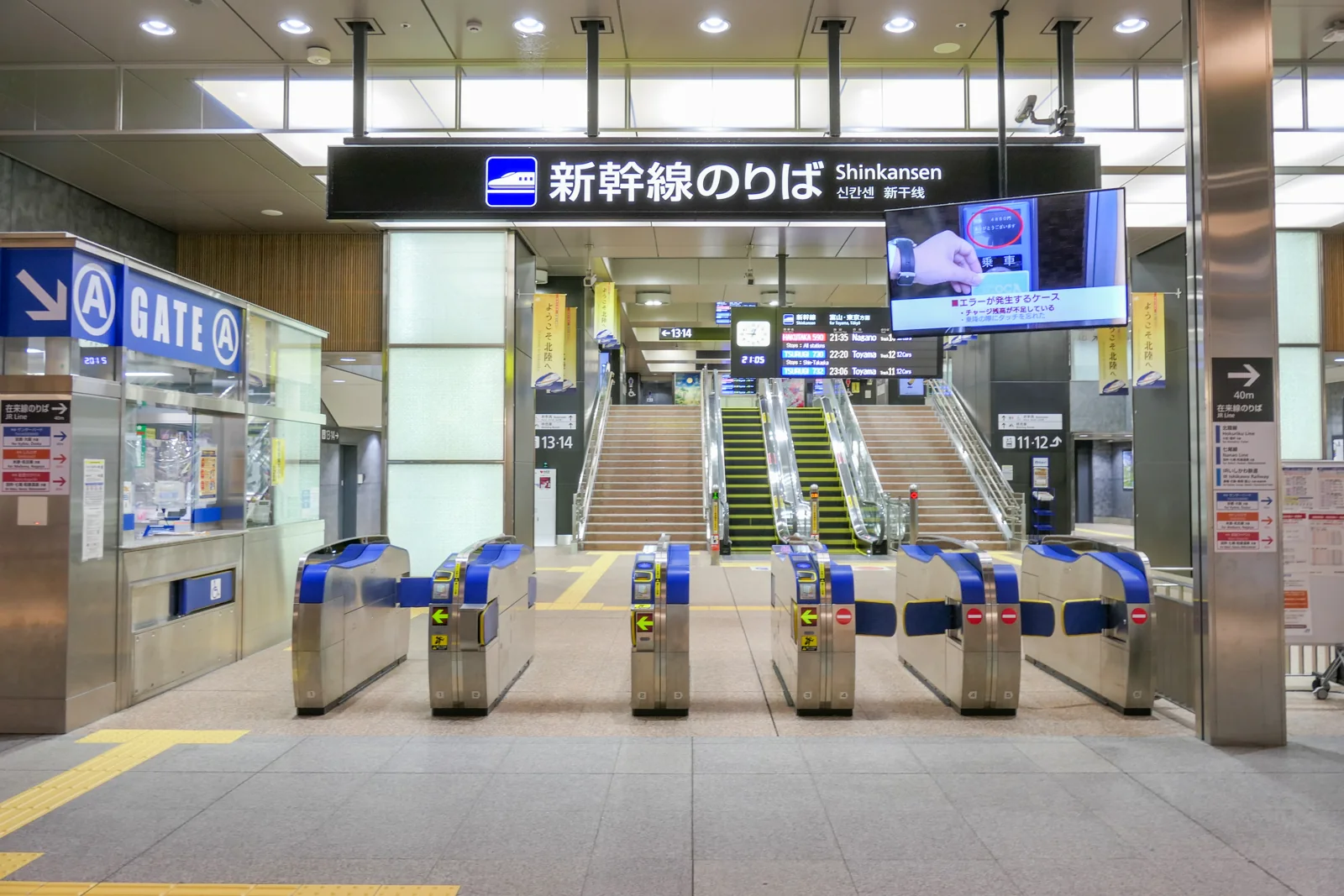
Compare the Hokuriku Arch Pass with individual tickets for a seven-day Tokyo, Toyama, Kanazawa, Tsuruga and Kansai route. Check coverage, reserved seats and transfers.
A ¥22,600 example shows what must make up the difference
For Tokyo to Kanazawa, a few nights there and onward to Osaka, start with two one-way tickets. JR East's FACT BOOK 2026 uses normal-season ordinary reserved-seat fares from the March 2026 timetable and gives Tokyo–Kanazawa as ¥14,600. JR West lists its Hokuriku One-way Ticket between the Osaka city zone and Kanazawa at ¥8,000 per adult. These reference prices total ¥22,600, leaving ¥12,400 below the ¥35,000 Arch Pass. This calculation combines published figures from different dates. Recheck actual prices for your travel day and purchase channel; both legs have their own purchase and usage conditions.
The ¥8,000 Hokuriku One-way Ticket includes ordinary reserved seats on Thunderbird and the Hokuriku Shinkansen within its specified area, with a connection at Tsuruga. It cannot be used to leave the gates at an intermediate station for sightseeing and then continue. Buy this offer from a designated overseas travel agency; it is unavailable for purchase in Japan. Exchange requires a passport, and users need a foreign-government passport and Temporary Visitor status. The JR page dates its price information February 5, 2025. Check current availability, fares and eligible Osaka city stations with the selling agency before departure. For an overnight stop in Fukui, price two separate legs rather than splitting this Kanazawa–Osaka one-way ticket across two days.
The difference is ¥12,400. Add other covered rides to the calculation next. For an extra Kanazawa–Toyama return, check tickets for both actual dates first. Add covered airport and city JR fares if relevant. Only when these exceed the difference could the pass be cheaper under this set of prices. For a simple one-way route, first consider how much transport outside the pass the individual-ticket savings could buy. Agency prices, validity periods and actual tickets affect the outcome; you can replace the example with current fares.
| Item | Reference price | Conditions |
|---|---|---|
| Tokyo→Kanazawa | ¥14,600 | JR East FACT BOOK 2026: March 2026 normal-season one-way reserved seat |
| Kanazawa→Osaka city zone | ¥8,000 | JR West Hokuriku One-way offer from designated overseas agencies; invalid for onward use after leaving at an intermediate station |
| Combined one-way tickets | ¥22,600 | Sum of two published reference prices |
| Seven-day adult Arch Pass | ¥35,000 | Seven consecutive calendar days in Japan |
| Difference | ¥12,400 | Other covered rides must exceed this difference to change this calculation's comparison |
A one-way route with three major luggage moves
Stay in Tokyo on day 1. On day 2, take your booked Hokuriku Shinkansen to Toyama and leave bags at the hotel or storage facility. Use Toyama as a base on day 3. Choose a destination first, then check its transport operator, journey time and last return, budgeting local trams and other private railways separately. Move from Toyama to Kanazawa on day 4 and store bags before exploring. Concentrating transfers into one morning or afternoon avoids dragging large suitcases around the entire city that day.
A Toyama base day can include the Glass Art Museum. From Toyama Station, take a city tram toward Minami-Toyama-Ekimae for about 12 minutes, alight at Nishicho and walk about one minute. TOYAMA Kirari's exterior reflects light in glass, aluminum and stone. Inside, Toyama cedar boards, glass and mirrors surround the diagonal atrium. As you go upstairs, look at how light enters the building.
The ¥200 permanent-exhibition ticket for general visitors and university students covers the fourth-floor collection exhibition and sixth-floor Glass Art Garden, featuring Dale Chihuly's glass installations. The fourth-floor exhibition “Weaving Glass, Weaving Hearts” runs through November 29, 2026. Start with the lines and woven forms of the glass.
From October 31, 2026 to January 24, 2027, floors two and three host an exhibition on Finnish sauna culture, including a recreation of an Alvar Aalto-designed sauna and everyday objects. It is a cultural exhibition, with no sauna bathing on site. General admission of ¥1,200 includes the permanent displays on floors four and six. For glass works alone, choose the ¥200 ticket. Hours are 9:30–18:00, with last admission at 17:30 and closure on the first and third Wednesday each month. The sauna exhibition also closes December 29–January 3.
Stay in Kanazawa on day 5. On day 6, take the Hokuriku Shinkansen to Tsuruga and change to Thunderbird for Kyoto. Spend day 7 in Kyoto or Osaka and arrange the final ride around your departure date. If day 1 is only local Tokyo travel, starting the pass on day 2 keeps day 8 covered. If day 8 has no covered long-distance or airport journey, that start is still possible, but compare the full individual-ticket and pass totals again.
Reverse the route if useful: arrive at Kansai Airport, stay in Kyoto, then travel through Tsuruga and Kanazawa to Toyama and Tokyo. Decide nights at each stop before booking. For two days around Toyama, you could reduce Kanazawa to one night, accounting for luggage transfers taking part of the day. With older relatives or children, two nights in each of two cities usually preserves rest and meal time better than changing hotels daily.
For a Fukui stop on day 6, search Kanazawa→Fukui, Fukui→Tsuruga and Tsuruga→Kyoto separately. Forward bags to that night's accommodation or use storage near Fukui Station to reduce carrying. These are individual rides within the Arch Pass's valid days, requiring seat reservations for each train. They differ from the previous section's Hokuriku One-way offer, which does not permit intermediate exits. The ¥22,600 example cannot directly price a stopover itinerary.
For Shirakawa-go or Takayama, price the extra leg first
Check the operators, departures, reservation procedures and fares separately for buses linking Kanazawa or Toyama with Shirakawa-go and continuing to Takayama. Arch Pass coverage lists specified railways and Tokyo Monorail; inter-area Shirakawa-go buses require separate tickets. For Kanazawa→Shirakawa-go→Takayama, first check seats on both buses, consider luggage storage and hotel changes, then choose the rail pass start date.
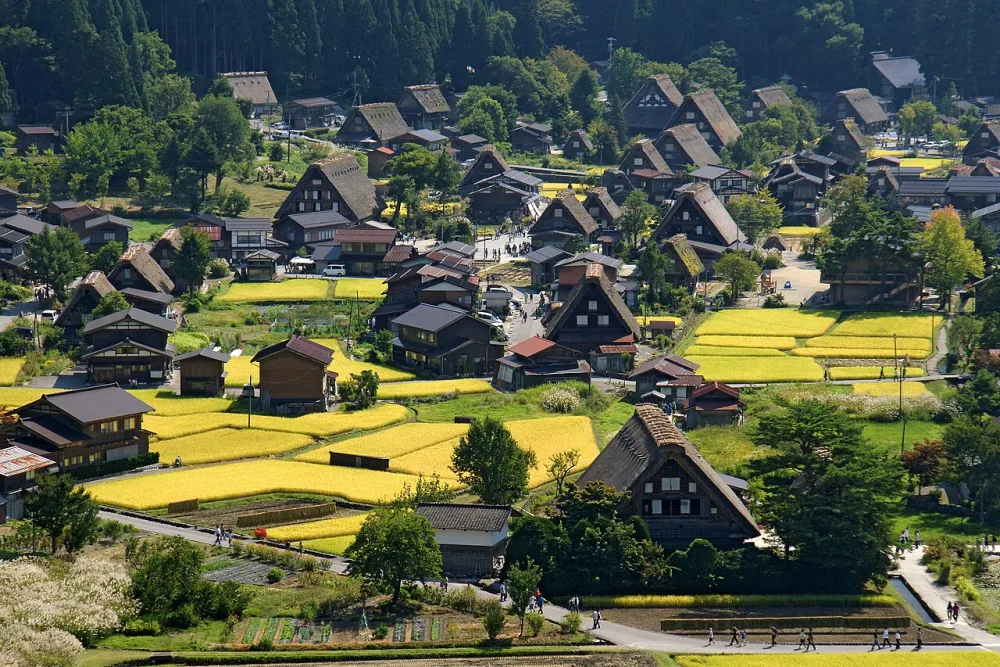
If Shirakawa-go is central to the trip and Nagoya is an endpoint, compare the Takayama-Hokuriku Area Tourist Pass. This is a separate product: use its own official coverage, validity and bus reservation rules, and calculate Tokyo travel separately. If Shirakawa-go is only a day trip from Kanazawa, first total return bus fares and your main JR journeys rather than buying a pass just because an attraction appears in its description.
For a day return between Toyama and Kanazawa without buses, compare actual Hokuriku Shinkansen departures and fares. It offers a faster link, but stops and seating differ by train, so reserve assigned seats first. For stops along the way, check local-line fares and the limited Ainokaze Toyama Railway through-travel conditions described elsewhere in this guide. An exception requiring a complete ride between its endpoints does not allow unlimited intermediate stops.
From Tokyo: Hokuriku Shinkansen to Toyama, Kanazawa and Tsuruga
The Hokuriku Shinkansen runs from Tokyo toward Nagano, Toyama, Kanazawa and Tsuruga. The pass covers ordinary reserved seats within Tokyo–Tsuruga; reserve before riding. Search with actual dates and boarding and alighting stations because stops differ by train. For Toyama, choose a service that stops there. For Kanazawa followed by Fukui, reserve the two legs separately.
A Tokyo day often mixes subway, private railway and JR journeys. The pass covers specified JR lines within its area and Tokyo Monorail; subways, other rail operators and out-of-area travel cost extra. For airport journeys, search using the actual terminal and hotel station and list each operator. Both endpoints being in Tokyo does not make every transfer in a search result covered.
Set long-distance seat reservations from Tokyo or Toyama alongside hotel moves. Groups wanting nearby seats should choose an acceptable departure window before the train and seats. If peak-time seats are scattered, try adjacent departures or adjust groupings. Check the date, train, car and seat number after reserving, then match the platform display. With large bags, allow station walking and stairs or elevators. A train departure time is not the time to leave your hotel.
Tsuruga transfer: Hokuriku Shinkansen to Thunderbird
From Tokyo, Toyama or Kanazawa toward Kyoto and Osaka, take the Hokuriku Shinkansen to Tsuruga and change to the conventional-line Thunderbird limited express. From Osaka or Kyoto, reverse the transfer there. Record both trains, especially if companions reserve separately, so everyone uses the same connection.
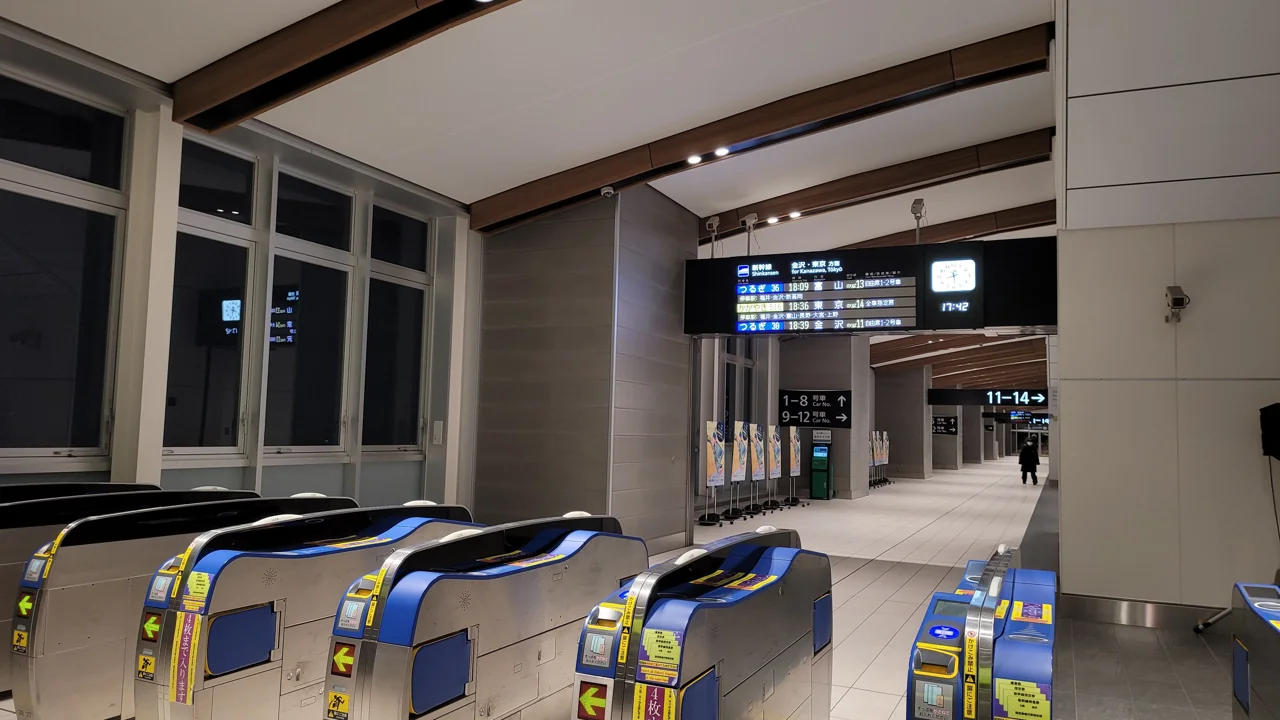
At Tsuruga, change floors and pass through the transfer gates between Shinkansen and conventional lines. Follow station signs. With paper tickets, insert the required tickets for that journey together as directed by JR, then retrieve them after passing. For four or more tickets, use the staffed passage. With strollers, wheelchairs or large bags, check elevator routes and allow longer connections. If you miss a reserved train, ask station staff about what to do next. JR West's Tsuruga transfer guide has route videos in both directions to watch before departure.
Keep the date, train, car, seat and transfer time for both Kanazawa→Tsuruga and Tsuruga→Osaka on one itinerary shared with every companion. The paper pass shows validity dates; the reserved-seat ticket shows the specific train and seat. Keep both. Kyoto passengers also change at Tsuruga. For an Osaka hotel, use its address to choose Osaka, Shin-Osaka or another suitable station and onward transport.
JR West demonstrates the route from the Hokuriku Shinkansen to a conventional-line limited express. View the transfer gates and floors before departure, then find the platform for your own train on arrival at Tsuruga.
Local Hokuriku railways: read all conditions for three exceptions
The pass allows limited through travel on some third-sector railways. On IR Ishikawa Railway between Kanazawa and Tsubata, take a local or limited express over the entire section. Leaving at another station within it or extending beyond it falls outside this through-travel exception. It serves rail connections toward Tsubata, not free boarding and alighting across the whole IR Ishikawa line.
The Ainokaze Toyama Railway exception between Toyama and Takaoka is for local trains only and requires the whole Toyama–Takaoka section. Intermediate exits or travel beyond it do not meet the exception. Budget a separate ticket for an intermediate stop. Takaoka and Shin-Takaoka have similar names but different locations: the former is an Ainokaze Toyama Railway station, while the latter serves the Hokuriku Shinkansen. Write full station names into hotel and transfer plans and check the actual connection.
The Hapi-Line Fukui exception applies only to local trains between Echizen-Hanando and Fukui, not beyond those two stations. These exceptions have different train and section conditions. Connected lines on a map do not establish free boarding and alighting across them. List every station you intend to enter or leave, then compare JR West's official coverage rules.
For a trip from Fukui to the Ichijodani museum, first check JR Etsumi-Hoku Line services to Ichijodani. The museum gives about 15 minutes by train and three minutes on foot. This connects with the limited Fukui–Echizen-Hanando through section and differs from using Hapi-Line to other towns along its route. Keifuku bus 62 from Fukui's west exit or the east-exit Direct costs extra; a JR pass is not a bus ticket. Ichijodani museum access
Kansai Airport, Kyoto and Osaka
The pass includes HARUKA limited expresses and JR services within its area. For Kansai Airport to Osaka or Kyoto, include eligible sections in the calculation. Your hotel determines the station and transfers. For a Kyoto Station hotel, search the airport-to-Kyoto leg, then compare walking, bus or subway onward. In Osaka, compare train stops and the distance to your hotel rather than relying on the city name alone.
For a late flight, allow time after immigration and baggage collection to collect tickets, find the platform and reserve seats. Do not base a train reservation only on the flight's scheduled landing. Handle flight or immigration changes under your purchase channel's reservation rules. If the airport ride falls outside pass validity, price it separately and compare start dates again. Covering the airport need not take priority over a more expensive inter-area journey.
Kyoto and Osaka have JR, subways and other private railways. Compare complete routes from the station nearest your hotel. JR may be covered, but a separately paid subway ride can save walking and time if JR requires repeated transfers. Keep columns for covered costs and extra transport, then multiply by the actual fare-paying family members to compare group totals.
Arch Pass, Kansai-Hokuriku or Hokuriku Area Pass?
For one-way travel between Tokyo and Kansai through Hokuriku, the Arch Pass connects both ends. If the main trip is Kansai and Hokuriku with no Tokyo leg, first compare the Kansai-Hokuriku Area Pass. JR West lists seven days at ¥19,000 for adults, covering the Hokuriku Shinkansen from Tsuruga to Joetsumyoko, Thunderbird within its area and services including the Sanyo Shinkansen from Shin-Osaka to Okayama. It does not cover the full Hokuriku Shinkansen route to Tokyo. Check each pass's own routes and other-railway conditions.
If already in Hokuriku for just a few local days, consider the Hokuriku Area Pass. The official adult price is ¥7,000 for four days. Its Hokuriku Shinkansen coverage is ordinary non-reserved seats from Tsuruga to Kurobe-Unazukionsen; check separate ticket conditions for all-reserved trains. It has independent coverage and rules, so do not transfer every Arch Pass service to it based on the name. Compare fares before and after the area, connection points and days using the whole trip total.
Validity differs: the Arch and Kansai-Hokuriku passes last seven consecutive days, and the Hokuriku Area Pass four. After a longer Tokyo stay, you may need to activate the Arch Pass later for the journey through Hokuriku to Kansai. With no Tokyo at all, calculate Kansai-Hokuriku against individual tickets first. Budget out-of-pass buses and private railways separately for all three.
Children: age first, then separate reserved seats
JR West distinguishes Arch Pass fares by age at purchase or exchange: adult from age 12 and child from 6 to 11. An adult or child pass holder may accompany up to two children aged 1–5 free; each additional child needs a child ticket. Infants under one travel free. A young child using a reserved seat independently or traveling alone needs a child pass. With two young children who each need a reserved seat, arrange passes for their seat needs first, then reserve adult and child seats together.
Do not multiply the adult price by everyone in a family. Two adults and one seven-year-old total ¥35,000 + ¥35,000 + ¥17,500 = ¥87,500 at the listed prices. For the same group on individual tickets, check adult and child fares separately. With young children, decide about separate seats, who will hold them, whether caregivers can sit nearby and how to divide stroller and luggage duties during transfers.
Store each passenger's trains and seats together. If one finishes in Kyoto while the others continue to Osaka, search and reserve to each person's actual endpoint. Passengers needing more boarding time can choose a seat convenient for boarding and reach the platform early. Check luggage arrangements and facilities for the actual train model and operator.
Buying, collecting and reserving seats
Arch Pass users need a foreign-government passport and entry to Japan as a Temporary Visitor. Japanese nationals are ineligible. Show your passport when collecting and carry it during travel for staff inspection. Each passenger uses their own pass; lost or stolen passes cannot be reissued.
JR West online reservations open at 10:00 Japan time one month before travel. The official payment method is payment by credit card in advance, with restrictions excluding virtual cards and cards without a card number. After arrival, collect at a designated station using the reservation number, your chosen four-digit identification number, original payment card and passport, following official instructions. Machine collection requires an IC-chip passport; otherwise use a ticket counter. Overseas agency exchange vouchers have their own exchange deadline: follow the voucher and official rules.
Reserve ordinary assigned seats at machines or station counters. Passes bought through JR West online reservations also offer online seat booking. The official rules state that passes allowing unlimited reserved-seat bookings require a JR ticket office from the seventh reservation onward. If plans change after booking, follow your purchase and reservation channel's procedures rather than leaving a held seat unused. Book before using an all-reserved train; it is not a train where you can simply find a non-reserved seat.
After exchange, the start date, validity period and pass type cannot be changed. No refund is available once validity begins or after expiry. Before use begins, refunds differ by purchase channel and exchange status. The JR page says exchanged passes are refunded at designated Japanese counters for a fee of 10% of the selling price, minimum ¥220 per pass; online reservations have their own conditions. Set the start date once travel dates are settled and save booking and collection details.
From airport collection to your first seat reservation
JR West lists designated collection stations, with methods differing by pass and purchase channel. An electronic exchange voucher from an overseas agency uses that voucher's exchange information, not the online credit-card reservation process. Match your confirmation email with the designated exchange locations and choose a convenient counter or machine still operating when you arrive.
If your first covered ride is the next day and the airport counter has a long queue, you could pay for airport transport, collect elsewhere and activate on the inter-area travel day. This adds that day's fare but may keep day seven available for the final long journey. Compare totals for both starts. If heading straight to Hokuriku, arrange collection and the first reserved seat before entering the gates, with room for flight and immigration changes.
At JR West's green ticket machines, the official reservation steps start by inserting a ticket without a seat assignment into the slot marked “Ticket・Commuter Pass,” then choosing date, time, origin, destination and train. The screen guides seat selection and prints the reserved-seat ticket. Check passenger count, date, direction, train and seat. For a large group, assistance or reservations from the seventh onward, a counter makes it easier to explain everyone's needs together. If seats are already booked online, follow that system's collection instructions. A phone screen does not always replace a required physical ticket.
From Haneda, compare Tokyo Monorail to Hamamatsucho and onward JR using your hotel station and pass coverage. The airport–Hamamatsucho monorail leg is included, but each onward leg to the hotel still needs checking. From Narita, identify the terminal, JR station and actual train before checking the official area map. A hotel-to-Tokyo Station subway ride costs extra.
Seats, supplements and service changes after purchase
The Arch Pass covers ordinary reserved seats within its area. Green Car travel requires separate Green Car and limited-express tickets, and GranClass also needs the relevant additional tickets. Do not assume an upgrade costs only the difference between seat classes; confirm the actual charge at a JR counter or official reservation system. The Tokaido and Sanyo Shinkansen are excluded. Switching to the Tokaido Shinkansen from Tokyo to Shin-Osaka requires buying the tickets for that journey separately.
JR West also lists conditions for some Tohoku and Yamagata Shinkansen services between Tokyo and Omiya, and the Joetsu Shinkansen between Tokyo and Takasaki. HAYABUSA on the Tohoku/Hokkaido Shinkansen and KOMACHI on the Akita Shinkansen require a separate limited-express ticket. These short-section rules can help travelers staying along the route, but do not extend to the whole Tohoku or Hokkaido network. Check train type and boarding and alighting stations against the official table before deciding on extras.
Keep the pass and seat information together after reservation. If the date or direction is wrong before entering, use a counter rather than boarding with the wrong seat assignment. For suspensions and delays, follow that day's station notices and staff instructions. JR West says suspensions and delays do not extend pass validity or qualify the pass for a refund. If connecting to a flight the same day, allow enough transfer and airport check-in time when choosing trains.
Use the fare difference to decide hotel order
For Tokyo in and Osaka out, staying in Toyama then Kanazawa can differ in fare and hotel changes from going straight to Kanazawa and returning to Toyama for a day. The former puts rides on hotel-change days; the latter keeps consecutive Kanazawa nights and saves packing once but adds a return leg. Compare actual train fares and the second hotel's price together. Consecutive nights reduce check-ins for a short trip; separate stays make dinners in both cities easier to arrange.
If traveling Tokyo–Kanazawa–Osaka without leaving Kanazawa in between, keep the gap between the ¥22,600 reference combination and ¥35,000 Arch Pass in your initial budget. Changing to Tokyo→Toyama→Kanazawa→Fukui→Kyoto creates four legs. The original Tokyo–Kanazawa reference fare and Kanazawa–Osaka offer no longer directly represent the total. For each extra station where you exit and stay, reprice the new station combinations rather than adding one Shinkansen fare to the old calculation.
After buying, keep a simple record of the purchase channel, each person's pass, validity dates, where collection details are stored and booked trains. Before reaching Kanazawa, check the next reservation; before Tsuruga, confirm the connecting Thunderbird or Shinkansen. Budget city transport, attraction admission and meals separately.
A few useful answers
How much does the Hokuriku Arch Pass cost, and how are the seven days counted?
As of October 27, 2026, JR West listed the seven-day pass at ¥35,000 for adults and ¥17,500 for children. It runs for seven consecutive calendar days in Japan, so the first day counts even if you first board in the evening.
Where do I change trains from Tokyo to Kyoto or Osaka with the Hokuriku Arch Pass?
Change at Tsuruga Station from the Hokuriku Shinkansen to the Thunderbird limited express for Kyoto or Osaka. The pass covers reserved seats in ordinary cars on both trains. The direct Tokaido Shinkansen from Tokyo to Shin-Osaka requires a separate ticket.
For Tokyo to Osaka with just a stop in Kanazawa, is the Hokuriku Arch Pass cheaper than one-way tickets?
In the adult fare example, separate tickets total ¥22,600, saving ¥12,400 over the pass. That pairs a ¥14,600 regular-season reserved seat from Tokyo to Kanazawa with the ¥8,000 Hokuriku One-way Ticket from Kanazawa to Osaka, sold through designated travel agencies outside Japan.
How do I reserve seats with the Hokuriku Arch Pass?
Reserve ordinary-car seats at a ticket machine or station ticket office. If you bought the pass through JR West’s online reservation service, you can also book seats online. From the seventh reservation onward, use a JR ticket office.
Official information and references
Sources used in this guide.
- JR West: Hokuriku Arch Pass
- JR East FACT BOOK 2026, page 19
- JR West: Hokuriku One-way Ticket
- JR West: Tsuruga Station transfers
- JR West: Kansai-Hokuriku Area Pass
- JR West: Hokuriku Area Pass
- JR West: pass exchange locations
- JR West: ticket machine instructions
- Takayama-Hokuriku Area Tourist Pass
- Ichijodani museum: rail and bus access
- Toyama Glass Art Museum: permanent exhibitions and admission
- Toyama Glass Art Museum: TOYAMA Kirari architectural concept
- Toyama Glass Art Museum: hours, closures and access
- Toyama Glass Art Museum: Weaving Glass, Weaving Hearts, June 6–November 29, 2026
- Toyama Glass Art Museum: Finnish Sauna Culture exhibition, October 31, 2026–January 24, 2027