Travel from Niigata to Yahiko with Yoshida connections and return trains planned first. Compare the shrine, park and ropeway, with fares, goshuin hours, the summit shrine walk, foothill lunch and slower family routes.
- Region & Focus
- ChubuSide trips
- Reading Scope
- 30 min read · 15 chapters · 5 Q&As
- Official Verification
- 17 official sources checkedUpdated November 9, 2026
- Key Topics
- ItinerariesRail travelSeasons
Chapter Route Map (tap any stop)
- Choose a foothill half-day or a full day with the mountain
- From Niigata, check the Yoshida connection; Tsubame-Sanjo is another approach
- On arrival, save the shrine, park and route back to Yahiko Station
- Follow the shrine path to the worship hall; four claps are officially explained
- Get a goshuin or amulet before the mountain; the counter closes at 16:00
- Take the free shuttle beside the shrine, rather than searching for it at the station
- Buy a return ropeway ticket; add the observation tower only if interested
- Keep upper-station views and the Goshinbyo walk as two different options
- After descending, three stages still separate you from the train
- The park entrance is close, but Momijidani needs walking time
- Eat below; do not rely solely on the mountain restaurant on weekdays
- A foothill day: park, lunch and shrine, then an early return to Niigata
- A mountain day: shrine in the morning, then views or Goshinbyo
- Autumn and winter: check foliage, opening days and trains separately
- With children, older relatives or wheelchairs, finish with a route everyone can manage
- Quick Q&A
Choose your Yoshida connection and return train before deciding whether to go up the mountain from Yahiko. The park beside the station and Yahiko Shrine within walking distance already make a relaxed day. In good weather with a morning arrival, add the ropeway and mountain views. To reach Goshinbyo, the summit shrine, you still need about 20 minutes on foot each way after leaving the upper station. Allow for that walk so lunch, a goshuin shrine seal and the return to Niigata all fit into the day.
Choose a foothill half-day or a full day with the mountain
Yahiko suits a train trip from Niigata City to visit the shrine and park before returning to your city accommodation. For a first visit, ask whether your group most wants the shrine forest, Momijidani valley or the Echigo Plain seen from above. Without the mountain, the station, park and shrine form a walking circuit. Adding the ropeway requires time for queues, the ascent and descent, and returning to the station. Keeping the mountain as an option on arrival is generally easier than committing to every extra purchase in Niigata.
For time spent in Yahiko itself, start with three to four hours for the shrine and park, or four to five hours with a seated lunch and shops. Allow roughly another two hours for the return ropeway trip and views at the top. To visit Goshinbyo, add at least 40 minutes of walking there and back plus worship time. These are planning allowances excluding travel from and back to Niigata. With older relatives, children or frequent photo stops, start at the more generous end.
The foothill worship hall at Yahiko Shrine, the ropeway’s upper station and Goshinbyo at the summit are three separate places. This is where plans often become compressed: they include the five-minute ropeway ride but omit the walks from station to shrine, shrine to lower station and upper station to Goshinbyo. For an afternoon arrival, the shrine and park make a complete visit. Go higher only with enough time, preserving room for a seated meal before returning.
| Version | Included | Planned stay | Best suited to |
|---|---|---|---|
| Short foothill visit | Shrine, part of the park and a simple meal | Three to four hours | Afternoon arrival or unsettled weather |
| Slow foothill walk | Shrine, park and lunch in the streets | Four to five hours | Autumn leaves, older relatives or children |
| Ropeway views | Foothill route plus ropeway and upper viewpoints | A full day | Fine weather and morning arrival |
| Goshinbyo walk | Ropeway views plus summit worship walk | A full day, ascending early | Willing to walk slopes and steps; mountain focus |
Travel from Niigata to Yahiko with Yoshida connections and return trains planned first. Compare the shrine, park and ropeway, with fares, goshuin hours, the summit shrine walk, foothill lunch and slower family routes.
From Niigata, check the Yoshida connection; Tsubame-Sanjo is another approach
On conventional trains from Niigata Station, take the Echigo Line toward Yoshida, then change to the Yahiko Line for its terminus, Yahiko. Keeping the Japanese search terms 弥彦 and 吉田(新潟) makes identification easier. Yahagi is the preceding stop; stay on to Yahiko for the shrine and park. Yahiko Village’s public-transport page links directly to JR station timetables. Use it for the relevant edition and avoid saving a Yoshida Station in another prefecture.
The local train from Yoshida to Yahiko takes only about eight to nine minutes; the challenge is frequency. JR’s currently published November 2026 weekday timetable includes Yoshida departures for Yahiko at 10:28 and 13:38, more than three hours apart. Sleeping another half-hour in Niigata and missing your connection could remove the whole late morning. Search all the way to Yahiko, including transfer waits, before choosing your departure from Niigata.
From Tokyo or Nagaoka, you can also join the Yahiko Line at Tsubame-Sanjo on the Joetsu Shinkansen. The shrine’s official access page lists this approach too. The line passes through Yoshida; continue to its terminus. For a stay in Niigata City, the Echigo Line is the simpler out-and-back route. If you and your luggage are already at Tsubame-Sanjo, check connections there instead of traveling north to Niigata only to double back for the same route.
Decide where you will sleep before planning luggage. If staying another night in Niigata, leave large bags at your accommodation and travel with a small bag rather than pulling a suitcase through the park and shrine approach. If leaving Niigata that night, search from Yahiko through to your final destination, including Shinkansen or other connections. Allow for collecting stored luggage, buying dinner and changing platforms. Arrival at Yoshida is not arrival back in Niigata.
On arrival, save the shrine, park and route back to Yahiko Station
Yahiko Station is the easiest meeting point to recognize all day. Photograph the return timetable and identify the station entrance before walking away. Take photos of its shrine-style building now too. Distinguish the station exterior from the shrine worship hall. For the return, navigate to 弥彦駅 rather than searching only 弥彦, which may point to the wider village or mountain.
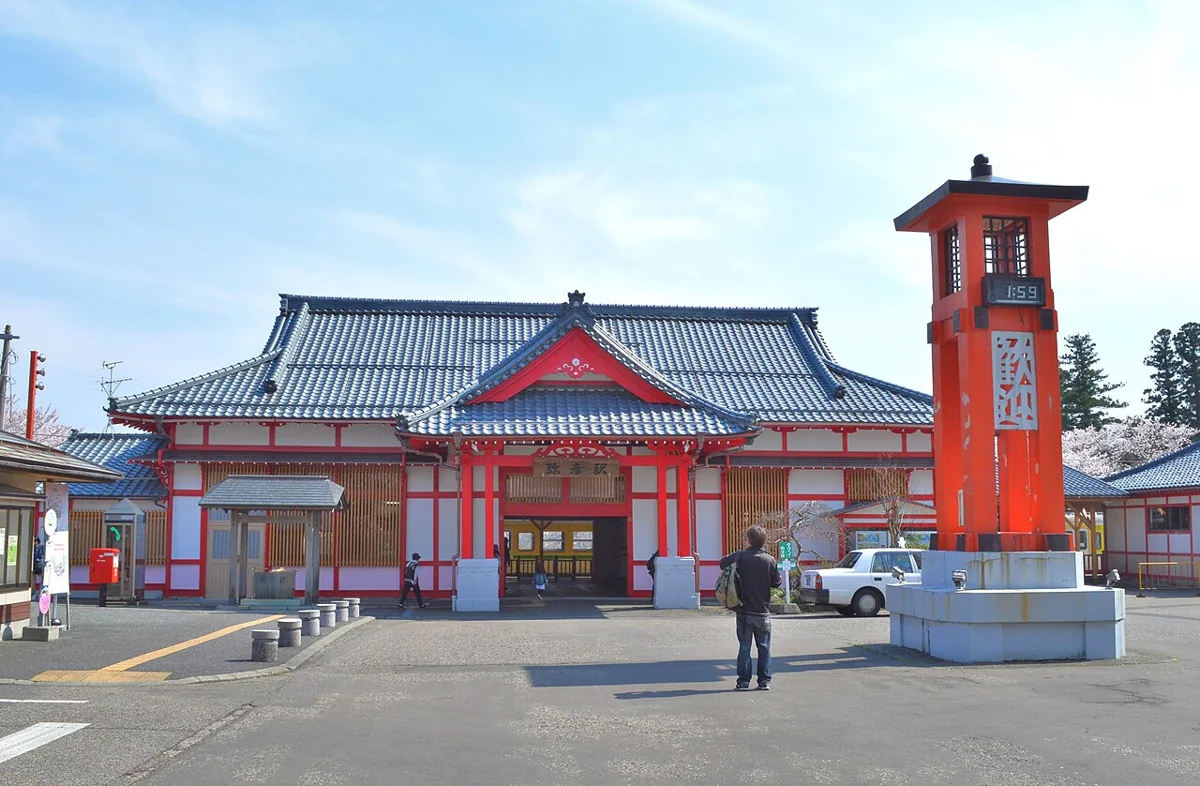
The shrine’s official directions give about one kilometer or 15 minutes on foot from Yahiko Station to the shrine. This is approach time; beyond the torii you still have the shrine path and worship stop. Yahiko Park is near the station, with the Niigata Prefecture Tourism Association listing about a one-minute walk to its entrance. You can enter straight after arrival, but Momijidani, bridge photos and walks within the park take additional time. A nearby entrance does not make the whole park a five-minute visit.
Save Yahiko Station, Yahiko Shrine, Omotenashi Plaza and Yahiko Park separately, plus the ropeway lower station only if going up the mountain. The first four are the main foothill walking points; the last is the mountain access point. Walking to the shrine before deciding on the ropeway makes the route easier to understand than chasing the shortest map route to the lower station immediately after leaving the train.
If one group goes up and another rests below, choose the station or an agreed shop as the meeting point, before your planned return train. The mountain group must include the descent, shuttle and walk to the station. The foothill group must check shop closing times. Do not meet at an unnamed “torii,” or use the last train as your only meeting deadline.
Follow the shrine path to the worship hall; four claps are officially explained
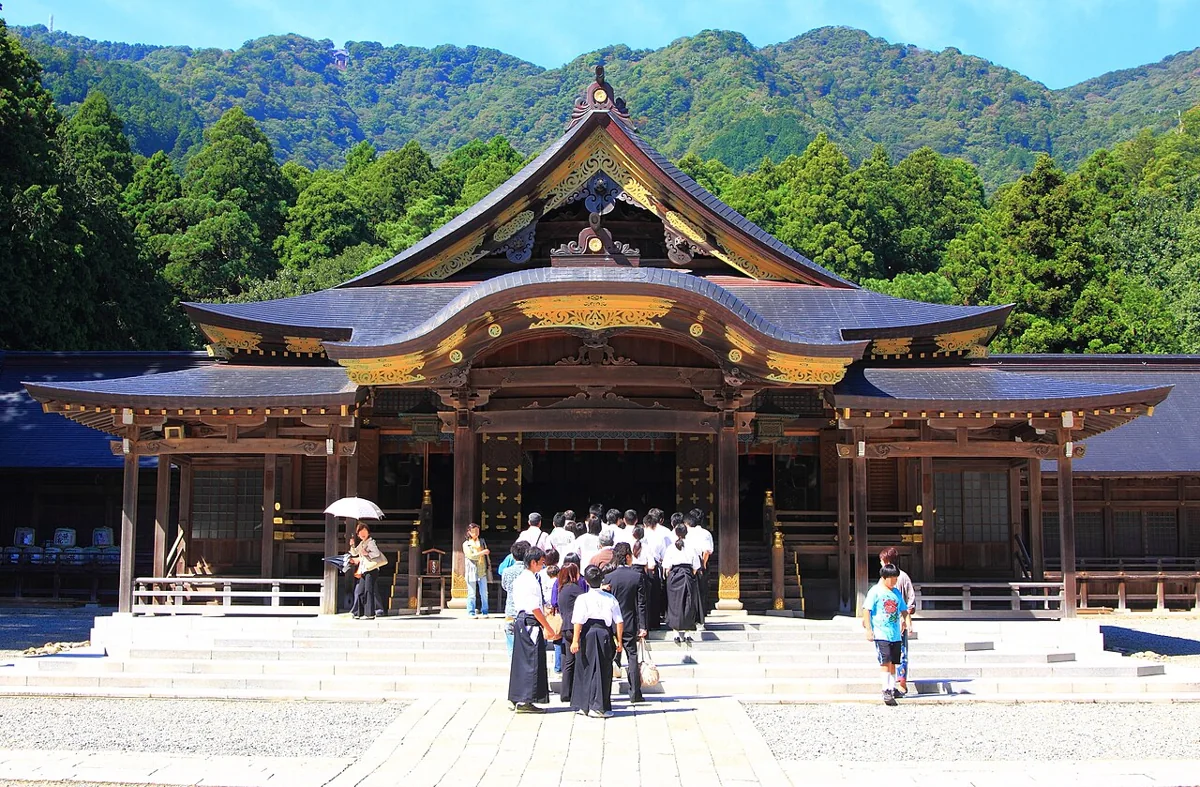
Yahiko Shrine stands at the mountain’s foot and enshrines Ame-no-Kagoyama-no-Mikoto. Entering through the first torii, the approach, purification basin, second torii and Zuishinmon Gate give the visit a clear order. The official worship guide advises a slight bow when passing through a torii and walking away from the center of the approach, then worshipping at the hall. Use the full shrine name and address, Yahiko 2887-2, in maps to distinguish it from the large torii elsewhere.
The custom here is two bows, four claps and one bow. The shrine also explicitly permits the more usual two bows, two claps and one bow. If companions forget, quietly follow the instructions on site rather than rehearsing repeatedly at the head of a queue. Official guidance allows people to spread sideways when crowded; there is no rule restricting each turn to one person or family. You need not crowd into a single long central line.
Allow about an hour for the shrine initially, extending it for buildings, explanations or a goshuin wait. This is a travel-planning allowance, not a requirement to visit every corner. Follow the approach to the worship hall and choose places that interest you on the way back. Avoid photographing people at prayer, keep approach entrances and gateways clear, and rest where stopping is allowed.
In a September 1, 2026 notice, the shrine says bare feet and excessively revealing clothing are not accepted before the deity, and asks visitors entering the hall to prepare themselves and dress appropriately. If requesting formal prayers and entering the worship hall, put socks on before leaving instead of sourcing them at reception. Walking the grounds, formal prayer and receiving amulets use different routes. Check the relevant reception conditions for a specific ceremony; time set aside for sightseeing is not a ceremony reservation.
Get a goshuin or amulet before the mountain; the counter closes at 16:00
The shrine lists ofuda talismans, omamori amulets and goshuin seals at the distribution counter from 08:30 to 16:00. If these are important, worship and visit the counter before taking the ropeway. Descending from the upper station at 16:00 still leaves the journey back to the shrine and risks missing the counter. A 17:00 final downhill ropeway does not mean the counter stays open until then.
Keep your goshuin book where it is easy to reach and have it ready before queuing. Writing and distribution methods follow the counter’s arrangements that day. Companions can wait at a clear location before everyone goes up together. Sending one group to the counter and another ahead to the shuttle creates another contact and meeting step, made harder by service intervals.
In November, combine the chrysanthemum exhibition with worship. The shrine homepage lists its annual offering exhibition from November 1 through 24. Flower displays add time for viewing and photos. If chrysanthemums are your main purpose, make the mountain an option only if time remains. Plant enthusiasts can compare the training of many-bloom displays and small-flowered chrysanthemum bonsai. You need not spend equal time in each area; linger over the works you like.
Take the free shuttle beside the shrine, rather than searching for it at the station
The ropeway operator lists a free shuttle from beside Yahiko Shrine’s worship hall to the lower station, about a two-minute ride, coordinated with ropeway arrivals and departures. This is a transfer between shrine and ropeway. From Yahiko Station, walk to the shrine first. Follow signs beside the worship hall and confirm the shuttle is bound for Ropeway Sanroku Station before boarding. On return, find the shrine-bound shuttle at the lower station.
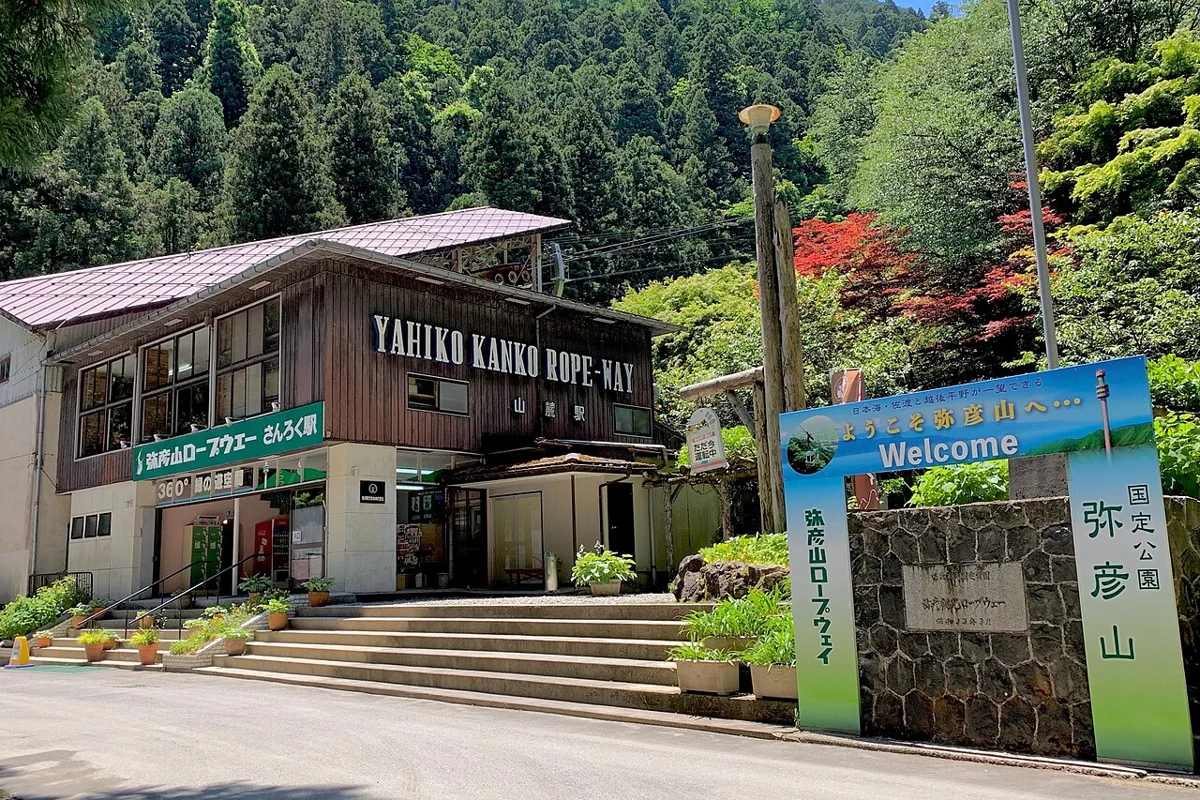
The operator lists 29 seats on the shuttle and a ropeway capacity of 32 people. For a large group, do not treat the two capacities as a shared reserved-seat plan. Gather everyone at the boarding point first, then board according to the queue. Include waiting, boarding and getting off in your visit. The two-minute ride indicates distance, not the total transfer time.
If you want to walk to the lower station, the Manyo no Michi route introduced by the tourism association is an option to compare. For a first day trip, use the shuttle initially and save energy for the shrine or park. If the return shuttle has a wait, check your time to the station before changing plans. A short map distance is not a reason to improvise an unfamiliar path. In rain or fading light, return by a recognizable route you already know.
Wheelchair and stroller users, and those unable to manage stairs independently, can ask the operator at 0256-94-4141 about assistance before departure. Describe dimensions, whether the aid folds and whether the user must stay seated throughout. Ask about the shrine-side shuttle, lower station, ropeway cabin and upper routes together to decide how everyone can travel. Simply asking whether there is a ropeway does not resolve the transfers in between.
Buy a return ropeway ticket; add the observation tower only if interested
As of October 27, 2026, the operator’s individual ropeway fares including tax are ¥1,500 return or ¥800 one way for adults, and ¥750 return or ¥400 one way for children. Adults are aged 12 and over; children are three to 11; under-threes ride free. Use these age bands for a family budget instead of importing another operator’s child definition. Two adults and an eight-year-old pay ¥3,750 for the return ropeway.
A return ticket is the straightforward choice for an ordinary car-free day. Two adult one-way tickets cost ¥1,600, ¥100 more than a return; two child singles cost ¥50 more. One-way users usually already have a hiking route or collection on the other side planned. For travelers arriving by train with walking shoes and a small bag, keep the ropeway descent. Hiking down needs a route, equipment and stamina; it is not an improvised fallback after missing the last downhill service.
The Panorama Tower has separate admission of ¥650 for adults and ¥350 for children. The operator lists an approximately eight-minute ride, operating April through the end of November from 09:30, every 20 minutes on weekdays and every 15 on weekends and holidays. It is a rotating, elevating observation tower. Add it if you want views from different angles. If the ropeway and upper viewpoints are enough, save that time for Goshinbyo or lunch below.
The Climbing Car links the summit parking lot and observation building in about one minute. Return fares are ¥380 for adults and ¥260 for children; one-way fares are ¥220 and ¥160 respectively. It serves movement between those two mountain facilities. After arriving by ropeway, decide whether your chosen facilities require it. Check positions on site before buying so you do not treat all three rides as compulsory mountain costs.
| Item | Adult | Child | Conditions |
|---|---|---|---|
| Return ropeway | ¥1,500 | ¥750 | Adults 12+; children aged three to 11 |
| One-way ropeway | ¥800 | ¥400 | Arrange the return or hiking route separately |
| Rotating, elevating observation tower | ¥650 | ¥350 | April through late November; separate from ropeway fare |
| Return Climbing Car | ¥380 | ¥260 | Summit parking lot to observation building |
Keep upper-station views and the Goshinbyo walk as two different options
The ropeway takes about five minutes from lower to upper station. Check the day’s return information and mountain map after getting off, then choose how far to go. For views toward the Echigo Plain and Sea of Japan, stay around the upper station and observation facilities and find a good viewpoint. Linger with clear visibility; descend early if clouds hide the view. The shrine and park below still offer places to walk.
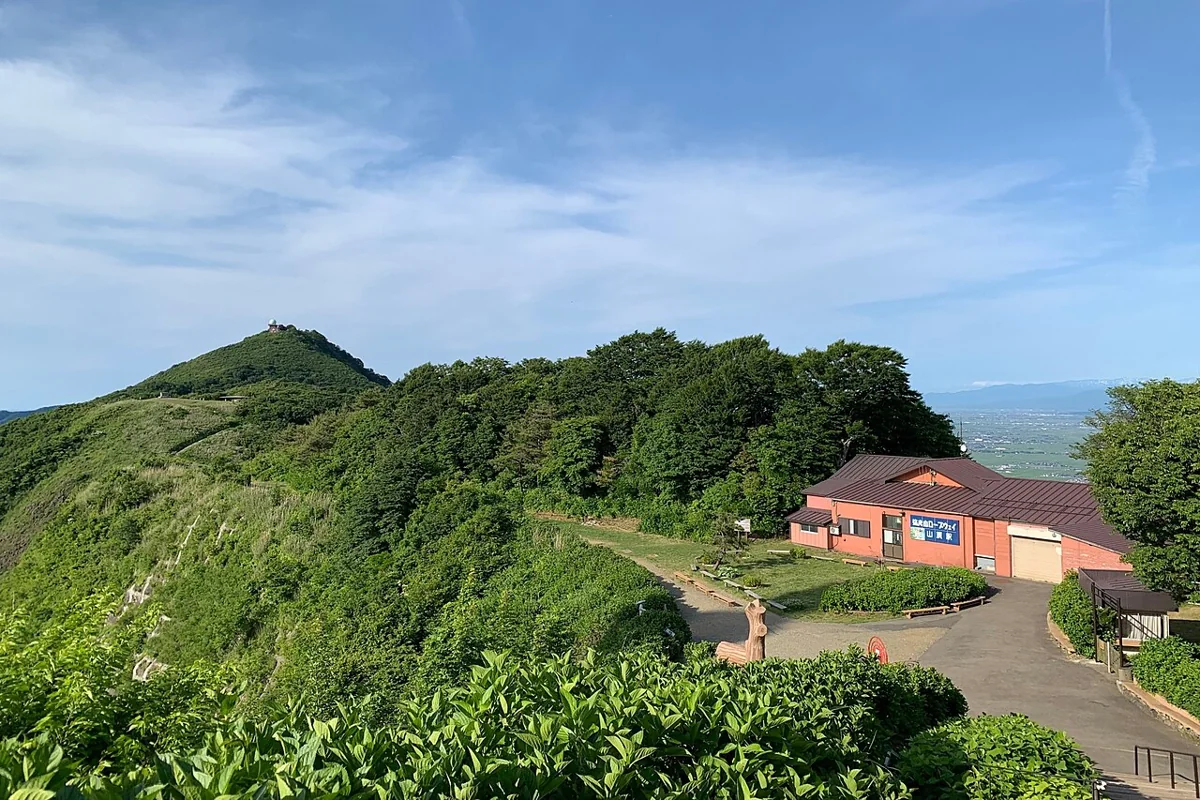
Goshinbyo stands at Mount Yahiko’s summit and enshrines Ame-no-Kagoyama-no-Mikoto and Umashiho-ya-hime-no-Mikoto. The operator’s facilities page lists about 20 minutes on foot each way from the upper station. After the ropeway, that means at least about 40 minutes of walking there and back plus worship, photos and rest. If someone only wants the ride, agree beforehand whether everyone walks to Goshinbyo or some wait separately. Do not leave those unwilling to walk slopes and steps feeling forced to continue at the top.
The time difference changes lunch plans directly. For views alone, return below for a full lunch. If Goshinbyo is the priority, eat something and bring water before going up, and shorten foothill shopping. Adding every mountain activity often leaves even rest feeling rushed. Choose Goshinbyo for walkers or observation facilities for those wanting less walking, spending the day on what actually interests you.
Set the return time before starting the walk. For example, to be back at the upper station at 15:30, subtract the one-way walk and worship stop from that time. Turn back earlier if the ground is slippery or someone walks slowly. Clouds change quickly and photo stops consume time. If the path is unclear or you feel unwell, retrace your route to the station. A margin at the upper station is more useful than rushing the final stretch of trail.
After descending, three stages still separate you from the train
On October 27, 2026, the operator’s “today’s information” showed a 09:00 first service, final uphill at 16:40 and final downhill at 17:00. These are operating details for that day. Winter hours are shorter: the prefectural tourism page lists 09:00–16:00 from December to early March and Tuesday closures from December to around the end of March. Read the operator’s same-day display before ascending, distinguish uphill from downhill and note your planned descent.
After the last downhill ropeway, you still need the lower-station shuttle to the shrine and the walk from shrine to Yahiko Station before JR. Descend earlier for a 17:21 train. Planning the 17:00 final descent with that train leaves no margin for the shuttle wait and walk. The suggested daytime return targets below are 16:10 or 17:21, reaching the station 15 minutes beforehand to organize belongings, use the toilet and find the platform.
JR’s November 2026 weekday edition, already published as of the check date, gives the connections below. These are local trains, without treating limited-date, all-reserved rapid trains as daily services. A 17:21 departure from Yahiko arrives at Yoshida at 17:30, connecting with the 17:39 for Niigata, arriving 18:35. Those nine minutes are transfer time, not time to shop outside the station.
In that weekday edition, the final local train from Yahiko leaves at 20:25, reaches Yoshida at 20:34 and connects with the 20:43 Echigo Line train arriving at Niigata at 21:35. Later Echigo Line trains at Yoshida cannot supply the missing first leg if you miss Yahiko’s last train. For evening park events, choose a usable return and set your park departure around it. For a daytime shrine-and-mountain visit, dinner back in Niigata is usually more relaxed.
Weekends, holidays and extra autumn services use separate timetables. Some departures at the same time also change operating dates. Check the month and weekday or weekend/holiday category, then open the train’s full stopping pattern. Search all the way from Yahiko to Niigata to join the Yoshida transfer properly. If the Echigo or Yahiko Line is suspended, ask station staff about that day’s alternative transport. Until you have a departure time and boarding point for an alternative, waiting at the known station is better than walking toward the next one.
| Yahiko dep. | Yoshida arr. | Yoshida dep. for Niigata | Niigata arr. | Purpose |
|---|---|---|---|---|
| 16:10 | 16:19 | 16:26 | 17:18 | Early return for dinner in town |
| 17:21 | 17:30 | 17:39 | 18:35 | Full daytime visit |
| 18:22 | 18:31 | 18:43 | 19:36 | More time below the mountain |
| 20:25 | 20:34 | 20:43 | 21:35 | Last Yahiko local in this edition |
The park entrance is close, but Momijidani needs walking time
The Niigata Prefecture Tourism Association lists Yahiko Park at 132,000 square meters, with streams, waterfalls, tunnels and the vermilion Kangetsukyo Bridge. Enter beside the station and save Momijidani and the bridge as targets for autumn foliage. A photo near the station and a walk into the valley take very different amounts of time. Allow 45–90 minutes in a foothill plan, longer for plant photography, with enough flexibility to adjust before your train.
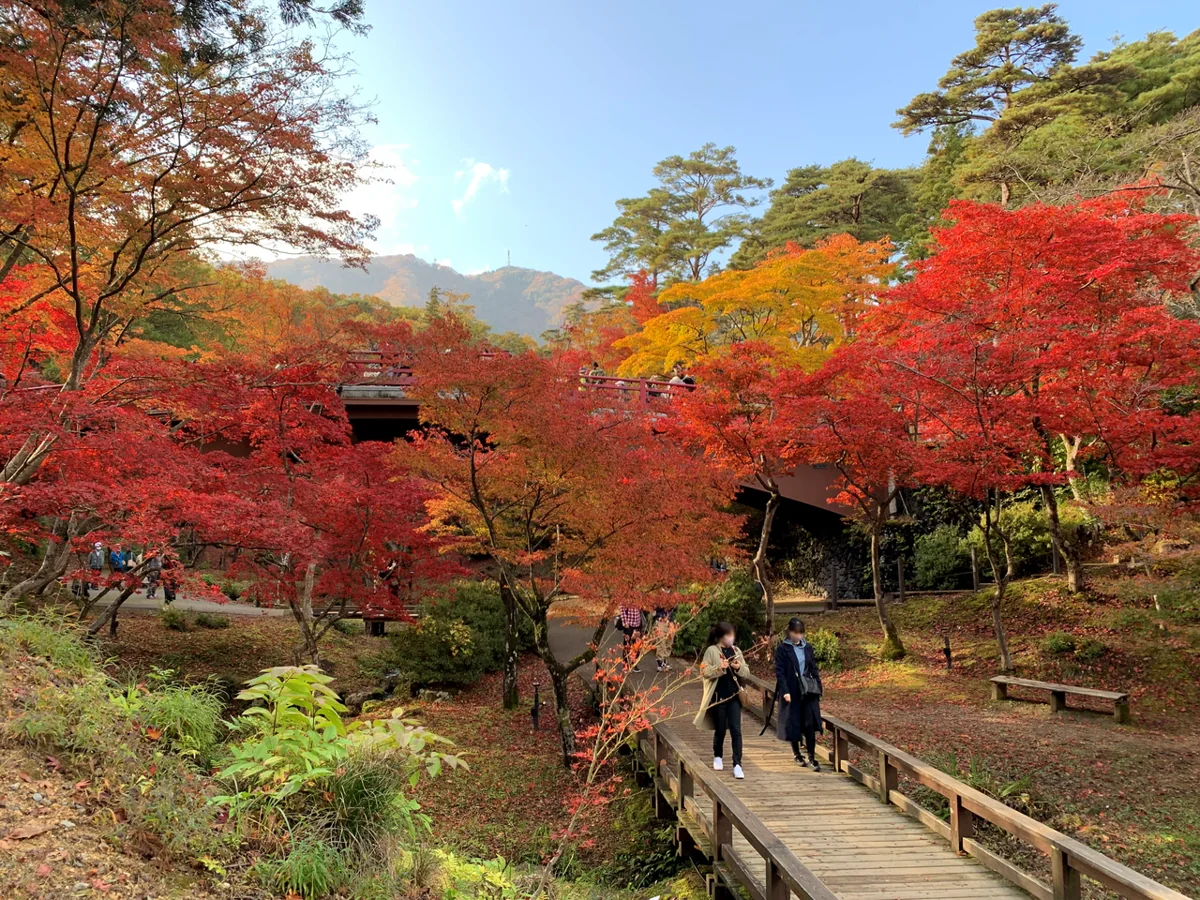
After a mountain visit, the park fits naturally toward the end near the station. If autumn leaves are the main purpose, visit the valley first in daylight, then the shrine. Paths rise and fall. Stop for photos without blocking others; when the bridge is crowded, cross it and wait on the bank or in a wider place. After rain, wet leaves underfoot deserve more attention than the photo angle.
On October 27, 2026, the prefectural page’s foliage update said green leaves to some beginning to color, with the usual peak listed as early to late November. Use a dated condition report like this to choose a visit for the season’s colors. In spring, turn your attention to cherry blossoms and paths rather than following an autumn photo sequence.
The prefectural tourism information lists all-day access and information about wheelchairs and accessible toilets. Wheelchair loans are handled by the Yahiko Tourism Association. If you need a gentler route, ask about your intended entrance, the Kangetsukyo area and the route back to the station together, then choose usable paths. The park is large; one section is enough for a car-free day. Keeping time to reach the station is more useful than following every branch.
A Momijidani video filmed by mugi226 on November 10, 2017, and selected by the Niigata prefectural tourism website. Its autumn colors and paths introduce the landscape of the park section.
Eat below; do not rely solely on the mountain restaurant on weekdays
Omotenashi Plaza is at Yahiko 1121. The prefectural tourism association lists it about five minutes on foot from Yahiko Station, with food, sweets, produce and footbaths. General hours are 10:00–16:00, varying by shop; footbaths are listed until 16:30. Head here for lunch or a rest, then check that day’s menu, seating and service hours before choosing a full meal or snack.
If going up the mountain, choose the order of lunch and ropeway first. Shrine in the morning, lunch below and mountain in the afternoon suits those not carrying food. Going up first and eating below later requires returning before your chosen shop ends food service. Desserts, drinks and a seated meal take different amounts of time. If someone is hungry, eat a full meal before splitting up for snacks rather than changing shops after each bite.
The ropeway’s official facilities page lists the observation restaurant as open on weekends and holidays from April through late November, 10:00 to last orders at 15:00. Do not make it your only lunch plan on a weekday. The same page lists seasonal light-food shops, including winter Ramen Itadaki around December to mid-March, 11:00–14:00. Read each venue’s season and opening days separately. Even on winter ropeway operating days, avoid assuming its restaurants are open.
For a short walk, carry water and a simple backup snack, with the main meal somewhere seated. Bring a small towel for the footbath, secure trouser hems and pack wet items before moving. Food, produce shopping and a footbath can share one midday block without a separate must-eat checklist. If returning to Niigata in the evening, buy manageable quantities; carrying large bags of produce up the mountain adds weight.
A foothill day: park, lunch and shrine, then an early return to Niigata
This version suits Yahiko as one day of a two-day Niigata trip. Choose your inbound train and the 16:10 return before leaving, leave luggage in Niigata and organize return information at Yahiko Station. Enter the park beside the station in the morning for Momijidani or your chosen paths, then move toward the streets after about an hour. In poor weather, shorten the park and bring the shrine earlier.
Have lunch around Omotenashi Plaza and leave time to sit. Then walk to the shrine, follow the approach to the worship hall and visit the distribution counter first if you want a goshuin or amulet. Use the remaining afternoon for buildings that interest you, roadside shopping and the return to the station, without adding the ropeway. Train gaps can then become time for a drink, reading or a walk, with less calculating connections while eating.
If the shrine is the priority, reverse the order to shrine, lunch and park. With autumn crowds, extend either the shrine or park and shorten shopping. If someone cannot continue, finish the place they most want to see and work back toward the station. Do not walk to the other end of the route late in the day merely to fill the plan.
In the weekday example leaving at 16:10, you reach Niigata at 17:18, with time to collect bags, rest at your accommodation and eat dinner. Keeping city food for the return also avoids rushing Nuttari in the morning, Yahiko in the afternoon and Furumachi across the river at night. Use the separate Bandai, Furumachi and Nuttari day route for Niigata City. Split the two days so meals and neighborhoods each get proper time.
A mountain day: shrine in the morning, then views or Goshinbyo
For the ropeway, prioritize a morning arrival and keep the 17:21 return in mind. Go straight to the shrine, worship and visit the counter, eat below before or around noon, then find the shuttle beside the worship hall. If visibility is poor above or the ropeway is suspended, use the preceding foothill plan with the park and streets in the afternoon. Do not wait at the shuttle until late before looking for alternatives.
Choose one main afternoon theme above. For views, stay around the upper station and observation facilities, adding the rotating tower if you want to pay for it. For Goshinbyo, start the walk after arrival and omit the tower and other facilities. To do both, go up earlier and finish lunch earlier instead of shifting your descent toward the last service.
Use a return to the upper-station queue by 15:30 and arrival below around 16:00 as planning targets, leaving room for the shuttle, station walk and a short park stroll. These are suggested allocations; actual rides follow the day’s operation. If queues grow, cut the return park visit first, then shopping, preserving time to the station. If the mountain is colder than expected or a child is tired, descend early and use the remaining time below for a seated meal.
For the 16:10 train, move both ascent and descent earlier and go directly toward the station after reaching the foothill. Do not choose an earlier JR departure while retaining every afternoon viewpoint, Goshinbyo, tea and park stop. Agree on the most important activity and remove the others before setting out rather than splitting up to hurry for trains after reaching the mountain.
Autumn and winter: check foliage, opening days and trains separately
In autumn, decide whether chrysanthemums, leaves or mountain views matter most. Chrysanthemums are within the shrine grounds, Momijidani is in the park beside the station, and mountain views require the ropeway and visibility. For flowers and foliage, there is enough to fill a foothill day. For a mountain-focused day, leave only a short park visit after descending. Each needs a different pace; being in Yahiko does not mean all can be crossed at one-photo-per-stop speed.
Evening park illumination needs a paired return-train plan. The prefectural tourism page gives general autumn illumination hours, but for a specific year, obtain the dates from that season’s official announcement before choosing the return. For night photography, shorten daytime mountain activities and save energy and warm clothing for the evening park.
In winter, prioritize the foothill and add the mountain if the ropeway runs and you want snow views. Winter hours shorten and Tuesdays close; wind, snow or maintenance can also change operation. Read same-day status and recent notices before departure so you can decide on mountain supplies before traveling to Yahiko. If you only want to see snow, Goshinbyo need not become compulsory. Snow and ice change the conditions behind the usual 20-minute walk.
In rain without strong wind, keep shrine worship, foothill lunch and a short park walk. In sustained strong wind or disrupted rail service, stay in Niigata City. Rainwear or an easy-to-stow umbrella, grippy shoes and a warm outer layer are more useful than another sight. If suspension has been announced before you board, change the plan. If conditions worsen after reaching the mountain, follow staff instructions back rather than continuing onto a trail because you already paid.
With children, older relatives or wheelchairs, finish with a route everyone can manage
For a family, decide how long everyone can walk. A child who enjoys transport can make the ropeway the main attraction. For an older relative focused on worship, choose the shrine and a meal; both interests need not also include Goshinbyo. The foothill version still offers the park, station building, approach and footbath, with options to finish toward the station when rest is needed. A fixed lunch is easier than asking everyone to maintain the same walking pace.
Choose stroller and wheelchair access by route segment. The shrine guide includes stone steps and the park has varied paths. Explain whether the user can leave the chair briefly, how many helpers are present and the desired destination when asking the shrine, tourism association or ropeway operator about usable entrances. If everyone cannot use a section, choose a place reachable together rather than leaving someone needing assistance alone at an unagreed waiting spot.
Budget first for what you will definitely use. Two adults pay ¥3,000 for the return ropeway, plus ¥1,300 if both use the tower. With an eight-year-old, ropeway and tower for all three total ¥5,400. These examples add the listed individual fares; rail, meals and other extras are separate. For a foothill-only day, keep the budget for transport and a proper meal rather than buying extra tickets to fill a day.
Before reaching Yahiko Station, use the toilet, buy water and organize bags, then board. If the Yoshida transfer is only a few minutes, move together toward the Niigata-bound platform. Do not wait until the train doors to count everyone or check the service. For a dinner reservation in Niigata, choose a return with enough time to arrive calmly. A comfortable finish leaves energy to see more of Niigata tomorrow.
A few useful answers
Which station should I use from Niigata to Yahiko?
Take the Echigo Line to Yoshida and change to the Yahiko Line for its terminus, Yahiko. The Yahiko Line also approaches from Tsubame-Sanjo. Yahagi is the preceding stop; continue to Yahiko for the shrine and park.
Are Yahiko Shrine and Mount Yahiko’s Goshinbyo the same place?
The worship hall is at the foothill, about one kilometer or 15 minutes on foot from Yahiko Station. Goshinbyo is at the summit; after the ropeway, it is still about a 20-minute walk each way from the upper station.
What does a return ropeway trip cost with an eight-year-old?
As of October 27, 2026, return fares are ¥1,500 for adults aged 12 and over and ¥750 for children aged three to 11. Under-threes ride free. Two adults and an eight-year-old total ¥3,750.
Should I get a goshuin before or after going up?
The counter opens 08:30–16:00. Worship and receive the seal before ascending to avoid missing it after the descent and shuttle.
Should I take the ropeway if I arrive in the afternoon?
Start with the shrine and park. If the mountain is your main purpose, shorten other stops, check that day’s final uphill and downhill services, then include the station walk and JR connections.
Official information and references
Sources used in this guide.
- Yahiko Village: public transport and JR timetable links
- JR East: Yahiko Station timetable
- JR East: Yoshida Station timetable
- JR East: Yahiko Line weekday down direction, November 2026 edition
- JR East: Echigo Line weekday down direction, November 2026 edition
- Yahiko Shrine: access
- Yahiko Shrine: worship sequence and practice
- Yahiko Shrine: ofuda, omamori and goshuin counter hours
- Yahiko Shrine: notice on dress before the deity, September 1, 2026
- Yahiko Shrine: chrysanthemum exhibition and annual events
- Mount Yahiko Ropeway: same-day operation, fares and free shuttle
- Mount Yahiko Ropeway: Goshinbyo, observation facilities and food
- Niigata Prefecture Tourism Association: ropeway seasonal operation
- Niigata Prefecture Tourism Association: Yahiko Park, facilities and dated foliage reports
- Niigata Prefecture Tourism Association: Omotenashi Plaza
- Yahiko Shrine: homepage annual events and chrysanthemum offering exhibition
- JR East: Yahiko Line weekday up direction, November 2026 edition