Travel from Niigata to Yahiko, check Yoshida connections and return trains, then choose shrine, park or ropeway. Includes return fares, goshuin hours, the Goshinbyo walk, foothill lunch and family routes.
- Region & Focus
- ChubuSide trips
- Reading Scope
- 30 min read · 15 chapters · 5 Q&As
- Official Verification
- 17 official sources checkedUpdated 9 November 2026
- Key Topics
- ItinerariesRail travelSeasons
Chapter Route Map (tap any stop)
- Choose a half day at the foot of the mountain or a full day including the top
- For Niigata, check the Yoshida connection first; Tsubame-Sanjo is another approach
- At Yahiko Station, save the shrine, park and route back
- Yahiko Shrine: follow the approach to the worship hall and its four-clap custom
- Obtain goshuin and amulets before ascending; the office closes at 16:00
- The free shuttle starts beside the shrine hall, not at the railway station
- Choose a return ropeway ticket, then add the tower if it interests you
- Choose between upper-station views and the walk to Goshinbyo
- After descending, allow three separate stages back to the train
- Yahiko Park and Momijidani: a nearby entrance still needs walking time
- Eat lunch below; do not rely on the mountain restaurant on weekdays
- A foothill day: park, lunch and shrine, then an early return to Niigata
- A mountain day: morning shrine, then choose views or Goshinbyo
- In autumn and winter, check foliage, opening days and trains separately
- With children, older relatives or wheelchairs, choose a route everyone can finish
- Quick Q&A
For Yahiko from Niigata, choose the Yoshida connection and return train before deciding on the mountain. The park beside Yahiko Station and walkable Yahiko Shrine already make a gentle day. In fine weather with a morning arrival, add the ropeway and views above. Goshinbyo still requires about 20 minutes on foot each way after the upper station. Allow that time so lunch, a goshuin visit and the return to Niigata all fit.
Choose a half day at the foot of the mountain or a full day including the top
Yahiko works as a rail trip from Niigata City to visit the shrine and park before returning to your city accommodation. For a first visit, ask whether your group wants shrine woodland, Momijidani's autumn leaves or the view over the Echigo Plain from above. At the foot of the mountain, station, park and shrine make a walking circuit. Adding the ropeway requires more time for queues, ascent, descent and returning to the station. Leaving the mountain as an option to add on site is usually easier than buying every extra in Niigata.
For time in Yahiko itself, initially allow three to four hours for shrine and park, or four to five hours for a seated lunch and shops too. Add about two hours for the return ropeway trip and views above. For Goshinbyo, add at least 40 minutes of return walking plus worship time. These are planning allowances and exclude travel from Niigata and back. With older relatives, children or frequent photo stops, start at the more generous end.
The shrine worship hall at the mountain's foot, the ropeway's upper station and Goshinbyo on the summit are three different places. Plans often compress them into the five-minute ropeway ride and omit station-to-shrine, shrine-to-lower-station and upper-station-to-Goshinbyo walks. For an afternoon arrival, shrine and park make a complete visit. Add the mountain only with enough time, keeping room for a seated meal before returning.
| Version | Keep | Planned stay | Best suited to |
|---|---|---|---|
| Short foothill visit | Shrine, one park section and a simple meal | Three to four hours | Afternoon arrival or unsettled weather |
| Slow foothill walk | Shrine, park and lunch in the streets | Four to five hours | Autumn leaves, older relatives or children |
| Ropeway views | Foothill route plus ropeway and upper views | Full day | Fine weather and morning arrival |
| Goshinbyo walk | Ropeway views plus summit worship | Full day with an early ascent | Willing to use slopes and steps, with the mountain as priority |
Travel from Niigata to Yahiko, check Yoshida connections and return trains, then choose shrine, park or ropeway. Includes return fares, goshuin hours, the Goshinbyo walk, foothill lunch and family routes.
For Niigata, check the Yoshida connection first; Tsubame-Sanjo is another approach
From Niigata Station on conventional rail, take the Echigo Line towards Yoshida, then change to the Yahiko Line for its terminus at Yahiko. Keeping the Japanese names '弥彦' and '吉田(新潟)' in your phone search helps identify them. Yahagi on the map is the previous station; stay on to Yahiko for shrine and park. Yahiko Village's public transport page links directly to JR station timetables for current information and helps avoid saving a Yoshida Station in another prefecture.
The local train from Yoshida to Yahiko takes about eight to nine minutes; service gaps are the difficulty. JR's currently published November 2026 weekday timetable includes Yoshida departures for Yahiko at 10:28 and 13:38, over three hours apart. Sleeping half an hour longer in Niigata and missing your intended connection can remove the whole late morning. Search all the way to Yahiko, including the transfer wait, then choose your Niigata departure.
From Tokyo or Nagaoka, another approach is to change from the Joetsu Shinkansen at Tsubame-Sanjo to the Yahiko Line. The shrine's official access page also lists this option. The line passes Yoshida; continue to the terminus. For a stay in Niigata City, an Echigo Line return is simpler to understand. If you and your luggage are already at Tsubame-Sanjo, check connections there instead of travelling north to Niigata just to turn back.
Decide where you will sleep before planning luggage. If staying several nights in Niigata, leave large bags at your accommodation and take a small day bag rather than dragging a suitcase through the park and shrine approach. If leaving Niigata that night, search from Yahiko through to your final destination, including Shinkansen or other connections. Allow bag collection, dinner purchases and platform movement. Arrival at Yoshida is not arrival back in Niigata.
At Yahiko Station, save the shrine, park and route back
Yahiko Station is the day's clearest meeting point. Photograph the return timetable and identify the entrance before setting off. Take any photographs of the shrine-style station building now. Distinguish that building from the shrine worship hall. For return navigation, set '弥彦駅' rather than just 'Yahiko', which can point to the wider village or mountain.
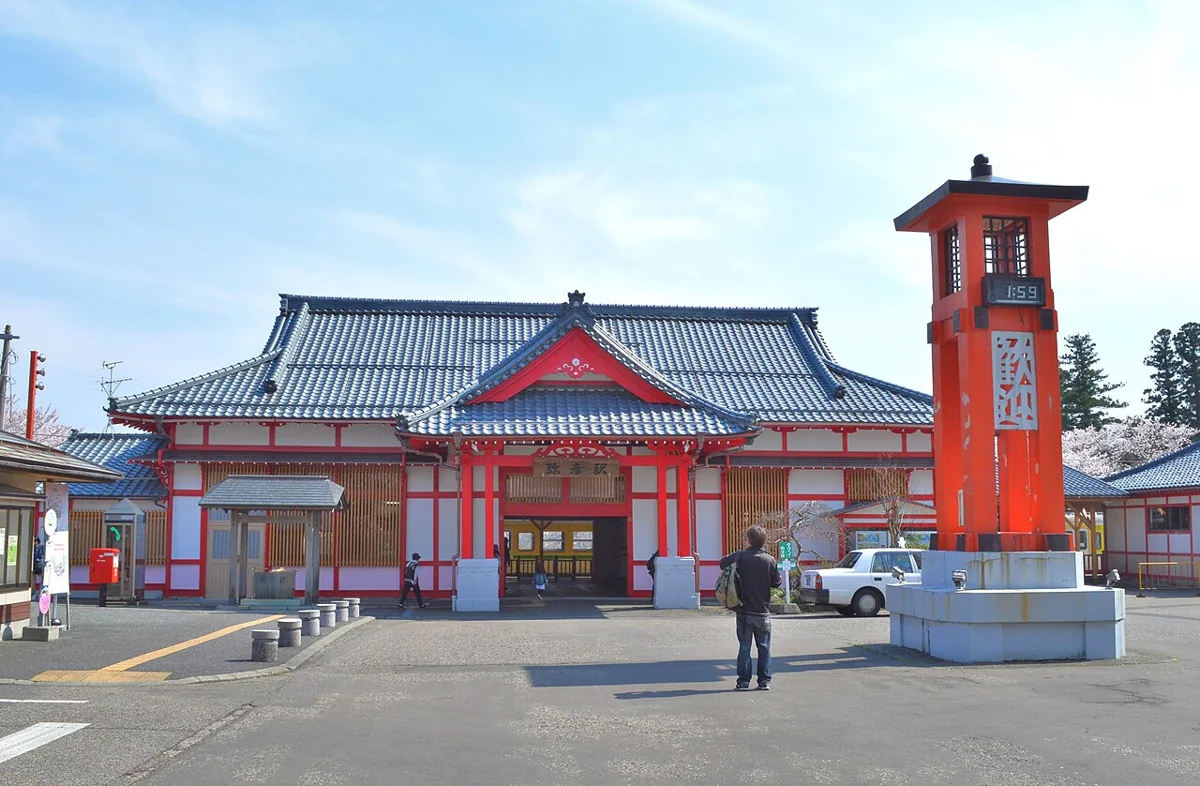
The shrine officially gives about one kilometre or 15 minutes on foot from Yahiko Station. That gets you to the shrine; the approach beyond the torii and worship still take time. Yahiko Park is beside the station, with its entrance about one minute away according to the Niigata tourism association. You can enter first, but allow separate time for Momijidani, photographs by the bridge and paths inside. A nearby entrance does not turn the whole park into a five-minute visit.
Save Yahiko Station, Yahiko Shrine, Omotenashi Plaza and Yahiko Park separately on your map, adding the ropeway lower station only if going up. The first four are the main points for a foothill walk; the last is the mountain entrance. Reaching the shrine before deciding on the ropeway makes the route clearer than following a shortest-map route straight from the station to the ropeway.
If some want the mountain and others want to rest below, meet at the station or an agreed shop before your return train. The mountain group must include descent, shuttle and walk to the station. Those below should check shop closing times. Avoid an unnamed 'in front of the torii', and do not use the last train as your only meeting deadline.
Yahiko Shrine: follow the approach to the worship hall and its four-clap custom
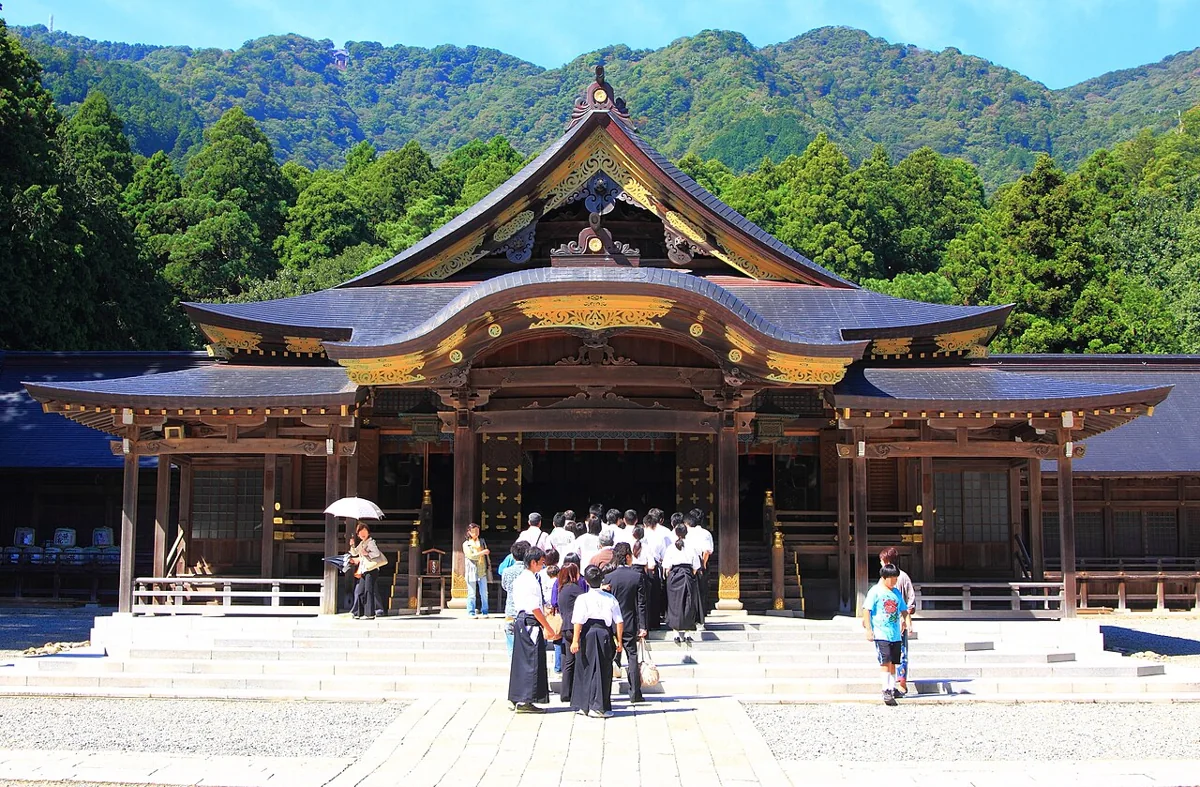
Yahiko Shrine lies at the foot of the mountain and enshrines Ame-no-Kagoyama-no-Mikoto. From the first torii, the approach, purification basin, second torii and Zuishinmon Gate make the worship sequence easy to follow. Official guidance says to bow lightly when passing a torii and avoid the centre of the approach, then worship at the hall. Use the full shrine name and address, Yahiko 2887-2, on your map to distinguish it from the large torii elsewhere.
The custom here is two bows, four claps and one bow. The shrine also explicitly accepts the usual two bows, two claps and one bow. If someone cannot remember, follow the instructions quietly rather than practising repeatedly at the head of a queue. Official guidance allows worship side by side when busy, with no rule limiting each turn to one person or family. Crowds need not form one long line down the centre.
Initially allow an hour for the shrine, extending for buildings, explanations or a goshuin seal. This is a travel allowance, not a requirement to reach every feature. Follow the approach to the worship hall and choose a few places of interest on the return. Avoid photographing people at prayer. Keep approach entrances and gates clear, and rest where stopping is allowed.
A shrine notice dated 1 September 2026 says bare feet and overly revealing clothes are not accepted before the deity, and asks visitors entering the hall to prepare their appearance and mind. If applying for a formal prayer and entering the hall, wear socks before setting out rather than finding supplies at reception. Grounds walking, formal prayers and obtaining amulets follow different routes. For a specific ritual, check its reception conditions; ordinary sightseeing time does not replace a ritual booking.
Obtain goshuin and amulets before ascending; the office closes at 16:00
Official shrine information gives 08:30–16:00 for talismans, amulets and goshuin seals at the distribution office. If these are important, worship and obtain them before using the ropeway. Starting down from the upper station at 16:00 still leaves a return walk to the shrine and can miss the office. A final downhill ropeway at 17:00 does not mean the shrine office stays open until then.
Keep your goshuin book easy to reach and prepare it before joining the queue. Follow the counter's writing or distribution arrangements on the day. Companions can wait at a clear place, then everyone can go uphill together. Splitting between the office queue and shuttle creates another contact and meeting step, made harder by service gaps.
In November, combine the chrysanthemum exhibition with shrine worship. The shrine homepage lists the annual offering exhibition from 1 to 24 November. Flower beds and displays add time for looking and photographs. If chrysanthemums are the main purpose, make the mountain an optional extra. Plant enthusiasts can compare large multi-bloom displays and small chrysanthemum bonsai. Do not give every display area equal time; choose the works you want to study slowly.
The free shuttle starts beside the shrine hall, not at the railway station
The ropeway operator lists a free shuttle from beside Yahiko Shrine's worship hall to the lower station, taking about two minutes and timed with ropeway arrivals and departures. This is a transfer between shrine and ropeway. Walk from Yahiko Station to the shrine first. Follow signs beside the hall, confirm the shuttle is for the ropeway lower station, then board. On return, look for the shuttle back to the shrine at the lower station.
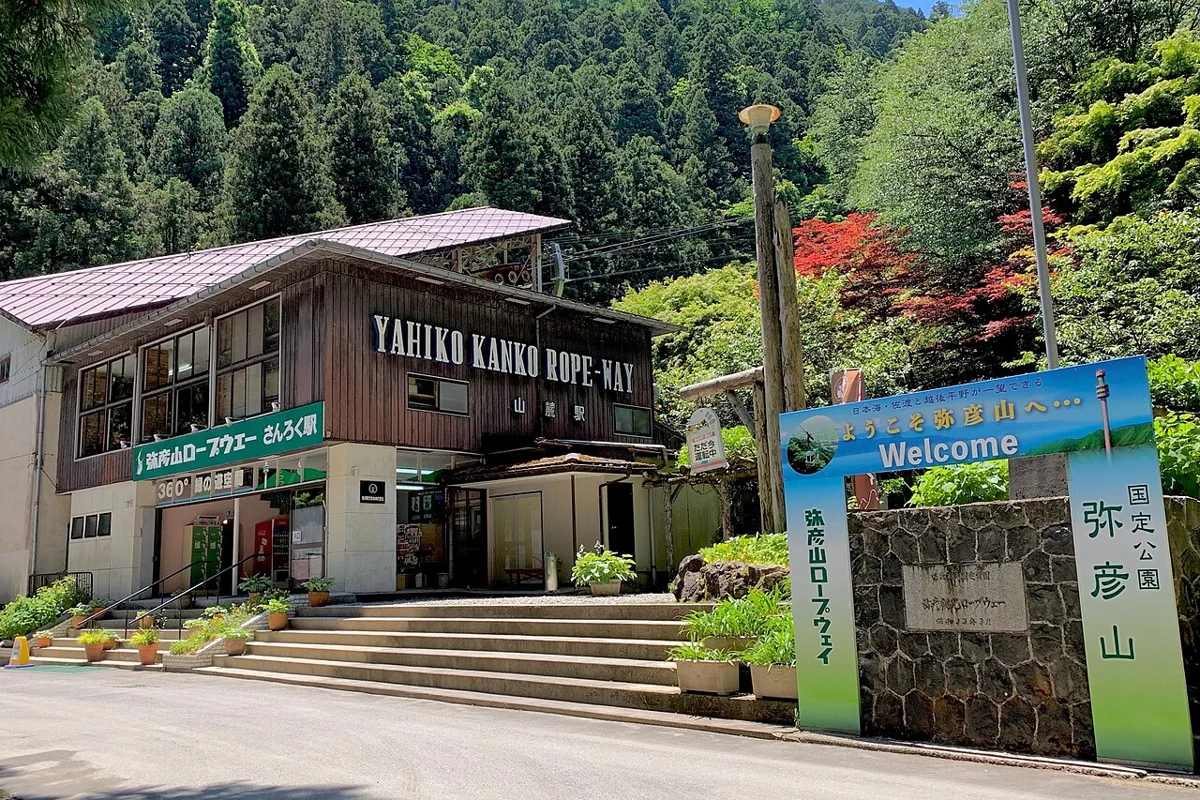
The operator lists 29 seats on the shuttle and capacity for 32 in the ropeway car. A large group should not treat those capacities as a shared reserved-seat allocation for one departure. Gather everyone at the boarding point, then follow the queue. Include waiting, boarding and alighting in your stop. Two minutes describes the driving distance, not the whole transfer.
For walking to the lower station, the tourism association's Manyo no Michi is an option to compare. On a first day visit, use the shuttle initially and save legs for shrine or park. If waiting for the shuttle on return, check time to the station. Do not improvise an unfamiliar small path simply because the map distance looks short. In rain or fading light, return by the recognisable route you have already used.
For wheelchairs, pushchairs or anyone unable to negotiate steps independently, ask the operator on 0256-94-4141 before travelling. Describe dimensions, folding ability and whether the person must remain seated throughout. Cover the shrine shuttle, lower station, ropeway car and upper routes in the enquiry to decide how your companion can travel. Asking only whether there is a ropeway leaves several boarding and alighting stages unresolved.
Choose a return ropeway ticket, then add the tower if it interests you
As of 27 October 2026, the operator lists tax-inclusive individual ropeway fares of ¥1,500 return or ¥800 single for adults, and ¥750 return or ¥400 single for children. Adults are aged 12 and over; children are three to 11; under-threes ride free. Use these ages for family costs rather than another transport service's child categories. Two adults and an eight-year-old pay ¥3,750 for return ropeway tickets.
A return ticket suits an ordinary day without a car. Two adult singles total ¥1,600, ¥100 more than a return; two child singles cost ¥50 more. A single usually fits an existing hiking route or pickup arrangement on the other side. If you came by train in walking shoes with a small bag, keeping a ropeway descent is simplest. A hiking descent requires a route, equipment and fitness, rather than serving as an improvised alternative after missing the last car.
The Panorama Tower above is separately ticketed at ¥650 for adults and ¥350 for children. The operator gives a ride of about eight minutes, opening from April to the end of November from 09:30, every 20 minutes on weekdays and every 15 minutes at weekends and holidays. It is a rotating rising observation tower. Add it if different viewing angles interest you. If the ropeway and mountain views are enough, save that time for Goshinbyo or lunch below.
The Climbing Car links the summit car park and observation building in about one minute. Returns are ¥380 for adults and ¥260 for children; singles are ¥220 and ¥160 respectively. It connects two locations on the mountain. After arriving by ropeway, decide whether your chosen facilities need it. Check positions before buying, rather than treating all three rides as compulsory mountain fees.
| Item | Adult | Child | Conditions |
|---|---|---|---|
| Ropeway return | ¥1,500 | ¥750 | Adults 12 and over; children three to 11 |
| Ropeway single | ¥800 | ¥400 | Arrange the return or hiking route separately |
| Rotating observation tower | ¥650 | ¥350 | April to end of November; paid separately from ropeway |
| Climbing Car return | ¥380 | ¥260 | Summit car park to observation building |
Choose between upper-station views and the walk to Goshinbyo
The ropeway takes about five minutes from lower to upper station. Check the day's return information and mountain map before deciding how far to go. For views towards the Echigo Plain and Sea of Japan, stay around the upper station and observation facilities and find a suitable viewpoint. Linger in clear visibility; descend earlier if mist hides the view. The shrine and park below still offer walks.
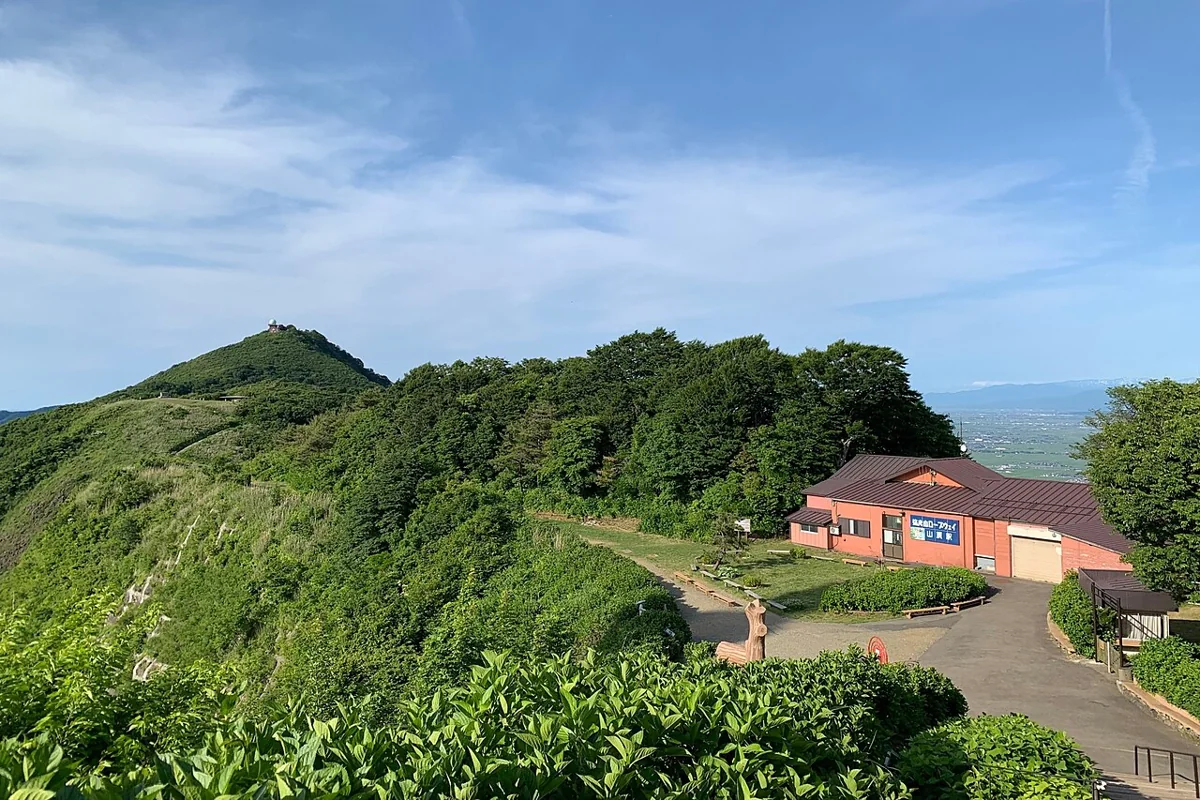
Goshinbyo is on Mount Yahiko's summit and enshrines Ame-no-Kagoyama-no-Mikoto and Umashihoya-hime-no-Mikoto. The operator's facilities page gives about 20 minutes on foot each way from the upper station. After the ropeway, allow at least about 40 minutes of return walking plus worship, photographs and rest. If someone only wants the ride, agree beforehand whether everyone walks to Goshinbyo or waits separately. Do not leave someone unwilling to walk slopes and steps pressured to continue on arrival.
The time difference changes lunch directly. For views only, return below for a full lunch. If Goshinbyo leads the visit, eat something first, take water up and shorten foothill shopping. Adding everything above often squeezes even rest. Walkers can choose Goshinbyo and those wanting fewer steps can choose observation facilities, leaving the day for what interests them.
Set your return time before starting the walk. For a planned return to the upper station at 15:30, subtract the one-way walk and worship time. Turn back earlier for slippery ground or slow walkers. Changing cloud and photo stops also use time. If you cannot see the path clearly or feel unwell, return the same way. A buffer at the upper station works better than rushing along the final path stretch.
After descending, allow three separate stages back to the train
When read on 27 October 2026, the ropeway operator's 'today' information showed first departure at 09:00, last ascent at 16:40 and last descent at 17:00. These are that day's details. Winter hours are shorter: Niigata tourism information lists 09:00–16:00 from December to early March, with Tuesday closures from December to around the end of March. Before ascending, read the operator's daily panel, distinguish uphill from downhill and note your intended descent.
After the final descent, you still need the shuttle from lower station to shrine, the walk from shrine to Yahiko Station and finally JR. For the 17:21 train from Yahiko, descend earlier. Planning the 17:00 final ropeway to connect to 17:21 leaves no buffer for shuttle waiting or walking. The daytime examples below target 16:10 or 17:21, with arrival at the station 15 minutes early to organise belongings, use toilets and find the platform.
JR's November 2026 weekday information, already published by the check date, gives the connections below. They are ordinary trains, not date-limited reserved-seat rapid services treated as daily. The 17:21 from Yahiko reaches Yoshida at 17:30, connects to the 17:39 for Niigata and arrives at 18:35. Those nine minutes are for changing trains, not leaving the station to shop.
In that weekday edition, the final ordinary train from Yahiko is at 20:25, reaching Yoshida at 20:34 and connecting to the 20:43 Echigo Line for a 21:35 Niigata arrival. Later Echigo Line trains at Yoshida cannot supply the first leg if you have missed Yahiko's last train. For a park night event, choose your return first and set departure from the park accordingly. For a daytime shrine and mountain visit, dinner back in Niigata is usually more relaxed.
Weekends, holidays and extra foliage services have separate tables. Some trains at the same time also change operating dates. In JR information, check the month and weekday or weekend/holiday category, then open the train's full stops. Search through from Yahiko to Niigata to connect Yoshida correctly. If the Echigo or Yahiko Line is suspended, ask station staff about alternatives that day. Until you know replacement departure and boarding points, staying at the known station is better than walking towards the next one.
| Yahiko departure | Yoshida arrival | Yoshida departure for Niigata | Niigata arrival | Use |
|---|---|---|---|---|
| 16:10 | 16:19 | 16:26 | 17:18 | Early return for dinner in the city |
| 17:21 | 17:30 | 17:39 | 18:35 | Full daytime visit |
| 18:22 | 18:31 | 18:43 | 19:36 | More time at the foot of the mountain |
| 20:25 | 20:34 | 20:43 | 21:35 | Final ordinary Yahiko train in this edition |
Yahiko Park and Momijidani: a nearby entrance still needs walking time
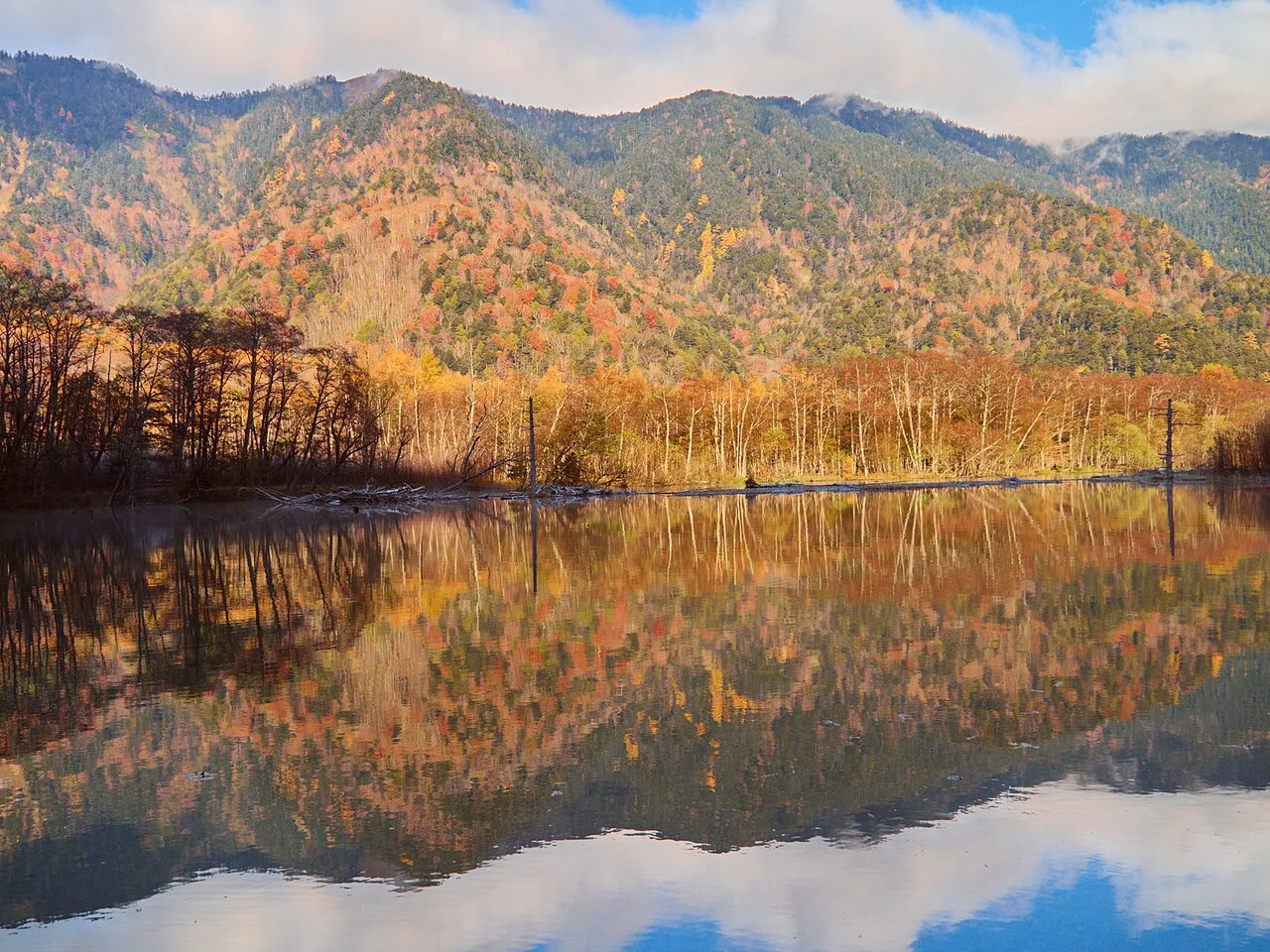
The Niigata tourism association lists Yahiko Park at 132,000 square metres, with streams, waterfalls, a tunnel and the red Kangetsukyo Bridge. From the station-side entrance, save Momijidani and the bridge as targets for autumn leaves. A station-front photograph and a real walk into the valley need very different amounts of time. Allow 45–90 minutes for a foothill walk, longer for plant photography. Near the station, this stop is also easier to adjust to trains.
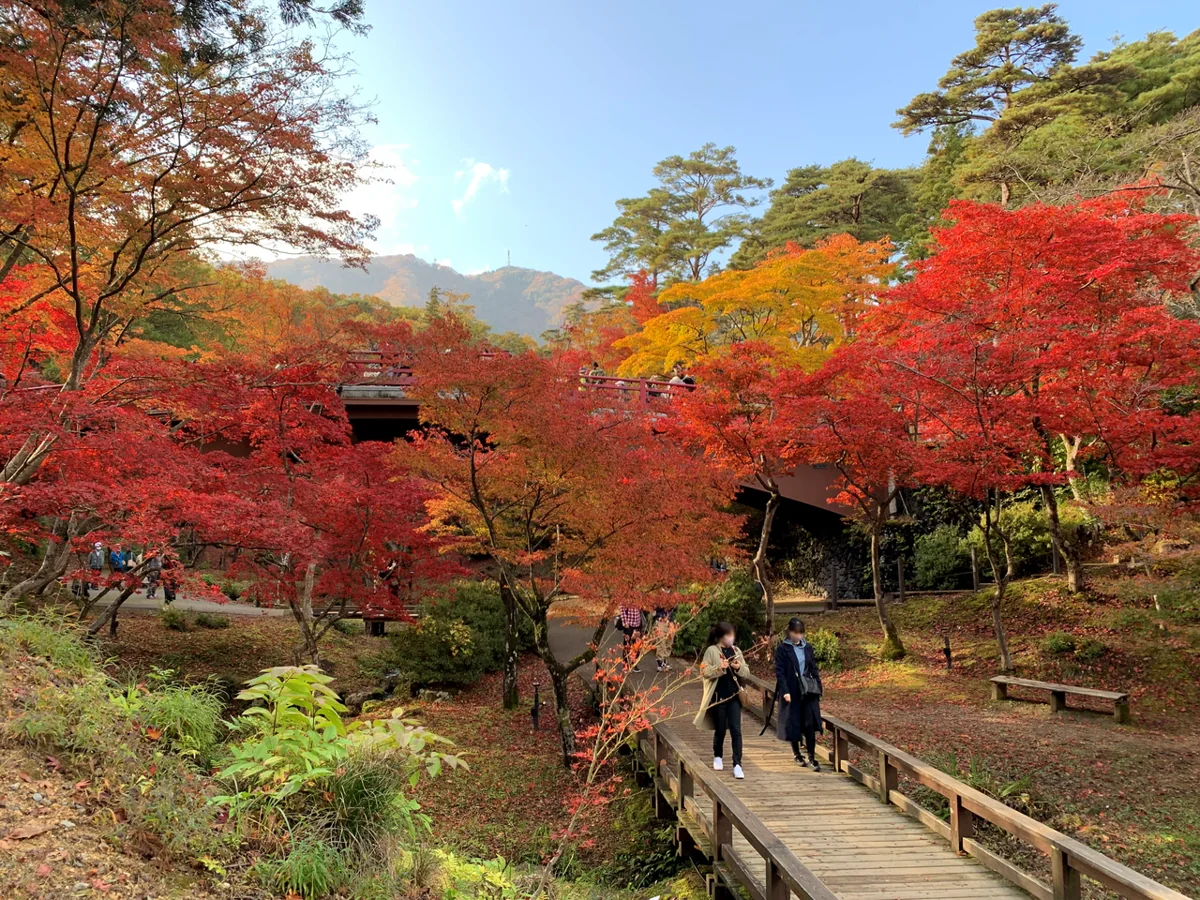
After a mountain visit, the park fits naturally near the station on the way back. If leaves are the priority, visit the park first and use daylight in the valley, then go to the shrine. Paths rise and fall. Photograph out of others' way; when the bridge is crowded, cross first and wait by the bank or a wider spot. After rain, wet leaves hiding the ground matter more than a camera angle.
On 27 October 2026, the prefectural tourism page's foliage update read 'green to partly beginning to colour', with the usual peak from early to late November. Use dated reports like this to choose a seasonal visit. In spring, focus on cherry blossom and paths without following autumn's photo order.
Prefectural information lists all-day access and information on wheelchairs and accessible toilets. The wheelchair loan counter is at the Yahiko Tourism Association. For a gentler route, ask about your intended entrance, the Kangetsukyo area and return to the station together, then choose usable paths. The park is large. One section is enough for a day without a car; keeping time to reach the station matters more than every side path.
The Niigata tourism website selects this Momijidani film shot by mugi226 on 10 November 2017. It shows autumn colour and paths in Yahiko Park as an introduction to the park section's scenery.
Eat lunch below; do not rely on the mountain restaurant on weekdays
Omotenashi Plaza is at Yahiko 1121, about five minutes on foot from Yahiko Station according to the Niigata tourism association. It gathers meals, sweets, farm produce and footbaths. General hours are 10:00–16:00, varying by shop; the footbath is listed until 16:30. Use it as a direction for lunch or rest, checking that day's food, seating and service times before choosing a full meal or snack.
For the mountain, decide the order of lunch and ropeway. Morning shrine, foothill lunch and afternoon ascent suit those not bringing food. For a morning ascent and later meal, return below before the chosen shop finishes serving. Sweets, drinks and a seated meal need different amounts of time. If someone is hungry, finish a meal before everyone buys snacks rather than eating a bite here and changing shop repeatedly.
The ropeway's official facilities page lists the observation restaurant for weekends and holidays from April to the end of November, opening at 10:00 with last orders at 15:00. Do not make it your sole weekday lunch. The same page lists seasonal light-food outlets, including winter Ramen Itadaki from around December to mid-March, 11:00–14:00. Check each outlet's season and days separately. Even on an operating ropeway day in winter, avoid restaurant closures too.
Bring water and a simple backup snack for a short walk, leaving a full meal for somewhere with seats. For the footbath, bring a small towel and sort trouser hems and wet items before moving on. Meals, produce shopping and footbaths can share one midday block without a separate must-eat list. If returning to Niigata in the evening, buy manageable quantities. Carrying large produce bags up the mountain adds effort.
A foothill day: park, lunch and shrine, then an early return to Niigata
This version suits one day of a two-day Niigata trip. Choose your arrival and 16:10 return in advance, leave luggage in Niigata and organise return information at Yahiko Station. Enter the park beside the station in the morning, walk Momijidani or your chosen paths and move towards the shops after about an hour. In poor weather shorten the park and move the shrine earlier.
Eat around Omotenashi Plaza at midday and allow seated rest. Then walk to the shrine, follow the approach to the worship hall and visit the office first if you want a goshuin or amulet. Leave the remaining afternoon for selected buildings, street purchases and returning to the station, without adding the ropeway. Train gaps can then become time for a drink, reading or walking, with less calculation over lunch about whether everything still fits.
If the shrine matters most, swap to shrine, lunch, then park. During autumn crowds, extra time at either shrine or park should shorten shopping. If someone tires, complete the most important stop and finish towards the station rather than crossing back to the other end in the afternoon to fill the itinerary.
In the weekday 16:10 example, you reach Niigata at 17:18, leaving time to collect luggage, rest at your accommodation and eat dinner. Saving city food for the return avoids rushing Nuttari in the morning, Yahiko in the afternoon and Furumachi across the river at night. Use the separate Bandai, Furumachi and Nuttari day route for Niigata City. Two separate days give each meal and neighbourhood proper time.
A mountain day: morning shrine, then choose views or Goshinbyo
For the ropeway, favour a morning arrival in Yahiko and initially keep the 17:21 return. Walk straight to the shrine, complete worship and the office visit, eat below in late morning or at midday, then go to the shuttle beside the hall. If visibility above is poor or the ropeway is suspended, use the previous foothill version, with park and streets in the afternoon. Do not wait at the shuttle until the end before seeking an alternative.
Choose one main afternoon theme above. For views, stay near the upper station and observation facilities, adding the paid rotating tower if wanted. For Goshinbyo, begin the path after arrival and remove the tower and other facilities. To include both, ascend earlier and finish lunch earlier rather than moving descent towards the last service.
As a planning target, return to the upper station queue before 15:30 and reach the lower area around 16:00. This leaves room for shuttle, station walk and a short park visit. Actual travel follows operations that day. If queues lengthen, remove the return park first, then shopping, while retaining station time. Descend early if the mountain is colder than expected or children tire, and use the remaining foothill time for a seated meal.
For a 16:10 train, move both ascent and descent earlier and head straight towards the station afterwards. Do not choose an earlier JR return while retaining all afternoon views, Goshinbyo, tea and park time. Agree on the most important activity and remove extras before leaving rather than splitting up to rush trains after reaching the mountain.
In autumn and winter, check foliage, opening days and trains separately
In autumn, decide whether you want chrysanthemums, maple leaves or mountain views. Chrysanthemums are in the shrine grounds, Momijidani is in the park by the station and mountain views need the ropeway and visibility. If flowers and foliage lead the day, stay below for a full visit. If the mountain is the priority, leave a short park section after descending. Each has its own pace; sharing Yahiko does not mean they can all be passed at one-photo speed.
Pair evening park illumination with return trains. The prefectural page gives general autumn illumination hours, but a dedicated night trip needs that season's official opening dates before choosing a return. Night photographers can shorten daytime mountain activities and save energy and warm clothes for the evening park.
In winter, favour the foothill route and ascend for snow views only when the ropeway runs and you want to. Winter hours shorten, Tuesdays close and wind, snow or maintenance can change operations. Read the day's operating panel and latest notices before leaving, so you can decide on mountain supplies before reaching Yahiko. Snow views need not include a compulsory Goshinbyo walk: snow and ice alter the usual 20-minute walking conditions.
With rain but little wind, keep shrine worship, foothill lunch and a short park stretch. With persistent strong wind or affected rail services, stay in Niigata City that day. Waterproofs or a packable umbrella, shoes with grip and a warm outer layer are more useful than another sight. Change plans before boarding if suspension is already announced. If weather worsens above, follow staff back rather than continuing along the path because you have paid.
With children, older relatives or wheelchairs, choose a route everyone can finish
For families, agree how long everyone can walk. Children keen on rides can make the ropeway the main activity. For older relatives wanting worship, focus on shrine and a meal. Neither interest needs a Goshinbyo walk added automatically. The foothill version includes park, station building, shrine approach and footbath, with ways to finish towards the station when rest is needed. A fixed lunch is easier than keeping everyone at the same walking pace.
Choose routes section by section for pushchairs and wheelchairs. Shrine guidance includes stone steps and the park has varied paths. Explain whether the user can leave the chair briefly, how many helpers are present and the intended destination when asking the shrine, tourism association or ropeway operator about entrances. If everyone cannot use a section, choose somewhere reachable together rather than leaving someone needing help alone at an unagreed waiting spot.
Calculate only items you will use. Two adult ropeway returns cost ¥3,000; adding the tower for both adds ¥1,300. With an eight-year-old too, ropeway and tower for all three total ¥5,400. These examples add the listed individual fares. Rail, meals and other extras are separate. For a foothill-only day, keep the budget for return transport and a good meal without buying extra tickets just to fill the day.
Before returning to Yahiko Station, use toilets, buy water and organise bags before boarding. With only a few minutes at Yoshida, move together towards the Niigata-bound platform. Do not wait until standing at the train door to count people and check the service. For a dinner booking in Niigata, choose a Yahiko return that leaves an unhurried arrival. A comfortable final leg leaves energy to continue exploring Niigata tomorrow.
A few useful answers
Which station should I use for Yahiko from Niigata?
Take the Echigo Line to Yoshida and change to the Yahiko Line for its terminus, Yahiko Station. You can also approach on the Yahiko Line from Tsubame-Sanjo. Yahagi is the previous station; continue to Yahiko for shrine and park.
Are Yahiko Shrine and Mount Yahiko's Goshinbyo the same place?
The shrine worship hall is at the foot of the mountain, about one kilometre or 15 minutes on foot from Yahiko Station. Goshinbyo is on the summit. Even after taking the ropeway, it is about 20 minutes on foot each way from the upper station.
How much is a ropeway return with an eight-year-old?
As of 27 October 2026, adults aged 12 and over pay ¥1,500 return, children aged three to 11 pay ¥750 and under-threes ride free. Two adults and an eight-year-old total ¥3,750.
Should I obtain a goshuin before or after the mountain?
The office opens 08:30–16:00. Worship and obtain it before ascending to avoid missing the hours after descent and shuttle.
Should I use the ropeway after an afternoon arrival?
Start with shrine and park. If the mountain is the main purpose, shorten other stops, check that day's last ascent and descent, and calculate the station return and JR connections first.
Official information and references
Sources used in this guide.
- Yahiko Village: public transport and JR timetable links
- JR East: Yahiko Station timetable
- JR East: Yoshida Station timetable
- JR East: November 2026 Yahiko Line weekday down-direction timetable
- JR East: November 2026 Echigo Line weekday down-direction timetable
- Yahiko Shrine: access
- Yahiko Shrine: worship route and customs
- Yahiko Shrine: talisman, amulet and goshuin hours
- Yahiko Shrine: clothing notice dated 1 September 2026
- Yahiko Shrine: chrysanthemum exhibition and annual events
- Mount Yahiko Ropeway: daily operation, fares and free shuttle
- Mount Yahiko Ropeway: Goshinbyo, observation facilities and dining
- Niigata tourism association: seasonal ropeway hours
- Niigata tourism association: Yahiko Park, facilities and dated foliage reports
- Niigata tourism association: Omotenashi Plaza
- Yahiko Shrine: homepage annual events and offering chrysanthemum exhibition
- JR East: November 2026 Yahiko Line weekday up-direction timetable