Planning an autumn trip to Kamikochi for foliage and golden larch? Here is when to visit in mid-to-late October, how to walk Taisho Pond to Kappabashi and the Myojin Pond loop, buses from Matsumoto and Takayama, and 2026–27 winter closure dates.
- Region & Focus
- Tateyama Kurobe and Kamikochi
- Reading Scope
- 24 min read · 10 chapters · 5 Q&As
- Official Verification
- 30 official sources checkedUpdated 22 November 2026
- Key Topics
- SeasonsItinerariesFirst trip
Chapter Route Map (tap any stop)
- Target mid-to-late October for golden larch
- 2026 season closed: opening ceremony vs first bus day
- Matsumoto, Shin-Shimashima, Hirayu and Sawando: which ticket to buy
- Direct from Shinjuku, or bridging Matsumoto and Takayama
- Alight at Taisho Pond for a natural walk to Kappabashi
- The Myojin Pond loop: out via Dakesawa Marsh, back via Konashidaira
- Combining both trails into one day trip
- Baggage, toilets and lunch all cluster at the terminal
- Where to stay overnight: Taisho Pond dawn light vs Kappabashi convenience
- Handling rain, frost or trail closures
- Quick Q&A
For a first autumn visit to Kamikochi, set aside mid-to-late October for the Azusa River valley. Stepping off the bus at Taisho Pond and following the trail through Tashiro Marsh to Kappabashi covers around 4 km. Upstream, the loop to Myojin Pond adds roughly 5.5 km from Kappabashi; to fit both in comfortably, book an early morning arrival alongside your return bus. The 2026 sightseeing season ended on 15 November, and the valley remains closed for winter until 16 April 2027. Travellers planning an autumn 2027 trip can anchor their stay in Matsumoto, Hirayu Onsen or Takayama and buy tickets once that year's timetables are released.
Target mid-to-late October for golden larch
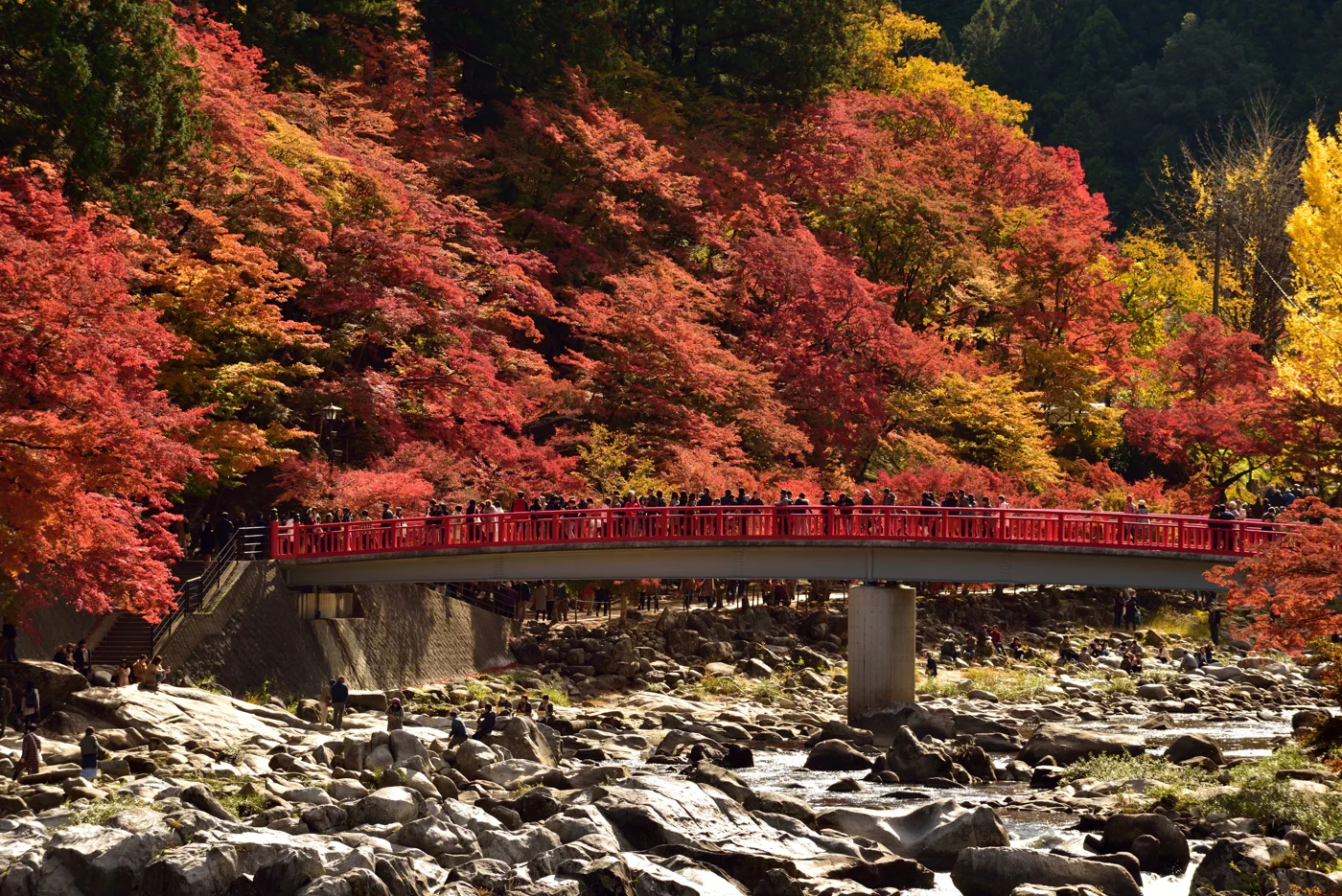
At roughly 1,500 metres above sea level around Kappabashi, autumn arrives earlier here than in downtown Matsumoto. Kamikochi's official calendar places valley foliage from early to late October, while the Ministry of the Environment lists peak colour between Taisho Pond and Yokoo as mid-to-late October. If you have only one day on a first trip, mid-to-late October gives you the best chance of catching both riverside foliage and turning woodland. Travellers focused on Japanese larch should lean towards late October, when the needles around Tashiro Pond turn bright gold and stand out sharply against the remaining dark evergreens in direct sunlight.
Colour shifts in stages. From September into early October, look for changing marsh grasses and early foliage on the upper slopes, especially along the Taisho Pond and Tashiro Marsh stretch. By late October, golden larch and fallen leaves often appear together, with frost lingering in shaded hollows. If only early November fits your schedule, treat it as a late-autumn waterside stroll. On 5 November 2026, Matsumoto's official tourism site updated both Kappabashi's surroundings and the larch trees to 'fallen leaves', a clear reminder that peak colour passes well before the valley closes.
When checking foliage reports, match the location to your route. Between Taisho Pond, Myojin and Tokusawa, tree species, aspect and sunlight hours vary considerably. Yellowing leaves near Kappabashi are a far better guide for a valley walk than alpine photos from Karasawa, which is listed on the same Matsumoto table but belongs to a separate high-mountain trek.
If you have two flexible days, keep the sunnier forecast for the Azusa River valley and save Matsumoto Castle or Takayama's old town for the other, adjusting only your mountain bus booking. Check current conditions on the official Matsumoto autumn foliage updates.
| Timing | Main seasonal highlight | Best sections to prioritise |
|---|---|---|
| Late September to early October | Marsh grasses begin turning; early autumn colour on upper slopes | Taisho Pond and Tashiro Marsh |
| Mid-October | Riverside and valley trees progressively change colour | Around Kappabashi and both banks near Tashiro Bridge |
| Late October | Golden larch needles; fallen leaves along forest trails | Tashiro Pond to Kappabashi; add Myojin in clear light |
| Early November | Late-autumn water reflections and possible frost; lodges and eateries winding down | Short walks near Kappabashi with an earlier bus out |
Planning an autumn trip to Kamikochi for foliage and golden larch? Here is when to visit in mid-to-late October, how to walk Taisho Pond to Kappabashi and the Myojin Pond loop, buses from Matsumoto and Takayama, and 2026–27 winter closure dates.
2026 season closed: opening ceremony vs first bus day
Kamikochi held its 2026 closing ceremony on 15 November. According to the official notice issued on 16 November, winter closure runs from 16 November 2026 to 16 April 2027, during which valley buses, lodges and restaurants cease operations. Entering via Kama Tunnel on foot during these months counts as winter mountaineering; authorities require winter entry compliance and warn of avalanches, rockfalls and ground blizzards. If you are staying in Matsumoto, Takayama or Hirayu over winter, plan excursions to destinations that remain open. See the Kamikochi winter closure notice.
Two distinct spring dates often cause confusion when researching ahead. In 2026, Kama Tunnel and public buses reopened on 17 April, whereas the official Opening Ceremony (Kaizan-sai) took place on 27 April. Always check the first day of bus service and individual lodge opening dates separately from the ceremony date. For autumn 2027, pencil in flexible days in mid-to-late October first, then confirm exact timetables, fares, last buses and closing dates once 2027 announcements go live. The 2026 schedules remain useful for learning stop names, transfer points and realistic walking distances. Reference the official Kamikochi 2026 event schedule.
Lodging options upstream at Myojin and Tokusawa wind down earlier as mid-November approaches. In 2026, Myojinkan's final night for guests was 31 October, Tokusawaen closed after 3 November, Taishoike Hotel ran until 13 November, and Gosenjaku Hotel near Kappabashi stayed open until 14 November. These dates illustrate how facilities close sequentially along the same valley.
If you plan to walk upstream in late autumn, check where lunch is still served and whether your lodge offers meals before setting your turnaround time for Myojin Bridge or Tokusawa.
Matsumoto, Shin-Shimashima, Hirayu and Sawando: which ticket to buy
By public transport from Matsumoto, the standard route starts on the Alpico Kamikochi Line train from Matsumoto Station to Shin-Shimashima Station, followed by a connecting bus into Kamikochi. Shin-Shimashima is the rail-to-bus interchange, while Sawando is the park-and-ride hub for drivers. Some buses on the same corridor also call at Sawando; if your ticket is issued through to Kamikochi, stay on board. When booking tickets labelled 'Matsumoto', check carefully whether your departure is the train platform inside Matsumoto Station or the Matsumoto Bus Terminal inside Alpico Plaza across the road, as they are separate boarding points.
From Matsumoto in 2026, Alpico also ran the reservation-priority direct National Park Liner from Matsumoto Bus Terminal Stop 9, letting inbound passengers alight at Taisho Pond, Imperial Hotel or Kamikochi Bus Terminal. That season, the morning departure left at 05:30 and reached Kamikochi Bus Terminal at 07:05, while the later service departed at 10:15 and arrived at 11:55. That gap shapes your whole day: arriving just before noon suits focusing on a single side of the valley.
For the return to Matsumoto via Shin-Shimashima bus and train, build transfer and queue time into your schedule if you hold an onward JR rail ticket that evening. Check the Alpico direct bus from Matsumoto.
In 2026, the Shin-Shimashima bus line operated on a reservation-priority basis. Online bookings opened one month ahead for specific departures with unreserved seating on board; unbooked passengers could only board if spare seats remained. Day-trippers are best off booking outbound and return legs together, as arriving two hours early means little if the afternoon buses back are full. Walkers starting at Taisho Pond can book the outbound stop as Taisho Pond and return from Kamikochi Bus Terminal—your outbound and return stops do not need to match. See the Alpico Matsumoto and Shin-Shimashima timetable and reservation guide.
From Takayama in Gifu Prefecture, take a Nohi Bus bound for Hirayu or Shin-Hotaka, alight at Hirayu Onsen (HO37), and switch at Hirayu Bus Terminal to the Kamikochi shuttle. Drivers on the Hirayu side use Akandana Parking, where shuttle buses originate before picking up at Hirayu Onsen en route to the valley. In 2026, this shuttle ran on a first-come, first-served queue system, so leave comfortable connecting time at Hirayu if continuing back to Takayama. If everyone in your group fancies an onsen soak, staying overnight in Hirayu removes the pressure of catching another bus down to Takayama at dusk. View the Nohi Bus Takayama to Hirayu timetable.
Drivers approaching from Matsumoto should set their sat-nav to Sawando rather than Kappabashi or a valley hotel. Private cars, rental vehicles and motorbikes are banned year-round beyond the gates, so you must park outside and transfer to a shuttle or taxi. Sawando Municipal No. 3 Parking (Kasumizawa) connects via an underpass to the boarding area and charges ¥800 per day for a standard car. Approaching from Takayama, navigate to Akandana Parking, where standard cars cost ¥600 per 24 hours under 2026 published rates. Choose your gateway based on where you slept the night before and where you are heading afterwards.
On departure from Kamikochi Bus Terminal, queue at the stand matching your shuttle destination. From 1 September 2026, Shin-Shimashima-bound buses became pick-up-only between Kamikochi and Sawando Ohashi, meaning passengers cannot alight along that stretch. Drivers parked at Sawando must take the dedicated Sawando shuttle, which departed from Stand 7 in 2026. Stand 6 handled reservation-priority transfers for Shirahone Onsen and Norikura Kogen, while shuttles back to Hirayu and Akandana left from Stand 5. If taking the shuttle to Sawando Bus Terminal, you can also transfer onwards there. Read the Alpico autumn 2026 boarding and alighting changes.
During autumn holiday weekends, traffic can back up into the car parks and queues build for return shuttles. Factor waiting time into public transport connections as well. If someone in your group gets travel-sick or needs a restroom stop before boarding, regrouping at the bus terminal is far easier than waiting by Kappabashi.
Take a photo of your Sawando parking zone and bus stop name before entering the valley; getting off at the wrong stop on the way back leaves you dragging bags along the road to find your car. Travellers crossing between Matsumoto and Takayama should double-check their evening hotel location before buying tickets, and anyone picking up a rental car must return to the same gateway where they parked.
| Starting from | Transfer point into Kamikochi | Which return service to board |
|---|---|---|
| Matsumoto by public transport | Train from Matsumoto Station to Shin-Shimashima for bus transfer, or direct bus from Matsumoto Bus Terminal | Shin-Shimashima line, then connecting train to Matsumoto |
| Takayama by public transport | Depart Takayama Nohi Bus Centre and change to the shuttle at Hirayu Onsen | Hirayu-bound shuttle, then change at Hirayu for Takayama |
| Driving from Nagano | Sawando car parks, transferring to a shuttle bus or taxi | Sawando shuttle, alighting at the stop nearest your car park |
| Driving from Gifu | Akandana Parking, transferring to the shuttle bus | Shuttle bound for Hirayu Onsen and Akandana Parking |
Direct from Shinjuku, or bridging Matsumoto and Takayama
From Tokyo, the Sawayaka Shinshu-go highway bus runs direct from Shinjuku Expressway Bus Terminal (Busta Shinjuku). On the autumn 2026 timetable, the daytime service left at 07:15 and arrived at Kamikochi Bus Terminal around 12:02, while the overnight coach departed at 22:25 and arrived at 05:20 the next morning. Both services allowed inbound passengers to alight at Taisho Pond. When booking the overnight bus, select the date you leave Shinjuku, even though your valley accommodation or return leg falls on the following day. Because arrival is before dawn, pack breakfast, a hot drink and warm layers in Tokyo; if you slept poorly, wait for first light, stroll from the terminal towards Kappabashi, and decide there whether to continue to Myojin. See the Keio Bus 2026 Shinjuku–Kamikochi timetable.
If returning directly to Shinjuku the same day, check your return boarding point carefully. Keio's 2026 timetable placed the Tokyo-bound pick-up at Kamikochi Bus Terminal, with operating dates differing slightly towards the very end of the season. Travellers arriving on the midday coach for an afternoon return can limit their walk to Taisho Pond–Kappabashi, keeping check-in and walking time back to the terminal firmly in mind.
To ride the daytime coach from Tokyo and still walk to Myojin Pond unhurried, stay one night in the valley and tackle Myojin the next morning. Those who prefer a hotel bed before an early start can overnight in Matsumoto and take the morning train-and-bus connection in.
An open-jaw route treats Kamikochi as a stop between Matsumoto and Takayama: enter via Shin-Shimashima in the morning and exit via Hirayu in the evening, or vice versa, buying single tickets on each side. This saves backtracking to your original city, though luggage becomes the main hurdle. Left-luggage storage at Kamikochi Bus Terminal makes the walk effortless and lets you leave early if the weather turns. Should valley buses be suspended or you decide to swap days, use Nohi Bus's cross-mountain Matsumoto–Hirayu–Takayama highway route without transferring inside the valley. Check the Nohi Bus Takayama, Hirayu and Matsumoto highway route.
Alight at Taisho Pond for a natural walk to Kappabashi
Inbound buses stop in sequence at Taisho Pond, Imperial Hotel and Kamikochi Bus Terminal. First-time visitors carrying only a daypack can step off at Taisho Pond and walk upstream, finishing where restaurants, toilets and return buses cluster around Kappabashi and the terminal—a layout that makes it easy to adjust if anyone tires. Check in advance that your long-distance coach permits alighting at Taisho Pond; Sawando shuttle riders can simply state Taisho Pond when buying tickets or boarding.
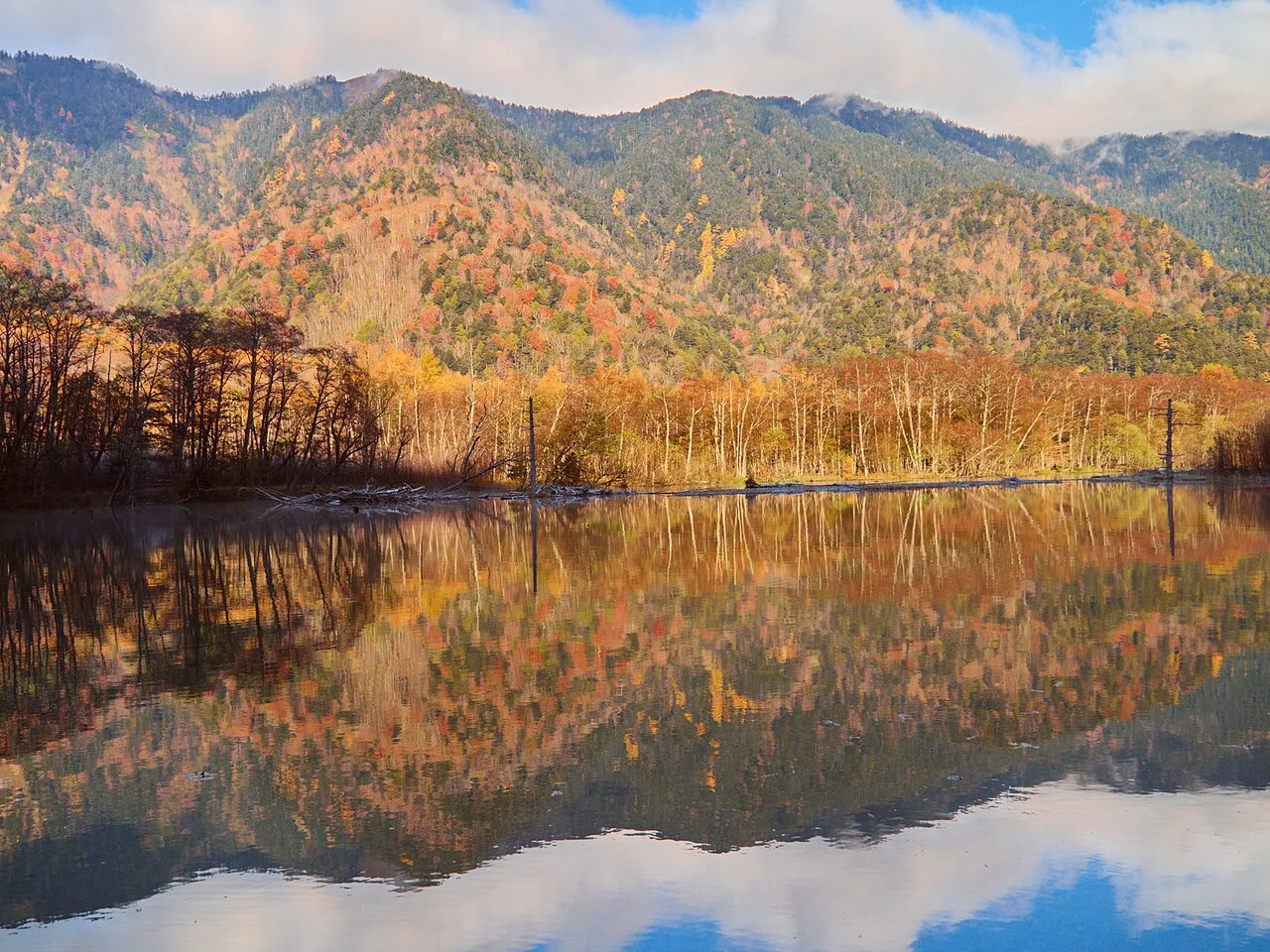
Taisho Pond formed in 1915 when an eruption of Mount Yakedake dammed the Azusa River. On calm mornings, autumn foliage along the banks and the surrounding ridges reflect cleanly on the water. Early arrivals can linger at the lakeside viewpoints, though in wind, rain or low cloud it is worth saving your camera time for the marsh and forest ahead. Reaching Tashiro Marsh shifts the view from open water to boardwalks skirting golden grasses and shallow streams; Tashiro Pond sits on a short spur path—follow the signposts in, then rejoin the main trail towards Tashiro Bridge. Read the official Kamikochi guide to Taisho Pond.
Official trail figures list roughly 1.2 km (25 minutes) from Taisho Pond to Tashiro Pond, and 1 km (20 minutes) from Tashiro Pond to Tashiro Bridge and Hotaka Bridge. Beyond the marsh, the trail splits into a woodland path and a riverside path along the Azusa River before rejoining. Take the riverside path in fine weather for valley views; if water levels are high, footing is slick or barriers are up, follow posted diversions or turn back at closed entrances. In autumn, close-up colour sits right among the tree trunks—step aside at wider sections for photos rather than blocking boardwalk corners.
At Tashiro Bridge and Hotaka Bridge, choose your final leg. Walking the right bank past the Walter Weston Memorial takes around 1.6 km (30 minutes) to Kappabashi, making 3.8 km (75 minutes) from Taisho Pond. Taking the left bank brings you to Kamikochi Bus Terminal first and then Kappabashi, covering roughly 4 km (80 minutes). With virtually identical times, the choice comes down to reaching the bridge view first or sorting luggage, toilets and bus queues. Left and right banks in the valley are defined facing downstream; following on-site signs for Azusa River Right Bank, Left Bank and named landmarks is far simpler than working out your bearings manually.
Those 75 to 80 minutes reflect pure walking time. Factoring in stops at Taisho Pond and Tashiro Pond, photos, snacks and toilet breaks, allow just over two hours for an unhurried pace. Visitors with wheeled suitcases or older relatives can ride straight to the terminal and take a short stroll from Kappabashi towards the Weston Memorial and back. If companions only want photos of Taisho Pond, treat the lakeside as a brief stop and hop back on a bus to the terminal.
Under 2026 Sawando shuttle rules, return-ticket holders alighting inbound at Taisho Pond or Imperial Hotel could reboard later in accordance with operator guidelines, whereas breaking an outbound journey invalidated the remainder of that ticket. Check the Sawando shuttle boarding and stopover rules.
The Myojin Pond loop: out via Dakesawa Marsh, back via Konashidaira
After taking in the Hotaka mountain range from Kappabashi, follow the right-bank trail signposted for Dakesawa Marsh and Myojin. The marsh lies roughly 0.5 km (10 minutes officially) from the bridge, making it an easy turnaround point for a short stroll. Keep your stride short on the wooden boardwalks when morning dew or frost lingers, and step into wider pull-outs for photos. Where clear spring water wells beside the boards, pause to inspect the reflections before deciding whether to press on. From the marsh, it is roughly another 2 km (40 minutes) to the Myojin Pond area.
Myojin Pond sits within the inner sanctuary of Hotaka Shrine Okumiya and comprises two pools, Ichi-no-ike and Ni-no-ike. Walking up the right bank brings you straight to the shrine entrance just before Myojin Bridge, which you cross on the return leg along the left bank. Official entry fees are ¥500 for adults and ¥200 for primary-school children, with opening hours from 06:00 to sunset—plan late-season visits firmly in daylight. Even when cloud obscures the peaks, the two distinct shorelines repay an unhurried look. If energy or bus schedules are tight, walking as far as Myojin Bridge still rewards you with views of the Azusa River and Mount Myojin without entering the sanctuary. Check Hotaka Shrine Okumiya opening hours and admission fee.
To complete the circuit, leave the shrine, cross Myojin Bridge, and return to Kappabashi via the Azusa River left bank through Konashidaira. Official segment figures are roughly 3 km (60 minutes) up the right bank to Myojin and 2.5 km (50 minutes) back down the left bank, totalling 5.5 km. Adding pond viewing, bridge crossings, photos and a snack stop, budget 2.5 to 3 hours. Should rain set in or light fade at Myojin, the left bank is shorter and leads straight past Konashidaira towards the bus terminal.
If notices close the right bank while the left bank remains open, walk an out-and-back route along the left bank to Myojin, adding extra time for crossing Myojin Bridge and visiting the shrine ponds.
Continuing upstream from Myojin to Tokusawa is a separate half-day commitment. Official timings put Kappabashi to Tokusawa at over two hours each way, suiting walkers dedicating a full morning and lunch window to the upper valley. Anyone combining Taisho Pond with a timed return bus is usually best stopping at Myojin Bridge. Day-trippers aiming for Myojin should also take care not to confuse Dakesawa Marsh with Dakesawa Hut on trail maps: the path to the hut climbs into the mountains, whereas the route to Myojin stays along the right-bank riverside trail.
Combining both trails into one day trip
Linking Taisho Pond to Kappabashi and the Myojin loop totals roughly 9.3 to 9.5 km by official segments, plus about 300 metres between Kappabashi and the bus terminal. Pure walking takes just over three hours before adding lunch and at least one bus queue. Tackle both in one day only if you arrive on an early bus, walk that distance comfortably, and have margin before your return departure. Start at Taisho Pond in the morning and assess everyone's energy and the weather once you reach Kappabashi; if the first leg ran long, turn back at Dakesawa Marsh or Konashidaira instead.
If you only have half a day on a first trip, prioritise Taisho Pond to Kappabashi: you get lake reflections, marshland, river views, the Hotaka backdrop at the bridge and an easy finish next to the terminal. Travellers who already have Taisho Pond photos and want forest trails beneath Mount Myojin can ride straight to the terminal for the Myojin circuit. Anyone arriving around midday with an onward connection at Hirayu must count backwards from that second bus to find the latest departure from Kamikochi Bus Terminal, then cap their walk accordingly—or stick to a brief stroll to Konashidaira or Dakesawa Marsh.
Travelling as a family works best when lunch and toilet breaks are anchored around Kappabashi and the bus terminal, roughly 300 metres (6 minutes) apart. Cross the bridge for a gentle stretch along the right bank, keeping an easy retreat to shelter if legs get cold or rain starts. Wheelchair and pushchair routes centre on the terminal-to-bridge stretch; ask the Information Centre about accessible distances and surface conditions on the day. The centre lends wheelchairs and baby carriers, though trails beyond include gravel, boardwalks and damp patches. In chilly weather, let slower companions wait in sheltered seating before reconvening at the terminal. View Kamikochi Bus Terminal and Information Centre services.
Save your return bus time on your phone alongside flexible cutbacks: shorten your Kappabashi break if you have a dinner booking in Matsumoto, or trim Myojin back to Dakesawa Marsh if catching a specific JR train. On the Takayama route, guests staying in Hirayu simply alight there, whereas anyone continuing to Takayama city needs time to move to the connecting bus stand. Assuming everyone in a group shares the same final bus often eats up vital transfer buffers.
Linger where the light is good, but stick firmly to your pre-set turnaround time. After rain or on cold days, mountain shadows block valley sunlight far earlier than in town, and fingers chill quickly while waiting for a shot. Bear in mind that walking back from Kappabashi to the terminal takes minutes, whereas returning from Myojin requires a far earlier cut-off.
Baggage, toilets and lunch all cluster at the terminal
Kamikochi Bus Terminal's tourist centre operates a left-luggage office. During the open season, official hours are typically 06:00 to 17:00, with daily fees of roughly ¥350 to ¥600 per item depending on size. Keep warm layers, waterproofs and essentials in a daypack, and check large bags in before setting out. Overnight coach passengers keen to start at Taisho Pond at dawn are better off leaving suitcases at their Tokyo or Matsumoto hotel, or dropping bags at the terminal first before riding back down to the pond.
Even if you hold a late afternoon bus ticket, remember to collect your bags before the luggage counter closes for the day. See the Kamikochi Bus Terminal left-luggage office.
Scheduling lunch between the two walks is far simpler than hunting for open restaurants up at Myojin. The tourist centre houses a canteen and shops, with additional eateries and hotel dining around Kappabashi. Early risers hopping straight off at Taisho Pond can pick up simple breakfast items before boarding their bus. Late in the season, watch Kamikochi's official closure table carefully—lodges, restaurants, cafés and shops are listed separately, so a hotel still accepting guests at weekends may already have ended midday lunch service. For an afternoon Myojin walk, pack trail snacks before leaving the terminal area so you can focus on the ponds and bridge views.
Save a copy of the valley map to locate toilets and river crossings on your chosen bank. Tashiro Bridge and Hotaka Bridge sit at the same crossing point, allowing you to switch over to the Weston Memorial bank. North of Kappabashi, the right bank leads to Dakesawa Marsh and the left bank leads past Konashidaira and the Visitor Centre—making it straightforward to walk just one side. With children or slower walkers, agree on which side of the terminal to meet before splitting up for short strolls. Download the official Kamikochi area map.
Where to stay overnight: Taisho Pond dawn light vs Kappabashi convenience
Staying near Kappabashi makes it effortless to visit Dakesawa Marsh and Myojin before or after breakfast, and lets you check mountain visibility from the bridge before committing to a trail. On your first afternoon, take a short walk along the Azusa River towards the Weston Memorial or Tashiro Bridge before dinner. The next morning, leave luggage at your lodge or the terminal while you complete the Myojin loop. If you want to include Taisho Pond on day one, drop bags at the terminal first and shuttle back; leaving Taisho Pond for morning two also avoids hauling suitcases over boardwalks on arrival.
Travellers set on glassy dawn reflections at Taisho Pond should look at Taishoike Hotel. For a base between the two main trails, consider properties near Tashiro Bridge or the Imperial Hotel stop—note that the Imperial Hotel has its own bus stop a short walk short of the terminal. When booking, check exact stop locations, meal times and post-checkout luggage handling together. Photographers chasing sunrise should confirm breakfast hours in advance and keep morning walks close enough to return on time without rushing the lakeside light.
Staying at Myojin or Tokusawa requires factoring the walk in from the bus terminal into your check-in window, so mountain huts at Myojin best suit backpackers travelling light. If Tokusawa is a priority, enter the valley early on day one, spend day two walking upstream unhurried, and return to the terminal in the afternoon. Based at Kappabashi, splitting the valley across two days—one downstream, one upstream—is noticeably more relaxed than trying to squeeze an extra bridge in before dusk.
For 2027 stays at the Kamikochi Imperial Hotel, bookings open at 10:00 JST on 9 February for the season. Once you lock in a stay, note both the hotel cancellation window and bus booking release dates in the same itinerary.
Sleeping outside the valley gives you more room to shift days around the weather. Matsumoto offers castle-town strolls and direct rail links; Hirayu makes early shuttles and an evening onsen soak seamless; Takayama works best as a luggage base before continuing to the old town or Shirakawa-go. Read the Kamikochi Imperial Hotel 2027 reservation announcement.
In late autumn when clear weather windows narrow, booking two nights in town makes it easier to swap your Kamikochi day trip, whereas sleeping in the valley gives you first access to the pond edges at dawn. If you already hold morning or evening JR tickets, slot Kamikochi into a mid-trip day with no long-distance rail travel, returning to the same base town that night. A spare full day in Matsumoto easily fills up with its castle and historic quarters. See the Matsumoto Castle and city day itinerary.
Handling rain, frost or trail closures
Autumn cold in the valley bites hardest once you stop moving. Walking across gravel builds warmth, but standing still at Taisho Pond waiting for the water to settle cools fingers rapidly. Kamikochi's official clothing guide cites 2022 average temperatures of 12.5°C high and 3.6°C low in October, dropping to 8.9°C high and −1.1°C low in the first half of November. Use these figures when packing: for cold mornings and early departures, bring a windproof outer shell, a warm mid-layer and gloves, paired with broken-in, water-resistant shoes with good grip. Check the official Kamikochi clothing and temperature guide.
In light drizzle, keep your walk between Kappabashi and the bus terminal so you can duck under cover easily if tired. Decide at the trailhead junction whether conditions underfoot justify pushing on to the marshes.
After heavy rain, check Kamikochi's official trail alerts and bus operator updates before heading up. Trails do not always reopen simultaneously: on 30 August 2026, for instance, Taisho Pond to Tashiro Bridge cleared before the right-bank route from Kappabashi to Myojin Pond. Always follow barrier signs to detour or turn back, stay on the raised paths when river levels rise, and never climb down onto riverbeds for photos. View an official Kamikochi 2026 temporary trail reopening notice.
The further upstream you walk, the more important it is to pack water, light snacks, tissues and a bag to carry all rubbish out. Public toilets close progressively towards season's end according to an official site-by-site schedule, so latecomers should use the facilities at the terminal before starting out. Asiatic black bears and Japanese macaques inhabit the valley; check wildlife sighting boards at the Information Centre on arrival and follow any staff diversions. Keep food sealed, never feed animals, take photos strictly from the path, and carry all litter out of the park. Check the Kamikochi end-of-season public toilet closure notice.
For mirror-like reflections, pause at the pond edges during lulls in the wind; if rain ripples the surface, Tashiro Marsh still offers close-up views of golden grasses and foliage. When Kappabashi gets crowded, view the river from both bank trails rather than blocking the middle of the bridge, and keep tripod legs clear of passing walkers. Kamikochi rules strictly require visitors to remain on designated paths and prohibit flying drones anywhere in the park. Review the Kamikochi visitor rules.
A few useful answers
When is the best time to see autumn larch in Kamikochi?
Aim for mid-to-late October on a first visit, leaning towards late October if golden larch around Tashiro Pond and along the Azusa River are your priority. Check Matsumoto's official autumn foliage tracker by exact area, as Kappabashi and larch trees are updated separately.
When does Kamikochi reopen after closing in November 2026?
The 2026 closing ceremony took place on 15 November 2026. Kamikochi's official winter closure runs from 16 November 2026 to 16 April 2027, during which tourist buses, lodges and restaurants in the valley are closed.
Should drivers use Sawando or Hirayu (Akandana) for Kamikochi?
If driving from the Matsumoto side in Nagano Prefecture, park at Sawando. If driving from the Takayama side in Gifu Prefecture, park at Akandana Parking. Private vehicles, rental cars and motorbikes are banned beyond both gateways, so you must transfer to a shuttle bus or taxi.
Can you walk from Taisho Pond to Kappabashi one way?
Yes. Take an inbound bus that stops at Taisho Pond, alight there, and walk via Tashiro Marsh and Tashiro Bridge to Kappabashi (roughly 3.8 to 4 km). For the return journey, board your bus at Kamikochi Bus Terminal.
With only half a day on a first visit, should I choose Taisho Pond or Myojin Pond?
Start with the one-way walk from Taisho Pond to Kappabashi, which takes in the pond, marshland and the Azusa River and finishes right next to the bus terminal. Choose the Myojin Pond loop from the terminal instead if you want views of Mount Myojin and the shrine ponds, leaving extra time to visit the sanctuary.
Official information and references
Sources used in this guide.
- Official Kamikochi Seasons and FAQ
- Official Kamikochi 2026–27 Winter Closure Notice
- Ministry of the Environment 2026 Kamikochi Vehicle Restrictions
- Official Kamikochi 2026 Event Schedule
- Visit Matsumoto Official 2026 Autumn Foliage Status
- Ministry of the Environment Chubu-Sangaku National Park Sawando Environmental Data
- MLIT Guide to Tashiro Pond, Marshland and Autumn Foliage
- Official Kamikochi Walking Routes and Segment Distances
- Official Kamikochi Spot Guide: Taisho Pond
- Official Kamikochi Hotaka Shrine Okumiya Hours and Admission Fee
- Ministry of the Environment 2026 Kamikochi Traffic Control and Park-and-Ride Map
- Official Kamikochi Sawando Parking and Shuttle Facilities
- Alpico Direct Bus from Matsumoto to Kamikochi Timetable and Booking Guide
- Alpico Matsumoto and Shin-Shimashima to Kamikochi Timetable and Booking Guide
- Alpico Sawando Shuttle Timetable and Stopover Rules
- Alpico Hirayu Onsen and Akandana Parking Shuttle Guide
- Nohi Bus Takayama to Hirayu Onsen Timetable
- Alpico Kamikochi Boarding and Transfer Changes from September 2026
- Keio Bus 2026 Shinjuku to Kamikochi Daytime and Overnight Timetables
- Nohi Bus Takayama, Hirayu and Matsumoto Cross-Mountain Route
- Kamikochi Bus Terminal Stands and Visitor Services
- Kamikochi Bus Terminal Left-Luggage Office Hours and Fees
- Official Kamikochi Area Map
- Official Kamikochi 2026 Facility End-of-Season Closing Dates
- Kamikochi Imperial Hotel 2027 Season Reservation Announcement
- Official Kamikochi October–November Clothing and Temperature Guide
- Official Kamikochi August 2026 Trail Reopening Notice
- Official Kamikochi 2026 Public Toilet Closure Schedule
- Official Kamikochi Visitor Rules
- Official Kamikochi Wildlife Guide