The Tateyama Kurobe Alpine Route is scheduled to open fully on 15 April 2027. Compare Murodo Snow Wall routes from Toyama's Tateyama Station and Nagano's Ogizawa, with past event dates, 2026 fares, WEB ticket collection, luggage forwarding, and mountain hotel changes.
- Region & Focus
- Tateyama Kurobe and Kamikochi
- Reading Scope
- 18 min read · 15 chapters · 7 Q&As
- Official Verification
- 27 official sources checkedUpdated 22 November 2026 at 08:00 GMT+8
- Key Topics
- First tripItinerariesSeasons
Chapter Route Map (tap any stop)
- When can you go up in 2027? Check the snow wall calendar separately
- Enter from Toyama or Ogizawa: follow your overnight stay
- Getting from Toyama and Nagano stations to the mountain gateways
- Six stages of transport and a walk across the dam crest
- Pricing your tickets by turnaround point and passenger age
- Which leg a WEB ticket reserves and when to collect it
- Walking Yuki-no-Otani from Murodo and when to turn back
- A day trip out and back from Tateyama Station
- Splitting Kurobe Dam stops into two options on a crossing day
- Where you sleep the night before matters more than an earlier alarm
- Luggage forwarding drop-off points and final pick-up cut-offs
- Separating Mikurigaike Pond, the snow wall, and early-summer walks
- When high winds, snow, or corridor closures hit, secure your descent first
- Building buffer for children, older travellers, and wheelchair users
- Linking Hokuriku and Shinshu: plan your wider rail connections backwards
- Quick Q&A
If you only want to walk the Tateyama Kurobe Snow Wall, take two stages up from Tateyama Station on the Toyama side to Murodo, stroll through Yuki-no-Otani, and return the same way. Crossing the entire route to include Kurobe Dam only makes sense if your itinerary already moves between Toyama and Shinshu. Full-route operations for 2027 are scheduled to open on 15 April, with snow wall walking dates to be announced separately. Decide which side of the mountains you are sleeping on first, then plan your transport around the snow wall's opening hours and evening connections down the mountain.
When can you go up in 2027? Check the snow wall calendar separately
In its 2027 group reservation notice, the Tateyama Kurobe Alpine Route operator lists a provisional operating season from 15 April to 30 November. That calendar covers the full line between Tateyama Station and Ogizawa. Yuki-no-Otani runs on its own event schedule, and 2027 walking dates and hours have not yet been announced. Treat them as two separate calendars: use the first to anchor your accommodation window in Toyama or Omachi, and the second to choose which time slot to head up to Murodo. In 2026, the snow wall walk ran from 15 April to 25 June, open daily from 9:30 to 15:00; entry to the walking zone is free, though you pay for mountain transport to and from Murodo.
If walking between the highest walls is your main goal, aim for spring dates soon after opening and pick a non-holiday weekday outside Japan's Golden Week whenever possible. At the 2026 opening, the wall peaked at 12 metres. Official historical records show that opening heights vary from year to year and drop steadily through spring as the snow melts. When travelling with family, having enough time inside the opening window to walk comfortably and return to Murodo Terminal with energy to spare matters far more than hitting opening day.
Around mid-May, official spring guides start highlighting Mikurigaike Pond as its surface gradually thaws into view. Keen landscape photographers can add the lakeside as a second stop, provided you keep enough buffer for the ride back down. Towards late June, you will need to choose between walking the snow wall and watching Kurobe Dam's water release. In 2026, the final day of the snow wall walk was 25 June, while the dam's routine tourist water discharge began on 26 June. Combining both on a transitional schedule requires two separate trips or an overnight stay midway along the route; if you have only one day, pick one focus.
The Tateyama Kurobe Alpine Route is scheduled to open fully on 15 April 2027. Compare Murodo Snow Wall routes from Toyama's Tateyama Station and Nagano's Ogizawa, with past event dates, 2026 fares, WEB ticket collection, luggage forwarding, and mountain hotel changes.
Enter from Toyama or Ogizawa: follow your overnight stay
If you are staying in Toyama or Kanazawa and returning to Hokuriku that evening, take a return trip between Tateyama Station and Murodo. From Tateyama Station, ride the cable car and then the highland bus, making just one change at Bijodaira before Murodo. Walk the snow wall in the morning and, after lunch, you should still have time for a short loop outside the terminal. If anyone in your group gets cold feet and wants to head down early, you can shorten your stay at Murodo while keeping your luggage and hotel on the same side. Adding Kurobe Dam to a Toyama return trip means adding the tunnel electric bus, ropeway, and Kurobe cable car in both directions through the same transfer queues. The operator estimates 8 to 9 hours for a Tateyama Station–Kurobe Dam return trip, considerably longer than turning back at Murodo.
If you spent the previous night in Nagano or Omachi and are continuing to Toyama or Kanazawa the next day, travelling east to west flows naturally. Entering via Ogizawa brings you to Kurobe Dam first. If the snow wall is your priority, keep your first stop on the dam crest strictly for quick photos before heading to Kurobe Lake Station to transfer. Reaching Murodo from the eastern side involves multiple changes; even if you catch an early departure from Ogizawa, lingering an hour on the dam eats straight into your pre-noon window at the snow wall. Those returning to Nagano for the night pass the dam twice on an Ogizawa–Murodo return ticket, so you can save a proper look at the dam for the way back once your bus down from Ogizawa is accounted for.
Save the full one-way crossing for days when you are genuinely changing regions. Travellers heading from Toyama to Nagano start at Tateyama, while those moving from Omachi into Hokuriku go in reverse. If your trip ends with a flight out of Tokyo, consider staying in Shinano-Omachi, Matsumoto, or Nagano on the night of your crossing and continuing the next morning. Tying your sole mountain day to a reserved evening Shinkansen seat leaves little margin if ticket collection, queues, or weather slow you down at Murodo. Set your route direction by where you sleep before and after, then decide which mainline trains to reserve—that works far better than picking the shortest line on a map.
| Start and overnight plan | Recommended mountain ticket | Time constraints on the day |
|---|---|---|
| Toyama or Kanazawa, returning to Hokuriku that night | Tateyama Station–Murodo return | Connect to the Toyama Chiho Railway after descending from Murodo |
| Nagano or Omachi, returning to the same side that night | Ogizawa–Murodo return | Catch a bus to Nagano or Omachi after returning to Ogizawa |
| Two separate nights in Toyama and Omachi | Tateyama Station–Ogizawa one-way crossing | Allow for onward bus or local train times plus luggage pick-up hours |
Getting from Toyama and Nagano stations to the mountain gateways
On the Toyama side, the station you need is Dentetsu-Toyama. Exit JR Toyama Station's South Exit, turn left, and follow signs for the Toyama Chiho Railway and Dentetsu-Toyama Station. Look for services bound for Tateyama; if your departure requires a change at Terada, note down the connecting Terada–Tateyama train as well. To catch a reserved Tateyama Cable Car slot, work backwards to the preceding local train, allowing ample time to step off the Shinkansen, clear the JR ticket gates, cross to the private railway station, and collect tickets. Day-tripping from Kanazawa is possible, though compared with sleeping in Toyama, it adds an extra morning ticket and station transfer. With young children or older relatives aiming for an early start, spending the night in Toyama makes the morning far calmer.
On the Nagano side, head down to street level from JR Nagano Station's East Exit; Alpico Express buses for Ogizawa depart from stop 25, about a 7-minute walk according to the operator. Buses for Kamikochi also use this area, so check the destination board and coach front for Ogizawa. Alpico's Nagano–Omachi–Ogizawa express operates without seat reservations on a first-come, first-served basis up to seating capacity, so factor in queueing time even after buying your bus ticket. For the return connection to JR trains, Alpico recommends leaving about 20 minutes at Nagano Station and about 10 minutes at Shinano-Omachi. If you are coming from Tokyo and want an early snow wall slot, sleeping in Nagano or Omachi the night before makes a morning arrival much easier than setting out from Tokyo at dawn.
The Toyama-side mountain gateway is signed Tateyama, while the eastern gateway is Ogizawa. The JR railway hub at the eastern base is Shinano-Omachi, a bus ride away from Ogizawa Station itself. Save those exact Japanese place names on your phone so you can verify train destinations and bus stop boards at a glance.
From Matsumoto, ride the JR Oito Line to Shinano-Omachi and transfer outside the station to the bus for Ogizawa. When reading timetables, note that Ogizawa, Shinano-Omachi, and Nagano sit in separate columns: some trains terminate at Shinano-Omachi, and some buses run only as far as Shinano-Omachi or Omachi Onsenkyo. If you have booked a hot spring ryokan for the evening, check both directions for services that stop at Omachi Onsenkyo.
Six stages of transport and a walk across the dam crest
From Tateyama Station, take the Tateyama Cable Car for 7 minutes to Bijodaira, then ride the Highland Bus for roughly 50 minutes up to Murodo. The bus passes through the snow canyon before reaching the terminal; to enter the Yuki-no-Otani walkway, ride all the way to Murodo Station and follow the official signs outside. Summer and autumn walkers often hop off at Midagahara or Tengudaira for mountain trails, whereas spring visitors bound for the snow wall should stay on until the terminus.
From Murodo to Daikanbo, board the Tateyama Tunnel Electric Bus for about 10 minutes. Continue from Daikanbo on the ropeway (around 7 minutes) to Kurobedaira, then descend on the fully underground Kurobe Cable Car (around 5 minutes) to Kurobe Lake. A roughly 15-minute walk across the dam crest brings you to Kurobe Dam Station, where the final Kanden Tunnel Electric Bus takes about 16 minutes down to Ogizawa. Because the Tateyama Cable Car on the Toyama side, the Tateyama Ropeway mid-route, and the Kurobe Cable Car in the east are completely separate vehicles at different stations, matching the full Japanese station name is much more reliable than simply following signs for a "cable car".
Adding up bare transit times makes the day look shorter than it is. Including waiting, sightseeing, and a one-hour lunch, the operator estimates 6 to 7 hours for a Tateyama–Ogizawa one-way crossing, 5 to 6 hours for a Tateyama–Murodo return, and 6 to 7 hours for an Ogizawa–Murodo return. From full opening through Golden Week, the operator advises adding an extra 1 to 2 hours. Local transfers—Dentetsu-Toyama to Tateyama, and Ogizawa to Shinano-Omachi or Nagano—sit outside these estimates. As a planning benchmark, an 8:30 departure from Tateyama Station on a weekday typically puts you at Ogizawa between 14:30 and 15:30 before your onward bus down the valley; use that window to pick where you eat dinner, then lock in exact connections from your travel date's timetable.
Pricing your tickets by turnaround point and passenger age
Under official fares effective from 15 April 2026, an adult return between Tateyama Station and Murodo costs ¥7,380 (child ¥3,690), while an adult return between Ogizawa and Murodo is ¥12,300 (child ¥6,150). A one-way crossing between Tateyama Station and Ogizawa costs ¥10,940 for adults and ¥5,480 for children. If you only want the snow wall, starting from Toyama involves fewer transfers and a significantly lower return fare than coming from the east. However, if you have already booked one night in Toyama and the next in Omachi, any saving on a return ticket is quickly eaten up by backtracking transport. Calculate total travel costs around your accommodation first before comparing ticket prices.
For two adults and one primary-school child under 2026 fares, the mountain-section total comes to ¥18,450 for a Tateyama–Murodo return, ¥30,750 for an Ogizawa–Murodo return, and ¥27,360 for a Tateyama–Ogizawa one-way crossing. These figures cover only the paid Alpine Route section—excluding Toyama Chiho Railway fares, valley buses, accommodation, and meals. Breaking the budget down this way also clarifies why online booking portals list different prices for "Murodo": some packages start from Dentetsu-Toyama, while others begin at Tateyama Station.
On the Alpine Route itself, child fares apply to primary-school pupils. If you are travelling with preschoolers, check the mountain route and connecting buses separately: Alpico's Nagano–Ogizawa express bus charges a child fare for children aged 1 to under 6, who must occupy their own seat, and also charges a child fare for infants under 1 if they take a seat. Tally adults, primary-school children, and infants separately before booking rather than assuming every operator uses one age rule.
| Route section | Adult | Child |
|---|---|---|
| Tateyama Station–Murodo return | 7,380 | 3,690 |
| Ogizawa–Murodo return | 12,300 | 6,150 |
| Tateyama Station–Ogizawa one-way | 10,940 | 5,480 |
Which leg a WEB ticket reserves and when to collect it
Standard WEB tickets reserve a timed departure only on your very first mountain leg: the Tateyama Cable Car when starting from Tateyama, or the Kanden Tunnel Electric Bus when starting from Ogizawa. Every subsequent transfer runs in queue order on the platform, so your initial slot does not guarantee fixed seats further along the route.
In 2026, standard WEB tickets went on sale in staggered batches—for example, departures from 15 to 20 April opened on 13 March at 15:00 JST, and 1 to 10 May opened on 1 April at the same time. Check the current year's WEB ticket schedule for 2027 release dates. If you are staying overnight on the mountain, check the ticket validity window too: in 2026, both one-way and return standard WEB tickets remained valid for five days starting from your reserved departure date at Tateyama or Ogizawa.
The operator advises arriving at your departure station 30 minutes early and completing collection at least 15 minutes before your reserved departure. Automated ticket machines at Dentetsu-Toyama, Tateyama, and Ogizawa begin issuing tickets from noon the day before travel. If you are sleeping in Toyama and Dentetsu-Toyama's machines are still open that evening, pick up your tickets before returning to your hotel; if collecting on the morning itself, keep the QR code saved offline on your phone. Because machines print one individual ticket per passenger—needed at each boarding gate—have your group agree on a meeting spot after stepping off the Shinkansen so one person watches the bags while another collects tickets, avoiding bottlenecks at busy holiday windows.
If you add the Nagano–Ogizawa bus option ticket when starting from Toyama, you receive that bus voucher upon collection and hand it to the driver when boarding at Ogizawa. Starting from Nagano, there is no Alpine Route WEB ticket machine at Nagano Station: show your booking confirmation screen or printed reservation to the bus driver, then collect your mountain tickets from the machine at Ogizawa. Afternoon departures during snow wall season are usually aimed at guests staying overnight on the mountain; anyone planning to see the snow wall and cross the full route in a single day should choose a morning slot that leaves ample time inside Murodo's walking hours.
Walking Yuki-no-Otani from Murodo and when to turn back
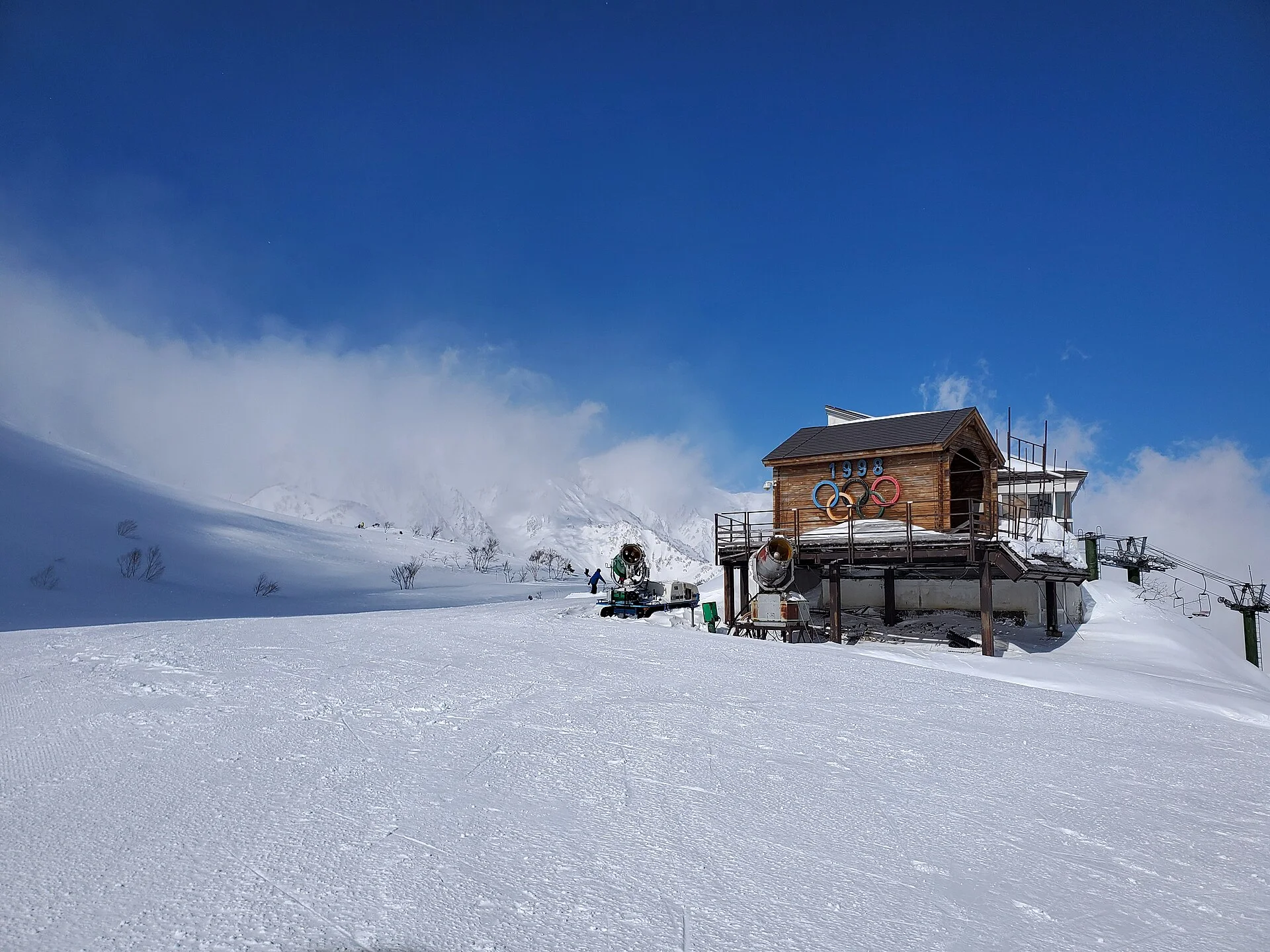
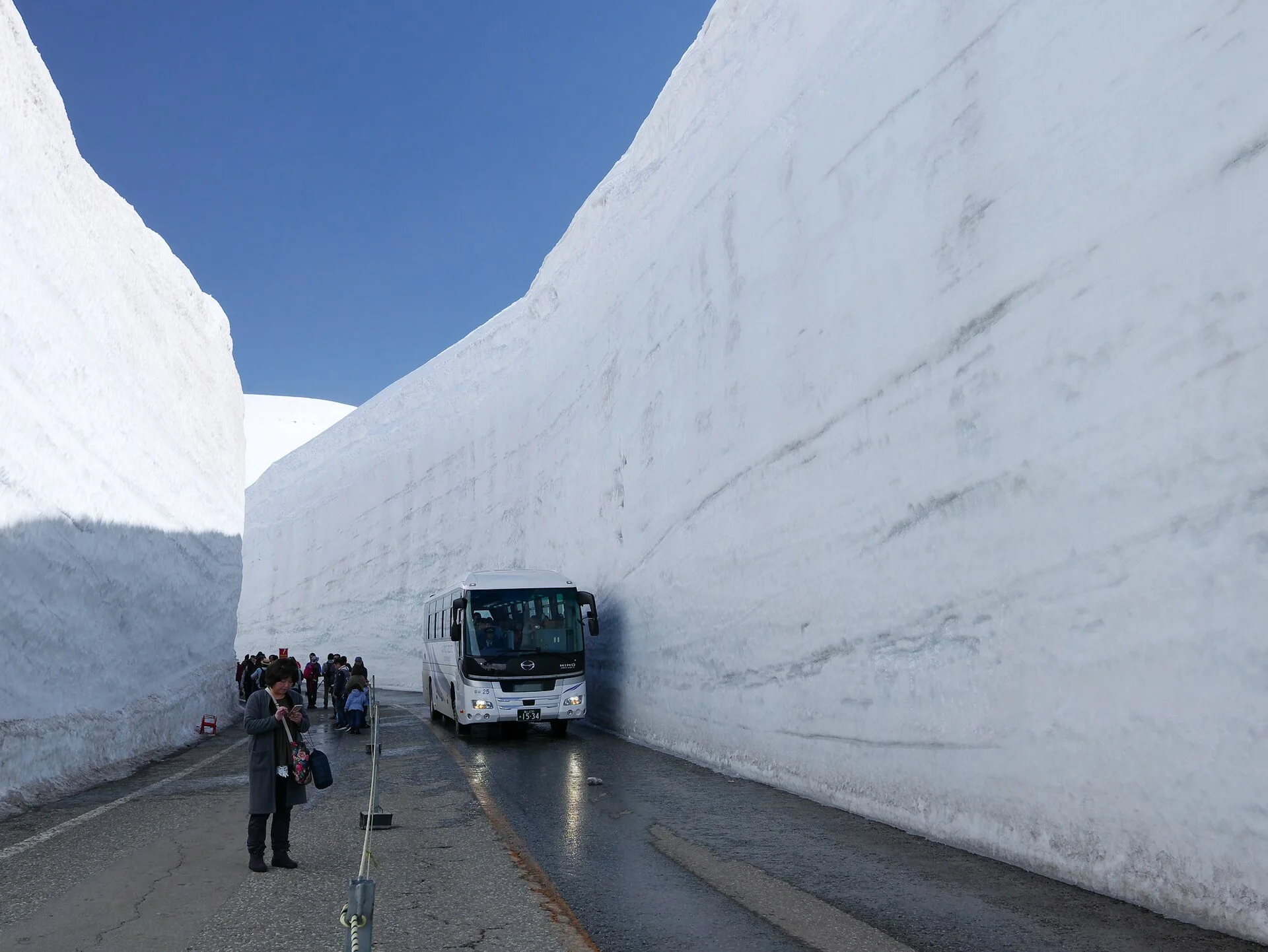
The snow corridor lies along the road just west of Murodo Station, carved by snowploughs clearing a passage for the Highland Bus so vertical walls of snow frame both sides. Leave the terminal and follow signs to the Yuki-no-Otani pedestrian entrance; the highest wall section sits roughly 600 metres downhill from the station, around a 15-minute walk one way according to the operator. The return leg climbs uphill, and pausing for photos or waiting for companions adds more time. Allow 45 to 60 minutes if you want to reach the tallest section without rushing. If time only permits walking the first half, you still see dramatic walls—just agree on a clear turnaround time with your group before setting off.
Buses continue using the adjacent lane throughout spring, so pedestrians stay inside the cordoned walkway. Early arrivals can drop into Murodo Station first to sort layers and gear, then head down once the walkway opens. For clean head-on shots, make use of the gentle bends in the road to frame passing buses or walkers for scale without stepping outside the pedestrian boundary. When meltwater pools on the asphalt, stepping backwards while peering through a camera makes it easy to slip into puddles or bump people behind you—plant your feet firmly before shooting.
As soon as you reach Murodo, note the boarding platform and direction for your next ride towards Daikanbo or Bijodaira. Because the snow wall sits outside the terminal, you must re-enter the station for the next leg. On a full crossing, treat "back inside the station" as your real Murodo cut-off and set your turnaround time at the far end of the corridor earlier still. Trim sit-down meals or optional side walks if you run short on time, never your warm-up breaks, group regrouping, or the uphill walk back. If queues look long, take your photos along the nearer stretches of snow wall and head back in early to protect your onward connections.
A day trip out and back from Tateyama Station
On a Toyama-side return trip, keep your outdoor time focused around Murodo. After changing onto the Highland Bus at Bijodaira, walk the snow wall first if you arrive early. Leave large suitcases in lockers at Tateyama Station and carry just a windproof layer, water, and daily essentials up the mountain. Once you finish the corridor, warm up with a hot drink inside Murodo Station before deciding whether to add a short walk towards Mikurigaike Pond. If lunch queues peak just as you come back indoors, swap a secondary stroll for a proper sit-down break—or bring a simple packed lunch up from the city and eat in a designated rest area before heading back out.
In 2026, Tea Lounge Rindo on the second floor of Murodo Station operated during spring from 9:30 to 16:00 (last order 15:30); note that mountain eateries follow their own seasonal schedules separate from transport dates. Dining and souvenir shops inside Murodo Terminal continue operating even after Hotel Tateyama's closure. When bringing children up, knowing where you can sit down indoors and change wet socks makes the walk far less stressful than juggling takeaway cups outside. Pack a small snack everyone can eat in a queue so a delayed lunch never turns into a crisis.
Treat your return train from Tateyama Station back to Dentetsu-Toyama as your second firm deadline of the day. Heading down from Murodo means taking the Highland Bus back to Bijodaira and transferring to the Tateyama Cable Car—Bijodaira is only the halfway point. Check the downhill departure board when you arrive at Murodo, pick a target bus that connects smoothly to your preferred train, and note one later backup option. If you parked a car at Tateyama Station, count backwards from the last connecting downhill service of the day so you are safely back down past Bijodaira before the final cable car.
Splitting Kurobe Dam stops into two options on a crossing day
Travellers crossing from Tateyama to Ogizawa hit the snow wall first and reach Kurobe Dam late in the afternoon. Crossing the dam crest is built into the main route: it is roughly 600 metres from Kurobe Lake Station to Kurobe Dam Station. Walking straight across gives you sweeping views over Kurobe Lake and the surrounding peaks before you step inside for the Kanden Tunnel Electric Bus—an ideal pace if you are behind schedule or anyone in your group is feeling the cold. If you want higher vantage points over the concrete arch, there are 220 steps up from Kurobe Dam Station to the observation deck. Factor in climbing, viewing, and descending time separately, and judge the outdoor stairs carefully if spring sleet or wet snow is falling.
When entering from Ogizawa, treat the dam's observation deck as optional so your snow wall window at Murodo stays intact. Outside Kurobe Dam Station, paths split towards the observatory and straight across the dam crest. To reach Murodo promptly, cross directly towards Kurobe Lake Station and board the underground cable car. Only pause for extended scenic breaks at Kurobedaira or Daikanbo if your target time at Murodo still has plenty of cushion; if an earlier stage ran late, skip lingering at intermediate stops rather than squeezing everything ahead of Murodo before dusk.
Kurobe Dam's official tourist water discharge season runs from 26 June to 15 October, typically from 6:00 to 17:30 between 26 June and 31 July, though releases can stop in poor weather. On an April or May crossing, the highlight is the massive dam wall framed by snow-lined shores. If witnessing the spray is your main goal, return during the summer or autumn discharge window on a straightforward Ogizawa–Kurobe Dam return trip, leaving plenty of time for both the main observation deck and the New Observation Plaza.
Where you sleep the night before matters more than an earlier alarm
On the Toyama side, if you want to arrive late and board early, stay right by JR Toyama Station's South Exit. Toyama Chitetsu Hotel shares the same building as Dentetsu-Toyama Station, saving you a brisk luggage haul across the station plaza for early local trains. If you are arriving from Kanazawa or want dinner options in central Toyama, the station district has plenty of restaurants; when you hold an early-morning mountain slot, stay steps from Dentetsu-Toyama and pick up snacks the night before in sync with ticket collection. To wake up practically on the cable car platform, stay at the foot of the mountain at Senjuso, located directly on the second-floor south side of Tateyama Station beside the Tateyama Cable Car boarding area. Skipping the morning local train comes with a trade-off: plan evening transit to Tateyama and dinner well in advance.
On the Nagano side, stay near Shinano-Omachi Station if you are catching the JR Oito Line onward the next morning, or base yourself in Omachi Onsenkyo if you want to end your crossing day with hot springs and a ryokan dinner—just choose a bus down from Ogizawa that stops in the hot spring district. Kurobe Kanko Hotel and Ryokusuitei Keisui are among the participating properties listed by the operator in 2026 for guest luggage forwarding. Even when bags are delivered ahead, time your descent around your ryokan's dinner check-in window. Conversely, if you are starting up from Omachi and want hotel breakfast first, work forward from breakfast opening hours to pick a realistic Ogizawa bus.
Hotel Tateyama ended its accommodation service on 31 August 2026. Restaurants and shops inside Murodo Station continue to operate as normal.
To stay overnight on the mountain itself, compare Tateyama Kogen Hotel at Tengudaira with Mikurigaike Onsen at Murododaira. Tateyama Kogen Hotel announced that 2027 bookings are scheduled to open in February 2027; it sits at the Tengudaira Highland Bus stop rather than Murodo Terminal, and the hotel reminds guests that boarding buses at Tengudaira requires an advance reservation. Mikurigaike Onsen sits at an elevation of 2,410 metres, offering six-tatami Japanese rooms and shared bunk rooms sleeping up to eight, and must be reached on foot from Murodo Station. Because spring snow buries normal stone steps and path edges, families with older travellers, pushchairs, or bulky suitcases usually find staying at the valley base or in Omachi far easier to manage.
Luggage forwarding drop-off points and final pick-up cut-offs
On a same-side return trip, you can leave bags in coin lockers at Tateyama Station or Ogizawa and collect them on the way down. On a one-way crossing, you either carry your bags through every transfer, ship them ahead via courier to your next hotel, or use the official Alpine Route forwarding service. In 2026, Alpine Route luggage forwarding cost ¥4,000 per item (cash only), with drop-off desks at Dentetsu-Toyama and in front of JR Shinano-Omachi Station. Neither Tateyama Station, Ogizawa, nor Nagano Station accepts forwarding drop-offs. Drop your cases in central Toyama before boarding the train to Tateyama, or handle them at Shinano-Omachi before getting on the bus to Ogizawa.
Forwarding cut-offs also dictate your latest descent time. Under 2026 operating hours, collection ran from 15:30 to 18:00 at Dentetsu-Toyama and from 15:00 to 17:45 at JR Shinano-Omachi. If you are heading on to Matsumoto after crossing, treat 17:45 as your hard deadline and build in the bus ride from Ogizawa to Shinano-Omachi first. When collecting at Shinano-Omachi, alight there for your bags before continuing by bus or train to Nagano or Matsumoto. Sending luggage directly to a participating hotel saves an extra stop, provided your arrival, room check-in, and dinner times align. Coin lockers are available at Murodo Station, though the separate staffed temporary baggage counter there ceased operating from 20 June 2025 due to station renovations.
Wherever your main suitcases go, keep dry socks, gloves, and any daily medication on your person. Because Alpine Route waiting areas alternate between heated halls and open platforms, stashing a packable down gilet or fleece in a daypack is far easier than digging into a suitcase mid-transit. For an overnight mountain stay, pack a small overnight bag and forward your main cases straight to the next city hotel—you will thank yourself on the stairs at the underground cable car and across Kurobe Dam.
Separating Mikurigaike Pond, the snow wall, and early-summer walks
Mikurigaike Pond and Yuki-no-Otani head in opposite directions from Murodo Terminal: the snow wall follows the bus road, while the lake sits out on the alpine trails. When spring snow covers the paved lakeside paths, walking on snow takes noticeably longer than summer strolling. Photographs of deep blue water mirroring the peaks are usually taken later in the season than the April opening weeks; if your trip falls in April, focus on the snow wall and the snowfields immediately around the terminal. By mid-to-late May, open water may start appearing, though you still need to check whether a clear, open trail is marked.
After returning from the snow corridor, check everyone's shoes, socks, and fingers for chill before deciding whether to head towards the pond. Snow patches and slick slopes persist well into June; stick strictly to open, roped trails and turn back the same way if slopes turn icy or markers disappear. On a first spring visit, build in enough cushion to reach the station safely before your target bus, and stay near the terminal if visibility drops. If your dream is an unobstructed walk along paved paths across Murododaira, the operator notes that most trails emerge between early and mid-July—worth saving for a dedicated summer trip.
Beside the snow walls, bright midday reflection calls for sunglasses and suncream, whereas the lakeside sits exposed to sweeping mountain winds. At Murodo Station's 2,450-metre elevation, wind, damp air, and standing still in queues combine to chill you quickly. Even if you worked up a sweat in central Toyama that morning, standing motionless in the snow for photos cools you down fast. Wear waterproof, grippy footwear, bring gloves and sunglasses, and have anyone waiting with cameras or children put on their outer jacket before stepping outside.
When high winds, snow, or corridor closures hit, secure your descent first
The official Alpine Route website publishes real-time section-by-section service status alongside live webcams at Murododaira, Daikanbo, and other stations. Service status tells you whether you can ride up or cross over; event updates show whether Yuki-no-Otani is open; webcams reveal visibility. These three do not always move in step. The Highland Bus may still run to Murodo even when the pedestrian snow corridor closes for weather. If you are happy riding up for snowy views and warming up inside the terminal, switch to a Murodo return trip; if walking the corridor is non-negotiable, pairing your mountain day with a flexible Toyama city day lets you swap dates far more easily than waiting around on the summit.
If major sections are already suspended while you are still in the valley, Toyama guests can pivot to the Toyama Glass Art Museum—take the circular tram from Toyama Station to Grand Plaza Mae and walk about 2 minutes. Permanent exhibitions generally open 9:30–18:00 (last entry 17:30), closing on the first and third Wednesdays of the month and over the New Year holidays; check which floors and shows are open on the day. If you push your ascent to the next morning, spend the afternoon around Sogawa while leaving main bags in Toyama. Travellers staying in Shinano-Omachi who are already at Murodo must check with station staff whether onward legs towards Ogizawa remain open before deciding whether to wait or retreat along whichever side stays running.
In 2026, operations closed after 30 November, with reduced timetables in late autumn. If you plan a "winter visit to Tateyama" between December and the spring opening, tourist transport between Tateyama Station and Ogizawa shuts down completely—there is no regular cable car or Highland Bus up to Murodo or the snow wall. When staying in Toyama or Nagano in winter hoping for snowy cityscapes, plan accessible lowland sightseeing instead and wait for spring schedules before booking mountain tickets.
Building buffer for children, older travellers, and wheelchair users
Families with young children find a Tateyama–Murodo return easiest to pace: step back into Murodo Terminal to warm up whenever someone gets cold, venture out again if energy returns, and head downhill early if anyone's socks get soaked. Choose soles that grip wet tarmac, swap children's gloves after snow play, and keep spare socks within easy reach. If adults want extra photos at the snow walls, agree on an indoor meeting point so one adult can take tired children back inside first.
According to the operator's accessibility guidance, the Highland Bus between Bijodaira and Murodo requires transferring from a wheelchair into a coach seat, and both cable cars have narrow doorways and steep steps. Travellers needing assistance should notify staff in advance with wheelchair dimensions and weight, whether it folds, whether the user can transfer seats, and details of accompanying carers. Loan wheelchairs are available from station staff at Kurobe Dam Station and Kurobe Lake Station, though the 600-metre dam crest still lies between them. If your main goal is simply seeing the dam from Ogizawa, pick accessible viewing spots near the station and decide whether to cross the dam based on energy and weather, avoiding the long chain of transfers towards Murodo. Accessible toilets are provided at major terminals; make use of facilities at Murodo or Kurobedaira before long queues.
Take things slowly when you first arrive at Murodo's altitude. Anyone feeling unwell should rest inside the terminal immediately, and ask station staff for help getting back down if symptoms persist. Keep lunch, the snow walk, and any continuation towards Daikanbo as separate, adjustable blocks so the whole group can revise the return plan smoothly if someone needs a break.
Linking Hokuriku and Shinshu: plan your wider rail connections backwards
Travellers coming from Osaka or Kyoto can connect onto the Hokuriku Shinkansen at Tsuruga for Kanazawa or Toyama; spending an extra night in Kanazawa before shifting to Toyama also keeps next-day suitcase handling simple. From Nagoya, if you prefer a single direct train into Toyama, look up the JR Takayama Line Hida Limited Express services that run all the way through—noting that several departures terminate at Takayama. Leaving via Shinshu, decide whether Ogizawa connects you to Nagano or Matsumoto. For Tokyo, you can either catch the Hokuriku Shinkansen from Nagano or ride the Oito Line from Shinano-Omachi to Matsumoto for the Chuo Line Limited Express; overnight in Matsumoto if taking the Chuo Line next morning, or Nagano if taking the Shinkansen.
Combining Toyama, the Alpine Route, and Matsumoto works best when crossing day is kept purely for the mountains. Staying in Matsumoto that evening lets you visit Matsumoto Castle the next morning before heading on to Kamikochi with a full half-day for transfers and walking. Coming from Tokyo via Nagano works well the other way round: spend the first night in Nagano or Omachi, cross the mountains the next day, and sit down for dinner in Toyama.
To weave this into a longer journey across Kanazawa, Takayama, and Kamikochi, use our Hokuriku, Hida, and Alpine Route transport guide to anchor your surrounding overnight stops, then count backwards from your Murodo window on snow wall day. When pricing rail passes, separate your itinerary into individual blocks—the six mountain stages, Toyama Chiho Railway, Omachi buses, and JR lines—and add up what a pass covers versus what still costs extra. That makes it clear how much a pass saves over buying point-to-point mountain tickets, and whether changing cities on the night of your crossing trims extra trips.
A few useful answers
When does the Tateyama Kurobe Alpine Route open in 2027, and can I book hotels early?
The operator's provisional 2027 season runs from 15 April to 30 November 2027, with Yuki-no-Otani snow wall walking dates announced separately. To leave room for weather changes, book two nights at the same hotel in Toyama or Shinano-Omachi and make the ascent on whichever day looks clearest.
Do I need a separate admission ticket for the Tateyama Kurobe Snow Wall?
Walking the Yuki-no-Otani snow corridor itself is free; you pay only for the mountain transport to Murodo and back, or across the route. Under 2026 fares, an adult return from Tateyama Station to Murodo costs ¥7,380, while an adult return from Ogizawa to Murodo costs ¥12,300.
Which exit at Nagano Station do buses to Ogizawa depart from when coming from Tokyo?
Leave from JR Nagano Station's East Exit and walk to bus stop 25 for the Alpico Express bus bound for Ogizawa. Seats are unreserved and allocated first come, first served; if a bus fills up, you wait for the next departure.
How long does it take to walk the entire snow wall?
From Murodo Terminal to the highest point of the snow wall is roughly 600 metres downhill, taking around 15 minutes each way. Allow 45 to 60 minutes in total for photos and the uphill walk back to the station.
Can I see both the Kurobe Dam water discharge and the snow wall on the same day?
In 2026, the snow wall walk ended on 25 June, while Kurobe Dam's routine tourist water discharge ran from 26 June to 15 October. If the snow wall is your priority, cross the dam crest in spring to see the lake view; if you want to see the water release, plan a return trip from Ogizawa to Kurobe Dam during the discharge season.
Can I travel from Tateyama Station up to Murodo in winter?
The full route closes for winter after 30 November, and there is no regular tourist transport to Murodo until the spring reopening. Visit during the spring Yuki-no-Otani walking season if you want to see the snow corridor.
Can I still stay overnight at Hotel Tateyama next to Murodo Station?
Hotel Tateyama ended its accommodation service on 31 August 2026, though its dining facilities and shops remain open. For an overnight stay on the mountain, compare Tateyama Kogen Hotel at Tengudaira with Mikurigaike Onsen, which is reached on foot from Murodo.
Official information and references
Sources used in this guide.
- Tateyama Kurobe Alpine Route | Provisional 2027 Operating Season
- Tateyama Kurobe Alpine Route | 2026 Yuki-no-Otani Walk Schedule and Venue Map
- Tateyama Kurobe Kanko | 2026 Opening and Snow Wall Height Notice
- Toyama Prefectural Tourism Organisation | Yuki-no-Otani Access, Clothing, and Event Fees
- Tateyama Kurobe Alpine Route | Standard Fares and 2026 Tariff Table
- Tateyama Kurobe Alpine Route | Sightseeing Times, Snow Wall Distance, and Murodo Lockers
- Tateyama Kurobe Alpine Route | Full-Route Transport Sections and Transit Times
- Tateyama Kurobe Alpine Route | Standard WEB Tickets and Validity Period
- Tateyama Kurobe Alpine Route | 2026 Standard WEB Ticket Release Schedule
- Tateyama Kurobe Alpine Route | WEB Ticket Collection Guide
- Tateyama Kurobe Alpine Route | Section Service Status and Live Webcams
- Tateyama Kurobe Alpine Route | Timetables for Both Directions
- Alpico Kotsu | Nagano–Omachi–Ogizawa Express Bus and Connections
- Alpico Kotsu | Nagano Station East Exit Bus Stop Guide
- Kurobe Dam Official Site | Water Discharge Season, Hours, and Viewing Routes
- Tateyama Kurobe Alpine Route | Accessible Boarding and Dam Crest Crossing
- Tateyama Kurobe Alpine Route | Luggage Forwarding Desks and Drop-off/Pick-up Hours
- Tateyama Kurobe Alpine Route | Murodo Dining and Opening Hours
- Toyama Chitetsu Hotel | Access from JR Toyama Station South Exit and Dentetsu-Toyama Station
- Senjuso | Tateyama Station Boarding Area and Inn Location
- Hotel Tateyama | Notice on End of Accommodation Service
- Tateyama Kogen Hotel | 2027 Accommodation Reservations Notice
- Tateyama Kogen Hotel | Bus Boarding Reservations at Tengudaira Mid-Route Stop
- Mikurigaike Onsen | Mountain Lodge Room Types and Walking Access
- Toyama Glass Art Museum | Opening Hours and Tram Access
- JR West | Shinkansen Transfers at Tsuruga Station
- JR Central | Takayama Line Limited Express Hida Timetable